
Ionia County Correctional Center
Ionia County Correctional Center
Jail Phone Number
616-527-5390Ionia County Inmate Search: Locate Your Person Held on Adams Street
Adults arrested here go to the Ionia County Correctional Center, 133 Adams Street, Ionia, MI 48846, run by the Sheriff's Office. Below are answers on mugshots, visits, deposits, letters, lawyers and court dates.
The Sheriff's website points families to VINE, and our county custody lookup uses it. Enter a name and see whether the person is held. Charges, bond amounts and release plans come from the jail staff.
Start with a phone call to 616-527-5390. Have the legal name and birthday nearby. After that, our bail guide and court guide show what comes next.
Read inmate search answers
 Read inmate search answers
1. Using the Ionia County lookup, step by step
Here is a simple routine:
- Open the custody lookup.
- Enter the surname, then the given name. Start with the legal name.
- Scan the results for a matching birth date, when one is shown.
- If the person shows up, they are in custody. Phone the jail for the rest.
- No match? Ring 616-527-5390 and ask a deputy to look.
The same check works by phone. Dial the VINE line, 800-770-7657, and give the name when asked.
↑ Back to the question list2. Their name does not appear in the Ionia County results. Why?
Blank results are normal early on. Possible reasons:
- Intake is still going. Photos, prints and forms eat up hours.
- A city officer has them. A town police station may keep someone briefly first, and the jail takes custody afterward.
- They already left. Paying a small interim bond, or getting a release order from a judge, can end the stay.
- Another county made the arrest. Then that county's jail is the one to call.
- The name was typed differently. Try alternate spellings, a middle name or a married name.
Ask the jail desk, 616-527-5390, to check the building. The Sheriff's records office answers at 616-527-5737.
↑ Back to the question list3. Where in Ionia County might they be held?
The Correctional Center is the only county jail we found for this area: 133 Adams Street, Ionia, MI 48846, phone 616-527-5390. A few county web pages call it the Ionia County Jail. Deputies hold adult arrests there.
The Sheriff's website also has a page about inmate programs. Ask the staff whether the person sits in a program unit or a regular housing area. We did not read what each unit holds.
If officers picked the person up close to the border, a neighboring county's jail may have the person. Check with Ionia staff first, since they often know where someone was sent. Federal and state prison holds are covered in later answers.
↑ Back to the question list4. Does the Ionia County lookup show mugshots?
Open the lookup and see if a photo appears with the record. Our review of the Sheriff's pages could not confirm photos. When none shows, you may request one. An opinion of the Michigan Attorney General treats photos that officers take of suspects as public records. An agency may still turn down a request when sharing the photo would be a plainly improper intrusion on privacy.
The request goes to the agency that made the arrest, under the state's FOIA law, found at MCL 15.231 and following sections. For a Sheriff's arrest, phone records at 616-527-5737 and ask for the steps.
- Pictures held by ICE: send a request using the ICE records page.
- Federal agencies generally do not release mugshots to the public. The U.S. Marshals Service is an exception, and may release one in a case such as a fugitive hunt.
5. Will an alert tell me when they walk out?
VINE is the state's free notice service. It flags when someone is freed, moved or gets away. It handles county jail custody and state prison custody, and some court events too.
- Phone 800-770-7657, day or night.
- Or register at vinelink.com.
A notice can run behind the real event. If timing matters, such as a ride home, call the jail at 616-527-5390 as well.
↑ Back to the question list6. How can someone get out of the Ionia County jail before trial?
Under Michigan law an arrested person sees a judge or magistrate without unnecessary delay, frequently over video from the cell block. The 64A District Court sits at 100 E. Main Street, Ionia, MI 48846, 616-527-5349.
- Interim bond. For some low-level charges, the Sheriff's deputy running the jail can take an interim bond while no magistrate is around. Domestic violence arrests wait for a judge.
- Arraignment. The judge can send someone home on a promise, an unsecured bond or set conditions. Cash is ordered only if the judge finds nothing else will work.
- Paying money bail. Put down 10 percent with the court clerk (MCL 780.66), or use a surety agent whom the court accepts. The county's bond page links a list of approved agents.
Per the county, District Court bonds are paid at the courthouse from 9 a.m. to 5 p.m., then at the Sheriff's Office, 133 Adams Street, Ionia, MI 48846, after 5 p.m. Circuit Court bonds can be paid at that office around the clock. Confirm with 616-527-5390 before you go. Our bail page has details, and a summary of Michigan's bail laws sits on JE as well.
↑ Back to the question list7. What crime are they accused of?
Begin with the jail staff, at 616-527-5390. They know the booking charge. Prosecutors may change it later.
When the court has a file, search by name in MiCOURT. No hit? The 64A District Court clerk can look. The court is at 100 E. Main Street, Ionia, MI 48846, 616-527-5349. Felonies move to Circuit Court later.
↑ Back to the question list8. Who speaks for them in court when money is tight?
The court asks about counsel at the first hearing and decides whether the person qualifies for an appointed one. Having money for bail does not rule someone out.
The pages we reviewed do not name this county's defense provider. The court clerk, 616-527-5349, can explain how appointments are made. The Michigan Indigent Defense Commission, 517-657-3066, can help too. A private attorney is another choice.
↑ Back to the question list9. What is the process for visiting inside the Ionia County jail?
All visits are booked through ICSolutions, the service named on the Sheriff's page. You can book from 25 hours up to 2 weeks ahead, after a free signup. Help is at 888-506-8407.
- In the visitation center, you talk by video terminal. Every inmate gets one free 30-minute visit.
- From home, use a computer or an Android device. The page shows $10.50 per half hour, and says prices vary.
- Hours. The page lists daily windows, and one looks like a typo. Confirm by calling 616-527-5390.
Ask about clothing and kids at the same time. See our visitation guide too.
↑ Back to the question list10. What is the best way to send money to the jail?
The county's deposit page names these paths:
- AccessCorrections.com, with a credit card.
- GovPay, online or at 888-277-2535. Facility code is Y70. Location 5500 is commissary, and 4500 is bail.
- MoneyGram at Walmart: receive code 7950, account Y70.
- Money order payable to the inmate. Send to the jail, with the inmate's name, 133 E. Adams St., Ionia, MI 48846.
- Lobby cashier: $3.25 fee for cash, $7.95 for a card, and $100 at most per payment. Bring the jacket number or birth date.
Our deposit guide and commissary guide add background. Leave cash out of envelopes.
↑ Back to the question list11. How will someone in the jail call home?
The pages we reviewed name no calling company. Ring 616-527-5390 and ask how your loved one can phone you, the rates, whether tablets or texts exist, and whether calls are taped.
Talk about the case itself with the lawyer. See also the jail phone page and the inmate email page.
↑ Back to the question list12. What is the Ionia County mailing address for an inmate?
Use this address: Ionia County Correctional Center, c/o the inmate's name, 133 E. Adams St., Ionia, MI 48846. Put your first and last name in the corner return address, or staff send the letter back.
- Postcards must be white and plain, at most 3 1/4 by 5 1/2 inches, with a pre-inked Post Office stamp. Photo cards need a pre-printed stamp.
- Money orders are payable to the inmate. Other letters in that envelope go back.
- Legal envelopes are for legal mail only. A friendly letter inside one is confiscated.
The county page gives no inmate number for letters. Questions go to 616-527-5390. Our mail guide has more.
↑ Back to the question list13. Can I drop off or collect items at the jail?
The pages we reviewed do not explain how property is handled. For a drop-off or pickup, call 616-527-5390 first and learn the rules, what ID is needed and the hours before you go to 133 Adams Street, Ionia, MI 48846.
↑ Back to the question list14. Who helps when a jailed person is ill?
Phone 616-527-5390 and ask how to reach the jail's medical staff. Share their name, which medicine, how much, and the doctor's name.
A true emergency means 911. If you worry about suicide, say that word plainly to the jail.
↑ Back to the question list15. How can I check for an arrest warrant?
Sheriff's deputies handle warrant service in this county. Call 616-527-5737 and ask. No single Michigan site lists warrants. A name search in MiCOURT may help, and a court clerk can check too. To resolve one, see a lawyer before you go anywhere. Then phone the issuing court and plan a surrender. For District Court matters, go to 100 E. Main Street, Ionia, MI 48846, 616-527-5349. Ask if any other county or city has a warrant too.
↑ Back to the question list16. Which court has the next hearing?
It depends on the case. District Court takes misdemeanors, arraignments and early felony hearings. Circuit Court takes felonies after bindover.
- 64A District Court, 100 E. Main Street, Ionia, MI 48846, 616-527-5349.
- For Circuit Court dates, the District Court clerk or the jail can point you the right way.
For a felony, the probable cause conference normally comes a week or two after that first hearing (MCL 766.4), and the preliminary examination comes 5 to 7 days later still. Our court guide walks through it.
↑ Back to the question list17. Is a federal agency the one holding them?
Federal cases from here go to the Western District, Southern Division, in Grand Rapids at the Federal Building, 110 Michigan St NW, Grand Rapids, MI 49503, 616-456-2381.
- A federal judge chooses custody or release at the detention hearing (18 U.S.C. 3142).
- The U.S. Marshals office, 110 Michigan Street NW, Suite 744, Grand Rapids, MI 49503, 616-456-2438. Call to ask about a federal prisoner.
- Once sentenced, the person shows in the BOP inmate locator.
18. What does an immigration hold look like?
- A detainer is a request ICE sends on Form I-247A.
- Under 8 CFR 287.7(d), the detainer says the jail may hold the person up to 48 hours after they would otherwise be released.
- Use the ICE Online Detainee Locator. Search by name plus country of birth.
- The ICE Detroit field office, which serves Michigan and Ohio, is at 985 Michigan Avenue, Suite 207, Detroit, MI 48226, 313-771-6601.
19. Where is a person after a prison sentence?
Men sentenced to prison begin at Jackson's Reception and Guidance Center. Intake lasts roughly 30 to 45 days with no visits, though letters and deposits still work. Women start at the Ypsilanti reception center. County deputies make the drive.
- Search by name or number in OTIS, the Department of Corrections system.
- Read our guide to Michigan state prisons for later steps.
20. Where do teenagers go?
Under Michigan law, anyone younger than 18 counts as a juvenile and may not be housed within view or earshot of adults. Their hearings take place in the Family Division of Circuit Court. A judge can waive a 14-year-old or an older teen into adult court, and Circuit Court is where the gravest offenses by a teen start.
The pages we read do not name a youth center for this county. Ask the jail at 616-527-5390 where the youth is held. The District Court clerk, 616-527-5349, can say how to reach the Family Division.
↑ Back to the question list21. Which local department could have made the arrest?
Local agencies share the work. The Sheriff's Office, 133 Adams Street, Ionia, MI 48846, patrols areas outside city limits: administration 616-527-5383, records 616-527-5737.
- Ionia Public Safety: 616-527-4431
- Belding Police: 616-794-1900
- Lake Odessa Police: 616-374-8845
- Portland Police: 517-647-7521
- State Police Lakeview Post: 10300 Howard City-Edmore Rd., Lakeview, MI 48850, 989-352-8444
If you cannot tell which agency it was, ask the jail, 616-527-5390.
↑ Back to the question listIonia County bail and bond: day and night payment and the right GovPay code
If someone is arrested in Ionia County, deputies bring them to the Ionia County Jail, 133 Adams Street, Ionia, MI 48846, which the Sheriff's Office staffs. This page explains how bond gets paid, day or night, and how online payment works.
Use the county's lookup tool with a last name to see charges and bond. Want more detail? Our Recent Arrests page also covers warrants and who is in custody.
Ring the jail desk at 616-527-5390 and ask for the bond amount and the payment spot. Then read our court page for hearing steps, and a quick Michigan bail law overview.
1. Is my family member in the Ionia County Jail, or in a state prison nearby?
Search Ionia County Inmate Search first. That tool covers the county jail on Adams Street. Ionia also has state prisons, whose inmates are run by the Michigan Department of Corrections and do not appear in a county search. If the person was just arrested, they are almost certainly in the county jail. Call 616-527-5390 for jail and inmate questions.
↑ Back to the question list2. Where do I pay a bond in Ionia during the day?
For cases in the 64A District Court, the county says to pay at the court, 100 East Main Street, between 9 a.m. and 5 p.m. Friend of the Court bonds are also taken from 9 a.m. to 5 p.m. at that office. After 5 p.m., both are paid at the Sheriff's Office.
↑ Back to the question list3. Where do I pay at night or on a weekend?
Circuit Court bonds can be paid at the Sheriff's Office at 133 Adams Street around the clock, according to the county. District and Friend of the Court bonds go there after 5 p.m. The Sheriff's front office keeps hours of Monday to Friday, 8:30 a.m. to 4:30 p.m., closed 12 to 12:30 for lunch, so call 616-527-5390 before you drive over at an odd hour.
↑ Back to the question list4. Can I pay the bond on the internet in Ionia County?
The county's deposit page shows a GovPay service at 888-277-2535 that uses facility code Y70, with pay location code 4500 for bail. The same page uses code 5500 for a commissary deposit, and only 4500 is for bail. Putting money under the wrong code will not free anyone, so confirm the code with the jail before paying.
↑ Back to the question list5. What does the county list as bond types?
Four: a cash bond, which is the full amount; a 10 percent bond, where you pay a tenth of the total; a surety bond, bought through a bondsman; and a personal recognizance bond, which needs no money and releases on a signature. The county page also links a list of bail bondsmen it approves.
↑ Back to the question list6. Which bondsmen can I use?
Use the approved list the county posts, because Michigan courts decide for themselves which agents they will accept. The state insurance department does not license bondsmen, only insurance producers, and no price rule turned up. Ask for the fee and any collateral before signing, and keep every receipt.
↑ Back to the question list7. How does a ten percent bond work for a Michigan court?
If the judge permits it, a defendant or a friend deposits 10 percent in cash. Since May 1, 2026, the court may keep part of it only after a conviction for an offense under MCL 780.66. When the person is discharged without one, everything comes back. Fines and costs can come out of the deposit first.
↑ Back to the question list8. Does Ionia's judge have to demand cash?
No. Court Rule 6.106 treats release on a promise to appear as the starting point. Cash bail is allowed only if the court explains on the record why appearance or safety cannot be protected another way. The judge also weighs past attendance in court, drug or alcohol problems, mental health, the charge and family ties.
↑ Back to the question list9. What if the person was arrested at night and no one has set bail?
Michigan requires a judicial officer to be available every day of the year for arraignment or bail on felonies. For many misdemeanors, the sheriff or the jail's deputy in charge can take an interim bond before a magistrate is reached, if the arrest had no warrant. A receipt is issued.
↑ Back to the question list10. Can land or a house be pledged in Ionia County?
With the judge's consent, real property can secure a bond, and the court can require proof of value and ownership. Rules about where the land sits and how much equity is needed are best learned from the court. The court that sets the bond has the final say, so ask the 64A District Court clerk at 616-527-5349 before spending money on paperwork.
↑ Back to the question list11. When is bail refused entirely?
Only under the state Constitution's list: murder and treason, first-degree criminal sexual conduct, armed robbery and kidnapping for ransom when the proof is evident or the presumption great, and violent felonies by people with serious violent records or on release. A hold for probation, parole or another county's warrant can block release even when bail is set.
↑ Back to the question list12. What happens when someone cannot pay and needs a lawyer?
The judge must offer a lawyer at the first appearance. For help finding how Ionia County runs its appointed-lawyer program, call the Michigan Indigent Defense Commission at 517-657-3066.
↑ Back to the question list13. What if the arrested person is a teenager?
Anyone under 18 cannot be held with adult prisoners, and 17-year-olds are generally handled as juveniles. The pages reviewed do not name the juvenile detention center used for Ionia County. Ask the jail desk at 616-527-5390 which facility and which court hearing apply.
↑ Back to the question list14. If the person skips court, what do I lose?
The court can forfeit the bond and issue a warrant. After a mailed notice there are 28 days to surrender before judgment can be entered. A bondsman must hear about it within seven days and has a chance to ask the court not to enter a judgment. If the person is arrested within a year, the judgment may be set aside.
↑ Back to the question listKey contacts for Ionia County bond questions
- County jail: Ionia County Jail, 133 Adams Street, Ionia, MI 48846; jail and inmate information 616-527-5390
- Sheriff's Office: Records 616-527-5737; front office Monday to Friday, 8:30 a.m. to 4:30 p.m.
- Custody lookup: Ionia County Inmate Search
- District court: 64A District Court, 100 East Main Street, Ionia; bonds 9 a.m. to 5 p.m.
- Bail payment online: GovPay, 888-277-2535; facility code Y70, pay location code 4500 for bail
- Night bonds: Sheriff's Office, 133 Adams Street; Circuit Court bonds all hours, others after 5 p.m.
- Appointed lawyers: Michigan Indigent Defense Commission, 517-657-3066
- Youth: Ask the jail line, 616-527-5390, which juvenile facility is used
Codes, hours and procedures can be changed by the county at any time. Before sending a payment, ask the jail whether the instructions here still match your case. A lawyer, not this page, can advise you on your charge.
Pay an Inmate's Bond Online
Ionia County Correctional Center uses a service called allpaid (also known as GovPayNet) for paying an inmate's Bail Bond online for an inmate.
Register with them online or call them at 877-392-2455 for assistance.


To make a payment, you will need the following:
- Court of Jurisdiction
- Payment Amount
- Name of Arrestee/Defendant for whom payment is being made. The arrestee's booking number, the Facility Code of 'Y70'
- The Pay Location Code - PLC # - (For bail it is '4500', For commissary deposit it is '5500')
- Arrestee/Defendant's name they were booked under, and their Date of Birth.
- Arrestee/Defendant's Booking Number
Reserve an Ionia County Correctional Center video visit
Use ICSolutions for both jail-terminal and home video. Select Register for Video, choose the county jail in Ionia, then select onsite or offsite and an available time. Follow the current county page and reserve at least 25 hours and up to two weeks ahead.
Visit options
- Onsite: One free 30-minute visit per person in custody. The county allows two free 30-minute visits for inmate workers outside their work hours. Both require an appointment.
- Remote: The county lists unlimited 30-minute sessions at $10.50 each. Confirm the charge before booking.
The county lists daily 9–11 a.m. and 2–5 p.m. Eastern time. The county’s linked flyer shows an additional 8–10 p.m. window, but the website lists an 8 a.m. start on that line. Confirm the third window in ICSolutions before relying on it.
Call the local jail at 616-527-5390 or ICSolutions at 888-506-8407 for account help. This is the county jail at 133 East Adams Street, not the state prison with a similar name.

ICSolutions Video Visitation provides a secure online platform that enables families to conduct scheduled face-to-face video visits with incarcerated loved ones from home using an internet-connected smartphone, tablet, or personal computer equipped with a webcam.
Important: Advance Registration and Visitor Clearance Required
Detention centers do not permit unscheduled or unverified video sessions. Correctional facilities require prospective visitors to submit government-issued photo identification and receive administrative clearance before booking an appointment, an approval process that can take up to 48 hours depending on facility staffing. You should verify your visitor approval status with the facility prior to scheduling. If you do not register well in advance, you will miss your loved one's scheduled visiting window for the week.
Step-by-Step Instructions to Register and Schedule a Video Visit
- Visit www.icsolutions.com and sign into your account.
- Register your visitor profile and upload a clear photo of your government-issued ID (driver's license or passport) for facility background review.
- Wait for email notification confirming facility visitor approval.
- Select Schedule Visit, choose the detention facility, and select the inmate.
- Browse the available schedule calendar, select a time slot, and pay the visitation fee using a credit or debit card.
- Log into the website or app 10 minutes prior to the start time on a device with a functioning camera, microphone, and reliable high-speed internet connection.
What the Inmate Needs to Do
The inmate receives a visitation notification on their housing unit video kiosk or terminal. At the appointed time, they log in with their PIN and sit before the terminal. Inmates and visitors must strictly observe jail dress and conduct rules; sessions are monitored by staff and will terminate immediately upon any violation.
Official Provider: ICSolutions Official Website
Customer Service Telephone: 1-888-506-8407
Support Hours: 24 hours a day, 7 days a week, 365 days a year
Supported Languages: English and Spanish
Other Services Provided by ICSolutions
In addition to Remote Video Visitation, ICSolutions provides calling and voicemail services at participating correctional facilities:
- AdvancePay Prepaid Calling Accounts: Prepay for phone calling minutes so your loved one can call your telephone directly.
• Learn more on our website: AdvancePay Calling Guide | • Visit official vendor page: ICSolutions Prepaid Calling - Inmate Voicemail Services: Leave recorded voice messages that your loved one can listen to on dayroom phones.
• Learn more on our website: Inmate Voicemail Guide | • Visit official vendor page: ICSolutions Voicemail - Access Secure Deposits (Partner Trust Transfers): Deposit trust money into an inmate's account via Keefe Group partner networks.
• Learn more on our website: Inmate Trust Deposits Guide | • Visit official vendor page: Access Corrections Trust Deposits
Ionia County Criminal Cases: Courthouse, Charges and Court Dates in Ionia
People arrested in Ionia County are kept at the Ionia County Jail, 133 Adams Street, Ionia, MI 48846. Their first hearing is at the 64A District Court, 100 W. Main St., Ionia, MI 48886, 616-527-5349. Felony cases go on to Circuit Court after that.
Not sure the person is still inside? Search a surname in the county's online roster. Our Ionia County Inmate Search page has charges, warrants and mugshots too.
Phone the District Court and ask when the next hearing is and what the charge is. Questions about getting out? Open our bond page, or call the jail at 616-527-5390.
1. What local courts serve people charged in Ionia County?
Being taken to jail does not mean a person has been found guilty of a crime. In Ionia County, Michigan , lower-level criminal charges and the opening stages of felony cases are in most situations handled in District Court . Most felony trials and felony sentencing belong in Circuit Court . Juvenile delinquency cases usually go through the Family Division of Circuit Court. The Ionia County Prosecuting Attorney represents the state. Ionia is the county seat.
2. Someone you love was arrested in Ionia County. What do you do first?
Write down the person’s full name and birth date, the arresting agency, the booking location, the court matter number if available, and the next hearing date. Ask the jail whether the person is still in custody and whether a bond or other release order has been entered. The jail handles custody; the court sets bond and court dates. The District Court ordinarily handles a misdemeanor case and the first felony hearings. The Circuit Court ordinarily handles the felony after the preliminary stage. A family member may be able to attend public hearings, but the judge and appointed lawyer—not a jail officer—determine how the legal case moves forward.
- 64A District Court — 100 W. Main St., Ionia, MI 48886. 616-527-5349.
- District Court: Hears most misdemeanors and holds the first hearings in felony cases, including arraignment and preliminary examination.
- Circuit Court: Handles felony trials, pleas, sentencing, and appeals assigned by Michigan law.
- Family Division of Circuit Court: Handles juvenile delinquency proceedings and related matters.
- Ionia County Prosecuting Attorney: Represents the state in local criminal prosecutions.
- Appointed defense lawyer: People who cannot afford counsel in qualifying criminal cases can request an appointed attorney.
- Local jail and custody: County sheriffs normally manage local jail custody; a court may order release with conditions or continued detention.
Where does a case start? Someone arrested in Ionia County may first be booked by police and brought before a judge or magistrate. The criminal accusation determines which court hears the case, and the court paperwork controls where the defendant must appear. Michigan District Courts decide most misdemeanors and handle the first steps of felonies. Circuit Court generally takes over a felony after a waiver or a finding of probable cause at the preliminary examination.
What happens to someone waiting in jail? The Ionia County sheriff or another authorized jail may hold the person charged while a court considers release. Custody and release decisions are recorded as part of the criminal matter. A courthouse and a detention center are not necessarily on the same property.
This guide explains the usual criminal court process in Ionia County in plain language. The exact charge, criminal history, and judge’s findings affect the outcome. It is general information, not personal legal advice.
↑ Back to the question list2. What happens with a misdemeanor charge in Ionia County?
In Ionia County, a misdemeanor may start with a ticket or a notice to appear, while a more serious situation can lead to arrest and booking. Examples include certain assaults without serious injury, shoplifting and some impaired-driving charges. The criminal accusation written on the paperwork matters because Michigan has different penalties for different misdemeanors.
Getting to the first hearing and discussing release
At arraignment, the judge tells the person charged what offense is charged, explains important rights and addresses a plea and release conditions. Some people can leave on a personal promise to return; others may have money bond, supervision, travel limits or no-contact orders. A judge can also deny release where the law permits. Bail is not a punishment or proof of guilt.
After the first court date
The Ionia County District Court may schedule a pretrial hearing. Lawyers review police reports, videos and other evidence. The prosecuting attorney may offer an agreement, dismiss a charge or proceed to trial. The person charged can contest the evidence rather than accept a plea. Jury-trial rules depend on the offense and the legally available punishment.
How a person can obtain defense counsel
If the defendant faces a charge that qualifies for appointed counsel and does not have enough money to hire an attorney, the judge is permitted to determine eligibility for a public defender or assigned lawyer. Request this help promptly; do not assume a defender is automatically assigned after booking.
Possible misdemeanor results
Put simply: Michigan misdemeanors have different maximums. Common statutory limits include 90 or 93 days, one year, and in certain cases two years, with fines fixed by the particular statute. Some offenses also require driver-license action, restitution, classes or probation. The exact charge and prior record matter more than the county name.
↑ Back to the question list3. How does a serious criminal case move through Ionia County courts?
A felony accusation in Ionia County normally starts with a District Court arraignment, even when the eventual trial would be in Circuit Court. Prosecutors must establish the legal basis for moving the court matter forward. A felony carries the possibility of a state-prison sentence, although not every conviction results in prison time.
Probable cause conference and preliminary examination
Michigan usually sets a probable cause conference 7 to 14 days after felony arraignment and schedules the preliminary examination roughly 5 to 7 days after that conference, unless a legal waiver, adjournment or exception changes the schedule. At the preliminary examination the prosecution must show probable cause that a crime occurred and that this defendant committed it. That decision is not a determination that the person committed the crime.
How a serious case reaches Circuit Court
When the charge is bound over, Ionia County Circuit Court handles the felony case. The accused person may be arraigned again, and the parties exchange evidence, negotiate, file motions or set a trial. The prosecutor has to establish guilt beyond a reasonable doubt at trial. Defendants who cannot afford legal counsel should ask the court about appointed representation.
What a felony sentence can involve
Here is the practical point for a family: Michigan sentencing rules look at the offense statute, a record of earlier convictions, the sentencing guidelines when applicable, and any mandatory minimum. A nonviolent first offender might be eligible for probation or another lawful alternative, but some violent or repeat offenses require custody. Do not use a single felony-class chart to predict all Michigan sentences.
↑ Back to the question list4. How are the most serious prosecutions handled in Ionia County?
Murder, armed robbery, criminal sexual conduct and assaults causing serious harm are examples of grave charges that could be prosecuted in Ionia County. Seriousness by itself does not turn a Michigan crime into a federal case. Most such charges remain in the state Circuit Court unless federal law independently applies.
Detention and defense
A judge considers Michigan’s release rules, risk of flight, safety and legally relevant facts. A no-contact order or other condition may be imposed. Some defendants remain in jail while lawyers examine records, DNA or other scientific evidence. These charges need careful legal advice and frequently involve complicated court motions.
Trial and possible prison terms
First-degree murder carries mandatory life without parole for adults under Michigan law, subject to legally applicable exceptions and youth-sentencing rules. Second-degree murder can carry a sentence up to life imprisonment. Armed robbery and several serious criminal sexual conduct crimes can also carry very long terms. Other violent offenses have their own penalty sections. Michigan does not have the death penalty.
Victim and family support
The important thing to understand is: The Ionia County Prosecuting Attorney may have a victim-witness unit that explains hearing notices and available services. The defense attorney protects the legal rights of the person charged. The amount of time a case takes depends on witnesses, evidence, motions and the court calendar.
↑ Back to the question list5. How does juvenile court work in Ionia County?
A youth accused of breaking a criminal law in Ionia County in most situations appears in the Family Division of Circuit Court instead of an adult District Court. Michigan juvenile proceedings emphasize the child’s age, the offense, safety, and whether services can address the problem.
Intake and the first decision
After police contact, juvenile court intake may review a complaint and decide whether it needs a formal petition. Some matters can be diverted or handled through services without a full court trial. If a youth is held, the law provides for prompt judicial review, and parents or guardians should ask where the child is housed.
Hearings and possible outcomes
If a formal petition is filed, the court explains the allegations and the child’s rights. An adjudication hearing decides whether the state's lawyer proved the allegation under the applicable legal standard. Outcomes can involve supervision, probation, counseling, treatment, restitution, or placement through the youth-services system where authorized.
When a juvenile might face adult-style prosecution
For anyone trying to follow the process: Special laws permit designation or waiver for certain serious offenses and ages; an adult criminal matter is not automatic simply because someone is charged with a felony. Juvenile and youthful-offender rules are complicated, so ask for an attorney experienced in youth cases. Many juvenile records are not open to the public.
↑ Back to the question list6. What jail terms, prison terms, and fines does the law allow in Ionia County?
Someone arrested in Ionia County does not receive a sentence just because the police wrote a charge on a report. The prosecutor must prove the court matter or the defendant must enter a valid plea. If there is a conviction, the judge uses the exact charge and Michigan statute. The amounts below are legal limits for the listed offenses, not a promise that the judge will order those amounts. Fines can be accompanied by court costs, assessments and restitution to a victim.
Specific Michigan charges and their statutory punishments
- Simple assault or assault and battery (MCL 750.81(1)): Up to 93 days in jail and/or a fine up to $500 A basic assault charge without a different applicable enhancement.
- First domestic assault (MCL 750.81(2)): Up to 93 days in jail and/or $500 Prior offenses or added facts can raise penalties.
- Second domestic assault (MCL 750.81(4)): Up to 1 year in jail and/or $1,000 Prior qualifying conviction is required.
- First ordinary drunk-driving offense (OWI) (MCL 257.625(9)(a)): Up to 93 days in jail; $100–$500 fine; up to 360 hours community service Driver’s-license consequences and other costs may also apply.
- First high-BAC OWI, BAC at least .17 (MCL 257.625(1)(c), (9)(a)): Up to 180 days in jail; $200–$700 fine May include ignition-interlock and license restrictions.
- OWI with one prior conviction within 7 years (MCL 257.625(9)(b)): $200–$1,000 fine plus a lawful jail or community-service penalty Specific mandatory minimums and alternative sanctions apply.
- Home invasion, third degree (MCL 750.110a(4), (7)): Up to 5 years in prison and/or $2,000 A felony; the precise grade depends on conduct.
- Home invasion, second degree (MCL 750.110a(3), (6)): Up to 15 years in prison and/or $3,000 A felony; may involve entering a dwelling to commit certain crimes.
- Home invasion, first degree (MCL 750.110a(2), (5)): Up to 20 years in prison and/or $5,000 Aggravating factors include a dangerous weapon or someone lawfully present.
- Felony with no specific punishment stated (MCL 750.503): Up to 4 years in prison and/or $5,000 Default rule only: does not replace a statute that sets its own penalty.
- Misdemeanor with no specific punishment stated (MCL 750.504): Up to 90 days in jail and/or $500 Default rule only: many offenses set different limits.
- First-degree murder (adult conviction) (MCL 750.316): Life imprisonment without possibility of parole, subject to applicable constitutional/youth exceptions Michigan does not have the death penalty.
Why a felony's sentencing-guidelines range may be different
Michigan does not have one statewide table saying all Class A felonies get one sentence and all Class B felonies get another. For eligible felonies, the judge calculates an offense-variable score based on how the crime happened and a prior-record-variable score based on the person's record. Those scores, the crime's offense category and its sentencing classification produce a recommended minimum prison-term range. That recommended range is different from the statutory maximum, which is the most prison time allowed for that crime. Courts can depart from a recommendation when lawful and must explain a reasonable departure. Mandatory minimums can override ordinary guideline calculations.
For example, a five-year maximum for third-degree home invasion does not mean that everyone convicted must serve five years. A particular defendant may receive a lower prison minimum, probation or another lawful sentence depending on the sentencing law and case facts. Michigan prison sentences frequently state both a minimum and a maximum; parole eligibility and release do not automatically happen on the minimum date.
What about probation, restitution and jail?
Put simply: A judge may order reporting to a probation officer, drug or alcohol testing, classes, treatment, community service, and repayment of a victim's proven losses. Violating probation can lead to another court hearing and a new penalty. Some people serve a local jail term instead of being sent to state prison; others qualify for an alternative sentence. A defendant's lawyer can request the sentencing-information report and explain the actual scored range before sentencing.
↑ Back to the question list7. When is a crime prosecuted in federal rather than state court in Ionia County?
Ionia County is part of the U.S. District Court for the Western District of Michigan, Southern Division. This court handles violations of federal criminal law; it is separate from Michigan District Court, despite the similar names. The western or central Lower Peninsula location of the county determines its federal judicial assignment.
Federal courthouse and contact
- Federal court: U.S. District Court, Western District of Michigan, Southern Division
- Courthouse: United States District Court — Western District of Michigan, Grand Rapids courthouse. 110 Michigan Street NW, Grand Rapids, MI 49503.
- Clerk’s office telephone: 616-456-2381.
What makes a crime federal?
Examples may involve trafficking drugs in violation of federal law, bank robbery involving a federally insured institution, certain firearm violations, federal tax crimes, fraud that uses interstate communications, immigration crimes, and offenses on federal property. Crossing a state line may be relevant to some laws, but is not required for every federal charge. A serious local assault or theft is not federal simply because it is serious.
Steps in a federal criminal case
A person may be arrested on a federal complaint or indictment and then appears before a U.S. magistrate judge. The judge reviews rights, counsel and detention or release. Serious federal charges ordinarily involve grand jury indictment unless a lawful exception applies. Discovery and motions follow; a plea or jury trial determines the outcome. A federal judge imposes sentence under federal statutes and sentencing rules, with any mandatory minimums applying where required.
Federal custody and sentences
Here is the practical point for a family: The U.S. Marshals Service handles federal pretrial custody and transportation, often through contracted local facilities. People receiving federal prison sentences are in most situations placed by the Federal Bureau of Prisons. Someone arrested within a Michigan county may therefore be housed far from the county jail and may need to be found through federal channels.
↑ Back to the question list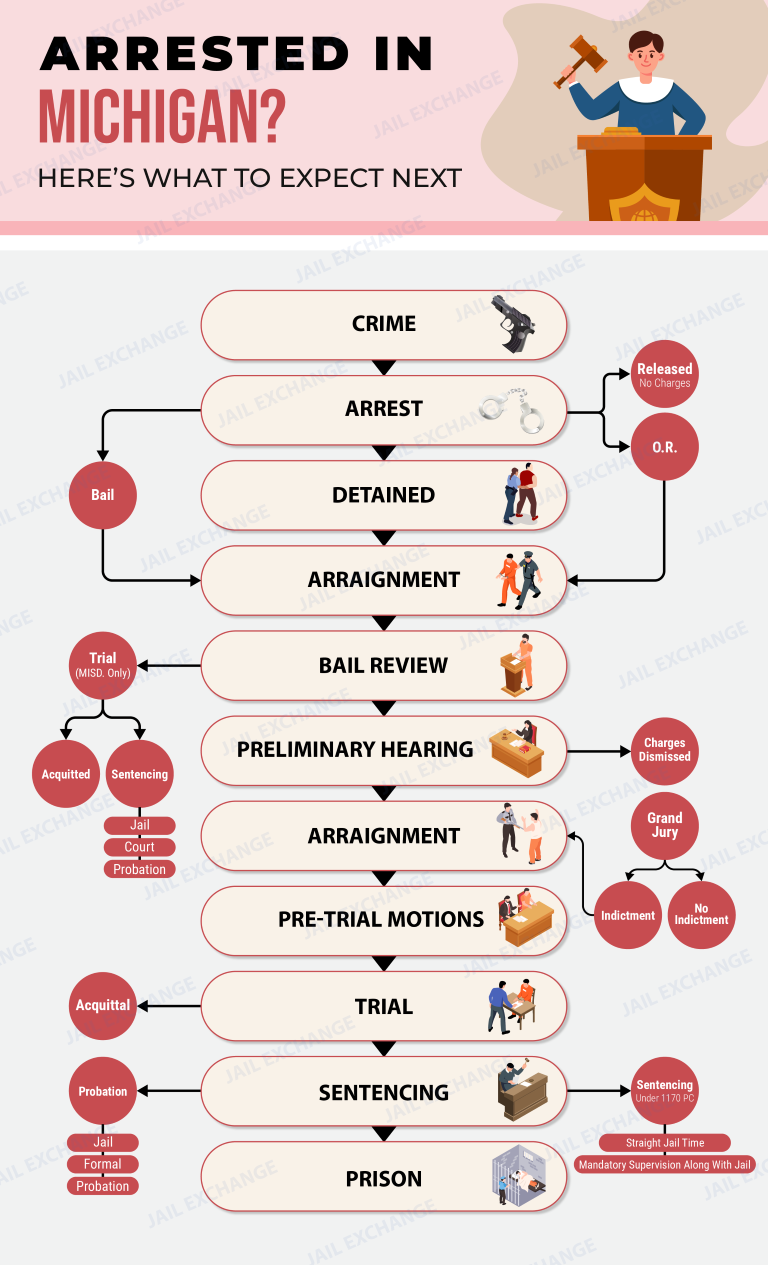

Access Securepak is an authorized correctional commissary care-package program that allows families to purchase customized food, snack, hygiene, apparel, and electronics packages sent directly to an incarcerated loved one. Every package is custom-packed to meet the strict security regulations of the specific jail or state prison.
Important: Delivery Schedules and Package Quotas
Jail package guidelines are not uniform across detention centers. Some facilities permit orders year-round, while others restrict deliveries to quarterly cycles or strict weekly deadlines that you should confirm with the facility directly. If you delay setting up your account, you risk missing the upcoming delivery cutoff, leaving your loved one waiting an extra cycle for fresh food, warm thermals, or personal toiletries.
Step-by-Step Instructions to Register and Access Service
- Visit the official Access Securepak online store at www.accesscatalog.com.
- Select the state and the specific jail or correctional institution from the dropdown menu.
- Enter the inmate's legal last name and inmate ID to verify their active housing and package eligibility.
- Browse the catalog of approved meats, cheeses, ramen soups, cookies, toiletries, and clothing.
- Add items to your cart up to the facility's maximum weight or dollar limit (usually $50 to $125 per order).
- Check out using your debit or credit card and save the order confirmation tracking number.
What the Inmate Needs to Do
The inmate does not need to order anything themselves. Securepak ships the sealed package directly to the correctional facility's commissary warehouse. Jail staff inspect the box and deliver it to the inmate during regular pod commissary distribution, where the inmate signs for the package.
Official Provider: Access Corrections / Keefe Group Official Website
Customer Service Telephone: 1-800-546-6283
Support Hours: Monday – Friday, 8:30 AM – 11:30 PM EST; Saturday, 11:00 AM – 5:00 PM EST
Supported Languages: English and Spanish
Other Services Provided by Access Corrections / Keefe Group
In addition to Access Securepak (Commissary & Gift Packages), Access Corrections / Keefe Group provides several other communication, financial, and visitation services at participating correctional facilities:
- Inmate Trust Money Deposits: Send cash directly to their personal account so they can buy items independently.
• Learn more on our website: Inmate Trust Money Deposits Guide | • Visit official vendor page: Access Corrections / Keefe Group Inmate Trust Money Deposits - Digital Messaging & Photos: Send fast electronic letters and digital pictures to their tablet.
• Learn more on our website: Digital Messaging & Photos Guide | • Visit official vendor page: Access Corrections / Keefe Group Digital Messaging & Photos
Buy Commissary for an Inmate in the Ionia County Correctional Center
Ionia County Correctional Center Inmate Commissary - Sending Money or Purchasing Commissary for an Inmate
Ionia County Correctional Center allows inmates to purchase commissary. Ask the jail what its commissary sells; snacks and hygiene items are common.
You can buy commissary for an inmate using an online service called Access Securepak.

Call the facility at 616-527-5390 to ask whether there is a limit on how much an inmate can spend on commissary.
Access Securepak's site shows whether friends and family can order commissary for an inmate at this jail.
Scroll down for information on the Ionia County Correctional Center's service they use for you being able to purchase commissary items online and have them shipped directly to the inmate.
You can also go to our Inmate Money page for information on how to send money to an inmate.
Access Secure Deposits (Smart Deposit) allows families and friends to securely transfer money directly into an incarcerated person's jail trust account using a debit or credit card. Deposited funds become immediately available for your loved one to purchase essential hygiene goods, over-the-counter medication, food items, and writing materials from the facility commissary.
Important: Inmate Banking Policies Vary by Facility
Once a person is booked and moved to a cell, facilities do not always allow cash drop-offs or phone payments directly to the jail. Some might and you should confirm this by calling the facility and asking. But if you do not register online and fund your loved one's trust account immediately, they may be forced to wait days or weeks for standard paper processing, leaving them without essential soap, clean undergarments, basic medical sundries or snacks.
Step-by-Step Instructions to Register and Access Service
- Obtain the inmate's legal first and last name, date of birth, and official six- to ten-digit Booking or Inmate ID number.
- Visit the official Access Corrections portal at www.accesscorrections.com or download the Access Corrections mobile app.
- Select the state and the exact detention facility or county jail where the inmate is currently housed.
- Add the inmate as a contact and confirm their identity from the facility roster.
- Enter your debit or credit card billing information, choose your deposit amount, review the facility processing fee, and submit your payment.
- Save and print your transaction confirmation number for verification.
What the Inmate Needs to Do
The inmate does not need internet access to receive your deposit. Once approved, the funds post directly to their facility account balance. The inmate can verify their balance at the dayroom kiosk or on their trust statement and start ordering items on the next designated commissary day.
Official Provider: Access Corrections / Keefe Group Official Website
Customer Service Telephone: 1-866-345-1884
Support Hours: 24/7/365
Supported Languages: English and Spanish
Other Services Provided by Access Corrections / Keefe Group
In addition to Access Secure Deposits (Trust Money), Access Corrections / Keefe Group provides several other communication, financial, and visitation services at participating correctional facilities:
- Digital Messaging & Photos: Send digital letters and pictures straight to the inmate's kiosk or tablet.
• Learn more on our website: Digital Messaging & Photos Guide | • Visit official vendor page: Access Corrections / Keefe Group Digital Messaging & Photos - Commissary Care Packages: Order pre-approved food boxes, thermal clothes, and snack bundles directly to the jail.
• Learn more on our website: Commissary Care Packages Guide | • Visit official vendor page: Access Corrections / Keefe Group Commissary Care Packages
Deposit Money for an Inmate in the Ionia County Correctional Center
Ionia County Correctional Center accepts inmate account money five ways, and only the lobby cashier has posted limits.
- Online with Access: Access Corrections takes card deposits from a phone or computer.
- Online or by phone with GovPay: At GovPayNow or 1-888-277-2535, enter facility code Y70 and pay location code 5500 for a commissary deposit. Code 4500 is for bail, so don't mix them up. Have the inmate's name and number.
- Lobby cashier: Pay with cash, credit or debit, and give the inmate's jacket number or date of birth. Each payment tops out at $100. A $3.25 fee comes out of cash deposits, and the cashier won't take $1 bills. Card payments add a $7.95 fee.
- MoneyGram at Walmart: Fill it in with Company Name SSC Inmate Funding, Receive Code 7950 and Account Number Y70.
- Money order by mail: Make it out in the inmate's name, write the inmate's name on the line for it, and mail it to Ionia County Jail, 133 E. Adams St., Ionia, MI 48846. Put nothing else in the envelope, because a note or letter gets the whole envelope sent back.
Cash and personal checks do not go in the mail.
Mail Restrictions - Send Inmates Pre-metered Postcards Only
The Ionia County Correctional Center, the Ionia County Sheriff's jail on East Adams Street in Ionia, takes personal mail as postcards. The card has to be plain, small and stamped by the post office itself, or it will not be delivered. Lawyers, courts and the State of Michigan can still send sealed legal mail.
Postcards, legal mail, books and money orders:
Inmate's Full Name & Jacket#
Ionia County Correctional Center
133 E. Adams St.
Ionia, MI 48846
- Postcard rules: Plain white, no bigger than 3¼ x 5½ inches, with the postage printed on the card by the post office. A card with a stick-on stamp is rejected.
- Picture postcards: A photo postcard is fine if it is the same size and has the postage pre-printed on it, including one ordered from a photo postcard company.
- Your name: Give your first and last name in the return address. A card signed with only a last name, or a first initial and last name, is sent back.
- Money orders: Make the money order out in the inmate's name and address the envelope to the Ionia County Jail at the address above. Put nothing else in that envelope, because any note or letter inside gets the whole envelope returned. You can also deposit money online, by phone, or at the lobby cashier, who will ask for the inmate's jacket number or date of birth.
- Legal mail: Officers open it in front of the inmate. Personal mail hidden in a legal envelope is taken, the inmate's legal mail is watched more closely, and the case may go to the prosecutor.
- Books: New paperbacks only, shipped to the Ionia jail by a publisher or a store. Hardcover books are refused, and books with violent, pornographic or obscene content end up in the trash.
- Magazines and newspapers: A subscription has to be mailed to the jail by the publisher itself, never by a friend.
- Stamps: You can't send them. After two weeks, an inmate with no money can order a pack with a stamped envelope, paper and a pencil.
ICSolutions provides secure inmate telecommunications systems that allow incarcerated individuals to place outbound telephone calls from housing pods to friends and family. Because correctional facilities do not accept incoming calls, establishing an AdvancePay prepaid account links funds directly to your 10-digit phone number so calls connect without carrier restrictions.
Important: Wireless Carriers Restrict Inmate Calls by Default
Major mobile cellular carriers do not permit traditional collect calls originating from correctional facilities. While some landlines might support direct monthly billing, mobile devices and internet-based telephone numbers require an active prepaid balance or funded debit account, which you can verify by checking with your provider. If you do not register online and fund an account right away, incoming calls from your loved one will automatically fail to ring through to your phone.
Step-by-Step Instructions to Register and Fund an Account
- Visit www.icsolutions.com or call customer support at 1-888-506-8407.
- Click Create an Account and register using your primary 10-digit telephone number and email address.
- Select the state and facility where the inmate is currently detained.
- Link the inmate to your profile using their full legal name and booking ID number.
- Select Prepaid Collect to link funds to your phone number, or choose Debit Telephone to provide the inmate funds to call any approved number.
- Select your deposit amount and complete payment using a credit or debit card.
- Check your mobile phone settings to ensure unknown or automated numbers are not routed directly to spam.
What the Inmate Needs to Do
The inmate dials your 10-digit number from any dayroom phone and enters their assigned PIN. The automated system verifies that your phone number has an active prepaid balance and prompts you to accept the call. All non-privileged conversations are recorded and monitored by the facility.
Official Provider: ICSolutions Official Website
Customer Service Telephone: 1-888-506-8407
Support Hours: 24 hours a day, 7 days a week, 365 days a year
Supported Languages: English and Spanish
Other Services Provided by ICSolutions
In addition to AdvancePay Prepaid Calling Accounts, ICSolutions provides voicemail and video visitation services at participating facilities:
- Inmate Voicemail Services: Leave one-way voice messages that your loved one can listen to on dayroom phones.
• Learn more on our website: Inmate Voicemail Guide | • Visit official vendor page: ICSolutions Voicemail - Remote Video Visitation: Schedule and join live video visits from home using your computer or smartphone.
• Learn more on our website: Video Visitation Guide | • Visit official vendor page: ICSolutions Video Visits - Access Secure Deposits (Partner Trust Transfers): Deposit trust money into an inmate's account via Keefe Group partner networks.
• Learn more on our website: Inmate Trust Deposits Guide | • Visit official vendor page: Access Corrections Trust Deposits
ICSolutions Inmate Voicemail allows family members and approved contacts to leave a private, recorded voice message for an incarcerated individual. Because outside callers cannot phone an inmate directly, this one-way voice messaging feature ensures critical family updates and legal news reach your loved one even when you cannot be near your telephone to answer live calls.
Important: Voicemail Feature Availability Varies by Facility
Inmate voicemail is not enabled at every correctional facility contracted with ICSolutions. Jails determine whether to offer voicemail services based on local security protocols and monitoring capabilities, which you should confirm with the facility directly. If your loved one's detention center does not support voicemail, you must set up an AdvancePay calling account so they can reach you directly during dayroom phone hours.
Step-by-Step Instructions to Leave an Inmate Voicemail
- Log into your existing profile at www.icsolutions.com or dial 1-888-506-8407.
- Confirm that your loved one's detention facility supports the voicemail feature.
- Dial the facility's dedicated ICSolutions voicemail access telephone number provided on your dashboard.
- Follow the automated voice prompts and enter the inmate's booking identification number.
- Record your personal voice message (typically up to 3 minutes in length).
- Accept the call charges using funds from your prepaid account balance or a credit card.
What the Inmate Needs to Do
When the inmate logs onto any housing unit telephone using their assigned PIN, the automated system notifies them that a new voicemail is waiting in their queue. The inmate follows the audio prompts to play the recording. All messages are subject to monitoring and recording by correctional staff.
Official Provider: ICSolutions Official Website
Customer Service Telephone: 1-888-506-8407
Support Hours: 24 hours a day, 7 days a week, 365 days a year
Supported Languages: English and Spanish
Other Services Provided by ICSolutions
In addition to Inmate Voicemail Services, ICSolutions operates live calling and video visitation options:
- AdvancePay Prepaid Calling Accounts: Prepay for phone calling minutes so your loved one can call your telephone directly.
• Learn more on our website: AdvancePay Calling Guide | • Visit official vendor page: ICSolutions Prepaid Calling - Remote Video Visitation: Schedule and join live video visits from home using your computer or smartphone.
• Learn more on our website: Video Visitation Guide | • Visit official vendor page: ICSolutions Video Visits - Access Secure Deposits (Partner Trust Transfers): Deposit trust money into an inmate's account via Keefe Group partner networks.
• Learn more on our website: Inmate Trust Deposits Guide | • Visit official vendor page: Access Corrections Trust Deposits
GettingOut / ViaPath Inmate Messaging
Provider: GettingOut (Telmate) • Rebranding as ViaPath Technologies (myViaPath)

GettingOut (a service of Global Tel*Link / Telmate) provides an instant two-way digital messaging and photo-sharing platform connecting families with incarcerated individuals via housing-unit kiosks and handheld tablets. The provider is actively rebranding as ViaPath Technologies (under the myViaPath platform); depending on the facility contract, local booking sheets and tablets may still refer to the service as GettingOut, GTL, or ViaPath, but both brand portals grant access to the same centralized messaging balance.
Important: Contact Authorization and Digital Mail Rules Vary
Inmate digital messaging rules are not uniform across all county detention centers. While some jails allow immediate two-way messaging upon registration, others require initial contact invitations or administrative ID verification, which you should verify directly with the facility. If you delay setting up an online profile and funding your Friends & Family messaging account, your loved one may face lengthy periods without direct family communication.
Step-by-Step Instructions to Register and Message an Inmate
- Visit www.gettingout.com or the newly branded my.viapath.com portal, or install the GettingOut / myViaPath mobile app.
- Create a user profile using your primary email address and 10-digit mobile phone number.
- Complete identity verification by uploading a clear photo of your government-issued driver's license or state ID and taking a verification selfie if requested.
- Search for the inmate by selecting the state, correctional facility, and their legal name or booking ID.
- Send an outside contact connection request to link your account to their tablet profile.
- Deposit funds into your 'Friends & Family Account' using a debit or credit card to cover message and photo-sharing costs.
- Compose your text message in the chat box, attach approved photos, and submit it for jail screening.
What the Inmate Needs to Do
The inmate powers on their assigned pod tablet or approaches a housing-unit kiosk and logs into the messaging application with their PIN. They accept your incoming contact invitation on the screen. Once approved by institutional monitors, incoming messages appear in their inbox, and the inmate types a reply directly on the screen.
Official Providers: GettingOut Website | myViaPath Portal
Customer Service Telephone: 1-866-516-0115 (GettingOut Support) • 1-877-650-4249 (ViaPath Support)
Support Hours: Monday – Friday, 7:00 AM – 11:00 PM CST; Saturday – Sunday, 8:00 AM – 7:00 PM CST
Supported Languages: English and Spanish
Other Services Provided by GettingOut / ViaPath
In addition to Two-Way Text Messaging, GettingOut and ViaPath provide several other communications and visitation options:
- Remote Video Visits: Schedule and join live web-based video visits from your computer or smartphone.
• Learn more on our website: Video Visitation Guide | • Visit official vendor page: GettingOut Video Visits - Inmate Tablet Rentals & Media: Fund tablet entertainment, music streaming, games, and news modules.
• Learn more on our website: Tablet Rentals & Content Guide | • Visit official vendor page: GettingOut Tablets - AdvancePay Phone Calling: Prepay for telephone calls so your loved one can dial your mobile phone directly.
• Learn more on our website: AdvancePay Phone Calling Guide | • Visit official vendor page: ViaPath ConnectNetwork Calling - Inmate Trust Deposits: Transfer funds directly into their jail trust account for commissary store purchases.
• Learn more on our website: Inmate Trust Deposits Guide | • Visit official vendor page: ViaPath Trust Deposits

ICSolutions provides secure, corrections-grade handheld tablets designed for prison and jail living units. Through these handheld devices, incarcerated individuals can communicate with family via digital messaging and video calls, stream approved music, play games, read eBooks, and access institutional legal research databases without leaving their bunks.
Important: Tablet Hardware Deployment and Rental Rules Vary
Detention centers do not manage tablet distribution identically. While some agencies issue individual personal tablets to every detainee at booking, others utilize shared pod docking stations or restrict tablet use to specific dayroom hours, which you should confirm with the facility directly. Although core educational and legal resources are generally provided free of charge, sending messages, listening to music, or making phone calls from the tablet requires an active balance funded by outside contacts.
Step-by-Step Instructions to Fund ICSolutions Tablet Services
- Verify that ICSolutions tablets are deployed at the inmate's current detention center.
- Navigate to www.icsolutions.com and sign into your user profile.
- Select Debit Telephone or Inmate Media Account depending on your facility's funding categories.
- Link the inmate to your account by entering their full legal name or facility inmate ID.
- Select your deposit amount, review convenience fees, and enter your credit or debit card details.
- Submit payment, save your receipt, and notify your loved one that funds have been added.
What the Inmate Needs to Do
The inmate unlocks their assigned tablet using their unique facility PIN. Once logged on, they can open the media store to purchase songs, read digital books, write messages, or initiate phone calls using available credits. Tablets are plugged into secure housing docking carts nightly for charging and administrative monitoring.
Official Provider: ICSolutions Official Website
Customer Service Telephone: 1-888-506-8407
Support Hours: 24 hours a day, 7 days a week, 365 days a year
Supported Languages: English and Spanish
Other Services Provided by ICSolutions
In addition to Tablet Programs, ICSolutions manages several communication, financial, and visitation services:
- Inmate Messaging & Digital Mail: Send electronic messages and photos directly to an inmate's tablet or pod terminal.
• Learn more on our website: Digital Messaging Guide | • Visit official vendor page: ICSolutions Messaging - Prepaid Phone Calling Accounts: Fund calling minutes so your loved one can call your telephone directly.
• Learn more on our website: Phone Calling Guide | • Visit official vendor page: ICSolutions Phone Calling - Remote Video Visitation: Schedule and join live video visits from home using your computer or smartphone.
• Learn more on our website: Video Visitation Guide | • Visit official vendor page: ICSolutions Video Visits
Ionia County Juvenile Facilities
Nearby counties
- Jail (Main): 616-527-5390
- Sheriff: 616-527-5737
The Ionia County Correctional Center serves the following cities and towns of Ionia County: Berlin, Boston, Campbell, Clarksville, Danby, Easton, Ionia, Keene, Lake Odessa, Lyons, Muir, Odessa, Orleans, Otisco, Pewamo, Portland, Ronald and Saranac.