
Smith County Jail
Smith County Jail
Physical Address
206 Courthouse SquareRaleigh, MS 39153
Jail Phone Number
601-782-4531Smith County Inmate Search: Look Up Someone Held in Raleigh and Plan What Comes Next
Deputies bring people arrested here to the Smith County Detention Center, 206 Courthouse Square, Raleigh, MS 39153. The Sheriff answers for the jail. Use the guide below to locate a person and then sort out charges, bond, visits, money, mail and court dates.
Check the Sheriff's online jail search before anything else. Type the last name. The Sheriff's website says it displays booking photos (mugshots) and charges. Fresh bookings may lag, so look again an hour or two later.
Want proof? Ring the Sheriff's Office at 601-782-4531 and ask for the jail. Know how the name is spelled and what the birth date is. Next, open our bail page and court page.
Read inmate search answers
 Read inmate search answers
1. A walk through the Smith County jail search
One web search covers the jail. Follow these steps:
- Open the Sheriff's jail search page.
- Type the surname. A long result list means you should narrow it with a given name.
- Pick the matching entry. According to the Sheriff's website, an entry can include a booking photo and charges.
- Copy down the spelling and each charge exactly as listed.
- Phone 601-782-4531 and ask if your person remains in custody and what bond applies.
A web page is only a quick peek. Staff at the jail know the latest.
↑ Back to the question list2. The name I typed returns nothing. Now what?
Do not panic. A blank result has simple causes:
- Paperwork still running. Entering a new arrest is slow.
- A town police station. An officer in a town may keep a person there before a trip to the jail.
- Gone home. A judge or a bondsman may already have freed them.
- Somewhere else. A jail in a nearby county, or a shared regional jail, could have them.
- Odd spelling. Test other forms of the name, such as a short version or a name from a marriage.
- A minor. Anyone younger than 18 is handled through Youth Court.
Dial the Sheriff's Office, 601-782-4531, and ask a person to look.
↑ Back to the question list3. Which cells might hold them, in Raleigh or beyond?
Smith County has just one adult lockup that we could find, the Detention Center at 206 Courthouse Square, Raleigh, MS 39153, 601-782-4531. It takes men and women. Their visiting days are split by sex.
The county's official pages mention no annex, work center or city lockup. Even so, an arrest close to the border may put a person in a different county's cells, and certain Mississippi counties use shared regional jails. Use the Mississippi jail list to get that jail's street address and phone. Finish by asking the Sheriff's Office where your person is.
↑ Back to the question list4. Does the Smith County jail search display mugshots?
The Sheriff's website says yes. It describes the inmate search as a way to view booking photos, plus charges. Those mugshots reflect only what the jail has entered so far.
If no photo shows, ask the Sheriff's Office if it will share one: 601-782-4531. We read no Mississippi law that makes an office release a booking photo. What the Public Records Act does open is the police incident report, which lists each person arrested and charged. Offices may bill you for copies.
- For a photo held by ICE, send in this ICE request form for records.
- Booking photos from federal arrests generally are not released. The lone exception is the U.S. Marshals Service, which can put out a picture of a person it is hunting.
5. Can the state notify me when my person is let out?
Yes. Through MDOC, Mississippi offers a free alert program called VINE, or SAVIN. Alerts cover county and state offenders and arrive whenever an inmate is transferred, freed, flees or is put back in a cell. Register on VINELink or phone 888-967-7284 any hour, in English or Spanish.
MDOC does not name the county jails that take part, so lean on VINE only as one tool. Keep checking the Sheriff's search, and phone 601-782-4531 before a long drive. Should the person end up in state prison down the road, your sign-up follows them there.
↑ Back to the question list6. Getting out: bail rules after a Smith County arrest
A person kept in jail after an arrest has to see a judge within two days. An arrest by a deputy normally leads to Justice Court. When a town officer makes the arrest, the case starts in the Municipal Court of that town, where the judge tells the person what the charges are, covers the right to a lawyer and chooses release terms. Those may be a written promise to return, a signed bond with no money down, money paid to the clerk, land pledged, or a bondsman.
- Bondsman: the Mississippi Insurance Department licenses them, and its line is 601-359-3582. Bondsmen charge a tenth of the bail amount, never less than $100, and add $50 for processing. You will not get it back.
- Money with the clerk: a deposit of $250 or 10 percent of the bond, whichever comes to more. Some people do not qualify.
- Land: a sworn statement about property in Mississippi.
State guide ranges run $250 to $2,000 for a misdemeanor and $5,000 to $50,000 for a lesser felony, and judges are free to set other amounts. A person held for domestic violence cannot be bonded out before seeing a judge. Ask the Sheriff's Office, 601-782-4531, who takes the bond and when. Our bail page has the local view, and Mississippi bail laws shows the state rules.
↑ Back to the question list7. Finding out what the accusation is
The Sheriff's jail search lists them, says the Sheriff's website. Remember, a listed charge is only an accusation.
The Circuit Clerk holds felony files. Visit 123 Main Street, Raleigh, MS 39153, 601-782-4751, open 8 a.m. to 5 p.m. For lesser crimes, phone Justice Court, 601-782-4334. Say the full name and birth date. A few courts post dockets on Mississippi Electronic Courts, but not every court does, and a login may be needed. An incident report from the arresting agency also lists the charges.
↑ Back to the question list8. When the family cannot cover a lawyer's fees
The court rules on appointing counsel no later than the first appearance. Anyone who cannot pay for counsel should tell the judge so. The judge also covers the right to stay quiet.
No county-run public defender office turned up. Ring the courthouse, 601-782-4751, to learn who takes appointed cases. You may hire your own lawyer at any time. The statewide defender in Jackson, 601-576-4290, mainly handles felony appeals and capital cases, so it is not a starting point.
↑ Back to the question list9. Visiting hours and rules at the Raleigh jail
Visiting takes place on Saturdays. Men and women are put on a rotating calendar. Carry a valid ID and obey each posted rule. The Sheriff's website adds that non-contact visits are offered.
Call 601-782-4531 to learn which group has this Saturday. Our visitation page adds tips. Skip weekday drop-ins.
↑ Back to the question list10. Putting commissary funds on a Smith County inmate's books
Family and friends can fund a commissary account online or by phone. The Sheriff's website points families to CommissaryDeposit.com. For the phone route, ring 601-782-4531 and ask how it works.
The store sells snacks, hygiene products and writing supplies. A deposit is spending money, not bail, so it frees no one. Read more on our money page and the commissary page.
↑ Back to the question list11. How do jail calls work?
Inmates can place limited collect calls. The person who picks up pays for the call. Plan on short talks that can drop without notice.
Ask the jail, 601-782-4531, whether texts, email or video exist. Our phone page and email and video page help before you spend a dime. Never share card numbers with a stranger who offers to arrange calls.
↑ Back to the question list12. Writing to someone inside
Inmates are allowed to send and receive letters. We could not confirm the jail's mailing address, the envelope format or the ID number to use. Phone 601-782-4531 and have staff read it to you. A guessed address can send your letter back.
Keep notes simple. Leave out cash and stickers unless staff approve them. Our mail page has more.
↑ Back to the question list13. Picking up belongings
Phone 601-782-4531 first. Ask which days and hours pickup is open, which ID you need, and whether the inmate has to sign a paper. Belongings logged at booking are often held until release or until the inmate names someone to receive them. Staff can tell you which one applies.
Go to 206 Courthouse Square, Raleigh, MS 39153, and bring a bag.
↑ Back to the question list14. Sick or hurt inside? Getting medical help
The Sheriff's website says basic medical care is provided. Phone 601-782-4531 and give the jail the name, the illness or allergy, and the medicine.
Tell the inmate to submit a written sick request in the cell block. In a true emergency, say that word to the staff right away.
↑ Back to the question list15. Checking on a possible warrant in Smith County
The Sheriff's Office serves warrants: 601-782-4531. No local warrant list turned up, so ask by phone. Statewide you can browse Mississippi's Most Wanted. Clerks can check too. For felonies, ask the Circuit Clerk at 123 Main Street, Raleigh, MS 39153, 601-782-4751. For misdemeanors, ask Justice Court in the same courthouse, 601-782-4334. To deal with an open warrant, first consult a lawyer. After that, call the court that issued it to learn how to turn in.
↑ Back to the question list16. Who hears what in the Raleigh courthouse
Local courts meet at 123 Main Street, Raleigh, MS 39153. Our court page gives the full picture. Quick guide:
- Justice Court: lesser crimes outside towns, plus bond and early hearings for felonies. Phone 601-782-4334.
- Municipal Court: town ordinances and town misdemeanors, in the town where the arrest happened.
- Circuit Court: felonies, once a grand jury indicts. The county sits in the Thirteenth Circuit District, and the clerk answers at 601-782-4751.
Court terms and grand juries meet on a set calendar, so the clerk can name the next one. The state's goal is a trial about nine months after arraignment, unless a delay has a good reason. Check the court name and room on every notice.
↑ Back to the question list17. Held by federal agents instead of the county
Federal cases from here are filed in Jackson. The district is Southern Mississippi, Northern Division, and the court sits at 501 East Court Street, Jackson, MS 39201, 601-608-4000.
At a detention hearing (18 U.S.C. 3142), a federal judge picks between holding the person and letting them go until trial. The U.S. Marshals Service office is at 501 East Court Street, Jackson, MS 39201, 601-608-6800. The Federal Public Defender sits at 200 South Lamar Street, Jackson, MS 39201, 601-948-4284. For someone already sentenced, the Bureau of Prisons inmate locator gives the prison.
↑ Back to the question list18. Immigration holds and ICE
Through Form I-247A, an immigration detainer, ICE can ask a jail to hold a person. Under 8 CFR 287.7(d), the jail may hold the person up to 48 hours after they would otherwise be released, which gives ICE time to take custody.
Mississippi belongs to the ICE New Orleans Field Office. The ICE Online Detainee Locator works with a name plus the country of birth. Ask the jail, 601-782-4531, whether a detainer is on file. Reach an immigration lawyer fast.
↑ Back to the question list19. Going to state prison: first stop and how to track them
After a prison sentence from a judge, classification comes first, and the Mississippi Department of Corrections (MDOC) does it for the person at a reception site. Central Mississippi Correctional Facility, 3794 Highway 468, Pearl, MS 39208, 601-932-2880, is where many people from central courts begin. Ask which site will receive yours. That intake step runs from fourteen days to about six weeks. No visits are allowed during it, and calls are few. Local deputies handle the transport.
The MDOC inmate search finds state prisoners only, never county detainees. Our Mississippi state prisons page adds more. Only the State Parole Board grants parole.
↑ Back to the question list20. A teenager in Smith County was picked up
Anyone younger than 18 normally goes before Youth Court rather than adult court. A judge has to sign an order to hold a child longer than one day, and the second day is the deadline for a detention hearing. Children usually are not placed in adult jails.
No juvenile detention center for the county turned up. Ring the courthouse, 601-782-4751, and ask Youth Court for the child's location and hearing date. Adult court, not Youth Court, takes a teen aged 13 or more charged with a crime that involves a deadly weapon or carries a life term. Oakley Youth Development Center, 2375 Oakley Road, Raymond, MS 39154, takes some youth who are committed to a state program. For a youth lawyer, try the state youth defense line, 601-576-4206.
↑ Back to the question list21. Who else makes arrests in Smith County?
The Sheriff's Office, 206 Courthouse Square, Raleigh, MS 39153, 601-782-4531, covers the land outside the towns. Its deputies book most of their arrests at the Detention Center.
A few towns might have police departments of their own, though no phone numbers could be confirmed. Find out from the Sheriff's Office who made the arrest. The answer shows where the report sits and where the first hearing takes place.
The Mississippi Highway Patrol patrols highways here. Smith County belongs to Troop H, 910 Highway 11 and 80 East, Meridian, MS 39301, 601-512-0508.
↑ Back to the question listSmith County bail and bond: Court House Square in Raleigh
Smith County sends arrested adults to the Smith County Detention Center, 206 Court House Square, Raleigh, MS 39153. Keep reading for the judge's role in setting bail, the cost of a bond and where payments go.
Type the legal name into the county jail search and watch for a dollar figure beside each charge. Our Smith County Inmate Search page can also point you to who is in custody and new arrests.
Confused by what shows up? Dial the sheriff's office at 601-782-4531 and request an update on the bond. Then flip to the court page for the place and time of the first hearing.
1. Is my husband inside the Raleigh detention center?
Type his name into Smith County Inmate Search and read the booking line. Brand-new bookings sometimes lag. If you still see nothing, the sheriff's office at 601-782-4531 can check. The center holds both people waiting for trial and people serving sentences, so a long stay does not always mean bail is possible.
↑ Back to the question list2. Whose office is at 206 Court House Square?
The sheriff's office and the detention center share the Court House Square address. The sheriff heads the office. The county courthouse is at 123 Main Street.
↑ Back to the question list3. Can I visit while bail is being arranged?
Visitation is held each Saturday on a rotating schedule for male and female inmates. You need valid ID and must follow the visiting rules. Call 601-782-4531 to ask which group is up this week.
↑ Back to the question list4. Where do I post bond in Smith County?
The sheriff's office at 601-782-4531 handles bond questions for the jail. Ask, "Who takes the bond for this name, and when?" Bring photo ID, the full name, and the amount. Get a receipt showing the case number.
↑ Back to the question list5. Is the commissary deposit link the same as paying bail?
No. Friends and family can put money on a person's account online or by phone through the sheriff's office. That money pays for store items and calls. It does not release anyone and it is not returned as bail.
↑ Back to the question list6. How much bail can a judge set for a misdemeanor, a theft, or a drug sale?
Guidelines in the state court rules: a misdemeanor with a six-month maximum runs $250 to $1,000; with a one-year maximum, $500 to $2,000; a felony with a top sentence under 10 years, $5,000 to $50,000; drug distribution, $5,000 to $1,000,000. The real figure comes from the judge and shows on Smith County Inmate Search.
↑ Back to the question list7. Who can lower or set the bond?
A judge. The state Attorney General's office has said a sheriff may set bond for a misdemeanor arrest when no judge has set one, but for a bailable felony only in emergency cases when a judge cannot be reached within the time limit. For most felonies, plan to wait for the judge.
↑ Back to the question list8. How does a cash deposit bond work?
If the judge allows it, the person leaves 10 percent of the bond or $250, whichever is greater, with the court and signs a sworn affidavit. It is different from a bail agent's fee, which you do not get back.
↑ Back to the question list9. What will a bail agent in Smith County charge?
State law caps the fee at 10 percent of the bail, with a $100 minimum, plus a $50 processing fee. Ask to see the agent's license, and confirm it with the Mississippi Insurance Department.
↑ Back to the question list10. Can we put up a house in Raleigh or a farm in another county?
A person who is not a bail agent signs a sworn statement that the Mississippi property is worth the bond after debts and exempt property, and lists other bonds. In-state land counts; out-of-state land does not. The courthouse at 601-782-4751 handles the paperwork questions.
↑ Back to the question list11. How soon does the first hearing happen?
A person arrested without a warrant is due before a judge within 48 hours. The judge confirms the charge, decides whether there was probable cause, talks about a lawyer, and sets release conditions.
↑ Back to the question list12. What is the justice court clerk's role?
The justice court clerk uses P.O. Box 171 in Raleigh, 601-782-4334. Call to set a hearing date on a traffic or low-level criminal charge. Felony cases go to the Thirteenth Circuit District, where terms run in February, April, October, and December.
↑ Back to the question list13. Why does a Smith County record say "no bond"?
A judge may not have seen the person yet. A hold for another county, probation, or parole also stops release. A domestic violence arrest waits for a judge, who may act by phone. Capital murder is the main case where the guideline reaches "no bail allowed."
↑ Back to the question list14. Where do Smith County teenagers go?
Youth court handles them, and a child's case is kept apart from adult records. Call 601-782-4751 and ask the court which judge has the case and where the child is held.
↑ Back to the question list15. Who handles appointed lawyers in Smith County?
At the first appearance, tell the judge you cannot pay and ask for a lawyer. Under Rule 5.2 the court then appoints one. The courthouse line, 601-782-4751, can say who takes those cases.
↑ Back to the question list16. What if he forgets his Raleigh court date?
A missed date can cost the bond and bring a warrant. A bail agent may return him to the jail. Cash can be refunded within 18 months when he is surrendered, appears, or is found jailed elsewhere under a hold.
↑ Back to the question list17. Does the bond move to the indictment?
A bond set on a charging affidavit moves to a later indictment on the same, a related, or a lesser charge, unless the judge changes it for good cause. Smith County grand juries sit in April and October.
↑ Back to the question list18. Who may return a client to the Raleigh jail?
A bail agent may arrest the client and surrender him. If the client is found held on another charge, the agent's written notice of surrender serves as a hold order. Surrendering within the time allowed ends the agent's liability.
↑ Back to the question listSmith County bail contacts
- Detention center: Smith County Detention Center, 206 Court House Square, Raleigh, MS 39153; 601-782-4531
- Bond guide: Smith County bail and bond guide
- Sheriff: Sheriff's office; 601-782-4531
- Courthouse: 123 Main Street, Raleigh, MS 39153; 601-782-4751
- Justice court: Clerk's office, P.O. Box 171, Raleigh; 601-782-4334
- Custody lookup: Smith County Inmate Search
- Circuit court: Thirteenth Circuit District; Smith terms in February, April, October, and December
- Bail agents: Licensed by the Mississippi Insurance Department
- Public defender: Appointed at the first appearance; ask the courthouse, 601-782-4751
- Juvenile: Youth court through the courthouse, 601-782-4751
A judge may set terms that differ from any guide here, and fees and visiting days are set by the offices that run them. Confirm the bond amount and the payment place with the sheriff first. This page offers general help, not advice on a particular case.
Smith County Jail Inmate Visitation
Friends and Family – People planning a visit to this Mississippi facility will not find the hours posted. Call 601-782-4531 to hear the days and times staff are using now. Staff may hold back a calendar so they can set times by inmate or unit and protect privacy and security.
Ready for the Call
- Have the inmate's name and date of birth ready, a booking number if you were given one, and your own ID.
- A wait of 48 hours to a week after intake is typical at many facilities; ask when the person may receive visits.
- Identify yourself, explain your relationship, and keep the call courteous and specific.
Ask These Questions
- what you need for identification
- whether you may include children and what they have to have with them
- whether a sign-up or approved-visitor step is required and how to get added
- how many minutes you should expect
- the visiting days and times
- the dress requirements and the items you may bring
- how early a visit has to be arranged
- whether in-person visits, video visits, or both are in use
Common Rules for Visitors
You will often see rules of this kind at most jails. Confirm them for this location in Smith County, Mississippi.
- If you bring a child, be ready to show a birth certificate or proof of legal guardianship; some facilities require one or the other.
- Most jails may have visits cancelled without notice, including during a lockdown or a facility count.
- Being on jail property means your car can be searched, so don't bring anything illegal in your vehicle.
- Keep your behavior calm and cooperative; breaking the rules or causing a commotion can end the visit, and you can even be permanently barred from future visits.
- Most jails require that any child remain with a responsible adult and be watched the entire time.
- Underwire bras are typically not permitted; they often set off the metal detector.
- Bring only your car key and your ID into the visiting area.
Official Notes
Video or scheduled visits at Smith County Jail in Smith County are handled through City Tele Coin.

City Tele-Coin Video Visitation provides a secure online platform that enables families and friends to conduct live, face-to-face video visits with incarcerated loved ones from home. Using an internet-connected smartphone, tablet, or personal computer equipped with a webcam, visitors can connect directly without traveling to the correctional facility.
Important: Advance Registration and Visitor Clearance Required
Detention centers do not permit unscheduled or unverified video sessions. Correctional facilities require prospective visitors to submit government-issued photo identification and receive administrative clearance before booking an appointment, an approval process that can take up to 48 hours depending on facility staffing. You should verify your visitor approval status with the facility prior to scheduling. If you do not register well in advance, you will miss your loved one's scheduled visiting window for the week.
Step-by-Step Instructions to Register and Schedule a Video Visit
- Visit www.citytelecoin.com or launch the CTC Customer app.
- Register your visitor profile and upload a clear photograph of your government-issued ID for background review.
- Wait for email notification confirming facility visitor approval.
- Select Video Visitation, choose the detention facility, and select the inmate.
- Browse the available schedule calendar, select an open time slot, and pay the visitation fee using a credit or debit card.
- Log into the website or mobile app 10 minutes prior to the start time on a device with a functioning camera, microphone, and stable high-speed internet connection.
What the Inmate Needs to Do
The inmate receives a visitation notification on their housing unit video kiosk or tablet. At the appointed time, they log in with their PIN and sit before the terminal. Inmates and visitors must strictly observe jail dress and conduct rules; sessions are monitored by staff and will terminate immediately upon any violation.
Official Provider: City Tele-Coin Official Website
Customer Service Telephone: 1-800-682-0707
Support Hours: Monday – Friday, 7:00 AM – 7:00 PM CST; Saturday, 8:00 AM – 5:00 PM CST
Supported Languages: English and Spanish
Other Services Provided by City Tele-Coin (CTC)
In addition to Remote Video Visitation, City Tele-Coin provides calling, messaging, and account services:
- Inmate Phone Calling Accounts: Prepay for phone calling credits so your loved one can call your telephone directly.
• Learn more on our website: Phone Calling Accounts Guide | • Visit official vendor page: CTC Phone Calling - Chirp Messaging Devices: Exchange digital text messages and photos directly with handheld units.
• Learn more on our website: Chirp Messaging Guide | • Visit official vendor page: CTC Chirp Devices - Inmate Trust & Account Deposits: Send money directly into an inmate's jail trust account for independent canteen shopping.
• Learn more on our website: Inmate Trust Deposits Guide | • Visit official vendor page: CTC Trust Deposits
Smith County, Mississippi — Criminal Courts, Bail, and Sentencing
Smith County sends felonies to Circuit Court, and Justice Court takes many smaller charges. You can reach both at the courthouse, 123 Main St., Raleigh, MS 39153. Anyone held before trial sits in the Smith County Detention Center, 206 Court House Square, Raleigh, MS 39153.
Begin with the sheriff's jail search and enter the full name. Want details beyond a name? Our Jail Roster page tracks who is held, recent arrests and charges.
The courthouse number is 601-782-4751, so phone it to learn which judge has the matter and the next date. Cost on your mind? Our bail page explains bond prices and the ways to pay one.
1. When does a crime go to federal court instead of a Smith County court?
U.S. District Court for the Southern District of Mississippi — Jackson Division: 501 E. Court St., Suite 2.500, Jackson, MS 39201. Telephone: 601-608-4000.
The Jackson Division handles the federal district-court assignment for Smith County. A state assault charge does not become federal simply because it is serious; the prosecution must fit a federal law.
A federal case typically includes an initial appearance before a magistrate judge, a detention or release decision, an indictment when required, plea or trial proceedings, and sentencing under federal law. Pretrial federal detainees may be housed under U.S. Marshals contracts; a federal prison sentence is handled by the Bureau of Prisons.
This guide explains general criminal-court procedures, not advice for an individual charge. The formal charging documents and court orders control the person’s case.
↑ Back to the question list2. Where do criminal cases go to court in Smith County?
Smith County Courthouse: 123 Main St., Raleigh, MS 39153. Courthouse telephone: 601-782-4751. This is the courthouse directory number, not necessarily the direct line for every individual clerk.
- Circuit Court: the principal felony trial court for Smith County. The circuit clerk handles circuit filings and maintains case records. A courthouse may also house other courts, but they have separate clerks and calendars.
- Justice Court: hears many state-law misdemeanors occurring in the county and performs early proceedings in felony accusations. Ask for the justice-court docket, not the circuit felony docket, when a citation names justice court.
- Municipal Court: where a city has one, this handles municipal offenses and some state-law misdemeanors within its jurisdiction. A city court cannot conduct a full felony trial.
- County Court and Youth Court: Smith County may have a county court handling assigned matters; in counties without one, youth matters can be handled in chancery court. Juvenile court arrangements are not identical everywhere in Mississippi.
The courthouse address above is a verified county courthouse listing. It is not a claim that every juvenile, municipal, or justice-court hearing takes place in that same courtroom. Read the name and location on the summons or hearing notice.
↑ Back to the question list3. After someone is taken into custody in Smith County, what comes next?
If police keep someone in custody following a Smith County arrest, the next questions are whether a judge has ruled on bail and whether another case or agency has placed a hold on the person.
To understand the bond, ask what kind was ordered, who can post it, and whether a separate hold prevents release. Paying money is not always enough to get someone out.
For the Smith County case, write down the person’s legal name, booking number if available, charge, next hearing date, and bond terms. A release decision does not end the prosecution.
↑ Back to the question list4. How are misdemeanor charges handled in Smith County?
A shoplifting or minor assault charge may lead to a citation, a summons, or an arrest. After the first hearing, the court may set another date for motions, a negotiated resolution, or trial.
If city police made the arrest, a municipal court may handle a city violation or a state misdemeanor within its authority. A felony accusation can start with an initial hearing there but belongs in the felony court for trial.
A Smith County misdemeanor can conclude with dismissal, a lawful diversion or negotiated resolution, or trial. The result will depend on the accusation and evidence, not on the fact of an arrest.
↑ Back to the question list5. How are serious criminal accusations prosecuted in Smith County?
Once a felony reaches circuit court, motions and evidence issues may determine what the jury sees. The case may end in an agreement or a trial, depending on the facts and decisions of the parties.
If the accusation in Smith County is a felony, watch for the circuit-court case and indictment information. A grand jury decides whether a formal accusation should issue; it does not decide that the accused is guilty.
A not-guilty plea preserves the chance to contest the allegations. A negotiated guilty plea gives up trial rights and can create a permanent conviction.
↑ Back to the question list6. What if the charges involve a violent or especially serious crime in Smith County?
In a major felony prosecution, a bond decision and a guilty verdict answer different questions. The court may restrict pretrial release even though the defendant remains presumed innocent.
For a violent felony arising in Smith County, the state circuit court is generally the trial court unless a federal law supplies jurisdiction. Victims’ rights, protective orders, witness issues, and release restrictions may all matter.
↑ Back to the question list7. How does the juvenile justice process work in Smith County?
Youth cases are handled differently from adult prosecutions. A youth court may order supervision, services, or placement, with attention to the child’s needs and public safety.
For a youth from Smith County, the family should pay particular attention to the written notice of detention, youth-court date, and who is allowed to attend. Ordinary adult court-contact rules do not automatically apply.
↑ Back to the question list8. How much jail time or what fines can the law allow in Smith County?
Two cases with the same everyday description can carry different legal penalties. The written charge and any prior-offender allegations are what a lawyer must examine.
- Simple domestic violence (§ 97-3-7(3)(a)): up to six months in jail, a fine up to $500, or both; qualifying repeat cases can become felonies.
- Simple assault (Miss. Code § 97-3-7(1)(a)): up to six months in county jail, a fine of up to $500, or both.
- Petit larceny, ordinary property worth under $1,000 (§ 97-17-43(1)): potentially up to six months in county jail and a fine up to $1,000; the law generally requires suspended jail time with probation or a fine unless the court makes specified findings.
- Aggravated assault (§ 97-3-7(2)(a)): up to one year in county jail or up to 20 years in state custody for the usual offense; enhanced situations carry different rules.
- Aggravated domestic violence (§ 97-3-7(4)(a)): 2 to 20 years in state custody for the basic offense; repeated convictions may increase the sentencing range.
A sentence may include restitution, supervision, substance-use treatment, or other conditions when legally allowed. A person can also face a suspended sentence with conditions.
↑ Back to the question list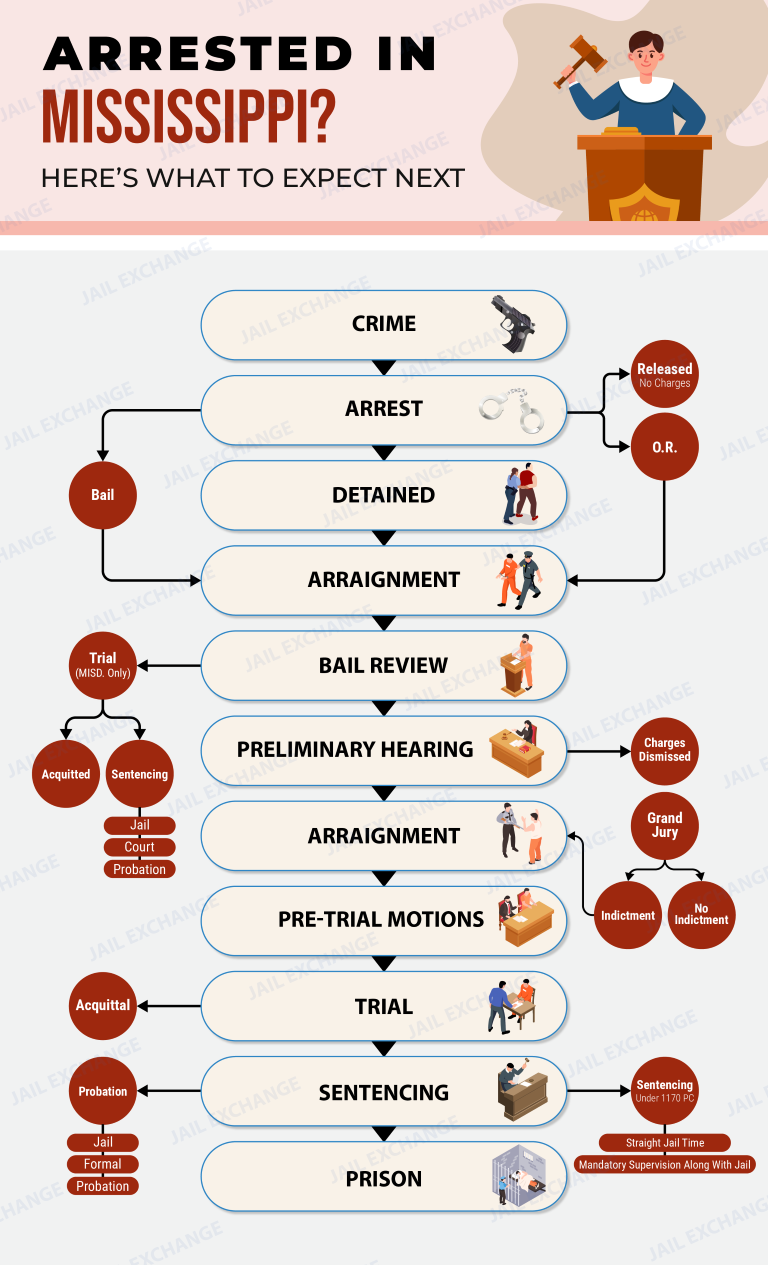

CommissaryOrder.com allows friends and family members to purchase pre-approved food boxes, snack assortments, hygiene essentials, and personal apparel kits sent directly to an incarcerated loved one. Each package is packed to meet strict correctional security guidelines, ensuring the items clear institutional intake without being rejected at the loading dock.
Important: Package Delivery Windows Vary Across Facilities
Jails do not follow uniform rules for incoming packages. Some facilities permit weekly orders, while others limit care packages to monthly or quarterly cycles, and you should call the facility to confirm their active cutoff schedules and purchase limits. If you delay placing your order past the weekly processing deadline, your loved one may have to wait an entire extra cycle before receiving basic personal care supplies, warm undergarments, or supplemental snacks.
Step-by-Step Instructions to Order an Approved Care Package
- Obtain the inmate's full legal name, date of birth, and assigned inmate identification number.
- Visit www.commissaryorder.com and click on Place Order.
- Select the state and the facility where your loved one is currently housed.
- Search for the inmate using their ID number or legal last name to unlock the facility's pre-approved catalog.
- Browse the store categories—including meats, cheeses, ramen soups, baked snacks, toiletries, and clothing—and add items up to the facility's allowed spending limit.
- Review your cart to verify item eligibility, enter your credit or debit card details, and submit your order.
- Print and save your digital order receipt containing the tracking confirmation code.
What the Inmate Needs to Do
The inmate does not need an outside account to receive the package. The items are shipped directly to the jail commissary department in tamper-evident packaging. Correctional staff inspect the box and deliver it to the inmate during the facility's designated commissary delivery schedule, where the inmate signs for the shipment.
Official Provider: CommissaryOrder.com Official Portal
Customer Support Email: Support@CommissaryOrder.com (Always include the facility name, inmate name, and booking ID)
Support Response Hours: Monday – Friday, 8:00 AM – 4:30 PM EST (Responses within two business days)
Supported Languages: English
Other Services Associated with CommissaryOrder.com
Depending on facility contracts, trust funding options are also available to support independent canteen purchases:
- Inmate Trust & Canteen Money Deposits: Send cash directly to an inmate's personal account so they can choose and buy their own items inside.
• Learn more on our website: Inmate Trust Money Deposits Guide | • Visit official vendor page: CommissaryDeposit.com Money Transfers
Buy Commissary for an Inmate in the Smith County Jail
Smith County Jail Inmate Commissary - Sending Money or Purchasing Commissary for an Inmate
Smith County Jail allows inmates to purchase commissary. This can be snacks, hygiene products, stamps, stationary, clothing and even electronics.
You can buy commissary for an inmate using an online service called Commissary Order.

There is a monthly limit of $200-300 on how much inmates can spend on commissary items.
This amount is subject to change so call the facility at 601-782-4531 in order to confirm the amount that cannot be exceeded.
Inmates have access to both an in-house commissary store, and commissary packages that can be purchased and shipped to the inmate by friends and family.
Scroll down for information on the Smith County Jail's service they use for you being able to purchase commissary items online and have them shipped directly to the inmate.
You can also go to our Inmate Money page for information on how to send money to an inmate.

CommissaryDeposit.com provides a secure web platform for friends and family to deposit funds directly into an incarcerated individual's institutional trust and canteen account. Money sent through this service allows inmates to purchase daily essentials, food items, over-the-counter medication, hygiene products, and correspondence stationery from the facility commissary.
Important: Inmate Account Intake Policies Differ by Facility
Once a person is booked and moved to a housing unit, facilities do not always allow cash drop-offs or phone payments directly to the jail window. Some might and you should confirm this by calling the facility and asking. But if you do not register online and fund your loved one's trust account immediately, they may be forced to wait days or weeks for standard paper processing, leaving them without essential soap, clean undergarments, basic medical sundries or snacks. Note also that any funds deposited may be subject to facility collections for outstanding booking fees or medical co-pays according to local rules.
Step-by-Step Instructions to Register and Deposit Funds
- Confirm the inmate's current housing facility, their legal first and last name, and their official inmate booking ID number.
- Navigate to www.commissarydeposit.com and click on Deposit Money.
- Select the state and facility from the drop-down directories.
- Search for the inmate using their ID number or last name and verify the record match to ensure you do not send funds to the wrong individual.
- Enter your phone number to receive a one-time verification code via SMS text or automated voice call.
- Specify the deposit dollar amount, review the calculated convenience fees (fixed fee plus percentage fee), and enter your debit or credit card billing details.
- Submit the payment and save the digital confirmation receipt for your financial records.
What the Inmate Needs to Do
The inmate does not need an internet account to receive funds. Once the electronic payment clears, the funds post directly to their ledger balance in the jail's internal commissary management system. The inmate can verify their balance on their weekly account slip or at a dayroom kiosk terminal to place orders during the next scheduled commissary cycle.
Official Provider: CommissaryDeposit.com Official Portal
Customer Support Email: Support@CommissaryDeposit.com (Requests must include facility name, inmate name, and inmate ID)
Support Response Hours: Monday – Friday, 8:00 AM – 4:30 PM EST (Response within two business days)
Supported Languages: English
Other Services Associated with CommissaryDeposit.com
Depending on the detention facility contract, additional commissary package ordering options may be supported:
- Direct Commissary Package Ordering: Order pre-packaged snack boxes and hygiene bundles sent directly to the inmate.
• Learn more on our website: Commissary Package Ordering Guide | • Visit official vendor page: CommissaryDeposit.com Store Orders
Deposit Money for an Inmate in the Smith County Jail
The Smith County Sheriff's Office lets friends and family add money to an inmate's commissary account at the Smith County Jail in Raleigh. The money buys snacks, hygiene items and writing supplies.
- Online: Make a card deposit at Commissary Deposit. Pick Mississippi, then the Smith County Jail, then find the person.
- By phone: The Sheriff says deposits can be made by phone too. The jail chooses not to publish the phone deposit number. The only way to get it is to call the facility at 601-782-4531.
- Money order or drop-off at the jail: The jail chooses not to publish whether it takes money orders, cash at the window or a lobby kiosk. The only way to find out is to call 601-782-4531, with the person's full name and date of birth ready.
The Sheriff's Office chooses not to publish its commissary spending limit; call 601-782-4531 to ask. Account money is not bail and cannot be used to get someone released.
The Smith County Jail, called the Smith County Detention Center by the sheriff, holds adults awaiting trial and those already sentenced in Raleigh. The sheriff's office says inmates may send and receive mail, and it comes in through the jail's post office box. Letters are delivered on paper on weekdays after a staff inspection.
Smith County post office box for letters, legal mail and publications:
Inmate's Full Name & Inmate ID#
Smith County Jail
PO Box 307
Raleigh, MS 39153
- Find them first: Run an inmate search so you can be sure the person is still in the Raleigh jail before you write.
- Front of the envelope: The inmate's full name and their inmate ID number, then the box.
- Back to you: A complete return address with your name, in the top left. Without one, the letter is most likely destroyed rather than delivered.
- Money on the books: The sheriff says funds for commissary can be deposited online or by phone. Inmates spend it on snacks, hygiene items and writing supplies.
- Ink and paper: Letters to the detention center should be in black or blue ink. Colored ink, markers, crayon, lipstick and perfume are not.
- Keep the envelope empty of extras: Glitter, confetti and drawings will get a letter to Raleigh in trouble. If you send a greeting card, make it a plain one without music.
- Books, newspapers and magazines: Only new ones, shipped straight from the publisher. Books with excessive violence or pornography are disposed of, and adult or weapon-filled magazines are confiscated.
- Packages: The Smith County jail accepts them only from the commissary company it works with.
- People who may not write: Co-defendants, anyone held in a jail or prison, and people a no-contact order protects.
The sheriff's office in Raleigh can be called at 601-782-4531.
City Tele-Coin (CTC) provides telecommunications services that allow incarcerated individuals to place outbound calls from housing-unit telephones directly to approved outside phone numbers. Because correctional facilities do not permit incoming calls, opening and funding a CTC prepaid phone account ensures calls connect without carrier restrictions or operator blocks.
Important: Mobile Phones Automatically Block Inmate Collect Calls
Mobile cellular carriers automatically block collect calls originating from jail phone systems. While select traditional residential landlines might allow direct operator billing, cellular and internet-based phone numbers require an active City Tele-Coin prepaid account, which you can verify by checking with your provider. If you do not register online and fund your phone balance immediately, your loved one will hear an automated operator recording stating that your phone number cannot accept calls.
Step-by-Step Instructions to Set Up and Fund Phone Calling
- Go to www.citytelecoin.com or download the CTC Customer app.
- Register your account using the primary 10-digit cellphone number where you want your loved one to call.
- Select the detention center where the inmate is currently located.
- Search for and add the inmate to your approved contact list by full legal name or booking ID.
- Select your deposit dollar amount and enter your debit or credit card billing details.
- Authorize payment, save your confirmation number, and confirm that your mobile phone does not filter automated correctional phone lines as spam.
What the Inmate Needs to Do
The inmate dials your 10-digit number from any dayroom telephone and enters their assigned PIN. The automated system verifies that your phone number has an active prepaid balance and prompts you to accept the call. All personal telephone conversations are recorded and monitored by facility investigators.
Official Provider: City Tele-Coin Official Website
Customer Service Telephone: 1-800-682-0707
Support Hours: Monday – Friday, 7:00 AM – 7:00 PM CST; Saturday, 8:00 AM – 5:00 PM CST
Supported Languages: English and Spanish
Other Services Provided by City Tele-Coin (CTC)
In addition to Phone Calling Accounts, City Tele-Coin provides several other communication, financial, and visitation services:
- Remote Video Visitation: Schedule and join live video visits from home using your computer or smartphone.
• Learn more on our website: Video Visitation Guide | • Visit official vendor page: CTC Video Visits - Chirp Messaging Devices: Exchange digital text messages and photos directly with handheld units.
• Learn more on our website: Chirp Messaging Guide | • Visit official vendor page: CTC Chirp Devices - Inmate Trust & Account Deposits: Send money directly into an inmate's jail trust account for independent canteen shopping.
• Learn more on our website: Inmate Trust Deposits Guide | • Visit official vendor page: CTC Trust Deposits
City Tele-Coin (CTC) provides telecommunications, remote video visitation, and digital tablet solutions for county jails and regional correctional facilities across the southern United States. Opening a prepaid account ties calling minutes and video credits directly to your phone number and mobile app, ensuring your incarcerated loved one can place outbound calls without carrier blocks.
Important: Cell Networks Automatically Block Collect Inmate Calls
Inmate phone networks do not permit incoming telephone calls, and cellular carriers do not support traditional collect billing from detention centers. While select traditional landlines may support direct monthly carrier billing, wireless smartphones and VoIP lines require an active prepaid calling balance, which you can verify by checking with your telephone service provider. If you do not register online and fund your phone account right away, your loved one will receive an automated disconnect announcement when dialing your number.
Step-by-Step Instructions to Register and Fund a Phone Account
- Visit www.citytelecoin.com or download the CTC mobile app.
- Click Create Account and register using your primary 10-digit telephone number and email address.
- Select the state and facility where the inmate is currently housed.
- Locate the inmate using their legal first and last name or facility booking ID number.
- Choose your deposit amount ($25, $50, or custom amount) and enter your credit or debit card billing information.
- Authorize payment, save your confirmation number, and confirm that your mobile phone does not filter automated correctional phone lines as spam.
What the Inmate Needs to Do
The inmate dials your 10-digit telephone number from any dayroom telephone or tablet and keys in their assigned PIN. The automated system verifies that your phone number has an active prepaid balance and connects the call once you press the prompted number to accept. All personal telephone calls are recorded and monitored by facility investigators.
Official Provider: City Tele-Coin Official Website
Customer Service Telephone: 1-800-682-0707
Support Hours: Monday – Friday, 7:00 AM – 7:00 PM CST; Saturday, 8:00 AM – 5:00 PM CST
Supported Languages: English and Spanish
Other Services Provided by City Tele-Coin (CTC)
In addition to Prepaid Phone Calling, City Tele-Coin offers video visitation and messaging options at participating facilities:
- Remote Video Visitation: Schedule and join live video visits from home using your computer or smartphone.
• Learn more on our website: Video Visitation Guide | • Visit official vendor page: CTC Video Visits - Digital Inmate Messaging: Send electronic messages and photos directly to an inmate's housing unit tablet or kiosk.
• Learn more on our website: Digital Messaging Guide | • Visit official vendor page: CTC Messaging
City Tele-Coin offers Chirp handheld messaging units that enable incarcerated individuals to send and receive text messages and digital photo attachments directly from their housing areas. Families use the CTC mobile app or web portal to send electronic correspondence, avoiding long transit delays and physical mailroom processing backlogs.
Important: Device Rental and Digital Mail Guidelines Vary
Inmates cannot receive incoming telephone calls, and physical postal mail policies differ widely across jurisdictions. While some detention centers allow paper letters, many facilities utilizing City Tele-Coin restrict physical correspondence or mandate electronic Chirp messaging, which you can verify by checking facility rules. If you do not register online and purchase messaging credits immediately, your loved one may face lengthy periods without direct written contact from family.
Step-by-Step Instructions to Register and Message a Chirp Device
- Go to www.citytelecoin.com or download the CTC Customer app.
- Register your account using your primary 10-digit mobile number and email address.
- Select your state and the facility where your loved one is housed.
- Add the inmate to your contact directory by full legal name or facility booking ID.
- Navigate to Messaging / Chirp and purchase a bundle of messaging credits using a credit or debit card.
- Compose your text message, attach approved JPEG photos if permitted, and submit your transmission for electronic screening.
What the Inmate Needs to Do
All electronic correspondence is screened by facility security staff before delivery. Once approved, the message transmits wirelessly to the inmate's assigned Chirp device. The inmate opens the message, views the attachment, and types an electronic reply using their available message balance.
Official Provider: City Tele-Coin Official Website
Customer Service Telephone: 1-800-682-0707
Support Hours: Monday – Friday, 7:00 AM – 7:00 PM CST; Saturday, 8:00 AM – 5:00 PM CST
Supported Languages: English and Spanish
Other Services Provided by City Tele-Coin (CTC)
In addition to Chirp Messaging Devices, City Tele-Coin offers several communication, banking, and visitation services:
- Inmate Phone Calling Accounts: Prepay for phone calling credits so your loved one can call your telephone directly.
• Learn more on our website: Phone Calling Accounts Guide | • Visit official vendor page: CTC Phone Calling - Remote Video Visitation: Schedule and join live video visits from home using your computer or smartphone.
• Learn more on our website: Video Visitation Guide | • Visit official vendor page: CTC Video Visits - Inmate Trust & Account Deposits: Deposit funds directly into an inmate's jail trust account for independent canteen shopping.
• Learn more on our website: Inmate Trust Deposits Guide | • Visit official vendor page: CTC Trust Deposits
City Tele-Coin provides secure handheld wireless tablets designed specifically for correctional housing pods. Operating on a secure internal network, these devices allow incarcerated individuals to exchange digital messages, make telephone calls, conduct remote video visits, stream approved music, read eBooks, and access self-help legal research materials from their living quarters.
Important: Tablet Hardware Deployment and Feature Rules Vary
Correctional agencies do not manage tablet access under identical contracts. Some facilities provide tablets to every inmate at no hardware cost, while other institutions require daily rental fees or limit tablet use to dayroom hours, which you can verify by checking facility rules. While educational and legal databases are typically free, accessing music, premium games, or outside communications requires an active balance funded by family members.
Step-by-Step Instructions to Fund Tablet Services
- Confirm that City Tele-Coin tablets are active at your loved one's specific detention facility.
- Navigate to www.citytelecoin.com or launch the CTC Customer app.
- Sign into your verified user profile and link the inmate's legal name and booking ID number.
- Select Tablet Media / Messaging and choose your deposit amount.
- Review transaction fees and complete payment with a credit or debit card.
- Notify your loved one that funds have been credited to their media profile.
What the Inmate Needs to Do
The inmate unlocks their assigned tablet using their PIN or biometric scan. Their available balance appears on the screen, allowing them to download songs, read digital books, write messages, and communicate with approved family members.
Official Provider: City Tele-Coin Official Website
Customer Service Telephone: 1-800-682-0707
Support Hours: Monday – Friday, 7:00 AM – 7:00 PM CST; Saturday, 8:00 AM – 5:00 PM CST
Supported Languages: English and Spanish
Other Services Provided by City Tele-Coin (CTC)
In addition to Inmate Tablets & Media, City Tele-Coin offers several core communication channels:
- Chirp Messaging Devices: Send two-way digital text messages and photos directly to handheld units.
• Learn more on our website: Chirp Messaging Guide | • Visit official vendor page: CTC Chirp Devices - Remote Video Visitation: Schedule and join live video visits from home using your computer or smartphone.
• Learn more on our website: Video Visitation Guide | • Visit official vendor page: CTC Video Visits - Inmate Phone Calling Accounts: Prepay for phone calling credits so your loved one can call your telephone directly.
• Learn more on our website: Phone Calling Accounts Guide | • Visit official vendor page: CTC Phone Calling
- Jail (Main): 601-782-4531
- Sheriff: 601-782-4531
The Smith County Jail serves the following cities and towns of Smith County: Mize, Polkville, Raleigh and Taylorsville.