
Brown County Detention Center
Brown County Detention Center
Jail Phone Number
937-378-4435Brown County Inmate Search: Check the Georgetown Jail List and Plan Your Next Call
Adults arrested here are taken to the Brown County Adult Detention Center, 750 Mt. Orab Pike, Georgetown, OH 45121. Here is how to track down a person, what to ask about mugshots, and what to do first.
Begin with the jail's online roster. Its boxes take a last name and a first name. New data arrives about twice an hour, so someone booked a short while ago can be missing at first.
If you only do one thing, phone the jail at 937-378-4435. Read out the full name plus the birthday, then ask which charge is listed and which day the person first sees a judge. How release works is explained on our bail page. Courtroom steps are on our court page.
Read inmate search answers
 Read inmate search answers
1. Using the Brown County roster step by step
The Sheriff runs the jail and links one roster for families. Follow these steps:
- Open the Sheriff's current inmate roster.
- Type the last name in the last name box.
- Add the first name if too many people appear.
- Find your person's row. Look for the charge and the booking date.
- Keep a note of that row, since staff can match it to the person faster.
The data changes about every 30 minutes. If you need to be sure it is current, ask the jail at 937-378-4435.
↑ Back to the question list2. I searched and got a blank page. Where could my person be?
A blank result can still hide a real booking. Here are common reasons:
- Still in processing. Paperwork is still moving, and the page itself updates only every half hour.
- Spelling. Test a nickname, a different last-name spelling, or only the opening letters.
- Let go already. They may have paid bail, signed a promise to appear or been released on a ticket.
- Held somewhere else. A police car may have taken them to another county's jail, or federal or state agents may have them.
- A child. Children under 18 are not listed with adults.
The quickest fix is a phone call. Ring 937-378-4435 and ask whether the person is in booking, in temporary holding or already out.
↑ Back to the question list3. Which building houses the adults taken into custody?
Our records name one adult jail in this county. It is the Brown County Adult Detention Center, 750 Mt. Orab Pike, Georgetown, OH 45121, 937-378-4435. The Sheriff runs it. Inside are four housing blocks, called A through D, and a temporary holding area for people who were just booked.
The county does not share this jail with its neighbors. If you think your person was kept somewhere else, such as a city holding cell or a work program, ask the jail.
Officers sometimes drive to the jail nearest the spot of the arrest, which may sit across a county line. Look at jail pages for Clermont County, Adams County and Highland County. Ask the arresting police for the right jail.
↑ Back to the question list4. Does a Brown County roster entry include mugshots?
Open the jail roster and click a result to see whether it carries a mugshot. Photos can come and go as the roster changes. If you do not see one, call the Sheriff's Office at 937-378-4435, 750 Mt. Orab Pike, Georgetown, OH 45121. Ask the Sheriff's Office whether it will release a booking photo. R.C. 149.43, the open-records law, is the basis for the request.
Ohio law also protects people after an arrest. A site that publishes booking photos or arrest facts may not charge or accept payment for taking them down. The penalty is a first-degree misdemeanor, and the person pictured may also sue for at least $10,000 (R.C. 2927.22).
- ICE booking photos come from ICE itself. Send your request through ICE's public records form.
- The public cannot see federal booking photos. The U.S. Marshals Service is the lone agency allowed to release such a photo, and only for a person who is wanted.
5. How would I hear that my person was freed or sent elsewhere?
VINE is the Ohio Attorney General's free notice program. Add the person to your VINE watch list and you will hear by call, text or email whenever custody changes through release, transfer, escape or death. The system links county jails with state prisons and youth facilities.
- Register on VINELink, or dial 800-770-0192 at any hour.
The site also tells you the place where a person is kept right now, so it helps even before any move. Because a message can lag, double-check with the jail at 937-378-4435.
↑ Back to the question list6. How is bail set when someone is arrested in Brown County?
Ohio courts must choose the lightest rules that still bring a person back and keep the public safe (R.C. 2937.011). Money bail is one choice, along with a promise to appear, a bond with no cash up front, or a 10 percent deposit. A 10 percent deposit works like this: 90 percent is refunded after the case closes, provided the person met each condition the court set.
- For many misdemeanors, the court keeps a bail schedule, so the amount may be set before the first hearing.
- Only a judge or magistrate puts a dollar figure on felony bail.
- A person who cannot get out waits no longer than two court-open days for a bail hearing.
Pay misdemeanor bail at Brown County Municipal Court, 770 Mt. Orab Pike, Georgetown, OH 45121, 937-378-6358. The clerk is open Monday through Friday, 8 a.m. to 4 p.m. The court also takes credit cards. Before hiring a bondsman, confirm with the Ohio Department of Insurance that the agent is licensed. Read our bail page for the full steps.
↑ Back to the question list7. Who can name the charge on my person's case?
The case file names the charge and the court. The roster may also list a charge. Phone and spell out the name, plus the birthday.
- Misdemeanor, traffic and OVI cases start at the Municipal Court, 770 Mt. Orab Pike, Georgetown, OH 45121, 937-378-6358.
- Felonies move on to Common Pleas Court at 101 South Main Street, Georgetown, OH 45121. The Clerk of Courts there answers at 937-378-3100.
The county's Prosecuting Attorney decides the felony charges. The office is in Georgetown, OH 45121. The courthouse operator can route you to the prosecutor's desk. Charges can change after the first hearing, so look again after a grand jury meets.
↑ Back to the question list8. My person cannot pay for a lawyer. What happens?
At the first hearing, someone without funds for counsel should ask the judge for help. After a brief financial questionnaire, the court picks who gets help and then names a lawyer.
This county sends such cases to the Ohio Public Defender's multi-county program. That program uses private lawyers on contract. The state office is at 250 East Broad Street, Suite 1400, Columbus, OH 43215, 614-466-5394.
You can also ask the Municipal Court clerk at 770 Mt. Orab Pike, Georgetown, OH 45121, 937-378-6358, how to request one. A person who still has no lawyer at the second bail hearing gets one if they cannot pay. Families who can afford it may hire their own lawyer.
↑ Back to the question list9. What are the visit days at the Brown County jail?
On-site visits use a video screen. Each housing block has its own free visit day, from 8 a.m. to 8 p.m.:
- Block A: Friday
- Block B and temporary holding: Wednesday
- Block C: Saturday
- Block D: Sunday
Come to 750 Mt. Orab Pike, Georgetown, OH 45121, ten minutes early and bring a photo ID. Visitors must be 18 or older unless they come with an adult. A paid remote video visit is open daily from 8 a.m. to 11 p.m. through inmatesales.com.
Rules can change, so call 937-378-4435 first. Our visiting guide adds more advice.
↑ Back to the question list10. How can I fund a jail account for my person?
Funds go toward phone time and store items. There are two ways to add them:
- Online at JailATM.com.
- At the kiosk in the jail lobby, 750 Mt. Orab Pike, Georgetown, OH 45121, with cash or a card.
Money orders and certified checks are refused. Have the person's full name ready. When a person is let out, leftover funds are returned by check or debit card. Questions go to 937-378-4435.
Account funds are not bail. We explain deposits in the money guide and the store in the commissary guide.
↑ Back to the question list11. How does my person reach me by phone or video?
Phone time and remote video are sold through inmatesales.com. Make an account there, add funds, and follow its steps. The person inside can then call you. Rates and times are set by that service.
If a call will not go through, ring the jail at 937-378-4435. Expect that staff may record calls, and keep case details for the lawyer.
See the phone guide for call rules. The email and text guide covers messages.
↑ Back to the question list12. How should I address mail meant for the jail?
Write the person's full name first. Next, on its own line, write c/o Brown County Sheriff's Office. The street line is 750 Mt. Orab Pike. The last line is Georgetown, Ohio 45121.
Staff open and check all mail. Never send cash, money orders or certified checks. Put your return address on the outside. Call 937-378-4435 if you wonder whether a photo or book is allowed. The mail guide covers what is usually allowed.
↑ Back to the question list13. Who returns my person's clothes and belongings?
What came in with the person at booking stays in the jail's storage. On release, the person gets their things back, and leftover funds on the account are returned by check or debit card.
When a person ships out to state prison, you must pick up their property within 5 days. Bring a photo ID to 750 Mt. Orab Pike, Georgetown, OH 45121. Call 937-378-4435 to ask about pickup times and who may come.
↑ Back to the question list14. My person is sick or injured in custody. Who handles that?
Health care in the jail falls under the Sheriff. Call 937-378-4435. Explain what is wrong, and share any medicine names, doses and the doctor's name.
Ask the person to tell jail staff and to file a medical request. For a threat to life, dial 911 before anything else. Tell the staff straight away when the worry is mental health.
↑ Back to the question list15. Does Brown County have a warrant on file for my person?
Deputies from the Sheriff's Office, 937-378-4435, and village police officers serve warrants. Dial the Sheriff to ask if one exists, and be ready with the name and birthday. To look at a case, call the Municipal Court clerk, 937-378-6358, for misdemeanors, or the Clerk of Courts, 937-378-3100, for felonies. Get legal advice before you surrender. Then contact the clerk at the court that began the case. The Municipal Court clerk's office is at 770 Mt. Orab Pike, Georgetown, OH 45121. The Clerk of Courts is at 101 South Main Street, Georgetown, OH 45121.
↑ Back to the question list16. Where is the next hearing, and at what time?
Only the court that holds the file can confirm hearing dates:
- Municipal Court, 770 Mt. Orab Pike, Georgetown, OH 45121, 937-378-6358. It hears misdemeanors, traffic and OVI cases for the whole county.
- Court of Common Pleas, 101 South Main Street, Georgetown, OH 45121, 937-378-3100. It hears felonies after a grand jury indicts.
Village mayor's courts hear local tickets. Call before you go to confirm the day and time:
- Aberdeen: 99 Main Cross Street, Aberdeen, OH 45101, 937-795-2212
- Fayetteville: 81 West Pike Street, Fayetteville, OH 45118, 513-875-3251
- Georgetown: 108 East State Street, Georgetown, OH 45121, 937-378-6400
- Higginsport: 204 Jackson Street, Higginsport, OH 45131, 937-375-4115
- Mount Orab: 211 South High Street, Mount Orab, OH 45154, 937-444-2281
- Ripley: 120 Waterworks Road, Ripley, OH 45167, 937-392-4377
- Russellville: 203 East Main Street, Russellville, OH 45168, 937-377-9129
- Sardinia: 151 Maple Avenue, Sardinia, OH 45171, 937-446-3807
For the Hamersville court, in Hamersville, OH 45130, ask the Municipal Court for help. The court page breaks a case into stages.
↑ Back to the question list17. Could this arrest end up in federal court?
These cases are filed in Cincinnati, which holds the Southern District of Ohio's Western Division. Go to 100 East Fifth Street, Cincinnati, OH 45202, which is the Potter Stewart U.S. Courthouse. The clerk answers at 513-564-7500.
- At the first federal court date, a federal judge picks between detention and release on conditions while the case is pending (18 U.S.C. 3142).
- Before trial, the U.S. Marshals Service holds the person, often in a contract county jail. Call the Marshals at 100 East 5th Street, Room 130, Cincinnati, OH 45202, 513-684-3594, to ask where.
- The Federal Public Defender, 250 East 5th Street, Suite 350, Cincinnati, OH 45202, 513-929-4834, helps people who cannot pay.
- To find a person after sentencing, use the federal BOP inmate locator.
18. ICE has been called: what are the steps?
What happens, in sequence:
- Form I-247A is the ICE detainer, and it arrives at the jail first.
- That form requests a hold lasting up to 48 hours after they would otherwise be released (8 CFR 287.7(d)).
- After that, ICE takes custody. The ICE Detroit Field Office covers Ohio: 985 Michigan Avenue, Suite 207, Detroit, MI 48226, 313-771-6601. The closest local ICE office is at 9875 Redhill Drive, Blue Ash, OH 45242, 513-246-1471.
- Try the ICE Online Detainee Locator. Search by name plus birth country. An A-number is another option.
Whether the Sheriff has signed any agreement with ICE is a question for that office, at 937-378-4435.
↑ Back to the question list19. How do I locate someone who went to an Ohio prison?
A sentence to prison sends a person to a state reception center first, where the state decides on a prison. Some wait in the Georgetown jail for a time before the move, so phone 937-378-4435 to ask.
- Use the state's offender lookup from the Ohio Department of Rehabilitation and Correction. It takes a name.
- For rules inside the walls, read the JE page on Ohio prisons.
20. Where does a Brown County teen go after an arrest?
Juvenile court, not adult court, takes the cases of teens under 18, who are held apart from grown inmates. The Probate and Juvenile Court is at 510 East State Street, Suite 1, Georgetown, OH 45121, 937-378-6726.
The county runs no youth lockup of its own. A child who must be held is often placed in another county's center, such as the Clermont County center. Call the court and ask where the child is.
The detention hearing is due in 72 hours at most, or at the next court session if that is earlier (Juv.R. 7). Without one, the child goes home.
↑ Back to the question list21. Which department booked my person?
Ask the arresting officer, or read the paperwork, to learn the agency. Sheriff's deputies, patrol troopers and village officers each book people at the Georgetown jail.
- Deputies work from the Sheriff's Office at 750 Mt. Orab Pike, Georgetown, OH 45121, 937-378-4435. Call this line first to learn who made the arrest, in any village or township.
- Ohio State Highway Patrol: find the post that serves the county on the patrol's local post pages.
Police in three villages, Mt. Orab, Ripley and Georgetown, also bring people in. For their phone numbers, call the Sheriff's line above and ask.
↑ Back to the question listBrown County bail and bond: two buildings on Mt. Orab Pike in Georgetown
The Brown County Adult Detention Center, 750 Mt. Orab Pike, Georgetown, OH 45121, is where the Sheriff's Office keeps adults after an arrest. The Municipal Court is a few doors down at 770 Mt. Orab Pike, and this page explains who takes bond money and when.
Type a last name into the Brown County Inmate Search to see who is in custody; new arrests can take hours to appear. Our Recent Arrests page adds the charges and free legal aid.
Phone the Sheriff's Office at 937-378-4435 to learn whether bail is set and where to pay. The court clerk at 937-378-6358 can quote the amount for small charges, and our Brown County courts page covers what follows.
1. Where is a person held after an arrest in Brown County?
The Brown County Adult Detention Center, 750 Mt. Orab Pike, Georgetown, OH 45121. It is run by the Sheriff's Office, whose main number is 937-378-4435.
The sheriff's administration and the jail share that address, so one call reaches deputies who know the booking.
↑ Back to the question list2. Can I look up the booking myself?
Yes. Enter the last name on Brown County Inmate Search. A fresh arrest can take a little while to post, so check again later in the day.
When the name stays off the page, call 937-378-4435 and ask the deputy whether the person is still being processed.
↑ Back to the question list3. What if the arrest happens on a Friday night?
The Municipal Court clerk closes at 4 p.m. and does not open on weekends. A person arrested on Friday evening normally stays in the detention center until the first bail hearing, which Ohio law sets no later than the second court day.
Misdemeanor bail schedules exist to let someone leave before that first hearing (R.C. 2937.011(I)). Call the Sheriff's Office at 937-378-4435 to ask whether your charge qualifies and where payment is taken.
↑ Back to the question list4. Where do I take care of a bond on a misdemeanor charge?
Go to Brown County Municipal Court, 770 Mt. Orab Pike, Georgetown, OH 45121. The clerk's office is open Monday through Friday from 8 a.m. to 4 p.m. and closed on legal holidays.
The phone is 937-378-6358. The court posts a waiver and bond schedule on its website, so the clerk can quote the amount for a ticket-level or low-level charge.
↑ Back to the question list5. Can I pay the court from home?
The court operates an online payments page tied to its clerk's site. Ohio law (R.C. 2937.011(I)) requires every municipal and county court to adopt a rule allowing bail by credit card.
Ask the clerk at 937-378-6358 which charges the online page accepts before you enter a card number.
↑ Back to the question list6. How long until a judge reviews the bond?
No later than the second court day after arrest. R.C. 2937.011(J) sets that limit for the first hearing. A person who is still held without a lawyer gets a second hearing two court days later.
At that second hearing, an indigent defendant receives appointed counsel at state expense.
↑ Back to the question list7. What is the cheapest kind of bond in Ohio?
Ohio law tells judges to use the financial conditions that cost the defendant the least while still assuring a return to court (R.C. 2937.011(B)). A personal bond needs no cash at the start.
If a deposit is required, a 10 percent bond lets you hold back 90 percent of the money: the court returns it when every condition is met.
↑ Back to the question list8. Can a judge attach rules besides money?
Yes. R.C. 2937.011(D) lets the court order travel limits, house arrest, electronic monitoring, work release, treatment for drugs or alcohol, and no contact with a victim or witness.
If a no-contact order is part of the release, the defendant must follow it from the moment he leaves the detention center.
↑ Back to the question list9. Should I call a bail bondsman?
Only if you cannot meet the bond another way. Agents who write bonds in Ohio hold a license from the Department of Insurance, and the premium they charge must be the rate filed with the state.
An agent may not require you to sign over title to real estate. Agents also may not solicit at the courthouse or the jail, so be wary of anyone who approaches you there.
↑ Back to the question list10. Who defends me if I have no money for a lawyer?
Brown County is one of ten Ohio counties that contract with the Office of the Ohio Public Defender for trial defense. The state office is at 250 East Broad Street, Columbus, and its main line is 614-466-5394.
Ask the judge to appoint counsel at your first appearance. The court decides whether you qualify.
↑ Back to the question list11. Where do Brown County teenagers go if they are detained?
Brown County has no juvenile detention center of its own, so a child who needs secure detention is placed in another county's facility. Call the Sheriff's Office at 937-378-4435 and ask where the child was taken.
Parents should also ask the juvenile court clerk when the detention hearing is.
↑ Back to the question list12. Can the judge deny bail?
Only where the Ohio Constitution permits it. Art. I, sec. 9 lets a court refuse bail for a capital offense, or for a felony where the proof is evident and the person poses a substantial risk of serious physical harm to anyone.
R.C. 2937.222 requires a hearing and a finding by clear and convincing evidence before a judge refuses bail.
↑ Back to the question list13. Can a farm or house secure a bond?
Ohio law allows it. The owner swears to the property's value and to every lien (R.C. 2937.011(L)), and the court approves the surety only if the person appears financially responsible for at least the bond amount.
Find out before you file whether every owner must sign, and bring deeds and lender statements for each parcel.
↑ Back to the question list14. Is jail account money the same thing as bond?
No. A deposit to an inmate account buys phone time and store items. A bond goes to the court and frees the person.
Ask the clerk for a receipt for every bond payment.
↑ Back to the question list15. What if the arrest was by a village officer?
Village and township officers make arrests all over the county, and the person is brought to Georgetown. Ask the arresting department which court received the charge.
Misdemeanor charges go to Brown County Municipal Court. Felony charges go to Common Pleas Court.
↑ Back to the question list16. Where do I look for a federal or state prisoner?
The county search covers county custody only. Use the Bureau of Prisons inmate locator to find a federal inmate. Ohio prison inmates are found in the Department of Rehabilitation and Correction records.
Start with the county search; if the name is absent, try the federal and state tools next.
↑ Back to the question list17. What if he fails to appear after posting?
A warrant may issue, and the court may begin to forfeit the bail. R.C. 2937.011(K) makes failure to appear a punishable offense.
Contact the clerk at 937-378-6358 right away. Surrender through the surety before the court date ends the surety's risk.
↑ Back to the question list18. Brown County bail contacts
- County jail: Brown County Adult Detention Center, 750 Mt. Orab Pike, Georgetown, OH 45121; 937-378-4435
- Bond guide: Brown County jail bond guide
- Custody lookup: Brown County Inmate Search
- Sheriff: Brown County Sheriff's Office, 750 Mt. Orab Pike, Georgetown; 937-378-4435
- Municipal Court: 770 Mt. Orab Pike, Georgetown, OH 45121; 937-378-6358; 8 a.m. to 4 p.m. weekdays
- Public defense: Office of the Ohio Public Defender, 250 East Broad Street, Columbus; 614-466-5394
Hours and fees can change, so call the clerk before you drive over with money. Nothing here is legal advice; it is a plain-language guide to Brown County practice.
↑ Back to the question listThe Brown County Sheriff recommends that you might want to use a bail bond agent licensed to do business in Brown County.
However if you don't want to use a bail bond agent:
- You can always pay a cash bond yourself, or use your home in Brown County, or in some cases the state of Ohio, but the benefit of using a bail bond agent is that they take responsibility for making sure the inmate shows up for court in Brown County, and if they don't, then they take the financial responsibility.
- The typical fee for a bond in Ohio is between 10-20% of the bail amount; usually 15% or less. So if an offender has a bail of $10,000.00, their bond will be $1,500.00.
- Pay by cash, cashier's check, money order or credit card at the Brown County Detention Center, or the courthouse in Brown County where the offense took place.
Call 937-378-4435 to find out the exact bond (plus other fees) amount, or look it up online by looking up the information on the Brown County inmate locator.

Brown County Detention Center Visits: Lobby and Home Video
Visits at 750 Mount Orab Pike, Georgetown, OH 45121, use free video kiosks. Ask the person in custody for their assigned time. Bring photo ID and arrive 10 minutes early to sign in; late visitors are turned away. Up to two visitors can use the visiting area at once, and visitors younger than 18 need an adult or legal guardian with them. Call 937-378-4435 if you need to confirm the assignment.
At the jail, 8 a.m.–8 p.m. Eastern on the assigned day:
- Wednesday: B Block and temporary holding.
- Friday: A Block.
- Saturday: C Block.
- Sunday: D Block.
From home, daily 8 a.m.–11 p.m. Eastern: Register with your email at Inmate Sales and open the Visitation tab to choose an available time. Home video is paid; check the price before booking. See the Sheriff’s visit instructions for eligibility and in-person rules.
Inmate Sales Video Visitation provides a secure online platform that enables families and loved ones to conduct scheduled face-to-face video visits with incarcerated individuals from home. Using an internet-connected smartphone, tablet, or personal computer equipped with a webcam, visitors connect directly through housing-unit video stations or tablets without traveling to the facility.
Important: Advance Registration and Visitor Clearance Required
Detention centers do not permit unscheduled or unverified video sessions. Correctional facilities require prospective visitors to submit government-issued photo identification and receive administrative clearance before booking an appointment, an approval process that can take up to 48 hours depending on facility staffing. You should verify your visitor approval status with the facility prior to scheduling. If you do not register well in advance, you will miss your loved one's scheduled visiting window for the week.
Step-by-Step Instructions to Register and Schedule a Video Visit
- Visit www.inmatesales.com or launch the Inmate Sales mobile app.
- Register your visitor profile and upload a clear photograph of your government-issued ID for background review.
- Wait for email notification confirming facility visitor approval.
- Select Schedule Video Visit, choose the detention facility, and select the inmate.
- Browse the available schedule calendar, select an open time slot, and pay the visitation fee using a credit or debit card.
- Log into the website or mobile app 10 minutes prior to the start time on a device with a functioning camera, microphone, and stable high-speed internet connection.
What the Inmate Needs to Do
The inmate receives a visitation notification on their housing unit video kiosk or tablet. At the appointed time, they log in with their PIN and sit before the terminal. Inmates and visitors must strictly observe jail dress and conduct rules; sessions are monitored by staff and will terminate immediately upon any violation.
Official Provider: Inmate Sales Official Website
Customer Service Telephone: 1-877-998-5678 or 1-702-829-3001
Support Hours: Monday – Friday, 8:00 AM – 11:00 PM EST; Saturday, 9:00 AM – 5:00 PM EST
Supported Languages: English and Spanish
Other Services Provided by Inmate Sales (CPC)
In addition to Remote Video Visitation, Inmate Sales provides calling, messaging, and commissary options:
- Prepaid Phone Calling Accounts: Prepay for phone calling credits so your loved one can call your telephone directly.
• Learn more on our website: Prepaid Calling Accounts Guide | • Visit official vendor page: Inmate Sales Calling - Two-Way Texting & Messaging: Send digital text messages and photos directly to an inmate's device.
• Learn more on our website: Digital Messaging Guide | • Visit official vendor page: Inmate Sales Messaging - Inmate Tablets & Digital Media: Discover educational programs, phone access, and entertainment offered on facility tablets.
• Learn more on our website: Tablet Programs Guide | • Visit official vendor page: Inmate Sales Tablets - Commissary & Care Packages: Order pre-approved snack boxes, food packages, and clothing directly to the jail.
• Learn more on our website: Commissary Orders Guide | • Visit official vendor page: Inmate Sales Commissary
Georgetown Courts for Brown County Misdemeanors and Felonies
The Brown County Municipal Court, 770 Mt. Orab Pike, Georgetown, OH 45121, hears misdemeanors and traffic tickets from the whole county. Felony trials move to Common Pleas Court at 101 South Main Street, Georgetown, OH 45121, and arrested adults are held at the Brown County Adult Detention Center, 750 Mt. Orab Pike, Georgetown, OH 45121.
Use the Brown County Inmate Search to check whether someone is in custody. Our Inmate Lists page has the latest arrests, the charges and tips on free legal aid.
Dial the clerk of the Municipal Court at 937-378-6358 to learn who the judge is and the next hearing date. For jail questions, the Sheriff's Office is at 937-378-4435, and our bail and bond page covers payment.
1. Local courts in Brown County (municipal, county and mayor's courts)
Georgetown, boyhood home of Ulysses S. Grant, is the county seat of Brown County, a rural stretch east of Cincinnati that reaches from Mt. Orab and Sardinia in the north down to the Ohio River villages of Ripley, Aberdeen and Higginsport. The Brown County Municipal Court on Mt. Orab Pike is the county's only full-time lower court, so it hears all misdemeanor, OVI and traffic charges and opens each felony; the Brown County Court of Common Pleas, in the South Main Street courthouse, tries felonies after indictment. The elected Brown County Prosecuting Attorney brings the felony prosecutions. After an arrest, adults are booked into the Sheriff's Brown County Adult Detention Center, a short distance from the municipal court.
- Brown County Common Pleas Court (felony trials), Brown County Courthouse, 101 South Main Street, Georgetown, OH 45121, (937) 378-3100
- Brown County Municipal Court, 770 Mt. Orab Pike, Georgetown, OH 45121, (937) 378-6358
- Brown County Probate and Juvenile Court, 510 East State Street, Suite 1, Georgetown, OH 45121; juvenile (937) 378-6726
- Brown County Prosecuting Attorney, Georgetown, OH 45121
- Appointed defense counsel for those who qualify: ask the Brown County judge at arraignment, or phone the Georgetown municipal clerk at (937) 378-6358
- Brown County Adult Detention Center (Brown County Sheriff's Office), 750 Mt. Orab Pike, Georgetown, OH 45121, (937) 378-4435
Which court hears your case. For a misdemeanor, OVI or traffic offense committed anywhere in Brown County, the answer is the Brown County Municipal Court, whose territory is the entire county. Village ticket courts, called mayor's courts, have operated in nine Brown communities: Aberdeen, Fayetteville, Georgetown, Hamersville, Higginsport, Mt. Orab, Ripley, Russellville and Sardinia. None of them seats a jury, and anyone ticketed by a Brown village may transfer the case to the municipal court. Felony charges start out on Mt. Orab Pike too, where a municipal judge sees the defendant first, decides bond and presides over any preliminary hearing; Brown grand jurors' indictment, or the defendant's consent to a bill of information, transfers them to the Common Pleas General Division. Brown County lies in the Twelfth Appellate District.
Where pretrial detainees are held. Deputies, troopers and village officers from Mt. Orab, Ripley and Georgetown bring arrested adults to the Brown County Adult Detention Center on Mt. Orab Pike, run by the Sheriff. Anyone unable to post bond waits there for trial or plea; because the building sits beside the municipal court, so many hearings take place in person. Call the Sheriff's Office at (937) 378-4435 for custody, bond or visiting questions.
Brown County relies on one municipal court for the whole county and has no county court. What makes Brown unusual is the number of village mayor's courts, nine in all, most of them meeting once or twice a month. Before a hearing, call the village to confirm the date and time.
Municipal court
- Brown County Municipal Court — 770 Mt. Orab Pike, Georgetown, OH 45121, (937) 378-6358. Territory: all of Brown County, including every village and all sixteen townships.
Mayor's courts
- Aberdeen Mayor's Court — 99 Main Cross Street, P.O. Box 509, Aberdeen, OH 45101, (937) 795-2212
- Fayetteville Mayor's Court — 81 West Pike Street, Fayetteville, OH 45118, (513) 875-3251
- Georgetown Mayor's Court — 108 East State Street, Georgetown, OH 45121, (937) 378-6400
- Hamersville Mayor's Court — Village of Hamersville offices, Hamersville, OH 45130
- Higginsport Mayor's Court — 204 Jackson Street, P.O. Box 121, Higginsport, OH 45131, (937) 375-4115
- Mt. Orab Mayor's Court — 211 South High Street, P.O. Box 466, Mt. Orab, OH 45154, (937) 444-2281
- Ripley Mayor's Court — 120 Waterworks Road, P.O. Box 219, Ripley, OH 45167, (937) 392-4377
- Russellville Mayor's Court — 203 East Main Street, Russellville, OH 45168, (937) 377-9129
- Sardinia Mayor's Court — 151 Maple Avenue, Sardinia, OH 45171, (937) 446-3807
These village courts handle local traffic and ordinance cases only, with limited penalties. Sending the citation to the Georgetown municipal court is the route to a jury, or simply to a judge instead of the mayor or magistrate.
↑ Back to the question list2. Misdemeanor (for example, petty theft, a first OVI, assault, criminal trespass)
State Route 32 through Mt. Orab and U.S. 52 along the river produce many of Brown County's OVI and traffic arrests, while the municipal court's criminal docket also carries shoplifting, domestic violence, drug-paraphernalia and trespass charges. For lesser offenses, officers commonly write a ticket listing a date in Georgetown.
The first day or two
At the detention center, a misdemeanor arrestee may be released on the bond schedule after posting cash, using a licensed bondsman (Ohio allows commercial bail), or signing a recognizance. Anyone still held typically appears before the Brown County Municipal Court judge on the next business day. In setting an amount, the judge must, under the 2022 amendment to Ohio's constitution, consider public safety, the defendant's record, the gravity of the Brown County charge and the risk of nonappearance. In domestic violence cases a judge normally decides on release, often adding a temporary protection order.
Court process
At arraignment, a plea is entered: guilty, not guilty or no contest. If a jail sentence is possible and money for a lawyer is lacking, the Brown defendant fills out a financial affidavit to request appointed counsel; there may be a small application fee. Pretrial conferences with the prosecutor follow. Trials are to the bench; only a written jury demand from the defense brings in eight jurors. Brown misdemeanor trials must start within 90 days when the charge is an M1 or M2; lower charges get only 45.
Penalties for common misdemeanors
- Petty theft (under $1,000) and assault: first-degree misdemeanors, up to 180 days and $1,000.
- Criminal trespass: an M4 (maximum 30 days, $250); aggravated trespass is an M1.
- M2 / M3: up to 90 days and $750 / up to 60 days and $500. Minor misdemeanor: fine of up to $150.
- First OVI: an M1. Brown judges must order at least three days in the detention center or, as a substitute, a 72-hour driver intervention program; the minimum rises to six days on a .17-plus reading or after certain refusals. Fines run $375 to $1,075, and a judicial suspension of one to three years is added to the administrative suspension from the arrest. Limited driving privileges, sometimes tied to an interlock, are frequently allowed.
A Brown misdemeanor may be dismissed or diverted, or closed out by intervention in lieu of conviction, or it may end with fines, community control or jail. Many records may be sealed later. One to four months is the typical length.
↑ Back to the question list3. Felony (for example, burglary, felony theft, drug trafficking, felonious assault)
A Brown County felony moves from Mt. Orab Pike to South Main Street in Georgetown.
- Complaint and first appearance. The case is filed in Brown County Municipal Court. Usually on the next business day, the judge explains the charge, appoints counsel if the defendant qualifies and sets bond, choosing among a signature bond, a deposit of 10 percent, and the full amount in cash or surety, frequently adding no-contact orders or random drug screens.
- Preliminary hearing. For a jailed Brown defendant, Criminal Rule 5(B) sets the hearing within 10 consecutive days; a released defendant's hearing comes within 15, unless the grand jury moves first. Probable cause is the sole issue.
- Grand jury. The Brown County Prosecuting Attorney presents evidence to a grand jury that meets privately. Early plea deals sometimes involve waiving indictment, and the prosecutor then charges by bill of information.
- Common Pleas arraignment and pretrial. On South Main Street prosecution and defense swap discovery, meet at pretrials and argue any suppression motions.
- Trial or plea. Brown prosecutors have 270 days from arrest to try the case, and a day in the detention center counts as three. Pleas end most cases; a guilty verdict at trial needs all 12 jurors.
- Sentencing. The court usually orders a presentence investigation.
Felony levels
- Fifth degree: 6 to 12 months; theft of $1,000 to $7,500; Ohio presumes community control for many nonviolent first offenders.
- Fourth degree: 6 to 18 months; theft of $7,500 to $150,000.
- Third degree: 9 to 36 months, with certain offenses carrying a longer 12-to-60 range; burglary when no one is likely present.
- Second degree: 2 to 8 years; felonious assault; burglary of an occupied home.
- First degree: 3 to 11 years; aggravated burglary.
Brown County trafficking charges are graded by drug and quantity and can land at any level. Reagan Tokes indefinite sentences apply to Brown F1 and F2 offenses that occurred from March 22, 2019 on, with the possible maximum set at the minimum plus half. Firearm specifications add mandatory prison time. Intervention in lieu of conviction may let some defendants with drug-related charges earn a dismissal through treatment.
Brown County felonies usually take four to twelve months.
↑ Back to the question list4. Violent felony (for example, murder, rape, aggravated robbery)
Brown County's most serious cases follow the same route, but with higher stakes: bond is often set far beyond what most families can post, or denied after a hearing, and investigations may involve the state's Bureau of Criminal Investigation alongside the Sheriff.
- Aggravated murder: the court chooses among death, life with no parole, and life with a parole hearing available after 20, 25 or 30 years. Ohio still authorizes executions, yet none has occurred there since 2018.
- Murder: 15 years to life.
- Rape: an F1 with indefinite Reagan Tokes sentencing and registration as a sex offender; the penalty can reach life when a child under 13 is harmed and force or other aggravation is proven.
- Aggravated robbery: an F1, usually accompanied in Brown by a firearm specification.
Victims in Brown County cases have Marsy's Law rights to be notified, to attend, and to address the court at the bond hearing, the plea and the sentencing. Most such prosecutions take a year or two, if not longer.
↑ Back to the question list5. Juveniles (under 18) arrested in Brown County
Brown County's juvenile court is part of the combined Probate and Juvenile divisions of Common Pleas, located at 510 East State Street, Suite 1, in Georgetown, (937) 378-6726. Intake officers screen each referral before the county prosecutor files a delinquency complaint.
Intake may resolve a first or minor case informally through diversion, a warning, restitution or community service, without a formal adjudication. When a complaint is filed, the youth appears at an initial hearing to admit or deny it.
Brown operates no juvenile detention center. When release to a parent is not possible, the youth is typically placed in a contracted center outside the county, such as the one in Clermont County, and a detention hearing must follow: 72 hours is the limit, shortened if a court day arrives first. Families can call the Georgetown juvenile court to learn where the youth is.
Possible outcomes:
- Probation, counseling, community service, restitution or residential placement.
- For serious felonies, commitment to the state Department of Youth Services.
- Mandatory bindover: Ohio requires adult prosecution when some Brown County 16- and 17-year-olds, or in fewer cases 14- and 15-year-olds, face the gravest charges.
- Discretionary bindover once a youth is 14 or older, following an amenability hearing.
- A Serious Youthful Offender blended sentence that adds a suspended adult term to a juvenile disposition.
Brown County keeps juvenile files generally confidential, and sealing is frequently granted later. Youths who qualify receive appointed counsel.
↑ Back to the question list6. Federal cases (U.S. District Court) from Brown County
Court location
Federal crimes from Brown County belong to the Western Division of Ohio's Southern District, generally heard in Cincinnati, about an hour west of Georgetown.
- Potter Stewart U.S. Courthouse, 100 East Fifth Street, Cincinnati, OH 45202
- U.S. Attorney's Office (Cincinnati branch office), 221 East Fourth Street, Suite 400, Cincinnati, OH 45202, (513) 684-3711
- Federal Public Defender (Cincinnati), 250 East Fifth Street, Suite 350, Cincinnati, OH 45202, (513) 929-4834
- U.S. Marshals Service, Potter Stewart U.S. Courthouse, 100 East Fifth Street, Room 130, Cincinnati, OH 45202, (513) 684-3594
Why a case goes federal
Brown cases reach federal court when federal law is broken and investigators from the FBI, DEA, ATF, HSI or another federal agency present them to the U.S. Attorney. Brown County federal cases often concern drug trafficking tied to the Cincinnati area, felons possessing firearms, child exploitation, and fraud.
Process
A U.S. magistrate judge in Cincinnati conducts the first appearance, providing a federal defender or CJA lawyer to any Brown defendant who cannot pay. A detention hearing, if requested by the government, is generally held within three court days. The Bail Reform Act governs the result: detention, or release on conditions watched by U.S. Pretrial Services. Bondsmen have no role. When an arrest rests on a complaint, an indictment is due within 30 days, and trial is then due within 70 days, a Speedy Trial Act limit that is often stretched. Pleas resolve most cases; at trial all 12 jurors must agree. U.S. Probation's presentence report precedes sentencing, where the Guidelines are advisory but mandatory minimums bind the judge. No parole exists federally, so a Brown defendant serves roughly 85 percent of the federal sentence in prison, then supervised release. Appeals go to the Sixth Circuit.
Custody
The U.S. Marshals place detained defendants in contract jails; families around Georgetown can type a Brown County defendant's name or register number into the Federal Bureau of Prisons inmate locator. People from Brown County held before trial in a contracting jail might be listed on that jail's list. Federal court almost never handles juvenile cases.
This overview of Brown County's criminal courts is general information and not legal advice; procedures may change. Anyone charged in Georgetown or a Brown County village should hire a defense lawyer or request a court-appointed attorney through Brown County Municipal Court at (937) 378-6358, and verify hearing dates with the clerk.
↑ Back to the question list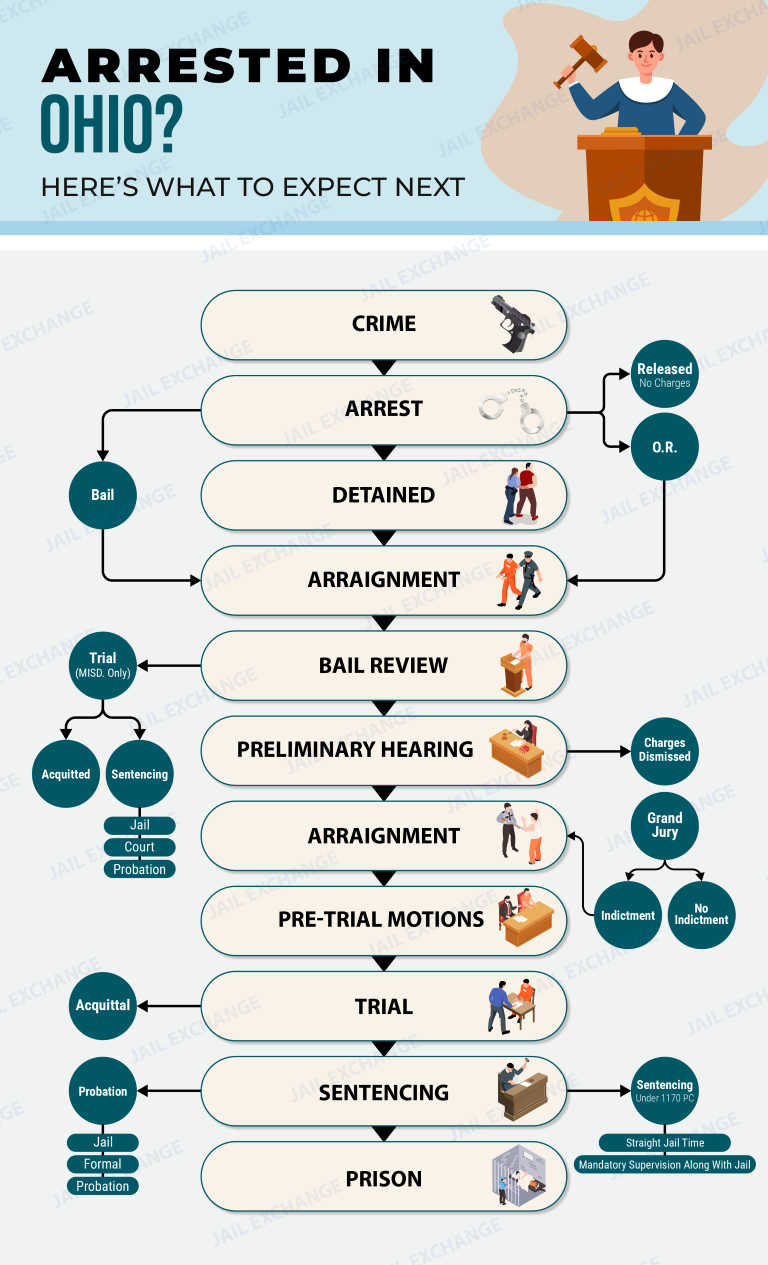
Information for this service is currently unavailable.

JailATM provides a secure electronic payment portal that allows friends and family members to deposit funds directly into an incarcerated person's jail trust and commissary account. Deposited money provides the financial balance needed for your loved one to purchase personal hygiene items, snacks, over-the-counter medical sundries, and correspondence supplies from the facility commissary.
Important: Facility Deposit Rules and Window Intake Vary
Once a person is booked and moved to a housing unit, facilities do not always allow cash drop-offs or phone payments directly to the jail window. Some might and you should confirm this by calling the facility and asking. But if you do not register online and fund your loved one's trust account immediately, they may be forced to wait days or weeks for standard paper processing, leaving them without essential soap, clean undergarments, basic medical sundries or snacks.
Step-by-Step Instructions to Register and Deposit Funds
- Obtain the inmate's legal first and last name, date of birth, and assigned facility booking ID number.
- Navigate to deposits.jailatm.com/webdeposits/ on your computer or mobile device.
- Click Sign In or Register to set up your verified user account using your email address and password.
- Select the state and the detention facility where the inmate is currently housed.
- Search for the inmate using their ID number or legal last name to confirm an exact roster match.
- Enter your desired deposit dollar amount and review the calculated transaction and convenience fees.
- Input your debit or credit card billing details, complete payment authorization, and save your digital receipt.
What the Inmate Needs to Do
The inmate does not need an internet account to receive funds. Once the electronic transaction clears, the balance posts directly to their jail trust ledger according to facility accounting schedules. The inmate can review their updated balance at a dayroom pod kiosk or on their weekly trust statement and place orders on their regular commissary day.
Official Provider: JailATM Official Website
Customer Service Telephone: 1-877-810-0914
Support Hours: Monday – Friday, 8:00 AM – 5:00 PM CST
Supported Languages: English and Spanish
Other Services Provided by JailATM
In addition to Trust & Commissary Money Deposits, JailATM provides several other communication, store, and visitation services at participating facilities:
- Commissary Gift Packs & Store Ordering: Order pre-approved snack boxes, food packages, and hygiene bundles sent directly to the jail.
• Learn more on our website: Commissary Gift Packs Guide | • Visit official vendor page: JailATM Store Orders - Digital Messaging & Picture Sharing: Send electronic messages and photos directly to an inmate's housing unit kiosk.
• Learn more on our website: Digital Messaging Guide | • Visit official vendor page: JailATM Messaging - Remote Video Visitation: Schedule and join live video visits from home using your computer or smartphone.
• Learn more on our website: Video Visitation Guide | • Visit official vendor page: JailATM Video Visits
Deposit Money for an Inmate in the Brown County Detention Center
Two options are left for families sending money to the Brown County Detention Center in Georgetown.
1. The lobby kiosk. It is the commissary kiosk in the front lobby of the Sheriff's Office, 750 Mt. Orab Pike, and it takes cash or a credit card.
2. Online. Open an account with JailATM, then add money from home.
Money orders and certified checks are no longer taken, and money orders, certified checks or cash sent by mail are refused. People inside cannot send money out from their accounts. At release, the balance is paid by check or debit card.
The Brown County Detention Center on Mt. Orab Pike in Georgetown, Brown County, Ohio, is the county's adult jail, run by the Brown County Sheriff. Mail is addressed in care of the Sheriff's Office and must come through the U.S. Postal Service. Detention staff open and search every letter for contraband before the inmate receives it.
Letters, photos, legal mail and books:
Inmate's Full Name & Inmate ID#
c/o Brown County Sheriff's Office
750 Mt. Orab Pike
Georgetown, OH 45121
- No money by mail: Money orders, certified checks and cash are all refused in the mail. Put money on an inmate's account at the kiosk in the Sheriff's Office lobby or online.
- Photos: Five per envelope at most. Any photo staff judge inappropriate is put in the inmate's stored property.
- Scents and sprays: A letter sprayed with perfume or any other chemical is mailed back to you.
- Blank supplies: Blank paper and empty envelopes are not given to the inmate, and stamps can't be sent either.
- Return address: Your name and address in the top left corner, so the letter can be delivered.
- Ink: Stick to blue or black. Felt markers, crayons and colored ink are not allowed, and the envelope should have no drawings, glitter or lipstick on it.
- Greeting cards: Send a plain card. Ones with music inside are not accepted.
- Books, magazines and newspapers: New items shipped straight from the publisher. Hardcovers and books with spiral binding will be kept out.
- Dropping things off: The jail does not take outside items brought to the building, and it won't hold belongings for an inmate to take to prison.
Look up an inmate's ID number on the jail roster, and add it under their name.
Inmate Sales (Combined Public Communications - CPC) provides telecommunications services that allow incarcerated individuals to place outbound voice calls from dayroom telephones or handheld tablets to family and friends. Because correctional facilities do not permit incoming calls, funding an Inmate Sales prepaid account links calling credits directly to your phone number so calls connect without carrier restrictions.
Important: Mobile Phones Automatically Block Inmate Collect Calls
Cellular phone carriers automatically reject standard collect calls originating from jail phone systems. While some residential landlines might permit direct monthly billing, mobile devices and internet-based telephone lines require an active prepaid calling balance, which you can verify by checking with your provider. If you do not register online and fund an Inmate Sales account right away, your loved one will receive an automated disconnect announcement when attempting to call your number.
Step-by-Step Instructions to Register and Fund a Phone Account
- Visit www.inmatesales.com or call customer care at 1-877-998-5678.
- Click New User and register using the primary 10-digit telephone number where you want to receive calls.
- Select the state and facility where the inmate is currently detained.
- Link the inmate to your profile using their full legal name and booking ID number.
- Select Prepaid Collect Phone or Direct Inmate PIN Debit.
- Select your deposit dollar amount and enter your debit or credit card billing details.
- Submit payment, record your confirmation number, and confirm that your mobile phone allows calls from automated or unknown correctional numbers.
What the Inmate Needs to Do
The inmate dials your 10-digit telephone number from any dayroom telephone or tablet and keys in their assigned PIN. The automated system verifies that your phone number has an active prepaid balance and connects the call once you accept the automated prompt. All personal telephone conversations are recorded and monitored by facility staff.
Official Provider: Inmate Sales Official Website
Customer Service Telephone: 1-877-998-5678 or 1-702-829-3001
Support Hours: Monday – Friday, 8:00 AM – 11:00 PM EST; Saturday, 9:00 AM – 5:00 PM EST
Supported Languages: English and Spanish
Other Services Provided by Inmate Sales (CPC)
In addition to Phone Calling Accounts, Inmate Sales provides several other communication and visitation channels:
- Inmate Tablets & Digital Media: Discover educational programs, phone access, and entertainment offered on facility tablets.
• Learn more on our website: Tablet Programs Guide | • Visit official vendor page: Inmate Sales Tablets - Two-Way Texting & Messaging: Send digital text messages and photos directly to an inmate's device.
• Learn more on our website: Digital Messaging Guide | • Visit official vendor page: Inmate Sales Messaging - Remote Video Visitation: Schedule and join live video visits from home using your computer or smartphone.
• Learn more on our website: Video Visitation Guide | • Visit official vendor page: Inmate Sales Video Visits - Commissary & Care Packages: Order pre-approved snack boxes, food packages, and clothing directly to the jail.
• Learn more on our website: Commissary Orders Guide | • Visit official vendor page: Inmate Sales Commissary
Information for this service is currently unavailable.
Information for this service is currently unavailable.
- Jail (Main): 937-378-4435
- Georgetown Police: 937-378-6400
- Sheriff: 937-378-4435
The Brown County Detention Center serves the following cities and towns of Brown County: Aberdeen, Georgetown, Higginsport, Hamersville, Mount Orab, Owensville, Ripley and Sardinia.