
Fayette County Jail
Fayette County Jail
Jail Phone Number
724-430-1222Fayette County Inmate Search: Locating Someone at the McClellandtown Road Jail
Adults arrested here are held at the Fayette County Jail, 254 McClellandtown Rd., Uniontown, PA 15401, also called the county prison. Since December 8, 2025, the county booking center has run inside that building too. Below are the steps to track a person down there, plus help with charges, lawyers, video visits, letters, deposits, belongings and hearings.
Open the official inmate lookup first. That county page sends families to the Sheriff's free phone app, which carries the most current jail roster. Write down the booking number you find, because mail and money orders need it.
Still stuck after searching? Staff answer at 724-430-1222. Have the name from the person's ID and the date of birth handy. Three questions to ask: what the charges are, the bail figure, and when the hearing is. Our bail page covers release, and the court page maps the road from hearing to verdict.
Read inmate search answers
 Read inmate search answers
1. How do I search the Fayette County Jail roster?
The roster lives in the Sheriff's app. Here is how to reach it:
- Open the county inmate lookup. It points you to the Sheriff's app for up-to-date roster details.
- Install the app from Google Play or the Apple App Store. It is free.
- Find the jail roster inside the app and search by last name.
- No match? Swap in other spellings, then middle or past surnames.
- Note the booking number. The jail rejects personal mail that lacks it.
When the app comes up empty, jail staff can help at 724-430-1222, seven days a week by phone.
↑ Back to the question list2. Nothing turned up in the search. Why?
An empty search is often just a timing issue. Likely causes:
- Booking not finished. A brand new arrest can take hours to post.
- Released. Bail may be paid already, or an MDJ may have ordered release without money.
- Moved. Custody may have passed to a neighboring county, the DOC or a federal agency.
- Different spelling. Search a nickname or each half of a hyphenated surname.
- A minor. Teens are placed in juvenile detention, never on this adult roster.
Two more checks help. A free UJS case search by name shows whether a new case exists. After that, the jail at 724-430-1222 can say whether a booking happened and where the person was sent.
↑ Back to the question list3. Could a jail outside Fayette County be holding them?
This county runs one jail, and booking happens inside it. Someone arrested just over the line, or on another county's warrant, might be held in a nearby jail. Check these:
- Greene County Prison, 855 Rolling Meadows Road, Waynesburg, PA 15370, 724-627-7780
- Washington County Correctional Facility, 100 W. Cherry Ave., Washington, PA 15301, 724-228-6845
- Westmoreland County Prison, 3000 South Grande Boulevard, Greensburg, PA 15601, 724-830-6000
- Somerset County Jail, 127 E Fairview St # 100, Somerset, PA 15501, 814-445-1500
If the person may have been picked up in another state, call the local jail at 724-430-1222 and ask whether any out-of-state hold is on file.
↑ Back to the question list4. What about mugshots from this jail?
Don't count on one. Release of jail mugshots in Pennsylvania varies from county to county, and recent appeals court rulings have shaped it. The county lookup page and the Sheriff's app are the places to check first.
- News outlets may request a photo from the jail at 724-430-1222, or from whichever police department arrested the person.
- ICE photos have their own form: the ICE records request page.
- Mugshots taken in federal cases are generally withheld. The U.S. Marshals Service may still put one out, such as when someone is on the run.
5. PA SAVIN alerts: will I hear about a release?
Yes. PA SAVIN costs nothing. It is a program of the Pennsylvania Commission on Crime and Delinquency that works through VINELink. A VINELink search reports custody status and location across Pennsylvania jails, prisons and state parole. After you register, a release, transfer or escape triggers a call, text or email.
- Search or sign up on VINELink.
- Phone 866-972-7284 at any hour. The TTY line is 866-847-1298.
- Your sign-up stays confidential from the person in custody.
The app and VINELink can lag behind a fresh booking or release, so call the jail at 724-430-1222 when timing matters.
↑ Back to the question list6. Who decides bail, and where is it paid?
An MDJ sets bail at a quick video hearing soon after booking. An on-call MDJ covers nights and weekends. Choices run from a simple promise to return to court up to full money bail.
- Weekdays until 3:30 p.m., the Clerk of Courts takes bail in person at 61 East Main Street, 1st Floor, Uniontown, PA 15401, 724-430-1253. Bring cash, a money order, or a certified or cashier's check.
- After 4:00 p.m. and on weekends and holidays, pay at the jail with a money order only.
- Cards are refused for bail.
- The county holds back 30 percent of any cash deposit once the case closes.
Our bail page walks through property bonds, bondsmen and refunds step by step.
↑ Back to the question list7. Where can I find the exact charges?
The criminal complaint lists the charges, and the person gets a copy at the first hearing. Families can read them on the free UJS Web Portal. Pick the county, then enter the first and last name. Each docket shows the counts, their grade, the bail and coming court dates.
Grades sort crimes from light to heavy. Summary offenses top out at 90 days. Misdemeanors range from 1 year (M3) to 5 years (M1). Felonies range from 7 years (F3) to 20 years (F1) (18 Pa.C.S. §§ 1103-1105).
Charges can still change. The District Attorney has the last word and can add or cut counts. Its office is at 61 East Main Street, Uniontown, PA 15401, 724-430-1245.
↑ Back to the question list8. Who provides a free lawyer to someone in custody?
The right to appointed counsel is explained by the MDJ at the preliminary arraignment. Someone who can't pay can ask for the public defender. The Public Defender's Office is at 61 E Main Street, Uniontown, PA 15401, 724-430-1220.
- Walk-in applications run 8:00 to 11:30 a.m. and 1:30 to 3:30 p.m.
- The applicant swears to their finances on a written form.
- Relatives may phone the office and ask how the application works from inside the jail.
Private lawyers can visit any day from 8:00 a.m. to 8:00 p.m. with no appointment. They need a photo ID and a bar card.
↑ Back to the question list9. Booking a kiosk visit at the Fayette County Jail: what should I know?
All family visits are video visits. No one meets face to face. Visitors sit at one of four kiosks in the jail lobby while the person stays on their housing unit.
- Each person gets one free 30-minute visit a week.
- Visitors must be 18 to register. They set up an account online, accept the visit rules and upload a clear photo of a government ID.
- The person in jail must pass screening before visits start.
- Book at least 24 hours ahead, but no more than 14 days. Cancel at least 24 hours ahead.
- Up to two visitors may come: two adults, or one approved adult with a child of the person in jail. A birth certificate may be asked for.
- Arrive no more than 10 minutes early and wait outside until called. Bring photo ID.
- Someone released from this jail must wait 60 days before visiting.
Call 724-430-1222 for help signing up. Before your first kiosk session, skim our visiting guide.
↑ Back to the question list10. Money orders for a jail account: what are the rules?
Yes, by money order through the mail. The jail turns away cash and personal checks. Follow these steps:
- Make the money order out to the person in jail, by full name.
- Write their name, the facility name and the jail address on it, plus your own name, address and signature.
- Mail it by itself to 254 McClellandtown Rd, Uniontown, PA 15401. Never tuck it into a personal letter, or it will be sent back and not credited.
Money orders can't be dropped off at a video visit or handed to staff. The jail also warns that it never asks families for money for a person in jail. To learn what an account pays for, read our money guide and the commissary guide.
↑ Back to the question list11. Tablets, PINs and phone hours: how do inmates call home?
People in the jail can make calls from 8:00 a.m. to 8:00 p.m. every day. Calls are collect, or they are charged to the person's commissary account. Each person gets a PIN to place calls.
- Letters reach the person on a tablet, through a free messaging app.
- The county's tablet program lists a service line, 866-516-0115, for account and tablet questions.
- Staff can't pass along messages for families.
Keep details of the case out of calls and messages. Read more in our jail calls guide or the inmate messaging guide.
↑ Back to the question list12. What address do letters to the Fayette County Jail use?
Personal letters, photos and drawings do not go to the jail building. They go to a scanning center, then show up on the person's tablet. Use this exact address: Fayette County Prison, PA, then the person's full name and booking number, PO Box 247, Phoenix, MD 21131.
- Spell out the full facility name and state. Don't abbreviate.
- Put your full name and street address on the envelope.
- Mail without a booking number is rejected.
Legal mail from a lawyer goes to 254 McClellandtown Rd, Uniontown, PA 15401, with the lawyer's phone number on the envelope. For sending tips that keep letters from bouncing, see our mail guide.
↑ Back to the question list13. Can family collect a person's belongings?
To send belongings home with family, the person in jail fills out a Request Slip. Once staff review it, the property is handed out on the next fitting visiting day.
Before you drive to 254 McClellandtown Rd., Uniontown, PA 15401, call 724-430-1222 to confirm the day and what ID to bring. Ask too about any money left on the account.
↑ Back to the question list14. Medical worries: how do I alert the jail?
Phone the jail without delay at 724-430-1222. Share the person's name, each medicine they take and its dose, and how to reach their doctor. For a life-threatening problem, dial 911 first. Mention any signs of a mental health crisis on the call.
Pennsylvania watches its county jails. The Department of Corrections inspects each one at least every 12 to 24 months (37 Pa. Code Chapter 95). State law also limits restraints on pregnant and new mothers (61 Pa.C.S. § 1758). Here, a warden runs the jail under the county Prison Board of Inspectors, not the Sheriff.
↑ Back to the question list15. Warrant check: is my loved one wanted here?
The Sheriff's Office hands out Common Pleas bench warrants. City and borough police, plus constables, carry other warrants. Ask the Sheriff by phone at 724-430-1295. Look through the Sheriff's warrant lists, both bench and Domestic Relations. Broader lists: the PSP Ten Most Wanted, the state parole absconder list, the FBI's wanted page and the Marshals' top fugitives. A lawyer can help set up a surrender to the issuing court. For bench warrants, the Clerk of Courts sits at 61 East Main Street, 1st Floor, Uniontown, PA 15401, 724-430-1253.
↑ Back to the question list16. Where can I see upcoming hearing dates?
Jail staff usually don't have court dates handy. These sources do:
- The free UJS docket search shows the next hearing and the courtroom.
- The Clerk of Courts answers at 724-430-1253 on weekdays.
- Court administration posts calendars and arraignment lists on its court page, or call 724-430-1230.
Early hearings happen at one of seven MDJ offices around the county. Our court guide lists each office and explains every step.
↑ Back to the question list17. Is a Fayette County resident in federal custody?
Federal arrests from here go to the federal court in Pittsburgh, 700 Grant Street, Pittsburgh, PA 15219, 412-208-7500.
- Pretrial release is argued soon after arrest, in a detention hearing before a federal judge (18 U.S.C. 3142).
- Pretrial, the Marshals Service is in charge of the person and often lodges people in county jails. Their Pittsburgh office, 700 Grant Street, Room 2360, Pittsburgh, PA 15219, 412-644-3351, knows which one.
- After sentencing, custody shifts to the Federal Bureau of Prisons. The BOP inmate locator searches by name.
18. ICE picked them up. Where do I look?
When immigration officers want someone in the local jail, these steps are typical:
- Jail staff receive an ICE detainer, Form I-247A.
- ICE wants the person kept up to 48 hours after they would otherwise be released (8 CFR 287.7(d)).
- Pennsylvania sits in the Third Circuit, whose 2014 decision in Galarza v. Szalczyk holds that a detainer asks rather than orders. A county that jails someone on that paper alone can be sued over it. Each jail therefore writes its own policy. Ask the jail at 724-430-1222.
- ICE cases from this state are managed by the Philadelphia Field Office: 114 N. 8th Street, Philadelphia, PA 19107, 215-656-7164.
- Search the ICE Online Detainee Locator using the name plus birth country.
19. Sentenced to a state prison: how do I track them?
State prison is where a person goes when the sentence maximum is 5 years or above. It is also the usual result for maximums of 2 to 5 years. Everyone headed there starts with a stay of weeks or months for testing and security grading, at a reception and classification center. The DOC then chooses where they will serve the sentence.
- Search by name on the state's DOC inmate locator.
- The DOC's headquarters is at 1920 Technology Parkway, Mechanicsburg, PA 17050. Its main line is 717-728-2573.
- State prison letters go to one mail center. The first line is Smart Communications/PA DOC. Below it, put the person's name, inmate number, and SCI plus the prison name. Then add PO Box 33028, St Petersburg, FL 33733.
- Our Pennsylvania state prisons guide covers visits and rules at each prison.
20. Where are arrested teenagers taken?
Teens who are locked up stay in a juvenile detention center, never the McClellandtown Road jail. Juvenile Probation runs these cases from 34 W Peter Street, Uniontown, PA 15401, 724-430-1223. Ask that office about the youth's placement and first court date. Juvenile dockets never show on the UJS portal. Starting at 15, a youth accused of murder goes to adult court. The same goes for certain armed violent crimes.
↑ Back to the question list21. Which police departments work in Fayette County?
The arresting agency matters, because its report starts the case. These are the departments the county lists, grouped by area.
Central and southern towns
- Uniontown City Police Department, 80 N Beeson Boulevard, Uniontown, PA 15401, 724-430-2929
- Fairchance Police Department, 125 Church Street, Fairchance, PA 15436, 724-564-1430
- Masontown Police Department, 2 Court Street, Masontown, PA 15461, 724-583-7779
Connellsville and the east
- Connellsville Police Department, 110 N Arch Street, Connellsville, PA 15425, 724-628-2501
- South Connellsville Police Department, 1503 S Pittsburgh Street, Connellsville, PA 15425, 724-628-4860
- Dunbar Boro Police Department, 51 Connellsville Street, Dunbar, PA 15431, 724-277-0810
- Everson Police Department, 232 Brown Street, Everson, PA 15631, 724-887-4870
- Ohiopyle State Park Police, mail to P.O. Box 105, Ohiopyle, PA 15470, 724-329-8591
Brownsville, Belle Vernon and the river towns
- Brownsville Police Department, 200 2nd Street, Brownsville, PA 15417, 724-785-5389
- Luzerne Township Police Department, 415 Hopewell Road, Brownsville, PA 15417, 724-785-4590
- Redstone Township Police Department, 225 Twin Hills Road, Grindstone, PA 15425, 724-246-0758
- Fayette City Police Department, 398 Second Street, Fayette City, PA 15438, 724-328-8811
- Perryopolis Boro Police Department, 201 E Independence Street, Perryopolis, PA 15473, 724-736-0700
- Washington Township Police Department, 1390 Fayette Avenue, Belle Vernon, PA 15012, 724-929-6940
- Southwest Regional Police Department (Belle Vernon and Newell boroughs), 10 Main Street, Belle Vernon, PA 15012. For its officers, call the Sheriff's Office.
State and county agencies
- Pennsylvania State Police, Uniontown station (Troop B), 1070 Eberly Way, Lemont Furnace, PA 15456, 724-439-7111. Troopers patrol towns and townships with no police of their own, and back up the part-time departments in Dunbar, Fairchance, Masontown, Ohiopyle park, Point Marion and South Connellsville.
- Pennsylvania State Police, Belle Vernon station, 560 Circle Drive, Belle Vernon, PA 15012, 724-929-6262. It backs up the river town departments when they are off duty.
- Sheriff's Office, 61 East Main Street, 1st Floor, Uniontown, PA 15401, 724-430-1295
- County Detectives, District Attorney's Office, 61 E Main Street, Uniontown, PA 15401, 724-430-1200
Fayette County Bail and Release
Whichever police force makes the arrest, adults from this county are taken to the Fayette County Jail, 254 McClellandtown Rd., Uniontown, PA 15401, a building county papers also call the county prison. A court order moved the booking center inside it on December 8, 2025. This page lays out who sets bail, the two windows that take it, the share of cash bail the county keeps and the other holds worth asking about before you spend a dollar.
Begin with the official inmate lookup. It points families to the Sheriff's free phone app for the latest roster. Then try our Inmate Lists page, built for custody questions: who sits behind bars today, new bookings, open warrants, filed charges, booking photos, free lawyers and claiming personal property.
Ring the jail at 724-430-1222 without waiting. Get the booking number, the bail figure, the bail type and any other hold on record. When the money side is settled, our court page tracks the case through each hearing.
1. Who sets bail after a Fayette County arrest?
A magisterial district judge, or MDJ, decides. Think of an MDJ as the neighborhood judge for a cluster of towns. Bail gets set at a quick first session called the preliminary arraignment. That session is often done over two-way video, so the arrested person stays at the jail for it. A state walkthrough written for crime victims says this usually happens no more than six hours after arrest.
Local Rule 117 keeps an MDJ on call around the clock, so a Saturday night arrest still reaches a judge. At the session, the judge hands over a copy of the complaint, announces bail and schedules the preliminary hearing (Pa.R.Crim.P. 540). That hearing falls within 14 days for someone still in custody and 21 days for someone out.
A judge of the Court of Common Pleas can revisit bail down the road. Court administration sits at 61 East Main Street, 3rd Floor, Uniontown, PA 15401, 724-430-1230.
↑ Back to the question list2. Which release options exist under Pennsylvania rules?
State rules list five forms of release (Pa.R.Crim.P. 524). Four of them get a person out without paying anything first.
- Own recognizance (ROR). A written promise to come to every court date, with no money.
- ROR with conditions. That promise, plus rules to follow, such as reporting to an officer or keeping clear of the alleged victim.
- Unsecured bail. A fixed sum that turns into a debt only after a skipped court date.
- Nominal bail. A token sum, around $1, backed by a person or agency as surety. In this county, Local Rule 530 makes the Pre-Trial Services Unit of Adult Probation the bail agency.
- Monetary bail. Nothing happens until cash, land or a bondsman's bond backs the amount.
The judge weighs facts such as the charge, work history and prior record when picking one (Rule 523). Pre-Trial Services is located at 22 East Main Street, 3rd Floor, Uniontown, PA 15401, 724-430-1251.
↑ Back to the question list3. Is bail cheaper for minor charges than felonies?
Each figure is decided case by case, with no county price chart. Under Rule 528, the amount has to be fair, and the judge must look at the person's means. The grade of the charge still counts. Summary offenses, such as many traffic or disorderly cases, are the lightest. Misdemeanors are the middle tier, and felonies are the heaviest.
Fayette courts use percentage cash bail. Under the state rule, the deposit may be up to 10 percent of the full bail. A worked example:
- The MDJ sets bail at $5,000.
- With a 10 percent deposit allowed, the family puts down $500.
- After the case closes, the county holds back 30 percent of that $500, which comes to $150, and refunds $350.
Each case's bail shows on its docket sheet, which anyone can read through the free UJS case search. If the docket lags behind, ring the Clerk at 724-430-1253.
↑ Back to the question list4. How does after-hours bail work at the jail on McClellandtown Road?
The jail window takes bail after 4:00 p.m. on business days and all day on weekends and holidays. The booking center works from that same address, 254 McClellandtown Rd., Uniontown, PA 15401. Go in this order:
- Dial 724-430-1222 and spell out the name on the person's ID, then the date of birth.
- Request the exact bail, the bail type and the payee name for the money order.
- Buy a money order for that exact sum, since cash is refused at the jail.
- Carry a valid driver's license or state photo ID.
- Take the receipt home and store it until the case wraps up.
On a weekday before 3:30 p.m., head to the courthouse window instead.
↑ Back to the question list5. Can bail be posted at the Uniontown courthouse?
Yes. Local Rule 117 lets three offices accept bail: an MDJ, the Clerk of Courts or the jail's warden. In daytime hours the Clerk's office is the usual stop.
- Location: 61 East Main Street, 1st Floor, Uniontown, PA 15401, 724-430-1253.
- Hours: Monday to Friday, 8:00 a.m. to 4:30 p.m., with a lunch closing from 12:00 to 1:00 p.m. Bail must be posted in person by 3:30 p.m.
- ID: a valid driver's license or state photo ID.
- Payment: cash, certified check, cashier's check or money order.
Pledging real estate takes more steps. Every owner named on the deed must appear at the Clerk by 1:30 p.m. with photo ID. The land has to sit in Pennsylvania, with current taxes and no mortgage, lien, judgment or home equity loan. Mobile homes don't qualify. Its assessed value times the state's Common Level Ratio must reach the bail amount. Complete the county's bail certificate form. A judgment then rests on the property until the case is closed.
↑ Back to the question list6. Cash, check or money order: what does each window take?
Bail is handed over face to face, at the Clerk's window or the jail. It can't be paid by phone or on a website.
- At the Clerk of Courts: cash, certified checks, cashier's checks and money orders.
- At the jail: a money order for the exact amount, and nothing else.
- Credit or debit cards: turned down for every type of bond.
The Clerk does take cards for one other bill: fines and court costs once a case is decided. Those are separate from bail. Confirm the figure with the jail at 724-430-1222 or the Clerk at 724-430-1253 before buying a money order, so it matches to the penny.
↑ Back to the question list7. How do licensed bondsmen operate in Pennsylvania?
Commercial bonds are allowed in this state. With one, the bondsman stands behind the entire bail amount for a fee. Key rules from state law (42 Pa.C.S. §§ 5741-5750):
- Every bondsman must be licensed by the state's Insurance Department.
- They also need county approval, filed with each county where they write bonds.
- State law sets no ceiling on the fee since the 2015 repeal of the old limit. Ask for the price on paper.
- The fee is gone for good once paid.
- A person who takes a fee just for pointing you to a bondsman breaks the law (42 Pa.C.S. § 5749).
The county posts an official licensed bondsmen list. A surety who wants to return the person to custody files a "bail piece" in person at the Clerk of Courts, 724-430-1253, with photo ID.
↑ Back to the question list8. What holds can block release once bail clears?
Bail settles only the case it was set in. These other holds can stand in the way:
- Bench warrant. Usually issued after a missed court date. A hearing is due within 72 hours after the person lands in the issuing county's jail, while a person sitting in a different county's jail may wait longer (Pa.R.Crim.P. 150).
- A second open case. That case needs its own bail paid too.
- Probation or parole detainer. Adult Probation and Parole works from 22 East Main Street, 3rd Floor, Uniontown, PA 15401, 724-430-1251.
- Federal or ICE hold. A local bail payment does not touch either one.
Before paying a cent, have the jail at 724-430-1222 read every hold on the person's file.
↑ Back to the question list9. Can a judge here hold someone with no bail at all?
Only in rare cases. Pennsylvania's constitution makes bail a right for nearly every person charged (Pa. Const. art. I, § 14). A denial fits only two narrow cases:
- A charge where the law permits death or a life term.
- No conditions short of a cell would keep the public safe.
The bar is high. In Commonwealth v. Talley (2021), the Pennsylvania Supreme Court held that prosecutors must prove it with actual evidence at a hearing, not just say it.
The District Attorney's Office argues bail for the prosecution. It is at 61 East Main Street, Uniontown, PA 15401, 724-430-1245. Staff work weekdays from 8:00 a.m. to 4:30 p.m., closing for lunch at noon.
↑ Back to the question list10. What is the process to get bail reduced?
A bail change needs a written request from the defense. Families can supply the proof that makes it work (Pa.R.Crim.P. 529):
- The defense lawyer or public defender files a motion. Before the preliminary hearing, the MDJ who first set bail can hear it. After that, a Common Pleas judge does.
- Gather pay stubs, proof of a home such as a lease, letters from relatives and a clear list of what the household can spare.
- Propose safeguards that ease the judge's concern, like check-ins with Pre-Trial Services or electronic monitoring.
Long waits open another door. After 180 days behind bars awaiting trial, with defense-caused delays not counted, the lawyer can ask for nominal bail release (Pa.R.Crim.P. 600). Reach the public defender at 724-430-1220.
↑ Back to the question list11. How does someone get a Fayette County public defender?
Free counsel is available to anyone too poor to hire one. The Public Defender's Office is at 61 E Main Street, Uniontown, PA 15401, 724-430-1220.
- Applications are taken in person from 8:00 a.m. to 11:30 a.m. and from 1:30 p.m. to 3:30 p.m.
- The form includes a signed oath about income, so false answers count as perjury (16 P.S. § 9960.1 and following).
- Each county draws its own income line, so ask the office what papers to bring.
- The office covers preliminary hearings, trials and probation violation cases.
Act 34 of 2023 started state funding for county defenders, which Pennsylvania had never done before. Hiring a private lawyer remains an option at any point.
↑ Back to the question list12. Which Fayette County courthouses hear criminal cases?
Felonies and misdemeanors finish at the courthouse, 61 East Main Street, Uniontown, PA 15401. Fayette alone forms the 14th Judicial District. Court administration takes calls at 724-430-1230, and the Clerk of Courts at 724-430-1253.
Early hearings happen at seven district court offices, each open weekdays 8:00 a.m. to 4:30 p.m.:
- Magisterial District Court 14-1-01: 88 North Gallatin Avenue, Uniontown, PA 15401, 724-439-2954
- Magisterial District Court 14-1-02: 404 South Pittsburgh Street, Connellsville, PA 15425, 724-628-8060
- Magisterial District Court 14-2-01: 1176 National Pike, Suite 6, Hopwood, PA 15445, 724-439-2644
- Magisterial District Court 14-2-02: 27 Nickmans Plaza, Lemont Furnace, PA 15456, 724-437-0557
- Magisterial District Court 14-2-03: 113C Thornton Road, Brownsville, PA 15417, 724-785-6966
- Magisterial District Court 14-3-02: 1 East Church Avenue, Masontown, PA 15461, 724-583-1620
- Magisterial District Court 14-3-04: 3177 Pittsburgh Road, Star Junction, PA 15482, 724-736-0570
Federal charges are filed in Pittsburgh at 700 Grant Street, Pittsburgh, PA 15219, 412-208-7500.
↑ Back to the question list13. Getting a cash deposit back: how long, and how much is kept?
Hold on to the receipt. Cash bail goes back to whoever signed for it roughly three weeks after the final ruling in the case. The county deducts 30 percent as a bond filing fee, with a $10 minimum (Local Rule 535). Property bonds and bondsman bonds skip that 30 percent charge.
- Unclaimed refunds go to the county 180 days after the case closes.
- A missed court date may bring a bench warrant, and the judge can order the bail forfeited.
- With a percentage deposit, the signer may then owe the ENTIRE bail, far more than the slice they paid.
- When bail was posted in the defendant's own name, a judge may use it to cover fines and costs (Pa.R.Crim.P. 535).
To chase a refund, call the Clerk at 724-430-1253.
↑ Back to the question list14. How are a person's things and jail money returned?
Belongings are released by request. The person in custody turns in a Request Slip. After staff approve it, the items are given out on the next fitting visiting day at 254 McClellandtown Rd., Uniontown, PA 15401.
Money still on the person's jail account is another question to raise. Call 724-430-1222 before the drive and bring photo ID. For background on jail accounts, see our inmate money guide.
↑ Back to the question list15. How is pretrial release decided in a Fayette County federal case?
Federal arrests from this county land in the Pittsburgh division of the U.S. District Court for the Western District of Pennsylvania. Its building: Joseph F. Weis, Jr. U.S. Courthouse, 700 Grant Street, Pittsburgh, PA 15219, 412-208-7500.
- On the first federal court day, lawyers argue release at a detention hearing. The judge then picks home with conditions or federal custody while the case waits (18 U.S.C. 3142).
- While a federal case is open, the Marshals keep the person, often by renting beds in county jails. The Marshals' Pittsburgh office is at 700 Grant Street, Room 2360, Pittsburgh, PA 15219, 412-644-3351. Ask there which jail holds the person.
- The Federal Public Defender, 1001 Liberty Avenue, Suite 1500, Pittsburgh, PA 15222, 412-644-6565, represents people who can't afford counsel.
- After sentencing to federal prison, check the Federal Bureau of Prisons inmate locator.
16. If bail is paid, can immigration still step in?
No. A local bail payment leaves an immigration hold in place. The usual sequence:
- Officers with ICE (Immigration and Customs Enforcement) get Form I-247A to the jail. That form is the detainer.
- It seeks to keep the person in custody up to 48 hours after they would otherwise be released (8 CFR 287.7(d)).
- The Third Circuit settled this for Pennsylvania in 2014 (Galarza v. Szalczyk). Under that case, a detainer only asks, and it cannot force a county to hold anyone. If a county holds someone on the detainer by itself, the county may answer for it in court. So each jail picks its own approach. Ask the jail at 724-430-1222 what it does.
- Anyone ICE picks up comes under its Philadelphia Field Office, 114 N. 8th Street, Philadelphia, PA 19107, 215-656-7164.
- Look the person up on the ICE Online Detainee Locator using their name and birth country.
17. Where would a long Fayette County sentence be served?
A Pennsylvania judge gives a low and a high number, for example 6 to 23 months. The high end is what decides the location (42 Pa.C.S. § 9762):
- High end under 2 years: time is done at the jail on McClellandtown Road.
- High end of 5 years or above: the person is sent to state prison.
- Anything in between: usually state prison as well. It can stay local only if county jail leaders, the DA and the sentencing judge all agree.
New state inmates first go through a reception and classification center, a stay of weeks or even months. Then the state assigns a prison. Search their name on the state's DOC inmate locator to learn the prison. The Pennsylvania Department of Corrections central office is at 1920 Technology Parkway, Mechanicsburg, PA 17050, 717-728-2573. Our Pennsylvania state prisons guide profiles each one.
↑ Back to the question list18. Where do arrested teens go instead of the jail?
Juvenile court takes most cases against people younger than 18. If a youth has to be held, a judge sends them to a juvenile detention center. The adult jail on McClellandtown Road takes only adults. Juvenile Probation runs these cases from 34 W Peter Street, Uniontown, PA 15401, 724-430-1223. Probation officers know where each youth was sent and can give the first court date.
Some cases skip juvenile court. When a youth is 15 or older, a murder charge starts out in adult court. So do some violent charges at those ages when a deadly weapon was used (42 Pa.C.S. § 6302). The defense may ask to send such a case back to juvenile court. The UJS portal leaves out juvenile matters.
↑ Back to the question listPosting Bond for an inmate in the Fayette County Jail

- First, you must call the jail to find out the exact amount of the inmate's bond.
- To post a Monetary Bond, either all cash or a percentage in cash, you must appear in the Clerk of Courts Office (724-430-1253) in person, no later than 3:30pm.
61 E Main St # 1A
Uniontown, PA 15401 - Bring a valid drivers license or state issued photo identification, along with the proper amount of cash, or a certified check, cashier's check, or money order.
- Bond cannot be posted online or over the telephone. Credit cards are not accepted for bond.
- You can also post bond at the Fayette County Prison AFTER 4:00pm on business days and on weekends and holidays. You have to have a money order for the proper amount, as the Fayette County Jail does not accept cash, credit cards, cashier's checks or personal checks.
The Fayette County Sheriff recommends that you also consider using a bail bond agent licensed to do business in Fayette County.
- You can pay a cash bond yourself, or use your home in Fayette County, or in some cases the state of Pennsylvania, but the benefit of using a bail bond agent is that they take responsibility for making sure the inmate shows up for court in Fayette County, and if they don't, then they take the financial responsibility.
- The typical fee for a bond will be between 10-20% of the bail amount; usually 15%. So if an offender has a bail of $10,000.00, their bond will be $1500.00.
Call 724-430-1222 to find out the exact bond (plus other fees) amount, or look it up online by looking up the information on the Fayette County inmate locator.
Book a free lobby video visit at Fayette County Jail
The county offers each eligible resident one free, 30-minute visit per week. You use a video kiosk in the jail lobby at 254 McClellandtown Road, Uniontown, PA 15401; the resident stays in their housing unit. This is not an in-person contact visit.
- Register in the county’s ViaPath VisitMe portal, submit a clear image of your government-issued photo ID, and complete the jail screening. You must be at least 18 to register.
- Choose an available lobby appointment between 24 hours and 14 days in advance. If you must cancel, do so at least 24 hours before the visit.
- Arrive no more than 10 minutes early. Bring valid photo ID and sign the lobby log. At most two visitors may attend: two adults, or an authorized adult and one natural or adopted child of the resident. The jail may ask for the child’s birth certificate.
If you cannot get to the lobby, call 724-430-1222 to ask which paid ViaPath video option from home is available for the resident, where to sign in and what the session will cost. The free lobby appointment has its own rules and does not establish home visiting times. See the county’s visitor guidelines for details.
GettingOut / ViaPath Remote Video Visits
Provider: GettingOut (Telmate) • Rebranding as ViaPath Technologies (myViaPath Visits)

GettingOut Video Visitation allows friends and family members to conduct live, face-to-face video visits with incarcerated loved ones using a personal computer, laptop webcam, or the mobile application. Telmate and GTL operate under ViaPath Technologies, and the visiting service is transitioning from GettingOut Visits to myViaPath Visits; users may encounter either brand name depending on whether their county jail has completed the platform update.
Important: Advance Background Clearance Required
Detention centers do not permit unapproved drop-in video visitation. All visitors must submit valid government photo identification and pass administrative screening before an appointment can be booked, a review that can take up to 48 hours depending on facility staffing. You should verify your visitor approval status with the facility in advance. If you do not register ahead of time, you will miss your loved one's scheduled visiting slots for the week.
Step-by-Step Instructions to Schedule a Video Visit
- Open the GettingOut / myViaPath Visits app or go to www.gettingout.com / my.viapath.com.
- Register your profile and upload clear photographs of your government ID and a verification photo.
- Wait for the facility to issue visitor approval (you will receive an email confirmation).
- Select Schedule Visit, pick your detention facility, and select the inmate.
- Choose an available 25- or 30-minute time slot from the calendar and pay the visitation fee using a credit or debit card.
- Sign into the app or website 10 minutes prior to the start time on a device with a functioning camera, microphone, and stable internet connection.
What the Inmate Needs to Do
The inmate receives a schedule alert on their housing unit video kiosk or personal tablet. At the appointed time, they log in with their PIN and sit in front of the terminal. Inmates must follow institutional dress and conduct rules; corrections staff actively monitor sessions and will terminate any call immediately if rules are broken.
Official Providers: GettingOut Visits | myViaPath Visits
Customer Service Telephone: 1-866-516-0115 (GettingOut) • 1-877-650-4249 (ViaPath)
Support Hours: Monday – Friday, 7:00 AM – 11:00 PM CST; Saturday – Sunday, 8:00 AM – 7:00 PM CST
Supported Languages: English and Spanish
Other Services Provided by GettingOut / ViaPath
In addition to Remote Video Visits, GettingOut and ViaPath provide several other communication and financial options:
- Two-Way Text Messaging: Send electronic messages and photos straight to the inmate's screen.
• Learn more on our website: Two-Way Text Messaging Guide | • Visit official vendor page: GettingOut Messaging - Inmate Tablet Rentals & Content: Provide funds for educational modules, music streaming, and news.
• Learn more on our website: Tablet Rentals & Content Guide | • Visit official vendor page: GettingOut Tablets - AdvancePay Phone Calling: Keep a funded prepaid balance to receive calls directly on your phone.
• Learn more on our website: AdvancePay Phone Calling Guide | • Visit official vendor page: ViaPath ConnectNetwork Calling - Inmate Trust Deposits: Transfer money directly into their jail trust account for canteen goods.
• Learn more on our website: Inmate Trust Deposits Guide | • Visit official vendor page: ViaPath Trust Deposits
Fayette County Criminal Court Guide
Seven magisterial district court offices open nearly every local criminal case, and the serious ones climb to the Court of Common Pleas at the courthouse, 61 East Main Street, Uniontown, PA 15401. Anyone kept in custody stays at the Fayette County Jail, 254 McClellandtown Rd., Uniontown, PA 15401, where the county booking center has operated since December 8, 2025. This guide follows a case from that first video hearing to a sentence.
Check custody with the official inmate lookup. It links to the Sheriff's phone app roster. Our Inmate Lists page tackles the arrest and the time in custody. Look there for who is held, the latest bookings, live warrants, charge details, booking photos, how to reach a public defender and how to claim property.
Make your first call to the Clerk of Courts at 724-430-1253. Request the docket number, a rundown of the counts and the date of the next hearing. Want them home during the case? Read our bail page for the release steps here.
1. Misdemeanor or felony: which Pennsylvania court gets the case?
Two tiers of local trial court share criminal cases in Pennsylvania:
- Magisterial district courts are the neighborhood courts. This county has seven of them. They rule on summary offenses, like many traffic tickets and disorderly conduct. Bigger cases start in these same offices, too. Two early steps happen there: bail gets set at the preliminary arraignment, and the evidence gets a first test at the preliminary hearing.
- The Court of Common Pleas gets each misdemeanor and felony once the MDJ sends it up, or "holds it for court." It handles the plea, the trial and the sentence. Summary appeals land here too, and they get a fresh trial.
Here, the Court of Common Pleas is the 14th Judicial District, and it serves only this county. Court administration answers at 724-430-1230.
↑ Back to the question list2. What offices fill the Fayette County courthouse on Main Street?
The courthouse stands at 61 East Main Street, Uniontown, PA 15401. Most criminal offices are under that roof:
- Clerk of Courts (criminal files, bail, fines and costs), 1st Floor, 724-430-1253. Open Monday to Friday, 8:00 a.m. to 4:30 p.m., closed from 12:00 to 1:00 p.m.
- Court administration, 3rd Floor, 724-430-1230. Open weekdays 8 a.m. to 4:30 p.m. This office posts the yearly court calendar and the arraignment and pretrial lists on its court administration page.
- Specialty courts office, 3rd Floor, 724-430-4021. It runs the Drug Treatment Court, the Behavioral Treatment Court for mental health needs, and the Veterans Treatment Court.
- Sheriff's Office, 1st Floor, 724-430-1295.
Adult Probation and Parole sits nearby at 22 East Main Street, 3rd Floor, Uniontown, PA 15401, 724-430-1251.
↑ Back to the question list3. Is there a town or municipal court in Connellsville or Brownsville?
None of the boroughs, townships or the city has a court of its own. Instead, seven magisterial district courts act as the local courts. Each is open Monday to Friday, 8:00 a.m. to 4:30 p.m., and an MDJ is on call after hours for bail and warrants (Local Rule 117).
- Magisterial District Court 14-1-01: 88 North Gallatin Avenue, Uniontown, PA 15401, 724-439-2954
- Magisterial District Court 14-1-02: 404 South Pittsburgh Street, Connellsville, PA 15425, 724-628-8060
- Magisterial District Court 14-2-01: 1176 National Pike, Suite 6, Hopwood, PA 15445, 724-439-2644
- Magisterial District Court 14-2-02: 27 Nickmans Plaza, Lemont Furnace, PA 15456, 724-437-0557
- Magisterial District Court 14-2-03: 113C Thornton Road, Brownsville, PA 15417, 724-785-6966
- Magisterial District Court 14-3-02: 1 East Church Avenue, Masontown, PA 15461, 724-583-1620
- Magisterial District Court 14-3-04: 3177 Pittsburgh Road, Star Junction, PA 15482, 724-736-0570
To learn which district covers a certain town, call court administration at 724-430-1230.
↑ Back to the question list4. What goes on at the video arraignment right after booking?
That first session is the preliminary arraignment. The state's court walkthrough for victims expects it within roughly six hours of an arrest. With booking now done inside the jail, the on-call MDJ often sees the person over a video link. During it:
- The judge hands over the complaint, the paper that spells out each charge.
- The judge goes over legal rights, including the right to a lawyer, free if needed.
- The MDJ sets bail or another form of release.
- A preliminary hearing gets put on the calendar (Pa.R.Crim.P. 540).
That hearing has a deadline: 14 days for anyone still held, or 21 days for anyone released. When police file by summons rather than arrest, bail can be handled at a later step. For the hearing time, call the MDJ office that has the case.
↑ Back to the question list5. How do DUI and retail theft charges move in Fayette County?
Small charges, like many retail theft citations, are summary offenses. The MDJ decides them. The heaviest penalty for a summary charge is 90 days and a $300 fine. A summary conviction can be appealed within 30 days to the Court of Common Pleas, where a judge hears the whole case again.
Misdemeanors, including most first DUIs, go through a preliminary hearing and then move up to Common Pleas. The top penalties are (18 Pa.C.S. §§ 1101, 1104):
- M1: up to 5 years and $10,000
- M2: up to 2 years and $5,000
- M3: up to 1 year and $2,500
A DUI that is the person's first or second, at the lowest alcohol tier, is graded to allow up to six months (75 Pa.C.S. § 3803). First-timers often seek ARD, a second-chance track the District Attorney decides on. The DA's Office takes an 8-page application, the original plus 3 copies. A Waiver of Arraignment goes to the Clerk. Completing ARD ends in a dismissal, and the person may then petition to expunge it. On drug or alcohol charges, contact the Drug and Alcohol Commission at 724-438-3576.
↑ Back to the question list6. What are the steps in a Fayette County felony case?
Felony cases follow a set path:
- Preliminary arraignment. The on-call MDJ fixes bail, usually over video.
- Preliminary hearing before the MDJ for the area. This is where a prima facie case is required. Put simply, the DA has to show real evidence of a crime and good reason to believe this person did it. If not, the charges are dropped. The defense can also waive this hearing.
- Information. The DA's formal charge sheet goes by this odd name. Counts may be added or removed now.
- Formal arraignment in Common Pleas, usually 1 to 2 months after the preliminary hearing. The information is handed to the defense, and a plea is entered.
- Pretrial conference, where plea deals often happen.
- Trial. The person may choose 12 jurors or a judge to decide. A jury verdict needs all 12 votes, and the proof must be beyond a reasonable doubt.
- Sentencing. A pre-sentence report from probation helps the judge pick the penalty.
Maximum terms are 20 years and $25,000 for an F1, 10 years and $25,000 for an F2, and 7 years and $15,000 for an F3 (18 Pa.C.S. §§ 1101, 1103). Appeals go to the Superior Court.
↑ Back to the question list7. Assault, robbery or murder: what is different?
Yes. The stakes and the rules both shift:
- Murder. A first-degree conviction brings death or a life term, and second-degree brings life. Third-degree has a 40-year top (18 Pa.C.S. § 1102).
- Bail. Holding someone without bail takes either a capital or life-sentence charge, or a showing that release on any terms puts others in danger. Prosecutors must prove that with evidence at a hearing (Commonwealth v. Talley).
- Teens. At 15 and up, a murder charge sends a youth's case straight to adult court. So can a listed violent crime done with a deadly weapon (42 Pa.C.S. § 6302).
- Victims. Where a crime caused injury, prosecutors must give the victim a chance to weigh in on plea terms and sentencing.
- Treatment courts. The county's drug, mental health and veterans courts are for people with non-violent charges.
8. Who prosecutes in Fayette County, and where do defenders work?
The District Attorney's Office files charges on behalf of the Commonwealth. It is at 61 East Main Street, Uniontown, PA 15401, 724-430-1245, open weekdays 8:00 a.m. to 4:30 p.m., closed from noon to 1:00 p.m. It also runs ARD. County Detectives work under the DA and help local police and state troopers.
The Public Defender's Office is at 61 E Main Street, Uniontown, PA 15401, 724-430-1220. Anyone who can't afford private counsel applies there in person, from 8:00 to 11:30 a.m. or 1:30 to 3:30 p.m. Applicants give a sworn account of their finances, judged against the county's own income limits (16 P.S. § 9960.1 and following).
With Act 34 of 2023, Harrisburg chipped in money for county defenders for the first time. A privately hired attorney can step in at any stage.
↑ Back to the question list9. How do I track a docket and the next hearing?
Families can search the statewide UJS Web Portal for free, with no login. Choose the county and enter the first and last name, or type in the docket number. A docket sheet gives the counts filed, the bail set, the dates ahead and the room number. The portal skips juvenile files and any case sealed or expunged. Brand new filings may lag by a bit.
Other ways to check:
- Call the Clerk of Courts at 724-430-1253 with a name and birth date.
- Look at the yearly calendar and the arraignment and pretrial lists on the court administration page.
- For an early case, call the MDJ office handling it.
Jail staff often don't have court dates on hand, so the portal or the Clerk is the better bet.
↑ Back to the question list10. Warrant worries: who to call, where to look, how to fix it
Sheriff's deputies carry out bench warrants from Common Pleas judges, while town police and constables handle the rest. Reach the Sheriff at 724-430-1295. Read the Sheriff's bench warrant list page, which also holds a Domestic Relations list. Statewide, look at the PSP Ten Most Wanted, the DOC absconders page, FBI fugitives and the Marshals' federal 15 Most Wanted. To clear one, call a defense attorney first; together you can walk in and surrender at the issuing court. The Sheriff and the Clerk of Courts share the 1st floor of 61 East Main Street, Uniontown, PA 15401. The Clerk is at 724-430-1253.
↑ Back to the question list11. Federal charges: what happens in Pittsburgh?
Federal crimes go to the U.S. District Court for the Western District of Pennsylvania, which hears this county's cases in Pittsburgh. The courthouse is at 700 Grant Street, Pittsburgh, PA 15219, 412-208-7500.
- The U.S. Attorney's Office prosecutes, from 700 Grant Street, Suite 4000, Pittsburgh, PA 15219, 412-644-3500.
- Release is decided at a detention hearing near the start (18 U.S.C. 3142). Federal pretrial officers are based at 700 Grant St, Suite 3330, Pittsburgh, PA 15219, 412-395-6907.
- The U.S. Marshals have custody of detained defendants, 700 Grant Street, Room 2360, Pittsburgh, PA 15219, 412-644-3351.
- Free federal defense is the job of the Federal Public Defender at 1001 Liberty Avenue, Suite 1500, Pittsburgh, PA 15222, 412-644-6565.
- Once a federal prison term begins, the Federal Bureau of Prisons inmate locator shows where.
12. Can ICE step into a case in the county court?
The county case keeps moving on its own track. The detainer only matters as release gets close:
- ICE asks for the hold on a federal form, Form I-247A, delivered to the jail.
- The hold it asks for lasts up to 48 hours after they would otherwise be released, which gives ICE time for pickup (8 CFR 287.7(d)).
- Pennsylvania jails may refuse a detainer, according to Galarza v. Szalczyk (3d Cir. 2014). If a county keeps someone only because ICE asked, the county can be held liable. Each jail sets its own rule as a result. Call the jail at 724-430-1222 to ask.
- ICE's Philadelphia Field Office covers the state: 114 N. 8th Street, Philadelphia, PA 19107, 215-656-7164.
- Find a detained person with the ICE Online Detainee Locator.
13. After a guilty plea or verdict, who goes to state prison?
The longest part of the sentence, the maximum, sets the place (42 Pa.C.S. § 9762). Under 2 years, the time is done locally on McClellandtown Road. At 5 years or more, the DOC takes the person. For 2 to 5 years, the DOC usually takes them too, though the county may keep them when jail officials, the DA and the judge each consent.
A person bound for state prison first goes to a reception center for testing and sorting, which can take weeks or months. The state then picks a prison matched to their security level.
- Track the move with the free DOC inmate locator.
- The Department of Corrections is at 1920 Technology Parkway, Mechanicsburg, PA 17050, 717-728-2573.
- Our Pennsylvania state prisons guide describes every state prison.
14. Do minors charged here go to juvenile court?
The Juvenile Act sends most charges against minors to juvenile court (42 Pa.C.S. § 6301 and following). Those files stay sealed off from the public UJS portal.
- Juvenile Probation, 34 W Peter Street, Uniontown, PA 15401, 724-430-1223, manages each case. Parents can ask staff there where a detained youth was taken.
- Its programs include GPS home monitoring, community service and paying back victims.
- Youths who are locked up stay at a juvenile detention center. The jail on McClellandtown Road holds adults only.
- For a youth 15 or older, murder opens in adult court, and so do some weapon-related violent crimes. A defense lawyer may ask a judge to shift that case into juvenile court.
15. What support does Fayette County give crime victims?
The District Attorney's Office helps victims through each step of a case. Call 724-430-1245 and ask for victim and witness help, or visit 61 East Main Street, Uniontown, PA 15401. Under the Crime Victims Act (18 P.S. § 11.101 and following), victims can:
- be told about key court dates and a release from jail
- speak about bail, and in many cases about a plea deal or sentence
- seek restitution for losses
PA SAVIN texts, calls or emails at no cost when a person in custody is let out or transferred. Register on VINELink or by phone at 866-972-7284 (TTY 866-847-1298). The state's victims compensation program can help with costs like counseling and medical bills at 800-233-2339.
If your loved one is the one charged, keep every family member clear of the victim. Even a relayed message can violate bail conditions.
↑ Back to the question list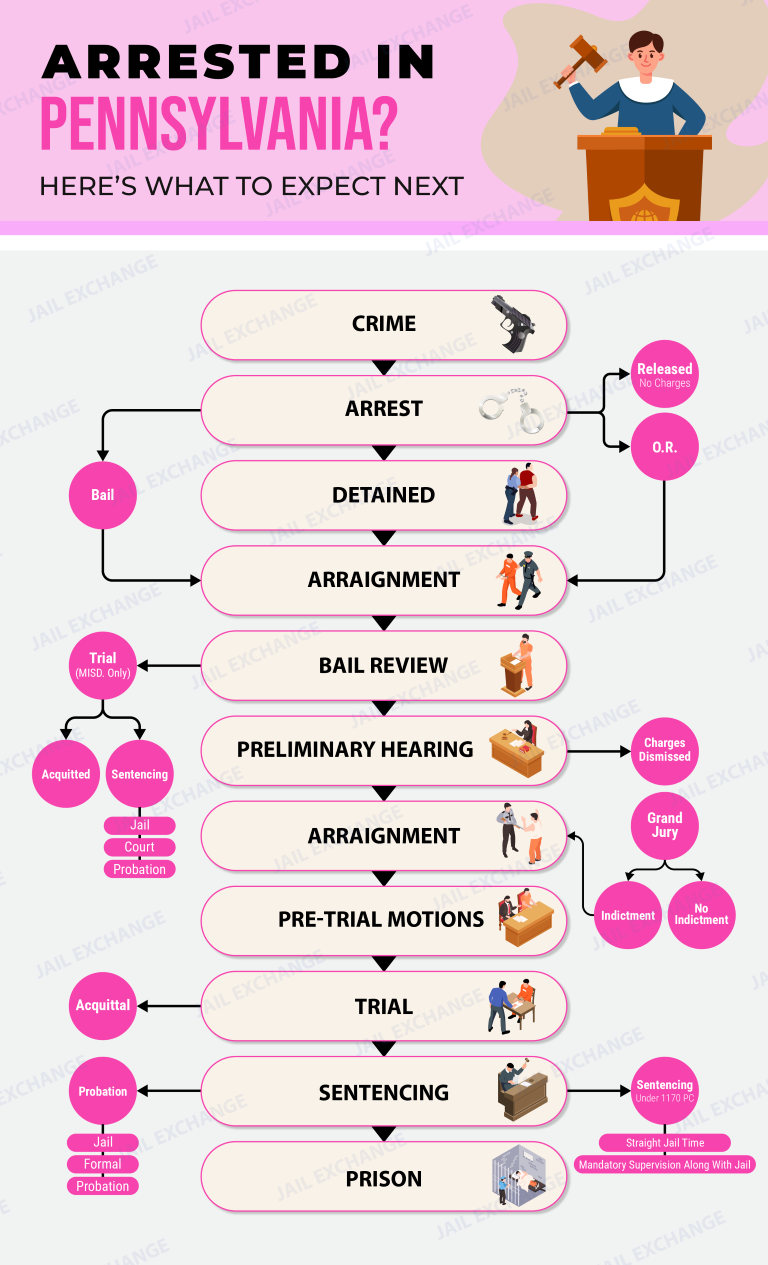
Information for this service is currently unavailable.
GettingOut / ViaPath Trust & Commissary Deposits
Provider: GettingOut (Telmate) • Rebranding as ViaPath Technologies (myViaPath)GettingOut and ViaPath Technologies provide electronic inmate trust banking solutions that allow family and friends to transfer money directly into an incarcerated person's jail trust and commissary account. Deposited funds give inmates the financial balance needed to purchase food items, personal hygiene products, stationery, and over-the-counter medical goods from the jail store.
Important: Facility Banking Policies Vary Across Jails
Once a person is booked and moved to a housing unit, facilities do not always allow cash drop-offs or phone payments directly to the jail window. Some might and you should confirm this by calling the facility and asking. But if you do not register online and fund your loved one's trust account immediately, they may be forced to wait days or weeks for standard paper processing, leaving them without essential soap, clean undergarments, basic medical sundries or snacks.
Step-by-Step Instructions to Deposit Trust Funds
- Confirm the inmate's legal first and last name, date of birth, and assigned jail booking identification number.
- Navigate to www.gettingout.com or the updated my.viapath.com portal.
- Sign into your verified profile and select Deposit Funds.
- Select the detention center where the inmate is currently housed.
- Choose Trust Account / Commissary and specify your deposit amount.
- Enter your credit or debit card billing information, review transaction fees, and submit payment.
- Save your digital receipt and confirmation number for your records.
What the Inmate Needs to Do
The inmate does not need an internet account to receive funds. Once the electronic transaction clears, the balance posts directly to their jail trust ledger according to facility accounting schedules. The inmate can review their updated balance at a dayroom pod kiosk or on their tablet and place orders on their regular commissary day.
Official Providers: GettingOut Website | myViaPath Portal
Customer Service Telephone: 1-866-516-0115 (GettingOut) • 1-877-650-4249 (ViaPath)
Support Hours: Monday – Friday, 7:00 AM – 11:00 PM CST; Saturday – Sunday, 8:00 AM – 7:00 PM CST
Supported Languages: English and Spanish
Other Services Provided by GettingOut / ViaPath
In addition to Trust Deposits, GettingOut and ViaPath provide several other communication and visitation options:
- Phone Calling Accounts: Prepay for phone calling credits so your loved one can call your telephone directly.
• Learn more on our website: Phone Calling Accounts Guide | • Visit official vendor page: ViaPath Phone Accounts - Two-Way Text Messaging: Send electronic messages and photos directly to an inmate's tablet or kiosk.
• Learn more on our website: Digital Messaging Guide | • Visit official vendor page: GettingOut Messaging - Remote Video Visits: Schedule and join live video visits from home using your computer or smartphone.
• Learn more on our website: Video Visitation Guide | • Visit official vendor page: GettingOut Video Visits - Inmate Tablets & Media: Fund tablet entertainment, music streaming, games, and news modules.
• Learn more on our website: Tablet Rentals & Content Guide | • Visit official vendor page: GettingOut Tablets
Deposit Money for an Inmate in the Fayette County Jail
Fill in five things on a money order for the Fayette County Jail, because one that's missing anything is mailed back to you:
- the name of the person in jail who gets the money,
- "Fayette County Prison,"
- the jail's street address,
- your own name and address,
- your signature.
Money orders are the only form of money this Uniontown jail says it credits to an inmate's account. Cash and personal checks are refused.
Mail it alone, never tucked in with a letter, to Fayette County Prison, 254 McClellandtown Rd, Uniontown, PA 15401. The PO Box in Phoenix, Maryland takes personal mail only; money sent with inmate mail is refused and never credited. Handing one over in person won't work either: money orders aren't accepted during a visit or by the Lieutenant or Shift Commander at the front.
Calls can be paid from the person's commissary account. For a question about one person's account, phone 724-430-1222 with their full name and date of birth on hand.
Family mail for the Fayette County Jail on McClellandtown Road in Uniontown, Fayette County, is never opened at the jail. Letters, pictures and drawings go to an out-of-state mail-scanning service, and the inmate reads them for free in the messages app on their jail tablet. The jail went digital so that paper soaked in drugs and then dried can't get inside.
Letters, pictures and drawings (scanned):
Inmate's Full Name & Booking #
Fayette County Prison, PA
PO Box 247
Phoenix, MD 21131
Legal mail, money orders and publications (to the jail):
Inmate's Full Name & Booking #
Fayette County Jail
254 McClellandtown Rd
Uniontown, PA 15401
- Booking number: The inmate's full name and booking number must be on the envelope, or it is rejected. You can get the number from the inmate lookup.
- Spell it out: Write the complete facility name and the state with no abbreviations, plus your own full name and street address.
- Photos: Prints may be no bigger than 4 x 6 inches, five to an envelope, with a limit of ten. Polaroids and pictures showing weapons, drugs, drinking, lewd poses or a lot of skin are refused.
- Money orders: They are the only money the jail credits, and they must be mailed by themselves to the jail on McClellandtown Road, never tucked into a letter. Make the money order out to the inmate who should get it. Each one must list the inmate's name, Fayette County Prison and the jail address, plus your name, address and signature, or it is sent back. Cash and personal checks are refused, and money orders are not taken at visits.
- For attorneys: Legal mail goes to the jail itself, with the lawyer's phone number on the envelope so staff can verify it.
- Ink: Write with a blue or black pen; felt-tip markers, crayon, colored ink, lipstick and perfume are not allowed on Fayette mail.
- Books and magazines: Reading material must be new and mailed to the Uniontown street address by a publisher or a store.
- Greeting cards: Plain cards only, nothing musical, and no glitter or confetti tucked inside.
ViaPath AdvancePay Phone Calling Accounts
Provider: ViaPath Technologies • Formerly ConnectNetwork / Global Tel*Link (GTL)
AdvancePay is the primary prepaid telecommunications service operated by Global Tel*Link (GTL) and ConnectNetwork, which have unified under the corporate identity of ViaPath Technologies (and the myViaPath platform). By funding an AdvancePay account, telephone charges are deducted per minute whenever an incarcerated loved one calls your specific telephone number, preventing calls from being rejected by cellular carriers.
Important: Cell Carriers Automatically Block Jail Collect Calls
Inmate telephone networks do not permit incoming calls, and wireless cell providers automatically block traditional collect billing by default. While select traditional landlines may support operator billing, cell phones and internet-based lines require an active AdvancePay balance, which you can verify with your carrier. If you do not register your number online and add funds immediately, your loved one will hear an automated operator announcement stating your line is blocked from receiving correctional calls.
Step-by-Step Instructions to Open and Fund AdvancePay
- Visit web.connectnetwork.com or the updated my.viapath.com portal, or launch the ConnectNetwork / ViaPath mobile application.
- Click Sign Up and register using your primary 10-digit cellphone number and email address.
- Select Add Facility, pick your state, and choose the detention center or state prison where the inmate is held.
- Search for the inmate using their full legal name or facility booking ID number and link them to your contact directory.
- Select AdvancePay Phone and choose your deposit amount ($25, $50, or custom).
- Enter your debit or credit card billing details, accept the administrative transaction fee, and complete the payment.
- Check your phone settings to confirm that automated or unknown correctional numbers are not routed straight to spam.
What the Inmate Needs to Do
The inmate approaches any housing pod telephone, enters their assigned PIN and voice biometric recognition phrase, and dials your 10-digit number. ViaPath's automated operator confirms your active prepaid balance and connects the call. All personal telephone calls are subject to recording and monitoring by facility investigators.
Official Providers: ConnectNetwork Portal | myViaPath Portal
Customer Service Telephone: 1-877-650-4249 (Automated & Live Support)
Support Hours: Automated Service 24/7; Live Operators Monday – Friday, 8:00 AM – 10:00 PM EST
Supported Languages: English and Spanish
Other Services Provided by ViaPath Technologies (ConnectNetwork)
In addition to AdvancePay Phone Calling, ViaPath / ConnectNetwork provides several other communication, financial, and visitation services:
- ConnectNetwork Trust Fund Deposits: Transfer money directly into an inmate's jail trust account for commissary store purchases.
• Learn more on our website: Inmate Trust Deposits Guide | • Visit official vendor page: ConnectNetwork Trust Deposits - ViaPath PIN Debit Phone Calling: Give the inmate their own calling funds to contact any approved phone number independently.
• Learn more on our website: PIN Debit Phone Calling Guide | • Visit official vendor page: ViaPath PIN Debit Calling - ViaPath Messaging & Photo Sharing: Send digital messages, photos, and video attachments directly to their terminal.
• Learn more on our website: Digital Messaging Guide | • Visit official vendor page: ViaPath Messaging Services - GettingOut Video Visitation & Tablets: Schedule face-to-face remote video visits and manage handheld tablet communications.
• Learn more on our website: Remote Video Visitation Guide | • Visit official vendor page: GettingOut Video Visits
ViaPath PIN Debit Phone Calling Accounts
Provider: ViaPath Technologies • Formerly ConnectNetwork / Global Tel*Link (GTL)ViaPath PIN Debit (hosted on ConnectNetwork and myViaPath) provides incarcerated individuals with their own calling funds. Unlike AdvancePay (which only funds calls placed to your specific phone number), PIN Debit funds belong directly to the inmate, allowing them to call attorneys, bondsmen, employers, or extended family members across multiple approved telephone numbers.
Important: AdvancePay Only Funds a Single Phone Number
When someone is arrested, they often need to contact multiple people—including legal defense counsel, bail agents, employers, and relatives. If you only fund an AdvancePay account, your loved one will have no calling balance to dial anyone else, as rules and call authorizations vary by facility. Adding funds directly to ViaPath PIN Debit grants them the calling flexibility needed to handle critical legal and family arrangements without delay.
Step-by-Step Instructions to Fund a PIN Debit Account
- Sign into your account at web.connectnetwork.com or my.viapath.com.
- Click on PIN Debit under the communications menu.
- Select the state and facility, and link the inmate's booking identification number.
- Enter the deposit dollar amount and review the payment transaction fee.
- Enter your debit or credit card details and submit the payment.
- Notify your loved one that their personal PIN calling balance has been credited.
What the Inmate Needs to Do
The calling balance appears under the inmate's personal identification PIN. When they pick up any dayroom telephone or tablet, they select the 'PIN Debit' prompt from the automated menu to place calls to any approved number on their personal contact list.
Official Providers: ConnectNetwork Portal | myViaPath Portal
Customer Service Telephone: 1-877-650-4249
Support Hours: Automated Deposits 24/7/365; Live Agents Monday – Friday, 8:00 AM – 10:00 PM EST
Supported Languages: English and Spanish
Other Services Provided by ViaPath Technologies (ConnectNetwork)
In addition to PIN Debit Calling, ViaPath / ConnectNetwork provides several other communication, financial, and visitation services:
- AdvancePay Dedicated Phone Calling: Fund calls placed specifically to your personal phone number.
• Learn more on our website: AdvancePay Calling Guide | • Visit official vendor page: ConnectNetwork AdvancePay - ConnectNetwork Trust Fund Deposits: Deposit money for commissary food, hygiene supplies, and stationery.
• Learn more on our website: Inmate Trust Deposits Guide | • Visit official vendor page: ConnectNetwork Trust Deposits - ViaPath Messaging & Photo Sharing: Send digital messages and photos directly to their kiosk or tablet.
• Learn more on our website: Digital Messaging Guide | • Visit official vendor page: ViaPath Messaging Services - GettingOut Video Visitation & Tablets: Schedule face-to-face remote video visits from home.
• Learn more on our website: Remote Video Visitation Guide | • Visit official vendor page: GettingOut Video Visits
GettingOut / ViaPath Inmate Messaging
Provider: GettingOut (Telmate) • Rebranding as ViaPath Technologies (myViaPath)GettingOut (a service of Global Tel*Link / Telmate) provides an instant two-way digital messaging and photo-sharing platform connecting families with incarcerated individuals via housing-unit kiosks and handheld tablets. The provider is actively rebranding as ViaPath Technologies (under the myViaPath platform); depending on the facility contract, local booking sheets and tablets may still refer to the service as GettingOut, GTL, or ViaPath, but both brand portals grant access to the same centralized messaging balance.
Important: Contact Authorization and Digital Mail Rules Vary
Inmate digital messaging rules are not uniform across all county detention centers. While some jails allow immediate two-way messaging upon registration, others require initial contact invitations or administrative ID verification, which you should verify directly with the facility. If you delay setting up an online profile and funding your Friends & Family messaging account, your loved one may face lengthy periods without direct family communication.
Step-by-Step Instructions to Register and Message an Inmate
- Visit www.gettingout.com or the newly branded my.viapath.com portal, or install the GettingOut / myViaPath mobile app.
- Create a user profile using your primary email address and 10-digit mobile phone number.
- Complete identity verification by uploading a clear photo of your government-issued driver's license or state ID and taking a verification selfie if requested.
- Search for the inmate by selecting the state, correctional facility, and their legal name or booking ID.
- Send an outside contact connection request to link your account to their tablet profile.
- Deposit funds into your 'Friends & Family Account' using a debit or credit card to cover message and photo-sharing costs.
- Compose your text message in the chat box, attach approved photos, and submit it for jail screening.
What the Inmate Needs to Do
The inmate powers on their assigned pod tablet or approaches a housing-unit kiosk and logs into the messaging application with their PIN. They accept your incoming contact invitation on the screen. Once approved by institutional monitors, incoming messages appear in their inbox, and the inmate types a reply directly on the screen.
Official Providers: GettingOut Website | myViaPath Portal
Customer Service Telephone: 1-866-516-0115 (GettingOut Support) • 1-877-650-4249 (ViaPath Support)
Support Hours: Monday – Friday, 7:00 AM – 11:00 PM CST; Saturday – Sunday, 8:00 AM – 7:00 PM CST
Supported Languages: English and Spanish
Other Services Provided by GettingOut / ViaPath
In addition to Two-Way Text Messaging, GettingOut and ViaPath provide several other communications and visitation options:
- Remote Video Visits: Schedule and join live web-based video visits from your computer or smartphone.
• Learn more on our website: Video Visitation Guide | • Visit official vendor page: GettingOut Video Visits - Inmate Tablet Rentals & Media: Fund tablet entertainment, music streaming, games, and news modules.
• Learn more on our website: Tablet Rentals & Content Guide | • Visit official vendor page: GettingOut Tablets - AdvancePay Phone Calling: Prepay for telephone calls so your loved one can dial your mobile phone directly.
• Learn more on our website: AdvancePay Phone Calling Guide | • Visit official vendor page: ViaPath ConnectNetwork Calling - Inmate Trust Deposits: Transfer funds directly into their jail trust account for commissary store purchases.
• Learn more on our website: Inmate Trust Deposits Guide | • Visit official vendor page: ViaPath Trust Deposits
GettingOut / ViaPath Inmate Tablets & Media
Provider: GettingOut (Telmate) • Rebranding as ViaPath Technologies (myViaPath)GettingOut provides specialized, secure handheld tablets for county jail inmates, offering access to messaging apps, telephone calling, legal research tools, eBooks, vocational training, and premium entertainment rentals. As part of GTL and Telmate's transition to ViaPath Technologies, tablet firmware and management platforms are moving to the myViaPath system.
Important: Tablet Feature Availability Varies by Facility
Jails manage tablet distribution according to individual facility contracts. While basic educational and legal materials are often provided without cost, access to music streaming, games, podcasts, and premium movies requires an active funded account. You should confirm the tablet rules with the facility directly. Registering and funding their media balance right away ensures your loved one has productive resources and recreation during their stay.
Step-by-Step Instructions to Fund Inmate Tablet Services
- Confirm that GettingOut / ViaPath handheld tablets are active at your loved one's specific detention facility.
- Navigate to www.gettingout.com or my.viapath.com.
- Sign into your verified user profile and link the inmate's legal name and booking ID number.
- Select Make a Deposit and choose either your Friends & Family Account (for messaging) or the inmate's personal Inmate Account (for entertainment and song rentals).
- Choose your deposit amount, review convenience fees, and complete payment with a credit or debit card.
- Notify your loved one that their tablet account balance has been funded.
What the Inmate Needs to Do
The inmate unlocks their assigned tablet or signs one out from the pod charging station using their biometric verification or PIN. Once logged in, their available balance appears on the screen, allowing them to download songs, stream educational content, and communicate with approved family members.
Official Providers: GettingOut Website | myViaPath Portal
Customer Service Telephone: 1-866-516-0115 (GettingOut) • 1-877-650-4249 (ViaPath)
Support Hours: Monday – Friday, 7:00 AM – 11:00 PM CST; Saturday – Sunday, 8:00 AM – 7:00 PM CST
Supported Languages: English and Spanish
Other Services Provided by GettingOut / ViaPath
In addition to Tablet Media & Rentals, GettingOut and ViaPath provide several other communication and account services:
- Two-Way Text Messaging: Send electronic letters and photos straight to the inmate's screen.
• Learn more on our website: Two-Way Text Messaging Guide | • Visit official vendor page: GettingOut Messaging - Remote Video Visits: Meet face-to-face over secure live video from home.
• Learn more on our website: Video Visitation Guide | • Visit official vendor page: GettingOut Video Visits - AdvancePay Phone Calling: Prepay for phone calling credits so your loved one can call your telephone directly.
• Learn more on our website: AdvancePay Phone Calling Guide | • Visit official vendor page: ViaPath ConnectNetwork Calling - Inmate Trust Deposits: Transfer cash directly into an inmate's jail ledger for commissary purchases.
• Learn more on our website: Inmate Trust Deposits Guide | • Visit official vendor page: ViaPath Trust Deposits
- Jail (Main): 724-430-1222
- Fayette County Sheriff: 724-430-1295
The Fayette County Jail serves the following cities and towns of Fayette County: Brownfield, Brownsville, Bullskin, Carmichaels, Connellsville, Dawson, Dunbar, Dunbar Township, Fairchance, Fayette City, German, Georges, Henry Clay, Jefferson, Luzerne, Markleysburg, Masontown, Menallen, Newell, Nicholson, North Union, Ohiopyle, Perry, Point Marion, Redstone, Saltlick, Smithfield, South Connellsville, South Union, Springfield, Stewart, Uniontown, Upper Tyrone and Wharton.