
Minnehaha County Jail
Minnehaha County Jail
Jail Phone Number
605-367-4321Minnehaha County Inmate Search: Tracking Someone Booked in Sioux Falls
From Dell Rapids down to Brandon, adults picked up by police land in the Minnehaha County Jail, 305 W. 4th St., Sioux Falls, SD 57104, a building the Sheriff's Office runs. Lincoln County ships its adult prisoners there too, so a Canton or Tea arrest can end up on this roster.
The official inmate lookup searches by last name, or you can scroll the full list. It refreshes every 15 minutes and shows each person's File ID, intake date and time, bond and charges. A fresh arrest can lag a little, and a name that drops off usually means a release or a transfer.
Jail staff pick up at 605-367-4321. Ask if the person is still inside, what the bond figure is, and which day court comes first. For paying that bond, read our bail page, and for hearings and case files, our court page lays it out.
Read inmate search answers
 Read inmate search answers
1. Who's Behind Bars: what does each step of the search show?
- Pull up the jail lookup.
- Type a surname, or pick the full listing and scroll.
- Match the right person using the intake date and time.
- Write down the File ID. Letters, deposits and phone questions all ask for it.
- Check the facility column. "Jail" means the person is inside the building. "EM" means they are at home on the jail's electronic monitoring.
- Read the bond column. It shows a dollar figure, "No Bond," "Sentenced" or "Not Set."
- Look at each charge and the hold label printed beside it.
The page itself warns that bond figures can be wrong. Double-check any amount with staff at 605-367-4321 before paying.
↑ Back to the question list2. No match on the roster yet: what explains it?
- Booking is still underway. Paperwork, photos and property take time, and the list reloads every 15 minutes.
- Already gone. The person may have posted bond, signed a promise to appear, or been handed to another agency.
- A spelling twist. Try a hyphenated surname, a maiden name, or a legal first name rather than what friends call them.
- Under 18. Teens are held at a separate juvenile center with its own phone.
- Arrested elsewhere. A stop in a nearby county, or by a federal agency, can lead to a different jail.
- Sentenced to prison. Try the state DOC offender locator.
When in doubt, phone the jail at 605-367-4321. On weekdays from 8:00 a.m. to 5:00 p.m., the Sheriff's front desk at the Law Enforcement Center, 320 W. 4th St., Sioux Falls, SD 57104, can help at 605-367-4300.
↑ Back to the question list3. Is everyone booked here held on West 4th Street?
The county runs one adult jail, the county jail at 305 W. 4th St., Sioux Falls, SD 57104, 605-367-4321. It holds people waiting for court, people serving county sentences, and people kept for other agencies, such as other counties, the U.S. Marshals and immigration officers. Lincoln County sends its adults here as well.
- Home monitoring. Some sentenced people serve their time at home on the jail's electronic monitoring program, listed as "EM" on the roster. It costs $15 a day, paid a week ahead.
- Teens who are held go to the Regional Juvenile Detention Center, 4200 S. West Ave., Sioux Falls, SD 57105, 605-367-4313.
- Lincoln County arrests start with that county's Sheriff's Office, 128 N. Main St., Canton, SD 57013, 605-764-5651, but the person is held in the jail on West 4th Street.
- Lake and Moody county prisoners are housed at the Brookings County Detention Center, 315 7th Ave, Brookings, SD 57006, 605-696-8308.
- State prisons in the city, including the State Penitentiary at 1600 North Drive, Sioux Falls, SD 57117, 605-367-5051, belong to the state, not the county.
If the arrest happened near the Turner or McCook county line, or across the Minnesota or Iowa border, call the Sheriff's Office at 605-367-4300 to learn where the person was taken.
↑ Back to the question list4. Can I get Minnehaha County mugshots?
The lookup shows names, File IDs, bond and charges, but no mugshots. Booking photos are handed out only on request, through the Sheriff's Office:
- Only felony arrests qualify, and only within six months of when the photo was taken.
- Each photo costs $8 in cash. Paying by card adds a fee.
- Fill out the request form at the Sheriff's front desk, 320 W. 4th St., Sioux Falls, SD 57104, weekdays 8:00 a.m. to 5:00 p.m. For help, call 605-367-4300.
- On weekends, felony photo requests go to the jail, 305 W. 4th St., Sioux Falls, SD 57104, 605-367-4321.
- Photos of federal prisoners, people held for contract agencies and people passing through with a transport company are not released.
- ICE photos must be asked for through ICE's own records request form. Federal booking photos mostly stay sealed, though the Marshals have been known to put one out to catch a runaway.
5. Want a heads-up on a release or move? Is SAVIN worth signing up for?
The jail roster updates every 15 minutes, so checking it often shows a release quickly. For automatic notice, South Dakota uses SAVIN, a free service run through the Attorney General's office.
- Register on SAVIN to look up an offender's custody status and get notice when it changes, such as a release.
- The SAVIN help line, 844-299-4608, takes calls weekdays from 8:00 a.m. to 5:00 p.m. Central.
- SAVIN skips cases involving youths. Anyone harmed by a teen's offense can reach the State's Attorney's Office, 415 N. Dakota Ave., Sioux Falls, SD 57104, 605-367-4226.
Calling the jail at 605-367-4321 gives the firmest answer. Be wary of callers who demand money. Deputies don't ring families asking to be paid, so hang up on anyone who does.
↑ Back to the question list6. Bond, promise to appear or no-contact order: what applies?
In South Dakota, release on a simple promise to return comes first. Cash or extra rules get tacked on if a judge thinks the promise alone won't hold (SDCL 23A-43-2, 23A-43-3). In practice:
- Many misdemeanor arrests are released straight from the jail under the Second Circuit officer schedule, often with no cash.
- Clerk magistrates set other bonds from a statewide schedule. Most felonies fall between $1,000 and $10,000.
- Charges of kidnapping, murder, domestic abuse or first-degree manslaughter need a judge to set bond.
- Bond can be posted online through CourtMoney.com, which the Sheriff's jail page names. For paying in person, ask the jail at 605-367-4321.
Someone booked on domestic abuse must stay out of touch with the accuser and that whole household until a judge first sees the case. Passing along notes through family breaks that rule too (SDCL 25-10-43). Our bail page lists sample amounts and every payment step.
↑ Back to the question list7. What do the charge column and hold labels mean?
The lookup prints each charge beside the person's name, with a hold label where one applies, such as STATE CHARGES, USM or PROBATION HOLD. The final charges can shift once the State's Attorney files the case. To read the formal complaint:
- Look the case up free on Find a Court Date.
- PARS sells a case summary for $20 a search.
- Use the public terminals at the courthouse, 425 N. Dakota Ave., Sioux Falls, SD 57104.
- Phone the Clerk of Courts at 605-367-5900 on a weekday.
Jail staff can read out the charges listed on the booking too, at 605-367-4321.
↑ Back to the question list8. Public Defender or Public Advocate: who gets assigned?
At the first appearance, the person tells the judge they can't afford a lawyer, and the judge appoints one (SDCL 23A-40-6). The county pays for two public offices that take these cases:
- Public Defender, 413 N. Main Ave., Sioux Falls, SD 57104, 605-367-4242, on the third floor of the Old Courthouse North Annex
- Public Advocate, 415 N. Dakota Ave., Sioux Falls, SD 57104, 605-367-7392, on the third floor of the Administration Building
The Second Circuit's appointed-lawyer application asks about income and bills. The county may later bill the person for the lawyer (SDCL 23A-40-10). Families can also hire a private attorney, whose visits with the client continue even when other visits are cut off.
↑ Back to the question list9. Lobby screen or home video: how do Minnehaha County Jail visits work?
Every visit happens on a screen. A lobby booth at the jail costs nothing, while connecting from home runs $0.30 a minute. Book every visit at least 24 hours ahead.
- Lobby video visits: Sunday and Tuesday through Saturday, 7:30 to 10:15 a.m., 1:00 to 4:00 p.m. and 7:00 to 9:30 p.m. None on Mondays.
- Visits from home: the same three windows, seven days a week, Mondays included. Your face must stay in view for the camera check.
- Each visit lasts 30 minutes. A supervisor can allow more, up to 60.
- One lobby visit per visitor, per inmate, per day. Arriving more than 10 minutes late cancels it.
- Bring a driver's license from any state, a passport, a state or county ID, or a military photo ID with a birth date. Kids younger than 18 need their parent or guardian along.
- Only keys, ID and a cell phone may come into the visiting area, and no photos are allowed.
- Set up the account with the jail's phone and video provider online or at 800-943-2189.
Visits may be recorded, and people on discipline lose social visits for a time. Our visiting guide has more tips.
↑ Back to the question list10. Kiosk, desk or online: how do deposits reach a Minnehaha County inmate?
Deposits can be made at the kiosk in the jail lobby, with help from front desk staff, or online through the service linked on the county jail page. Keep the File ID handy. The jail refuses money orders and every kind of check, in person or by mail, and bills tucked into a letter are a bad idea too.
- Commissary orders go in twice a week, up to $75 each, not counting stamps and phone cards. Items come to the housing unit, and sales are final.
- Anyone serving a sentence for this county is charged $10 a day for room and board. If that balance runs negative, half of each new deposit goes toward it.
- Questions about a deposit go to 605-367-4321.
General advice lives in our money guide, and store ordering is explained in our commissary guide.
↑ Back to the question list11. Unit phones, 25-cent messages and tablets: what do families pay?
Phones sit in each housing unit, and calls are paid by the inmate or through a prepaid account a family sets up with the jail's provider, online or at 800-943-2189. Calls are monitored and recorded, so save case details for talks with the attorney.
- Electronic messages cost $0.25 each, and a photo or document costs $0.35. Families can send as many as they like.
- Inmates use tablets from the same provider. A library of books is free on them, and finishing classes earns points for movies, games and music.
- Scanned mail can also be read on the tablets and kiosks.
Our jail phone guide covers calling basics, while the inmate messaging guide handles e-messages.
↑ Back to the question list12. What address do letters to a Minnehaha County inmate need?
Personal letters travel to a Texas mail-scanning hub rather than to West 4th Street. Address them this way:
- Line 1: the inmate's full name
- Line 2: File ID number
- Line 3: Minnehaha County Jail
- Line 4: PO Box 591, Longview, TX 75606
Letter-size paper, 8.5 x 11, is the limit. Write on the front only, and send no more than 5 pages and 1 photo per envelope. A return address is required. Letters are scanned and then destroyed, so never send an original you want back.
Letters from attorneys or doctors are the exception, addressed to 305 W. 4th St., Sioux Falls, SD 57104. Books must be soft-cover, shipped straight from the publisher, two at most, and orders from big online retailers are refused. Packages need a sergeant's OK first. Since the rules on magazines and books vary, call 605-367-4321 before ordering. Our mail guide has more.
↑ Back to the question list13. Wallet, keys, cellphone, jeans: who holds onto them during a stay?
Wallets, phones, keys and street clothes are logged and locked away at booking. Each new arrival also gets a hygiene kit with soap, shampoo, a comb, a toothbrush and paste, so families needn't bring those.
- Stored property comes back in one release, minus a single set of clothes. A second release takes a sergeant's approval.
- Leftover account money is paid out on a debit card when the person leaves.
- Picking up items for someone who is still locked up? First call 605-367-4321 to ask about timing, ID and any signed release the person must give.
14. Sick, injured or on daily medication: who should I tell?
The jail provides medical, mental health and dental care, following national standards for jail health care. Inmates ask for care by sending a "Medical Request" through the kiosk. Dental work is done on an emergency basis, and basic over-the-counter medicine can be bought from commissary.
If your loved one has a serious condition or needs a daily prescription, call the jail at 605-367-4321. Name each pill or shot, its daily amount, and the clinic that prescribed it. Mention any risk of self-harm plainly.
↑ Back to the question list15. Could a warrant be pending, and what does turning in cost?
Deputies track down warrants in rural areas and contract towns, and Sioux Falls police handle them inside city limits. The Warrant Division takes calls at 605-367-4268. Search the warrant list the Sheriff links to, then scan the Sheriff's Most Wanted fugitives, the escape list from state corrections and the sex offender registry. A court case with an active warrant also shows on UJS ePayments. With a lawyer's advice, turn in at the jail, 305 W. 4th St., Sioux Falls, SD 57104, any time, any day. The Turn Self In program charges $25 per warrant and sets a court date. The Clerk of Courts, 425 N. Dakota Ave., Sioux Falls, SD 57104, 605-367-5900, can also look up the case.
↑ Back to the question list16. Court calendar: how do I learn their upcoming hearing day?
Hearings for both circuit and magistrate cases happen at the courthouse, 425 N. Dakota Ave., Sioux Falls, SD 57104.
- Plug the defendant's name into the free Find a Court Date tool.
- Call the Clerk of Courts at 605-367-5900, weekdays 8:00 a.m. to 5:00 p.m.
- Ask the public defender or the private lawyer on the case.
Someone who turns in on a warrant through the Turn Self In program leaves with a court date, often the next business day at 9:00 a.m. Missing it brings a new failure-to-appear warrant. Our court guide explains each hearing.
↑ Back to the question list17. Held on a federal charge: who keeps track of them?
Federal arrests from the county go to the federal courthouse, 400 S. Phillips Ave., Sioux Falls, SD 57104, 605-330-6600.
- Soon after arrest, a federal magistrate judge holds a hearing. The judge picks jail, or release with set rules, until trial (18 U.S.C. 3142).
- Before trial, the U.S. Marshals answer for these prisoners. Their office sits upstairs in Room 216, 400 South Phillips Avenue, Sioux Falls, SD 57104, 605-330-4351.
- Plenty of these prisoners sleep at the West 4th Street jail with a USM tag on the roster. Ask the Marshals where yours is held.
- After sentencing, search the Federal Bureau of Prisons inmate locator by name or register number.
18. IMMIGRATION on the roster: where might ICE move them?
A person ICE wants usually shows an IMMIGRATION hold on the roster. Here is what tends to follow:
- ICE lodges its hold with the West 4th Street jail on the agency's detainer form, the I-247A.
- With it on file, the jail can hang on to the person up to 48 hours after they would otherwise be released, giving agents time to come (8 CFR 287.7(d)).
- Custody then passes to the ICE St. Paul Field Office, 1 Federal Drive, Suite 1601, Fort Snelling, MN 55111, 612-843-8600.
- The ICE Online Detainee Locator finds detainees by alien registration number, or by name together with the country they were born in.
- South Dakota's SB 7 (SL 2025, ch 100) stops towns and counties from adopting rules that restrict telling federal agents someone's immigration status.
19. Sentenced to the penitentiary: how is the person tracked after that?
Once a judge imposes a penitentiary term, the state takes over custody. Corrections staff pick a facility based on security level and needs.
- Enter a DOC number or name in the state's offender locator. It only covers people serving state felony sentences.
- Our South Dakota state prisons page walks through each prison's visiting days and mail rules.
- Corrections headquarters is at 3200 East Highway 34, Pierre, SD 57501, 605-773-3478.
20. A Minnehaha County teen was picked up: where are they held?
Held teens stay out of the adult jail. The Regional Juvenile Detention Center, 4200 S. West Ave., Sioux Falls, SD 57105, 605-367-4313, is open around the clock and takes youths from 16 counties. Its office keeps weekday hours, 8:00 a.m. to 5:00 p.m.
Officers release most kids to a parent. A juvenile intake officer decides whether a child is held, and only for reasons the law lists (SDCL 26-8C-3). Juvenile cases go to circuit court, and juvenile records stay off SAVIN. The center is being rebuilt, so call ahead about visits.
↑ Back to the question list21. Deputies, city officers or troopers: which Minnehaha County agency arrested them?
Whichever badge made the arrest keeps the reports. These agencies patrol the county:
- Minnehaha County Sheriff's Office, Law Enforcement Center, 320 W. 4th St., Sioux Falls, SD 57104, 605-367-4300. Deputies patrol rural areas and every town without its own department. Under agreements the county approved for 2022, they also police Baltic, Colton, Crooks, Dell Rapids, Garretson, Hartford, Humboldt and Valley Springs. Deputies also provide security at the airport, Southeast Technical College and the Air National Guard base.
- Sioux Falls Police Department, Law Enforcement Center, 320 W. 4th St., Sioux Falls, SD 57104, 605-367-7212, with a front desk open weekdays 8:00 a.m. to 5:00 p.m.
- Brandon Police Department, reached through City Hall at 304 Main Ave., Brandon, SD 57005, 605-582-6515.
- Metro Communications dispatches for the county's officers on urgent calls that aren't emergencies, at 605-367-7000. Dial 911 in an emergency.
- South Dakota Highway Patrol, District Two, 5316 West 60th Street North, Sioux Falls, SD 57107, 605-367-5700.
For any other town in the county, call the Sheriff's Office to learn who answered the call.
↑ Back to the question listMinnehaha County Bail and Release
Sioux Falls police, county deputies and state troopers bring their arrests in Minnehaha County to one building, the Minnehaha County Jail, 305 W. 4th St., Sioux Falls, SD 57104. Lincoln County houses its adult prisoners there as well.
Wondering if your friend or relative is still behind bars? The Sheriff's Who's Behind Bars lookup refreshes every 15 minutes and shows each bond. Our Recent Arrests page is about custody from every angle: tonight's jail population, the newest bookings, unserved warrants, the counts filed, mugshots, court-appointed defenders and collecting belongings after release.
Ring the jail at 605-367-4321 with the person's legal name ready. Staff can tell you each charge's bond, whether a hold exists, and when the first hearing falls. With a case number in hand, move on to our court guide for the next stage.
1. Minnehaha County arrests: who fixes the bond amount?
It depends on the charge. Many misdemeanor arrests never need a judge: the jail can let the person leave under the Second Circuit's officer bond schedule, often on a signed promise to return. Clerk magistrates fix other bonds from the statewide schedule (SDCL 16-12C-10). Serious felonies wait for a magistrate or circuit judge (SDCL 16-12B-7).
State law gives officers a deadline phrased as "without unnecessary delay" for bringing a prisoner to a nearby judge. It may take place in a courtroom or by video hookup between the jail and the judge (SDCL 23A-4-1). Nobody is asked to plead yet. The judge goes over the accusation, lawyer rights, silence and release (SDCL 23A-4-3). Judges sit in the courthouse at 425 N. Dakota Ave., Sioux Falls, SD 57104, where the Clerk of Courts takes calls at 605-367-5900, 8:00 a.m. to 5:00 p.m. on weekdays.
Some charges are listed as "no bond" on the officer schedule. Domestic abuse, domestic stalking and breaking a protection order are among them. In those cases the officer must tell a judge. The judge then sets bond and any rules to keep the alleged victim safe (SDCL 25-10-40).
↑ Back to the question list2. Which release terms may a judge order here?
South Dakota law prefers freedom with a promise. A judge's first pick is personal recognizance, or an unsecured bond, which costs nothing up front and turns into a debt only after a no-show (SDCL 23A-43-2). When that falls short, the judge climbs this list and stops at the first step that should work (SDCL 23A-43-3):
- Release to a responsible adult or an agency that agrees to watch the person
- Rules about travel, friends or address
- Mental health terms
- Cash equal to 10 percent or less of the bond, paid back when the rules are kept
- A licensed bondsperson's bond, or cash for the whole sum
- Other terms the judge sees as necessary
The judge looks at the offense and how strong the case is. Any mental health evaluation counts too. So does the chance the person will run or hurt someone (SDCL 23A-43-4).
In drinking and drug cases, judges here often order 24/7 Sobriety Program testing (SDCL 1-11-20). Expect twice-daily breath checks, a bracelet that reads alcohol through the skin, urine screens or a sweat patch. Fees are capped by statute: $3 a breath check, $10 a urine screen, $70 a patch, and $10 per bracelet day, with up to $50 to attach it and $50 to take it off (SDCL 1-11-26 to 1-11-29). Blowing positive or missing a check can land the person in jail again, held without bond until court. Questions about the local testing site go to 605-367-5351. Sioux Falls families can also read about the 2026 sobriety-fee bill that failed and other state bail rules.
↑ Back to the question list3. What do Minnehaha County bond schedules list for common charges?
Lincoln and Minnehaha share the Second Circuit officer bond schedule, which lets the jail release many people quickly. Clerks work from the FY27 clerk magistrate schedule, effective July 1, 2026. A sampling:
- DUI arrest, first, second or third: personal recognizance on the officer sheet; a clerk may set $225 to $1,000 on a first or second DUI
- Felony DUI, third or later: $1,000 to $5,000
- Simple assault with no family or dating link: personal recognizance
- Domestic abuse, domestic stalking, protection order violation: wait for a judge
- Leaving a crash where someone was hurt: wait for a judge
- Unlisted Class 1 misdemeanor: $200
- Unlisted Class 2 misdemeanor: personal recognizance
- Petty theft, drug paraphernalia: normally a citation, not a booking
- Felonies in general: $1,000 to $10,000, with robbery and rape at $1,000 to $25,000
- Murder, first-degree manslaughter, kidnapping: only a judge sets bond
City ordinance charges are normally released on personal recognizance, though any officer may send someone to a magistrate judge first. The roster itself cautions that bond figures may be wrong, so confirm the number by phoning 605-367-4321.
↑ Back to the question list4. What should I do to post bond on West 4th Street?
The jail's street address is 305 W. 4th St., Sioux Falls, SD 57104. Go through this list before leaving home:
- Phone 605-367-4321. Spell out the legal name and write down the File ID from the roster.
- Get the bond figure for every charge, and learn whether any charge is "no bond" or tied to a hold.
- Ask staff where payment is taken in person, during which hours, in which forms, and to whom it is made out.
- For an online payment, the Sheriff's jail page points families to CourtMoney.com for posting bond. Keep the File ID nearby while you fill it in.
- Carry a photo ID when you show up, and save each receipt.
- Find out roughly how long the release paperwork runs after payment.
The Sheriff's Office states it never calls people to demand money. A caller asking you to pay for a release is a scam sign, so hang up and phone the jail yourself.
↑ Back to the question list5. Will the Clerk of Courts take a bond payment?
The Clerk of Courts office sits in the courthouse at 425 N. Dakota Ave., Sioux Falls, SD 57104, open 8:00 a.m. to 5:00 p.m., Monday through Friday. Its clerk magistrates may fix a bond from the court's schedule (SDCL 16-12C-10). Phone 605-367-5900 before making the trip, and find out:
- if this particular bond can be handed in at the clerk's window
- what forms of money that window accepts
- if the jail wants proof of payment before it opens the door
UJS ePayments, the state court website, is where you pay fines, restitution and court costs by card. Bail can't be paid there, yet a quick search there reveals any active warrant on a case.
↑ Back to the question list6. Cash, card or CourtMoney: what is accepted for bail?
Online, the only bond option the Sheriff names is CourtMoney.com. The county's jail information page says the service "may be used to post a bond," and the roster page carries a link as well. To pay in person, call 605-367-4321 first and confirm what the jail accepts right now.
- Cash should never go in an envelope to the jail or courthouse.
- Commissary deposits at this jail can't be made with money orders or checks of any kind. Find out if bond follows that rule before buying one.
- Hold on to every receipt until the judge closes the case.
- When a bondsperson is involved, have the fee and collateral spelled out on paper.
7. Before signing with a bondsperson, what should families check?
For a fee, a bondsperson guarantees the whole bond to the court. Every one must be licensed by the South Dakota Division of Insurance, and unlicensed bonding is a Class 6 felony (SDCL 58-22-4). The court system posts its own bail bond agents list.
- Jail staff, deputies and police can't profit from any bond (SDCL 58-22-3). State law also limits drumming up business where prisoners are kept (SDCL 58-22-32).
- Write down the price, list any collateral, and get a signed receipt.
- A parent or friend can stand as surety only after a sworn statement of what they own and owe. The judge has to find them worth the full bond, and a practicing attorney can't do it (SDCL 23A-43-20).
- Questions or complaints about an agent go to Division of Insurance staff at 124 South Euclid Avenue, 2nd Floor, Pierre, SD 57501, 605-773-3563.
8. Which roster holds keep someone locked up?
Each bond answers for one charge only. Look at the label printed beside each charge on the roster:
- OTHER COUNTY or WRIT: a different county or court is waiting for them.
- USM: the U.S. Marshals, who keep federal prisoners, want them.
- IMMIGRATION: ICE asked for a hold, and state bail leaves it in place.
- PAROLE HOLD - NO BOND or DOC: the state Department of Corrections has a claim. Its central office is 3200 East Highway 34, Pierre, SD 57501, 605-773-3478.
- PROBATION HOLD: county probation is run by Court Services, 425 N. Dakota Ave., Sioux Falls, SD 57104, 605-367-5930.
- SENTENCED: the person is serving a term, so no bond applies.
Domestic abuse arrests add a no-contact rule. Until the first hearing, the accused must not phone, text or message the alleged victim or that household, and must not send word through relatives either. A violation is its own Class 1 misdemeanor (SDCL 25-10-43). Please refuse to pass along any message.
↑ Back to the question list9. Is anyone in South Dakota denied bail outright?
Only in a narrow case. South Dakota's constitution makes everyone bailable, except a person facing a possible death sentence and the proof of guilt is plain (S.D. Const. art. VI, § 8). For every other charge, the starting point stays a written promise, with extra terms only as needed (SDCL 23A-43-2).
Even so, a judge can attach terms a person struggles to meet. The factors are the offense, the evidence, mental health, flight risk and risk to others (SDCL 23A-43-4). Marsy's Law, part of the state constitution, lets crime victims tell the judge their view before release is decided (S.D. Const. art. VI, § 29).
Prosecutors from the State's Attorney's Office argue the state's side on release. Their office is on the Administration Building's second floor, 415 N. Dakota Ave., Sioux Falls, SD 57104, 605-367-4226, 8:00 a.m. to 5:00 p.m. weekdays.
↑ Back to the question list10. Is a bond review possible after the first hearing?
- Count a full day. A person who remains in custody 24 hours past the release hearing, unable to satisfy the terms, is allowed to request a second look (SDCL 23A-43-8).
- Let the defense lawyer make the request in writing. Circuit judges can rewrite terms a magistrate set (SDCL 23A-43-14), and any judge can adjust terms later (SDCL 23A-43-7).
- Bring proof the person belongs here: a work schedule, rent receipts, kids at home, enrollment in classes or counseling.
- Offer a safeguard other than cash, like 24/7 testing or check-ins with a trusted adult.
Need the case number or the date court meets next? Staff in the Clerk of Courts office handle those questions at 605-367-5900.
↑ Back to the question list11. Minnehaha County's two public defense offices: what makes someone eligible?
Can't pay a defense lawyer? The arrested person tells the judge that at the first hearing, and the court appoints counsel (SDCL 23A-40-6). This county pays for two public law offices, each open 8:00 a.m. to 5:00 p.m. on weekdays:
- Public Defender, Old Courthouse North Annex, third floor, 413 N. Main Ave., Sioux Falls, SD 57104, 605-367-4242
- Public Advocate, Administration Building, third floor, 415 N. Dakota Ave., Sioux Falls, SD 57104, 605-367-7392, with a noon to 1:00 p.m. lunch closure
The Second Circuit has a separate court-appointed attorney application. One group is left out: someone not in custody, whose only charge is a petty offense or Class 2 misdemeanor and who cannot be jailed for it (SDCL 23A-40-6.1). Free at the start does not always mean free at the end. The court may require the person to repay the county later, even when the charge is dropped or ends in acquittal. A lien can also be recorded against property, but the county may never foreclose on the family home (SDCL 23A-40-10, 23A-40-15).
↑ Back to the question list12. Which courthouses hear Minnehaha County cases?
- Circuit and magistrate court: county courthouse, 425 N. Dakota Ave., Sioux Falls, SD 57104. The Clerk of Courts line is 605-367-5900, weekdays 8:00 a.m. to 5:00 p.m. State misdemeanors and felonies charged in this county are heard in this building.
- Treatment courts share that address. Call 605-215-2648 for Drug Court or Veterans Treatment Court, and 605-367-7038 for DUI Court or Mental Health Court.
- Federal court: United States Courthouse, 400 S. Phillips Ave., Sioux Falls, SD 57104, with the clerk at 605-330-6600.
- Lincoln County court: part of the city reaches into Lincoln County, and charges from there may go to the Clerk of Courts at 104 N. Main St., Canton, SD 57013, 605-836-1990.
13. How is cash bail returned, and when is it forfeited?
Once the case wraps up with every term kept, the court has to release the bail (SDCL 23A-43-26). The 10 percent deposit is returned when its conditions are satisfied (SDCL 23A-43-3).
A skipped hearing flips that around:
- The court forfeits the bail, and an arrest warrant goes out from the clerk (SDCL 23A-43-21).
- A no-show on a felony or DUI release counts as a new crime, a Class 6 felony. A no-show on a misdemeanor release is a Class 1 misdemeanor (SDCL 23A-43-31).
- A judge can cancel the forfeiture if fairness calls for it, such as when the person comes back fast with a real excuse (SDCL 23A-43-22).
- Money that stays forfeited goes into the county treasury (SDCL 23A-43-25).
Paying cash for someone else? Ring the Clerk of Courts at 605-367-5900 first. Find out whether fines, costs or lawyer charges may be subtracted before a refund, and whose name goes on the refund check.
↑ Back to the question list14. What happens to leftover funds and stored property?
At release, the leftover balance is loaded onto a debit card that the person carries out the door. Someone still inside can ask to have funds released to a relative. A sergeant approves those requests, which staff process Monday through Friday, 7:30 a.m. to 5:30 p.m.
Property stored at booking is returned in one batch, minus a single change of clothes, and normally just once per stay unless a sergeant allows more. Phone 605-367-4321 to set a pickup time and learn which ID staff want. Our jail account guide has more on putting money in and getting it back.
↑ Back to the question list15. Who rules on release in a Minnehaha County federal case?
Federal cases from the county are heard by the Southern Division of the U.S. District Court for the District of South Dakota, at the United States Courthouse, 400 S. Phillips Ave., Sioux Falls, SD 57104. Room 128 houses the clerk, at 605-330-6600.
- Jail or home before trial is decided at the opening federal hearing. If a short delay is granted, it lasts five days or less for the defense and three or less for prosecutors (18 U.S.C. 3142).
- Federal prisoners waiting for trial are the Marshals' job. The U.S. Marshals Service keeps its district headquarters at 400 South Phillips Avenue, Room 216, Sioux Falls, SD 57104, 605-330-4351.
- Federal prisoners held in the county jail carry a USM label on the roster.
- U.S. Probation and Pretrial Services, 314 S. Main Ave., Suite 100, Sioux Falls, SD 57104, 605-977-8900, is the federal pretrial office in the city.
- After a federal prison sentence, search the Federal Bureau of Prisons inmate locator.
16. Can ICE still take someone after bond is paid?
Yes, it can. Immigration custody runs on a separate track from state bond. Here is the usual sequence:
- ICE files its detainer paperwork, called Form I-247A, with jail staff.
- The request: keep the person up to 48 hours after they would otherwise be released, so officers can come for them (8 CFR 287.7(d)).
- On the roster, the label reads IMMIGRATION.
- After pickup, the St. Paul Field Office handles the case: 1 Federal Drive, Suite 1601, Fort Snelling, MN 55111, 612-843-8600.
- Use the ICE Online Detainee Locator with a name and birth country.
- In 2025, South Dakota passed SB 7 (SL 2025, ch 100). It bars cities and counties from rules that limit what they tell federal officials about a person's immigration status.
17. Where are longer sentences served after a conviction?
A misdemeanor sentence, a year or less, is spent in a county jail. Felony prison terms are the job of the South Dakota Department of Corrections (SDCL 22-6-1). For the two lowest felony classes, 5 and 6, the judge can pick as long as 12 months of county jail over prison (SDCL 22-6-1.1). Anyone serving a Minnehaha County sentence at this jail owes $10 per day for room and board, which only the sentencing judge may waive.
- The DOC offender locator finds anyone in state custody.
- For details on each prison, open our guide to South Dakota state prisons.
- The State Penitentiary itself is in this county, at 1600 North Drive, Sioux Falls, SD 57117, 605-367-5051.
18. What if a Minnehaha County teen is arrested?
Teens who can't go home are taken to the Regional Juvenile Detention Center, 4200 S. West Ave., Sioux Falls, SD 57105, 605-367-4313. Staff work there day and night, and the center takes youths from 16 southeastern counties.
Circuit court hears juvenile cases, which start at age 10 (SDCL 26-8C-2). Police usually return a child to a parent. Detention is decided by an intake officer, only on grounds listed in the law and only if nothing less strict will do (SDCL 26-8C-3). Sending a teen's case to adult court takes a judge's order following a transfer hearing (SDCL 26-11-4).
↑ Back to the question listPosting an Inmate's Bond in Minnehaha County
- If you want to post bail for someone arrested and in jail in Minnehaha County, you need to call the Minnehaha County Jail at 605-367-4321 to get the exact amount.
- You can look up an inmates bond online, but it's always best to call the jail to confirm.
- Besides paying an inmate's bond with cash, you can use a company called Court Money to pay by credit card either at the {facility_name_1], or over the phone by calling 800-352-9870.

- You can also call a bail bondsman... see information below:
The Minnehaha County Sheriff also recommends that you consider using a bail bond agent licensed to do business in Minnehaha County.
- You can pay a cash bond yourself, or use your home in Minnehaha County, or in some cases the state of South Dakota, but the benefit of using a bail bond agent is that they take responsibility for making sure the inmate shows up for court in Minnehaha County, and if they don't, then they take the financial responsibility.
- The typical fee for a bond will be between 10-20% of the bail amount; usually 15%. So if an offender has a bail of $10,000.00, their bond will be $1500.00.
Call 605-367-4321 to find out the exact bond (plus other fees) amount, or look it up online by looking up the information on the Minnehaha County inmate locator.

Minnehaha County Jail: free lobby and paid home video visits
Book either visit through NCIC at least 24 hours in advance. Both use the same Central time windows: 7:30 to 10:15 a.m., 1 to 4 p.m., and 7 to 9:30 p.m.
- Free lobby video: Sunday and Tuesday through Saturday at 305 W. 4th St., Sioux Falls, SD 57104. The lobby does not offer visits on Monday. A lobby visit normally lasts 30 minutes, with one visit per visitor per person per day. Arriving more than 10 minutes late cancels the appointment.
- Video from home: Available every day, including Monday. The county lists the charge as $0.30 per minute, paid by the visitor.
Bring a government-issued ID for a lobby visit. Visitors under 18 must come with a parent or legal guardian. For either video option, keep your face visible to the camera. Call the jail at 605-367-4321 about eligibility or check-in; call 800-943-2189 for NCIC account help. See the county’s visiting rules for accepted IDs and the full policy.

NCIC Video Visitation provides a secure online platform that enables families and loved ones to conduct scheduled face-to-face video visits with incarcerated individuals from home. Using an internet-connected smartphone, tablet, or personal computer equipped with a webcam, visitors can connect directly without traveling to the facility.
Important: Advance Registration and Visitor Clearance Required
Detention centers do not permit unscheduled or unverified video sessions. Correctional facilities require prospective visitors to submit government-issued photo identification and receive administrative clearance before booking an appointment, an approval process that can take up to 48 hours depending on facility staffing. You should verify your visitor approval status with the facility prior to scheduling. If you do not register well in advance, you will miss your loved one's scheduled visiting window for the week.
Step-by-Step Instructions to Register and Schedule a Video Visit
- Visit NCIC Scheduling and sign into your account.
- Register your visitor profile and upload a clear photograph of your government-issued ID (driver's license or passport) for facility background review.
- Wait for email notification confirming facility visitor approval.
- Select Video Visitation, choose the detention facility, and select the inmate.
- Browse the available schedule calendar, select an open time slot, and pay the visitation fee using a credit or debit card.
- Log into the website or mobile app 10 minutes prior to the start time on a device with a functioning camera, microphone, and reliable high-speed internet connection.
What the Inmate Needs to Do
The inmate receives a visitation notification on their housing unit video kiosk or terminal. At the appointed time, they log in with their PIN and sit before the terminal. Inmates and visitors must strictly observe jail dress and conduct rules; sessions are monitored by staff and will terminate immediately upon any violation.
Official Provider: NCIC Official Website
Customer Service Telephone: 1-800-943-2189
Support Hours: 24 hours a day, 7 days a week, 365 days a year
Supported Languages: English and Spanish
Other Services Provided by NCIC Inmate Communications
In addition to Remote Video Visitation, NCIC provides calling and digital messaging services at participating facilities:
- Prepaid Phone Calling Accounts: Prepay for phone calling credits so your loved one can call your telephone directly.
• Learn more on our website: Prepaid Calling Accounts Guide | • Visit official vendor page: NCIC Prepaid Calling - Inmate Messaging Services: Send electronic messages and photos directly to an inmate's housing unit terminal.
• Learn more on our website: Inmate Messaging Guide | • Visit official vendor page: NCIC Messaging
Minnehaha County Criminal Court Guide
The courthouse at 425 N. Dakota Ave., Sioux Falls, SD 57104 hears every state criminal charge from Minnehaha County, as part of the Second Judicial Circuit. Anyone held while the case moves waits at the Minnehaha County Jail, 305 W. 4th St., Sioux Falls, SD 57104, which also keeps Lincoln County's adults.
Start with the Sheriff's inmate lookup, which gives each person's File ID, bond and charges. Our Recent Arrests page handles the jail side of a case: whether someone is locked up, who was booked lately, outstanding warrants, what the counts are, mugshots, defense lawyers paid by the county, and getting personal items back.
Weekday mornings or afternoons, the Clerk of Courts answers at 605-367-5900. Ask for the case number, whether a magistrate or circuit judge has it, and when court meets again. To work on getting the person released first, see our bail and bond page.
1. Magistrate or circuit: where does each charge land?
All South Dakota courts belong to one statewide system split into seven circuits. Lincoln and Minnehaha make up the Second Circuit, and each county has two layers of trial court in the same building:
- Magistrate court takes misdemeanors and city ordinance charges (SDCL 16-12B-11). Its judges also handle first appearances, bond and warrants (SDCL 16-12B-5, 16-12B-7, 16-12B-10). They may accept pleas on any charge punishable by a year in jail or a $2,000 fine at most (SDCL 16-12B-8).
- Circuit court takes over felonies after the early hearings, and it also hears juvenile matters.
- Clerk magistrates work inside the clerk's office. They set bond from the approved schedule and may take pleas where the most a person faces is 30 days or $500 (SDCL 16-12C-10, 16-12C-11).
So a felony opens in magistrate court and climbs to circuit court. Federal charges skip this ladder and go to the federal courthouse downtown.
↑ Back to the question list2. Where do Minnehaha County criminal hearings take place?
- County courthouse and Clerk of Courts: 425 N. Dakota Ave., Sioux Falls, SD 57104, 605-367-5900. The office is open Monday to Friday from 8:00 a.m. to 5:00 p.m. Circuit judges and magistrate judges both hold court here.
- Court Services, which supervises probation, shares that building at 425 N. Dakota Ave., Sioux Falls, SD 57104, 605-367-5930.
- State's Attorney: Administration Building, 415 N. Dakota Ave., Sioux Falls, SD 57104, 605-367-4226.
- Federal court: United States Courthouse, 400 S. Phillips Ave., Sioux Falls, SD 57104, clerk at 605-330-6600.
Every South Dakota courthouse keeps public computer terminals where case records can be viewed or printed.
↑ Back to the question list3. Where do Sioux Falls ordinance tickets get heard?
Ordinance tickets written in Sioux Falls, Brandon, Dell Rapids, Hartford and the county's other towns land in magistrate court (SDCL 16-12B-11). That court meets in the courthouse at 425 N. Dakota Ave., Sioux Falls, SD 57104, and the clerk's line is 605-367-5900.
- Most people cited under a town ordinance are released on a personal recognizance bond, with nothing paid up front.
- When a city rule has no matching state law, the clerk magistrate total is $95.
- A slice of the city lies in Lincoln County. Charges from that side may be filed in Canton with the Lincoln County Clerk of Courts, 104 N. Main St., Canton, SD 57013, 605-836-1990.
- Can't afford a fine? Magistrate court keeps a list of places to work off fines. A day served in jail in place of a fine counts as $60.
4. First appearance: what will the judge tell them?
The law sets no fixed hour count. It says only "without unnecessary delay," and the prisoner sees the nearest available magistrate (SDCL 23A-4-1). Here that can be a courtroom or a video link from the jail. No plea is taken at this stage. The judge walks through these points (SDCL 23A-4-3):
- the accusation itself
- the right to a lawyer, paid or appointed
- terms for going home before trial
- that nobody has to make a statement
- for a felony, the chance at a preliminary hearing
Bond is set or reviewed during the same appearance. The jail at 605-367-4321 can tell you when it is scheduled.
↑ Back to the question list5. How are DUI and simple assault misdemeanors resolved?
A misdemeanor rarely leaves magistrate court. Prosecutors from the State's Attorney's Office file the charge, and the plea comes at a later date. A trial date follows any not-guilty plea. South Dakota's 180-day speedy trial clock starts at the first appearance, and it pauses for continuances the defense requests (SDCL 23A-44-5.1).
Top penalties under SDCL 22-6-2:
- Class 1 (simple assault, or a first or second DUI): up to 12 months in county jail plus a fine as high as $2,000
- Class 2: up to 30 days behind bars and a $500 fine
- Petty offense: a $25 judgment with no court costs added
DUI sentences and probation often carry 24/7 Sobriety Program testing (SDCL 1-11-21). People on probation report to Court Services, 425 N. Dakota Ave., Sioux Falls, SD 57104, 605-367-5930.
↑ Back to the question list6. Which steps does a felony case pass through?
- First appearance before a magistrate judge, where bond is set.
- Preliminary hearing, a check on whether the evidence is enough. It has to happen within 15 days if the person sits in jail, or 45 days if released, unless it is waived (SDCL 23A-4-3).
- Formal charge. Most felonies here go ahead on an information. That is a charge paper the prosecutor signs. Grand juries, with 6 to 10 citizens, sit only on a circuit judge's order. An indictment that comes first replaces the preliminary hearing (SDCL 23A-5-1).
- Circuit court: the plea is entered, and the case either settles or goes to trial.
- Sentencing follows a conviction, whether by plea or by trial.
A Class 6 felony tops out at two years and $4,000, and a Class 5 at five years and $10,000. Higher classes climb from ten years for Class 4 to fifty for Class 1 (SDCL 22-6-1). On the two lowest classes, the law presumes probation unless the judge sees a significant public risk (SDCL 22-6-11). A county jail term of up to one year is another option there (SDCL 22-6-1.1).
↑ Back to the question list7. How do serious violent charges change things?
- Heaviest classes. Class A carries death or life in prison. Classes B and C carry life (SDCL 22-6-1).
- Bond set in court. Murder, first-degree manslaughter and kidnapping are kept off the clerk's schedule. Robbery and rape bonds on that schedule run $1,000 to $25,000.
- No-bail cases. The constitution allows a full denial of bail only for a capital charge with strong proof (S.D. Const. art. VI, § 8).
- Domestic violence. A judge writes the release terms. These may bar contact, require the person to leave the shared home, ban alcohol or require counseling (SDCL 25-10-41).
- Jury selection. In the most serious trials (Class A, B, C and Class 1 felonies), each side may strike up to 20 people from the jury pool without a reason (SDCL 23A-20-20).
- The victim's say. Victims have the right to address the court before a release decision, a plea deal or a sentence (S.D. Const. art. VI, § 29).
8. Which offices prosecute and defend Minnehaha County cases?
State crimes here, felony or misdemeanor, are prosecuted by the State's Attorney's Office. Its staff work on the second floor of the Administration Building, 415 N. Dakota Ave., Sioux Falls, SD 57104, 605-367-4226, weekdays 8:00 a.m. to 5:00 p.m.
On the defense side, the county funds two separate public offices:
- Public Defender's Office, Old Courthouse North Annex, third floor, 413 N. Main Ave., Sioux Falls, SD 57104, 605-367-4242
- Public Advocate's Office, Administration Building, third floor, 415 N. Dakota Ave., Sioux Falls, SD 57104, 605-367-7392
A defendant requests counsel from the judge and fills out the Second Circuit's court-appointed attorney form. Later on, the county may ask to be paid back for that lawyer (SDCL 23A-40-10). Appeals for people who can't pay are taken by the state Office of Indigent Legal Services, created in 2024.
↑ Back to the question list9. Where are dockets and hearing dates searchable?
- Find a Court Date is free. Type a party name or case number to see upcoming hearings, or print the county docket for a chosen day up to nine business days ahead.
- PARS summarizes public criminal cases filed since 1989, at a $20 charge per search, even an empty one.
- UJS eCourts shows the docket for public cases at no charge.
- Courthouse terminals let you read and print open records in person.
For cases older than 1989, sealed files or help making sense of a record, phone the Clerk of Courts at 605-367-5900 with a full name and birth date handy.
↑ Back to the question list10. Is a Minnehaha County warrant waiting, and can it be cleared?
Deputies and Sioux Falls officers serve warrants countywide. The Sheriff's Warrant Division answers at 605-367-4268. Search the warrant list the Sheriff's website links, the Sheriff's Most Wanted page, the state DOC escape list and the state's Sex Offender Registry. Active warrants on a court case also show on UJS ePayments. To clear one, call a lawyer, then use the Turn Self In program at the jail, 305 W. 4th St., Sioux Falls, SD 57104, any day or hour, for $25 per warrant, and leave with a court date. Or call the Clerk of Courts, 425 N. Dakota Ave., Sioux Falls, SD 57104, 605-367-5900.
↑ Back to the question list11. How does a federal prosecution from this county work?
Federal cases from the county are filed with the Southern Division of the federal court at the United States Courthouse, 400 S. Phillips Ave., Sioux Falls, SD 57104, 605-330-6600.
- The charging side is the U.S. Attorney's Office. Its headquarters is in this city and takes mail at P.O. Box 2638, Sioux Falls, SD 57101, 605-330-4400.
- A federal judge holds the detention hearing as soon as the person first appears. Any delay is brief, and the defendant stays locked up while it runs (18 U.S.C. 3142).
- Marshals keep custody of federal defendants and transport them for court dates. The U.S. Marshals Service is at 400 South Phillips Avenue, Room 216, Sioux Falls, SD 57104, 605-330-4351.
- Some people with a USM hold wait in the county jail before trial.
- Once a federal sentence begins, track the person with the Federal Bureau of Prisons inmate locator.
12. Can the Sioux Falls court case go on despite an ICE hold?
Yes. The state charge goes on as normal. The detainer only comes into play at release time:
- ICE delivers Form I-247A to the West 4th Street jail.
- It requests a hold lasting up to 48 hours after they would otherwise be released (8 CFR 287.7(d)).
- Agents from the St. Paul Field Office, 1 Federal Drive, Suite 1601, Fort Snelling, MN 55111, 612-843-8600, take over custody.
- Locate the person afterward with the ICE Online Detainee Locator.
Bring up the detainer with the defense lawyer before any plea talks, since a plea deal can carry immigration consequences. SB 7 (SL 2025, ch 100) became law in 2025. Under it, a county or city policy that restricts what local officers can tell federal agents about a person's immigration status is void.
↑ Back to the question list13. Where does a felony prison sentence get served?
Felony prison terms go to the South Dakota Department of Corrections, which runs the state's prisons (SDCL 22-6-1). Jail time for a misdemeanor stays local, in the county jail (SDCL 22-6-2).
- The DOC offender locator shows where a state prisoner is held.
- For each facility, see our South Dakota state prisons page.
- The DOC central office is at 3200 East Highway 34, Pierre, SD 57501, 605-773-3478.
- Parole is a DOC matter. Probation stays with Court Services in the courthouse.
14. Where do Minnehaha County juvenile cases go?
Children 10 and older who are accused of a crime go through juvenile court, a branch of circuit court (SDCL 26-8C-2). Those who must be held stay at the Regional Juvenile Detention Center, 4200 S. West Ave., Sioux Falls, SD 57105, 605-367-4313, which serves 16 counties.
- Whether a child goes home or into detention is an intake officer's call, made only for reasons the law allows (SDCL 26-8C-3).
- Adult court is possible only if a circuit judge orders a transfer after a hearing (SDCL 26-11-4).
- The center is being rebuilt as a juvenile justice center.
15. What help do Minnehaha County crime victims get?
Victim-witness staff in the State's Attorney's Office explain victims' rights and the court process. They also help with protection orders, crime victim compensation and subpoenas. Reach them at 415 N. Dakota Ave., Sioux Falls, SD 57104, 605-367-4226.
- Under Marsy's Law, victims can ask to be told about hearings. A victim may address the judge about release, plea deals and the sentence. Full restitution is a right, too (S.D. Const. art. VI, § 29).
- Sign up with SAVIN for free notice when an offender's custody changes, or call 844-299-4608, weekdays 8:00 a.m. to 5:00 p.m.
- Dial 211 for the HelpLine Center, which links people to local support.
16. Which treatment courts serve Minnehaha County?
Four Second Circuit treatment courts meet at the courthouse, 425 N. Dakota Ave., Sioux Falls, SD 57104. Each one needs a written application, and a team of a judge, probation officers, lawyers and counselors watches progress closely.
- Drug Court and Veterans Treatment Court: 605-215-2648
- DUI Court and Mental Health Court: 605-367-7038
A referral usually starts with the defense lawyer. General questions go to the UJS Division of Treatment Courts at 605-773-4161.
↑ Back to the question list

JailATM Commissary Ordering allows family members to purchase pre-approved snack boxes, meat and cheese selections, hygiene bundles, and seasonal gift care packages sent directly to an incarcerated loved one. Each package is tailored to comply with local facility security rules, ensuring items clear intake smoothly without being rejected at the loading dock.
Important: Package Deadlines and Delivery Windows Vary
Detention centers do not all follow identical package distribution schedules. Some facilities allow weekly orders while others restrict shipments to bi-weekly or monthly windows, and spending limits differ widely across institutions. You should confirm the facility's active cutoff schedule and order allowances by calling them directly. If an order is placed after the weekly processing deadline, it will be held until the following distribution cycle, leaving your loved one waiting an extra cycle for fresh supplies.
Step-by-Step Instructions to Place a Commissary Package Order
- Confirm the inmate's legal first and last name, date of birth, and assigned booking identification number.
- Navigate to deposits.jailatm.com/webdeposits/ and sign into your account.
- Select Commissary Packs or Gift Packs from the service menu.
- Choose your state and detention center to open the jail's authorized product catalog.
- Search for the inmate to link the order to their active housing record.
- Browse available food bundles, hygiene kits, and clothing options, adding items up to the facility's allowed spending limit.
- Enter your billing details, complete checkout with a credit or debit card, and save your confirmation receipt.
What the Inmate Needs to Do
The inmate does not need an active online account to receive care packages. JailATM fulfills the order in tamper-evident security containers and delivers it directly to the facility commissary department. Jail staff inspect the shipment and deliver the items during regular housing unit commissary distribution, where the inmate signs for receipt.
Official Provider: JailATM Official Website
Customer Service Telephone: 1-877-810-0614
Support Hours: Monday – Friday, 8:00 AM – 5:00 PM CST
Supported Languages: English and Spanish
Other Services Provided by JailATM
In addition to Commissary Gift Packs, JailATM provides several other communication, financial, and visitation services at participating facilities:
- Inmate Trust & Commissary Money Deposits: Send money directly into an inmate's jail trust account for independent commissary spending.
• Learn more on our website: Inmate Trust Deposits Guide | • Visit official vendor page: JailATM Trust Deposits - Digital Messaging & Picture Sharing: Send electronic messages and photos directly to an inmate's housing unit kiosk.
• Learn more on our website: Digital Messaging Guide | • Visit official vendor page: JailATM Messaging - Remote Video Visitation: Schedule and join live video visits from home using your computer or smartphone.
• Learn more on our website: Video Visitation Guide | • Visit official vendor page: JailATM Video Visits
Buy Commissary for an Inmate in the Minnehaha County Jail
Minnehaha County Jail Inmate Commissary - Sending Money or Purchasing Commissary for an Inmate
Minnehaha County Jail allows inmates to purchase commissary. This can be snacks, hygiene products, stamps, stationary, clothing and even electronics.
You can buy commissary for an inmate using an online service called Jail ATM.
Questions? Call Jail ATM at 877-810-0914.
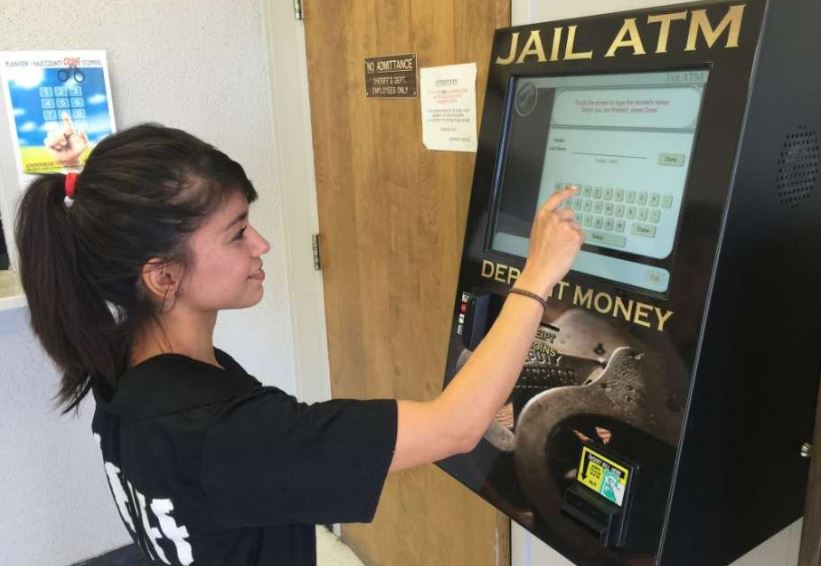
There is a monthly limit of $200-300 on how much inmates can spend on commissary items.
This amount is subject to change so call the facility at 605-367-4321 in order to confirm the amount that cannot be exceeded.
Inmates have access to both an in-house commissary store, and commissary packages that can be purchased and shipped to the inmate by friends and family.
Scroll down for information on the Minnehaha County Jail's service they use for you being able to purchase commissary items online and have them shipped directly to the inmate.
You can also go to our Inmate Money page for information on how to send money to an inmate.
JailATM provides a secure electronic payment portal that allows friends and family members to deposit funds directly into an incarcerated person's jail trust and commissary account. Deposited money provides the financial balance needed for your loved one to purchase personal hygiene items, snacks, over-the-counter medical sundries, and correspondence supplies from the facility commissary.
Important: Facility Deposit Rules and Window Intake Vary
Once a person is booked and moved to a housing unit, facilities do not always allow cash drop-offs or phone payments directly to the jail window. Some might and you should confirm this by calling the facility and asking. But if you do not register online and fund your loved one's trust account immediately, they may be forced to wait days or weeks for standard paper processing, leaving them without essential soap, clean undergarments, basic medical sundries or snacks.
Step-by-Step Instructions to Register and Deposit Funds
- Obtain the inmate's legal first and last name, date of birth, and assigned facility booking ID number.
- Navigate to deposits.jailatm.com/webdeposits/ on your computer or mobile device.
- Click Sign In or Register to set up your verified user account using your email address and password.
- Select the state and the detention facility where the inmate is currently housed.
- Search for the inmate using their ID number or legal last name to confirm an exact roster match.
- Enter your desired deposit dollar amount and review the calculated transaction and convenience fees.
- Input your debit or credit card billing details, complete payment authorization, and save your digital receipt.
What the Inmate Needs to Do
The inmate does not need an internet account to receive funds. Once the electronic transaction clears, the balance posts directly to their jail trust ledger according to facility accounting schedules. The inmate can review their updated balance at a dayroom pod kiosk or on their weekly trust statement and place orders on their regular commissary day.
Official Provider: JailATM Official Website
Customer Service Telephone: 1-877-810-0614
Support Hours: Monday – Friday, 8:00 AM – 5:00 PM CST
Supported Languages: English and Spanish
Other Services Provided by JailATM
In addition to Trust & Commissary Money Deposits, JailATM provides several other communication, store, and visitation services at participating facilities:
- Commissary Gift Packs & Store Ordering: Order pre-approved snack boxes, food packages, and hygiene bundles sent directly to the jail.
• Learn more on our website: Commissary Gift Packs Guide | • Visit official vendor page: JailATM Store Orders - Digital Messaging & Picture Sharing: Send electronic messages and photos directly to an inmate's housing unit kiosk.
• Learn more on our website: Digital Messaging Guide | • Visit official vendor page: JailATM Messaging - Remote Video Visitation: Schedule and join live video visits from home using your computer or smartphone.
• Learn more on our website: Video Visitation Guide | • Visit official vendor page: JailATM Video Visits
Deposit Money for an Inmate in the Minnehaha County Jail
Three counties, one jail: the Minnehaha County Jail at 305 W. 4th St., Sioux Falls, holds people for Minnehaha as well as Lincoln and Turner counties. It names three ways to get money onto an account.
- Walk up to the kiosk in the lobby and deposit there.
- Ask at the front desk; staff there will help you make the deposit.
- Send it online through JailATM. A separate commissary fund can be loaded at CourtMoney.com.
Money orders are a different story. Minnehaha keeps quiet, by choice, on whether it accepts them by mail and on whose name goes on the payee line. Get both answers from 605-367-4321, and expect to be asked for the inmate's full name and date of birth.
Why the balance matters: sentenced inmates are charged $10.00 for every day of the sentence. If an account dips below zero, each new deposit is split in half, one half paying the debt and the other going to spending money. Hygiene items beyond the booking kit also come out of the account.
The Minnehaha County Jail on West 4th Street in Sioux Falls is the Sheriff's large county jail, and it also holds people for Lincoln, Turner and Moody counties and for other agencies. Since October 10, 2022, personal letters have gone to a mail-scanning service instead of the jail. The service scans each page and the inmate reads it on a kiosk or tablet, which keeps out paper that has been soaked in drugs and dried.
Personal letters and photos (scanned):
Inmate's Full Name & File ID#
Minnehaha County Jail
PO BOX 591
Longview, Texas 75606
Legal mail, medical mail, books and approved packages (jail building):
Inmate's Full Name & File ID#
Minnehaha County Jail
305 W. 4th St.
Sioux Falls, SD 57104
- Their File ID: Put the inmate's name and File ID number on the envelope. You can find the File ID on the jail roster.
- Return name and address: Every envelope needs one. A letter without it is not handed to the inmate; it goes into their stored property.
- Five pages: Paper must be no bigger than 8.5 by 11 inches, with no more than five pages. Write on the front of each page only, because writing on the back gets the letter returned.
- One photo: Send a single picture per envelope. Two or more and the whole letter is sent back.
- Shredded after scanning: Mail sent to the scanning box is destroyed once it has been processed, photos included, and it is never returned or paid for.
- Wrong box for lawyers: Legal and medical mail is refused at the scanning box. It must be mailed to the jail building in Sioux Falls.
- Books and magazines: Order them new from a publisher or a store and have them shipped to the Sioux Falls jail, never to the scanning box, which returns books, magazines, newspapers and bulk mail. Big online marketplaces and big-box stores are refused. The inmate handbook allows soft-cover books only, two at a time.
- Packages: A sergeant at the jail must approve a package before it is mailed. One sent without approval is refused.
- Ink: Blue or black only, with no crayon, marker, glitter, perfume or lipstick.
- Money: The jail does not accept money orders or checks of any kind by mail. Add money at the lobby kiosk, through front desk staff, or with send money online.
For quicker news, families can send electronic messages and photos that reach the inmate right away. Jail questions go to 605-367-4321.
NCIC Inmate Communications provides telecommunications services that allow incarcerated individuals to place outbound voice calls from dayroom telephones to family and friends. Because correctional facilities do not permit incoming phone calls, establishing an NCIC prepaid calling account connects calls directly to your cell phone or landline without being blocked by wireless carriers.
Important: Mobile Phones Automatically Block Inmate Calls
Cellular phone carriers automatically reject standard collect calls originating from jail phone systems. While some residential landlines might permit direct monthly billing, mobile devices and internet-based telephone lines require an active prepaid calling balance, which you can verify by checking with your provider. If you do not register online and fund an NCIC account right away, your loved one will receive an automated disconnect announcement when attempting to call your number.
Step-by-Step Instructions to Register and Fund an Account
- Visit account.ncic.com or call NCIC customer care at 1-800-943-2189.
- Click Create Account and register using the primary 10-digit telephone number where you want to receive calls.
- Select the state and correctional facility where your loved one is currently detained.
- Search for and add the inmate using their full legal name or booking ID number.
- Select your deposit dollar amount and enter your debit or credit card billing details.
- Submit payment and ensure your mobile phone settings allow calls from automated or unfamiliar correctional numbers.
What the Inmate Needs to Do
The inmate dials your 10-digit number from any dayroom telephone and keys in their assigned PIN. The automated system verifies that your phone number has an active prepaid balance and prompts you to press a digit to accept the call. All personal telephone conversations are recorded and monitored by facility staff.
Official Provider: NCIC Official Website
Customer Service Telephone: 1-800-943-2189
Support Hours: 24 hours a day, 7 days a week, 365 days a year
Supported Languages: English and Spanish
Other Services Provided by NCIC Inmate Communications
In addition to Prepaid Phone Calling, NCIC provides several other digital communication and visitation services at participating facilities:
- Remote Video Visitation: Schedule and join live face-to-face video visits from home using your computer or smartphone.
• Learn more on our website: Video Visitation Guide | • Visit official vendor page: NCIC Video Visits - Inmate Messaging Services: Send electronic messages and photos directly to an inmate's housing unit terminal.
• Learn more on our website: Inmate Messaging Guide | • Visit official vendor page: NCIC Messaging
NCIC Inmate Messaging allows friends and family members to exchange electronic text messages and digital photos directly with an incarcerated loved one. Messages are delivered electronically to housing unit terminals and tablets within hours, avoiding the lengthy transit times associated with physical postal mail.
Important: Electronic Messaging Screening Rules Differ
Inmates cannot receive incoming phone calls, and traditional postal mail rules differ across correctional agencies. While some facilities still allow regular handwritten letters, many jails have transitioned to digital-only mail scanning or restrict postal delivery, which you can verify by checking facility rules. If you do not register online and purchase messaging credits immediately, your loved one may face lengthy periods without direct written contact from family.
Step-by-Step Instructions to Register and Send Messages
- Go to account.ncic.com and sign in or create a user profile.
- Select Messaging from your dashboard options.
- Select your state and detention center, then search for the inmate using their full legal name or booking ID.
- Purchase a messaging credit bundle using a debit or credit card.
- Type your message in the composition window and attach approved JPEG photos if permitted by the facility.
- Submit your message to the facility's screening queue.
What the Inmate Needs to Do
All electronic correspondence is screened by facility staff before delivery. Once approved, messages appear in the inmate's inbox on their housing unit terminal or tablet. The inmate opens the message, reads your note, and types an electronic reply using their available credits.
Official Provider: NCIC Official Website
Customer Service Telephone: 1-800-943-2189
Support Hours: 24 hours a day, 7 days a week, 365 days a year
Supported Languages: English and Spanish
Other Services Provided by NCIC Inmate Communications
In addition to Inmate Messaging, NCIC provides calling and video visitation services at participating facilities:
- Prepaid Phone Calling Accounts: Fund a calling balance tied directly to your phone number.
• Learn more on our website: Prepaid Calling Accounts Guide | • Visit official vendor page: NCIC Prepaid Calling - Remote Video Visitation: Schedule and join live face-to-face video visits from your computer or smartphone.
• Learn more on our website: Video Visitation Guide | • Visit official vendor page: NCIC Video Visits
NCIC Inmate Communications deploys secure, corrections-grade handheld tablets to incarcerated individuals in county detention centers. Operating on a secure internal wireless network, these devices allow inmates to conduct remote video visits, make voice telephone calls, send electronic messages, stream music, read eBooks, and access self-help and educational resources directly from their housing pods.
Important: Tablet Hardware Deployment and Rental Rules Vary
Detention centers do not manage tablet distribution identically. While some agencies issue individual personal tablets to every detainee at booking, others utilize shared pod docking stations or restrict tablet use to specific dayroom hours, which you should confirm with the facility directly. Although core educational and legal resources are generally provided free of charge, sending messages, listening to music, or making phone calls from the tablet requires an active balance funded by outside contacts.
Step-by-Step Instructions to Support and Fund NCIC Tablets
- Verify that NCIC handheld tablets are active at your loved one's specific detention facility.
- Navigate to account.ncic.com on your computer or mobile device.
- Sign into your verified user account and link the inmate's legal name and booking ID number.
- Select Tablet Media / Messaging or Inmate PIN Debit to add funds to their available balance.
- Specify your deposit dollar amount, review convenience fees, and enter your credit or debit card billing details.
- Submit payment, save your confirmation receipt, and notify your loved one that their device balance is available.
What the Inmate Needs to Do
The inmate unlocks their assigned tablet using their PIN or biometric login. Their available balance appears on the screen, allowing them to download songs, read digital books, write messages, and communicate with approved family members. Devices are returned to charging carts during quiet hours and shift counts for overnight recharging.
Official Provider: NCIC Official Website
Customer Service Telephone: 1-800-943-2189
Support Hours: 24 hours a day, 7 days a week, 365 days a year
Supported Languages: English and Spanish
Other Services Provided by NCIC Inmate Communications
In addition to Tablet Services, NCIC provides several other communication, financial, and visitation options:
- Prepaid Phone Calling Accounts: Prepay for phone calling credits so your loved one can call your telephone directly.
• Learn more on our website: Prepaid Calling Accounts Guide | • Visit official vendor page: NCIC Prepaid Calling - Remote Video Visitation: Schedule and join live face-to-face video visits from your computer or smartphone.
• Learn more on our website: Video Visitation Guide | • Visit official vendor page: NCIC Video Visits - Inmate Messaging Services: Send electronic messages and photos directly to an inmate's terminal or tablet.
• Learn more on our website: Inmate Messaging Guide | • Visit official vendor page: NCIC Messaging - Inmate Trust & Commissary Money Deposits: Send canteen funds directly into an incarcerated person's jail trust account.
• Learn more on our website: Trust Deposits Guide | • Visit official vendor page: NCIC Trust Deposits
Minnehaha County Juvenile Facilities
- Jail (Main): 605-367-4321
- County Court: 605-367-5900
- Juvenile Detention: 605-367-4313
- Lincoln County Probation: 605-987-5891
- Minnehaha County Probation: 605-367-5930
- Public Defender: 605-367-4242
- Sheriff: 605-367-4300
- Sioux Falls Police: 605-367-7212
- State's Attorney: 605-367-4226
The Minnehaha County Jail serves the following cities and towns of Minnehaha County: Brandon, Colton, Crooks, Dell Rapids, Garretson, Hartford, Humboldt, Renner, Sioux Falls and Valley Springs. At times this facility may also house inmates arrested in the following counties: Lincoln County, Turner County and Lyman County.