
Loudoun County Adult Detention Center
Loudoun County Adult Detention Center
Jail Phone Number
703-777-0405Loudoun County Inmate Search: Where Leesburg Deputies Take Someone and How to Find Them
Adults arrested by deputies or by town officers across the area usually land at the Loudoun County Adult Detention Center, 42035 Loudoun Center Place, Leesburg, VA 20175. A work release building and the magistrate share the grounds. This page covers searches, mugshots, bail, lawyers, visits, money and court dates.
Start with the jail lookup. Enter a surname plus a first name, then read what comes back. Data can lag, so a person processed this morning may be missing.
If you cannot find the person, call the jail at 703-777-0405. Get the birth date and the exact name spelling ready. Then learn the offense listed, the bail figure if any, and the day of their next hearing. What follows is covered on our bail page and on our court page.
Read inmate search answers
 Read inmate search answers
1. Using the Loudoun County jail lookup, step by step
The jail lookup is the fastest first step. Follow these steps:
- Open the jail lookup on whatever screen you have.
- Put the surname in the first box. When the list is long, type a first name too.
- No luck? Names get entered oddly, so test a short form, a former surname or another spelling.
- When you find a match, copy down the booking number or ID.
- Phone 703-777-0405 to double-check. A staff member knows more than a screen does.
The lookup runs through VINE, the state alert system. It shows custody status and place, so it helps any relative, not only crime victims.
↑ Back to the question list2. Why can't I see my person on the list?
An empty result seldom means trouble. Common causes:
- Booking in progress. Fingerprinting and paperwork use up much of the first day.
- A short stop at a police station. Town officers sometimes keep someone a while before the ride to the jail.
- Already out. Some people left on a citation, by promising in writing to return, or after a friend paid a bond.
- Held elsewhere. An arrest in a different locality puts the person in that locality's jail. State or federal agents hold some people too.
- Typos. Clerks misspell names. Test a few versions.
Phone 703-777-0405, ask for the Booking unit and listen for a yes or a no. After a no, learn which agency made the arrest and call it.
↑ Back to the question list3. Where in Leesburg could they be held?
The county is not part of a regional jail group. A single facility handles the bookings: the Loudoun County Adult Detention Center, 42035 Loudoun Center Place, Leesburg, VA 20175, 703-777-0405. The Sheriff's Office operates it.
- Main jail: takes maximum, medium and minimum security people. Some are waiting for trial. Others serve local terms of a year or less. A person with a longer state term may stay up to three years before moving to a state prison.
- Work Release Center: is in the same complex. Up to 96 non-violent, minimum-security people near release can live there. The fee is $12 a day.
- Community Custody Program: also operates from the complex. Ask the jail who can take part.
A person arrested next door may be kept in that locality's lockup before any transfer. Federal marshals and immigration agents use other jails as well. The main jail can help you sort it out.
↑ Back to the question list4. Can I see a Loudoun County mugshot?
Do not rely on the jail lookup for mugshots, and ask for one instead. Virginia's open-records act (Va. Code § 2.2-3706) makes an agency release the picture it takes of an adult at booking, unless sharing would damage an open felony case. Minors' pictures are kept private.
Direct your request to whichever agency booked the person. If a deputy did, the Sheriff's Office takes calls at 703-777-0407. Its main office is at 803 Sycolin Road SE, Leesburg, VA 20175.
- A photo made by ICE comes from the ICE records office form; it takes those requests.
- Federal agencies keep their booking pictures closed, except that the U.S. Marshals Service can share a picture of a wanted person.
5. Word when a person leaves or changes location
The free VINE service follows people in local jails and state prisons. Visit vinelink.com, look up the person and pick a call, text or email alert. A phone line, 800-467-4943, takes sign-ups at any hour.
Expect word on a release or a transfer, though never the reason. For the reason, ring the jail at 703-777-0405. Update your contact details if your number changes.
↑ Back to the question list6. Who sets bail in Loudoun County, and when?
Soon after booking, a magistrate chooses the release terms. That office sits in the jail complex at 42035 Loudoun Center Place, Leesburg, VA 20175, 703-777-0383. Magistrates are available at all hours.
- There are three kinds of release. A written pledge to return is the simplest. An unsecured bond asks for no money now and bills the person only after a missed date. A secured bond needs money or property put up first, often through a bondsman.
- Bail is the rule. A denial needs probable cause of a likely no-show or a serious threat to others (Va. Code § 19.2-120).
- A judge or magistrate can add rules such as no contact with the other person, a curfew, drug tests, GPS or check-ins.
- A bondsman must hold a state license. By law, the premium a bondsman collects can be no lower than 10 percent and no higher than 15 percent of the amount. It is not returned.
- Someone still in a cell goes before a district court judge on the court's next sitting day. A request to revisit the amount gets a hearing within three working days.
To learn how to pay a bond, phone the magistrate. Details sit on our bail page, and the law itself is on the Virginia bail rules page.
↑ Back to the question list7. Reading the exact accusation
The jail can name the charge. The court file gives the full text.
- Look up a name at the Virginia court records portal, which includes district court criminal and traffic matters, adult criminal matters in the family court, plus all Circuit Court files. Matters involving youth are left out.
- General District Court clerk: 2 Church Street NE, Leesburg, VA 20176, 703-777-0312.
- Circuit Court clerk: 18 East Market Street, Leesburg, VA 20176, 703-777-0270.
- The prosecutor, called the Commonwealth's Attorney, is at 2 Church Street NE, Leesburg, VA 20176, 703-777-0242. Its Victim Witness line is 703-777-0417.
Keep the birth date handy when you phone a clerk.
↑ Back to the question list8. Free lawyers for people who cannot pay
Anyone who cannot pay for counsel needs to speak up, either with the magistrate or in front of the judge at the opening hearing. They then sign a sworn list of income and assets. The judge then rules on who gets help (Va. Code § 19.2-159).
The local public defender office is at 201 Loudoun Street SE, Leesburg, VA 20175, 703-771-2507. If it cannot take the case, the judge names a private attorney from an approved list. Relatives may also hire their own lawyer anytime. Skip details of the case on the jail line, since staff record those talks.
↑ Back to the question list9. Visits at the jail, face to face or by video
The jail offers in-person visits and remote video visits. Tablet video visits are open every day.
- Adults only: age 18 and up, with a photo ID.
- Every visit is recorded.
- Remote visits go through ViaPath. Register for an account at gettingout.com, or call 866-516-0115 for help.
- For in-person days, times and dress rules, call 703-777-0405.
Rules can change, so check before you drive in. Find extra tips in our visiting guide.
↑ Back to the question list10. Adding funds to their jail account
The main account pays for phone calls and commissary snacks and supplies. There are three ways to add money:
- Online at the Connect Network deposit page for the jail.
- Feed cash into the lobby kiosk at 42035 Loudoun Center Place, Leesburg, VA 20175.
- By phone at 888-988-4768. Use Site ID 100.
Tablet and video accounts are set up separately at gettingout.com. Never mail cash. Our deposit tips and store list go deeper.
↑ Back to the question list11. Talking with them by phone or tablet
People in the jail have phones, tablets and TV. Calls and video use the account money from the previous answer, and the jail records them. Ask the jail at 703-777-0405 about call prices and what the tablets let a person do.
Keep talk about the charges for the lawyer. For call costs and apps, start with the phone guide, then see the email and text guide.
↑ Back to the question list12. Writing letters to someone at the Loudoun County jail
Personal mail goes to a mail center out of state. The mail center scans every letter, and the copy appears on the person's tablet. Address it this way:
Line 1: Loudoun County Adult Detention Center. Line 2: Inmate, then the full name, then BN# and the booking number. Line 3: PO Box 247. Line 4: Phoenix, MD 21131.
Legal mail and money orders go to a different box: PO Box 7700, 42035 Loudoun Center Place, Leesburg, VA 20177. Print the booking number and the complete name on the front. The mail guide adds tips.
↑ Back to the question list13. Collecting their things
Anything brought in at booking is stored until the person goes home. Before you collect anything for them, call 703-777-0405. Ask which ID you need, about any release form, plus visiting hours for pickups. The jail is at 42035 Loudoun Center Place, Leesburg, VA 20175.
↑ Back to the question list14. Illness, injury and prescriptions in custody
A medical company under contract gives care at the jail around the clock. There is a small co-pay for some visits. Have the person put in a written request for medical help.
You can also call 703-777-0405. Name the drug, the amount and the prescribing doctor. Mention it on the call if their mood or mind worries you. For immediate danger, use 911.
↑ Back to the question list15. Checking whether an arrest order exists
Deputies and town police serve warrants. Ask the Sheriff's Office at 703-777-0407, Leesburg Police at 703-771-4500, Purcellville Police at 703-777-1021 or Middleburg Police at 540-687-6633 whether one is active. Pick the agency for the town where the person lives. For a case record, try the state case lookup or phone the district clerk, 703-777-0312, or the Circuit clerk, 703-777-0270. Before turning yourself in or calling a judge's clerk about clearing one, talk to a lawyer. The district clerk works at 2 Church Street NE, Leesburg, VA 20176.
↑ Back to the question list16. Where to learn the date of the next hearing
Three courts sit in Leesburg, and the date comes from whichever has the case:
- General District Court (misdemeanors, traffic, first hearings): 2 Church Street NE, Leesburg, VA 20176, 703-777-0312.
- Circuit Court (felony trials and appeals): 18 East Market Street, Leesburg, VA 20176, 703-777-0270. Clerk hours are 8 a.m. to 4 p.m. on weekdays.
- Juvenile and Domestic Relations District Court (JDR, for youth and family-member cases): 18 East Market Street, Leesburg, VA 20176, 703-777-0300.
A name search in the state's case system helps too. Our court guide explains each step.
↑ Back to the question list17. A federal arrest from Loudoun County
A federal charge is handled in Alexandria, in the Eastern District of Virginia's Alexandria Division, at 401 Courthouse Square, Alexandria, VA 22314 (the Albert V. Bryan courthouse). The clerk's phone is 703-299-2101.
- Soon after arrest, a federal judge weighs release in a detention hearing (federal statute 18 U.S.C. § 3142). The person may wait for trial in a cell or under rules at home.
- While the case is open, the U.S. Marshals Service has custody, often at a local jail. Its Alexandria office, at the courthouse address, answers at 703-837-5500.
- The Federal Public Defender, 1650 King Street, Suite 500, Alexandria, VA 22314, 703-600-0800, helps people who can't pay.
- After sentencing, use the Federal Bureau of Prisons inmate locator.
18. An immigration hold
Cases usually move in four stages.
- A detainer is ICE's hold request, sent to the jail as Form I-247A.
- Under 8 CFR 287.7(d), the jail may keep the person up to 48 hours after they would otherwise be released.
- ICE takes custody and decides where the person is held.
- Use the ICE Online Detainee Locator by entering a name plus birth country, or call the Washington Field Office at 14797 Murdock Street, Chantilly, VA 20151, 703-633-2100.
Per a February 4, 2026 directive, the 287(g) deals that Virginia's state agencies had with ICE were to be terminated. It covers state agencies only, so a lawyer is the best guide to what applies to a local jail.
↑ Back to the question list19. After a state sentence
A felony sentence to state time starts at a Virginia Department of Corrections intake step. Staff review needs and risk, then assign a prison. Until the state has space, some people stay at the local jail.
- Search the state locator using a last name or the person's DOC number; new data loads daily. Its list also covers people parked in a local jail on the state's behalf.
- Reach the department at 804-674-3000.
- Our list of Virginia prisons covers each facility.
20. A teen taken into custody in Loudoun County
Minors never stay in the adult jail. A youth goes to a detention center only on the order of a judge, intake officer or magistrate. The case then goes before the juvenile and family court, 18 East Market Street, Leesburg, VA 20176, 703-777-0300.
The Loudoun Juvenile Detention Center is at 42055 Gourley Transit Drive, Leesburg, VA 20175, 703-771-5200. Youth files are not in the state's online lookup, so phone the court for dates.
↑ Back to the question list21. Every police office and Sheriff station in the county
Many agencies work here. Ask which one made the arrest.
- Sheriff's Office, 803 Sycolin Road SE, Leesburg, VA 20175, 703-777-0407. Deputies cover the unincorporated county and several small towns, with stations in Ashburn, Dulles South, Sterling and Round Hill.
- Leesburg Police, 65 Plaza Street NE, Leesburg, VA 20176, 703-771-4500
- Purcellville Police, 125 Hirst Road, Unit 7-A, Purcellville, VA 20132, 703-777-1021
- Middleburg Police, 10 West Marshall Street, Middleburg, VA 20117, 540-687-6633
- Virginia State Police, Division Seven, 4977 Alliance Drive, Fairfax, VA 22030, 703-803-2660
Loudoun County bail and jail guide
Deputies bring people arrested in Loudoun County to the Loudoun County Adult Detention Center, 42035 Loudoun Center Place, Leesburg, VA 20175. A magistrate and a work release center share the campus. This page covers who sets the amount, ways to pay a bond and the court that gets the case afterward.
Use the VINELink search with a full name to check custody status. For recent arrests, charges and mugshots, open the Loudoun Jail Roster page.
Start by dialing the jail at 703-777-0405. Ask for the bond figure, then ask when a judge will first hear the charge. Then skim the Leesburg court guide to see who hears the charge.
1. Where are Loudoun arrestees held?
At the Loudoun County Adult Detention Center, 42035 Loudoun Center Place, Leesburg, VA 20175. Phone 703-777-0405.
↑ Back to the question list2. Where is the magistrate?
At the detention center, 42035 Loudoun Center Place, Leesburg, VA 20175, 703-777-0383.
↑ Back to the question list3. How is bail decided?
Release is the default. The magistrate holds someone only on probable cause of flight or danger, and sets an amount that fits the person’s means (Va. Code § 19.2-120; Va. Code § 19.2-121).
↑ Back to the question list4. Does Loudoun have pretrial services?
Yes. People can be released to supervision with check-ins and tests (Va. Code § 19.2-123; Va. Code § 19.2-152.4:3).
↑ Back to the question list5. How do I search?
6. Which court?
The Loudoun General District Court, 2 Church Street NE, Leesburg, VA 20176, 703-777-0312. Felony trials are in the Circuit Court, 18 E. Market St., 3rd Floor, Leesburg, VA 20176, 703-777-0270. Juvenile and family cases go to the Loudoun JDR court.
↑ Back to the question list7. How quickly does Loudoun set bail?
Usually within a few hours. The magistrate's office is in the same Leesburg building as the adult detention center, so there's no long drive after booking (Va. Code § 19.2-80).
↑ Back to the question list8. Which bond types are used in Loudoun?
Recognizance (a signed promise), unsecured (money owed only after a no-show) or secured (cash, property or a bondsman up front) (Va. Code § 19.2-123).
↑ Back to the question list9. Can I pay a Loudoun bond at night?
Yes. The magistrate at 42035 Loudoun Center Place, Leesburg, VA 20175 is staffed 24 hours (Va. Code § 19.2-48.1); call 703-777-0383.
↑ Back to the question list10. How much is a bondsman in Loudoun?
Leesburg bondsmen charge 10% to 15% of the bond (Va. Code § 9.1-185.8) and must hold a DCJS license (Va. Code § 9.1-185). That fee is theirs to keep, even if the charge is dropped.
↑ Back to the question list11. Can a Loudoun home be pledged?
Yes, up to its equity (Va. Code § 19.2-123). Bring the county assessment and deed; all owners sign.
↑ Back to the question list12. When is the first hearing in Loudoun?
If bail is not paid, the next day district court meets (Va. Code § 19.2-158), often by video to the Leesburg courthouse. The judge raises the lawyer question (Va. Code § 19.2-159).
↑ Back to the question list13. Where are Loudoun arraignments?
Misdemeanors in General District Court, 2 Church Street NE, Leesburg, VA 20176. Felonies in Circuit Court after indictment.
↑ Back to the question list14. Can bail be lowered in Loudoun?
A bail motion in district court (Va. Code § 19.2-158) gets a hearing within three business days for a jailed defendant. Bring something new, like a job letter.
↑ Back to the question list15. Where are Loudoun bail rulings appealed?
Circuit Court, 18 East Market Street, 3rd Floor, Leesburg, VA 20176, 703-777-0270 (Va. Code § 19.2-124).
↑ Back to the question list16. Who tries Loudoun misdemeanors?
A judge in General District Court; clerk 703-777-0312. A 10-day appeal gives a new trial in Circuit Court (Va. Code § 16.1-132).
↑ Back to the question list17. How does a Loudoun felony move?
First comes a district court preliminary hearing (Va. Code § 19.2-218). If a grand jury indicts, the trial moves to Circuit Court in historic downtown Leesburg.
↑ Back to the question list18. What does Loudoun JDR court handle?
Youth cases and crimes against family or household members (Va. Code § 16.1-241). It sits at 18 East Market Street; call 703-777-0300.
↑ Back to the question list19. Can Loudoun appoint a lawyer?
Yes, if jail is possible and you can't pay. The judge reviews a sworn finance form (Va. Code § 19.2-159).
↑ Back to the question list20. What if a Loudoun date is missed?
Arrest order, bond forfeited and possibly a new charge. That charge is a Class 1 misdemeanor if the underlying case was a misdemeanor and a Class 6 felony if it was a felony (Va. Code § 19.2-128).
↑ Back to the question list21. Can Loudoun bond forbid contact?
Yes (Va. Code § 19.2-123). Domestic cases usually bring an emergency protective order too (Va. Code § 16.1-253.4).
↑ Back to the question list22. What if someone in Loudoun is wanted in another state?
A judge here decides bail on that warrant (Va. Code § 19.2-102), and the hold can outlast the local bond (Va. Code § 19.2-85).
↑ Back to the question list23. Where do Loudoun federal cases go?
To Alexandria, home of the Eastern District of Virginia, where release is set by a U.S. magistrate judge (18 U.S.C. § 3142).
↑ Back to the question list24. How do Loudoun jail visits work?
The Sheriff's Office runs them; call 703-777-0405 for times and deposit rules.
↑ Back to the question list25. Can a Loudoun inmate be moved?
Most stay in Leesburg during the case. A prison sentence leads to a Department of Corrections transfer. Check the inmate search.
↑ Back to the question list26. How long is release after a Loudoun bond?
Plan on an hour or two while deputies check for other warrants and finish the paperwork.
↑ Back to the question list27. What does a Loudoun surety risk?
If the defendant skips, the surety can be made to pay the bond (Va. Code § 19.2-143). A worried surety may surrender the defendant before that happens (Va. Code § 19.2-149).
↑ Back to the question list28. When is Loudoun cash bail refunded?
After the case closes with all dates kept, minus any fines and costs.
↑ Back to the question list29. Can Loudoun bond terms change?
Ask the judge through a motion (Va. Code § 19.2-158). The current terms apply until a new order.
↑ Back to the question list30. Who can confirm a Loudoun County bond?
Jail: 703-777-0405. Magistrate: 703-777-0383. District court: 703-777-0312. Circuit Court: 703-777-0270.
↑ Back to the question listContacts for Loudoun County
- Jail
- Loudoun County Adult Detention Center, 42035 Loudoun Center Place, Leesburg, VA 20175; 703-777-0405
- Magistrate
- 42035 Loudoun Center Place, Leesburg, VA 20175; 703-777-0383
- District court
- 2 Church Street NE, Leesburg, VA 20176; 703-777-0312
- Circuit court
- 18 E. Market St., 3rd Floor, Leesburg, VA 20176; 703-777-0270
- Inmate search
- Loudoun County inmate search
This page is not legal advice.
Loudoun County Adult Detention Center Remote Bail Deposits
ConnectNetwork / ViaPath Online Bail Payments
Provider: ConnectNetwork / GTL • ViaPath Technologies Financial (TouchPay)

At facilities serviced by ConnectNetwork (GTL) and ViaPath Technologies, online cash bail, appearance bonds, and release fees are processed through ViaPath's payment division, TouchPay Direct. This electronic service enables friends and family to post bond remotely around the clock using a major credit or debit card, eliminating the need to obtain cashier's checks or bring physical cash to the detention center booking lobby.
Important: Verify Bond Status Before Processing Bail Payments
Bail posting procedures are not uniform across all municipal courts and county detention facilities. While many jails accept card payments around the clock, some require magistrate confirmation or impose physical intake processing periods. Always call the booking desk to verify that booking is complete, an exact cash bond amount has been set, and no additional holds or warrants exist from other jurisdictions, as credit card transaction fees cannot be refunded once authorized.
Step-by-Step Instructions to Pay Cash Bail Online
- Contact the jail booking department directly to verify that the defendant is eligible for release and to obtain the facility's TouchPay Site ID.
- Navigate to web.connectnetwork.com or touchpayonline.com.
- Select Bail and enter the facility's dedicated Site ID number or select your state and county jail.
- Enter the defendant's full legal name, date of birth, and assigned booking or docket ID number.
- Review the bond balance, enter the authorized payment amount, and note the non-refundable processing surcharge.
- Enter your Visa, MasterCard, or debit card details and submit the transaction.
- Save the transaction confirmation number and immediately call the jail booking desk to confirm the payment has posted to their records.
What the Inmate Needs to Do
The booking officer checks the facility's electronic accounting terminal to verify the cleared bond transaction. Staff then print the official court release agreement, escort the individual to the intake desk to sign the bond conditions, and complete standard discharge and personal property return procedures.
Official Providers: ConnectNetwork Portal | myViaPath
Customer Service Telephone: 1-866-232-1899 (Bail Line) • 1-877-650-4249 (ViaPath Support)
Support Hours: 24 hours a day, 7 days a week, 365 days a year
Supported Languages: English and Spanish
Other Services Provided by ConnectNetwork / ViaPath
In addition to Online Bail Payments, ConnectNetwork and ViaPath manage several core communication and financial channels:
- Video Visitation: Conduct scheduled live video calls with your loved one from your home computer or mobile phone.
• Learn more on our website: Video Visitation Guide | • Visit official vendor page: ConnectNetwork Video Visits - Inmate Messaging: Send digital text messages and photo attachments directly to an inmate's account.
• Learn more on our website: Digital Messaging Guide | • Visit official vendor page: ConnectNetwork Messaging - Inmate Tablets: Learn how handheld devices provide access to messaging, phone calls, and media.
• Learn more on our website: Tablet Services Guide | • Visit official vendor page: ViaPath Tablet Programs
Loudoun County Adult Detention Center Inmate Visitation
Video from home: Create a ViaPath GettingOut account, then select the person in custody to see available options. The jail’s handbook lists daily tablet video from 9 a.m. to 10 p.m. Eastern during times when the housing unit is out of cells. Follow the time shown in your account. Call 866-516-0115 for video support.
Visiting at the jail: Call 703-777-0405 before going to 42035 Loudoun Center Place, Leesburg, to confirm whether the person is eligible for a family visit and the current check-in time. The previously listed onsite cutoff was 5 p.m.; confirm it before relying on it. Bring a valid government-issued photo ID. Minors must come with a parent or legal guardian. Attorney and other professional visits have separate procedures.
GettingOut / ViaPath Remote Video Visits
Provider: GettingOut (Telmate) • Rebranding as ViaPath Technologies (myViaPath Visits)
GettingOut Video Visitation allows friends and family members to conduct live, face-to-face video visits with incarcerated loved ones using a personal computer, laptop webcam, or the mobile application. Telmate and GTL operate under ViaPath Technologies, and the visiting service is transitioning from GettingOut Visits to myViaPath Visits; users may encounter either brand name depending on whether their county jail has completed the platform update.
Important: Advance Background Clearance Required
Detention centers do not permit unapproved drop-in video visitation. All visitors must submit valid government photo identification and pass administrative screening before an appointment can be booked, a review that can take up to 48 hours depending on facility staffing. You should verify your visitor approval status with the facility in advance. If you do not register ahead of time, you will miss your loved one's scheduled visiting slots for the week.
Step-by-Step Instructions to Schedule a Video Visit
- Open the GettingOut / myViaPath Visits app or go to www.gettingout.com / my.viapath.com.
- Register your profile and upload clear photographs of your government ID and a verification photo.
- Wait for the facility to issue visitor approval (you will receive an email confirmation).
- Select Schedule Visit, pick your detention facility, and select the inmate.
- Choose an available 25- or 30-minute time slot from the calendar and pay the visitation fee using a credit or debit card.
- Sign into the app or website 10 minutes prior to the start time on a device with a functioning camera, microphone, and stable internet connection.
What the Inmate Needs to Do
The inmate receives a schedule alert on their housing unit video kiosk or personal tablet. At the appointed time, they log in with their PIN and sit in front of the terminal. Inmates must follow institutional dress and conduct rules; corrections staff actively monitor sessions and will terminate any call immediately if rules are broken.
Official Providers: GettingOut Visits | myViaPath Visits
Customer Service Telephone: 1-866-516-0115 (GettingOut) • 1-877-650-4249 (ViaPath)
Support Hours: Monday – Friday, 7:00 AM – 11:00 PM CST; Saturday – Sunday, 8:00 AM – 7:00 PM CST
Supported Languages: English and Spanish
Other Services Provided by GettingOut / ViaPath
In addition to Remote Video Visits, GettingOut and ViaPath provide several other communication and financial options:
- Two-Way Text Messaging: Send electronic messages and photos straight to the inmate's screen.
• Learn more on our website: Two-Way Text Messaging Guide | • Visit official vendor page: GettingOut Messaging - Inmate Tablet Rentals & Content: Provide funds for educational modules, music streaming, and news.
• Learn more on our website: Tablet Rentals & Content Guide | • Visit official vendor page: GettingOut Tablets - AdvancePay Phone Calling: Keep a funded prepaid balance to receive calls directly on your phone.
• Learn more on our website: AdvancePay Phone Calling Guide | • Visit official vendor page: ViaPath ConnectNetwork Calling - Inmate Trust Deposits: Transfer money directly into their jail trust account for canteen goods.
• Learn more on our website: Inmate Trust Deposits Guide | • Visit official vendor page: ViaPath Trust Deposits
Leesburg courts that hear Loudoun criminal cases
Three courthouses in Leesburg handle crime here. The General District Court is at 2 Church Street NE, Leesburg, VA 20176. The Circuit Court shares 18 East Market Street, Leesburg, VA 20176, with the family and juvenile (JDR) court. Deputies and police hold arrested adults at the Loudoun County Adult Detention Center, 42035 Loudoun Center Place, Leesburg, VA 20175.
Not sure your loved one is still inside? Search the name at VINELink. Check Inmates in Custody here for the latest bookings, their charges and mugshots.
Need a hearing date? Ring the district court's clerk office at 703-777-0312 with the full name ready. If you hope to arrange release, start with our bail and bond guide.
1. Courts in Loudoun County (circuit, general district, and juvenile and domestic relations courts)
Loudoun County, the fast-growing Northern Virginia county that stretches from Sterling and Ashburn out to the Blue Ridge, has its county seat and every one of its courts in downtown Leesburg. A criminal charge here lands in the Loudoun County General District Court, the Loudoun County Juvenile and Domestic Relations District Court or the Loudoun County Circuit Court, which together with Fauquier and Rappahannock counties forms Virginia's 20th Judicial Circuit. Loudoun's own elected Commonwealth's Attorney prosecutes, the state-funded Loudoun Public Defender takes cases for people who qualify, and the Sheriff's Office, not a county police force, is the main law enforcement agency. Anyone a magistrate does not release on bail is held by the Sheriff at the Loudoun County Adult Detention Center in Leesburg.
- Loudoun County Circuit Court and Clerk of the Circuit Court, 18 East Market Street, 3rd Floor, Leesburg, VA 20176 (mail: P.O. Box 550, Leesburg, VA 20178), (703) 777-0270; Criminal Division (703) 771-5610
- Loudoun County General District Court (criminal and traffic), 2 Church Street NE, Leesburg, VA 20176, (703) 777-0312; 24-hour information line (703) 777-0310
- Loudoun County Juvenile and Domestic Relations District Court, 18 East Market Street, Leesburg, VA 20176, (703) 777-0300
- Loudoun County Magistrate's Office (20th District), 42035 Loudoun Center Place, Leesburg, VA 20175, (703) 777-0383
- 20th District Court Service Unit (juvenile intake), 18 East Market Street, Leesburg, VA 20178, (703) 777-0303
- Loudoun County Commonwealth's Attorney, 2 Church Street NE, Leesburg, VA 20176, (703) 777-0242; Victim/Witness Program (703) 777-0417
- Loudoun Public Defender (Virginia Indigent Defense Commission), 201 Loudoun Street SE, Leesburg, VA 20175, (703) 771-2507
- Loudoun County Sheriff's Office, 803 Sycolin Road SE, Leesburg, VA 20175, (703) 777-0407
- Loudoun County Adult Detention Center, 42035 Loudoun Center Place, Leesburg, VA 20175, (703) 777-0405
- Loudoun County Department of Community Corrections (pretrial release and local probation), Leesburg, (703) 777-0207
- Leesburg Police Department, 65 Plaza Street NE, Leesburg, VA 20176, (703) 771-4500
- Purcellville Police Department, 125 Hirst Road, Suite 7-A, Purcellville, VA 20132, (540) 338-7422
- Middleburg Police Department, 10 West Marshall Street, Middleburg, VA 20117, (540) 687-6633
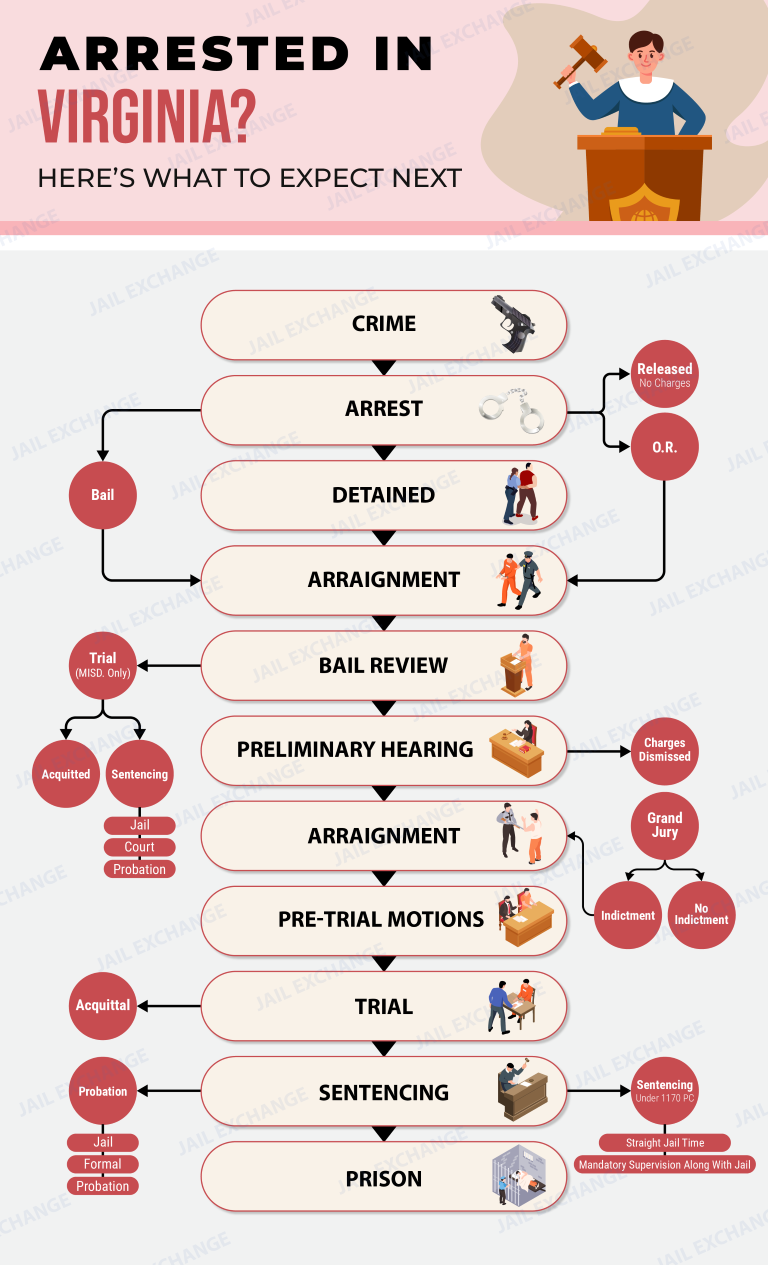
Which court hears your case. A misdemeanor or traffic charge from anywhere in Loudoun, whether a reckless driving ticket on Route 7 or a shoplifting arrest at Dulles Town Center, is tried before a judge alone in the Loudoun County General District Court on Church Street; there is no jury at that level. Someone convicted there may appeal within 10 days to the Loudoun County Circuit Court, which hears the case over from the start and allows a jury. Charges of assault or another offense against a family or household member, and cases involving anyone under 18, go instead to the Loudoun County Juvenile and Domestic Relations District Court. Felonies open with a preliminary hearing in the General District Court (or the JDR court when the complaining witness is a relative or household member) and, once a grand jury returns an indictment, move up to the Loudoun County Circuit Court for trial or plea.
Where pretrial inmates are held. Loudoun is not part of a regional jail authority. The Sheriff runs the county's own Adult Detention Center at 42035 Loudoun Center Place in Leesburg, and the magistrate's office works out of the same complex. Arrests made by sheriff's deputies, by the Leesburg, Purcellville and Middleburg police, by Virginia State Police troopers and by airport and federal officers who bring state charges all end in booking there. For custody status, release questions or visiting rules, call the detention center at (703) 777-0405.
No Virginia town or city runs a municipal or mayor's court, and Loudoun is no exception. The county has seven incorporated towns, and charges from the towns of Leesburg, Purcellville, Middleburg, Hamilton, Hillsboro, Lovettsville and Round Hill go to the Loudoun County General District Court, the Loudoun County JDR court or the Loudoun County Circuit Court. The same three courts take cases from the large unincorporated communities, among them Ashburn, Sterling, South Riding, Brambleton, Lansdowne, Aldie and the Loudoun side of Dulles. Leesburg, Purcellville and Middleburg keep their own police departments; Hamilton, Hillsboro, Lovettsville and Round Hill are patrolled by the Sheriff's Office.
Courts and clerks
- Loudoun County Circuit Court (20th Judicial Circuit; felony trials, misdemeanor appeals, jury trials), 18 East Market Street, 3rd Floor, Leesburg, VA 20176; Clerk (703) 777-0270; Criminal Division (703) 771-5610; clerk's office open 8:00 a.m. to 4:00 p.m.
- Loudoun County General District Court (20th District; misdemeanors, traffic, preliminary hearings, bond reviews), 2 Church Street NE, Leesburg, VA 20176; criminal and traffic (703) 777-0312; recorded information (703) 777-0310
- Loudoun County Juvenile and Domestic Relations District Court, 18 East Market Street, Leesburg, VA 20176, (703) 777-0300; clerk's office 8:00 a.m. to 4:00 p.m.
Magistrate, prosecutor, defense and juvenile intake
- Loudoun County Magistrate's Office, 42035 Loudoun Center Place, Leesburg, VA 20175, (703) 777-0383
- Commonwealth's Attorney for Loudoun County, 2 Church Street NE, Leesburg, VA 20176, (703) 777-0242
- Loudoun Public Defender, 201 Loudoun Street SE, Leesburg, VA 20175, (703) 771-2507
- 20th District Court Service Unit, 18 East Market Street, Leesburg, VA 20178, (703) 777-0303 (weekdays 8:00 a.m. to 4:30 p.m.)
Law enforcement
- Loudoun County Sheriff's Office, 803 Sycolin Road SE, Leesburg, VA 20175, (703) 777-0407
- Leesburg Police Department, 65 Plaza Street NE, Leesburg, VA 20176, (703) 771-4500
- Purcellville Police Department, 125 Hirst Road, Suite 7-A, Purcellville, VA 20132, (540) 338-7422
- Middleburg Police Department, 10 West Marshall Street, Middleburg, VA 20117, (540) 687-6633
A person who cannot afford a lawyer asks for one at the first court date, or tells the magistrate at the time of arrest; the Loudoun Public Defender at (703) 771-2507 handles most appointed adult criminal cases.
↑ Back to the question list2. The Leesburg courts complex and the 20th Judicial Circuit
All of Loudoun's trial courts sit within a few blocks of the old courthouse square at Market and King streets in historic Leesburg. The Circuit Court and its clerk occupy the building at 18 East Market Street, which also holds the Juvenile and Domestic Relations District Court and the Court Service Unit. The General District Court and the Commonwealth's Attorney are around the corner at 2 Church Street NE. Downtown parking fills quickly on busy docket mornings, and every visitor passes through security screening, so arriving early is wise.
The 20th Judicial Circuit is made up of Loudoun, Fauquier and Rappahannock counties. Its five circuit judges rotate among the three courthouses, so the judge hearing a Loudoun felony may also sit in Warrenton or Washington during the same month. The district courts are organized the same way as the 20th Judicial District, and a single Court Service Unit covers juvenile intake for all three counties from its main office in Leesburg.
The Circuit Court Clerk keeps felony files, indictments, jury trial records and appeals from the district courts. Misdemeanor and traffic files, preliminary hearing records and most bail paperwork stay with the General District Court clerk until a case is certified or appealed. Case information for both levels can also be looked up by name through the state's online case systems, and the clerk's offices can confirm the next court date by phone.
↑ Back to the question list3. After an arrest in Loudoun County: magistrate, bail and pretrial release
Booking. A deputy or town officer who makes an arrest takes the person to the Loudoun County Adult Detention Center on Loudoun Center Place. Fingerprints, photographs and a records check are done there, and property is inventoried.
The magistrate. The arresting officer then presents the facts to a magistrate, who sits in the same building around the clock. If the magistrate finds probable cause, a warrant or summons is issued as the formal charging document. The magistrate also sets the terms of release. Options run from a personal recognizance, which is simply a written promise to come back to court, to an unsecured bond (an amount owed only if the person fails to appear) to a secured bond that must be posted in cash, with property or through a licensed bail bondsman. Commercial bondsmen operate legally in Virginia under licenses issued by the Department of Criminal Justice Services. Since 2021 Virginia no longer presumes that people charged with certain offenses must be held, so the magistrate weighs the specific risk that the person will not return to court or will endanger someone.
Pretrial release in Loudoun. The county's Department of Community Corrections runs a Pretrial Release Program that interviews people held at the jail and recommends to the court whether they can be supervised in the community instead. Judges and magistrates can order GPS monitoring for higher-risk defendants and portable breath-alcohol monitoring as conditions. Supervision typically involves regular check-ins, and violating a condition can lead to a new arrest. The program's office can be reached at (703) 777-0207.
Asking a judge to change the bond. If the magistrate denies release or sets an amount the family cannot meet, the defense can ask a General District Court judge (or a JDR judge, for a family-member case) to reconsider at a bond hearing. A judge's ruling can in turn be appealed to the Circuit Court.
First appearance. A person still in custody is usually brought before the court for advisement on the next day the court is in session, often by video from the jail. The judge reads the charge, explains the right to a lawyer and either confirms that the defendant has hired one or appoints the Loudoun Public Defender or a private attorney. People released on a summons get a date on the paperwork instead.
↑ Back to the question list4. The Loudoun County Adult Detention Center
The Loudoun County Adult Detention Center is a local jail operated by the Loudoun County Sheriff's Office, located at 42035 Loudoun Center Place, Leesburg, VA 20175. It holds adults awaiting trial on Loudoun charges, people serving sentences of 12 months or less, and state prisoners waiting to be moved to the Virginia Department of Corrections after a felony sentence. Because Loudoun belongs to no regional jail authority, nearly everyone arrested in the county stays in this one facility until released.
Families with questions about whether someone is being held, the charges, a bond amount or visiting can call (703) 777-0405. The Sheriff's main number is (703) 777-0407. The magistrate's office in the same complex, (703) 777-0383, can explain how a secured bond is posted. Mail, deposits to inmate accounts and video visits follow rules set by the Sheriff, and those rules change from time to time, so it is worth calling before sending money or arriving for a visit.
Youths are never housed in the adult detention center; a juvenile taken into custody goes to the Loudoun Juvenile Detention Center instead (see the juvenile section below).
↑ Back to the question list5. The Loudoun Public Defender and court-appointed counsel
Loudoun has its own public defender office, run by the Virginia Indigent Defense Commission. The Loudoun Public Defender is at 201 Loudoun Street SE, Leesburg, VA 20175, (703) 771-2507, and its staff lawyers represent eligible adults and juveniles charged with jailable offenses in all three Loudoun courts.
How to get a lawyer appointed. Say at the magistrate's office or at the first court date that you want a court-appointed attorney. The court has you fill out a sworn financial statement listing income, assets and household size, and the judge compares it with the state's income guidelines. Forms are kept by the General District Court clerk at 2 Church Street NE, (703) 777-0312. When the Public Defender cannot take a case, usually because it already represents a co-defendant or a witness, the judge assigns a private lawyer from the court's list of qualified attorneys.
Costs. Appointed counsel is not entirely free. If the defendant is convicted, a fee for the appointed lawyer is generally added to the court costs, with amounts set by statute according to the charge. A charge that is dismissed carries no such fee.
Anyone who can afford to hire a private lawyer may do so at any stage, and the court will usually allow a short continuance for a new attorney to prepare.
↑ Back to the question list6. The Commonwealth's Attorney, victims and first-offender options
The Commonwealth's Attorney for Loudoun County, an elected official serving a four-year term, prosecutes felonies and the misdemeanors the office chooses to handle in all three local courts; the office is at 2 Church Street NE, Leesburg, (703) 777-0242. Some lower-level traffic and misdemeanor cases go forward with only the arresting officer presenting the evidence. Loudoun's Commonwealth's Attorney does not prosecute for any other county, and Fauquier and Rappahannock each elect their own.
Victim/Witness Program. Under Virginia's Crime Victim and Witness Rights Act, people harmed by a crime have the right to be told about court dates and bail decisions, to be heard at sentencing and to ask for restitution. The office's Victim/Witness Program, (703) 777-0417, explains the process and accompanies victims to court. Community Corrections also has a victim outreach officer who mostly works with domestic violence victims on release and probation conditions.
First-offender and deferred outcomes. Virginia law gives judges several ways to defer a case and dismiss it later if the defendant completes conditions: first-offender drug possession, first-offender domestic assault, and deferral in petit larceny and some other cases. Loudoun Community Corrections supervises many of these defendants and runs related classes, including a shoplifting prevention class, an anger management group and domestic violence intervention groups of 24, 36 or 52 weeks. Whether an offer is made depends on the charge, the person's record and the prosecutor's position, and the decision belongs to the judge.
↑ Back to the question list7. Specialty dockets: recovery court, veterans, behavioral health and DWI
Loudoun operates several court programs approved by the Supreme Court of Virginia that trade close supervision and treatment for a better outcome in the case. Participation is voluntary, space is limited, and each program screens applicants; a defense lawyer is the usual starting point for a referral.
- Adult Recovery Court (drug court). Run through the Circuit Court for adults charged with, or on probation for, a nonviolent felony who are assessed as dependent on drugs or alcohol. Participants attend treatment, take frequent drug tests and return to court regularly for progress reviews.
- Behavioral Health Docket (General District Court). A post-plea docket for defendants diagnosed with a serious mental illness, monitored by a team that tracks treatment and compliance.
- Veterans Treatment Docket. Held its first hearing in March 2023 and serves justice-involved veterans, including Guard and reserve members, with substance use or mental health problems. Veterans charged in the JDR court can take part under a special agreement; active-duty service members are excluded.
- Adult Behavioral Health Docket (JDR court). Began July 1, 2026, for adults 18 and older with a serious mental illness whose cases are in the Juvenile and Domestic Relations District Court, which county officials described as the first docket of its kind for that type of Virginia court.
- Enhanced DWI Docket. A General District Court program that supervises higher-risk drunk-driving defendants, such as those with prior convictions or a blood alcohol content of 0.15 or above, through court reviews every 90 days, a Victim Impact Panel and treatment through the Virginia Alcohol Safety Action Program or another provider.
Successful completion can mean a reduced charge, a suspended sentence or, in some programs, dismissal, while a participant who stops complying can be sanctioned or returned to the regular docket for sentencing. Program staff at Community Corrections, (703) 777-0207, or the Loudoun Public Defender can explain eligibility.
↑ Back to the question list8. Misdemeanor (for example, petit larceny, a first DUI, assault and battery, trespassing)
How the case starts. Many Loudoun misdemeanors begin with a summons the officer writes on the spot, giving a date at the General District Court on Church Street. When there is a custodial arrest, as with most DUI and domestic cases, the person is booked at the Loudoun County Adult Detention Center and the magistrate decides on release, usually a recognizance or an unsecured bond for a first misdemeanor.
Penalties. Virginia sorts misdemeanors into four classes. Class 1 carries up to 12 months in jail, a fine of up to $2,500, or both; Class 2 carries up to 6 months and up to $1,000; Class 3 and Class 4 offenses are fine-only, up to $500 and $250. Petit larceny (property worth less than $1,000), assault and battery and trespassing are all Class 1 misdemeanors.
First DUI. A first offense is a Class 1 misdemeanor with a mandatory minimum fine of $250. The license is also pulled for 7 days on the spot as an administrative suspension. A conviction brings a one-year license revocation, which a judge may soften with a restricted license that requires an ignition interlock, and enrollment in the Virginia Alcohol Safety Action Program (VASAP). Jail becomes mandatory with a high reading: 5 days at a blood alcohol content of 0.15 to 0.20, and 10 days above 0.20. Loudoun's higher-risk drivers may be placed on the Enhanced DWI Docket.
Family-member assaults. An assault and battery against a spouse, partner, parent, child or other household member is heard in the JDR court on Market Street, not the General District Court. An emergency protective order is often issued at the time of arrest. A first offender may be offered a deferred disposition with counseling, and a third such conviction can be charged as a felony.
Trial and outcomes. At the first date the judge confirms counsel; the trial itself is usually set several weeks later. Cases end in dismissal, a deferred disposition, a fine, a suspended sentence with probation through Community Corrections, or active jail time. Most finish in one to three months. A defendant unhappy with the result may appeal within 10 days to the Circuit Court for a completely new trial, with a jury of seven if requested. Ask for a lawyer at the first appearance or call the Loudoun Public Defender at (703) 771-2507.
↑ Back to the question list9. Felony (for example, burglary, grand larceny, drug possession or distribution, malicious wounding)
Arrest and release. Felony arrests are processed at the Loudoun County Adult Detention Center, where the magistrate issues the warrant and decides whether to grant bail. A defendant held without bond, or on an amount too high to post, can ask a General District Court judge for a bond hearing and may be screened by the Pretrial Release Program for supervised release.
Preliminary hearing. Within a few weeks to a couple of months, the General District Court holds a preliminary hearing (the JDR court does so when the victim is a family member). The only question at that stage is whether probable cause exists, and a finding that it does sends, or certifies, the case on to the grand jury. The charge can also be reduced to a misdemeanor and resolved on the spot, or dismissed. The Commonwealth's Attorney sometimes skips this step by taking the case directly to the grand jury.
Indictment and Circuit Court. A Loudoun grand jury meets regularly at the Circuit Court on East Market Street. After an indictment, the defendant is arraigned in the Circuit Court, enters a plea and the case is set for trial. Most felonies resolve by plea agreement. At trial, a jury of 12 must agree unanimously, and since July 2021 the judge, not the jury, imposes the sentence unless the defendant chooses jury sentencing. Virginia's sentencing guidelines are advisory.
Common charges and penalty ranges.
- Grand larceny (property worth $1,000 or more): 1 to 20 years in prison, or up to 12 months in jail.
- Burglary: breaking into a home at night is a Class 3 felony (5 to 20 years), and a Class 2 felony when the intruder is armed; most other statutory burglary charges, such as entering a store or shed to steal, allow up to 20 years.
- Possession of a Schedule I or II drug (cocaine, heroin, fentanyl and the like): a Class 5 felony, with a range of 1 to 10 years in prison or a jail term of up to 12 months, and a possible first-offender deferral.
- Distribution or possession with intent to distribute: a first conviction carries 5 to 40 years, and dealing in large amounts triggers mandatory minimum terms. Adults 21 and over may legally possess up to an ounce of marijuana, but selling it is still a crime.
- Malicious wounding: a Class 3 felony punishable by 5 to 20 years, while unlawful wounding (the same injury without malice) is a Class 6 felony with 1 to 5 years.
Speedy trial and timing. Virginia Code §19.2-243 requires trial within five months of the probable cause finding for a jailed defendant and nine months for one on release, subject to exceptions such as continuances requested by the defense. Loudoun felonies typically take four months to a year.
After sentencing. Prison terms longer than 12 months are served with the Virginia Department of Corrections. Virginia has had no parole for felonies committed since January 1, 1995, though earned sentence credits can trim the time somewhat. Some felony charges and convictions may later qualify for sealing under Virginia's record-sealing law. The Loudoun Public Defender, (703) 771-2507, handles most appointed felony cases.
↑ Back to the question list10. Violent felony (for example, murder, rape, robbery)
Detention. People arrested for homicide, sexual assault, robbery and similar crimes are booked at the Loudoun County Adult Detention Center and are often held without bond by the magistrate. A judge can revisit that decision at a bond hearing, where the court looks at the strength of the evidence, the defendant's record and ties to the community, and the safety of the alleged victim. When release is granted, it often comes with GPS monitoring through Community Corrections and a no-contact order.
Penalties. Virginia ended the death penalty in 2021. The most serious charges carry these ranges:
- Aggravated murder (formerly capital murder): a Class 1 felony, punished by life imprisonment when the conviction comes out of Loudoun.
- First-degree murder: a Class 2 felony, meaning a minimum of 20 years and as much as life.
- Second-degree murder: 5 to 40 years.
- Rape: 5 years to life.
- Robbery: 5 years to life.
- Aggravated malicious wounding (a wound causing permanent and significant injury): punished as a Class 2 felony with a range from 20 years up to life.
Process. These cases follow the felony route through a preliminary hearing (or direct indictment) and the Loudoun grand jury, then trial in the Circuit Court. Prosecutors in the Commonwealth's Attorney's office handle them from the first hearing, and expert witnesses, forensic testing and motions often stretch them to one or two years. The defense may request jury sentencing; otherwise the judge decides the sentence with the advisory guidelines in view.
Victims. Victims can register for custody notifications, ask for protective orders and work with the Victim/Witness Program at (703) 777-0417 throughout the case. Defendants who cannot afford counsel are represented by the Loudoun Public Defender or by a private lawyer the court certifies for serious felonies.
↑ Back to the question list11. Juveniles (under 18) arrested in Loudoun County
Court. Charges against anyone under 18 are heard in the Loudoun County Juvenile and Domestic Relations District Court, 18 East Market Street, Leesburg, (703) 777-0300. Juvenile hearings are closed to the public in most cases, and a judge, not a jury, decides them.
Intake. Every juvenile complaint first goes to the 20th District Court Service Unit, the juvenile probation and intake office for Loudoun, Fauquier and Rappahannock, at 18 East Market Street, (703) 777-0303. An intake officer reviews the complaint and decides whether to file a petition with the court, divert the matter informally (for example, with an apology, restitution or community service) or, in serious cases, approve detention. After hours, a magistrate or on-call intake officer can authorize detention.
Detention. A youth who is detained is held at the Loudoun Juvenile Detention Center, 42055 Gourley Transit Drive, Leesburg, VA 20175, (703) 771-5200 (certified for 24 beds). The law requires a detention hearing within 72 hours, and in practice it is held on the next day the JDR court sits. The judge decides whether the young person stays in detention or goes home, sometimes with electronic monitoring or other conditions.
Prosecution and defense. The Commonwealth's Attorney prosecutes delinquency petitions. Parents are notified and expected to attend. If the family cannot afford a lawyer, the court appoints one, often from the Loudoun Public Defender, (703) 771-2507.
Outcomes. The JDR judge can dismiss the petition, defer a finding, or order probation through the Court Service Unit along with counseling, restitution, community service and other local programs. For serious or repeated offenses, the court can commit the youth to the Virginia Department of Juvenile Justice, which may place the youth at Bon Air Juvenile Correctional Center or in a community placement program closer to home.
Trial as an adult. A 14- to 17-year-old charged with certain serious felonies can be transferred to the Loudoun County Circuit Court after a transfer hearing in the JDR court. For the gravest offenses, such as murder or aggravated malicious wounding, the law generally allows the Commonwealth's Attorney to seek certification of a 16- or 17-year-old for adult trial once a preliminary hearing finds probable cause. Juvenile records are kept confidential in most cases, though some serious felony adjudications for older teens can be opened.
↑ Back to the question list12. Federal cases (U.S. District Court) from Loudoun County
Court and offices. Loudoun is in the Eastern District of Virginia, and its federal criminal cases are heard by the Alexandria Division, which sits in the Albert V. Bryan U.S. Courthouse at 401 Courthouse Square (clerk's office (703) 299-2107). The U.S. Attorney's Office prosecutes from its Alexandria office at 2100 Jamieson Avenue, Alexandria, VA 22314, (703) 299-3700. Defendants who qualify for appointed counsel are represented by the Federal Public Defender for the Eastern District of Virginia (Alexandria office, 1650 King Street, Alexandria, VA 22314) or by a private lawyer from the court's Criminal Justice Act panel.
What makes a Loudoun case federal. Federal agencies such as the FBI, DEA, ATF and Homeland Security Investigations take cases that cross state lines or involve federal law: drug trafficking networks, firearm possession by a convicted felon or other prohibited person, bank robbery, online child exploitation, wire and bank fraud, and computer intrusions, which matter in a county packed with data centers and technology firms. Washington Dulles International Airport, which straddles the Loudoun and Fairfax line, generates its own federal cases, such as offenses aboard aircraft, weapons at security checkpoints and smuggling. A person can face state charges in Leesburg and federal charges for the same conduct, though prosecutors usually coordinate.
How a federal case moves.
- An initial appearance before a U.S. Magistrate Judge in Alexandria takes place soon after arrest, usually the same or next business day.
- If prosecutors seek detention, a detention hearing is generally held within three court days. Under the Bail Reform Act, the magistrate judge either releases the defendant on conditions supervised by U.S. Pretrial Services or orders detention when no conditions would reasonably assure appearance and public safety.
- A case charged by complaint must be followed by a grand jury indictment within 30 days.
- The Speedy Trial Act sets trial within 70 days, minus excluded time. The Eastern District's "rocket docket" reputation is well earned, so trial dates come quickly and continuances are harder to get than in many courts.
- Most defendants plead guilty under an agreement; trials use a 12-member jury that must be unanimous.
- U.S. Probation writes a presentence report, and the judge weighs the advisory Sentencing Guidelines along with any mandatory minimum.
- There is no federal parole. Prisoners typically serve about 85 percent of the term in the Federal Bureau of Prisons, then a period of supervised release.
- A defendant who wants to challenge a conviction or sentence files with the Fourth Circuit Court of Appeals, which sits in Richmond.
Locating someone in federal custody. Once a Loudoun defendant enters federal custody, the Federal Bureau of Prisons inmate locator will find them by name or by register number. If the Marshals Service is holding the Loudoun defendant before trial in a contracted local or regional jail, that jail's own inmate roster may list the person as well. Federal juvenile prosecutions are rare, and Loudoun youth cases almost always remain in the JDR court.
↑ Back to the question listThis page offers general information about the criminal courts serving Loudoun County, Virginia; it is not legal advice, and court practices, programs and phone numbers change. Anyone facing a charge should consult a Virginia criminal defense lawyer. To ask about appointed counsel, call the Loudoun Public Defender at (703) 771-2507 or the General District Court at (703) 777-0312; for custody questions, call the Adult Detention Center at (703) 777-0405 or the Sheriff's Office at (703) 777-0407.
Information for this service is currently unavailable.
ViaPath / ConnectNetwork Trust Fund Deposits
Provider: ViaPath Technologies • Formerly ConnectNetwork / GTL Financial
ViaPath Technologies (formerly GTL / ConnectNetwork) operates secure banking software enabling family members to deposit cash or card funds directly into an incarcerated person's jail trust account. Deposited funds allow the inmate to purchase commissary food items, clothing, personal hygiene goods, and medical copays, or transfer balances to phone time.
Important: Jail Trust Account Policies Differ by Agency
Once a person is booked and moved to a cell, facilities do not always allow cash drop-offs or phone payments directly to the jail window. Some might and you should confirm this by calling the facility and asking. But if you do not register online and fund your loved one's trust account immediately, they may be forced to wait days or weeks for standard paper processing, leaving them without essential soap, clean undergarments, basic medical sundries or snacks.
Step-by-Step Instructions to Deposit Trust Funds
- Confirm the inmate's legal name, date of birth, and assigned booking or institutional ID number.
- Log into your account at web.connectnetwork.com or my.viapath.com.
- Select Trust Fund from the available services dashboard.
- Select the facility and confirm your loved one's profile matches the active housing roster.
- Specify the deposit dollar amount and enter your debit or credit card billing details.
- Authorize the transaction and record the confirmation tracking number for your financial records.
What the Inmate Needs to Do
The inmate does not need an internet connection to receive trust funds. Once payment clears, the balance posts directly to their accounting profile in the jail's internal system. The inmate can review their updated balance at the pod kiosk or on their tablet and place their regular weekly store order.
Official Providers: ConnectNetwork Portal | myViaPath Portal
Customer Service Telephone: 1-877-650-4249
Support Hours: Automated Deposits 24/7/365; Live Agents Monday – Friday, 8:00 AM – 10:00 PM EST
Supported Languages: English and Spanish
Other Services Provided by ViaPath Technologies (ConnectNetwork)
In addition to Trust Fund Deposits, ViaPath / ConnectNetwork provides several other communication and calling options:
- AdvancePay Phone Calling Accounts: Keep a dedicated balance to receive telephone calls directly on your cell phone.
• Learn more on our website: AdvancePay Calling Guide | • Visit official vendor page: ConnectNetwork AdvancePay - ViaPath PIN Debit Phone Calling: Give the inmate calling funds to contact any approved phone number independently.
• Learn more on our website: PIN Debit Calling Guide | • Visit official vendor page: ViaPath PIN Debit - ViaPath Messaging & Photo Sharing: Send digital messages and photos directly to their kiosk or tablet.
• Learn more on our website: Digital Messaging Guide | • Visit official vendor page: ViaPath Messaging - GettingOut Video Visitation & Tablets: Schedule face-to-face remote video visits from home.
• Learn more on our website: Video Visitation Guide | • Visit official vendor page: GettingOut Video Visits
Deposit Money for an Inmate in the Loudoun County Adult Detention Center
Tablet time and video visits come out of separate accounts at the Loudoun County Adult Detention Center in Leesburg. What families fund here is the main trust account, the one that pays for phone calls and commissary, and there are four ways to do it.
- ConnectNetwork website. Register, then make the deposit at ConnectNetwork.
- Phone line. Call 1-888-988-4768 and give Site ID 100 along with the person's name and date of birth. During that same call you can also put money toward debit calls to one phone number.
- Cash at the lobby kiosk. It sits in the lobby at 42035 Loudoun Center Place.
- Mailed money order. Pay it to the person or to the Loudoun County Sheriff's Office, with their name and booking number on the memo line. Send it by itself to Loudoun County ADC, 42035 Loudoun Center Place, P.O. Box 7700, Leesburg, VA 20177. The Phoenix, MD address is for letters, not money.
Kiosk hours, deposit limits and fees aren't something Loudoun shares publicly. Dial 703-777-0405 to get them.
Personal mail for the Loudoun County Adult Detention Center in Leesburg goes to an off-site mail-scanning service, not to the jail. Each letter is scanned and the copy shows up on the inmate's tablet. The Sheriff's Office uses scanning because people have mailed in paper soaked in drugs and dried. Legal mail and money orders still go to the jail's own post office box.
Personal letters (scanned to the tablet):
Inmate's Full Name & Booking #
Loudoun County ADC - VA
P.O. Box 247
Phoenix, MD 21131
Legal mail and money orders (to the jail):
Inmate's Full Name & Booking #
Loudoun County Adult Detention Center
PO Box 7700
42035 Loudoun Center Place
Leesburg, VA 20177
(for sending legal mail and money orders)
- How to address it: Write "Inmate," then the person's full name, then "BN#" and their booking number on the line under the facility name. The booking number confirms who the letter is for. Find it with the inmate search.
- Money orders: Mail them alone to the Leesburg box, made out to the inmate or to the Loudoun County Sheriff's Office, with the inmate's name and ID number on the memo line. They go on the commissary or phone account. Never mail cash or a personal check, and online deposits are another choice.
- After release: Within 30 days of leaving, a person can ask for digital copies of the mail that was scanned for them.
- Your address: Put your full name and address in the upper left corner. Mail without one will probably be destroyed.
- Ink and extras: Write in blue or black only, with no drawings, glitter, confetti, lipstick or perfume.
- Publications: New books, newspapers and magazines are accepted only when the publisher sends them.
- Cards: Stick to plain greeting cards without sound.
- Not allowed: An inmate here can't trade mail with a co-defendant, someone held in another jail or prison, or a person under a no-contact order.
For short messages between letters, try electronic messages.
ViaPath AdvancePay Phone Calling Accounts
Provider: ViaPath Technologies • Formerly ConnectNetwork / Global Tel*Link (GTL)AdvancePay is the primary prepaid telecommunications service operated by Global Tel*Link (GTL) and ConnectNetwork, which have unified under the corporate identity of ViaPath Technologies (and the myViaPath platform). By funding an AdvancePay account, telephone charges are deducted per minute whenever an incarcerated loved one calls your specific telephone number, preventing calls from being rejected by cellular carriers.
Important: Cell Carriers Automatically Block Jail Collect Calls
Inmate telephone networks do not permit incoming calls, and wireless cell providers automatically block traditional collect billing by default. While select traditional landlines may support operator billing, cell phones and internet-based lines require an active AdvancePay balance, which you can verify with your carrier. If you do not register your number online and add funds immediately, your loved one will hear an automated operator announcement stating your line is blocked from receiving correctional calls.
Step-by-Step Instructions to Open and Fund AdvancePay
- Visit web.connectnetwork.com or the updated my.viapath.com portal, or launch the ConnectNetwork / ViaPath mobile application.
- Click Sign Up and register using your primary 10-digit cellphone number and email address.
- Select Add Facility, pick your state, and choose the detention center or state prison where the inmate is held.
- Search for the inmate using their full legal name or facility booking ID number and link them to your contact directory.
- Select AdvancePay Phone and choose your deposit amount ($25, $50, or custom).
- Enter your debit or credit card billing details, accept the administrative transaction fee, and complete the payment.
- Check your phone settings to confirm that automated or unknown correctional numbers are not routed straight to spam.
What the Inmate Needs to Do
The inmate approaches any housing pod telephone, enters their assigned PIN and voice biometric recognition phrase, and dials your 10-digit number. ViaPath's automated operator confirms your active prepaid balance and connects the call. All personal telephone calls are subject to recording and monitoring by facility investigators.
Official Providers: ConnectNetwork Portal | myViaPath Portal
Customer Service Telephone: 1-877-650-4249 (Automated & Live Support)
Support Hours: Automated Service 24/7; Live Operators Monday – Friday, 8:00 AM – 10:00 PM EST
Supported Languages: English and Spanish
Other Services Provided by ViaPath Technologies (ConnectNetwork)
In addition to AdvancePay Phone Calling, ViaPath / ConnectNetwork provides several other communication, financial, and visitation services:
- ConnectNetwork Trust Fund Deposits: Transfer money directly into an inmate's jail trust account for commissary store purchases.
• Learn more on our website: Inmate Trust Deposits Guide | • Visit official vendor page: ConnectNetwork Trust Deposits - ViaPath PIN Debit Phone Calling: Give the inmate their own calling funds to contact any approved phone number independently.
• Learn more on our website: PIN Debit Phone Calling Guide | • Visit official vendor page: ViaPath PIN Debit Calling - ViaPath Messaging & Photo Sharing: Send digital messages, photos, and video attachments directly to their terminal.
• Learn more on our website: Digital Messaging Guide | • Visit official vendor page: ViaPath Messaging Services - GettingOut Video Visitation & Tablets: Schedule face-to-face remote video visits and manage handheld tablet communications.
• Learn more on our website: Remote Video Visitation Guide | • Visit official vendor page: GettingOut Video Visits
ViaPath PIN Debit Phone Calling Accounts
Provider: ViaPath Technologies • Formerly ConnectNetwork / Global Tel*Link (GTL)ViaPath PIN Debit (hosted on ConnectNetwork and myViaPath) provides incarcerated individuals with their own calling funds. Unlike AdvancePay (which only funds calls placed to your specific phone number), PIN Debit funds belong directly to the inmate, allowing them to call attorneys, bondsmen, employers, or extended family members across multiple approved telephone numbers.
Important: AdvancePay Only Funds a Single Phone Number
When someone is arrested, they often need to contact multiple people—including legal defense counsel, bail agents, employers, and relatives. If you only fund an AdvancePay account, your loved one will have no calling balance to dial anyone else, as rules and call authorizations vary by facility. Adding funds directly to ViaPath PIN Debit grants them the calling flexibility needed to handle critical legal and family arrangements without delay.
Step-by-Step Instructions to Fund a PIN Debit Account
- Sign into your account at web.connectnetwork.com or my.viapath.com.
- Click on PIN Debit under the communications menu.
- Select the state and facility, and link the inmate's booking identification number.
- Enter the deposit dollar amount and review the payment transaction fee.
- Enter your debit or credit card details and submit the payment.
- Notify your loved one that their personal PIN calling balance has been credited.
What the Inmate Needs to Do
The calling balance appears under the inmate's personal identification PIN. When they pick up any dayroom telephone or tablet, they select the 'PIN Debit' prompt from the automated menu to place calls to any approved number on their personal contact list.
Official Providers: ConnectNetwork Portal | myViaPath Portal
Customer Service Telephone: 1-877-650-4249
Support Hours: Automated Deposits 24/7/365; Live Agents Monday – Friday, 8:00 AM – 10:00 PM EST
Supported Languages: English and Spanish
Other Services Provided by ViaPath Technologies (ConnectNetwork)
In addition to PIN Debit Calling, ViaPath / ConnectNetwork provides several other communication, financial, and visitation services:
- AdvancePay Dedicated Phone Calling: Fund calls placed specifically to your personal phone number.
• Learn more on our website: AdvancePay Calling Guide | • Visit official vendor page: ConnectNetwork AdvancePay - ConnectNetwork Trust Fund Deposits: Deposit money for commissary food, hygiene supplies, and stationery.
• Learn more on our website: Inmate Trust Deposits Guide | • Visit official vendor page: ConnectNetwork Trust Deposits - ViaPath Messaging & Photo Sharing: Send digital messages and photos directly to their kiosk or tablet.
• Learn more on our website: Digital Messaging Guide | • Visit official vendor page: ViaPath Messaging Services - GettingOut Video Visitation & Tablets: Schedule face-to-face remote video visits from home.
• Learn more on our website: Remote Video Visitation Guide | • Visit official vendor page: GettingOut Video Visits
GettingOut / ViaPath Inmate Messaging
Provider: GettingOut (Telmate) • Rebranding as ViaPath Technologies (myViaPath)GettingOut (a service of Global Tel*Link / Telmate) provides an instant two-way digital messaging and photo-sharing platform connecting families with incarcerated individuals via housing-unit kiosks and handheld tablets. The provider is actively rebranding as ViaPath Technologies (under the myViaPath platform); depending on the facility contract, local booking sheets and tablets may still refer to the service as GettingOut, GTL, or ViaPath, but both brand portals grant access to the same centralized messaging balance.
Important: Contact Authorization and Digital Mail Rules Vary
Inmate digital messaging rules are not uniform across all county detention centers. While some jails allow immediate two-way messaging upon registration, others require initial contact invitations or administrative ID verification, which you should verify directly with the facility. If you delay setting up an online profile and funding your Friends & Family messaging account, your loved one may face lengthy periods without direct family communication.
Step-by-Step Instructions to Register and Message an Inmate
- Visit www.gettingout.com or the newly branded my.viapath.com portal, or install the GettingOut / myViaPath mobile app.
- Create a user profile using your primary email address and 10-digit mobile phone number.
- Complete identity verification by uploading a clear photo of your government-issued driver's license or state ID and taking a verification selfie if requested.
- Search for the inmate by selecting the state, correctional facility, and their legal name or booking ID.
- Send an outside contact connection request to link your account to their tablet profile.
- Deposit funds into your 'Friends & Family Account' using a debit or credit card to cover message and photo-sharing costs.
- Compose your text message in the chat box, attach approved photos, and submit it for jail screening.
What the Inmate Needs to Do
The inmate powers on their assigned pod tablet or approaches a housing-unit kiosk and logs into the messaging application with their PIN. They accept your incoming contact invitation on the screen. Once approved by institutional monitors, incoming messages appear in their inbox, and the inmate types a reply directly on the screen.
Official Providers: GettingOut Website | myViaPath Portal
Customer Service Telephone: 1-866-516-0115 (GettingOut Support) • 1-877-650-4249 (ViaPath Support)
Support Hours: Monday – Friday, 7:00 AM – 11:00 PM CST; Saturday – Sunday, 8:00 AM – 7:00 PM CST
Supported Languages: English and Spanish
Other Services Provided by GettingOut / ViaPath
In addition to Two-Way Text Messaging, GettingOut and ViaPath provide several other communications and visitation options:
- Remote Video Visits: Schedule and join live web-based video visits from your computer or smartphone.
• Learn more on our website: Video Visitation Guide | • Visit official vendor page: GettingOut Video Visits - Inmate Tablet Rentals & Media: Fund tablet entertainment, music streaming, games, and news modules.
• Learn more on our website: Tablet Rentals & Content Guide | • Visit official vendor page: GettingOut Tablets - AdvancePay Phone Calling: Prepay for telephone calls so your loved one can dial your mobile phone directly.
• Learn more on our website: AdvancePay Phone Calling Guide | • Visit official vendor page: ViaPath ConnectNetwork Calling - Inmate Trust Deposits: Transfer funds directly into their jail trust account for commissary store purchases.
• Learn more on our website: Inmate Trust Deposits Guide | • Visit official vendor page: ViaPath Trust Deposits
GettingOut / ViaPath Inmate Tablets & Media
Provider: GettingOut (Telmate) • Rebranding as ViaPath Technologies (myViaPath)GettingOut provides specialized, secure handheld tablets for county jail inmates, offering access to messaging apps, telephone calling, legal research tools, eBooks, vocational training, and premium entertainment rentals. As part of GTL and Telmate's transition to ViaPath Technologies, tablet firmware and management platforms are moving to the myViaPath system.
Important: Tablet Feature Availability Varies by Facility
Jails manage tablet distribution according to individual facility contracts. While basic educational and legal materials are often provided without cost, access to music streaming, games, podcasts, and premium movies requires an active funded account. You should confirm the tablet rules with the facility directly. Registering and funding their media balance right away ensures your loved one has productive resources and recreation during their stay.
Step-by-Step Instructions to Fund Inmate Tablet Services
- Confirm that GettingOut / ViaPath handheld tablets are active at your loved one's specific detention facility.
- Navigate to www.gettingout.com or my.viapath.com.
- Sign into your verified user profile and link the inmate's legal name and booking ID number.
- Select Make a Deposit and choose either your Friends & Family Account (for messaging) or the inmate's personal Inmate Account (for entertainment and song rentals).
- Choose your deposit amount, review convenience fees, and complete payment with a credit or debit card.
- Notify your loved one that their tablet account balance has been funded.
What the Inmate Needs to Do
The inmate unlocks their assigned tablet or signs one out from the pod charging station using their biometric verification or PIN. Once logged in, their available balance appears on the screen, allowing them to download songs, stream educational content, and communicate with approved family members.
Official Providers: GettingOut Website | myViaPath Portal
Customer Service Telephone: 1-866-516-0115 (GettingOut) • 1-877-650-4249 (ViaPath)
Support Hours: Monday – Friday, 7:00 AM – 11:00 PM CST; Saturday – Sunday, 8:00 AM – 7:00 PM CST
Supported Languages: English and Spanish
Other Services Provided by GettingOut / ViaPath
In addition to Tablet Media & Rentals, GettingOut and ViaPath provide several other communication and account services:
- Two-Way Text Messaging: Send electronic letters and photos straight to the inmate's screen.
• Learn more on our website: Two-Way Text Messaging Guide | • Visit official vendor page: GettingOut Messaging - Remote Video Visits: Meet face-to-face over secure live video from home.
• Learn more on our website: Video Visitation Guide | • Visit official vendor page: GettingOut Video Visits - AdvancePay Phone Calling: Prepay for phone calling credits so your loved one can call your telephone directly.
• Learn more on our website: AdvancePay Phone Calling Guide | • Visit official vendor page: ViaPath ConnectNetwork Calling - Inmate Trust Deposits: Transfer cash directly into an inmate's jail ledger for commissary purchases.
• Learn more on our website: Inmate Trust Deposits Guide | • Visit official vendor page: ViaPath Trust Deposits
Loudoun County Juvenile Facilities
- Jail (Main): 703-777-0405
- Inmate Accounts: 703-777-0409
- Sheriff: 703-777-0407
- Work Release: 703-771-5242
The Loudoun County Adult Detention Center serves the following cities and towns of Loudoun County: Ashburn, Dulles, Hamilton, Hillsboro, Lansdowne, Leesburg, Lovettsville, Middleburg, Purcellville, Round Hill and Sterling.