
Coconino County Juvenile Detention Center
Coconino County Juvenile Detention Center
Juvenile
928-226-5599Coconino County Juvenile Information for Families
What kind of center this is: a temporary juvenile detention center, not a long-term placement. Detention, as Arizona courts describe it, is temporary confinement, mostly for youth waiting on court. Detention for up to one year can also be ordered as a condition of probation (A.R.S. 8-341(A)(1)(b)).
When a child under 18 is held in juvenile detention in Coconino County, the child is usually taken to the Coconino County Juvenile Detention Center, 1001 E. Sawmill Road, Flagstaff, AZ 86001-5833, 928-226-5599.
Children never appear on a public roster. The questions below explain each step.
Read inmate search answers
 Read inmate search answers
1. My child was arrested in Coconino County. Where are they?
When a child under 18 is held in juvenile detention in Coconino County, the child is usually taken to the Coconino County Juvenile Detention Center, 1001 E. Sawmill Road, Flagstaff, AZ 86001-5833, 928-226-5599. Have ready your name, how you are related, and your child's full name and date of birth, then call. As soon as practicable, the officer who takes a child into custody must make a good faith effort to notify a parent, guardian or custodian (A.R.S. 8-303).
↑ Back to the list of questions2. May I write to my child?
Yes. The mailing address and mail rules are in the mail section of this page.
↑ Back to the list of questions3. Why doesn't my child show up in an inmate search?
This site never shows the names of youth held in juvenile detention, to protect children. Call 928-226-5599 or the juvenile probation office directly. Only a parent or guardian gets these details from staff; they are kept private to protect the minor.
↑ Back to the list of questions4. Where do I call?
Start with the juvenile court and probation office:
- Coconino County: Main/Court 928-226-5400, Probation 928-226-5456
5. Can we talk by phone?
How often your child can call depends on the center and on your child's behavior level. Call 928-226-5599 to ask how calls work for your child, and whether family can call in. These details are kept private to protect the minor.
↑ Back to the list of questions6. What is daily life like while my child is held?
Youth in Arizona detention get education, recreation, meals, medical and health services, visits and phone contact (Arizona's Juvenile Court Counts FY25). Call 928-226-5599 to ask about your child's school work, medicine or counseling. That information is kept private to protect the minor.
↑ Back to the list of questions7. Who decides if my child can come home?
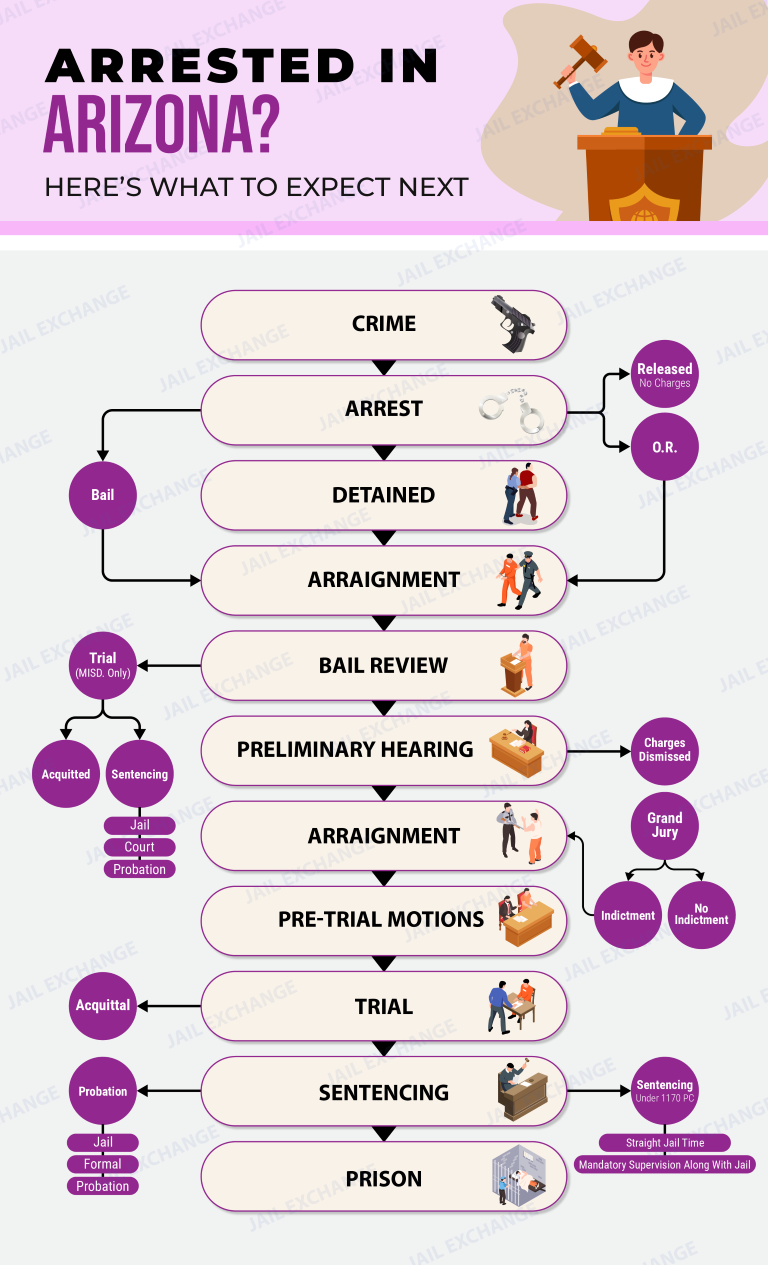
Juvenile court staff screen each child brought in. A child may be held only if there is probable cause and the child is likely to miss court, is likely to hurt self or others, must be held for another jurisdiction, needs protection until a less restrictive placement is found, or faces adult charges under A.R.S. 13-501 (Arizona Rule of Procedure for the Juvenile Court 218). Once a child is held, the state has 24 hours to file a petition (Rule 204(b)(1)), and the court has 24 hours after that for the first hearing, called the advisory hearing (Rule 219(b)).
↑ Back to the list of questions8. Who may visit, and when?
Visiting days and hours:
Visiting days and times can change; the center sets them. Call 928-226-5599 and ask. These details are kept private to protect the minor, so staff share them with a parent or guardian.
Who may visit: Parents and legal guardians can ask to visit. Ask the center or your child's probation officer who else can be approved.
On arrival: have a photo ID, and call ahead to ask what you may bring and what must stay in your car.
Parents and guardians can call 928-226-5599 to ask whether they are on the child's approved visitor list. These details are kept private to protect the minor, so staff share them with a parent or guardian by phone.
↑ Back to the list of questions9. What happens if my child is charged as an adult?
Adult release and bail rules apply, and the youth may be held in an adult jail out of sight and sound of adults unless the court orders a juvenile detention center (A.R.S. 8-305). A case lands in adult court when a 15-, 16- or 17-year-old is accused of first- or second-degree murder, forcible sexual assault, armed robbery or another violent felony, or is a chronic felony offender (A.R.S. 13-501(A)); when a prosecutor files certain serious felonies against a youth 14 or older (A.R.S. 13-501(B)); or when a juvenile judge transfers a felony case after a transfer hearing (A.R.S. 8-327).
↑ Back to the list of questionsCoconino County Juvenile Release and Bail
Release in an Arizona juvenile case comes from a judge, at a hearing soon after detention, and it can include conditions.
Below, families can find how release works. If a youth is charged as an adult, adult bail rules apply instead.
1. How does bail work in juvenile court?
No adult-style bail. Be careful with anyone who asks for money to get a child out, and ask the probation officer whether any payment applies to your child's case. The real decision happens at the hearing, where the judge either keeps your child in detention or releases the child to a parent, guardian or other responsible person on conditions the court sets (Arizona Rule of Procedure for the Juvenile Court 218).
↑ Return to the question list2. Who is allowed to pick my child up?
Usually a parent or legal guardian, or another responsible adult approved by the court. Call 928-226-5599 before you go and ask what to bring. Staff give release details to a parent or guardian, because they are kept private to protect the minor.
↑ Return to the question list3. How does a child get released?
Court staff can send a child home at intake, after screening, to a parent or guardian. If they hold the child instead, release is the judge's call at the hearing. The child stays detained only if a Rule 218 detention criterion applies.
↑ Return to the question list4. How soon does my child see a judge?
Once a child is detained, a petition is due within 24 hours, and the advisory hearing within 24 hours of the filing (Rules 204(b)(1) and 219(b)). Without a petition or complaint, the child can't be kept in detention.
↑ Return to the question list5. What if the case goes to adult court?
If a juvenile judge transfers a felony case after a transfer hearing (A.R.S. 8-327), or a prosecutor files certain serious felonies against a youth 14 or older (A.R.S. 13-501(B)), the case is in adult court. It must be there for a 15-, 16- or 17-year-old accused of first- or second-degree murder, forcible sexual assault, armed robbery or another violent felony, or for a chronic felony offender of that age (A.R.S. 13-501(A)). Then adult release and bail rules apply. A court order can keep the youth in a juvenile detention center; otherwise an adult jail may hold the youth, out of sight and sound of adults (A.R.S. 8-305).
↑ Return to the question listParents and legal guardians can visit a child at the Coconino County Juvenile Detention Center, along with other adults over 18 whom the youth's probation officer approves. Visitors under 18 need a separate visit that probation schedules and staffs.
The county doesn't post a visiting schedule online. The detention-center tour run by the Arizona Foundation for Legal Services & Education lists these regular sessions:
- Thursday: 6:00 to 7:00 p.m.
- Saturday: 11:00 a.m. to 1:00 p.m.
Visits take place at 1001 E. Sawmill Road, Flagstaff, AZ 86001. Bring a government photo ID and leave everything else in the car; items aren't allowed except at special visits, when a parent may bring one sealed food item and one drink. Parents may hug their child and hold hands, but sit across the table.
Times change, so call 928-226-5599 before you drive and ask whether the Thursday and Saturday sessions still stand, whether you must be on the approved list first, and whether younger siblings can come. The youth's probation officer can also add approved visitors.
Coconino County Juvenile Court for Families
Juvenile court handles youth under 18 accused of breaking a criminal law. In a delinquency case, every child gets a lawyer appointed by the court.
If your child is held at the Coconino County Juvenile Detention Center (928-226-5599), expect the first hearing within about two days. The answers below walk through the juvenile court process.
1. Which court hears my child's case?
Delinquency cases are heard by the juvenile court, part of the Superior Court in each county (A.R.S. 8-202). You'll find the court location below. Ask the probation officer which courtroom will hear your child's case.
↑ Back to the list of questions2. When will my child's hearing be?
Exact dates are kept private to protect the minor; ask the probation officer for the date, time and courtroom. The deadlines for a detained child: a petition within 24 hours, the advisory hearing within 24 hours after the petition is filed, the adjudication hearing (trial) within 45 days of the advisory hearing, and the disposition hearing within 30 days after that, unless time is waived or excluded (Arizona Rules of Procedure for the Juvenile Court 204, 219, 221, 222).
↑ Back to the list of questions3. Does my child get a lawyer?
Yes, always. Arizona requires a court-appointed lawyer, named before the first hearing, in every delinquency case that starts with a petition or may involve detention, and that lawyer stays with the child at every stage (A.R.S. 8-221).
↑ Back to the list of questions4. What can the judge order?
A disposition can be probation at home, probation with up to one year in juvenile detention, placement with a relative or a private agency, or commitment to the Arizona Department of Juvenile Corrections (A.R.S. 8-341). A child under 14, or one found delinquent only for a misdemeanor with no prior felony, can't be committed to ADJC (A.R.S. 8-342). A juvenile case usually ends at 18, but filing a notice lets the state keep a 17-year-old's case until 19 (A.R.S. 8-202(H)).
↑ Back to the list of questions5. May I attend the hearing?
Yes. In Arizona, delinquency hearings and records are generally open to public inspection (A.R.S. 8-208), so you can attend, and parents and guardians should go to every hearing.
↑ Back to the list of questions6. What happens if my child is charged as an adult?
Adult release and bail rules apply, and the youth may be held in an adult jail out of sight and sound of adults unless the court orders a juvenile detention center (A.R.S. 8-305). A case lands in adult court when a 15-, 16- or 17-year-old is accused of first- or second-degree murder, forcible sexual assault, armed robbery or another violent felony, or is a chronic felony offender (A.R.S. 13-501(A)); when a prosecutor files certain serious felonies against a youth 14 or older (A.R.S. 13-501(B)); or when a juvenile judge transfers a felony case after a transfer hearing (A.R.S. 8-327).
↑ Back to the list of questionsJuvenile Court Location
Coconino County Juvenile Court
- Coconino County Juvenile Court: 1001 E. Sawmill Rd., Flagstaff, AZ 86001
- Phone: Main/Court 928-226-5400, Probation 928-226-5456
No. Coconino County publishes no commissary program for the Juvenile Detention Center, and no commissary company is listed for it, so there is nothing for a parent to order online or by phone. The center provides the youth's meals, schooling, recreation and medical care.
If you want to know whether your child can earn snacks or small rewards, or whether you may drop off anything such as clothing for court, call 928-226-5599 and ask before you bring it.
No. The Coconino County Juvenile Detention Center has no published deposit service, kiosk or trust-account company, so there is no way listed for families to put money on a youth's account. Don't mail cash or a money order with a letter; staff open all mail for contraband.
If you think your child needs money for something specific, call 928-226-5599 and ask whether the center accepts any funds at all, how they must be sent and who the money order should be made out to.
Coconino County Family Mail
A child in detention looks forward to mail from home. Before a child gets mail, staff check it for contraband. Photos and other items need approval first, so ask at 928-226-5599. These details are kept private to protect the minor.
Address for Letters
Resident's Full Name
Coconino County Juvenile Detention Center
1001 E. Sawmill Road
Flagstaff, AZ 86001-5833
- Who it's from: your full name and address belong on the envelope.
- Money goes only the way the center tells you, if at all. Call and ask.
Youth at the Coconino County Juvenile Detention Center can phone home, but the center sets how often, and the number of calls can depend on your child's behavior level. The county names no phone company and posts no call rates, so there is no prepaid account for families to open.
Call 928-226-5599 and ask:
- which numbers your child may call and how you get added to that list;
- whether calls cost the family anything;
- whether parents can call in and leave a message for the youth.
For questions about the case itself, the youth's juvenile probation officer is the person to reach.
No. The center lists no email, text or photo-messaging service for the youth it holds, so the way to send words is a paper letter.
Address it with your child's full name to Coconino County Juvenile Detention Center, 1001 E. Sawmill Road, Flagstaff, AZ 86001-5833, and put your own full name and return address on the envelope. Staff check every letter before it is handed over, and photos or other enclosures need approval first.
Before you add a photo, call 928-226-5599 and ask whether pictures are allowed, how many and what size.
No. Coconino County publishes no tablet program for the Juvenile Detention Center, and no tablet company is listed for it, so there is nothing for parents to rent or pay for. Schooling continues inside the center while a youth is held.
To ask whether the classroom uses computers or tablets, or whether your child can get schoolwork sent from their own school, call 928-226-5599.
Coconino County County Jails
Coconino County Juvenile Facilities
- Juvenile: 928-226-5599
- Adult Probation: 928-679-8400
- Flagstaff Police: 928-774-1414
- Inmate Info: 928-226-5200
- Jail Administration: 928-226-5012
- Juvenile: 928-226-5400
- Juvenile Probation: 928-226-5400
- Page Jail: 928-645-8873
- Police Tips: 928-774-6111
- Prosecutor: 928-679-8200
- Public Defender: 928-679-7700
- Records: 928-214-2530
- Sheriff: 928-774-4523
- Volunteers: 928-226-5211
The Coconino County Juvenile Detention Center serves the following cities and towns of Coconino County: Flagstaff, Fredonia, Page, Sedona, Tusayan and Williams.