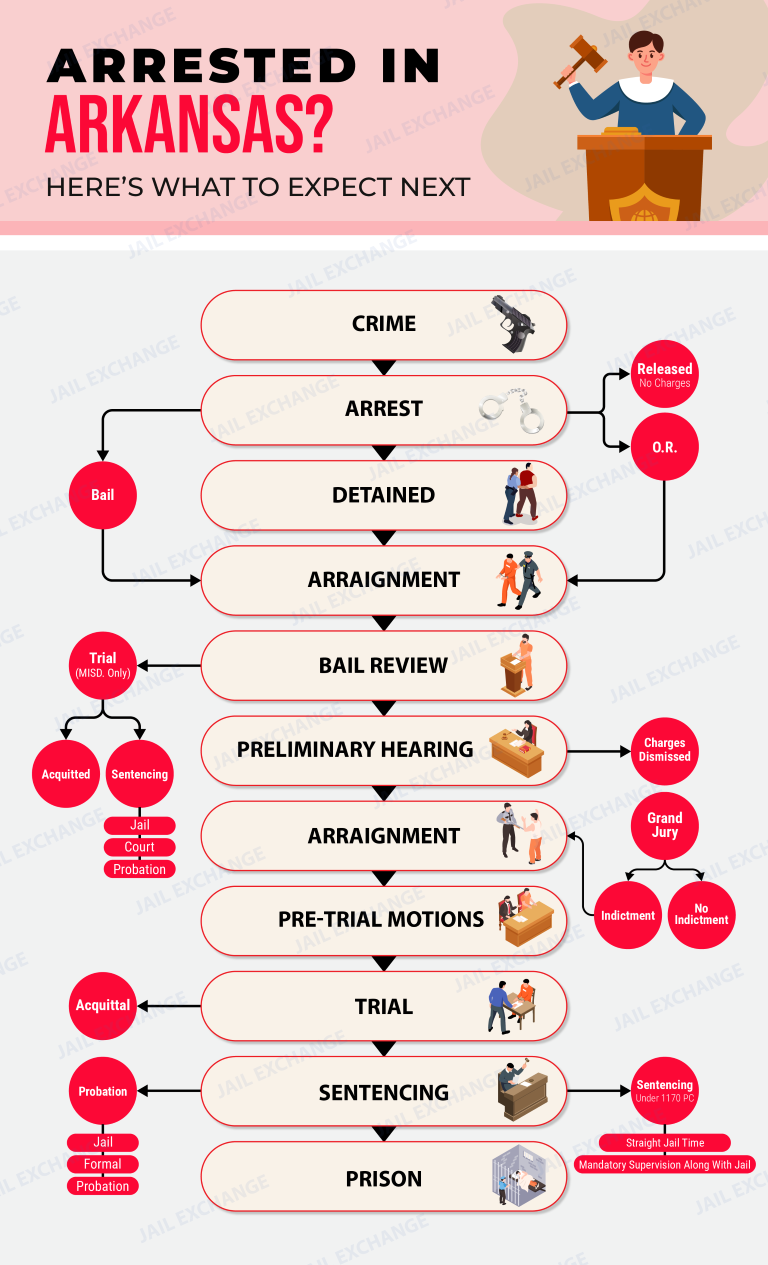
Chicot County Temporary Holding Facility Criminal Court Process
Criminal Court Process for Chicot County Arkansas
Chicot County Criminal Courts and Procedure
Chicot County occupies Arkansas’s far southeastern corner, bordered by the Mississippi River on the east and Louisiana on the south, with Lake Chicot and the county seat of Lake Village at its center. Criminal cases that go beyond the misdemeanor level are tried in the Chicot County Circuit Court, which also takes appeals from district court and has a juvenile division. You’ll find the circuit clerk inside the courthouse at 108 Main Street, Lake Village, AR 71653, (870) 265-8010. Chicot is part of the five-county 10th Judicial Circuit with Ashley, Bradley, Desha and Drew counties, and felonies are prosecuted by the Prosecuting Attorney for the 10th Judicial District.
The Chicot County District Court has three departments for misdemeanors, traffic offenses and early felony hearings:
- Lake Village Department, 7 N. Court Street, Lake Village, AR 71653: (870) 265-3283
- Dermott Department, 112 N. Freeman Street, Dermott, AR 71638: (870) 538-3476
- Eudora Department, 111 N. Archer Street, Eudora, AR 71640: (870) 355-2878
The 10th District public defender office, a state-funded office under the Arkansas Public Defender Commission, supplies lawyers to defendants without the money to hire one.
Unlike Ashley and Bradley counties in the same state circuit, Chicot County is assigned to the Delta Division of the U.S. District Court for the Eastern District of Arkansas. Its court sits in the federal building at 617 Walnut Street, Helena, AR 72342; it has no clerk’s staff on site, so the court routes questions to the Little Rock clerk at (501) 604-5351. In everyday terms, a state crime breaks an Arkansas law and is prosecuted by the 10th District prosecutor in the Chicot County courts. Federal crimes violate laws passed by Congress or harm a national interest, and it is prosecuted by the U.S. Attorney after investigation by agencies such as the DEA, FBI, ATF or Homeland Security Investigations. In a county that sits on U.S. Highways 65 and 82 between Louisiana and Mississippi, typical federal cases include drugs moved between states, guns carried by people with felony convictions, cheating on federal farm or benefit programs and crimes tied to Mississippi River shipping.
Choose a category to see how that type of case normally goes.
- Misdemeanor offenses like theft under $1,000, a first DWI, battery or trespass
- Felony offenses like burglary, felony theft, drug delivery or felony DWI
- Violent offenses like capital murder, murder, rape or aggravated robbery
- Chicot County court addresses and phone numbers
- Chicot County arrests that turn federal
- Searching for a Chicot County inmate
- ICE detainers and where Chicot County detainees are held
Misdemeanor offenses like theft under $1,000, a first DWI, battery or trespass
Misdemeanors charged in Lake Village, Dermott or Eudora are heard by the district court department in that town, and county cases outside those towns usually go to Lake Village. Officers here often write a ticket with a date to appear instead of making an arrest. Anyone booked into the Chicot County jail, Arkansas rules call for a prompt appearance before a judge, and release on recognizance or a low bond is typical for misdemeanors.
Each misdemeanor class has its own cap. Class A allows up to a year in jail along with as much as $2,500 in fines. For Class B, the limits are 90 days and $1,000; for Class C, 30 days and $500. Theft of property worth $1,000 or less is Class A, as is battery in the third degree. Trespass is normally Class C, and it becomes Class B when someone enters a building people are using. A first-offense DWI brings 24 hours to one year in jail, a $150 to $1,000 fine, alcohol education and loss or restriction of driving privileges.
District court trials have a judge but never a jury. A defendant found guilty may appeal to Chicot County Circuit Court within 30 days, where a completely new trial takes place and a jury can hear the case. An indigent defendant who faces possible jail can be appointed a public defender, and Arkansas courts may charge a user fee based on income. Common results here are fines, probation and suspended jail time.
A minor accused of a misdemeanor is usually seen in juvenile court at Lake Village. A juvenile intake officer can arrange diversion for a first offense, meaning the youth completes conditions such as counseling or community service and avoids a formal adjudication. District court still hears many traffic tickets issued to teens and some minor violations such as curfew.
Felony offenses like burglary, felony theft, drug delivery or felony DWI
Felony defendants first appear before a district judge. A judge reviews probable cause inside 48 hours when police arrested without a warrant. The judge sets bail, which the Arkansas Constitution guarantees except in capital cases with evident proof, and decides whether the defendant qualifies for a public defender. Many defendants use a bail bondsman licensed by the Professional Bail Bond Company and Professional Bail Bondsman Licensing Board.
The 10th District prosecutor then files a felony information in Chicot County Circuit Court; grand jury indictments are uncommon in Arkansas. The defendant is arraigned, and the case moves into discovery, motions and plea negotiation. Arkansas Rule 28.1 requires trial within 12 months, not counting excluded delays. Trial juries in circuit court have 12 members, and Arkansas juries usually decide the sentence after a guilty verdict.
Arkansas felony classes carry these prison ranges. Class D: up to 6 years. Class C: 3 to 10 years. Class B: 5 to 20 years. Class A: 6 to 30 years. Class Y: 10 to 40 years or life. Fines may reach $10,000 for the two lower classes and $15,000 for Class A and B. Burglary of a home is a Class B felony and of a business a Class C. Theft over $1,000 is a felony. Which drug, and how much, sets the class of a delivery case. A fourth DWI within a decade counts as a felony. Most felonies end with a plea bargain, and first offenders commonly receive probation.
A youth accused of a felony usually stays in juvenile division, and if detained must have a detention hearing within 72 hours. Ark. Code 9-27-318 gives the prosecutor the choice to file any felony against a 16- or 17-year-old in adult criminal court, with a transfer hearing possible in either direction. A juvenile judge can choose probation, services or a commitment to the Division of Youth Services, which operates one of its residential treatment centers in Dermott. Extended juvenile jurisdiction is available for serious cases.
Violent offenses like capital murder, murder, rape or aggravated robbery
Violent felonies use the same procedure as other felonies, but release is harder to get. A judge may hold a capital defendant without bail where the evidence is strong, and bond amounts in other violent cases are high. A capital murder sentence is death or life in prison, and parole is not possible. Rape, aggravated robbery and first-degree murder are Class Y crimes. Indigent defendants facing a death sentence are entitled to two capital-qualified attorneys.
The Protect Arkansas Act, passed in 2023, applies to crimes committed starting January 1, 2025. It requires anyone convicted of capital murder, rape, aggravated robbery or some other serious crimes to serve the full sentence, and requires at least 85% for crimes such as second-degree murder and manslaughter. Arkansas has not held an execution since 2017. As of April 2026, 23 men were under death sentences, and the state authorized nitrogen hypoxia in 2025 as an additional execution method.
Victims in Arkansas get notice of hearings and of any release, may come to court, can talk with the prosecutor before a plea, may speak at sentencing and can ask for restitution. The 10th District prosecutor’s victim-witness coordinator assists victims, and the Crime Victims Reparations program may cover some expenses. A serious violent case can easily run longer than a year.
Teens can be tried as adults for the most serious crimes. Adult charges are possible for a 14- or 15-year-old accused of capital murder, first-degree murder, rape, aggravated robbery, kidnapping and certain other listed offenses, and a youth of 16 or older for any felony. A detained juvenile’s transfer hearing must be held within 30 days, and a judge may transfer the case only on clear and convincing evidence. No one who committed a crime before turning 18 can be executed, and the state’s 2017 Fair Sentencing of Minors Act makes juveniles convicted of capital murder eligible for parole after a lengthy term.
Chicot County court addresses and phone numbers
Chicot County has one circuit court and three district court departments:
- Chicot County Circuit Court: 108 Main Street, Lake Village, AR 71653, circuit clerk 870-265-8010
- District Court, Lake Village Department: 7 N. Court Street, Lake Village, AR 71653, 870-265-3283
- District Court, Dermott Department: 112 N. Freeman Street, Dermott, AR 71638, 870-538-3476
- District Court, Eudora Department: 111 N. Archer Street, Eudora, AR 71640, 870-355-2878
Circuit court tries felonies, hears juvenile cases and takes appeals. The district court departments handle misdemeanors and traffic, and they hold the first hearings in felony cases.
Chicot County arrests that turn federal
Most federal charges in this corner of the state are drug, gun or benefit-fraud cases. Chicot County goes to the Delta Division of the U.S. District Court for the Eastern District of Arkansas, at the federal courthouse in Helena, 617 Walnut Street, Helena, AR 72342 (clerk questions go to Little Rock), 501-604-5351.
- A magistrate judge sees the defendant first and goes over the charges.
- Pretrial Services gives the court a report on the defendant's background.
- If the government wants the person jailed until trial, a detention hearing is scheduled.
- A grand jury must indict before a felony can be tried.
- The U.S. Marshals hold federal defendants: U.S. Marshals Service, 600 West Capitol Avenue, Little Rock, AR 72201, 501-324-6256.
The same conduct can bring both a Chicot County charge and a federal charge. They are separate cases.
Searching for a Chicot County inmate
- Chicot County jail: Chicot County Inmate Search. Look up a last name for charges and booking date.
- VINE: VINELink (https://vinelink.vineapps.com/). Choose Arkansas and search the name to see the holding facility, even a contract jail. Alerts are free.
- Federal Bureau of Prisons: Federal Bureau of Prisons Inmate Locator (https://www.bop.gov/inmateloc/). Find a federal prisoner by register number or name.
- Arkansas Division of Correction: Arkansas Division of Correction Inmate Search (https://apps.ark.org/inmate_info/). A name or ADC number shows the state prison unit.
ICE detainers and where Chicot County detainees are held
A detainer from ICE asks the jail to hold someone up to 48 hours past release time, weekends and holidays included. The Chicot County case stays on the docket.
The ICE New Orleans Field Office, 181 James Drive W, St. Rose, LA 70087, 504-318-2360 handles Arkansas cases, and detainees often end up in Louisiana:
- LaSalle ICE Processing Center: 830 Pinehill Road, Jena, LA 71342 · 318-992-1600
- Pine Prairie ICE Processing Center: 1133 Hampton Dupre Road, Pine Prairie, LA 70576 · 337-599-2400
Find someone in the ICE Online Detainee Locator System (https://locator.ice.gov/odls/) using an A-number, or full name and birth country.
What you've read is a broad outline of Chicot County procedure, not legal advice, so have a defense lawyer review any real case. You can also call the Chicot County Circuit Clerk at (870) 265-8010 with questions about obtaining a public defender.
Before a felony hearing, confirm it with the circuit clerk at 870-265-8010. Traffic and misdemeanor settings come from the district court office in Lake Village (870-265-3283), Dermott (870-538-3476) or Eudora (870-355-2878).