Lonoke County Detention Center Criminal Court Process
Criminal Court Process for Lonoke County Arkansas
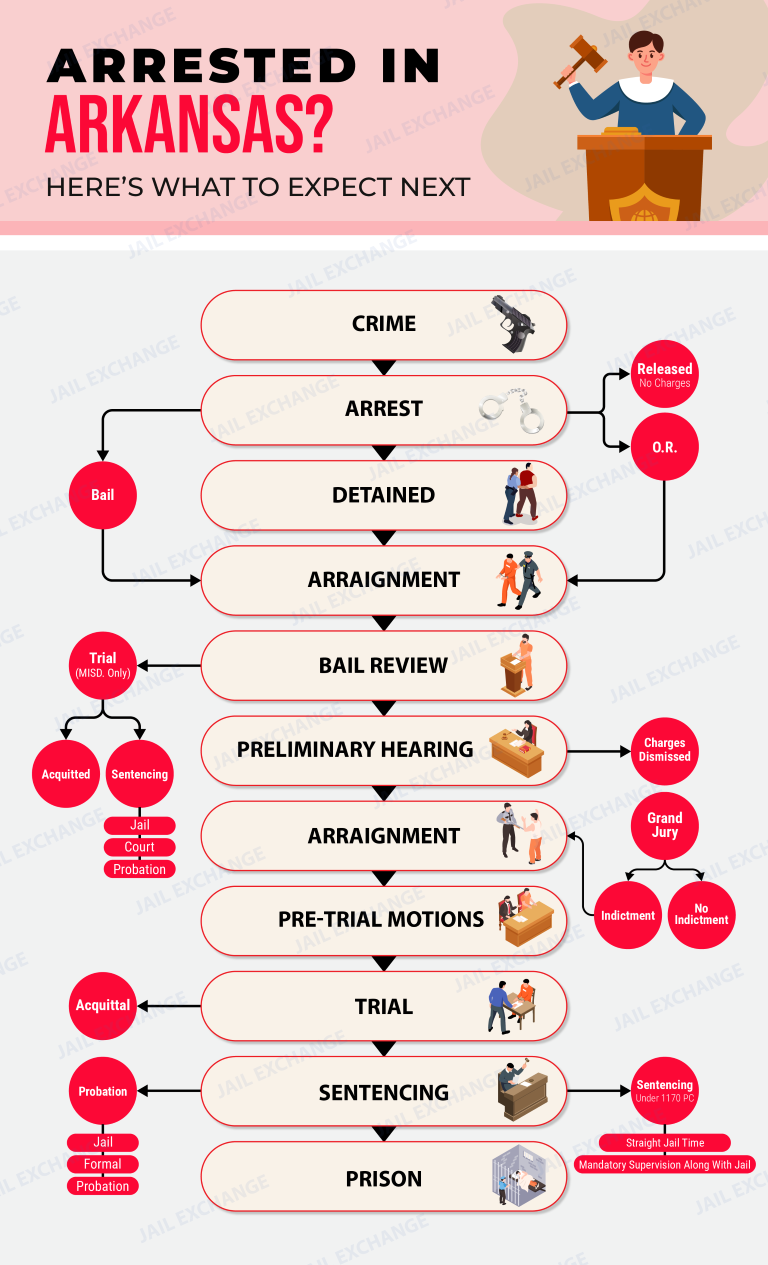
How Criminal Cases Move Through Lonoke County Courts
Lonoke County stretches from the fast-growing Cabot and Ward area in the north, just beyond Little Rock’s suburbs, to the rice farms around England and Carlisle in the south. Few Arkansas counties stand alone as a circuit, but Lonoke does, as the Twenty-Third Judicial Circuit, whose three circuit judges sit only in Lonoke County. Three jobs fall to the Lonoke County Circuit Court: felony trials, the juvenile docket, and fresh trials for district court appeals. It is based at the county courthouse, 301 North Center Street, Lonoke, AR 72086; the Circuit Clerk’s office (mailing address P.O. Box 870) answers at (501) 676-2316.
The Lonoke County District Court has two judges. Division 1 covers the southern and central towns, and Division 2 covers the northern end of the county. Each city has its own clerk:
- Lonoke, 107 West 2nd Street, Lonoke: (501) 676-3585
- Cabot, 208 North First Street, Cabot, AR 72023: (501) 843-8908
- Carlisle: (870) 552-3436
- England: (501) 842-3904
- Austin: (501) 941-2648, and Ward, part of the Northern District
Lonoke County voters elect their own prosecutor, the Prosecuting Attorney for the Twenty-Third Judicial District; that office occupies Suite 301 of the courthouse, (501) 676-2807. Arrested adults are held at the Lonoke County Detention Center.
Federal prosecutions follow a different road. Lonoke County is part of the Central Division of the U.S. District Court (Eastern District of Arkansas). Hearings take place downtown in the capital, inside the federal courthouse at 500 West Capitol Avenue; the clerk’s office number is (501) 604-5351. Which court gets a case depends on which lawmakers defined the crime. The General Assembly writes the Arkansas Criminal Code, and violations of it go to the Twenty-Third District prosecutor and the Lonoke County courts. Congress writes the federal criminal code, and the U.S. Attorney for the Eastern District prosecutes those violations:drugs hauled on Interstate 40, guns held by people with felony convictions, bank robberies, ID theft, fraud, child exploitation, and offenses against federal workers or on federal land. Federal judges follow the U.S. Sentencing Guidelines, and federal prisoners do not get parole.
Pick a type of case below to see the usual path.
- Misdemeanors in Lonoke County’s district courts: shoplifting, first-offense DWI, battery, trespassing
- Felony cases in the Twenty-Third Circuit: burglary, larger thefts, drug sales and repeat DWI
- Violent crime prosecutions: capital murder, murder, rape, aggravated robbery
- Lonoke County court offices
- Federal court for Lonoke County
- Inmate searches for Lonoke County
- ICE detainers in Lonoke County
Misdemeanors in Lonoke County’s district courts: shoplifting, first-offense DWI, battery, trespassing
A misdemeanor arrest in Cabot, for example, is docketed in the Cabot department, while one in Lonoke or England goes to that town’s department. Plenty of misdemeanors begin with a citation, not handcuffs. Jailed? Then a judicial officer must see you promptly. For a warrantless arrest, a judge has 48 hours to find probable cause. Bail exists for every charge short of capital ones, per the state constitution; the court rules begin from the mildest workable terms. Where money bond is required, a licensed bail bondsman can post it for a fee.
Misdemeanor classes control the maximum punishment. Class A, home to third-degree battery and to thefts of $1,000 or under, allows up to a year plus $2,500. Class B permits up to 90 days and $1,000. Class C is limited to 30 days and $500. Trespass is ordinarily one of the lower two. A first DWI has a dedicated statute. Jail: one day minimum, one year maximum. Fine: $150 to $1,000. License: suspended, frequently with an interlock.
District judges hear these cases without a jury. A defendant convicted in district court has 30 days to take an appeal to the circuit court in Lonoke, where a new trial is held and a jury can be requested. If incarceration is possible and the person is indigent, the judge can appoint counsel from the state-funded public defender system overseen by the Arkansas Public Defender Commission. State law calls for a user fee of $10 to $400 at appointment, which the court can waive in cases of hardship. Most misdemeanors end in a matter of weeks or months through a plea, a reduced charge, a fine, probation or dismissal.
Under-18 defendants usually belong to the circuit court’s juvenile division in Lonoke. A first shoplifting or schoolyard fight often ends in diversion. The child finishes counseling, repays the loss or works community hours; no formal case follows. District court can still hear juvenile traffic, curfew and underage alcohol and tobacco citations.
Felony cases in the Twenty-Third Circuit: burglary, larger thefts, drug sales and repeat DWI
A district judge usually runs the first felony hearing, setting bond and naming a lawyer when one is needed. Next, the Twenty-Third District prosecutor weighs whether to file a felony information. Grand juries exist in Arkansas but are rarely convened. Arraignment happens in Lonoke. Then come discovery, motions and plea talks. A deadline of one year, counted from arrest or charge, comes from Rule 28.1; excluded periods, like defense continuances, don’t count.
The range of punishment depends on classification. Class D: as much as 6 years. Class C: 3–10. Class B: 5–20. Class A: 6–30. Class Y: 10–40, or life. Felony theft begins above $1,000. Home burglary: Class B. Commercial burglary: Class C. Delivery cases depend on which drug and how much; fentanyl and big meth cases hit the top classes. A fourth DWI in 10 years is a felony punishable by 1 to 6 years, with longer terms for later offenses. A twelve-member jury decides guilt and, unless waived, punishment. Probation and suspended sentences are frequent for people with clean records; a specialty court such as drug court may be an option.
Young people charged with felonies may end up in either court. At 16 or 17, any felony may be filed in adult court. At 14 or 15, only the most serious may. The list: capital or first-degree murder; a terroristic act; kidnapping; rape; aggravated robbery; first-degree battery. A detained youth’s transfer hearing must come within 30 days. The judge then decides where the case belongs, considering the offense, the teen’s background and whether rehabilitation looks realistic. A detained juvenile must see a judge within 72 hours. Possible juvenile outcomes: probation; placement with the state’s Division of Youth Services; or Extended Juvenile Jurisdiction, which tacks on a suspended adult sentence.
Violent crime prosecutions: capital murder, murder, rape, aggravated robbery
Violent felony cases move through the same court in Lonoke but usually with higher bonds, more pretrial hearings and longer timelines. Strong evidence on a capital charge can mean no bail whatsoever.
For capital murder, Arkansas law permits only two outcomes: execution, or prison for life without release on parole. The state’s death row held 23 people in April 2026; executions have not occurred since April 2017, but Arkansas authorized nitrogen hypoxia in 2025 in addition to lethal injection. Class Y also includes rape, aggravated robbery and first-degree murder; second-degree murder is Class A. Starting with crimes on January 1, 2025, the Protect Arkansas Act tightened release. Full sentences apply to capital murder, rape and aggravated robbery. Manslaughter, second-degree murder and other listed crimes carry an 85% minimum. Rape convictions also require sex-offender registration. Expect a year or more from arrest to trial in most of these cases.
Victims and families are protected by a chapter of state law beginning at Ark. Code 16-90-1101. Among those rights: notice, a voice at sentencing, and restitution. The prosecutor’s office in the courthouse can explain those rights and point families to the Attorney General’s crime victims reparations program.
Teens accused of these crimes face the strongest pull toward adult court, since the prosecutor can file directly in the criminal division for 14- and 15-year-olds as well as older teens. Still, adult court cannot impose death on someone who was a minor at the time. A 2017 state law, the Fair Sentencing of Minors Act, swapped juvenile life without parole for a parole hearing after 30 years in capital murder cases.
Lonoke County court offices
The circuit court sits in Lonoke, and the district court has departments in several towns:
- Lonoke County Circuit Court: Lonoke County Courthouse, 301 North Center Street, Lonoke, AR 72086, circuit clerk 501-676-2316
- District Court, Lonoke: 107 West 2nd Street, Lonoke, AR 72086, 501-676-3585
- District Court, Cabot: 208 North First Street, Cabot, AR 72023, 501-843-8908
- District Court, England: 110 NW 2nd Street, England, AR 72046, 501-842-3904
- District Court, Carlisle: 870-552-3436
- District Court, Austin: 3181 Highway 367, Austin, AR 72007, 501-941-2648
Misdemeanors, traffic tickets and small claims start in district court. Circuit court handles felony trials, the juvenile docket and new trials on appeal.
Federal court for Lonoke County
Federal crimes from Lonoke County go to the U.S. District Court for the Eastern District of Arkansas, Central Division, at the federal courthouse in Little Rock, 500 West Capitol Avenue, Little Rock, AR 72201, 501-604-5351.
- A magistrate judge handles the opening appearance.
- A pretrial officer writes a report on the defendant's background.
- Prosecutors can seek pretrial detention.
- Most felony cases go forward on a grand jury indictment.
- The U.S. Marshals handle federal custody: U.S. Marshals Service, 600 West Capitol Avenue, Little Rock, AR 72201, 501-324-6256.
One arrest in Cabot or Lonoke can bring both a county case and a federal case in Little Rock.
Inmate searches for Lonoke County
- Lonoke County Detention Center: Lonoke County Inmate Search. Look up anyone held at the Lonoke jail by name.
- VINE: VINELink (https://vinelink.vineapps.com/). Set the state to Arkansas to check custody and get updates.
- Federal Bureau of Prisons: Federal Bureau of Prisons Inmate Locator (https://www.bop.gov/inmateloc/). Look up federal prisoners using a name or register number.
- Arkansas Division of Correction: Arkansas Division of Correction Inmate Search (https://apps.ark.org/inmate_info/). See which state prison unit holds someone.
ICE detainers in Lonoke County
Through a detainer, ICE can request that the Lonoke jail keep someone as long as 48 hours beyond release, counting weekends and holidays. The county case keeps going in the meantime.
The ICE New Orleans Field Office, 181 James Drive W, St. Rose, LA 70087, 504-318-2360 oversees Arkansas, and central Arkansas detainees are often moved to Louisiana:
- LaSalle ICE Processing Center: 830 Pinehill Road, Jena, LA 71342 · 318-992-1600
- Pine Prairie ICE Processing Center: 1133 Hampton Dupre Road, Pine Prairie, LA 70576 · 337-599-2400
The ICE Online Detainee Locator System (https://locator.ice.gov/odls/) accepts an A-number, or a name plus country of birth.
Treat this overview of Lonoke County’s criminal courts as background, not legal advice. Facing charges? A defense attorney can advise you, and the Lonoke County Circuit Clerk at (501) 676-2316 can explain how a public defender gets appointed.
Call ahead: the circuit clerk at 501-676-2316 knows felony and juvenile settings, and the district department handling the case (Lonoke 501-676-3585, Cabot 501-843-8908, England 501-842-3904, Carlisle 870-552-3436, Austin 501-941-2648) about misdemeanor dates.