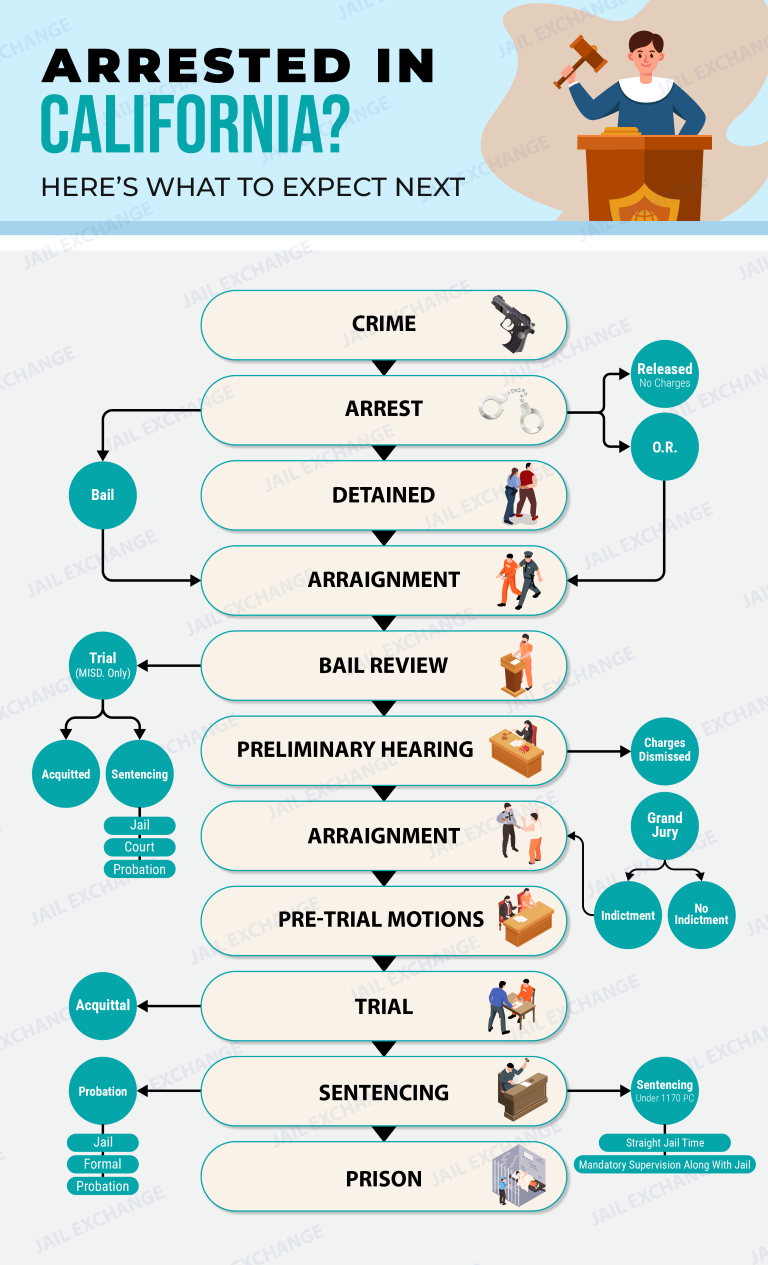
Criminal Court Process in Alpine County
Alpine is California’s least populated county, and its criminal justice system is correspondingly small. A single court, the Superior Court of California, County of Alpine, handles every adult criminal case filed anywhere in the county, from Markleeville and Woodfords to Bear Valley and the Kirkwood area. There is no municipal or justice court to sort through: California merged its lower courts into one superior court per county around 2000, so even a minor misdemeanor lands before the same bench as a felony. All criminal matters are heard at the Alpine County Superior Court, 14777 State Route 89, Markleeville, CA 96120 (mailing address P.O. Box 518). The clerk’s office, which also handles criminal case questions, can be reached at (530) 694-2113, Monday through Friday from 8:00 a.m. to 4:30 p.m.
Two local quirks shape how a case begins here. Start here: Alpine has no jail. It pays El Dorado and Calaveras counties to house its arrestees, and most end up at El Dorado's South Lake Tahoe jail. Second, the court sets new criminal complaints on a regular Monday afternoon calendar (1:30 p.m.), which is also when people can come in to address an outstanding Alpine County warrant. Calling the clerk first is wise, since holidays and jury weeks can shift the schedule. Open a charge level below to trace an Alpine case.
- Alpine misdemeanors: theft, first DUI, battery, trespassing
- Alpine felonies like burglary, grand theft, drug sales or a felony DUI
- Alpine violent felonies: murder, rape, armed robbery
- Alpine's single courthouse
- Federal cases from Alpine County
- ICE holds for Alpine arrests
- Finding someone in custody from Alpine
Alpine misdemeanors: theft, first DUI, battery, trespassing
A citation is the usual starting point. Stops on Highways 88, 89 or 4 are made by the Sheriff’s Office or the CHP, and the driver is often let go once they sign to show up at the Markleeville court. Someone who was cited without being booked may be told to arrange a booking appointment with the Sheriff before arraignment; those appointments are scheduled in advance and carry a fee. If deputies keep someone jailed, a judge hears the case inside 48 hours, not counting Sundays or holidays.
Charges are filed by the Alpine County District Attorney. At arraignment the judge explains the accusation, takes a plea (nearly always “not guilty” at first) and sets release terms. Alpine has no public defender office. A private law firm under county contract defends people who cannot pay, and state courts no longer bill anyone for appointed counsel. Often the lawyer can stand in for the client, and short hearings without testimony may be done remotely.
Trials are uncommon here; pleas, reduced counts and dismissals end most cases. A judge may also offer misdemeanor diversion, which wipes out the charge once the person completes required conditions; it is not open to DUI, domestic violence or registrable sex offenses. If a case is tried, twelve jurors decide it, and the defendant has a right to trial within 30 days of arraignment while in custody or 45 days if released. Defense lawyers often waive that deadline. The max is usually six months and $1,000 (a few allow a year), yet probation, fines and classes are what most people get. From ticket to finish, plan on weeks or a few months.
Alpine felonies like burglary, grand theft, drug sales or a felony DUI
Felony defendants must appear in person at the Markleeville courthouse for arraignment, sentencing and evidentiary hearings; other felony hearings can sometimes be handled remotely at the judge’s discretion. A person held out of county is transported back for the arraignment on the District Attorney’s complaint, which must happen within 48 hours of arrest, not counting Sundays and holidays. Release terms come up right there. Since In re Humphrey (2021), the judge must factor in what the person can afford. A 2026 follow-up case, In re Kowalczyk, says Alpine bail must also be something the person can realistically reach.
Anyone who qualifies gets the contract defense firm at the start. If the firm cannot take it, for example with co-defendants at odds, a different private lawyer is named.
A preliminary hearing follows within 10 court days, unless the defense agrees to wait. There the judge tests the proof for trial; a grand jury indictment is the rarer route. Once the case is bound over, prosecutors file an “information,” a new arraignment happens, and trial is set within 60 days, though most waive that. Most felonies resolve through plea negotiations.
After a conviction the probation department prepares a report, and sentencing usually follows within 20 court days. Under 2011 realignment, many lesser felony terms are done in a county jail, not prison. Some “wobblers” may be filed as, or cut to, misdemeanors. Felony cases generally take several months, and sometimes more than a year.
Alpine violent felonies: murder, rape, armed robbery
Alpine sees few violent crimes. They move like other felonies, with an arraignment, a preliminary hearing or grand jury, and a trial. The difference is in custody and exposure. In a violent or sexual-assault felony, a judge can deny bail if clear and convincing proof shows release would likely mean serious injury to others. The person may then sit in an out-of-county contract jail for the whole case.
Each of these crimes is a strike under the Three Strikes law. A single prior strike doubles the sentence; two prior strikes can produce a term of 25 years to life. A violent felony conviction means serving 85% or more of the term.
- Murder: 15 years to life for second degree and 25 years to life for first degree. A killing tied to a robbery or similar special circumstance brings death or life with no parole. The decision to pursue death rests with the District Attorney alone, and executions in California have been on hold under a moratorium since 2019.
- Armed robbery: nine years at most for the robbery; a gun adds 10 (used), 20 (fired) or 25 to life (great bodily injury). Since 2018, judges may strike those enhancements.
- Rape: as long as eight years, or more with aggravating facts, and the highest registration tier.
A death-penalty case requires two qualified defense lawyers. Marsy’s Law lets victims learn of hearings, address the court at sentencing and seek repayment. Serious cases often run one to three years, and a murder case can take five years or longer.
Alpine's single courthouse
The Superior Court in Markleeville hears every case in the county.
- Alpine courthouse: 14777 State Route 89, Markleeville, CA 96120 · 530-694-2113
Federal cases from Alpine County
Arrests by federal officers, including on forest land, go to the Eastern District of California. The first stop is a magistrate judge at Sacramento federal courthouse, 501 I Street, Sacramento, CA 95814. Pretrial Services reports to the judge, and a detention hearing decides if he goes home. Prosecutors can delay that hearing up to three days, defense up to five. Prisoners waiting for trial stay in Marshals contract jails. Contact U.S. Marshals Service, 501 I Street, Suite 5600, Sacramento, 916-930-2030.
ICE holds for Alpine arrests
With a detainer, ICE wants Alpine's prisoner kept two business days past release at most. SB 54 blocks California jails from doing that, and notices of release dates are allowed only with certain serious or violent convictions. A detainer does not change the Markleeville case. The TRUTH Act requires a written consent notice before any ICE interview. The San Francisco ICE field office, 630 Sansome Street, Room 590, San Francisco, CA 94111, 415-365-8800 covers Alpine, and detainees go to:
- Mesa Verde ICE Processing Center: 425 Golden State Avenue, Bakersfield, CA 93301
- Golden State Annex: 611 Frontage Road, McFarland, CA 93250
- California City detention site: 22844 Virginia Boulevard, California City, CA 93505
Finding someone in custody from Alpine
- Alpine County Inmate Search: name search shows booking, bail and court date. Blank? Check the contract jail's roster in the next county.
- VINELink (https://vinelink.vineapps.com/): choose California, type the name; it tells you which facility holds him.
- Federal Bureau of Prisons Inmate Locator (https://www.bop.gov/inmateloc/): register number or name. For pretrial cases, phone 916-930-2030.
- CDCR Inmate Locator (https://inmatelocator.cdcr.ca.gov/): name or number shows the prison after transfer.
- ICE Online Detainee Locator System (https://locator.ice.gov/odls/): an A-number, or else a name, together with country of birth. Phone 415-365-8800 if he isn't listed.
This is a broad sketch of Alpine cases, not legal advice. Get counsel if charged, and call to confirm dates with the private office that serves as Alpine County’s contract public defender at (530) 208-0911.