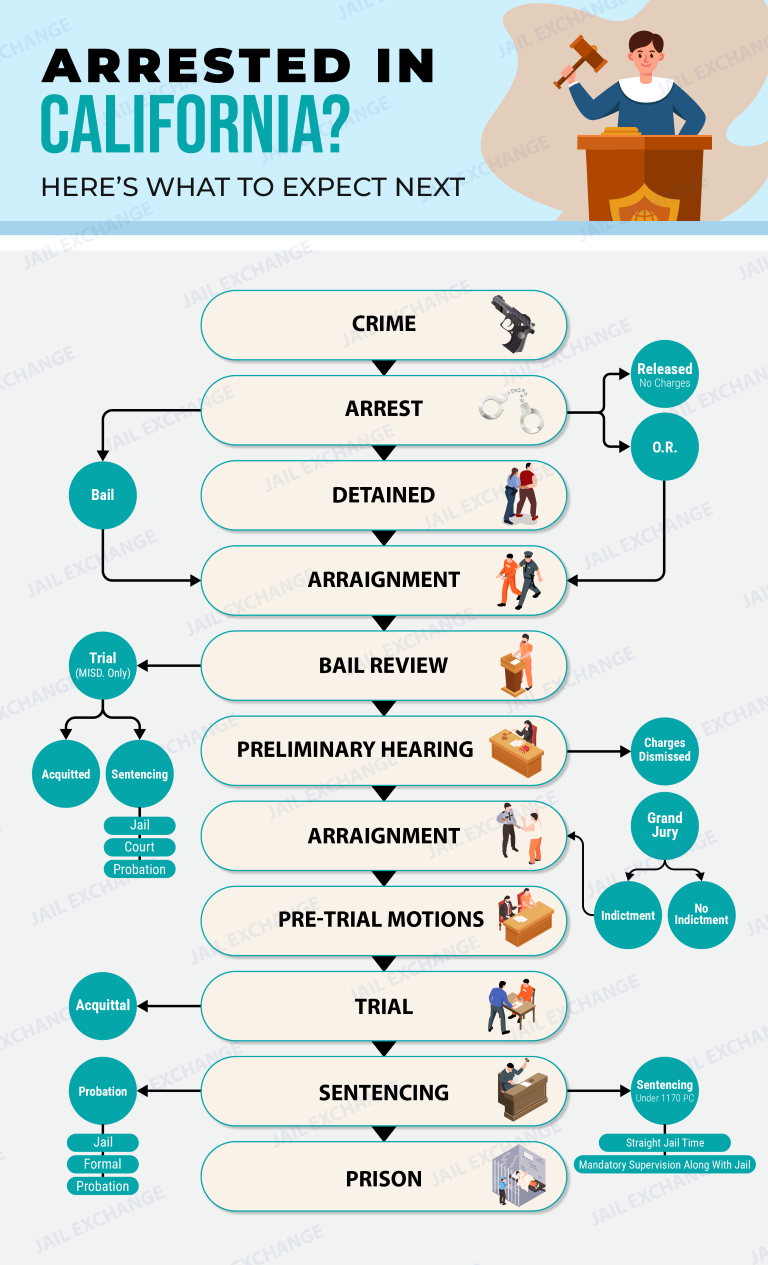
Colusa County Jail Criminal Court Process
Criminal Court Process for Colusa County California
How Criminal Cases Work in Colusa County
Colusa County is farm country, crossed by Interstate 5 and dotted with small communities such as Williams, Arbuckle, Maxwell, Grimes and Princeton. Criminal cases from all of them, along with those from the city of Colusa itself, go to the Superior Court of California, County of Colusa. That single court has heard every level of criminal case since the courts were consolidated around 2000, ending the old municipal and justice courts, so no separate “city court” exists. The court runs two departments a block apart in downtown Colusa, both reached through the main number, (530) 458-5149; choose option 4 for the criminal division.
- Main Courthouse, Department 1, 547 Market Street, Colusa, CA 95932. Phone: (530) 458-5149
- Courthouse Annex, Department 2, 532 Oak Street, Colusa, CA 95932, which also houses the Clerk’s Office. Phone: (530) 458-5149
The criminal clerks can tell you which department a hearing is in, along with the date and time, whether a warrant is outstanding and how much is owed on a fine. If your name isn’t on the calendar posted outside the courtroom, check in at the Clerk’s Office on Oak Street. Tap a charge level below for the Colusa path.
- Colusa misdemeanors, like petty theft, a first DUI, battery, trespass
- Colusa felonies, like burglary, grand theft, drug sales, felony DUI
- Colusa's gravest felonies, like murder, rape, armed robbery
- Colusa Superior Court departments
- Federal prosecutions from Colusa County
- ICE detainers in Colusa County courts
- Finding someone held after a Colusa arrest
- Could a warrant be waiting for me in Williams or Arbuckle?
1. Colusa misdemeanors, like petty theft, a first DUI, battery, trespass
Prosecution of misdemeanors in Colusa County belongs to the District Attorney, whose office is at 310 Sixth Street in Colusa. Most cases open with a citation rather than a booking: the officer issues a notice to appear and he leaves. If a person is booked into the Colusa County Jail and kept there, the court must arraign them within 48 hours, not counting Sundays and holidays. In-custody arraignments are held as the court’s calendar allows, and the criminal division can give the time after 9:00 a.m.
Colusa County has no public defender’s office. A defendant short on money asks for counsel at arraignment. If the income test is met, the judge assigns a contract private lawyer and hands over that lawyer’s contact information. Defendants are no longer billed by California courts for the cost of an appointed lawyer. The arraignment is brief: charge read, plea taken (often not guilty), release terms decided. In many misdemeanor cases a lawyer may appear on the client’s behalf.
Plea agreements, reduced charges and dismissals resolve most cases at pretrial conferences. Judges can also grant misdemeanor diversion, dismissing a charge after the defendant completes court-ordered conditions; It does not cover DUI, domestic violence or registrable sex crimes. Trials use a panel of twelve Colusa residents. Defendants have the right to be tried within 30 days of arraignment if in custody, or within 45 days if released, although attorneys often waive that time to prepare.
Six months in jail and a $1,000 fine are the usual maximums for a misdemeanor, and some carry up to a year. More often the result is probation, a fine, service hours or classes. Weeks to a few months is typical.
2. Colusa felonies, like burglary, grand theft, drug sales, felony DUI
A felony begins when the DA files a complaint. Arraignment comes first, and if the person is jailed it occurs within 48 hours of arrest. Release and bail come up at this hearing. Since In re Humphrey (2021), ability to pay must be weighed before any bail is set. The court's 2026 Kowalczyk opinion adds that Colusa bail, when money is needed, must be reachable for the person charged.
For defendants who qualify, the court appoints a contract defense attorney at the first appearance. A conflict, like already serving a co-defendant or a witness, leads to another lawyer.
A preliminary hearing comes next, within 10 court days of arraignment unless the defense agrees to postpone it. The judge reviews the evidence to determine whether a trial is warranted. In rare cases the District Attorney presents evidence to the grand jury and obtains an indictment, skipping the preliminary hearing. If bound over, the DA files an “information,” he is arraigned again, and trial must start within 60 days absent a time waiver. Most do, and most felony cases settle through plea negotiations.
Following a plea or verdict, probation writes a report and sentencing usually comes within 20 court days of a verdict. The 2011 realignment law sends many non-serious, non-violent felony sentences to county jail rather than state prison. Some crimes, called “wobblers,” can be treated as misdemeanors. Colusa felonies usually need months, sometimes over a year.
3. Colusa's gravest felonies, like murder, rape, armed robbery
Grave charges use the felony steps too, (arraignment, then a preliminary hearing or indictment, then trial), yet they drag on and carry much stiffer penalties. Getting out is harder too. Colusa judges can keep a violent or sexual-assault defendant jailed with no bail when the proof is clear and convincing that freedom would probably mean someone gets badly hurt. Many stay at the Bridge Street jail until the case ends.
Every one of these offenses is a strike. With one prior strike the term doubles; two priors open the door to 25 years to life. A violent felony means serving no less than 85% of the prison sentence before release.
- Murder: the sentence is 25 years to life for first-degree murder and 15 years to life for second-degree. Special circumstances, including a killing during a robbery or rape, raise it to life without parole or death. Only the District Attorney can decide to seek the death penalty, and executions have been halted under a statewide moratorium since 2019.
- Armed robbery: a conviction for robbery can carry as much as nine years. A gun adds 10 years if used, 20 years if fired, and 25 years to life if it caused great bodily injury. Since 2018, a judge may drop such add-ons.
- Rape: a maximum of eight years, longer with proven aggravation, plus top-tier registry status.
Capital cases require two qualified defense attorneys. Marsy’s Law gives victims notice, a chance to speak at sentencing and repayment. Expect one to three years, five or more for murder.
4. Colusa Superior Court departments
- Main courthouse, Department 1: 547 Market Street, Colusa, CA 95932 · 530-458-5149
- Courthouse annex, Department 2: 532 Oak Street, Colusa, CA 95932 · 530-458-5149
The Superior Court here lists judges who take remote appearances through CourtCall, a private vendor charging per hearing. It is up to the judge whether a given matter qualifies, so check first, then make an account and reserve your time; a granted waiver pays the bill, and the courthouse may offer a free video connection as well.
5. Federal prosecutions from Colusa County
The Eastern District of California handles federal crimes from Colusa. The first court date is before a magistrate judge at Sacramento federal courthouse, 501 I Street, Sacramento, CA 95814. Pretrial Services weighs in on release, and a detention hearing follows; it can wait three days at the government's request or five at the defense's. Federal prisoners are housed in Marshals contract jails. Office: U.S. Marshals Service, 501 I Street, Suite 5600, Sacramento, 916-930-2030.
6. ICE detainers in Colusa County courts
An ICE detainer does nothing to the Colusa case itself. It asks the jail for extra holding time, which SB 54 rules out, and it allows release-date notice only for certain serious or violent convictions. Immigration consequences of a plea should be raised with defense counsel. The TRUTH Act requires written notice before any ICE interview. San Francisco ICE field office, 630 Sansome Street, Room 590, San Francisco, CA 94111, 415-365-8800 serves Colusa; detainees go to:
- Mesa Verde ICE Processing Center: 425 Golden State Avenue, Bakersfield, CA 93301
- Golden State Annex: 611 Frontage Road, McFarland, CA 93250
- California City detention site: 22844 Virginia Boulevard, California City, CA 93505
7. Finding someone held after a Colusa arrest
- Colusa County Inmate Search: name search; shows bail and hearing date.
- VINELink (https://vinelink.vineapps.com/): California, then name; shows facility.
- Federal Bureau of Prisons Inmate Locator (https://www.bop.gov/inmateloc/): register number or name. Pretrial: 916-930-2030.
- CDCR Inmate Locator (https://inmatelocator.cdcr.ca.gov/): CDCR number or name for prison.
- ICE Online Detainee Locator System (https://locator.ice.gov/odls/): A-number or name with birth country. Then 415-365-8800 if needed.
8. Could a warrant be waiting for me in Williams or Arbuckle?
Williams, Arbuckle and Maxwell warrants are served by the Sheriff's Office, whose deputies will run a name against local and California files at (530) 458-0200. The Superior Court's online services page is mostly for paying fines, so the court clerk on Market Street is the better source for case status. With an attorney beside you, you can surrender at the county jail at 929 Bridge Street. Counsel can also ask the judge to recall the warrant and put the case back on the calendar, which saves a trip in a patrol car.
This is a general Colusa outline, not legal advice. If charged, call a defense lawyer. Colusa County has no public defender office, so appointed counsel is requested from the court at arraignment; the criminal division can be reached at (530) 458-5149, option 4.