San Diego South Bay Detention Facility Criminal Court Process
Criminal Court Process for San Diego County California
How Criminal Cases Work in San Diego County Courts
San Diego County is home to more than three million people across 18 cities and a long stretch of unincorporated backcountry, and every adult criminal prosecution among them runs through the Superior Court of California, County of San Diego. Around 2000 the state merged its city courts statewide, leaving San Diego with one countywide superior court, and San Diego's old municipal benches closed, so Oceanside, Escondido, El Cajon and Chula Vista have no criminal courts of their own. The center of the court’s criminal work is the 22-story Central Courthouse, 1100 Union Street, San Diego, CA 92101, opened in 2017, where the criminal business office can be reached at (619) 844-2400. Criminal cases are handled at four locations:
- Central Courthouse, 1100 Union Street, San Diego, CA 92101: felonies (first-floor business office) and misdemeanors (second floor) from the city of San Diego and central county. Criminal business office: (619) 844-2400
- North County Regional Center, 325 South Melrose, Vista, CA 92081: cases from Oceanside, Carlsbad, Escondido, San Marcos, Vista and other North County communities. Criminal business office: (760) 201-8600
- East County Regional Center, 250 East Main Street, El Cajon, CA 92020: El Cajon, La Mesa, Santee, Lakeside and the eastern backcountry. Criminal business office: (619) 456-4100
- South County Regional Center, 500 3rd Avenue, Chula Vista, CA 91910: Chula Vista, National City, Imperial Beach and the border region. Criminal business office: (619) 746-6200
The court notes that many business office phones are answered mainly in the morning, between 8:30 and 11:30 a.m. on weekdays. Check the building and department printed on the ticket, or look the case up on the court’s website, before the hearing day. Then open the San Diego charge group that fits.
- San Diego misdemeanors: shoplifting, a first DUI, minor fights, trespass
- San Diego felonies: break-ins, large thefts, drug sales, injury DUIs
- The gravest San Diego cases: homicide, sexual assault, robbery with a gun
- San Diego Superior Court locations
- Federal cases in San Diego
- ICE detainers in San Diego court
- San Diego custody searches
- Phoning ahead for a San Diego court date
- Is there a Sheriff warrant search I can use?
1. San Diego misdemeanors: shoplifting, a first DUI, minor fights, trespass
Who prosecutes a misdemeanor in San Diego County depends on where it happened. Inside the city of San Diego, the San Diego City Attorney’s Office files and tries misdemeanor cases. Everywhere else, from Oceanside to Chula Vista to the unincorporated county, the San Diego County District Attorney handles them. Either way, the case is heard in the same superior court.
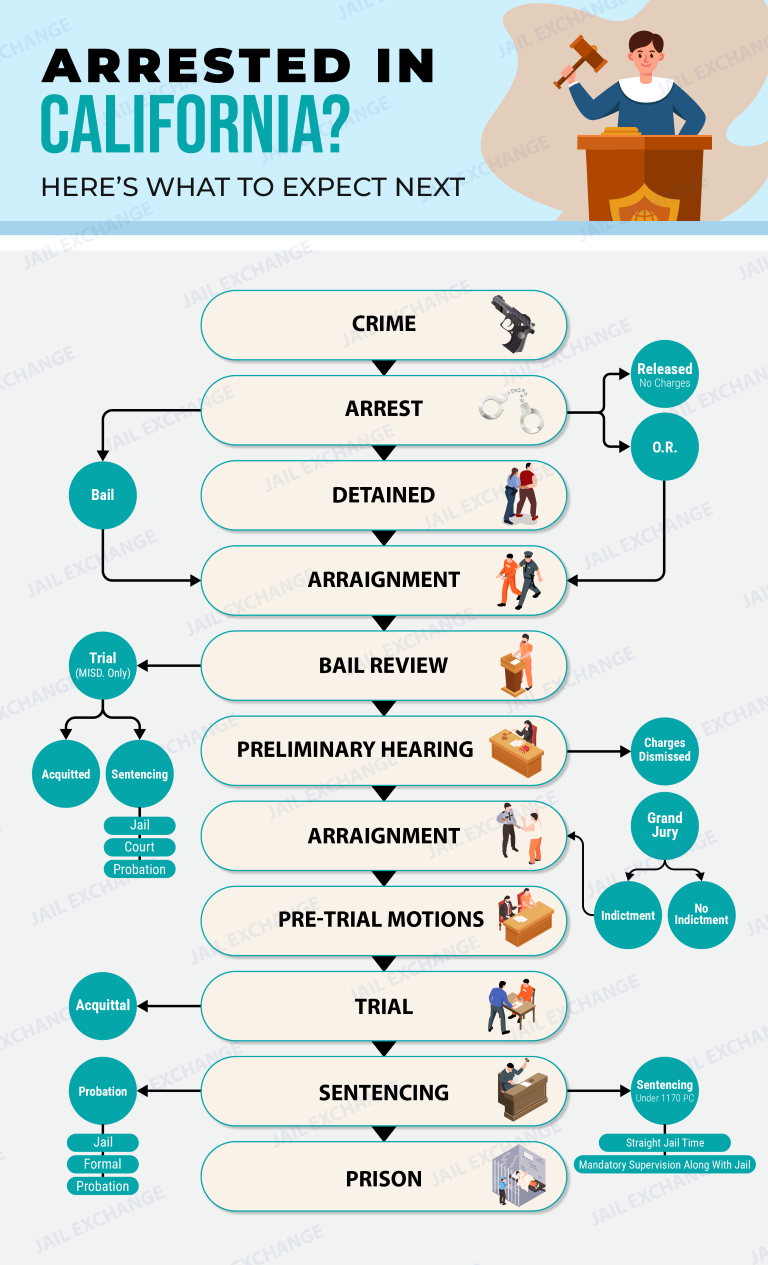
A good share of San Diego misdemeanor cases start with a ticket instead of a booking; they get a citation with a date to appear at one of the four criminal courthouses. A person who is taken into custody, for example at the San Diego Central Jail downtown or the Las Colinas Detention and Reentry Facility in Santee, must see a judge within 48 hours, a period that doesn’t count Sundays and holidays. At that first hearing the charge is read out, most people answer “not guilty,” and the judge decides the release conditions. A lawyer is assigned at the same time. Defendants who can’t afford a lawyer are represented by the county’s Department of the Public Defender, which includes the Primary Public Defender, and nobody in California is charged a fee anymore for a court-appointed lawyer. For most misdemeanors a lawyer can appear in place of the client.
Most of these San Diego cases wrap up at a readiness conference, with a plea deal, a lesser charge, or the case thrown out. A judge can offer diversion, where the charge goes away once classes or treatment are finished, but drunk driving, domestic abuse and registrable sex charges are left out. If there is a trial, twelve jurors decide. Defendants have a right to trial within 30 days of arraignment if jailed or 45 days if not, though the defense often waives those dates.
Most misdemeanors top out at six months behind bars and a $1,000 fine, and a handful can bring a year. In practice, San Diego judges more often hand out probation, fines, classes or volunteer hours. A typical San Diego misdemeanor closes out over one to several months.
2. San Diego felonies: break-ins, large thefts, drug sales, injury DUIs
Only the District Attorney prosecutes felonies, including those arising inside the city of San Diego. After an arrest, the defendant is usually booked into a Sheriff’s facility such as the Central Jail, the Vista Detention Facility or Las Colinas, and is arraigned on the felony complaint within 48 hours at the courthouse for that region. The judge rules on bail and release at the arraignment and, following the California Supreme Court’s 2021 decision in In re Humphrey, has to consider what the person can afford. The 2026 Kowalczyk case adds that San Diego County judges cannot use unpayable bail to hold someone.
San Diego County has an unusually layered system of appointed counsel. The Primary Public Defender takes most felony cases. When it has a conflict of interest, the Alternate Public Defender steps in; the Multiple Conflicts Office handles the most serious felonies when both of those offices are conflicted; and the Office of Assigned Counsel arranges private panel attorneys for anyone the other three cannot represent.
The preliminary hearing is next, usually inside 10 court days after the arraignment, unless the defense gives up that deadline. Here a judge decides if the proof is strong enough for a trial. A grand jury indictment can skip this step. When a San Diego judge sends the case on, prosecutors file the formal charges (an “information”), he is arraigned again, and the 60-day clock for trial starts unless his lawyer waives it. Defendants agree to wait quite often, and plea bargains settle most San Diego felonies.
If he is found guilty, San Diego Probation writes up a report with a suggested sentence, and the sentencing hearing usually comes within 20 court days. Since the state’s 2011 realignment, many lower felony terms get served locally rather than in a CDCR prison. Certain “wobbler” crimes can start as felonies and drop to misdemeanors, or be filed low from day one. The court also offers collaborative courts, such as drug and behavioral health courts, for eligible defendants. A felony case typically lasts several months to over a year.
3. The gravest San Diego cases: homicide, sexual assault, robbery with a gun
These prosecutions travel the same felony route through arraignment, a preliminary hearing or indictment, and trial, but they take longer and carry far heavier penalties. They also often begin with a no-bail hold. A judge may deny bail under the California Constitution for violent or sexual-assault felonies if a San Diego judge finds strong, clear evidence that freeing the defendant would probably put others at risk of serious injury. Because of that, many of these San Diego defendants wait out the whole case in a Sheriff’s jail.
California’s Three Strikes law counts each of these three crimes as a strike. One earlier strike means double the prison time, and two earlier strikes can mean 25 years to life. Those convicted of a violent felony have to serve 85% of the sentence or more.
- Murder: second-degree murder is punishable by 15 years to life, first-degree murder by 25 years to life. With a special circumstance, such as a death during a robbery, the punishment rises to life without parole or a death sentence. Only the elected prosecutor’s office decides whether to ask for death, and the 2019 statewide pause has kept every death row inmate alive since.
- Armed robbery: a top term of nine years on the robbery itself. Firearm enhancements add 10 years for use, 20 for discharge and 25 years to life when the shot causes great bodily injury or death, though judges have been able to strike them since 2018.
- Rape: as long as eight years, extra time if aggravating facts are proven, and a lifetime spot on the top tier of the sex-offender registry.
The Multiple Conflicts Office exists specifically for the gravest felonies, and a capital defendant is given a pair of death-qualified attorneys. Marsy’s Law means San Diego victims are told about each hearing, may speak at sentencing, and are owed repayment for losses. Plan on one to three years for most, and five or more when the charge is murder.
4. San Diego Superior Court locations
- Central courthouse: 1100 Union Street, San Diego, CA 92101 · 619-844-2400
- Hall of justice: 330 West Broadway, San Diego, CA 92101 · 619-844-2400
- East County courthouse: 250 East Main Street, El Cajon, CA 92020 · 619-456-4100
- North County courthouse: 325 South Melrose Drive, Vista, CA 92081 · 760-201-8600
- South County courthouse: 500 Third Avenue, Chula Vista, CA 91910 · 619-746-6200
- Juvenile courthouse: 2851 Meadow Lark Drive, San Diego, CA 92123 · 858-634-1600
Which building gets the case depends on the arrest area:
- Downtown and city of San Diego arrests: the Central Courthouse on Union Street, for arraignments, felonies and misdemeanors.
- Oceanside, Carlsbad, Escondido, San Marcos and the rest of North County: Vista, next to the Vista jail.
- El Cajon, La Mesa, Santee, Lakeside and the eastern backcountry: the El Cajon building on Main Street.
- Chula Vista, National City, Imperial Beach and the border towns: the South County building on Third Avenue.
- Anyone under 18: the juvenile courthouse on Meadow Lark Drive in Kearny Mesa.
- The Hall of Justice on Broadway mostly hears civil matters, so check the notice before going there.
5. Federal cases in San Diego
Smuggling, drug and border cases dominate the Southern District of California. The first hearing is before a magistrate judge at San Diego federal courthouse, 333 West Broadway, San Diego, CA 92101. Pretrial Services reports, detention is decided, and most detained people are held at the Metropolitan Correctional Center, 808 Union St, San Diego (619-232-4311). Marshals: U.S. Marshals Service, 333 West Broadway, San Diego, 619-557-6620.
6. ICE detainers in San Diego court
Downtown, Vista, El Cajon or Chula Vista judges handle the case normally. SB 54 bars holding for ICE at release; a date may go to ICE after a serious or violent conviction. Immigration advice from the defense is especially important here. ICE office: San Diego ICE field office, 880 Front Street, Suite 2242, San Diego, CA 92101, 619-436-0410; detention sites:
- Otay Mesa Detention Center: 7488 Calzada de la Fuente, San Diego, CA 92154
- Imperial Regional Detention Facility: 1572 Gateway Road, Calexico, CA 92231
7. San Diego custody searches
- San Diego County Inmate Search: Sheriff's jails.
- VINELink (https://vinelink.vineapps.com/): statewide.
- Federal Bureau of Prisons Inmate Locator (https://www.bop.gov/inmateloc/): federal; pretrial 619-557-6620.
- CDCR Inmate Locator (https://inmatelocator.cdcr.ca.gov/): state prison.
- ICE Online Detainee Locator System (https://locator.ice.gov/odls/): A-number or name and birth country; 619-436-0410.
8. Phoning ahead for a San Diego court date
San Diego's criminal cases run in several courthouses, from downtown to El Cajon and Vista. Call the downtown criminal business office at 619-844-2400 with the case number and ask where and when the hearing is. For someone held, the custody line, 619-409-5000, can confirm transport.
9. Is there a Sheriff warrant search I can use?
Yes. The Sheriff's online warrant search covers most Superior Court warrants by name, and deputies answer at (858) 868-3200. Escondido and El Cajon cases are listed there as well. That search covers this county, so call the Sheriff for statewide records. The court's online case search shows the case behind a warrant. At the Hall of Justice, 330 West Broadway, the clerk handles new dates. A lawyer can also bring you to the Central Jail, 1173 Front Street, or let counsel ask for a recall.
This overview of San Diego County criminal cases gives a general picture of local practice and isn’t legal advice. If you are charged in San Diego, hire a defense attorney, or phone the San Diego County Primary Public Defender at (619) 338-4700.