Blaine Street Women's Facility Criminal Court Process
Criminal Court Process for Santa Cruz County California
Criminal Court Process in Santa Cruz County
From the beach towns of Capitola and Aptos to the mountain communities of Boulder Creek and Scotts Valley, criminal charges filed anywhere in Santa Cruz County go to a single trial court, the Superior Court of California, County of Santa Cruz. There is no municipal or “city” court for criminal matters anymore: California unified its municipal and superior courts county by county around 2000, leaving one superior court to handle everything from shoplifting tickets to homicide trials. The court operates two courthouses, but according to the court’s Criminal Division, criminal cases are filed only in the Santa Cruz Division at the Santa Cruz Courthouse, 701 Ocean Street, Santa Cruz, CA 95060. The criminal clerk’s office is in Room 120 of that building, and the Criminal Division picks up at (831) 420-2200, which is also the courthouse’s main number.
The second building, the Watsonville Courthouse at 1 Second Street, Watsonville, CA 95076 ((831) 786-7200), serves South County residents for other matters and can take payments on existing criminal payment plans, but new criminal cases from Watsonville and the Pajaro Valley are heard in Santa Cruz. The county’s Main Jail sits a short distance away on Water Street, so people held in custody are brought to Ocean Street for their court dates. Tap the Santa Cruz charge group that matches his paperwork.
- Lower-level Santa Cruz cases: shoplifting, first DUI, battery, trespass
- Santa Cruz felonies (burglary, grand theft, dealing drugs, felony DUI)
- Santa Cruz’s gravest charges (murder, rape, armed robbery)
- Santa Cruz Superior Court locations
- Santa Cruz federal cases
- ICE detainers in Santa Cruz court
- Santa Cruz custody searches
- Is there a warrant search for Watsonville and Capitola?
1. Lower-level Santa Cruz cases: shoplifting, first DUI, battery, trespass
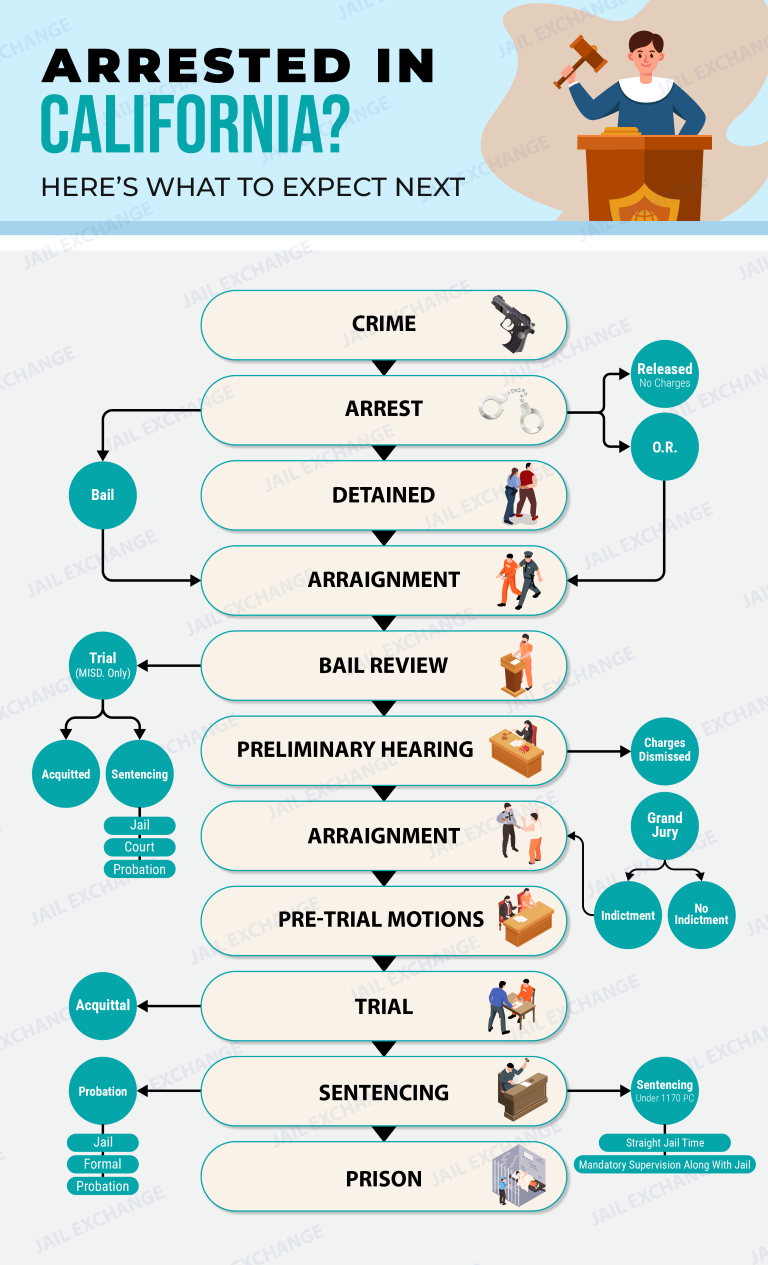
A misdemeanor case in Santa Cruz County frequently begins with a piece of paper rather than a jail cell. For lower-level offenses, officers from the Sheriff’s Office, the CHP or city departments such as Santa Cruz, Watsonville and Scotts Valley police usually write a ticket and send the person home with a date at the Ocean Street courthouse. When someone is booked into the Main Jail and not released, he has to see a judge inside 48 hours, and Sundays and holidays don’t count. Charging decisions for misdemeanors, like felonies, belong to the Santa Cruz County District Attorney’s Office.
At the arraignment, the court tells the defendant what the charges are, hears his plea (almost always “not guilty” to start), and decides on release terms. Someone who can’t afford a private lawyer is typically assigned one here. Since October 2021, that work has been done by the county’s own Santa Cruz County Public Defender’s Office; before then, a private law office had handled the county’s indigent defense under contract since 1975. No one is billed for an appointed lawyer in California anymore. On many small charges, that attorney can also attend hearings in the client’s place.
A pretrial conference ends most Santa Cruz misdemeanors with a deal, a smaller charge, or a dismissal. For many offenses a judge may also order misdemeanor diversion: after counseling, classes, or other ordered steps are done, the case is dropped. DUIs, domestic violence charges and crimes requiring sex-offender registration don’t qualify. Trials use 12 jurors. A jailed defendant can demand trial within 30 days of arraignment while in custody, or within 45 days when out of custody, but that deadline is routinely waived to give the defense time to prepare.
Most misdemeanors here top out at six months on Water Street and a $1,000 fine, though certain offenses allow up to one year. In practice, probation, fines, community service and treatment or education programs are the more common results. Expect one to several months before the case closes.
2. Santa Cruz felonies (burglary, grand theft, dealing drugs, felony DUI)
Felonies, filed by the Santa Cruz County District Attorney, take more steps. A person arrested on a felony and held at the Main Jail is arraigned on the complaint at the Santa Cruz Courthouse within 48 hours, excluding Sundays and holidays. Bail is decided there too. Since the 2021 In re Humphrey decision, any cash amount must reflect what he can really afford. A 2026 case, In re Kowalczyk, also requires Santa Cruz bail to be generally attainable.
Appointed counsel enters the case from that first appearance for defendants who can’t hire their own attorney. The Public Defender’s Office handles most of these clients; if a conflict stops it, such as a co-defendant or witness it already represents, the judge names a contract conflict lawyer.
The preliminary hearing comes next. Prosecutors call witnesses, and the judge decides if the evidence earns a trial. Unless the defense waives the deadline, the hearing must be held within 10 court days after arraignment. Now and then the District Attorney takes a case to the grand jury instead, and an indictment replaces the preliminary hearing. If the case goes on, an “information” with the trial charges is filed, he is arraigned again, and the trial is due within 60 days unless that time is waived, which it usually is. Plea deals, not juries, decide most Santa Cruz felonies.
If the defendant is convicted, Santa Cruz Probation drafts a sentencing report, and the hearing normally follows within 20 court days of the verdict. Since California’s 2011 realignment, lots of lesser felony terms are done in the Water Street jail, not a state prison. So-called “wobblers” can be filed as felonies or misdemeanors, and some can be reduced to misdemeanors later on. A Santa Cruz felony usually lasts many months, and it may go beyond a year.
3. Santa Cruz’s gravest charges (murder, rape, armed robbery)
Procedurally, a murder, rape or armed robbery case passes through the same checkpoints as other felonies: arraignment, a preliminary hearing or grand jury indictment, and then trial. The difference is in the consequences and the pace. California’s Constitution allows a judge to refuse bail entirely in violent or sexual-assault felony cases once clear and convincing evidence shows his release would likely bring someone grave harm. Many defendants facing these charges therefore stay in the Santa Cruz County Main Jail until their case ends.
These crimes each qualify as a strike under California’s Three Strikes law. A prior strike doubles the term, while two prior strikes can be sentenced to 25 years to life. Anyone convicted of a violent felony has to serve at least 85% of the prison sentence.
- Murder: a first-degree conviction carries 25 years to life, while a second-degree conviction carries 15 years to life. Murders with “special circumstances” (for example, during a rape or robbery) carry death or life behind bars with no parole. Seeking death is solely the District Attorney’s call, and California has not carried out executions under a moratorium in place since 2019.
- Armed robbery: the robbery count by itself can bring nine years. A firearm enhancement can add 10 years, 20 years, or 25 years to life depending on whether the gun was used, fired, or caused great bodily injury; since 2018, judges have had discretion to strike these enhancements.
- Rape: eight years at the top, more when aggravating factors are proven, along with lifetime sex-offender registration at the highest tier.
The defense side in these cases is staffed by the Public Defender’s most experienced trial attorneys or by qualified conflict counsel, and two defense attorneys are required whenever death is on the table. Victims hold their own constitutional rights under Marsy’s Law, such as hearing notices, a turn to address the court at sentencing, and repayment of losses. With forensic testing, expert witnesses and lengthy defense investigations, Expect one to three years for most; homicide trials in Santa Cruz can stretch past five.
4. Santa Cruz Superior Court locations
- Santa Cruz courthouse: 701 Ocean Street, Santa Cruz, CA 95060 · 831-420-2200
- Watsonville courthouse: 1 Second Street, Watsonville, CA 95076 · 831-786-7200
5. Santa Cruz federal cases
Federal crimes from Santa Cruz and Watsonville go over the hill to the Northern District of California in San Jose, starting before a magistrate judge at San Jose federal courthouse, 280 South 1st Street, San Jose, CA 95113. Marshals: U.S. Marshals Service, 280 South 1st Street, San Jose, 408-535-5496.
6. ICE detainers in Santa Cruz court
Santa Cruz and Watsonville judges handle the case normally. SB 54 limits release cooperation to people with a serious or violent conviction. Raise immigration with defense counsel. ICE: San Francisco ICE field office, 630 Sansome Street, Room 590, San Francisco, CA 94111, 415-365-8800; sites:
- Mesa Verde ICE Processing Center: 425 Golden State Avenue, Bakersfield, CA 93301
- Golden State Annex: 611 Frontage Road, McFarland, CA 93250
- California City detention site: 22844 Virginia Boulevard, California City, CA 93505
7. Santa Cruz custody searches
- Santa Cruz County Inmate Search: county jail.
- VINELink (https://vinelink.vineapps.com/): statewide.
- Federal Bureau of Prisons Inmate Locator (https://www.bop.gov/inmateloc/): federal; pretrial 408-535-5496.
- CDCR Inmate Locator (https://inmatelocator.cdcr.ca.gov/): prison.
- ICE Online Detainee Locator System (https://locator.ice.gov/odls/): A-number or name and birth country; 415-365-8800.
8. Is there a warrant search for Watsonville and Capitola?
Yes. The Sheriff's Office posts a warrant search covering most Superior Court warrants, and tips or questions go to (831) 471-1121. That search covers this county alone, so call the Sheriff about statewide records. The court's case lookup shows the case itself. With a lawyer, surrender at the Main Jail, 259 Water Street, or let counsel request a recall. The courthouse sits a few blocks away, and its clerk at 701 Ocean Street can help you set a new date.
This Santa Cruz overview is background only, not legal advice. Charged in Santa Cruz County? Retain counsel or phone the Santa Cruz County Public Defender’s Office at (831) 454-5301.