
Mount View Youth Services Center
Mount View Youth Services Center
Physical Address
7862 W. Mansfield ParkwayLakewood, CO 80235
Jail Phone Number
303-987-4525Jefferson County Juvenile Information for Families
Type of facility: both detention and long-term commitment: some youth are waiting for court, and others were committed to DYS by a judge. It is a co-ed secure campus in Lakewood serving detained and committed youth: 21 detention beds for the 1st and 5th Judicial Districts, 24 beds for girls in commitment and assessment, 33 beds for committed boys and 24 assessment beds for boys.
This page is for families of youth held at Mount View Youth Services Center, 7862 W. Mansfield Parkway, Lakewood, CO 80235.
Read inmate search answers
 Read inmate search answers
1. How do I find out if my child is here?
Colorado does not offer a public online roster for youth in juvenile facilities. Call 303-987-4525 to ask. Staff share these details only with a parent or guardian, because they are kept private to protect the minor.
↑ Return to the question list2. Is my child here for detention or commitment?
Detained youth stay until the court releases them or orders a detention sentence of up to 45 days; the statewide average is about 15 days. Call 303-987-4525 to ask which status applies to your child. Committed youth stay for the period the judge set, followed by six months of parole (C.R.S. 19-2.5-1117). Staff share that only with a parent or guardian, to protect the minor.
↑ Return to the question list3. What kind of center is this?
Both detention and long-term commitment: some youth are waiting for court, and others were committed to dys by a judge. Jefferson County School District teaches detained youth, and Colorado state teachers teach committed youth.
Counties served: Jefferson County, Gilpin County, Clear Creek County, Eagle County, Lake County and Summit County.
↑ Return to the question list4. Who can I contact with a concern?
Start with the center's Control Center at 303-987-4525. The Office of Colorado's Child Protection Ombudsman is an independent state agency that takes confidential complaints about DYS centers: 720-625-8640 or 866-276-8646 (toll free).
↑ Return to the question list5. What happens if my child is charged as an adult?
A juvenile judge can transfer a case to adult court after an investigation and a hearing: for a 12- or 13-year-old accused of a class 1 or 2 felony or a crime of violence, or for a youth 14 or older accused of any felony (C.R.S. 19-2.5-802(1)). Someone who turns 18 while the case is pending is held in the county jail (C.R.S. 19-2.5-305(4)(g)). Under Colorado law, a youth charged as an adult stays in a juvenile facility while the case is pending unless a district judge holds a hearing and decides an adult jail is the right place (C.R.S. 19-2.5-305(3)(c)(II)). A district attorney can file charges directly in adult (district) court only if the youth was 16 or 17 at the time and is accused of a class 1 or class 2 felony, certain sexual assaults, or certain crimes of violence after a prior felony adjudication (C.R.S. 19-2.5-801(1)). Talk with your child's lawyer right away.
↑ Return to the question listJefferson County Juvenile Release and Bail
Type of facility: both detention and long-term commitment: some youth are waiting for court, and others were committed to DYS by a judge. It is a co-ed secure campus in Lakewood serving detained and committed youth: 21 detention beds for the 1st and 5th Judicial Districts, 24 beds for girls in commitment and assessment, 33 beds for committed boys and 24 assessment beds for boys.
Colorado juvenile release is decided at the detention hearing, not by an adult bail schedule.
The questions below explain the release options for youth held at Mount View Youth Services Center.
1. Can my child go home before seeing a judge?
First, a screening team scores a detention screening tool to see whether the child can wait for court at home or in a community program. To keep a child locked up, the judge must find probable cause, a detention-eligible screening result (or grounds to override it), and a substantial risk of serious harm to others or of flight that community options can't manage (C.R.S. 19-2.5-305(3)(a)(IV)).
↑ Return to the question list2. What about children under 13?
Children ages 10 through 12 can be kept in detention only for a felony or listed weapons charges (C.R.S. 19-2.5-305(3)(a)(V)).
↑ Return to the question list3. What can the judge decide at the detention hearing?
The judge can release your child to a parent, guardian, legal custodian, relative or other suitable person without bond, or set an unsecured personal recognizance bond. When the judge finds a substantial risk of serious harm to others, the order can be that no bail be set, with the child held or placed in a preadjudication service program (C.R.S. 19-2.5-305(3)(a)(VII)). A juvenile has the right to bond within these limits (C.R.S. 19-2.5-305(5)).
↑ Return to the question list4. Who may pick up my child?
The court releases a child to a parent, guardian, custodian, kin or another suitable adult. Call 303-987-4525 to ask. Staff share these details only with a parent or guardian, because they are kept private to protect the minor.
↑ Return to the question list5. Does bail work differently if my child is charged as an adult?
Adult bail rules apply once a case is in adult court. Someone who turns 18 while the case is pending is held in the county jail (C.R.S. 19-2.5-305(4)(g)). A district attorney can file charges directly in adult (district) court only if the youth was 16 or 17 at the time and is accused of a class 1 or class 2 felony, certain sexual assaults, or certain crimes of violence after a prior felony adjudication (C.R.S. 19-2.5-801(1)). A juvenile judge can transfer a case to adult court after an investigation and a hearing: for a 12- or 13-year-old accused of a class 1 or 2 felony or a crime of violence, or for a youth 14 or older accused of any felony (C.R.S. 19-2.5-802(1)). Under Colorado law, a youth charged as an adult stays in a juvenile facility while the case is pending unless a district judge holds a hearing and decides an adult jail is the right place (C.R.S. 19-2.5-305(3)(c)(II)). Talk with your child's lawyer right away.
↑ Return to the question listJefferson County Juvenile Court for Families
Type of facility: both detention and long-term commitment: some youth are waiting for court, and others were committed to DYS by a judge. It is a co-ed secure campus in Lakewood serving detained and committed youth: 21 detention beds for the 1st and 5th Judicial Districts, 24 beds for girls in commitment and assessment, 33 beds for committed boys and 24 assessment beds for boys.
In Colorado, youth ages 10 to 17 accused of a crime go to juvenile court, part of the district court.
If your child is held at Mount View Youth Services Center (303-987-4525), the first hearing comes fast. The answers below go step by step.
1. Where will my child's case be heard?
Delinquency cases are heard by a juvenile judge or magistrate of the district court in the county where the charge was filed. This center holds youth from the 1st and 5th Judicial Districts, so the case stays in your home county's court even though your child is held here.
- Jefferson County: Jefferson Combined Court, 100 Jefferson County Pkwy., Golden
- Gilpin County: Gilpin County Combined Court, 2960 Dory Hill Rd., Suite 200, Black Hawk, 720-772-2501
- Clear Creek County: Clear Creek Combined Court, 405 Argentine St., Georgetown
- Eagle County: Eagle County Justice Center, 885 Chambers Ave., Eagle
- Lake County: Lake County Combined Court, 505 Harrison Ave., Leadville
- Summit County: Summit County Justice Center, 501 N. Park Ave., Breckenridge
2. Does my child get a lawyer?
Yes. A detained child must have a lawyer at the detention hearing. If you have not hired one, the court appoints the Office of the State Public Defender (or the Office of Alternate Defense Counsel if there is a conflict). The court also appoints a guardian ad litem for a detained child at that hearing (C.R.S. 19-2.5-305(2), (2.5)).
↑ Return to the question list3. What sentences are possible in juvenile court?
Options include probation, detention, placement with a relative, restitution, treatment programs, or commitment to the Department of Human Services (C.R.S. 19-2.5-1103). A commitment is for a set period of up to two years for most offenses and is followed by six months of parole (C.R.S. 19-2.5-1117). A child under 13 can be sentenced to detention only for a felony or certain weapons charges (C.R.S. 19-2.5-1123(2)).
↑ Return to the question list4. What if my child is committed to DYS?
Committed youth go through a DYS assessment, and a team meeting with the family within 30 days recommends treatment and placement. A client manager is assigned and later serves as the parole officer. The juvenile parole board decides on release (C.R.S. 19-2.5-1203).
↑ Return to the question list5. Should I go to court?
Yes, if you can. The screening team must notify a parent or legal guardian and explain the right to a prompt hearing on whether the child stays detained (C.R.S. 19-2.5-305(1)). The judge tries to keep the child with a parent, guardian or legal custodian when it is safe.
↑ Return to the question list6. How soon does a judge see my child?
Colorado law gives a detained child a hearing within 48 hours, not counting weekends and legal holidays (C.R.S. 19-2.5-305(1)). When detention continues, the district attorney has 72 hours after the hearing (not counting weekends and holidays) to file a delinquency petition (C.R.S. 19-2.5-305(3)(a)(IX)).
↑ Return to the question list7. Could my child be tried as an adult?
A juvenile judge can transfer a case to adult court after an investigation and a hearing: for a 12- or 13-year-old accused of a class 1 or 2 felony or a crime of violence, or for a youth 14 or older accused of any felony (C.R.S. 19-2.5-802(1)). After a direct filing, your child's lawyer can ask the district court to send the case back to juvenile court (a “reverse transfer”, C.R.S. 19-2.5-801(4)). Someone who turns 18 while the case is pending is held in the county jail (C.R.S. 19-2.5-305(4)(g)). Under Colorado law, a youth charged as an adult stays in a juvenile facility while the case is pending unless a district judge holds a hearing and decides an adult jail is the right place (C.R.S. 19-2.5-305(3)(c)(II)). If convicted in adult court, a youth may be sentenced as an adult or to the Youthful Offender System in the Department of Corrections (C.R.S. 19-2.5-802(1)(d)). A district attorney can file charges directly in adult (district) court only if the youth was 16 or 17 at the time and is accused of a class 1 or class 2 felony, certain sexual assaults, or certain crimes of violence after a prior felony adjudication (C.R.S. 19-2.5-801(1)). Talk with your child's lawyer right away.
↑ Return to the question list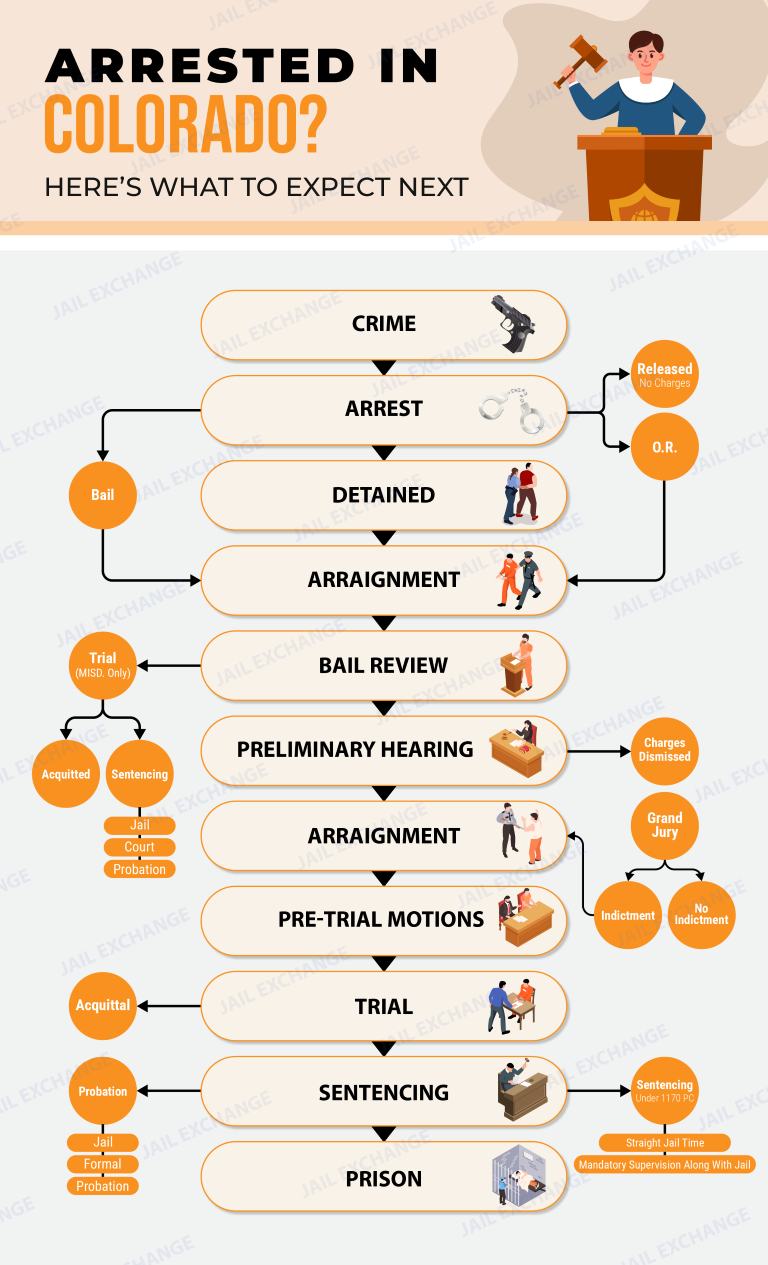
Information for this service is currently unavailable.
Information for this service is currently unavailable.
Information for this service is currently unavailable.
Information for this service is currently unavailable.
Information for this service is currently unavailable.
Information for this service is currently unavailable.
Jefferson County County Jails
Jefferson County Juvenile Facilities
- Juvenile: 303-987-4525
The Mount View Youth Services Center serves the following cities and towns of Jefferson County: Arvada, Bow Mar, Edgewater, Golden, Lakewood, Littleton, Morrison and Wheat Ridge. At times this facility may also house inmates arrested in the following counties: Gilpin County, Clear Creek County, Eagle County, Lake County and Summit County.