
Charlotte County Jail
Charlotte County Jail
Physical Address
26601 Airport RoadPunta Gorda, FL 33982
Jail Phone Number
941-833-6300Charlotte County Jail, Punta Gorda: help for families
Port Charlotte, Punta Gorda and Englewood arrests are booked into the Charlotte County Jail by the airport.
Search Charlotte County Inmate Search or phone 941-833-6300.
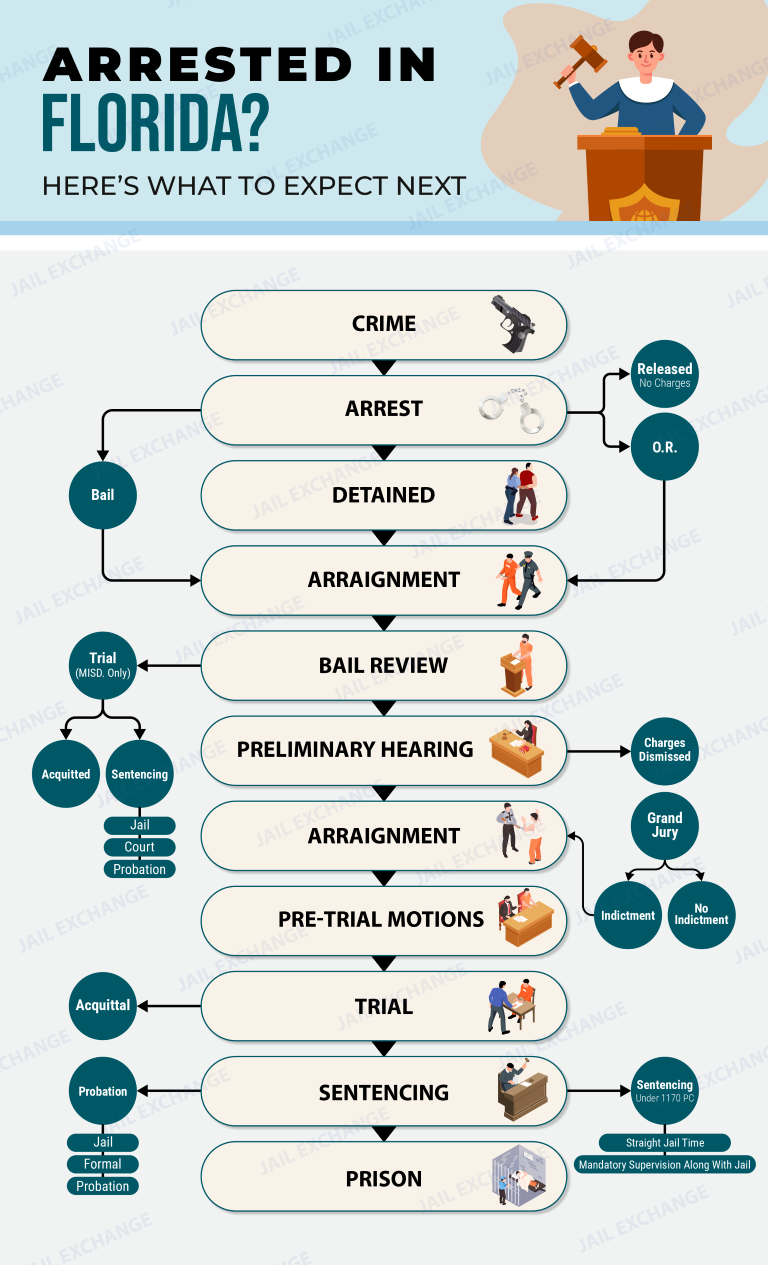
More is in our court process guide.
Read inmate search answers
 Read inmate search answers
1. Location of the Charlotte County Jail
Find it at 26601 Airport Road, Punta Gorda, FL 33982, close to Punta Gorda Airport. The jail phone is 941-833-6300, and the Charlotte County Sheriff's Office is at 941-639-2101.
↑ Back to the question list2. The Charlotte roster
Charlotte County Inmate Search gives booking date, charges and bond. If a name is missing after an arrest, booking may not be finished. Register with VINELink for alerts. The sheriff also has a phone app; download it from the App Store or Google Play.
↑ Back to the question list3. First appearance and bond
Charlotte belongs to the Twentieth Judicial Circuit. A judge holds first appearance within 24 hours of the arrest.
- ROR: no money, just a promise.
- Cash bond: pay it all; it's refunded after the case, less any costs.
- Bail bond: a bondsman keeps 10 percent, with a floor of $100 a charge.
Holds from other places or probation can still block release. Missing court can cost the bond. See our Charlotte bail guide.
↑ Back to the question list4. Is the Airport Road jail holding someone from Port Charlotte on a warrant?
The jail on Airport Road takes warrant arrests from Port Charlotte, Englewood, Rotonda and the rest of the county, and its staff at 941-639-2101 can confirm who is booked. The Sheriff's warrants page shows active local warrants, while the clerk's records search shows the case behind one. Warrants from other agencies show in FDLE's statewide wanted index. When the warrant is in your name, an attorney can arrange the surrender at Airport Road, and the Justice Center clerk can give you a new court date.
↑ Back to the question list5. Public defender help
The Twentieth Circuit Public Defender serves Charlotte defendants the judge declares indigent. There's a $50 fee unless waived.
↑ Back to the question list6. Visits at Airport Road
Visits are scheduled, and video is often an option. Call 941-833-6300 for current times. See our visitation guide and remote visits.
↑ Back to the question list7. Inmate phones and messages
Calls go out only. A prepaid account pays for them. Learn about calls, e-messages and tablets.
↑ Back to the question list8. Money and commissary
Account money buys snacks, hygiene items and paper. Use only jail-approved deposit options. See deposits and commissary.
↑ Back to the question list9. Sending letters
Use the inmate's full name and booking number with the Airport Road address. Stickers, tape and perfume aren't allowed. Read our mail page.
↑ Back to the question list10. Juvenile cases in Charlotte
Arrests of kids under 18 go to juvenile court. Teens who are held usually go to the Southwest Florida Regional Juvenile Detention Center in Fort Myers, 239-332-6927, and see a judge within 24 hours. Parents may call 941-639-2101.
↑ Back to the question list11. Medical needs
Report diabetes, seizures, heart medication or suicide risk to the jail at 941-833-6300.
↑ Back to the question list12. Charlotte federal cases
Federal arrests in Charlotte go to the U.S. District Court, Middle District of Florida, Fort Myers division, 2110 First St., Fort Myers, FL 33901.
A magistrate judge presides at the first hearing, and a detention hearing settles release; there's no posted bail list. The U.S. Marshals (239-286-6844) may lodge the person in a county jail. Post-sentence, use the Bureau of Prisons search.
↑ Back to the question list13. ICE detainer steps for Charlotte County
- Airport Road prints are matched against DHS data.
- ICE may lodge an I-247A detainer.
- The jail can hold someone on an ICE request up to 48 hours after they would otherwise be released (8 CFR 287.7(d)). Federal agents use that window to arrive.
- F.S. 908.105 requires notice to the bond judge, the prosecutor and the court file.
- F.S. 907.041 keeps an unauthorized alien arrested for a forcible felony in jail through first appearance, where a rebuttable presumption of detention applies.
- F.S. 908.11 makes 287(g) agreements mandatory for jail sheriffs; Charlotte appears on ICE's roster with Warrant Service Officer and Task Force agreements.
- Search a Charlotte relative at ICE's detainee site or call the Miami field office, 2805 SW 145th Ave., Miramar, FL 33027, 954-843-5800.
14. Transfer to state prison
A sentenced person waits at Airport Road for FDC transport, then goes to a reception center for testing and placement. Track them with the FDC lookup; see our Florida prison directory.
↑ Back to the question list15. Charlotte mugshots online
Yes. Look up a name in the Charlotte arrest database, then open the record to see the mugshot. For a copy, file a request with the sheriff at 941-639-2101.
For an ICE photo, send an ICE records request. Federal mugshots stay private unless Marshals release one for a fugitive search.
↑ Back to the question list16. Charlotte County police numbers
- Punta Gorda Police Department: 941-639-4111
- Charlotte County Sheriff's Office: 941-639-2101
Dial 911 for emergencies.
↑ Back to the question listCharlotte County contacts
- Inmate search
- Charlotte County Inmate Search
- Jail
- Charlotte County Jail, 26601 Airport Road, Punta Gorda, FL 33982, 941-833-6300
- Sheriff
- 941-639-2101
- Clerk
- 941-505-4716
Charlotte County bail and bond: Airport Road jail and the 2026 schedule
Adults arrested in Charlotte County are held at the Charlotte County Jail, 26601 Airport Road in Punta Gorda, which the Charlotte County Sheriff's Office runs.
Charlotte County Inmate Search shows custody and the bail.
The sheriff's non-emergency line is 941-639-2101, the jail line is 941-833-6300, and the clerk of court has the court-side records for any bond.
1. How do I know if someone is held at the Charlotte County Jail?
Enter the name at Charlotte County Inmate Search. Charlotte's search shows the booking, charges, and bail amount. If you see nothing, a very recent arrest may still be in processing.
2. Why is the jail out by the airport?
The jail is at 26601 Airport Road, Punta Gorda, FL 33982. Charlotte County Sheriff's Office Corrections runs it. The courthouse is a separate building in town on East Marion Avenue.
3. Where in Charlotte do I bring bond money?
The sheriff's corrections pages that we could open do not give bond posting rules. Call 941-833-6300 first and ask where the bond desk is, what it accepts, and whether a bail agent can come at night.
4. What is the kiosk in the lobby for?
The lobby kiosk takes Charlotte account deposits for phone time and commissary. Those deposits do not count as bail, so never use the kiosk to try to free someone.
5. How much is bond for common charges?
The Supreme Court of Florida adopted one statewide schedule for 2026 (order AOSC25-69). A third-degree felony without force is $2,500, and one with force is $5,000. On the same schedule, a no-force misdemeanor is $500 at the first-degree level and $150 at the second-degree level, and a first DUI is $500.
These cover release before a judge sees the person. A Charlotte judge may pick another amount, and anyone with a hold stays jailed until that hearing.
6. When will a judge see my relative?
Under Rule 3.130, within 24 hours of arrest. Later hearings happen at the Charlotte County courthouse at 350 East Marion Avenue, Punta Gorda, FL 33950. The Clerk of the Circuit Court answers at 941-505-4716.
7. Who decides if the person can leave before court?
The statewide order says jail or pretrial release staff may release someone on the schedule amount before first appearance, unless section 903.011 blocks it. That law lists groups such as people on probation at arrest or arrested for a protective-injunction violation. A judge decides for those.
8. What does a bail agent charge in Charlotte County?
Charlotte agents are licensed by the Florida Department of Financial Services, which puts the premium at 10 percent of court-set bail, or $500 on $5,000. Section 648.33 requires the rate on file, no higher and no lower. Get the contract, the fee, and the collateral terms written down before you sign.
9. Can I offer a house as security?
Charlotte private sureties need Florida residency or land in Florida (section 903.05), and recording creates a lien (section 903.26). Ask the clerk at 941-505-4716 how Charlotte County handles deeds.
10. What does the phrase no bond mean on a Charlotte record?
A Charlotte court can deny release on a capital or life charge with plain proof or a great presumption, under Article I, section 14 of the Florida Constitution. A court may also detain a person when no conditions protect the community or the court process. Violating release terms can end release (section 903.0471).
11. What if Punta Gorda police arrested my relative?
Ask the Charlotte department for the report number and the time of arrest. Charlotte adults seem to be booked at the Airport Road jail. Look again at Charlotte County Inmate Search later that day.
12. Where do Charlotte County youth go?
Juveniles who must be detained go to the Southwest Florida Regional Juvenile Detention Center, 2525 Ortiz Avenue, Fort Myers, FL 33905. It serves Lee, Hendry, Glades, and Charlotte counties. The phone is 239-332-6927. The center is listed on the Department of Juvenile Justice website and sits in Lee County, not Charlotte.
13. How do I request a public defender?
Request one from the judge at first appearance. The clerk at 941-505-4716 can confirm the office.
14. What if my loved one misses a Charlotte court date?
Missing court puts the bond in jeopardy. In Charlotte, section 903.26 allows 60 days from the mailed notice, and section 903.28 can refund part on surrender, less over time. In Charlotte, reach the agent and a lawyer that same day.
15. When does bond money come back?
Charlotte typically refunds cash once the case ends, less fines, costs, or fees. For Charlotte, the Department of Financial Services lets the agent keep the premium after release, with a refund if none occurs. Charlotte collateral is due back within 21 days once the bond is discharged. Save every receipt.
16. What are the signs of a Charlotte bail scam?
A caller who needs gift cards, crypto, or an instant app transfer is not the jail. If someone says to hurry, hang up and dial 941-833-6300 yourself.
17. Can ICE keep someone in the Charlotte jail after bond is posted?
- An ICE detainer (Form I-247A) asks the Charlotte jail to hold someone longer.
- In Charlotte, that means up to 48 more hours.
- Saturdays, Sundays and holidays all count in Charlotte.
- Posting bond in Charlotte does not end an ICE hold.
- Under F.S. 908.105, the Charlotte judge setting bond must hear about it.
- The Charlotte prosecutor is told too.
- Florida law (F.S. 908.11) puts the Charlotte sheriff in the 287(g) program.
- ICE's official 287(g) list shows these models for Charlotte:
- Task Force Model
- Warrant Service Officer
- To find a person ICE took from Charlotte, try the ICE locator.
Charlotte County bail contacts
- Jail
- Charlotte County Jail, 26601 Airport Road, Punta Gorda, FL 33982; 941-833-6300
- Bond guide
- Jail bail and bond guide
- Custody lookup
- Charlotte County Inmate Search
- Clerk of Court
- 350 East Marion Avenue, Punta Gorda, FL 33950; 941-505-4716
- Courthouse
- 350 East Marion Avenue, Punta Gorda, FL 33950; 941-505-4716
- Public defender
- Listed as 941-637-2181
- Juvenile detention
- Southwest Florida Regional Juvenile Detention Center, 2525 Ortiz Avenue, Fort Myers, FL 33905; 239-332-6927
- Agent regulator
- Florida Department of Financial Services
Amounts, hours, and payment methods can change without notice, and any judge may set a different figure. Charlotte payers should double-check each detail with the jail or clerk. This Charlotte page is general help, not legal advice.
Charlotte County Jail ON-SITE (at the jail) VIDEO VISITATION SCHEDULE
26601 Airport Road
Punta Gorda, FL 33982
941-833-6300
Schedule Video Visits online with Smart Visit

- On-site Visits are free.
- Visitation schedule subject to change.
- Inmates are allowed four 30-minute visits per week.
- You must arrive 15 minutes prior to the visit.
- A maximum of one adult and one child are allowed per an on-site video session.
- Only one infant (under 1 year of age) will be allowed per visit and will not be counted as a visitor
- All visits must be made at least 24 hours in advance.
- Any person visiting must not have been incarcerated within the past 180 days.
ON SITE VISITATION SCHEDULE
| DAY | TIME |
| SUNDAY | 7:00 am - 8:00 am 8:30 am - 9:30 am 10:00 am - 11:00 am 12:30 pm - 1:30 pm 2:00 pm - 3:00 pm 3:30 pm - 4:30 pm 5:00 pm - 6:00 pm |
| MONDAY | 12:30 pm - 1:30 pm 2:00 pm - 3:00 pm 3:30 pm - 4:30 pm 5:00 pm - 6:00 pm |
| TUESDAY | 12:30 pm - 1:30 pm 2:00 pm - 3:00 pm 3:30 pm - 4:30 pm 5:00 pm - 6:00 pm |
| WEDNESDAY | 12:30 pm - 1:30 pm 2:00 pm - 3:00 pm 3:30 pm - 4:30 pm 5:00 pm - 6:00 pm |
| THURSDAY | 12:30 pm - 1:30 pm 2:00 pm - 3:00 pm 3:30 pm - 4:30 pm 5:00 pm - 6:00 pm |
| FRIDAY | 12:30 pm - 1:30 pm 2:00 pm - 3:00 pm 3:30 pm - 4:30 pm 5:00 pm - 6:00 pm |
| SATURDAY |
7:00 am - 8:00 am |
Charlotte County Jail REMOTE (at home) VIDEO VISITATION SCHEDULE
Schedule Video Visits online with Smart Inmate
- All visits must be scheduled at least 24 hours in advance.
- Remote visits are charged a fee.
- Visitation Schedule subject to change.
REMOTE VISITATION SCHEDULE
| DAY | TIME |
| SUNDAY | 7:00 AM - 11:00 PM |
| MONDAY | 7:00 AM - 11:00 PM |
| TUESDAY | 7:00 AM - 11:00 PM |
| WEDNESDAY | 7:00 AM - 11:00 PM |
| THURSDAY | 7:00 AM - 11:00 PM |
| FRIDAY | 7:00 AM - 11:00 PM |
| SATURDAY | 7:00 AM - 11:00 PM |
Attorneys have access to their clients during the following times:
7:00 AM - 11:00 PM
- Inmates cannot be seen during mealtimes, lockdowns and emergency situations.
- Attorneys may call 941-833-6300 for questions or appointments.


ConnectNetwork Video Visitation (powered by GTL and ViaPath Technologies) allows friends and family members to schedule and conduct live, face-to-face video visits with incarcerated loved ones from home. Using an internet-connected smartphone, tablet, or PC equipped with a webcam, visitors connect directly through housing-unit video stations or assigned tablets, eliminating the need to travel to the correctional facility.
Important: Advance Registration and Visitor Clearance Required
Detention centers do not permit unscheduled or unverified video sessions. Correctional facilities require prospective visitors to submit government-issued photo identification and receive administrative clearance before booking an appointment, an approval process that can take up to 48 hours depending on facility staffing. You should verify your visitor approval status with the facility prior to scheduling. If you do not register well in advance, you will miss your loved one's scheduled visiting window for the week.
Step-by-Step Instructions to Register and Schedule a Video Visit
- Visit web.connectnetwork.com or download the ConnectNetwork mobile application.
- Register your account and upload a clear photograph of your valid government ID for institutional review.
- Search for your facility by state and agency name, then link your loved one using their legal name or booking ID.
- Wait for email notification confirming that facility administration has approved your visitor status.
- Select Video Visits, view the facility's open calendar schedule, and select an available time slot.
- Pay any required session fees using a debit or credit card and save your appointment confirmation.
- Log into the portal 10 to 15 minutes before your scheduled start time with a working camera, microphone, and stable high-speed internet connection.
What the Inmate Needs to Do
The inmate receives an on-screen prompt on their pod kiosk terminal or handheld tablet alerting them to the upcoming visit. At the scheduled time, they log into the terminal with their assigned PIN, position themselves in front of the screen, and conduct the session. Visitors and inmates must follow all facility dress codes and behavior rules; sessions are monitored and will be disconnected immediately if rules are broken.
Official Providers: ConnectNetwork Portal | myViaPath
Customer Service Telephone: 1-877-650-4249
Support Hours: Monday – Friday, 7:00 AM – 11:00 PM CST; Saturday – Sunday, 8:00 AM – 7:00 PM CST
Supported Languages: English and Spanish
Other Services Provided by ConnectNetwork / ViaPath
In addition to Video Visitation, ConnectNetwork and ViaPath operate several financial and communication tools:
- Inmate Messaging: Send electronic messages and photos directly to an inmate's tablet or kiosk.
• Learn more on our website: Digital Messaging Guide | • Visit official vendor page: ConnectNetwork Messaging - Inmate Tablets: Discover educational programs, phone access, and entertainment offered on facility tablets.
• Learn more on our website: Tablet Programs Guide | • Visit official vendor page: ViaPath Tablet Programs - AdvancePay Phone Calling: Prepay for phone calling credits so your loved one can call your mobile device directly.
• Learn more on our website: AdvancePay Phone Guide | • Visit official vendor page: ConnectNetwork Phone Services - Online Bail Payments: Post court appearance bonds securely online to avoid in-person lobby visits.
• Learn more on our website: Bail & Bond Guide | • Visit official vendor page: TouchPay Bail Services
Charlotte County Criminal Court Made Easy
Whether an arrest happens in Port Charlotte, Punta Gorda or Englewood, Charlotte County cases split between two trial courts. Charlotte County Court handles misdemeanors, meaning the lighter crimes, plus criminal traffic cases and local ordinance violations. Charlotte Circuit Court handles felonies, meaning the heavier crimes, and juvenile cases. The county is part of Florida’s Twentieth Judicial Circuit, a five-county circuit that also includes Collier, Glades, Hendry and Lee. Criminal hearings are held at the Charlotte County Justice Center, 350 E. Marion Avenue, Punta Gorda, FL 33950, and the Justice Center’s general number is (941) 505-4716. The Clerk of the Circuit Court also has an office at 18500 Murdock Circle in Port Charlotte. Adults who are arrested are taken to the Charlotte County Jail, 26601 Airport Road, near Punta Gorda Airport. Our bail guide and inmate search cover the other steps.
Free case lookup: Charlotte’s clerk keeps its own records system. On CharlotteClerk.com, open the Court Records menu and choose Search. Criminal and civil cases can be found by searching a name or case number, and you’ll see charges, upcoming dates and results. Juvenile matters, sealed files and anything else made confidential by law will not show up. The Justice Center also has free public computers for searching.
Federal court: In the federal system, Charlotte belongs to the Fort Myers Division of Florida’s Middle District; its judges sit in the federal courthouse at 2110 First Street, Fort Myers. The division also takes cases from Collier, DeSoto, Glades, Hendry and Lee. How is that different from state court? State judges enforce Florida’s criminal laws. Federal judges enforce laws passed by Congress and handle crimes on federal property. In Charlotte, that can mean drug smuggling by boat through Charlotte Harbor and the Gulf, which the U.S. Coast Guard patrols; crimes at Punta Gorda Airport involving air travel; mail theft; a convicted felon with a gun; or large fraud schemes aimed at retirees or hurricane aid. There is no reservation in Charlotte County; the nearest Seminole land is the Brighton Reservation in Glades County. Choose a topic below.
1. Punta Gorda misdemeanor hearings: DUI, shoplifting, battery, boating violations
Charlotte deputies and Punta Gorda police can choose between arresting a person and writing a notice to appear, which simply orders the person to come to the Marion Avenue courthouse later. Everyone booked at Charlotte's Airport Road jail sees a judge for first appearance within a day, as Florida Rule 3.130 requires. Until that hearing, Charlotte uses the Florida Supreme Court’s uniform bond schedule for 2026, which sets a lowest bond for each offense across the state. A bond works like collateral, cash or a pledge parked with the Charlotte court until your case wraps up. Some crimes require the judge to decide before anyone is released. Licensed bail agents in Charlotte post state bonds for a 10% premium.
Charges in Charlotte come from the State Attorney of the Twentieth Judicial Circuit, an elected prosecutor with an office inside the Justice Center. For Charlotte defendants without money for counsel, a judge can appoint the Twentieth Circuit Public Defender, an elected office that serves all five counties. A conflict of interest can send a case to the regional conflict counsel office or to a private lawyer chosen by the court. Florida’s Section 938.29 lets judges require people who are convicted to pay back the cost of their appointed defense, and the charge may become a lien.
On Marion Avenue, the ceiling for a first-degree misdemeanor is a 1-year jail sentence plus $1,000. Second-degree misdemeanors in Charlotte stop at 60 days plus $500. Diversion options may let some first-time Charlotte offenders earn a dismissal. For Charlotte misdemeanors, the speedy trial clock gives prosecutors 90 days from formal charging, though the accused may waive it. Juries in Charlotte County Court have six members.
Kids and teens: Minors accused of crimes go to Charlotte Circuit Court’s juvenile division. With a civil citation (Section 985.12), Charlotte officers can handle many first small offenses without an arrest; instead, the young person completes community service, an apology letter or counseling. When a Charlotte child is kept in custody, a judge holds a detention hearing before 24 hours pass.
2. Charlotte felonies: burglary, elder fraud, drug possession or sales, grand theft
Felony cases in Charlotte also begin at first appearance, where the judge checks for probable cause and sets conditions of release. Prosecutors then decide on formal charges and file them in a document called an information. A Charlotte defendant pleads at arraignment in the Justice Center, and then the case moves through evidence sharing and pretrial hearings.
Florida sets prison limits by degree. Third-degree felonies, such as possession of most illegal drugs or grand theft starting at $750, have a 5-year limit. Second-degree felonies have a 15-year limit; breaking into a home or cheating an older person out of a large sum often falls here. First-degree felonies have a 30-year limit. Before sentencing, Charlotte’s court prepares a Criminal Punishment Code scoresheet; its points set the least amount of time allowed. In Florida, prison inmates must serve 85% of their sentence at minimum. Charlotte judges also use probation and drug court.
Under the speedy trial rule, felonies should be tried within 175 days of formal charges, though defendants often waive this. Florida uses a six-person jury for felonies that aren’t capital.
Kids and teens: Charlotte teens held on felony charges are driven south to Fort Myers, where DJJ operates the Southwest Florida Regional Juvenile Detention Center. Section 985.557 allows the State Attorney to direct file, so a Punta Gorda or Port Charlotte teen aged 16 or 17 can be charged as an adult on most felonies. A 14- or 15-year-old faces that only for a limited group of serious felonies. Since 2019, this is always the prosecutor’s choice.
3. Charlotte County violent offenses: murder, armed robbery, sexual battery, aggravated battery
A violent felony in Charlotte takes the same path but with stiffer rules. A judge may refuse bond at a pretrial detention hearing. Using a gun calls in the state’s 10-20-Life law (Section 775.087). On its listed crimes, possession brings a mandatory 10 years; discharge, 20 years; and a shooting that causes death or great bodily harm, 25 years to life. Life felonies, which include certain sexual batteries, can mean life in prison.
Charlotte's top charge is the capital felony, mainly first-degree murder, with only death or life without parole as punishment. Charlotte prosecutors need a grand jury to indict, and 12 jurors hear the trial. Florida’s 2023 law requires just 8 of the 12 jurors to vote for death. Men awaiting execution are held at Raiford’s Union Correctional Institution; condemned women are kept at Lowell.
Charlotte crime victims have rights under Marsy’s Law (Article I, Section 16(b)), so they can be kept in the loop, attend hearings and address the judge, most of all when a plea or sentence is decided.
Kids and teens: Section 985.56 allows Charlotte grand jurors to indict a minor, at any age, as an adult for a crime punishable by death or a life sentence. A death sentence, though, is off-limits for crimes committed by minors.
4. Can I look up Charlotte County warrants online?
Yes. A warrants page on the Sheriff's Office site draws from its own file, and the warrants desk answers at (941) 639-2101. Punta Gorda court cases, and any capias, surface in the clerk's records search. Your lawyer can schedule a walk-in at the Airport Road jail or ask the judge to set the warrant aside. Hearing dates are reset by the Clerk of Court at the Justice Center on East Marion Avenue. Port Charlotte and Englewood matters are heard there too. For other counties, see FDLE's statewide wanted persons list.
Immigration holds. If ICE lodges a Charlotte detainer on someone:
- the Charlotte bond judge must be told (F.S. 908.105)
- notice goes to the Charlotte state attorney
- bond is still possible in Charlotte
- ICE may keep the person up to 48 hours past release
- in Charlotte, weekends and holidays count
- F.S. 907.041: in Charlotte, an unauthorized alien facing a Charlotte forcible felony charge stays in the Charlotte jail until first appearance
- at that point a Charlotte judge presumes detention, but the Charlotte defense can rebut it
Town courts. Charlotte has no city or town courts. The 1972 Article V reform phased them out. In Charlotte, a city ordinance case goes to Charlotte County Court, which also hears misdemeanors.
Charlotte County: read this guide as a general explanation, not legal advice; every case is different. A lawyer can help, or call the Twentieth Circuit Public Defender’s main office in Fort Myers at (239) 533-2911.

icare (operated by Aramark Correctional Services) is a specialized gift package and commissary program that allows family members to order brand-name snack bundles, confectioneries, hygiene kits, and freshly prepared hot meals sent directly to an incarcerated loved one. Every package is packed to adhere strictly to facility security regulations.
Important: Order Cutoffs and Delivery Windows Vary by Jail
Detention centers do not manage care package deliveries under identical schedules. While some facilities allow weekly orders, others restrict deliveries to bi-weekly or monthly distribution windows, and spending limits vary from jail to jail. You should verify the facility's active cutoff schedule and order allowances by calling them directly. If an order is submitted after the weekly processing deadline, delivery will be held until the following cycle, leaving your loved one waiting an extra cycle for fresh meals or personal snacks.
Step-by-Step Instructions to Place an icare Package Order
- Obtain the inmate's legal first and last name, date of birth, and assigned booking or inmate ID number.
- Visit www.icaregifts.com on your computer or mobile device.
- Select Find a Loved One and choose the state and detention facility.
- Search for the inmate using their ID number or legal last name to unlock the facility-specific catalog.
- Browse available fresh food items, snack packs, candy selections, and hygiene kits, adding items up to the facility's spending cap.
- Proceed to checkout, enter your debit or credit card billing details, and submit your order.
- Save your digital receipt and confirmation tracking number for your records.
What the Inmate Needs to Do
The inmate does not need an internet account to receive care packages. Aramark prepares the shipment in tamper-evident security packaging and delivers it directly to the facility commissary department. Staff inspect the delivery and distribute it during scheduled housing unit delivery rounds, where the inmate signs the delivery manifest.
Official Provider: icare Gifts Official Website
Customer Service Telephone: 1-888-439-5020
Support Hours: Monday – Friday, 8:00 AM – 9:00 PM EST; Saturday – Sunday, 9:00 AM – 5:00 PM EST
Supported Languages: English and Spanish
Other Services Associated with Aramark Corrections
Depending on individual facility agreements, additional trust funding and commissary services may be available:
- Inmate Trust Fund Deposits: Transfer funds directly to an inmate's jail trust account for independent commissary spending.
• Learn more on our website: Inmate Trust Deposits Guide | • Visit official vendor page: icare Inmate Services
Buy Commissary for an Inmate in the Charlotte County Jail
Charlotte County Jail Inmate Commissary - Sending Money or Purchasing Commissary for an Inmate
Charlotte County Jail allows inmates to purchase commissary. This can be snacks, hygiene products, stamps, stationary, clothing and even electronics.
You can buy commissary for an inmate using an online service called icare gifts.

There is a monthly limit of $200-300 on how much inmates can spend on commissary items.
This amount is subject to change so call the facility at 941-833-6300 in order to confirm the amount that cannot be exceeded.
Inmates have access to both an in-house commissary store, and commissary packages that can be purchased and shipped to the inmate by friends and family.
Scroll down for information on the Charlotte County Jail's service they use for you being able to purchase commissary items online and have them shipped directly to the inmate.
You can also go to our Inmate Money page for information on how to send money to an inmate.
TouchPay Inmate Trust Money Deposits
Provider: TouchPay Direct • A ViaPath Technologies Company (GTL Financial)
TouchPay (operated by GTL Financial Services and part of ViaPath Technologies) provides payment processing solutions enabling family members to deposit funds directly into an incarcerated person's jail trust and commissary account. Deposited funds allow the inmate to purchase commissary food items, clothing, hygiene essentials, and medical sundries, or transfer balances to phone time.
Important: Facility Site IDs and Deposit Limits Vary
Once a person is booked and moved to a housing unit, facilities do not always allow cash drop-offs or phone payments directly to the jail window. Some might and you should confirm this by calling the facility and asking. In addition, each correctional agency requires a specific TouchPay Site ID number to route payments accurately. If you do not register online and fund your loved one's trust account immediately, they may be forced to wait days or weeks for standard paper processing, leaving them without essential soap, clean undergarments, basic medical sundries or snacks.
Step-by-Step Instructions to Register and Deposit Trust Funds
- Obtain the inmate's legal first and last name, date of birth, and assigned facility booking ID number, along with the jail's 3- to 5-digit TouchPay Site ID.
- Navigate to www.touchpayonline.com or dial automated phone payments at 1-866-232-1899.
- Select Trust Deposits and enter the facility Site ID or search by state and agency name.
- Confirm the inmate's profile matches the facility's active housing roster.
- Enter the deposit dollar amount, review convenience and transaction fees, and input your credit or debit card billing information.
- Submit payment and record your confirmation tracking number for your financial records.
What the Inmate Needs to Do
The inmate does not need an internet account to receive trust funds. Once authorized, funds post directly to their facility accounting balance in the jail's internal system. The inmate can review their updated balance at a dayroom kiosk terminal or on their trust receipt and place orders on their regular commissary distribution day.
Official Providers: TouchPay Official Website | ViaPath Technologies
Customer Service Telephone: 1-866-232-1899 (Automated & Live Support)
Support Hours: Automated Deposits 24/7/365; Live Support Monday – Friday, 8:00 AM – 7:00 PM CST
Supported Languages: English and Spanish
Other Services Provided by TouchPay (ViaPath Technologies)
In addition to Trust Money Deposits, TouchPay and ViaPath handle bail bonding and inmate telephone services:
- TouchPay Cash Bail & Bond Payments: Pay appearance bonds and release fees online 24/7 to expedite custody release.
• Learn more on our website: Cash Bail & Bonding Guide | • Visit official vendor page: TouchPay Bail Services - AdvancePay Phone Calling Accounts: Prepay for phone calling credits so your loved one can call your mobile phone directly.
• Learn more on our website: AdvancePay Calling Guide | • Visit official vendor page: ViaPath ConnectNetwork Calling
Deposit Money for an Inmate in the Charlotte County Jail
All money for a person's account at the Charlotte County Jail in Punta Gorda goes through TouchPay. If you're asked for a facility number, use 233901.
- TouchPay kiosk: The kiosk in the jail's video visitation lobby at 26601 Airport Road takes cash, credit cards and debit cards. It is the only place cash is accepted.
- By phone: Call TouchPay at 866-232-1899 to pay with a card.
- Website: Deposit online through TouchPay.
Don't mail money orders or cashier's checks for the account. The jail takes those only to pay off a lien. Each person can spend up to $70 a week on commissary. If they owe the jail money, half of every deposit goes to that debt, and daily subsistence and medical fees can also come out of the account. Questions: 941-833-6300 .
The Charlotte County Jail on Airport Road in Punta Gorda is run by the Charlotte County Sheriff's Office. Letters and postcards from family and friends are not mailed to the jail building. They go first to a mail-processing service, and inmates read their postal mail and photos on the jail's tablets. This keeps out paper that people have soaked in drugs like cocaine or meth and let dry. Legal mail and publications still go to the Punta Gorda address.
Letters, postcards and cards from family (processed off site):
Inmate's Full Name & Inmate ID #
CCSO-SCH
PO Box 2027
Pinellas Park, FL 33780
Legal mail, magazines and newspapers (to the jail):
Inmate's Full Name & Inmate ID #
Charlotte County Jail
26601 Airport Rd
Punta Gorda, FL 33982
- On the outside: Print the inmate's full name and their ID number clearly on each envelope or postcard so it reaches the right account. Look up the number on the arrest database if you don't have it.
- Return address: It has to be complete. Mail with no return address, or only part of one, is destroyed. Mail that breaks the rules but has a full return address is mailed back to you.
- Ink: Blue or black. Leave off crayon, felt markers, colored ink, lipstick and perfume, and don't draw on the envelope.
- Postcards: Pre-metered postcards and photo postcards are allowed, as long as the photo card hasn't been changed and shows nothing violent or obscene.
- Photos: Screenshots of other pictures, or of text, paperwork or magazine pages, are rejected.
- Subscriptions: An inmate may have two magazine or newspaper subscriptions at once, mailed by the publisher to the Punta Gorda address. Extra ones are thrown away, and a newspaper is kept for one day only.
- Books: New paperbacks only, shipped by a publisher or a store, three at most in one box. The Charlotte jail turns away every hardcover. Religious books and papers must be approved by the jail chaplain.
- Not allowed: Pornography, racist material, weapon or gang references and escape plans. Bulk packages are refused unless approved ahead of time.
- Legal mail: Officers open it with the inmate present, scan it, and seal the paper in the inmate's property.
- Money: Don't mail cash or money orders for an inmate's account. The jail takes money orders only to pay off a lien. Put money on an account online, by phone, or at the lobby kiosks.
The jail sets no limit on how many letters an inmate can receive, and electronic messages are another way to stay in touch.
ViaPath AdvancePay Phone Calling Accounts
Provider: ViaPath Technologies • Formerly ConnectNetwork / Global Tel*Link (GTL)
AdvancePay is the primary prepaid telecommunications service operated by Global Tel*Link (GTL) and ConnectNetwork, which have unified under the corporate identity of ViaPath Technologies (and the myViaPath platform). By funding an AdvancePay account, telephone charges are deducted per minute whenever an incarcerated loved one calls your specific telephone number, preventing calls from being rejected by cellular carriers.
Important: Cell Carriers Automatically Block Jail Collect Calls
Inmate telephone networks do not permit incoming calls, and wireless cell providers automatically block traditional collect billing by default. While select traditional landlines may support operator billing, cell phones and internet-based lines require an active AdvancePay balance, which you can verify with your carrier. If you do not register your number online and add funds immediately, your loved one will hear an automated operator announcement stating your line is blocked from receiving correctional calls.
Step-by-Step Instructions to Open and Fund AdvancePay
- Visit web.connectnetwork.com or the updated my.viapath.com portal, or launch the ConnectNetwork / ViaPath mobile application.
- Click Sign Up and register using your primary 10-digit cellphone number and email address.
- Select Add Facility, pick your state, and choose the detention center or state prison where the inmate is held.
- Search for the inmate using their full legal name or facility booking ID number and link them to your contact directory.
- Select AdvancePay Phone and choose your deposit amount ($25, $50, or custom).
- Enter your debit or credit card billing details, accept the administrative transaction fee, and complete the payment.
- Check your phone settings to confirm that automated or unknown correctional numbers are not routed straight to spam.
What the Inmate Needs to Do
The inmate approaches any housing pod telephone, enters their assigned PIN and voice biometric recognition phrase, and dials your 10-digit number. ViaPath's automated operator confirms your active prepaid balance and connects the call. All personal telephone calls are subject to recording and monitoring by facility investigators.
Official Providers: ConnectNetwork Portal | myViaPath Portal
Customer Service Telephone: 1-877-650-4249 (Automated & Live Support)
Support Hours: Automated Service 24/7; Live Operators Monday – Friday, 8:00 AM – 10:00 PM EST
Supported Languages: English and Spanish
Other Services Provided by ViaPath Technologies (ConnectNetwork)
In addition to AdvancePay Phone Calling, ViaPath / ConnectNetwork provides several other communication, financial, and visitation services:
- ConnectNetwork Trust Fund Deposits: Transfer money directly into an inmate's jail trust account for commissary store purchases.
• Learn more on our website: Inmate Trust Deposits Guide | • Visit official vendor page: ConnectNetwork Trust Deposits - ViaPath PIN Debit Phone Calling: Give the inmate their own calling funds to contact any approved phone number independently.
• Learn more on our website: PIN Debit Phone Calling Guide | • Visit official vendor page: ViaPath PIN Debit Calling - ViaPath Messaging & Photo Sharing: Send digital messages, photos, and video attachments directly to their terminal.
• Learn more on our website: Digital Messaging Guide | • Visit official vendor page: ViaPath Messaging Services - GettingOut Video Visitation & Tablets: Schedule face-to-face remote video visits and manage handheld tablet communications.
• Learn more on our website: Remote Video Visitation Guide | • Visit official vendor page: GettingOut Video Visits
ViaPath PIN Debit Phone Calling Accounts
Provider: ViaPath Technologies • Formerly ConnectNetwork / Global Tel*Link (GTL)ViaPath PIN Debit (hosted on ConnectNetwork and myViaPath) provides incarcerated individuals with their own calling funds. Unlike AdvancePay (which only funds calls placed to your specific phone number), PIN Debit funds belong directly to the inmate, allowing them to call attorneys, bondsmen, employers, or extended family members across multiple approved telephone numbers.
Important: AdvancePay Only Funds a Single Phone Number
When someone is arrested, they often need to contact multiple people—including legal defense counsel, bail agents, employers, and relatives. If you only fund an AdvancePay account, your loved one will have no calling balance to dial anyone else, as rules and call authorizations vary by facility. Adding funds directly to ViaPath PIN Debit grants them the calling flexibility needed to handle critical legal and family arrangements without delay.
Step-by-Step Instructions to Fund a PIN Debit Account
- Sign into your account at web.connectnetwork.com or my.viapath.com.
- Click on PIN Debit under the communications menu.
- Select the state and facility, and link the inmate's booking identification number.
- Enter the deposit dollar amount and review the payment transaction fee.
- Enter your debit or credit card details and submit the payment.
- Notify your loved one that their personal PIN calling balance has been credited.
What the Inmate Needs to Do
The calling balance appears under the inmate's personal identification PIN. When they pick up any dayroom telephone or tablet, they select the 'PIN Debit' prompt from the automated menu to place calls to any approved number on their personal contact list.
Official Providers: ConnectNetwork Portal | myViaPath Portal
Customer Service Telephone: 1-877-650-4249
Support Hours: Automated Deposits 24/7/365; Live Agents Monday – Friday, 8:00 AM – 10:00 PM EST
Supported Languages: English and Spanish
Other Services Provided by ViaPath Technologies (ConnectNetwork)
In addition to PIN Debit Calling, ViaPath / ConnectNetwork provides several other communication, financial, and visitation services:
- AdvancePay Dedicated Phone Calling: Fund calls placed specifically to your personal phone number.
• Learn more on our website: AdvancePay Calling Guide | • Visit official vendor page: ConnectNetwork AdvancePay - ConnectNetwork Trust Fund Deposits: Deposit money for commissary food, hygiene supplies, and stationery.
• Learn more on our website: Inmate Trust Deposits Guide | • Visit official vendor page: ConnectNetwork Trust Deposits - ViaPath Messaging & Photo Sharing: Send digital messages and photos directly to their kiosk or tablet.
• Learn more on our website: Digital Messaging Guide | • Visit official vendor page: ViaPath Messaging Services - GettingOut Video Visitation & Tablets: Schedule face-to-face remote video visits from home.
• Learn more on our website: Remote Video Visitation Guide | • Visit official vendor page: GettingOut Video Visits

Smart Communications provides the SmartJailMail digital communications system, enabling two-way electronic messaging, photo sharing, and digital mail delivery for county jails and correctional facilities across the United States. Messages and approved digital photos clear electronic screening in hours, eliminating postal delays.
Important: Postal Mail Transition and Digital Message Credits Vary
Inmates cannot receive incoming phone calls, and traditional postal mail rules differ across correctional agencies. While some facilities still allow regular handwritten letters, many facilities utilizing Smart Communications have completely eliminated physical mail delivery, redirecting postal letters to a central scanning hub or mandating direct digital messaging, which you can verify by checking facility rules. If you do not register online and purchase message credits immediately, your loved one may face lengthy communication delays while waiting for updates from home.
Step-by-Step Instructions to Register and Send Messages
- Visit www.smartjailmail.com and click Sign Up to create a free user profile.
- Verify your email address and primary telephone number.
- Search for the inmate by selecting the state, detention facility, and entering their legal name or booking ID.
- Send an electronic contact connection request to link your account to the inmate's profile.
- Purchase a messaging credit bundle using a debit or credit card.
- Compose your message in the text editor and attach approved JPEG photos if permitted by facility guidelines.
- Submit your message to the facility's screening queue.
What the Inmate Needs to Do
All electronic correspondence is screened by facility staff before delivery. Once approved, messages appear in the inmate's inbox on their housing unit Smart Communications kiosk or tablet. The inmate opens the message, views attached photos, and types an electronic reply using their available credits.
Official Provider: SmartJailMail Official Website
Customer Service Telephone: 1-888-253-5178
Support Hours: Monday – Friday, 7:00 AM – 7:00 PM EST
Supported Languages: English and Spanish
Other Services Provided by Smart Communications
In addition to Two-Way Messaging, Smart Communications operates video visitation and phone services at participating facilities:
- Remote Video Visitation: Schedule and join live face-to-face video visits from your computer or smartphone.
• Learn more on our website: Video Visitation Guide | • Visit official vendor page: SmartJailMail Video Visits - Smart Inmate Phone Services: Prepay for phone calling credits so your loved one can call your mobile phone directly.
• Learn more on our website: Inmate Phone Time Guide | • Visit official vendor page: Smart Inmate Calling
Smart Communications Inmate Tablets & Digital Services
Provider: Smart Communications (SmartJailMail / SmartPad)Smart Communications deploys secure, corrections-grade handheld tablets (SmartPad) to incarcerated individuals in county detention facilities. Operating on a secure internal wireless network, these devices allow inmates to conduct remote video visits, make voice telephone calls, send and receive electronic messages, stream approved music, read digital books, and access self-help resources directly from their housing pods.
Important: Tablet Hardware Deployment and Rental Rules Vary
Detention centers do not manage tablet distribution identically. While some agencies issue individual personal tablets to every detainee at booking, others utilize shared pod docking stations or restrict tablet use to specific dayroom hours, which you should confirm with the facility directly. Although core educational and legal resources are generally provided free of charge, sending messages, listening to music, or making phone calls from the tablet requires an active balance funded by outside contacts.
Step-by-Step Instructions to Support and Fund SmartPad Tablets
- Verify that Smart Communications handheld tablets are active at your loved one's specific detention facility.
- Navigate to www.smartjailmail.com on your computer or mobile device.
- Sign into your verified user profile and link the inmate's legal name and booking ID number.
- Select Messaging Credits or Inmate Media Funds to add funds to their available balance.
- Specify your deposit dollar amount, review convenience fees, and enter your credit or debit card billing details.
- Submit payment, save your confirmation receipt, and notify your loved one that their device balance is available.
What the Inmate Needs to Do
The inmate unlocks their assigned tablet using their PIN or biometric scan. Their available balance appears on the screen, allowing them to download songs, read digital books, write messages, and communicate with approved family members. Devices are returned to charging racks during facility count times and for overnight storage.
Official Provider: SmartJailMail Official Website
Customer Service Telephone: 1-888-253-5178
Support Hours: Monday – Friday, 7:00 AM – 7:00 PM EST
Supported Languages: English and Spanish
Other Services Provided by Smart Communications
In addition to Tablet Services, Smart Communications provides several other communication, financial, and visitation options:
- SmartJailMail Two-Way Messaging: Send electronic messages and photos directly to an inmate's housing unit kiosk.
• Learn more on our website: Two-Way Messaging Guide | • Visit official vendor page: SmartJailMail Messaging - Remote Video Visitation: Schedule and join live face-to-face video visits from your computer or smartphone.
• Learn more on our website: Video Visitation Guide | • Visit official vendor page: SmartJailMail Video Visits - Smart Inmate Phone Services: Prepay for phone calling credits so your loved one can call your telephone directly.
• Learn more on our website: Inmate Phone Time Guide | • Visit official vendor page: Smart Inmate Calling - Inmate Trust & Commissary Deposits: Send money directly into an inmate's jail trust account for independent commissary spending.
• Learn more on our website: Trust Deposits Guide | • Visit official vendor page: Smart Communications Deposits
Charlotte County Juvenile Facilities
Nearby counties
- Charlotte County Jail: 941-833-6300
- Adult Court: 941-833-3048
- Adult Probation: 941-637-2227
- Arrest Warrants: 941-833-6363
- Inmate Info: 941-639-2101
- Police: 941-639-4111
- Public Defender: 941-637-2181
- Sheriff: 941-639-2101
The Charlotte County Jail serves the following cities and towns of Charlotte County: Port Charlotte and Punta Gorda.