
Savannah Regional Youth Detention Center
Savannah Regional Youth Detention Center
Juvenile
912-652-3878Savannah Regional Youth Detention Center: Information for Families
Is this detention or a placement? This is a Regional Youth Detention Center (short-term), not a long-term program. DJJ holds youth here while their case is pending or while they wait for a placement. Youth detained here come from Chatham County and Effingham and McIntosh counties (DJJ).
Family guide for Savannah Regional Youth Detention Center, 191 Carl Griffin Drive, Savannah, GA 31405. Call 912-652-3878.
Read inmate search answers
 Read inmate search answers
1. How can I confirm where my child is held?
Call 912-652-3878; juveniles are not in public inmate searches. To protect the minor, that information is kept private and released only to a parent or guardian.
↑ Back to the questions2. What is intake like?
At admission staff do a medical assessment, inventory property, issue clothing and assign a room; a mental health screening follows, and a physical within 72 hours (DJJ FAQ).
↑ Back to the questions3. What should I know before visiting?
You don't book a visit online. Facility staff contact parents and legal guardians to arrange it, and 912-652-3878 can give you the visiting days and times (DJJ).
Only immediate family can be on your child's visiting and call list; the child's attorney or pastor is the exception (DJJ FAQ).
Do not bring alcohol, cigarettes, money, gum, snacks, drugs or weapons; contraband violators are prosecuted. Snacks from the vending machines must be eaten during the visit (DJJ).
DJJ also offers complimentary phone and video visits through state-issued devices for parents, guardians and family members with approved visitation rights (DJJ).
↑ Back to the questions4. How do I make a complaint?
Start with the counselor or the Director; you can also call the DJJ Ombudsman at 855-396-2978 (DJJ).
In an emergency call 911; report suspected abuse to DFCS at 1-855-GACHILD (1-855-422-4453).
↑ Back to the questions5. Why is my child far from home?
DJJ tries to place youth close to home, but a youth may go to the next nearest facility for needed services or when the closest one is full (DJJ FAQ).
↑ Back to the questions6. How do phone calls work?
Expect an intake phone call when your child arrives and before the detention hearing; after that call, youth get one free call a week (DJJ).
Ask your child's counselor for the call schedule. Youth call out; you cannot phone the unit to talk with your child. To protect the minor, that information is kept private and released only to a parent or guardian.
↑ Back to the questions7. Should I send money?
Don't send money: the facility won't hold it, and state clothing and hygiene items are issued (DJJ FAQ). The jail's commissary and deposit vendors are not used here.
↑ Back to the questions8. How do I write to my child?
Yes, you may mail letters to your child. Parents, guardians and family may write, and your child can write back as often as they like at designated times (DJJ).
Without stamps from you, only two postcards a week are mailed; send extra stamps to the facility for more (DJJ).
Call 912-652-3878 before sending books or other items; ask what the facility accepts.
Address for letters
Resident's Full Name
Savannah Regional Youth Detention Center
191 Carl Griffin Drive
Savannah, GA 31405-1362
9. What if the case is moved to superior court?
For a child aged 13 to 17 accused of murder, voluntary manslaughter, rape, aggravated sodomy, aggravated child molestation, aggravated sexual battery, armed robbery or aggravated assault with a firearm, or another offense on the statute's list, the case belongs to superior court (O.C.G.A. § 15-11-560).
Cases that start in juvenile court reach adult court only if the juvenile judge orders a transfer after a hearing (O.C.G.A. § 15-11-561).
Juvenile court in Georgia covers offenses by children under 17. At 17, a person is prosecuted as an adult (O.C.G.A. § 15-11-2).
A superior court case follows adult procedure, so ask the defense lawyer about bond and about where your child will be held. Ask your child's lawyer about this as early as you can.
↑ Back to the questionsJuvenile Release and Bond at Savannah Regional Youth Detention Center
Detention or long-term placement? Think of it as pre-trial juvenile detention: a DJJ Regional Youth Detention Center, not the county jail and not a long-term placement. Its DJJ service area is Chatham County plus Effingham and McIntosh counties.
A juvenile judge, not DJJ staff, decides release and bond.
1. How does bond work in juvenile court?
The judge decides whether bond will be considered and sets the amount, though youth do have a right to bond (DJJ FAQ).
Depending on the county, you may be sent to the District Attorney's office, an intake officer or the juvenile court clerk to process it; if your child has a lawyer, start there (DJJ FAQ).
↑ Back to the questions2. What is alternative detention?
DJJ's alternative detention program offers tracking, electronic monitoring, wrap-around services and home restriction for the judge to consider case by case; a hearing follows within 30 days (DJJ FAQ).
↑ Back to the questions3. Can my child come home after the detention hearing?
Release depends on the child's record, the charge and its seriousness, the detention assessment and the parent's ability to supervise (DJJ FAQ).
↑ Back to the questions4. Who explains bond for my child?
The public defender represents a detained child at the detention hearing; ask that lawyer, or the intake officer, about release (DJJ FAQ).
Bond is a court matter; the facility does not handle it.
↑ Back to the questions5. What if my child faces adult charges?
Cases that start in juvenile court reach adult court only if the juvenile judge orders a transfer after a hearing (O.C.G.A. § 15-11-561).
Georgia's juvenile courts handle delinquency cases for children under 17; a 17-year-old is charged in adult court (O.C.G.A. § 15-11-2).
For a child aged 13 to 17 accused of murder, voluntary manslaughter, rape, aggravated sodomy, aggravated child molestation, aggravated sexual battery, armed robbery or aggravated assault with a firearm, or another offense on the statute's list, the case belongs to superior court (O.C.G.A. § 15-11-560).
A superior court case follows adult procedure, so ask the defense lawyer about bond and about where your child will be held. Ask your child's lawyer about this as early as you can.
↑ Back to the questionsVisits at the Savannah Regional Youth Detention Center are arranged by the center's staff, who contact parents and legal guardians to set them up; the Department of Juvenile Justice (DJJ) does not post fixed visiting days or hours for Savannah RYDC.
If staff have not reached you, call the center at 912-652-3878 and ask which days and times your child's unit has visits, how long a visit lasts, whether you are on the approved list and what ID to bring.
- Who may visit: immediate family on the approved list. DJJ makes exceptions for the child's attorney or pastor.
- What you may bring for your child: only medicine, eyeglasses, hearing aids or other medical items.
- Banned: alcohol, cigarettes, money, gum, snacks, drugs and weapons. Snacks bought from the vending machines must be eaten during the visit.
- Free video visits: approved family can also have no-cost video and phone visits on state-issued smartphones, tablets or computers; ask the detention counselor how to schedule one.
Where: 191 Carl Griffin Drive, Savannah, GA 31405-1362. DJJ's main office answers questions at 404-508-6500, Monday to Friday, 8 a.m. to 5 p.m.
Sources: DJJ visitation, phone calls and correspondence; DJJ frequently asked questions; DJJ Savannah RYDC.
Savannah Regional Youth Detention Center: Court and Hearing Questions
Short-term or long-term? It is short-term secure detention, not a long-term placement: a Regional Youth Detention Center (RYDC) run by the Georgia Department of Juvenile Justice (DJJ) for youth waiting for court or for placement. DJJ assigns it youth from Chatham County and from Effingham and McIntosh counties.
Georgia juvenile cases are heard in county juvenile courts; DJJ runs this facility, not the court.
1. Which court handles the case?
Each Georgia county has a juvenile court, and the case stays in the county where the charges were filed; this center serves Chatham, Effingham and McIntosh.
Ask the juvenile court clerk, the intake or probation officer, or the lawyer for dates (DJJ FAQ).
↑ Back to the top of the questions2. Will my child have a public defender?
Yes. Detained youth get a public defender for the detention hearing, and families who can't afford a lawyer can apply to the public defender's office (DJJ FAQ).
Plan to attend the hearing yourself, or call the court if you cannot (DJJ FAQ).
↑ Back to the top of the questions3. What is the detention hearing?
A detention hearing is held within 72 hours after a child is detained (DJJ FAQ).
When detention continues, prosecutors have three days, counting weekends, to file a petition, and the adjudication hearing must be within 10 days after that (DJJ FAQ).
↑ Back to the top of the questions4. Who decides where my child is placed?
Within 10 working days after commitment, a DJJ screening committee, which can include the parent and child, chooses the placement (DJJ FAQ).
↑ Back to the top of the questions5. Could my child be tried as an adult?
Cases that start in juvenile court reach adult court only if the juvenile judge orders a transfer after a hearing (O.C.G.A. § 15-11-561).
In Georgia a "child" for delinquency purposes is under 17, so 17-year-olds go to adult court from the start (O.C.G.A. § 15-11-2).
For a child aged 13 to 17 accused of murder, voluntary manslaughter, rape, aggravated sodomy, aggravated child molestation, aggravated sexual battery, armed robbery or aggravated assault with a firearm, or another offense on the statute's list, the case belongs to superior court (O.C.G.A. § 15-11-560).
A superior court case follows adult procedure, so ask the defense lawyer about bond and about where your child will be held. Talk with your child's lawyer right away.
↑ Back to the top of the questions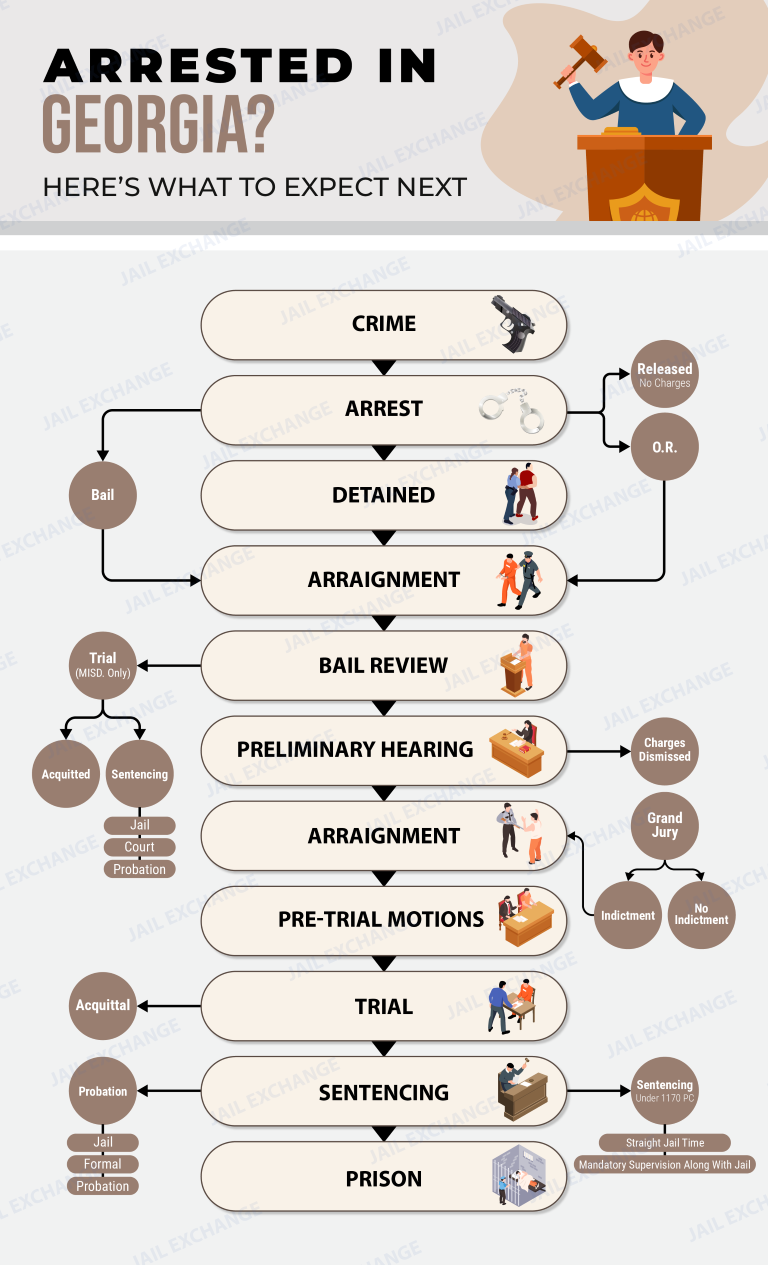
Savannah RYDC has no commissary account that families can fund; the Department of Juvenile Justice provides all clothing and personal hygiene items, and the center cannot hold money for youth.
You may bring your child's medicine, eyeglasses, hearing aids or other medical items. You don't need to send clothing, underwear or toiletries. To ask whether anything else can be dropped off, call 912-652-3878.
Sources: DJJ visitation, phone calls and correspondence; DJJ frequently asked questions; DJJ Savannah RYDC.
No, families cannot deposit money for a youth at Savannah RYDC: the Department of Juvenile Justice says an RYDC cannot and will not hold money for anyone in detention, and money is banned at visits.
Clothing and hygiene items are provided by the center and the weekly phone call is free, so your child has no bills to pay. The useful thing to send is postage stamps: the center pays for only two postcards a week, and extra stamps let your child mail more. Call 912-652-3878 and ask how staff want stamps delivered.
Sources: DJJ visitation, phone calls and correspondence; DJJ frequently asked questions; DJJ Savannah RYDC.
Savannah Regional Youth Detention Center Family Mail
Resident's Full Name
Savannah Regional Youth Detention Center
191 Carl Griffin Drive
Savannah, GA 31405-1362
These family-mail rules apply at Savannah Regional Youth Detention Center in GA. At this juvenile facility, mail can only be sent and received to immediate family. Every envelope is handled so that all mail is opened and checked for contraband or content that is not allowed. A youth at this center can send and receive as many letters, within reason, as they want.
A letter for a youth at Savannah Regional Youth Detention Center has to travel to 191 Carl Griffin Drive in Savannah, not to an adult jail in Chatham County.
Do not send a youth's mail to an adult jail in Chatham County as if it were adult inmate mail.
Questions about stamps or packages go to 912-652-3878; ask as a parent or legal guardian, because that information is kept private to protect the minor.
Use 31405-1362 exactly as written so the carrier delivers the envelope to this juvenile program.
A youth at Savannah RYDC usually gets one phone call on arrival, before the detention hearing, and after that one free call a week, which your child can make to you or you can receive; there is no calling account to set up and nothing to pay.
- Who can be on the call: parents, guardians and family members with approved visitation rights. If you are not an approved visitor, ask the center how to be added.
- When: the day and time of the weekly call are set by your child's detention counselor. Call 912-652-3878, ask for the counselor and ask when the call is scheduled.
- Video calls: approved family can also have free video calls on state-issued devices.
To protect the minor, staff give information about a youth only to a parent or guardian.
Sources: DJJ visitation, phone calls and correspondence; DJJ frequently asked questions; DJJ Savannah RYDC.
The Department of Juvenile Justice publishes no email, text or photo-messaging service for youth at Savannah RYDC; families stay in touch by paper mail, the weekly free call and free video visits.
- Mail: write to your child's full name, Savannah Regional Youth Detention Center, 191 Carl Griffin Drive, Savannah, GA 31405-1362. Your child can write unlimited postcards at set times, but the center mails only two a week unless you provide stamps.
- Photos: call 912-652-3878 and ask whether photos may be enclosed in a letter and how many.
Sources: DJJ visitation, phone calls and correspondence; DJJ frequently asked questions; DJJ Savannah RYDC.
The Department of Juvenile Justice describes no tablet program that families pay for at Savannah RYDC; the only devices it mentions are state-issued smartphones, tablets and computers used for free phone and video visits with approved family.
To book a video visit, call 912-652-3878 and ask your child's detention counselor which days are open and how the call reaches you.
Sources: DJJ visitation, phone calls and correspondence; DJJ frequently asked questions; DJJ Savannah RYDC.
Chatham County County Jails
Chatham County Juvenile Facilities
Nearby counties
- Jail (Main): 912-652-7700
- Administration: 912-652-7734
- Adult Probation: 912-356-0041
- Booking: 912-652-7700
- Chatham Magistrate Court: 912-652-7181
- Chatham Superior Court: 912-652-7179
- District Attorney: 912-652-7308
- Drug Court: 912-652-7128
- Inmate Info: 912-652-7700
- Juvenile: 912-652-3878
- Juvenile Court: 912-652-6700
- Parole Office: 912-651-2001
- Police: 912-651-6675
- Police Tips: 912-234-2020
- Public Defender - Adult: 912-447-4901
- Public Defender - Juvenile: 912-652-6904
- Sheriff: 912-652-7600
- Superior Court Clerk: 912-652-7200
- Victims Help: 912-652-7330
The Savannah Regional Youth Detention Center serves the following cities and towns of Chatham County: Bloomingdale, Garden City, Pooler, Port Wentworth, Savannah, Thunderbolt and Tybee Island. At times this facility may also house inmates arrested in the following counties: Effingham County and McIntosh County.