
Juvenile Corrections Center – St. Anthony
Juvenile Corrections Center – St. Anthony
Juvenile
208-624-3462Juvenile Corrections Center – St. Anthony Family Information
What kind of facility is this? This is a state correctional placement for committed youth (long-term), not a pre-trial detention center. It is operated by the Idaho Department of Juvenile Corrections (IDJC). It takes committed youth from every county in Idaho.
This page is for families of youth at Juvenile Corrections Center – St. Anthony, 2220 East 600 North, St. Anthony, ID 83445. Phone: 208-624-3462.
Read inmate search answers
 Read inmate search answers
1. How can I confirm where my child is held?
Youth here do not show up in adult jail searches. Call 208-624-3462 and ask. These details are kept private to protect the minor, so staff share them only with a parent or guardian.
↑ Back to the question list2. What else should I know about this facility?
Programs include positive peer culture, substance use services, female offender treatment, juvenile sex abuse treatment and a ropes course (IDJC).
↑ Back to the question list3. When will my child phone me?
Most programs let youth phone family regularly; the program packet sent to parents explains how often calls and visits are allowed (IDJC FAQ).
Youth make phone calls out; incoming personal calls are not put through. These details are kept private to protect the minor, so staff share them only with a parent or guardian.
↑ Back to the question list4. Who answers my questions?
At a state center, the Rehabilitation Specialist (Group Leader) is your child's case manager and runs monthly staffings; the Juvenile Services Coordinator is a good first contact for navigating IDJC (IDJC FAQ).
↑ Back to the question list5. Do I have to pay anything?
The court can order parents to pay toward support and treatment (Idaho Code § 20-524); the IDJC Parent Reimbursement Unit is at 208-334-5100, ext. 425. Send nothing with your child: basic needs are provided (IDJC FAQ).
↑ Back to the question list6. How do I report a problem?
To report child abuse or neglect, call Idaho Health and Welfare at 1-855-552-KIDS (5437); in an emergency call 911.
You can also ask for the facility director.
↑ Back to the question list7. Who can write, and what can I send?
Families can write; check the program packet for letter rules, and ask the Rehabilitation Specialist about books or items first (IDJC FAQ).
Call 208-624-3462 to ask who can write, how often letters are allowed, whether stamps can be sent, and before mailing books or photos.
Mailing address
Resident's Full Name
Juvenile Corrections Center – St. Anthony
2220 East 600 North
St. Anthony, ID 83445
8. What should I know before visiting?
Visiting is Saturday and Sunday 9 a.m.–4 p.m., scheduled with the Rehabilitation Specialist; Observation & Assessment visits are Saturday noon–4 p.m. and Sunday 9 a.m.–1 p.m., scheduled at 208-624-2142 (IDJC).
Confirm the time at 208-624-3462 before driving over.
Visitors under 18 need prior permission from the Superintendent, and extra visits are arranged with the Rehabilitation Specialist (IDJC FAQ).
If travel is hard, ask about IDJC video visitation and its free quarterly family shuttle from the Treasure and Magic Valleys (IDJC).
↑ Back to the question list9. Could my child end up in adult court?
Idaho Code § 20-509 sends youth aged 14 to 18 straight to adult court for listed crimes such as murder or attempted murder, robbery, rape, mayhem and first-degree arson; those youth get adult rights, including bail and a jury trial.
A judge can also waive juvenile jurisdiction after a hearing for any crime committed at 14 or older (Idaho Code § 20-508).
The juvenile system in Idaho handles people under 18 (Idaho Code § 20-502).
If the case goes to adult court, ask the lawyer about bail and where your child will be housed. Your child's lawyer can tell you whether this applies.
↑ Back to the question listJuvenile Corrections Center – St. Anthony: Release Questions for Families
Is this detention or a placement? Long-term commitment, not detention. Youth arrive here after a judge commits them to state custody; it is operated by the Idaho Department of Juvenile Corrections (IDJC). It takes committed youth from every county in Idaho.
Release decisions belong to the court.
1. Can I post bond for a committed youth?
Bail is for pending cases. A committed youth is released when the state agency, working with the court, decides the youth is ready, with an aftercare plan (IDJC). Because it is kept private to protect the minor, staff will discuss it only with a parent or legal guardian.
↑ Back to the question list2. What happens if adult charges are filed?
For other crimes committed at 14 or older, the prosecutor, the youth or the court can ask a judge to waive juvenile jurisdiction after a full investigation and hearing (Idaho Code § 20-508).
Idaho's Juvenile Corrections Act covers youth under 18 (Idaho Code § 20-502).
A youth 14 to 18 accused of murder or attempted murder, robbery, rape, forcible sexual penetration with a foreign object, mayhem, assault or battery with intent to commit those crimes, certain drug offenses near schools, or first-degree or aggravated arson is charged as an adult, with adult rights including bail and a jury trial (Idaho Code § 20-509(1)).
An adult case follows adult procedure, so ask the defense lawyer about release and housing. Talk with your child's lawyer right away.
↑ Back to the question listCourt Guide for Families at Juvenile Corrections Center – St. Anthony
What kind of facility is this? It is a long-term placement, not short-term detention: a secure state facility for youth a court has committed to state custody, run by the Idaho Department of Juvenile Corrections (IDJC). Youth can be placed here from any county in Idaho.
Staff run the facility, while the court decides the case.
1. Where is the case heard?
Juvenile cases are heard by a district judge or magistrate in the county where the case was filed (Idaho Code § 20-502).
↑ Return to the question list2. How long will my child be in state custody?
It depends on how your child reduces the risk to reoffend through treatment; an aftercare (reintegration) plan starts the day of commitment (IDJC).
↑ Return to the question list3. What is Observation and Assessment?
Commitment to IDJC is one sentencing option (Idaho Code § 20-520). Roughly five days after commitment, the youth is evaluated at an observation and assessment center and parents help discuss the program choice (IDJC).
↑ Return to the question list4. When does a juvenile case go to adult court?
The juvenile system in Idaho handles people under 18 (Idaho Code § 20-502).
Some charges start in adult court for youth 14 to 18: murder or attempted murder, robbery, rape, forcible penetration with a foreign object, mayhem, related assault or battery, school-zone drug delivery, and first-degree or aggravated arson. Bail and jury trial rights then apply (Idaho Code § 20-509(1)).
A judge can also waive juvenile jurisdiction after a hearing for any crime committed at 14 or older (Idaho Code § 20-508).
If the case goes to adult court, ask the lawyer about bail and where your child will be housed. Ask your child's lawyer about this early.
↑ Return to the question list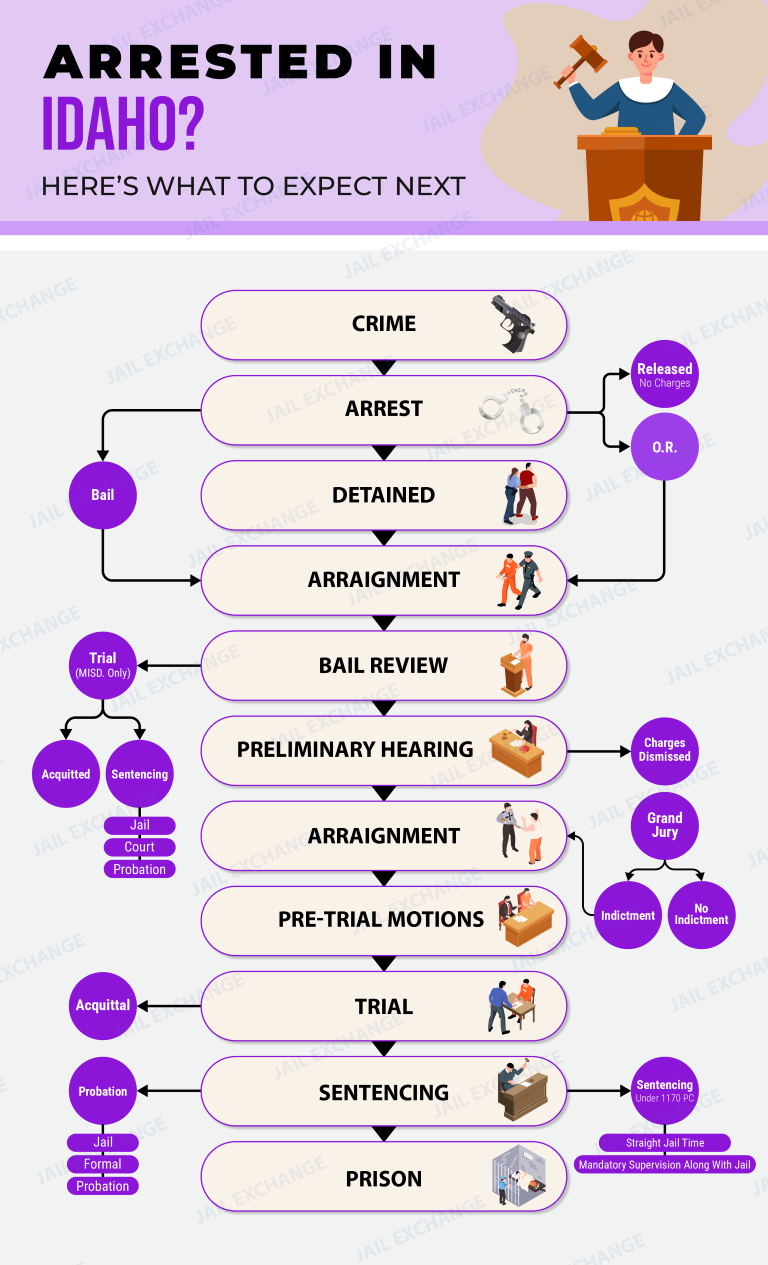
Information for this service is currently unavailable.
Information for this service is currently unavailable.
Information for this service is currently unavailable.
Information for this service is currently unavailable.
Information for this service is currently unavailable.
Information for this service is currently unavailable.
Fremont County County Jails
Fremont County Juvenile Facilities
- Juvenile: 208-624-3462
The Juvenile Corrections Center – St. Anthony serves the following cities and towns of Fremont County: Ashton, Island Park and St. Anthony. At times this facility may also house inmates arrested in the following counties: Ada County, Adams County, Bannock County, Bear Lake County, Benewah County, Bingham County, Blaine County, Boise County, Bonner County, Bonneville County, Boundary County, Butte County, Camas County, Canyon County, Caribou County, Cassia County, Clark County, Clearwater County, Custer County, Elmore County, Franklin County, Gem County, Gooding County, Idaho County, Jefferson County, Jerome County, Kootenai County, Latah County, Lemhi County, Lewis County, Lincoln County, Madison County, Minidoka County, Nez Perce County, Oneida County, Owyhee County, Payette County, Power County, Shoshone County, Teton County, Twin Falls County, Valley County and Washington County.