
Pottawattamie County Jail
Pottawattamie County Jail
Jail Phone Number
712-890-2250Iowa inmate search
Pottawattamie County Jail Inmate Search, Council Bluffs, Iowa
The Pottawattamie County Sheriff's Office posts an inmate roster of people held in the county jail in Council Bluffs, and Pottawattamie listings appear with booking photos (mugshots). Using the list means accepting the sheriff's terms: it is a public service rather than an official record, everyone on it is presumed innocent, and using it to harass anyone can bring charges. Case outcomes are not on the roster; look those up on Iowa Courts Online.
To confirm a booking, the charges or the bond, call 712-890-2250 with the full name and date of birth. Jail administration answers at 712-890-2250, weekdays 8 a.m. to 4:30 p.m. The 288-bed jail takes arrests by sheriff's deputies, Council Bluffs, Carter Lake and Avoca police and the Iowa State Patrol. Someone picked up across the river in Omaha will be in a Nebraska jail instead.
Questions on this page
- Which facilities are in Pottawattamie County and next door?
- What is the video visiting schedule?
- Can children come along?
- Is there a dress code?
- How do calls and messages work?
- How do deposits reach someone inside?
- How should letters be addressed?
- Could the person be somewhere else?
- Does the roster show mugshots?
- What should we do if a family member is on the Pottawattamie County warrants list?
- How is bond set and paid?
- How do I find the charges?
- Is the person in federal custody?
- How does an ICE detainer work?
- Are juveniles held at this jail?
- How do custody alerts work?
- When will the person get out?
- What if the name is missing?
- When does a judge see them?
- Can someone get out without paying?
- When is cash bail returned?
- Which sentences are served locally?
- Can a judge bar contact?
- How is a free lawyer appointed?
- Is a bail call real?
- Which police agencies serve Pottawattamie County?
1. Which facilities are in Pottawattamie County and next door?
Adults go to the county jail on Big Lake Road, 712-890-2250. Youths go to the Southwest Iowa Juvenile Detention Center, 712-328-4893. Neighboring Iowa jails: Mills County in Glenwood (712-527-4275), Harrison County in Logan (712-600-9776), Shelby County in Harlan (712-755-5026), Cass County in Atlantic (712-243-6960) and Montgomery County in Red Oak (712-623-5107).
2. What is the video visiting schedule?
Visits are by video. The sheriff's FAQ lists lobby visiting Monday through Friday, 8 to 11:40 a.m., and Monday through Thursday, 3 to 4:30 p.m. Remote visits from home are booked through the same online account used for email and text messages, and their hours depend on the inmate's housing. No more than two approved visitors may sit in at once. Call jail administration at 712-890-2250 to check times before you drive out.
3. Can children come along?
Yes, with a parent or guardian who shows the child's birth certificate at every visit. Children may never be left alone, and if several children come, another adult must watch the ones not visiting. The two-visitor limit still applies.
4. Is there a dress code?
Yes. Leave see-through, strapless, halter or tube tops, swimwear and very tight clothes at home; shorts and skirts should reach mid-thigh when seated; wear shoes and a shirt; no hats, bandanas or gang colors. Anyone who seems impaired, brings food or drink, or disrupts the lobby is sent away.
5. How do calls and messages work?
Most inmates can use the housing-unit phones daily, but they cannot take incoming calls, and staff pass on a message only in a verified emergency. To receive calls, set up an account on the jail's communications portal, linked from the sheriff's Correspondence page.
6. How do deposits reach someone inside?
Cash put into the lobby kiosk posts free of charge. Card deposits at the kiosk or online through the deposit company the sheriff links carry a fee. Do not mail money: cash, personal or cashier's checks and money orders are refused in the mail. Room and board bills are paid by calling 712-890-2211. See our money guide.
7. How should letters be addressed?
Use the inmate's full name, then Pottawattamie County Jail, 1400 Big Lake Rd., Council Bluffs, IA 51501. Up to three photos, 4x6 or smaller, may go in one envelope. Refused: parcels, oversized cards, letters with stains, crayon or glitter, explicit material, stamps or stamped envelopes, food, money of any kind, and magazines or newspapers not mailed by the publisher.
8. Could the person be somewhere else?
Yes. An arrest in Omaha or elsewhere in Nebraska means a Nebraska jail. A state prison sentence shows in the Iowa DOC offender search; federal prisoners are in the BOP locator; immigration detainees are in the ICE locator.
9. Does the roster show mugshots?
Yes, Pottawattamie entries include a booking photo once you continue past the terms of use. Photos from ICE or federal cases are controlled by those agencies, not the county.
10. What should we do if a family member is on the Pottawattamie County warrants list?
Check the sheriff's warrants list, then call the Sheriff's Office at 712-890-2200 to confirm the warrant is still active. A defense lawyer can arrange a planned surrender at the jail. Missed-court warrants also appear in the case on Iowa Courts Online. The clerk is at 712-328-5604.
11. How is bond set and paid?
Before the first hearing, most charges use the statewide uniform bond schedule, from $300 for a simple misdemeanor to $25,000 for a class B felony. Violent, domestic and certain drug or weapon arrests wait for a magistrate. Cash, a surety bond through a bonding company when the judge allows one, or Iowa real estate can secure release; checks are not accepted. The bail guide explains where to pay.
12. How do I find the charges?
Booking charges come from the jail by phone. Once the complaint is filed, Iowa Courts Online shows every count, the bond and hearing dates. The Clerk of District Court in the courthouse at 227 South 6th Street answers at 712-328-5604, and case scheduling at 712-328-5754.
13. Is the person in federal custody?
Western Iowa federal cases are heard at the U.S. District Court for the Southern District of Iowa in Council Bluffs; the district clerk's main line is 515-284-6248. The U.S. Marshals handle federal prisoners. No county bond can lift a federal hold. After sentencing, check the BOP locator.
14. How does an ICE detainer work?
Under Iowa Code chapter 27A the jail must honor an ICE detainer, which can keep a person up to 48 extra hours, not counting weekends and holidays, so ICE can collect them. Posting state bond does not end that hold.
15. Are juveniles held at this jail?
No. Youths under 18 go through juvenile court, and those who must be held before a hearing go to the Southwest Iowa Juvenile Detention Center. Juvenile records stay off public rosters. The Juvenile Court Office, on the courthouse's fifth floor, answers at 712-328-5623.
16. How do custody alerts work?
Register with VINELink or call 888-742-8463 to get a text, email or call when the person is released or transferred. It is free and confidential.
17. When will the person get out?
Once bond is posted and no other hold exists, the jail processes the release; staff can say whether paperwork is still pending. A sentence ends on the date the jail calculates. Someone wanted by another county, Nebraska, the state or a federal agency may be transferred instead of released.
18. What if the name is missing?
Check spelling and try the last name alone. A fresh booking may not be posted yet, and released inmates come off the list. Call the jail with the birth date, then try the DOC, BOP and ICE searches, or Nebraska jails. Juveniles never appear.
19. When does a judge see them?
Iowa Code 804.22 requires a prompt appearance before a magistrate, without unnecessary delay; in Council Bluffs that is usually by video from the jail. A warrantless arrest needs a probable cause finding within 48 hours. Bond and a lawyer are dealt with at that hearing.
20. Can someone get out without paying?
Sometimes. Since July 1, 2026, Iowa allows release on a written promise only for nonviolent, non-drug simple or serious misdemeanors, plus a medical exception. Others may get supervised release through the Fourth Judicial District's correctional services. A Nebraska address can make a judge want firmer proof the person will come back for hearings.
21. When is cash bail returned?
After a judge orders it or the case is dismissed, the clerk refunds cash bond to the person who posted it, minus debts owed to the State and any fines, costs or restitution the court applies. Fees paid to a bonding company stay with the company.
22. Which sentences are served locally?
County jail terms are served on Big Lake Road, which also houses work-release inmates. Prison terms go to the Iowa DOC. Work release or weekend time must be ordered by the judge. Someone told to report later should call jail administration at 712-890-2250 to arrange it.
23. Can a judge bar contact?
Yes. Domestic and assault cases often bring a no-contact order at the first hearing, and violating it is a separate crime. It stays until a judge changes it, whatever the protected person wants.
24. How is a free lawyer appointed?
The defendant applies at the first hearing; Iowa Code 815.9 sets the income test. Most appointments go to the State Public Defender, 300 W. Broadway, Suite 125, Council Bluffs, 712-323-9115, weekdays 8 a.m. to 4:30 p.m.
25. Is a bail call real?
Nobody official asks for bond in gift cards, crypto or a payment app. If a caller pressures you, hang up and call the jail directly. Report scams to the Iowa Attorney General.
26. Which police agencies serve Pottawattamie County?
- Pottawattamie County Sheriff's Office: 712-890-2200
- County communications, non-emergency: 712-328-5737
- Council Bluffs Police Department: 712-890-5400
- Carter Lake Police: 712-347-5920
- Avoca City Hall (police): 712-343-2424
- Iowa State Patrol District 3: 712-328-8001
ICE Detainees
Besides people booked on Iowa charges, the Pottawattamie County Jail on Big Lake Road in Council Bluffs holds immigration detainees. ICE lists it under its St. Paul Field Office and classifies it as a "USMS IGA": ICE rents space here as a rider on the county's agreement with the U.S. Marshals Service. The sheriff's roster above skips people held purely on an immigration basis. For them, open the ICE Online Detainee Locator and type the A-Number with the country where they were born; if you lack the number, a name spelled exactly right plus birth country and birth date also works. Anyone with a local case, and every U.S. citizen, stays on the county roster. Minors are never shown in ICE's system.
Can't find your relative? ICE's page for this jail says to phone the front desk between 8 a.m. and 4 p.m. at 712-890-2250. The St. Paul ICE office answers at 612-843-8600, and ICE's national information line is 1-888-351-4024 (weekdays 8 a.m. to 8 p.m. Eastern, with Spanish speakers).
Which judge hears a Council Bluffs immigration case?
Almost certainly one at the Omaha Immigration Court, about five miles away across the Missouri River at 1717 Avenue H, Suite 100, Omaha, NE 68110 (402-348-0310). EOIR's court list doesn't name this jail, so treat Omaha as the usual court, not a promise. People held in Iowa jails are often heard by video. The Notice to Appear and EOIR's automated case portal or 1-800-898-7180 show the real court and next date.
Can an ICE detainee here get out on bond?
Often not, for now. Iowa sits in the federal Eighth Circuit, whose appeals court accepted ICE's 2025 position that a person who crossed without inspection gets no bond, and federal habeas petitions there are not producing hearings. The Supreme Court agreed in October 2026 to settle the question and is expected to rule. People admitted on a visa or green card can still request bond, unless a conviction or a Laken Riley Act charge puts them in mandatory detention. ICE bonds start at $1,500. The bail section below explains paying.
What must the government show to deport someone?
When your loved one came in legally, the government carries the load and needs clear and convincing proof. When there was never a lawful admission, the detainee is the one who must prove a right to remain. Anyone seeking asylum or another defense has to prove it. Immigration court is civil, which means no court-appointed public defender; check EOIR's directory of free legal providers, an immigration attorney or an accredited representative. Treat this as general information, not legal advice.
From arrest to removal
- Master calendar hearing, then a merits hearing if relief is sought.
- The judge rules; an appeal is possible but the deadline is short.
- With a final order, ICE gets travel papers from the home country.
- Removal by flight, or by land at the border for Mexican citizens.
Expedited removal and reinstatement of an older order skip the judge entirely. Families usually learn of a transfer or removal when the locator entry changes or by calling the national line above.
Could this turn into federal prison?
Immigration custody is civil. A criminal case is something else: coming back after a deportation can be charged under 8 U.S.C. 1326 (as much as 2 years, rising to 10 or 20 for people with serious records), and a first unlawful entry can mean 6 months. Federal prosecutors bring those charges in the U.S. District Court for the Southern District of Iowa, which holds court in Council Bluffs. Federal prisoners serving sentences appear on the Bureau of Prisons locator.
Is coming back ever possible?
Yes, after waiting or with permission. A removal order brings a bar of 5 years (expedited removal) or 10 years (judge's order), 20 after a second removal, and a lifetime bar after an aggravated felony. Form I-212 asks to return sooner. Sneaking back after more than a year of unlawful presence creates a permanent bar.
Daily life for ICE detainees in the Pottawattamie jail
Under ICE standards, people are housed by security level and sex, not by country, so nationalities share units. Medical visits cost the detainee nothing, an interpreter is provided at no cost whenever health care or the immigration case requires one, and a call to the home country's consulate is free (for certain nations ICE must notify the consulate whether or not the person asks). A list of free legal groups is posted in each housing unit and refreshed every quarter.
Typical length of stay
The jail publishes none. ICE's latest national average, for fiscal year 2024, was 46.9 days, and real stays swing widely depending on bond, the court calendar and how fast a removal is arranged.
Keeping in touch
ICE detainees share the jail's systems with everyone else: video visits (two 20-minute visits a week), outgoing calls (no incoming calls), electronic messages, tablets, account deposits, canteen orders and letters. ICE says letters must carry the full name plus the last four digits of the A-Number.
Iowa bail and release
Pottawattamie County Bail and Bond, Council Bluffs, Iowa
For the bond on someone in the Pottawattamie County Jail, call 712-890-2250 with the person's full name and date of birth; staff can tell you each charge, the amount and whether a magistrate has reviewed it yet. Once a case is filed, the bond and next court date also show on Iowa Courts Online. Until a judge acts, Iowa's uniform bond schedule sets most amounts, from $300 for a simple misdemeanor to $25,000 for a class B felony.
Pottawattamie's sheriff publishes no separate page on paying bond, so the jail's booking desk is the place to ask where money is taken overnight or on a weekend. On weekdays, the Clerk of District Court at 227 South 6th Street (712-328-5604) accepts cash bond; hang on to the receipt and case number. Statewide court rules bar paying bond by check. Bonding companies may write the bond when a judge approves a surety, charging a premium that is never returned, and Iowa property can serve as security too.
The county's 288-bed direct-supervision jail on Big Lake Road holds every adult arrested from Council Bluffs and Carter Lake to Avoca, Oakland, Underwood, Neola, Treynor, Walnut and Macedonia. Jail administration is 712-890-2250, weekdays 8 a.m. to 4:30 p.m.
Questions on this page
- How can I tell whether someone was booked?
- Which agencies bring arrestees to Big Lake Road?
- What dollar figures does the state schedule use?
- Which arrests must wait to see a judge?
- How is bond posted?
- What did Senate File 2399 change on July 1, 2026?
- What if the person lives in Nebraska?
- What happens when a juvenile is picked up?
- What if a Council Bluffs hearing is missed?
- When is cash bail returned?
- Can a federal case or immigration hold keep someone inside?
1. How can I tell whether someone was booked?
Open the sheriff's inmate roster, which carries booking photos, or search VINELink, which also sends release alerts. A brand-new arrest may not be listed yet, so call the jail if the name is missing. Our Pottawattamie inmate search has more ways to look.
2. Which agencies bring arrestees to Big Lake Road?
Sheriff's deputies, the Council Bluffs, Carter Lake and Avoca police departments and the Iowa State Patrol all book here. The jail holds people awaiting trial and sentenced men and women of every security level, including work-release inmates. An arrest by Omaha police goes to a Nebraska jail and follows Nebraska bail rules.
3. What dollar figures does the state schedule use?
$300 for a simple misdemeanor, $1,000 for a serious misdemeanor, $2,000 for an aggravated misdemeanor, and $5,000, $10,000 or $25,000 for class D, C or B felonies. Each charge is bonded on its own. At the first hearing a Fourth Judicial District magistrate or judge may raise the figure after looking at the charge, record, job, local ties and past court attendance, or lower it with written reasons.
4. Which arrests must wait to see a judge?
This group covers domestic abuse arrests, forcible felonies (sexual abuse in the first three degrees counts), stalking, breaking a protective or no-contact order, making or delivering meth, intimidation with a dangerous weapon, and a prohibited person found with a gun. No money is accepted for these until a magistrate, usually appearing by video from the jail, sets conditions.
5. How is bond posted?
Phone the Big Lake Road jail before leaving home; the amount can change after the first hearing, and staff will say whether the money goes to the courthouse or the jail. Full cash is the simplest route, and it comes back when the case ends. A bonding company's surety bond works only if the Council Bluffs magistrate permits one; the company is backed by an Iowa-authorized insurer and keeps its premium. A magistrate can also order a 10 percent cash deposit, or accept land in Iowa, which the owner pledges at the clerk's office by swearing to its value. No personal checks. Carry photo ID.
6. What did Senate File 2399 change on July 1, 2026?
Walking out on a signature alone is now reserved for simple or serious misdemeanors with no violence or drugs, along with a medical-need exception, so most felony and aggravated misdemeanor cases need money or supervised release. Going under the schedule takes a written explanation from the magistrate. Bonding companies and the 10 percent deposit both survived the change, and inflation-adjusted figures are due from the Judicial Council by July 1, 2027.
7. What if the person lives in Nebraska?
Living across the river does not block bail, but a judge weighing flight risk may want a confirmed address, a job and a believable plan to come back for every Council Bluffs hearing before agreeing to a lower amount or supervised release through the Fourth Judicial District Department of Correctional Services.
8. What happens when a juvenile is picked up?
Youths are not booked into the adult jail and are not released on the adult schedule. A juvenile who must be held goes to the Southwest Iowa Juvenile Detention Center in Council Bluffs, 712-328-4893, and a juvenile judge decides whether the child goes home to a parent. The Juvenile Court Office is 712-328-5623.
9. What if a Council Bluffs hearing is missed?
A bench warrant issues and the bond is forfeited. Iowa Code 811.6 gives the surety 30 days after notice to bring the defendant back or show cause. Willful failure to appear is its own crime, a class D felony on a felony case or when awaiting sentence or appeal, and otherwise a serious misdemeanor. Court scheduling answers at 712-328-5754.
10. When is cash bail returned?
The clerk refunds cash bond by check after a judge orders it or the charges are dismissed, and only to the person who posted it. Money owed to the State and any fines, costs or restitution the court applies come out first. Posting makes you a listed payor in the public case. Bonding company premiums are kept. Jail account money is separate; see our money guide.
11. Can a federal case or immigration hold keep someone inside?
Yes. Federal charges are heard by the U.S. District Court for the Southern District of Iowa, which sits in Council Bluffs; the clerk's main line is 515-284-6248, and a federal magistrate decides release. Iowa Code chapter 27A makes the jail honor ICE detainers, so paying the county bond may not end custody. Check the ICE detainee locator first.
Pottawattamie County bail contacts
- Pottawattamie County Jail: 712-890-2250
- Jail administration: 712-890-2250
- Clerk of District Court: 712-328-5604
- State Public Defender, Council Bluffs: 712-323-9115
- Iowa law: Iowa bail laws
ICE Detainees
Posting a Pottawattamie County bond pays for the Iowa charge and nothing more. When ICE has lodged a detainer, the jail may hold your family member briefly so immigration officers can pick them up, which means a paid county bond can end in a transfer to ICE rather than a ride home. Before you hand money to a bondsman, ask the jail at 712-890-2250 whether an immigration hold is on file.
Is an immigration bond even available?
It depends on how the person came to the U.S. Courts in Iowa follow the Eighth Circuit, which backed ICE's 2025 reading: someone who slipped across without an inspection stays locked up without bond, and Iowa federal judges are not ordering hearings on habeas for the moment. A Supreme Court ruling on this is expected. Overstays and green-card holders, who entered lawfully, still have the right to ask, unless their record or a Laken Riley Act arrest (theft, burglary, shoplifting, hurting a police officer and the like) lands them in mandatory custody.
Who sets the amount?
ICE decides first. Any bond it allows is at least $1,500. Your loved one can ask an immigration judge, normally the Omaha court for Council Bluffs detainees, to reconsider; there is no fee, and the request may be a letter, a spoken request at a hearing, or a phone call where permitted. Judges weigh danger to the community and the chance the person will skip hearings.
Paying an ICE bond
- The whole amount is wired electronically (Fedwire or ACH) through ICE's CeBONDS system; there is no partial payment.
- ICE processes bonds Monday to Friday, 9 a.m. until 3 p.m. Central time; anything sent later waits for the next business day.
- Whoever signs as obligor has to be inside the country, show proof of U.S. citizenship or a green card, and give a Social Security number, ITIN or EIN. Nonprofits and law firms can also post with paperwork.
- No bank account of your own? ICE points families toward licensed immigration bond companies or community organizations.
Getting the deposit back
The refund depends on your relative showing up. Once ICE formally cancels the bond, usually after the case is over, the money and its interest go back to whoever posted it, at the address ICE has on file. Skip a hearing or check-in and the deposit is lost. Nothing here is legal advice; an immigration attorney or a group on EOIR's free legal help list can look at a specific case.
Pottawattamie County Jail video visits
Visits with family and friends use video through CIDNET. Create a communication account and schedule a local visit before arriving. The jail is at 1400 Big Lake Road, Council Bluffs, IA 51501. Jail Administration: 712-890-2250; booking/custody questions: 712-890-2260.
Confirm your local appointment before traveling
The Sheriff’s two pages give different lobby hours, all in Central Time:
- Dedicated visiting page: Monday–Friday, 9:00–11:45 a.m. and 3:00–3:30 p.m.; log in by 3:30 for the full session before the office closes at 4.
- Sheriff’s FAQ: Monday–Friday, 8:00–11:40 a.m.; Monday–Thursday, 3:00–4:30 p.m.
Call Jail Administration to settle the appointment time rather than assuming either window guarantees admission. Local video access can help families without an internet-capable device at home; ask staff how to complete registration if you need help.
Remote video and visit limits
The dedicated page lists daily home-video windows of 9:00–11:45 a.m., 3:30–4:30 p.m., and 8:00–9:00 p.m. or 8:00–10:00 p.m., depending on security level. It describes 30-minute visits, at most two weekly, subject to classification and availability. Personal visits are recorded and monitored. Review CIDNET charges before funding an account; do not assume a flat per-minute rate or free allowance.
Children and holidays
The Sheriff’s FAQ requires a parent or legal guardian to present a child’s birth certificate each visit. No more than two approved visitors may participate together; children cannot be left unattended. Ask about arrangements if bringing more than one child.
The county lists November 26 and 27, 2026 as holiday closures, but that does not establish whether jail video appointments are canceled. Confirm your specific Thanksgiving-week visit with jail staff before traveling or paying.

CIDNET Video Visitation allows families to conduct live, face-to-face video visits with incarcerated loved ones from home. Using an internet-connected smartphone, tablet, or personal computer equipped with a webcam, visitors connect directly through housing-unit video stations or handheld tablets without traveling to the facility or waiting in jail visitor lobbies.
Important: Advance Registration and Visitor Clearance Required
Detention centers do not permit unscheduled or unverified video sessions. Correctional facilities require prospective visitors to submit government-issued photo identification and receive administrative clearance before booking an appointment, an approval process that can take up to 48 hours depending on facility staffing. You should verify your visitor approval status with the facility prior to scheduling. If you do not register well in advance, you will miss your loved one's scheduled visiting window for the week.
Step-by-Step Instructions to Register and Schedule a Video Visit
- Visit customer.cidnet.net or launch the CIDNET app.
- Register your visitor profile and upload a clear photograph of your government-issued ID and a verification photo.
- Wait for email notification confirming institutional visitor approval.
- Ensure your account has sufficient Data Points to cover the duration of the visit.
- Select Video Visitation, select the detention facility, and pick an available calendar time slot.
- Log into the website or mobile app 10 minutes prior to the start time on a device with a functioning camera, microphone, and stable high-speed internet connection.
What the Inmate Needs to Do
The inmate receives a schedule notification on their housing unit video kiosk or tablet. At the appointed time, they log in with their PIN and sit before the screen. Inmates and visitors must strictly observe jail dress and conduct rules; sessions are monitored by staff and will terminate immediately upon any violation.
Official Provider: CIDNET Customer Portal | Encartele Corporate
Customer Service Telephone: 1-888-984-1903
Support Hours: Monday – Friday, 8:00 AM – 5:00 PM CST
Supported Languages: English and Spanish
Other Services Provided by CIDNET
In addition to Remote Video Visitation, CIDNET provides several other communication channels:
- Data Points (Unified Funding): Purchase the central credits that power video visitation, calling, and messaging.
• Learn more on our website: CIDNET Data Points Guide | • Visit official vendor page: Buy CIDNET Data - Inmate Messaging & Digital Mail: Send electronic text messages and digital photo attachments directly to an inmate's terminal.
• Learn more on our website: CIDNET Messaging Guide | • Visit official vendor page: CIDNET Messaging Portal - Phone PINs & Voice Calling: Fund prepaid telephone calling so your loved one can call your mobile device.
• Learn more on our website: CIDNET Phone Calling Guide | • Visit official vendor page: CIDNET Voice Calling
Pottawattamie County District Court, Council Bluffs, Iowa
State criminal cases from Council Bluffs and everywhere else in the county go to the courthouse, 227 South 6th Street, Council Bluffs, IA 51501, the busiest seat in Iowa's Fourth Judicial District.
The courthouse switchboard is 712-328-5600 and the clerk is 712-328-5604.
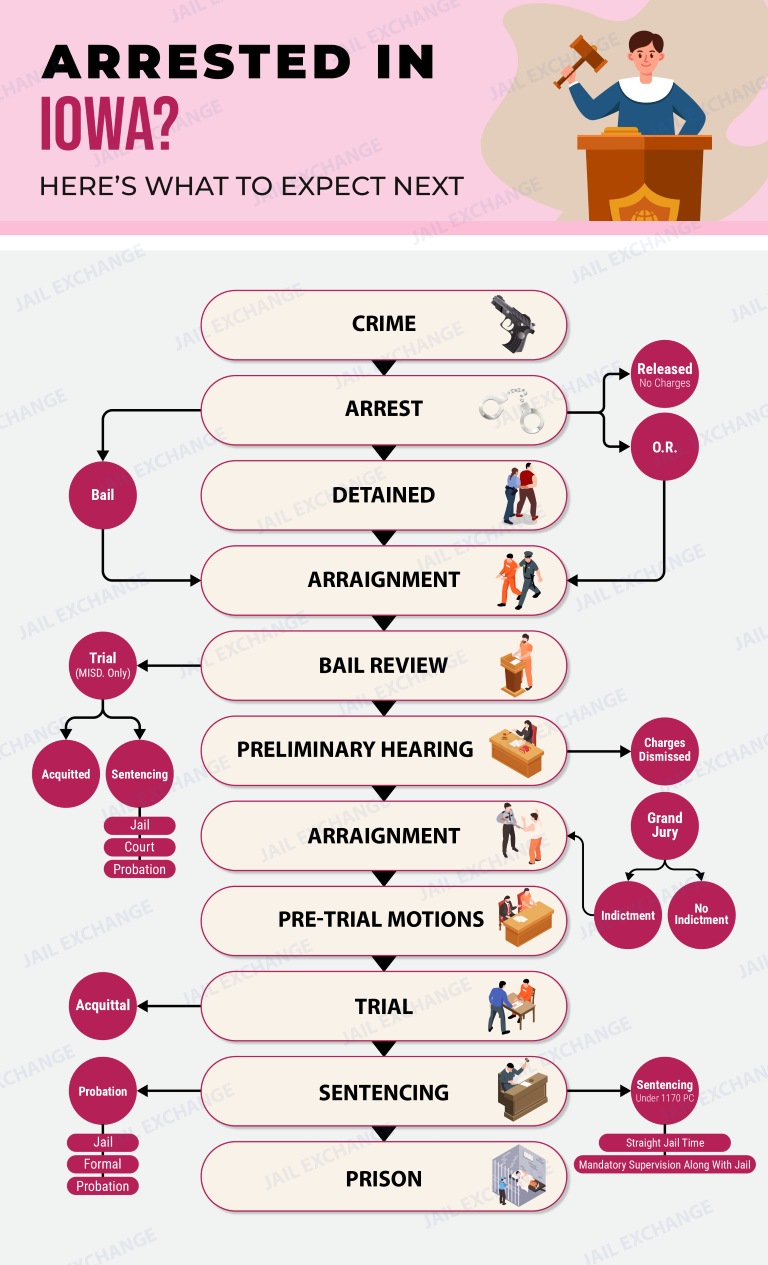
After prints, photos and a warrant check at Big Lake Road, a magistrate sees the person promptly, normally over video.
1. Who works out of the South 6th Street courthouse?
- Clerk of District Court: 227 South 6th Street, Council Bluffs, IA 51501 (mail to P.O. Box 476, Council Bluffs, IA 51502); 712-328-5604; CountyClerk.Pottawattamie@iowacourts.gov.
- Court scheduling (District Court Administration): same building; 712-328-5754.
- County Attorney: fifth floor, 227 South 6th Street, Council Bluffs, IA 51501; 712-328-5649; weekdays 8:00 a.m. to 4:30 p.m., closed from noon to 1:00 for lunch p.m.
- State Public Defender, Council Bluffs office: 300 West Broadway, Suite 125, Council Bluffs, IA 51503.
- Jail: Pottawattamie County Jail, 1400 Big Lake Road, Council Bluffs, IA 51501; booking 712-890-2250.
2. What happens in the first two days?
If the arrest came without a warrant, a judge has to confirm probable cause within 48 hours. Release terms are set at that hearing, and anyone who wants appointed counsel fills out a financial affidavit there.
↑ Back to the question list3. How is the caseload split among judges?
- Magistrates: the simple-misdemeanor calendar, including speeding and other tickets and violations of Council Bluffs or small-town ordinances.
- District associate judges: OWI along with every other serious or aggravated misdemeanor.
- District judges: all felony prosecutions plus juvenile court.
4. How does a felony move forward?
- Booking at Big Lake Road, then the first video hearing.
- Prosecutors charge by trial information, as a rule inside 45 days.
- Arraignment, where many defendants plead in writing instead of appearing.
- Discovery, depositions and motions.
- A jury or bench trial; unless speedy trial is waived, Iowa expects it to start within 90 days after arraignment.
- After a guilty verdict or plea, a probation officer writes a presentence report and the judge imposes sentence.
5. Are there specialty courts or diversion?
The County Attorney runs a traffic and misdemeanor diversion program and takes part in the Fourth Judicial District drug court, veterans treatment court and the Southwest Iowa mental health court. A defense lawyer can ask whether a case qualifies.
↑ Back to the question list6. Are Council Bluffs dockets online?
Public filings are on Iowa Courts Online by name or case number; juvenile and sealed files are hidden. For a hearing date or a copy, call the clerk at 712-328-5604 or e-mail the clerk's address above.
↑ Back to the question list7. Who gets a court-appointed lawyer?
At the first hearing, say you can't pay for a defense attorney and fill in the financial affidavit. When the income test is met, the case usually goes to the State Public Defender's West Broadway office or to a contract lawyer; some or all of that fee may be billed back at the end.
↑ Back to the question list8. Where do juvenile cases go?
Delinquency petitions are prosecuted by the County Attorney's juvenile division in juvenile court, part of the same district court. A youth held before a hearing stays at the Southwest Iowa Juvenile Detention Center, 629 6th Avenue, Council Bluffs, IA 51501, 712-328-4893, a few blocks from the courthouse.
↑ Back to the question list9. Where is the federal courthouse?
Federal prosecutions go to the U.S. District Court for the Southern District of Iowa, Western Division, 2146 27th Avenue, Council Bluffs, IA 51501; the clerk's office main line is 515-284-6248. To track someone in federal custody, use the BOP locator.
↑ Back to the question list10. Where are bond details?
Schedule amounts, posting and refunds are explained on our Pottawattamie County bail page.
↑ Back to the question list11. Can I search Pottawattamie County warrants online?
The sheriff publishes a warrants list, and deputies serve those warrants; confirm anything you see at 712-890-2200, since lists can lag. Council Bluffs police keep their own warrants, and nothing statewide in Iowa pulls Council Bluffs and county records together. Iowa Courts Online shows the court case. For a missed hearing, the Clerk of District Court at 227 South 6th Street in Council Bluffs (712-328-5604) can discuss a new date.
↑ Back to the question listICE Detainees
The courthouse on South 6th Street handles county charges only. A deportation case runs in a separate federal system: immigration judges employed by the Justice Department's Executive Office for Immigration Review (EOIR), with ICE lawyers on the other side.
Where is the immigration court?
For people held in Council Bluffs it is usually the Omaha Immigration Court, 1717 Avenue H, Suite 100, Omaha, NE 68110, 402-348-0310, open to the public 8 a.m. to 4 p.m. EOIR's assignment list puts Nebraska and the Des Moines ICE office under Omaha but doesn't name this jail, so confirm on the Notice to Appear. Detained people are often heard by video rather than driven across the river. Hearing dates and decisions are on EOIR's case status portal or at 1-800-898-7180, any hour, with the 9-digit A-Number.
Who has to prove what?
Lawfully admitted people can be ordered out only if ICE proves the charge by clear and convincing evidence. People who were never admitted carry the burden themselves. Anyone requesting asylum, withholding, protection under the torture convention or cancellation of removal must prove they qualify. No free lawyer is assigned; start with EOIR's pro bono provider list.
How a removal case ends
A short first hearing sets the schedule, and a later hearing decides the case. Appeals to the Board of Immigration Appeals must be filed fast: EOIR's new rule shortens the window from 30 to 10 days starting mid-December 2026. A final order gives ICE 90 days to get travel documents and carry out the removal.
Federal criminal charges
Illegal reentry and similar crimes are tried in the U.S. District Court for the Southern District of Iowa, which sits in Council Bluffs among other cities. Penalties reach 2 years, or 10 to 20 years for people with certain prior convictions.
Returning to the U.S. later
Removal triggers a 5-, 10- or 20-year bar, or a permanent one after an aggravated felony. Permission to reapply early is requested on Form I-212. All of this is general information; a licensed immigration attorney or accredited representative should advise on one person's case.

Inmate Canteen (operated by TurnKey Corrections) allows friends and family members to purchase pre-approved commissary packages, including brand-name snacks, confectionery goods, personal hygiene products, stationery, and apparel kits sent directly to an incarcerated loved one. Every package is packed to adhere strictly to facility security regulations, ensuring items pass institutional intake without being rejected at the loading dock.
Important: Package Deadlines and Delivery Windows Vary
Detention centers do not manage care package deliveries under identical schedules. While some facilities allow weekly orders, others restrict deliveries to bi-weekly or monthly distribution windows, and spending limits vary from jail to jail. You should verify the facility's active cutoff schedule and order allowances by calling them directly. If an order is submitted after the weekly processing deadline, delivery will be held until the following cycle, leaving your loved one waiting an extra cycle for fresh snacks, thermal wear, or personal care supplies.
Step-by-Step Instructions to Place a Commissary Package Order
- Confirm the inmate's legal first and last name, date of birth, and assigned booking or inmate ID number.
- Navigate to www.inmatecanteen.com and sign in or create a user profile.
- Select Commissary / Store and choose your state and detention center.
- Search for the inmate to unlock the facility's approved product catalog.
- Select allowable snack foods, candies, personal care goods, and clothing items up to the facility's allowed spending limit.
- Proceed to checkout, enter your debit or credit card billing details, and submit payment.
- Save your digital receipt and confirmation tracking number for your records.
What the Inmate Needs to Do
The inmate does not need an internet account to receive care packages. TurnKey Corrections prepares the order in secure, tamper-evident packaging and delivers it directly to the jail commissary department. Facility staff inspect the shipment and deliver the items during regular housing unit commissary rounds, where the inmate signs for receipt.
Official Provider: Inmate Canteen Official Website
Customer Service Telephone: 1-715-690-2965
Support Hours: Monday – Friday, 8:00 AM – 5:00 PM CST
Supported Languages: English and Spanish
Other Services Provided by Inmate Canteen (TurnKey Corrections)
In addition to Commissary Care Packages, Inmate Canteen provides several other communication, financial, and visitation services:
- Tablets & Chirp Units: Learn how secure handheld devices allow inmates to communicate, read, and message.
• Learn more on our website: Tablet Programs Guide | • Visit official vendor page: Inmate Canteen Devices - Remote Video Visitation: Schedule and join live face-to-face video visits from your computer or smartphone.
• Learn more on our website: Video Visitation Guide | • Visit official vendor page: Inmate Canteen Video Visits - Digital Messaging: Send electronic messages and photos directly to housing pod kiosks and handheld devices.
• Learn more on our website: Digital Messaging Guide | • Visit official vendor page: Inmate Canteen Messaging - Trust & Phone Deposits: Deposit money directly into an inmate's jail trust account or phone calling balance.
• Learn more on our website: Trust & Phone Deposits Guide | • Visit official vendor page: Inmate Canteen Deposits
Buy Commissary for an Inmate in the Pottawattamie County Jail
Pottawattamie County Jail Inmate Commissary - Sending Money or Purchasing Commissary for an Inmate
Pottawattamie County Jail allows inmates to purchase commissary. This can be snacks, hygiene products, stamps, stationary, clothing and even electronics.
You can buy commissary for an inmate using an online service called Inmate Canteen.
Inmate Canteen Customer Service can be reached at 715-690-2965, or by email at support@inmatecanteen.com.

There is a monthly limit of $200-300 on how much inmates can spend on commissary items.
This amount is subject to change so call the facility at 712-890-2250 in order to confirm the amount that cannot be exceeded.
Inmates have access to both an in-house commissary store, and commissary packages that can be purchased and shipped to the inmate by friends and family.
Scroll down for information on the Pottawattamie County Jail's service they use for you being able to purchase commissary items online and have them shipped directly to the inmate.
You can also go to our Inmate Money page for information on how to send money to an inmate.

JailATM provides a secure electronic payment portal that allows friends and family members to deposit funds directly into an incarcerated person's jail trust and commissary account. Deposited money provides the financial balance needed for your loved one to purchase personal hygiene items, snacks, over-the-counter medical sundries, and correspondence supplies from the facility commissary.
Important: Facility Deposit Rules and Window Intake Vary
Once a person is booked and moved to a housing unit, facilities do not always allow cash drop-offs or phone payments directly to the jail window. Some might and you should confirm this by calling the facility and asking. But if you do not register online and fund your loved one's trust account immediately, they may be forced to wait days or weeks for standard paper processing, leaving them without essential soap, clean undergarments, basic medical sundries or snacks.
Step-by-Step Instructions to Register and Deposit Funds
- Obtain the inmate's legal first and last name, date of birth, and assigned facility booking ID number.
- Navigate to deposits.jailatm.com/webdeposits/ on your computer or mobile device.
- Click Sign In or Register to set up your verified user account using your email address and password.
- Select the state and the detention facility where the inmate is currently housed.
- Search for the inmate using their ID number or legal last name to confirm an exact roster match.
- Enter your desired deposit dollar amount and review the calculated transaction and convenience fees.
- Input your debit or credit card billing details, complete payment authorization, and save your digital receipt.
What the Inmate Needs to Do
The inmate does not need an internet account to receive funds. Once the electronic transaction clears, the balance posts directly to their jail trust ledger according to facility accounting schedules. The inmate can review their updated balance at a dayroom pod kiosk or on their weekly trust statement and place orders on their regular commissary day.
Official Provider: JailATM Official Website
Customer Service Telephone: 1-877-810-0914
Support Hours: Monday – Friday, 8:00 AM – 5:00 PM CST
Supported Languages: English and Spanish
Other Services Provided by JailATM
In addition to Trust & Commissary Money Deposits, JailATM provides several other communication, store, and visitation services at participating facilities:
- Commissary Gift Packs & Store Ordering: Order pre-approved snack boxes, food packages, and hygiene bundles sent directly to the jail.
• Learn more on our website: Commissary Gift Packs Guide | • Visit official vendor page: JailATM Store Orders - Digital Messaging & Picture Sharing: Send electronic messages and photos directly to an inmate's housing unit kiosk.
• Learn more on our website: Digital Messaging Guide | • Visit official vendor page: JailATM Messaging - Remote Video Visitation: Schedule and join live video visits from home using your computer or smartphone.
• Learn more on our website: Video Visitation Guide | • Visit official vendor page: JailATM Video Visits
Deposit Money for an Inmate in the Pottawattamie County Jail
At the Pottawattamie County Jail in Council Bluffs, cash in the lobby is the only deposit with no charge.
- Lobby kiosk: The kiosk at the jail, 1400 Big Lake Rd., takes cash for free. It also takes cards, but card deposits have fees.
- Online: Use Inmate Canteen with a debit or credit card. Fees apply and show before you pay.
- By mail: Don't mail money. Cash, checks and money orders sent in letters are refused.
Trust money buys commissary such as personal care items, over-the-counter medicine and snacks; phone money pays for talk time. Questions about a deposit go to 712-890-2250; have the person's full name and date of birth ready.
The Pottawattamie County Jail is on Big Lake Road in Council Bluffs. A letter for an inmate must carry their full name as part of the address, and it helps to add their inmate ID number, which is listed on the sheriff's inmate roster. Legal mail and publications use the same jail address.
Where to mail letters, legal papers and publications:
Inmate's Full Name & Inmate ID #
Pottawattamie County Jail
1400 Big Lake Rd.
Council Bluffs, IA 51501
- Money: Don't mail money orders, cashier's checks, personal checks or cash, because the jail refuses all of them. Put money on the account online instead.
- Photos: Up to three in one envelope, none bigger than 4 x 6 inches.
- Stamps: Postage stamps and stamped envelopes are also refused.
- Periodicals: The jail takes magazines and newspapers only if the publisher mails them.
- Cards and letters: No oversized cards, no stains of any kind, no crayon and no glitter. Use a pen with blue or black ink for the Council Bluffs jail.
- Parcels and food: Neither is allowed, and obscene or pornographic material is banned too.
- Sender: Put your name and address in the top left so the letter can be delivered.
Inmates can't take incoming phone calls, but they can get electronic messages.
CIDNET Phone Calling enables incarcerated individuals to place outbound voice calls from housing-unit wall phones or handheld tablets directly to approved cell phones and landlines. Because jail phone systems cannot accept incoming calls, setting up a CIDNET account and purchasing Data Points ensures outbound calls connect immediately without wireless carrier collect blocks.
Important: Mobile Networks Block Inmate Calls Without Data Points
Wireless cellular carriers automatically block collect calls originating from jail telecommunications systems. While some traditional landline telephone providers may support monthly operator billing, mobile smartphones and VoIP numbers require an active prepaid CIDNET balance, which you can verify with your provider. If you do not register your 10-digit number online and purchase Data Points immediately, your loved one will hear an automated operator recording stating that your phone number cannot accept calls.
Step-by-Step Instructions to Set Up and Fund Voice Calling
- Go to customer.cidnet.net or launch the CIDNET Customer mobile app.
- Register your account using the primary 10-digit telephone number where you want to receive calls.
- Upload your driver's license or state ID for identity verification.
- Select the detention center where the inmate is held and link them to your contact profile.
- Purchase Data Points using a debit or credit card to cover per-minute calling rates.
- Confirm your mobile phone allows calls from automated or unknown correctional numbers and does not send them to spam.
What the Inmate Needs to Do
The inmate approaches a pod wall phone or opens the phone app on their tablet, enters their assigned inmate PIN, and dials your 10-digit number. CIDNET's automated system verifies that your account has sufficient Data Points and connects the call once you accept the automated prompt. All non-privileged conversations are recorded and monitored by the facility.
Official Provider: CIDNET Customer Portal | Encartele Corporate
Customer Service Telephone: 1-888-984-1903
Support Hours: Monday – Friday, 8:00 AM – 5:00 PM CST
Supported Languages: English and Spanish
Other Services Provided by CIDNET
In addition to Phone Calling, CIDNET operates messaging and video visitation services:
- Data Points (Unified Funding): Purchase the central credits used to pay for telephone talk time.
• Learn more on our website: CIDNET Data Points Guide | • Visit official vendor page: Buy CIDNET Data - Remote Video Visitation: Schedule and join live video visits from home using your computer or smartphone.
• Learn more on our website: CIDNET Video Visits Guide | • Visit official vendor page: CIDNET Video Visitation - Inmate Messaging & Digital Mail: Send text messages and digital photo attachments directly to an inmate's terminal.
• Learn more on our website: CIDNET Messaging Guide | • Visit official vendor page: CIDNET Messaging Portal
CIDNET Inmate Messaging provides a secure digital messaging and picture-sharing service for families of incarcerated individuals. Powered by CIDNET Data Points, outside contacts can compose electronic letters and upload JPEG photographs directly through the CIDNET web app, delivering correspondence to inmate screens within hours and avoiding paper mail sorting delays.
Important: Postal Mail Transition and Screening Rules Vary
Inmates cannot receive incoming phone calls, and physical postal mail policies differ across jurisdictions. While some detention centers accept handwritten envelopes, many facilities contracting with CIDNET have prohibited physical paper mail in favor of electronic mail scanning and direct digital messaging, which you can verify by checking facility rules. If you do not register online and purchase Data Points immediately, your loved one may face lengthy periods without direct written communication from family.
Step-by-Step Instructions to Register and Message an Inmate
- Log into your account at customer.cidnet.net or launch the CIDNET app.
- Ensure your identity verification (photo ID and selfie) is approved by the facility.
- Confirm your account has an active Data Point balance; purchase additional points if needed.
- Select Messages from your navigation menu and click on your linked contact.
- Type your message in the text editor and attach clear JPEG photo files if authorized by the facility's media rules.
- Review the estimated Data Point cost for the message length and image attachments.
- Click Send to submit your transmission to the institutional mailroom screening queue.
What the Inmate Needs to Do
All messages and photographs pass through facility screening filters. Once approved, the message arrives in the inmate's inbox on their housing unit kiosk or assigned tablet. The inmate opens the message, views the images, and types a digital response, which draws against available account points.
Official Provider: CIDNET Customer Portal | Encartele Corporate
Customer Service Telephone: 1-888-984-1903
Support Hours: Monday – Friday, 8:00 AM – 5:00 PM CST
Supported Languages: English and Spanish
Other Services Provided by CIDNET
In addition to Inmate Messaging, CIDNET provides several other communication and visitation options:
- Data Points (Unified Funding): Purchase universal credits that power voice calling, messaging, and video visits.
• Learn more on our website: CIDNET Data Points Guide | • Visit official vendor page: Buy CIDNET Data - Remote Video Visitation: Schedule and join live video visits from home using your computer or smartphone.
• Learn more on our website: CIDNET Video Visits Guide | • Visit official vendor page: CIDNET Video Visitation - Phone PINs & Voice Calling: Fund outbound voice telephone calls so your loved one can call your telephone directly.
• Learn more on our website: CIDNET Phone Calling Guide | • Visit official vendor page: CIDNET Voice Calling
CIDNET provides secure handheld wireless tablets designed specifically for correctional housing units. Operating over a private, encrypted facility network, these devices allow incarcerated individuals to exchange messages, place voice calls, conduct remote video visits, read approved digital books, access law library materials, and complete rehabilitative courses directly from their cells.
Important: Tablet Hardware Deployment and Rental Rules Vary
Detention centers do not manage tablet distribution identically. While some agencies issue individual personal tablets to every detainee at booking, others utilize shared pod docking stations or restrict tablet use to specific dayroom hours, which you should confirm with the facility directly. Although core educational and legal resources are generally provided free of charge, sending messages or making calls from the tablet requires an active balance of Data Points funded by friends or family.
Step-by-Step Instructions to Support Tablet Use
- Confirm that CIDNET handheld tablets are active and deployed at your loved one's specific detention facility.
- Register your verified user account at customer.cidnet.net.
- Complete identity verification by uploading your government photo ID.
- Link the inmate to your profile and purchase a reserve of CIDNET Data Points.
- Notify your loved one that funds are available so they can open the communication apps on their tablet.
What the Inmate Needs to Do
The inmate unlocks their assigned tablet using biometric verification or their unique facility PIN. Once logged on, they can browse institutional announcements, access educational materials, or select approved outside contacts to read messages and start calls. When quiet hours begin or tablets require recharging, inmates return devices to designated pod docking carts.
Official Provider: CIDNET Customer Portal | Encartele Corporate
Customer Service Telephone: 1-888-984-1903
Support Hours: Monday – Friday, 8:00 AM – 5:00 PM CST
Supported Languages: English and Spanish
Other Services Provided by CIDNET
In addition to Inmate Tablet Services, CIDNET provides several core communication channels:
- Data Points (Unified Funding): Purchase the digital currency required to power all tablet communications.
• Learn more on our website: CIDNET Data Points Guide | • Visit official vendor page: Buy CIDNET Data - Inmate Messaging & Digital Mail: Send text messages and photos directly to an inmate's tablet screen.
• Learn more on our website: CIDNET Messaging Guide | • Visit official vendor page: CIDNET Messaging Portal - Remote Video Visitation: Conduct scheduled live video calls directly to their tablet or pod kiosk.
• Learn more on our website: CIDNET Video Visits Guide | • Visit official vendor page: CIDNET Video Visitation
Pottawattamie County Juvenile Facilities
- Jail (Main): 712-890-2250
The Pottawattamie County Jail serves the following cities and towns of Pottawattamie County: Avoca, Carter Lake, Council Bluffs, Macedonia and Oakland.