
Florida Parishes Juvenile Detention Center
Florida Parishes Juvenile Detention Center
Juvenile
985-893-6292Florida Parishes JDC: family guide
Finding a Child at the Florida Parishes Juvenile Detention Center
A parent or legal guardian should call the center at 985-893-6292, because no public website or sheriff's roster lists detained youth. Juvenile confidentiality law bars staff from telling the general public whether a youth is or was ever housed here, so have your child's full legal name and date of birth ready and expect questions that confirm you are the parent. Email to the center goes to awareham@fpjdc.org.
This is the regional detention center for five parishes: St. Tammany and Washington (22nd Judicial District) and Livingston, St. Helena and Tangipahoa (21st Judicial District). It is run by the Florida Parishes Juvenile Justice District, a public body governed by an eight-member commission, not by the sheriff. The center has 133 beds and holds youth accused of misdemeanors or felonies who are waiting for a court hearing, an adjudication or a placement ordered by a judge.
Juvenile court covers children under 17. Since April 19, 2024, a 17-year-old arrested in Louisiana is treated as an adult, so look for an older teen on the parish jail roster of the parish where the arrest happened; in St. Tammany that is the Sheriff's jail line, 985-276-1000.
Questions from families in the five parishes
How can I confirm where my child is held?
Call 985-893-6292 as the parent or guardian; staff will not confirm a youth's presence to friends, other relatives or callers who cannot show they have custody. If the center has no record, call the arresting agency, because your child may have been released to you or another adult. For a 17-year-old, check the adult jail in the parish of arrest.
When can I visit?
Visits run on Saturday and Sunday afternoons in one-hour blocks set by living unit, and a new resident's family may be offered a short Sunday-evening orientation visit; call ahead if you do not know your child's unit. Parents, step-parents, legal guardians and grandparents may visit with a photo ID. Any other visitor needs advance approval from the Director of Operations. Leave phones, bags, purses, pens, lighters and vapes in your locked car, and avoid hats, sunglasses, ripped jeans, short shorts, tank tops, crop tops and clothing with gang, drug or alcohol images, or you will be turned away.
Who do I call with a safety concern?
Raise a concern first with staff or the shift supervisor at 985-893-6292. If it is not settled, a parent or guardian may file a formal grievance with the Executive Director, and the center says no step has to be completed before a grievance is filed. Abuse or neglect can also be reported to the state child welfare hotline at 1-855-452-5437, and you should call 911 if a child is in immediate danger.
What is daily life like?
Youth attend school on site, taught by Tangipahoa Parish School System teachers who rotate classes in core subjects, with summer sessions for catch-up work. The building has classrooms, a gym and an art room. The center reports to national performance standards programs but does not post a daily schedule, a medical policy or a list of counseling services online, so ask staff about those directly.
Does my child need anything from home?
No packages are accepted for detained youth; any that arrive are sent back. Items handed over at a visit are not allowed either. If your child takes medicine, wears glasses or has an allergy, call 985-893-6292 right away so medical staff have the details.
Can my child call home?
You cannot phone in and be put through to a resident. The center does not publish its call schedule or the rules for who may receive calls, so ask staff which numbers your child may call and how often. Keep your phone on and answer unfamiliar numbers in the first days.
How do I write to my child?
Send letters by mail to the center's street address in Covington, with your child's name printed neatly on the front of the envelope. Do not add stickers, stamps or appliques inside the letter, and do not enclose photos or other items, because they are removed or refused. Incoming mail is handed out the day it arrives, and outgoing letters are not censored; a youth may send two, three or four letters a week depending on behavior level.
What if the case moves to adult court?
A youth 14 or older charged with certain serious felonies can be transferred to adult court after a hearing, and some of the gravest charges may be filed there directly. Once in adult court, the youth can have bail set and may be moved to an adult jail. Ask the defense lawyer early whether the district attorney has asked for either step.
Florida Parishes JDC: release, not bail
How a Youth Leaves the Florida Parishes Juvenile Detention Center
There is no bail to post for a child held here, and no bondsman can help. A youth stays at the center only on a juvenile court's order, and Children's Code Article 819 requires a continued custody hearing within three days after the youth is placed in detention. If that hearing is not held in time, the youth must be released unless the defense asked for a delay.
The hearing takes place in the juvenile court of the district where the case was filed. For St. Tammany and Washington parishes that is a Juvenile Division of the 22nd Judicial District Court in Covington or Franklinton; for Livingston, St. Helena and Tangipahoa it is the 21st Judicial District Court or, for some Hammond cases, the Juvenile Division of Hammond City Court. Bring proof of where your child lives and goes to school, since the judge wants a responsible adult who will bring the child back. Call the center at 985-893-6292 to learn which court has the case. A 17-year-old charged after April 19, 2024 is an adult and can have bail set at the parish jail.
Can my child come home after the continued-custody hearing?
Yes, if the judge finds detention is not needed. The judge can release your child to you with conditions such as a curfew, school attendance or regular reporting, or keep the child at the center until the next date. Center staff carry out the order; they cannot release a detained youth on their own.
What should I ask about release?
Ask the lawyer, often a public defender assigned at the first hearing, what conditions to expect and when detention will be reviewed again. If your child is already adjudicated and waiting for a placement, ask how long the wait is likely to be and where the placement will be. Write down every court date and condition the judge sets.
Does release change in adult court?
It does. A case transferred to adult court, or filed there directly, follows adult rules: a judge or commissioner can set a bail amount, and the youth may be moved to the parish jail. Ask the defense lawyer whether a transfer motion has been filed and where your child would be held while it is decided.
Florida Parishes Juvenile Detention Center: Court and Hearing Questions
Detention or long-term placement? It is short-term secure detention, not an OJJ secure-care center: a parish juvenile detention facility for youth waiting for court or placement, run by the Florida Parishes Juvenile Detention Center. It serves St. Tammany Parish.
Staff run the facility, while the court decides the case.
1. Which court handles juvenile cases?
A juvenile judge in the parish where the petition was filed decides the case.
↑ Back to the questions2. Who decides if detention continues?
The judge decides whether custody continues; ask your child's lawyer what the court will consider at the continued-custody hearing.
↑ Back to the questions3. What happens if the judge commits my child to OJJ?
If a judge commits a youth to the Office of Juvenile Justice, the youth may be placed at an OJJ secure-care center such as Bridge City, Swanson, Acadiana, or Ware (OJJ).
↑ Back to the questions4. When is the first hearing?
Louisiana requires a continued-custody hearing within three days (Children's Code articles 819 and 821).
↑ Back to the questions5. Can the case move to adult court?
A youth 14 or older may be transferred for specified serious charges, but only under Children's Code article 857 and after the court process that article requires.
The lawyer can explain if the district attorney is asking to transfer the case and how that would change custody and court.
Ask your child's lawyer where your child would be held if the case moves to adult court. Get in touch with your child's lawyer right away.
↑ Back to the questions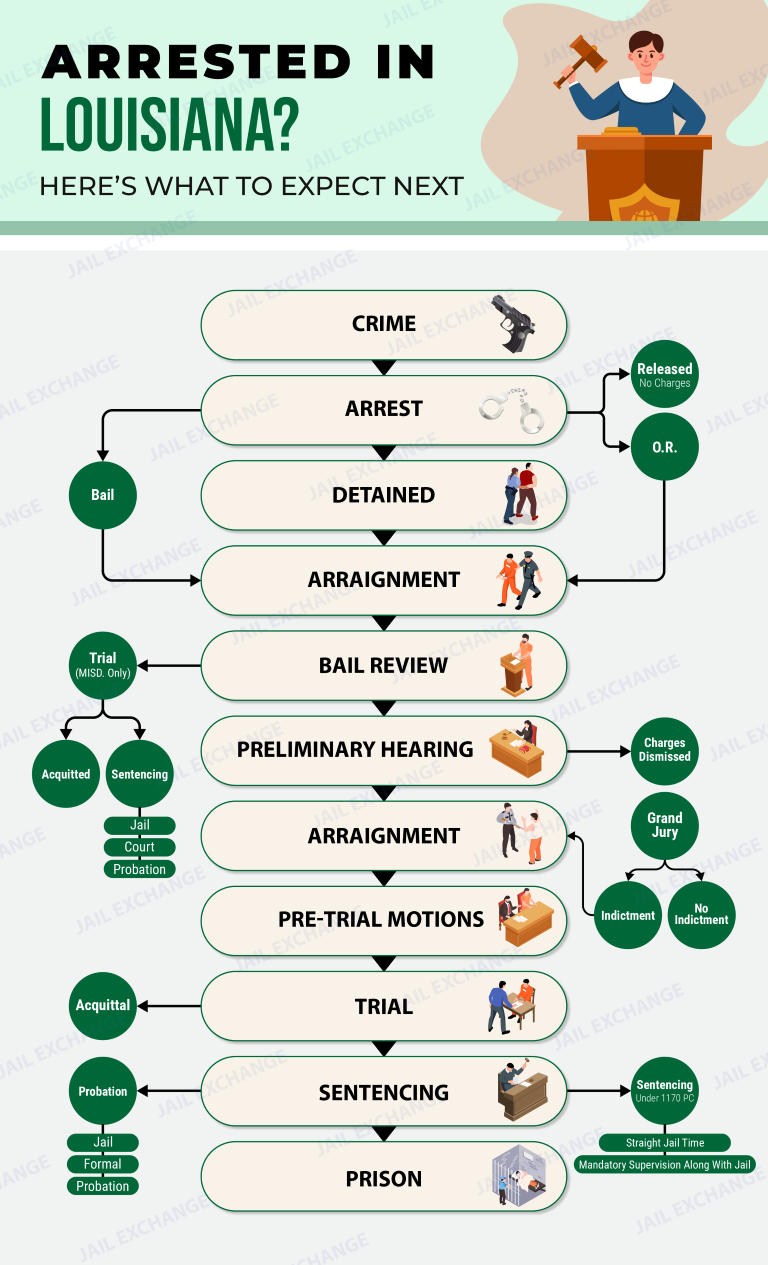
Information for this service is currently unavailable.
Information for this service is currently unavailable.
Florida Parishes Juvenile Detention Center Family Mail
Resident's Full Name
Florida Parishes Juvenile Detention Center
28528 Highway 190
Covington, LA 70433
Keep these points in mind when you write a youth at Florida Parishes Juvenile Detention Center in LA. Letters here follow a tight family rule: mail can only be sent and received to immediate family. For safety, all mail is opened and checked for contraband or content that is not allowed. Residents can send and receive as many letters, within reason, as they want.
Put this LA campus first in your address book as Florida Parishes Juvenile Detention Center at 28528 Highway 190, Covington, LA 70433.
Do not send a youth's mail to an adult jail as if it were adult inmate mail.
Call 985-893-6292 and ask a parent or legal guardian about stamps, books, or anything other than a letter. That information is kept private to protect the minor.
Use 70433 exactly as written so the carrier delivers the envelope to this juvenile program.
Information for this service is currently unavailable.
Information for this service is currently unavailable.
Information for this service is currently unavailable.
St. Tammany Parish County Jails
St. Tammany Parish Juvenile Facilities
- Juvenile: 985-893-6292
- Adult Probation: 985-871-8351
- Public Defender: 985-892-5002
- Sheriff - Covington: 985-809-8200
- Sheriff - Slidell: 985-726-8000