
Lac Qui Parle County Jail
Lac Qui Parle County Jail
Physical Address
911 8th Ave, Suite 1Madison, MN 56256
Jail Phone Number
320-598-3720Lac qui Parle County Inmate Search: Finding Someone in the New Government Center Jail
When deputies, city officers or state troopers arrest someone here, the person is booked at the Lac qui Parle County Jail, 911 8th Avenue, Suite 1, Madison, MN 56256. This small jail sits inside the Government Center. It opened in January 2026 with 14 beds for women and men. The answers below walk a worried family from finding a name to the first court date.
Open the Sheriff's In Custody List to see who is locked up today. With only 14 beds the list stays short, so a quick scroll or a find-in-page search for the surname works well. Rows carry a booking number, intake date, charges and any bail or bond. A stamp near the top gives the hour it was refreshed.
Start by phoning the Sheriff's Office at 320-598-3720; its dispatch desk never closes, nights and weekends included. Give the dispatcher the spelling of the name and a date of birth. Then find out the booking charge and any bail amount. For money matters see our bail guide; for hearings see the court guide.
Read inmate search answers
 Read inmate search answers
1. What does the Lac qui Parle County custody list show?
The custody roster is short and simple. To use it:
- Tap the In Custody List link.
- Glance at the stamp near the top to see when the roster was last updated.
- Scroll, or use Ctrl+F to jump to the family name.
- Match the age and sex in the row against what you know.
- Note the booking number, intake date, charges and bail or bond beside the name.
Keep that booking number handy for every call you make about the person. Questions the roster can't settle go to 320-598-3720, answered by dispatch at any hour.
↑ Back to the question list2. Their name is missing from the roster?
Possible explanations include:
- Mid-booking. Fingerprints and forms are done before a deputy adds the name.
- A citation instead of jail. Small offenses often end with a citation: the officer hands over paper showing when to be in court, and nobody is jailed.
- Already released. Someone posted bail, or the judge said they could go.
- Held elsewhere. Someone stopped in a nearby county normally sits in that county's lockup.
- A typo or nickname. Enter fewer letters of the last name, or check under a maiden name.
Dispatch at 320-598-3720 can check whether the person was booked and where they ended up.
↑ Back to the question list3. Where does Lac qui Parle County lock people up?
All adults go to one place: the Lac qui Parle County Jail, 911 8th Avenue, Suite 1, Madison, MN 56256, 320-598-3720. The Minnesota Department of Corrections approved it for 14 secure beds, and both women and men stay there. It opened January 5, 2026, in the Government Center.
Some older listings place the jail at the courthouse, 600 West 6th Street, Suite 11, Madison, MN 56256, 320-295-4000. That building now handles court matters, so head to the Government Center for anything about the jail.
After an arrest in a neighboring county, look to that county's own jail. Ring that county's Sheriff, or ask the dispatcher on the jail line which agency has them.
↑ Back to the question list4. Are Lac qui Parle County mugshots available?
In Minnesota, mugshots count as public data once taken at booking (Minn. Stat. 13.82, subd. 26). The law lets an agency delay release when sharing a photo could damage an open investigation. Details of the arrest are open to the public as well, including the release date, custody status and the charge (Minn. Stat. 13.82, subd. 2).
Ask for a photo from whichever agency made the arrest. Deputies' photos come through the Sheriff's Office at 320-598-3720, weekdays from 8:30 a.m. to 4:30 p.m. A city arrest means asking that town's police.
- Federal agencies rarely release their own mugshots. One exception: the U.S. Marshals Service may release a photo while hunting a fugitive.
- Families wanting a photo taken by immigration agents can file on the ICE records request page.
5. Want a text the moment they leave?
Yes. Sign-up is free for Minnesota VINE, which the state's public safety agency runs. It watches county jail custody and sends word when someone is let out or transferred.
- Visit VINELink for Minnesota or dial 877-664-8463.
- Type the name, then click the record that fits.
- Sign up, choosing voice call, text message or email for updates.
VINE also shows the person's current custody status and facility. State prison is different: there, Minnesota Haven, the DOC's own notice system, takes over from VINE. A call to the jail at 320-598-3720 works any time too.
↑ Back to the question list6. What decides bail in Lac qui Parle County?
A District Court judge sets release terms, most often at the first hearing, which may take place over video. For a person still held after a warrantless arrest, the first appearance before a judge has to happen inside 36 hours. Neither the day of arrest nor any Sunday or legal holiday is counted (Minn. R. Crim. P. 4.02, subd. 5).
- Freedom is the starting point. Under Rule 6.02 the judge first looks at a simple promise to appear, then adds only the conditions truly needed.
- Two price tags. Many orders show a smaller amount tied to rules, like staying sober or away from someone, and a bigger amount with no rules.
- Cash posted with the court stays the defendant's money, no matter which relative or friend put it up (Minn. Stat. 629.53).
- Bondsmen must be licensed in Minnesota. They charge at least $100, and that premium never comes back (Minn. Stat. 60M.02).
Payment spots and accepted forms of payment vary, so phone the jail at 320-598-3720 first. Step-by-step help is in our bail guide, and the Minnesota bail laws page lays out the statewide rules.
↑ Back to the question list7. What is my relative accused of?
The In Custody List names the booking charges beside each person. A prosecutor may later add, drop or change charges, so look at the court file too.
- Minnesota Court Records Online (MCRO) lets anyone look up a case by name at no cost.
- Court administration at 320-295-4000 can read the charges to you. Its office is at 600 West 6th Street, Suite 11, Madison, MN 56256.
Offenses in Minnesota come in four sizes. A petty misdemeanor carries a fine of $300 at most and no jail. A misdemeanor allows as much as 90 days behind bars, while a gross misdemeanor allows 364. Felonies are the most serious and can bring a prison term (Minn. Stat. 609.02 and 609.03).
↑ Back to the question list8. No money for a lawyer. What then?
Can't cover a lawyer's fee? Then tell the judge at that first court appearance and ask for a public defender. That right covers any felony or gross misdemeanor, plus misdemeanors that carry possible jail time. The court reviews a short financial form, and anyone getting means-tested public aid is presumed to qualify (Minn. Stat. 611.17).
In this county, appointed lawyers come from the Eighth Judicial District public defender office, 316 Becker Avenue SW, Suite 301, Willmar, MN 56201, 320-231-6064. Hiring private counsel instead is the family's choice.
↑ Back to the question list9. What days can I visit the Madison jail?
The county's posted visiting windows are:
- Tuesdays, Wednesdays and Thursdays from 1:00 to 4:00 p.m.
- Fridays from 7:00 to 8:00 p.m.
Phone 320-598-3720 the day before. Ask whether you need to book a slot, which photo ID works, and whether you will sit across a table or talk through a video screen. Schedules shift now and then, and calling first can spare you the drive. The jail is inside the Government Center, 911 8th Avenue, Suite 1, Madison, MN 56256. For dress codes and other tips, open our visiting guide.
↑ Back to the question list10. How is money put on their books?
Jail account money typically buys commissary food, soap, paper and phone time. To learn how deposits are taken here, phone the Sheriff's Office at 320-598-3720 during weekday office hours. Ask about kiosks, online options, money orders, fees and any cap per deposit. Keep the booking number close by when you call.
Typical deposit options are in our money guide, and what people can order is in the commissary guide. Cash tucked in an envelope is a bad idea.
↑ Back to the question list11. Phone, tablet or video: how do we stay in touch?
Jails usually let people dial out rather than receive calls, often paid from a prepaid phone account. Ask the staff at 320-598-3720 how to open one, the per-minute price, and whether tablets, text messages or video chats are part of the setup.
Speak as if someone is listening, because jail calls are usually recorded. Case talk belongs with the lawyer. How such systems usually operate is covered in the phone guide, and texting and email in the email and messaging guide.
↑ Back to the question list12. Where should I send a letter?
Mail for the Sheriff's Office goes to 911 8th Avenue, Suite 1, Madison, MN 56256. Call 320-598-3720 before mailing to learn how a letter for someone in the jail should be addressed and whether the booking number belongs on it.
- Use the person's legal first and last name.
- Add a return address in the corner.
- Check which extras pass inspection, like photos, greeting cards or paperbacks.
- Leave cash at home.
More pointers for letters live in our mail guide.
↑ Back to the question list13. How are a wallet and keys returned?
Anything taken during booking, such as a phone, keys, a belt or a wallet, goes into storage at the jail. It is normally returned at release. To gather belongings on behalf of someone still in custody, ring 320-598-3720 between 8:30 a.m. and 4:30 p.m., Monday through Friday. Ask if the person must sign the items out to you, and what ID to bring along. The office is in the Government Center, 911 8th Avenue, Suite 1, Madison, MN 56256.
↑ Back to the question list14. Sick, hurt or out of medicine?
The Sheriff's Office is responsible for the care of people held in its jail. Call 320-598-3720 right after you hear about sickness, injury or a gap in medication. Share the drug names and doses, plus the name and number of their regular doctor or clinic. Urge the person to file a written health request with jail staff too.
Dial 911 for any life-threatening problem. If suicide or a mental health emergency is a worry, tell the dispatcher that first.
↑ Back to the question list15. Does someone have a Lac qui Parle County warrant?
Across the county, the Sheriff's deputies carry out warrants. Call 320-598-3720 and have a date of birth ready to learn whether one is active. Minnesota Court Records Online shows open court cases, but it is no warrant search. The Department of Corrections lists people wanted for breaking supervised release on its Wanted Fugitives page.
Clearing a warrant safely begins with a defense lawyer's advice. After that, either contact court administration where the warrant was signed or turn yourself in at the jail, 911 8th Avenue, Suite 1, Madison, MN 56256. Local court administration sits in the courthouse, 600 West 6th Street, Suite 11, Madison, MN 56256, 320-295-4000.
↑ Back to the question list16. Which day is their Madison court hearing?
Every criminal charge in this county, small or serious, lands in District Court at the courthouse, 600 West 6th Street, Suite 11, Madison, MN 56256. Court administration takes calls at 320-295-4000 on weekdays, 8:00 a.m. to 4:30 p.m. A case number makes the lookup quick.
- Upcoming hearings show on the MCRO hearing search.
- This court is part of Minnesota's Eighth Judicial District.
- Under Rule 11.01, the omnibus hearing, where evidence questions get sorted out, normally lands inside a 42-day window after the first appearance.
- On a felony, failing to show up for court becomes a new crime. Minnesota drops that extra count for anyone who turns themselves in within 48 hours (Minn. Stat. 609.49).
Our court guide maps out what each hearing is for.
↑ Back to the question list17. Who has custody in a federal case?
Federal cases from anywhere in Minnesota belong to one court, the U.S. District Court for the District of Minnesota. Jurors from this county are called to its Minneapolis courthouse, 300 South Fourth Street, Minneapolis, MN 55415. The nearest federal building, though, is at 118 South Mill Street, Fergus Falls, MN 56537. A single clerk's line covers all locations: 612-664-5000.
- A federal judge holds a detention hearing (18 U.S.C. 3142). The judge's ruling there decides between release and jail while the case waits.
- The U.S. Marshals Service keeps federal prisoners before trial. Its district office at 300 South 4th Street, Suite 402, Minneapolis, MN 55415, 612-664-5900, knows which jail is holding the person.
- After sentencing, use the federal Bureau of Prisons inmate locator to follow them.
18. Is there an ICE hold on them?
The steps of an immigration hold:
- First comes a detainer, which ICE sends to the jail on Form I-247A. That form seeks to keep the person in custody up to 48 hours after they would otherwise be released (8 CFR 287.7(d)).
- A formal opinion issued February 6, 2025 by Minnesota's Attorney General takes a position on detainers. Its conclusion: when a release date arrives, ICE's request alone is not a lawful reason under Minnesota law for the jail to keep the person.
- When ICE takes the person into custody, the case moves to the ICE St. Paul Field Office, 1 Federal Drive, Suite 1601, Fort Snelling, MN 55111, 612-843-8600.
- The ICE Online Detainee Locator accepts an A-number. Families without that number can enter the complete name and choose the birth country.
19. Which state prison search finds them?
In Minnesota, the state Department of Corrections, or DOC, oversees felony prison terms. First, the person waits in the Madison jail for a ride. Deputies drive them to state intake, where staff look at their needs and choose a facility.
- Check the DOC Offender Locator, which searches by name. Someone just transferred might not show up until several business days pass.
- For each prison's visiting, mail and money rules, see our Minnesota state prisons guide.
- Usually, the closing third of the sentence happens outside prison, on supervised release. Locally, that supervision runs through 6W Community Corrections, 911 8th Avenue, Suite 2, Madison, MN 56256, 320-598-7772.
20. Is my teen held at the jail?
Minnesota labels every person under age 18 a child for court purposes (Minn. Stat. 260B.007). Their cases go to a District Court judge assigned to juvenile matters. Officers usually send a young person home with a mom, dad or guardian. Officers hold on to a youth only if letting them go seems unsafe or the youth seems likely to miss court (Minn. Stat. 260B.176, subd. 1).
- State inspectors cleared the Madison jail to hold a juvenile briefly: 24 hours at most. Weekends and holidays pause that clock.
- Anything longer means a juvenile detention center. Keeping a youth locked up beyond 36 hours, weekends and holidays excluded, takes a petition plus a judge's order (Minn. Stat. 260B.176, subd. 2).
- For teens 14 to 17 with a very serious charge, prosecutors have two options. They can try to send the case to adult court, which is called certification. Or they can seek an extended jurisdiction juvenile case.
For the youth's location, call juvenile probation at 6W Community Corrections, 911 8th Avenue, Suite 2, Madison, MN 56256, 320-598-7772. Hearing times come from court administration, 600 West 6th Street, Suite 11, Madison, MN 56256, 320-295-4000.
↑ Back to the question list21. Which Lac qui Parle County officers picked them up?
Each agency below answers for its own arrests, booking photos included:
- Sheriff's Office, Government Center, 911 8th Avenue, Madison, MN 56256, 320-598-3720. Dispatch is staffed 24 hours, and office hours run 8:30 a.m. to 4:30 p.m., Monday to Friday. Email: lqpso@lqpco.com.
- Madison Police Department: 320-598-7375
- Dawson Police Department: 320-769-4700
- Boyd: the Attorney General's statewide police phone list directs Boyd calls to the Clarkfield Police Department, 320-669-7322. Clarkfield is a Yellow Medicine County city.
- Marietta, Bellingham, Nassau, Louisburg and rural townships: use the Sheriff's line listed first.
- Minnesota State Patrol, headquarters at 445 Minnesota Street, Suite 130, St. Paul, MN 55101, 651-201-7100. The troopers' district for these roads shows up after you select Lac qui Parle on the State Patrol contact page.
Lac qui Parle County bail and bond: the Madison jail and the courthouse next door
When deputies arrest someone in Lac qui Parle County, that person is driven to the Lac qui Parle County Jail at 911 8th Avenue, Madison, MN 56256. Below, we explain bail in this small prairie county piece by piece. Read on to learn who decides the dollar figure, where families can pay, and when that money gets returned.
Start by checking that your relative is actually locked up in Madison. Enter a last name in the Sheriff's custody lookup, and look for a bail figure beside it once a judge picks one. Our Inmates in Custody list adds the charges, fresh bookings and how to get a free lawyer.
After that, ring the Sheriff's Office at 320-598-3720 between 8:30 a.m. and 4:30 p.m., Monday to Friday. Ask if the judge picked an amount yet, and whether the desk takes cash, a check or a bond. Hearing dates and courtroom steps live on our Madison courthouse page.
1. Is my family member in the Madison jail right now?
Start with Lac qui Parle County Inmate Search. It shows who the sheriff is holding in Madison and, when a bail amount has been set, what it is. A booking that is only a few minutes old can take a while to appear, so look again later. The Sheriff's Office at 911 8th Avenue answers at 320-598-3720 for things the search cannot tell you.
↑ Back to the question list2. What is the Lac qui Parle County Jail, and how long can people stay?
The state inspector lists the Lac qui Parle County Jail in the county Government Center at 911 8th Avenue, Suite 1, in Madison. The new jail opened on January 5, 2026, and it has 14 beds for men and women. It can also hold a young person under 18 for up to 24 hours. If the jail is full, the sheriff may move someone to another county's jail. Ask the deputies at 320-598-3720 where a person was taken.
↑ Back to the question list3. Can I post bail at the sheriff's office on 8th Avenue?
Since January 2026, the jail and the Sheriff's Office share the Government Center at 911 8th Avenue in Madison. Before you drive anywhere with money, call 320-598-3720 and ask where the deputies want a payment handed over and which forms of payment they take. Ask for a written receipt that shows the case number.
↑ Back to the question list4. Who can I call at night or on a weekend?
The county says dispatch runs around the clock, and the office itself is open from 8:30 a.m. to 4:30 p.m., Monday through Friday. For anything urgent after hours, use 320-598-3720 and ask for the deputy on duty. The court clerk is closed then, so questions about the case itself usually wait until morning.
↑ Back to the question list5. When can I visit someone held in Madison?
The county lists visits from 1 to 4 p.m. Tuesday through Thursday and from 7 to 8 p.m. on Friday. Hours can change after a lockdown or a staffing gap, so call 320-598-3720 first. Bring photo ID. A person who was just booked may have to wait for their first visit.
↑ Back to the question list6. How fast will a judge see my son or daughter?
Minnesota Rule 4.02 says a person who stays in jail must be brought before a judge within 36 hours of arrest. The count leaves out the day of the arrest, Sundays and legal holidays, but Saturdays do count. Someone arrested on a Friday night may not see a judge until Monday. A person charged with a misdemeanor who misses that window must be released on a citation.
↑ Back to the question list7. Who sets the bail amount in Lac qui Parle County?
A judge does, usually at that first hearing. Minnesota has no single statewide price list, and judges are told to avoid preset bail schedules. The rule starts with release on a promise to appear or an unsecured bond. If the judge worries about safety or a missed court date, the judge picks the mildest condition that works, and that can be bail money.
The court may also ask the probation office for a report before deciding. For the amount on a specific case, check Lac qui Parle County Inmate Search or call the court at 320-295-4000.
↑ Back to the question list8. What happens to cash bail after the case ends?
Cash paid in as bail still belongs to the person charged, even if a relative paid it. Under Minnesota law the court administrator holds it until the case is over. The judge may use it for a fine or restitution, and the rest goes back to the defendant or to someone named in writing. Ask the court clerk at 320-295-4000 how to file that request.
↑ Back to the question list9. What does a bondsman cost, and what should I ask?
Minnesota bondsmen must charge the rate their insurance company filed with the state, and the fee can never be below $100. They may not give discounts or rebates. If they take your car title or cash as collateral, they must write a numbered receipt and return it within 21 days after you show proof the case ended. Ask for all terms on paper before you sign.
↑ Back to the question list10. Can I use my house or land to guarantee a bond?
Minnesota's bail rule allows "other security," but no Lac qui Parle County form or required value was found. Ask the court administrator at 320-295-4000 whether the judge will take real estate and what papers are needed. If a bondsman asks you to sign a quitclaim deed as security, say no and call the clerk, because state law bars it.
↑ Back to the question list11. Why does the search say the person is held without bail?
Minnesota has no death penalty, so every charge can have bail set. A hold can still show up for other reasons: no judge has acted yet, a probation or out-of-county warrant is on file, or the judge ordered detention because of danger or flight risk. In domestic-abuse cases a judge may add no-contact and weapons rules before release. The court at 320-295-4000 can say which reason applies.
↑ Back to the question list12. My daughter is 16. Where would she be taken?
The 2026 state inspection approves the Madison jail to hold a juvenile for up to 24 hours, not counting weekends and holidays. Longer stays happen at a juvenile center; an earlier inspection named the Prairie Lakes program in Willmar. Youth records are private, so Lac qui Parle County Inmate Search will not list a child. Call the court at 320-295-4000 for the hearing time and for the contact number of the Willmar facility.
↑ Back to the question list13. How do I ask for a free lawyer?
Tell the judge at the first hearing that you cannot pay for a lawyer. The court may appoint a public defender if jail time is possible. You can also use the state's online public defender application. The Eighth Judicial District court clerk in Madison, at 320-295-4000, can explain the next step. You do not get to pick the lawyer.
↑ Back to the question list14. What if the person skips court?
If a person skips a Madison hearing, the judge may declare the bond lost and sign an arrest warrant. Under state law the court must tell the bondsman within 30 days of a missed date. Get a lawyer or call the clerk at 320-295-4000 the same day, because a quick return can sometimes save the money.
↑ Back to the question list15. Is this call a scam?
No judge, deputy or clerk takes bail by gift card, crypto app or a transfer to a private person. If someone claiming to be a deputy calls you, hang up and dial 320-598-3720 yourself. Never wire money to a stranger who says your relative is in trouble.
↑ Back to the question listLac qui Parle County bail contacts
- County jail: Lac qui Parle County Jail, 911 8th Avenue, Suite 1, Madison, MN 56256
- Bond help: Lac qui Parle bail and bond pages
- Sheriff's Office: 911 8th Avenue, Madison, MN 56256; 320-598-3720; office hours 8:30 a.m. to 4:30 p.m., Monday to Friday
- Custody lookup: Lac qui Parle County Inmate Search
- District court: Lac qui Parle County Courthouse, 600 Sixth Street, Madison, MN 56256; 320-295-4000; fax 320-598-3915; Monday to Friday, 8 a.m. to 4:30 p.m.
- Judicial district: Eighth Judicial District
- Public defender: Ask for an appointed lawyer at the first hearing; court clerk 320-295-4000
- Juvenile: Prairie Lakes juvenile program, Willmar; ask the court clerk 320-295-4000 for the contact
Amounts, hours, rules and phone numbers change, and a judge can change a bail order at any hearing. Ask the sheriff or the court clerk about your own case before you pay anyone. Nothing here replaces a lawyer's advice.
Lac Qui Parle County Jail Inmate Visitation
Friends and Family – Official Lac qui Parle County sheriff pages post Tuesday through Friday jail visiting hours for Lac Qui Parle County Jail. Official hours are Tuesday through Thursday, 1:00 p.m. to 4:00 p.m., and Friday, 7:00 p.m. to 8:00 p.m. Those official hours are printed with the sheriff office hours on the official sheriff page. Call the jail at 320-598-3720 to confirm the current visiting window and any visitor-list rules before you travel.
Visiting hours:
- Tuesday through Thursday, 1:00 p.m. to 4:00 p.m.
- Friday, 7:00 p.m. to 8:00 p.m.

CIDNET Video Visitation allows families to conduct live, face-to-face video visits with incarcerated loved ones from home. Using an internet-connected smartphone, tablet, or personal computer equipped with a webcam, visitors connect directly through housing-unit video stations or handheld tablets without traveling to the facility or waiting in jail visitor lobbies.
Important: Advance Registration and Visitor Clearance Required
Detention centers do not permit unscheduled or unverified video sessions. Correctional facilities require prospective visitors to submit government-issued photo identification and receive administrative clearance before booking an appointment, an approval process that can take up to 48 hours depending on facility staffing. You should verify your visitor approval status with the facility prior to scheduling. If you do not register well in advance, you will miss your loved one's scheduled visiting window for the week.
Step-by-Step Instructions to Register and Schedule a Video Visit
- Visit customer.cidnet.net or launch the CIDNET app.
- Register your visitor profile and upload a clear photograph of your government-issued ID and a verification photo.
- Wait for email notification confirming institutional visitor approval.
- Ensure your account has sufficient Data Points to cover the duration of the visit.
- Select Video Visitation, select the detention facility, and pick an available calendar time slot.
- Log into the website or mobile app 10 minutes prior to the start time on a device with a functioning camera, microphone, and stable high-speed internet connection.
What the Inmate Needs to Do
The inmate receives a schedule notification on their housing unit video kiosk or tablet. At the appointed time, they log in with their PIN and sit before the screen. Inmates and visitors must strictly observe jail dress and conduct rules; sessions are monitored by staff and will terminate immediately upon any violation.
Official Provider: CIDNET Customer Portal | Encartele Corporate
Customer Service Telephone: 1-888-984-1903
Support Hours: Monday – Friday, 8:00 AM – 5:00 PM CST
Supported Languages: English and Spanish
Other Services Provided by CIDNET
In addition to Remote Video Visitation, CIDNET provides several other communication channels:
- Data Points (Unified Funding): Purchase the central credits that power video visitation, calling, and messaging.
• Learn more on our website: CIDNET Data Points Guide | • Visit official vendor page: Buy CIDNET Data - Inmate Messaging & Digital Mail: Send electronic text messages and digital photo attachments directly to an inmate's terminal.
• Learn more on our website: CIDNET Messaging Guide | • Visit official vendor page: CIDNET Messaging Portal - Phone PINs & Voice Calling: Fund prepaid telephone calling so your loved one can call your mobile device.
• Learn more on our website: CIDNET Phone Calling Guide | • Visit official vendor page: CIDNET Voice Calling
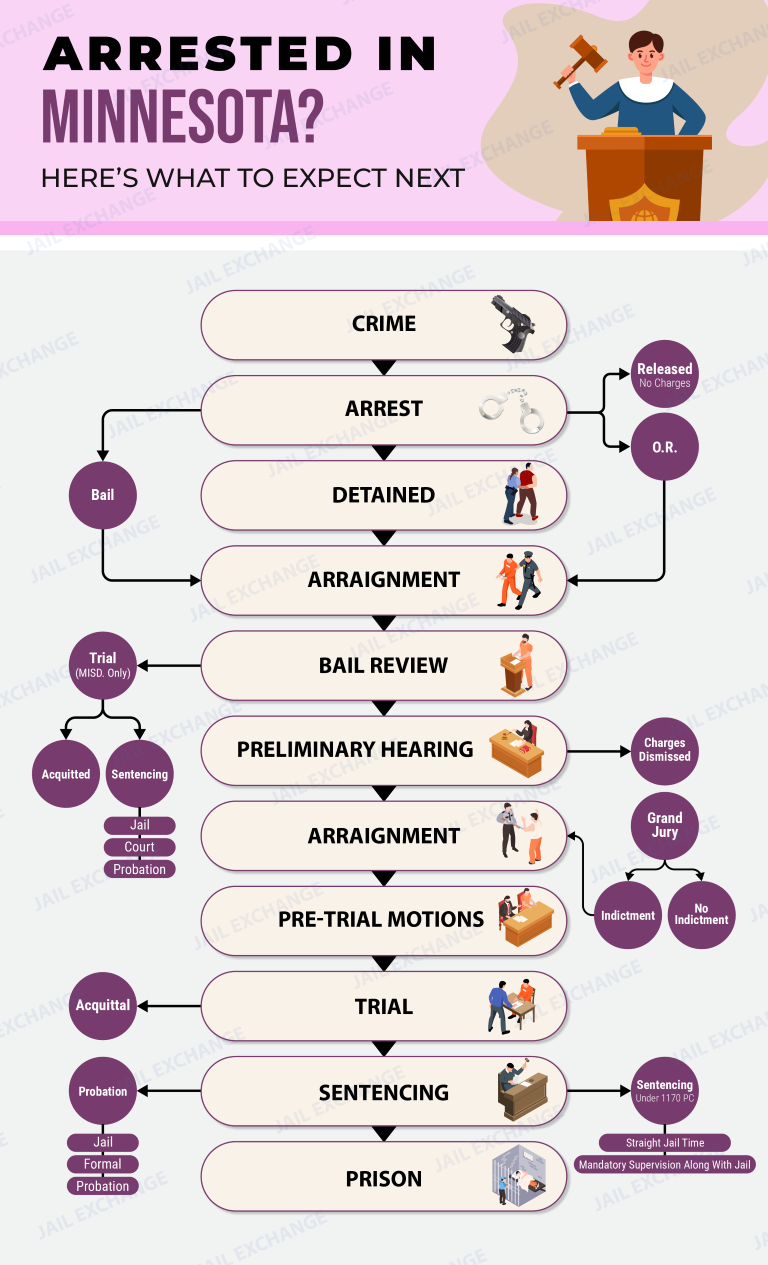
Lac qui Parle County Criminal Court Process: From Arrest to Sentencing in Madison
Every criminal charge filed in Lac qui Parle County lands in one District Court, which sits in the Eighth Judicial District at 600 Sixth Street, Madison, MN 56256. You can reach court administration at 320-295-4000. People kept behind bars after an arrest stay at the Sheriff's county jail, 911 8th Avenue, Madison, MN 56256.
Not certain your person is in Madison? Try their name in the official jail lookup first. Our Lac qui Parle County Jail Roster page goes deeper, with new arrests, charges and how to collect a person's belongings.
Your best move today is a weekday call to court administration at 320-295-4000. Give the clerk your person's full name and birthday. Then ask which case number they were given and what day they go back before the judge. Once a judge sets bail, our bail help page covers how to pay it.
1. Misdemeanor (for example, theft, a first DWI, fifth-degree assault, trespassing)
Lac qui Parle County, on the South Dakota line in western Minnesota, hears its criminal cases at the county courthouse in Madison, the county seat. The court is the Lac qui Parle County District Court, which belongs to the Eighth Judicial District along with twelve neighboring west-central counties. Felonies and juvenile cases are prosecuted by the Lac qui Parle County Attorney, who also handles misdemeanors from the townships; offenses at the misdemeanor level inside Madison, Dawson and the county's other cities are generally prosecuted by the city's attorney. People arrested in the county are booked by the Lac qui Parle County Sheriff's Office in Madison.
- Lac qui Parle County District Court / Court Administration (Eighth Judicial District), Lac qui Parle County Courthouse, 600 Sixth Street, Madison, MN 56256, (320) 295-4000
- Lac qui Parle County Attorney's Office, Madison, (320) 598-7578
- Eighth District Public Defender, the Board of Public Defense office in Willmar that takes Lac qui Parle County appointments, 316 Becker Avenue SW, Suite 301, Willmar, MN 56201, (320) 231-6064
- Lac qui Parle County Sheriff's Office (operates the county jail), 911 8th Avenue, Madison, MN 56256, (320) 598-3720
Which court hears your case. In Lac qui Parle County, every criminal charge, from a petty misdemeanor to a felony, is heard by the same District Court in Madison. Minnesota does not have municipal courts, so city cases are not sent anywhere else. What differs from charge to charge is the prosecutor and the sequence of hearings. Misdemeanors and gross misdemeanors from inside a city are ordinarily prosecuted by that city's attorney, often a local private attorney the city contracts with; those from a township fall to the Lac qui Parle County Attorney; and felonies, regardless of location, are prosecuted by the County Attorney.
Where pretrial detainees are held. The Lac qui Parle County Sheriff operates the county jail in Madison, and arrestees from the Sheriff's Office, the Madison and Dawson police and the State Patrol are booked there. As with many small rural jails, a detainee expected to stay for a longer period may be boarded at another county's jail by agreement, so check with the Sheriff's Office at (320) 598-3720 for a person's current location. Detainees remain in custody until they post bail, meet the judge's release conditions or their case ends.
Three offense levels are grouped together here: petty misdemeanors, misdemeanors and gross misdemeanors. In Madison, as elsewhere in Minnesota, a petty misdemeanor is a violation and not a crime, so only a fine is possible. Misdemeanors and gross misdemeanors are criminal and can carry jail time.
Release after an arrest
Many Lac qui Parle County misdemeanor suspects receive a citation and are never jailed. A person who is booked might be released quickly by posting bail under the standard schedule. Anyone held longer has a right to see an Eighth District judge within 36 hours of arrest, a count that leaves out the day of arrest, Sundays and legal holidays; in rural counties that appearance is frequently by video. The judge usually offers two ways out: a higher bail with no conditions, or a lower bail combined with conditions like no contact or abstaining from alcohol. Posting through a bail bond company is legal in Minnesota.
First appearance, counsel and resolution
The first court date is an arraignment for a misdemeanor and a Rule 5 hearing for a gross misdemeanor. If you cannot afford a lawyer and could be sentenced to jail, request a public defender then; the Eighth District office in Willmar takes appointed Lac qui Parle County cases. A pretrial conference with the prosecutor follows, and most cases settle at that point. Trials use six jurors who must reach a unanimous verdict.
Penalties for lower offenses in Lac qui Parle County
- Lac qui Parle County petty misdemeanor: a fine that cannot exceed $300, and no jail.
- Misdemeanor (trespass, fifth-degree assault, theft of $500 or less): a possible 90 days in jail and a fine of as much as $1,000.
- Gross misdemeanor (theft of more than $500 but no more than $1,000, for instance): the Madison judge may order up to 364 days and $3,000.
- A first DWI in Lac qui Parle County: generally fourth-degree DWI, a misdemeanor. The charge becomes third-degree DWI, a gross misdemeanor, when the measured alcohol level reaches 0.16, when a child younger than 16 is riding along, or when the driver will not take a test. A license revocation is imposed administratively and separately; a chemical use assessment is required; aggravated cases can involve ignition interlock, plate impoundment or vehicle forfeiture.
Resolution in Madison usually comes within one to four months and can take the form of a dismissal, a continuance for dismissal, a stay of adjudication, probation, a fine or a few days in jail.
↑ Back to the question list2. Felony (for example, burglary, felony theft, drug sale, second-degree assault)
Felonies, crimes punishable by more than one year in prison, are prosecuted in Lac qui Parle County only by the County Attorney. Charges are filed by complaint; a Minnesota grand jury is needed only where a life sentence is possible.
What the hearings look like
After a felony booking, a detained defendant appears for a Rule 5 hearing within 36 hours. A warrantless arrest also triggers a 48-hour deadline for a judge's probable-cause finding. The Rule 5 judge appoints the Eighth District Public Defender for an eligible defendant and sets bail. At the Rule 8 hearing a few weeks later, the defense typically gets discovery and an initial plea proposal. The omnibus hearing is the stage for challenging probable cause and how evidence was gathered. A pretrial settlement conference follows. At trial, 12 jurors must reach a unanimous verdict. A speedy-trial demand obligates the court to begin trial within 60 days.
How a felony sentence is calculated
Probation completes a presentence investigation before sentencing in Madison. Under the Minnesota Sentencing Guidelines, the offense's severity level and the defendant's criminal history score are plotted on a grid that yields the presumptive sentence, stayed (probation) or executed (prison). A Lac qui Parle County judge may depart only when substantial and compelling reasons justify it.
- Theft (Lac qui Parle County): stealing over $1,000 is a felony worth up to 5 years, with ceilings of 10 years past $5,000 and 20 years past $35,000.
- Burglary prosecuted in Madison: the maximum is 20 years for first-degree, 10 years for second-degree and 5 years for third-degree.
- Drug sale in the first degree: the law allows up to 30 years.
- Second-degree assault in the Eighth District: using a dangerous weapon is punishable by up to 7 years, and a mandatory minimum applies when the weapon is a firearm.
A stay of imposition means a felony is treated as a misdemeanor on the record once probation is completed. When prison is ordered, roughly two-thirds of the term is spent incarcerated and the last third is spent on supervised release in the community. A Lac qui Parle County felony commonly takes four months to a year.
↑ Back to the question list3. Violent felony (for example, murder, criminal sexual conduct, aggravated robbery)
Violent felonies in Lac qui Parle County go through the same hearings in Madison, but release before trial is harder and bail amounts tend to be high. First-degree murder requires a grand jury indictment, which the County Attorney must seek before the case can proceed.
- First-degree murder in Lac qui Parle County: a mandatory life term, served without parole if the killing was premeditated (or in a few other listed situations), and with a parole review after 30 years in the remaining cases. A Lac qui Parle County jury can never be asked to impose death, because the penalty was repealed statewide in 1911.
- Second-degree murder is punishable by up to 40 years and third-degree murder by up to 25.
- First-degree criminal sexual conduct: a maximum of 30 years, and a guidelines presumption of 144 months for a first conviction.
- Aggravated robbery (first degree) in Lac qui Parle County: up to 20 years.
The Eighth District Public Defender represents defendants who qualify. Victims have rights under Minnesota Statutes chapter 611A to notice, to attend hearings and to speak at sentencing. These cases routinely take one to two years or more, given forensic analysis and motion practice.
↑ Back to the question list4. Juveniles (under 18) arrested in Lac qui Parle County
A youth under 18 accused of an offense in Lac qui Parle County goes to the juvenile division of the District Court in Madison. The Lac qui Parle County Attorney decides whether to file a delinquency petition, and first-time offenders are frequently offered diversion, which avoids a formal case if the youth meets its terms.
A detained Lac qui Parle County youth must be seen by a judge at a detention hearing inside 36 hours, weekends and holidays aside. The county jail is approved to hold a youth for up to 24 hours, not counting weekends and holidays; a juvenile who needs a longer secure stay goes to a licensed juvenile detention facility under a county contract; the nearest such facility in the region is Prairie Lakes Youth Programs in Willmar. The Eighth District Public Defender can be appointed for the youth.
For 14- to 17-year-olds charged with serious offenses, prosecutors may seek Extended Jurisdiction Juvenile (EJJ) designation, combining juvenile court supervision with a stayed adult sentence. Youth 14 and older can be certified to adult court; for 16- and 17-year-olds, certification is presumed when the offense carries presumptive prison time or a firearm was involved. When the charge is first-degree murder and the accused is 16 or 17, the case starts and stays in adult court. Juvenile records are usually confidential, though certain felony records of youth 16 and older can be public.
↑ Back to the question list5. Federal cases (U.S. District Court) from Lac qui Parle County
Federal charges are rare in a county the size of Lac qui Parle, but when they happen the case is handled far from the Madison courthouse. Lac qui Parle County is part of the District of Minnesota and is assigned to the Fourth Division, which means the Diana E. Murphy U.S. Courthouse, 300 S. 4th Street, Minneapolis, MN 55415. Jurors for any trial would be summoned to Minneapolis, and the first hearings are often held in Minneapolis or St. Paul. The Clerk of Court can answer scheduling questions about a Lac qui Parle County defendant at (612) 664-5000.
How a local arrest becomes a federal case
Investigators on federal cases are usually the FBI, DEA, ATF, Homeland Security Investigations, U.S. Postal Inspectors or the IRS. Typical federal cases involve trafficking large drug quantities or moving drugs across state lines, a felon possessing a gun or other firearms crimes, fraud schemes, child exploitation, bank robbery and immigration offenses. A person first arrested by the Lac qui Parle County Sheriff can have the case adopted by federal prosecutors, and the state and federal governments may each charge the same conduct.
Prosecutor, defender and marshals
The U.S. Attorney's Office for the District of Minnesota prosecutes, working from Minneapolis (U.S. Courthouse, 300 S. 4th Street, Suite 600, Minneapolis, MN 55415, (612) 664-5600) and St. Paul (316 N. Robert Street, Suite 404, St. Paul, MN 55101, (651) 848-1950). Rather than the Willmar public defender office that takes state appointments, a federal defendant who qualifies gets the Office of the Federal Defender, 107 U.S. Courthouse, 300 S. 4th Street, Minneapolis, MN 55415, (612) 664-5858, or a private CJA panel attorney if there is a conflict. The U.S. Marshals Service in Minneapolis, (612) 664-5900, has custody of federal prisoners.
What to expect
The process opens with an initial appearance before a U.S. magistrate judge, after an arrest by federal agents or on a warrant or indictment; the judge explains the charges and appoints a lawyer. Prosecutors who want the person held must ask for a detention hearing, which usually takes place within 3 court days. Under the Bail Reform Act, release comes with conditions supervised by U.S. Probation and Pretrial Services, detention is ordered only if no conditions can assure appearance and safety, and a Lac qui Parle County family will find no bondsman to call; money bail is rare. When the case starts with a complaint, a grand jury indictment must follow within 30 days of arrest unless there is a preliminary hearing; arraignment comes after. The Speedy Trial Act sets 70 days for trial, but continuances are common, and most defendants resolve their cases through plea agreements. A federal jury has 12 members and its verdict must be unanimous. A presentence report is prepared, and sentencing about three months after plea or verdict applies the advisory U.S. Sentencing Guidelines and any mandatory minimum. Federal law has no parole: at least about 85% of the sentence is served, counting good-conduct time, in a Bureau of Prisons facility, followed by supervised release. An appeal goes to the Eighth Circuit.
The Marshals lodge pretrial federal detainees in county jails they contract with around Minnesota and sometimes in other states, so a Lac qui Parle County arrestee may be taken to a jail in another county. Families can learn the location by calling the Marshals; the Bureau of Prisons inmate locator shows where sentenced people are. Federal prosecution of people under 18 is uncommon.
↑ Back to the question listThis page describes the general criminal process in Lac qui Parle County and does not provide legal advice. People with a pending charge should get advice from a defense attorney or request appointed counsel when they first appear; the Eighth District Public Defender in Willmar is at (320) 231-6064, and the courthouse in Madison can be reached at (320) 295-4000.
Information for this service is currently unavailable.
Information for this service is currently unavailable.
Lac qui Parle County opened a new jail on January 5, 2026, inside the Government Center on 8th Avenue in Madison, Minnesota. Mail now goes to Suite 1 there, not to the old courthouse on 6th Street. Put the person's full name and booking number on the envelope; the number is on the in-custody list.
Letters, legal mail, books and magazines:
Inmate's Full Name & Booking #
Lac qui Parle County Jail
911 8th Ave, Ste. 1
Madison, MN 56256
- Friends and family: They are welcome to write to someone in the Madison jail. Co-defendants, other inmates and anyone named in a no-contact order are not.
- From line: Write your full name and return address in the top left corner of the envelope or postcard. Leave them off and the Lac qui Parle jail will likely destroy the letter.
- Pen: Blue or black ink only, never felt markers, crayon or colored ink.
- No extras: Skip drawings, lipstick marks, perfume, glitter and confetti, on the page and on the envelope.
- Greeting cards: Send a plain card; one that plays a tune is not handed out in Madison.
- Publications: A book, newspaper or magazine for the Madison jail has to be brand new and mailed by its publisher. Books with extreme violence or porn are disposed of, and adult magazines are confiscated.
- Packages: Only the company behind the jail commissary may ship them.
Officers hand out mail Monday through Friday. Questions go to the Lac qui Parle County Sheriff's Office at 320-598-3720.
CIDNET Phone Calling enables incarcerated individuals to place outbound voice calls from housing-unit wall phones or handheld tablets directly to approved cell phones and landlines. Because jail phone systems cannot accept incoming calls, setting up a CIDNET account and purchasing Data Points ensures outbound calls connect immediately without wireless carrier collect blocks.
Important: Mobile Networks Block Inmate Calls Without Data Points
Wireless cellular carriers automatically block collect calls originating from jail telecommunications systems. While some traditional landline telephone providers may support monthly operator billing, mobile smartphones and VoIP numbers require an active prepaid CIDNET balance, which you can verify with your provider. If you do not register your 10-digit number online and purchase Data Points immediately, your loved one will hear an automated operator recording stating that your phone number cannot accept calls.
Step-by-Step Instructions to Set Up and Fund Voice Calling
- Go to customer.cidnet.net or launch the CIDNET Customer mobile app.
- Register your account using the primary 10-digit telephone number where you want to receive calls.
- Upload your driver's license or state ID for identity verification.
- Select the detention center where the inmate is held and link them to your contact profile.
- Purchase Data Points using a debit or credit card to cover per-minute calling rates.
- Confirm your mobile phone allows calls from automated or unknown correctional numbers and does not send them to spam.
What the Inmate Needs to Do
The inmate approaches a pod wall phone or opens the phone app on their tablet, enters their assigned inmate PIN, and dials your 10-digit number. CIDNET's automated system verifies that your account has sufficient Data Points and connects the call once you accept the automated prompt. All non-privileged conversations are recorded and monitored by the facility.
Official Provider: CIDNET Customer Portal | Encartele Corporate
Customer Service Telephone: 1-888-984-1903
Support Hours: Monday – Friday, 8:00 AM – 5:00 PM CST
Supported Languages: English and Spanish
Other Services Provided by CIDNET
In addition to Phone Calling, CIDNET operates messaging and video visitation services:
- Data Points (Unified Funding): Purchase the central credits used to pay for telephone talk time.
• Learn more on our website: CIDNET Data Points Guide | • Visit official vendor page: Buy CIDNET Data - Remote Video Visitation: Schedule and join live video visits from home using your computer or smartphone.
• Learn more on our website: CIDNET Video Visits Guide | • Visit official vendor page: CIDNET Video Visitation - Inmate Messaging & Digital Mail: Send text messages and digital photo attachments directly to an inmate's terminal.
• Learn more on our website: CIDNET Messaging Guide | • Visit official vendor page: CIDNET Messaging Portal
CIDNET Inmate Messaging provides a secure digital messaging and picture-sharing service for families of incarcerated individuals. Powered by CIDNET Data Points, outside contacts can compose electronic letters and upload JPEG photographs directly through the CIDNET web app, delivering correspondence to inmate screens within hours and avoiding paper mail sorting delays.
Important: Postal Mail Transition and Screening Rules Vary
Inmates cannot receive incoming phone calls, and physical postal mail policies differ across jurisdictions. While some detention centers accept handwritten envelopes, many facilities contracting with CIDNET have prohibited physical paper mail in favor of electronic mail scanning and direct digital messaging, which you can verify by checking facility rules. If you do not register online and purchase Data Points immediately, your loved one may face lengthy periods without direct written communication from family.
Step-by-Step Instructions to Register and Message an Inmate
- Log into your account at customer.cidnet.net or launch the CIDNET app.
- Ensure your identity verification (photo ID and selfie) is approved by the facility.
- Confirm your account has an active Data Point balance; purchase additional points if needed.
- Select Messages from your navigation menu and click on your linked contact.
- Type your message in the text editor and attach clear JPEG photo files if authorized by the facility's media rules.
- Review the estimated Data Point cost for the message length and image attachments.
- Click Send to submit your transmission to the institutional mailroom screening queue.
What the Inmate Needs to Do
All messages and photographs pass through facility screening filters. Once approved, the message arrives in the inmate's inbox on their housing unit kiosk or assigned tablet. The inmate opens the message, views the images, and types a digital response, which draws against available account points.
Official Provider: CIDNET Customer Portal | Encartele Corporate
Customer Service Telephone: 1-888-984-1903
Support Hours: Monday – Friday, 8:00 AM – 5:00 PM CST
Supported Languages: English and Spanish
Other Services Provided by CIDNET
In addition to Inmate Messaging, CIDNET provides several other communication and visitation options:
- Data Points (Unified Funding): Purchase universal credits that power voice calling, messaging, and video visits.
• Learn more on our website: CIDNET Data Points Guide | • Visit official vendor page: Buy CIDNET Data - Remote Video Visitation: Schedule and join live video visits from home using your computer or smartphone.
• Learn more on our website: CIDNET Video Visits Guide | • Visit official vendor page: CIDNET Video Visitation - Phone PINs & Voice Calling: Fund outbound voice telephone calls so your loved one can call your telephone directly.
• Learn more on our website: CIDNET Phone Calling Guide | • Visit official vendor page: CIDNET Voice Calling
CIDNET provides secure handheld wireless tablets designed specifically for correctional housing units. Operating over a private, encrypted facility network, these devices allow incarcerated individuals to exchange messages, place voice calls, conduct remote video visits, read approved digital books, access law library materials, and complete rehabilitative courses directly from their cells.
Important: Tablet Hardware Deployment and Rental Rules Vary
Detention centers do not manage tablet distribution identically. While some agencies issue individual personal tablets to every detainee at booking, others utilize shared pod docking stations or restrict tablet use to specific dayroom hours, which you should confirm with the facility directly. Although core educational and legal resources are generally provided free of charge, sending messages or making calls from the tablet requires an active balance of Data Points funded by friends or family.
Step-by-Step Instructions to Support Tablet Use
- Confirm that CIDNET handheld tablets are active and deployed at your loved one's specific detention facility.
- Register your verified user account at customer.cidnet.net.
- Complete identity verification by uploading your government photo ID.
- Link the inmate to your profile and purchase a reserve of CIDNET Data Points.
- Notify your loved one that funds are available so they can open the communication apps on their tablet.
What the Inmate Needs to Do
The inmate unlocks their assigned tablet using biometric verification or their unique facility PIN. Once logged on, they can browse institutional announcements, access educational materials, or select approved outside contacts to read messages and start calls. When quiet hours begin or tablets require recharging, inmates return devices to designated pod docking carts.
Official Provider: CIDNET Customer Portal | Encartele Corporate
Customer Service Telephone: 1-888-984-1903
Support Hours: Monday – Friday, 8:00 AM – 5:00 PM CST
Supported Languages: English and Spanish
Other Services Provided by CIDNET
In addition to Inmate Tablet Services, CIDNET provides several core communication channels:
- Data Points (Unified Funding): Purchase the digital currency required to power all tablet communications.
• Learn more on our website: CIDNET Data Points Guide | • Visit official vendor page: Buy CIDNET Data - Inmate Messaging & Digital Mail: Send text messages and photos directly to an inmate's tablet screen.
• Learn more on our website: CIDNET Messaging Guide | • Visit official vendor page: CIDNET Messaging Portal - Remote Video Visitation: Conduct scheduled live video calls directly to their tablet or pod kiosk.
• Learn more on our website: CIDNET Video Visits Guide | • Visit official vendor page: CIDNET Video Visitation
- Jail (Main): 320-598-3720
- Sheriff: 320-598-3720
The Lac Qui Parle County Jail serves the following cities and towns of Lac qui Parle County: Dawson, Lac qui Parle Village, Louisburg, Madison, Nassau, Marietta and Taunton.