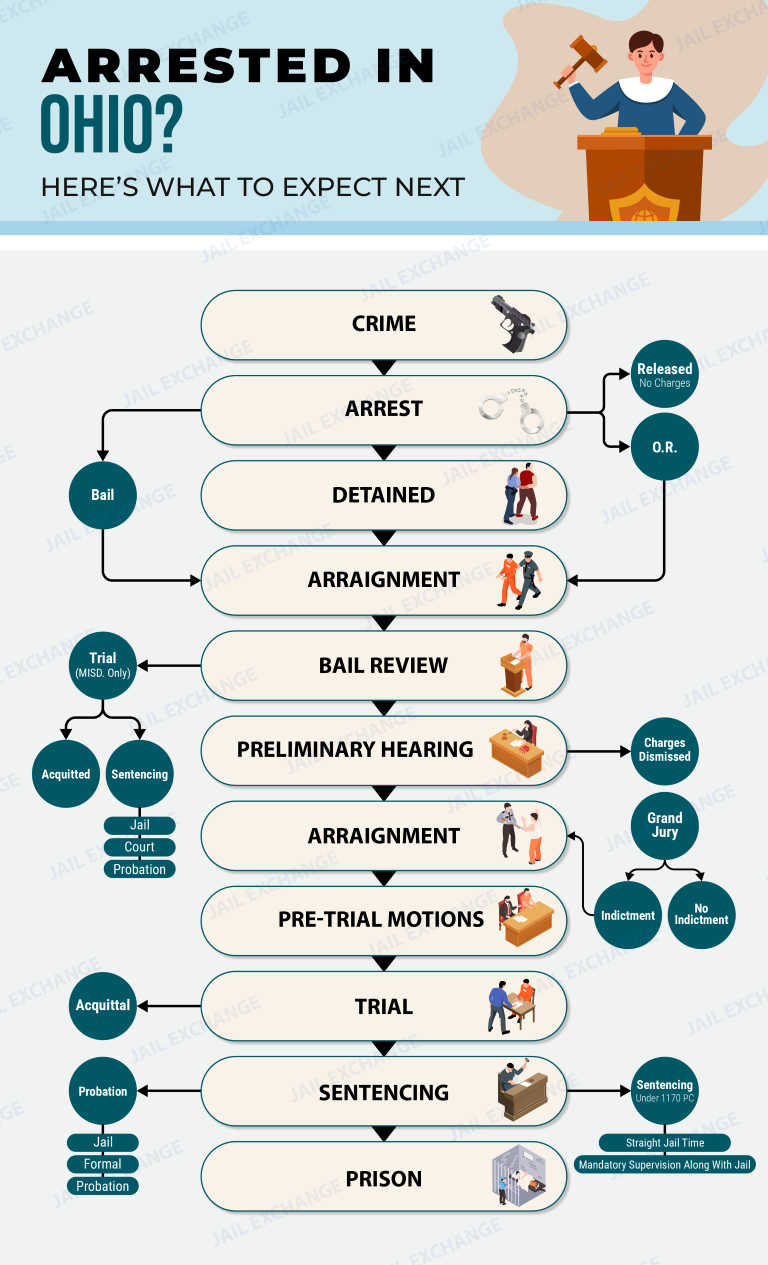
Ashland County Jail Criminal Court Process
Criminal Court Process for Ashland County Ohio
Ashland Municipal Court and Common Pleas Court: Where Your Case Is Heard
Ashland Municipal Court, 1209 East Main Street, Ashland, OH 44805, is where traffic and other misdemeanor charges start in this county. Serious felonies move up to the Common Pleas judges in the courthouse on West Second Street. Adults arrested here are held at the Ashland County Jail, 1205 East Main Street, Ashland, OH 44805.
Use the Ashland County Inmate Search to check for a booking. Our Jail Roster page shows fresh arrests, open warrants and mugshots.
The Municipal Court clerk, 419-289-8137, knows the charge and when you must be in the courtroom next. A felony is different, so ring the Clerk of Courts at 419-282-4242. Ready to pay? Read our bail and bond help first.
1. Local courts in Ashland County (municipal, county and mayor's courts)
The city of Ashland is the county seat of Ashland County, a farming and small-manufacturing county between Mansfield and Wooster that also includes Loudonville, Perrysville, Hayesville and Jeromesville. Ashland Municipal Court's territory is countywide, giving it every misdemeanor, OVI and traffic case plus the opening stages of each felony, while indicted felonies are tried in the Ashland County Court of Common Pleas downtown. Felonies are prosecuted by the elected Ashland County Prosecuting Attorney; the city law director's staff prosecutes misdemeanors on the municipal docket. Adults arrested anywhere in the county are booked into the Ashland County Jail, which the Sheriff runs on East Main Street.
- Clerk of Courts for the Ashland County Court of Common Pleas, Ashland County Courthouse, 142 West Second Street, Ashland, OH 44805, (419) 282-4242
- Ashland Municipal Court (countywide misdemeanors, traffic, OVI and felony first appearances), 1209 East Main Street, Ashland, OH 44805, (419) 289-8137
- Ashland County Juvenile Court (Common Pleas, Probate and Juvenile Divisions), Ashland County Courthouse, 142 West Second Street, Ashland, OH 44805, (419) 282-4205
- Ashland County Prosecuting Attorney, 110 Cottage Street, 3rd Floor, Ashland, OH 44805, (419) 289-8857
- Appointed counsel for eligible defendants, requested from the Ashland judge assigned to the case, for example through Ashland Municipal Court at (419) 289-8137
- Ashland County Jail (Ashland County Sheriff's Office), 1205 East Main Street, Ashland, OH 44805; Sheriff's Office (419) 289-6552, Corrections Division (24 hours) (419) 281-9009
Which court hears your case. Ashland Municipal Court on East Main Street is the court of first resort for the whole county: an OVI on U.S. 30, a petty theft in Ashland, or a trespass complaint in Mohican country around Loudonville all go there. Loudonville and Perrysville have also run mayor's courts for village traffic and ordinance citations; a mayor's court has no jury, and an Ashland County defendant can ask that the ticket be heard in the municipal court instead. On a felony, the municipal court holds the initial appearance and sets bond and, unless an indictment comes first, conducts the preliminary hearing. The felony then goes to the Common Pleas General Division after Ashland grand jurors indict, or after the accused waives indictment so a bill of information can be filed. Ashland County sits in Ohio's Fifth Appellate District, so appeals go to that court.
Where pretrial detainees are held. Ashland police, Loudonville officers, Sheriff's deputies and state troopers deliver arrestees to the jail that serves Ashland County, the Sheriff's facility at 1205 East Main Street, next to the municipal court. Anyone unable to post bond stays at East Main Street until the case is resolved. The jail's Corrections Division answers around the clock at (419) 281-9009 with questions on inmates, bonds and visits; the Sheriff's front office is (419) 289-6552 on weekdays.
Ashland County keeps its local court map simple. There is no county court, and a single municipal court takes in all fifteen townships. Two southern villages maintain mayor's courts for their own tickets, and those courts meet on a limited schedule, so call the village before the hearing date.
Municipal court
- Ashland Municipal Court — 1209 East Main Street, Ashland, OH 44805, (419) 289-8137. Territory: every city, village and township in Ashland County, including Ashland, Loudonville, Perrysville, Hayesville, Jeromesville, Polk, Savannah, Bailey Lakes and Mifflin.
Mayor's courts
- Loudonville Mayor's Court — Village Hall, second floor, 156 North Water Street, Loudonville, OH 44842, (419) 994-3270; sessions are generally the first and third Monday mornings of the month
- Perrysville Mayor's Court — at the village hall, 120 North Bridge Street, Perrysville, OH 44864, (419) 938-7112
These two village courts take only local ordinance and traffic matters. Jury trials happen solely in Ashland Municipal Court, and a written request moves a mayor's court ticket there.
↑ Back to the question list2. Misdemeanor (for example, petty theft, a first OVI, assault, criminal trespass)
Ticket, summons or arrest?
For a minor theft or trespass in Ashland, officers commonly hand out a citation that gives a date at the East Main Street court. Custody is more likely after a crash or OVI stop, a domestic violence report, or when a warrant shows up in the system.
How bond works on East Main Street
Since the jail and the municipal court are neighbors, a misdemeanor defendant held overnight is usually walked or video-linked to arraignment on the next business day. Before then, many people can post the scheduled bond: cash, a commercial surety bond (legal in Ohio) or, for some offenses, a signature bond. If the Ashland judge sets bail, Ohio's 2022 constitutional amendment tells the court to consider community safety, the defendant's record, how serious the Ashland charge is and the likelihood of appearance. A domestic violence case normally waits for a judge, who may issue a temporary protection order.
Arraignment through trial
Defendants plead guilty, not guilty or no contest at arraignment. Those who might be jailed and cannot afford private counsel complete an affidavit of indigency to ask for an appointed lawyer, and Ohio permits a small application fee. After pretrial conferences with the city prosecutor, a case may be tried to the judge or, when a written jury demand has been filed, to eight Ashland County jurors. Under the speedy-trial statute, an Ashland M1 or M2 must reach trial in 90 days, an M3 or M4 in 45.
Possible penalties
- M1 (petty theft under $1,000, most assaults): up to 180 days and $1,000.
- M2: up to 90 days and $750. M3: up to 60 days and $500.
- M4 (criminal trespass): up to 30 days and $250; aggravated trespass is an M1.
- Minor misdemeanor: fine only, up to $150.
- First OVI: an M1 carrying a mandatory three days, either in the Ashland jail or by attending a 72-hour driver intervention program (the requirement doubles with a .17 test or more, or in certain refusal situations), a fine somewhere between $375 and $1,075, plus a court-ordered loss of license lasting one to three years. The BMV's administrative suspension starts at arrest, and the Ashland judge may allow limited driving privileges, sometimes with an ignition interlock.
Ashland Municipal Court cases end in many ways: dismissal or diversion, intervention in lieu of conviction for some, and for others a fine, community control or jail. Many convictions can later be sealed. Plan on roughly one to four months for a misdemeanor case to finish.
↑ Back to the question list3. Felony (for example, burglary, felony theft, drug trafficking, felonious assault)
Ashland felony cases start next to the jail in municipal court and finish, if not dismissed or reduced, in Common Pleas on West Second Street.
- Initial appearance. Typically on the next business day after arrest, the municipal judge reviews the complaint, appoints counsel for those who qualify and sets bond. Recognizance, 10 percent, and cash or surety bonds are all used, with conditions like no-contact orders, curfews or drug testing.
- Preliminary hearing. Unless the grand jury acts first, Criminal Rule 5(B) requires the preliminary hearing inside 10 consecutive days when the Ashland defendant is jailed, 15 days when released.
- Indictment. Ashland grand jurors hear the prosecution's evidence behind closed doors and vote on an indictment. Defendants ready to plead sometimes give up grand jury review in exchange for proceeding on a bill of information.
- Common Pleas. The Common Pleas judge then handles arraignment, discovery disputes, pretrial conferences and suppression motions.
- Speedy trial and verdict. Ohio's 270-day rule counts every jailed day as three. Most Ashland felonies end with a plea, and a trial requires a unanimous 12-person jury.
- Sentencing. The court generally orders a presentence investigation first.
Felony degrees in plain terms
- Fifth degree: 6 to 12 months possible; nonviolent first offenders are usually presumed to get community control. Theft of $1,000 to $7,500.
- Fourth degree: 6 to 18 months. Theft of $7,500 to $150,000.
- Third degree: 9 to 36 months, though statutes push certain crimes to a 12-to-60-month range. Burglary of an unoccupied structure.
- Second degree: 2 to 8 years. Felonious assault; also burglary of a home with someone likely inside.
- First degree: 3 to 11 years. Aggravated burglary and major trafficking.
Depending on drug type and quantity, an Ashland trafficking count may be graded at any of the five felony levels. The Reagan Tokes Law turns sentences for first- and second-degree felonies committed after March 21, 2019 into indefinite terms, and the ceiling can exceed the floor by as much as 50 percent. Firearm specifications add mandatory prison. For some Ashland defendants whose crimes stemmed from addiction, intervention in lieu of conviction ends with the charge dismissed.
Most Ashland County felony cases conclude in four to twelve months.
↑ Back to the question list4. Violent felony (for example, murder, rape, aggravated robbery)
Violent felonies are uncommon in Ashland County, and when they occur they follow the familiar path from East Main Street to the Common Pleas courthouse. The difference is in the stakes: bond may be set at a level few can post, or denied after a detention hearing, and the case is handled by senior assistant prosecutors.
- Aggravated murder: an Ashland conviction allows a death sentence or life imprisonment, and a judge decides whether that life term permits parole at 20, 25 or 30 years or never. The state's most recent execution occurred in 2018.
- Murder: 15 years to life in prison.
- Rape: an F1 carrying a Reagan Tokes indefinite term plus sex-offender registration; for a child under 13, especially where force is proven, the sentence can reach life.
- Aggravated robbery: a first-degree felony, frequently charged along with a firearm specification.
Victims in Ashland County have rights under Marsy's Law to receive notice of proceedings, to sit in, and to speak before an Ashland judge rules on bond, a plea or the sentence, with help from the prosecutor's victim assistance staff. Ashland cases of this kind often need a year or two to reach a verdict.
↑ Back to the question list5. Juveniles (under 18) arrested in Ashland County
Young people under 18 charged with offenses in Ashland County have their cases heard by the Ashland County Juvenile Court, which is a division of Common Pleas, in the city of Ashland. The county Prosecuting Attorney files delinquency complaints after the court's intake department reviews the police referral.
Unofficial handling and diversion
Intake officers frequently steer first-time, lower-level cases into diversion or unofficial handling, such as a conference with the family, restitution or a short class, so the youth avoids a formal adjudication. Cases that are filed formally begin with a hearing where the child admits or denies the charge.
When a youth is detained
No juvenile detention center operates inside Ashland County. An Ashland youth whom the court will not release to a parent is typically taken to a neighboring county's center, for example the one in Mansfield, through arrangements the juvenile court makes. The Ashland juvenile court then holds a detention hearing without delay, inside 72 hours after placement or on the next court day.
Outcomes
- Probation, community service, counseling, restitution, or out-of-home placement.
- Serious felony conduct can lead to a Department of Youth Services (DYS) commitment.
- Required transfer (mandatory bindover) of certain Ashland 16- and 17-year-olds, plus a handful of younger teens aged 14 or 15, when the charge is among the gravest.
- Discretionary bindover, possible at age 14 and up once the judge holds an amenability hearing.
- A Serious Youthful Offender blended sentence that joins a juvenile disposition to a suspended adult term.
Juvenile files in Ashland are generally kept from public view, and sealing is frequently possible later. Qualifying youths get a lawyer at no cost through the court.
↑ Back to the question list6. Federal cases (U.S. District Court) from Ashland County
On the federal side, Ashland County is assigned to the Eastern Division of Ohio's Northern District, and its cases generally go to Cleveland rather than to nearby Akron.
Federal offices for Ashland County cases
- Carl B. Stokes U.S. Court House, 801 West Superior Avenue, Cleveland, OH 44113; Clerk of Court (216) 357-7000
- U.S. Attorney's Office, Northern District of Ohio, 801 West Superior Avenue, Suite 400, Cleveland, OH 44113, (216) 622-3600
- Federal Public Defender, Northern District of Ohio, main office in downtown Cleveland
- U.S. Marshals Service, Carl B. Stokes U.S. Court House, 801 West Superior Avenue, Suite 1200, Cleveland, OH 44113, (216) 522-2150
Typical federal cases
When an Ashland County matter breaks a federal statute, agencies like the FBI, DEA, ATF or HSI can take it to the U.S. Attorney. For a county like Ashland, that usually means fentanyl or methamphetamine distribution, firearm possession by someone previously convicted of a felony, online child exploitation, or fraud involving federal programs, banks or the mail.
Steps after a federal arrest
Following arrest, an Ashland County defendant is taken before a U.S. magistrate judge in Cleveland. The magistrate reviews the charges and arranges a federal defender or CJA lawyer for anyone who cannot pay. A government detention request is generally heard within three court days. The Bail Reform Act leaves two outcomes: detention, or release on conditions that U.S. Pretrial Services supervises. Bail bondsmen play no part. Within 30 days, an Ashland case begun by complaint needs a grand jury indictment, and the 70-day Speedy Trial Act period that follows is often extended by the judge. Most cases end in a plea. Trial juries number 12, and verdicts must be unanimous.
Sentencing and custody
Before sentencing, U.S. Probation writes a report; the Cleveland judge treats the Sentencing Guidelines as advisory but must honor any mandatory minimum. Without federal parole, an Ashland defendant spends roughly 85 percent of the sentence in federal prison once good-conduct credit is applied, then begins supervised release. Appeals go to the Sixth Circuit. Pretrial detainees from Ashland are kept by the U.S. Marshals at contract facilities; worried relatives in Ashland County can put an Ashland detainee's name or register number into the Federal Bureau of Prisons inmate locator. An Ashland County defendant awaiting trial at a county contract jail may be listed in that jail's lookup. Juvenile cases in federal court are rare.
Treat this description of the Ashland County criminal courts as general information, not legal advice, and keep in mind that local procedures can change. A person charged in Ashland should contact a defense lawyer or ask about appointed counsel through Ashland Municipal Court at (419) 289-8137, and should verify court dates with the clerk before each hearing.
↑ Back to the question list