
Lakewood City Jail
Lakewood City Jail
Physical Address
12650 Detroit AvenueLakewood, OH 44107
Jail Phone Number
216-529-6758Cuyahoga County Inmate Search: Track Someone Down in the Cleveland Jail System
Cleveland police, deputies and most suburban officers bring adult arrests to the Cuyahoga County Corrections Center, 1215 West 3rd Street, Cleveland, OH 44113. A few suburbs hold people in smaller lockups first. This page also covers charges, lawyers, visits, mail, mugshots and court dates.
Check the official jail search first. Enter the surname. If hundreds of people match, narrow it with a given name. Glance at any date or time shown, since it hints at how fresh the data is. Someone booked in the past few hours could be missing.
Then phone the Sheriff's Office at 216-443-6000. Read out the legal name plus the birthday. Ask which tower or lockup holds the person, what the accusation is and the day the person first stands before a judge. Our bail page walks through getting out. Our court page walks through the hearings.
Read inmate search answers
 Read inmate search answers
1. How do I use the Cuyahoga County jail search?
Try this routine. Use the spelling from the person's driver's license or state ID:
- Visit the jail search from any phone, tablet or computer.
- Begin with the family name only. Use the given name later, if the list runs long.
- Nothing yet? Try a nickname, any former surname, or an alternate spelling.
- Write down any identifying details that appear, for example a booking ID, an offense or a bond. Deputies find files faster with them.
- Look at the stamp on the page. A date or time shows how recent the list is.
The Sheriff's inmate information page says some people live in satellite locations, not the main towers. If you cannot tell where someone is, the Sheriff's Office can confirm at 216-443-6000. VINE is one more place to check custody status.
↑ Back to the question list2. Why is the name I typed not showing up?
No match on screen? That alone does not say they were released. Possible explanations:
- Booking in progress. Paperwork, fingerprints and photos can take hours before a name appears.
- Police station or city lockup. A suburb may keep someone until a court appearance, then move them downtown.
- Handed a citation. Officers may release on a ticket, or a judge may let the person go on a signed pledge to come back.
- Paid bond. A relative may have posted it already.
- Transferred. Another county's jail, a federal site or a state prison might hold the person now.
- Odd spelling. Try a second version of the name.
Phone the Sheriff's Office on 216-443-6000 and recite the complete name plus birthday. Staff can look the person up.
↑ Back to the question list3. Where in Cuyahoga County might they be locked up?
These are the adult lockups we know about here, with the job each one does:
- Cuyahoga County Corrections Center, 1215 West 3rd Street, Cleveland, OH 44113, 216-443-6000. It is the main full-service county jail, built as two towers named Jail I and Jail II, and it sees over 26,000 bookings in a year. A few inmates stay at satellite sites, so ask the Sheriff's staff where yours is.
- Parma Detention Center, 5555 Powers Boulevard, Parma, OH 44129, 440-885-1234. This city facility is a full-service jail sized for 26 people at most. Parma police book arrests here, and bond can be handled here.
- Lakewood City Jail, 12650 Detroit Avenue, Lakewood, OH 44107, police line 216-521-6773. A city jail for short stays.
- Bedford Heights City Jail, 5661 Perkins Road, Bedford Heights, OH 44146, police line 440-439-1234. Phone to learn if someone is being held there.
Teens and children go to a separate building, covered in the youth answer near the end. For an arrest just over the county line, open the Ohio jail directory and find that county. Federal, immigration and state prison cases come further down.
↑ Back to the question list4. Does the Cuyahoga County search show mugshots?
We could not verify that the county's search displays mugshots or booking photos. Call the Sheriff's Office at 216-443-6000 to ask whether a photo can be shared. When a city department made the arrest, ask that agency the same thing. Ohio's public records law is R.C. 149.43.
Be wary of sites that post arrest photos. Under Ohio law, a publisher of booking photos or arrest details may not ask for or accept payment to remove them. A violation is a first-degree misdemeanor under R.C. 2927.22. A harmed person may also file a civil suit asking at least $10,000.
- A photo from ICE booking must be asked for through ICE's FOIA request page.
- The public cannot get mugshots made in federal arrests. The U.S. Marshals Service alone may release one, for instance while hunting a runaway defendant.
5. Can VINE ping me when a person walks out or transfers?
Yes. Ohio VINE is a free program run by the Ohio Attorney General. It tracks county jails, state prisons and youth facilities. Alerts cover a person's release or move, as well as an escape or a death.
- Open the VINE site, or phone 800-770-0192, which answers around the clock.
- Search under the inmate's name.
- Choose to be alerted by phone, text or email.
VINE can trail real events by a little. Before you set out in the car, ring the Sheriff's Office at 216-443-6000 to confirm a release.
↑ Back to the question list6. Ways to get released after a Cuyahoga County arrest
Ohio law (R.C. 2937.011) asks judges to use the lightest conditions that work. The goal is simple. The person must come back to court, and the public must stay safe. When money is involved, the choices are an unsecured bond, a cash deposit worth one tenth of the bond, or, if the defendant prefers, a surety bond, pledged property or the full sum.
- Every court keeps a misdemeanor bail schedule, so release may be possible before a hearing.
- Only a judge or magistrate sets felony bail.
- Bail must be addressed in front of a judge before the second court day ends, if the person is still held (R.C. 2937.011).
- With the one-tenth deposit, the court hands back ninety percent once the case closes, provided the defendant obeyed each condition.
Cleveland Municipal Court bonds are paid in person at the Clerk's Criminal/Traffic Division, Level 3, Justice Center, 1200 Ontario Street, Cleveland, OH 44113, any hour. The clerk accepts cash, Visa, MasterCard and Discover, and no checks. Phone 216-664-4790 before you leave home.
A surety bond may be written only by a bail bond agent whom the Ohio Department of Insurance has licensed. The department's consumer line is 800-686-1526. Read our bail page and the Ohio bail laws page before you hand money to a stranger.
↑ Back to the question list7. Where do I get the specific charges?
Ask the clerk at the courthouse where the case sits, and have the full name and birthday ready.
- Cleveland Municipal Court, Criminal/Traffic Clerk, Level 3, Justice Center, 1200 Ontario Street, Cleveland, OH 44113, 216-664-4790. The counter is staffed Monday to Friday, 8 a.m. to 11 p.m., and Saturday and Sunday, 10 a.m. to 9 p.m.
- Court of Common Pleas, Clerk of Courts, second floor of that building, 216-443-7999, for felonies. Arraignment and criminal records answer at 216-443-8660.
- Prosecuting Attorney, 9th Floor, 1200 Ontario Street, Cleveland, OH 44113, 216-443-7800. Prosecutors there file felony charges.
A suburb's court has its own clerk, with numbers in the court dates answer further down. Misdemeanors are usually prosecuted by a city law office, so the clerk can say whom to call.
↑ Back to the question list8. A free attorney: who qualifies and how to ask?
Say at the first court date that you need one. The person completes an income form. The judge then rules on eligibility.
The county Public Defender is at 310 West Lakeside Avenue, Suite 400, Cleveland, OH 44113, 216-443-7223. For a misdemeanor, use the Municipal Division intake number, 216-443-2190, which is in Suite 200 of that building.
A family can hire a private attorney too. That lawyer may ask a judge to adjust release terms whenever it makes sense.
↑ Back to the question list9. What are the Cuyahoga County jail visiting rules?
These come from the Sheriff's visiting FAQ. Rules shift, so phone 216-443-6000 before you travel.
- In the lobby: no charge, 20 minutes, one visit per inmate each week.
- By video: 25 minutes for $12.99 through Securus Video Visitation at videovisitanywhere.com. Schedule anywhere from one day to one week ahead.
- Arrive a quarter hour early, photo ID in hand.
- A group can include two adults and two children.
- Obey the dress code.
Lakewood's city jail keeps separate visiting hours: Tuesday and Saturday from 1 to 5 p.m. and Thursday from 6:30 to 9 p.m. Attorneys and clergy can visit at any time. For more advice, see our visiting guide.
↑ Back to the question list10. Sending funds to a Cleveland jail account
The Sheriff directs families to Access Corrections for sending money. The commissary office sits at 1215 West 3rd Street, First Floor, Cleveland, OH 44113, 216-698-6244. Bring the inmate's name and booking ID to the payment screen.
Our money guide shows the steps, and the commissary guide lists purchases. Cash should never travel in an envelope.
↑ Back to the question list11. Getting calls, messages and video from an inmate
For phone calls, the Sheriff points families to a Securus advance-connect account. Ask at 216-443-6000 how to open one, what a call costs and which calls are recorded.
Securus Video Visitation also handles video visits. Our phone guide and email and text pages have more detail. Keep case details for the lawyer, because jail calls may be recorded.
↑ Back to the question list12. Sending a letter or book to someone inside
Read the county's mail page before anything goes in the box. Its rules include:
- Use an embossed or metered envelope and write a return address. Letters with stamps come back to you.
- Paperbacks are the only books taken.
- No packages and no money.
Phone 216-443-6000 to get the exact address line for the envelope. Families can also order a gift package from the online commissary catalog. Our mail guide adds general tips.
↑ Back to the question list13. Collecting clothes and belongings
Phone the Sheriff's Office at 216-443-6000 and ask how property is returned. Find out whether the person must sign a release, which ID you must show and what days work. The Corrections Center is at 1215 West 3rd Street, Cleveland, OH 44113.
Jail staff store the clothes and items taken at booking. Staff will explain the pickup rules.
↑ Back to the question list14. Medical care for someone inside
MetroHealth's Correctional Health Program treats patients inside the Corrections Center. Call 216-443-6000 and describe the problem to the Sheriff's staff. Give each medication name and dose, and the prescriber if you know who it is.
Inside, the patient can also ask the clinic for care using a written request. In a life-or-death moment, use 911. If self-harm is the fear, tell staff that plainly.
↑ Back to the question list15. Checking for an active warrant in Cuyahoga County
The Sheriff's Warrant Unit serves felony warrants; ask for Records/Warrant at 216-443-6100. City police serve warrants in their own towns, so phone that department (see the last answer). For a Cleveland case, the Municipal Court criminal clerk at 216-664-4790 can check a name and birthday, and the Common Pleas Clerk of Courts at 216-443-7999 checks felonies. To clear a warrant, start by talking to a lawyer, then call the clerk's office in the court behind the warrant. The clerks are at the Justice Center, 1200 Ontario Street, Cleveland, OH 44113.
↑ Back to the question list16. When is the next Cuyahoga County court date?
Contact the court that owns the case. There is no county court here. Thirteen municipal courts share the cities and villages, and felonies go to Common Pleas.
- Cleveland Municipal Court, Justice Center, 1200 Ontario Street, Cleveland, OH 44113, criminal clerk 216-664-4790
- Common Pleas, General Division, same address, 216-443-8560
- Bedford, 165 Center Road, Bedford, OH 44146, 440-232-3420
- Berea, 11 Berea Commons, Berea, OH 44017, 440-826-5860
- Cleveland Heights, 40 Severance Circle, Cleveland Heights, OH 44118, 216-291-4901
- East Cleveland, 14340 Euclid Avenue, East Cleveland, OH 44112, 216-451-5900
- Euclid, 555 E. 222nd Street, Euclid, OH 44123, 216-289-2888
- Garfield Heights, 5555 Turney Road, Garfield Heights, OH 44125, 216-475-1900
- Lakewood, 12650 Detroit Avenue, Lakewood, OH 44107, 216-529-6700
- Lyndhurst, 5301 Mayfield Road, Lyndhurst, OH 44124, 440-461-6500
- Parma, 5555 Powers Boulevard, Parma, OH 44129, 440-887-7400
- Rocky River, 21012 Hilliard Boulevard, Rocky River, OH 44116, 440-333-0066
- Shaker Heights, 3355 Lee Road, Shaker Heights, OH 44120, 216-491-1300
- South Euclid, 1349 S. Green Road, South Euclid, OH 44121, 216-381-2880
Some villages also run a mayor's court. Ask the arresting police department where the case was sent. Want more detail on what happens at each hearing? Try our court guide.
↑ Back to the question list17. Held on a federal charge: what changes?
The federal court for this region sits in Cleveland and belongs to the Northern District of Ohio. The federal courthouse is at 801 West Superior Avenue, Cleveland, OH 44113, 216-357-7000.
- At the first federal appearance, a magistrate rules on pretrial detention versus conditional release (18 U.S.C. 3142).
- Marshals decide the bed for a federal defendant awaiting trial; it is often space rented in a county jail. The Marshals' office in that building, Suite 1200, 216-522-2150, can name the place.
- Anyone unable to pay for counsel can reach the Federal Public Defender at 1660 West Second Street, Suite 750, Cleveland, OH 44113, 216-522-4856.
- A convicted defendant moves into the federal prison system. Find the assigned facility with the BOP inmate locator.
18. What if immigration officers want to hold them?
When ICE gets involved, the sequence runs like this:
- Jail staff get ICE's detainer, filed on Form I-247A.
- Under 8 CFR 287.7(d), the jail may keep the person up to 48 hours after they would otherwise be released.
- ICE then takes custody. The closest ICE office is 925 Keynote Circle, Brooklyn Heights, OH 44131, 216-749-9200. The Detroit Field Office oversees Ohio at 985 Michigan Avenue, Suite 207, Detroit, MI 48226, 313-771-6601.
- Search the ICE Online Detainee Locator using a surname and birth country, or an A-number.
We found no signed Ohio law about detainers. To ask whether the Sheriff's Office has any agreement with ICE, phone 216-443-6000.
↑ Back to the question list19. Finding a person who went to an Ohio state prison
People sentenced to prison go to a state reception center first. Some linger in the county lockup before that move, so check with the jail.
- Enter a name in the state's ODRC offender search, run by the Department of Rehabilitation and Correction.
- For how to write or visit once someone is transferred, open our guide to Ohio prisons.
20. Arrested at 16 or younger: who holds the child?
People younger than 18 are kept out of the adult cell blocks. Their cases belong to the Juvenile Court, part of Common Pleas, at 9300 Quincy Avenue, Cleveland, OH 44106, 216-443-8400.
When the court orders a child held, the child is taken to the Juvenile Detention Center at that address. Juv.R. 7 requires the detention hearing inside three days (72 hours), unless court opens sooner the next morning. If it is missed, the child is sent home to a parent. The Public Defender's youth office, 216-443-7295, assists families who cannot pay.
↑ Back to the question list21. Police and sheriff numbers by city
Each office below has a non-emergency line:
- Sheriff's Office, 1215 West 3rd Street, Cleveland, OH 44113, 216-443-6000. Records and warrants: 216-443-6100. Justice Center security: 216-443-6211.
- Lakewood Police, 12650 Detroit Avenue, Lakewood, OH 44107, 216-521-6773
- Bedford Heights Police, 5661 Perkins Road, Bedford Heights, OH 44146, 440-439-1234
- Parma Police, 5555 Powers Boulevard, Parma, OH 44129, 440-885-1234
- Ohio State Highway Patrol: find the Cuyahoga County post on the local post page.
For any other city or village, call its city hall, or let the Sheriff's Office tell you which agency booked the person.
↑ Back to the question listCuyahoga County bail and bond: the West 3rd Street jail and the Justice Center bond counter
People arrested in Cleveland and most of Cuyahoga County are taken to the Cuyahoga County Corrections Center, 1215 West 3rd Street, Cleveland, OH 44113. Some suburbs hold people in their own city jails first. Below, you will see how bond works here and where it is paid.
Start with the Sheriff's inmate information page to learn where your person is held. Our Cuyahoga County Inmate Search guide adds recent arrests, charges and property pickup.
Then call the Sheriff at 216-443-6000. Ask whether booking is done and how much the bond is. Cleveland bonds are paid at the Clerk's counter in the Justice Center. For hearing dates, see our Cuyahoga County court page.
1. Where do Cuyahoga County police take the people they arrest?
To the Cuyahoga County Corrections Center, 1215 West 3rd Street, Cleveland, OH 44113. It is two high-rise buildings, Jail I and Jail II, and it books more than 26,000 people a year. MetroHealth provides the medical and mental health care inside.
Some inmates are placed in satellite locations instead of the main towers, so a person can be in custody without being at West 3rd Street.
↑ Back to the question list2. How do I find out if my husband is in custody?
Type his name into Cuyahoga County Inmate Search. That is the fastest check, and it shows the charge and bond when a court has set one.
The county Sheriff's office also posts daily jail rosters in its app. Phone the Sheriff at 216-443-6000 if you cannot find the name after several hours. The warden's office answers at 216-443-6125.
↑ Back to the question list3. Where can I pay a Cleveland Municipal Court bond at midnight?
At the Clerk of Courts, Criminal/Traffic Division, on Level 3 of the Justice Center, 1200 Ontario Street, Cleveland. Bonds under Local Rule 17 are taken in person 24 hours a day, every day. For the bond amount or payment questions, call 216-664-4790.
The clerk's regular counter keeps set hours, shorter on weekends, and it closes on legal holidays. The bond counter does not follow those hours.
↑ Back to the question list4. What do I need to bring to the bond counter?
Bring a government photo ID. A birth certificate with a Social Security card also works as identification. Bring the money too, because the clerk takes cash, Mastercard, Visa and Discover.
The clerk does not take checks. If you would rather not travel, the court's website takes bond payments by card at any hour.
↑ Back to the question list5. How is a felony bond paid in Cuyahoga County?
Felony cases belong to the Court of Common Pleas, and its bonds can be paid online at any hour, every day, by credit or debit card. The online system accepts cash bonds and 10 percent bonds. Bonding agents use the same system.
Search the defendant by name or case number, choose the bond type, fill in the depositor form, and pay. After approval the jail's Release desk is notified. For the court itself, call 216-443-8560.
↑ Back to the question list6. What extra charges come with a card payment?
Two. The state adds a reparation fee on a bond, and the screen shows the amount before you pay. The card vendor adds 3 percent, online or in person.
Plan for both on top of the bond. The reparation fee is separate from the bond money.
↑ Back to the question list7. Who gets the refund when the case ends?
The depositor form decides. On the online felony system you pick whether the money goes back to the depositor, goes back to the defendant, or pays court costs. Read each choice before you submit.
Under R.C. 2937.40, a court cannot apply bail posted by someone else to the defendant's fines or costs without that person's approval. That makes the form choice important.
↑ Back to the question list8. How soon after I pay will she walk out?
Payment sends a notice to the Release desk at the Corrections Center, and staff there process the release. The release itself takes some time after the notice.
The Corrections Center handles prisoner drop-off and pick-up from 6 a.m. to 6 p.m. People held on county warrants are booked at any hour. Call the warden's office at 216-443-6125 if you have waited longer than you expected.
↑ Back to the question list9. How long before a judge reviews the bond amount?
Ohio law (R.C. 2937.011) requires an initial bail hearing no later than the second court day after an arrest. If the person has no lawyer and is still held, a second hearing follows two court days later, and the court appoints counsel at state expense for someone who cannot pay.
Bail is only one piece. The judge also looks at the seriousness of the charge, prior record, and the chance the person returns to court.
↑ Back to the question list10. My son was arrested by Parma, Lakewood or another suburb. Which court has him?
Cuyahoga County has many city courts besides Cleveland. Municipal courts operate in Parma, Lakewood, Berea, Bedford, Rocky River, Euclid, South Euclid, Cleveland Heights, Shaker Heights, Lyndhurst, East Cleveland and Garfield Heights.
Ask the arresting police department which court received the case, then call that court's clerk about bond hours. Felony charges move up to the county Common Pleas Court on Ontario Street.
↑ Back to the question list11. Does a lawyer need to be at the first hearing?
Not for the hearing to happen. A defendant who has no lawyer still gets a bail hearing, and an indigent defendant gets appointed counsel at state expense at the second one.
A private attorney can ask a judge to change the type or amount of bail at any time. R.C. 2937.011 lets the court add, change or remove conditions on motion.
↑ Back to the question list12. What portion of a 10 percent deposit comes back?
It is a deposit bond. The court sets a bond amount, and you give the clerk 10 percent of it in cash. When every condition is met, the court returns 90 percent of the deposit. Ohio law, R.C. 2937.011(C), lets the defendant choose this form.
The state fee is paid on top of the deposit and is not part of the 90 percent.
↑ Back to the question list13. Do I have to use a bail bondsman?
No. A bond agent is an option for people who cannot put up the money themselves. Agents must hold an Ohio Department of Insurance license and must charge the premium the Superintendent of Insurance has approved. Ask for the amount in writing, along with any collateral demand.
Ohio rules bar an agent from making you transfer title to real estate as a condition of the bond. Agents also may not solicit at courthouses or jails.
↑ Back to the question list14. Can a judge refuse bail altogether?
Yes, in narrow cases. Ohio Constitution art. I, sec. 9 allows denial for a capital offense, or for a felony where the proof is evident and the person poses a substantial risk of serious physical harm to anyone. R.C. 2937.222 adds a hearing, and the judge must find the facts by clear and convincing evidence.
A hold from another county or a probation violation can also stop a release even when this case has a bond.
↑ Back to the question list15. Can a house count as bond?
Ohio law allows a bond secured by real estate, with a sworn statement from the owner describing the property and what is owed on it (R.C. 2937.011(L)). A lawyer cannot post as surety, even for a client.
Ask the clerk handling the case before you gather deeds, since each court sets its own paperwork.
↑ Back to the question list16. Is money on a commissary account the same as bond?
No. Commissary money buys phone time and store items for the inmate. Bond is a payment to a court to secure release. A deposit never counts toward bond.
Inmates can call collect, and families can set up a Securus account to receive calls. The jail does not take incoming calls or messages for inmates.
↑ Back to the question list17. Is there a free lawyer for people who cannot pay?
The Cuyahoga County Public Defender, 310 Lakeside Avenue, Cleveland, answers at 216-443-7223, Monday through Friday, 8:30 a.m. to 4:30 p.m. The office also represents people charged with misdemeanors in Cleveland and Lakewood Municipal Courts.
A court decides who qualifies. The Youth and Parent Defense Office is at 9300 Quincy Avenue and can be reached at 216-443-7295.
↑ Back to the question list18. Where is a teenager held after an arrest?
At the Cuyahoga County Juvenile Detention Center inside the Juvenile Justice Center, 9300 Quincy Avenue, Cleveland, OH 44106. It has 180 beds and holds youth awaiting trial when the offense puts public safety at risk. The main number is 216-443-8400.
Not every child is detained. A judge decides at a detention hearing.
↑ Back to the question list19. What if he already missed a court date?
Call the court that issued the warrant today. A missed date can lead to a warrant, and the bond can be forfeited under R.C. 2937.35 and 2937.36. Waiting makes it worse.
Tell the bond agent too, if one is involved. A surety who returns the defendant before the court enters judgment may protect the bond.
↑ Back to the question list20. What if the person is in a federal or state prison?
Neither shows on the county search. For a federal inmate, try the Bureau of Prisons inmate locator. For a state prisoner, use Department of Rehabilitation and Correction records.
No one at the Corrections Center can bail out a federal prisoner.
↑ Back to the question list21. Cuyahoga County bail contacts
- County jail: Cuyahoga County Corrections Center, 1215 West 3rd Street, Cleveland, OH 44113; warden's office 216-443-6125
- Bond guide: Cuyahoga County jails and bond guide
- Custody lookup: Cuyahoga County Inmate Search
- Sheriff: Cuyahoga County Sheriff's Office, 1215 West 3rd Street, Cleveland; 216-443-6000
- Cleveland bond counter: Clerk of Courts, Criminal/Traffic Division, Level 3, 1200 Ontario Street, Cleveland; 216-664-4790; open 24 hours for bonds
- Common Pleas: 1200 Ontario Street, Cleveland; 216-443-8560; online felony bonds at any hour
- Public defender: 310 Lakeside Avenue, Cleveland; 216-443-7223; youth defense 216-443-7295
- Juvenile: Juvenile Detention Center, 9300 Quincy Avenue, Cleveland, OH 44106; 216-443-8400
Hours, fees and payment rules at the Justice Center can change, so phone the clerk before you carry cash across town. Nothing here is legal advice; it is a plain-language guide to Cuyahoga County practice.
↑ Back to the question listThe Cuyahoga County Sheriff recommends that you might want to use a bail bond agent licensed to do business in Cuyahoga County.
However if you don't want to use a bail bond agent:
- You can always pay a cash bond yourself, or use your home in Cuyahoga County, or in some cases the state of Ohio, but the benefit of using a bail bond agent is that they take responsibility for making sure the inmate shows up for court in Cuyahoga County, and if they don't, then they take the financial responsibility.
- The typical fee for a bond in Ohio is between 10-20% of the bail amount; usually 15% or less. So if an offender has a bail of $10,000.00, their bond will be $1,500.00.
- Pay by cash, cashier's check, money order or credit card at the Lakewood City Jail, or the courthouse in Cuyahoga County where the offense took place.
Call 216-529-6758 to find out the exact bond (plus other fees) amount, or look it up online by looking up the information on the Cuyahoga County inmate locator.

Lakewood City Jail Inmate Visitation
Friends and Family – Hours for visits at Lakewood City Jail are shared by phone, not on a public listing. Call 216-529-6758 to hear the days and times that are in effect. Staff often point to privacy, security, and visit times that are not the same for every unit.
Steps to Take
- Have the inmate's name and date of birth ready, a booking number if you were given one, and your own ID.
- Call 216-529-6758 and identify yourself, state the relationship, and ask focused questions.
- Many jails use a waiting period of 48 hours to a week after booking, so confirm the date visits can start.
- On that call, ask whether a sign-up or approved-visitor step is required and how to get added, whether you may visit in person, by video, or both, whether children may visit and what they need, the dress requirements and the items you may bring, and how early a visit has to be arranged. Also ask how much time staff allow for a visit, what identification to have ready at arrival, and what days and times you should plan around.
Typical Rules at Check-In
You should be ready for rules like these. Ask staff at 216-529-6758 which ones are in use here.
- If children are allowed, an adult typically has to stay with them and supervise them throughout the visit.
- Some jails may require a visitor application and a background check before you can visit.
- Typical dress rules bar underwire bras, which set off metal detectors at check-in.
- Most jails want you to enter with just a photo ID and a vehicle key, and nothing else in your hands.
- Most jails may have visits cancelled without notice, including during a lockdown or a facility count.
- Children sometimes need a birth certificate or proof of legal guardianship to visit the inmate.
Current visiting information for Lakewood City Jail is provided by staff at 216-529-6758.
Cuyahoga County Criminal Courts, Cleveland and Suburban Municipal Courts
Smaller crimes go to one of 13 municipal courts, such as Cleveland, Parma or Lakewood. Serious felony cases are heard in Common Pleas Court at 1200 Ontario Street, Cleveland, OH 44113. Most adults wait in the Cuyahoga County Corrections Center, 1215 West 3rd Street, Cleveland, OH 44113.
To learn where a person is held, open the Sheriff's inmate information page. Our Jail Roster page also covers arrests, warrants and free lawyers.
For a Cleveland case, call the court clerk at 216-664-4790 and ask for the hearing date. The Common Pleas criminal clerk answers at 216-443-7999. Money questions are on our Cuyahoga County bail page.
1. Local courts in Cuyahoga County (municipal, county and mayor's courts)
Cuyahoga County, with Cleveland as its county seat, runs Ohio's busiest criminal court system, and its felony courtrooms, the main jail and the Cleveland Municipal Court all sit in or beside the Justice Center complex on Ontario Street downtown. Misdemeanors and OVI cases are spread among 13 municipal courts, each serving a city and often several neighboring suburbs, plus more than 30 mayor's courts; felonies are tried in the Cuyahoga County Court of Common Pleas, General Division. The Cuyahoga County Prosecutor's Office handles every felony and juvenile case, while city law departments prosecute misdemeanors in the municipal courts. Adults held after arrest are generally booked into the Sheriff's Cuyahoga County Corrections Center on West Third Street.
- Cuyahoga County Court of Common Pleas, General Division (felonies), Justice Center, 1200 Ontario Street, Cleveland, OH 44113, criminal clerk (216) 443-7999
- Cleveland Municipal Court, Justice Center, 1200 Ontario Street, Cleveland, OH 44113, (216) 664-4790
- Cuyahoga County Prosecutor's Office, Justice Center, 1200 Ontario Street, 9th Floor, Cleveland, OH 44113, (216) 443-7800
- Cuyahoga County Public Defender, Courthouse Square, 310 Lakeside Avenue, Suite 400, Cleveland, OH 44113, (216) 443-7223
- Cuyahoga County Juvenile Court (Common Pleas, Juvenile Division), Juvenile Justice Center, 9300 Quincy Avenue, Cleveland, OH 44106, (216) 443-8400
- Cuyahoga County Corrections Center (Cuyahoga County Sheriff), 1215 W. Third Street, Cleveland, OH 44113, (216) 443-6000
Which court hears your case. The municipal court for the place where the offense happened takes misdemeanor, OVI and traffic cases: an arrest in Cleveland or Bratenahl goes to Cleveland Municipal Court, one in Westlake or North Olmsted to Rocky River Municipal Court, one in Strongsville to Berea Municipal Court, and so on (the full territory list is below). In cities and villages with a mayor's court, such as Parma Heights, Brook Park, Strongsville or Beachwood, local ordinance and traffic charges may be heard there instead; a mayor or appointed magistrate decides those cases without jurors, and any defendant may insist on removal to the municipal court. Felony arrests can begin with a complaint in the municipal court, but in Cuyahoga County most are steered quickly to the county grand jury; a General Division judge in Common Pleas receives the case once grand jurors indict it or the accused signs off on a bill of information. Cuyahoga County has no county court. Appeals go to the Eighth District Court of Appeals.
Where pretrial detainees are held. The Cuyahoga County Sheriff operates the Cuyahoga County Corrections Center at 1215 W. Third Street, connected to the Justice Center, and it holds most adults awaiting trial on county felony charges, including people arrested by Cleveland police. Many suburban departments keep arrestees briefly in their own city jails until a municipal court arraignment, then release them or transfer them to the county jail. For custody, bond and visiting information at the county jail, call (216) 443-6000; for a person held by a suburb, call that city's police department.
Every city, village and township in Cuyahoga County falls within one of 13 municipal courts. Most of the suburban courts serve their home city plus a group of neighbors listed in Ohio Revised Code 1901.02. On top of that, 32 municipalities report mayor's court caseloads to the Supreme Court of Ohio. There is no county court in Cuyahoga County.
Municipal courts and their territory
- Bedford Municipal Court — 165 Center Road, Bedford, OH 44146, (440) 232-3420. Bedford, Bedford Heights, Bentleyville, Chagrin Falls, Glenwillow, Moreland Hills, North Randall, Oakwood, Orange, Solon, Warrensville Heights, Woodmere, and Chagrin Falls and Warrensville townships.
- Berea Municipal Court — 11 Berea Commons, Berea, OH 44017, (440) 826-5860. Berea, Brook Park, Middleburg Heights, Olmsted Falls, Strongsville and Olmsted Township.
- Cleveland Municipal Court — Justice Center, 1200 Ontario Street, Cleveland, OH 44113, (216) 664-4790. The city of Cleveland and the village of Bratenahl. Its Housing Division, in the same building, hears housing and building-code cases.
- Cleveland Heights Municipal Court — 40 Severance Circle, Cleveland Heights, OH 44118, (216) 291-4901. Cleveland Heights.
- East Cleveland Municipal Court — 14340 Euclid Avenue, East Cleveland, OH 44112, (216) 451-5900. East Cleveland.
- Euclid Municipal Court — 555 E. 222nd Street, Euclid, OH 44123, (216) 289-2888. Euclid.
- Garfield Heights Municipal Court — 5555 Turney Road, Garfield Heights, OH 44125, (216) 475-1900. Garfield Heights, Brecksville, Cuyahoga Heights, Independence, Maple Heights, Newburgh Heights, Valley View and Walton Hills.
- Lakewood Municipal Court — Lakewood City Hall, 12650 Detroit Avenue, Lakewood, OH 44107, (216) 529-6700. Lakewood.
- Lyndhurst Municipal Court — 5301 Mayfield Road, Lyndhurst, OH 44124, (440) 461-6500. Lyndhurst, Gates Mills, Highland Heights, Mayfield Heights, Mayfield Village and Richmond Heights.
- Parma Municipal Court — Parma Justice Center, 5555 Powers Boulevard, Parma, OH 44129, (440) 887-7400. Parma, Broadview Heights, Brooklyn, Brooklyn Heights, Linndale, North Royalton, Parma Heights and Seven Hills.
- Rocky River Municipal Court — 21012 Hilliard Boulevard, Rocky River, OH 44116, (440) 333-0066. Rocky River, Bay Village, Fairview Park, North Olmsted, Westlake and Riveredge Township.
- Shaker Heights Municipal Court — 3355 Lee Road, Shaker Heights, OH 44120, (216) 491-1300. Shaker Heights, Beachwood, Hunting Valley, Pepper Pike and University Heights.
- South Euclid Municipal Court — 1349 S. Green Road, South Euclid, OH 44121, (216) 381-2880. South Euclid.
County court
None. The 13 municipal courts together cover every part of the county.
Mayor's courts
- Beachwood Mayor's Court — 2700 Richmond Road, Beachwood, OH 44122, (216) 464-2343
- Bedford Heights Mayor's Court — 5661 Perkins Road, Bedford Heights, OH 44146
- Bentleyville Mayor's Court — 6253 Chagrin River Road, Bentleyville, OH 44022
- Bratenahl Mayor's Court — 411 Bratenahl Road, Bratenahl, OH 44108, (216) 681-3086
- Brecksville Mayor's Court — 9069 Brecksville Road, Brecksville, OH 44141, (440) 526-2620
- Broadview Heights Mayor's Court — 9543 Broadview Road, Broadview Heights, OH 44147, (440) 526-4895 ext. 4
- Brook Park Mayor's Court — 6161 Engle Road, Brook Park, OH 44142, (216) 433-7061
- Brooklyn Mayor's Court — 7619 Memphis Avenue, Brooklyn, OH 44144, (216) 635-4255
- Brooklyn Heights Mayor's Court — 345 Tuxedo Avenue, Brooklyn Heights, OH 44131, (216) 749-4300
- Chagrin Falls Mayor's Court — 21 W. Washington Street, Chagrin Falls, OH 44022, (440) 247-7321
- Cuyahoga Heights Mayor's Court — 4863 E. 71st Street, Cuyahoga Heights, OH 44125, (216) 641-7020
- Gates Mills Mayor's Court — 1470 Chagrin River Road, Gates Mills, OH 44040
- Glenwillow Mayor's Court — 29555 Pettibone Road, Glenwillow, OH 44139, (440) 232-8788
- Highland Hills Mayor's Court — 3700 Northfield Road, Highland Hills, OH 44122, (216) 283-3000 ext. 233
- Independence Mayor's Court — 6800 Brecksville Road, Independence, OH 44131, (216) 524-7719
- Maple Heights Mayor's Court — 5353 Lee Road, Maple Heights, OH 44137, (216) 587-9006
- Middleburg Heights Mayor's Court — 15700 E. Bagley Road, Middleburg Heights, OH 44130, (440) 234-6907
- Moreland Hills Mayor's Court — 4350 SOM Center Road, Moreland Hills, OH 44022
- Newburgh Heights Mayor's Court — 4000 Washington Park Boulevard, Newburgh Heights, OH 44105, (216) 641-4650
- North Olmsted Mayor's Court — 5200 Dover Center Road, North Olmsted, OH 44070, (440) 716-4156
- North Randall Mayor's Court — 21937 Miles Road, North Randall, OH 44128
- North Royalton Mayor's Court — 14000 Bennett Road, North Royalton, OH 44133, (440) 582-6224
- Oakwood Mayor's Court — 24800 Broadway Avenue, Oakwood Village, OH 44146, (440) 232-4151
- Olmsted Falls Mayor's Court — 26100 Bagley Road, Olmsted Falls, OH 44138, (440) 235-5552
- Orange Mayor's Court — 4600 Lander Road, Orange Village, OH 44022, (440) 498-4401
- Parma Heights Mayor's Court — 6281 Pearl Road, Parma Heights, OH 44130, (440) 884-9603
- Seven Hills Mayor's Court — 7325 Summitview Drive, Seven Hills, OH 44131, (216) 524-4421
- Solon Mayor's Court — 34200 Bainbridge Road, Solon, OH 44139
- Strongsville Mayor's Court — 18688 Royalton Road, Strongsville, OH 44136, (440) 580-3155
- Valley View Mayor's Court — 6899 Hathaway Road, Valley View, OH 44125, (216) 524-9687
- Walton Hills Mayor's Court — 7595 Walton Road, Walton Hills, OH 44146, (440) 786-2963
- Woodmere Mayor's Court — 27899 Chagrin Boulevard, Woodmere, OH 44122, (216) 831-3432
Mayor's court sessions are usually held on set evenings or mornings, often at city hall or the police station. Where no court phone is shown, the city or village hall at that address can give the next session date. Anything a mayor's court cannot or will not decide, including a case where the defendant wants a jury, goes to the municipal court for that community.
↑ Back to the question list2. The Justice Center and other courthouses
The Justice Center at 1200 Ontario Street is the center of criminal court activity in Cuyahoga County. Its courts tower holds the Common Pleas General Division courtrooms, where felony arraignments, pretrials, trials and sentencings happen, along with the Clerk of Courts' criminal division and the Prosecutor's Office. Cleveland Municipal Court's criminal and traffic courtrooms are in the same complex, and the county jail is attached by walkways and secure corridors.
Other locations a defendant or family member may need:
- Old Cuyahoga County Courthouse, 1 W. Lakeside Avenue, home to the Probate and Domestic Relations divisions.
- Juvenile Justice Center, 9300 Quincy Avenue, on Cleveland's east side, where delinquency hearings are held and the juvenile detention center is located.
- Suburban municipal courts in Bedford, Berea, Cleveland Heights, East Cleveland, Euclid, Garfield Heights, Lakewood, Lyndhurst, Parma, Rocky River, Shaker Heights and South Euclid, each listed above.
Allow time for security screening at the Justice Center, especially on weekday mornings when many arraignments are scheduled. Check the floor and courtroom number on your notice, because the building is large and the judge assigned to a case determines the courtroom.
↑ Back to the question list3. What happens after an arrest in Cuyahoga County
Booking
Where a person is booked depends on who made the arrest. Cleveland police and Sheriff's deputies generally take people to the county jail downtown. Suburban police often book into their own city jail first. Booking involves fingerprints, photographs, a property inventory, a medical screening and a warrant check.
Bond
Many misdemeanors carry a scheduled bond that can be posted soon after booking. Everyone else waits for a judicial officer to fix bond at arraignment. Ohio's 2022 bail amendment makes four considerations mandatory in every Cuyahoga courtroom: community safety, past record, the gravity of the charge and the risk of a missed court date. Cuyahoga County courts also rely on pretrial services staff who interview defendants and provide risk information. Release may be on personal recognizance, a 10 percent deposit, cash or a surety bond through a licensed bail agent, frequently with conditions such as GPS monitoring, no-contact orders or drug testing.
First appearance
A jailed person must be brought to court without unnecessary delay, normally the next business day. In Cleveland Municipal Court and many suburban courts this happens by video from the jail. The judge explains the charges, decides bond and appoints counsel for eligible defendants.
The felony track
Felony complaints filed in a municipal court may be set for a preliminary hearing, which must occur within 10 days for someone in custody or 15 days for someone released. In Cuyahoga County, however, most felony cases are sent directly to the grand jury, and the indictment ends the municipal court's role. The defendant is then arraigned in the Common Pleas Court, usually in a central arraignment room, and the case is randomly assigned to a General Division judge.
↑ Back to the question list4. The Cuyahoga County Corrections Center
The Cuyahoga County Corrections Center at 1215 W. Third Street is run by the Cuyahoga County Sheriff's Office and is one of the largest jails in Ohio. It houses people awaiting trial in the Common Pleas Court, defendants arrested by Cleveland police and transferred from suburban jails, people held on warrants or holds from other jurisdictions, and some people serving local sentences.
Families can call (216) 443-6000 to confirm that someone is in custody, find the bond amount and learn how to post it. Visits, phone accounts, commissary deposits and mail are handled under jail rules and approved vendors; ask before sending money, and follow the jail's mail rules exactly, because items that do not comply may be rejected.
A person charged in a suburban municipal court may be held in that city's jail for a short period instead. If you cannot find someone at the county jail, call the police department of the city where the arrest happened.
↑ Back to the question list5. Public defense in Cuyahoga County
The Cuyahoga County Public Defender's Office, at 310 Lakeside Avenue, Suite 400, Cleveland, (216) 443-7223, represents adults charged with felonies in the Common Pleas Court, youths in Juvenile Court and defendants in Cleveland Municipal Court and other courts where it is assigned. It is one of the largest public defense offices in Ohio.
Eligibility is determined from a financial affidavit, and Ohio law permits an application fee of up to $25, which may be waived. Because the volume of cases is so high, the Common Pleas Court also appoints private attorneys from its assigned counsel list for many felony cases, including conflict cases and cases with multiple defendants. Suburban municipal courts often appoint local private attorneys for misdemeanor defendants who qualify.
Lawyers handling the most serious felonies must meet Ohio's appointment standards, and capital cases require attorneys certified for death-penalty work. Ask for appointed counsel at the first appearance or arraignment if you cannot afford a lawyer.
↑ Back to the question list6. The Prosecutor's Office, diversion and victims
The elected Cuyahoga County Prosecuting Attorney, based on the 9th floor of the Justice Center, (216) 443-7800, presents felony cases to the grand jury, tries them in Common Pleas, handles juvenile delinquency cases and argues appeals before the Eighth District. Misdemeanors are prosecuted by the City of Cleveland Prosecutor in Cleveland Municipal Court and by each suburb's law director or prosecutor in the suburban courts.
Alternatives to conviction
- Pretrial diversion. The Prosecutor's Office runs a diversion program for eligible first-time, mostly nonviolent felony defendants. Participants agree to supervision, restitution, treatment or community service; completing the program leads to dismissal and the chance to seal the record.
- Intervention in lieu of conviction. Under Ohio law, a defendant whose crime was related to drug or alcohol use, mental illness or intellectual disability may plead, complete court-supervised treatment and have the charge dismissed.
- Municipal court diversion. Many city prosecutors offer their own diversion for first-offense misdemeanors such as theft.
Victims' rights
Under Marsy's Law (2017), a Cuyahoga County crime victim can demand notice of each hearing, attend it, speak when bond, a plea or a sentence is on the table, and ask for restitution. The Prosecutor's victim-witness staff help victims follow a case and exercise those rights.
↑ Back to the question list7. Specialized dockets
The Cuyahoga County Common Pleas Court and several municipal courts run specialized dockets that trade close supervision and treatment for a chance at a reduced charge, dismissal or community control. The Common Pleas Court has long operated an adult drug court, a docket for defendants with mental illness or developmental disabilities, and a veterans treatment court. Some municipal courts, including Cleveland Municipal Court, offer their own treatment-oriented dockets for issues such as substance use, mental health and domestic violence.
These programs usually involve frequent appearances before the same judge, drug and alcohol testing, counseling and graduated sanctions for violations. Admission typically requires a referral, a screening by probation or treatment staff, and agreement by the judge and prosecutor. Violent offenses and serious trafficking charges are often excluded. A defense lawyer can explain which programs fit a particular case.
↑ Back to the question list8. Misdemeanor (for example, petty theft, a first OVI, assault, criminal trespass)
A misdemeanor in Cuyahoga County is heard in the municipal court for the community where it happened, or in a mayor's court if the city charged it under its own ordinance. Cleveland Municipal Court alone handles tens of thousands of criminal and traffic cases a year, while some suburban courts have much smaller dockets.
Arraignment
At the first hearing the judge or magistrate reads the charge, confirms bond and asks for a plea. Most people plead not guilty and get a pretrial date. A defendant who could be jailed and cannot pay a lawyer may ask for the public defender or appointed counsel.
Pretrial and trial
At a pretrial, the defense attorney and the city prosecutor discuss the evidence and possible resolutions, which often include diversion or a reduced charge. If the case does not settle, a judge tries it unless the defendant has filed a timely written jury demand; the panel would be eight jurors, all of whom must agree. Ohio's speedy-trial law requires trial within 90 days for first- and second-degree misdemeanors and 45 days for third- and fourth-degree misdemeanors, counting three days for every day held in jail on the charge.
Penalties under Ohio law
- First degree (theft below $1,000, assault, aggravated trespass): as long as 180 days in jail plus a fine up to $1,000.
- Second-degree misdemeanors: up to 90 days and $750.
- Third-degree: up to 60 days and $500.
- Fourth-degree, including criminal trespass: up to 30 days and $250.
- Minor misdemeanors: a fine of no more than $150, without jail.
A first OVI
OVI cases make up a large share of suburban municipal court dockets. The statutory floor for a first conviction is three days in a row, served in jail or in a 72-hour driver intervention program, and it doubles to six when a breath, blood or urine test hits the .17 high-test level. The fine must be set somewhere from $375 to $1,075. An administrative license suspension begins at arrest after a failed or refused test, and a conviction brings a court suspension of one to three years. Privileges to drive to work, school or treatment are commonly granted, an interlock can unlock broader privileges in some cases, and an alcohol assessment is a near-routine condition.
Most misdemeanors are resolved within one to four months, through dismissal, diversion, intervention in lieu of conviction, a plea, fines and costs, community control or jail. Many convictions can later be sealed.
↑ Back to the question list9. Felony (for example, burglary, felony theft, drug trafficking, felonious assault)
Indictment
Cuyahoga County grand juries hear a high volume of cases every week. The Prosecutor's Office reviews police reports and presents the evidence, and the grand jury decides whether to return an indictment. A defendant can instead waive the grand jury and be charged by bill of information, often as part of an early plea agreement.
Common Pleas arraignment and pretrials
After indictment, the defendant is arraigned, bond is reviewed and the case goes to an individually assigned General Division judge. Pretrial conferences follow, during which discovery is exchanged, motions are filed and plea offers are discussed. A large majority of Cuyahoga County felonies end with a plea. A felony jury of 12 must reach a unanimous verdict, and a presentence investigation by the county probation department usually precedes sentencing.
Degrees of felony
- Fifth-degree: 6 to 12 months possible. Theft of $1,000 to $7,500 and low-level drug possession. For a first-time, nonviolent F4 or F5 defendant, the starting presumption is often community control.
- Fourth-degree: 6 to 18 months. Theft of $7,500 to $150,000.
- Third-degree: most carry 9 to 36 months; the statute's short list of serious F3s runs up to 60. Some burglaries.
- Second-degree: 2 to 8 years. Felonious assault; a burglary of a residence with someone apt to be home.
- First-degree: 3 to 11 years. Aggravated burglary.
Since March 22, 2019, first- and second-degree felonies have drawn Reagan Tokes sentences, so a Cuyahoga judge announces a minimum and the law attaches a maximum as much as half again longer. Drug trafficking charges range from F5 to F1 depending on the type and amount of drug, and major drug offender findings can bring long mandatory terms. Firearm specifications, frequently charged in Cleveland cases, add mandatory prison time that must be served first.
How long it takes
Ohio law allows 270 days from arrest to trial on a felony, with each day in jail counting as three. Waivers and continuances are common, and a typical Cuyahoga County felony takes four to twelve months to resolve.
↑ Back to the question list10. Violent felony (for example, murder, rape, aggravated robbery)
Homicides, rapes and armed robberies are investigated by Cleveland police homicide and sex crimes units, suburban detectives, the Sheriff's Office or the Ohio Bureau of Criminal Investigation, with the Cuyahoga County Medical Examiner's Office handling death investigations. Bond in these cases is usually very high, and the court may deny bail when the constitutional factors support it. Defendants commonly remain at the county jail throughout the case.
Sentencing ranges
- Aggravated murder: jurors and judge pick among three outcomes, execution, whole-life imprisonment, or life with a first parole review set at year 20, 25 or 30. Capital specifications appear in only a small fraction of Cuyahoga homicide indictments, and Ohio's last execution took place in 2018.
- Murder: 15 years to life.
- Rape: an F1 with a Reagan Tokes range; if the child was younger than 13 and the state proves force or another listed aggravator, the court may impose life.
- Aggravated robbery: an F1, and in Cleveland cases it is commonly paired with a gun specification.
The long road
These cases involve forensic testing, digital evidence, expert witnesses and extensive motion practice, and they often take one to two years or more. Defendants who qualify are represented by the Public Defender or by appointed lawyers who meet Ohio's standards for serious felonies. Victims' families have Marsy's Law rights at every major stage.
↑ Back to the question list11. Juveniles (under 18) arrested in Cuyahoga County
Delinquency cases go to the Cuyahoga County Court of Common Pleas, Juvenile Division, at the Juvenile Justice Center, 9300 Quincy Avenue, Cleveland, (216) 443-8400. Cuyahoga County has a stand-alone juvenile division rather than a combined probate and juvenile court. The Cuyahoga County Prosecutor's juvenile unit files delinquency complaints.
Intake and diversion
Each complaint is screened at intake. Many first-time and lower-level cases are diverted or handled unofficially, sometimes through community-based programs, with requirements such as counseling, restitution, community service or school attendance. A youth who completes the program avoids a formal adjudication.
Detention
Youths who must be held are taken to the Cuyahoga County Juvenile Detention Center, part of the Juvenile Justice Center complex on Quincy Avenue. A magistrate reviews every placement quickly; Juvenile Rule 7(F) allows no more than 72 hours, or until the next court day, before the detention hearing, and the court is supposed to hold only youths who are dangerous, likely to run or without a safe home.
Possible outcomes
The court's toolbox runs from probation, counseling and community service to ankle monitors and residential treatment. A youth adjudicated for felony-level conduct may be committed to the Ohio Department of Youth Services, which operates the state's juvenile correctional facilities.
Bindover and Serious Youthful Offender cases
Cuyahoga's juvenile judges have no choice in certain cases: Ohio's mandatory bindover law moves some 16- and 17-year-olds charged with the gravest crimes, and a narrower set of 14- and 15-year-olds, to the adult court downtown. For other felonies involving youths 14 or older, the prosecutor can request discretionary bindover, and the judge decides after an amenability hearing. Serious Youthful Offender cases end in a two-part sentence, a juvenile commitment now plus an adult term the court can activate later.
Most juvenile files stay out of public view and can be sealed or expunged in time. The Cuyahoga County Public Defender's juvenile lawyers, (216) 443-7223, represent eligible youths.
↑ Back to the question list12. Federal cases (U.S. District Court) from Cuyahoga County
Cuyahoga County is the anchor of the Northern District of Ohio. Its federal criminal cases are generally heard in the Eastern Division at the Carl B. Stokes U.S. Court House, 801 West Superior Avenue, Cleveland, OH 44113, clerk's office (216) 357-7000, a few blocks from the Justice Center.
Federal agencies and offices in Cleveland
- U.S. Attorney's Office, Northern District of Ohio (main office), 801 West Superior Avenue, Suite 400, Cleveland, OH 44113, (216) 622-3600
- Federal Public Defender, Northern District of Ohio — the district's headquarters office, located downtown near the federal courthouse
- U.S. Marshals Service, Stokes Court House, 801 W. Superior Avenue, Suite 1200, Cleveland, OH 44113, (216) 522-2150
Why a Cuyahoga County case goes federal
Federal prosecutors in Cleveland bring large numbers of cases involving guns possessed by people with felony records, drug trafficking organizations, violent crime task-force cases, public corruption, health care and financial fraud, and child exploitation. Investigations are often joint efforts by the FBI, DEA, ATF, Homeland Security Investigations and Cleveland or suburban police. Some cases begin in the county system and are later taken over by federal prosecutors.
Inside the federal courthouse
Arrestees are brought upstairs to a magistrate judge's courtroom in the Stokes building, where counsel is appointed if needed. A government request for detention leads to a hearing, normally inside three court days. Bondsmen have no role in federal court: Pretrial Services officers supervise anyone the magistrate releases on conditions, and everyone else stays in custody.
Complaints have a 30-day shelf life before an indictment is required, and the Speedy Trial Act's 70-day trial deadline is frequently tolled in Cleveland's document-heavy fraud and drug cases. Written plea agreements resolve the bulk of the docket. A probation officer's presentence report frames the sentencing hearing, where the judge works through the advisory Guidelines and any statutory minimum. Parole does not exist in the federal system, so a Bureau of Prisons term is served at roughly 85 percent, with supervised release afterward. Trials use unanimous 12-member juries, and the Sixth Circuit in Cincinnati takes appeals.
Detention and juveniles
The U.S. Marshals hold detained federal defendants in county jails and contract detention facilities in northern Ohio; families around Cleveland can look in the Federal Bureau of Prisons inmate locator for a Cuyahoga County detainee with a name or register number. Anyone from Cuyahoga County awaiting trial in a Marshals-contract jail might be listed in the jail's listing. Federal prosecution of people under 18 is rare, and most juvenile cases remain in the Cuyahoga County Juvenile Court.
Read this page as a map of Cuyahoga County criminal procedure, not as legal advice for your own case. With 13 municipal courts and dozens of mayor's courts, the right court and courtroom depend on where the case arose, so always follow the information on your citation, summons or bond paperwork. If you cannot afford a lawyer, contact the Cuyahoga County Public Defender at (216) 443-7223.
↑ Back to the question list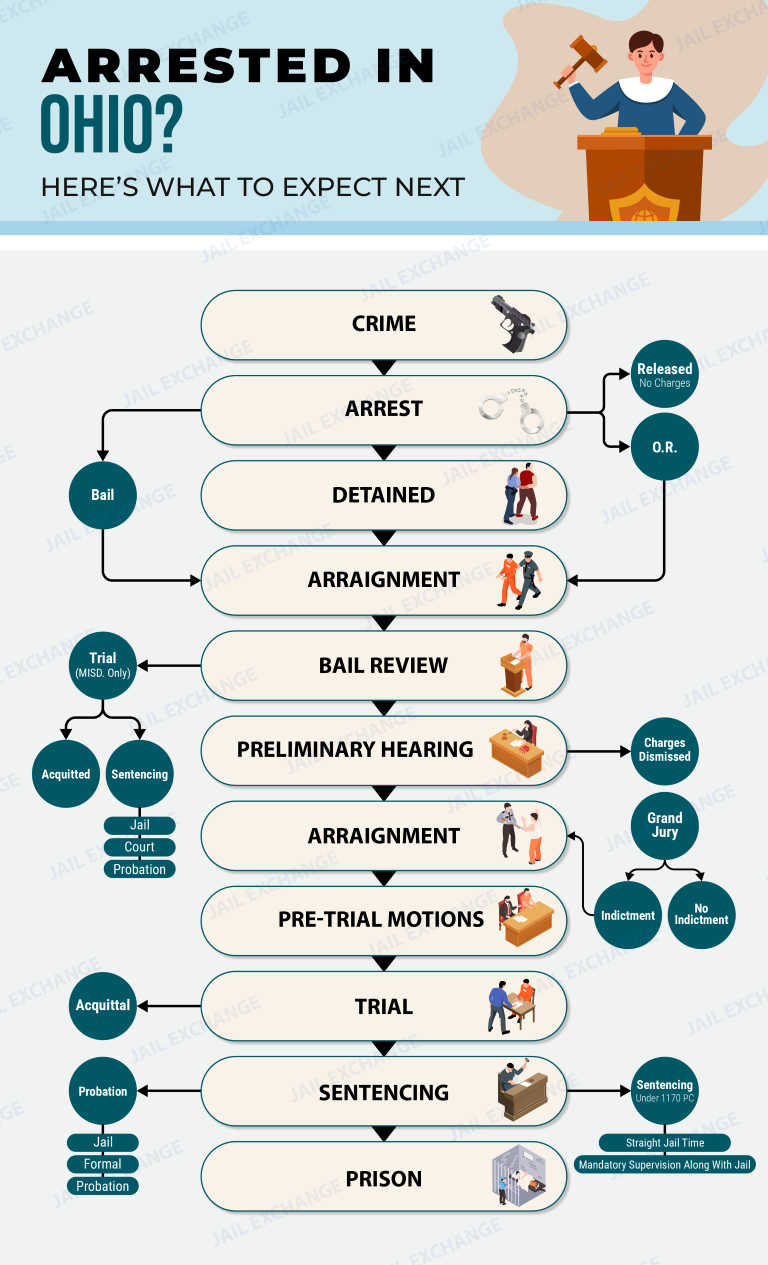
Information for this service is currently unavailable.
Information for this service is currently unavailable.
The Lakewood City Jail is run by the Lakewood Division of Police at its headquarters on Detroit Avenue in Lakewood, Cuyahoga County, Ohio. It is a city lockup, so check the jail inmate list to see whether the person is still there before you mail anything.
Mail for someone in the Lakewood jail:
Lakewood City Jail
12650 Detroit Avenue
Lakewood, OH 44107
- Your address: Your name and address go in the upper left corner of the envelope or postcard.
- What you can mail: Letters in an envelope and pre-metered postcards. Staff would rather not receive photos.
- Pen color: Blue or black only, with no markers, crayon, colored ink, drawings or glitter.
- Newspapers: They can't come by mail, but you may bring one or two in person.
- Books and magazines: You may bring in one or two softcover books or magazines, and a publisher may mail them directly. Hardcovers are never allowed, and anything violent, profane or pornographic is taken.
- Visiting hours: Tuesday and Saturday from 1 to 5 p.m. and Thursday from 6:30 to 9 p.m. Lawyers and clergy may visit at any time.
- Money: To put money on the person's account, send money online, or call 216-529-6758 with questions.
ViaPath AdvancePay Phone Calling Accounts
Provider: ViaPath Technologies • Formerly ConnectNetwork / Global Tel*Link (GTL)

AdvancePay is the primary prepaid telecommunications service operated by Global Tel*Link (GTL) and ConnectNetwork, which have unified under the corporate identity of ViaPath Technologies (and the myViaPath platform). By funding an AdvancePay account, telephone charges are deducted per minute whenever an incarcerated loved one calls your specific telephone number, preventing calls from being rejected by cellular carriers.
Important: Cell Carriers Automatically Block Jail Collect Calls
Inmate telephone networks do not permit incoming calls, and wireless cell providers automatically block traditional collect billing by default. While select traditional landlines may support operator billing, cell phones and internet-based lines require an active AdvancePay balance, which you can verify with your carrier. If you do not register your number online and add funds immediately, your loved one will hear an automated operator announcement stating your line is blocked from receiving correctional calls.
Step-by-Step Instructions to Open and Fund AdvancePay
- Visit web.connectnetwork.com or the updated my.viapath.com portal, or launch the ConnectNetwork / ViaPath mobile application.
- Click Sign Up and register using your primary 10-digit cellphone number and email address.
- Select Add Facility, pick your state, and choose the detention center or state prison where the inmate is held.
- Search for the inmate using their full legal name or facility booking ID number and link them to your contact directory.
- Select AdvancePay Phone and choose your deposit amount ($25, $50, or custom).
- Enter your debit or credit card billing details, accept the administrative transaction fee, and complete the payment.
- Check your phone settings to confirm that automated or unknown correctional numbers are not routed straight to spam.
What the Inmate Needs to Do
The inmate approaches any housing pod telephone, enters their assigned PIN and voice biometric recognition phrase, and dials your 10-digit number. ViaPath's automated operator confirms your active prepaid balance and connects the call. All personal telephone calls are subject to recording and monitoring by facility investigators.
Official Providers: ConnectNetwork Portal | myViaPath Portal
Customer Service Telephone: 1-877-650-4249 (Automated & Live Support)
Support Hours: Automated Service 24/7; Live Operators Monday – Friday, 8:00 AM – 10:00 PM EST
Supported Languages: English and Spanish
Other Services Provided by ViaPath Technologies (ConnectNetwork)
In addition to AdvancePay Phone Calling, ViaPath / ConnectNetwork provides several other communication, financial, and visitation services:
- ConnectNetwork Trust Fund Deposits: Transfer money directly into an inmate's jail trust account for commissary store purchases.
• Learn more on our website: Inmate Trust Deposits Guide | • Visit official vendor page: ConnectNetwork Trust Deposits - ViaPath PIN Debit Phone Calling: Give the inmate their own calling funds to contact any approved phone number independently.
• Learn more on our website: PIN Debit Phone Calling Guide | • Visit official vendor page: ViaPath PIN Debit Calling - ViaPath Messaging & Photo Sharing: Send digital messages, photos, and video attachments directly to their terminal.
• Learn more on our website: Digital Messaging Guide | • Visit official vendor page: ViaPath Messaging Services - GettingOut Video Visitation & Tablets: Schedule face-to-face remote video visits and manage handheld tablet communications.
• Learn more on our website: Remote Video Visitation Guide | • Visit official vendor page: GettingOut Video Visits
ViaPath PIN Debit Phone Calling Accounts
Provider: ViaPath Technologies • Formerly ConnectNetwork / Global Tel*Link (GTL)ViaPath PIN Debit (hosted on ConnectNetwork and myViaPath) provides incarcerated individuals with their own calling funds. Unlike AdvancePay (which only funds calls placed to your specific phone number), PIN Debit funds belong directly to the inmate, allowing them to call attorneys, bondsmen, employers, or extended family members across multiple approved telephone numbers.
Important: AdvancePay Only Funds a Single Phone Number
When someone is arrested, they often need to contact multiple people—including legal defense counsel, bail agents, employers, and relatives. If you only fund an AdvancePay account, your loved one will have no calling balance to dial anyone else, as rules and call authorizations vary by facility. Adding funds directly to ViaPath PIN Debit grants them the calling flexibility needed to handle critical legal and family arrangements without delay.
Step-by-Step Instructions to Fund a PIN Debit Account
- Sign into your account at web.connectnetwork.com or my.viapath.com.
- Click on PIN Debit under the communications menu.
- Select the state and facility, and link the inmate's booking identification number.
- Enter the deposit dollar amount and review the payment transaction fee.
- Enter your debit or credit card details and submit the payment.
- Notify your loved one that their personal PIN calling balance has been credited.
What the Inmate Needs to Do
The calling balance appears under the inmate's personal identification PIN. When they pick up any dayroom telephone or tablet, they select the 'PIN Debit' prompt from the automated menu to place calls to any approved number on their personal contact list.
Official Providers: ConnectNetwork Portal | myViaPath Portal
Customer Service Telephone: 1-877-650-4249
Support Hours: Automated Deposits 24/7/365; Live Agents Monday – Friday, 8:00 AM – 10:00 PM EST
Supported Languages: English and Spanish
Other Services Provided by ViaPath Technologies (ConnectNetwork)
In addition to PIN Debit Calling, ViaPath / ConnectNetwork provides several other communication, financial, and visitation services:
- AdvancePay Dedicated Phone Calling: Fund calls placed specifically to your personal phone number.
• Learn more on our website: AdvancePay Calling Guide | • Visit official vendor page: ConnectNetwork AdvancePay - ConnectNetwork Trust Fund Deposits: Deposit money for commissary food, hygiene supplies, and stationery.
• Learn more on our website: Inmate Trust Deposits Guide | • Visit official vendor page: ConnectNetwork Trust Deposits - ViaPath Messaging & Photo Sharing: Send digital messages and photos directly to their kiosk or tablet.
• Learn more on our website: Digital Messaging Guide | • Visit official vendor page: ViaPath Messaging Services - GettingOut Video Visitation & Tablets: Schedule face-to-face remote video visits from home.
• Learn more on our website: Remote Video Visitation Guide | • Visit official vendor page: GettingOut Video Visits
Information for this service is currently unavailable.
Information for this service is currently unavailable.
Cuyahoga County County Jails
Cuyahoga County City Jails
Cuyahoga County Juvenile Facilities
Nearby counties
- Jail (Main): 216-529-6758
- Arrest Warrants: 216-623-1234
- Cleveland Drug Court: 216-420-8871
- Cleveland Police: 216-621-1234
- Common Pleas Criminal Court: 216-443-8560
- County Probation: 216-443-7900
- County Prosecutor: 216-443-7800
- Crime Victims: 216-443-7800
- Cuyahoga Criminal Court: 216-443-7999
- Juvenile: 216-443-3300
- Juvenile Court: 216-443-8400
- Municipal Probation: 216-664-4930
- Public Defender: 216-443-7223
The Lakewood City Jail serves the following cities and towns of Cuyahoga County: Bay Village, Beachwood, Bedford, Bedford Heights, Berea, Brecksville, Broadview Heights, Brook Park, Brooklyn, Brooklyn Heights, Chagrin Falls, Cleveland, Cleveland Heights, Cuyahoga Heights, East Cleveland, Euclid, Fairview Park, Garfield Heights, Gates Mills, Glenwillow, Highland Heights, Highland Hills, Hunting Valley, Independence, Lakewood, Linndale, Lyndhurst, Maple Heights, Mayfield, Mayfield Heights, Middleburg Heights, Moreland Hills, Newburgh Heights, North Olmsted, North Randall, North Royalton, Oakwood, Olmsted Falls, Orange, Parma, Parma Heights, Pepper Pike, Richmond Heights, Rocky River, Seven Hills, Shaker Heights, Solon, South Euclid, Strongsville, University Heights, Valley View, Walton Hills, Warrensville Heights, Westlake and Woodmere.