
Cuyahoga Falls City Jail
Cuyahoga Falls City Jail
Physical Address
2310 Second StreetCuyahoga Falls, OH 44221
Jail Phone Number
330-928-2181Summit County Inmate Search: Locating Someone at the Crosier Street Jail in Akron
Adults picked up by Akron officers, deputies, suburban police or state troopers are booked into the Summit County Jail, 205 E. Crosier Street, Akron, OH 44311. The Sheriff's Office operates it nonstop. A few towns may briefly hold a person in their police station before the transfer. Below, you can learn to look someone up, view mugshots, handle bail, book video visits, send money and letters, and follow court dates.
Open the Sheriff's current inmate roster, a PDF called the Head Count With Photos Report. Search inside it for a last name with your browser's find feature. Each entry gives an inmate number, birth date, and every charge with its Ohio law number, the arresting agency and the bond. Check the date it was printed, because anyone booked after that time won't appear yet.
Next, call the jail's automated line at 330-643-2171. Keep a pen nearby, and know how the person spells their legal name and when they were born. Ask whether they remain in custody, what bond was set and which court took the case. Bond money goes to a court clerk, not the jail. Our bail page tells you where to pay, and the court page previews each hearing.
Read inmate search answers
 Read inmate search answers
1. Head Count report basics: how do I search the Summit County list?
One PDF lists everyone held at Crosier Street. Here is the routine:
- Tap the link to the Head Count roster. Your device will open or download the PDF.
- Note the print date. It tells you how old the list is.
- Hit Ctrl+F (Windows) or Command+F (Mac). Phones hide this under Find in Page in the browser menu. Enter the surname.
- Read the top line of the entry: inmate number, name, birth date, race and sex.
- Read each charge below it. You will see the arrest date and time, the agency, the Ohio law number, a short description and the bail or bond.
- Write down the inmate number. Mail, deposits and calls all need it.
If the file won't open or the name isn't there, phone Corrections at 330-643-2171 and follow the menu.
↑ Back to the question list2. Why might the name not appear on the roster yet?
No match? That alone doesn't mean they went home. Check these possibilities:
- Still in booking. Fingerprinting, the booking photo and intake forms take a few hours, and the PDF may have been printed before they got there.
- A town held them first. Some police departments keep a person at their station for a short time. Call the agency that made the arrest (phones are in the last question).
- Already released. People leave fast on a citation, a signature bond or a paid bond. The jail releases people at any hour, usually 2 to 3 hours after it gets the order.
- Different spelling. Search just a chunk of the surname, like its first four letters, or try a middle or earlier name.
- Held elsewhere. A neighboring county's Sheriff, a state agency or federal officers could have custody.
- Under 18. Minors are taken to the juvenile center on Dan Street.
The jail can settle it: call 330-643-2171. You can also ask the jail's Registrar at 330-643-2200.
↑ Back to the question list3. Which lockup could be holding them after an arrest near Akron?
Almost all adults booked here end up in a single facility:
- Summit County Jail, 205 E. Crosier Street, Akron, OH 44311, 330-643-2171. The Sheriff's Office runs it as the main lockup for every police agency in the county. It has room for 671 people. Inside are people waiting for their cases in the Akron, Barberton or Stow municipal court or in Common Pleas. Others are doing time on a local sentence or are held for another agency. Staff classify each new arrival at booking by the current charge and past record, and that sets where they are housed.
- Cuyahoga Falls City Jail. To learn whether someone is being held by the city before a move to Crosier Street, call the Cuyahoga Falls Police Department, 2310 Second Street, Cuyahoga Falls, OH 44221, 330-928-2181.
Children go to a separate youth center, covered in the under-18 question. When the arrest took place in a bordering county, that county's own Sheriff usually holds the person, so call there. General questions go to the Sheriff's Office at 330-643-2154.
↑ Back to the question list4. Are there mugshots on the Summit County roster?
Yes. The Sheriff's roster is titled Head Count With Photos Report, and it shows mugshots with the names. Open the roster with photos and look up the last name.
Ohio cracks down on pay-to-remove mugshot sites. A website or paper that shows booking photos may not demand, or even accept, payment to pull one offline, per R.C. 2927.22. Doing that is a first-degree misdemeanor offense here, and the pictured person can file a lawsuit seeking $10,000 or more. Ohio's Public Records Act is R.C. 149.43. Reporters and others who want a copy of a photo can call the Sheriff's Office at 330-643-2154.
- ICE pictures are requested through its FOIA portal.
- Pictures from federal bookings generally stay inside the agency. The U.S. Marshals Service is the exception and sometimes shares one, such as during a manhunt.
5. Can I get pinged the moment they leave Crosier Street?
Ohio VINE, offered at no cost by the state Attorney General, lets you look up a name and see the facility holding that person. Registered users hear by phone call, text or email when that person walks out, transfers, escapes or dies. It tracks county jails, Ohio's prisons and youth centers of the Department of Youth Services.
- Register at VINELink, or call 800-770-0192 at any hour.
- Search by name, pick the right person, then choose how you want to hear.
- Alerts begin only after you sign up.
VINE updates can trail the jail's records. Call 330-643-2171 to check before you head over to collect someone.
↑ Back to the question list6. What decides bond and release after a Summit County arrest?
R.C. 2937.011 is Ohio's pretrial release statute. It points judges to the least burdensome terms that will bring the defendant back, guard public safety and protect the court process. Here is how it works after a local arrest:
- Misdemeanors. Every court keeps a set price list for these charges, called a bail schedule, so some people can leave before seeing a judge.
- Felonies. Felony amounts are a judge's or magistrate's call. A defendant who stays behind bars is owed a bail hearing by court day two after the arrest.
- Bond choices. The court can allow several kinds. One needs no money up front. Another needs 10 percent in cash. A bondsman can post a surety bond, or you can pledge property or stocks, or pay the whole amount. With the 10 percent deposit, you get 90 percent back if every condition is kept.
- Held with no bail. A judge may refuse bail on certain grave charges. That can happen only after a hearing where the state proves its case by clear and convincing evidence.
Bond money is never paid at the jail. Pay at the clerk's window of whichever court has the case. On a felony, that is the Clerk of Courts, 205 S. High Street, 1st Floor, Akron, OH 44308, 330-643-2211, weekdays 7:30 a.m. to 4 p.m. For an Akron Municipal Court case, the clerk's criminal line at 172 S Broadway St, Akron, OH 44308 answers 24 hours a day at 330-375-2570. Most bonds carry an $85 state fee. Cards work, but personal checks are refused.
Bail agents work under a state license from the Ohio Department of Insurance. They can charge only the premium the state approved, and they have to tell you up front about any added fee. Agents may not chase you at the jail or courthouse or demand a title to your car or home. Call the Department at 800-686-1526 with questions. Walk through it on our bail page, and read the state's framework on Ohio bail rules.
↑ Back to the question list7. What are the charges, and which clerk has the file?
The roster is the quickest first look. Every charge on it carries an Ohio law number and a brief label. You can read any Ohio law for free at codes.ohio.gov.
Then phone the clerk where the case is filed:
- Akron area: Akron Municipal Court Clerk, 172 S Broadway St, Akron, OH 44308, criminal line 330-375-2570.
- Barberton area: Barberton Municipal Court Clerk, 576 W. Park Avenue, Room 205, Barberton, OH 44203, 330-753-2261.
- Stow and the north end: Stow Municipal Court Clerk, 4400 Courthouse Boulevard, Stow, OH 44224, 330-564-4110. Choose the criminal and traffic option.
- Felony after indictment: Clerk of Courts, Criminal Division, 205 S. High Street, 1st Floor, Akron, OH 44308, 330-643-2282.
Felony charges can change when the case goes to the grand jury. The county Prosecutor's Office makes that call. It sits at 53 University Ave, 6th Floor, Akron, OH 44308, and its Criminal Division answers at 330-643-8515.
↑ Back to the question list8. Can someone with no money for a lawyer get one free?
Money worries should be raised with the judge at the first appearance, along with a request for an appointed lawyer. The court has them sign a financial statement under oath, then decides if they qualify.
Here, most of that work goes to Summit Legal Defenders, the public defender office. It takes felony, misdemeanor and juvenile cases for people who qualify.
- Main office: 80 South Summit St. #100, Akron, OH 44308, 330-434-3461.
- Its lawyers also work out of offices in Barberton and inside the Akron Municipal, Stow Municipal and Juvenile court buildings.
A conflict of interest means the court will name an outside lawyer instead. Relatives can also hire private counsel at any stage. Someone still jailed who faced that first bail hearing without counsel gets a repeat hearing two court days later, this time with appointed counsel if they can't pay.
↑ Back to the question list9. How are video visits with the Crosier Street jail booked?
Every visit is by video and is booked through ICSolutions. You can visit from home on a PC, a Mac or a phone, or come in and use a jail video station.
- Schedule a day or more in advance (24 hours minimum).
- Visits last about 25 minutes and run Monday through Friday, 8 a.m. to 6 p.m.
- Be ready 15 minutes before your time, and have a state ID.
- Children are welcome when a parent or guardian comes too, birth certificate in hand.
Rules can change with little warning. Call 330-643-2171 before your first visit, and read our visiting guide for tips.
↑ Back to the question list10. Where do I send commissary money for someone at Crosier Street?
Account funds cover commissary purchases and some messaging. You have two choices:
- Lobby kiosk at 205 E. Crosier Street, Akron, OH 44311. It is run by Access Secure Deposit and takes cash or cards, with fees.
- Online through jailatm.com. The Sheriff's Inmate Services page also sends families to Access Corrections for deposits.
Personal checks are refused, and the jail sets a $150 deposit limit. Use the inmate number from the roster. If a deposit goes missing or you have a question about the limit, call Inmate Accounts at 330-643-8213. Tips on deposits sit in our money section, and store items are in our commissary rundown.
↑ Back to the question list11. How do calls, texts and tablet messages reach them?
People inside use a few services to stay in touch:
- Phone calls. Set up a prepaid account with ICSolutions at 888-506-8407. Calls are generally open from 5:30 a.m. to 11 p.m.
- Texts, email and video calls. These reach the person's tablet through jailatm.com.
Act as if staff could hear every call and read every message. Keep details of the arrest out of calls and texts, and save them for the defense lawyer. Learn more on our calling page and our tablet message page.
↑ Back to the question list12. Why does mail to an Akron jail go to Arkansas?
Letters go to a processing center in Arkansas. They are scanned and shown on the person's tablet. Write the address in this order:
- Line 1: Summit County Jail, Ohio
- Line 2: the inmate's full name and ID number
- Lines 3 and 4: P.O. Box 16120, Jonesboro, AR 72401
Sender details matter: put your return address in the top left, and copy the ID number from the roster. Never mail cash. Before you send photos, books or legal papers, call 330-643-2171 to ask what is allowed. For more, see our letters page.
↑ Back to the question list13. Can a relative pick up property from the Crosier Street jail?
Things taken at booking stay with the jail. The person can sign them over to anyone they pick. Pickup is Monday through Friday, 8 to 11 a.m., at 205 E. Crosier Street, Akron, OH 44311. The person's own ID cards are never handed over to someone else.
Phone 330-643-2171 first to confirm the person signed the release and to ask what to bring.
↑ Back to the question list14. Who handles medicine, injuries and illness at Crosier Street?
The jail gives medical, dental and mental health care. If someone inside is ill or missing a prescription, phone Corrections Medical at 330-643-2139. Share the full name, the inmate number, the drug and dose, and their doctor's name and phone.
For an urgent problem with someone inside, use the inmate emergency line at 330-643-2177. Your loved one should also send staff a medical request and say right away if they feel unsafe or in crisis.
↑ Back to the question list15. How can I tell if a Summit County warrant has been issued?
The Sheriff's Warrants Unit serves county warrants, while city police serve warrants in their towns. Read the Sheriff's warrants page, then call the unit at 330-643-5457, weekdays 8 a.m. to 4 p.m. After hours, county dispatch takes calls at 330-643-2181. Town police can look up their own warrants; see the final question for numbers. For case details, phone the municipal court clerk, such as Akron's at 330-375-2570, or the Clerk of Courts at 330-643-2282 for a felony. To clear it, speak with a defense lawyer, and then call or visit the court listed on the warrant. Felony clerk's office: 205 S. High Street, 1st Floor, Akron, OH 44308.
↑ Back to the question list16. Akron, Barberton, Stow or Common Pleas: where is the next hearing?
Hearing dates live with the clerk of each court. Three municipal courts share the county's misdemeanors, traffic cases and first felony hearings:
- Akron Municipal Court, 172 S Broadway St, Akron, OH 44308, 330-375-2120. It covers Akron, Fairlawn, Lakemore, the village of Richfield, the Bath, Richfield and Springfield townships, and the county's share of Mogadore.
- Barberton Municipal Court, 576 W. Park Avenue, Room 205, Barberton, OH 44203, 330-753-2261, weekdays 8 a.m. to 4:30 p.m. It covers Barberton, Green, Norton, New Franklin, Clinton, Copley and Coventry.
- Stow Municipal Court, 4400 Courthouse Boulevard, Stow, OH 44224, 330-564-4200. It covers Hudson, Twinsburg, Cuyahoga Falls, Stow, Macedonia, Tallmadge, Munroe Falls and other towns in the north.
- Court of Common Pleas, General Division, 209 S. High Street, Akron, OH 44308, 330-643-2162. It tries felonies. Its Clerk of Courts is next door at 205 S. High Street, 1st Floor, Akron, OH 44308, 330-643-2211.
A few cities also hold a mayor's court for local tickets, and the ticket names that court. Our court page breaks down every stage, from arraignment to sentencing.
↑ Back to the question list17. Federal charges from Akron or its suburbs: where does the case go?
Akron is a division seat of the federal Northern District of Ohio, so cases from this county stay downtown, at the John F. Seiberling courthouse, 2 South Main Street, Akron, OH 44308, 330-252-6000.
- At the first court date, a judge may hold a detention hearing. The judge then chooses conditions of release or custody until trial (18 U.S.C. 3142).
- Before sentencing, the U.S. Marshals Service holds them, often in a local jail under contract. Ask where at the Marshals office, 2 South Main Street, Room 314, Akron, OH 44308, 330-375-5800.
- The Federal Public Defender, 50 South Main Street, Suite 700, Akron, OH 44308, 330-375-5739, represents people who cannot afford counsel.
- After sentencing, look them up on the Federal Bureau of Prisons inmate locator.
18. What steps follow an ICE detainer at Crosier Street?
Here is the usual path of a federal immigration hold at Crosier Street:
- Immigration officers send the Sheriff's jail staff a Form I-247A detainer.
- A federal rule, 8 CFR 287.7(d), sets the limit. The jail may hold the person for up to 48 hours after they would otherwise be released. That gives ICE time to come.
- The Detroit Field Office handles Ohio cases: 985 Michigan Avenue, Suite 207, Detroit, MI 48226, 313-771-6601. The nearest ICE office is at 925 Keynote Circle, Brooklyn Heights, OH 44131, 216-749-9200.
- Look for the person on the ICE Online Detainee Locator.
The federal time limit above is what governs these holds here. Questions about any ICE arrangement at the jail can go to the Sheriff's Office, 330-643-2154.
↑ Back to the question list19. How do I trace someone after an Ohio prison sentence?
Transport to the state can take a while, so a sentenced person may remain on Crosier Street for some time. The state then sends them to a reception center for classification, and after that to the prison picked for them. Call the jail at 330-643-2171 to ask about timing.
- The state's ODRC offender lookup searches by name. Results include people behind prison walls and people on ODRC supervision.
- JE's Ohio prisons page covers the state system.
20. What if the youth arrested in Summit County is under 18?
Children under 18 usually go to a youth center instead of the adult jail. A youth who has to stay in custody is taken to the county's Juvenile Detention Center, 650 Dan Street, Akron, OH 44310. It is open 24 hours a day, all year, at 330-643-2960.
Juvenile Court, part of the Common Pleas court, handles the case from the same campus, 650 Dan Street, Akron, OH 44310. Call 330-643-2900, weekdays 8 a.m. to 4 p.m. The detention hearing has a tight deadline: 72 hours at most, and the next court day instead if that comes first. Juv.R. 7 and Ohio's R.C. 2151.314 set this timing. If that hearing doesn't happen, a parent takes the child home. Summit Legal Defenders can take youth cases for families who qualify, so ask at the hearing.
↑ Back to the question list21. Which Summit County police agency arrested them?
Look at the agency column beside each charge on the roster. Departments in the county:
Akron and nearby
- Akron Police Department, 217 South High Street, Akron, OH 44308, 330-375-2244
- Akron Children's Police, 141 West State Street, Akron, OH 44308, 330-543-3773
- Bath Township Police, 3864 West Bath Road, Akron, OH 44333, 330-666-3736
- Copley Police, 1260 Sunset Drive, Copley, OH 44321, 330-666-8866
- Fairlawn Police, 3487 South Smith Road, Fairlawn, OH 44333, 330-670-4300
South and west
- Barberton Police, 576 West Park Avenue, Barberton, OH 44203, 330-848-6701
North
- Boston Heights Police, 45 East Boston Mills Road, Hudson, OH 44236, 330-650-4111
- Cuyahoga Falls Police, 2310 Second Street, Cuyahoga Falls, OH 44221, 330-928-2181
Other cities, villages and townships with local officers include Green, Hudson, Lakemore, Macedonia, Mogadore, Munroe Falls, New Franklin, Northfield, Norton, Peninsula, Reminderville, Richfield, Sagamore Hills, Silver Lake, Springfield Township, Stow, Tallmadge, Twinsburg, Clinton and Coventry, along with the University of Akron police. Not sure which agency covers a town? Ask the Sheriff's Office listed below.
- Sheriff's Office, 53 University Avenue, Akron, OH 44308, 330-643-2154. It runs the jail and the Warrants Unit.
- Ohio State Highway Patrol: troopers work from local posts, and you can pick the one for this county on the patrol's post finder.
Summit County bail and bond: the Akron jail, the Clerk of Courts, and three municipal courts
After an arrest anywhere in Summit County, adults are booked into the Summit County Jail, 205 East Crosier Street, Akron, OH 44311. Deputies from the Sheriff's Office staff it every hour of the year. A few suburban departments may hold someone briefly before the drive to Akron. This page shows where bond is paid, what it costs and how to get help.
To see if the booking is done, open the Sheriff's current inmate roster and search it for the family name. It lists each charge and the bail set for it. Our Inmates in Custody page explains fresh arrests, open warrants and property pickup on Crosier Street.
The jail will not take bond money, so call the Clerk of Courts at 330-643-2211 first. Ask which court has the case, how much the bond is and how you can pay. The jail's recorded main line is 330-643-2171. For hearing dates and the three city courts, see our Summit County court guide.
1. Which jail holds someone arrested in Akron?
The Summit County Jail at 205 East Crosier Street. The Sheriff's Office runs it, and it is staffed 24 hours a day, 365 days a year. A Corrections Commander manages daily operations.
The Sheriff's administrative office is a separate place, at 53 University Avenue, Akron, OH 44308. Its number is 330-643-2154.
↑ Back to the question list2. How do I check that she has been booked?
Use Summit County Inmate Search. The record shows the charges and the bail amount once booking is done. A very new arrest can take a while to post.
The jail's main line, 330-643-2171, is automated, so have the name ready and listen for the right option. The Sheriff's office at 330-643-2154 is the human number for other questions.
↑ Back to the question list3. Can I bring bond money to the jail on Crosier Street?
No. The Sheriff's Office states that the jail does not accept bond payments. You pay at the Clerk of Courts office for the court that is hearing the case.
Showing up at the jail with cash only wastes a trip. Find the court and the case first, then go to its clerk.
↑ Back to the question list4. Where do I pay a bond in a felony case?
Go to the Summit County Clerk of Courts, Legal Division, in the Summit County Courthouse, 205 S. High Street, 1st Floor, Akron, OH 44308. Hours are 7:30 a.m. to 4:00 p.m., weekdays, closed on legal holidays.
The main number is 330-643-2211, and the Criminal Division answers at 330-643-2282. Ask for the amount, the case number and what the clerk needs from you.
↑ Back to the question list5. What is the extra $85 on a bond?
The State of Ohio charges a mandated fee of $85 on every bond except signature and recognizance bonds. It is added to the bond amount, so a $1,000 cash bond costs $1,085 at the counter.
A signature bond has no deposit, so it carries no fee. Ask the clerk to total everything before you pay.
↑ Back to the question list6. Does the clerk take cards or checks?
Credit cards are accepted. Personal checks are not accepted for bonds. Bring a card with enough room on it, or choose another form that the clerk approves.
Money you send to the jail for a person's account is not bail. It pays for store items and calls only.
↑ Back to the question list7. Which court will hear a misdemeanor from Akron, Barberton or Stow?
Misdemeanor and traffic cases are heard mainly in three municipal courts. Akron Municipal Court sits at 172 S. Broadway Street, Akron, OH 44308. Barberton Municipal Court is in the Municipal Building, 576 West Park Avenue. Stow Municipal Court is at 4400 Courthouse Drive, and its phone is 330-564-4200.
For Akron cases, the municipal clerk answers at 330-375-2570. Ask that clerk how a bond is paid on your case, because each court has its own counter.
↑ Back to the question list8. What is a mayor's court, and could my case be there?
Some communities in Summit County run a mayor's court for minor charges. Those cases are separate from the three municipal courts.
If the ticket or paperwork names a village or city mayor's court, call that court. The Clerk of Courts at 330-643-2211 can help you sort out which court has the file.
↑ Back to the question list9. How soon does a Summit County judge review the arrest?
Under Ohio law the first bail hearing is due by the end of the second court day after the arrest. Neither weekends nor court holidays are counted. A person still held without a lawyer gets a second hearing two court days later, and the court appoints a lawyer at state expense for someone who cannot pay.
An arrest late Friday can mean a hearing Tuesday. Use the waiting time to gather proof of work, housing and family ties.
↑ Back to the question list10. Does the judge have to use the bond schedule?
No. Every Ohio court must keep a misdemeanor bail schedule, but its only job is to let a person leave before the first hearing. It is reviewed every two years, by January 31 of each even-numbered year.
At the hearing a judge looks at the charge, the evidence, the person's record, job, finances and past court appearances, and sets bail under the Constitution's public-safety rule.
↑ Back to the question list11. What choices does a Summit County court have for a bond?
It may accept an unsecured bond, a bond secured by a 10 percent cash deposit, a surety bond, a bond secured by real estate or securities, or a full cash deposit. The person posting picks among those the law permits.
Financial terms must be the least costly ones that still assure the person returns to court.
↑ Back to the question list12. Is the 10 percent deposit refunded?
You deposit one tenth of the bond with the clerk, plus any state fee. When every condition is met the court returns 90 percent of the deposit.
If a friend made the deposit, the court cannot use it for the defendant's fines or costs without that friend's express approval. If the defendant paid it and is not indigent, the court may apply it to costs after a conviction or plea.
↑ Back to the question list13. How do I pick a bail agent I can trust?
Use a licensed surety bail bond agent. The agent must charge the premium rate filed with the Ohio Department of Insurance and tell you about any expense fee. Ask for the terms in writing.
An agent cannot require a deed to your home and cannot solicit families at the courthouse or the jail. The Department of Insurance, 614-644-2665, answers questions about filed rates.
↑ Back to the question list14. Can a house secure the bond?
Yes, under Ohio law. The owner signs an affidavit about the property, the loans against it and other bonds already backed, and the court must find the owner able to cover the whole amount. No lawyer can be a surety.
This path takes longer than cash. Ask the Criminal Division at 330-643-2282 what the court needs.
↑ Back to the question list15. Why does the record say "no bond" or "hold"?
A judge may not have set an amount yet. Ohio also lets a court refuse bail only for a capital offense, or for a felony where the proof is evident and the person poses a substantial risk of serious physical harm to anyone. A hearing comes first, and the state must prove its case by clear and convincing evidence.
In some stalking and protection-order cases the court decides on a mental health evaluation before it sets bail.
↑ Back to the question list16. What if my teenager is held in Akron?
Juveniles go to the Summit County Juvenile Detention Center instead of the adult jail. The Juvenile Court is at 650 Dan Street, Akron, OH 44310, main line 330-643-2900. The detention center answers at 330-643-2960, every hour of the day.
Detention hearings are held by Zoom, and the court posts the link on its website. Children are left off the adult search.
↑ Back to the question list17. Which office provides a lawyer for people who cannot pay?
Summit Legal Defenders is the county's public defender, at 80 South Summit St. #100, Akron, OH 44308. Call 330-434-3461. It handles misdemeanors and juvenile delinquency cases for people who qualify.
Tell the judge at the first hearing that you cannot afford a lawyer and the court will review the request.
↑ Back to the question list18. What if he misses a court date after paying?
A warrant can follow, and the court may keep the bond. A missed date can also bring its own charge.
A person who posted the bond protects the money by returning the defendant to court before the date, or by contacting the Clerk of Courts at once.
↑ Back to the question list19. How do I avoid being cheated when I am rushing to raise money?
No court or jail asks for gift cards, wire transfers or payment apps. Bond is paid at a clerk's counter or to a licensed agent.
If a caller claims to be a deputy and demands money, hang up and call 330-643-2154 yourself.
↑ Back to the question list20. Summit County bail contacts
- Jail: Summit County Jail, 205 East Crosier Street, Akron; main line 330-643-2171 (automated)
- Sheriff's Office: 53 University Avenue, Akron, OH 44308; 330-643-2154
- Custody lookup: Summit County Inmate Search
- Bond guide: Summit County bail and bond instructions
- Clerk of Courts: Courthouse, 205 S. High Street, 1st Floor, Akron, OH 44308; 7:30 a.m. to 4:00 p.m. weekdays; 330-643-2211; Criminal Division 330-643-2282
- Municipal courts: Akron: 172 S. Broadway Street, 330-375-2120; Barberton: 576 West Park Avenue; Stow: 4400 Courthouse Drive, 330-564-4200
- Public defender: Summit Legal Defenders, 80 South Summit St. #100, Akron, OH 44308; 330-434-3461
- Juvenile: Juvenile Court, 650 Dan Street, Akron, OH 44310; 330-643-2900; detention 330-643-2960
- Insurance: Ohio Department of Insurance, 614-644-2665
Fees, hours and phone numbers can change, and a judge can set any amount at a hearing. Check with the clerk of the court that has the case before you pay. For advice about one case, talk to a lawyer.
↑ Back to the question listThe Summit County Sheriff recommends that you might want to use a bail bond agent licensed to do business in Summit County.
However if you don't want to use a bail bond agent:
- You can always pay a cash bond yourself, or use your home in Summit County, or in some cases the state of Ohio, but the benefit of using a bail bond agent is that they take responsibility for making sure the inmate shows up for court in Summit County, and if they don't, then they take the financial responsibility.
- The typical fee for a bond in Ohio is between 10-20% of the bail amount; usually 15% or less. So if an offender has a bail of $10,000.00, their bond will be $1,500.00.
- Pay by cash, cashier's check, money order or credit card at the Cuyahoga Falls City Jail, or the courthouse in Summit County where the offense took place.
Call 330-928-2181 to find out the exact bond (plus other fees) amount, or look it up online by looking up the information on the Summit County inmate locator.

Cuyahoga Falls City Jail Inmate Visitation
Friends and Family – This facility in Summit County, Ohio chooses not to publish a visiting calendar. Current days and times are available only by calling 330-928-2181.
Why the Schedule Isn't Posted
Keeping hours unpublished can protect privacy, support security, and allow individual or unit times.
Have the inmate's full name, date of birth, booking number if you have one, and your own name and ID. A common pattern is that visits start only after a wait of two to seven days from booking; ask when the person may have visitors. Be clear about your identity and your relationship, and keep the conversation respectful and to the point.
Items to Confirm
- whether children may visit and what they need
- when visits are taking place
- the time limit for a visit
- how much advance scheduling is required
- whether a visitor application or background check is required
- what form of photo ID to bring
- whether you have to register or be placed on an approved list and how to get added
- what clothing is acceptable and what property you may bring
- whether staff are scheduling in-person visits, video visits, or both
Practices Common at Most Jails
Think of the following as common practice. Call 330-928-2181 to check what applies here.
- No food. Most jails also bar drinks and gum from the visiting room.
- Dress modestly: most jails turn away tank tops, sleeveless shirts, short skirts or shorts, as well as revealing or see-through clothing, gang colors or offensive prints, hats, and sunglasses, and they require shoes.
- Typical practice is to check in at least 15 minutes ahead of the appointment; being late may cost you the visit.
- Most jails do not let visitors bring phones, wearable devices, jewelry, purses, or bags into the visiting area.
- Underwire bras are typically not permitted; they often set off the metal detector.
Have your questions ready, then call 330-928-2181 and work through them with staff.
Summit County Criminal Courts: Akron, Barberton, Stow and Common Pleas
Three municipal courts, in Akron, Barberton and Stow, handle misdemeanors and open each felony case. Indicted felonies then land in Summit's Court of Common Pleas, 209 South High Street, Akron, OH 44308. Anyone still in custody sits in the Summit County Jail, 205 East Crosier Street, Akron, OH 44311. Below you will find each court, the towns it covers and what happens next.
Not sure where your loved one is right now? Check the Sheriff's jail roster for the name, charges and bond. Our Summit County Inmate Search page also explains warrants, mugshots and free lawyers.
For an Akron case, call the court's criminal clerk at 330-375-2570 and ask for the next court date. Barberton cases go to 330-753-2261, and Stow cases to 330-564-4110. In a felony, the Common Pleas date is known by the Clerk of Courts criminal desk, 330-643-2282. To learn what bond will cost, read our bail page.
1. Local courts in Summit County (municipal, county and mayor's courts)
Akron is the county seat of Summit County and the center of its criminal court system. Three municipal courts, in Akron, Barberton and Stow, divide the county's misdemeanor, OVI and traffic cases and also take the first hearings in felony cases, while seven cities and villages keep mayor's courts for local tickets. Felony cases are tried in the Summit County Court of Common Pleas on South High Street once a grand jury indicts. The Summit County Prosecutor's Office handles felonies and juvenile cases; misdemeanors are prosecuted by city law directors in Akron, Barberton, Stow, Cuyahoga Falls and the other municipalities. Adults who are not released after arrest are held at the Summit County Jail on East Crosier Street in Akron.
- Summit County Court of Common Pleas, General Division, 209 S. High Street, Akron, OH 44308, (330) 643-2162
- Summit County Clerk of Courts, Criminal Division, Summit County Courthouse, 205 S. High Street, 1st Floor, Akron, OH 44308, (330) 643-2282
- Akron Municipal Court, 172 S. Broadway Street, Akron, OH 44308, (330) 375-2120; clerk (330) 375-2570
- Barberton Municipal Court, Municipal Building, 576 W. Park Avenue, Barberton, OH 44203, (330) 753-2261
- Stow Municipal Court, 4400 Courthouse Drive, Stow, OH 44224, (330) 564-4200
- Summit County Juvenile Court, 650 Dan Street, Akron, OH 44310, (330) 643-2900
- Summit County Prosecutor's Office, 53 University Avenue, Akron, OH 44308
- Legal Defender Office of Summit County (Summit Legal Defenders, the county's public defender), downtown Akron, (330) 434-3461
- Summit County Jail (Summit County Sheriff's Office), 205 E. Crosier Street, Akron, OH 44311
Which court hears your case. Summit County has no county court. Misdemeanors, OVI and traffic cases are filed in whichever municipal court has territory over the place of the offense: Akron Municipal Court for Akron, Fairlawn, Lakemore, Richfield and Bath, Richfield and Springfield townships, plus the Summit part of Mogadore; Barberton Municipal Court for Barberton, Green, Norton, New Franklin, Clinton and Copley and Coventry townships; and Stow Municipal Court for Stow, Cuyahoga Falls, Hudson, Tallmadge, Twinsburg, Macedonia and the rest of northern Summit County. In Boston Heights, Cuyahoga Falls, Fairlawn, Macedonia, Munroe Falls, Peninsula and Richfield, ordinance and traffic citations may instead go to a mayor's court, where there is no jury and the defendant can request a transfer to the municipal court. A Summit felony starts out in that same municipal court, which handles the first appearance, the bond decision and any preliminary hearing; the case then moves to the Court of Common Pleas, General Division, after an indictment or a bill of information. Appeals go to the Ninth District Court of Appeals in Akron.
Where pretrial detainees are held. The Summit County Sheriff runs the county jail at 205 E. Crosier Street, just south of downtown Akron. Arrestees from the Akron Police Department, the Sheriff's Office, suburban departments and the Highway Patrol are booked there, and people who cannot post bond wait there for their municipal court or Common Pleas hearings. The Clerk of Courts' Criminal Division, (330) 643-2282, can help with Common Pleas case and bond information; the Sheriff's Office handles questions about custody and visits.
Summit's lower courts are organized by territory. The three municipal courts split the county roughly into central, southwestern and northern sections, and the seven mayor's courts each serve a single city or village.
Municipal courts
- Akron Municipal Court — 172 S. Broadway Street, Akron, OH 44308, (330) 375-2120. Territory: Akron and Fairlawn; the villages of Lakemore and Richfield; Bath, Richfield and Springfield townships; and the Summit County portion of Mogadore.
- Barberton Municipal Court — Municipal Building, 576 W. Park Avenue, Barberton, OH 44203, (330) 753-2261. Territory: Barberton, Green, Norton, New Franklin and Clinton, plus Copley and Coventry townships.
- Stow Municipal Court — 4400 Courthouse Drive, Stow, OH 44224, (330) 564-4200. Territory: Stow, Cuyahoga Falls, Hudson, Tallmadge, Twinsburg, Macedonia, Munroe Falls, Boston Heights, Northfield, Peninsula, Reminderville and Silver Lake, along with Boston, Northfield Center, Sagamore Hills and Twinsburg townships. (This court was formerly known as the Cuyahoga Falls Municipal Court.)
County courts
None. The municipal courts' combined territory takes in all of Summit County.
Mayor's courts
- Boston Heights Mayor's Court — Village Hall, 45 E. Boston Mills Road, Hudson, OH 44236
- Cuyahoga Falls Mayor's Court — City Hall, 2310 Second Street, Cuyahoga Falls, OH 44221
- Fairlawn Mayor's Court — City Hall, 3487 S. Smith Road, Fairlawn, OH 44333
- Macedonia Mayor's Court — City Hall, 9691 Valley View Road, Macedonia, OH 44056
- Munroe Falls Mayor's Court — City Hall, 43 Munroe Falls Avenue, Munroe Falls, OH 44262
- Peninsula Mayor's Court — P.O. Box 83, Peninsula, OH 44264, (330) 657-2151
- Richfield Mayor's Court — 4410 W. Streetsboro Road, Richfield, OH 44286, (330) 659-9201
A mayor's court handles only that municipality's ordinance and traffic violations, holds no jury trials and has limited sentencing power. The court date on a citation shows which court has the case; a defendant who prefers a municipal judge, or who wants a jury, can ask for transfer.
↑ Back to the question list2. Summit County courthouses at a glance
- South High Street, downtown Akron. The Common Pleas General Division is at 209 S. High Street, next to the historic Summit County Courthouse at 205 S. High Street, where the Clerk of Courts' Legal Division has its first-floor office. Felony arraignments, pretrials, pleas, trials and sentencings take place in the General Division courtrooms.
- Akron Municipal Court building, 172 S. Broadway Street. Opened in late 2023 a block from the old Stubbs Justice Center, this is where the Akron Municipal Court handles a large daily volume of arraignments, OVI cases and felony preliminary hearings for the central part of the county.
- Barberton and Stow. The Barberton Municipal Court is in Barberton's Municipal Building on West Park Avenue; the Stow Municipal Court has its own building on Courthouse Drive in Stow.
- Dan Street. The Summit County Juvenile Court and its detention center are on a separate campus at 650 Dan Street in north Akron.
Every building has security screening, so arrive early. A person with cases in more than one court, for example an Akron Municipal Court misdemeanor and a Common Pleas felony, needs to keep both sets of dates; missing either can produce a warrant.
↑ Back to the question list3. From booking to first appearance in Summit County
Booking. Arresting officers bring adults to the Crosier Street jail, where staff record identifying information and property, take photographs and fingerprints, and check for outstanding warrants. Some suburban departments hold a person briefly at their own station first.
Bond schedule versus a judge. Lower-level misdemeanors often carry a scheduled bond that can be posted right away at the jail. Charges like domestic violence, repeat OVI and most felonies wait for a judge.
The first hearing. The person is taken before a judge or magistrate of the municipal court for the area, usually the next weekday and often by video link from the jail. In fixing a dollar amount, an Akron, Barberton or Stow judge works from the 2022 bail amendment to Ohio's Constitution, which names four considerations: risk to the public, the person's prior record, the gravity of the charge, and whether the person will come back to court. A Summit judge may release on recognizance, require a 10% deposit, demand cash, or accept a surety bond through a commercial bail company, and conditions such as electronic monitoring, alcohol testing or a protection order are common.
Counsel. This is also the moment to ask for appointed counsel if the person cannot afford one.
Next deadlines. In a felony case, a preliminary hearing must follow within 10 consecutive days for someone in custody or 15 for someone released, unless the Prosecutor's Office indicts first.
↑ Back to the question list4. The Summit County Jail on Crosier Street
The Summit County Jail, 205 E. Crosier Street, Akron, OH 44311, is operated by the Summit County Sheriff's Office and is the main adult detention facility for every police agency in the county. Its population includes people held before trial in all three municipal courts and in Common Pleas, people serving local sentences, and people held for other jurisdictions.
Friends and family generally can look up whether a person is in custody and the bond amount through the Sheriff's Office. Visitation, phone and video accounts, commissary deposits and mail are all subject to jail rules that change from time to time, so check current policies before sending anything. Victims can sign up for release notifications through Ohio's VINE system.
A person sentenced to prison leaves the jail for the Ohio Department of Rehabilitation and Correction's reception center. People with shorter local sentences may serve them at the jail or through alternatives the sentencing court orders, such as electronic monitoring or a community-based correctional program.
↑ Back to the question list5. Public defense through Summit Legal Defenders
Summit County's public defender is a nonprofit, the Legal Defender Office of Summit County (Summit Legal Defenders), which works under contract with the county's Public Defender Commission. Its main line is (330) 434-3461. The office is at 80 South Summit St. #100, Akron, OH 44308.
The office represents eligible adults in misdemeanor cases and children in delinquency cases, among other matters. In felony cases, and whenever the office has a conflict, the Common Pleas Court appoints private lawyers from its approved list. Either way, eligibility is decided from a sworn financial affidavit, and a small application fee may be charged. Ask for counsel at the very first hearing.
↑ Back to the question list6. The Prosecutor's Office, city law directors and diversion
The elected Summit County Prosecutor, whose office is at 53 University Avenue in Akron, takes felony cases to the grand jury, handles them through trial or plea in Common Pleas, and files the county's juvenile delinquency complaints. In the municipal courts, the city law director's prosecutors handle misdemeanors: Akron's prosecutors handle cases in the Akron court, and Barberton, Stow, Cuyahoga Falls and the other municipalities prosecute their own cases, often also covering nearby townships under agreements.
Both levels offer ways for some defendants to avoid a conviction. Pre-trial diversion programs typically require a clean record, an admission of responsibility, and completion of conditions such as classes, restitution, community service or treatment, after which the charge is dismissed. A judge can also grant intervention in lieu of conviction (ILC), putting a defendant whose offense was driven by addiction or a qualifying mental health condition on court-monitored treatment instead of entering a conviction. Eligibility depends on the offense and history, and the prosecutor's position carries weight.
Crime victims can ask the Prosecutor's Office victim services staff for case updates and help exercising their rights at each stage.
↑ Back to the question list7. Summit County specialty and treatment courts
Summit County has long been one of Ohio's leaders in specialized dockets, which are certified by the Supreme Court of Ohio. These courts trade a standard sentence for a structured program of treatment, frequent judicial review hearings, drug and alcohol testing and graduated incentives and sanctions.
- Drug and recovery courts in the Common Pleas Court and municipal courts, for defendants whose crimes stem from addiction.
- Mental health courts connecting defendants with serious mental illness to treatment.
- OVI courts for repeat impaired drivers.
- Veterans treatment courts that link veterans with VA services and volunteer mentors.
- Human trafficking and reentry dockets, of the kind Franklin County pioneered with its CATCH Court, which some Ohio courts use for people whose charges grew out of exploitation or who are coming home from prison.
- Juvenile and family treatment dockets at the Juvenile Court.
Admission usually requires a referral, a clinical assessment and agreement by the prosecutor and the judge, and the lineup of dockets in each court changes over time. Defense counsel can say which programs are available for a given charge.
↑ Back to the question list8. Misdemeanor (for example, petty theft, a first OVI, assault, criminal trespass)
Summit County's municipal courts see a steady flow of shoplifting cases from Fairlawn and Stow retail corridors, bar fights in the Merriman Valley and along Front Street in Cuyahoga Falls, and trespass complaints on vacant property. Many of these cases begin with a summons or a citation listing an arraignment date, not an overnight stay on Crosier Street.
The arraignment and what follows
On the first court date the judge or magistrate explains the charge and its maximum penalty and takes a plea of guilty, no contest or not guilty. For a jailable offense, a defendant who cannot pay a lawyer can complete an affidavit and be assigned Summit Legal Defenders or appointed counsel. After a not-guilty plea, defense counsel and the city prosecutor exchange evidence, including dash-camera and body-camera video, and meet at a pretrial to talk about a plea, diversion or dismissal.
Summit municipal judges decide misdemeanor trials themselves unless the defense files a jury demand in writing on time; a demanded jury has eight members and needs a unanimous verdict. The speedy-trial statute gives city prosecutors 90 days on first- and second-degree charges and 45 on third- and fourth-degree ones, with triple credit for any time on Crosier Street held only on that case.
How Ohio grades misdemeanors
- First degree: a jail term of no more than 180 days and a fine of no more than $1,000. Petty theft, under $1,000 in value, and assault are first-degree offenses.
- Second degree: 90 days and $750 maximum.
- Third degree: 60 days and $500 maximum.
- Fourth degree: 30 days and $250 maximum. Basic criminal trespass is a fourth-degree offense; aggravated trespass is first-degree.
- Minor misdemeanor: fine only, capped at $150.
A first OVI in Akron, Barberton or Stow
First-offense OVI is graded as an M1. The minimum is three consecutive days, which a Summit judge can satisfy with a 72-hour driver intervention program instead of jail; a .17-or-higher result or some refusal situations double it to six. Fines are set between $375 and $1,075. Failing or refusing the test brings an immediate administrative suspension, and a conviction adds a court suspension that lasts somewhere between one and three years. Limited privileges for work, school or medical needs are often granted, and in some cases an ignition interlock allows unrestricted driving.
Summit misdemeanor cases commonly close through dismissal, a finished diversion program, ILC, fines, community control or jail time, and a sealing application can often be filed down the road. Most of these cases close within one to four months.
↑ Back to the question list9. Felony (for example, burglary, felony theft, drug trafficking, felonious assault)
A Summit County felony begins in the municipal court for the area where the crime happened and, if it is not reduced or dismissed, ends in the Common Pleas General Division at 209 S. High Street.
In the municipal court
The judge at the initial appearance confirms the charge, appoints counsel if needed and sets bond. The court then schedules a preliminary hearing to test whether probable cause exists. Summit prosecutors often bypass it by taking the case straight to the grand jury, and once an indictment is returned the municipal court's role ends. Someone negotiating an early plea may skip the grand jury entirely by agreeing to a bill of information.
In the Court of Common Pleas
The case is assigned to one of the General Division judges, and the defendant is arraigned on the indictment, usually entering a not-guilty plea while bond is reviewed. The next months involve discovery, suppression or other motions, and pretrial conferences where most cases are settled by plea. If trial is necessary, 12 jurors must agree unanimously. The state's speedy-trial deadline for a felony is 270 days from arrest, and a defendant jailed on nothing but that case accrues three days of credit per day. After a plea or verdict, the Adult Probation Department generally prepares a presentence investigation before sentencing.
What each felony degree carries
- F5: 6 to 12 months; theft of $1,000 up to $7,500. A first-time F4 or F5 offender without violence is usually presumed to receive community control.
- F4: 6 to 18 months; theft of $7,500 up to $150,000.
- F3: 9 to 36 months for most offenses and 12 to 60 months for certain others; includes some burglaries.
- F2: 2 to 8 years; includes felonious assault and burglary of an occupied structure where someone is likely present.
- F1: 3 to 11 years; includes aggravated burglary and the largest drug trafficking cases.
Summit judges sentence first- and second-degree felonies dated March 22, 2019 or later as indefinite Reagan Tokes terms, with a top end up to 50% beyond the minimum chosen. Trafficking cases move from F5 up to F1 with the type and quantity of drug, and firearm specifications attach mandatory prison time that is served before the base sentence. Intervention in lieu of conviction and the county's drug court are alternatives in some cases. A Summit County felony usually takes four months to a year.
↑ Back to the question list10. Violent felony (for example, murder, rape, aggravated robbery)
In Akron and the rest of Summit County, homicide, rape and aggravated robbery cases are generally indicted directly, often within days of the arrest, and assigned to experienced trial prosecutors. Judges frequently set very high bonds or, after a hearing, deny bail, so many defendants stay at the county jail until the case ends.
Sentences
- Aggravated murder: the one crime eligible for the death penalty in Ohio; the alternative is life in prison, either never parole-eligible or eligible after 20, 25 or 30 years. Executions in Ohio have been on hold under governor's reprieves, and none has been carried out since 2018.
- Murder: 15 years to life.
- Rape: an F1 with an indefinite Reagan Tokes term; the law permits life imprisonment in certain cases involving a victim under 13, particularly with force.
- Aggravated robbery: an F1, commonly with a gun specification adding mandatory years.
Repeat violent offender findings can increase the prison term further. Victims' rights under Marsy's Law, written into the Ohio Constitution in 2017, include advance notice, a seat in the courtroom and a chance to address the judge on bail, a plea bargain and the sentence. Expect a year or two, sometimes more, before a Summit violent felony is resolved, since DNA, phone and video evidence and expert witnesses take time.
↑ Back to the question list11. Juveniles (under 18) arrested in Summit County
Delinquency charges against Summit County youths under 18 belong to the Summit County Juvenile Court, a division of Common Pleas with its own campus at 650 Dan Street, Akron, OH 44310, (330) 643-2900. The municipal courts do not hear delinquency cases.
Complaints, intake and diversion
The Summit County Prosecutor's Office files delinquency complaints. Officers may hand a youth over to a parent and forward the report, or for a serious offense drive the youth to Dan Street. The court's intake staff screen referrals and steer many first or low-level cases into diversion or an unofficial case, using tools like community service, restitution, counseling or classes; finishing the program typically ends the matter without a formal adjudication.
Detention
Youths who are detained are held at the Summit County Juvenile Detention Center on the court's Dan Street campus; the detention center's administrative line is (330) 643-2960. Whether a detained youth stays is decided at a hearing that cannot wait more than 72 hours from admission, or past the next court day.
If the youth is found delinquent
The judge or magistrate can order probation, electronic monitoring, community service, restitution, treatment or placement. The most serious felony cases can result in commitment to the Ohio Department of Youth Services.
Adult court and SYO
Ohio's mandatory bindover rules send certain older teens, those 16 or 17 at the time of an alleged homicide or similarly grave offense, to the General Division, and reach younger teens of 14 or 15 only in narrower cases. A youth 14 or older can also be bound over at the judge's discretion after an amenability hearing. Between those options sits the serious youthful offender (SYO) case: the youth receives juvenile sanctions, and an adult prison sentence is imposed but suspended, to be used only if the youth fails.
Juvenile records are generally confidential and can often be sealed or expunged. Summit Legal Defenders, (330) 434-3461, represents many youths in delinquency cases.
↑ Back to the question list12. Federal cases (U.S. District Court) from Summit County
Summit County has a federal courthouse of its own, one of the Northern District of Ohio's courthouse cities. The county is in the Eastern Division, and its cases are generally heard right in downtown Akron.
Where to go. John F. Seiberling Federal Building and U.S. Courthouse, 2 South Main Street, Akron, OH 44308; clerk's office (330) 252-6000. The U.S. Marshals Service is in Room 314 of the same building, (330) 375-5800. The U.S. Attorney's Office and the Federal Public Defender for the Northern District each keep a branch office in Akron; the U.S. Attorney's main office is at 801 West Superior Avenue, Suite 400, Cleveland, OH 44113, (216) 622-3600, and the Federal Public Defender's main office is also in Cleveland.
What gets charged federally. Federal charges arise when a Summit County case involves a violation of U.S. law and the investigating agency (often the FBI, DEA, ATF, HSI, IRS Criminal Investigation or the postal inspectors) brings it to federal prosecutors. Common examples include drug trafficking organizations, gun crimes by people with felony records, carjackings and commercial robberies, child exploitation, bank, health-care and tax fraud, and public corruption. Akron police and Summit County deputies often work on joint federal task forces, so the decision whether to file in state or federal court is made case by case.
Initial hearings. A federal arrestee is taken to a magistrate judge at the Seiberling building for an initial appearance; those unable to hire a lawyer are assigned one from the Federal Public Defender's Akron office or the court's CJA panel. A detention hearing, if the government asks for one, is normally held within three court days. The magistrate applies the Bail Reform Act and either sets conditions of release, supervised by U.S. Pretrial Services, or orders detention. Bail bond companies have no role.
Indictment to verdict. When the case began with a complaint, the grand jury has 30 days from arrest to indict. Once the indictment is filed, federal law expects trial within 70 days, a deadline that excluded delays routinely push back. Most Akron federal cases end in plea agreements, and a trial verdict requires the agreement of all 12 jurors.
Sentencing. U.S. Probation's presentence report helps the judge calculate the advisory Sentencing Guidelines; statutory mandatory minimums, which are common in drug and firearm cases, are binding. Without parole in the federal system, a Bureau of Prisons term is cut only by good-conduct credit, so about 85% is served before supervised release starts. Appeals go to the Sixth Circuit.
Custody. Detained federal defendants are in U.S. Marshals custody and are housed in jails and other facilities under contract with the Marshals Service; the Federal Bureau of Prisons inmate locator lets loved ones in Summit County look up an Akron resident by register number or name. A Summit County defendant held pretrial in a contract jail may turn up on that jail's list. Federal cases against juveniles are rare.
The Summit County information on this page is a general overview, not legal advice, and courts, programs and phone numbers can change. If you or someone close to you is charged in Akron, Barberton, Stow, a mayor's court or the Common Pleas Court, consult a criminal defense attorney or call Summit Legal Defenders at (330) 434-3461 to ask about appointed representation.
↑ Back to the question list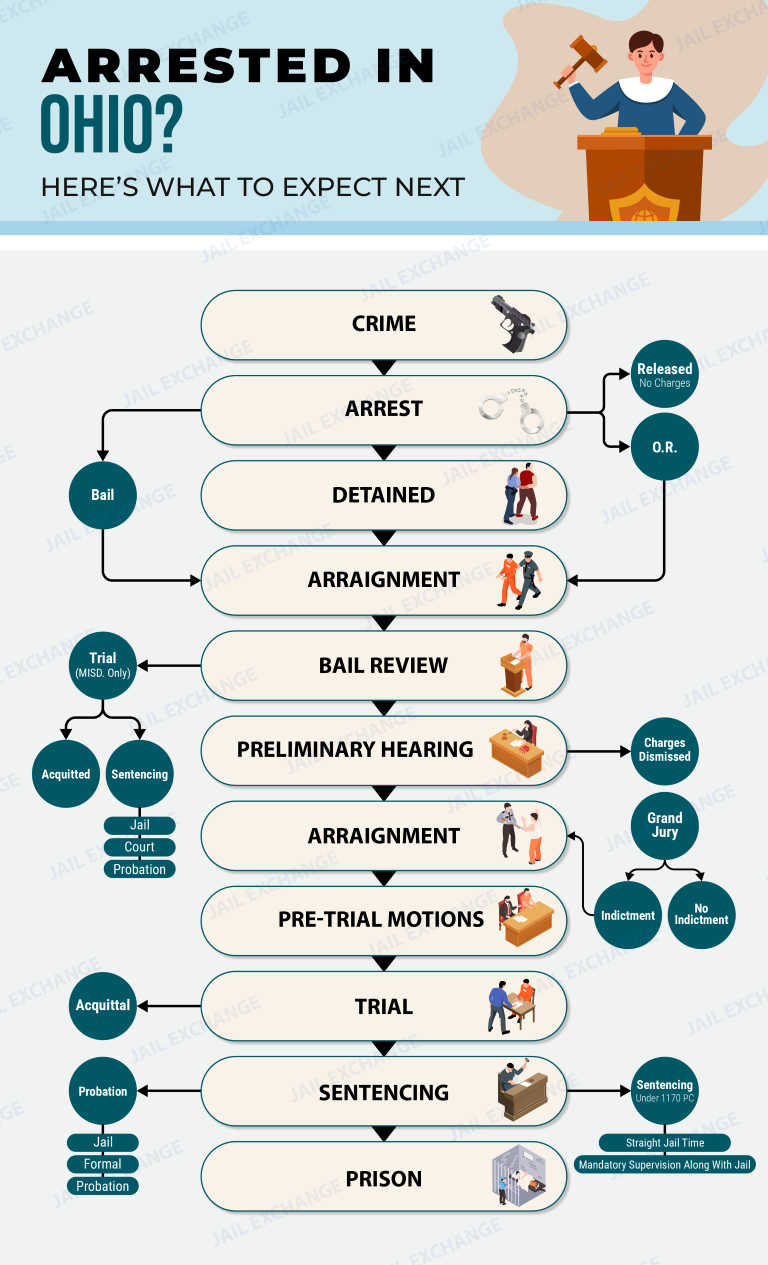
Information for this service is currently unavailable.
Information for this service is currently unavailable.
The Cuyahoga Falls City Jail is inside the Cuyahoga Falls Police Department on Second Street in Cuyahoga Falls, Summit County, Ohio. Police staff watch the prisoners, serve meals and medicine, and run jail visits, and cases from here go to the Stow Municipal Court or the Cuyahoga Falls Mayor's Court. Letters go to the police department.
Letters, legal mail and publications:
Cuyahoga Falls City Jail
2310 Second Street
Cuyahoga Falls, OH 44221
- First, check custody: Use the inmate lookup or call 330-928-2181 before you write, to be sure the person is still held in Cuyahoga Falls.
- Who sent it: Letters to the Cuyahoga Falls jail need your name and address in the top left corner; without them, the letter may be destroyed.
- Writing: Stick with blue or black ink, and keep felt markers, crayons, colored ink, drawings, glitter, lipstick and perfume off the page.
- Cards: Choose a plain card with no music inside.
- Books, magazines and newspapers: New ones only, sent straight from the publisher.
- Stamps and money: You can't mail stamps, but you can add money for the person to buy them. Send money online.
- Contraband: Sending anything illegal can bring criminal charges for you and the inmate.

NCIC Inmate Communications provides telecommunications services that allow incarcerated individuals to place outbound voice calls from dayroom telephones to family and friends. Because correctional facilities do not permit incoming phone calls, establishing an NCIC prepaid calling account connects calls directly to your cell phone or landline without being blocked by wireless carriers.
Important: Mobile Phones Automatically Block Inmate Calls
Cellular phone carriers automatically reject standard collect calls originating from jail phone systems. While some residential landlines might permit direct monthly billing, mobile devices and internet-based telephone lines require an active prepaid calling balance, which you can verify by checking with your provider. If you do not register online and fund an NCIC account right away, your loved one will receive an automated disconnect announcement when attempting to call your number.
Step-by-Step Instructions to Register and Fund an Account
- Visit account.ncic.com or call NCIC customer care at 1-800-943-2189.
- Click Create Account and register using the primary 10-digit telephone number where you want to receive calls.
- Select the state and correctional facility where your loved one is currently detained.
- Search for and add the inmate using their full legal name or booking ID number.
- Select your deposit dollar amount and enter your debit or credit card billing details.
- Submit payment and ensure your mobile phone settings allow calls from automated or unfamiliar correctional numbers.
What the Inmate Needs to Do
The inmate dials your 10-digit number from any dayroom telephone and keys in their assigned PIN. The automated system verifies that your phone number has an active prepaid balance and prompts you to press a digit to accept the call. All personal telephone conversations are recorded and monitored by facility staff.
Official Provider: NCIC Official Website
Customer Service Telephone: 1-800-943-2189
Support Hours: 24 hours a day, 7 days a week, 365 days a year
Supported Languages: English and Spanish
Other Services Provided by NCIC Inmate Communications
In addition to Prepaid Phone Calling, NCIC provides several other digital communication and visitation services at participating facilities:
- Remote Video Visitation: Schedule and join live face-to-face video visits from home using your computer or smartphone.
• Learn more on our website: Video Visitation Guide | • Visit official vendor page: NCIC Video Visits - Inmate Messaging Services: Send electronic messages and photos directly to an inmate's housing unit terminal.
• Learn more on our website: Inmate Messaging Guide | • Visit official vendor page: NCIC Messaging
Information for this service is currently unavailable.
Information for this service is currently unavailable.
Summit County County Jails
Summit County Juvenile Facilities
Nearby counties
- Cuyahoga Falls Police Jail: 330-928-2181
- Adult Probation: 330-643-2300
- District Attorney: 330-643-2788
- DUI Court: 330-643-4111
- Juvenile Court: 330-643-2900
- Public Defender: 330-434-3461
- Summit County Clerk of Courts: 330-643-2211
- Summit County Common Pleas: 330-643-2390
- Summit County Domestic Violence Court: 330-643-5365
The Cuyahoga Falls City Jail serves the following cities and towns of Summit County: Akron, Barberton, Bath, Boston Heights, Copley, Cuyahoga Falls, Fairlawn, Green, Hudson, Lakemore, Macedonia, Mogadore, Munroe Falls, New Franklin, Norton, Peninsula, Reminderville, Silver Lake, Stow, Tallmadge, Twinsburg and Uniontown.