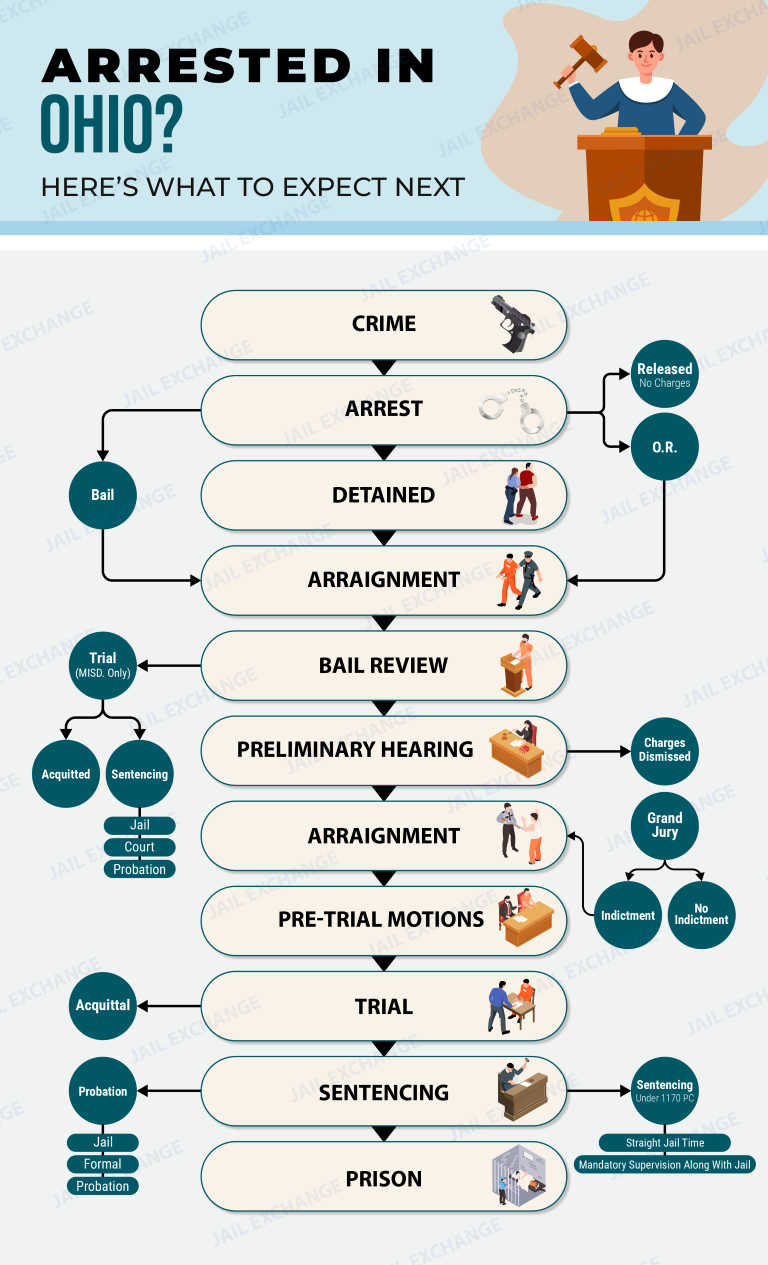
Trumbull County Juvenile Detention Center Criminal Court Process
Criminal Court Process for Trumbull County Ohio
Trumbull County Criminal Courts in Warren, Niles, Girard and Beyond
Minor crimes in Trumbull County start in one of four municipal courts or two county court districts. Warren's Municipal Court sits at 141 South Street SE, Warren, OH 44483. Felony cases move up to Common Pleas, which meets in the old courthouse at 161 High Street NW, Warren, OH 44481. Anyone held before trial stays at the Trumbull County Adult Justice Center, 150 High Street NW, Warren, OH 44481.
Wondering whether your family member is still in jail? Search the official inmate roster by surname. Charges, mugshots, and tips on getting a public defender sit on our Inmates in Custody page.
Felony paperwork runs through the Clerk of Courts at 330-675-2557, so share the person's name and jot down the case number plus the next court day. If it is a Warren misdemeanor, phone 330-841-2525 instead. Steps for paying to get someone home wait on our bail and bond page.
1. Local courts in Trumbull County (municipal, county and mayor's courts)
Trumbull County sits in the Mahoning Valley of northeast Ohio, with the city of Warren as its county seat. Its lower-court system is one of the busier in the region: four municipal courts (Warren, Niles, Girard and Newton Falls) and the two districts of the Trumbull County Court, at Cortland and Brookfield, take misdemeanors, OVI and traffic cases and the first stages of felony cases. Indicted felonies are tried in the General Division of the Trumbull County Court of Common Pleas at the courthouse on High Street in Warren. The elected Trumbull County Prosecutor brings felony charges and prosecutes in the county court districts, while city law directors handle misdemeanors in the municipal courts. Adults who are held after arrest are booked into the Trumbull County Jail, run by the Sheriff in downtown Warren.
- Trumbull County Court of Common Pleas, General Division, and Clerk of Courts, Trumbull County Courthouse, 161 High Street NW, Warren, OH 44481, (330) 675-2557
- Trumbull County Court of Common Pleas, Probate Division, 161 High Street NW, Warren, OH 44481, (330) 675-2521
- Trumbull County Family Court (Domestic Relations and Juvenile Divisions), Family Court Building, 220 Main Avenue SW, Warren, OH 44481; Juvenile Division (330) 675-2600, Domestic Relations Division (330) 675-2302
- Trumbull County Prosecutor's Office, 160 High Street NW, Warren, OH 44481, (330) 675-2426
- Office of the Ohio Public Defender, Trumbull County Branch, 108 Main Avenue SW, Suite 600, Warren, OH 44481, (330) 367-5160
- Trumbull County Sheriff's Office and Jail, 150 High Street NW, Warren, OH 44481, (330) 675-2508
Which court hears your case. A misdemeanor, OVI or traffic charge goes to the court whose territory includes the place where it happened. Offenses inside Warren go to the Warren Municipal Court; Niles and its nearby communities to the Niles Municipal Court; Girard and its surrounding area to the Girard Municipal Court; and Newton Falls and nearby townships to the Newton Falls Municipal Court. The rest of the county is split between the two districts of the Trumbull County Court: the Central District in Cortland, serving central and northern townships, and the Eastern District in Brookfield, serving the eastern townships along the Pennsylvania line. The city of Hubbard and the village of McDonald are listed by the state as operating mayor's courts for local ordinance and traffic cases; those courts have no juries, and a defendant can have the case moved to the municipal or county court. Felony arrests begin in one of these six courts for the initial appearance, bond and any preliminary hearing, then move to the Common Pleas Court on High Street once a Trumbull County grand jury indicts or a bill of information is filed. Appeals go to Ohio's Eleventh District Court of Appeals.
Where pretrial detainees are held. The Trumbull County Sheriff operates the county jail at 150 High Street NW in Warren, next to the courthouse complex. People arrested by Warren, Niles, Girard, Howland, Liberty and other local police, by deputies or by the State Highway Patrol are booked there, and those who cannot post bond remain in the jail through their cases. Call the Sheriff's Office at (330) 675-2508 to confirm whether someone is in custody, the bond and visiting rules.
Trumbull County has six local trial courts below the Common Pleas level, plus two mayor's courts. The citation, summons or bond receipt names the court; if it is unclear, call the clerk of the court closest to where the incident occurred.
Municipal courts
- Warren Municipal Court — 141 South Street SE, Warren, OH 44483, (330) 841-2525. Covers the city of Warren and adjoining territory assigned to it.
- Niles Municipal Court — 15 East State Street, Niles, OH 44446, (330) 652-5863. Covers Niles and its assigned surrounding area in the southern part of the county.
- Girard Municipal Court — 100 North Market Street, Girard, OH 44420; criminal clerk (330) 545-0069, traffic (330) 545-3049. Covers Girard and nearby communities in the southeast.
- Newton Falls Municipal Court — 19 North Canal Street, Newton Falls, OH 44444, (330) 872-0232. Covers Newton Falls and nearby western townships.
County court
- Trumbull County Court, Central District — 180 North Mecca Street, Cortland, OH 44410, (330) 675-2280. Serves the central and northern townships outside the municipal courts' territories.
- Trumbull County Court, Eastern District — 7130 Brookwood Drive, Brookfield, OH 44403, (330) 675-7900. Serves the eastern townships outside the municipal courts' territories.
Mayor's courts
- Hubbard Mayor's Court — Hubbard Municipal Building, 220 West Liberty Street, Hubbard, OH 44425, (330) 534-3090.
- McDonald Mayor's Court — held at the McDonald Municipal Building, 451 Ohio Avenue, McDonald, OH 44437; the village offices there schedule sessions.
Hubbard and McDonald are the only Trumbull County municipalities currently reporting mayor's court cases to the state. Neither may hold a jury trial, and either can send a case to the municipal or county court.
↑ Back to the question list2. Trumbull County's courthouses
The historic Trumbull County Courthouse at 161 High Street NW anchors Courthouse Square in downtown Warren. The Common Pleas General Division judges, the Clerk of Courts and the Probate Division work here, and felony arraignments, pretrials, trials and sentencings take place in its courtrooms. The Prosecutor's Office is across the street at 160 High Street NW, and the jail is a short walk away at 150 High Street NW.
The Warren Municipal Court on South Street SE is a few blocks south of the square and handles the city's high-volume misdemeanor, OVI and felony-arraignment dockets. The Niles, Girard and Newton Falls municipal courts each sit in their own city buildings, and the two county court districts have their own courthouses in Cortland and Brookfield.
Juvenile and domestic relations hearings take place a short distance away in the Family Court Building at 220 Main Avenue SW; the public defender's office is on the same street, at 108 Main Avenue SW.
Each courthouse has security screening at the entrance. Arrive early, bring photo identification and any court notice, and expect phones to be silenced in courtrooms.
↑ Back to the question list3. From arrest to first appearance in Trumbull County
Booking at the jail
An arrested adult is taken to the Trumbull County Jail, where staff record identifying information, take fingerprints and a booking photo, run warrant checks and hold the person's property. A medical and mental health screening is part of intake.
Bond
Each of the six local courts has a bond schedule for common misdemeanors, which often allows release soon after booking. Felony charges, domestic violence and other offenses requiring judicial review wait for a judge. In Ohio, bond can be a personal recognizance bond, a 10 percent deposit bond, or a cash or surety bond, and licensed bail bond agents may post surety bonds. Under the Ohio Constitution, as amended in 2022, a judge setting a bond amount must consider public safety, the person's criminal record, the seriousness of the offense and the likelihood of appearance. Courts also attach conditions such as no-contact orders or alcohol monitoring.
First appearance
The defendant sees a judge in the municipal or county court for the area, usually the next business day, often by video from the jail. The judge explains the charges, reviews bond and appoints the public defender for those who qualify. Misdemeanor defendants enter pleas; felony defendants do not, because only the Common Pleas Court can accept felony pleas.
Where it goes from there
Misdemeanor cases stay in the local court through pretrials and any trial. Felony cases either receive a preliminary hearing in the local court, within 10 consecutive days if the defendant is in jail or 15 days if released, or are taken directly to the grand jury by the Prosecutor. After indictment, the Common Pleas Court takes over.
↑ Back to the question list4. The Trumbull County Jail
The Trumbull County Jail at 150 High Street NW, Warren, OH 44481 is operated by the Trumbull County Sheriff, (330) 675-2508. It houses people from every municipal and county court in Trumbull County.
- Population: pretrial defendants who are still waiting to make bond, people serving jail sentences imposed by Trumbull courts, probation violators, and sentenced felons awaiting transport to state prison.
- Bond posting: the jail takes a 10% bond paid by money order made out to the court, or a surety bond from a licensed bondsman, plus a $25 fee. It takes no cash.
- Finding someone: call the Sheriff's Office with the person's full name and date of birth.
- Visits and deposits: the Sheriff sets visiting schedules, mail rules and procedures for adding money to an inmate's account; ask before visiting.
- Reentry: social work staff with the public defender help some clients move from the jail to community-based programs.
Youths are never held at the adult jail; they go to the county's juvenile detention center, described in the juvenile section.
↑ Back to the question list5. Public defenders in Trumbull County
Trumbull County contracts with the state for public defense. The Office of the Ohio Public Defender, Trumbull County Branch, 108 Main Avenue SW, Suite 600, Warren, OH 44481, (330) 367-5160, has represented indigent Trumbull County defendants for more than four decades. Its staff of full-time public defenders, supported by contract attorneys and a social worker, covers all six local courts (the Warren, Niles, Girard and Newton Falls municipal courts and both county court districts), the Common Pleas General Division and the juvenile court.
How to get a public defender
- At the first hearing in any of the six local courts, tell the judge you need a lawyer and cannot pay for one.
- Complete the financial affidavit describing income, assets and expenses.
- If the court finds you eligible, it appoints the public defender or, for a conflict, a contract attorney.
- Ohio law permits a small application fee, which may be waived.
The office's annual workload runs to well over a thousand felony cases and several thousand misdemeanors, along with juvenile matters. People who do not qualify should hire private counsel promptly, ideally before the first pretrial.
↑ Back to the question list6. The Prosecutor's Office, diversion and victims
The Trumbull County Prosecutor's Office, 160 High Street NW, Warren, (330) 675-2426, presents felony cases to the grand jury, tries them in the Common Pleas Court and files juvenile delinquency complaints. Its assistant prosecutors also handle misdemeanors in the Central and Eastern District courts. In the four municipal courts, misdemeanors are prosecuted by each city's law director or an assigned prosecutor.
Diversion options
Some first-time, nonviolent defendants may be offered pretrial diversion, under which they complete conditions such as restitution, community service, counseling or classes, and the charge is dismissed. Ohio's intervention in lieu of conviction law offers a court-supervised path for people whose offenses were driven by drug or alcohol use, or by certain mental health conditions: the guilty plea is held while the defendant completes treatment, and success results in dismissal. Admission depends on the charge, the defendant's record and, in diversion, the prosecutor's agreement.
Victims' rights
Marsy's Law guarantees Trumbull County crime victims notice of court proceedings, the right to attend and to be heard at bond, plea and sentencing, and the right to seek restitution. The Prosecutor's victim-witness advocates explain the process, help with protection orders and keep families updated on hearing dates.
↑ Back to the question list7. Treatment and specialty dockets
Several Trumbull County courts operate treatment-centered dockets, which the Supreme Court of Ohio certifies as specialized dockets. They combine close judicial supervision, treatment, drug and alcohol testing and regular status hearings, with the reward of reduced charges, dismissal or shorter supervision for participants who complete the program.
- Drug and recovery dockets for defendants whose offenses are tied to substance use disorder, an important focus in a county hit hard by the opioid crisis.
- OVI-focused supervision for repeat impaired drivers, combining treatment, monitoring and license-related conditions.
- Mental health and veterans approaches for defendants with serious mental illness or military service-related needs, often coordinated with community providers and veterans' services.
Availability and eligibility differ from court to court. Ask the public defender or private counsel which specialty docket, if any, is open in the court handling the case. Entry usually requires a plea and the agreement of the prosecutor and judge.
↑ Back to the question list8. Misdemeanor (for example, petty theft, a first OVI, assault, criminal trespass)
Trumbull County's municipal and county courts handle thousands of misdemeanor cases a year, from shoplifting at the Eastwood area retailers near Niles to bar fights in Warren and OVI arrests on State Route 82. Many begin with a citation; custodial arrests are common for OVI, domestic violence, assault with injury and warrants.
In the local court
At arraignment, the judge explains the charge and maximum penalty, and the defendant pleads guilty, not guilty or no contest. A not guilty plea leads to a pretrial with the city or county prosecutor, where most cases are negotiated. The public defender is appointed for eligible defendants who could be jailed. Jury trials must be demanded in writing; the jury has eight members and must be unanimous. The speedy-trial deadline is 90 days for M1 and M2 charges and 45 days for M3 and M4 charges, counted from arrest or summons and tolled by defense continuances.
Penalties
- First-degree misdemeanor: no more than 180 days in jail and a $1,000 fine; this includes petty theft of property under $1,000 and assault.
- Second-degree misdemeanor: no more than 90 days in jail and a $750 fine.
- Third-degree misdemeanor: no more than 60 days in jail and a $500 fine.
- Fourth-degree misdemeanor: no more than 30 days in jail and a $250 fine. Criminal trespass is typically charged at this level; aggravated trespass is a first-degree misdemeanor.
- Minor misdemeanor: the most a Trumbull court can impose is a $150 fine; jail is not allowed.
First-time OVI
In Trumbull County, as everywhere in Ohio, a first OVI is a first-degree misdemeanor. The judge must order three consecutive days in jail or a 72-hour driver intervention program; the minimum rises to six days with a test of .17 or more or in certain refusal situations. Fines range from $375 to $1,075. A failed or refused chemical test triggers an administrative license suspension at arrest, and a conviction brings a court-imposed suspension of one to three years. Limited driving privileges are usually available, and some drivers may receive unlimited privileges by using an ignition interlock. An alcohol assessment and any recommended treatment are typical conditions.
How cases end
Possible outcomes include dismissal, diversion, intervention in lieu of conviction, fines and costs, community control supervised by the court's probation department, or jail. Most cases close within one to four months. Ohio's sealing law allows many misdemeanor records to be sealed after a waiting period.
↑ Back to the question list9. Felony (for example, burglary, felony theft, drug trafficking, felonious assault)
The Trumbull County Common Pleas Court handles more than a thousand felony cases a year, many involving drugs, theft, burglary and weapons. Each begins in the municipal or county court for the area of arrest.
The road to Common Pleas
Initial appearance. Usually the next business day: the judge reviews the felony complaint, sets bond and conditions, and appoints the public defender if the defendant qualifies.
Preliminary hearing. If not waived, and if no indictment has been returned, the local court holds a probable-cause hearing within 10 consecutive days for a jailed defendant or 15 days for one released.
Grand jury. The Trumbull County Prosecutor presents evidence to the grand jury in Warren, which decides whether to indict. Defendants may instead waive indictment and proceed on a bill of information.
Arraignment and pretrials. In the Common Pleas Court, the defendant pleads, discovery is exchanged, and the judge sets pretrial conferences. Most cases end in a negotiated plea.
Trial and sentence. A felony jury has 12 members and must be unanimous; a defendant may waive a jury in writing. Sentencing typically follows a presentence investigation by the adult probation department.
Under Ohio's speedy-trial law, a felony must be tried within 270 days of arrest. Each day a defendant spends in jail on that charge alone counts as three, unless the defense requests delays that toll the clock.
Degrees and penalties
- F5 (theft of $1,000 to $7,500, among others): 6 to 12 months; community control is presumed for many first-time nonviolent offenders.
- F4 (theft of $7,500 to $150,000, among others): 6 to 18 months.
- F3: 9 to 36 months, or 12 to 60 months for designated offenses. A Warren-area break-in at a garage or empty building, where nobody is likely present, is usually charged as F3 burglary.
- F2: the judge picks a minimum of 2 to 8 years. Felonious assault and burglary of an occupied structure with someone likely present are F2s.
- F1: the judge picks a minimum of 3 to 11 years.
F1 and F2 offenses committed on or after March 22, 2019 carry Reagan Tokes indefinite sentences: the judge imposes a minimum, and the maximum extends up to 50 percent beyond it. Drug trafficking charges range from F5 to F1 depending on the drug, the amount and the location. Firearm specifications add mandatory prison time served before the underlying term. Intervention in lieu of conviction can be available when addiction contributed to the offense.
Timeline
Most Trumbull County felony cases are resolved within four to twelve months of arrest; cases that go to trial or involve lab testing and suppression motions take longer.
↑ Back to the question list10. Violent felony (for example, murder, rape, aggravated robbery)
Homicides, rapes and armed robberies in Trumbull County are investigated by city police departments, the Sheriff's detectives and often the Ohio Bureau of Criminal Investigation. The Prosecutor's Office usually takes these cases to the grand jury quickly, and they are tried in the Common Pleas Court at the courthouse on High Street.
Custody before trial
Judges set high bonds in violent cases and must consider public safety and the defendant's history. For certain serious offenses, the Prosecutor may ask the court to deny bail after a hearing. Defendants who are held remain at the Trumbull County Jail, a short walk from the courthouse.
What the law provides
- Aggravated murder in Trumbull County can bring death, life without the possibility of parole, or life with parole eligibility after 20, 25 or 30 years. Ohio has not executed anyone since 2018.
- Murder is punished by 15 years to life.
- Rape is a first-degree felony with a Reagan Tokes indefinite term, and life imprisonment is possible when the victim was under 13 and force or other specified aggravating circumstances are present.
- Aggravated robbery is a first-degree felony; gun specifications add mandatory prison time.
Victims and timing
Victims and families have constitutional rights under Marsy's Law to notice, presence and a voice at bond, plea and sentencing. The Prosecutor's victim-witness staff support families through what is usually a long process: violent felony cases in Trumbull County commonly take one to two years or more, especially when DNA, digital evidence or expert witnesses are involved.
↑ Back to the question list11. Juveniles (under 18) arrested in Trumbull County
Trumbull County is one of the counties where juvenile cases are combined with family cases: delinquency matters are heard by the Domestic Relations and Juvenile Division of the Trumbull County Court of Common Pleas in Warren. The Trumbull County Prosecutor files delinquency complaints, and the Ohio Public Defender's Trumbull branch represents eligible youths.
Intake and diversion
Court intake staff review referrals from police and schools. Many first-time, lower-level cases, such as minor theft, vandalism or fights, are handled unofficially or through diversion, with conditions like community service, restitution, counseling or a youth program. When the youth complies, the complaint is closed without an adjudication. Serious or repeat cases move to formal hearings before a judge or magistrate.
Detention
Trumbull County runs its own juvenile detention center, a secure facility of roughly 38 beds. A youth is held there only when release to a parent is unsafe or the youth is likely to run. A detention hearing must be held promptly, generally within 72 hours or by the next court day, where the court decides whether to continue detention or release the youth with conditions such as house arrest or electronic monitoring.
Dispositions
Possible orders include probation, community service, restitution, treatment, electronic monitoring, residential placement and, for felony-level offenses, commitment to the Ohio Department of Youth Services. DYS commitments are generally indefinite, with a court-set minimum, and can continue until the youth turns 21.
When a youth faces adult court
Ohio requires bindover to adult court for some 16- and 17-year-olds charged with the most serious offenses, and in specific situations for 14- and 15-year-olds. For other youths 14 and older, the Prosecutor can request discretionary bindover, which requires an amenability hearing to decide whether the juvenile system can rehabilitate the youth. A Serious Youthful Offender case lets the court impose a juvenile disposition along with an adult sentence that is stayed and invoked only if the youth fails to comply.
Records from the Trumbull juvenile court are generally confidential, and families can ask about sealing or expungement once a case is finished.
↑ Back to the question list12. Federal cases (U.S. District Court) from Trumbull County
Trumbull County is one of three counties, with Mahoning and Columbiana, whose federal cases are generally assigned to the Youngstown courthouse of the U.S. District Court for the Northern District of Ohio, Eastern Division. That courthouse is the Thomas D. Lambros Federal Building and U.S. Courthouse, 125 Market Street, Youngstown, OH 44503, (330) 884-7400, about 15 miles from Warren.
What makes a case federal
A Trumbull County arrest can lead to federal charges when the conduct violates federal law and the U.S. Attorney's Office decides to prosecute. In the Mahoning Valley, federal cases frequently involve drug trafficking organizations, firearms offenses such as possession by a person with a felony record, violent crime connected to drugs or gangs, child exploitation, and public corruption or fraud. Investigations are often joint efforts of the FBI, DEA, ATF and local task force officers.
Contacts
- U.S. Attorney's Office, Northern District of Ohio: main office at 801 West Superior Avenue, Suite 400, Cleveland, OH 44113, (216) 622-3600, with a branch office in Youngstown.
- Federal Public Defender: the Northern District's defender has a Youngstown office, along with its Cleveland, Akron and Toledo offices; private Criminal Justice Act panel lawyers also take appointments.
- U.S. Marshals Service, Youngstown: Lambros Federal Building, 125 Market Street, Room 102, Youngstown, OH 44503, (330) 746-0394.
Inside the federal process
After a federal arrest, the defendant appears before a U.S. magistrate judge, who explains the charges, appoints counsel if needed and addresses custody. If the government seeks detention, a hearing is normally held within three court days. The Bail Reform Act gives the judge two basic choices: release under conditions monitored by U.S. Pretrial Services, or detention when no conditions would reasonably assure appearance and safety. Bail bond agents have no role in federal court.
A defendant charged by criminal complaint must be indicted by a grand jury within 30 days. The Speedy Trial Act then requires trial within 70 days, a deadline that is regularly extended for motions and discovery. Most defendants plead guilty, often under a written plea agreement; at trial, all 12 jurors must agree on the verdict.
Before sentencing, U.S. Probation prepares a presentence report calculating the advisory Sentencing Guidelines range. Judges may vary from the Guidelines but must impose statutory mandatory minimums, which apply in many drug and gun cases. There is no parole in the federal system; with good-conduct credit, a prisoner serves about 85 percent of the sentence in a Bureau of Prisons facility, then a term of supervised release. The Sixth Circuit Court of Appeals in Cincinnati hears federal appeals from Youngstown.
Custody
Federal detainees from Trumbull County are held by the U.S. Marshals in contract detention facilities in northeast Ohio; anyone in Trumbull County should search the Federal Bureau of Prisons inmate locator for a defendant from Warren by name or by register number. A Trumbull County prisoner held before trial at a contract jail could also appear in that jail's lookup. Federal prosecution of juveniles is rare.
Read this Trumbull County guide as a general explanation of how local criminal cases proceed, not as legal advice for a specific situation; court procedures, addresses and phone numbers may change. Anyone charged in Warren, Niles, Girard, Newton Falls, Cortland or Brookfield can reach the Ohio Public Defender's Trumbull County Branch at (330) 367-5160 about representation, and should confirm court dates with the clerk of the court named on the paperwork.
↑ Back to the question list