
Union County Jail
Union County, Oregon Inmate Lookup and Jail Guide
From Elgin down to North Powder, adults arrested in this valley are booked at the Union County Correctional Facility, 1109 K Ave., La Grande, OR 97850. Built in 1979, the jail has room for 37 people and handles about 1,200 bookings each year. Below, each question walks a worried family through one task, whether that means spotting a name, booking a visit through the glass or tracking a hearing.
The Sheriff keeps a printable custody roster covering everyone held. Rows carry an inmate number, the day of arrest, which agency brought the person in, every charge tied to its Oregon statute, and the security figure. Because each copy is stamped with the day it printed, someone booked this afternoon could be absent until the next update.
Staff answer at 541-963-1020 through a short phone menu. Custody is easiest to confirm when the caller has a legal name and birth date ready. Follow up on booked charges, any security amount and the arraignment time. For posting money, turn to our bail page; arraignment through sentencing is mapped on our court page.
Read inmate search answers
 Read inmate search answers
1. How is the Union County roster PDF laid out?
The file is a short PDF. To work through it:
- Open the roster and note the Sheriff's warning that typing mistakes can slip in.
- Check the print date shown on page one.
- Search the document for the surname: Ctrl+F on a laptop, or the browser's find tool on a phone.
- Read across the columns, labeled "Inmate #," "Date Arrest," "Agency," "Charges" and "Bonds."
- Write down the inmate number. It begins with IN plus the year, and staff locate files fastest with it.
A bond cell holds either a dollar amount or the word "Judge," which signals that terms are still up to the court. Expected release dates do not appear. Phone 541-963-1020 to ask about one person.
↑ Back to the question list2. What explains a missing name on the PDF?
Most gaps trace back to one of these:
- Print lag. The PDF freezes the moment it printed, so new arrivals trail behind.
- Already out. Under Oregon's release guidelines, many people walk out within hours after signing a promise to appear.
- Spelling. Swap in a middle name, a birth surname or the long form of a nickname.
- Transfer. They may have been moved to a neighboring county, into state prison or into federal hands.
- Age. People under 18 are held in juvenile detention and never appear on the adult list.
A call to 541-963-1020 settles it fastest. The Sheriff's front office is open weekdays, 8 a.m. to 5 p.m.
↑ Back to the question list3. Could a nearby county's jail have them instead?
Wallowa County sends its adult arrests to the La Grande jail as well, so "Wallowa" can show in the Agency column. An arrest close to a county line may still land elsewhere. Next places to check:
- Umatilla County Jail, 4700 NW Pioneer Place, Pendleton, OR 97801, 541-966-3632
- Baker County Jail: reach it through the Baker County Sheriff's Office, 3410 K Street, Baker City, OR 97814, 541-523-6415
- Grant County Jail, operated alongside the Sheriff's Office at 205 S. Humbolt Street, Canyon City, OR 97820, 541-575-1131
For questions about a Wallowa County case, its Sheriff's Office sits at 104 W. Greenwood Street, Enterprise, OR 97828, 541-426-3131.
↑ Back to the question list4. Does the roster include booking photos?
No. The roster sticks to names, numbers, charges and bonds. Oregon's HB 3273 (2021) bars police agencies, with some exceptions, from releasing booking photos. The exceptions cover tracking down a fugitive or suspect, sharing with the pictured person or a victim, and cases that ended in a conviction.
- Photo requests go to the Sheriff's Office at 541-963-1017, which explains its public records steps.
- Paid mugshot websites must pull a photo within 30 days after a request, and within 7 days, free, once charges were dropped or the record was set aside.
- Pictures held by ICE are requested through its FOIA page. Most federal mugshots stay sealed, apart from cases where the Marshals put one out to help find someone on the run.
5. Is there a free release alert by text or email?
Yes. On its corrections page, the Sheriff steers families and victims toward VISOR, the statewide notice system the Oregon Department of Corrections runs.
- Visit visor.oregon.gov.
- Look the person up by name, whole or partial, or by a state or county ID, then pass the short robot test.
- Pick phone, email or text, and VISOR will report a release, transfer, escape or death.
Registration may be anonymous; nobody in custody learns who signed up. Operators staff 855-691-6246 day and night. The state cautions that alerts should never be a person's only safety plan.
↑ Back to the question list6. How do people leave the Union County jail before trial?
Oregon's starting point is release once the person signs a pledge to return to court (ORS 135.245). State rules let the jail free many people on small nonviolent charges. They never see a judge first. Domestic violence, sex crimes, Measure 11 cases and other grave charges wait for a judge. That is usually at an arraignment within 36 hours, weekends and holidays excluded (ORS 135.010).
- Where security applies, the cash put down is normally one tenth of the amount, and at least $25 (ORS 135.265).
- For online or phone payment, the Sheriff points to GovPayNow with Pay Location Code 7855.
- Oregon has no commercial bondsmen, so the deposit comes from the person, family or friends.
- After the case closes, the court refunds the deposit, less 15 percent and any fines owed.
Payment options, holds that a deposit cannot clear and the refund process all appear on our bail page.
↑ Back to the question list7. What do the statute numbers beside each charge mean?
Every charge on the roster carries its Oregon Revised Statutes section and a brief label. Sections starting 811 or 813 concern driving and DUII, chapter 164 deals with theft and burglary, and chapter 163 involves offenses against a person, assault among them.
The booking charge can change. The District Attorney decides what gets filed; the office is at 1104 K Avenue, La Grande, OR 97850, 541-963-1007. After filing, look up the court's version of the charges, plus hearing dates, with OJD's records and calendar lookup, which charges no fee.
↑ Back to the question list8. Who provides defense counsel for someone jailed here?
During arraignment, a defendant who cannot pay for counsel says so to the judge, then completes a sworn financial statement that a court screener checks. A $20 application fee usually applies, and the judge may waive it. Statewide, the Oregon Public Defense Commission funds this work; details are at oregon.gov/opdc.
The Betschart order, from federal court, guards people held without counsel. A week after the first appearance with no attorney appointed, the court usually must let them out on conditions, while the prosecution continues.
Families can also retain private counsel. Attorneys schedule jail visits Monday through Saturday at 541-963-1020, avoiding meal times, counts and family visiting blocks.
↑ Back to the question list9. When are Union County visiting hours?
Visitors sit on one side of the glass, and every visit needs an appointment. Call 541-963-1020 from 9 a.m. to 1 p.m. on the day of the visit; Saturday appointments open on Friday.
- Tuesday and Thursday: male inmates 2:00 to 3:00, female inmates 3:30 to 4:00
- Saturday: male inmates 1:30 to 3:00, female inmates 3:30 to 4:00
- Video from home: weekdays 7 to 11 a.m. and 2 to 4:30 p.m., weekends 7 to 11 a.m., in half-hour slots. Requests go through the jail's online video system and need staff approval.
A holiday that falls on a visiting day keeps its visits. Each visit allows one adult plus as many as two children, and minors come with a parent or guardian. Past security, carry only your ID and car keys. Wear modest clothing and shoes. Staff refuse hats, bandanas, sheer or revealing outfits and gang colors. No items pass at the window. An open warrant or a no-contact order bars a visitor. If turned away, ask the front counter or the Corrections Lieutenant. Our visiting guide adds practical tips.
↑ Back to the question list10. How can relatives add funds for store purchases?
Money on the account buys store goods like envelopes, stamps, shampoo and snacks. Three routes exist:
- Kiosk in the lobby: takes cash or a credit card.
- Online: go through the deposit company that the Sheriff's commissary page links.
- Mail: a money order addressed to the jail. Personal checks get rejected. Loose bills in a letter are a risk nobody should take.
The cap is $300 per person each week. Front desk officers cannot accept cash or money orders in person. This balance has nothing to do with security and cannot pay for release. For more, read our deposits guide and commissary guide.
↑ Back to the question list11. How can family members talk with someone held here?
Call the jail at 541-963-1020 and ask how inmate calling works, the rates, and whether tablets or messaging are available now. Keep the inmate number nearby.
Oregon makes each jail adopt written phone rules (ORS 169.076). The state also limits any payment from a phone provider to a jail or county to five cents per minute (ORS 169.681). Home video visits, booked through the jail's video system, offer one more way to talk.
Calls are likely monitored, so case details belong in conversations with the defense lawyer. General background sits in our phone guide and messaging guide.
↑ Back to the question list12. What mail rules does the jail enforce?
Address letters with the person's full name, followed by: c/o Union County Correctional Facility, 1109 K Ave., La Grande, OR 97850. A return address is required, showing at least a first initial, last name, street or PO box, city, state and ZIP. Letters lacking one go back.
- Write in ink or pencil only. Crayon, permanent marker and colored pencil get rejected.
- Cards must be plain, with nothing glued on, and musical cards are refused.
- Leave out clippings, stickers, perfume, lipstick, stamps and blank envelopes; stamps and envelopes come from the jail store.
- Paperbacks must ship directly from the publisher or a retailer.
- New white underwear, socks and T-shirts, plain with no pockets, words or pictures, may arrive in a sealed package.
Our mail guide has general advice.
↑ Back to the question list13. How are personal items collected after booking?
Anything taken at booking is kept in storage until the person leaves. Someone else may be able to pick it up: phone 541-963-1020 and confirm whether paperwork signed by the person is required, and what time works. Bring a photo ID to 1109 K Ave., La Grande, OR 97850, during weekday office hours, 8 a.m. to 5 p.m.
In the same call, ask about any account balance, so it can be refunded at release.
↑ Back to the question list14. Who handles health care inside the jail?
State law requires the jail keeper to provide food and necessary medical care (ORS 169.140). Each jail needs a plan for urgent medical and dental needs (ORS 169.076). Counties may bill a reasonable health care fee, provided treatment is never refused to someone who cannot pay (ORS 169.150).
Worried about a medical issue? Phone the jail at 541-963-1020 with the diagnosis, each medicine and its dose, plus the doctor's name and number. Mention any self-harm risk plainly. Outside the jail, dial 911 in an emergency.
↑ Back to the question list15. Who can confirm a Union County warrant?
Deputies and La Grande officers both serve warrants and answer one shared line, 541-963-1017; ask for help with a warrant. People who escaped Oregon prisons appear on the DOC Most Wanted list, with tips at 877-831-0389. Federal fugitives are posted on the U.S. Marshals' top 15 list and by FBI Portland. Search filed cases by name through the OJD portal. Resolving a warrant usually starts with legal advice; after that, turn yourself in at the jail, 1109 K Ave., La Grande, OR 97850, or call the clerks about resetting the hearing. Court clerks: 1105 K Ave, La Grande, OR 97850, 541-962-9500.
↑ Back to the question list16. How do I look up an upcoming hearing?
Almost every criminal case runs through circuit court:
- Circuit Court clerks, 1105 K Ave, La Grande, OR 97850, 541-962-9500, weekdays 8 a.m. to noon and 1 to 4:30 p.m.
- Look up a name on OJD Records and Calendar Search, free and with no login.
- For a Justice Court case, call 541-962-2997.
- Elgin's municipal court sits on the second and fourth Wednesday at 9:30 a.m. Elgin City Hall is at 790 S 8th Avenue, Elgin, OR 97827, 541-437-2253.
Each stage, from arraignment through sentencing, is explained on our court page.
↑ Back to the question list17. What happens after a federal arrest in this area?
Federal charges from the La Grande area go to the Pendleton Division of Oregon's federal trial court, 104 Southwest Dorion Avenue, Pendleton, OR 97801. No clerk works there, so filings run through Portland: 1000 Southwest Third Avenue, Suite 740, Portland, OR 97204, 503-326-8000.
- At a detention hearing, a judge decides between jail and supervised release while the case is pending (18 U.S.C. 3142).
- Before trial, housing is the Marshals' call: FCI Sheridan, 27072 Ballston Road, Sheridan, OR 97378, 503-843-4442, or a county jail under contract. Their Portland office, 1000 Southwest 3rd Avenue, Room 401, Portland, OR 97204, answers at 503-326-2209.
- After sentencing, search the BOP inmate locator using a name or a register number.
18. Can immigration officers take custody from the jail?
An immigration hold tends to unfold like this, with state law cutting in partway:
- ICE's opening move is a detainer request, which carries the form number I-247A.
- That form requests up to 48 extra hours of custody past the normal release time (8 CFR 287.7(d)).
- Under Oregon's sanctuary laws (ORS 181A.820 to 181A.829; HB 3265, 2021), local officers may not enforce an immigration request lacking a judge's signature. As a result, county jails here generally won't extend anyone's stay on a detainer alone, nor tip off immigration agents about release times.
- If ICE still takes the person, the Seattle Field Office oversees the case. Its Portland branch, which covers this county, sits at 4310 S Macadam Ave, Suite 300, Portland, OR 97239, 503-326-4165.
- On the ICE Online Detainee Locator, pair a surname and given name with the birth country; an A-number works on its own.
19. How do I trace someone moved to an Oregon prison?
A felony prison sentence begins at Coffee Creek Correctional Facility, 24499 SW Grahams Ferry Road, Wilsonville, OR 97070, where intake lasts around 30 days. Staff assess each person there, then assign a prison. Visits in person begin after intake, but mail sent there with the State ID (SID) number gets through.
- Look them up in Oregon Offender Search.
- Phone DOC at 503-945-9090.
- Browse our Oregon prisons guide facility by facility.
20. Where do Union County youth go after arrest?
The adult lockup does not take minors. Cases for kids between 12 and 17 belong to juvenile services. Contact the Union County Juvenile Department, 1102 K Avenue, La Grande, OR 97850, 541-963-1012, for the detention location and the hearing's date. A crisis worker is on call 24 hours a day, and staff arrange transport to detention.
After a commitment to the Oregon Youth Authority, boys spend 30 to 45 days in assessment at MacLaren Youth Correctional Facility in Woodburn, and girls go to Oak Creek in Albany. Call OYA's central office at 503-373-7205, 530 Center Street NE, Salem, OR 97301.
↑ Back to the question list21. How does the jail's work crew sentence work?
Judges can order work crew, often instead of jail days. Crew members pick up litter, stack firewood, clear snow, mend fences and cut brush by roadsides.
- Crews run Sunday through Wednesday.
- Meet beside the white van on the "L" Street side of the jail, with a packed lunch and clothes for the weather.
- Each day costs $15, free for anyone sentenced through Community Corrections.
- Missing the deadline returns the case to court, and a warrant follows.
Ask the jail at 541-963-1020 with questions.
↑ Back to the question list22. Which Union County agency made the arrest?
Look at the roster's "Agency" column to see who made the arrest. The county's population, per a Census estimate dated July 1, 2025, stands near 25,900. Agencies on patrol:
- Union County Sheriff's Office and La Grande Police Department share 1109 K Ave., La Grande, OR 97850, plus a single non-emergency number, 541-963-1017, answered by dispatch around the clock. City police cover the county seat (12,869 people); deputies cover everything beyond its limits.
- Elgin (1,822): the Sheriff's Office provides police service.
- Union (2,184), Island City (1,146), Cove (635), North Powder (501), Imbler (253) and Summerville (119): ask the Sheriff's Office which agency takes calls in each town.
- Oregon State Police, La Grande Area Command, 3004 Blue Mountain Drive, La Grande, OR 97850, 541-963-7175. Cell phone users can dial *OSP (*677).
- Union / Wallowa County Community Corrections (probation and parole holds), 1007 Fourth Street, Suite 2C, La Grande, OR 97850, 541-963-1005.
- Wallowa County Sheriff's Office (Wallowa arrests held here), 104 W. Greenwood Street, Enterprise, OR 97828, 541-426-3131.
For an arrest on the college campus in town, ask city police which agency handled it.
↑ Back to the question listUnion County, Oregon Bail and Release
Grande Ronde Valley arrests, whether made by deputies, La Grande officers or state troopers, end at the Union County Correctional Facility, 1109 K Ave., La Grande, OR 97850. Oregon law uses the word "security" where most folks say bail, and plenty of people leave owing nothing. Read on to see who rules on release, what the 10 percent deposit means and the ways to pay it.
The Sheriff's jail roster is a printable list of everyone held, with each charge and the amount set on it. For the rest of the custody picture, our Jail Roster page covers fresh arrests, open warrants, what charges mean, mugshot rules, court-appointed lawyers and reclaiming belongings.
Your first call goes to the jail, 541-963-1020; pick the matching option in its phone menu. Get the security figure, learn whether a judge must weigh in before payment, and jot down the next hearing date. The case itself is mapped out on our court page.
1. Union County arrests: who rules on release?
A circuit court judge rules, or a release officer acting with the court's permission. A jailed person has the right to stand before a judge "without undue delay" (ORS 135.245).
- The clock. Arraignment for someone in custody comes within 36 hours of jail time, with weekends and holidays left off the tally (ORS 135.010), so a Friday night booking can mean a Monday or Tuesday hearing. Video from the jail is common.
- The ruling. The judge settles release at that first appearance. A delay is allowed only up to 48 hours past it, with an outer limit of 5 days (ORS 135.245).
- The interview. Oregon wants a release officer to sit down with nearly every jailed person and put findings in writing for the court (ORS 135.235). Locally this is the 10th Judicial District Pre-Trial Services office, 1105 K Ave, La Grande, OR 97850, 541-962-9500 (press 3, then 2).
SB 48, passed in 2021, set up release guidelines for the whole state, and each district's presiding judge signs a standing order that follows them (ORS 135.233). For many small charges that hurt no one, the jail lets people walk after they sign a court-date pledge, with no hearing and no money.
↑ Back to the question list2. What separates recognizance, conditions and security?
State law spells out three kinds of pretrial release (ORS 135.230). The court begins with the lightest and moves up only when it has to (ORS 135.245).
- Personal recognizance. A written promise, signed by the defendant, to attend every hearing. It costs nothing.
- Conditional release. Home, but with rules. Every agreement says to appear in court and to stay inside Oregon without the court's OK (ORS 135.250). Judges can stack on extras: phoning Pre-Trial Services on a schedule, no drinking, or no contact with a person the judge lists.
- Security release. Money or real estate stands behind the pledge. Ask around town and this is what people mean by bail.
Whatever gets picked has to be the mildest term that keeps both the victim and the neighbors safe (ORS 135.245). Freedom starts when the person signs the release agreement. Breaking its terms can lead to a warrant, a canceled release and a contempt case.
↑ Back to the question list3. What security do local charges usually carry?
Look at the "Bonds" column on the roster. Each charge shows a dollar amount and a percent, and a few rows just read "Judge," meaning a judge still has to pick the figure. Statewide guidelines put charges in three buckets:
- Signature only. Nonperson misdemeanors and nonperson Class C felonies. Think of most thefts, burglary in the second degree and the drug possession misdemeanor.
- Conditions. Drunk or drugged driving (DUII), person misdemeanors without a family violence angle, and many Class B felonies.
- Held for court. Family or partner violence. Sex offenses. Measure 11 crimes and every Class A felony. Felony stalking or choking. Skipping court. Some big drug sale or drug lab cases, and drug crimes that pull in kids.
If a dollar figure is set, the usual deposit is a tenth of it (ORS 135.265). So $5,000 calls for $500, and $20,000 calls for $2,000. The smallest deposit allowed is $25.
For the number on one particular charge, check the roster or phone 541-963-1020.
↑ Back to the question list4. How is security paid at the K Avenue jail?
Jail and Sheriff share 1109 K Ave., La Grande, OR 97850. Per the Sheriff's Office, money taken for security is forwarded to the courts. Go in this order:
- Pull up the roster. Copy the code under "Inmate #" (an IN prefix, the four-digit year, then more digits). Staff may call it a file number.
- Dial 541-963-1020 and listen to the menu. Skip 541-963-1017; it handles police business, and the Sheriff asks families to call the jail number.
- Give the file number. Ask for the full figure, the tenth you owe, and whether payment can happen now or only after a judge rules.
- Ask where to bring payment in person and during which hours. Cash and cards are fine. Checks need a yes from the Sheriff or the Jail Manager ahead of time.
- Hold on to your receipt. Refunds are mailed to whoever is named on it.
Front office hours run Monday to Friday, 8 a.m. to 5 p.m. At night or on weekends, the online and phone service may get things moving sooner.
↑ Back to the question list5. Could we pay through the circuit court instead?
By statute the deposit is handed to the court clerk, or to any person the judge chooses (ORS 135.265, ORS 135.270). Jail payments are handed on to the court anyway, so the money ends up in the same place.
- Union County Circuit Court, 1105 K Ave, La Grande, OR 97850, 541-962-9500. Weekdays from 8 a.m. to noon, then 1 to 4:30 p.m. From 4:30 to 5 p.m. the counters shut. Staff check the drop box by the entrance at 5 p.m. daily.
- The court payments page handles fines and fees. Ask the clerk if your security deposit can be paid there too.
- A screening station sits at the door. Carry photo ID and the case or file number.
Phone before the trip. Confirm the figure and the payment types the window takes. Also ask how long it takes the jail to learn the money came in.
↑ Back to the question list6. Online, phone, cash or card: which works?
On its bail page, the Sheriff's Office sends people to an outside payment company. Here is what to use:
- Website: GovPayNow.com, entering Pay Location Code 7855.
- Telephone: that company's line, 888-604-7888.
- At the jail: cash or a card.
- Checks: only after the Sheriff or the Jail Manager approves.
Have their legal name, birth date and file number handy. Outside payment companies sometimes tack on a charge, so look over the final amount before you hit submit. File the confirmation code with your receipt.
Funds for the jail store account are a different thing. They pay for snacks and stamps, never release. Do not mail cash for security. Jail staff at 541-963-1020 can answer payment questions.
↑ Back to the question list7. Do Union County families use bondsmen?
Oregon has no bail bond business. Relatives hand the deposit over in person or online, with no middleman, and no company sells bonds for a fee. Nobody here will ask for a car title as collateral.
- A relative or friend can be the "surety." By signing, they agree to pay the whole amount if the defendant breaks the deal (ORS 135.230).
- Rather than a tenth, someone can post the entire sum in cash. Another route is stocks, bonds or land in Oregon valued at double the amount, backed by a sworn statement (ORS 135.265).
- Officers cannot take cash or property brought in for release unless a judge first gave them a search warrant or a forfeiture order (ORS 135.275).
Watch out for strangers who reach out by phone, text or social media promising a quick release for a fee. Pay nobody except the jail, the court or the company named on the Sheriff's bail page.
↑ Back to the question list8. Why might someone stay in after paying?
A deposit settles a single case. Before handing over money, ask jail staff at 541-963-1020 to read out each hold. Typical ones:
- A judge-only charge. Money cannot jump the line on family violence, sex offenses or other serious counts.
- Someone else's warrant. The roster's "Agency" column can show Wallowa County or "Out of County." Every outside warrant needs separate handling.
- Supervision. Breaking probation or parole rules may bring its own hold. Union / Wallowa County Community Corrections works from 1007 Fourth Street, Suite 2C, La Grande, OR 97850, 541-963-1005.
- Two separate cases. An Elgin city citation and a state charge are handled apart.
- Federal or immigration papers. Different laws govern those, as the federal and ICE answers here explain.
9. Which Oregon cases allow no release?
The state constitution lets a judge keep someone jailed on murder, aggravated murder or treason charges when the proof is evident (Or. Const. art. I, § 14; Or. Const. art. I, § 43). ORS 135.240 repeats that rule.
Some felonies count as violent: a victim was badly hurt, or someone threatened to badly hurt them. After a hearing on such a charge, a judge who sees real peril for the victim or the town, whether of a beating or a sexual assault, may refuse release (ORS 135.240). Victims hold a right under the constitution to be protected during release choices.
If the charge is a bias crime, a sex offense or abuse within a family or household, the law forbids any contact with the victim from jail, whether by phone call or through relatives (ORS 135.247, ORS 135.250). Please don't relay notes or messages. Doing so can add charges.
Arguments for holding a person come from the Union County District Attorney's Office, 1104 K Avenue, La Grande, OR 97850, 541-963-1007.
↑ Back to the question list10. Can the judge be asked to cut the amount?
If something important changes, a judge may update the terms of release, the dollar figure, or both (ORS 135.285). Families can help in three ways:
- Let the defense attorney know you want a review. The attorney asks the circuit court in writing.
- Collect pay stubs, a lease or utility bill, proof of school or child care duties, and a realistic budget figure.
- Propose terms in place of cash: set check-in days, a curfew, or a promise to avoid a certain address.
Oregon's release guidelines frown on terms a poor family could never meet, and the court must use the lightest workable rule (ORS 135.245). For hearing dates, phone the court at 541-962-9500.
↑ Back to the question list11. Is a free lawyer available on Union County charges?
If paying for a lawyer would mean substantial hardship, the state supplies one (ORS 151.485). The Oregon Public Defense Commission oversees this. The agency was renamed on January 1, 2024, and became an executive branch agency a year later. Visit oregon.gov/opdc.
- At the first hearing, the defendant speaks up and requests appointed counsel.
- A money form follows, covering pay, bills and savings. Court staff review it.
- A $20 application fee is typical. Judges may waive it or set a later contribution. Even with no money at all, the person still gets counsel.
There aren't enough public defenders to go around. On the last day of 2025, Oregon still had roughly 2,500 defendants waiting on an appointed lawyer, with close to 160 of that group locked up while they waited. A federal injunction, the Betschart order, says a jailed defendant with no attorney seven days past that first hearing usually walks out under court-set conditions, though the case stays open. Questions about appointment go to the circuit court at 541-962-9500.
↑ Back to the question list12. Which courts take Union County cases?
This county and Wallowa County form Oregon's 10th Judicial District and share judges. Local cases are heard here:
- Circuit Court (felonies, most misdemeanors, release rulings): Union County Courthouse, 1105 K Ave, La Grande, OR 97850, 541-962-9500. Monday to Friday, 8 a.m. to noon and 1 to 4:30 p.m.
- Justice Court (a county-run court for some violations and misdemeanors): 541-962-2997. Ask staff for its location and hours.
- Elgin Municipal Court (Elgin city matters): mail goes to PO Box 128, Elgin, OR 97827-0128. Sessions fall on the second and fourth Wednesday at 9:30 a.m. City Hall is at 790 S 8th Avenue, Elgin, OR 97827, 541-437-2253.
- Federal court: the Pendleton Division's federal courthouse and post office, 104 Southwest Dorion Avenue, Pendleton, OR 97801. No clerks work there; filings are handled in Portland.
13. Do we get the deposit back, or lose it?
The courts, not the Sheriff, mail refunds after a case closes. Dropped charges work the same way. Only the payer named on the receipt gets the check.
- From each refund the clerk subtracts 15 percent, no less than $5 and no more than $750, and keeps the interest (ORS 135.265).
- So a $1,000 deposit returns $850, with $150 kept.
- Fines and fees owed in the case may come out before the refund.
Skipping a court date is costly. A warrant can go out, and the judge can forfeit the entire security amount, which is far more than the tenth you paid (ORS 135.280). A judgment for the balance can follow. Within 30 days the person may try to convince the court that showing up was impossible through no fault of theirs. The no-show also becomes its own charge, called failure to appear. Tied to a felony, it is graded a Class C felony; tied to a misdemeanor, it is graded a Class A misdemeanor (ORS 162.195, ORS 162.205).
To ask when a refund will arrive, phone the circuit court at 541-962-9500.
↑ Back to the question list14. What about leftover account money and items?
Plan for belongings early. Call 541-963-1020 with two questions: how the leftover jail account balance is paid out, and what time relatives can claim stored items.
Bring photo ID to 1109 K Ave., La Grande, OR 97850. Collecting on their behalf? Find out whether they must sign a permission slip. Officers at the counter will not accept cash or money orders for an inmate, so deposits go through the lobby kiosk or the online option. Our guide to inmate accounts walks through deposits and refunds in general.
↑ Back to the question list15. Who sets release terms on federal charges?
Federal prosecutions arising in the valley are docketed in the Pendleton Division of the U.S. District Court for the District of Oregon. The Pendleton courthouse, 104 Southwest Dorion Avenue, Pendleton, OR 97801, has no clerk staff. Federal filings go to the clerk inside the Hatfield federal courthouse, 1000 Southwest Third Avenue, Suite 740, Portland, OR 97204, 503-326-8000.
- A detention hearing comes first, where the federal judge chooses between custody and home for the months before trial (18 U.S.C. 3142). The state's 10 percent rule plays no role.
- Pending trial, Marshals Service deputies handle custody from 1000 Southwest 3rd Avenue, Room 401, Portland, OR 97204, 503-326-2209.
- Waiting may happen at FCI Sheridan, 27072 Ballston Road, Sheridan, OR 97378, 503-843-4442, or at a county jail that has signed on to hold Marshals prisoners. Call the Marshals for the location.
- After sentencing, the Federal Bureau of Prisons inmate locator shows where they are.
16. Does a security deposit undo an ICE detainer?
A deposit resolves the state charge alone. Immigration is handled on a different track:
- Federal immigration officers, known as ICE, may ask the jail to hold someone, using a detainer request numbered I-247A.
- Its wording requests custody for up to 48 hours after they would otherwise be released (8 CFR 287.7(d)).
- Oregon's sanctuary laws step in here (ORS 181A.820 to 181A.829; HB 3265, 2021). Those laws tell Oregon officers and jail staff to ignore any ICE paper that no judge signed. That is why jails here generally don't keep people on a bare detainer, and they don't hand ICE release times for enforcement.
- Should ICE pick the person up some other way, its Seattle Field Office runs the case. This county's assigned office is at 4310 S Macadam Ave, Suite 300, Portland, OR 97239, 503-326-4165.
- Look them up on the ICE Online Detainee Locator using their name and birth country.
17. Which prison takes a long Oregon sentence?
Prison terms on felonies are served with the Oregon Department of Corrections. First comes intake at Coffee Creek Correctional Facility, 24499 SW Grahams Ferry Road, Wilsonville, OR 97070, which takes about 30 days. Afterward women stay on at that same campus, and men are sent to whichever prison DOC assigns.
- Find a person's location on the Oregon Offender Search.
- General DOC questions: 503-945-9090.
- Our Oregon state prisons page profiles each prison.
Probation and parole sit apart from the jail. Locally that office is Union / Wallowa County Community Corrections, 1007 Fourth Street, Suite 2C, La Grande, OR 97850, 541-963-1005.
↑ Back to the question list18. Is a Union County minor treated differently?
Anyone 12 through 17 is handled by the county juvenile department. A youth goes to juvenile detention, not to the adult jail on K Avenue.
- Reach the Juvenile Department at 1102 K Avenue, La Grande, OR 97850, 541-963-1012. Staff run a 24-hour on-call crisis and support line and handle rides to detention.
- Youth case files are private; the public court search skips them.
- A 2019 law, SB 1008, stopped sending teens aged 15 to 17 straight to adult court on Measure 11 charges. A judge must agree at a waiver hearing before any transfer.
- The Oregon Youth Authority runs state youth programs, among them Camp Riverbend, 58231 Oregon Highway 244, La Grande, OR 97850, 541-663-8801.
Pay an Inmate's Bond Online

AllPaid (formerly GovPayNow) is an approved government payment gateway that allows families to post cash bail, appearance bonds, and court release fees online or by phone using major credit or debit cards, eliminating the need to obtain certified cashier's checks or deliver physical cash to a courthouse or jail lobby.
Important: Bond Release Procedures Differ by Jurisdiction
Jail discharge desks do not all accept electronic bail payments around the clock. While many agencies process online bonds immediately, some require physical paperwork from an authorized magistrate or clerk, and policies vary by county. Always call the booking window to confirm that intake is finished, no out-of-county holds exist, and the exact bail amount is verified before paying, as processed bond fees are non-refundable.
Step-by-Step Instructions to Register and Access Service
- Contact the facility's booking desk to verify the arrestee has been magistered, that bail is set, and ask for their specific 4-digit AllPaid Pay Location Code (PLC).
- Navigate to www.allpaid.com or dial the live payment hotline at 1-888-604-7888.
- Type in the 4-digit PLC code to ensure your funds reach the correct jail booking or sheriff's account.
- Enter the defendant's full legal name, date of birth, and booking or criminal docket number.
- Input your debit or credit card details, verify the bail amount, accept the service fee, and authorize payment.
- Print your receipt containing the confirmation code and call the booking desk to advise them that the bond has been posted.
What the Inmate Needs to Do
The booking deputy pulls up the electronic transaction record in their agency portal, prepares the discharge paperwork, and has the arrestee sign the court appearance contract before proceeding with their physical release from the holding area.
Official Provider: AllPaid Official Website
Customer Service Telephone: 1-888-604-7888
Support Hours: 24/7/365
Supported Languages: English and Spanish
Other Services Provided by AllPaid (GovPayNow)
In addition to AllPaid Bail & Bond Payments, AllPaid provides several other communication, financial, and visitation services at participating correctional facilities:
- Inmate Trust Account Deposits: Transfer funds to an inmate's personal account for canteen and telephone use.
• Learn more on our website: Inmate Trust Account Deposits Guide | • Visit official vendor page: AllPaid Inmate Trust Account Deposits
Union County Jail Inmate Visitation
Friends and Family – You will not find visiting hours for this Oregon jail posted online. Call 541-963-1020 and a staff member will tell you the days and times now in effect.
Why Visiting Hours Are Not Online
The usual explanations are privacy, security, and times that vary by housing unit. Ask when the person becomes eligible, because many jails wait from 48 hours up to a week after booking.
Have the inmate's full name, date of birth, booking number if you have one, and your own name and ID. Identify yourself, state the relationship, and ask focused questions.
What to Ask the Desk
- what official identification to present
- how far ahead you need to lock in a time
- whether you may visit in person, by video, or both
- how long visits last
- whether a visitor application or background check is required
- dress expectations and what you may bring into the visit
- if a child can come along and what is required
- if the jail uses an approved visitor list and how you get on it
- what days and times you should plan around
Common Expectations for Visitors
Most jails use some version of these visiting rules. Confirm the local details by phone.
- Typical conduct rules are strict: cause a disturbance and you can be asked to leave, or even permanently barred from future visits.
- Most jails may have visits cancelled without notice, including during a lockdown or a facility count.
- Visitors cannot be under the influence of drugs or alcohol, and you may be turned away if you appear impaired.
- Typical rules allow a vehicle search on jail property, so leave illegal items out of your car.
- Most jails do not let visitors bring phones, wearable devices, jewelry, purses, or bags into the visiting area.
- If children are allowed, an adult typically has to stay with them and supervise them throughout the visit.
Video Visits
Video or scheduled visits at Union County Jail in Union County, Oregon are handled through CidNet.

CIDNET Video Visitation allows families to conduct live, face-to-face video visits with incarcerated loved ones from home. Using an internet-connected smartphone, tablet, or personal computer equipped with a webcam, visitors connect directly through housing-unit video stations or handheld tablets without traveling to the facility or waiting in jail visitor lobbies.
Important: Advance Registration and Visitor Clearance Required
Detention centers do not permit unscheduled or unverified video sessions. Correctional facilities require prospective visitors to submit government-issued photo identification and receive administrative clearance before booking an appointment, an approval process that can take up to 48 hours depending on facility staffing. You should verify your visitor approval status with the facility prior to scheduling. If you do not register well in advance, you will miss your loved one's scheduled visiting window for the week.
Step-by-Step Instructions to Register and Schedule a Video Visit
- Visit customer.cidnet.net or launch the CIDNET app.
- Register your visitor profile and upload a clear photograph of your government-issued ID and a verification photo.
- Wait for email notification confirming institutional visitor approval.
- Ensure your account has sufficient Data Points to cover the duration of the visit.
- Select Video Visitation, select the detention facility, and pick an available calendar time slot.
- Log into the website or mobile app 10 minutes prior to the start time on a device with a functioning camera, microphone, and stable high-speed internet connection.
What the Inmate Needs to Do
The inmate receives a schedule notification on their housing unit video kiosk or tablet. At the appointed time, they log in with their PIN and sit before the screen. Inmates and visitors must strictly observe jail dress and conduct rules; sessions are monitored by staff and will terminate immediately upon any violation.
Official Provider: CIDNET Customer Portal | Encartele Corporate
Customer Service Telephone: 1-888-984-1903
Support Hours: Monday – Friday, 8:00 AM – 5:00 PM CST
Supported Languages: English and Spanish
Other Services Provided by CIDNET
In addition to Remote Video Visitation, CIDNET provides several other communication channels:
- Data Points (Unified Funding): Purchase the central credits that power video visitation, calling, and messaging.
• Learn more on our website: CIDNET Data Points Guide | • Visit official vendor page: Buy CIDNET Data - Inmate Messaging & Digital Mail: Send electronic text messages and digital photo attachments directly to an inmate's terminal.
• Learn more on our website: CIDNET Messaging Guide | • Visit official vendor page: CIDNET Messaging Portal - Phone PINs & Voice Calling: Fund prepaid telephone calling so your loved one can call your mobile device.
• Learn more on our website: CIDNET Phone Calling Guide | • Visit official vendor page: CIDNET Voice Calling
Union County Criminal Court Guide
On a short stretch of K Avenue in La Grande, almost every criminal case from this county gets heard. There the circuit court and the prosecutor sit near the Union County Correctional Facility, 1109 K Ave., La Grande, OR 97850. Below, follow a case from arraignment to sentence. Small courts, defense lawyers, warrants and teen cases each get their own answer.
Is your loved one still held on K Avenue? Scan the Sheriff's jail roster. Our Inmate Search page centers on custody: today's bookings, live warrants, plain-English charge meanings, mugshot law, appointed lawyers and property pickup.
Ring the circuit court clerk at 541-962-9500 on a weekday. Keep the legal name and birth date handy, and request three facts: case number, charges on file and when the court meets again. Still in custody? Our bail page covers getting out.
1. Misdemeanor or felony: which Union County court takes it?
The circuit court takes both kinds. It belongs to the Oregon Judicial Department, the state's court system, and it hears all felonies along with almost every misdemeanor. Two other benches pick up a share of lower cases:
- Justice Court. A county-run bench, separate from the state courts, for some violations and misdemeanors. Dial 541-962-2997 and ask where it meets.
- Elgin Municipal Court. City cases from within Elgin's limits. Mail reaches it at PO Box 128, Elgin, OR 97827-0128.
Oregon grades crimes in classes, and each class has a ceiling:
- Felonies: Class A can bring two decades in prison, Class B one decade and Class C five years.
- Misdemeanors: for Class A, county jail time can reach 364 days; Class B, six months; Class C, 30 days.
- Violations: a fine and never a cell.
2. What should visitors know about the K Avenue courthouse?
The Union County Courthouse stands at 1105 K Ave, La Grande, OR 97850. Its main phone is 541-962-9500.
- Open: weekdays 8 a.m. to noon, then 1 to 4:30 p.m., legal holidays excepted. Counters stay shut from 4:30 to 5 p.m.
- After-hours filing: paperwork dropped in the box before 5 p.m. is logged that same business day; later drops roll to the next one.
- Getting in: plan a few minutes for the screening station at the door.
- In person or video: unless your notice says otherwise, the court expects you in the room.
- Shared bench: this county and Wallowa County make up the 10th Judicial District and split the same judges. The Wallowa courthouse sits at 101 S River Street, Enterprise, OR 97828, 541-426-4991.
Pre-Trial Services, which supervises people let out before trial, keeps an office under this roof. From the main line, press 3, then 2.
↑ Back to the question list3. Is there an Elgin or La Grande city court?
Elgin keeps a municipal court that meets twice a month, on the second and fourth Wednesdays at 9:30 a.m. Letters go to PO Box 128, Elgin, OR 97827-0128, and email to courtclerk@cityofelginor.org. Citation payments go by mail: a check or money order written out to "Elgin Municipal Court." City Hall is at 790 S 8th Avenue, Elgin, OR 97827, 541-437-2253, with public hours Monday through Thursday.
For the other seven towns, a quick call settles where a city ticket is heard:
- La Grande: City Hall, 1000 Adams Ave., La Grande, OR 97850, 541-962-1309
- Union, Island City, Cove, Imbler, North Powder and Summerville: the circuit court clerk, 541-962-9500
State crimes charged in any of these towns still go before the circuit court.
↑ Back to the question list4. What happens at arraignment, the first court date?
This opening hearing is where the case formally begins. Someone sitting in jail gets it inside 36 hours, and weekends or holidays stretch that window (ORS 135.010). Most join by video from the jail building next door.
- The court goes over the accusation and asks how the person answers it (ORS 135.020).
- The judge explains the right to counsel, with a lawyer paid by the state for those who qualify. Counsel may be in place before any plea is entered (ORS 135.040).
- In felony cases there is a right to a preliminary hearing. For a jailed person it should come within five court days (ORS 135.070).
- Release gets decided (ORS 135.245).
Felony defendants have to be physically present. On a misdemeanor, the defense attorney may stand in instead (ORS 135.030).
↑ Back to the question list5. DUII, shoplifting or drug charge: how does a misdemeanor move?
Lots of misdemeanors begin with a ticket, not a booking. The officer writes a citation naming a court day, generally inside 30 days (ORS 133.055, ORS 133.060). After the District Attorney files, the case moves in four beats:
- Arraignment, where the person enters a plea.
- A stretch where both lawyers swap evidence and may reach a deal.
- A bench or jury trial when no deal is struck.
- A sentence, which might mean a fine, probation, jail days or classes.
Three charges that come up often:
- DUII: the statewide guidelines place it in the release-with-conditions group.
- Third-degree theft: the guidelines usually allow release on a signed promise.
- Possessing drugs: since September 1, 2024, a separate drug enforcement misdemeanor carrying up to 180 days (HB 4002). The expected route is probation plus treatment, and finishing can wipe out the charge.
Some sentences swap jail days for work crew. Crews haul trash, stack firewood, shovel snow and cut roadside brush, Sunday through Wednesday, at $15 per day. Anyone sentenced through Community Corrections works free of that fee.
↑ Back to the question list6. How does a Union County felony case unfold?
A felony conviction can mean years in a state prison. In circuit court, the case moves through five stages:
- Arraignment. Within 36 hours for anyone jailed, weekends and holidays aside.
- Formal charge. Grand jurors can return an indictment, or the DA can take the case to a judge at a preliminary hearing. There the prosecutor needs probable cause that a crime occurred and that this person committed it (ORS 135.175). Without it, the charge is dismissed and the person goes free.
- Pretrial work. Motions get argued, and a negotiated plea may end things here.
- Trial. No conviction without every juror voting guilty; the nation's highest court made that the law in 2020 (Ramos v. Louisiana).
- Sentence. A state chart guides the judge. Its rows rate how serious the crime was, its columns rate criminal history, and shaded boxes call for prison in months.
Measure 11 and other special laws can set their own required terms on top of this chart.
↑ Back to the question list7. What changes for Measure 11 and violent cases?
Cases with serious harm to a person get stricter treatment from start to finish:
- A judge first. Measure 11 counts, violent felonies, family violence and sex crimes usually mean sitting in jail until a judge makes the release call.
- Possible no-release. Allowed for murder, aggravated murder and treason with evident proof, and also when a hearing on a violent felony shows the person is dangerous (ORS 135.240).
- Fixed prison floors. Measure 11, a 1994 ballot law, demands set minimum prison terms for grave person crimes, such as 25 years for murder, and good behavior won't shave that time.
- Hands off the victim. The accused in a bias crime, sex crime or household abuse case can't contact the victim from the cell, not even by asking relatives to pass word (ORS 135.247).
Teens are treated differently. Under SB 1008, which took effect in 2020, a Measure 11 case against a teen of 15 to 17 starts in juvenile court. A waiver hearing decides if it moves to adult court.
↑ Back to the question list8. Who prosecutes here, and who defends?
In Oregon, each of the 36 counties elects a District Attorney (ORS 8.610). This county's office is at 1104 K Avenue, La Grande, OR 97850, 541-963-1007. Its lawyers file charges and try cases for the state.
Defendants short on money are assigned counsel through the Oregon Public Defense Commission. The request is made at arraignment. A sworn form about income and assets goes with it, and a court screener checks it. Expect a $20 fee in most cases, which a judge is free to waive.
Shortages still bite. The Betschart order from federal court says that when a jailed defendant passes seven days after arraignment with no lawyer, release on conditions generally follows, while prosecution goes on. Ask the clerk at 541-962-9500 about appointment, or visit OPDC online.
↑ Back to the question list9. Can I search a case or hearing online?
One free statewide portal covers Oregon's circuit courts, with no sign-up needed:
- Open the OJD Records and Calendar Search.
- Pick the name search, or the case number search if you have one.
- Type the last and first name. If a location list appears, pick Union.
- Click the case for its charges, its events and upcoming hearings.
Expect summaries rather than filed documents, and youth cases never appear. Lawyers and others who need the official register can pay for OJCIN OnLine.
When the portal is offline, walk in and use a free terminal at the courthouse, or phone 541-962-9500. Clerks can read out case details by phone. Legal advice is outside their job.
↑ Back to the question list10. Is there a Union County warrant out?
Deputies handle warrants countywide and La Grande officers handle them in town, sharing 541-963-1017; ask about warrants. For statewide fugitives, see the Oregon DOC Most Wanted list (tip line 877-831-0389), while federal fugitives are posted by the Marshals Service and by the FBI's Portland office. A pending case can also be checked on the OJD portal. To clear one, phone a defense lawyer before anything else. After that, walk into the jail at 1109 K Ave., La Grande, OR 97850, to surrender, or phone the clerk and ask for a rescheduled hearing. Clerks work at 1105 K Ave, La Grande, OR 97850, 541-962-9500.
↑ Back to the question list11. Federal charge? Which court and who holds them?
When federal prosecutors charge someone from the Grande Ronde Valley, the case lands in the Pendleton Division of the U.S. District Court for the District of Oregon. That division's courthouse, 104 Southwest Dorion Avenue, Pendleton, OR 97801, runs without clerk staff. Clerk work is done in Portland at 1000 Southwest Third Avenue, Suite 740, Portland, OR 97204, 503-326-8000.
- A detention hearing, held soon after arrest, settles jail or release before trial (18 U.S.C. 3142).
- Marshals Service deputies keep custody of federal defendants and bring them to court, from 1000 Southwest 3rd Avenue, Room 401, Portland, OR 97204, 503-326-2209.
- For a defendant without funds, the Federal Public Defender may step in from 101 SW Main, Suite 1700, Portland, OR 97204, 503-326-2123.
- Following a sentence, check the Federal Bureau of Prisons inmate locator.
12. Will immigration papers stall the state case?
Court dates go ahead as scheduled. Immigration enters the picture at release time:
- Federal immigration officers may issue Form I-247A, a detainer.
- That paper requests a hold of up to 48 hours after they would otherwise be released (8 CFR 287.7(d)).
- Oregon's sanctuary statutes (ORS 181A.820 to 181A.829, strengthened by HB 3265 in 2021) leave such a paper without force unless a judge signed it. Jails across Oregon therefore generally decline to keep anyone on an ICE detainer alone. Nor do they pass release details to immigration agents for enforcement.
- Inside an Oregon courthouse, a civil arrest takes a warrant or order from a judge (HB 3265).
- Oregon falls under ICE's Seattle Field Office. Families from this county deal with its Portland branch, 4310 S Macadam Ave, Suite 300, Portland, OR 97239, 503-326-4165. Searching for someone ICE already holds? Try the ICE Online Detainee Locator.
13. Which prison receives people sentenced in Union County?
Prison terms are served with the Oregon Department of Corrections. New arrivals all pass through intake at Coffee Creek Correctional Facility, 24499 SW Grahams Ferry Road, Wilsonville, OR 97070, which takes around 30 days. Visits are not allowed during intake; calls and letters are.
- Use the Oregon Offender Search to track the person.
- DOC's general line is 503-945-9090.
- Our Oregon prisons directory describes each facility.
Supervision after release is a different office from the jail: Union / Wallowa County Community Corrections, 1007 Fourth Street, Suite 2C, La Grande, OR 97850, 541-963-1005.
↑ Back to the question list14. What if the person charged is a teenager?
Kids 12 to 17 fall under the county juvenile department. A youth who must be held stays in juvenile detention. The adult jail on K Avenue is off limits for them.
- Phone the Juvenile Department at 1102 K Avenue, La Grande, OR 97850, 541-963-1012, to find out where the youth went and when the hearing is. Its staff answer a 24-hour on-call crisis line.
- Juvenile matters are heard by the circuit court, privately, and the online portal leaves them off.
- Outcomes range from county probation to commitment with the Oregon Youth Authority.
- An adult-court transfer on a Measure 11 count needs a waiver hearing first.
15. How does Union County support crime victims?
Victims hold rights under the state constitution (Or. Const. art. I, § 42; Or. Const. art. I, § 43). A few apply automatically, such as the chance to speak when a judge weighs release or hands down a sentence. Others, like advance word about hearings or a coming release, start only once the victim asks.
- Advocates in the District Attorney's Victim Assistance Program, 1104 K Avenue, La Grande, OR 97850, guide victims through the case. Phone 541-963-1056; the alternative number is 541-962-1603.
- Sign up at VISOR for custody and release alerts, or dial 855-691-6246, which answers around the clock.
- After a violent crime, Oregon's compensation fund can cover some hospital bills, therapy sessions and lost paychecks. Reach it at 800-503-7983.
16. Are there treatment courts on K Avenue?
Yes, two. Both serve people whose charges grow out of addiction or a mental health condition:
In these programs a judge, attorneys and treatment staff work as one team. Participants come back for regular court reviews, stick with treatment and submit to drug tests. Ask the defense lawyer about eligibility, or call the court at 541-962-9500.
↑ Back to the question list

JailATM Commissary Ordering allows family members to purchase pre-approved snack boxes, meat and cheese selections, hygiene bundles, and seasonal gift care packages sent directly to an incarcerated loved one. Each package is tailored to comply with local facility security rules, ensuring items clear intake smoothly without being rejected at the loading dock.
Important: Package Deadlines and Delivery Windows Vary
Detention centers do not all follow identical package distribution schedules. Some facilities allow weekly orders while others restrict shipments to bi-weekly or monthly windows, and spending limits differ widely across institutions. You should confirm the facility's active cutoff schedule and order allowances by calling them directly. If an order is placed after the weekly processing deadline, it will be held until the following distribution cycle, leaving your loved one waiting an extra cycle for fresh supplies.
Step-by-Step Instructions to Place a Commissary Package Order
- Confirm the inmate's legal first and last name, date of birth, and assigned booking identification number.
- Navigate to deposits.jailatm.com/webdeposits/ and sign into your account.
- Select Commissary Packs or Gift Packs from the service menu.
- Choose your state and detention center to open the jail's authorized product catalog.
- Search for the inmate to link the order to their active housing record.
- Browse available food bundles, hygiene kits, and clothing options, adding items up to the facility's allowed spending limit.
- Enter your billing details, complete checkout with a credit or debit card, and save your confirmation receipt.
What the Inmate Needs to Do
The inmate does not need an active online account to receive care packages. JailATM fulfills the order in tamper-evident security containers and delivers it directly to the facility commissary department. Jail staff inspect the shipment and deliver the items during regular housing unit commissary distribution, where the inmate signs for receipt.
Official Provider: JailATM Official Website
Customer Service Telephone: 1-877-810-0614
Support Hours: Monday – Friday, 8:00 AM – 5:00 PM CST
Supported Languages: English and Spanish
Other Services Provided by JailATM
In addition to Commissary Gift Packs, JailATM provides several other communication, financial, and visitation services at participating facilities:
- Inmate Trust & Commissary Money Deposits: Send money directly into an inmate's jail trust account for independent commissary spending.
• Learn more on our website: Inmate Trust Deposits Guide | • Visit official vendor page: JailATM Trust Deposits - Digital Messaging & Picture Sharing: Send electronic messages and photos directly to an inmate's housing unit kiosk.
• Learn more on our website: Digital Messaging Guide | • Visit official vendor page: JailATM Messaging - Remote Video Visitation: Schedule and join live video visits from home using your computer or smartphone.
• Learn more on our website: Video Visitation Guide | • Visit official vendor page: JailATM Video Visits
Buy Commissary for an Inmate in the Union County Jail
Union County Jail Inmate Commissary - Sending Money or Purchasing Commissary for an Inmate
Union County Jail allows inmates to purchase commissary. This can be snacks, hygiene products, stamps, stationary, clothing and even electronics.
You can buy commissary for an inmate using an online service called Jail ATM.
Questions? Call Jail ATM at 877-810-0914.
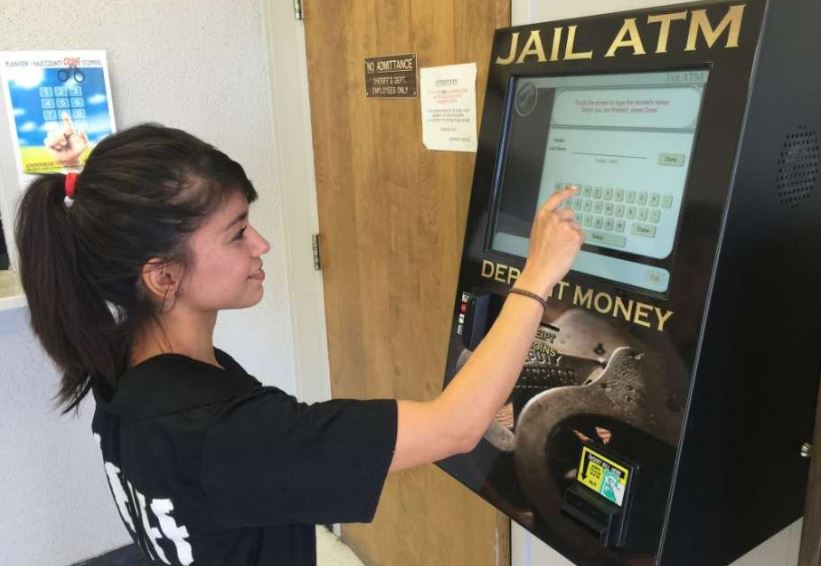
There is a monthly limit of $200-300 on how much inmates can spend on commissary items.
This amount is subject to change so call the facility at 541-963-1020 in order to confirm the amount that cannot be exceeded.
Inmates have access to both an in-house commissary store, and commissary packages that can be purchased and shipped to the inmate by friends and family.
Scroll down for information on the Union County Jail's service they use for you being able to purchase commissary items online and have them shipped directly to the inmate.
You can also go to our Inmate Money page for information on how to send money to an inmate.
JailATM provides a secure electronic payment portal that allows friends and family members to deposit funds directly into an incarcerated person's jail trust and commissary account. Deposited money provides the financial balance needed for your loved one to purchase personal hygiene items, snacks, over-the-counter medical sundries, and correspondence supplies from the facility commissary.
Important: Facility Deposit Rules and Window Intake Vary
Once a person is booked and moved to a housing unit, facilities do not always allow cash drop-offs or phone payments directly to the jail window. Some might and you should confirm this by calling the facility and asking. But if you do not register online and fund your loved one's trust account immediately, they may be forced to wait days or weeks for standard paper processing, leaving them without essential soap, clean undergarments, basic medical sundries or snacks.
Step-by-Step Instructions to Register and Deposit Funds
- Obtain the inmate's legal first and last name, date of birth, and assigned facility booking ID number.
- Navigate to deposits.jailatm.com/webdeposits/ on your computer or mobile device.
- Click Sign In or Register to set up your verified user account using your email address and password.
- Select the state and the detention facility where the inmate is currently housed.
- Search for the inmate using their ID number or legal last name to confirm an exact roster match.
- Enter your desired deposit dollar amount and review the calculated transaction and convenience fees.
- Input your debit or credit card billing details, complete payment authorization, and save your digital receipt.
What the Inmate Needs to Do
The inmate does not need an internet account to receive funds. Once the electronic transaction clears, the balance posts directly to their jail trust ledger according to facility accounting schedules. The inmate can review their updated balance at a dayroom pod kiosk or on their weekly trust statement and place orders on their regular commissary day.
Official Provider: JailATM Official Website
Customer Service Telephone: 1-877-810-0614
Support Hours: Monday – Friday, 8:00 AM – 5:00 PM CST
Supported Languages: English and Spanish
Other Services Provided by JailATM
In addition to Trust & Commissary Money Deposits, JailATM provides several other communication, store, and visitation services at participating facilities:
- Commissary Gift Packs & Store Ordering: Order pre-approved snack boxes, food packages, and hygiene bundles sent directly to the jail.
• Learn more on our website: Commissary Gift Packs Guide | • Visit official vendor page: JailATM Store Orders - Digital Messaging & Picture Sharing: Send electronic messages and photos directly to an inmate's housing unit kiosk.
• Learn more on our website: Digital Messaging Guide | • Visit official vendor page: JailATM Messaging - Remote Video Visitation: Schedule and join live video visits from home using your computer or smartphone.
• Learn more on our website: Video Visitation Guide | • Visit official vendor page: JailATM Video Visits
Deposit Money for an Inmate in the Union County Jail
Envelopes, stamps, shampoo and candy are the kinds of commissary items account money buys at the Union County Jail in La Grande. Each person can receive up to $300 a week.
Here in person? Corrections staff can't accept cash or money orders over the counter, so head to the kiosk in the visitation lobby at 1109 K Ave., which takes cash or a credit card. From anywhere else, JailATM handles deposits online.
By mail, send a money order made out to the person's full name, with their inmate number, to Union County Jail, 1109 K Ave., La Grande, OR 97850. Mailed cash is accepted, though the jail strongly urges against it, and personal checks are refused.
To check one person's balance, dial 541-963-1020, choose the jail option and give their full name and birth date.
The Union County Jail in La Grande, run by the Union County Sheriff's Office as the Union County Correctional Facility, is a small jail on K Avenue that holds up to 37 people. Letters still arrive on paper and are delivered at the jail, with no scanning service involved. It also holds people arrested by the La Grande police, the state police and Wallowa County.
Letters, books, legal papers and money orders all go here:
Inmate's Full Name & Inmate #
c/o Union County Correctional Facility
1109 K Ave.
La Grande, OR 97850
- First line: Start the address with the person's name, then the jail lines below. Their inmate number is on the jail roster.
- Return address: The jail turns away mail without one. At a minimum, give your first initial and last name, street or PO box, city, state and ZIP code.
- Writing: Use ink or pencil. Letters done in crayon, permanent marker or colored pencil are refused.
- Not allowed inside: Newspaper clippings, stickers, perfume, lipstick or any other substance, and extra stamps or envelopes. The person can buy stamps and envelopes from commissary.
- Cards: Plain cards are welcome. Nothing glued or tied on, like glitter or ribbon, and no cards that play music.
- Paperbacks: A book is accepted only when a publisher or a store ships it straight to the jail.
- Clothes by mail: New plain white socks, underwear and T-shirts can be mailed, still sealed in the store package. T-shirts must have no pockets, words or pictures.
- Money orders: A mailed money order goes onto the person's commissary account. Make it out to the inmate's full name and put their inmate number on it. If you are unsure, call 541-963-1020 to confirm. The jail will not take a personal check, and it strongly warns against putting cash in the mail.
- At the jail: Officers cannot take cash or money orders over the counter. Use the lobby kiosk or send money online, up to $300 a week.
- Who they can write: Co-defendants, people held in other jails or prisons, and anyone under a no-contact order are off limits.
For questions about a person at the jail, call 541-963-1020.
CIDNET Phone Calling enables incarcerated individuals to place outbound voice calls from housing-unit wall phones or handheld tablets directly to approved cell phones and landlines. Because jail phone systems cannot accept incoming calls, setting up a CIDNET account and purchasing Data Points ensures outbound calls connect immediately without wireless carrier collect blocks.
Important: Mobile Networks Block Inmate Calls Without Data Points
Wireless cellular carriers automatically block collect calls originating from jail telecommunications systems. While some traditional landline telephone providers may support monthly operator billing, mobile smartphones and VoIP numbers require an active prepaid CIDNET balance, which you can verify with your provider. If you do not register your 10-digit number online and purchase Data Points immediately, your loved one will hear an automated operator recording stating that your phone number cannot accept calls.
Step-by-Step Instructions to Set Up and Fund Voice Calling
- Go to customer.cidnet.net or launch the CIDNET Customer mobile app.
- Register your account using the primary 10-digit telephone number where you want to receive calls.
- Upload your driver's license or state ID for identity verification.
- Select the detention center where the inmate is held and link them to your contact profile.
- Purchase Data Points using a debit or credit card to cover per-minute calling rates.
- Confirm your mobile phone allows calls from automated or unknown correctional numbers and does not send them to spam.
What the Inmate Needs to Do
The inmate approaches a pod wall phone or opens the phone app on their tablet, enters their assigned inmate PIN, and dials your 10-digit number. CIDNET's automated system verifies that your account has sufficient Data Points and connects the call once you accept the automated prompt. All non-privileged conversations are recorded and monitored by the facility.
Official Provider: CIDNET Customer Portal | Encartele Corporate
Customer Service Telephone: 1-888-984-1903
Support Hours: Monday – Friday, 8:00 AM – 5:00 PM CST
Supported Languages: English and Spanish
Other Services Provided by CIDNET
In addition to Phone Calling, CIDNET operates messaging and video visitation services:
- Data Points (Unified Funding): Purchase the central credits used to pay for telephone talk time.
• Learn more on our website: CIDNET Data Points Guide | • Visit official vendor page: Buy CIDNET Data - Remote Video Visitation: Schedule and join live video visits from home using your computer or smartphone.
• Learn more on our website: CIDNET Video Visits Guide | • Visit official vendor page: CIDNET Video Visitation - Inmate Messaging & Digital Mail: Send text messages and digital photo attachments directly to an inmate's terminal.
• Learn more on our website: CIDNET Messaging Guide | • Visit official vendor page: CIDNET Messaging Portal
CIDNET Inmate Messaging provides a secure digital messaging and picture-sharing service for families of incarcerated individuals. Powered by CIDNET Data Points, outside contacts can compose electronic letters and upload JPEG photographs directly through the CIDNET web app, delivering correspondence to inmate screens within hours and avoiding paper mail sorting delays.
Important: Postal Mail Transition and Screening Rules Vary
Inmates cannot receive incoming phone calls, and physical postal mail policies differ across jurisdictions. While some detention centers accept handwritten envelopes, many facilities contracting with CIDNET have prohibited physical paper mail in favor of electronic mail scanning and direct digital messaging, which you can verify by checking facility rules. If you do not register online and purchase Data Points immediately, your loved one may face lengthy periods without direct written communication from family.
Step-by-Step Instructions to Register and Message an Inmate
- Log into your account at customer.cidnet.net or launch the CIDNET app.
- Ensure your identity verification (photo ID and selfie) is approved by the facility.
- Confirm your account has an active Data Point balance; purchase additional points if needed.
- Select Messages from your navigation menu and click on your linked contact.
- Type your message in the text editor and attach clear JPEG photo files if authorized by the facility's media rules.
- Review the estimated Data Point cost for the message length and image attachments.
- Click Send to submit your transmission to the institutional mailroom screening queue.
What the Inmate Needs to Do
All messages and photographs pass through facility screening filters. Once approved, the message arrives in the inmate's inbox on their housing unit kiosk or assigned tablet. The inmate opens the message, views the images, and types a digital response, which draws against available account points.
Official Provider: CIDNET Customer Portal | Encartele Corporate
Customer Service Telephone: 1-888-984-1903
Support Hours: Monday – Friday, 8:00 AM – 5:00 PM CST
Supported Languages: English and Spanish
Other Services Provided by CIDNET
In addition to Inmate Messaging, CIDNET provides several other communication and visitation options:
- Data Points (Unified Funding): Purchase universal credits that power voice calling, messaging, and video visits.
• Learn more on our website: CIDNET Data Points Guide | • Visit official vendor page: Buy CIDNET Data - Remote Video Visitation: Schedule and join live video visits from home using your computer or smartphone.
• Learn more on our website: CIDNET Video Visits Guide | • Visit official vendor page: CIDNET Video Visitation - Phone PINs & Voice Calling: Fund outbound voice telephone calls so your loved one can call your telephone directly.
• Learn more on our website: CIDNET Phone Calling Guide | • Visit official vendor page: CIDNET Voice Calling
CIDNET provides secure handheld wireless tablets designed specifically for correctional housing units. Operating over a private, encrypted facility network, these devices allow incarcerated individuals to exchange messages, place voice calls, conduct remote video visits, read approved digital books, access law library materials, and complete rehabilitative courses directly from their cells.
Important: Tablet Hardware Deployment and Rental Rules Vary
Detention centers do not manage tablet distribution identically. While some agencies issue individual personal tablets to every detainee at booking, others utilize shared pod docking stations or restrict tablet use to specific dayroom hours, which you should confirm with the facility directly. Although core educational and legal resources are generally provided free of charge, sending messages or making calls from the tablet requires an active balance of Data Points funded by friends or family.
Step-by-Step Instructions to Support Tablet Use
- Confirm that CIDNET handheld tablets are active and deployed at your loved one's specific detention facility.
- Register your verified user account at customer.cidnet.net.
- Complete identity verification by uploading your government photo ID.
- Link the inmate to your profile and purchase a reserve of CIDNET Data Points.
- Notify your loved one that funds are available so they can open the communication apps on their tablet.
What the Inmate Needs to Do
The inmate unlocks their assigned tablet using biometric verification or their unique facility PIN. Once logged on, they can browse institutional announcements, access educational materials, or select approved outside contacts to read messages and start calls. When quiet hours begin or tablets require recharging, inmates return devices to designated pod docking carts.
Official Provider: CIDNET Customer Portal | Encartele Corporate
Customer Service Telephone: 1-888-984-1903
Support Hours: Monday – Friday, 8:00 AM – 5:00 PM CST
Supported Languages: English and Spanish
Other Services Provided by CIDNET
In addition to Inmate Tablet Services, CIDNET provides several core communication channels:
- Data Points (Unified Funding): Purchase the digital currency required to power all tablet communications.
• Learn more on our website: CIDNET Data Points Guide | • Visit official vendor page: Buy CIDNET Data - Inmate Messaging & Digital Mail: Send text messages and photos directly to an inmate's tablet screen.
• Learn more on our website: CIDNET Messaging Guide | • Visit official vendor page: CIDNET Messaging Portal - Remote Video Visitation: Conduct scheduled live video calls directly to their tablet or pod kiosk.
• Learn more on our website: CIDNET Video Visits Guide | • Visit official vendor page: CIDNET Video Visitation
Union County County Jails
Nearby counties
- Jail (Main): 541-963-1020
- Sheriff: 541-963-1017
The Union County Jail serves the following cities and towns of Union County: Cove, Elgin, Imbler, Island City, La Grande, North Powder, Summerville and Union.