
Butte County Sheriff's Office
Butte County Sheriff's Office
Butte County Sheriff
605-892-3324Butte County Inmate Search: Tracking Down Someone Jailed Outside the County
Butte County deputies and Belle Fourche officers make arrests here, yet adults are jailed in beds the Sheriff rents from other counties. One possible stop is the Meade County Jail, 1400 Main Street, Sturgis, SD 57785. Read on to learn how to pin down where the person sleeps tonight, and how charges, lawyers, visits, deposits, letters and hearings get sorted out.
Start where it's quickest: the official inmate lookup, searched by name. Records for a fresh booking can trail behind, and a transfer between jails may take a while to show, so a missing name is no reason to panic.
The Sheriff's Office picks up the phone at 605-892-3324 around the clock. It helps to have a spelled-out name and a date of birth on hand. Ask three things: where the person is housed, what the charge is and how much bond is. How to get someone out is on our bail page; hearings in Belle Fourche are on our court page.
Read inmate search answers
 Read inmate search answers
1. Searching the official lookup after a Butte County arrest: which steps work?
This lookup is a statewide service, free and open around the clock. Steps:
- Visit the official inmate lookup; any device will do.
- Enter the surname and given name. Unsure how it's spelled? Shorten it.
- Click the record that fits and read its custody details.
- Copy down any ID number it shows, since jail staff can use it.
- Phone the Sheriff's Office at 605-892-3324 to learn which jail actually has the person.
The same system can send notices when a person's custody status changes, but only after you sign up.
↑ Back to the question list2. The name doesn't come up in the search: what now?
Ordinary reasons usually explain it:
- Timing. Records can run a few hours behind a new arrest.
- Release. The person might already be out on bond, or freed by a judge.
- Transport. With out-of-county jails in the mix, the person could be on the road between them.
- Another agency. Federal marshals, state prison staff or ICE may be holding them.
- A minor. Juveniles don't go into adult jail records.
- The name itself. Try other versions: maiden name, nickname, middle name.
When in doubt, ring the Sheriff's Office, staffed every hour of the day, at 605-892-3324. City arrests can also be checked with the police at 605-892-4240.
↑ Back to the question list3. Which jail might be holding a Butte County prisoner right now?
Instead of a jail, the Sheriff's Office has contracts for jail space in other counties, which state law permits (SDCL 24-11-3). The county pays the host for every prisoner it sends. The host for any one person can vary, so confirm with the Sheriff at 605-892-3324.
- Meade County Jail, 1400 Main Street, Sturgis, SD 57785, 605-347-2681. It is one jail the county may use; on that line, ask for jail staff.
- For a minor who can't go home: Western South Dakota Juvenile Services Center, 3505 Cambell Street, Rapid City, SD 57701, 605-394-2639 (our listing).
Wherever the person sleeps, the arrest, the charges and the court case stay with this county. Bond, visits, mail and deposits run through the host jail, so get its name before you do anything else.
↑ Back to the question list4. Where can a family get mugshots or booking photos?
The lookup is meant for custody status and alerts, so mugshots never show up there. Ask the Sheriff's Office how it handles booking photo requests: 605-892-3324. News outlets ask there too.
- ICE images can be sought through that agency's records request page.
- Photos taken at a federal booking are normally kept from the public. Marshals sometimes put one out, say during a search for a fugitive.
5. Can relatives sign up for word of a release or transfer?
Yes, by registering. SAVIN, the state's no-cost notification system, operates through the Attorney General's office and runs 24 hours a day. It sends word of offender status changes, such as a release. For live help, call 844-299-4608, Monday through Friday, 8:00 a.m. to 5:00 p.m. Central.
- Registration is a step you take yourself; nothing arrives otherwise.
- Juvenile matters aren't covered. Victims there should call the State's Attorney on the case, 605-892-3337.
- Victims also hold a constitutional right to quick word of any release or escape (S.D. Const. art. VI, § 29).
6. How does bond work on charges filed in Butte County?
Nearly everyone charged with a crime here can get bail, and judges start from the mildest terms (SDCL 23A-43-2). Many bonds come from the state schedule, with a first or second DUI landing between $225 and $1,000. A judge, not the clerk's chart, prices bond on domestic abuse and on first-degree manslaughter, kidnapping or murder.
- A drinking or drug charge frequently brings 24/7 sobriety testing as one of the release rules (SDCL 1-11-20).
- After a domestic arrest, nobody in the alleged victim's home may hear from the jailed person before the first hearing. A relative carrying a message breaks the rule too (SDCL 25-10-43). Please refuse to pass along anything.
- Bond is usually paid where the person is held; that jail can explain which payments it takes.
Details on amounts, payment and bondspersons are on our bail page.
↑ Back to the question list7. Where do I find out what the person is accused of?
Once filed, the charging papers sit with the Clerk of Courts: 839 5th Ave., Belle Fourche, SD 57717, 605-892-2516, weekdays 7:30 a.m. to 5:00 p.m. At the courthouse, public terminals display records that turn up in a PARS summary.
From home, Find a Court Date is free and lists hearings for a name or case number. A summary from the Public Access Record Search costs $20 a search.
The State's Attorney's Office settles on the final charges. It sits on the main floor at 839 5th Avenue, Belle Fourche, SD 57717, 605-892-3337. A Class 1 misdemeanor can bring up to a year in county jail; felonies range from Class 6 up to Class A (SDCL 22-6-1, 22-6-2).
↑ Back to the question list8. How does someone sitting in jail get a defense lawyer?
The person raises it at the first hearing: tell the judge money is too tight to hire counsel, and ask for an appointed lawyer (SDCL 23A-40-6). Court-appointed private lawyers are paid by the county (SDCL 23A-40-7, -8). The form comes from the Clerk of Courts, 605-892-2516.
- Later on, a judge can bill that cost back to the person, and a dismissed case doesn't erase it (SDCL 23A-40-10).
- No free lawyer is owed when jail can't happen. That covers someone out on bond whose top charge is a Class 2 misdemeanor. The same goes for a petty offense (SDCL 23A-40-6.1).
A family can also pay for a private attorney. The host jail can explain how lawyers book private visits.
↑ Back to the question list9. How can you visit a Butte County prisoner housed in another county?
Visiting rules belong to the host jail and vary. First learn the location from the Sheriff's Office, 605-892-3324. Then call the jail and go over:
- open days and hours, and if you need to reserve a time;
- the format, since some jails use video screens and others seat you across a glass window;
- ID rules for visitors and the policy on bringing kids;
- dress rules, and which items you may carry in.
Some host jails are a good drive from Belle Fourche, so reconfirm the time the morning you go. Our visitation guide has more tips.
↑ Back to the question list10. How do I add money to the person's jail account?
Funds in a jail account pay for phone minutes and commissary goods such as soap or snacks. The host jail chooses how deposits are made and how much is allowed, so phone it after the Sheriff's Office confirms where the person is.
When you call, give the person's name, plus a booking number if you know it. Deposit routes are explained in our guide to sending money, while the commissary guide shows what's for sale. Mailing cash is never a good idea.
↑ Back to the question list11. How does the person phone, text or email from jail?
Phones and messaging differ from jail to jail. Ask the host jail how incoming calls get set up, the price, and whether it offers tablets or electronic messages. Assume someone is listening to every call except those with a lawyer. Details of the case belong only in talks with the defense attorney.
Our jail phone guide covers calling, and the inmate messaging guide covers email and texts.
↑ Back to the question list12. How should letters be addressed and sent?
Letters go to the host jail rather than the Sheriff's Office. Phone that jail before mailing. Get the exact address, find out if the envelope needs a booking number, and learn what can be enclosed, such as photos or greeting cards.
Put the person's complete legal name on the front, along with your own return address. Our jail mail guide lists the rules most jails share.
↑ Back to the question list13. What becomes of the person's property, and who can pick it up?
The jail holds onto whatever the person had with them at booking until they leave custody. To collect items on their behalf, call that jail ahead of time. Find out whether the person must sign paperwork releasing the items, and which ID to bring.
The Sheriff's Office at 605-892-3324 can tell you which jail has the property. Be aware that a prisoner can be billed for jail costs (SDCL 24-11-45).
↑ Back to the question list14. Who do I call if the person gets sick or hurt in custody?
Call the host jail as soon as you can. Give them every medicine the person takes, the amount, and the prescribing doctor's name and number. South Dakota law addresses prisoner medical treatment and the use of a prisoner's insurance (SDCL 24-11-21, 24-11-21.1).
The Sheriff's Office handles mental health holds in this county and can be reached at 605-892-3324. Describe any crisis in plain words. In an emergency, dial 911.
↑ Back to the question list15. What's the way to check for a Butte County warrant?
Deputies serve warrants outside Belle Fourche; city police serve them inside town limits. The Sheriff's active warrant list is refreshed monthly, and names served since then can linger until the next update, so confirm at 605-892-3324. A case with a warrant shows a flag on UJS ePayments. Two state lists help too: the Most Wanted page of escapes and walkaways from corrections, plus the Sex Offender Registry. Surrendering is safest with a lawyer, who can set up a time before the judge behind the warrant. The Clerk of Courts takes questions too: 839 5th Ave., Belle Fourche, SD 57717, 605-892-2516.
↑ Back to the question list16. Where are court dates listed?
Hearings for this county happen at the courthouse at 839 5th Ave., Belle Fourche, SD 57717. To find the next one:
- Use the free state search, Find a Court Date.
- Call the Clerk of Courts at 605-892-2516 on a weekday.
- Ask the defense lawyer, who gets every notice.
Someone housed far away may attend by video. Our court page breaks a case into its stages.
↑ Back to the question list17. Where would someone facing a federal charge be held?
Federal cases from here are heard in Rapid City (Western Division), 515 Ninth Street, Rapid City, SD 57701.
- Right away, a federal magistrate weighs jail versus home release at what's called a detention hearing (18 U.S.C. 3142).
- Until trial, the person is in the custody of U.S. Marshals, often at a county jail they rent space from. Ask the Rapid City office: 515 9th Street, Suite 323, Rapid City, SD 57701, 605-342-6331.
- After sentencing, search the Federal Bureau of Prisons inmate locator by name or register number.
18. Where does a person go once ICE takes custody?
When immigration officers want someone in jail, here is what tends to happen next:
- Form I-247A, a detainer, reaches the jail from immigration agents.
- Because of it, staff can lawfully hold someone up to 48 hours after they would otherwise be released (8 CFR 287.7(d)).
- Next, ICE transfers the person to its own custody. Its St. Paul Field Office covers South Dakota: 1 Federal Drive, Suite 1601, Fort Snelling, MN 55111, 612-843-8600.
- The ICE Online Detainee Locator accepts an A-number. Lacking that, type the name plus the nation of birth.
- Last, SB 7 (SL 2025, ch 100). Under this law, no town or county here can tell its employees to keep immigration status from federal agents.
19. How do I look up someone serving state prison time?
Felony prison sentences are served with the South Dakota Department of Corrections. That department assigns the prison.
- Search the state offender locator using a name or DOC number. It covers people sentenced to the department, not people held in county jails.
- JailExchange has a page for every South Dakota prison, with visiting and mail details.
- Prison system headquarters, by mail or phone: 3200 East Highway 34, c/o 500 East Capitol Avenue, Pierre, SD 57501, 605-773-3478.
20. What happens if the person arrested is a teenager?
Most teens go home with a parent instead of to any jail. An intake officer decides if a youth must be held, and the law limits the reasons (SDCL 26-8C-3). From this county, a held youth goes to the regional center at 3505 Cambell Street, Rapid City, SD 57701 (Western South Dakota Juvenile Services Center). It schedules family visits by security level. Call 605-394-2639 to check that the youth is there and ask about visits.
↑ Back to the question list21. Troopers, deputies or city officers: who made the arrest in Butte County?
Start with the agency that made the arrest; it can answer questions about what happened. These agencies work in the county:
- Butte County Sheriff's Office, 839 5th Ave, Belle Fourche, SD 57717, 605-892-3324, open 24 hours. Deputies patrol the rural county and Vale and Hoover, and the office serves Fruitdale, Nisland and Newell by contract.
- Belle Fourche Police Department, 511 6th Avenue, Belle Fourche, SD 57717, 605-892-4240. This is a temporary home while a new station is built.
- Butte County Dispatch Center, courthouse basement, 839 5th Avenue, Belle Fourche, SD 57717, non-emergency 605-892-2737. It handles 911 and dispatch for the whole county and for Harding County.
- South Dakota Highway Patrol, District Three (western South Dakota), PO Box 2474, Rapid City, SD 57709-2474, 605-394-2286.
For any emergency, call 911.
↑ Back to the question listButte County Bail and Release
Butte County rents jail beds from other counties instead of keeping its own lockup, so a person picked up in Belle Fourche, Newell or Nisland may sleep in a neighboring county tonight. One jail the Sheriff may use is the Meade County Jail, 1400 Main Street, Sturgis, SD 57785. This page walks through bond amounts, paying, release terms and refunds.
See if the person is in custody with the official inmate lookup, a free statewide tool. For the arrest and the jail stay itself, open our Jail Roster page. There you'll find who is held today, the newest bookings, warrants still open, the charges, mugshots, court-appointed counsel and how property gets picked up.
Then dial the Sheriff's Office at 605-892-3324; someone answers day and night. Get three answers on that call: which jail took the person, what the bond is, and if a judge still has to sign off. The hearings that come next are laid out on our court page.
1. After a Butte County arrest, who fixes the bond and how soon is court?
Two people can fix it. For many everyday charges, a clerk magistrate reads the amount off a statewide schedule. For the gravest felonies and for domestic abuse, a judge has to decide.
The law's phrase for timing is "without unnecessary delay." Officers take the person to the closest judge who is free, live in the courtroom or by video (SDCL 23A-4-1). No set hour count is written into that rule. The county sits in the Fourth Judicial Circuit, with court held at the Belle Fourche courthouse. To learn when the hearing is booked, phone the Clerk of Courts, 839 5th Ave., Belle Fourche, SD 57717, at 605-892-2516. Staff are in from 7:30 a.m. to 5:00 p.m. on weekdays.
During that first visit, the judge goes over the charge, the person's right to keep quiet, the right to hire counsel or request one, and the release terms. Pleading comes later (SDCL 23A-4-3).
↑ Back to the question list2. What kinds of release can the judge pick from?
South Dakota tells judges to begin with the lightest touch. The first choices are personal recognizance, which is just the person's signed word, and an unsecured bond that needs no cash at the start (SDCL 23A-43-2).
If a promise alone looks too weak to guarantee the next court date, the law lists add-ons. The judge picks the earliest one on this list that should do the job (SDCL 23A-43-3):
- Placing the person in someone's care, such as a relative or a program.
- Rules about trips, friends or home address.
- Mental health terms.
- Putting down a deposit worth 10 percent of the bond or less, which is paid back once the person follows every term.
- The full sum paid in cash, or a bondsperson's surety bond.
- Anything further the judge sees as truly necessary.
The judge weighs the accusation, the weight of the evidence, results of any mental health evaluation, and flight or safety risks (SDCL 23A-43-4). The release order warns that a broken term means an immediate warrant (SDCL 23A-43-6). Anyone wanting the full picture of release rules for a Belle Fourche case can open the statewide breakdown of bail and release.
↑ Back to the question list3. What does 24/7 sobriety testing mean for someone out on bond?
Drinking and drug cases often come with a 24/7 Sobriety Program order tied to the bond (SDCL 1-11-20). The Attorney General runs the program statewide. Under such an order, the person may need to stop by a testing site every morning and night for a breath check. Instead of the breath machine, a judge may order an alcohol-sensing bracelet, urinalysis, or a sweat patch for drugs.
Butte keeps its own 24/7 fund, and the Sheriff's Office handles questions. Ring 605-892-3324 to learn where and when testing happens. Fees are capped by law:
- Each breath test: $3 at most (SDCL 1-11-26)
- Each urinalysis: $10 at most (SDCL 1-11-27)
- Each drug patch: $70 at most (SDCL 1-11-28)
- Bracelet: $10 a day at most, with up to $50 to fit it and $50 to remove it (SDCL 1-11-29)
Skipping a test, or blowing positive, may send the person straight back into custody, without bond, till the court takes up the violation.
↑ Back to the question list4. What do bonds run for everyday Butte County charges?
Since July 1, 2026, every circuit, this one included, has used the state's FY27 Fine and Bond Schedule. On many charges, that chart lets the clerk magistrate name the bond right away. A sample of the ranges:
- DUI, first or second: $225 to $1,000
- DUI, third or later (a felony): $1,000 to $5,000
- Grand theft: $1,000 to $10,000
- Robbery: $1,000 to $25,000
- Marijuana, a misdemeanor amount of two ounces or under: no money, just a signed promise
- Disorderly conduct ticket: $132.50 covering fine and costs together
- Kidnapping, murder or first-degree manslaughter: bond waits until the accused stands before a judge
- Driving while suspended: $282.50 all in
- Domestic abuse: the judge alone decides bond and terms
Since most entries are ranges, the exact figure turns on the facts. For a case already filed, the Clerk at 605-892-2516 can read you the amount.
↑ Back to the question list5. Paying bond on a Butte County case: which steps come first?
Bond usually gets paid at whatever jail is holding the person, which can be a long drive from home. Go down this checklist:
- Ring the Sheriff's Office first, 605-892-3324. Write down the jail's name, the charge and the bond figure.
- Call that jail next. If the answer is the Meade County Jail, 1400 Main Street, Sturgis, SD 57785, reach the Meade Sheriff at 605-347-2681.
- Find out what payments its window accepts, the payee name for a money order, and its hours.
- Check that no judge's okay is still pending, which is common after a domestic arrest.
- Take your photo ID and exactly the right amount. Save the receipt.
One wrong detail can cost you a wasted trip, so confirm everything by phone first.
↑ Back to the question list6. Besides the jail, where can bond money be handed in?
Try the Clerk of Courts at the county courthouse. Clerk magistrates are allowed to set bond off the schedule (SDCL 16-12C-10), and that office runs the paperwork for every state case here.
Clerk of Courts, 839 5th Ave., Belle Fourche, SD 57717, 605-892-2516, Monday to Friday from 7:30 a.m. until 5:00 p.m. Letters go to PO Box 250, Belle Fourche, SD 57717-0250.
Ring first. Ask whether the counter takes bond for a person housed out of county, which kinds of money it takes, and how fast word reaches the jail.
When city officers made the arrest, the police department can say where they took the person: 511 6th Avenue, Belle Fourche, SD 57717, 605-892-4240.
↑ Back to the question list7. Cash, checks or cards: what can you pay bond with?
Ask the jail or the Clerk which payments they accept before you go. Ask about cash, money orders and cashier's checks, and about personal checks and cards too.
- The court's card site. UJS ePayments is where people use a card to clear fines, court costs and restitution. It was never set up to post bail. Payments there start at $25 unless the balance is smaller.
- Envelopes. Cash should never travel by mail.
- Paperwork. Insist on a receipt showing your name and the case number. Without it, getting a refund gets harder.
8. Hiring a bondsperson: what protects your family?
Bondspersons sell a promise: for their fee, they back the entire bond if the person skips court. Begin with the list of bail bond agents posted by the state courts.
- The South Dakota Division of Insurance issues their licenses. To confirm one or to complain, call 605-773-3563 or visit 124 South Euclid Avenue, 2nd Floor, Pierre, SD 57501.
- Bonding for profit without a license from the state? That's a Class 6 felony (SDCL 58-22-4).
- Deputies, police and jail staff can't make money from any bail bond (SDCL 58-22-3). Soliciting customers where prisoners are held is off limits for bondspersons (SDCL 58-22-32).
- Prices differ between agents. Have the price, plus any title or valuables you put up as collateral, spelled out on a written receipt.
- A relative who signs as surety must sign a sworn statement describing what they own and owe. No practicing lawyer may serve as surety (SDCL 23A-43-20).
9. Could the person stay behind bars even after bond is paid?
Yes. Bond paid on one case covers that case alone. Ask the jail to name each hold before you pay. Typical ones:
- Other cases or warrants. Each one carries a separate bond. The Sheriff's Office keeps a monthly roundup of active county warrants.
- Probation. Local probation is supervised by Court Services, 605-892-3505.
- Parole. A parole hold comes from the Department of Corrections.
- A domestic case. Officers have to notify a judge, who sets the bond and conditions personally (SDCL 25-10-40).
- Federal or immigration holds. Either can stop a release even once bail is paid.
One more warning for families. After a domestic arrest, the jailed person is forbidden to reach out in any way to the alleged victim, or to anyone in that home, until the first court hearing. A note or phone message carried by a relative counts too (SDCL 25-10-43). Passing one along risks a fresh Class 1 misdemeanor, so say no if asked.
↑ Back to the question list10. In what cases can bail be denied outright?
Very few. Under the state constitution, bail must be available to almost anyone charged. The lone carve-out covers a crime punishable by death where the case against the person is overwhelming (S.D. Const. art. VI, § 8).
Outside that narrow group, the judge has to allow release on some terms. Those terms may be tough, and the dollar figure high, if the judge fears flight or danger to others (SDCL 23A-43-4). Crime victims may also address the judge whenever release is on the table (S.D. Const. art. VI, § 29).
The State's Attorney's Office argues for the terms. Find it on the main level of the courthouse at 839 5th Avenue, Belle Fourche, SD 57717, 605-892-3337. A doorbell left of the entrance gets you buzzed in.
↑ Back to the question list11. How can bond be lowered or the conditions eased?
Have the defense lawyer handle each of these routes:
- A second look after one day. If the terms can't be met and the person remains jailed a day later, counting from the release hearing, they may seek a review (SDCL 23A-43-8).
- Help from a circuit judge. Terms that came from a magistrate can be rewritten by a circuit judge (SDCL 23A-43-14). Terms can be adjusted at any point, too (SDCL 23A-43-7).
- The Supreme Court. An appeal is the final option (SDCL 23A-43-15).
Relatives can pitch in. Pay stubs, a lease or deed close to home, and letters from family all show roots here. In drinking cases, signing up for 24/7 testing could ease what worries the judge. The Clerk at 605-892-2516 explains how a request gets a hearing date.
↑ Back to the question list12. Butte County defendants without money: how do they get a lawyer?
They ask the judge for one, ideally at the first hearing (SDCL 23A-40-6). This county pays private attorneys whom the court assigns to people without the money to hire their own (SDCL 23A-40-7, -8).
- Someone charged only with a petty offense, an ordinance or a Class 2 misdemeanor gets none if they are out of jail and face no jail time (SDCL 23A-40-6.1).
- Repaying those attorney bills can be ordered by the judge, win or lose (SDCL 23A-40-10).
- To collect, the county can file a lien against property, though never foreclose on the house the person lives in (SDCL 23A-40-11, -15).
- The state's Office of Indigent Legal Services handles appeals rather than trials.
The request form is at the Clerk of Courts, 605-892-2516.
↑ Back to the question list13. What courts handle Butte County cases, and where do they meet?
Every state case from the county's towns and ranch country lands in one building in Belle Fourche. A couple of specialty programs meet in neighboring counties.
- County courthouse (magistrate and circuit court), Clerk of Courts, 839 5th Ave., Belle Fourche, SD 57717, 605-892-2516. Weekdays, 7:30 a.m. to 5:00 p.m.
- Northern Hills Drug Court gathers in Sturgis at the Meade County Courthouse, 1425 Sherman St., Sturgis, SD 57785. Fourth Circuit DUI Court gathers in Deadwood at the Lawrence County Courthouse, 90 Sherman St., Deadwood, SD 57732. One number serves both: 605-222-0077.
- Federal court (Rapid City): Andrew W. Bogue Federal Building and United States Courthouse, Clerk's Office Room 302, 515 Ninth Street, Rapid City, SD 57701. For a federal prisoner, the Marshals office in that building answers at 605-342-6331.
14. Who gets the bond money back at the end, and what makes it disappear?
Once the case wraps up and the person kept every term, the court lets the bail go (SDCL 23A-43-26). A 10 percent deposit is likewise handed back after the conditions are satisfied (SDCL 23A-43-3).
Thinking of putting up cash for a friend or relative? First call the Clerk of Courts at 605-892-2516. Find out whether court costs, fines or appointed-lawyer charges could be subtracted before a refund. File the receipt somewhere safe.
- Miss a hearing or break a term, and the court can forfeit the bond and order an arrest (SDCL 23A-43-21).
- Not showing up is a crime in itself (SDCL 23A-43-31). How serious depends on the first case. If the first case was a felony or DUI, skipping court is a Class 6 felony. Released on a lesser charge? It's a Class 1 misdemeanor.
- Judges can wipe out a forfeiture when fairness calls for it (SDCL 23A-43-22).
- Forfeited cash is paid into the county treasury (SDCL 23A-43-25).
15. Once released, how does the person collect their cash balance and belongings?
Money and belongings stay put at the booking jail, or the jail that housed the person. That could be outside the county, so start with the Sheriff's Office at 605-892-3324 to pin down the right place, then phone that jail before making the trip.
Questions worth asking: how a leftover balance gets refunded, which ID you must show, and whether you must bring the person's written permission to collect. Also be ready for a possible bill, since state law lets a prisoner be charged for the costs of confinement (SDCL 24-11-45). Our jail account money page explains the usual deposit and refund rules.
↑ Back to the question list16. Who decides on release when the charge from Butte County is federal?
A judge of the federal court, usually in Rapid City. This county falls in the Western Division of the U.S. District Court for the District of South Dakota, which holds court in Rapid City and Deadwood. Hearings take place at 515 Ninth Street, Rapid City, SD 57701.
- Whether the person is held or freed is settled at a detention hearing when they first come before the judge (18 U.S.C. 3142).
- Delays are short: no more than five days at defense request, no more than three at the prosecutor's. Throughout any delay, the person stays locked up.
- U.S. Marshals keep federal prisoners awaiting trial, often in a contract county jail. Find their Rapid City office at 515 9th Street, Suite 323, Rapid City, SD 57701, 605-342-6331.
- After sentencing, check the Federal Bureau of Prisons inmate locator.
17. Does an ICE hold survive after bond is posted?
Yes. Paying bond resolves the state side, while an immigration hold carries on. The process generally runs like this:
- To start, immigration agents send Form I-247A, a detainer, to whichever lockup has the person.
- Officers at the jail can then keep the person up to 48 hours after they would otherwise be released (8 CFR 287.7(d)).
- Agents take the person into custody. The St. Paul Field Office of ICE covers South Dakota from 1 Federal Drive, Suite 1601, Fort Snelling, MN 55111, 612-843-8600. ICE names Rapid City's Pennington County Jail, 307 Saint Joseph St, Rapid City, SD 57701, 605-394-6116, as one of its detention sites.
- Search the ICE Online Detainee Locator by name plus birth country.
- State law goes last here. Under SB 7 (SL 2025, ch 100), a South Dakota county or town can't keep a policy that blocks staff from telling federal officers about someone's immigration status.
18. Where does a long felony sentence get served?
Prison terms on felonies belong to the South Dakota Department of Corrections. New arrivals pass through intake for sorting by risk and needs, and then move to a suitable prison. Misdemeanor time stays local (SDCL 22-6-2). Here, local means a jail the county contracts with.
- On Class 5 and 6 felonies, judges must give probation unless aggravating facts show a big risk to the public (SDCL 22-6-11). Instead of prison, the judge has the option of local jail time capped at twelve months (SDCL 22-6-1.1).
- Search by name on the state offender locator.
- JailExchange keeps a page for each South Dakota prison.
- Head office for state prisons, Pierre: 3200 East Highway 34, c/o 500 East Capitol Avenue, Pierre, SD 57501, 605-773-3478.
19. If the arrested person is a minor, where do they go?
Usually home with a parent. Detention is reserved for cases where an intake officer finds one of the specific reasons spelled out in state law (SDCL 26-8C-3). Detention site for Butte youths: Western South Dakota Juvenile Services Center, 3505 Cambell Street, Rapid City, SD 57701, 605-394-2639. Butte owns a share of that regional center along with other western counties.
Youth cases from age 10 up belong to circuit court (SDCL 26-8C-2). A youth's case reaches adult court solely through a judge's transfer hearing (SDCL 26-11-4). The center books family visits around each youth's security rating, so call ahead.
↑ Back to the question listButte County Criminal Court Guide
State charges brought anywhere in Butte County end up at one courthouse in Belle Fourche, 839 5th Ave., Belle Fourche, SD 57717, where magistrate and circuit judges share the docket. Because the county houses its prisoners in other counties' jails, a defendant may wait in a place such as the Meade County Jail, 1400 Main Street, Sturgis, SD 57785. Below are the stages of a case, the lawyers and the ways to track dates.
Step one is to search the official inmate lookup by name. After that, try our Inmates in Custody page for people held, latest arrests, warrants, filed charges, mugshots, public defense and recovering personal property.
Ring the Clerk of Courts at 605-892-2516 between 7:30 a.m. and 5:00 p.m. on a weekday. Jot down the case number, the judge assigned and the next hearing date. Anyone still waiting to get out should read our bail page next.
1. In Butte County, which judge hears a misdemeanor, and who takes a felony?
Magistrate judges own the misdemeanor side. They hold trials on misdemeanors and on city ordinance charges (SDCL 16-12B-11), sign warrants, fix bond and run first hearings (SDCL 16-12B-5, -7, -10). Pleas and sentences are theirs to handle on anything punishable by a year or less in jail or a fine up to $2,000 (SDCL 16-12B-8).
A felony opens in front of a magistrate as well. After the early hearings, it moves up for a circuit judge to take the plea or run the trial. Circuit judges here belong to the Fourth Judicial Circuit, whose eight counties stretch from Harding and Perkins east to Corson, Dewey and Ziebach and south to Lawrence and Meade.
Charges under federal law go to federal court, not to this courthouse.
↑ Back to the question list2. Where is the Butte County courthouse, and which offices are inside?
A single courthouse handles every state case, and the official file stays with the Clerk of Courts.
- Clerk of Courts, 839 5th Ave., Belle Fourche, SD 57717, 605-892-2516. Hours run 7:30 a.m. to 5:00 p.m., Monday through Friday. Postal mail: PO Box 250, Belle Fourche, SD 57717-0250.
- State's Attorney, on the main level, 839 5th Avenue, Belle Fourche, SD 57717, 605-892-3337. Push the doorbell on the left side of the door.
- Court Services (probation officers), 605-892-3505. Ask where to report when you call.
- Dispatch works in the basement of the same building, non-emergency line 605-892-2737.
Public terminals in the courthouse show the records a PARS summary lists. On a hearing day, come early and carry ID.
↑ Back to the question list3. Does Belle Fourche have a city court of its own?
No. Tickets for breaking a city ordinance, whether written in Belle Fourche, Newell, Nisland or Fruitdale, go to the county's magistrate court along with state misdemeanors (SDCL 16-12B-11). That court meets at 839 5th Ave., Belle Fourche, SD 57717. The Clerk's line is 605-892-2516.
A city citation carries a case number of its own. Someone holding a town ticket plus a state charge has to resolve each one separately.
↑ Back to the question list4. Walk me through the first appearance: what happens?
Officers must get an arrested person before a judge "without unnecessary delay," choosing the nearest one who is free (SDCL 23A-4-1). It can be in person or over a video link from a jail.
The judge covers several points:
- what the charge says;
- a right to retain counsel, or to request an appointed lawyer when money is short;
- that nobody can force them to give a statement;
- bond and other release terms; and
- on a felony charge, the chance to have a preliminary hearing (SDCL 23A-4-3).
Pleas wait for a later date. State law names no fixed hour limit for this first step, so timing questions go to the Clerk.
↑ Back to the question list5. What path do drunk driving, theft and simple assault cases follow?
A first or second DUI, a simple assault or a small theft is normally a misdemeanor. Such cases begin and end before a magistrate judge. The usual sequence:
- Initial appearance: bond gets set, and the person may request counsel.
- Arraignment, where a plea is entered on the record.
- Bargaining with the prosecutor, which is how lots of cases end.
- Trial, if no agreement is reached.
- Sentencing.
Top penalties under SDCL 22-6-2:
- Class 1: twelve months or less of county jail time, a fine as high as $2,000, or both. DUIs on a first or second offense fall here.
- Class 2: as long as 30 days in the county jail, a fine as high as $500, or both.
Judges commonly add 24/7 sobriety testing in drinking cases, as a bond term before trial or as a probation rule afterward (SDCL 1-11-20, 1-11-21).
↑ Back to the question list6. What stages does a Butte County felony pass through, and what are the punishments?
After that initial appearance before a magistrate, a felony moves like this:
- Preliminary hearing. A judge decides if the state has enough proof to carry on. The hearing is due in 15 days for a jailed person and 45 for a released one, counted from the first appearance. Skipping it is the defense's choice (SDCL 23A-4-3).
- Formal charge. Most cases use an information, which is a written charge the prosecutor files. Rarely, a circuit judge summons a grand jury, which seats between six and ten people (SDCL 23A-5-1). If that panel indicts first, no preliminary hearing is held.
- Circuit court. Arraignment, pretrial motions, bargaining and, if needed, a jury trial.
- Speedy trial clock. A 180-day trial deadline begins with the first appearance in court. Delays the defense causes don't count against it (SDCL 23A-44-5.1).
Sentences climb by class: Class 6 reaches two years and $4,000, Class 5 reaches five years, and the A, B and C classes reach life (SDCL 22-6-1). Probation is the starting presumption for Class 5 and 6 (SDCL 22-6-11).
↑ Back to the question list7. What is different when the charge involves violence?
The court steps don't change, but the stakes and some rules do:
- Release. For murder, kidnapping or first-degree manslaughter, the schedule doesn't apply; a judge fixes bond.
- Family violence. A judge must be notified before any release. Before the first court date, the jailed person has to keep away from the alleged victim's whole household: no calls, no notes, no messages carried by friends (SDCL 25-10-40, 25-10-43).
- Picking a jury. On the highest felonies, each side gets 20 strikes without giving a reason; on other felonies, 10 (SDCL 23A-20-20).
- Sentences. For Class A, B and C felonies the maximum runs to life behind bars (SDCL 22-6-1).
Under Marsy's Law, victims get to address the judge on bond, plea agreements and punishment (S.D. Const. art. VI, § 29).
↑ Back to the question list8. Who prosecutes Butte County cases, and who stands up for defendants who can't afford counsel?
The State's Attorney files and argues state charges. The office sits on the courthouse main level at 839 5th Avenue, Belle Fourche, SD 57717, 605-892-3337. Its staff can't advise the accused, and they don't take private civil disputes.
On defense, a person short of funds requests an attorney from the judge (SDCL 23A-40-6). Private lawyers named by the court do the work, and the county covers their bills (SDCL 23A-40-7, -8). Pick up the request form from the Clerk of Courts, 605-892-2516.
- Even when charges are dismissed, the judge may order the person to reimburse the county (SDCL 23A-40-10).
- The county may record a lien for what is owed, yet the family homestead is protected from foreclosure (SDCL 23A-40-11, -15).
- The state Office of Indigent Legal Services, created in 2024, takes direct appeals.
9. Which treatment courts serve the Northern Hills?
When addiction sits behind the crime, the Fourth Circuit offers two intensive programs. A judge, counselors, probation staff and attorneys work each case as a team.
- Northern Hills Drug Court, Meade County Courthouse, 1425 Sherman St., Sturgis, SD 57785
- Fourth Circuit DUI Court, Lawrence County Courthouse, 90 Sherman St., Deadwood, SD 57732
The shared number is 605-222-0077. A person needs a referral to get in, so raise it with defense counsel. General questions go to the statewide treatment courts office at 605-773-4161.
↑ Back to the question list10. How can a family track a Belle Fourche case and its hearing dates?
Three routes:
- Free. Find a Court Date lets you look up hearings still ahead using either the person's name or the case number. It also shows each county's daily calendar, up to nine business days out.
- For a fee. The Public Access Record Search returns case summaries at $20 per search, even if it comes back empty.
- Old-fashioned. Phone the Clerk of Courts at 605-892-2516, or sit at a public terminal in the courthouse.
Searches go faster with a full legal name and a date of birth. Files from before 1989 are requested through the Clerk.
↑ Back to the question list11. Finding and clearing a Butte County warrant: where do you start?
Deputies handle warrants in the rural county and smaller towns; Belle Fourche officers take city cases (605-892-4240). Check the Sheriff's monthly warrant list, refreshed near the 10th, or ring the Sheriff's Office at 605-892-3324. UJS ePayments also flags an active warrant tied to a case. State lists worth a look: a Most Wanted page of escapees, run by state corrections, plus the Sex Offender Registry. To clear a warrant, get a lawyer first, then appear together before the judge who signed it. A new date can also come through the Clerk of Courts: 839 5th Ave., Belle Fourche, SD 57717, 605-892-2516.
↑ Back to the question list12. What does a federal case from this area look like?
Federal crimes charged here go to the Western Division of the U.S. District Court for the District of South Dakota. Its Rapid City building is the Andrew W. Bogue Federal Building, Clerk's Office Room 302, 515 Ninth Street, Rapid City, SD 57701.
- At the first federal appearance, the judge runs a detention hearing to settle custody or release before trial (18 U.S.C. 3142).
- Until trial, federal deputy marshals keep the prisoner. Rapid City office: 515 9th Street, Suite 323, Rapid City, SD 57701, 605-342-6331.
- The prosecutor is the U.S. Attorney, whose western South Dakota office is at 201 Federal Building, 515 Ninth Street, Rapid City, SD 57701, 605-342-7822.
- Following the sentence, the Federal Bureau of Prisons inmate locator shows where the person went.
13. What effect does an ICE detainer have on a state case?
The state charges go forward as usual. What changes is the ending, since a release can turn into a transfer. A guilty plea may also affect someone's right to stay in the country, so a noncitizen should bring that up with their lawyer before any deal. Step by step:
- Agents send the holding jail Form I-247A, which is the detainer.
- When the state case ends, the jail may keep the person up to 48 hours after they would otherwise be released. That gives ICE time to come (8 CFR 287.7(d)).
- For South Dakota, ICE's St. Paul Field Office takes over: 1 Federal Drive, Suite 1601, Fort Snelling, MN 55111, 612-843-8600.
- Search the ICE Online Detainee Locator to learn where the person went.
- Last, state law. Under SB 7 (SL 2025, ch 100), no town or county may stop its officers from giving immigration status to federal agents.
14. After a felony sentence, where is the prison time spent?
The South Dakota Department of Corrections takes custody for felony prison terms. Shorter local time, including up to a year on some Class 5 or 6 felonies, is spent in a county jail (SDCL 22-6-1.1), which for Butte means one it contracts with.
- State offender locator, searchable by name
- Our directory of South Dakota prisons
- Pierre headquarters of the prison system: 3200 East Highway 34, c/o 500 East Capitol Avenue, Pierre, SD 57501, 605-773-3478
- Parole board, 605-367-5040
15. What becomes of a Butte County teenager facing charges?
Delinquency cases involve kids 10 or older and are handled by the circuit court (SDCL 26-8C-2). Officers usually hand a child over to a parent. Locking a youth up is allowed only when the intake officer cites a ground the statute lists. The setting chosen must be the least restrictive one available (SDCL 26-8C-3).
When detention is needed, Butte youths are driven down to Western South Dakota Juvenile Services Center, 3505 Cambell Street, Rapid City, SD 57701, 605-394-2639 (our page on the center). Butte is one of its member counties.
A teen's case can be moved up to adult court, though a judge has to hold a transfer hearing on it first (SDCL 26-11-4).
↑ Back to the question list16. Which rights do victims hold under Marsy's Law?
Victims' rights sit in the state constitution itself (S.D. Const. art. VI, § 29). On request, a victim gets:
- notice ahead of each hearing, plus a place in the courtroom;
- the chance to speak when bond, a plea bargain or the sentence is decided;
- safety from the accused;
- fast word when the person gets out or escapes; and
- complete restitution.
The free SAVIN service sends release alerts; its help line is 844-299-4608. Victims with questions about the case can reach the prosecutor's office at 605-892-3337.
↑ Back to the question list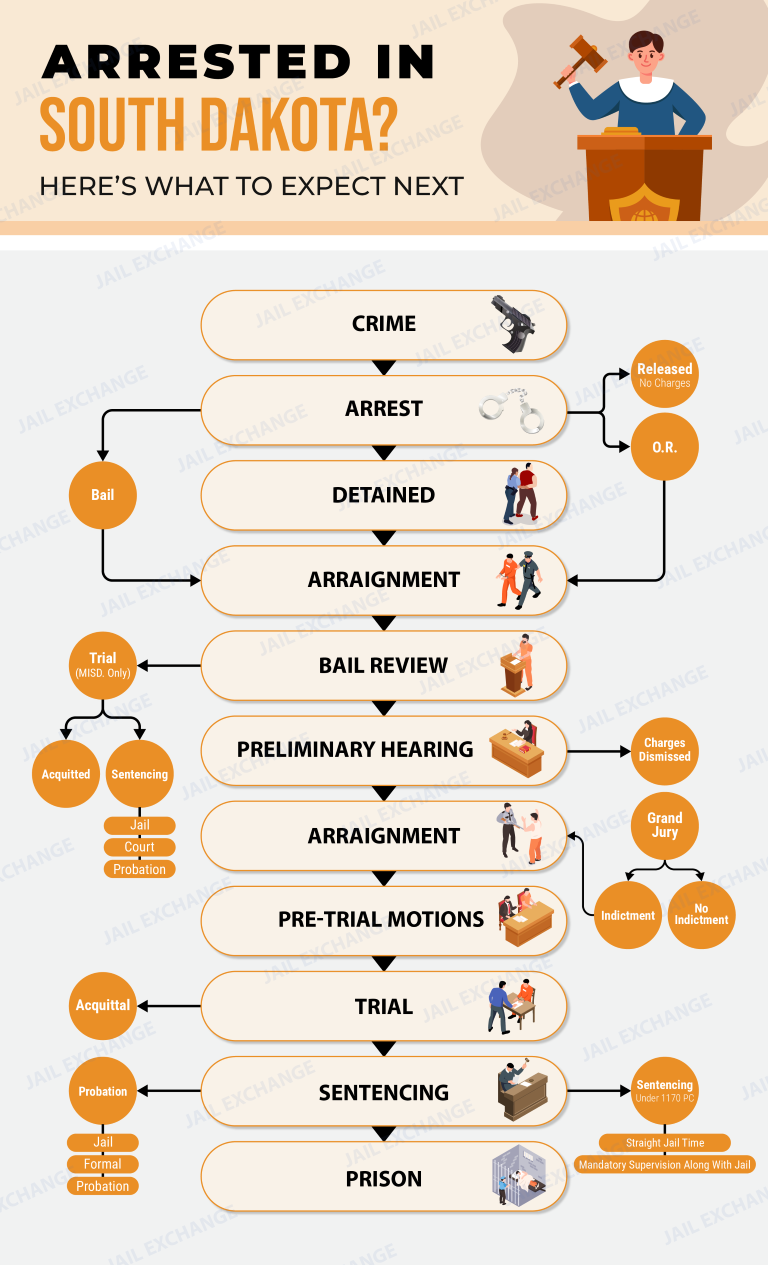
Information for this service is currently unavailable.
Belle Fourche is where the Butte County Sheriff's Office books people, but it often moves them to a jail in a neighboring county, and any money has to go wherever they end up.
The Sheriff's Office treats those details as its own business. Where people are housed, how those jails accept deposits, the payee for a money order and the mailing address are all left unpublished on purpose. One call to 605-892-3324 covers it. Give the person's full name and date of birth, then ask:
- Which jail is holding them?
- How does that jail take deposits?
- If I mail a money order, who is it made out to, and where does it go?
Expect the answer to involve a money order. Jails of this size most often take a postal one, either brought to the front desk or sent through the mail, and only that call gives you the exact payee and address for the jail that has the person. Leave cash out of any envelope.
Butte County, South Dakota, no longer runs a jail in Belle Fourche. The Butte County Sheriff's Office rents jail beds from other counties, and one jail it uses is the Meade County Jail on Main Street in Sturgis, Meade County. Letters go to the jail holding the person, never to the Sheriff's Office on 5th Avenue.
Mail for someone held in Sturgis:
Inmate's Full Name & Inmate ID #
Meade County Jail
1400 Main Street
Sturgis, SD 57785-1444
- Which jail: Because Butte County uses more than one jail, ask the Sheriff's Office at 605-892-3324 where the person is. If they are at another county's jail, send the letter to that jail under its rules.
- Addressee: The person's complete legal name and their inmate ID number go first.
- Sender: Your own return address in the top left corner.
- Money: Mailing cash is never a good idea. In Sturgis, a money order goes in its own envelope, payable to the inmate or the Meade County Sheriff's Office, with the inmate's name and ID number in the memo.
- The basics in Sturgis: Blue or black ink, plain greeting cards with no music, and no glitter, perfume or drawings.
- Reading material: Meade County wants books and magazines new and shipped by their publisher.
- No-contact orders: Writing to someone protected by a no-contact order can lead to a new charge.
Youth from Butte County are held at the Western South Dakota Juvenile Services Center in Rapid City.
Information for this service is currently unavailable.
Information for this service is currently unavailable.
Information for this service is currently unavailable.
Butte County County Jails
Butte County Juvenile Facilities
- Butte County Sheriff: 605-892-3324
The Butte County Sheriff's Office serves the following cities and towns of Butte County: Belle Fourche, Newell, Nisland and Vale.