
Downtown Detention Center
Downtown Detention Center
Jail Phone Number
615-862-8224Davidson County Inmate Search: Where Nashville Keeps Its Jailed Residents
Adults arrested in Nashville are taken to the Downtown Detention Center, 200 James Robertson Parkway, Nashville, TN 37201. The Sheriff's Office also runs five more sites. This page covers who is held where, mugshots, lawyers, visits, mail and court dates.
First, use the Sheriff's online jail search and enter the name. Nashville bookings can lag behind the arrest itself, so repeat the search in a few hours.
Then phone the Sheriff's inmate line, 615-862-8123. Share the legal name and birthday with staff. Find out which building holds the person and the bail amount. Our bail page covers release. The court page lays out the hearing steps.
Read inmate search answers
 Read inmate search answers
1. Steps for finding a Nashville inmate online
The Sheriff's Office runs the search. Do this:
- Go to the Sheriff's jail search.
- Enter the last name. If many people appear, narrow it with the first name.
- Open the row for your person.
- Write down the control number. The Sheriff's mail page calls it the OCA number, and every deposit or letter needs it.
- If nothing fits, phone 615-862-8123 and ask staff to look by name and birth date.
2. The name isn't on the Davidson County list, so what now?
Here are the likely reasons:
- Booking is slow. Fingerprints and paperwork can eat up hours.
- A police holding room. The arresting officers may keep the person briefly before the jail takes custody.
- Cited and sent home. A written citation can end the stop with no jail time.
- Bail was paid. A judicial commissioner may have set a number, and someone covered it.
- A different lockup. The person might be in a nearby county's lockup, or federal agents or the state may have taken custody.
- Odd spelling. Also test nicknames, middle names and maiden names.
The quickest answer is the Sheriff's inmate line, 615-862-8123.
↑ Back to the question list3. Which Davidson County Sheriff's buildings hold inmates?
The Sheriff's Office has seven sites, and six of them house people. Each has its own job:
- Downtown Detention Center, 200 James Robertson Parkway, Nashville, TN 37201, 615-862-8224. This is the main downtown jail, with booking and video court units. It holds minimum, medium and maximum security people, and the third floor has medical housing.
- Maximum Correctional Center, 5119 Harding Place, Nashville, TN 37211, 615-862-8187. A high-security site for men entering the system and for local felons with one to six years to serve.
- Men's Correctional Center, 5113 Harding Place, Nashville, TN 37211. The Sheriff names it the Correctional Development Center for men. Security is minimum.
- Women's Correctional Center, 5115 Harding Place, Nashville, TN 37211. Women awaiting trial or serving local sentences stay here, with skills and treatment classes.
- The Annex, 5131 Harding Place, Nashville, TN 37211, holds minimum and medium security people.
- Behavioral Care Center, 433 Gay Street, Nashville, TN 37201, 615-862-8200. A licensed short-stay treatment home, offered in place of jail to people with a mental health or drug problem. Sixty beds are split evenly between men and women.
The Harding Place sites share one phone, 615-862-8187. For an arrest in a nearby county, browse our Tennessee jail list.
↑ Back to the question list4. Will I see mugshots in the Davidson County search?
Phone the Sheriff's Office at 615-862-8123 and ask if it will hand over a booking photo. If a municipal or state officer made the arrest, ask that agency as well.
Government photographs fall under the public records law at Tennessee code section 10-7-503, and a lot of sheriffs show mugshots on their rosters. Booking photos are not named in the statute, so each office sets its own practice.
- A photo taken by ICE is requested through its public records portal.
- The public does not get federal mugshots. Only the U.S. Marshals Service can release one, and usually to find a fugitive.
5. Notices about release and moves
Tennessee VINE is free and sends a notice by voice call, text message or email. Register at VINELink (pick Tennessee) or dial 888-868-4631, where staff answer around the clock.
VINE is aimed at people in state custody, so it may not follow a county jail stay. Phone the Downtown Detention Center, 615-862-8224, to confirm. A daily look at the Sheriff's jail search helps too.
↑ Back to the question list6. How do you get released after a Davidson County arrest?
A judicial commissioner sets the first bail, sometimes by video link with the Downtown Detention Center. A judge in either General Sessions or Criminal Court may revisit the amount afterward. Jail staff cannot alter it.
- Cash: the full bail is paid to the court clerk, who may accept a card for a fee. The Criminal Court Clerk is at 408 2nd Avenue North, Suite 2120, Nashville, TN 37201, 615-862-5601.
- Night or weekend: the State Warrant and Bond Office, 512 First Avenue North, Nashville, TN 37201, never closes.
- Bondsman: a licensed bondsman commonly charges about 10 percent of the bond.
- Domestic violence or stalking: release can be delayed by half a day or more, so check with the jail.
Our bail page goes through each step. For the wider state rules, see the Tennessee bail laws page.
↑ Back to the question list7. Reading the charges against the person
The Sheriff's jail search is the place to begin. For the court file, use the criminal case lookup for General Sessions Court, which meets in the Justice A. A. Birch Building, 408 2nd Avenue North, Nashville, TN 37201.
Felony files sit with the Criminal Court Clerk, 408 2nd Avenue North, Suite 2120, Nashville, TN 37201. Call 615-862-5601 with the person's name and birthday. Final charges are chosen by the District Attorney General's office, which a defense lawyer can contact for you.
↑ Back to the question list8. Free legal help for someone who can't pay in Davidson County
The Metropolitan Public Defender serves people who can't afford a lawyer. Visit 150 2nd Avenue North, Suite 400, Nashville, TN 37201, or call 615-862-5730 on weekdays from 8:30 a.m. to 4:30 p.m.
- Early in the case, the person asks the judge for a court-paid attorney and explains they have no money.
- The judge reviews their income and decides on an appointment.
- Family can collect pay stubs and similar papers to speed that up.
Some families pay a private attorney, who can also ask a judge for lower bail.
↑ Back to the question list9. Seeing a loved one at the Downtown Detention Center
Lobby visits are on hold. Families see each other by video, and the schedule follows the housing unit.
- Video visits run daily, 8 a.m. to 4 p.m. and again 7:30 p.m. to 9:20 p.m.
- Units that offer them: 2A to 2D, 3B, 3C and 4A to 4F.
- Third-floor medical housing has no video visits.
Phone 615-862-8224 to learn your person's unit. More tips are in our visiting guide. The Harding Place sites may differ, so dial 615-862-8187 first.
↑ Back to the question list10. Adding funds to a jail account
Funds buy snacks and hygiene items. The Sheriff's Office sends families to CorrectPay.com, JailATM.com and kiosks in the Downtown Detention Center lobby, which accept cash or cards. Bring the full name and control number.
These deposits are not bail and will not release anyone. See our money guide and commissary guide. Do not mail cash.
↑ Back to the question list11. Setting up phone calls and video chats from Davidson County jails
ICSolutions handles calls and video chats. Open an account at ICSolutions.com or ring 888-506-8407, and ask about rates and how to add funds.
Jail calls may be recorded. Save details of the charge for the attorney. Learn more from our phone guide and from the page on jail email and texting.
↑ Back to the question list12. Addressing a letter to the jail
Only postal mail is accepted. Address it exactly this way:
Inmate Name, OCA number
Nashville / Davidson County Sheriff's Office
PO Box 196383
Nashville, TN 37219-6383
Each letter is scanned, and the person views it on a tablet. Rules on photos and more are in our mail guide.
↑ Back to the question list13. Collecting clothes and other things
Phone the housing site first. For the Downtown Detention Center, dial 615-862-8224. Ask about pickup hours, the ID you must bring and any form the person must sign. Their items stay in storage until they leave.
↑ Back to the question list14. Sickness, injuries and medicine needs
Call 615-862-8224 and ask for the medical unit. Give each medicine's name, the dose and the prescribing doctor. Have your loved one fill out a sick-call slip on the unit.
A life-threatening problem is a 911 call. Mention any fear of self-harm right away.
↑ Back to the question list15. Finding out about an open warrant
Sheriff's deputies and city police officers serve warrants. Call the Sheriff at 615-862-8123 and ask about a warrant, or ask which number reaches the city police. Warrant questions are best handled before anyone goes to a hearing. For a court check, use the criminal case lookup or phone the Criminal Court Clerk, 615-862-5601. To clear one, get legal advice and then reach out to the judge's court. Its clerk works from 408 2nd Avenue North, Suite 2120, Nashville, TN 37201.
↑ Back to the question list16. Finding a Davidson County court date
The judge in the case picks each date. Our court page explains the stages.
- General Sessions Court, Justice A. A. Birch Building, 408 2nd Avenue North, Nashville, TN 37201. This court takes first appearances, misdemeanor cases and the early hearings on felonies. Try the case lookup or phone the Criminal Court Clerk, 615-862-5601.
- Criminal Court Clerk, 408 2nd Avenue North, Suite 2120, Nashville, TN 37201. Felony trials come after a grand jury indicts.
- Circuit Court Clerk, 1 Public Square, Suite 302, Nashville, TN 37201, 615-862-5181.
17. Federal custody in the Nashville area
A federal case here is heard in Nashville by the Middle District's federal court, which uses the Fred D. Thompson U.S. Courthouse, 719 Church Street, Nashville, TN 37203. The clerk answers at 615-736-5498.
- A hearing on detention lets the federal judge pick jail or freedom while the case is pending (18 U.S.C. 3142).
- The U.S. Marshals, 719 Church Street, Suite 2500, Nashville, TN 37203, 615-750-1434, can tell you the holding place.
- The Federal Public Defender, 164 Rosa L Parks Boulevard, Nashville, TN 37203, 615-736-5047, assists defendants without money for a lawyer.
- After the sentence, the federal Bureau of Prisons locator shows the inmate's new home.
18. When ICE wants to take custody
ICE may ask the jail to hold a person by sending a detainer, Form I-247A (8 CFR 287.7(d)). The jail may hold the person up to 48 hours after they would otherwise be released.
- Search by name and birth country at the ICE Online Detainee Locator.
- ICE's New Orleans office is in charge of Tennessee cases. The locator lists where a person is.
- Tennessee's Centralized Immigration Enforcement Division, 615-532-9736, supports the federal 287(g) program with local agencies. Its page names 94 of the 95 counties as taking part, and Davidson is the one left off.
19. Looking for someone sentenced to state prison
State prison intake belongs to the Tennessee Department of Correction at 320 Sixth Avenue North, Nashville, TN 37243, 615-741-1000. Someone who has been sentenced can wait in a county jail before moving, so call 615-862-8224 if the search comes up empty.
- The state offender search lists photo, status, location, offense and sentence for many people.
- For visit and mail basics, read our Tennessee prisons overview.
20. A teen or child is in custody
Anyone under 18 is handled by Juvenile Court rather than the adult jail. The Juvenile Detention Center sits at 100 Woodland Street, Nashville, TN 37213, 615-862-8066, and it has its own listing here.
A child's record stays private, so the adult search may come up blank. Call the center to learn the hearing date and how a parent can take part.
↑ Back to the question list21. Who made the arrest, and who to call
The arrest paperwork or jail entry can name the agency. These are your contacts:
- Sheriff's Office, 1 Jerry Newson Way, Nashville, TN 37206, 615-862-8123. It operates every jail above.
- City police: ask the Sheriff's line for the correct non-emergency number. Emergencies go to 911.
- Tennessee Highway Patrol: the patrol's contact list has each district's number. Ask which district covers Davidson County.
Davidson County bail and bond: how Nashville sets bail and how to pay it
Adults arrested in Nashville are held in the Sheriff's Office jail system. The main downtown jail is the Downtown Detention Center, 200 James Robertson Pkwy, Nashville, TN 37201. Other buildings are the Annex, three centers on Harding Place, and a treatment center. Below, you will find bond steps, deposits and visits.
Begin with the Sheriff's active inmate page. Very new bookings can lag, so give it time and look again. Our Davidson County Inmate Search page explains who is in custody, where each building is, and what to do about property.
Next, call the Criminal Court Clerk at 615-862-5601. Ask what the bond is today and where it can be paid. After that, see how the Nashville courts handle the case.
1. How do I find out if someone is in a Nashville jail?
Use Davidson County Inmate Search before anything else. It shows the booking, the charges, and whether a bond is set. The Sheriff's Office inmate information line is 615-862-8123. A person arrested within the last few hours may not appear yet, so look again before you assume a mistake.
↑ Back to the question list2. Which Davidson County Sheriff's Office buildings hold inmates?
The Sheriff's Office runs the Downtown Detention Center, the Annex, the Behavioral Care Center, two Correctional Development Centers (one male, one female), and the Maximum Correctional Center. The Downtown Detention Center, 200 James Robertson Parkway, 615-862-8224, is the downtown facility. Davidson County Inmate Search shows where your person is housed, which matters for deposits and visits.
↑ Back to the question list3. Who sets the first bail amount in Davidson County?
Judicial commissioners do. They hold probable cause hearings, issue warrants and set bail bonds. A General Sessions or Criminal Court judge can review the amount later. The Sheriff's Office cannot change it. The bond amounts on the inmate page carry a note that the court may change them.
↑ Back to the question list4. Where do I get the current bond amount?
Look for it on Davidson County Inmate Search, and confirm it with the Criminal Court Clerk's Office at 615-862-5670. The clerk's main office line is 615-862-5601. The office is on the second floor of the Justice A. A. Birch Building, 408 2nd Avenue North, Suite 2120. Bond amounts change when a judge acts, so ask for the current number on the day you pay.
↑ Back to the question list5. Where do bonds get posted?
The Criminal Court Clerk's office is at 408 2nd Avenue North, Suite 2120. The State Warrant and Bond Office is at 512 First Avenue North and also works on bonds. Call the clerk at 615-862-5670 before you travel, and ask which office takes your type of payment and what hours apply that day.
↑ Back to the question list6. What local rules apply to bail bonds here?
Davidson County has Local Rules of Practice for Bail Bonds in the 20th Judicial District, and they cover Criminal Court and Metropolitan General Sessions. Read them before you commit money, or ask the Criminal Court Clerk for the rule that applies to your payment before you put money down.
↑ Back to the question list7. What will it cost to use a bondsman?
A Tennessee resident should expect to pay about 10 percent of the bond, and a nonresident 10 to 15 percent. The bondsman may add a one-time $25 fee and a $12 tax. The money stays with the bondsman after the case. Ask for a receipt that lists each charge and describes any collateral in writing.
↑ Back to the question list8. How do I check that a bondsman is allowed to write bonds in Nashville?
A bondsman needs a license from the state Board of Professional Bondsmen and approval from the court in each judicial district where the bondsman works. Ask the Criminal Court Clerk's Office, at 615-862-5670, before you sign anything. A court can also remove a bondsman for harming a client or disrupting the court.
↑ Back to the question list9. Can I pay the full amount in cash?
Yes. A cash bond is the full bail, and the clerk holds it until the case ends. When the person is discharged, the clerk returns the deposit, less any fines and court costs the court orders in that case. A clerk may take a debit card or payment app and pass the fee on to you. Keep every receipt with the case number.
↑ Back to the question list10. Can I use a house or land?
Tennessee real estate can secure a bond, and so can a written agreement by two sureties who are not professional bondsmen or lawyers. Property bonds take more time than cash. Ask the Criminal Court Clerk's Office, 615-862-5670, for the court's requirements before you gather deeds, and expect every owner to sign.
↑ Back to the question list11. How soon will a judge see the person?
Tennessee requires that an arrested person be taken before a magistrate without unnecessary delay. In Nashville a judicial commissioner can handle bail and warrants by video with the Downtown Detention Center. Ask the Criminal Court Clerk when your person's next date is.
↑ Back to the question list12. Why does the record show no bond?
A no-bond entry can mean a capital charge, a hold from another court, a probation violation, or a bond that has not been set. Under the constitution today, only capital offenses are excluded from bail.
↑ Back to the question list13. Why is a domestic-violence arrest held longer?
For stalking, child abuse, elder abuse and some domestic offenses, the official cannot release the person for 12 hours unless a written finding shows no threat to the victim. In an aggravated assault with strangulation or a weapon, the hold can reach 24 hours. Release then requires a no-contact order, and the court may require GPS monitoring.
↑ Back to the question list14. Can the court order alcohol controls on a DUI release?
Yes. For many alcohol-related driving offenses, the judge may order an ignition interlock device, with proof of installation to the district attorney within 10 days. A third or later alcohol offense, or vehicular assault or homicide with a prior alcohol conviction, can bring transdermal monitoring paid for by the defendant.
↑ Back to the question list15. Can I deposit money in the person's jail account instead of bail?
Deposits are not bail. The Sheriff's Office takes commissary deposits through CorrectPay, JailATM and lobby kiosks, and phone and video accounts through ICSolutions. None of that money frees anyone. Pay bail only through the clerk or a licensed bondsman, and keep the receipt.
↑ Back to the question list16. Can the family visit the Downtown Detention Center?
Video visits are available for the housing units that allow them, every day from 8 a.m. to 4 p.m. and again from 7:30 p.m. to 9:20 p.m. Lobby visits at the Downtown Detention Center are not offered. Medical housing on the third floor does not get video visits. Call 615-862-8224 to ask about your person's unit.
↑ Back to the question list17. Who represents someone who cannot afford a lawyer in Nashville?
The Metropolitan Nashville Public Defender represents people who cannot afford a lawyer and is the office for the 20th Judicial District. Call 615-862-7296. Ask the judge for appointed counsel at the first appearance, and ask your lawyer to seek a lower bail or release without money.
↑ Back to the question list18. Where is a teenager held?
The Davidson County Juvenile Detention Center is at 100 Woodland Street, Nashville, 615-862-8066. Juvenile records are private, so Davidson County Inmate Search may not show a minor. Call the detention center for the hearing date and for what a parent can do.
↑ Back to the question list19. What happens after a missed Nashville court date?
A judge can forfeit the bond and send out an arrest warrant. Fines, costs or restitution fall on a surety only when the bond states it and the surety accepted it. Call the Criminal Court Clerk at 615-862-5670 the same day and speak to a lawyer about resetting the date.
↑ Back to the question list20. Davidson County bond contacts
- County jails: Davidson County Sheriff's Office jail system; Downtown Detention Center, 200 James Robertson Parkway, Nashville, TN 37201; 615-862-8224
- Bond guide: Jail bail and bond page
- Custody lookup: Davidson County Inmate Search
- Sheriff's Office: 1 Jerry Newson Way, Nashville, TN 37206; inmate information 615-862-8123
- Criminal Court Clerk: Justice A. A. Birch Building, 408 2nd Avenue North, Suite 2120; 615-862-5670 or 615-862-5601
- Bond office: State Warrant and Bond Office, 512 First Avenue North, Nashville
- Judicial commissioners: Set bail through video hearings with the detention center
- Public defender: Metropolitan Nashville Public Defender, 615-862-7296
- Juvenile detention: 100 Woodland Street, Nashville; 615-862-8066
Bond amounts, local rules and office hours can change. Verify every figure for your own case with the Criminal Court Clerk or the Sheriff's Office before you pay. We offer general information only, not legal counsel.
↑ Back to the question listDowntown Detention Center family video visits
Do not travel to the lobby for a family visit. The Davidson County Sheriff’s Office says the Downtown Detention Center is not currently allowing family visits from its lobby. The center is at 200 James Robertson Parkway, Nashville, TN 37201. Call 615-862-8224 for help with a visit.
Schedule a video visit from home: Use JailATM to find the person in custody and select one of the available times. Check the appointment and any charge before paying.
Remote family hours (Central Time): Daily, 8 a.m. to 4 p.m. and 7:30 to 9:20 p.m. The Sheriff lists these windows for units 2A–2D, 3B, 3C and 4A–4F. Third-floor medical housing does not receive video visits. Call the center if you are unsure which rule applies to the person you want to visit.
Downtown Detention Center REMOTE (at home) VIDEO VISITATION SCHEDULE
Schedule Video Visits online with Securus

- All visits must be scheduled at least 24 hours in advance.
- Visitation Schedule subject to change.
- Visits are 20 minutes, and cost $5.00.
| DAY | TIME |
| SUNDAY | 8:00 AM - 4:30 PM 7:30 PM - 9:50 PM |
| MONDAY | 8:00 AM - 4:30 PM 7:30 PM - 9:50 PM |
| TUESDAY | 8:00 AM - 4:30 PM 7:30 PM - 9:50 PM |
| WEDNESDAY | 8:00 AM - 4:30 PM 7:30 PM - 9:50 PM |
| THURSDAY | 8:00 AM - 4:30 PM 7:30 PM - 9:50 PM |
| FRIDAY | 8:00 AM - 4:30 PM 7:30 PM - 9:50 PM |
| SATURDAY | 8:00 AM - 4:30 PM 7:30 PM - 9:50 PM |
Nashville and Davidson County Criminal Courts: General Sessions, Criminal Court and Where Arrestees Are Held
Nashville handles crimes in General Sessions Court and Criminal Court, in the Birch courts building at 408 2nd Ave. N., Nashville, TN 37201. People arrested in Nashville are kept in the Sheriff's Office jails, led by the Downtown Detention Center, 200 James Robertson Pkwy, Nashville, TN 37201.
To find the person, open the Sheriff's active inmate page. Our Jail Roster page covers recent arrests, charges and warrants. Use it before you head to a courtroom.
Want a court date? Call the Criminal Court Clerk at 615-862-5601. Ask which room and what time. If money is needed, read our bond payment guide for what to bring.
1. Where are the courts and who handles criminal cases?
If someone close to you has been arrested in Davidson County, the questions that matter first are where that person is being held and when a judge will see the case. The county seat is Nashville, but the exact courtroom depends on whether the charge is a city ordinance violation, a misdemeanor, or a felony. Use the linked questions to find the courthouse information, bail process, defense-lawyer options, sentencing rules, youth-court process, and federal court details.
Circuit Court Clerk — court filings and hearing information
Davidson County Circuit Court Clerk — Listed office address: 1 Public Square Suite 302, Nashville, TN 37201.
Circuit Court Clerk telephone: (615) 862-5181
Circuit clerks handle many criminal and civil filings. Chancery Courts usually address civil and equity matters, while General Sessions Courts handle many initial criminal hearings. Call the applicable clerk for the specific courtroom assignment.
Davidson County: the county seat is Nashville. Tennessee General Sessions Court ordinarily handles initial criminal appearances, misdemeanor proceedings within its authority, and felony preliminary hearings. Felony jury trials are heard in the Circuit or Criminal Court serving Davidson County. The Circuit Court Clerk is responsible for criminal filings and records in courts assigned to that clerk; some Tennessee counties have separate criminal clerks.
Courthouse and court clerk contacts
- Criminal Court Clerk, Justice A. A. Birch Building, 408 2nd Avenue N., Suite 2120, Nashville, TN 37201, 615-862-5601
- Davidson County Criminal Courts, 408 2nd Avenue N, Nashville, TN 37201
Chancery Court generally hears civil matters such as certain family, property, estate, and business disputes; a Chancery clerk is not a substitute for the criminal clerk. The exact court named on a summons controls where the hearing takes place.
↑ Back to the question list2. What happens after arrest, and where might someone be held?
After a custodial arrest in Davidson County, the arresting agency arranges booking and detention. The person may be housed in a county facility or another authorized jail under an established custody arrangement.
Booking may include identification, fingerprints, a photograph, a property inventory, and a medical or mental-health screening. The defendant is then brought before the proper judicial officer for a probable-cause and release decision as required by law. A family member should write down the full legal name, booking number if known, charges, and scheduled hearing.
↑ Back to the question list3. How does bail work and how can a person be released?
A judge or authorized magistrate decides whether someone charged in Davidson County can go home before trial and under what conditions. Release on recognizance means there is no up-front bond payment; other orders may require a cash deposit, surety, supervision, travel restrictions, or no contact with another person. Commercial bonding is permitted in Tennessee, but a bondsman cannot decide the court’s bond amount.
If the order allows payment, first establish whether the court or jail collects the money, the exact amount, and whether another hold prevents release. A paid bond does not erase the charges and missing court can lead to forfeiture and arrest.
↑ Back to the question list4. What happens in a misdemeanor case and what penalties apply?
Many less serious cases in Nashville begin in General Sessions Court. A prosecutor can discuss a plea, dismissal or diversion; not every offense qualifies. A defendant does not receive a full jury trial in General Sessions Court, and a final misdemeanor decision there requires appropriate consent or waiver under Tennessee law. The case may instead proceed in a court with jury-trial authority.
Maximum misdemeanor punishments
- Class A misdemeanor: up to 11 months and 29 days in jail, a fine up to $2,500, or both.
- Class B misdemeanor: up to 6 months and/or a fine up to $500.
- Class C misdemeanor: up to 30 days and/or a fine up to $50.
These are the usual class limits under Tenn. Code § 40-35-111, not promised outcomes. DUI, domestic assault and other offenses can add required fees, treatment, jail minimums, or enhanced penalties based on earlier convictions.
↑ Back to the question list5. How does a felony case move through court?
A felony complaint arising in Davidson County may start before a General Sessions judge for the initial appearance and preliminary hearing. That hearing tests whether there is enough evidence to continue; it does not decide guilt. A grand jury may indict and the case then moves to the county’s Circuit or Criminal Court. Tennessee also provides other lawful charging routes and waivers in limited circumstances.
After formal charges, the defense can obtain discovery, seek hearings on contested evidence, negotiate a plea, or request trial. A serious felony trial typically uses a twelve-person jury. Felony cases can take substantially longer than minor citations, so hearing notices and attorney communications matter.
↑ Back to the question list6. What happens when someone is accused of a violent crime?
A homicide, robbery, rape, or aggravated-assault accusation in Davidson County brings particularly serious release and sentencing questions. Judges examine the actual charge and lawful detention criteria; no family should assume that paying a bond automatically means release if there are warrants or other holds.
For example, Tennessee treats many intentional aggravated assaults involving serious bodily injury or a deadly weapon as Class C felonies, with a statutory class range of 3–15 years. Some forms are Class B or D, and the aggravated-assault statute separately caps the ordinary offense fine at $15,000. Murder and other offenses have special sentencing statutes beyond the ordinary felony chart. Defense counsel should review the exact subsection charged.
↑ Back to the question list7. What happens when a child under 18 is arrested?
For a child under 18 accused of wrongdoing in Davidson County, the juvenile-court process is different from an adult prosecution. Police or an intake officer may refer the complaint for informal services or ask the juvenile court to hear it. Detention is a separate decision and does not necessarily mean the child has been found delinquent.
A juvenile judge can consider supervision, treatment, community services, restitution, and placement when legally authorized. In especially serious cases, Tennessee law permits transfer proceedings to adult criminal court after a hearing and required findings. Families should ask promptly about appointed counsel, the detention hearing and any restrictions on release of a minor's records.
↑ Back to the question list8. What fines, jail terms and prison sentences are possible?
The punishment depends on the precise statute, offense date, prior record, and any mandatory or alternative-sentence rules. For crimes governed by ordinary Tennessee classification ranges, the overall imprisonment and usual maximum fines are:
- Class A: 15–60 years; ordinary fine ceiling $50,000.
- Class B: 8–30 years; ordinary fine ceiling $25,000.
- Class C: 3–15 years; ordinary fine ceiling $10,000.
- Class D: 2–12 years; ordinary fine ceiling $5,000.
- Class E: 1–6 years; ordinary fine ceiling $3,000.
- Class A misdemeanor: up to 11 months and 29 days in jail, a fine up to $2,500, or both.
- Class B misdemeanor: up to 6 months and/or a fine up to $500.
- Class C misdemeanor: up to 30 days and/or a fine up to $50.
A court may impose probation, diversion, restitution, treatment or a suspended sentence when the law permits. Tennessee’s felony offender-range rules narrow the sentence within the broader class range; special laws and prior violent convictions can change release eligibility. County jail and state prison are not interchangeable labels for every sentence.
↑ Back to the question list9. How does someone get a public defender?
Someone facing a criminal case in Davidson County who cannot afford a private defense attorney may ask the judge for appointed counsel. The court reviews an affidavit or other proof about income, assets and ability to pay. An appointment can be through a district public defender or a conflict lawyer when the public defender cannot handle the case.
At the first hearing, the defendant should clearly say they want a lawyer and cannot afford one. A family member can help gather pay information and court papers but cannot waive the defendant’s rights for them. Tennessee has elected district public defenders, and their service areas can cross county borders.
↑ Back to the question list10. Do city courts hear criminal or traffic cases?
Police in Nashville or another town in Davidson County may issue a city citation rather than a county criminal warrant. Some Tennessee municipal courts handle ordinance violations and limited traffic matters; their powers depend on the local charter and state law. Serious criminal charges do not become city-court felonies merely because city police made the arrest.
Check the court name actually printed on the summons. If a charge carries criminal jail exposure, ask a lawyer whether the municipal court has authority over it and whether the case is before a General Sessions or state criminal court instead.
↑ Back to the question list11. What is a federal crime and which U.S. District Court handles it?
Davidson County belongs to the United States District Court for the Middle District of Tennessee — Nashville Division. The division’s listed courthouse is in Nashville: 719 Church Street, Nashville, TN 37203. A federal criminal case might involve interstate fraud, offenses on federal property, federal drug trafficking, some firearms offenses, or violations of federal criminal statutes. A state offense does not automatically become federal because it is serious.
Federal defendants may appear before a U.S. magistrate judge for detention and preliminary proceedings; felony cases usually proceed through indictment or another permitted federal charging process, followed by arraignment and trial or plea. Federal prison sentences are administered by the Bureau of Prisons. People awaiting trial or transfer may be held in a contracted or local detention center rather than a prison operated by BOP. Families can search the official Federal Bureau of Prisons inmate locator for eligible federal inmate records.
This Davidson County guide offers general criminal-court information, not advice for a particular defendant. Law and court operations may change; a lawyer can explain the charge and next steps in the actual case.
↑ Back to the question list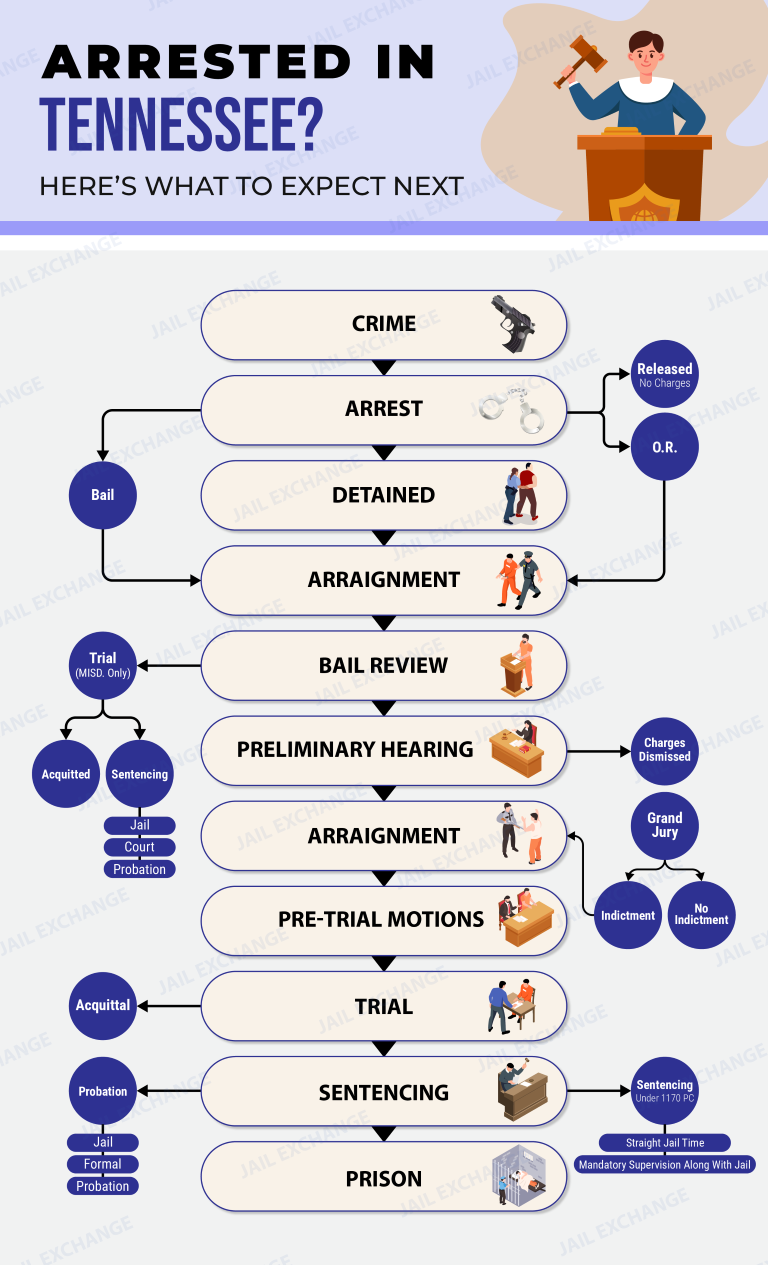

CorrectPay Commissary Ordering allows families to send pre-approved snack gift packs, supplemental meat and seafood items, hygiene essentials, footwear, and thermal clothing directly to an incarcerated loved one. Each package is tailored to match institutional security rules, ensuring items are delivered safely to housing pods.
Important: Package Cutoff Deadlines and Restrictions Vary
Detention centers enforce specific schedules for care package delivery. Some facilities allow orders to be placed weekly, while others restrict deliveries to bi-weekly or monthly windows, and spending caps vary widely by facility. You should verify your loved one's housing eligibility and active order cutoff dates with the facility. If an order is submitted after the weekly processing deadline, it will be delayed until the subsequent cycle, leaving your loved one waiting for fresh supplies.
Step-by-Step Instructions to Place a Commissary Package Order
- Obtain the inmate's legal first and last name, date of birth, and official facility booking ID number.
- Go to www.correctpay.com or launch the CorrectPay app.
- Select Commissary / Store and choose the state and county facility.
- Search for the inmate to load the jail's approved catalog of food, hygiene items, and stationery.
- Select allowed items and add them to your cart up to the facility's maximum dollar or weight quota.
- Proceed to checkout, enter your debit or credit card billing details, and submit payment.
- Save your digital receipt and shipment confirmation number for your tracking records.
What the Inmate Needs to Do
The inmate does not need an active online account to receive commissary items. The package is packed and shipped directly to the jail commissary department. Facility staff inspect the box and deliver it to the inmate during their scheduled housing unit distribution day, where the inmate signs the receipt roster.
Official Provider: CorrectPay Official Website
Customer Service Telephone: 1-855-836-3364
Support Hours: Monday – Friday, 7:00 AM – 7:00 PM CST; Saturday, 8:00 AM – 5:00 PM CST
Supported Languages: English and Spanish
Other Services Provided by CorrectPay (VendEngine)
In addition to Commissary Orders, CorrectPay provides several other communication, financial, and visitation services at participating correctional facilities:
- Inmate Trust Money Deposits: Send money directly into an inmate's personal trust account for canteen and phone usage.
• Learn more on our website: Inmate Trust Deposits Guide | • Visit official vendor page: CorrectPay Trust Deposits - Cash Bail & Bonding Services: Pay cash bail and court appearance bonds online 24/7.
• Learn more on our website: Cash Bail & Bonding Guide | • Visit official vendor page: CorrectPay Bail Services - Digital Mail & Email Messaging: Send electronic messages and photos directly to their kiosk or tablet.
• Learn more on our website: Digital Messaging Guide | • Visit official vendor page: CorrectPay Messaging - Inmate Phone Time: Prepay for telephone calling minutes so your loved one can call your mobile phone.
• Learn more on our website: Inmate Phone Time Guide | • Visit official vendor page: CorrectPay Phone Time - Remote Video Visits: Meet face-to-face over secure live video from home.
• Learn more on our website: Video Visitation Guide | • Visit official vendor page: CorrectPay Video Visits
Buy Commissary for an Inmate in the Downtown Detention Center
Downtown Detention Center Inmate Commissary - Sending Money or Purchasing Commissary for an Inmate
Downtown Detention Center allows inmates to purchase commissary. This can be snacks, hygiene products, stamps, stationary, clothing and even electronics.
You can buy commissary for an inmate using an online service called CorrectPay.
.JPG)
There is a monthly limit of $200-300 on how much inmates can spend on commissary items.
This amount is subject to change so call the facility at 615-862-8224 in order to confirm the amount that cannot be exceeded.
Inmates have access to both an in-house commissary store, and commissary packages that can be purchased and shipped to the inmate by friends and family.
Scroll down for information on the Downtown Detention Center's service they use for you being able to purchase commissary items online and have them shipped directly to the inmate.
You can also go to our Inmate Money page for information on how to send money to an inmate.
TBE / TurnKey Corrections Inmate Trust Deposits
Provider: TurnKey Corrections / Three Bridges Enterprises (Inmate Canteen)
TurnKey Corrections (operated under Three Bridges Enterprises / Inmate Canteen) provides electronic trust banking and payment services for county jails and regional detention centers. Friends and family members can transfer funds directly into an incarcerated person's jail trust and commissary account online or through facility lobby kiosks, providing the balance needed to buy food snacks, hygiene essentials, and stationery supplies.
Important: Facility Deposit Rules and Window Intake Vary
Once a person is booked and moved to a housing unit, facilities do not always allow cash drop-offs or phone payments directly to the jail window. Some might and you should confirm this by calling the facility and asking. But if you do not register online and fund your loved one's trust account immediately, they may be forced to wait days or weeks for standard paper processing, leaving them without essential soap, clean undergarments, basic medical sundries or snacks.
Step-by-Step Instructions to Register and Deposit Funds
- Confirm the inmate's legal first and last name, date of birth, and assigned booking or inmate ID number.
- Navigate to www.inmatecanteen.com on your computer or smartphone.
- Click Sign Up to create a user account or log into your existing profile.
- Select Deposit Funds from the services menu.
- Choose your state and detention center from the directory.
- Confirm the inmate's profile matches the active jail housing ledger.
- Enter your deposit dollar amount, review convenience fees, and enter your credit or debit card billing details.
- Submit payment and save your digital confirmation receipt for your records.
What the Inmate Needs to Do
The inmate does not need an internet account to receive funds. Once the electronic transaction clears, the balance posts directly to their jail trust ledger according to facility accounting schedules. The inmate can review their updated balance at a dayroom pod kiosk or on their tablet and place orders on their regular commissary day.
Official Provider: Inmate Canteen (TurnKey Corrections)
Customer Service Telephone: 1-715-690-2965
Support Hours: Monday – Friday, 8:00 AM – 5:00 PM CST
Supported Languages: English and Spanish
Other Services Provided by TurnKey Corrections (TBE)
In addition to Trust Money Deposits, TurnKey Corrections provides several other communication, financial, and commissary services:
- Digital Inmate Messaging: Send electronic text messages and digital photos directly to housing pod kiosks and handheld devices.
• Learn more on our website: Digital Messaging Guide | • Visit official vendor page: TurnKey Messaging - Commissary & Care Packages: Order pre-approved snack boxes, food packages, and clothing directly to the jail.
• Learn more on our website: Commissary Orders Guide | • Visit official vendor page: TurnKey Commissary - Cash Bail & Bond Payments: Post appearance bonds online 24/7 using a card to avoid visiting the jail lobby in person.
• Learn more on our website: Cash Bail & Bond Guide | • Visit official vendor page: TurnKey Bail Services - Remote Video Visitation: Schedule and join live face-to-face video visits from your computer or smartphone.
• Learn more on our website: Video Visitation Guide | • Visit official vendor page: TurnKey Video Visits
Deposit Money for an Inmate in the Downtown Detention Center
CorrectPay and JailATM are the two companies the Davidson County Sheriff's Office names for commissary deposits at the Downtown Detention Center in Nashville. Either one works.
Web and phone apps. Sign up at CorrectPay or JailATM. Each offers a free app for iPhone and Android.
Calling in. Phone deposits only work once an online account exists. After that, reach CorrectPay at 855-836-3364 or JailATM at 636-888-7004.
Paying cash without coming downtown. Register with CashPayToday for a barcode, then hand cash to the clerk at a Dollar General, Family Dollar, Kroger, CVS or 7-Eleven.
At the building. Kiosks in the public area of the Downtown Detention Center take cash or a card. Kiosk hours stay off the Sheriff's website; staff will give them out at 615-862-8224.
Through the mail. Send a postal money order, payable to the inmate or the Davidson County Sheriff's Office. Keep it apart from any letters and address it with the inmate's name and OCA number to PO Box 196383, Nashville, TN 37219-6383.
The Downtown Detention Center on James Robertson Parkway is the Davidson County Sheriff's Office jail in the middle of Nashville. No letters go to the building itself. All mail goes to the Sheriff's Office post office box, where staff scan it, and the person reads it on a jail tablet or kiosk. The Sheriff's Office scans mail because some senders soak paper in drugs such as heroin or meth, let it dry and mail it to the jail.
Letters, cards, photos, legal mail and money orders:
Inmate's Full Name & Inmate's Control Number (OCA#)
Nashville / Davidson County Sheriff’s Office
PO Box 196383
Nashville, TN 37219-6383
- The OCA number: Every piece of mail needs the person's full name and OCA number, which the inmate search shows as the control number. Mail without it is sent back to you, or destroyed if it can't be returned.
- Postage: Use a stamp and the U.S. Postal Service only. Plan on at least a week before it shows up on the tablet.
- Photos: Standard 35mm prints are allowed. Photos showing nudity or sexual content are rejected.
- Greeting cards: Standard cards are scanned. Cards with glitter or other add-ons are rejected.
- No reading material: The Sheriff's Office does not take books, Bibles, magazines or newspapers by mail, even from a publisher or a store.
- Do not send: Stamps, envelopes, writing paper, pens or packages. The person can buy supplies from commissary.
- Money orders: Mail them in a separate envelope, never inside a letter, because a money order and letter sent together are returned. Make it payable to the inmate or to the Davidson County Sheriff's Office, with their name and OCA number. Cash and personal checks are not accepted, and you can send money online.
- Paper copies: The jail keeps the original about 30 days, then destroys it, so don't mail anything you need back.
- Lawyers: Staff confirm each piece of legal mail with the attorney or firm named on the return address before it is delivered.
Families who want a faster way to reach someone downtown can use electronic messages.

ICSolutions provides secure inmate telecommunications systems that allow incarcerated individuals to place outbound telephone calls from housing pods to friends and family. Because correctional facilities do not accept incoming calls, establishing an AdvancePay prepaid account links funds directly to your 10-digit phone number so calls connect without carrier restrictions.
Important: Wireless Carriers Restrict Inmate Calls by Default
Major mobile cellular carriers do not permit traditional collect calls originating from correctional facilities. While some landlines might support direct monthly billing, mobile devices and internet-based telephone numbers require an active prepaid balance or funded debit account, which you can verify by checking with your provider. If you do not register online and fund an account right away, incoming calls from your loved one will automatically fail to ring through to your phone.
Step-by-Step Instructions to Register and Fund an Account
- Visit www.icsolutions.com or call customer support at 1-888-506-8407.
- Click Create an Account and register using your primary 10-digit telephone number and email address.
- Select the state and facility where the inmate is currently detained.
- Link the inmate to your profile using their full legal name and booking ID number.
- Select Prepaid Collect to link funds to your phone number, or choose Debit Telephone to provide the inmate funds to call any approved number.
- Select your deposit amount and complete payment using a credit or debit card.
- Check your mobile phone settings to ensure unknown or automated numbers are not routed directly to spam.
What the Inmate Needs to Do
The inmate dials your 10-digit number from any dayroom phone and enters their assigned PIN. The automated system verifies that your phone number has an active prepaid balance and prompts you to accept the call. All non-privileged conversations are recorded and monitored by the facility.
Official Provider: ICSolutions Official Website
Customer Service Telephone: 1-888-506-8407
Support Hours: 24 hours a day, 7 days a week, 365 days a year
Supported Languages: English and Spanish
Other Services Provided by ICSolutions
In addition to AdvancePay Prepaid Calling Accounts, ICSolutions provides voicemail and video visitation services at participating facilities:
- Inmate Voicemail Services: Leave one-way voice messages that your loved one can listen to on dayroom phones.
• Learn more on our website: Inmate Voicemail Guide | • Visit official vendor page: ICSolutions Voicemail - Remote Video Visitation: Schedule and join live video visits from home using your computer or smartphone.
• Learn more on our website: Video Visitation Guide | • Visit official vendor page: ICSolutions Video Visits - Access Secure Deposits (Partner Trust Transfers): Deposit trust money into an inmate's account via Keefe Group partner networks.
• Learn more on our website: Inmate Trust Deposits Guide | • Visit official vendor page: Access Corrections Trust Deposits
ICSolutions Inmate Voicemail allows family members and approved contacts to leave a private, recorded voice message for an incarcerated individual. Because outside callers cannot phone an inmate directly, this one-way voice messaging feature ensures critical family updates and legal news reach your loved one even when you cannot be near your telephone to answer live calls.
Important: Voicemail Feature Availability Varies by Facility
Inmate voicemail is not enabled at every correctional facility contracted with ICSolutions. Jails determine whether to offer voicemail services based on local security protocols and monitoring capabilities, which you should confirm with the facility directly. If your loved one's detention center does not support voicemail, you must set up an AdvancePay calling account so they can reach you directly during dayroom phone hours.
Step-by-Step Instructions to Leave an Inmate Voicemail
- Log into your existing profile at www.icsolutions.com or dial 1-888-506-8407.
- Confirm that your loved one's detention facility supports the voicemail feature.
- Dial the facility's dedicated ICSolutions voicemail access telephone number provided on your dashboard.
- Follow the automated voice prompts and enter the inmate's booking identification number.
- Record your personal voice message (typically up to 3 minutes in length).
- Accept the call charges using funds from your prepaid account balance or a credit card.
What the Inmate Needs to Do
When the inmate logs onto any housing unit telephone using their assigned PIN, the automated system notifies them that a new voicemail is waiting in their queue. The inmate follows the audio prompts to play the recording. All messages are subject to monitoring and recording by correctional staff.
Official Provider: ICSolutions Official Website
Customer Service Telephone: 1-888-506-8407
Support Hours: 24 hours a day, 7 days a week, 365 days a year
Supported Languages: English and Spanish
Other Services Provided by ICSolutions
In addition to Inmate Voicemail Services, ICSolutions operates live calling and video visitation options:
- AdvancePay Prepaid Calling Accounts: Prepay for phone calling minutes so your loved one can call your telephone directly.
• Learn more on our website: AdvancePay Calling Guide | • Visit official vendor page: ICSolutions Prepaid Calling - Remote Video Visitation: Schedule and join live video visits from home using your computer or smartphone.
• Learn more on our website: Video Visitation Guide | • Visit official vendor page: ICSolutions Video Visits - Access Secure Deposits (Partner Trust Transfers): Deposit trust money into an inmate's account via Keefe Group partner networks.
• Learn more on our website: Inmate Trust Deposits Guide | • Visit official vendor page: Access Corrections Trust Deposits

Securus eMessaging provides a digital messaging service that allows family members to send electronic letters, digital photos, and eCards directly to an incarcerated loved one via handheld tablets and housing unit kiosks. Messages are screened electronically, delivering communication within hours instead of waiting days for postal mail delivery.
Important: Physical Mail Bans and Stamp Requirements Vary
Inmates cannot receive incoming phone calls, and traditional postal mail rules differ across correctional systems. While some jails continue to accept handwritten letters, many facilities have transitioned entirely to electronic messaging or digital mail scanning, which you can verify by checking facility rules. If you do not register online and purchase eMessaging stamps right away, your loved one may face lengthy periods without direct written contact from family.
Step-by-Step Instructions to Register and Send eMessages
- Go to securustech.online or open the Securus mobile app.
- Sign into your verified profile or create an account with your email and phone number.
- Select eMessaging from your service dashboard.
- Link the inmate to your account by selecting the facility and entering their legal name or booking ID.
- Purchase an eMessaging stamp book using a debit or credit card.
- Type your message in the editor, attach photos or eCards if permitted, and optionally include a prepaid reply stamp.
- Submit your message to the facility's screening queue.
What the Inmate Needs to Do
All electronic correspondence is screened by correctional staff before delivery. Once approved, the message arrives in the inmate's inbox on their assigned Securus tablet or housing unit kiosk. The inmate opens the message, views attached photos, and drafts an electronic reply using their available stamp balance.
Official Provider: Securus Technologies Official Website
Customer Service Telephone: 1-800-844-6591
Support Hours: 24 hours a day, 7 days a week, 365 days a year
Supported Languages: English and Spanish
Other Services Provided by Securus Technologies
In addition to eMessaging, Securus provides calling, video visitation, and trust money services:
- AdvanceConnect Prepaid Calling: Prepay for phone calling credits so your loved one can call your mobile phone directly.
• Learn more on our website: AdvanceConnect Calling Guide | • Visit official vendor page: Securus AdvanceConnect - Securus Video Connect: Schedule and join live video visits from home using your computer or smartphone.
• Learn more on our website: Video Visitation Guide | • Visit official vendor page: Securus Video Connect - JPay Money Deposits (Partner Trust Transfers): Send money directly into an inmate's jail trust account for commissary shopping.
• Learn more on our website: Money Deposits Guide | • Visit official vendor page: JPay Money Transfers
Securus Technologies (Aventiv) deploys secure, corrections-grade community tablets to incarcerated individuals across state prison systems and county jails. Operating over a private, encrypted facility network, these devices provide access to digital messaging (eMessaging), phone calls, educational courses, job search tools, eBooks, podcasts, and streaming music directly from housing units.
Important: Tablet Hardware Deployment and Rental Rules Vary
Detention centers do not manage tablet distribution identically. While some agencies issue individual personal tablets to every detainee at booking, others utilize shared pod docking stations or restrict tablet use to specific dayroom hours, which you should confirm with the facility directly. Although core educational and legal resources are generally provided free of charge, sending messages, listening to music, or making phone calls from the tablet requires an active balance funded by outside contacts.
Step-by-Step Instructions to Support and Fund Securus Tablets
- Verify that Securus handheld tablets are deployed at your loved one's specific facility.
- Log into your account at securustech.online or launch the Securus mobile app.
- Ensure the inmate is linked to your contact list using their legal name and booking ID number.
- Purchase eMessaging Stamps for digital messaging, fund an AdvanceConnect account for phone calls, or deposit funds into their Inmate Debit account for music and media.
- Review all transaction charges, complete payment with a credit or debit card, and save your confirmation receipt.
- Notify your loved one that funds have posted so they can access their media and communication apps.
What the Inmate Needs to Do
The inmate unlocks their assigned tablet using their facility PIN or biometric verification. They can access free rehabilitative and educational materials at no charge, or open communication and media applications to draft messages, place phone calls, or stream music using available balances. Devices are docked during quiet hours and shift changes for secure recharging and data synchronization.
Official Provider: Securus Technologies Official Website
Customer Service Telephone: 1-800-844-6591
Support Hours: 24 hours a day, 7 days a week, 365 days a year
Supported Languages: English and Spanish
Other Services Provided by Securus Technologies
In addition to Tablet Services, Securus provides calling, messaging, video visitation, and trust money transfers:
- eMessaging & Digital Mail: Send electronic messages, photo attachments, and eCards directly to an inmate's tablet.
• Learn more on our website: eMessaging Guide | • Visit official vendor page: Securus eMessaging - AdvanceConnect Prepaid Calling: Prepay for phone calling credits so your loved one can call your telephone directly.
• Learn more on our website: AdvanceConnect Calling Guide | • Visit official vendor page: Securus AdvanceConnect - Securus Video Connect: Schedule and join live video visits from home using your computer or smartphone.
• Learn more on our website: Video Visitation Guide | • Visit official vendor page: Securus Video Connect - JPay Money Deposits (Partner Trust Transfers): Send money directly into an inmate's jail trust account for commissary shopping.
• Learn more on our website: Money Deposits Guide | • Visit official vendor page: JPay Money Transfers
Davidson County County Jails
Davidson County Juvenile Facilities
- Jail (Main): 615-862-8224
- Sheriff: 615-862-8123
The Downtown Detention Center serves the following cities and towns of Davidson County: Belle Meade, Berry Hill, Forest Hills, Goodlettsville, Lakewood, Nashville, Oak Hill, Ridgetop and Ridgewood.