
Hancock County Jail
Hancock County Jail
Jail Phone Number
423-733-2249Hancock County Inmate Search: Who Is in the Sneedville Jail Tonight
People arrested by Hancock deputies are booked into the Hancock County Jail, 265 New Jail Street, Sneedville, TN 37869, sharing a roof with the Sheriff's Office. The answers that follow cover finding your person, bail, lawyers, visits, deposits, letters and hearings.
Begin at the online inmate search, typing a last name. Each record lists custody status and housing location. Photos, often called mugshots, appear for some records. Arrests from the past few hours may need time before they show.
Want a human voice? Ring 423-733-2249, give the person's complete name and birthday, and learn the charge along with the first judge date. Later, turn to our bail guide and court guide.
Read inmate search answers
 Read inmate search answers
1. Is my family member sitting in the Hancock County jail now?
This is a small rural jail, certified by the state for 90 people, so a name is easy to spot once it is in the system. Try this:
- Go to the inmate search.
- Begin with the family name only. If many people show up, add the given name to cut the list.
- Nothing came up? Try a nickname, a double-barreled name or another spelling.
- Read the status and location on the record.
- Save the legal name and birthday on paper; staff and clerks need both to pick the right person.
The listing runs on VINE, the state's custody tracker. Still blank? Phone 423-733-2249 and have a deputy look at the booking list.
↑ Back to the question list2. Their name is nowhere in the results. Why?
Blank results are normal during the opening hours after an arrest. Some likely causes:
- Paperwork in progress. Booking takes a few hours, and the record may lag behind.
- Cited and sent home. Officers sometimes hand out a ticket to appear, and the person walks free. Others leave on their own signature or on bond.
- Taken elsewhere. Another county's cells or a state site could hold them.
- Name trouble. Try middle names and married or maiden names.
- Too young. Teens under 18 are kept out of adult lists.
Call the jail on 423-733-2250 and read them the name and birth date. A person at the desk can confirm in a minute.
↑ Back to the question list3. Is there another jail, or one close by?
Only one adult lockup is known here: the county jail at 265 New Jail Street, Sneedville, TN 37869. It takes men and women, people awaiting a hearing and people doing short county time. For work release, a trusty program or any other unit, ask the Sheriff's Office at 423-733-2250.
Someone stopped right by the border could have been driven to a neighbor's lockup. Look at the Hawkins County Detention Center in Rogersville or the Claiborne County Jail in Tazewell. Each of those pages shows a street address and phone.
↑ Back to the question list4. Are mugshots shown on the Hancock County inmate search?
Some records carry a photo, mainly for people in the state's hands. For someone in the county cells, call the Sheriff's Office on 423-733-2249 and ask if a booking picture can be shared.
A Tennessee public records statute reaches photographs agencies keep (Tenn. Code Ann. 10-7-503), but the text says nothing about mugshots in particular. So the answer is up to the agency. A mugshot proves an arrest took place, not that the person did anything wrong.
- Photos held by ICE: ask through the ICE records request form.
- Pictures of people in federal custody are not handed out, with one exception: the U.S. Marshals Service has discretion to put out a photo, such as for a fugitive.
5. Can VINE text me if my relative is freed or moved?
VINE is the tool. Open VINELink, choose Tennessee, look up the person, and register for a phone, text or email notice. Rather talk to someone? The VINE line is 888-868-4631, and real operators pick up at any hour.
County releases are sometimes logged late, so also phone the jail at 423-733-2250. People who fear the accused should say so to the jail and the court so that staff know to warn them.
↑ Back to the question list6. How is someone released from Hancock County custody?
A judge or magistrate sets the terms. The goal is the lowest amount that still brings the person back and keeps others safe, weighing home, job, family and record (Tenn. Code Ann. 40-11-118). Certain defendants are let go on their own signature and pay nothing.
- Cash deposit: the whole amount goes to the Circuit Court Clerk at 1237 Main Street, Sneedville, TN 37869, 423-733-2954. Paying by bank card or phone app can be allowed, but expect an added charge.
- Bail bondsman: the fee usually lands close to a tenth of the bond. A license from the state's insurance and commerce regulators is required, and local courts approve who writes bonds in this area.
- Safety hold: a stalking or domestic abuse arrest may mean at least 12 hours inside before anyone is freed. Check with the jail.
Our county bail guide goes further, and Tennessee's bail rules give the wider law.
↑ Back to the question list7. Who can read me the charges that were filed?
The jail knows what was written at booking, so call 423-733-2249. After a case is opened, the Circuit Court Clerk holds the file. Call 423-733-2954 and offer the full name and birth date.
Prosecutors come from the District Attorney General for the 3rd Judicial District, which has no desk in Sneedville. Choose whichever office is nearer:
- Greeneville, 124 Austin Street, Suite 3, Greeneville, TN 37745, 423-787-1450
- Rogersville, 1568 East Main Street, Rogersville, TN 37857, 423-921-0567
8. Who provides a lawyer if my relative cannot pay?
Ask when the first hearing happens. The accused says out loud to the judge that a lawyer is needed and that money for one is short. The judge reviews income and then decides. You can help by collecting pay stubs and any papers the court gave.
- General Sessions judge's office, 423-733-2274: ask how appointed counsel is arranged
- District Public Defender, 3rd Judicial District, 423-587-7053
Keep the charge and hearing date nearby for those calls. A paid lawyer is another path, and can push the judge toward a smaller bail or no bail.
↑ Back to the question list9. Can I visit someone at the Hancock County jail?
Only the jail sets when visitors may come and what they may wear, and that can change, so dial the Sheriff's Office at 423-733-2249 first. Good questions:
- Which weekdays and hours is the visiting room open?
- Do I reserve a time first?
- What identification and what minimum age apply to guests?
- Are video visits possible, at home or in the lobby?
- What counts as unacceptable clothing?
Leave extra items in the car. Our visitation guide gives more general advice.
↑ Back to the question list10. How do I leave funds for them at the jail?
Money in an inmate account buys commissary goods such as chips and toothpaste. The county tells families to ask the Sheriff's Office about money and commissary, so dial 423-733-2250. Learn which deposit methods work, the limit, and how to write the name.
Remember that a deposit is not bail; bail is paid at the clerk's office. Please never put cash in an envelope. Details on sending funds are in our money page, and on what funds buy in our commissary page.
↑ Back to the question list11. Can an inmate call home, and are texts or video offered?
Inmate phones normally dial out only. Ask the jail at 423-733-2249 how your loved one can dial you, what a minute costs, and whether any text, email or tablet service exists. Also ask whether recordings are made.
Treat every regular call as overheard, and save any talk about the charge for your lawyer. Our jail phone page and email and text page have the basics.
↑ Back to the question list12. How should I address letters to someone in Hancock County?
Phone 423-733-2250 before posting a letter. Ask exactly how to address it and what the first line should hold, and find out whether pictures, cards or books may be sent.
On the envelope, show the inmate's legal name in full, and place your address at the top left. Skip cash entirely. See the mail guide for common rules.
↑ Back to the question list13. Who returns the personal items my relative arrived with?
Whatever a person had when arrested stays in storage at the jail. Ring 423-733-2249 and learn how a handoff works, whether the inmate signs a form, when staff are free, and which ID you must show.
Deliveries go to the Sheriff's Office, 265 New Jail Street, Sneedville, TN 37869. Someone leaving custody may be able to take their own things right then, so ask about that too.
↑ Back to the question list14. Will a sick inmate see a nurse or doctor?
Dial 423-733-2250 at once and request the nurse or the shift lead. Share the name, the problem, every medicine and its dose, and your loved one's doctor if you know who.
Have your loved one write up a health request for the housing officers as well. In a true emergency, call 911. When the person seems close to hurting themselves, state that clearly.
↑ Back to the question list15. How do I check for a Hancock County warrant?
Warrants for any address in the county are served by Sheriff's Office deputies. Their number is 423-733-2250. No county wanted list is on the Sheriff's page, so phone and ask. After that, call the Circuit Court Clerk at 423-733-2954 with a name and birth date to check whether a case exists. Settling a warrant starts with legal advice; afterward, call the judge's court that signed it. Find the clerk at 1237 Main Street, Sneedville, TN 37869.
↑ Back to the question list16. Who can tell me when the person must be in court?
The court with the case can tell you. Start here:
- Circuit Court Clerk, 1237 Main Street, Sneedville, TN 37869, 423-733-2954: criminal files and hearing notices.
- General Sessions Court: the first appearance, misdemeanor cases and felony probable-cause hearings. Contact the judge's office, 423-733-2274.
- Felony trials are held in Circuit Court after a grand jury votes to indict.
- Clerk and Master, 1237 Main Street, Suite 104, Sneedville, TN 37869, 423-733-4524: civil matters only.
Want the whole path from arrest to verdict? See our court page.
↑ Back to the question list17. What changes when the charge is a federal crime?
Federal charges from Hancock land in the federal court in Greeneville (Eastern District of Tennessee, Northeastern Division), the James H. Quillen U.S. Courthouse, 220 West Depot Street, Greeneville, TN 37743. Reach the clerk at 423-639-3105.
- A detention hearing early on decides if the person stays free or stays locked up while the case proceeds (18 U.S.C. 3142).
- Until trial the U.S. Marshals Service is in charge, often placing prisoners in a contract county jail. Its office is in Suite 101 of the courthouse, 423-823-3660.
- Federal Defender Services keeps an office at 219 West Depot Street, Suite 2, Greeneville, TN 37743, 423-636-1301.
- Following a sentence, look up the person in the federal Bureau of Prisons locator.
18. Could immigration officials take custody of my relative?
The usual path:
- The first step is a detainer sent to the jail, on ICE Form I-247A.
- Under 8 CFR 287.7(d), the jail can hold them up to 48 hours after they would otherwise be released.
- Tennessee's state safety agency names Hancock as a county taking part in 287(g), a federal partnership, (state program page). The state's immigration enforcement office answers at 615-532-9736.
- Next, ICE can transfer the person to a facility it picks. For Tennessee, the New Orleans Field Office of ICE is in charge.
- On the ICE Online Detainee Locator you can enter the A-number, or the whole name and the birth country.
19. Can I look up an inmate moved on to state custody?
When the sentence is state time, the inmate begins at intake with the Tennessee Department of Correction, 320 Sixth Avenue North, Nashville, TN 37243, 615-741-1000. Staff size up health and risk, then assign a prison. A stay in the local jail can come first, so ask at 423-733-2249.
- The state's offender search can display a photo, location, offense and sentence.
- For prison visiting and mailing rules, open the Tennessee prisons page on this site.
20. My teen was taken in. Where is the child held?
Minors are sent to Juvenile Court, and they are left off the adult list. Contact the Circuit Court Clerk at 423-733-2954, 1237 Main Street, Sneedville, TN 37869. Ask where the teen is held, the time of the hearing, and whether a parent has to attend.
At that hearing, ask for a free lawyer if you cannot pay for one. The jail, 423-733-2249, can say whether the teen was brought there first.
↑ Back to the question list21. Which Hancock County agency made the arrest?
The Sheriff's Office patrols all of Hancock, Sneedville included, and is the main agency to call. The numbers below are for routine calls; call 911 when someone is in danger.
- Hancock County Sheriff's Office, 265 New Jail Street, Sneedville, TN 37869, 423-733-2249
- Tennessee Highway Patrol: troopers work the state roads. The district phone list shows the numbers; ask for the district that serves Hancock.
Not sure who made the arrest? The county's main office, P.O. Box 347, Sneedville, TN 37869, answers at 423-733-4341.
↑ Back to the question listHancock County bail and bond: the Sneedville jail and how release works
Anyone booked after an arrest in Hancock County lands in the Hancock County Jail, 265 New Jail Street, Sneedville, TN 37869. The Sheriff's Office runs the building. You will also learn who sets the bail figure, how payment works, and the price of skipping court.
First, see if your loved one is booked in. Type the last name into Hancock County Inmate Search. To scan recent arrests, charges and warrants, try our Inmates in Custody page.
No match for the name? Ring the jail at 423-733-2249 and ask if bail is set and who takes payment. Later hearings are explained in our Hancock County court guide.
1. Does Hancock County have its own jail?
Yes. Hancock County is one of the small Tennessee counties that still runs a jail of its own, and the Tennessee Corrections Institute certifies it for 90 inmates. Nobody arrested here is sent to a neighboring county's lockup as a matter of course.
The jail sits on New Jail Street in Sneedville, at the same address as the Sheriff's Office.
↑ Back to the question list2. How do I see if my family member is in custody?
Open Hancock County Inmate Search and search the last name. An arrest from this morning may not post right away, so check again that evening. If the name never appears, ask the circuit clerk at 423-733-2954 whether a court case has been opened.
Have the date of birth in hand so you can tell two people with the same name apart.
↑ Back to the question list3. Who is in charge of the jail?
The elected sheriff, Eric Scott, runs the Sheriff's Office and the jail. A Tennessee sheriff may release a person on bail only once bail has been set, so the sheriff cannot just lower a number.
Bail comes from a judge or other officer with the legal power to set it, and each person gets an individual decision.
↑ Back to the question list4. Where do I take court money in Hancock County?
The Circuit Court Clerk's office at 423-733-2954 is the place to ask. Under Tennessee law a defendant whose bail is set may pay a cash deposit equal to the whole amount to the court clerk, and the clerk may accept debit cards or mobile cash apps and pass its fee along.
Ask the clerk the days and hours for payments and what form the receipt will take before you leave home.
↑ Back to the question list5. Do I have to put up the full bail in cash?
The deposit equals the entire bail. The court holds it, then returns it after the case is finished and the defendant has been discharged. Fines and court costs come out first.
If that amount is too large, a professional bondsman or a property bond are the other routes.
↑ Back to the question list6. What does a bondsman cost?
Expect a premium near 10 percent of the bond for a Tennessee resident. A one-time $25 initiation fee and a $12 bail tax are allowed on top. A premium of 10 to 15 percent applies to nonresidents.
Do not pay in cash without a receipt. If a bondsman asks for a car title or jewelry as security, insist on a written list of what was taken and how to get it back.
↑ Back to the question list7. How do I know a bondsman is allowed to work here?
A professional bondsman holds a license from the Board of Professional Bondsmen and is approved by the courts in the judicial district. Hancock County lies in the 3rd Judicial District, with Greene, Hamblen and Hawkins counties.
If the bondsman cannot show both, take your business elsewhere. Also remember that a bondsman cannot surrender your relative without good cause.
↑ Back to the question list8. Can land count as security for a bond?
Tennessee accepts real estate located in the state. It also accepts the written promise of two sufficient sureties who are not bondsmen or lawyers. The court decides whether the security is enough.
Talk to the Circuit Court Clerk at 423-733-2954 about the deed, the owners' signatures and the time it takes the court to approve.
↑ Back to the question list9. What can I tell the judge to help my relative?
The court looks at how long the person has lived here, work history, family, past record, whether the person showed up at earlier hearings, the charge, and any danger to others. Local people who know the defendant may vouch, though no one may vouch for more than two defendants at a time.
Bring a short list: address, employer, relatives nearby.
↑ Back to the question list10. Can my relative be released without paying anything?
Tennessee law tells the court to consider release on the defendant's own promise, or an unsecured bond, first. If that is not enough, the judge must choose the least demanding conditions that still make a court appearance likely, and money bail is used only if those conditions would not do the job.
A lawyer can argue this at the first hearing.
↑ Back to the question list11. Why won't they release him or her even though I paid?
A person arrested for domestic abuse, stalking or abuse of a child or older adult may be held at least 12 hours. In an aggravated assault involving strangulation or a weapon the hold can run to 24 hours, and a no-contact order and GPS monitoring come first.
Capital offenses cannot be bailed under the present constitution.
↑ Back to the question list12. Who speaks for someone who cannot afford a lawyer?
Ask the Hancock County General Sessions judge to appoint counsel. The judge's office is at 423-733-2274. The District Public Defender for the 3rd Judicial District answers at 423-587-7053.
Give them the charge and court date as soon as you have them.
↑ Back to the question list13. What if the person arrested is a minor?
Call the Circuit Court Clerk at 423-733-2954 and ask where the child is being held and when the hearing is scheduled. Juvenile cases stay out of the adult inmate search.
Ask whether a parent must attend the hearing.
↑ Back to the question list14. What happens when someone does not come to court?
The court may declare the bail forfeited, and a warrant can follow. A bondsman may also take the defendant back to the jail before that happens.
If a date is missed, call the clerk the same day and ask for a lawyer's help setting it right.
↑ Back to the question list15. What should a bondsman contract say before I sign?
It should state the premium, any initiation fee and bail tax, and who owes what if the defendant misses court. A surety is not liable for fines, costs or restitution unless the bond says so in plain words and you agree to it.
Read the contract at home if you can, and keep a copy together with every receipt and the case number.
↑ Back to the question list16. How can I avoid being scammed?
No court clerk or deputy asks for gift cards, wire transfers or a payment app to free a person. Call the county main line at 423-733-4341 or the clerk at 423-733-2954 yourself.
Deposits to an inmate account do not count as bail.
↑ Back to the question list17. Key contacts for Hancock County bond questions
- County jail: Hancock County jail, 265 New Jail Street, Sneedville, TN 37869
- Bond instructions: Jail bail and bond guide
- Custody lookup: Hancock County Inmate Search
- Circuit Court Clerk: 423-733-2954
- General Sessions judge: 423-733-2274
- Clerk and Master: 423-733-4524
- County main line: P.O. Box 347, Sneedville, TN 37869; 423-733-4341
- Public defender: 3rd Judicial District, 423-587-7053
Rules and numbers in Hancock County can change, and each case is different. Confirm payment steps with the Circuit Court Clerk before you send anything. This page gives general information and does not replace a lawyer.
↑ Back to the question listHancock County Jail Inmate on-site Video Visitation
265 New Jail Street
Sneedville, TN 37869
423-733-2249
- First, you must register with Homewav Communications online.

- This requires uploaded a recent photo and a copy of your valid, government issued photo ID.
- Once you do this, you can choose Hancock County Jail, choose your inmate and then schedule a time.
ON SITE VISITATION SCHEDULE
| DAY | TIMES |
| MONDAY | 8:00AM - 3:45PM |
| TUESDAY | 8:00AM - 3:45PM |
| WEDNESDAY | 8:00AM - 3:45PM |
| THURSDAY | 8:00AM - 3:45PM |
| FRIDAY | 8:00AM - 3:45PM |
| SATURDAY | No visitation |
| SUNDAY | No visitation |
Hancock County Jail Inmate Remote Video Visitation
265 New Jail Street
Sneedville, TN 37869
423-733-2249
- First, you must register with Homewav Communications online.
- This requires uploaded a recent photo and a copy of your valid, government issued photo ID.
- Once you do this, you can choose Hancock County Jail, choose your inmate and then schedule a time.
REMOTE VISITATION SCHEDULE
| DAY | TIMES |
| MONDAY | 8:00AM - 9:45PM |
| TUESDAY | 8:00AM - 9:45PM |
| WEDNESDAY | 8:00AM - 9:45PM |
| THURSDAY | 8:00AM - 9:45PM |
| FRIDAY | 8:00AM - 9:45PM |
| SATURDAY | 8:00AM - 9:45PM |
| SUNDAY | 8:00AM - 9:45PM |

HomeWav provides secure, pay-per-minute remote video visitation that allows friends and family members to connect with an incarcerated loved one from home. Using a computer with a webcam or the HomeWav mobile app, visitors can hold live, face-to-face video sessions without traveling to the detention center or sitting in jail waiting areas.
Important: Advance Account Approval and Visiting Hours Differ
Detention centers do not permit instant or unvetted video calls. All prospective visitors must register an account, upload government-issued photo identification, and await facility review before any session can take place, an approval process that can take up to 48 hours depending on the jail. Some facilities allow on-demand video calls when the inmate is logged into the kiosk, while others require scheduling appointments in advance, which you should confirm by calling the facility directly. If you delay setting up your account, you risk missing your loved one's designated visiting window.
Step-by-Step Instructions to Register and Set Up Video Visitation
- Visit www.homewav.com or download the HomeWav mobile app for iOS or Android.
- Click Sign Up and create your user account using your primary email address and phone number.
- Upload a clear photo of your valid government ID (driver's license or passport) and take a live selfie for identity verification.
- Search for the facility and select your incarcerated loved one by legal name or booking ID.
- Wait for email notification confirming that facility administration has approved your visitor profile.
- Add funds to your HomeWav account balance using a major credit or debit card to cover pay-per-minute video call fees.
- Depending on the jail's system, schedule an upcoming visit time or remain logged into the app to receive video calls initiated directly by the inmate.
What the Inmate Needs to Do
The inmate logs onto the HomeWav kiosk or wall terminal in their housing unit using their assigned PIN. If you have an active balance and approved status, your name appears in their directory. The inmate selects your name to initiate the video call or joins the appointment at the pre-scheduled time. Inmates and visitors must strictly observe jail conduct and dress codes, as sessions are monitored by staff and will disconnect immediately upon any infraction.
Official Provider: HomeWav Official Website
Customer Service Telephone: 1-844-394-6639
Support Hours: Monday – Friday, 8:00 AM – 5:00 PM CST
Supported Languages: English and Spanish
Other Services Provided by HomeWav
In addition to Remote Video Visitation, HomeWav offers several other communication services at participating correctional facilities:
- Voice Calling Accounts: Fund calling minutes so your loved one can call your telephone directly from the HomeWav unit.
• Learn more on our website: Voice Calling Accounts Guide | • Visit official vendor page: HomeWav Voice Calls - Inmate Text Messaging: Exchange quick electronic text messages and digital photos through the HomeWav app.
• Learn more on our website: Inmate Text Messaging Guide | • Visit official vendor page: HomeWav Text Messaging
Sneedville criminal courts: General Sessions and Circuit in Hancock County
Most Hancock County crimes first reach a General Sessions judge, and felonies can climb to Circuit Court. Court paperwork is kept at the clerk's office, 1237 Main Street, Sneedville, TN 37869. After an arrest, people are held in the Hancock County Jail, 265 New Jail Street, Sneedville, TN 37869.
Wondering if someone is still locked up? Try Hancock County Inmate Search using the last name. Our Inmate Lists page gathers custody records, fresh bookings and charges in one spot.
For a court date, call the Circuit Court Clerk at 423-733-2954 and give the full name. If the person needs to get out first, read our bail and bond page.
1. Where are the courts and who handles criminal cases?
An arrest in Hancock County begins a legal process that can be difficult to follow if you have never dealt with Tennessee courts. The county seat is Sneedville, but the exact courtroom depends on whether the charge is a city ordinance violation, a misdemeanor, or a felony. The answers below follow the path from custody and first hearings through possible trial and sentencing, including federal charges and where to find legal help.
Circuit Court Clerk — court filings and hearing information
Hancock County Circuit Court Clerk — Listed office address: 1237 Main Street, Sneedville, TN 37869.
Circuit Court Clerk telephone: (423) 733-2954
Circuit clerks handle many criminal and civil filings. Chancery Courts usually address civil and equity matters, while General Sessions Courts handle many initial criminal hearings. Call the applicable clerk for the specific courtroom assignment.
Hancock County: the county seat is Sneedville. Tennessee General Sessions Court ordinarily handles initial criminal appearances, misdemeanor proceedings within its authority, and felony preliminary hearings. Felony jury trials are heard in the Circuit or Criminal Court serving Hancock County. The Circuit Court Clerk is responsible for criminal filings and records in courts assigned to that clerk; some Tennessee counties have separate criminal clerks.
Courthouse and court clerk contacts
- Clerk and Master (Chancery), 1237 Main Street, Suite 104, Sneedville, TN, 423-733-4524
Chancery Court generally hears civil matters such as certain family, property, estate, and business disputes; a Chancery clerk is not a substitute for the criminal clerk. The exact court named on a summons controls where the hearing takes place.
↑ Back to the question list2. What happens after arrest, and where might someone be held?
After a custodial arrest in Hancock County, the arresting agency arranges booking and detention. The person may be housed in a county facility or another authorized jail under an established custody arrangement.
Booking may include identification, fingerprints, a photograph, a property inventory, and a medical or mental-health screening. The defendant is then brought before the proper judicial officer for a probable-cause and release decision as required by law. A family member should write down the full legal name, booking number if known, charges, and scheduled hearing.
↑ Back to the question list3. How does bail work and how can a person be released?
A judge or authorized magistrate decides whether someone charged in Hancock County can go home before trial and under what conditions. Release on recognizance means there is no up-front bond payment; other orders may require a cash deposit, surety, supervision, travel restrictions, or no contact with another person. Commercial bonding is permitted in Tennessee, but a bondsman cannot decide the court’s bond amount.
If the order allows payment, first establish whether the court or jail collects the money, the exact amount, and whether another hold prevents release. A paid bond does not erase the charges and missing court can lead to forfeiture and arrest.
↑ Back to the question list4. What happens in a misdemeanor case and what penalties apply?
Many less serious cases in Sneedville begin in General Sessions Court. A prosecutor can discuss a plea, dismissal or diversion; not every offense qualifies. A defendant does not receive a full jury trial in General Sessions Court, and a final misdemeanor decision there requires appropriate consent or waiver under Tennessee law. The case may instead proceed in a court with jury-trial authority.
Maximum misdemeanor punishments
- Class A misdemeanor: up to 11 months and 29 days in jail, a fine up to $2,500, or both.
- Class B misdemeanor: up to 6 months and/or a fine up to $500.
- Class C misdemeanor: up to 30 days and/or a fine up to $50.
These are the usual class limits under Tenn. Code § 40-35-111, not promised outcomes. DUI, domestic assault and other offenses can add required fees, treatment, jail minimums, or enhanced penalties based on earlier convictions.
↑ Back to the question list5. How does a felony case move through court?
A felony complaint arising in Hancock County may start before a General Sessions judge for the initial appearance and preliminary hearing. That hearing tests whether there is enough evidence to continue; it does not decide guilt. A grand jury may indict and the case then moves to the county’s Circuit or Criminal Court. Tennessee also provides other lawful charging routes and waivers in limited circumstances.
After formal charges, the defense can obtain discovery, seek hearings on contested evidence, negotiate a plea, or request trial. A serious felony trial typically uses a twelve-person jury. Felony cases can take substantially longer than minor citations, so hearing notices and attorney communications matter.
↑ Back to the question list6. What happens when someone is accused of a violent crime?
A homicide, robbery, rape, or aggravated-assault accusation in Hancock County brings particularly serious release and sentencing questions. Judges examine the actual charge and lawful detention criteria; no family should assume that paying a bond automatically means release if there are warrants or other holds.
For example, Tennessee treats many intentional aggravated assaults involving serious bodily injury or a deadly weapon as Class C felonies, with a statutory class range of 3–15 years. Some forms are Class B or D, and the aggravated-assault statute separately caps the ordinary offense fine at $15,000. Murder and other offenses have special sentencing statutes beyond the ordinary felony chart. Defense counsel should review the exact subsection charged.
↑ Back to the question list7. What happens when a child under 18 is arrested?
For a child under 18 accused of wrongdoing in Hancock County, the juvenile-court process is different from an adult prosecution. Police or an intake officer may refer the complaint for informal services or ask the juvenile court to hear it. Detention is a separate decision and does not necessarily mean the child has been found delinquent.
A juvenile judge can consider supervision, treatment, community services, restitution, and placement when legally authorized. In especially serious cases, Tennessee law permits transfer proceedings to adult criminal court after a hearing and required findings. Families should ask promptly about appointed counsel, the detention hearing and any restrictions on release of a minor's records.
↑ Back to the question list8. What fines, jail terms and prison sentences are possible?
The punishment depends on the precise statute, offense date, prior record, and any mandatory or alternative-sentence rules. For crimes governed by ordinary Tennessee classification ranges, the overall imprisonment and usual maximum fines are:
- Class A: 15–60 years; ordinary fine ceiling $50,000.
- Class B: 8–30 years; ordinary fine ceiling $25,000.
- Class C: 3–15 years; ordinary fine ceiling $10,000.
- Class D: 2–12 years; ordinary fine ceiling $5,000.
- Class E: 1–6 years; ordinary fine ceiling $3,000.
- Class A misdemeanor: up to 11 months and 29 days in jail, a fine up to $2,500, or both.
- Class B misdemeanor: up to 6 months and/or a fine up to $500.
- Class C misdemeanor: up to 30 days and/or a fine up to $50.
A court may impose probation, diversion, restitution, treatment or a suspended sentence when the law permits. Tennessee’s felony offender-range rules narrow the sentence within the broader class range; special laws and prior violent convictions can change release eligibility. County jail and state prison are not interchangeable labels for every sentence.
↑ Back to the question list9. How does someone get a public defender?
Someone facing a criminal case in Hancock County who cannot afford a private defense attorney may ask the judge for appointed counsel. The court reviews an affidavit or other proof about income, assets and ability to pay. An appointment can be through a district public defender or a conflict lawyer when the public defender cannot handle the case.
At the first hearing, the defendant should clearly say they want a lawyer and cannot afford one. A family member can help gather pay information and court papers but cannot waive the defendant’s rights for them. Tennessee has elected district public defenders, and their service areas can cross county borders.
↑ Back to the question list10. Do city courts hear criminal or traffic cases?
Police in Sneedville or another town in Hancock County may issue a city citation rather than a county criminal warrant. Some Tennessee municipal courts handle ordinance violations and limited traffic matters; their powers depend on the local charter and state law. Serious criminal charges do not become city-court felonies merely because city police made the arrest.
Check the court name actually printed on the summons. If a charge carries criminal jail exposure, ask a lawyer whether the municipal court has authority over it and whether the case is before a General Sessions or state criminal court instead.
↑ Back to the question list11. What is a federal crime and which U.S. District Court handles it?
Hancock County belongs to the United States District Court for the Eastern District of Tennessee — Northeastern Division. The division’s listed courthouse is in Greeneville: 220 West Depot Street, Greeneville, TN 37743. A federal criminal case might involve interstate fraud, offenses on federal property, federal drug trafficking, some firearms offenses, or violations of federal criminal statutes. A state offense does not automatically become federal because it is serious.
Federal defendants may appear before a U.S. magistrate judge for detention and preliminary proceedings; felony cases usually proceed through indictment or another permitted federal charging process, followed by arraignment and trial or plea. Federal prison sentences are administered by the Bureau of Prisons. People awaiting trial or transfer may be held in a contracted or local detention center rather than a prison operated by BOP. Families can search the official Federal Bureau of Prisons inmate locator for eligible federal inmate records.
This Hancock County guide offers general criminal-court information, not advice for a particular defendant. Law and court operations may change; a lawyer can explain the charge and next steps in the actual case.
↑ Back to the question list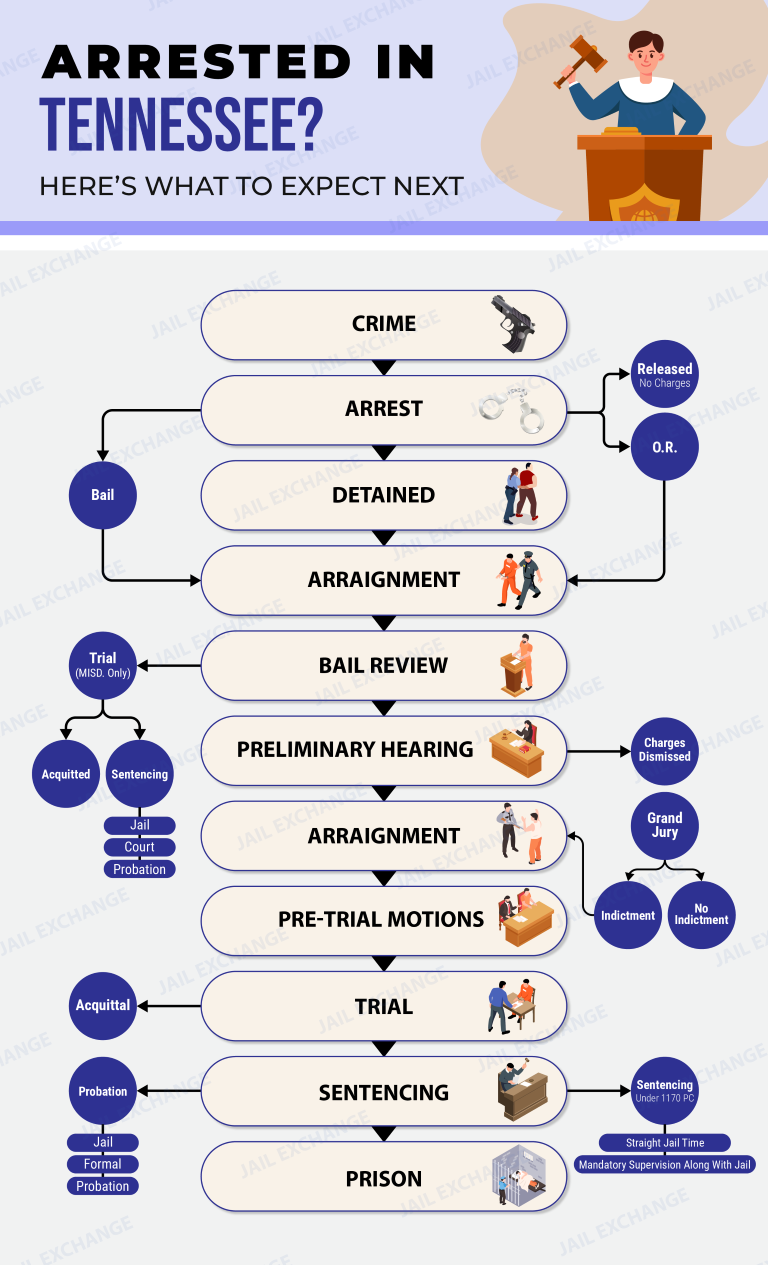
Information for this service is currently unavailable.
Information for this service is currently unavailable.
The Hancock County Jail shares a building with the Hancock County Sheriff's Office on New Jail Street in Sneedville. It is a small rural jail, and all of its mail comes in by U.S. Mail to that building. People can be moved or released quickly, so check the inmate lookup before you send anything.
Everything you mail, including legal papers and money orders:
Inmate's Full Name & Inmate ID#
Hancock County Jail
265 New Jail Street
Sneedville, TN 37869
- Addressing it: The person's full name and inmate ID number go above the jail's address.
- Sending money: Make a money order or cashier's check out to the person's full name, with their inmate ID number written on it. If you are unsure, call 423-733-2249 to confirm. Mail the money order by itself, with no letter or photos tucked in beside it. The Sneedville jail does not take cash or personal checks.
- Books, newspapers and magazines: They have to be brand new and shipped by the publisher. No hardcovers.
- Your return address: Fill in your name and full address in the top left corner, or the letter will probably not be delivered.
- Paper and pen: Plain paper and a blue or black pen are what the jail wants to see. Crayon, felt-tip markers and colored ink are not allowed.
- Extras: Skip the glitter, confetti, perfume, lipstick and doodles. That goes for postcards and envelopes too.
- Cards: Plain greeting cards only, never the kind that plays music.
- Zero tolerance: The jail does not bend its mail rules, so follow each one.
Questions about Hancock County mail can go to the jail at 423-733-2249. Between letters, electronic messages are a quicker way to keep in contact.
HomeWav Voice Calling allows incarcerated individuals to place outbound voice calls from housing-unit terminals directly to approved outside phone numbers. Because correctional facilities do not permit incoming phone calls, opening and funding a HomeWav voice account provides the prepaid balance required to connect calls without relying on traditional collect billing.
Important: Mobile Phones Require an Active Balance to Receive Calls
Mobile cellular carriers automatically block collect calls originating from jail phone systems. While select traditional residential landlines might allow direct operator billing, cellular and internet-based phone numbers require an active HomeWav prepaid account, which you can verify by checking with your provider. If you do not register online and fund your phone balance immediately, your loved one will hear an automated operator recording stating that your phone number cannot accept calls.
Step-by-Step Instructions to Set Up and Fund Voice Calling
- Go to www.homewav.com or open the HomeWav mobile app.
- Register your account using the primary 10-digit cellphone number where you want your loved one to call.
- Select the detention center where the inmate is currently located.
- Search for and add the inmate to your approved contact list by full legal name or booking ID.
- Deposit funds into your account balance using a Visa, MasterCard, or Discover card.
- Ensure your mobile device has third-party spam call blockers disabled so automated jail connection alerts ring through properly.
What the Inmate Needs to Do
The inmate logs onto the housing unit HomeWav terminal using their PIN, selects your contact name or dials your 10-digit number, and initiates the call. HomeWav's automated operator verifies that your account has available funds and connects the call. All personal telephone calls are recorded and subject to facility monitoring.
Official Provider: HomeWav Official Website
Customer Service Telephone: 1-844-394-6639
Support Hours: Monday – Friday, 8:00 AM – 5:00 PM CST
Supported Languages: English and Spanish
Other Services Provided by HomeWav
In addition to Voice Calling, HomeWav offers video visitation and messaging at participating facilities:
- Remote Video Visitation: Hold live, face-to-face video visits from home using a smartphone or computer webcam.
• Learn more on our website: Video Visitation Guide | • Visit official vendor page: HomeWav Video Visits - Inmate Text Messaging: Send two-way digital text messages and photos through the mobile app.
• Learn more on our website: Inmate Text Messaging Guide | • Visit official vendor page: HomeWav Text Messaging
HomeWav Inmate Text Messaging provides a fast, two-way digital communication platform that allows families to exchange text messages and photo attachments with an incarcerated loved one. Messages are delivered directly to the inmate's terminal or tablet screen within hours, bypassing long postal mail processing times.
Important: Digital Mail Screening Rules Vary by Facility
Inmates cannot receive incoming phone calls, and traditional postal mail rules differ across jurisdictions. While some detention centers still allow regular handwritten letters, many facilities now restrict physical paper mail or mandate electronic messaging, which you can verify by checking facility rules. If you do not register online and set up message credits immediately, your loved one may face lengthy periods without direct written contact from family.
Step-by-Step Instructions to Register and Send Text Messages
- Download the HomeWav mobile app on your smartphone or go to www.homewav.com.
- Register your account, complete identity verification, and link your incarcerated contact.
- Navigate to the Text Messaging section of the app.
- Purchase messaging credits using a credit or debit card.
- Type your message and attach approved JPEG photos if permitted by facility guidelines.
- Send your message to the facility's automated and manual screening queue.
What the Inmate Needs to Do
All electronic correspondence is screened by correctional staff before delivery. Once approved, messages appear in the inmate's inbox on their housing unit HomeWav kiosk or tablet. The inmate opens the message, reads your note, and types an electronic reply using available account credits.
Official Provider: HomeWav Official Website
Customer Service Telephone: 1-844-394-6639
Support Hours: Monday – Friday, 8:00 AM – 5:00 PM CST
Supported Languages: English and Spanish
Other Services Provided by HomeWav
In addition to Inmate Text Messaging, HomeWav offers video visitation and voice calling services:
- Remote Video Visitation: Schedule and join live video visits from home using your phone or computer.
• Learn more on our website: Video Visitation Guide | • Visit official vendor page: HomeWav Video Visits - Voice Calling Accounts: Prepay for voice calling minutes so your loved one can call your telephone directly.
• Learn more on our website: Voice Calling Accounts Guide | • Visit official vendor page: HomeWav Voice Calls
HomeWAV provides secure handheld wireless tablets designed specifically for county jails and regional detention facilities. Through HomeWAV's closed facility network, these mobile tablets grant incarcerated individuals direct access to on-demand video calls, voice calling, two-way text messaging, digital educational programs, and institutional grievances directly from their living areas.
Important: Tablet Access Hours and Account Balances Vary
Detention centers do not manage tablet distribution identically. While some agencies issue individual personal tablets to every detainee at booking, others utilize shared pod docking stations or restrict tablet use to specific dayroom hours, which you should confirm with the facility directly. Although core educational and legal resources are generally provided free of charge, sending messages, initiating video calls, or making phone calls from the tablet requires an active prepaid HomeWAV balance funded by outside contacts.
Step-by-Step Instructions to Support HomeWAV Tablet Use
- Visit www.homewav.com or download the HomeWAV mobile app.
- Register your account and complete identity verification by uploading your government-issued ID.
- Search for your facility by state and add your incarcerated loved one by legal name or booking ID.
- Select Add Funds and deposit money into your HomeWAV account balance.
- Review transaction fees, complete payment using a credit or debit card, and record your confirmation receipt.
- Inform your loved one that calling, messaging, and video minutes are funded on their device.
What the Inmate Needs to Do
The inmate unlocks their assigned HomeWAV tablet using their individual PIN. When funds are present in your account, they can select your name from their approved contacts to initiate an on-demand video session, place a voice call, or draft a text message. Devices must be placed on docking charging carts during institutional count times and night lockup.
Official Provider: HomeWAV Official Website
Customer Service Telephone: 1-844-394-6639
Support Hours: Monday – Friday, 8:00 AM – 5:00 PM CST
Supported Languages: English and Spanish
Other Services Provided by HomeWAV
In addition to Tablet Services, HomeWAV provides several direct communication solutions:
- Remote Video Visits: Meet face-to-face over secure live video from home on your schedule.
• Learn more on our website: Video Visitation Guide | • Visit official vendor page: HomeWAV Video Visits - Prepaid Phone Calling: Prepay for voice calling minutes so your loved one can call your telephone directly.
• Learn more on our website: Phone Calling Guide | • Visit official vendor page: HomeWAV Voice Services - Digital Inmate Messaging: Send electronic messages and photos directly to an inmate's device.
• Learn more on our website: Digital Messaging Guide | • Visit official vendor page: HomeWAV Messaging
Hancock County Juvenile Facilities
- Jail (Main): 423-733-2249
- Sheriff: 423-733-2249
The Hancock County Jail serves the following cities and towns of Hancock County: Sneedville.