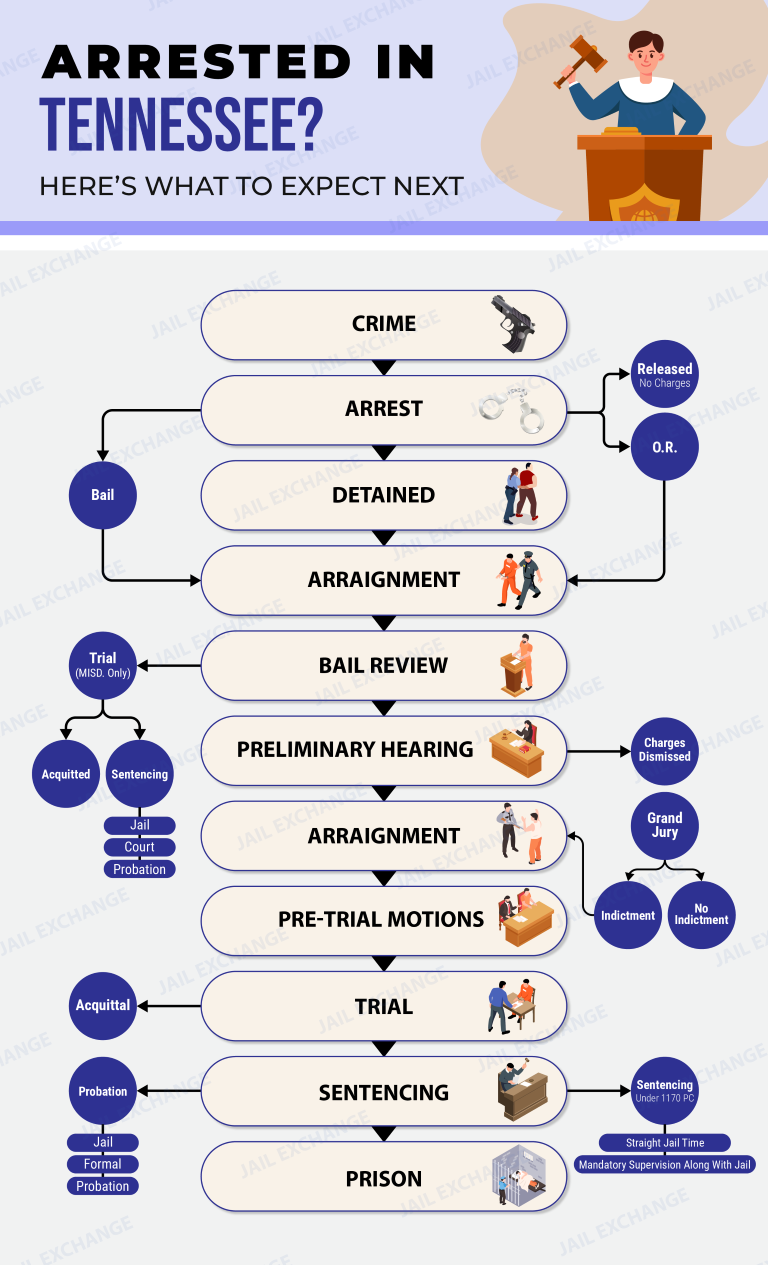
Lake County Jail Criminal Court Process
Criminal Court Process for Lake County Tennessee
Lake County Criminal Courts: General Sessions, Circuit Court and Next Steps
Criminal cases in Lake County start in General Sessions Court or Circuit Court, run from 229 Church Street, Tiptonville, TN 38079. People arrested here are held at the Lake County Jail, 109 South Court Street, Tiptonville, TN 38079. Below, you will learn what each court does.
Not sure who is in jail right now? Put a last name into the jail lookup. Our Lake County Inmate Search page also covers charges, warrants and property pickup.
Today, call the Court Clerk at 731-253-7582 to ask about the next hearing date. The jail desk at 731-253-7791 can say who is in custody. Money questions go to our bail page.
1. Where are the courts and who handles criminal cases?
You may be trying to locate a loved one in Lake County while also worrying about bail, an attorney, and the next hearing. The county seat is Tiptonville, but the exact courtroom depends on whether the charge is a city ordinance violation, a misdemeanor, or a felony. The questions below cover court contacts, booking, release, misdemeanors, felonies, public defenders, penalties, juvenile proceedings, and federal cases.
Circuit Court Clerk — court filings and hearing information
Lake County Circuit Court Clerk — Listed office address: 229 Church Street Box 11, Tiptonville, TN 38079.
Circuit Court Clerk telephone: (731) 253-7137
Circuit clerks handle many criminal and civil filings. Chancery Courts usually address civil and equity matters, while General Sessions Courts handle many initial criminal hearings. Call the applicable clerk for the specific courtroom assignment.
Lake County: the county seat is Tiptonville. Tennessee General Sessions Court ordinarily handles initial criminal appearances, misdemeanor proceedings within its authority, and felony preliminary hearings. Felony jury trials are heard in the Circuit or Criminal Court serving Lake County. The Circuit Court Clerk is responsible for criminal filings and records in courts assigned to that clerk; some Tennessee counties have separate criminal clerks.
Courthouse and court clerk contacts
Call the clerk for other court contacts.
Chancery Court generally hears civil matters such as certain family, property, estate, and business disputes; a Chancery clerk is not a substitute for the criminal clerk. The exact court named on a summons controls where the hearing takes place.
↑ Back to the question list2. What happens after arrest, and where might someone be held?
After a custodial arrest in Lake County, the arresting agency arranges booking and detention. The person may be housed in a county facility or another authorized jail under an established custody arrangement.
Booking may include identification, fingerprints, a photograph, a property inventory, and a medical or mental-health screening. The defendant is then brought before the proper judicial officer for a probable-cause and release decision as required by law. A family member should write down the full legal name, booking number if known, charges, and scheduled hearing.
↑ Back to the question list3. How does bail work and how can a person be released?
A judge or authorized magistrate decides whether someone charged in Lake County can go home before trial and under what conditions. Release on recognizance means there is no up-front bond payment; other orders may require a cash deposit, surety, supervision, travel restrictions, or no contact with another person. Commercial bonding is permitted in Tennessee, but a bondsman cannot decide the court’s bond amount.
If the order allows payment, first establish whether the court or jail collects the money, the exact amount, and whether another hold prevents release. A paid bond does not erase the charges and missing court can lead to forfeiture and arrest.
↑ Back to the question list4. What happens in a misdemeanor case and what penalties apply?
Many less serious cases in Tiptonville begin in General Sessions Court. A prosecutor can discuss a plea, dismissal or diversion; not every offense qualifies. A defendant does not receive a full jury trial in General Sessions Court, and a final misdemeanor decision there requires appropriate consent or waiver under Tennessee law. The case may instead proceed in a court with jury-trial authority.
Maximum misdemeanor punishments
- Class A misdemeanor: up to 11 months and 29 days in jail, a fine up to $2,500, or both.
- Class B misdemeanor: up to 6 months and/or a fine up to $500.
- Class C misdemeanor: up to 30 days and/or a fine up to $50.
These are the usual class limits under Tenn. Code § 40-35-111, not promised outcomes. DUI, domestic assault and other offenses can add required fees, treatment, jail minimums, or enhanced penalties based on earlier convictions.
↑ Back to the question list5. How does a felony case move through court?
A felony complaint arising in Lake County may start before a General Sessions judge for the initial appearance and preliminary hearing. That hearing tests whether there is enough evidence to continue; it does not decide guilt. A grand jury may indict and the case then moves to the county’s Circuit or Criminal Court. Tennessee also provides other lawful charging routes and waivers in limited circumstances.
After formal charges, the defense can obtain discovery, seek hearings on contested evidence, negotiate a plea, or request trial. A serious felony trial typically uses a twelve-person jury. Felony cases can take substantially longer than minor citations, so hearing notices and attorney communications matter.
↑ Back to the question list6. What happens when someone is accused of a violent crime?
A homicide, robbery, rape, or aggravated-assault accusation in Lake County brings particularly serious release and sentencing questions. Judges examine the actual charge and lawful detention criteria; no family should assume that paying a bond automatically means release if there are warrants or other holds.
For example, Tennessee treats many intentional aggravated assaults involving serious bodily injury or a deadly weapon as Class C felonies, with a statutory class range of 3–15 years. Some forms are Class B or D, and the aggravated-assault statute separately caps the ordinary offense fine at $15,000. Murder and other offenses have special sentencing statutes beyond the ordinary felony chart. Defense counsel should review the exact subsection charged.
↑ Back to the question list7. What happens when a child under 18 is arrested?
For a child under 18 accused of wrongdoing in Lake County, the juvenile-court process is different from an adult prosecution. Police or an intake officer may refer the complaint for informal services or ask the juvenile court to hear it. Detention is a separate decision and does not necessarily mean the child has been found delinquent.
A juvenile judge can consider supervision, treatment, community services, restitution, and placement when legally authorized. In especially serious cases, Tennessee law permits transfer proceedings to adult criminal court after a hearing and required findings. Families should ask promptly about appointed counsel, the detention hearing and any restrictions on release of a minor's records.
↑ Back to the question list8. What fines, jail terms and prison sentences are possible?
The punishment depends on the precise statute, offense date, prior record, and any mandatory or alternative-sentence rules. For crimes governed by ordinary Tennessee classification ranges, the overall imprisonment and usual maximum fines are:
- Class A: 15–60 years; ordinary fine ceiling $50,000.
- Class B: 8–30 years; ordinary fine ceiling $25,000.
- Class C: 3–15 years; ordinary fine ceiling $10,000.
- Class D: 2–12 years; ordinary fine ceiling $5,000.
- Class E: 1–6 years; ordinary fine ceiling $3,000.
- Class A misdemeanor: up to 11 months and 29 days in jail, a fine up to $2,500, or both.
- Class B misdemeanor: up to 6 months and/or a fine up to $500.
- Class C misdemeanor: up to 30 days and/or a fine up to $50.
A court may impose probation, diversion, restitution, treatment or a suspended sentence when the law permits. Tennessee’s felony offender-range rules narrow the sentence within the broader class range; special laws and prior violent convictions can change release eligibility. County jail and state prison are not interchangeable labels for every sentence.
↑ Back to the question list9. How does someone get a public defender?
Someone facing a criminal case in Lake County who cannot afford a private defense attorney may ask the judge for appointed counsel. The court reviews an affidavit or other proof about income, assets and ability to pay. An appointment can be through a district public defender or a conflict lawyer when the public defender cannot handle the case.
At the first hearing, the defendant should clearly say they want a lawyer and cannot afford one. A family member can help gather pay information and court papers but cannot waive the defendant’s rights for them. Tennessee has elected district public defenders, and their service areas can cross county borders.
↑ Back to the question list10. Do city courts hear criminal or traffic cases?
Police in Tiptonville or another town in Lake County may issue a city citation rather than a county criminal warrant. Some Tennessee municipal courts handle ordinance violations and limited traffic matters; their powers depend on the local charter and state law. Serious criminal charges do not become city-court felonies merely because city police made the arrest.
Check the court name actually printed on the summons. If a charge carries criminal jail exposure, ask a lawyer whether the municipal court has authority over it and whether the case is before a General Sessions or state criminal court instead.
↑ Back to the question list11. What is a federal crime and which U.S. District Court handles it?
Lake County belongs to the United States District Court for the Western District of Tennessee — Jackson / Dyersburg Division. The division’s listed courthouse is in Jackson / Dyersburg: 111 S Highland Avenue, Jackson, TN 38301. A federal criminal case might involve interstate fraud, offenses on federal property, federal drug trafficking, some firearms offenses, or violations of federal criminal statutes. A state offense does not automatically become federal because it is serious.
Federal defendants may appear before a U.S. magistrate judge for detention and preliminary proceedings; felony cases usually proceed through indictment or another permitted federal charging process, followed by arraignment and trial or plea. Federal prison sentences are administered by the Bureau of Prisons. People awaiting trial or transfer may be held in a contracted or local detention center rather than a prison operated by BOP. Families can search the official Federal Bureau of Prisons inmate locator for eligible federal inmate records.
This Lake County guide offers general criminal-court information, not advice for a particular defendant. Law and court operations may change; a lawyer can explain the charge and next steps in the actual case.
↑ Back to the question list