
Pickett County Jail
Pickett County Jail
Fentress County Jail
931-879-8142Pickett County Inmate Search: One Call Tells You Where They Are
No jail inside Pickett County has been confirmed to us, so someone taken in by a Byrdstown officer could be locked up in a neighboring county. The Sheriff's Office works from Suite 300 at One Courthouse Square in Byrdstown, TN 38549, and can name the place. Below are answers on finding the person, requesting mugshots, posting bail, hiring counsel, sending money and letters, and keeping track of hearings.
Try the statewide custody search first. It runs on Tennessee's VINE service, which reports a person's location and status. Begin with the surname and add a given name only if needed. One service covers many jails, so a fresh booking can take time to appear.
Then dial the Sheriff's Office on 931-864-3210 and request the jail's name, its number and a booking number. Our bail page explains release. The court page explains the hearings that follow.
Read inmate search answers
 Read inmate search answers
1. Where do I search after a Pickett County arrest?
Work through this list:
- Collect the legal name and birth date. The arrest day helps too.
- Open the custody search and key in the surname. Still too many hits? Add a given name.
- Look for three things in a match: the jail, the status and any release note.
- Call that jail for the booking number, each charge and the bail figure.
- Nothing on screen? Ring the Sheriff's Office at 931-864-3210 and ask which facility has the person.
Tennessee has no one search that reaches every county jail. Each sheriff chooses how a jail shares its list, which makes a phone call the quicker route.
↑ Back to the question list2. Why does the roster show no sign of my person?
Several ordinary things can leave a result empty:
- Paperwork under way. A record may not exist until fingerprints and forms are done.
- A stop at a police station. Some arrested people wait in town before a jail takes them.
- A ticket instead of a booking. The officer may write a summons for a later hearing and let the person go.
- Bonded out. They may have paid a bond, or the court may have accepted a signed pledge to come back.
- Another county or the state. The person could sit in a jail you did not expect.
- A different spelling. Test nicknames, middle names and shortened first names.
The Sheriff's Office, 931-864-3210, can say where the arrested person was taken after you spell the surname and read out the birth date.
↑ Back to the question list3. Where would a Byrdstown arrest be held overnight?
We could not confirm where Pickett County sends its arrested people. The Sheriff's Office at 931-864-3210 can say where yours is tonight, so ask before you drive. A wrong guess costs a whole day.
A person grabbed by an agency in a nearby county may be locked up by that county instead. Fentress County borders this one, and its lockup is the Fentress County Jail, 140 Justice Center Drive, Suite 1, Jamestown, TN 38556, 931-879-8142. Other kinds of lockup, such as work release, women's or short-term holding, are unknown to us here, so raise them when you call the Sheriff.
Federal custody, ICE and state prison each get a separate answer lower on this page.
↑ Back to the question list4. Can I see Pickett County mugshots?
We cannot promise the custody search carries mugshots. Photographs kept by government offices are covered by a records statute numbered 10-7-503 in Tennessee's code. Certain Tennessee sheriffs display mugshots with roster names, though nothing in the statute speaks of booking photos.
To ask whether a booking photo may be given out, call the Sheriff's Office (Suite 300 at One Courthouse Square in Byrdstown, TN 38549) on 931-864-3210. When another agency made the arrest, put the question to it.
- If ICE took the picture, file it with the ICE records office online.
- Federal mugshots are kept from the public. The sole exception is the U.S. Marshals Service, which can release a photo when it needs help finding someone.
5. How do I hear the moment my person walks out?
Often, yes. Tennessee VINE costs you nothing and can push a phone call, text or email whenever a person's custody status shifts. Join at VINELink by choosing Tennessee, or dial 888-868-4631. Live staff answer around the clock.
Some county jails send little or nothing to VINE, and a quiet phone then proves nothing. Confirm any release with the jail. Ask the Sheriff's Office at 931-864-3210 if the jail holding your person feeds the service.
Treat alerts as a backup. Only the jail can give a firm release time.
↑ Back to the question list6. How is bail decided for a Pickett County arrest?
A judge or a magistrate puts a number on it. State law (Tenn. Code Ann. 40-11-118) tells them to choose the smallest sum that will still bring the person to every hearing and protect other people. They weigh home, job, family ties and past record.
- Cash: pay the whole sum to the clerk. Contact the Circuit Court Clerk at 931-864-3958 about where and how to pay.
- Bondsman: asks about 10 percent of the bond as a fee you will not get back. The state licenses bondsmen and the court decides who may write bonds.
- Waiting time: after an arrest tied to stalking or domestic abuse, release may be delayed up to 12 hours.
Check with the jail for any second hold. Fuller steps are on the bail page, and the state's rules sit on a separate Tennessee bail laws page.
↑ Back to the question list7. What is my person actually charged with?
Staff at the jail can recite the charges to you by phone. Once you know the facility, phone it and read out the full name along with the birth date.
The formal charge sits in the court file. Reach the Circuit Court Clerk at 931-864-3958, 1 Courthouse Square, Suite 100, Byrdstown, TN 38549, and ask about both General Sessions and Circuit cases. Tennessee offers no statewide online search of trial-court criminal files, so ringing the clerk is the route.
Prosecutors for this judicial district sit with the District Attorney General, 1289 S Walnut Ave, Cookeville, TN 38501, 931-528-5015. That office chooses what to pursue.
↑ Back to the question list8. How does someone with no money get a lawyer?
The request comes at the first court date. A judge then decides if the person qualifies for appointed help. Coach the person to speak up and say they need a lawyer because they have no money to hire one.
This county is part of the 13th Judicial District. Its District Public Defender works from 230 N Washington Ave, Cookeville, TN 38501, 931-526-9141. Family members may phone to learn how to apply.
A paid private attorney is the other route. Whoever you hire should phone the facility first to book a meeting.
↑ Back to the question list9. What are the Pickett County visiting rules?
The facility that holds the person writes the visiting rules, not this county. Learn the name and number first from the Sheriff's Office at 931-864-3210. Next, phone that facility about visit days, hours, children, ID, dress codes and whether visits are held in a room or over video.
Also ask how to book a slot. Many places want the booking number. Our visiting guide adds general advice. Call again before every trip, since visits can be cancelled.
↑ Back to the question list10. Can I send money to a Pickett County inmate?
Balances on an account buy snacks, soap and call time. They never count toward bail. The method varies by facility, so locate it first and ring it.
Ask what deposit choices exist, what fees apply and the largest balance allowed. Keep the legal name and the booking number in front of you. Our money guide lists common methods, and the commissary guide shows purchases. Cash never belongs in the mail.
↑ Back to the question list11. Can my person phone me, and what about texts and email?
Each facility picks its own phone vendor and prices. Phone the one holding your person and ask how a call reaches you, what it costs, and whether texting, tablets or video are on offer. The Sheriff's Office, 931-864-3210, can name the facility.
Expect a recording of each call unless the other end is an attorney. Leave the case out of it. Read how jail calls work and how to message an inmate for extra tips.
↑ Back to the question list12. Are letters allowed, and what should the envelope say?
Every facility has its own address format and list of banned items. Ring the holding facility before posting anything. Get the street address, ask if the booking number is required, and find out which items pass, like pictures or paperbacks.
Write the person's whole legal name, with your return address on the upper left. Skip stickers and scents. Our mail guide lists common rules. Never slip cash inside.
↑ Back to the question list13. Can a friend pick up what they were carrying?
Things taken during booking remain in storage until the person walks out, or signs permission for someone else to collect them. Ask the holding facility about its release steps.
When a deputy picked up a car, phone or wallet at the scene, the Sheriff's Office may know where it went. Phone 931-864-3210. Carry photo ID and, if the facility wants one, a signed note from the person.
↑ Back to the question list14. What if their health is at risk behind bars?
Phone the facility at once and ask for its health staff. Keep each medicine's name, its dose and the prescriber's number ready. Name any worry about a mental health crisis plainly.
The person may submit a written health request on the inside, so urge them to do that. For a life-threatening problem, dial 911. Not sure which facility? The Sheriff's Office, 931-864-3210, can point the way.
↑ Back to the question list15. Might a warrant exist for me or a loved one?
Deputies carry out county warrants, and town officers may do the same inside town limits. Phone the Sheriff's Office at 931-864-3210 and ask if any is active under that name. Keep the birth date handy, since staff may need it to tell two people apart. To see the case itself, contact the Circuit Court Clerk at 931-864-3958. To resolve one, talk with an attorney first. Then contact whichever court issued it and work out a surrender or a rescheduled hearing. The clerk works at 1 Courthouse Square, Suite 100, Byrdstown, TN 38549.
↑ Back to the question list16. What day is the next Pickett County hearing?
Whichever clerk handles the case can give the date. Offer the name and birth date:
- Circuit Court Clerk, 1 Courthouse Square, Suite 100, Byrdstown, TN 38549, 931-864-3958. This number also reaches General Sessions Court.
General Sessions handles the first appearance, misdemeanor trials and the early evidence hearing in felony cases. After a grand jury reviews a felony, Circuit Court takes over. The early hearing in a felony is due inside 14 days for a jailed person and inside 30 days for one on release. The court guide walks through every step of a case.
↑ Back to the question list17. My person faces federal charges. Where do I turn?
The county lies in the Middle District of Tennessee, Northeastern Division, which sits in Cookeville. To find out where a hearing takes place, call the clerk in Nashville at 615-736-5498, at the federal courthouse named for Fred D. Thompson, 719 Church Street, Nashville, TN 37203.
- A first federal date can include a detention hearing, which settles jail or release until trial (18 U.S.C. 3142).
- The U.S. Marshals hold a person awaiting trial. To learn where, call 719 Church Street, Suite 2500, Nashville, TN 37203, 615-750-1434.
- Free federal counsel comes through the Federal Public Defender, 164 Rosa L Parks Boulevard, Nashville, TN 37203, 615-736-5047.
- Once a federal court has sentenced someone, the Bureau of Prisons locator lists their facility.
18. Can ICE take the person from the jail?
The usual order of events:
- The jail gets a detainer, which is an ICE request filed as Form I-247A.
- A jail can keep the person up to 48 hours after they would otherwise be released (8 CFR 287.7(d)).
- The state's immigration enforcement office names this county as a partner with ICE in a federal program (state page). That office answers at 615-532-9736.
- Put the full name plus birth country into the ICE Online Detainee Locator.
- If it finds nothing, ask ICE's New Orleans Field Office through the locator site.
19. Is my person now in a Tennessee prison?
A felony sentence served in state custody starts at an intake center, where staff classify the person, and moves on to a prison that suits them. Before that transfer, a county jail may keep the person for a time, so phone the jail to check.
- Check a name in the state offender search run by the Tennessee Department of Correction. Results may list a picture, status, site, offense and term.
- Its headquarters is at 320 Sixth Avenue North, Nashville, TN 37243, 615-741-1000.
- Our Tennessee state prisons page has what each prison requires for visitors and letters.
20. Where do youths under 18 go?
Anyone younger than 18 goes before Juvenile Court and stays out of the adult booking process. No page we reviewed names the juvenile court or detention center for this county, so call the General Sessions Court office at 931-864-3958, 1 Courthouse Square, Suite 100, Byrdstown, TN 38549. Ask where the child sleeps tonight, the hearing time and how to request counsel. Records about children are sealed from view, so the adult search will not show one. A parent or guardian should hold the line until someone gives a straight answer.
↑ Back to the question list21. Which officers and departments patrol the county?
Whoever arrested the person appears in the jail record. These offices cover the county:
- Pickett County Sheriff's Office, Suite 300 at One Courthouse Square in Byrdstown, TN 38549, 931-864-3210. Deputies patrol the whole county, including land outside any town.
- Town officers in Byrdstown. The Sheriff's Office can say if a town officer or a deputy brought the person in.
- Tennessee Highway Patrol. Troopers patrol highways. To learn which district serves this county, open the THP contact page and request that district's number.
No campus police department is listed for the county.
↑ Back to the question listPickett County bail and bond: no jail in Byrdstown, so start with one phone call
Pickett County has no working jail in Byrdstown, so people arrested here are sent to a jail outside the county. This page shows how to find that jail. It also explains cash bail, bondsmen, property bonds and your first court steps.
Use the statewide victim notification search to look up a name. It may show custody and release news. Our Inmates in Custody page explains recent arrests, warrants and free lawyers too.
Phone the Sheriff's Office at 931-864-3210 before anything else. Find out where your family member sleeps tonight and if a judge has set a bond. After that, see how court works in Pickett County.
1. Is there a jail in Pickett County?
The county jail in Byrdstown is closed. People arrested in Pickett County are held in another county's jail. The Sheriff's Office, 931-864-3210, can tell you the name and phone number of the jail that holds your family member today.
↑ Back to the question list2. How do I find out where my person is being held?
Do two things. First, search the name with Pickett County Inmate Search. Second, call the Sheriff's Office at 931-864-3210 and ask for the facility name, the booking number, and whether a bond has been set. Write all three down. You will need the jail name for visits, mail, and money.
↑ Back to the question list3. Why does it matter that the jail is in another county?
The jail where the person sleeps makes the rules for phone calls, visits, mail, and commissary. Pickett County does not make those rules. The court case, though, stays in Pickett County. The judge, the clerk, and the bail amount all come from here. Keep the two sets of contacts apart so you do not call the wrong office.
↑ Back to the question list4. Who sets bail for an arrest in Pickett County?
A judge or magistrate. Under Tennessee law each arrested person is owed an individual bail decision, and the sheriff or jailer can release only after bail is set. The General Sessions judge answers at 931-864-3958, the same number as the Circuit Court Clerk. Ask whether bail was set at booking or must wait for a hearing.
↑ Back to the question list5. Where do I pay bail for a Pickett County case?
Cash bail is the full amount, deposited with the court clerk. Call the Circuit Court Clerk at 931-864-3958 and ask if the money can be paid in Byrdstown or must go through the holding jail. Do not send money before you have that answer. Get a receipt with the case number and keep it.
↑ Back to the question list6. What will a bondsman charge?
Roughly 10 percent of the bond for a Tennessee resident, plus a $37 fee, and none of it is refunded. The company needs a state bondsman license and the court's approval for this judicial district. Ask whether the company will go to the out-of-county jail itself, and get the contract and every receipt in writing.
↑ Back to the question list7. Can property secure the bond?
Tennessee real estate can secure a bond if the court accepts it. Owners sign, and the judge checks value before release. Land bonds take longer than cash, and the person may sit in the other county's jail while that happens. Ask the Circuit Court Clerk what papers to bring.
↑ Back to the question list8. Can two people sign instead of paying?
Two sufficient sureties who are not bondsmen or lawyers can sign a written bond. The court decides if they are good enough. They owe the amount if the defendant does not come to court.
↑ Back to the question list9. What if the record shows no bond or a hold?
A capital charge is not bailable. A hold from another case or county, a probation violation, or an immigration detainer can also block release. The judge may simply not have set bail yet. Ask the Sheriff's Office, 931-864-3210, which of these applies before you hire anyone.
↑ Back to the question list10. What waiting period applies after a domestic violence arrest?
Release is barred for 12 hours after an arrest for stalking, child or elder abuse, or a listed domestic offense, unless an official finds no threat to the victim. In an aggravated assault with strangulation, serious injury, or a weapon, the hold can run up to 24 hours. A no-contact order is required before bond.
↑ Back to the question list11. When does the judge first see the person?
Without unnecessary delay, says Tennessee Rule of Criminal Procedure 5. The General Sessions court at 931-864-3958 can give you the date and tell you how the hearing will be held. In felonies, a preliminary hearing follows within 14 days for someone in jail and 30 days for someone released.
↑ Back to the question list12. How do I ask for lower bail or a free lawyer?
A lawyer can ask the judge to review bail. The court begins with release on a promise to appear and must use the lightest conditions that work. If you cannot pay, ask the judge to appoint a public defender. Pickett County is in the 13th Judicial District, and the Public Defender answers at 931-526-9141.
↑ Back to the question list13. What should I have in hand before I call?
Write down the full legal name, the birth date, the date of arrest, the charge if you know it, and the agency that made the arrest. Have a pen ready for the jail name, the booking number, and the bail amount. Callers who bring these details get answers faster, and you avoid calling two or three offices for the same fact.
↑ Back to the question list14. Which Pickett County phone number goes with which problem?
Call the Sheriff's Office at 931-864-3210 to learn which jail holds your person. Call the Circuit Court Clerk and General Sessions court at 931-864-3958 for court dates, case files, and cash bail. Call the Public Defender at 931-526-9141 if you cannot afford a lawyer. Questions about visits, mail, or phone calls go to the holding jail, not to Pickett County.
↑ Back to the question list15. Can I pay bail through the holding jail's inmate account?
No. An account deposit buys phone time and store items at the holding jail. It never counts toward bail. Pay bail only to the court clerk or a licensed bondsman.
↑ Back to the question list16. Who helps if a young person is arrested in Byrdstown?
Call the General Sessions Court at 931-864-3958 and ask where the young person is held and when the hearing is. Juvenile records are private, so the adult search will not list a minor.
↑ Back to the question list17. What happens when a Pickett County defendant skips court?
The bond may be forfeited, and the judge may sign an arrest order. A bondsman can also bring the defendant back to the holding jail. Call the clerk at 931-864-3958 the same day and speak to a lawyer.
↑ Back to the question list18. When does cash come back, and how do I spot a bail scam?
The clerk returns cash after the case ends, less fines and costs. A bondsman's fee does not come back. A caller who wants gift cards or an app transfer, or says a bond must be paid within the hour, is not from a court. Dial 931-864-3210 yourself to check.
↑ Back to the question list19. Pickett County bond contacts
- Where prisoners are held: Ask the Sheriff's Office, 931-864-3210, for the jail that serves Pickett County
- Bond guide: Pickett County jail and bond guide
- Custody lookup: Pickett County Inmate Search
- Sheriff's Office: One Courthouse Square, Suite 300, Byrdstown, TN 38549; 931-864-3210
- Circuit Court Clerk: 931-864-3958
- General Sessions: Judge's office 931-864-3958
- Clerk and Master: 931-864-3359
- County Clerk: 931-864-3879
- Public defender: 13th Judicial District Public Defender 931-526-9141
Amounts, fees, hours, and phone numbers can change. Confirm the holding jail and the payment place with the Sheriff's Office before you pay. Nothing here is legal advice.
↑ Back to the question listPickett County Criminal Courts in Byrdstown: Sessions and Circuit
In Pickett County, General Sessions Court takes cases first and Circuit Court handles felonies. The Circuit Court Clerk's office is at 1 Courthouse Square, Suite 100, Byrdstown, TN 38549. With no working jail here, arrested people stay at a jail in a nearby county.
To check on someone, try the VINE custody search. Our Inmate Lists page also covers who was booked lately, warrants, mugshots and help from a free lawyer.
Ring the Circuit Court Clerk at 931-864-3958 so you know when the family member must appear. To get someone released, read how bail works here.
1. Where are the courts and who handles criminal cases?
Families dealing with an arrest in Pickett County need more than a courthouse name: they need to understand who controls release and how the case moves forward. The county seat is Byrdstown, but the exact courtroom depends on whether the charge is a city ordinance violation, a misdemeanor, or a felony. This guide explains the first appearance, the difference between minor and serious charges, court locations, lawyers, sentencing, juvenile cases, and federal prosecutions.
Circuit Court Clerk — court filings and hearing information
Pickett County Circuit Court Clerk — Listed office address: 1 Courthouse Square Suite 100, Byrdstown, TN 38549.
Circuit Court Clerk telephone: (931) 864-3958
Circuit clerks handle many criminal and civil filings. Chancery Courts usually address civil and equity matters, while General Sessions Courts handle many initial criminal hearings. Call the applicable clerk for the specific courtroom assignment.
Pickett County: the county seat is Byrdstown. Tennessee General Sessions Court ordinarily handles initial criminal appearances, misdemeanor proceedings within its authority, and felony preliminary hearings. Felony jury trials are heard in the Circuit or Criminal Court serving Pickett County. The Circuit Court Clerk is responsible for criminal filings and records in courts assigned to that clerk; some Tennessee counties have separate criminal clerks.
Courthouse and court clerk contacts
For other court branches, call the Circuit Court Clerk at 931-864-3958.
Chancery Court generally hears civil matters such as certain family, property, estate, and business disputes; a Chancery clerk is not a substitute for the criminal clerk. The exact court named on a summons controls where the hearing takes place.
↑ Back to the question list2. What happens after arrest, and where might someone be held?
After a custodial arrest in Pickett County, the arresting agency arranges booking and detention. The person may be housed in a county facility or another authorized jail under an established custody arrangement.
Booking may include identification, fingerprints, a photograph, a property inventory, and a medical or mental-health screening. The defendant is then brought before the proper judicial officer for a probable-cause and release decision as required by law. A family member should write down the full legal name, booking number if known, charges, and scheduled hearing.
↑ Back to the question list3. How does bail work and how can a person be released?
A judge or authorized magistrate decides whether someone charged in Pickett County can go home before trial and under what conditions. Release on recognizance means there is no up-front bond payment; other orders may require a cash deposit, surety, supervision, travel restrictions, or no contact with another person. Commercial bonding is permitted in Tennessee, but a bondsman cannot decide the court’s bond amount.
If the order allows payment, first establish whether the court or jail collects the money, the exact amount, and whether another hold prevents release. A paid bond does not erase the charges and missing court can lead to forfeiture and arrest.
↑ Back to the question list4. What happens in a misdemeanor case and what penalties apply?
Many less serious cases in Byrdstown begin in General Sessions Court. A prosecutor can discuss a plea, dismissal or diversion; not every offense qualifies. A defendant does not receive a full jury trial in General Sessions Court, and a final misdemeanor decision there requires appropriate consent or waiver under Tennessee law. The case may instead proceed in a court with jury-trial authority.
Maximum misdemeanor punishments
- Class A misdemeanor: up to 11 months and 29 days in jail, a fine up to $2,500, or both.
- Class B misdemeanor: up to 6 months and/or a fine up to $500.
- Class C misdemeanor: up to 30 days and/or a fine up to $50.
These are the usual class limits under Tenn. Code § 40-35-111, not promised outcomes. DUI, domestic assault and other offenses can add required fees, treatment, jail minimums, or enhanced penalties based on earlier convictions.
↑ Back to the question list5. How does a felony case move through court?
A felony complaint arising in Pickett County may start before a General Sessions judge for the initial appearance and preliminary hearing. That hearing tests whether there is enough evidence to continue; it does not decide guilt. A grand jury may indict and the case then moves to the county’s Circuit or Criminal Court. Tennessee also provides other lawful charging routes and waivers in limited circumstances.
After formal charges, the defense can obtain discovery, seek hearings on contested evidence, negotiate a plea, or request trial. A serious felony trial typically uses a twelve-person jury. Felony cases can take substantially longer than minor citations, so hearing notices and attorney communications matter.
↑ Back to the question list6. What happens when someone is accused of a violent crime?
A homicide, robbery, rape, or aggravated-assault accusation in Pickett County brings particularly serious release and sentencing questions. Judges examine the actual charge and lawful detention criteria; no family should assume that paying a bond automatically means release if there are warrants or other holds.
For example, Tennessee treats many intentional aggravated assaults involving serious bodily injury or a deadly weapon as Class C felonies, with a statutory class range of 3–15 years. Some forms are Class B or D, and the aggravated-assault statute separately caps the ordinary offense fine at $15,000. Murder and other offenses have special sentencing statutes beyond the ordinary felony chart. Defense counsel should review the exact subsection charged.
↑ Back to the question list7. What happens when a child under 18 is arrested?
For a child under 18 accused of wrongdoing in Pickett County, the juvenile-court process is different from an adult prosecution. Police or an intake officer may refer the complaint for informal services or ask the juvenile court to hear it. Detention is a separate decision and does not necessarily mean the child has been found delinquent.
A juvenile judge can consider supervision, treatment, community services, restitution, and placement when legally authorized. In especially serious cases, Tennessee law permits transfer proceedings to adult criminal court after a hearing and required findings. Families should ask promptly about appointed counsel, the detention hearing and any restrictions on release of a minor's records.
↑ Back to the question list8. What fines, jail terms and prison sentences are possible?
The punishment depends on the precise statute, offense date, prior record, and any mandatory or alternative-sentence rules. For crimes governed by ordinary Tennessee classification ranges, the overall imprisonment and usual maximum fines are:
- Class A: 15–60 years; ordinary fine ceiling $50,000.
- Class B: 8–30 years; ordinary fine ceiling $25,000.
- Class C: 3–15 years; ordinary fine ceiling $10,000.
- Class D: 2–12 years; ordinary fine ceiling $5,000.
- Class E: 1–6 years; ordinary fine ceiling $3,000.
- Class A misdemeanor: up to 11 months and 29 days in jail, a fine up to $2,500, or both.
- Class B misdemeanor: up to 6 months and/or a fine up to $500.
- Class C misdemeanor: up to 30 days and/or a fine up to $50.
A court may impose probation, diversion, restitution, treatment or a suspended sentence when the law permits. Tennessee’s felony offender-range rules narrow the sentence within the broader class range; special laws and prior violent convictions can change release eligibility. County jail and state prison are not interchangeable labels for every sentence.
↑ Back to the question list9. How does someone get a public defender?
Someone facing a criminal case in Pickett County who cannot afford a private defense attorney may ask the judge for appointed counsel. The court reviews an affidavit or other proof about income, assets and ability to pay. An appointment can be through a district public defender or a conflict lawyer when the public defender cannot handle the case.
At the first hearing, the defendant should clearly say they want a lawyer and cannot afford one. A family member can help gather pay information and court papers but cannot waive the defendant’s rights for them. Tennessee has elected district public defenders, and their service areas can cross county borders.
↑ Back to the question list10. Do city courts hear criminal or traffic cases?
Police in Byrdstown or another town in Pickett County may issue a city citation rather than a county criminal warrant. Some Tennessee municipal courts handle ordinance violations and limited traffic matters; their powers depend on the local charter and state law. Serious criminal charges do not become city-court felonies merely because city police made the arrest.
Check the court name actually printed on the summons. If a charge carries criminal jail exposure, ask a lawyer whether the municipal court has authority over it and whether the case is before a General Sessions or state criminal court instead.
↑ Back to the question list11. What is a federal crime and which U.S. District Court handles it?
Pickett County belongs to the United States District Court for the Middle District of Tennessee — Cookeville Division. The division’s listed courthouse is in Cookeville: 9 E Broad Street, Cookeville, TN 38501. A federal criminal case might involve interstate fraud, offenses on federal property, federal drug trafficking, some firearms offenses, or violations of federal criminal statutes. A state offense does not automatically become federal because it is serious.
Federal defendants may appear before a U.S. magistrate judge for detention and preliminary proceedings; felony cases usually proceed through indictment or another permitted federal charging process, followed by arraignment and trial or plea. Federal prison sentences are administered by the Bureau of Prisons. People awaiting trial or transfer may be held in a contracted or local detention center rather than a prison operated by BOP. Families can search the official Federal Bureau of Prisons inmate locator for eligible federal inmate records.
This Pickett County guide offers general criminal-court information, not advice for a particular defendant. Law and court operations may change; a lawyer can explain the charge and next steps in the actual case.
↑ Back to the question list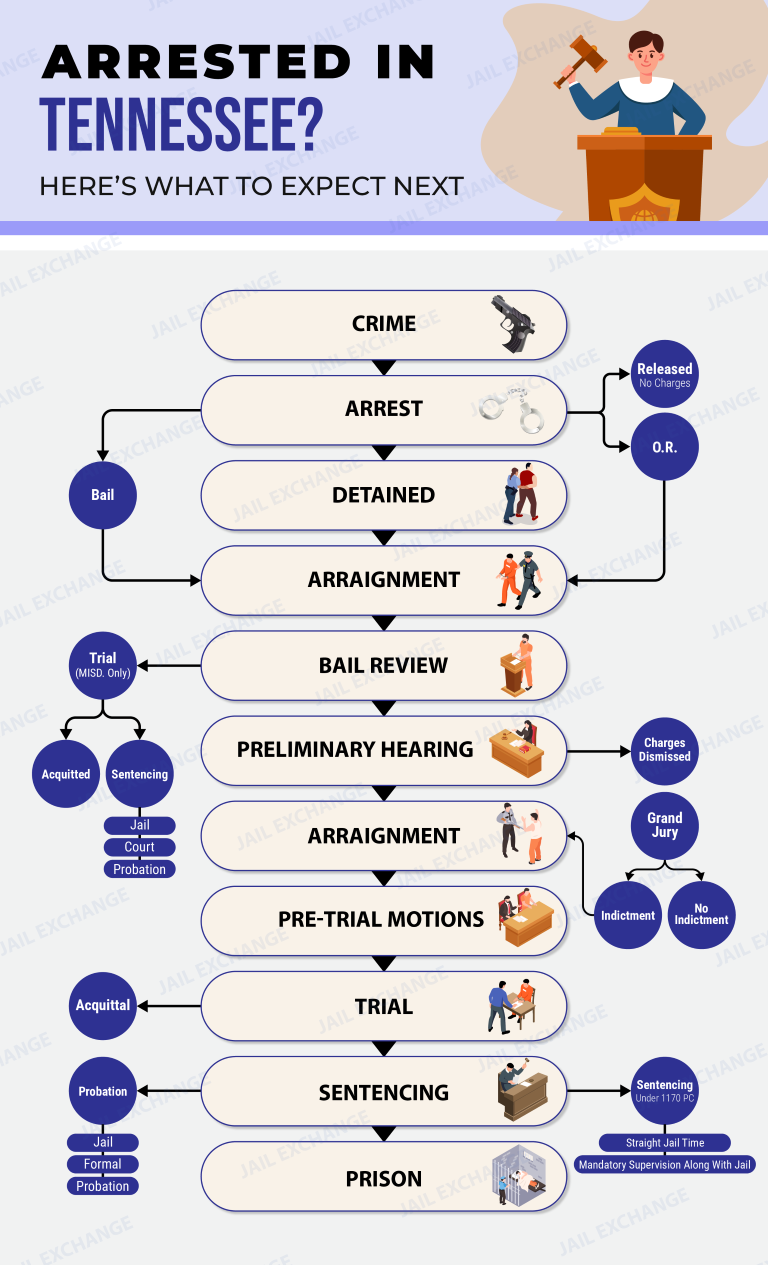
Information for this service is currently unavailable.
Nothing about deposits is public for the Pickett County Jail: not the method, not the company, not a mailing address for money orders. That's a choice the county has made.
So the first step is a call. The Pickett County Sheriff's Office at 931-864-3210 gives out the deposit steps. Expect them to ask for the inmate's full name and date of birth.
On that call, ask about postal money orders, since that's what small sheriff's offices usually take. They can typically be brought to the Sheriff's Office front desk or mailed, but the office decides the payee and the address, so get both before you send anything.
A few things are known:
- mailed cash or personal checks get turned away;
- account money covers snacks, soap and phone time;
- it never goes toward bail.
Pickett County no longer runs a working jail in Byrdstown, and the state's jail population report lists no jail for the county. People arrested in Pickett County are held in another county's jail. Mail for them goes to the Fentress County Jail on Justice Center Drive in Jamestown, Fentress County, Tennessee, not to the courthouse in Byrdstown.
Mail for someone arrested in Pickett County:
Inmate's Full Name & Inmate ID#
Fentress County Jail
140 Justice Center Drive
Jamestown, TN 38556
- Look them up first: Search the statewide custody search to see which jail is holding the person before you mail anything. The Pickett County Sheriff's Office can also tell you at 931-864-3210.
- Address it: Put the person's full name and their inmate ID number on the first line, and your own full name and address in the top left corner.
- Write plainly: Letters going to Jamestown should be written in blue or black ink on plain white paper. No drawings, crayon, markers, glitter or perfume.
- Money: The Jamestown jail turns away cash and personal checks by mail. Families of Pickett County arrestees can send money online instead.
- Books and magazines: Only new ones mailed straight from the publisher.
For questions about mail for someone arrested in Pickett County, call 931-879-8142.
Information for this service is currently unavailable.
Information for this service is currently unavailable.
Information for this service is currently unavailable.
Pickett County County Jails
Pickett County Juvenile Facilities
- Fentress County Jail: 931-879-8142
- Sheriff: 931-864-3210
The Pickett County Jail serves the following cities and towns of Pickett County: Byrdstown.