
Atascosa County Jail
Atascosa County Jail
Jail Phone Number
830-769-3434Atascosa County Jail inmate search
Atascosa County uses the state's Integrated Victim Services System for custody lookups. In IVSS-Counties, type the last and first name and pick the result whose agency reads Atascosa County. The record shows whether the person is still held, and you can sign up for a custody alert from the same screen.
Atascosa Booking, 830-769-3434 ext. 2231, gives the charge list, bond and SO number at any hour; felony case files are with the District Clerk (830-769-3011) and misdemeanor settings on the County Court at Law calendar. Atascosa’s newest arrests reach IVSS when the booking record is saved, magistration and bail follow within two days, and the jail lets people out at 8 AM and 10 PM. Jail Records (ext. 2239) handles copies of records and local background checks.
If the arrest happened across the county line, check the nearby jails. State and federal searches: TDCJ, Bureau of Prisons, ICE.
IVSS, SO numbers and other search help
Which lookup does the Atascosa County Sheriff use?
What does SO# mean on an Atascosa County letter?
Someone was arrested in Pleasanton last night and the portal shows nothing. Why?
How can I tell if a person was moved to state prison or federal custody?
Can I get an alert when someone is released?
Read inmate search answers
 Read inmate search answers
Which lookup does the Atascosa County Sheriff use?
The Sheriff points the public to the state IVSS-Counties portal. IVSS shows custody status; for bail figures and housing, dial 830-769-3434 and choose 2231.
What does SO# mean on an Atascosa County letter?
The SO (Sheriff's Office) number is the booking number given to each person jailed in Atascosa County. Ext. 2231 reads it out over the phone. Letters to PO Box 591 in Longview must show it, with the inmate's name and your return address.
Someone was arrested in Pleasanton last night and the portal shows nothing. Why?
A new booking can take time to reach the state portal. Call 830-769-3434 and ask Booking, and if the arrest was in another county, check that county's jail.
How can I tell if a person was moved to state prison or federal custody?
Three other databases cover the rest: TDCJ for Texas prisons, the federal BOP locator, and ICE for immigration detainees.
Can I get an alert when someone is released?
Yes. Register on IVSS-Counties and choose how you want to be notified. Victims who need help registering can call 866-268-8959.
Atascosa County Bail and Release
One adult lockup serves this whole county: the Atascosa County Jail, 1108 Campbell Avenue, Jourdanton, TX 78026, which the Sheriff's Office operates. Read below to see who sets bail, the bond choices, the small state bond fee, holds and refunds. Curious about the statewide rules behind all this? Our Texas bail law overview goes deeper.
The Sheriff's own website steers families to Texas IVSS-Counties. This no-fee state system can show whether a named person is in custody or under supervision. There is also the official jail search. Our Jail Roster page tackles custody from booking onward: who the Campbell Avenue jail holds today, fresh bookings, warrants, charges, booking photos, appointed lawyers and claiming belongings.
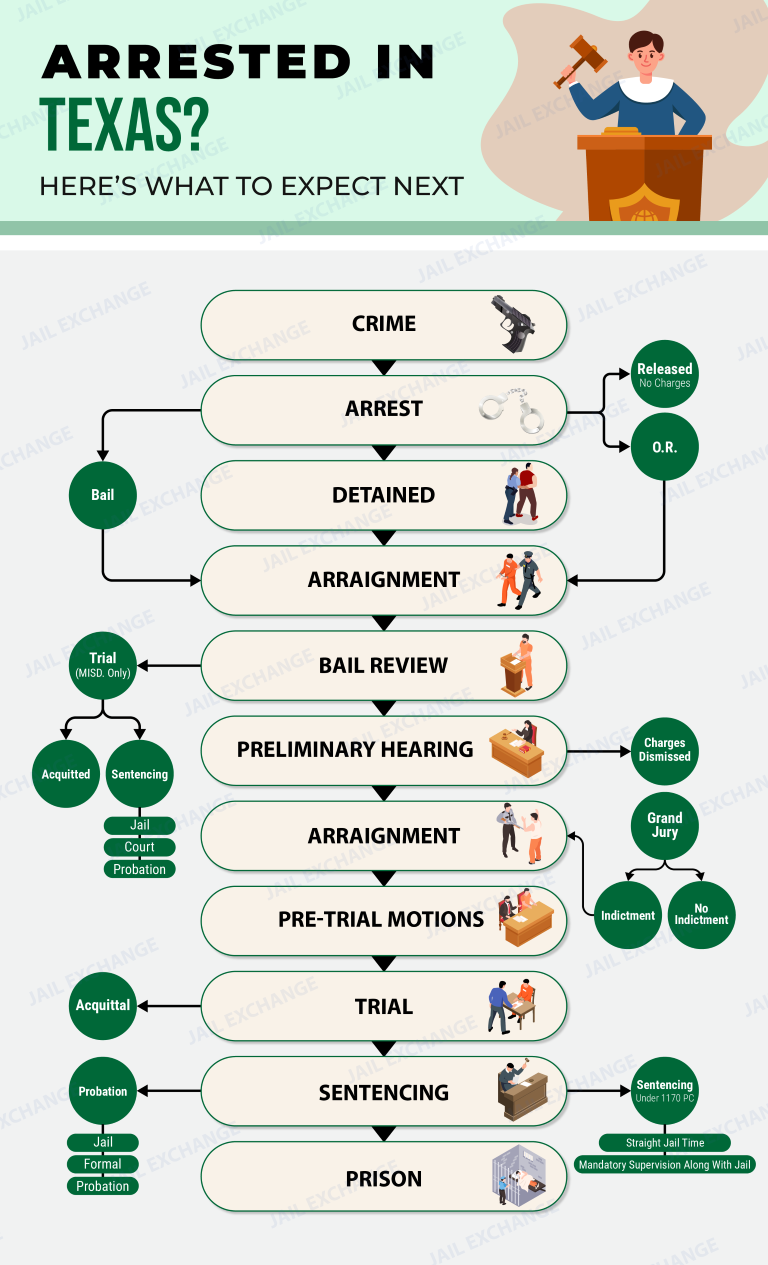
Phone 830-769-3434 at any hour and ask for Booking. Three things to learn on that call: each charge, whether a magistrate has already set bond, and the dollar figure. After release, the case moves to court, and our criminal court page walks you through it.
1. After an Atascosa County arrest, who sets bail and when?
Bail is a magistrate's job. Article 15.17 of the CCP gives the jail just 48 hours to bring each arrested adult before one. Jails may use a video hookup for this. The list of who can serve as one is long: justices of the peace, municipal judges, county judges, district judges and several more (CCP 2A.151).
Booking at 830-769-3434 can tell you when your person will be seen. In that short hearing, expect three things:
- The person hears the charge and the warnings, including the right to remain silent.
- The magistrate asks whether a court-appointed attorney is wanted, then helps complete that form.
- Bail gets decided within that same 48-hour window, using the least strict terms that would still work for this one person (CCP 17.028).
Any Class B misdemeanor or heavier charge requires a public safety report before the magistrate decides. Think of it as a record summary: it gives neither a risk rating nor a suggested amount (CCP 17.021, 17.022). Magistrates who handle felonies and jailable misdemeanors need state bail training first (CCP 17.024).
↑ Back to the question list2. Cash, surety or signature bond: which can be set?
Texas law has bail bonds, backed by cash or by a surety, plus personal bonds, backed by a promise (CCP 17.01 to 17.03). In practice, Jourdanton families run into three forms:
- Cash bond. Somebody deposits the whole amount with the court. That money can return later if the person keeps showing up.
- Surety bond. Here a licensed bail company backs the full sum with the court. What the family pays that company is its fee, and it is not refunded.
- Personal bond. The person signs, pledging to be at every court date. No upfront cash is involved.
Any bond may carry rules. Two common ones are drug testing and staying away from the alleged victim. Drunk driving bonds may need an ignition interlock, which makes the driver blow clean before the engine starts. Article 17.441 requires one for intoxication manslaughter, intoxication assault, any second DWI, and a DWI where a child was riding along.
Some charges rule out a personal bond. These include a long list of violent crimes, a convicted felon with a gun, and a few kinds of protective order breach. Burglary, engaging in organized criminal activity and certain drug felonies form a separate group, where the trial judge must approve it (CCP 17.03).
Someone held on a ticket that carries only a fine may walk out with a written notice to appear instead of any bond (CCP 15.17(b)).
↑ Back to the question list3. How much is bail on common Atascosa County charges?
Texas uses no single statewide price list for bail. Every amount is picked person by person. When picking it, the magistrate must think about (CCP 17.15):
- Whether the amount will bring the accused back for court.
- Making sure bail is never used to oppress.
- What crime is charged and the facts claimed.
- How much money the accused really has.
- The safety of any victim, of police and of the community.
- Criminal record and citizenship status.
Article 17.033 sets the only dollar caps. They cover an arrest made with no warrant when probable cause stays undecided past the deadline. On a misdemeanor, the jail must release by the 24-hour mark, with bond no more than $5,000. On a felony, the release deadline is the 48-hour mark, with bond no more than $10,000. A person too broke to post those sums gets a personal bond.
In justice and municipal courts, fine-only Class C cases normally go on a personal bond (CCP 45A.107). To hear the actual figure set for your person, ring Booking at 830-769-3434.
↑ Back to the question list4. Campbell Avenue jail: what are the steps to post bond?
The lockup sits with the Sheriff's Office at 1108 Campbell Avenue, Jourdanton, TX 78026. A simple order of steps:
- Dial 830-769-3434, say you need Booking, then give the name from the person's driver's license and their birthday.
- Jot down the bond set on each charge. Also ask if any outside agency has a hold.
- Find out where a cash bond gets paid and what payment types Booking takes right now.
- Going through a bondsman? Sign with them first. Then carry exact cash or a money order for the state bond fee, which is $15 per surety bond and $30 at most.
- Have a photo ID with you, and hang on to each receipt.
Releases happen twice daily, at 8:00 a.m. and 10:00 p.m., so time your ride. For a face-to-face meeting with Sheriff's staff, appointments run weekdays from 9:00 a.m. to 5:00 p.m.
↑ Back to the question list5. Will the District or County Clerk accept a bond?
Start with the jail. Once a case reaches a court, that court's clerk can explain whether bond paperwork or money passes through its counter. Both clerks work at the courthouse:
- District Clerk, for felonies: 1 Courthouse Circle Drive, Suite 4-B, Jourdanton, TX 78026, 830-769-3011. Monday through Thursday 8:00 a.m. to 4:30 p.m., Friday until 4:00 p.m., shut each day from noon to 1:00 p.m.
- County Clerk, for jailable misdemeanors: 1 Courthouse Circle Drive, Suite 102, Jourdanton, TX 78026, 830-767-2511. Weekdays 8:00 a.m. to 4:30 p.m.
Have the case number in front of you. Ask about the amount, the payment rules at that window, and who tells the jail once it's done. Our court page lists the four JP courts that handle Class C tickets.
↑ Back to the question list6. What payment does the Sheriff's Office accept or refuse?
The Sheriff's website spells out these money rules:
- Each surety bond carries a $15 state fee, payable in exact cash or a money order only.
- The lobby kiosks accept bills or a card, but they load jail accounts and phone time. Bonds are a separate matter.
- Staff won't take cash or money orders handed in for an inmate's account.
- Mailing cash is never allowed.
Call Booking at 830-769-3434 before you drive over, and confirm how the bond itself can be paid. Bondsmen set their own rules on how you pay their fee.
↑ Back to the question list7. How do bail bondsmen work in Atascosa County?
The Census Bureau puts the county at about 53,590 residents (July 1, 2025 estimate). Texas only forces counties of 110,000 or more to run a bail bond board, though smaller ones are free to create one (Occ. Code 1704.002). No board? Then the law allows the sheriff to post the sureties it finds eligible (CCP 17.141). The Sheriff's Office at 830-769-3434 can tell you which bondsmen it takes.
- No state limit exists on a bondsman's fee, so shop around.
- Whatever cash or property you give a bondsman, insist on a receipt; board counties make it a legal duty (Occ. Code 1704.305).
- In a county with a board, Occ. Code 1704.304 says a bondsman can't solicit customers inside a jail.
- When all the cases end, send a written request for your collateral. Where a board exists, thirty days is the limit for returning it (Occ. Code 1704.301).
- Whoever is defense counsel of record may write the bond, too (Occ. Code 1704.163).
A bondsman can return the person to jail. Before doing so, the bondsman notifies the defense lawyer (felony prosecutors get notice as well), then files a sworn form (CCP 17.19). Read your bond contract so you know when this can happen.
↑ Back to the question list8. Why might the jail still hold someone after bond?
It happens. Each bond covers one case only, and a few things can block the door:
- Family violence. If there is reason to think the abuse may go on, the person waits four hours past bond before leaving. A signed order may add up to 48 hours on top (CCP 17.291(b)).
- A parole violation. A parole "blue warrant" leaves the person in jail while the parole board's violation process plays out (Gov't Code 508.254(c)). Bond on the new case won't lift it.
- Another county's warrant. If the warrant came from elsewhere, a magistrate here may take the bail and ship the bond to that county's court (CCP 15.18).
- Probation. A fresh arrest can trigger trouble on probation. The county's adult probation office is at 1405 Campbell Avenue, Suite 102, Jourdanton, TX 78026, 830-769-3724.
- An ICE detainer. See the immigration answer further down.
Before any money changes hands, ring 830-769-3434 and have Booking go through each charge and hold.
↑ Back to the question list9. Is bail ever refused in a Texas case?
Texas starts from a right to bail for the accused. Capital murder, when the proof is evident, has always sat outside that right, per Tex. Const. art. I, sec. 11. Other sections allow denial after a hearing in a few more cases. They reach some repeat felony charges and a fresh felony committed on felony bond. They also reach breaking a safety rule of bond and some protective order violations.
Voters said yes to Proposition 3 in the November 2025 election, and it became sec. 11d. It targets a short list of violent crimes, among them aggravated robbery, murder, trafficking and indecency with a child. On that list, the amendment says bail "shall be denied" if, after a hearing, the state convinces the judge of flight risk or danger. The standard is a preponderance for flight and clear and convincing evidence for danger. Only prosecutors can ask, and a judge granting bail must give written findings.
S.B. 9 in 2025 added two more tools for the state. Prosecutors can now get a district judge to recheck a magistrate's felony bail (CCP 17.029). Under CCP 44.01, the state may also appeal, in listed violent cases, an amount it sees as too small. Appeals judges must rule within 20 days, and meanwhile the defendant stays in the county jail. The prosecutors for this county:
- Felonies: 81st Judicial District Attorney, 1105 A St., Floresville, TX 78114, 830-393-2200.
- County Attorney: 1405 Campbell Avenue, Suite 103, Jourdanton, TX 78026, 830-769-3573.
10. What helps get a bail amount reduced?
- Line up a defense lawyer. That lawyer asks the trial court, in writing, to change the bail.
- Gather papers that show roots here: recent paychecks, a rent receipt or deed, names of nearby relatives, and what the family can actually afford. Texas law says ability to pay matters (CCP 17.15).
- Suggest conditions to calm any worries, say reporting to a supervision officer or keeping away from the complaining witness.
Time also matters. Under article 17.151, the state's lack of readiness for trial earns a jailed defendant either signature release or a cut in the amount. The clock runs like this:
- 90 days, for a felony.
- 30 days, misdemeanors punishable by up to one year.
- 15 days, misdemeanors topping out at 180 days.
- 5 days, Class C fine-only cases.
There are exceptions. Also, some magistrates can't reduce a bail a district judge already set (CCP 17.092). For felony case files, call the District Clerk, 830-769-3011.
↑ Back to the question list11. Atascosa County public defender: who qualifies?
Ask the magistrate for counsel. Jail staff forward the request to the appointing authority inside 24 hours. In smaller counties such as this one (under 250,000 residents), judges have three working days, counted from when the form lands, to name a lawyer (CCP 15.17, 1.051). Next, the attorney makes a first attempt to contact the client, due one working day later (CCP 26.04).
Public defense here runs through Atascosa Area Advocates, the public defender's office:
- 607 W. Oaklawn, Pleasanton, TX 78064, 830-767-0060. Weekdays 8:00 a.m. to 5:00 p.m.
Every Texas county files a plan for assigning lawyers to people who can't pay. Read it with the Texas Indigent Defense Commission plan search. That commission's office: 209 West 14th Street, Room 202, Austin, TX 78701, 512-936-6994.
↑ Back to the question list12. Which courts handle Atascosa County cases?
Nearly all of them sit in Jourdanton. Only the clerks post office hours.
- 81st and 218th District Courts hear felonies. Files: District Clerk, 1 Courthouse Circle Drive, Suite 4-B, Jourdanton, TX 78026, 830-769-3011.
- County Court at Law hears Class A and Class B cases: 1405 Campbell Avenue, Suite 104, Jourdanton, TX 78026, 830-769-4232. Its files are kept by the County Clerk, 830-767-2511.
- Justice of the Peace, Precinct 1: 2136 2nd St., Pleasanton, TX 78064, 830-569-2801.
- Precinct 2: 1567 FM 3175, Lytle, TX 78052, 830-772-5828.
- Precinct 3: 2240 Hwy 16 N, Jourdanton, TX 78026, 830-769-2074.
- Precinct 4: 744 US 281 S, Pleasanton, TX 78064, 830-569-6614.
- Pleasanton Municipal Court, for city citations: 830-569-5941. Ask staff for the courtroom's street address.
- U.S. District Court, for federal crimes: 262 West Nueva Street, Room 1-400, San Antonio, TX 78207, 210-472-6550.
13. How do cash bail refunds and forfeitures work?
Keep the receipt safe, since the refund goes to whoever it names once the case wraps up with all bond terms followed (CCP 17.02). A clerk can keep 5% (no more than $50), though only after the judge enters a conviction or deferred adjudication. Deposited cash may also be applied to any fine or cost the court imposes (CCP 17.53). Bring ID to collect.
If the person skips court, forfeiture begins with a judgment nisi (CCP 22.02). The bondsman may escape paying when the person is caught and jailed again within a set time: 180 days for a misdemeanor case, 270 days for a felony case (CCP 22.13). Failure to appear can also bring its own bail jumping charge (Penal Code 38.10), which adds to the trouble.
Refunds are handled by the clerk of whichever court has the case: District Clerk 830-769-3011 on felony cases, County Clerk 830-767-2511 on misdemeanors.
↑ Back to the question list14. How are jail balances and personal things returned?
Releases are at 8:00 a.m. and 10:00 p.m., so plan ahead. Call 830-769-3434, ask for Booking, and find out how any leftover balance is paid back and when the person's things can be picked up.
Bring ID with your photo. Collecting for the person? Ask Booking whether they must sign a release. For deposits and refunds of balances, read our jail money page before you go.
↑ Back to the question list15. Federal charges after an Atascosa County arrest?
A federal case from Pleasanton, Poteet or anywhere else in the county goes to San Antonio, in the Western District of Texas. Clerk: 262 West Nueva Street, Room 1-400, San Antonio, TX 78207, 210-472-6550.
- A federal magistrate judge decides whether release is safe, at a detention hearing that usually comes at the first appearance (18 U.S.C. 3142). Federal court uses no bondsmen at all.
- The U.S. Marshals Service keeps watch over federal prisoners awaiting trial: 262 West Nueva Street, Room 2-300, San Antonio, TX 78207, 210-332-6800. Ask that office where your person is being held.
- Federal Public Defender: 300 Convent Street, Room 2300, San Antonio, TX 78205, 210-472-6700.
- For anyone already sentenced to federal prison, use the Federal Bureau of Prisons inmate locator.
16. Does a paid bond end an ICE detainer?
A bond on the local charge leaves the detainer in place. How it plays out:
- ICE starts the process by sending the jail its Form I-247A.
- On the strength of that request, Booking can keep the person up to 48 hours after they would otherwise be released (8 CFR 287.7(d)).
- By Texas statute, the jail must comply and must notify the detained person. Showing citizenship or lawful immigration status ends the duty; a Texas driver's license can serve as that proof (CCP 2A.060). The duty dates to the 2017 law called S.B. 4.
- S.B. 8, a 2025 statute, says every Texas sheriff in charge of a jail needs to request and work out a 287(g) arrangement with ICE. Their cutoff date is December 1, 2026. Phone 830-769-3434 to ask where the Sheriff's Office stands.
- Next, ICE agents collect the person from the jail. Its San Antonio Field Office covers south central Texas: 3523 Crosspoint Drive, San Antonio, TX 78217, 210-564-3300. People it detains may be taken to places like the Dilley Immigration Processing Center, 300 El Rancho Way, Dilley, TX 78017, 830-378-6500, or the Karnes County Immigration Processing Center, 409 FM 1144, Karnes City, TX 78118, 830-254-2000.
- Search by name and birth country in the ICE Online Detainee Locator.
17. Which state system holds someone after a prison sentence?
People sentenced on a state jail felony serve that time in a state jail. Bigger felonies go to state prison, and the prisons are run by TDCJ. Sections 12.31 through 12.35 of the Penal Code give each range. New arrivals are classified at intake, then sent on to a unit that suits them.
Search the TDCJ inmate search for people in state prisons today. It lags behind: TDCJ updates it on working days, and each entry is at least 24 hours old. There is more on our Texas state prisons page for families with someone headed to TDCJ.
↑ Back to the question list18. Arrested teen: how does juvenile court handle it?
Texas juvenile courts take cases for children ages 10 through 16. Once a person turns 17, adult court handles new charges (see Family Code 51.02). Officers have a duty under Family Code 52.02 to contact a parent without delay.
Held youths are entitled to a detention hearing before the second working day ends. Weekend timing matters: when a youth is detained on a Friday or Saturday, it happens sooner. Family Code 54.01 has the court appoint the youth an attorney ahead of time. The juvenile judge, not a bondsman, decides on release.
The county's own youth detention site is the Atascosa County Juvenile Justice Center, 1511 Zanderson Ave., Jourdanton, TX 78026, 830-769-3900. It is staffed 24 hours, and its lobby opens weekdays 8:00 a.m. to 8:00 p.m.
↑ Back to the question listGetting someone out of the Atascosa County Jail on bond
No one booked on Campbell Avenue waits longer than 48 hours to see a magistrate. The magistrate sets the bond amount and its conditions, such as no contact with a victim, an ignition interlock or a curfew. Families then choose: put up the whole amount in cash, pay a licensed bondsman a premium to sign a surety bond, or ask the judge for a personal bond where the charge permits.
On top of the bond itself, the Sheriff's Office collects a state bond fee of $15 for each surety bond, up to $30. The Sheriff's Office takes that fee only as exact change in cash or by money order. Bonds are posted through Atascosa Booking (830-769-3434, ext. 2231); another agency’s hold keeps the person jailed after bond, and the jail releases at 8 AM and 10 PM.
Bonded-out inmates leave at 8:00 AM or 10:00 PM, whichever comes next.
Atascosa County Jail visiting schedule
In-person visits at 1108 Campbell Avenue, Jourdanton, in effect since July 1, 2023:
| Day | Who can be visited | Hours |
|---|---|---|
| Tuesday | Women | 1:00–4:00 PM and 5:00–7:00 PM |
| Thursday | Men | 1:00–4:00 PM and 5:00–7:00 PM |
| Saturday | Women | 1:00–4:00 PM and 5:00–7:00 PM |
| Sunday | Men | 1:00–4:00 PM and 5:00–7:00 PM |
Visits run 20 minutes, and only names already on the inmate's approved list are called. An inmate who is at court, on a trusty job, in an attorney visit or in a program such as Bible study cannot take a visit at that time. Jail line: 830-769-3434.
Under the August 2026 visitor rules, visitors 17 and older must bring a government-issued photo ID. Anyone 16 or younger must come with an adult. Keep phones and other electronics outside.

NCIC Video Visitation provides a secure online platform that enables families and loved ones to conduct scheduled face-to-face video visits with incarcerated individuals from home. Using an internet-connected smartphone, tablet, or personal computer equipped with a webcam, visitors can connect directly without traveling to the facility.
Important: Advance Registration and Visitor Clearance Required
Detention centers do not permit unscheduled or unverified video sessions. Correctional facilities require prospective visitors to submit government-issued photo identification and receive administrative clearance before booking an appointment, an approval process that can take up to 48 hours depending on facility staffing. You should verify your visitor approval status with the facility prior to scheduling. If you do not register well in advance, you will miss your loved one's scheduled visiting window for the week.
Step-by-Step Instructions to Register and Schedule a Video Visit
- Visit NCIC Scheduling and sign into your account.
- Register your visitor profile and upload a clear photograph of your government-issued ID (driver's license or passport) for facility background review.
- Wait for email notification confirming facility visitor approval.
- Select Video Visitation, choose the detention facility, and select the inmate.
- Browse the available schedule calendar, select an open time slot, and pay the visitation fee using a credit or debit card.
- Log into the website or mobile app 10 minutes prior to the start time on a device with a functioning camera, microphone, and reliable high-speed internet connection.
What the Inmate Needs to Do
The inmate receives a visitation notification on their housing unit video kiosk or terminal. At the appointed time, they log in with their PIN and sit before the terminal. Inmates and visitors must strictly observe jail dress and conduct rules; sessions are monitored by staff and will terminate immediately upon any violation.
Official Provider: NCIC Official Website
Customer Service Telephone: 1-800-943-2189
Support Hours: 24 hours a day, 7 days a week, 365 days a year
Supported Languages: English and Spanish
Other Services Provided by NCIC Inmate Communications
In addition to Remote Video Visitation, NCIC provides calling and digital messaging services at participating facilities:
- Prepaid Phone Calling Accounts: Prepay for phone calling credits so your loved one can call your telephone directly.
• Learn more on our website: Prepaid Calling Accounts Guide | • Visit official vendor page: NCIC Prepaid Calling - Inmate Messaging Services: Send electronic messages and photos directly to an inmate's housing unit terminal.
• Learn more on our website: Inmate Messaging Guide | • Visit official vendor page: NCIC Messaging
Judges, clerks and lawyers for Atascosa County cases
Felony bench – 81st and 218th Districts: Judge Jennifer Dillingham (81st) and Judge Russell Wilson (218th), 1405 Campbell Ave, Suite 101, Jourdanton, TX 78026, 830-769-3750. Criminal court coordinator: Norma Villanueva. Court website.
County Court at Law (misdemeanors): Judge Bob Brendel, 1405 Campbell Ave, Suite 104, 830-769-4232. Court calendar.
District Clerk (felony files): Margaret E. Littleton, 1 Courthouse Circle Dr, Suite 4-B, 830-769-3011. Open Monday–Thursday 8:00 AM–4:30 PM and Friday until 4:00 PM, closed noon–1:00 PM. E-filing is required in all civil and criminal cases.
County Clerk (misdemeanor files): Theresa Carrasco, 1 Courthouse Circle Dr, Suite 102, 830-767-2511.
Felony prosecutor: 81st Judicial District Attorney Audrey Louis. Main office: Floresville (1105 A St., 78114), 830-393-2200, 81stda.org.
Misdemeanor prosecutor: County Attorney Molly Groesbeck Solis, Suite 103 at 1405 Campbell Ave, 830-769-3573.
Appointed defense – Atascosa Area Advocates: the public defender's office of Chief Stephanie Esparza, 607 W. Oaklawn, Pleasanton, TX 78064, 830-767-0060, Monday–Friday 8:00 AM–5:00 PM.
Justices of the Peace (Class C cases, magistrate duty): Pct. 1 Felix Herrera III, Pleasanton, 830-569-2801; Pct. 2 Wayne S. Vaughn, Lytle, 830-772-5828; Pct. 3 Willie Leal Jr., Jourdanton, 830-769-2074; Pct. 4 Russell Prasifka, Pleasanton, 830-569-6614.
An appeal from Jourdanton is heard by San Antonio's Fourth Court of Appeals. County Judge Weldon P. Cude (830-769-3093) schedules probate hearings through his court coordinator.

JailATM Commissary Ordering allows family members to purchase pre-approved snack boxes, meat and cheese selections, hygiene bundles, and seasonal gift care packages sent directly to an incarcerated loved one. Each package is tailored to comply with local facility security rules, ensuring items clear intake smoothly without being rejected at the loading dock.
Important: Package Deadlines and Delivery Windows Vary
Detention centers do not all follow identical package distribution schedules. Some facilities allow weekly orders while others restrict shipments to bi-weekly or monthly windows, and spending limits differ widely across institutions. You should confirm the facility's active cutoff schedule and order allowances by calling them directly. If an order is placed after the weekly processing deadline, it will be held until the following distribution cycle, leaving your loved one waiting an extra cycle for fresh supplies.
Step-by-Step Instructions to Place a Commissary Package Order
- Confirm the inmate's legal first and last name, date of birth, and assigned booking identification number.
- Navigate to deposits.jailatm.com/webdeposits/ and sign into your account.
- Select Commissary Packs or Gift Packs from the service menu.
- Choose your state and detention center to open the jail's authorized product catalog.
- Search for the inmate to link the order to their active housing record.
- Browse available food bundles, hygiene kits, and clothing options, adding items up to the facility's allowed spending limit.
- Enter your billing details, complete checkout with a credit or debit card, and save your confirmation receipt.
What the Inmate Needs to Do
The inmate does not need an active online account to receive care packages. JailATM fulfills the order in tamper-evident security containers and delivers it directly to the facility commissary department. Jail staff inspect the shipment and deliver the items during regular housing unit commissary distribution, where the inmate signs for receipt.
Official Provider: JailATM Official Website
Customer Service Telephone: 1-877-810-0614
Support Hours: Monday – Friday, 8:00 AM – 5:00 PM CST
Supported Languages: English and Spanish
Other Services Provided by JailATM
In addition to Commissary Gift Packs, JailATM provides several other communication, financial, and visitation services at participating facilities:
- Inmate Trust & Commissary Money Deposits: Send money directly into an inmate's jail trust account for independent commissary spending.
• Learn more on our website: Inmate Trust Deposits Guide | • Visit official vendor page: JailATM Trust Deposits - Digital Messaging & Picture Sharing: Send electronic messages and photos directly to an inmate's housing unit kiosk.
• Learn more on our website: Digital Messaging Guide | • Visit official vendor page: JailATM Messaging - Remote Video Visitation: Schedule and join live video visits from home using your computer or smartphone.
• Learn more on our website: Video Visitation Guide | • Visit official vendor page: JailATM Video Visits
JailATM provides a secure electronic payment portal that allows friends and family members to deposit funds directly into an incarcerated person's jail trust and commissary account. Deposited money provides the financial balance needed for your loved one to purchase personal hygiene items, snacks, over-the-counter medical sundries, and correspondence supplies from the facility commissary.
Important: Facility Deposit Rules and Window Intake Vary
Once a person is booked and moved to a housing unit, facilities do not always allow cash drop-offs or phone payments directly to the jail window. Some might and you should confirm this by calling the facility and asking. But if you do not register online and fund your loved one's trust account immediately, they may be forced to wait days or weeks for standard paper processing, leaving them without essential soap, clean undergarments, basic medical sundries or snacks.
Step-by-Step Instructions to Register and Deposit Funds
- Obtain the inmate's legal first and last name, date of birth, and assigned facility booking ID number.
- Navigate to deposits.jailatm.com/webdeposits/ on your computer or mobile device.
- Click Sign In or Register to set up your verified user account using your email address and password.
- Select the state and the detention facility where the inmate is currently housed.
- Search for the inmate using their ID number or legal last name to confirm an exact roster match.
- Enter your desired deposit dollar amount and review the calculated transaction and convenience fees.
- Input your debit or credit card billing details, complete payment authorization, and save your digital receipt.
What the Inmate Needs to Do
The inmate does not need an internet account to receive funds. Once the electronic transaction clears, the balance posts directly to their jail trust ledger according to facility accounting schedules. The inmate can review their updated balance at a dayroom pod kiosk or on their weekly trust statement and place orders on their regular commissary day.
Official Provider: JailATM Official Website
Customer Service Telephone: 1-877-810-0614
Support Hours: Monday – Friday, 8:00 AM – 5:00 PM CST
Supported Languages: English and Spanish
Other Services Provided by JailATM
In addition to Trust & Commissary Money Deposits, JailATM provides several other communication, store, and visitation services at participating facilities:
- Commissary Gift Packs & Store Ordering: Order pre-approved snack boxes, food packages, and hygiene bundles sent directly to the jail.
• Learn more on our website: Commissary Gift Packs Guide | • Visit official vendor page: JailATM Store Orders - Digital Messaging & Picture Sharing: Send electronic messages and photos directly to an inmate's housing unit kiosk.
• Learn more on our website: Digital Messaging Guide | • Visit official vendor page: JailATM Messaging - Remote Video Visitation: Schedule and join live video visits from home using your computer or smartphone.
• Learn more on our website: Video Visitation Guide | • Visit official vendor page: JailATM Video Visits
Deposit Money for an Inmate in the Atascosa County Jail
Writing out a money order for someone at the Atascosa County Jail in Jourdanton? Unmarked money orders are sent back, so check each point:
- Payable to Inmate Trust.
- Marked clearly with the words INMATE TRUST FUND.
- The inmate's full name and SO number written on it.
- Mailed to Atascosa County Jail, 1108 Campbell Ave, Jourdanton, TX 78026. The PO Box 591 mail-scanning address in Longview is the wrong place for it.
That is one of three options, and one of the three is available day or night. The other two:
Online. JailATM takes deposits and lists its fees before you pay.
In the lobby. The commissary and phone kiosks inside the Sheriff's Office lobby, 1108 Campbell Avenue, accept cash or a credit or debit card. Enter the inmate's SO number so the money doesn't land with someone who has a similar name.
Cash should never go in the mail, and staff will not accept cash or money orders handed over in person.
Since January 1, 2025, personal letters for the Atascosa County Jail in Jourdanton go to a mail-scanning service, not to the jail. The inmate reads each scanned page on a kiosk or a tablet in the cell, and the paper is destroyed afterward. The Sheriff uses scanning so that paper soaked in drugs and dried can't be smuggled in. Lawyers, doctors and publishers still mail to the jail on Campbell Avenue.
Personal letters (scanned):
Inmate's Full Name & SO#
Atascosa County Jail
PO BOX 591
Longview, Texas 75606
Legal and medical mail, books, magazines and money orders:
Inmate's Full Name & SO#
Atascosa County Jail
1108 Campbell Ave
Jourdanton, TX 78026
- Required on the envelope: The inmate's name with their SO number (the Sheriff's Office booking number), and your return address.
- No photos: Even one photo in the envelope sends the whole letter back to you.
- Paper: 8½ x 11 inches or smaller, and five pages at most. Anything longer is mailed back unscanned.
- Write on one side: The back of a page is not scanned, and a letter with writing there is returned.
- Keep the originals at home: Nothing mailed to the scanning box is ever sent back.
- Turned away at the scanning box: Books, magazines, newspapers, bulk mail, legal mail and medical mail. Send those to the Jourdanton address.
- Money orders: Make them payable to "Inmate Trust", write INMATE TRUST FUND on them, and put the inmate's full name and SO number in the memo. Unmarked money orders are returned, and they must never go to the scanning box. Cash can't be mailed, and the jail takes no cash or money orders dropped off in person. The lobby kiosks take cash or cards, or you can deposit online.
The jail also has electronic messages, which reach the same kiosk.
NCIC Inmate Communications provides telecommunications services that allow incarcerated individuals to place outbound voice calls from dayroom telephones to family and friends. Because correctional facilities do not permit incoming phone calls, establishing an NCIC prepaid calling account connects calls directly to your cell phone or landline without being blocked by wireless carriers.
Important: Mobile Phones Automatically Block Inmate Calls
Cellular phone carriers automatically reject standard collect calls originating from jail phone systems. While some residential landlines might permit direct monthly billing, mobile devices and internet-based telephone lines require an active prepaid calling balance, which you can verify by checking with your provider. If you do not register online and fund an NCIC account right away, your loved one will receive an automated disconnect announcement when attempting to call your number.
Step-by-Step Instructions to Register and Fund an Account
- Visit account.ncic.com or call NCIC customer care at 1-800-943-2189.
- Click Create Account and register using the primary 10-digit telephone number where you want to receive calls.
- Select the state and correctional facility where your loved one is currently detained.
- Search for and add the inmate using their full legal name or booking ID number.
- Select your deposit dollar amount and enter your debit or credit card billing details.
- Submit payment and ensure your mobile phone settings allow calls from automated or unfamiliar correctional numbers.
What the Inmate Needs to Do
The inmate dials your 10-digit number from any dayroom telephone and keys in their assigned PIN. The automated system verifies that your phone number has an active prepaid balance and prompts you to press a digit to accept the call. All personal telephone conversations are recorded and monitored by facility staff.
Official Provider: NCIC Official Website
Customer Service Telephone: 1-800-943-2189
Support Hours: 24 hours a day, 7 days a week, 365 days a year
Supported Languages: English and Spanish
Other Services Provided by NCIC Inmate Communications
In addition to Prepaid Phone Calling, NCIC provides several other digital communication and visitation services at participating facilities:
- Remote Video Visitation: Schedule and join live face-to-face video visits from home using your computer or smartphone.
• Learn more on our website: Video Visitation Guide | • Visit official vendor page: NCIC Video Visits - Inmate Messaging Services: Send electronic messages and photos directly to an inmate's housing unit terminal.
• Learn more on our website: Inmate Messaging Guide | • Visit official vendor page: NCIC Messaging
NCIC Inmate Messaging allows friends and family members to exchange electronic text messages and digital photos directly with an incarcerated loved one. Messages are delivered electronically to housing unit terminals and tablets within hours, avoiding the lengthy transit times associated with physical postal mail.
Important: Electronic Messaging Screening Rules Differ
Inmates cannot receive incoming phone calls, and traditional postal mail rules differ across correctional agencies. While some facilities still allow regular handwritten letters, many jails have transitioned to digital-only mail scanning or restrict postal delivery, which you can verify by checking facility rules. If you do not register online and purchase messaging credits immediately, your loved one may face lengthy periods without direct written contact from family.
Step-by-Step Instructions to Register and Send Messages
- Go to account.ncic.com and sign in or create a user profile.
- Select Messaging from your dashboard options.
- Select your state and detention center, then search for the inmate using their full legal name or booking ID.
- Purchase a messaging credit bundle using a debit or credit card.
- Type your message in the composition window and attach approved JPEG photos if permitted by the facility.
- Submit your message to the facility's screening queue.
What the Inmate Needs to Do
All electronic correspondence is screened by facility staff before delivery. Once approved, messages appear in the inmate's inbox on their housing unit terminal or tablet. The inmate opens the message, reads your note, and types an electronic reply using their available credits.
Official Provider: NCIC Official Website
Customer Service Telephone: 1-800-943-2189
Support Hours: 24 hours a day, 7 days a week, 365 days a year
Supported Languages: English and Spanish
Other Services Provided by NCIC Inmate Communications
In addition to Inmate Messaging, NCIC provides calling and video visitation services at participating facilities:
- Prepaid Phone Calling Accounts: Fund a calling balance tied directly to your phone number.
• Learn more on our website: Prepaid Calling Accounts Guide | • Visit official vendor page: NCIC Prepaid Calling - Remote Video Visitation: Schedule and join live face-to-face video visits from your computer or smartphone.
• Learn more on our website: Video Visitation Guide | • Visit official vendor page: NCIC Video Visits
NCIC Inmate Communications deploys secure, corrections-grade handheld tablets to incarcerated individuals in county detention centers. Operating on a secure internal wireless network, these devices allow inmates to conduct remote video visits, make voice telephone calls, send electronic messages, stream music, read eBooks, and access self-help and educational resources directly from their housing pods.
Important: Tablet Hardware Deployment and Rental Rules Vary
Detention centers do not manage tablet distribution identically. While some agencies issue individual personal tablets to every detainee at booking, others utilize shared pod docking stations or restrict tablet use to specific dayroom hours, which you should confirm with the facility directly. Although core educational and legal resources are generally provided free of charge, sending messages, listening to music, or making phone calls from the tablet requires an active balance funded by outside contacts.
Step-by-Step Instructions to Support and Fund NCIC Tablets
- Verify that NCIC handheld tablets are active at your loved one's specific detention facility.
- Navigate to account.ncic.com on your computer or mobile device.
- Sign into your verified user account and link the inmate's legal name and booking ID number.
- Select Tablet Media / Messaging or Inmate PIN Debit to add funds to their available balance.
- Specify your deposit dollar amount, review convenience fees, and enter your credit or debit card billing details.
- Submit payment, save your confirmation receipt, and notify your loved one that their device balance is available.
What the Inmate Needs to Do
The inmate unlocks their assigned tablet using their PIN or biometric login. Their available balance appears on the screen, allowing them to download songs, read digital books, write messages, and communicate with approved family members. Devices are returned to charging carts during quiet hours and shift counts for overnight recharging.
Official Provider: NCIC Official Website
Customer Service Telephone: 1-800-943-2189
Support Hours: 24 hours a day, 7 days a week, 365 days a year
Supported Languages: English and Spanish
Other Services Provided by NCIC Inmate Communications
In addition to Tablet Services, NCIC provides several other communication, financial, and visitation options:
- Prepaid Phone Calling Accounts: Prepay for phone calling credits so your loved one can call your telephone directly.
• Learn more on our website: Prepaid Calling Accounts Guide | • Visit official vendor page: NCIC Prepaid Calling - Remote Video Visitation: Schedule and join live face-to-face video visits from your computer or smartphone.
• Learn more on our website: Video Visitation Guide | • Visit official vendor page: NCIC Video Visits - Inmate Messaging Services: Send electronic messages and photos directly to an inmate's terminal or tablet.
• Learn more on our website: Inmate Messaging Guide | • Visit official vendor page: NCIC Messaging - Inmate Trust & Commissary Money Deposits: Send canteen funds directly into an incarcerated person's jail trust account.
• Learn more on our website: Trust Deposits Guide | • Visit official vendor page: NCIC Trust Deposits
Atascosa County Juvenile Facilities
- Jail (Main): 830-769-3434
- Sheriff: 830-769-3434
The Atascosa County Jail serves the following cities and towns of Atascosa County: Charlotte, Jourdanton, Lytle, Pleasanton and Poteet.