
Burnet County Jail
Burnet County Jail
Jail Phone Number
512-715-8600How do you find someone who is in jail in Burnet County?
Search for information about an inmate in the Burnet County Jail and view their jail mugshot:
- Review the Jail Roster Username: visitor – Password: visitor, or
- Call the Burnet County Jail at 512-715-8600
- Look up the offender's criminal charges
- Find out their bond, and
- View their public mugshot in the roster.
If you cannot find the mugshot of the offender that has been arrested, it is because Burnet County or the state of Texas has recently changed their policy regarding publicly posting them in the jail roster. However, you can write the jail at the following address and request a copy of an inmate's mugshot be mailed or sent by email to you. Make sure to include your email address in all correspondence.
Mail to:
Burnet County Jail
900 County Lane
Burnet, TX 78611
Attention: Media Relations - Inmate Mugshot Request
Mail, click on the link below, or call the facility at 512-715-8600 for the information you are looking for.
Burnet County Jail Inmate Search
How do I find out if someone was arrested in Burnet County?
There are five ways to find out if someone was arrested in Burnet County:
1. Look them up on the official jail inmate roster. (user ID: visitor / password: visitor)
2. Look them up on vinelink.com, a national inmate tracking resource.
3. Call the jail at 512-715-8600. This is available 24 hours a day.
4. Write or visit the jail and request information.
You can reach them at:
Burnet County Jail
900 County Lane
Burnet, TX 78611
5. Do a search online using this person’s name, the town or city you think they were arrested in, and the crime you think they were arrested for. Sometimes the local newspaper, police department or sheriff’s office will have a daily police blotter published on their website.
What information is included in jail booking records and the jail roster?
Jail booking records, also known as the jail roster, typically include the following information:
• Full name of the inmate
• Inmate's physical characteristics (age, sex, height, weight, etc.)
• Inmate’s mugshot(s)
• Booking number, Inmate ID#, Jacket #, etc.
• Booking date and time
• Charges or offense details – the applicable statute
• Bond or bail amount, if applicable
• Court date, if set, plus the court name and location
• Previous arrests in this jurisdiction, conviction details, and sentence
- Note that not all this information will be included. Most booking records and jail inmate rosters contain only the basic information such as name, date of arrest and the criminal charge.
- The amount and quality of the information depends on the state’s laws and the jail’s policies.
How often are jail booking records and rosters updated?
Most jails update their records at least once per day. Some booking information is updated as often as every 15 minutes in the roster. From the time a person is first arrested until when they are booked in the jail, it can be as short as a couple of hours, up to 24 hours, or even longer if they were arrested during a major event such as a protest or riot in which hundreds of people were arrested at the same time.
How do I find an inmate in the Burnet County Jail?
There are seven ways to find an inmate in Burnet County or the Burnet County Jail:
1. Look them up on the official jail inmate roster. (user ID: visitor / password: visitor)
2. Look them up on vinelink.com, a national inmate tracking resource.
3. Call the jail at 512-715-8600. This is available 24 hours a day.
4. Call local police departments in Burnet County. Sometimes the local jails will hold recent arrestees for up to 72 hours before transporting them the Burnet County Jail.
5. Check with the jails in neighboring counties and look up their rosters. It is always possible they were arrested there instead of Burnet County.
6. Write or visit the jail and request information.
Burnet County Jail
900 County Lane
Burnet, TX 78611
7. Do a search online using this person’s name, the town or city you think they were arrested in, and the crime you think they were arrested for. Sometimes the local newspaper, police department or sheriff’s office will have a daily police blotter published on their website as well.
How do I find an inmate in a Texas state prison?
You can find an inmate in the Texas Department of Corrections by searching for them on the State Prison Locator, Vinelink.com (a nationwide inmate locator resource), or by calling the Department of Corrections.
How do I find an inmate in federal prison?
- The United States Bureau of Prisons maintains an up-to-date inmate locator where you can look up any inmate that has been in federal prison from 1982 to the present day.
- If they are currently in custody, you can see what institution they are in.
- If they are in transport, meaning they are being shuttled from one prison to another, that information will not be available. If they are no longer in custody, it will list their discharge date.
- Other information provided is their BOP Registry Number (inmate ID#), their race, age and release date.
- If they are in custody, there are links to how to visit them, send them money, communicating with them and sending the prison a concern you may have about them.
How do I find a detainee in an ICE facility?
- The US Immigration and Custom’s Enforcement maintains an up-to-date online detainee locator of all foreign detainees aged 18 and older that are in the custody of ICE.
- When searching by name, a detainee's first and last names are required and must be an exact match. When inputting a hyphenated last name into the Online Detainee Locator System, include the hyphen for the locator to find the individual (e.g., Doe-Smith).
- You can also search by using an A-number (Alien Registration Number) if you have it at the same link. The A-Number must be exactly nine digits long. If the A-Number has fewer than nine digits, add zeros at the beginning.
- You are also required to select the detainee's correct Country of Birth from the drop-down menu provided on the page.
NOTE: If an alien is arrested for a state crime, you will still be able to locate them in the police jail or the county jail where they were arrested. If it was a misdemeanor crime, they would do their time in the Burnet County Jail or the county jail where they were arrested and convicted.
If they were convicted of a Texas state felony and sent to state prison, and not deported, then you can locate them in the Texas state prison system.
How do I find an inmate in juvenile detention?
In the United States, a juvenile is a person under the age of 18. If a juvenile is arrested for a crime, it is unlikely that their name will be publicly listed on an inmate search page or detention center roster, or will be released to the public. Only the juvenile’s parents or legal guardians will be given that information.
If the crime is a serious felony such as Capital Murder, some states will release their name to the public, either when they are first arrested or after they are convicted. However, in general, it is unlikely that an inmate who is a juvenile will have their name released in any public way.
How can I see if someone is in jail or prison in Burnet County or the state of Texas?
For online searches, if you want to see if someone is in jail in Burnet County.
If you want a list of all the other county jail inmate searches in Texas.
If you want a list of all the county jails in the United States.
If you want to look up an inmate in any of the Texas state prisons. To look up the prisons in Texas.
How do I get information on someone in jail in Burnet County?
If you want detailed information on a particular inmate in in jail in Burnet County, and you can’t find it online in the jail inmate roster, your only other option is to either call the jail at 512-715-8600, go to the jail in person and ask, or write them at:
Burnet County Jail
900 County Lane
Burnet, TX 78611
That said, most jails will limit the amount of information that they give to the public about an inmate in their roster because the offender is considered innocent until proven guilty, and thus is afforded a certain amount of privacy.
Once an offender is convicted, you are far more likely to find out information about them.
If you are good at using Google, you can dig into a person’s past and learn as much information about anyone as someone in the media can.
You can also search a website that has all the public records about people. One of the best online websites we found will cost you only $1.00.
Who can I call to find an inmate in Burnet County?
To find an inmate in custody or ask about their roster in Burnet County call 512-715-8600 24 hours a day.
Does the jail or prison have to keep the inmate in the county or state where they are charged or convicted?
No. Even though 99.9% of all pre-trial and convicted inmates are kept in the state where they were arrested and/or convicted, they can be kept in any US jail or prison that will have them. This is seen in circumstances where a jurisdiction is overcrowded, or an inmate is moved for their safety. That said, a person must stand trial where they were arrested unless the presiding judge or prosecuting attorney agrees to move the offender’s trial to a different jurisdiction if it is likely they will not get a fair trial.
What if I can’t find an inmate and I know they are in custody in Burnet County?
If you know an inmate is in custody in Burnet County, and you can’t find them, it can mean one of several things:
1. Either you or the jail has the spelling of the inmate’s name inputted incorrectly.
2. The jail has not yet updated their booking information or roster.
3. The inmate has already been released.
4. The inmate has either been arrested or is being housed in another jail.
5. The inmate is underage; therefore, it is illegal to post their information, or the inmate you are trying to find had their age incorrectly listed as someone under age 18.
I know the person was arrested and in jail, but my search in the roster comes back as “no record found.” What happened?
Same answer as that above. If you know an inmate is in custody in Burnet County, but your search comes back in the roster as “no record found.”, it can mean one of several things:
1. Either you or the jail has the spelling of the inmate’s name wrong.
2. The jail has not yet updated their booking information or roster.
3. The inmate has already been released.
4. The inmate has either been arrested or is being housed in another jail.
5. The inmate is underage; therefore it is illegal to post their information, or the inmate you are trying to find had their age incorrectly listed as someone under age 18.
I was released from jail in Burnet County, but my record still shows. When will it go away?
If your record of arrest and booking is still showing online, even though you were released, it is because some jails allow that information to remain public indefinitely. Unfortunately, even though the charges against you may have been dropped, many jails will not erase that information from their public records voluntarily.
In a situation like this your only option will be to get an attorney and request they petition the court to force the jail to remove this information. That said, if you were in fact found guilty of the crime you were arrested for, it is unlikely they will remove the information surrounding your arrest and conviction.
An inmate’s family member just died; how can I let them know right away?
The death of a family member is one of the few times, if not the only time, that a jail will take a message for an inmate. Because of the sensitivity of the tragic news, when a family member has died, the news will be transmitted by a member of the clergy, a counselor or someone who is very high ranking within the jail.
Jail management understands that a sudden death of a loved one could cause a violent emotional response that jeopardizes the safety of staff or other inmates.
An inmate’s family member just died; will they be allowed to attend the funeral?
The death of a family member is one of the few times, if not the only time, that a jail will allow an inmate, whether it pre-trial or post-conviction, to be allowed outside of the jail. Even if they are allowed outside the jail, they will have to have at least two armed escorts. An inmate attending a funeral is an extraordinary cost, use of staff and potential danger to the public. That is why it is rarely allowed.
This is not always the case though, and whether an inmate can attend a funeral depends on the inmate’s security classification, whether the jail has the staff to handle it, official jail policy, whether or not the inmate has an attorney that can push the right people, including the judge overseeing the inmate’s case, etc.
What determines whether an inmate is placed in low or high security facilities?
An inmate’s security classification depends on the following:
1. The inmate’s current crime.
2. The inmate previous crimes.
3. The inmate’s history for violence within the walls of the facility.
4. The inmate’s gang affiliation.
5. The jail's current distribution of inmates.
What information is available about an inmate?
The information that a jail or court releases publicly about an inmate depends on the laws in the state, the policy of the jail, and the sheriff’s or warden’s individual decision.
Jail booking records and rosters can include more or less, the following information:
• Full name of the inmate
• Inmate's physical characteristics (age, sex, height, weight, etc.)
• Inmate’s mugshot(s)
• Booking number, Inmate ID#, Jacket #, etc.
• Booking date and time
• Charges or offense details – the applicable statute
• Bond or bail amount, if applicable
• Court date, if set, plus the court name and location
• Previous arrests in this jurisdiction, conviction details, and sentence
What is vinelink.com?
Vinelink, which you will see referenced when discussing public information about offenders and inmates, is a national public roster that both allows the public to look up and see the person’s status, plus be able to track their movements, whether it involves being transferred from one facility to another or being released from custody.
The tracking feature is especially helpful for those who are victims of, or witnesses to, a crime and fear that the release of an offender may be dangerous to them or someone close to them.
Anyone can register with Vine to receive automated notifications via email, text or phone. It is available in 48 states and 2,900 jails and prisons.
Here is a short video explaining why it started and how it works.
How do I find old Burnet County jail and inmate records from years ago?
To find jail records that go back many years really depends on how far you want to go back, however you would need to send a written request to the county sheriff as follows:
Burnet County Sheriff
Att: Jail Records
900 County Lane
Burnet, TX 78611
Let them know the inmate’s name, any aliases, date of birth, the date range that the inmate may have been incarcerated, the crime they were charged with/convicted of, and any other helpful information you can think of.
How can I have my jail record sealed?
To have your jail records sealed, you will have to have the crime you were convicted of expunged. You should know up front that not all crimes are eligible for expungement.
1. Hire a lawyer that specializes in expungement.
2. If your crime is eligible, they will contact the District Attorney's office in the judicial district where you were charged or convicted.
3. They will file a petition with the court where you were charged or convicted.
4. The entire process may take 1-2 years.
Where can I get Prison records from the state of Texas?
To get prison records from the state of Texas, you will need to send a written request to the state prison system in Texas.
Let them know the inmate’s name, any aliases, date of birth, the date range that the inmate may have been incarcerated, the crime they were charged with/convicted of, the name of the facility you believe they were incarcerated in, plus any other helpful information you can think of.
For inmate services and facility information such as:
- Directions
- Booking Process
- Visiting an Inmate
- Sending Money
- Mailing
- Emailing or Texting
- Receiving phone calls
- Bail Bond Information
- Court Information
Click the links above, or the button below.
Burnet County Bail and Release
From Bertram to Horseshoe Bay, an adult who is arrested and kept in custody waits at the Burnet County Jail, 900 County Lane, Burnet, TX 78611. The Sheriff runs this single jail, which also keeps prisoners for federal agencies. Below you will learn about the magistrate hearing held at the jail, each type of bond, licensed bondsmen, holds and refunds.
Confirm the booking before anything else. Enter a surname in the county's jail and court records search. Beyond that lookup, our Jail Roster page tracks who is inside today, the latest bookings, warrants, charges and mugshots. It also covers appointed defenders and reclaiming personal property.
Phone the jail at 512-715-8600. Ask three things. Is the magistrate hearing over yet? What bond goes with each charge? Is any hold standing in the way? Next, our court page traces where the case heads, and our Texas bail laws page spells out the rules every one of the 254 counties shares.
1. Who sets bail in Burnet County, and how fast does it happen?
A magistrate makes that call. Two days is the outside limit. The hearing, in person or on a video screen, must come within 48 hours (Code Crim. Proc. art. 15.17). Here, the county runs its Magistrate Office right inside the jail at 900 County Lane, Burnet, TX 78611. Dial 512-715-8600 and ask for that office. The appointment plan for the four counties of the 33rd and 424th districts lets the jail magistrate or any justice of the peace do this job.
During those few minutes in front of the magistrate, the person:
- hears the charge, plus the right to keep quiet and to have counsel;
- can say yes to a county-paid lawyer and get help with the paperwork;
- has a public safety report reviewed on any Class B or higher charge, a summary of records that carries no risk score (arts. 17.021, 17.022);
- gets a bail decision made for them alone, with the lightest terms that can still keep everyone safe (art. 17.028).
Should County Lane staff suspect mental illness, the magistrate hears about it within half a day (art. 16.22). And on any charge that could mean jail, only a magistrate who has finished Texas bail training may sign the release (arts. 17.023, 17.024).
↑ Back to the question list2. Which bonds can a Texas magistrate approve?
Texas uses the word "bail" for any release, paid or unpaid (art. 17.01). Families in the Highland Lakes area usually run into four kinds:
- Cash bond. The whole amount goes on deposit with the court. Most of it returns after the case closes (art. 17.02).
- Surety bond. A licensed bondsman vouches for every dollar, and the premium you pay is the bondsman's to keep.
- Attorney bond. The lawyer of record signs as surety, using a county form made for lawyers (Occupations Code ch. 1704).
- Personal bond. Zero dollars down. A signature binds the person to show up and follow each rule (art. 17.03).
Some charges rule out that last option. Article 17.03 bars it for offenses on the state's violence list, for felons with firearms, for the more serious terroristic threat charges and for certain broken protective orders. People already out on a violent case who pick up a fresh charge are also shut out. On burglary, organized crime and certain heavy drug felonies, that choice belongs only to the trial court. More detail waits on our statewide bail page.
↑ Back to the question list3. How much is bail on a typical charge here?
No Texas-wide price chart exists, so each figure starts with the magistrate's own judgment. Article 17.15 tells that judge to balance a short list of things:
- getting the person back to court without turning bail into a weapon against them;
- the charge itself and any harm or force involved;
- real proof of what the person and family could pay;
- how safe the victim, the deputies and Highland Lakes residents would be;
- prior convictions, pending cases and any record of skipping court;
- citizenship.
A handful of limits are written into the statutes. Someone picked up on a fine-only Class C charge may leave owing nothing, holding just a written promise and a court date (art. 15.17(b)). Article 17.033 covers warrantless arrests where probable cause goes unruled: the person walks by the 24th hour on a misdemeanor, at $5,000 or less, and by the 48th hour on a felony, at $10,000 or less. For the amount in an actual case, call the jail at 512-715-8600.
↑ Back to the question list4. Posting a bond at County Lane, step by step
The jail sits at 900 County Lane, Burnet, TX 78611. Coming from US-281, take Houston Clinton Drive, keep right at the Y onto Ellen Halbert Drive, and stay on it until County Lane. Work through this list:
- Ring 512-715-8600. Say who you are and who you are trying to bail out.
- Write down each bond amount, the charge it goes with and any hold staff mention.
- Find out where cash bonds get paid that day, what hours apply and which payment forms work.
- Using a bondsman? Choose from the county's licensed sureties list, because deputies cannot point you to one.
- Have a photo ID ready, and file away each receipt you are handed.
Staff process bonds first come, first served, and they can't promise a time the doors will open. Bring patience and a charged phone. General Sheriff's Office questions go to 512-756-8080.
↑ Back to the question list5. Can bond be handled at a courthouse or city court?
Most bonds start at the jail, but the clerks keep the case files and money once a case is filed. Call before you go, and ask if the office can take a bond on that case:
- District Clerk (felony files), Courthouse Annex North, 1701 E Polk Street, Suite 90, Burnet, TX 78611, 512-756-5450. Hours run 8 a.m. to 4 p.m. on weekdays. Its online case payments page handles fines, fees and costs.
- County Court at Law, which hears Class A and B cases, 220 S. Pierce, Room 206, Burnet, TX 78611, 512-715-5245. Weekdays 8 a.m. to 5 p.m.
Fine-only cases are heard by the four justices of the peace and by seven city courts. In those courts a personal bond is the normal way to be released (art. 45A.107). Call the court printed on the ticket to ask what it needs.
↑ Back to the question list6. Which payments work for a Burnet County bond?
Under art. 17.02, a cash bond means U.S. currency left with the court's custodian of funds. Payment options can shift, so phone the jail at 512-715-8600 and run through these before leaving the house:
- What forms of payment does the bond desk take today?
- If you bring a cashier's check or money order, how should it be filled out?
- Does a card payment add a fee?
- Is the desk open around the clock, or only some hours?
Refund checks follow the receipt, so whoever puts up the money should be the one named on it. A bondsman's premium goes straight to that business, never to the county. Cash in an envelope is never a safe plan.
↑ Back to the question list7. How do licensed bondsmen work here?
Here, a Bail Bond Board run by the county decides who may sell bonds, and it publishes a licensed sureties roster. Texas makes counties of 110,000 or more keep such a board, and smaller counties may set one up too (Occupations Code §§1704.051, 1704.052). The jail cannot steer you to any one name on that list.
Keep these state rules in mind before signing:
- The fee has no legal ceiling, so get the price on paper first.
- A bondsman owes you a receipt and may not drum up clients inside the jail.
- Pledged property, say a truck title or jewelry, comes back within 30 days of asking in writing, as long as the case has wrapped up.
- Under art. 17.19, a bondsman hoping to back out has to notify the defense lawyer before filing sworn papers asking to surrender the person.
8. Paid the bond, yet no release? Look for holds
Each bond is tied to one case. Other papers can hold someone at County Lane:
- Out-of-county warrant. The local magistrate may accept bail on that other county's case and send the papers on (art. 15.18). It is still a second bond.
- Parole blue warrant. A parolee picked up this way sits until a parole hearing decides the violation (Gov't Code 508.254(c)).
- ICE detainer. Article 2A.060 makes Texas jails honor one unless lawful status is shown.
- Federal custody. People housed here for the U.S. Marshals answer to federal court, so a county bond won't free them.
- Family violence. Under art. 17.291(b), the door stays shut for 4 hours after the bond posts when a repeat of the violence seems likely, and a signed magistrate order may lengthen that by up to 48 more hours. Article 17.29 also requires a warning to the alleged victim first.
Under art. 17.292 a magistrate can also hand down an emergency protective order at that first hearing, lasting at least 61 days and as many as 91. Assaults with a deadly weapon used or shown raise the floor to 91 days and the cap to 121. A person who wants that order changed can use the county's EPO modification motion. Prior to paying, ask jail staff at 512-715-8600 to list each hold by name.
↑ Back to the question list9. Bail denied: the Texas exceptions
Rarely, but yes. Article I, §11 of the Texas Constitution makes bail available to almost every accused person, apart from capital cases with plain proof. Sections 11a through 11c widen the exceptions a little. After a hearing, a district judge may say no when, for example, someone out on a felony bond picks up a new felony, or breaks a safety rule.
Since the November 4, 2025 election, a newer section, §11d from Proposition 3, applies too. It requires denial in some grave cases when the prosecutor wins a hearing. Murder, capital murder and aggravated robbery head the list, which also names aggravated kidnapping, aggravated sexual assault, the worst aggravated assaults, indecency with a child and trafficking. Prosecutors carry the burden: more likely than not on running away, and clear and convincing proof on danger. Only they can request it. Any judge who sets bail anyway must explain it in written findings.
S.B. 9 added two more tools in 2025. Under art. 17.029, prosecutors may ask a district court to revisit felony bail set by a magistrate who lacks trial power over the case. Under art. 44.01, the state can appeal to a higher court when it thinks bail on a listed violent charge came in too low. Prosecutors here:
- District Attorney for the 33rd and 424th districts, handling felonies, 1701 E Polk Street, Suite 24, Burnet, TX 78611, 512-756-5449
- County Attorney, handling misdemeanors, 220 S. Pierce, Burnet, TX 78611, 512-756-5476
10. Can a Burnet County bond come down?
Yes, through the judge who has the case. A written motion from defense counsel starts it, while the family gathers paycheck records, proof of a local address, letters from an employer and an honest budget. What a person can afford is part of the legal test (art. 17.15).
Two more paths exist:
- State not ready. Article 17.151 starts a clock on the day of arrest. Miss the deadline, and the defense can demand a personal bond or a trimmed amount. Felonies allow 90 days. Class A cases allow 30. Class B cases allow 15, and fine-only charges just 5. Some people are excluded.
- Examining trial. On a felony, the accused may ask for one before any indictment. A magistrate weighs probable cause there and may also adjust bail, per art. 16.01.
Not sure which court has it? The District Clerk answers at 512-756-5450 for felonies, and the County Court at Law at 512-715-5245 for Class A and B cases.
↑ Back to the question list11. Is a free lawyer available, and where is the defender?
Money trouble should never mean facing a judge alone. Ask the magistrate for counsel, or complete the county's court-appointed attorney application and hand it to the court on the case or to the Magistrate Office at the jail. It applies to felonies plus Class A and B misdemeanors, though not fine-only cases.
- Officials who assign lawyers must get the request inside 24 hours.
- Article 1.051(c) gives a county this size until the third working day ends to appoint someone.
- After appointment, art. 26.04 expects the lawyer to try reaching the client before the following workday is over.
Blanco, Burnet and Llano counties share the North Hill Country Public Defender Office at 120 CR 250, Burnet, TX 78611, 512-756-5441. Read the full four-county appointment plan if you want the fine print.
↑ Back to the question list12. Which courthouses take cases from Burnet County?
Most criminal cases are heard in the county seat, with two justice courts in Marble Falls.
- Courthouse on the Square, 220 S. Pierce St., Burnet, TX 78611, 512-756-5420. Inside are the County Court at Law (Room 206, 512-715-5245), Justice of the Peace Precinct 1 (Suite 109, 512-756-5421) and Precinct 2 (Suite 105, 512-756-5453).
- Courthouse Annex North, 1701 E Polk Street, Burnet, TX 78611. The 33rd and 424th District Courts hear felonies here, and the District Clerk is in Suite 90, 512-756-5450.
- Marble Falls justice courts (Precincts 3 and 4), 810 Steve Hawkins Pkwy, Marble Falls, TX 78654. Call 830-798-3212 for Precinct 3 or 830-798-3205 for Precinct 4.
City tickets go to these municipal courts:
- Bertram, 110 East Vaughn St., Bertram, TX 78605, 512-355-2197
- Burnet, 301 E. Jackson St., Burnet, TX 78611, 512-756-2822
- Cottonwood Shores, 3808 Cottonwood Dr., Cottonwood Shores, TX 78657, 830-693-3830
- Granite Shoals, 2221 N. Phillips Ranch Rd, Granite Shoals, TX 78654, 830-598-2424
- Horseshoe Bay, 1 Community Dr., Horseshoe Bay, TX 78657, 830-598-9972
- Marble Falls, 606 Ave N, Marble Falls, TX 78654, 830-693-7173
- Meadowlakes, 177 Broadmoor, Suite A, Meadowlakes, TX 78654, 830-693-6840
A federal charge lands at the federal courthouse in Austin instead.
↑ Back to the question list13. Refunds, forfeiture and the bondsman's fee
After the last hearing, with every condition met, art. 17.02 sends a cash deposit back to whoever the receipt names, minus any fee. A clerk may hold back 5% under Local Gov't Code 117.055 (capped at $50), and only after a conviction or a deferral ends the case. Article 17.53 also lets any unpaid fines and costs come out of the deposit, so a full refund is not guaranteed.
A missed hearing changes the picture fast:
- Under arts. 22.01 and 22.02, the judge's first step is a conditional forfeiture known as a judgment nisi.
- The surety walks away clean under art. 22.13 once the missing defendant is back in custody, provided that happens within the deadline. Misdemeanors allow 180 days. Felonies allow 270.
- Skipping court is a new crime, bail jumping, graded higher when the first case was a felony (Penal Code §38.10).
Premiums paid to bondsmen stay with them. Ask about a cash refund at the clerk's office holding the file, for example the District Clerk at 512-756-5450.
↑ Back to the question list14. Picking up property and account money when they get out
Items logged at booking remain at 900 County Lane, Burnet, TX 78611. The inmate names a person on a Property Release Form, and only that person may collect. They should phone 512-715-8600 and arrange a time with the property officer, Monday through Friday from 8 a.m. to 5 p.m.
- Show a photo ID at pickup.
- Once someone is released, anything left unclaimed after ten days gets destroyed.
- Clothes can be dropped off only for a jury trial, booked a week ahead at most, and belts are not accepted.
On the same call, find out how money still sitting on the jail account gets paid out. Deposits and balances are explained on our inmate money page in plain steps.
↑ Back to the question list15. Federal arrests in Burnet County and pretrial release
Federal prosecutors file Highland Lakes cases in the Austin Division (Western District of Texas). Reach that court's clerk at 501 West Fifth Street, Suite 1100, Austin, TX 78701, 512-916-5896.
- Under 18 U.S.C. 3142, a detention hearing comes soon after the arrest, usually at the first appearance. There a judge decides whether trial is awaited in custody or out of it.
- The U.S. Marshals Service keeps unsentenced federal prisoners. Its Austin office: 501 West 5th Street, Suite 3300, Austin, TX 78701, 512-916-5393. The Sheriff's jail is one of the Marshals' holding sites, so a federal prisoner may stay near home.
- Cannot afford counsel? Try the Austin office of the Federal Public Defender, 504 Lavaca Street, Suite 960, Austin, TX 78701, 512-916-5025.
- Once the federal judge imposes a sentence, check the Federal Bureau of Prisons inmate locator.
16. Does making bond end an immigration detainer?
No. Posting state bail does not cancel an ICE hold. The process runs like this:
- ICE lodges a detainer at County Lane using Form I-247A.
- The detainer lets the jail keep the person up to 48 hours after they would otherwise be released (8 CFR 287.7(d)).
- Since the 2017 state law, art. 2A.060 obliges every Texas jail to comply unless the person proves lawful status, and local leaders may not block immigration enforcement (Gov't Code 752.053). The 2025 bill known as S.B. 8 adds a 287(g) requirement: by December 1, 2026, each Texas sheriff who runs a jail must request that ICE agreement and enter into it. The Sheriff's Office at 512-756-8080 can tell you where this county stands.
- Because the Sheriff's jail serves as an ICE holding site for stays over 72 hours, the person may remain in the county for a while. ICE's closest field office is in San Antonio: 3523 Crosspoint Drive, San Antonio, TX 78217, 210-564-3300.
- Search the ICE Online Detainee Locator. An A-number gives the best results. Otherwise type the name and pick a birth country from the menu.
17. TDCJ, state jail and finding someone sentenced
Two kinds of state lockup exist. Penal Code §12.35 routes state jail felonies to a state jail, while third-, second- and first-degree terms go to Texas Department of Criminal Justice units. Many sit in the county jail a bit longer until TDCJ has space. Intake comes next, and classification staff then choose a unit suited to the sentence and the person's needs and security level.
- Open the TDCJ inmate search. Type the exact last name and at least one initial, or enter the TDCJ or SID number. It refreshes on working days, and listings lag by at least a day behind real time.
- Unit-by-unit visiting days and mail addresses sit on our Texas state prisons page, which you can bookmark.
18. What if a Burnet County teen under 17 is arrested?
Juvenile court keeps every case where the child was 10 or older but still short of a 17th birthday. After that birthday, a new arrest means adult court and the County Lane jail (Family Code 51.02). There is no bail for a child. Instead, at a detention hearing, a juvenile judge chooses between home and detention.
- Officers taking a child into custody must promptly reach a parent or guardian, per section 52.02 of the Family Code.
- Under Family Code 54.01 a held child goes before the judge within two working days. Weekend timing matters: a Friday or Saturday pickup shortens the wait to one working day. A defense lawyer is appointed before the hearing begins.
- Certification to adult court needs a full hearing. It is possible from age 14 on the gravest felonies and from 15 on others (Family Code 54.02).
Juvenile probation for this district answers at 512-715-5254. A parent can learn there which facility has the child and the date to appear.
↑ Back to the question listBurnet County Jail Remote Bail Deposits
ConnectNetwork / ViaPath Online Bail Payments
Provider: ConnectNetwork / GTL • ViaPath Technologies Financial (TouchPay)

At facilities serviced by ConnectNetwork (GTL) and ViaPath Technologies, online cash bail, appearance bonds, and release fees are processed through ViaPath's payment division, TouchPay Direct. This electronic service enables friends and family to post bond remotely around the clock using a major credit or debit card, eliminating the need to obtain cashier's checks or bring physical cash to the detention center booking lobby.
Important: Verify Bond Status Before Processing Bail Payments
Bail posting procedures are not uniform across all municipal courts and county detention facilities. While many jails accept card payments around the clock, some require magistrate confirmation or impose physical intake processing periods. Always call the booking desk to verify that booking is complete, an exact cash bond amount has been set, and no additional holds or warrants exist from other jurisdictions, as credit card transaction fees cannot be refunded once authorized.
Step-by-Step Instructions to Pay Cash Bail Online
- Contact the jail booking department directly to verify that the defendant is eligible for release and to obtain the facility's TouchPay Site ID.
- Navigate to web.connectnetwork.com or touchpayonline.com.
- Select Bail and enter the facility's dedicated Site ID number or select your state and county jail.
- Enter the defendant's full legal name, date of birth, and assigned booking or docket ID number.
- Review the bond balance, enter the authorized payment amount, and note the non-refundable processing surcharge.
- Enter your Visa, MasterCard, or debit card details and submit the transaction.
- Save the transaction confirmation number and immediately call the jail booking desk to confirm the payment has posted to their records.
What the Inmate Needs to Do
The booking officer checks the facility's electronic accounting terminal to verify the cleared bond transaction. Staff then print the official court release agreement, escort the individual to the intake desk to sign the bond conditions, and complete standard discharge and personal property return procedures.
Official Providers: ConnectNetwork Portal | myViaPath
Customer Service Telephone: 1-866-232-1899 (Bail Line) • 1-877-650-4249 (ViaPath Support)
Support Hours: 24 hours a day, 7 days a week, 365 days a year
Supported Languages: English and Spanish
Other Services Provided by ConnectNetwork / ViaPath
In addition to Online Bail Payments, ConnectNetwork and ViaPath manage several core communication and financial channels:
- Video Visitation: Conduct scheduled live video calls with your loved one from your home computer or mobile phone.
• Learn more on our website: Video Visitation Guide | • Visit official vendor page: ConnectNetwork Video Visits - Inmate Messaging: Send digital text messages and photo attachments directly to an inmate's account.
• Learn more on our website: Digital Messaging Guide | • Visit official vendor page: ConnectNetwork Messaging - Inmate Tablets: Learn how handheld devices provide access to messaging, phone calls, and media.
• Learn more on our website: Tablet Services Guide | • Visit official vendor page: ViaPath Tablet Programs
Visiting at Burnet County Jail
Call 512-715-8600 to arrange an on-site visit and confirm where to check in at 1601 E. Polk Street, Burnet. The Sheriff’s visiting instructions ask you to arrive 30 minutes early and bring government-issued photo ID.
The Sheriff’s page lists the times below by housing group. Call to confirm the applicable time before traveling because that page still contains older temporary instructions.
- Separation or protective custody: Tuesday and Saturday 9:30 a.m.
- Minimum/medium: Wednesday 8:30 a.m.; Saturday 10 a.m.
- Maximum/medium: Thursday and Sunday 8:30 and 9:30 a.m.
- Women: Wednesday 9:30 a.m.; Saturday 8:30 a.m.
- U.S. Marshals housing: Tuesday and Sunday 10 a.m.
For a separate video call from home, select Burnet County Jail, Texas in GettingOut and check whether Visit Now is available. Do not use the on-site times for video from home.
GettingOut / ViaPath Remote Video Visits
Provider: GettingOut (Telmate) • Rebranding as ViaPath Technologies (myViaPath Visits)
GettingOut Video Visitation allows friends and family members to conduct live, face-to-face video visits with incarcerated loved ones using a personal computer, laptop webcam, or the mobile application. Telmate and GTL operate under ViaPath Technologies, and the visiting service is transitioning from GettingOut Visits to myViaPath Visits; users may encounter either brand name depending on whether their county jail has completed the platform update.
Important: Advance Background Clearance Required
Detention centers do not permit unapproved drop-in video visitation. All visitors must submit valid government photo identification and pass administrative screening before an appointment can be booked, a review that can take up to 48 hours depending on facility staffing. You should verify your visitor approval status with the facility in advance. If you do not register ahead of time, you will miss your loved one's scheduled visiting slots for the week.
Step-by-Step Instructions to Schedule a Video Visit
- Open the GettingOut / myViaPath Visits app or go to www.gettingout.com / my.viapath.com.
- Register your profile and upload clear photographs of your government ID and a verification photo.
- Wait for the facility to issue visitor approval (you will receive an email confirmation).
- Select Schedule Visit, pick your detention facility, and select the inmate.
- Choose an available 25- or 30-minute time slot from the calendar and pay the visitation fee using a credit or debit card.
- Sign into the app or website 10 minutes prior to the start time on a device with a functioning camera, microphone, and stable internet connection.
What the Inmate Needs to Do
The inmate receives a schedule alert on their housing unit video kiosk or personal tablet. At the appointed time, they log in with their PIN and sit in front of the terminal. Inmates must follow institutional dress and conduct rules; corrections staff actively monitor sessions and will terminate any call immediately if rules are broken.
Official Providers: GettingOut Visits | myViaPath Visits
Customer Service Telephone: 1-866-516-0115 (GettingOut) • 1-877-650-4249 (ViaPath)
Support Hours: Monday – Friday, 7:00 AM – 11:00 PM CST; Saturday – Sunday, 8:00 AM – 7:00 PM CST
Supported Languages: English and Spanish
Other Services Provided by GettingOut / ViaPath
In addition to Remote Video Visits, GettingOut and ViaPath provide several other communication and financial options:
- Two-Way Text Messaging: Send electronic messages and photos straight to the inmate's screen.
• Learn more on our website: Two-Way Text Messaging Guide | • Visit official vendor page: GettingOut Messaging - Inmate Tablet Rentals & Content: Provide funds for educational modules, music streaming, and news.
• Learn more on our website: Tablet Rentals & Content Guide | • Visit official vendor page: GettingOut Tablets - AdvancePay Phone Calling: Keep a funded prepaid balance to receive calls directly on your phone.
• Learn more on our website: AdvancePay Phone Calling Guide | • Visit official vendor page: ViaPath ConnectNetwork Calling - Inmate Trust Deposits: Transfer money directly into their jail trust account for canteen goods.
• Learn more on our website: Inmate Trust Deposits Guide | • Visit official vendor page: ViaPath Trust Deposits
Burnet County Criminal Court Guide
A charge written anywhere between Lake Buchanan and Lake LBJ ends up in a courtroom in the county seat or in Marble Falls. Until the case is over, anyone who can't make bond waits at the Burnet County Jail, 900 County Lane, Burnet, TX 78611, which is the Sheriff's single lockup. This guide pairs each kind of charge with its court and walks through the steps.
Before planning around a hearing, check that the person is still behind bars with the county's jail and court records search. Then turn to In Custody Now, our custody page, for today's bookings, holds, charges, warrants and property pickup.
Your first step is getting the cause number and the next setting. Felony callers reach the District Clerk at 512-756-5450, and Class A and Class B misdemeanors go through the Court at Law line, 512-715-5245. Bond amounts and the posting process have a page of their own: our bail page.
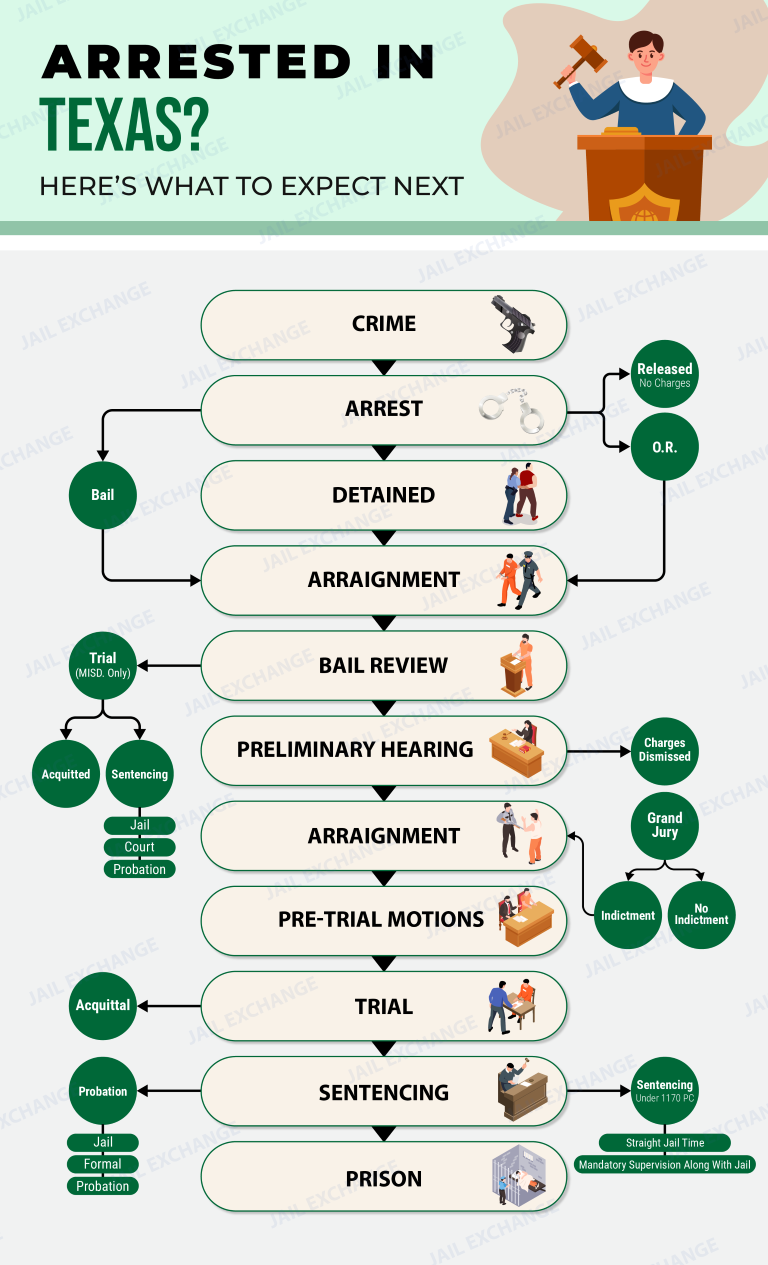
1. Sorting a charge: fine-only, misdemeanor or felony
In Texas, the harshest sentence a crime could carry sets its class, and the class picks the courtroom.
- Class C, fine only. These tickets go to one of four justice precincts or, inside a town, that town's own judge. Seven towns here run a municipal court.
- Class A or B. Upstairs in the old courthouse on the Square, the County Court at Law takes these jailable misdemeanors. The County Clerk files the paperwork.
- Felony. The 33rd District Court and its sister bench, the 424th, split felony work for Blanco, Burnet, Llano and San Saba. Their records sit with the District Clerk.
After a conviction, the next stop is an intermediate appeals court. Past that, a case can reach the Court of Criminal Appeals, whose rulings settle Texas criminal questions for good. A diagram of every level is in the state's court system guide.
↑ Back to the question list2. Burnet County courthouse addresses and office hours
Most criminal paperwork moves between two buildings a few blocks apart, plus a county office by the lakes.
- Courthouse on the Square, 220 S. Pierce St., Burnet, TX 78611, switchboard 512-756-5420. Room 206 holds the County Court at Law, reachable at 512-715-5245 from 8 a.m. to 5 p.m. on weekdays. Its docket calendar shows which days court sits. Two justices of the peace share this building: Precinct 1 in Suite 109 at 512-756-5421, and Precinct 2 in Suite 105 at 512-756-5453.
- Courthouse Annex North, 1701 E Polk Street, Burnet, TX 78611. Felony trials and grand jury sessions happen here. The District Clerk's counter in Suite 90 opens 8 a.m. to 4 p.m., Monday through Friday, 512-756-5450.
- Marble Falls county building, 810 Steve Hawkins Pkwy, Marble Falls, TX 78654. Precinct 3 answers at 830-798-3212 and Precinct 4 at 830-798-3205.
Need the County Clerk's misdemeanor files? Ring the switchboard on the Square and ask to be put through.
↑ Back to the question list3. Highland Lakes city courts for Class C tickets
Speeding, a barking-dog ordinance or a minor-in-possession ticket written inside a town's limits usually goes before that town's own judge. Each of these offices takes its own payments and sets its own dates.
- Bertram Municipal Court, 110 East Vaughn St., Bertram, TX 78605, 512-355-2197
- Burnet Municipal Court, 301 E. Jackson St., Burnet, TX 78611, 512-756-2822
- Cottonwood Shores Municipal Court, 3808 Cottonwood Dr., Cottonwood Shores, TX 78657, 830-693-3830
- Granite Shoals Municipal Court, 2221 N. Phillips Ranch Rd, Granite Shoals, TX 78654, 830-598-2424
- Horseshoe Bay Municipal Court, 1 Community Dr., Horseshoe Bay, TX 78657, 830-598-9972
- Marble Falls Municipal Court, 606 Ave N, Marble Falls, TX 78654, 830-693-7173
- Meadowlakes Municipal Court, 177 Broadmoor, Suite A, Meadowlakes, TX 78654, 830-693-6840
Can't cover a Class C fine? Speak up to the judge before the deadline. Under arts. 45A.252 through 45A.261, the judge may split the bill into installments, swap it for community service, or wipe out part or all of it. A judge who wants to lock someone up over an unpaid fine has to hold a hearing first and find the person could pay but didn't try.
↑ Back to the question list4. The first stop: a magistrate at County Lane
Right after booking, each arrested adult sees a judge from the Magistrate Office, which works inside the jail at 900 County Lane, Burnet, TX 78611, 512-715-8600. Texas allows up to 48 hours for this, and the judge may appear on a video screen (art. 15.17).
- The charge is explained in plain terms.
- The magistrate lists the person's rights: to stay quiet, to have a lawyer (paid or court-appointed), to stop any interview, and, on a felony, to ask for an examining trial. Words spoken at the jail may resurface at trial.
- Anyone who needs a free lawyer may ask for one on the spot. Staff help fill in the form and send it on to the appointing office inside 24 hours.
- Bail, or another kind of release, is set after the magistrate checks the state's public safety report on anything above Class C.
When an officer jailed someone without a warrant, a magistrate must also decide whether there was probable cause. If the answer is no, art. 15.17(h) requires written findings within 24 hours.
↑ Back to the question list5. Jailable misdemeanors: the Burnet County Court at Law
The County Attorney's office charges jailable misdemeanors by filing what Texas law names an information. Typical examples: a first DWI, low-dollar shoplifting, or a scuffle that left someone hurt. The usual path:
- First setting. At arraignment (art. 26.01) the defendant is identified and answers the charge: guilty, no contest or not guilty. Many lawyers file a written waiver so their client can skip it.
- Middle settings. Both lawyers trade evidence and argue motions, and a plea offer may surface.
- Deal or jury. If the two sides strike a plea deal, art. 26.13 requires the judge to tell everyone in the courtroom if the court will go along with it. Should the judge refuse the bargain, the plea can be withdrawn.
Penal Code limits: up to 180 days of jail and $2,000 in fines for Class B (§12.22); up to one year and $4,000 for Class A (§12.21).
Judges here may also dismiss, grant probation (Texas calls it community supervision, which can last no more than two years on a misdemeanor), or offer deferred adjudication. Deferred adjudication (arts. 42A.101, 42A.111) puts a guilty finding on hold, and finishing every condition ends in dismissal. A few charges, such as some intoxication offenses, are barred from it by art. 42A.102. Local court rules are on the county's misdemeanor page.
↑ Back to the question list6. A felony's road through the 33rd or 424th
A single District Attorney prosecutes felonies across the four-county judicial district. A typical felony here travels this road:
- Optional examining trial. Before any indictment, defense counsel can request a hearing (art. 16.01) where a magistrate weighs the evidence for probable cause and may revisit bail.
- Grand jury. Twelve residents hear the prosecutor's evidence behind closed doors at the Polk Street annex. Nine votes are needed for an indictment under art. 20A.301, and that indictment is the formal charge.
- District court. The indictment is assigned to the 33rd or the 424th. Hearings on motions, discovery and plea talks follow.
- Resolution. Plea bargains settle most cases. At trial, all twelve jurors must agree on the verdict.
Penal Code sentence ranges, each of which can add a fine as high as $10,000:
- State jail felony (§12.35): 180-day minimum, two-year maximum, in a state jail.
- Third degree (§12.34): two years minimum, ten maximum.
- Second degree (§12.33): two years minimum, twenty maximum.
- First degree (§12.32): five to ninety-nine years, or a life term.
Prior felony convictions can bump the range upward (§12.42), while a judge can sentence certain state jail cases at the Class A misdemeanor level (§12.44). Felony probation, like felony deferred adjudication, may last up to ten years. Filings and case papers: District Clerk, 1701 E Polk Street, Suite 90, Burnet, TX 78611, 512-756-5450.
↑ Back to the question list7. Stakes on assault, robbery and homicide charges
Charges like aggravated assault, robbery and murder go down the same district court track, but release is tighter and the penalties climb.
- No personal bond. Article 17.03 bars release on a personal bond for listed violent offenses, so cash or a surety is needed.
- Bail can be refused. Voters approved Proposition 3 in 2025. Under Tex. Const. art. I, §11d, on a short list that includes aggravated robbery, murder and aggravated sexual assault, prosecutors can ask for a hearing where bail must be denied when proof shows the accused would probably flee or endanger others.
- Prosecutors can appeal a low bail. A 2025 change to art. 44.01 gives prosecutors the right to challenge a bail amount as too small in some violent cases. The defendant sits in jail during that appeal, which can last 20 days.
- Capital murder. An adult found guilty gets one of two sentences under Penal Code §12.31. The choices are death, or being locked up for life and never paroled. If the crime happened before age 18, the sentence is life with a chance at parole.
Because of these limits, a defendant may wait at the County Lane jail until trial. For setting dates, call the District Clerk at 512-756-5450.
↑ Back to the question list8. Who prosecutes and who defends in Burnet County?
Two prosecutor offices share the work:
- District Attorney for the 33rd and 424th, who takes felonies, 1701 E Polk Street, Suite 24, Burnet, TX 78611, 512-756-5449.
- County Attorney, who takes misdemeanors and bad-check cases, Courthouse on the Square, 220 S. Pierce St., Burnet, TX 78611. The main line is 512-756-5476 (weekdays 8 to 5), and the criminal division is 512-756-5462.
The public defender here is the North Hill Country office, 120 CR 250, Burnet, TX 78611, 512-756-5441. Its clients come from this county and two neighbors, Blanco and Llano. Private lawyers appointed by the court take the remaining cases. To ask for one on a felony or a jailable misdemeanor, fill in the county's court-appointed attorney application, then hand it to the judge hearing the case or drop it with the Magistrate Office. Who qualifies is spelled out in the indigent defense plan that covers four counties.
↑ Back to the question list9. Tracking a cause number or hearing date
Court dates live with the courts, so start on the court side. Options:
- The county's Burnet Court Records Online Search looks up a case by party name or cause number.
- The Court at Law's docket calendar marks misdemeanor court days.
- re:SearchTX is the statewide e-filing archive. A free account opens filed documents and judgments. For hearing times, phone the clerk.
- The Texas DPS conviction name search sells statewide criminal history results on finished cases.
Want the next hearing date? Have the defendant's full name ready. Then call the District Clerk at 512-756-5450 on a felony or the County Court at Law at 512-715-5245 on a misdemeanor.
↑ Back to the question list10. Is there a Burnet County warrant out?
Any of three groups may pick someone up on a warrant here: Sheriff's deputies, constables, or a town's police. To check for an active one, phone the Sheriff's Office at 512-756-8080 or search the person's name in the county's court records portal. DPS shows the faces of the state's most dangerous fugitives in a lineup called Texas 10 Most Wanted. To clear one, a defense lawyer is the place to start, because a lawyer can often set up a planned surrender or a fresh court date with the signing judge. The District Clerk, 1701 E Polk Street, Suite 90, Burnet, TX 78611, 512-756-5450, holds the paperwork for felony warrants.
↑ Back to the question list11. Federal agents made the arrest: what now?
Austin is where federal agents' cases from this county are tried, in the Western District of Texas's Austin Division. The clerk's counter is at 501 West Fifth Street, Suite 1100, Austin, TX 78701, 512-916-5896.
- A federal magistrate judge handles the opening hearing. Under 18 U.S.C. 3142, a detention hearing then settles whether the accused is released under conditions or kept jailed until the case ends.
- Until trial, federal defendants are held under the U.S. Marshals Service. Its Austin office is at 501 West 5th Street, Suite 3300, Austin, TX 78701, 512-916-5393. The Marshals use the County Lane jail as one place to hold them.
- The Federal Public Defender, 504 Lavaca Street, Suite 960, Austin, TX 78701, 512-916-5025, takes cases for people who qualify as unable to pay.
- The BOP inmate locator follows a person after a federal judge sends them to prison.
12. Immigration holds on a Burnet County inmate
- At County Lane, ICE starts an immigration hold by lodging Form I-247A, the detainer.
- Jail staff may then hold the person up to 48 hours after they would otherwise be released (8 CFR 287.7(d)).
- Since a 2017 law, Texas jails must honor those requests (art. 2A.060), and cities and counties may not limit cooperation with federal immigration agents (Gov't Code 752.053). A newer duty came in 2025 with Senate Bill 8. Under it, each sheriff who runs a jail must seek and enter into a 287(g) partnership with ICE. The clock on that runs out December 1, 2026. The Sheriff's Office at 512-756-8080 can update you on where County Lane stands.
- The County Lane jail holds ICE detainees for stays beyond 72 hours. The nearest ICE field office is 3523 Crosspoint Drive, San Antonio, TX 78217, 210-564-3300.
- Look someone up with the ICE Online Detainee Locator.
Art. 26.13 says the judge has to warn non-citizens about deportation risk before accepting their plea. Get a lawyer's view on immigration risks before accepting any offer.
↑ Back to the question list13. After a felony sentence: the TDCJ transfer
A felony sentence from the 33rd or 424th sends the person into the prison system run by TDCJ, which also operates the state jails. First comes a wait at County Lane until a transfer seat opens, then intake and classification, then assignment to a unit.
- Look a person up on the TDCJ offender search using a last name, a SID or a TDCJ number. Results refresh on business days.
- Our Texas prisons directory covers every unit.
14. Kids under 17 charged in Burnet County
A child, as Family Code 51.02 uses the word, is someone aged 10 up through 16 when the alleged crime took place, and those cases go to juvenile court. At 17, the adult system takes over.
- Once a child is in custody, Family Code 52.02 has the officer reach a parent or guardian without delay.
- The first hearing for a detained child happens inside two business days under Family Code 54.01, and a lawyer is named beforehand.
- After a hearing, Family Code 54.02 allows certifying some youths 14 or older for adult trial on serious felonies.
Juvenile Probation for the 33rd and 424th districts covers this county along with Blanco, Llano and San Saba. Phone 512-715-5254 to ask which detention site has the child and the hearing date. Appointed lawyers for children follow a separate juvenile defense plan.
↑ Back to the question list15. Victim rights, hotlines and repayment help
Texas law gives crime victims a set of rights (art. 56A.051). A victim can ask for hearing notices. Their safety is a factor when the judge sets bail. They may also put the harm in writing through a victim impact statement.
- Felony victims: Victim Services in the District Attorney's office, 1701 E Polk Street, Suite 24, Burnet, TX 78611, 512-756-7609.
- Misdemeanor victims: the County Attorney's victim coordinator, 220 S. Pierce St., Burnet, TX 78611, 512-756-5477.
- Abuse at home or sexual assault: the Highland Lakes Family Crisis Center hotline, 800-664-3574.
- Custody-change alerts: sign up free with Texas IVSS-Counties or call 866-268-8959.
- Bills from the crime: the Texas Attorney General can reimburse doctors' bills, therapy and missed wages, up to $50,000, through Crime Victims' Compensation. Questions go to 800-983-9933.
Information for this service is currently unavailable.
ViaPath / ConnectNetwork Trust Fund Deposits
Provider: ViaPath Technologies • Formerly ConnectNetwork / GTL Financial
ViaPath Technologies (formerly GTL / ConnectNetwork) operates secure banking software enabling family members to deposit cash or card funds directly into an incarcerated person's jail trust account. Deposited funds allow the inmate to purchase commissary food items, clothing, personal hygiene goods, and medical copays, or transfer balances to phone time.
Important: Jail Trust Account Policies Differ by Agency
Once a person is booked and moved to a cell, facilities do not always allow cash drop-offs or phone payments directly to the jail window. Some might and you should confirm this by calling the facility and asking. But if you do not register online and fund your loved one's trust account immediately, they may be forced to wait days or weeks for standard paper processing, leaving them without essential soap, clean undergarments, basic medical sundries or snacks.
Step-by-Step Instructions to Deposit Trust Funds
- Confirm the inmate's legal name, date of birth, and assigned booking or institutional ID number.
- Log into your account at web.connectnetwork.com or my.viapath.com.
- Select Trust Fund from the available services dashboard.
- Select the facility and confirm your loved one's profile matches the active housing roster.
- Specify the deposit dollar amount and enter your debit or credit card billing details.
- Authorize the transaction and record the confirmation tracking number for your financial records.
What the Inmate Needs to Do
The inmate does not need an internet connection to receive trust funds. Once payment clears, the balance posts directly to their accounting profile in the jail's internal system. The inmate can review their updated balance at the pod kiosk or on their tablet and place their regular weekly store order.
Official Providers: ConnectNetwork Portal | myViaPath Portal
Customer Service Telephone: 1-877-650-4249
Support Hours: Automated Deposits 24/7/365; Live Agents Monday – Friday, 8:00 AM – 10:00 PM EST
Supported Languages: English and Spanish
Other Services Provided by ViaPath Technologies (ConnectNetwork)
In addition to Trust Fund Deposits, ViaPath / ConnectNetwork provides several other communication and calling options:
- AdvancePay Phone Calling Accounts: Keep a dedicated balance to receive telephone calls directly on your cell phone.
• Learn more on our website: AdvancePay Calling Guide | • Visit official vendor page: ConnectNetwork AdvancePay - ViaPath PIN Debit Phone Calling: Give the inmate calling funds to contact any approved phone number independently.
• Learn more on our website: PIN Debit Calling Guide | • Visit official vendor page: ViaPath PIN Debit - ViaPath Messaging & Photo Sharing: Send digital messages and photos directly to their kiosk or tablet.
• Learn more on our website: Digital Messaging Guide | • Visit official vendor page: ViaPath Messaging - GettingOut Video Visitation & Tablets: Schedule face-to-face remote video visits from home.
• Learn more on our website: Video Visitation Guide | • Visit official vendor page: GettingOut Video Visits
Deposit Money for an Inmate in the Burnet County Jail
Think of the 24-hour kiosk in the Burnet County Jail lobby as an ATM running backward: you feed in cash or a credit or debit card, and the money goes straight onto the inmate's commissary account. Each deposit carries a fee. The jail is at 900 County Lane in Burnet.
From home, use Connect Network, which handles both commissary deposits and phone accounts. Two things to know:
- Money loaded onto a tablet account is locked there and can't be shifted to commissary or phone.
- If an online deposit goes wrong, take it up with the company; the county doesn't handle those.
Paper works too. Write a cashier's check or money order to either the inmate or the Burnet County Sheriff's Office, add the inmate's name and SO number, and mail it to Burnet County Jail, 900 County Lane, Burnet, TX 78611. It is posted within a few hours once the inmate signs for it.
Personal letters for the Burnet County Jail on County Lane in Burnet do not go to the jail. The Sheriff sends them to a mail-scanning service, which scans each letter so the inmate can read it electronically. Jails moved to scanning after people mailed in paper soaked with drugs such as meth and then dried. Legal mail, money orders and anything bound like a book still go straight to the jail.
Personal letters and photos (scanned):
Inmate's Full Name & SO#
Burnet County Jail
PO Box 247
Phoenix, MD 21131
Legal mail, money orders, packages and publications (to the jail):
Inmate's Full Name & SO#
Burnet County Jail
900 County Lane
Burnet, TX 78611
- Name and number: Write the inmate's full name and their SO number on every envelope, for both addresses.
- Return address: Use your first and last name and a full address. Letters without one, and letters too hard to read, are sent back.
- Photos: Prints no larger than 4 x 6 inches. Only the first 10 pictures in a letter are scanned.
- Bound items: Books and other bound material sent to the scanning address are rejected. Mail them to the County Lane address.
- Money orders: Money orders and cashier's checks are the only money taken by mail, sent to the jail. Make it out to the inmate or to the Burnet County Sheriff's Office. It posts within a few hours after the inmate signs it. Online deposits post almost right away.
- Also to the jail: Government papers and prescription glasses.
Families can send electronic messages too, which are checked by jail staff before delivery.
ViaPath AdvancePay Phone Calling Accounts
Provider: ViaPath Technologies • Formerly ConnectNetwork / Global Tel*Link (GTL)AdvancePay is the primary prepaid telecommunications service operated by Global Tel*Link (GTL) and ConnectNetwork, which have unified under the corporate identity of ViaPath Technologies (and the myViaPath platform). By funding an AdvancePay account, telephone charges are deducted per minute whenever an incarcerated loved one calls your specific telephone number, preventing calls from being rejected by cellular carriers.
Important: Cell Carriers Automatically Block Jail Collect Calls
Inmate telephone networks do not permit incoming calls, and wireless cell providers automatically block traditional collect billing by default. While select traditional landlines may support operator billing, cell phones and internet-based lines require an active AdvancePay balance, which you can verify with your carrier. If you do not register your number online and add funds immediately, your loved one will hear an automated operator announcement stating your line is blocked from receiving correctional calls.
Step-by-Step Instructions to Open and Fund AdvancePay
- Visit web.connectnetwork.com or the updated my.viapath.com portal, or launch the ConnectNetwork / ViaPath mobile application.
- Click Sign Up and register using your primary 10-digit cellphone number and email address.
- Select Add Facility, pick your state, and choose the detention center or state prison where the inmate is held.
- Search for the inmate using their full legal name or facility booking ID number and link them to your contact directory.
- Select AdvancePay Phone and choose your deposit amount ($25, $50, or custom).
- Enter your debit or credit card billing details, accept the administrative transaction fee, and complete the payment.
- Check your phone settings to confirm that automated or unknown correctional numbers are not routed straight to spam.
What the Inmate Needs to Do
The inmate approaches any housing pod telephone, enters their assigned PIN and voice biometric recognition phrase, and dials your 10-digit number. ViaPath's automated operator confirms your active prepaid balance and connects the call. All personal telephone calls are subject to recording and monitoring by facility investigators.
Official Providers: ConnectNetwork Portal | myViaPath Portal
Customer Service Telephone: 1-877-650-4249 (Automated & Live Support)
Support Hours: Automated Service 24/7; Live Operators Monday – Friday, 8:00 AM – 10:00 PM EST
Supported Languages: English and Spanish
Other Services Provided by ViaPath Technologies (ConnectNetwork)
In addition to AdvancePay Phone Calling, ViaPath / ConnectNetwork provides several other communication, financial, and visitation services:
- ConnectNetwork Trust Fund Deposits: Transfer money directly into an inmate's jail trust account for commissary store purchases.
• Learn more on our website: Inmate Trust Deposits Guide | • Visit official vendor page: ConnectNetwork Trust Deposits - ViaPath PIN Debit Phone Calling: Give the inmate their own calling funds to contact any approved phone number independently.
• Learn more on our website: PIN Debit Phone Calling Guide | • Visit official vendor page: ViaPath PIN Debit Calling - ViaPath Messaging & Photo Sharing: Send digital messages, photos, and video attachments directly to their terminal.
• Learn more on our website: Digital Messaging Guide | • Visit official vendor page: ViaPath Messaging Services - GettingOut Video Visitation & Tablets: Schedule face-to-face remote video visits and manage handheld tablet communications.
• Learn more on our website: Remote Video Visitation Guide | • Visit official vendor page: GettingOut Video Visits
ViaPath PIN Debit Phone Calling Accounts
Provider: ViaPath Technologies • Formerly ConnectNetwork / Global Tel*Link (GTL)ViaPath PIN Debit (hosted on ConnectNetwork and myViaPath) provides incarcerated individuals with their own calling funds. Unlike AdvancePay (which only funds calls placed to your specific phone number), PIN Debit funds belong directly to the inmate, allowing them to call attorneys, bondsmen, employers, or extended family members across multiple approved telephone numbers.
Important: AdvancePay Only Funds a Single Phone Number
When someone is arrested, they often need to contact multiple people—including legal defense counsel, bail agents, employers, and relatives. If you only fund an AdvancePay account, your loved one will have no calling balance to dial anyone else, as rules and call authorizations vary by facility. Adding funds directly to ViaPath PIN Debit grants them the calling flexibility needed to handle critical legal and family arrangements without delay.
Step-by-Step Instructions to Fund a PIN Debit Account
- Sign into your account at web.connectnetwork.com or my.viapath.com.
- Click on PIN Debit under the communications menu.
- Select the state and facility, and link the inmate's booking identification number.
- Enter the deposit dollar amount and review the payment transaction fee.
- Enter your debit or credit card details and submit the payment.
- Notify your loved one that their personal PIN calling balance has been credited.
What the Inmate Needs to Do
The calling balance appears under the inmate's personal identification PIN. When they pick up any dayroom telephone or tablet, they select the 'PIN Debit' prompt from the automated menu to place calls to any approved number on their personal contact list.
Official Providers: ConnectNetwork Portal | myViaPath Portal
Customer Service Telephone: 1-877-650-4249
Support Hours: Automated Deposits 24/7/365; Live Agents Monday – Friday, 8:00 AM – 10:00 PM EST
Supported Languages: English and Spanish
Other Services Provided by ViaPath Technologies (ConnectNetwork)
In addition to PIN Debit Calling, ViaPath / ConnectNetwork provides several other communication, financial, and visitation services:
- AdvancePay Dedicated Phone Calling: Fund calls placed specifically to your personal phone number.
• Learn more on our website: AdvancePay Calling Guide | • Visit official vendor page: ConnectNetwork AdvancePay - ConnectNetwork Trust Fund Deposits: Deposit money for commissary food, hygiene supplies, and stationery.
• Learn more on our website: Inmate Trust Deposits Guide | • Visit official vendor page: ConnectNetwork Trust Deposits - ViaPath Messaging & Photo Sharing: Send digital messages and photos directly to their kiosk or tablet.
• Learn more on our website: Digital Messaging Guide | • Visit official vendor page: ViaPath Messaging Services - GettingOut Video Visitation & Tablets: Schedule face-to-face remote video visits from home.
• Learn more on our website: Remote Video Visitation Guide | • Visit official vendor page: GettingOut Video Visits
GettingOut / ViaPath Inmate Messaging
Provider: GettingOut (Telmate) • Rebranding as ViaPath Technologies (myViaPath)GettingOut (a service of Global Tel*Link / Telmate) provides an instant two-way digital messaging and photo-sharing platform connecting families with incarcerated individuals via housing-unit kiosks and handheld tablets. The provider is actively rebranding as ViaPath Technologies (under the myViaPath platform); depending on the facility contract, local booking sheets and tablets may still refer to the service as GettingOut, GTL, or ViaPath, but both brand portals grant access to the same centralized messaging balance.
Important: Contact Authorization and Digital Mail Rules Vary
Inmate digital messaging rules are not uniform across all county detention centers. While some jails allow immediate two-way messaging upon registration, others require initial contact invitations or administrative ID verification, which you should verify directly with the facility. If you delay setting up an online profile and funding your Friends & Family messaging account, your loved one may face lengthy periods without direct family communication.
Step-by-Step Instructions to Register and Message an Inmate
- Visit www.gettingout.com or the newly branded my.viapath.com portal, or install the GettingOut / myViaPath mobile app.
- Create a user profile using your primary email address and 10-digit mobile phone number.
- Complete identity verification by uploading a clear photo of your government-issued driver's license or state ID and taking a verification selfie if requested.
- Search for the inmate by selecting the state, correctional facility, and their legal name or booking ID.
- Send an outside contact connection request to link your account to their tablet profile.
- Deposit funds into your 'Friends & Family Account' using a debit or credit card to cover message and photo-sharing costs.
- Compose your text message in the chat box, attach approved photos, and submit it for jail screening.
What the Inmate Needs to Do
The inmate powers on their assigned pod tablet or approaches a housing-unit kiosk and logs into the messaging application with their PIN. They accept your incoming contact invitation on the screen. Once approved by institutional monitors, incoming messages appear in their inbox, and the inmate types a reply directly on the screen.
Official Providers: GettingOut Website | myViaPath Portal
Customer Service Telephone: 1-866-516-0115 (GettingOut Support) • 1-877-650-4249 (ViaPath Support)
Support Hours: Monday – Friday, 7:00 AM – 11:00 PM CST; Saturday – Sunday, 8:00 AM – 7:00 PM CST
Supported Languages: English and Spanish
Other Services Provided by GettingOut / ViaPath
In addition to Two-Way Text Messaging, GettingOut and ViaPath provide several other communications and visitation options:
- Remote Video Visits: Schedule and join live web-based video visits from your computer or smartphone.
• Learn more on our website: Video Visitation Guide | • Visit official vendor page: GettingOut Video Visits - Inmate Tablet Rentals & Media: Fund tablet entertainment, music streaming, games, and news modules.
• Learn more on our website: Tablet Rentals & Content Guide | • Visit official vendor page: GettingOut Tablets - AdvancePay Phone Calling: Prepay for telephone calls so your loved one can dial your mobile phone directly.
• Learn more on our website: AdvancePay Phone Calling Guide | • Visit official vendor page: ViaPath ConnectNetwork Calling - Inmate Trust Deposits: Transfer funds directly into their jail trust account for commissary store purchases.
• Learn more on our website: Inmate Trust Deposits Guide | • Visit official vendor page: ViaPath Trust Deposits
GettingOut / ViaPath Inmate Tablets & Media
Provider: GettingOut (Telmate) • Rebranding as ViaPath Technologies (myViaPath)GettingOut provides specialized, secure handheld tablets for county jail inmates, offering access to messaging apps, telephone calling, legal research tools, eBooks, vocational training, and premium entertainment rentals. As part of GTL and Telmate's transition to ViaPath Technologies, tablet firmware and management platforms are moving to the myViaPath system.
Important: Tablet Feature Availability Varies by Facility
Jails manage tablet distribution according to individual facility contracts. While basic educational and legal materials are often provided without cost, access to music streaming, games, podcasts, and premium movies requires an active funded account. You should confirm the tablet rules with the facility directly. Registering and funding their media balance right away ensures your loved one has productive resources and recreation during their stay.
Step-by-Step Instructions to Fund Inmate Tablet Services
- Confirm that GettingOut / ViaPath handheld tablets are active at your loved one's specific detention facility.
- Navigate to www.gettingout.com or my.viapath.com.
- Sign into your verified user profile and link the inmate's legal name and booking ID number.
- Select Make a Deposit and choose either your Friends & Family Account (for messaging) or the inmate's personal Inmate Account (for entertainment and song rentals).
- Choose your deposit amount, review convenience fees, and complete payment with a credit or debit card.
- Notify your loved one that their tablet account balance has been funded.
What the Inmate Needs to Do
The inmate unlocks their assigned tablet or signs one out from the pod charging station using their biometric verification or PIN. Once logged in, their available balance appears on the screen, allowing them to download songs, stream educational content, and communicate with approved family members.
Official Providers: GettingOut Website | myViaPath Portal
Customer Service Telephone: 1-866-516-0115 (GettingOut) • 1-877-650-4249 (ViaPath)
Support Hours: Monday – Friday, 7:00 AM – 11:00 PM CST; Saturday – Sunday, 8:00 AM – 7:00 PM CST
Supported Languages: English and Spanish
Other Services Provided by GettingOut / ViaPath
In addition to Tablet Media & Rentals, GettingOut and ViaPath provide several other communication and account services:
- Two-Way Text Messaging: Send electronic letters and photos straight to the inmate's screen.
• Learn more on our website: Two-Way Text Messaging Guide | • Visit official vendor page: GettingOut Messaging - Remote Video Visits: Meet face-to-face over secure live video from home.
• Learn more on our website: Video Visitation Guide | • Visit official vendor page: GettingOut Video Visits - AdvancePay Phone Calling: Prepay for phone calling credits so your loved one can call your telephone directly.
• Learn more on our website: AdvancePay Phone Calling Guide | • Visit official vendor page: ViaPath ConnectNetwork Calling - Inmate Trust Deposits: Transfer cash directly into an inmate's jail ledger for commissary purchases.
• Learn more on our website: Inmate Trust Deposits Guide | • Visit official vendor page: ViaPath Trust Deposits
- Jail (Main): 512-715-8600
- Arrest Warrants: 512-756-8080
- Court: 512-756-5438
- Police: 512-756-6404
- Records: 512-756-8080
- Sheriff: 512-756-8080
The Burnet County Jail serves the following cities and towns of Burnet County: Bertram, Burnet, Granite Shoals, Horseshoe Bay, Llano and Marble Falls.