Glasscock County, an oil and farming county east of Midland, has about 1,100 residents, and Garden City is its county seat and only town; the courthouse is at 117 East Currie. Garden City is not incorporated, so there is no municipal court, and Class C cases go to the county's justice of the peace. Class A and B misdemeanors are heard by the County Judge in the constitutional county court. Felonies belong to the 118th District Court, which Glasscock shares with Howard and Martin counties, and are prosecuted by the 118th Judicial District Attorney from Big Spring. The Sheriff keeps a small jail in the Sheriff's building on South Myrl Street.
- Glasscock County Courthouse (county court, 118th District Court sittings, justice of the peace), 117 E. Currie St., Garden City, TX 79739
- Glasscock County Clerk (county court records), 209 S. Myrl St., P.O. Box 190, Garden City, TX 79739, (432) 354-2371
- 118th Judicial District Attorney (felonies in Glasscock, Howard and Martin counties), Big Spring, TX
- Glasscock County Sheriff's Office, 124 S. Myrl St., P.O. Box 239, Garden City, TX 79739, (432) 354-2361
- Glasscock County Jail, Sheriff's building, 124 S. Myrl St., Garden City, TX 79739, (432) 354-2361
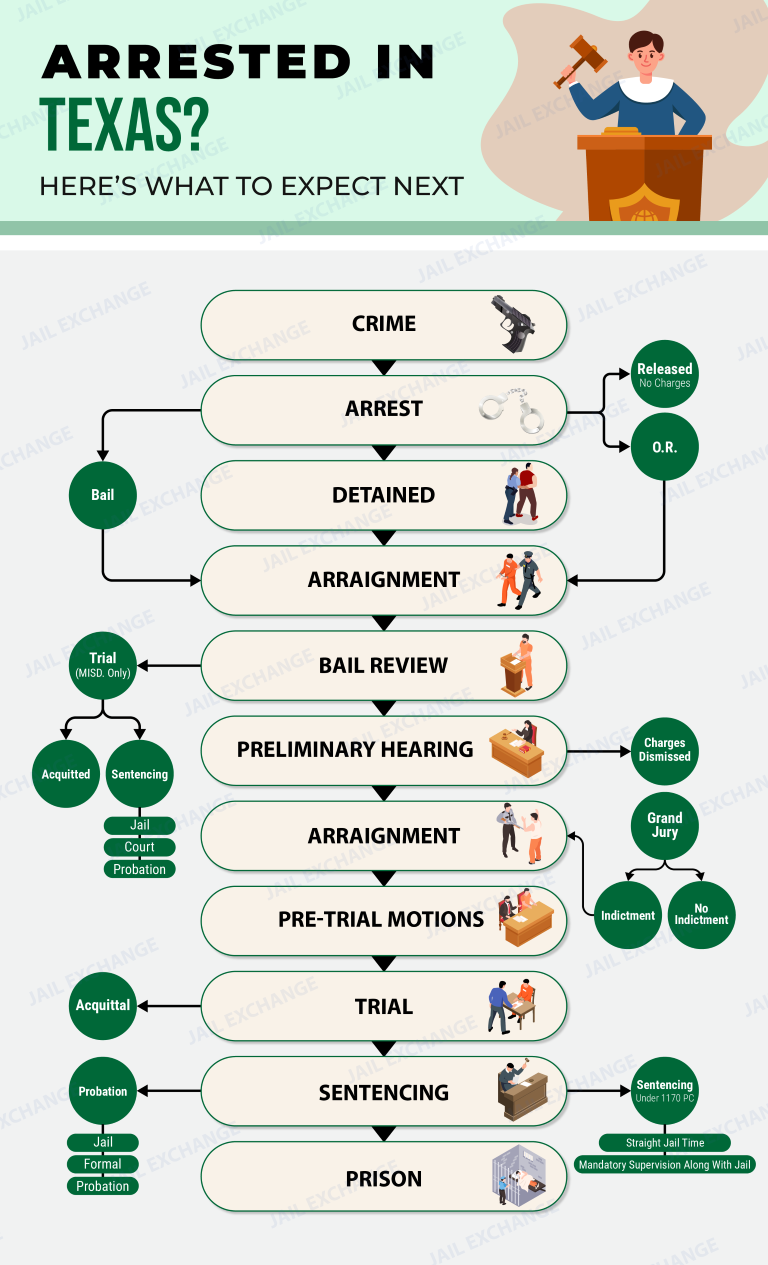
Which court hears your case. Class C misdemeanors, the fine-only tier (speeding, public intoxication, a theft below $100, simple assault with no injury), are filed in the Glasscock County Justice of the Peace court in Garden City; with no incorporated city in the county, there is no municipal court. Class A and B misdemeanors, which can bring jail time, are filed in the Glasscock County Court, the constitutional county court presided over by the County Judge; a first DWI and assault causing bodily injury are typical examples. A felony case gets magistrate warnings first; after a grand jury indicts, it proceeds in the 118th District Court, whose judge is based in Big Spring and holds court in Garden City for Glasscock cases.
Where pretrial inmates are held. The Sheriff's building at 124 South Myrl Street contains the county jail, which was renovated in 2015 and 2016. It is a very small facility, so people arrested in Glasscock County are usually booked there first, and a person facing a longer stay, or needing medical or special housing, may be moved to a larger jail in a neighboring county. The Sheriff's Office at (432) 354-2361 can confirm where someone is being held and how bond may be posted.
- Local courts in Glasscock County (justice of the peace, municipal and county courts)
- Misdemeanor (for example, theft, a first DWI, assault causing bodily injury, criminal trespass)
- Felony (for example, burglary, felony theft, drug possession or delivery, aggravated assault)
- Violent felony (for example, murder, sexual assault, aggravated robbery)
- Juveniles (under 17) arrested in Glasscock County
- Federal cases (U.S. District Court) from Glasscock County
Local courts in Glasscock County (justice of the peace, municipal and county courts)
The court list for Glasscock County is one of the shortest in Texas. Everything happens in Garden City, and the offices are small, so a phone call before visiting saves a wasted trip.
Justice of the Peace court
- Glasscock County Justice of the Peace (Class C offenses, traffic citations, magistrate warnings, arrest and search warrants), Glasscock County Courthouse, 117 E. Currie St., Garden City, TX 79739, (432) 354-2382
Municipal courts
- None. Garden City is an unincorporated community, and the county has no other towns, so every ticket written by a deputy or trooper is filed with the justice of the peace.
County and district courts
- Glasscock County Court (constitutional county court; Class A and B misdemeanors and appeals from the justice court), 117 E. Currie St., Garden City, TX 79739; County Clerk (432) 354-2371
- 118th District Court (felonies for Glasscock, Howard and Martin counties), which sits in Garden City for Glasscock County cases
Because the justice of the peace is also a magistrate, the same judge who handles a speeding ticket may read the warnings to someone arrested on a felony and set the amount of bail. A Class C conviction can be appealed for a fresh trial in the county court if the appeal is filed within the deadline.
Misdemeanor (for example, theft, a first DWI, assault causing bodily injury, criminal trespass)
Glasscock County sits in the Permian Basin, and much of its misdemeanor traffic comes from oil field workers and travelers on State Highway 158 and State Highway 137. Fine-only offenses are handled with a citation; DWI and assault arrests usually mean booking at the Glasscock County Jail.
After the arrest
Within 48 hours, the arrested person must appear before a magistrate, usually the justice of the peace, who gives the warnings required by article 15.17, explains the right to counsel and sets bail. A person can be released by depositing cash, by hiring a licensed bondsman to post a surety bond for a fee, or on a personal bond. Family violence arrests often come with an emergency protective order.
Prosecution and lawyers
Misdemeanor charges are filed in the Glasscock County Court by the county's prosecutor (the County Attorney's office, or the 118th District Attorney where the county relies on that office). The county has no public defender. A defendant who cannot afford a lawyer and faces jail time asks for one at magistration or from the county court, and the judge appoints a private attorney under the county's indigent defense plan, supported by the Texas Indigent Defense Commission. The County Clerk at (432) 354-2371 can say whether a lawyer has been appointed. Most cases settle; a trial uses a jury of six whose verdict must be unanimous.
Penalties
- Theft: Class C (fine only) below $100; Class B between $100 and $750, with jail of up to 180 days and a fine of up to $2,000 possible; Class A from $750 to $2,500, where a year in jail and a $4,000 fine are the ceiling.
- First DWI: a Class B offense with a jail range starting at three days (72 hours) and topping out at 180 days, and a maximum fine of $3,000; it is Class A at 0.15 or above, and an open container doubles the minimum to six days. The driver also faces an administrative license suspension and a DWI education requirement, and the judge may order an ignition interlock.
- Assault causing bodily injury: Class A; a family violence finding enhances future cases.
- Criminal trespass: Class B in most situations, Class A in a residence or with a deadly weapon.
Cases end in dismissal, diversion, deferred adjudication, probation, a fine or a jail sentence. A person who completes deferred adjudication may later qualify for an order of nondisclosure that hides the case from most public background checks. Class C cases usually resolve within weeks, and Class A and B cases within two to six months.
Felony (for example, burglary, felony theft, drug possession or delivery, aggravated assault)
Felonies in Glasscock County are prosecuted by the 118th Judicial District Attorney, whose office in Big Spring also covers Howard and Martin counties. Theft of oil field equipment, fuel and copper, drug possession uncovered in traffic stops, and assaults at work sites are among the more common charges.
How a felony moves
- Magistrate and bail. After booking at the Glasscock County Jail, the person sees a magistrate within 48 hours. Under the Damon Allen Act the magistrate must consider a public safety report before setting bail, and personal bonds are not allowed for violent offenses.
- Appointed counsel. The 118th District Court appoints felony lawyers from a list of qualified private attorneys. Make the request at magistration and follow up through the clerk.
- Indictment. The District Attorney presents the case to a Glasscock County grand jury. If the prosecution is not ready within 90 days of the person's detention, article 17.151 generally calls for release on personal bond or reduced bail, though violent offenses are excluded.
- Arraignment and plea. The defendant answers the indictment in the 118th District Court. Plea agreements, including deferred adjudication or probation for many first offenders, settle most cases.
- Trial. If there is no agreement, 12 jurors decide guilt unanimously, and the defendant may choose jury sentencing.
Punishment ranges
- State jail felony (theft valued from $2,500 to under $30,000; under a gram of methamphetamine): a stay of 180 days to two years in a state jail and a possible $10,000 fine.
- Third degree 2 to 10 years; second degree, which includes burglary of a habitation and aggravated assault, 2 to 20 years; first degree carries a minimum of five years and a maximum of life or 99 years. Each can carry a fine of up to $10,000 as well.
- Drug cases are graded by penalty group and weight.
Prior felonies raise the range, and repeat offenders can face 25 years to life. "3g" offenses require serving half the sentence (at least two years) before parole eligibility, while most other prisoners become eligible after roughly one-quarter. Because one district judge handles three counties, Glasscock County felonies typically take six to eighteen months.
Violent felony (for example, murder, sexual assault, aggravated robbery)
Violent crime is uncommon in a county this small, and when it occurs the Sheriff's Office typically works with the Texas Rangers and the Department of Public Safety crime lab. Defendants charged with these offenses cannot be released on a personal bond. Texas voters approved a 2025 constitutional amendment that lets judges deny bail in some violent-crime cases, so a defendant may remain in custody, at the Glasscock County Jail or a larger jail it contracts with, until trial.
- Capital murder: only two sentences exist, death or life without parole, and Texas executes more prisoners than any other state. Capital defense requires specially certified appointed lawyers.
- Murder: first degree, with a sentence of five years to 99 years or life; sudden passion reduces it to second degree at punishment.
- Sexual assault is second degree; aggravated sexual assault is first degree, and certain crimes against young children carry a 25-year minimum. Registration as a sex offender follows.
- Aggravated robbery: first degree and a "3g" offense requiring half of the sentence before parole consideration.
Victims have constitutional rights in Texas under article I, section 30, including the right to be informed, to attend and to be heard. With so few residents to draw jurors from, a high-profile case may be moved to another county. A violent felony usually takes one to three years to reach a verdict or plea.
Juveniles (under 17) arrested in Glasscock County
Texas law handles anyone 17 or older as an adult, so juvenile court covers only children aged 10 to 16 at the time of the conduct. The Glasscock County juvenile court is the court designated by the county's juvenile board, generally the 118th District Court or the County Court; the County Clerk at (432) 354-2371 can help families find the case.
Intake
A juvenile probation department that serves Glasscock County under a regional arrangement screens referrals. The intake officer can release the child, set up informal supervision, or refer the case to the prosecutor, who decides whether to file a petition. Many first-time cases end with deferred prosecution and a dismissal.
Detention
The county has no juvenile detention center. A youth who must be held is typically placed in a certified regional facility in the Permian Basin or Concho Valley, such as one in Midland, Odessa or San Angelo. A detention hearing is required within two working days, and the court appoints counsel if the family has none.
Outcomes
- Dismissal, deferred prosecution, or probation with conditions such as school, curfew, counseling and restitution.
- Commitment to the Texas Juvenile Justice Department (TJJD), an option reserved for felony-grade conduct.
- Determinate sentencing for certain grave offenses, with possible transfer to adult prison once the youth turns 19.
- Certification to adult court after a transfer hearing, generally from age 14 for capital and first-degree felonies and certain aggravated drug felonies, and from 15 for other felonies.
Juvenile records are confidential, and sealing is available for most of them.
Federal cases (U.S. District Court) from Glasscock County
Even though Garden City is closer to Midland, federal law assigns Glasscock County to the Northern District of Texas, San Angelo Division, not to the Western District. Federal cases from the county are filed with the clerk in San Angelo, about 90 miles to the southeast.
- U.S. District Clerk, San Angelo Division, 33 East Twohig Avenue, Room 202, San Angelo, TX 76903, (325) 655-4506
- U.S. Attorney's Office, Lubbock, which handles San Angelo Division prosecutions because the San Angelo office is not staffed: 1205 Texas Ave., Suite 700, Lubbock, TX 79401, (806) 472-7351
- Federal Public Defender for the Northern District of Texas, with an office in Lubbock; when it cannot take a case, the court appoints a private Criminal Justice Act panel lawyer
Which cases go federal
From a Permian Basin county, federal cases most often involve drug trafficking, firearms in the hands of convicted felons, theft or fraud crossing state lines, and crimes on federal property or against federal programs. Investigations typically come from the DEA, FBI, ATF or Homeland Security Investigations.
Getting through the first hearings
The first court appearance is before a federal magistrate judge, who explains the charges and appoints counsel for a defendant who qualifies. When prosecutors seek detention, the hearing generally follows within three court days. Federal judges do not take money from a bail bondsman; the Bail Reform Act lets them either release the defendant under Pretrial Services supervision or order detention.
Indictment through sentencing
Charges begun by complaint must be presented to a grand jury within 30 days. Under the Speedy Trial Act, trial is due within 70 days, although that period is often extended. Most federal cases end in plea agreements; jury trials require all twelve jurors to agree. The judge sentences after reviewing a presentence report and the advisory Guidelines, while some offenses carry mandatory minimum terms. With no parole in the federal system, defendants serve about 85 percent of their prison time in the Bureau of Prisons and then supervised release. Any appeal goes to the Fifth Circuit.
Searching for a federal inmate
The Federal Bureau of Prisons inmate locator works with a person's name or register number. A defendant waiting for trial in a county jail that holds prisoners under a U.S. Marshals agreement is usually listed on that county facility's roster, too. Federal prosecution of juveniles is uncommon, and Glasscock County youth cases stay in state court almost without exception.
This overview of how criminal cases move through the Glasscock County courts is general information, not legal advice, and housing arrangements for inmates can change. Anyone accused of a crime in Glasscock County should get advice from a defense attorney. To ask for a court-appointed attorney, make the request at magistration or call the Glasscock County Clerk at (432) 354-2371; for custody questions call the Sheriff's Office at (432) 354-2361.