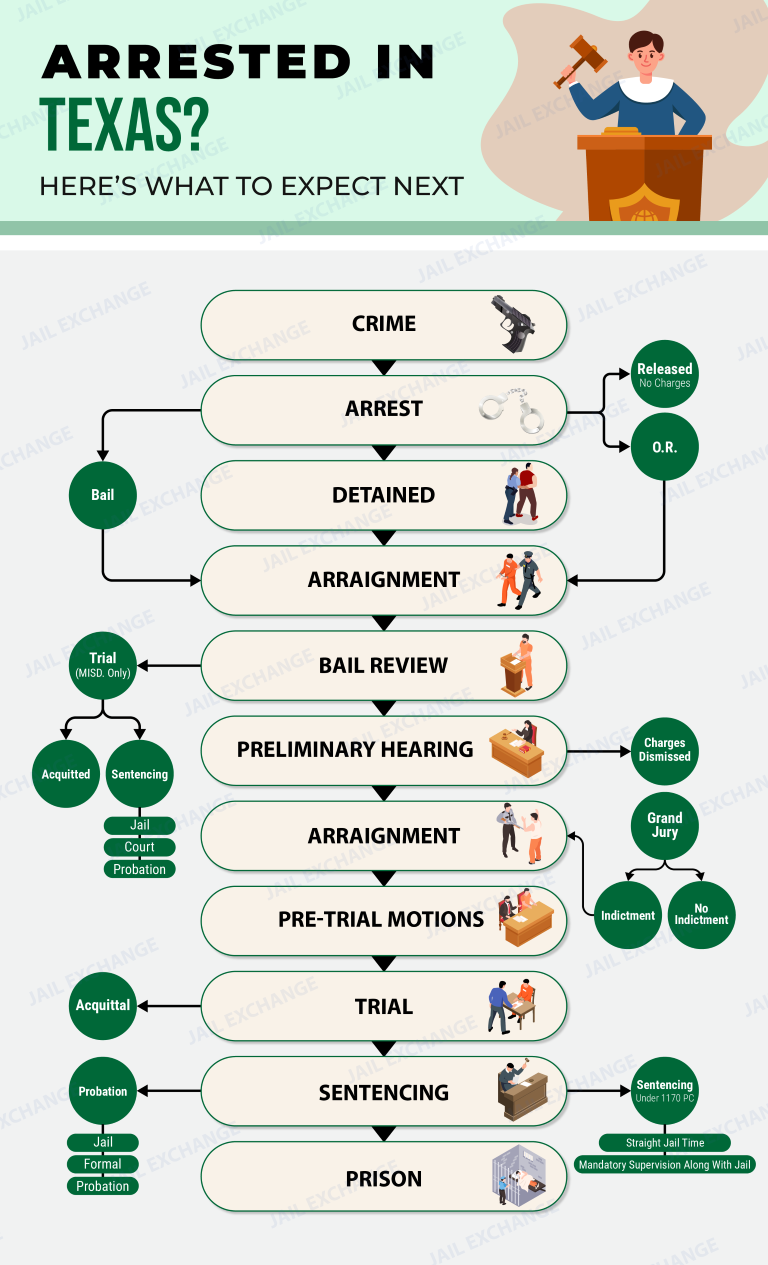
Lee County lies on U.S. 290 between Austin and Brenham, and its courthouse is on South Main Street in Giddings, the county seat. Three justice of the peace courts and the city courts of Giddings and Lexington handle fine-only Class C cases; Class A and B misdemeanors stay with the County Judge in the constitutional county court; and felonies are tried in the 21st District Court or the 335th District Court, which rotate among Bastrop, Burleson, Lee and Washington counties. The Lee County Attorney prosecutes misdemeanors, and the 21st Judicial District Attorney, whose office serves the same four counties, prosecutes felonies. The Lee County Sheriff's Office runs the county jail in Giddings.
- Lee County Courthouse, 200 South Main Street, Suite 201, Giddings, TX 78942
- 21st and 335th District Courts, District Clerk, 289 South Main Street (PO Box 176), Giddings, TX 78942, (979) 542-2947
- Lee County Court, County Clerk (PO Box 419), Giddings, TX 78942, (979) 542-3684
- Lee County Attorney (misdemeanors) and 21st Judicial District Attorney (felonies); reach them through the courthouse in Giddings
- Lee County Jail (Lee County Sheriff's Office), Giddings, TX 78942; for help reaching the Sheriff's Office, call the County Clerk at (979) 542-3684
Which court hears your case. Class C misdemeanors are punishable only by a fine, for example traffic violations, public intoxication, theft under $100, possession of drug paraphernalia and an assault without injury. They go to the Justice of the Peace court for the precinct where the offense occurred, or to the municipal court in Giddings or Lexington when city police issue the citation. Class A and B misdemeanors, including a first DWI, are heard in the Lee County Court before the County Judge. Felonies begin with magistrate warnings and are tried, once indicted by a grand jury, in the 21st District Court or the 335th District Court.
Where pretrial inmates are held. Lee County's jail in Giddings is larger than the county's own needs: the state jail commission's January 2022 report rated it for 107 beds, with 23 people held at the time. All adults arrested in the county are booked there. Those who cannot post bail are held there until their case is resolved or their release terms change. For custody questions, contact the Lee County Sheriff's Office in Giddings, or call the County Clerk at (979) 542-3684 to be directed.
- Local courts in Lee County (justice of the peace, municipal and county courts)
- Misdemeanor (for example, theft, a first DWI, assault causing bodily injury, criminal trespass)
- Felony (for example, burglary, felony theft, drug possession or delivery, aggravated assault)
- Violent felony (for example, murder, sexual assault, aggravated robbery)
- Juveniles (under 17) arrested in Lee County
- Federal cases (U.S. District Court) from Lee County
Local courts in Lee County (justice of the peace, municipal and county courts)
Lee County currently operates three justice courts: Precinct 2 in the Giddings courthouse, Precinct 3 north of Lexington and Precinct 4 in Dime Box. They hear Class C offenses, evictions, debt claims and small claims. The justices also act as magistrates for people booked at the jail, explaining their rights and setting bond.
Justice of the peace courts
- Justice of the Peace, Precinct 2, Lee County Courthouse, 200 South Main Street, Suite 114, Giddings, TX 78942, (979) 542-3030
- Justice of the Peace, Precinct 3, 8871 North Highway 77 (PO Box 587), Lexington, TX 78947, (979) 773-2267
- Justice of the Peace, Precinct 4, 1034 Stephen F. Austin Street (PO Box 141), Dime Box, TX 77853, (979) 884-4001
Municipal courts
- Giddings Municipal Court, Giddings Municipal Building, 118 East Richmond Street, Giddings, TX 78942, (979) 540-2707
- Lexington Municipal Court, PO Box 60, Lexington, TX 78947, (979) 773-2221
County court
- Lee County Court (constitutional county court, County Judge presiding; Class A and B misdemeanors and appeals from justice and city courts), County Clerk, PO Box 419, Giddings, TX 78942, (979) 542-3684
U.S. 290 and U.S. 77 carry heavy traffic through Giddings, and many Class C cases involve travelers who live elsewhere. They can usually resolve a ticket by mail or online payment, request a driving safety course or deferred disposition, or set a court date; failing to respond can lead to a warrant and a hold on license renewal. Appeals from a justice or city court go to the county court if filed within ten days.
Misdemeanor (for example, theft, a first DWI, assault causing bodily injury, criminal trespass)
Anyone arrested in Lee County for a Class A or B misdemeanor is booked at the Lee County Jail in Giddings and must see a magistrate within 48 hours. At that hearing a justice of the peace gives the legal warnings, asks whether the person wants a court-appointed attorney, and sets bail. The person may then be released on a cash payment, through a bondsman's surety, or on a personal bond, and a family-violence charge usually comes with no-contact conditions.
Lee County Court
The Lee County Attorney reviews the arrest report and files charges in the county court. A defendant who cannot afford a lawyer and faces jail may ask for appointed counsel under Lee County's indigent defense plan at magistration or through the County Clerk at (979) 542-3684. Resolutions include dismissal, pretrial diversion, deferred adjudication, a negotiated plea or a trial before six jurors.
Punishment for misdemeanors
- Class B: a jail term of up to 180 days and a fine that may reach $2,000.
- Class A: a jail term of up to a year and a fine that may reach $4,000.
- Theft below $750 but at least $100 is Class B; theft of $750 to under $2,500 is Class A.
- First DWI: Class B, with 72 hours minimum to 180 days in jail unless probated, a fine up to $3,000 and loss of the license for a period; a 0.15 or higher result makes it Class A.
- Assault causing bodily injury is charged as Class A, and criminal trespass as Class B in most cases.
Lee County misdemeanor cases usually finish in two to six months. People who complete deferred adjudication may later petition for an order of nondisclosure.
Felony (for example, burglary, felony theft, drug possession or delivery, aggravated assault)
People arrested on felony charges are held at the Lee County Jail until they make bond. A magistrate sets the first amount after reviewing a public safety report, and the district judge can change it on request. If a jailed defendant's non-violent felony case is not ready for trial within 90 days, the law generally requires release on a personal bond or a reduced amount.
The felony case
- Grand jury. The 21st Judicial District Attorney presents the case to a Lee County grand jury, which needs nine votes of twelve to indict.
- District court assignment. The indictment goes to the 21st or 335th District Court. Because both judges cover four counties, Lee County criminal dockets are held on set weeks in Giddings.
- Pretrial. Discovery is exchanged and motions are heard; drug cases may wait for state lab results.
- Plea or trial. Most felonies resolve through plea agreements or deferred adjudication. At trial, twelve jurors must agree unanimously, and the defendant may choose to be sentenced by the jury.
Felony punishment
- State jail felony: half a year up to two years in a state jail facility.
- Third-degree felony: two to ten years in prison.
- Second-degree felony: two to twenty years, including burglary of a residence and aggravated assault.
- First-degree felony: five to ninety-nine years, or life.
A fine of up to $10,000 may be imposed, and prior felonies can raise the range. For "3g" offenses, half of the sentence must be served before parole. Most Lee County felonies take six to eighteen months. To check on an appointed lawyer in a felony case, call the District Clerk at (979) 542-2947.
Violent felony (for example, murder, sexual assault, aggravated robbery)
A person charged with a violent felony in Lee County will often stay at the Lee County Jail through trial. The Damon Allen Act prohibits personal bonds for these charges, and Under a constitutional amendment Texas voters approved in 2025, judges in Lee County can deny bail in some violent-crime cases.
- Capital murder results in either life without parole or a death sentence.
- Murder carries five years to life as a first-degree felony.
- Sexual assault is second degree; aggravated sexual assault is first degree, and some child-victim cases have a 25-year mandatory minimum. Conviction requires sex-offender registration.
- Aggravated robbery, a first-degree felony, is a "3g" offense.
The Texas Rangers frequently assist with serious investigations in Lee County, and with forensic testing, a trial date one to three years out is common. Victims have rights under the Texas Constitution to notice, to be present and to make an impact statement, and the district attorney's victim services staff can help. An indigent capital defendant may be represented by the Regional Public Defender for Capital Cases.
Juveniles (under 17) arrested in Lee County
A child who was at least 10 and younger than 17 at the time of the offense falls under juvenile court jurisdiction. Seventeen-year-olds are adults under Texas criminal law and are booked at the Lee County Jail.
Intake and filing
The Lee County juvenile board designates the juvenile court, usually the county court or one of the district courts. The juvenile probation department serving Lee County conducts intake and can release the youth, arrange an informal adjustment, or refer the case to the prosecutor, who decides whether to file a petition.
Detention
Lee County does not operate a juvenile detention center, so a youth who needs to be held is typically placed in a contracted regional facility, such as one in the Central Texas area. A detention hearing must be held within two working days, and the court appoints a lawyer if the family cannot afford one.
How cases end
- Deferred prosecution, with dismissal on successful completion.
- Probation, often with counseling, community service and school requirements.
- Commitment to the Texas Juvenile Justice Department (TJJD), available for felony adjudications.
- Determinate sentencing for listed grave offenses, with possible transfer to adult prison.
The prosecutor may seek to certify a youth for adult trial, generally for those 14 or older charged with capital, first-degree or certain aggravated drug felonies, and for those 15 or older charged with other felonies. What happens in a Lee County juvenile case stays confidential, and the record can generally be sealed down the road.
Federal cases (U.S. District Court) from Lee County
Lee County is in the Austin Division of the U.S. District Court for the Western District of Texas, and its federal cases are heard in Austin, about an hour west of Giddings.
- U.S. District Clerk, Austin: Suite 1100 of the federal courthouse at 501 W. Fifth St., Austin 78701, (512) 916-5896
- U.S. Attorney, Austin office: Suite 334, 903 San Jacinto Blvd., Austin 78701, (512) 916-5858
- Defense lawyers: the Federal Public Defender's Austin office or a CJA panel attorney
Kinds of federal cases
Federal charges from Lee County most often involve drug trafficking along the U.S. 290 corridor between Austin and Houston, firearms offenses, child exploitation crimes and fraud. Joint investigations with federal agencies sometimes move a case from state to federal court.
Federal steps
Following a federal arrest, the defendant goes before a U.S. magistrate judge in Austin, who advises of the charges and appoints a lawyer when needed. Commercial bail plays no part in federal court; at a detention hearing, normally within three court days, the judge decides under the Bail Reform Act whether to release the defendant on Pretrial Services supervision or to order detention. An indictment must follow an arrest on a complaint within 30 days, and the Speedy Trial Act sets 70 days for trial, though the clock is often paused.
The great majority of Austin Division cases end in guilty pleas, and twelve unanimous jurors are needed for a conviction at trial. A presentence report is prepared, and the judge works through the advisory Guidelines and any mandatory minimum. With no parole available, federal prisoners serve about 85 percent of their sentences in the Bureau of Prisons before supervised release. Appeals are heard by the Fifth Circuit.
Locating federal prisoners
Look a person up in the Federal Bureau of Prisons inmate locator for a Lee County defendant by name or register number. Someone held before trial in a county jail under a Marshals Service contract may also be on that jail's roster. Federal juvenile cases are uncommon.
This page describes the general course of criminal cases in Lee County. It is not legal advice, and court procedures and contacts can change, so confirm them with the court. Consult a defense lawyer about any charge. To request appointed counsel, ask the magistrate after arrest or call the Lee County Clerk at (979) 542-3684 for misdemeanors or the District Clerk at (979) 542-2947 for felonies.