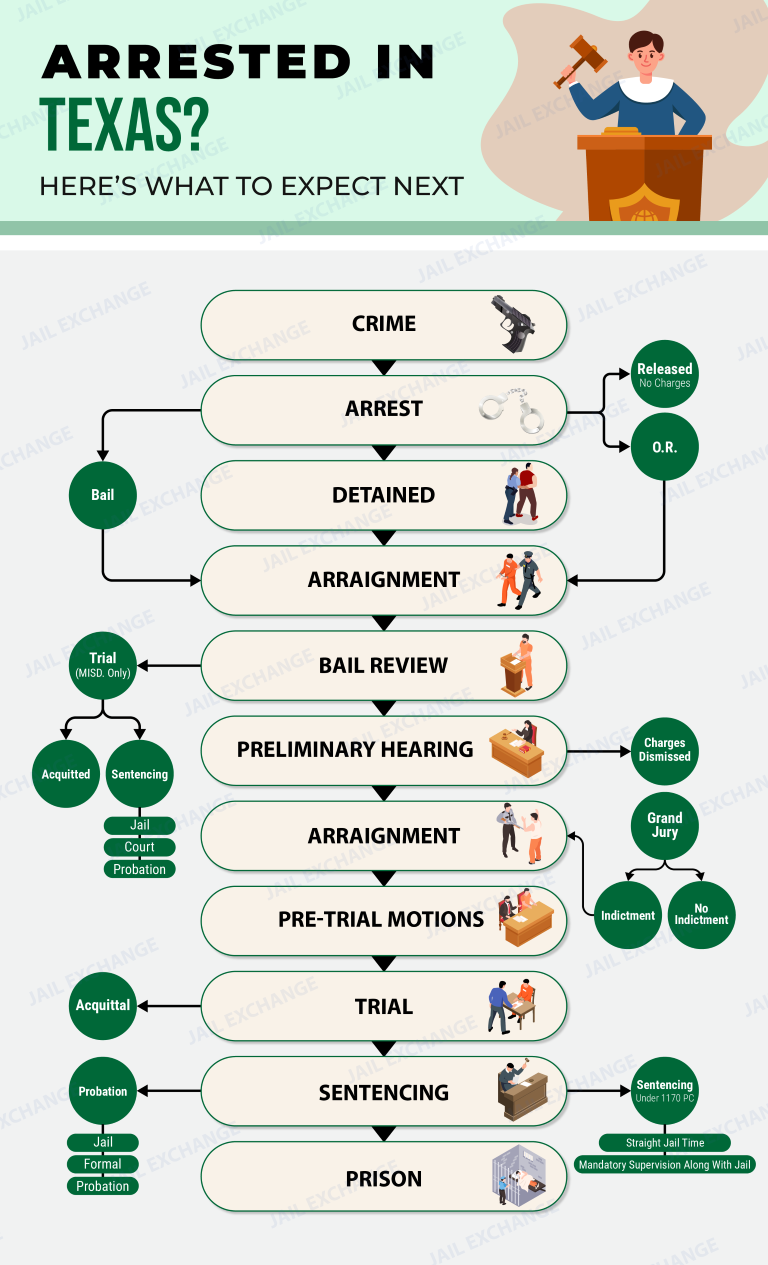
Lipscomb County fills the northeast corner of the Texas Panhandle against the Oklahoma line, and its county seat is the small town of Lipscomb; Booker, Follett, Darrouzett and Higgins are the other communities. Class C cases go to the county's single justice of the peace or to the Booker and Follett municipal courts, Class A and B misdemeanors go to the constitutional county court, and felonies go to the 31st District Court, a five-county district that also covers Gray, Hemphill, Roberts and Wheeler counties. The Lipscomb County Attorney prosecutes misdemeanors, and the 31st District Attorney, based in Pampa, prosecutes felonies. People arrested in the county are taken to the Lipscomb County Jail, run by the Sheriff in Lipscomb.
- Lipscomb County Courthouse (County Judge, county court and 31st District Court sessions), 101 South Main, P.O. Box 69, Lipscomb, TX 79056; County Judge (806) 862-4131
- Lipscomb County District and County Clerk (one office keeps both felony and misdemeanor files), P.O. Box 70, Lipscomb, TX 79056, (806) 862-3091
- Lipscomb County Attorney (misdemeanors), (806) 658-4545
- 31st District Attorney (felonies in Gray, Hemphill, Lipscomb, Roberts and Wheeler counties), Pampa, (806) 669-8035
- Lipscomb County Jail (Lipscomb County Sheriff's Office), Lipscomb, TX 79056, (806) 862-2611
Which court hears your case. The lowest grade, a Class C misdemeanor, is punished by a fine and nothing more: think of a speeding ticket, public intoxication, a theft of less than $100 or an offensive-contact assault. Tickets issued by deputies or troopers are answered in the Justice of the Peace court in Lipscomb, which covers the entire county, while tickets written by city officers inside Booker or Follett go to that town's municipal court. Class A and B misdemeanors, including a first DWI, are filed in the Lipscomb County Court before the County Judge, because the county has no county court at law. Felonies begin with magistrate warnings and, once a grand jury indicts, go to the 31st District Court, whose judge rides circuit among the five counties of the district.
Where pretrial inmates are held. The Sheriff runs a small jail in the town of Lipscomb, and that is where people arrested on local charges stay until they make bond, are released by a judge or resolve the case. Because the jail is small, the Sheriff may move people to a larger jail elsewhere in the Panhandle when space or security requires it. The Sheriff's Office at (806) 862-2611 can confirm where a particular person is being held and on what charge.
- Local courts in Lipscomb County (justice of the peace, municipal and county courts)
- Misdemeanor (for example, theft, a first DWI, assault causing bodily injury, criminal trespass)
- Felony (for example, burglary, felony theft, drug possession or delivery, aggravated assault)
- Violent felony (for example, murder, sexual assault, aggravated robbery)
- Juveniles (under 17) arrested in Lipscomb County
- Federal cases (U.S. District Court) from Lipscomb County
Local courts in Lipscomb County (justice of the peace, municipal and county courts)
With only a few thousand residents, Lipscomb County gets by with one justice of the peace for the whole county and two small municipal courts. The JP is also the usual magistrate for anyone booked into the Lipscomb County Jail, reading the legal warnings and setting bail.
Justice of the Peace court
- Lipscomb County Justice of the Peace (countywide precinct), P.O. Box 37, Lipscomb, TX 79056, (806) 862-3844
Municipal courts
- Booker Municipal Court, P.O. Box M, Booker, TX 79005, (806) 658-4579
- Follett Municipal Court, P.O. Box 216, Follett, TX 79034, (806) 653-2601
Darrouzett, Higgins and the town of Lipscomb send their traffic and Class C cases to the justice court.
County court
- Lipscomb County Court (constitutional county court; Class A and B misdemeanors and appeals from the justice and municipal courts), Lipscomb County Courthouse, Lipscomb, TX 79056; records through the District and County Clerk at (806) 862-3091
Because the justice court and these small city courts do not keep a court reporter's record, a person who loses there can ask the county court for a completely new trial, provided the appeal is filed within 10 days.
Misdemeanor (for example, theft, a first DWI, assault causing bodily injury, criminal trespass)
In a county this rural, misdemeanor arrests mostly come from traffic stops on State Highway 15 and U.S. 83, oil-field thefts, bar fights and domestic disturbances. Each starts with booking at the Lipscomb County Jail.
Seeing the magistrate
Texas requires the arrested person to be brought before a magistrate within 48 hours of arrest. In Lipscomb County this is normally the justice of the peace, who gives the article 15.17 warnings, explains the right to counsel and to stay silent, and sets bail. A person can be released after paying the full amount in cash, by hiring a licensed bail bondsman who posts a surety bond in exchange for a nonrefundable premium, or on a personal bond that relies on a signed promise to appear. A magistrate's emergency protective order often accompanies a family-violence arrest.
How the case is handled
The Lipscomb County Attorney files the formal charge, called an information, in the county court. The County Judge holds arraignment and pretrial settings, and the large majority of cases are settled by agreement. If the defendant wants a trial, a jury of six decides, and the verdict must be unanimous. A person who faces possible jail time and cannot afford a lawyer may ask for court-appointed counsel under Lipscomb County's indigent defense plan; tell the magistrate, or call the District and County Clerk at (806) 862-3091.
Ranges for frequent charges
- Theft: Class C when the value is under $100; Class B from $100 to $750, which means as many as 180 days and a fine reaching $2,000; Class A from $750 to $2,500, which means as long as a year and as much as $4,000.
- Assault causing bodily injury: Class A. A family-violence finding can turn a later assault into a felony and triggers the federal ban on firearm possession.
- Criminal trespass: generally a Class B offense, rising to Class A on a habitation or when the trespasser has a deadly weapon.
- First DWI: Class B, with 72 hours to 180 days possible and a fine as high as $3,000; Class A if the alcohol concentration is 0.15 or above; a six-day minimum when there is an open container. The driver's license is also suspended in a separate administrative case, and a DWI education class, an ignition interlock and a state fine on conviction may follow. Community supervision is common for a first offense.
Dismissal, pretrial diversion and deferred adjudication are all possible. Deferred adjudication leaves the person without a conviction if supervision is completed and can open the door to an order of nondisclosure. Most Class A and B cases in Lipscomb take two to six months.
Felony (for example, burglary, felony theft, drug possession or delivery, aggravated assault)
The 31st District Attorney prosecutes Lipscomb County felonies, and the 31st District Court hears them in Lipscomb on the weeks the judge is scheduled there. Because the district stretches from Pampa to the Oklahoma line, felony settings are spaced out more than in a single-county district.
- First appearance. The magistrate reviews a public safety report, a step required since the 2021 Damon Allen Act, and sets bond with prior arrests and convictions in mind. A defendant who cannot post it remains at the Lipscomb County Jail or a jail the Sheriff contracts with.
- Appointed lawyer. Felony defendants without money for a lawyer are assigned a private attorney by the 31st District Court under the indigent defense plan, with help from the Texas Indigent Defense Commission. Make the request at magistration or through the District and County Clerk at (806) 862-3091.
- Grand jury. A Lipscomb County grand jury hears the evidence from the District Attorney and decides whether to indict. A defendant can waive indictment and be charged by information, usually as part of a plea bargain.
- Ninety days. If the State is not ready for trial within 90 days of a felony arrest, a jailed defendant is generally entitled to a personal bond or a reduced amount, except in violent-offense cases.
- Plea or jury trial. Most cases end in a plea agreement after arraignment. At trial, 12 jurors must reach a unanimous verdict, and the defendant may elect to have them decide punishment.
Punishment brackets
- State jail felony: a term of 180 days up to 2 years inside a state jail facility; examples include theft of property worth $2,500 to $30,000 and possessing less than a gram of a Penalty Group 1 drug.
- Third degree: 2 to 10 years. Second degree: 2 to 20 years, including burglary of a home and most aggravated assaults. First degree: 5 to 99 years or life. A fine of as much as $10,000 is possible at every felony level.
- Drug cases depend on the penalty group and the weight, so they span the whole range from state jail felony to first degree.
The range climbs for repeat offenders under Texas enhancement laws. "3g" offenses require half the sentence, and at least two years, before parole eligibility; most other offenses reach eligibility at about a quarter of the sentence with good time. First-time felony defendants are frequently offered deferred adjudication. Count on six to eighteen months from arrest to the end of a Lipscomb County felony.
Violent felony (for example, murder, sexual assault, aggravated robbery)
Violent crime is rare in Lipscomb County, and a homicide or serious sexual assault usually brings in the Texas Rangers to help the Sheriff. The 31st District Attorney prosecutes the case in the 31st District Court. The Damon Allen Act bars personal bonds for violent charges, and Under a constitutional amendment Texas voters approved in 2025, judges in Lipscomb County can deny bail in some violent-crime cases.
- Capital murder: the penalty is either death, when the District Attorney seeks it, or life in prison without parole.
- Murder: first degree, so the jury or judge may set any term from 5 to 99 years, or life.
- Sexual assault: second degree. Aggravated sexual assault: first degree, carrying a 25-year minimum in some cases with child victims.
- Aggravated robbery: first degree, and because it is a "3g" offense, parole eligibility does not come until half the sentence has been served.
A person charged with one of these offenses usually stays in custody, either at the Lipscomb County Jail or in a larger jail by arrangement, until trial unless a high bail is posted. Capital cases require specially qualified defense counsel, and rural Panhandle counties typically rely on the Regional Public Defender for Capital Cases. Victims have constitutional rights under article I, section 30, including notice of hearings and the chance to speak at sentencing. Expect a year at the least, and often up to three, before a violent felony from Lipscomb County is finished.
Juveniles (under 17) arrested in Lipscomb County
Children who were 10 to 16 years old at the time of an alleged offense are handled in juvenile court. Anyone 17 or older at the time of the offense is charged as an adult in Lipscomb County.
The intake process
A juvenile probation officer serving Lipscomb County, typically through a juvenile probation department shared with neighboring Panhandle counties, screens each referral. The officer may release the child to a parent, handle the matter informally or send the case to the prosecutor. The County Attorney or the 31st District Attorney, depending on the local arrangement, decides whether to file a petition in the juvenile court the county's juvenile board has designated, often the county court or the 31st District Court.
Where children are detained
Lipscomb County has no juvenile detention center of its own. A child who must be held is typically placed under contract in a regional juvenile detention center elsewhere in the Panhandle, such as one in the Amarillo area. A detention hearing must take place within two working days, and the court reviews detention periodically after that.
What can happen
- Deferred prosecution or a supervisory caution for a first, low-level case.
- Juvenile probation with requirements like counseling, curfew, school attendance, community service and restitution, sometimes in an out-of-home placement.
- Commitment to the Texas Juvenile Justice Department (TJJD), or, for the gravest offenses, a determinate sentence whose remainder may be served in adult prison.
- Certification as an adult, generally available at 14 or older for capital and first-degree felonies (and certain aggravated drug felonies) and at 15 or older for other felonies.
The court appoints a lawyer for any child whose family cannot pay. Lipscomb County juvenile files are confidential, and most may be sealed once the young person qualifies.
Federal cases (U.S. District Court) from Lipscomb County
Under federal law, Lipscomb County belongs to the Amarillo Division of the Northern District of Texas. A federal case from Booker or Lipscomb is heard in Amarillo, roughly two and a half hours to the southwest.
- Amarillo Division clerk's office, Room 133, 205 SE 5th Ave., Amarillo 79101-1559, (806) 468-3800
- U.S. Attorney's branch office in Amarillo, Amarillo National Plaza Two, Suite 300, 500 S. Taylor St., Amarillo 79101-2446, (806) 324-2356
- Federal defense: the Federal Public Defender for the Northern District of Texas keeps an Amarillo office; if it has a conflict, the court appoints a private lawyer from its Criminal Justice Act (CJA) panel
Why a case might be federal
Few Lipscomb County cases go federal. The usual examples are drug trafficking on routes that cross the Oklahoma border, firearms offenses by people with felony records, theft of oil-field equipment that crosses state lines, and crimes involving federal farm or crop-insurance programs.
The federal process
In Amarillo, a federal magistrate judge holds the first appearance, who reviews the charges and arranges counsel. Commercial bail does not exist in federal court, so bail agents play no role. When prosecutors ask that someone be held, the detention hearing usually takes place within three court days, and the magistrate judge decides under the Bail Reform Act whether to release the person on conditions that U.S. Pretrial Services supervises or to order detention. A grand jury indictment is required within 30 days of an arrest on a complaint, and the Speedy Trial Act calls for trial within 70 days, a deadline that is often extended. Federal juries are 12 people and must be unanimous, though guilty pleas end most cases.
Sentence and appeal
The court's probation office writes a presentence investigation, and the district judge consults the advisory Guidelines and applies any mandatory minimum term. Federal inmates are not paroled; they serve close to 85 percent of the sentence in Bureau of Prisons custody and then a term of supervised release. Any appeal is taken to the Fifth Circuit in New Orleans.
The Federal Bureau of Prisons inmate locator lets families search for a federal prisoner by name or register number. A federal defendant who is waiting for trial in a county jail under a Marshals Service agreement can also appear on that county's jail roster. Juvenile defendants are rarely prosecuted federally.
The information here describes criminal cases in Lipscomb County in general terms and is not legal advice. Court schedules, phone numbers and jail policies change. Anyone facing a Lipscomb County charge should get a defense lawyer's advice; someone who cannot afford counsel can ask for an appointed lawyer at magistration or by calling the District and County Clerk at (806) 862-3091.