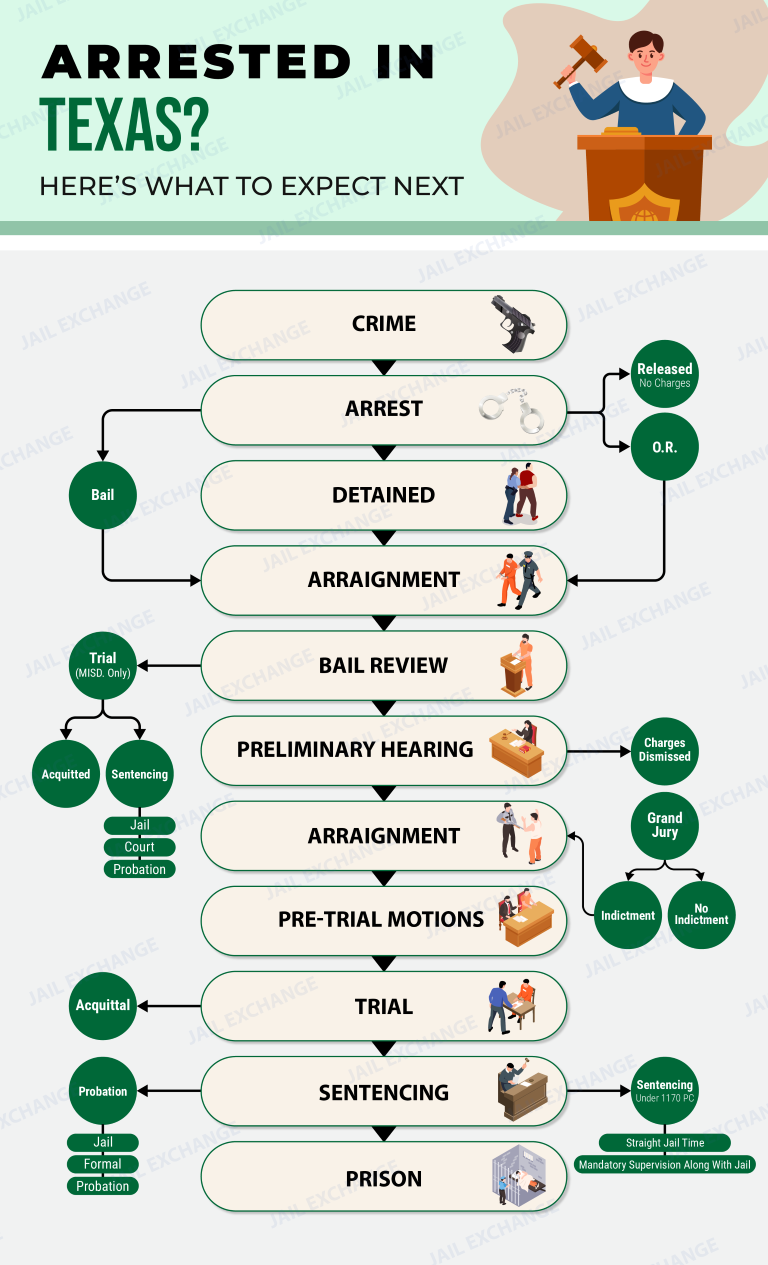
Tilden is the county seat of McMullen County, a ranching and oil-and-gas county in the South Texas brush country with fewer than 1,000 residents and no incorporated cities. Class C cases are heard by the county's justice of the peace; Class A and B misdemeanors go to the constitutional County Court before the County Judge; and felonies are tried in the 36th, 156th or 343rd District Court, three district courts that each cover Aransas, Bee, Live Oak, McMullen and San Patricio counties. The McMullen County Attorney handles misdemeanors, and felonies are prosecuted by the 156th District Attorney, whose office in Beeville also serves Bee and Live Oak counties. McMullen County's state-reported jail capacity was zero in 2022, so people held after arrest are kept in a jail outside the county under arrangements made by the Sheriff.
- McMullen County Courthouse (County Judge, County Court and County and District Clerk), 501 River St., P.O. Box 235, Tilden, TX 78072, (361) 274-3215
- McMullen County Justice of the Peace, 504 Courthouse Dr., P.O. Box 238, Tilden, TX 78072, (361) 274-3372
- 36th, 156th and 343rd District Courts, sitting at the McMullen County Courthouse, 501 River St., Tilden, TX 78072, (361) 274-3215
- 156th District Attorney (Bee, Live Oak and McMullen counties), Beeville, TX, (361) 358-1007
- McMullen County Sheriff's Office, Tilden, TX 78072, (361) 274-3311
Which court hears your case. Class C misdemeanors are offenses punishable by a fine only, such as speeding on State Highway 16 or 72, overweight or equipment violations by oilfield trucks, public intoxication, theft under $100 and assault without injury. Because McMullen County has no cities, every Class C citation goes to the McMullen County Justice of the Peace in Tilden; there is no municipal court. Class A and B misdemeanors, including a first DWI, are tried by the County Judge in the McMullen County Court, as the county has no county court at law. A felony case begins with magistrate warnings and goes to the 36th, 156th or 343rd District Court after a McMullen County grand jury indicts; those judges are based elsewhere in the district and hold court in Tilden as needed.
Where pretrial inmates are held. County jails in Texas are run by the Sheriff, but the Texas Commission on Jail Standards' August 2022 population report listed McMullen County with a rated capacity of zero, meaning it had no certified jail beds of its own at that time. People arrested in McMullen County who are not released quickly are taken to the jail that serves McMullen County, typically a jail in a nearby county that houses the county's prisoners under contract. Anyone who cannot post the bond set by the magistrate will stay there until released or until the case ends. To learn where a person is being held, call the McMullen County Sheriff's Office at (361) 274-3311.
- Local courts in McMullen County (justice of the peace, municipal and county courts)
- Misdemeanor (for example, theft, a first DWI, assault causing bodily injury, criminal trespass)
- Felony (for example, burglary, felony theft, drug possession or delivery, aggravated assault)
- Violent felony (for example, murder, sexual assault, aggravated robbery)
- Juveniles (under 17) arrested in McMullen County
- Federal cases (U.S. District Court) from McMullen County
Local courts in McMullen County (justice of the peace, municipal and county courts)
McMullen County is one of the least populated counties in Texas, and its entire local court system fits within a few buildings in Tilden. A single justice of the peace hears Class C cases, evictions and small claims for the whole county and serves as the magistrate who informs arrested people of their rights and sets bail.
Justice of the Peace court
- McMullen County Justice of the Peace, 504 Courthouse Dr., P.O. Box 238, Tilden, TX 78072, (361) 274-3372
Municipal courts
There are no incorporated cities in McMullen County, and therefore no municipal courts. Tilden, Calliham and the other communities are unincorporated, so citations issued anywhere in the county, whether by a deputy, a state trooper or a game warden, are filed with the justice of the peace.
County and district courts
- McMullen County Court (Class A and B misdemeanors; appeals from the justice court), 501 River St., Tilden, TX 78072, (361) 274-3215
- 36th, 156th and 343rd District Courts (felonies), through the County and District Clerk, 501 River St., P.O. Box 235, Tilden, TX 78072, (361) 274-3215
Someone found guilty in the McMullen County justice court can appeal to the County Court and have the case heard again from the start. The appeal has to be filed, with an appeal bond or cash deposit, within days of the judgment, so ask the justice court clerk about the deadline right away.
Misdemeanor (for example, theft, a first DWI, assault causing bodily injury, criminal trespass)
With Choke Canyon Reservoir, Eagle Ford Shale drilling sites and big hunting ranches drawing outsiders into a county with very few residents, many of McMullen County's misdemeanor defendants live somewhere else. DWI, drug possession, theft from well sites and trespass on hunting leases are typical charges, filed by the McMullen County Attorney in the County Court.
Arrest, booking and magistration
After an arrest, deputies book the person and arrange custody at the jail that serves McMullen County. A magistrate, usually the justice of the peace in Tilden, must see the person within 48 hours to explain the charge, give the warnings required by Texas law, take a request for appointed counsel and set bail. Release can be by cash, through a licensed bondsman's surety bond, or on a personal bond. Because the county has no jail beds of its own, prompt release on bond is common for low-level charges.
How a misdemeanor moves through the County Court
The County Attorney files an information, and the County Judge sets the case on the Tilden docket, which may meet only a few times a month. Most cases end with a plea agreement. A defendant who wants a trial can have one before the judge or before six jurors from McMullen County who must all agree, and may choose jury sentencing. A Tilden misdemeanor may end with dismissal, pretrial diversion, deferred adjudication, probation, a fine or a jail term.
Ranges for the four example charges
- Theft: Class C for under $100, Class B for $100 to $749.99, Class A for $750 to $2,499.99; theft of oilfield equipment worth more is a felony.
- First DWI: Class B; the jail range is 72 hours to 180 days, commonly probated, and the fine can reach $3,000. A reading of 0.15 or higher makes it Class A, while an open container in the vehicle carries a six-day minimum. Other consequences include license suspension, a DWI education program, a state fine on conviction, a possible ignition interlock and a separate administrative suspension.
- Assault causing bodily injury: Class A, with as much as one year of jail and a $4,000 maximum fine; family violence findings bring added firearm and enhancement consequences.
- Criminal trespass: Class B for entering posted ranch property or a lease without consent, Class A for a habitation or when armed with a deadly weapon.
Misdemeanors in McMullen County usually take two to six months. The county appoints private attorneys for defendants who cannot afford one, under its indigent defense plan with the Texas Indigent Defense Commission; ask at magistration or call the County Judge's office through the courthouse at (361) 274-3215.
Felony (for example, burglary, felony theft, drug possession or delivery, aggravated assault)
The 156th District Attorney's office in Beeville, (361) 358-1007, prosecutes felonies from McMullen County, which are assigned to one of the three district courts that serve the county. In practice the case moves like this:
- Custody and magistration. The defendant is held at the jail that serves McMullen County and brought before a magistrate within 48 hours. Using a public safety report, the magistrate sets bail and any release conditions.
- Grand jury in Tilden. The District Attorney presents the evidence to a McMullen County grand jury, which meets in private and decides whether to return an indictment.
- Arraignment. The defendant appears before the assigned district judge, enters a plea and receives the State's discovery.
- Resolution. Most felonies end in a plea bargain. If the case goes to trial, a 12-person McMullen County jury must agree unanimously, and the defendant may elect to be sentenced by the jury.
Felony grades and ranges
- State jail felony: 180 days to two years in a state jail and as much as $10,000 in fines; theft of $2,500 to under $30,000 and possession of less than a gram of a Penalty Group 1 drug are common examples.
- Third degree: two years minimum, ten years maximum.
- Second degree: two years minimum, twenty years maximum; burglary of a habitation and most aggravated assaults carry this range.
- First degree: five years minimum, up to 99 years or life.
- Drug crimes: graded by penalty group and weight; large loads found during highway stops can reach first-degree or enhanced ranges.
Deferred adjudication is often available on a first felony, and prior convictions can raise the punishment range. Parole eligibility generally arrives at one-quarter of the sentence including good time, or at one-half with a two-year minimum for "3g" offenses. Felonies from McMullen County typically take six to eighteen months. Indigent defendants receive appointed lawyers under the district courts' indigent defense plan; request one at magistration or call the County and District Clerk at (361) 274-3215.
Violent felony (for example, murder, sexual assault, aggravated robbery)
Violent felonies are rare in a county as small as McMullen, and a homicide or sexual assault investigation would usually involve the Texas Rangers. State law bars a personal bond for anyone charged with a violent offense, and a 2025 amendment to the Texas Constitution, approved by voters, lets judges deny bail in some violent-crime cases. A defendant who stays in custody is held at the jail that serves McMullen County throughout the case.
- Capital murder: on conviction, life imprisonment without parole or a death sentence.
- Murder: a first-degree offense whose range runs from 5 years up to 99 years or life.
- Sexual assault: second degree, plus registration as a sex offender; aggravated sexual assault is first degree, with a 25-year minimum in some cases involving young children.
- Aggravated robbery: first degree and a "3g" offense, so half the sentence must be served before parole can be considered.
Victims have rights under article I, section 30 of the Texas Constitution, including notice of proceedings, consultation with the 156th District Attorney's office and the right to make a statement at sentencing. Major cases from Tilden often depend on state crime laboratory results and can take one to three years. When the State seeks death, the court appoints lawyers who meet the state's special capital qualifications.
Juveniles (under 17) arrested in McMullen County
Texas juvenile courts deal with children who were 10 to 16 at the time of the alleged offense, and 17-year-olds are charged as adults. McMullen County has very few juvenile cases. They are heard in the court that the county's juvenile board has designated as the juvenile court, either the County Court or one of the district courts.
Intake
A juvenile probation officer serving McMullen County reviews each referral, contacts the parents and decides whether the child can be released to them. Minor first offenses may be closed with a supervisory caution or handled through deferred prosecution. For more serious conduct, the prosecutor files a petition in the juvenile court; the County Judge's office at (361) 274-3215 can tell families who is handling the case.
Detention
McMullen County has no juvenile detention center. When a child must be held, the child is typically placed in a certified juvenile detention center elsewhere in South Texas under a contract, such as one in a nearby county seat. The court holds a detention hearing within two working days, and a lawyer is appointed if the family cannot afford one.
Possible outcomes
- Deferred prosecution, after which the petition is dismissed if the child succeeds.
- Probation with requirements such as school attendance, counseling and restitution to victims.
- Commitment to the Texas Juvenile Justice Department (TJJD) when the child is adjudicated for a felony.
- Determinate sentencing for certain serious offenses, which can lead to adult prison time later.
In rare cases, the prosecutor may ask the court to certify a youth to stand trial as an adult. Generally the child must have been at least 14 for capital felonies, first-degree felonies and certain aggravated drug felonies, or at least 15 for other felonies, and a hearing and diagnostic study are required. Juvenile records from McMullen County are confidential and can usually be sealed.
Federal cases (U.S. District Court) from McMullen County
McMullen County belongs to the Laredo Division of the Southern District of Texas. Federal cases from the county are heard at the U.S. Courthouse on Victoria Street in Laredo, about 90 miles southwest of Tilden.
- U.S. District Clerk, Laredo Division, U.S. Courthouse, 1300 Victoria St., Laredo, TX 78040, (956) 723-3542
- U.S. Attorney's Office, Laredo, P.O. Box 1179, Laredo, TX 78042, (956) 723-6523
- Defense counsel: the Federal Public Defender for the Southern District of Texas, or a Criminal Justice Act panel attorney when that office has a conflict
When a McMullen County case becomes federal
A case moves to federal court if the conduct violates a federal statute and the U.S. Attorney's Office chooses to prosecute. McMullen County is not on the border, but it lies along South Texas routes used to move migrants and drugs north from Laredo, so human smuggling, transporting undocumented people through ranchland, and drug trafficking are the most common federal cases from the area. Firearms offenses and fraud involving federal programs or interstate oil and gas commerce also come up.
Steps in a federal case
The person arrested appears first before a U.S. magistrate judge in Laredo. Federal court has no commercial bail system; under the Bail Reform Act, the magistrate judge either releases the defendant on conditions supervised by U.S. Pretrial Services or orders detention, generally after a hearing held within three court days. A defendant charged by complaint must be indicted within 30 days, and the Speedy Trial Act calls for trial within 70 days, though continuances are routine. Federal juries have 12 members and must agree unanimously, yet most smuggling and drug cases end in pleas. The sentence follows a presentence report and the advisory Sentencing Guidelines, along with any mandatory minimum. There is no parole, so roughly 85 percent of the term is served in the Bureau of Prisons before supervised release begins. Any appeal from the Laredo court is decided by the Fifth Circuit, which sits in New Orleans.
Searching for a federal defendant
The Federal Bureau of Prisons inmate locator for a McMullen County defendant by name or register number. A defendant held before trial in a county jail that contracts with the U.S. Marshals may also appear on that jail's roster. Federal juvenile prosecutions are rare; a McMullen County youth's case almost always stays in state court.
This guide gives a general description of criminal court procedure in McMullen County and is not legal advice; officeholders, schedules and custody arrangements change. To request a court-appointed lawyer, ask the magistrate after arrest or call the County and District Clerk at (361) 274-3215, and to find where someone is held, call the Sheriff's Office at (361) 274-3311.