
Emery County Jail
Emery County Jail
Jail Phone Number
435-381-5500Emery County Inmate Search: Custody and Family Contact
After an arrest in Emery County, identifying the custodian is more useful than guessing a location from the town name. The Emery County Jail is a county detention facility; the Sheriff’s Office contact address is 1850 North Des Bee Dove Road, Castle Dale, UT 84513. This page separates that custody inquiry from finding charges, requesting a booking image, arranging family contact and locating a person moved to another system.
Open the custody-search link and use the exact legal name when the search asks for it. Utah VINELink provides participating jail and prison custody information and notifications. A missing or similar-name entry does not establish where somebody went, whether charges were dismissed or whether a booking photograph is public; those are separate questions for the responsible office.
Use the contact listed by the responsible agency to reach the county Sheriff with an initial custody question: who holds the person, and how should family contact that custodian? Obtain the case number if available and keep it separate from any booking reference. The bail page explains release conditions, while the court page identifies the offices for filed charges and hearings.
Read inmate search answers
 Read inmate search answers
1. How should I search for someone after an arrest?
Start with the name and arresting agency, not a commercial photograph site. Open the custody search and use Utah VINELink for participating jail and prison records. The Sheriff’s Office contact is 1850 North Des Bee Dove Road, Castle Dale, UT 84513, the contact listed by the responsible agency. When the search leaves the location unclear, ask that office to identify the present custodian. Arrest reports, custody entries and filed court cases concern different events; establish identity rather than selecting someone solely because the name resembles your relative’s.
↑ Back to the question list2. What does an empty search result tell me?
An empty result establishes only that the search did not return a matching entry. It does not choose among release, a different custodian, a transfer or a record outside that system. Ask the arresting agency to explain the next custody step for the named person, including the receiving facility whenever a transfer occurred. For county inquiries the Sheriff can be reached on the contact listed by the responsible agency, but that contact does not establish a universal destination after arrest. A prison-system search is especially unsuitable for an unsentenced county defendant, whom Corrections expressly excludes from its lookup.
↑ Back to the question list3. Is the jail operating, and does it hold state inmates?
Utah Corrections currently lists Emery County among its Inmate Placement Program housing partners. County commission records also address people under Emery County Jail custody, and an October 2026 agenda includes a jail-command staffing item. Those official records support a functioning detention role, not a current bed count or a universal booking route. The local facility discussed here is Emery County Jail. Direct an individual custody inquiry to the Sheriff’s Office at 1850 North Des Bee Dove Road, Castle Dale, UT 84513, the contact listed by the responsible agency; do not infer that someone remains there merely because a court case is filed locally.
↑ Back to the question list4. How do Utah custody alerts work?
The Attorney General describes VINE as Utah’s jail and prison custody-notification service. Through VINELink, select the relevant person carefully and use the service’s registration choices for custody-event notices. The state also publishes 877-884-8463 for registration. Notifications can help families and victims follow participating records, but they do not authorize a visit or establish a court’s next date. Keep notification contacts current and take hearing instructions from the court notice. This adult custody service should not be used to infer where a child has been placed.
↑ Back to the question list5. Where do I find charges and court paperwork?
A custody listing reflects detention information, not necessarily the accusation ultimately filed. Find the case in Xchange or ask the court named on the citation or notice for the public file. The court guide distinguishes District, Justice and Juvenile offices. Case numbers help separate people with similar names and connect a hearing to the correct file. Sealed and expunged records and juvenile delinquency material are outside the public Xchange coverage described by the judiciary; an absent public result is not a finding that no case exists.
↑ Back to the question list6. Can I get a mugshot or booking photograph?
Finding a custody entry does not establish public access to the booking photograph. Address a photograph or media request to the Sheriff’s Office records contact through the contact listed by the responsible agency, using the person and incident details; request the office’s access decision rather than paying a private image seller. The Marshals’ policy separately prohibits public disclosure of federal prisoner photographs and personal histories. For immigration records, use the official ICE records-request route. Neither a request nor a name appearing online guarantees an image will be released.
↑ Back to the question list7. How can I find the release order and payment instructions?
Ask which court issued the current pretrial order, what financial or other conditions apply, and whether another custody authority remains. Section 77-20-205 treats judicial release, conditions and detention as distinct decisions; paying for a call does not make that decision. The bail page explains early authority, judicial amounts, modifications and private surety charges. Section 77-20-401 permits selected payment methods but does not establish this jail’s current options. Before arranging bail, use the contact listed by the responsible agency to ask the Sheriff for instructions tied to the identified person and release order.
↑ Back to the question list8. How does someone request a public defender?
The county attorney directs defendants needing appointed criminal counsel to the court for an application. Its prosecution role is different from representing the accused. Justice Court’s rights form provides for appointment when a person cannot afford counsel and the charge permits jail. Request counsel from the judge, with the clerk explaining how the financial declaration is submitted. Castle Dale District Court is at 1850 North Des Bee Dove Road, Castle Dale, UT 84513, 435-264-4750; Justice Court is at 1850 N 560 W, Castle Dale, UT 84513, 435-381-5194. A family’s custody inquiry does not itself complete the defendant’s application.
↑ Back to the question list9. How do I arrange a family visit?
Request the current visiting directions from the actual custodian before choosing a date or traveling. Ask which visiting format is available, how appointments and approval are arranged, who can participate, which identification is needed and how any court contact restriction affects attendance. Those questions are not promises of a particular local schedule or approval rule. Our visitation information concerns that service topic, not custody confirmation. The Sheriff receives county-jail visiting inquiries through the contact listed by the responsible agency; after a transfer, request the receiving custodian’s instructions instead.
↑ Back to the question list10. How can I put money on the right account?
Ask the custodian to identify its currently authorized deposit service and the account purpose. Different payment purposes matter: account credit for spending or communication is distinct from satisfying the court’s release condition. Account-related information belongs on the money and commissary pages; neither establishes that a bail condition was met. Obtain payment instructions that identify both the custodian and account holder, and retain the receipt for that transaction. The Sheriff’s county contact, the contact listed by the responsible agency, can receive account questions; a payment advertisement is not the agency’s authorization.
↑ Back to the question list11. How do calls, messages and account setup work?
Have the custodian identify the communication service and current setup process before creating an account or buying credit. Questions should distinguish receiving calls and any approved messages from confidential contact with counsel; a family communication account does not establish a private legal channel. Our phone information and electronic-message information address those topics without establishing one provider for every custody location. Use the Sheriff’s county contact, the contact listed by the responsible agency, to request jail communication directions; a new custodian may use different arrangements.
↑ Back to the question list12. What address should I use for personal or legal mail?
A physical office address is not, by itself, a complete instruction for delivering inmate correspondence. Ask the custodian for the current personal-mail route and separately ask about legal mail, sender information, photographs, publications and any screening rules. Do not use the District or Justice Court mailing box as an inmate mailing address. Our mail information concerns that service topic. The county contact is the Sheriff’s Office at 1850 North Des Bee Dove Road, Castle Dale, UT 84513, the contact listed by the responsible agency; obtain the actual mailing format for the person before sending correspondence.
↑ Back to the question list13. Who can explain the release of belongings?
Identify who holds the items before arranging collection. Property retained by a custodian and property connected with an investigation may require different inquiries; ask the holding agency which office handles the request, what authorization is needed, who may collect it and what identification or appointment it requires. These are questions to obtain instructions, not a statement that Emery uses a particular form or pickup day. For a county-jail property inquiry, contact the Sheriff’s Office at 1850 North Des Bee Dove Road, Castle Dale, UT 84513, the contact listed by the responsible agency. Avoid traveling on the assumption that a release from custody also releases every item.
↑ Back to the question list14. How can I report a health or safety concern?
If the concern involves someone believed to be in county custody, tell the Sheriff’s Office who is involved, describe the concern and provide a way to reach you. Ask that it reach the responsible custody or medical staff; a family inquiry is not a promise that private medical information will be disclosed. County records document health-care arrangements for people in Emery County Jail custody, not guaranteed treatment or medication access for a particular person. For the county inquiry, contact the Sheriff at 1850 North Des Bee Dove Road, Castle Dale, UT 84513, the contact listed by the responsible agency; call 911 for an immediate emergency outside custody.
↑ Back to the question list15. How do I look up and respond to a warrant?
Address county warrant questions to the Sheriff’s Office, 1850 North Des Bee Dove Road, Castle Dale, UT 84513, the contact listed by the responsible agency. The posted Sheriff office page offers no separate county warrant-search link. Consult Utah Warrants Search and Xchange, remembering that court entry and removal affect the state results. Discuss responding with counsel and obtain the issuing court’s directions; a search alone does not settle an order. District clerk: 1850 North Des Bee Dove Road, Castle Dale, UT 84513, 435-264-4750. Justice clerk: 1850 N 560 W, Castle Dale, UT 84513, 435-381-5194. Seeking a new hearing date does not, by itself, establish resolution of the warrant.
↑ Back to the question list16. Who can tell me the next hearing location?
Find the court name and case number on the notice rather than using the jail location as the hearing address. District and Juvenile clerks are at 1850 North Des Bee Dove Road, Castle Dale, UT 84513, 435-264-4750, with PO Box 635 for mail. Justice Court is physically at 1850 N 560 W, Castle Dale, UT 84513, 435-381-5194, with mail to PO Box 555, Castle Dale, UT 84513. The court page explains jurisdiction and public case access. A custody entry or a VINE event is not an instruction to appear at a particular building or video link.
↑ Back to the question list17. What if the person is held on a federal case?
Emery belongs to the Southern Region of the Central Division in the federal District of Utah. Its St. George federal courthouse contact is 197 East Tabernacle Street, St. George, UT 84770, District Court clerk 435-703-7308. The court’s notice determines the appearance site, and federal release or detention is decided through federal proceedings. Marshals custody before trial need not appear as a Bureau of Prisons placement. The BOP inmate locator concerns that prison system; direct pretrial-location inquiries to the responsible custodian, since satisfying a county release condition does not end independent federal custody.
↑ Back to the question list18. How do I follow an ICE detainer and a later transfer?
Separate the request from a completed immigration pickup. These steps concern locating the person, not an assumption that all county arrestees go to one immigration facility:
- Ask the custodian to identify any I-247A request and the pending local release event.
- Find out whether ICE actually took custody; retain the A-number if it is supplied.
- Under 8 CFR 287.7(d), the requested additional detention can reach 48 hours beyond scheduled release, with Saturdays, Sundays and holidays omitted when counting that period.
- Obtain the name of the receiving detention facility rather than choosing an assumed Utah destination.
- Enter the required identifying information in ICE’s detainee locator, and direct unresolved location questions to ERO.
Utah Code § 17-72-505(5) concerns notice and transfer coordination for unlawfully present people finishing felony or specified class A sentences. That narrower provision does not establish a universal arrest-to-ICE route, and the adult locator cannot search for people under 18.
↑ Back to the question list19. Where do I search for a person under state Corrections?
Open the Utah Department of Corrections offender search for current departmental supervision. The department expressly says unsentenced people awaiting trial in county jails are outside that lookup. Its Inmate Placement Program also includes Emery, so state supervision can involve county housing rather than a prison building. Our Utah state-prison directory addresses prison information, not the destination of an individual transfer. Obtain the actual custodian and placement before sending money or mail; do not name an intake prison on the strength of a sentencing entry alone.
↑ Back to the question list20. Who should a guardian contact about a child?
The state youth-services map places Castle Country Youth Center in its Emery County service section, at 1395 South Carbon, Price, UT 84501-0903, 435-636-4720. It also names other centers and programs, so that listing is not evidence of one child’s present placement. The Juvenile Court office is 1850 North Des Bee Dove Road, Castle Dale, UT 84513, 435-264-4750, mail PO Box 635, Castle Dale, UT 84513. The arresting agency and youth-services office are inquiry routes for identifying the responsible intake worker and custodian. Adult jail records, VINE and the adult ICE locator should not be substituted for a juvenile placement inquiry.
↑ Back to the question list21. How can I avoid a false demand for release money?
Compare any demand with the actual case and responsible office before giving money or account information. The Utah judiciary specifically warns about fake court texts demanding payment through links or QR codes. A caller’s knowledge of a booking name does not establish authority to collect a bond. Use the Sheriff’s Office number the contact listed by the responsible agency for the county custody question and the named court’s clerk for its order. A legitimate fine-payment route must still be distinguished from jail accounts and bail; no payment advertisement establishes that someone is eligible for release.
↑ Back to the question list22. Which sheriff, jail and municipal-police contact should I use?
The county office contact for the Sheriff and inquiries about Emery County Jail is 1850 North Des Bee Dove Road, Castle Dale, UT 84513, the contact listed by the responsible agency. Identify the arresting agency when asking about an event in Castle Dale, Clawson, Cleveland, Elmo, Emery, Ferron, Green River, Huntington or Orangeville. A city-hall contact establishes neither a municipal police desk nor an inmate-custody line. Request the responsible agency and present custodian rather than assuming every arrest uses one transport route. Immediate emergencies go to 911, while court inquiries belong with the clerks identified in the hearing answer.
↑ Back to the question listEmery County Bail and Release
Bail here starts with two separate questions: who has custody, and which release order governs that person. Local detention is provided at the Emery County Jail; contact the Sheriff’s Office at 1850 North Des Bee Dove Road, Castle Dale, UT 84513. An arrest somewhere in the county does not, by itself, establish an individual’s present jail.
Try the custody-search link using the person’s legal name, then separate a custody entry from court charges. Utah’s VINELink covers participating jails and prisons and offers notifications. Our Emery County Inmate Search answers questions about being arrested, current custody, filed charges and warrants, as well as property, public defense and mugshot requests; finding a name does not authorize release.
The first inquiry is to the Sheriff’s Office at the contact listed by the responsible agency, asking which custodian holds the person, whether a current release order exists, and who receives an authorized payment. Keep the arresting agency and case number available if known. Use the court guide to reach the clerk rather than treating jail account instructions as court directions.
1. How do I establish custody before arranging bail?
The Sheriff’s Office is the county contact at 1850 North Des Bee Dove Road, Castle Dale, UT 84513, the contact listed by the responsible agency. Give the name used at arrest and ask whether that office has custody now, not merely whether an arrest occurred. A hospital stay, release or transfer cannot be identified from an empty search alone. The state corrections department lists Emery among counties currently housing state inmates, which establishes a detention role but not the location of every local defendant. Use Inmate Search for the separate custody and records questions.
↑ Back to the question list2. Is a neighboring county automatically the receiving jail?
Do not turn a county name on an arrest report into a transport itinerary. The operating Emery County Jail and its participation in state-inmate housing do not establish that every arrest goes there, that no transfer ever occurs, or that a particular neighboring county is the universal host. Identify the arresting agency and request the current custodian and receiving facility before arranging travel. A court warrant may belong to a different case from the arrest being discussed. For the individual custody route, ask the Sheriff’s Office at 1850 North Des Bee Dove Road, Castle Dale, UT 84513, the contact listed by the responsible agency.
↑ Back to the question list3. When can a jail official set an early release amount?
Utah Code § 77-20-204 provides a limited stage before law enforcement submits its probable-cause statement. For misdemeanors, the person must be ineligible for recognizance and agree to appearances in writing; the authority excludes domestic violence and the specified DUI offenses. The felony branch covers only the listed eligible third-degree offenses, not every felony. For that felony branch, neither probation nor parole nor release on another criminal case is permitted; missing court must be the primary risk, and appearances must be promised in writing. These are eligibility restrictions, not an Emery promise that money will be accepted in a particular case.
↑ Back to the question list4. What are the early ceilings, and when do they stop applying?
The limits on a qualifying jail official’s financial condition are not the later judicial schedule. Section 77-20-204 caps the early amount at:
- An eligible felony carries a $5,000 early ceiling; for a state class A misdemeanor, the ceiling is $1,950.
- Under state law, the official’s limit is $680 for class B or $340 for class C.
- City or county ordinance classified B: $150; ordinance classified C: $80.
Several booked offenses produce one early amount, bounded by the highest applicable offense ceiling. The start of the magistrate’s Rule 9 examination ends both the official’s ability to fix or modify the amount and the ability to release on that earlier condition. Waiting for the review to finish is the wrong cutoff. A Corrections 72-hour hold described in § 64-14-205 also bars release under this section.
↑ Back to the question list5. How does a judge’s financial condition differ?
A magistrate’s later decision is governed by § 77-20-205, rather than automatic adoption of the booking figure. Except when the financial condition is an unsecured bond, § 77-20-205(7) requires reference to the § 77-20-205.5 schedule, the person’s financial ability and the risk of missing court. No deference is owed to either the jail official’s decision or its amount; the court sets a single amount per case.
- First-degree felony with a minimum mandatory sentence: $25,000; without a minimum mandatory sentence: $20,000.
- For a second-degree felony the default is $10,000; a third-degree felony defaults to $5,000.
- The misdemeanor defaults are $2,000 for class A, $700 for class B, and $350 for class C.
- For non-ordinance infractions the default is $130; local ordinance defaults are $150 for class B, $80 for class C and $25 for an infraction.
Those are the statutory judicial defaults, not a cashier’s quote for every defendant. The actual order, permitted security and any separate custody authority determine the next step; read the full financial-condition schedule rather than multiplying a number by the count of charges.
↑ Back to the question list6. Can the court order detention instead of financial release?
A release decision includes more than selecting a dollar figure. Section 77-20-205 directs the court to decide between release on recognizance, release subject to conditions and detention when the legal grounds are met. The statute addresses public-safety and appearance risks and the findings required for detention. Paying a phone account cannot replace the required release order; the law also does not compel provision of a service that the county lacks. Counsel should address the legal basis for continued detention and the conditions the court could lawfully use instead.
↑ Back to the question list7. Must the defendant wait seven days to seek a change?
No seven-day waiting period governs a first motion to modify the pretrial status order. Both Rule 7(c) and Rule 7A(c) permit an initial modification motion whenever needed, provided notice allows preparation by the other side and notification and attendance of alleged victims. For a subsequent request, the circumstances must have changed materially. This differs from a continuance provision affecting preparation for an initial appearance. Difficulty raising funds should be discussed with defense counsel; it is not an automatic legal presumption that the judge must order release.
↑ Back to the question list8. Where should a family pay, and are cards accepted?
Obtain directions for the particular release order from the Sheriff’s Office at the contact listed by the responsible agency. Section 77-20-401 permits jails to elect among specified payment forms, including cash, certain checks or money orders and cards; it does not prove which choices this facility currently offers. The statute separately addresses court acceptance and surety bonds. Ask who receives the funds, what case and person they secure, and what other hold remains. The Justice Court’s designated fine-payment service is for court fines, not evidence of an online jail-bail channel.
↑ Back to the question list10. Which local court offices handle the case?
- Castle Dale District Court and Emery County Juvenile Court: 1850 North Des Bee Dove Road, Castle Dale, UT 84513; mail PO Box 635, Castle Dale, UT 84513; 435-264-4750.
- Emery County Justice Court: 1850 N 560 W, Castle Dale, UT 84513; mail PO Box 555, Castle Dale, UT 84513; 435-381-5194.
Felony and class A criminal filings go to District Court; ordinary class B, class C, local ordinance and traffic filings fall within Justice Court’s work. The Justice office opens at 8:30 a.m. and closes at 5 p.m. on weekdays, excluding county holidays. For District and Juvenile clerk inquiries, contact the listed office during business hours. The court guide distinguishes notices, case records and hearing locations.
↑ Back to the question list11. How is a public defender or court-appointed lawyer requested?
For an application seeking appointed criminal defense, the county attorney’s instructions identify the court as the contact. That is an application route, not a claim that the prosecutor represents the accused. The Justice Court’s rights form describes appointment for someone unable to afford counsel when the charge permits incarceration. Ask the judge for counsel and the clerk about the required financial declaration; do not wait for a family member’s jail inquiry to become a court application. District Court’s clerk can be reached at 435-264-4750, 1850 North Des Bee Dove Road, Castle Dale, UT 84513.
↑ Back to the question list12. What should we do about a missed hearing or warrant?
Treat the missed appearance as a court problem, not merely a payment problem. Look up the case in Xchange and identify the issuing court before discussing a new hearing or surrender with defense counsel. An online record and a jail account receipt cannot establish that an order was withdrawn. The Sheriff’s Office at 1850 North Des Bee Dove Road, Castle Dale, UT 84513, the contact listed by the responsible agency, can receive a county warrant inquiry. The District clerk at 1850 North Des Bee Dove Road, Castle Dale, UT 84513, 435-264-4750, or the Justice clerk listed above is the place to ask what the case currently requires.
↑ Back to the question list13. Is a deposit for calls or commissary part of bail?
Keep separate notes for court security, a private bond contract and jail spending. A payment intended for an account is not proof that the release condition has been satisfied. Our sending-money information concerns accounts rather than a judicial custody decision. Before using a payment destination, ask which service and account the custodian authorizes, who receives any unused balance, and whether a transfer changes the instructions. Obtain the current jail-account directions from the Sheriff’s Office at the contact listed by the responsible agency rather than using a payment link in an unexpected demand.
↑ Back to the question list14. Does an Emery federal arrest follow the same bail schedule?
No. The federal district map places Emery in the Southern Region of the Central Division, not the Northern Division. The St. George federal hearing location is 197 East Tabernacle Street, St. George, UT 84770, with the District Court clerk at 435-703-7308. Use the location stated on the federal hearing notice. Federal release and detention hearings follow federal procedure; Utah’s early jail ceilings are not the federal bond schedule. The Marshals may manage pretrial custody, while the federal inmate locator covers the Bureau of Prisons system rather than every person awaiting a federal hearing.
↑ Back to the question list15. How does an ICE detainer affect a county release?
An immigration detainer can affect when someone leaves local custody. Ask the holding agency what it has received and whether a transfer is pending. Counsel can check how the request applies to this case. Use the ICE detainee locator for immigration custody.
↑ Back to the question list16. Can someone serving a state sentence still be in this jail?
Yes, the state’s Inmate Placement Program currently lists Emery among its county housing partners. A state sentence therefore does not establish that an individual has already moved to a state prison. Use the Corrections offender search for people under that department’s supervision and our Utah state-prison directory for prison information. Corrections expressly excludes county defendants who await trial or have not been sentenced from that search. Ask the current custodian about the individual’s placement, rather than naming an assumed intake prison.
↑ Back to the question list17. Who answers questions about a detained teenager?
The youth-services map includes Castle Country Youth Center under its Emery County section: 1395 South Carbon, Price, UT 84501-0903, 435-636-4720. The same map includes multiple centers and services, without establishing an individual child’s placement at Castle Country. The county Juvenile Court is at 1850 North Des Bee Dove Road, Castle Dale, UT 84513, 435-264-4750, with mail to PO Box 635, Castle Dale, UT 84513. A guardian can ask the youth-services office or arresting agency to identify the responsible intake worker and present custodian. Do not use an adult custody alert as a juvenile placement record.
↑ Back to the question list18. How can we check an unexpected payment demand safely?
Start again from a known agency contact instead of using the caller’s link. Utah’s judiciary warns that payment texts and QR-code demands falsely claiming to come from the courts are scams. Ask which case, signed condition and receiving office a proposed payment concerns, and compare that with the clerk’s record. No stranger can establish release eligibility simply by reciting an arrest or a relative’s name. For county custody questions, use the Sheriff’s Office at the contact listed by the responsible agency; the court offices above handle the court record and authorized fine instructions.
↑ Back to the question listThe Emery County Sheriff recommends that you might want to use a bail bond agent licensed to do business in Emery County.
However if you don't want to use a bail bond agent:
- You can always pay a cash bond yourself, or use your home in Emery County, or in some cases the state of Utah, but the benefit of using a bail bond agent is that they take responsibility for making sure the inmate shows up for court in Emery County, and if they don't, then they take the financial responsibility.
- The typical fee for a bond in Utah is between 10-20% of the bail amount; usually 15% or less. So if an offender has a bail of $10,000.00, their bond will be $1,500.00.
- Pay by cash, cashier's check, money order or credit card at the Emery County Jail, or the courthouse in Emery County where the offense took place.
Call 435-381-5500 to find out the exact bond (plus other fees) amount, or look it up online by looking up the information on the Emery County inmate locator.

Visiting at Emery County Jail
Call the listed jail line at 435-381-5500, or the Sheriff’s Office at 435-381-2404, to arrange a visit and confirm where to enter in Castle Dale. The earlier listings differ: one gave Tuesday–Sunday, 8:15 a.m.–4 p.m., while the on-site card gave Saturday and Sunday, 9 a.m.–9 p.m. Confirm the person’s assigned day and time before traveling. Times are Mountain.
Video from your own device
Choose Emery County Sheriff’s Office, Utah in Inmate Canteen and use its video-call option if available. Check the price and availability before paying; do not use the old local windows to assume a home video schedule.

Inmate Canteen Video Visitation allows family members and approved contacts to hold scheduled, face-to-face video visits with incarcerated loved ones from home. Using a computer with a webcam or a mobile device, visitors can connect directly through housing-unit video kiosks without traveling to the correctional facility.
Important: Advance Visitor Clearance Required
Detention centers do not permit unscheduled or unverified video sessions. Correctional facilities require prospective visitors to submit government-issued photo identification and receive administrative clearance before booking an appointment, an approval process that can take up to 48 hours depending on facility staffing. You should verify your visitor approval status with the facility prior to scheduling. If you do not register well in advance, you will miss your loved one's scheduled visiting window for the week.
Step-by-Step Instructions to Register and Schedule a Video Visit
- Visit www.inmatecanteen.com and sign into your account.
- Register your visitor profile and upload a clear photograph of your government-issued ID (driver's license or passport) for facility background review.
- Wait for email notification confirming facility visitor approval.
- Select Video Visitation, choose the detention facility, and select the inmate.
- Browse the available schedule calendar, select an open time slot, and pay the visitation fee using a credit or debit card.
- Log into the website or app 10 minutes prior to the start time on a device with a functioning camera, microphone, and reliable high-speed internet connection.
What the Inmate Needs to Do
The inmate receives a visitation notification on their housing unit video kiosk. At the appointed time, they log in with their PIN and sit before the terminal. Inmates and visitors must strictly observe jail dress and conduct rules; sessions are monitored by staff and will terminate immediately upon any violation.
Official Provider: Inmate Canteen Official Website
Customer Service Telephone: 1-715-690-2965
Support Hours: Monday – Friday, 8:00 AM – 5:00 PM CST
Supported Languages: English and Spanish
Other Services Provided by Inmate Canteen (TurnKey Corrections)
In addition to Remote Video Visitation, Inmate Canteen provides several other communication, financial, and commissary services at participating correctional facilities:
- Commissary & Snack Packs: Order pre-approved snack boxes, food packages, and clothing directly to the jail.
• Learn more on our website: Commissary Orders Guide | • Visit official vendor page: Inmate Canteen Commissary - Digital Messaging & Chirp Texts: Send electronic messages and photos directly to housing pod kiosks and handheld devices.
• Learn more on our website: Digital Messaging Guide | • Visit official vendor page: Inmate Canteen Messaging - Trust & Phone Deposits: Deposit money directly into an inmate's jail trust account or phone calling balance.
• Learn more on our website: Trust & Phone Deposits Guide | • Visit official vendor page: Inmate Canteen Deposits
Emery County Court Guide
This court guide separates an Emery County criminal case from the question of who presently holds the accused. The county has the Emery County Jail; the Sheriff’s Office contact is 1850 North Des Bee Dove Road, Castle Dale, UT 84513. Neither the town where an arrest occurred nor a court’s mailing box establishes the courtroom or custody location for a particular hearing.
Begin with the custody-search destination to address detention first; use a court case number for the separate search of filed proceedings. The Emery County Inmate Search addresses custody after arrest, requests for a public defender, property and mugshots, plus warrants and the filed charges. A Utah custody notification can help with participating jail and prison records, but it is not a court calendar.
For a first custody inquiry, call the Sheriff’s Office at the contact listed by the responsible agency and ask which agency is holding the person and which court is named on the paperwork. Clerk contacts below address hearings, applications and court files. The bail and release page distinguishes the early jail amount from a subsequent judicial decision and from deposits into spending accounts.
1. Where are the three court offices, and how do I contact them?
- Castle Dale District Court and Emery County Juvenile Court: 1850 North Des Bee Dove Road, Castle Dale, UT 84513; postal address PO Box 635, Castle Dale, UT 84513; 435-264-4750.
- Emery County Justice Court: physical 1850 N 560 W, Castle Dale, UT 84513; postal address PO Box 555, Castle Dale, UT 84513; 435-381-5194.
The judiciary’s county directory distinguishes these three courts from a Green River kiosk. Justice Court’s weekday office opens at 8:30 a.m. and closes at 5 p.m.; county holidays are excluded. Contact the District or Juvenile clerk during business hours about that office’s services. The notice’s court name distinguishes the adult criminal file from a juvenile matter despite the shared office telephone.
↑ Back to the question list2. Is Green River City Hall a separate criminal court?
The judiciary classifies its Green River City Hall entry as a kiosk, at 460 E Main St, Green River, UT 84525. That entry is not listed as a separate District, Justice or Juvenile Court. It should not be substituted for the hearing location printed on a summons. Justice Court handles the relevant local misdemeanor, ordinance and traffic filings at the county office described above; the actual charge and filed case identify the court. Ask the Justice clerk at 435-381-5194 about a county Justice filing, rather than choosing a city hall because it is closer.
↑ Back to the question list3. Which court hears misdemeanors, and what happens at arraignment?
District Court ordinarily receives class A criminal cases; the class B and class C misdemeanor docket generally belongs to Justice Court. Arraignment brings the defendant before a judge to address the charge, explain rights and enter a plea. A contested charge continues through the required proceedings rather than becoming a conviction because it appeared in a custody search. Read the citation or information for the actual charging court. The judiciary’s criminal-process explanation distinguishes charges, pleas, hearings and trial; the prosecutor must establish guilt rather than relying on the fact of arrest.
↑ Back to the question list4. How does a felony case proceed?
A felony is a District Court matter. Initial proceedings address charges, counsel and custody, with a preliminary hearing or other lawful charging route as applicable. As litigation proceeds, evidence disclosure and motions can precede negotiations or trial; admitting a charge through a plea is different from requiring the prosecution to prove it. Rule 7 describes the first appearance and how a defendant may request or waive the preliminary hearing. The local District office is 1850 North Des Bee Dove Road, Castle Dale, UT 84513, 435-264-4750. Use the case’s own notice for its hearing arrangements; the county address does not establish that every appearance is in person.
↑ Back to the question list5. Who decides release while the case is pending?
Distinguish the court’s custody decision from the limited authority for financial release at the early jail stage. Under § 77-20-204, eligible early financial release precedes submission of the probable-cause statement and ends as a release authority once a magistrate starts Rule 9 review. Domestic-violence and specified DUI misdemeanors are excluded from that misdemeanor branch; felony eligibility is limited to listed third-degree offenses with further restrictions. Section 77-20-205 governs judicial recognizance, conditions or detention. Unless the financial condition is an unsecured bond, setting its amount requires reference to the schedule and consideration of the defendant’s finances and likelihood of missing court; the earlier jail figure receives no deference. See the bail explanation for the distinct amounts.
↑ Back to the question list6. How can the pretrial order be reconsidered?
A person does not have to complete seven unpaid days before the first modification request. Rule 7(c), like Rule 7A(c), permits a first modification motion whenever it is needed, with notice allowing the opposing side to prepare and alleged victims to be notified and attend. Subsequent requests need materially changed circumstances. Those rules do not create automatic release or an automatic presumption based on a week in custody. Defense counsel can identify the current order and the grounds for seeking a change; a family’s phone call to the Sheriff is not itself a motion filed in the criminal case.
↑ Back to the question list7. What are Utah’s ordinary jail, prison and fine limits?
Sentencing limits describe possible punishments, not the outcome of a pending local case. Section 76-3-203 addresses felony imprisonment, § 76-3-204 covers misdemeanor terms, and § 76-3-301 sets ordinary individual fine limits:
- For a first-degree felony, the ordinary prison range starts at five years and can reach life; the usual individual fine ceiling is $10,000.
- A second-degree felony ordinarily carries a prison range starting at one year and ending at fifteen, with an individual fine ceiling of $10,000.
- A third-degree felony has an ordinary five-year imprisonment ceiling and a $5,000 individual fine ceiling.
- Ordinarily, class A misdemeanor imprisonment cannot exceed 364 days, and its individual fine ceiling is $2,500.
- For class B misdemeanors, the ordinary ceilings are six months of imprisonment and a $1,000 individual fine.
- For class C misdemeanors, the ordinary ceilings are 90 days of imprisonment and a $750 individual fine.
Some class A offenses against individuals permit a year; § 76-3-204 names exceptions that retain 364 days. Specific statutes, mandatory terms, enhancements, restitution and surcharges can alter this summary. Utah’s indeterminate felony system also involves the Board of Pardons and Parole; an ordinary statutory range is not a promised release date.
↑ Back to the question list8. How does someone ask for appointed defense counsel?
The county attorney’s public instructions say to contact the court for an application for a court-appointed criminal lawyer. That office prosecutes cases; an appointment request does not turn the prosecutor into defense counsel. Justice Court’s rights form ties appointment to inability to afford counsel and possible incarceration. Its affidavit instructions and the judiciary’s financial declaration help the court decide eligibility. Make the request to the judge and ask the proper clerk how to submit the financial information. The District clerk is 435-264-4750; Justice is 435-381-5194 at the respective full addresses above.
↑ Back to the question list9. How do I find the filed charges and next hearing?
Use Xchange to search public court records, and MyCase for an eligible person’s own case access. Xchange excludes sealed and expunged material and does not provide juvenile delinquency records. Booking allegations, filed charges and final dispositions reflect different stages; a case-number match is more useful than a name resemblance. The court notice and clerk address questions about a hearing’s date, location and remote instructions. A release alert from VINELink concerns custody events, not whether a judge changed the calendar.
↑ Back to the question list10. How do I check and respond to a local warrant?
For county warrant inquiries, contact the Sheriff’s Office at 1850 North Des Bee Dove Road, Castle Dale, UT 84513, the contact listed by the responsible agency. Its posted office page has no separate county warrant-search link. Use Utah Warrants Search and Xchange; state entries depend on court updates. Discuss responding with defense counsel and ask the issuing clerk what the order requires, rather than assuming an internet entry clears it. District clerk: 1850 North Des Bee Dove Road, Castle Dale, UT 84513, 435-264-4750. Justice clerk: 1850 N 560 W, Castle Dale, UT 84513, 435-381-5194. A spending deposit or a new hearing request is not proof that a warrant was resolved.
↑ Back to the question list11. Where can Justice Court fines be paid?
The county Justice Court directly links its fine-payment service and distinguishes its physical counter at 1850 N 560 W, Castle Dale, UT 84513 from mail to PO Box 555, Castle Dale, UT 84513. For an identified Justice case, use the agency-designated online fine-payment page. This is a court-fine route, not a verified jail-bail website or a promise that payment recalls a warrant. Other courts have their own instructions, including the judiciary’s ePayments information. Ask the Justice clerk at 435-381-5194 about the particular case and payment purpose.
↑ Back to the question list12. Who handles a child’s case and placement questions?
The Juvenile Court office uses 1850 North Des Bee Dove Road, Castle Dale, UT 84513, 435-264-4750, and PO Box 635, Castle Dale, UT 84513 for mail. The youth-services Emery listing includes Castle Country Youth Center at 1395 South Carbon, Price, UT 84501-0903, 435-636-4720. The state map names several programs and centers; it does not establish one child’s current placement or an automatic route after every arrest. Guardians should obtain the intake contact from the arresting agency. Adult rosters and public adult court searches are not substitutes for that youth inquiry.
↑ Back to the question list13. Which federal division serves Emery County?
Emery is in the Southern Region of the Central Division of the United States District Court for the District of Utah. The federal St. George location is 197 East Tabernacle Street, St. George, UT 84770, District Court clerk 435-703-7308. The court identifies it as a temporary location and says the leased site is not staffed full time; the notice controls where to appear. Federal criminal proceedings include their own release or detention hearing, charging process, trial and sentence. Marshals pretrial custody is distinct from Bureau of Prisons placement; use the BOP locator without assuming it contains every federal arrestee.
↑ Back to the question list14. What does immigration custody change about the local case?
An immigration detainer can affect when someone leaves local custody. Ask the holding agency what it has received and whether a transfer is pending. Counsel can check how the request applies to this case. Use the ICE detainee locator for immigration custody.
↑ Back to the question list15. How do state prison records relate to a county case?
People currently supervised by Corrections can be sought through its offender search. County defendants without a sentence, including those awaiting trial, are expressly outside the coverage described by that department. Emery also appears on the current state Inmate Placement Program list, so state supervision does not prove that a person is physically inside a state prison. The Utah prison directory addresses prisons, whereas county Inmate Search addresses the local custody inquiry. A sentence, transfer order and completed transfer should not be treated as the same event.
↑ Back to the question list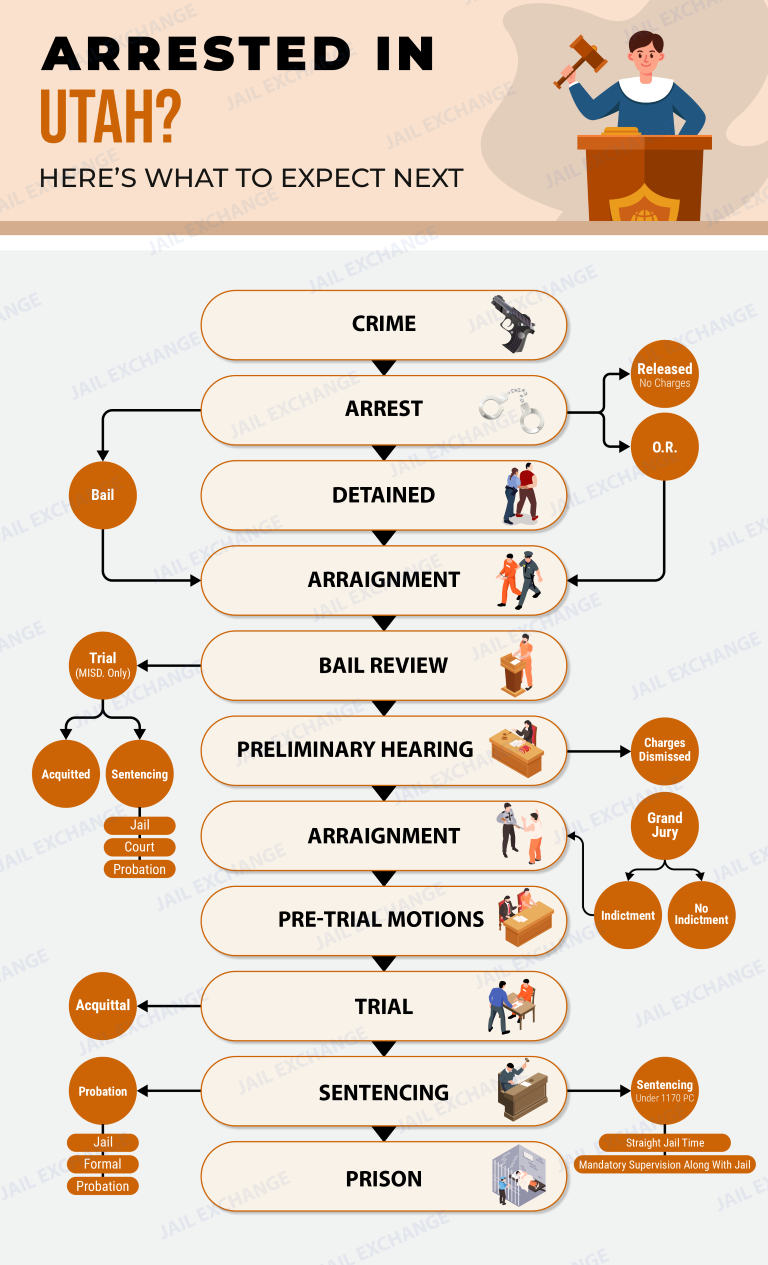
Inmate Canteen (operated by TurnKey Corrections) allows friends and family members to purchase pre-approved commissary packages, including brand-name snacks, confectionery goods, personal hygiene products, stationery, and apparel kits sent directly to an incarcerated loved one. Every package is packed to adhere strictly to facility security regulations, ensuring items pass institutional intake without being rejected at the loading dock.
Important: Package Deadlines and Delivery Windows Vary
Detention centers do not manage care package deliveries under identical schedules. While some facilities allow weekly orders, others restrict deliveries to bi-weekly or monthly distribution windows, and spending limits vary from jail to jail. You should verify the facility's active cutoff schedule and order allowances by calling them directly. If an order is submitted after the weekly processing deadline, delivery will be held until the following cycle, leaving your loved one waiting an extra cycle for fresh snacks, thermal wear, or personal care supplies.
Step-by-Step Instructions to Place a Commissary Package Order
- Confirm the inmate's legal first and last name, date of birth, and assigned booking or inmate ID number.
- Navigate to www.inmatecanteen.com and sign in or create a user profile.
- Select Commissary / Store and choose your state and detention center.
- Search for the inmate to unlock the facility's approved product catalog.
- Select allowable snack foods, candies, personal care goods, and clothing items up to the facility's allowed spending limit.
- Proceed to checkout, enter your debit or credit card billing details, and submit payment.
- Save your digital receipt and confirmation tracking number for your records.
What the Inmate Needs to Do
The inmate does not need an internet account to receive care packages. TurnKey Corrections prepares the order in secure, tamper-evident packaging and delivers it directly to the jail commissary department. Facility staff inspect the shipment and deliver the items during regular housing unit commissary rounds, where the inmate signs for receipt.
Official Provider: Inmate Canteen Official Website
Customer Service Telephone: 1-715-690-2965
Support Hours: Monday – Friday, 8:00 AM – 5:00 PM CST
Supported Languages: English and Spanish
Other Services Provided by Inmate Canteen (TurnKey Corrections)
In addition to Commissary Care Packages, Inmate Canteen provides several other communication, financial, and visitation services:
- Tablets & Chirp Units: Learn how secure handheld devices allow inmates to communicate, read, and message.
• Learn more on our website: Tablet Programs Guide | • Visit official vendor page: Inmate Canteen Devices - Remote Video Visitation: Schedule and join live face-to-face video visits from your computer or smartphone.
• Learn more on our website: Video Visitation Guide | • Visit official vendor page: Inmate Canteen Video Visits - Digital Messaging: Send electronic messages and photos directly to housing pod kiosks and handheld devices.
• Learn more on our website: Digital Messaging Guide | • Visit official vendor page: Inmate Canteen Messaging - Trust & Phone Deposits: Deposit money directly into an inmate's jail trust account or phone calling balance.
• Learn more on our website: Trust & Phone Deposits Guide | • Visit official vendor page: Inmate Canteen Deposits
Buy Commissary for an Inmate in the Emery County Jail
Emery County Jail Inmate Commissary - Sending Money or Purchasing Commissary for an Inmate
Emery County Jail allows inmates to purchase commissary. This can be snacks, hygiene products, stamps, stationary, clothing and even electronics.
You can buy commissary for an inmate using an online service called Inmate Canteen.
Inmate Canteen Customer Service can be reached at 715-690-2965, or by email at support@inmatecanteen.com.

There is a monthly limit of $200-300 on how much inmates can spend on commissary items.
This amount is subject to change so call the facility at 435-381-5500 in order to confirm the amount that cannot be exceeded.
Inmates have access to both an in-house commissary store, and commissary packages that can be purchased and shipped to the inmate by friends and family.
Scroll down for information on the Emery County Jail's service they use for you being able to purchase commissary items online and have them shipped directly to the inmate.
You can also go to our Inmate Money page for information on how to send money to an inmate.
Inmate Canteen Trust & Phone Deposits allow friends and family members to transfer money directly into an incarcerated person's jail trust account or telephone calling balance using a credit or debit card. Deposited funds give your loved one the financial balance needed to buy personal care goods, over-the-counter medication, snacks, and phone talk time from the facility canteen.
Important: Facility Banking Policies Vary Across Jails
Once a person is booked and moved to a cell, facilities do not always allow cash drop-offs or phone payments directly to the jail window. Some might and you should confirm this by calling the facility and asking. But if you do not register online and fund your loved one's trust account immediately, they may be forced to wait days or weeks for standard paper processing, leaving them without essential soap, clean undergarments, basic medical sundries or snacks.
Step-by-Step Instructions to Register and Deposit Funds
- Confirm the inmate's legal first and last name, date of birth, and assigned booking or inmate ID number.
- Navigate to www.inmatecanteen.com on your computer or mobile device.
- Click on Deposit Funds and select whether to fund the Trust Account (for commissary) or Phone Account (for talk time).
- Select the state and facility where the inmate is currently housed.
- Search for the inmate to confirm their active housing record matches the facility roster.
- Enter your deposit dollar amount, review convenience fees, and enter your debit or credit card billing details.
- Submit payment and save the digital confirmation receipt for your financial records.
What the Inmate Needs to Do
The inmate does not need an internet connection to receive trust funds. Once payment clears, the balance posts directly to their accounting profile in the jail's internal system. The inmate can review their updated balance at the pod kiosk terminal and place their regular weekly commissary order or make outbound phone calls.
Official Provider: Inmate Canteen Official Website
Customer Service Telephone: 1-715-690-2965
Support Hours: Monday – Friday, 8:00 AM – 5:00 PM CST
Supported Languages: English and Spanish
Other Services Provided by Inmate Canteen (TurnKey Corrections)
In addition to Trust & Phone Deposits, Inmate Canteen provides several other communication, financial, and commissary services at participating correctional facilities:
- Commissary & Snack Packs: Order pre-approved snack boxes, food packages, and clothing directly to the jail.
• Learn more on our website: Commissary Orders Guide | • Visit official vendor page: Inmate Canteen Commissary - Remote Video Visitation: Schedule and join live face-to-face video visits from your computer or smartphone.
• Learn more on our website: Video Visitation Guide | • Visit official vendor page: Inmate Canteen Video Visits - Digital Messaging & Chirp Texts: Send electronic messages and photos directly to housing pod kiosks and handheld devices.
• Learn more on our website: Digital Messaging Guide | • Visit official vendor page: Inmate Canteen Messaging
Deposit Money for an Inmate in the Emery County Jail
There's no way to deposit by phone for someone at the Emery County Jail in Castle Dale. Most families go online instead, which is also the simplest route: pay by card at Inmate Canteen, and use the chat box on its home page if you have questions.
Already at the jail? Look for the deposit kiosk, found either in the lobby or where visits happen. Bills work, and so do debit and credit cards.
Money orders and handing money over at the desk are another matter. The jail keeps to itself whether it accepts money orders, who they'd be made out to, and when the desk is open. A call to 435-381-5500 settles it; know the person's complete name and birth date before you dial.
Packages can't come by mail either. They arrive only from the commissary company.
The Emery County Jail sits on Des Bee Dove Road just outside Castle Dale, Utah, and inmates there get regular paper mail. Use the jail's post office box below. Don't use the District Court or Justice Court mailbox for anything meant for an inmate, because those boxes are not for inmate mail.
Letters, legal papers and publications:
Inmate's Full Name & Inmate ID#
Emery County Jail
1850 North Des Bee Dove Road
PO Box 817
Castle Dale, UT 84513
- On the envelope: The inmate's full name and their inmate ID number, which the inmate search can help you find.
- Your own details: Your name and mailing address should sit in the upper left corner of the envelope. If they're missing, the mail will most likely be destroyed, not delivered.
- Writing: Only blue or black ink. Crayons, felt markers and colored ink can't be used.
- What gets mail turned away: Drawings on the envelope or postcard, glitter, confetti, lipstick marks, perfume, or anything slipped inside besides your letter.
- Cards: Keep greeting cards plain, since a card with a sound chip will be turned away.
- Books, magazines and newspapers: Only brand-new paperbacks and periodicals shipped from the publisher are let in, and hardcovers are refused.
- Packages: Family can't mail boxes of their own; packages are accepted only from the jail's commissary provider.
- Who can't write: Co-defendants, people held in this or any other jail or prison, and anyone with a no-contact order against the inmate.
- Delivery: Weekdays only, Monday through Friday, and there is no limit on the number of letters. The jail enforces these rules with zero tolerance.
- Money: Funds for an inmate's account can be added online.
Inmates at the Emery County Jail can also receive electronic messages.
Inmate Canteen Trust & Phone Deposits allow friends and family members to transfer money directly into an incarcerated person's jail trust account or telephone calling balance using a credit or debit card. Deposited funds give your loved one the financial balance needed to buy personal care goods, over-the-counter medication, snacks, and phone talk time from the facility canteen.
Important: Facility Banking Policies Vary Across Jails
Once a person is booked and moved to a cell, facilities do not always allow cash drop-offs or phone payments directly to the jail window. Some might and you should confirm this by calling the facility and asking. But if you do not register online and fund your loved one's trust account immediately, they may be forced to wait days or weeks for standard paper processing, leaving them without essential soap, clean undergarments, basic medical sundries or snacks.
Step-by-Step Instructions to Register and Deposit Funds
- Confirm the inmate's legal first and last name, date of birth, and assigned booking or inmate ID number.
- Navigate to www.inmatecanteen.com on your computer or mobile device.
- Click on Deposit Funds and select whether to fund the Trust Account (for commissary) or Phone Account (for talk time).
- Select the state and facility where the inmate is currently housed.
- Search for the inmate to confirm their active housing record matches the facility roster.
- Enter your deposit dollar amount, review convenience fees, and enter your debit or credit card billing details.
- Submit payment and save the digital confirmation receipt for your financial records.
What the Inmate Needs to Do
The inmate does not need an internet connection to receive trust funds. Once payment clears, the balance posts directly to their accounting profile in the jail's internal system. The inmate can review their updated balance at the pod kiosk terminal and place their regular weekly commissary order or make outbound phone calls.
Official Provider: Inmate Canteen Official Website
Customer Service Telephone: 1-715-690-2965
Support Hours: Monday – Friday, 8:00 AM – 5:00 PM CST
Supported Languages: English and Spanish
Other Services Provided by Inmate Canteen (TurnKey Corrections)
In addition to Trust & Phone Deposits, Inmate Canteen provides several other communication, financial, and commissary services at participating correctional facilities:
- Commissary & Snack Packs: Order pre-approved snack boxes, food packages, and clothing directly to the jail.
• Learn more on our website: Commissary Orders Guide | • Visit official vendor page: Inmate Canteen Commissary - Remote Video Visitation: Schedule and join live face-to-face video visits from your computer or smartphone.
• Learn more on our website: Video Visitation Guide | • Visit official vendor page: Inmate Canteen Video Visits - Digital Messaging & Chirp Texts: Send electronic messages and photos directly to housing pod kiosks and handheld devices.
• Learn more on our website: Digital Messaging Guide | • Visit official vendor page: Inmate Canteen Messaging
Inmate Canteen Digital Messaging allows friends and family members to send electronic text messages and digital photos directly to an incarcerated loved one. Messages are delivered electronically to housing unit kiosks and Chirp handheld devices within hours, avoiding the lengthy delivery times associated with postal mail.
Important: Electronic Mail Guidelines Vary by Facility
Correctional facilities enforce strict rules regarding incoming correspondence. While some jails continue to accept paper letters, many facilities restrict physical postal mail or mandate digital message screening, which you can verify by checking facility rules. If you do not register online and set up message credits immediately, your loved one may face lengthy periods without direct written contact from family.
Step-by-Step Instructions to Register and Send Messages
- Go to www.inmatecanteen.com and sign in or create a user profile.
- Select Email / Messaging and choose your state and detention facility.
- Search for the inmate using their legal first and last name or booking ID number.
- Purchase messaging credits using a credit or debit card.
- Type your message in the text box and attach approved digital images if permitted by the facility.
- Submit your message to the facility's screening queue.
What the Inmate Needs to Do
All electronic correspondence is screened by facility staff before delivery. Once approved, messages appear in the inmate's inbox on their housing unit kiosk or assigned handheld Chirp device. The inmate opens the message, reads your note, and types an electronic reply using their available account credits.
Official Provider: Inmate Canteen Official Website
Customer Service Telephone: 1-715-690-2965
Support Hours: Monday – Friday, 8:00 AM – 5:00 PM CST
Supported Languages: English and Spanish
Other Services Provided by Inmate Canteen (TurnKey Corrections)
In addition to Digital Messaging, Inmate Canteen provides several other communication, financial, and commissary services at participating correctional facilities:
- Commissary & Snack Packs: Order pre-approved snack boxes, food packages, and clothing directly to the jail.
• Learn more on our website: Commissary Orders Guide | • Visit official vendor page: Inmate Canteen Commissary - Remote Video Visitation: Schedule and join live face-to-face video visits from your computer or smartphone.
• Learn more on our website: Video Visitation Guide | • Visit official vendor page: Inmate Canteen Video Visits - Trust & Phone Deposits: Deposit money directly into an inmate's jail trust account or phone calling balance.
• Learn more on our website: Trust & Phone Deposits Guide | • Visit official vendor page: Inmate Canteen Deposits
Inmate Canteen (TurnKey Corrections) provides specialized handheld tablets and Chirp communication units to incarcerated individuals in county detention centers. Running over a secure internal wireless network, these devices allow inmates to send and receive text messages, submit facility requests, review commissary balance accounts, and read digital materials directly from their living areas.
Important: Tablet Hardware Deployment and Rental Rules Vary
Detention centers do not manage tablet distribution identically. While some agencies issue individual personal tablets to every detainee at booking, others utilize shared pod docking stations or restrict tablet use to specific dayroom hours, which you should confirm with the facility directly. Although core educational and legal resources are generally provided free of charge, sending messages, initiating video calls, or making phone calls from the tablet requires an active balance funded by outside contacts.
Step-by-Step Instructions to Support and Fund Tablet Use
- Confirm that TurnKey Corrections / Inmate Canteen tablets or Chirp devices are active at the facility.
- Navigate to www.inmatecanteen.com and sign into your user profile.
- Link the inmate to your account by state, detention facility, and their legal name or booking ID.
- Select Messaging / Chirp Funds or Trust Deposits to add funds to their available balance.
- Specify your deposit amount, review convenience fees, and enter your credit or debit card billing details.
- Submit payment, save your confirmation receipt, and notify your loved one that their device balance is available.
What the Inmate Needs to Do
The inmate logs into their assigned tablet or Chirp device using their personal PIN. They can review their available messaging balance, read incoming family correspondence, and type replies directly on the device. Tablets are returned to docking stations during facility count times and for overnight charging.
Official Provider: Inmate Canteen Official Website
Customer Service Telephone: 1-715-690-2965
Support Hours: Monday – Friday, 8:00 AM – 5:00 PM CST
Supported Languages: English and Spanish
Other Services Provided by Inmate Canteen (TurnKey Corrections)
In addition to Tablet Services, Inmate Canteen provides several other communication, financial, and commissary services:
- Commissary & Care Packages: Order pre-approved snack boxes, food packages, and clothing directly to the jail.
• Learn more on our website: Commissary Orders Guide | • Visit official vendor page: Inmate Canteen Commissary - Remote Video Visitation: Schedule and join live face-to-face video visits from your computer or smartphone.
• Learn more on our website: Video Visitation Guide | • Visit official vendor page: Inmate Canteen Video Visits - Digital Messaging: Send electronic text messages and digital photos directly to housing pod kiosks and handheld devices.
• Learn more on our website: Digital Messaging Guide | • Visit official vendor page: Inmate Canteen Messaging - Trust & Phone Deposits: Deposit money directly into an inmate's jail trust account or phone calling balance.
• Learn more on our website: Trust & Phone Deposits Guide | • Visit official vendor page: Inmate Canteen Deposits
Emery County Juvenile Facilities
- Jail (Main): 435-381-5500
The Emery County Jail serves the following cities and towns of Emery County: Castle Dale, Cleveland, Elmo, Emery, Ferron, Green River, Huntington and Orangeville.