
Hampton Correctional Facility
Hampton Correctional Facility
Hampton Correctional Facility
757-727-6760Hampton City Inmate Search: Two Jail Buildings, One Booking Desk and a Few Phone Calls
Hampton's Sheriff books adults at the intake office, 236 North King Street, Hampton, VA 23669. People are housed at the Hampton Community Corrections Center, 1928 West Pembroke Avenue, Hampton, VA 23661. The city lists the Hampton Correctional Facility, 135 High Court Lane, Hampton, VA 23669, as temporarily closed. Read on for answers about finding someone, release, lawyers, contact and hearings.
Begin with the Hampton City inmate search, a VINE tool that lists custody status and the holding location. Type a family name and a first name. Fresh bookings may take hours to appear. Mugshots are taken at intake, and the Sheriff's staff can tell you what is public.
Dial 757-926-2540 for the Sheriff's Office and ask which building holds your person. Keep the legal name and birthday ready. Then open our bail page to see how release works, or our court page to plan for the hearing.
Read inmate search answers
 Read inmate search answers
1. Is the city holding my relative or friend?
Try this order:
- Go to the city's inmate search.
- Type their family name and their first name into the boxes, spelled as on a driver's license.
- The result names a status and a location. Together they show who has the person.
- If nothing appears, shorten the spelling and look again later in the day. VINE sometimes runs behind the jail's own records.
- Phone 757-926-2540 to check the building before you travel.
Jot down what you learned and when. You may need it on a second call.
↑ Back to the question list2. Why does a search come up empty?
A blank result has several possible causes:
- Paperwork is underway. Adult intake, 236 North King Street, Hampton, VA 23669, 757-727-6596, may still be processing the person.
- An officer still has them. The Hampton Police Division, 40 Lincoln Street, Hampton, VA 23669, 757-727-6513, can tell you if they are at a station.
- They went home. A magistrate may have allowed a signature release or a bond. That office is at 236 North King Street, Hampton, VA 23669, 757-727-6589.
- They were sent elsewhere. Another city's jail, a regional jail, a state prison or federal custody could hold them. The answers below cover each place.
- The name is recorded differently. The file may carry a different given name, a middle name only, or a former surname.
- They are a minor. Adults and children are kept apart.
3. Which jail could Hampton City arrests end up in?
The Hampton Sheriff runs two adult buildings, plus a booking office:
- Hampton Community Corrections Center, also called the jail annex, 1928 West Pembroke Avenue, Hampton, VA 23661, 757-926-2540. It is the building in use today.
- Hampton Correctional Facility, the main jail, 135 High Court Lane, Hampton, VA 23669, 757-727-6760. The city says it is temporarily closed, so ask before you go.
- Adult intake, where booking happens, 236 North King Street, Hampton, VA 23669, 757-727-6596.
Our other Hampton pages say that jails in two other places have housed Hampton's people when space was short:
- Western Tidewater Regional Jail, 2402 Godwin Boulevard, Suffolk, VA 23434, 757-539-3119
- Riverside Regional Jail, 500 Folar Trl, North Prince George, VA 23860, 804-524-6600
The Sheriff's line listed above can say which of these buildings holds the person right now.
↑ Back to the question list4. Where do I ask about Hampton City mugshots?
Booking photos, also called mugshots, are taken at intake. The VINE search may not show a photo, so go to the arresting agency. State law requires police and sheriffs to hand over an adult's photo from intake, with one exception. A felony investigation that would suffer can keep it back for a time (Virginia Code section 2.2-3706).
- Arrest by city officers: Hampton Police Division, 40 Lincoln Street, Hampton, VA 23669, 757-727-6513
- Questions about the jail: Hampton Sheriff's Office, 1928 West Pembroke Avenue, Hampton, VA 23661, 757-926-2540
- Photos of anyone under 18 stay private.
- For an ICE booking photo, use ICE's own records request page.
- Federal mugshots are not handed out. The U.S. Marshals Service alone may release one, for instance when hunting an escapee.
5. Will someone notify me of a release or transfer?
VINE can. The service costs nothing. Choose how you hear: call, text or email. Alerts go out when a person leaves custody or changes places, including moves to regional jails and VADOC sites.
- Register on VINELink, or call 800-467-4943 at any hour.
- Enter the person's full name, then your own phone number or email.
- Treat an alert as a helpful nudge, not a guarantee. Only the Sheriff's Office, 757-926-2540, can confirm a release for sure.
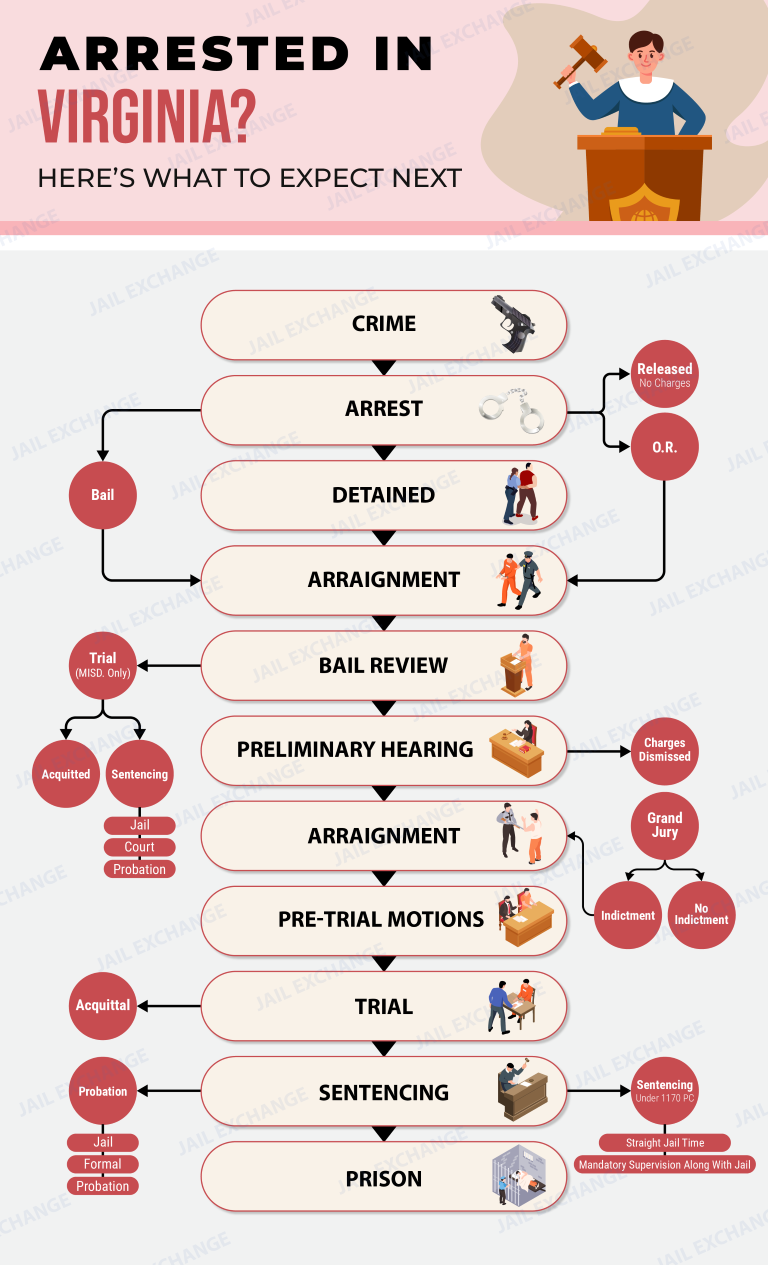
6. What are Hampton City's steps from arrest to release?
Right after booking, a magistrate sets the terms of release. The office, 757-727-6589, is open every hour of every day at 236 North King Street, Hampton, VA 23669.
- Choices include a promise on paper to show up in court, an unsecured bond with nothing to pay up front, or a secured bond. A secured bond needs cash, real estate or a bondsman (Virginia Code section 19.2-123).
- The default is release. Exceptions are a likely no-show or a real risk to others (section 19.2-120).
- These may include staying clear of the person who complained, a curfew, drug screens or GPS tracking.
- If the person stays in jail, a General District Court judge looks at the case when the court next sits.
- A bondsman needs a state license. The bondsman's fee runs 10 to 15 percent of the bond, and that money is gone for good (section 9.1-185.8).
Ask the magistrate's staff how to post a bond in your case. Our bail page goes deeper, and our Virginia bail laws page sums up state rules.
↑ Back to the question list7. What are the charges, and where is the record?
Begin with a call to the jail. Once the court has the case, its record spells out each count.
- The Online Case Information System is Virginia's free lookup. It holds misdemeanor and traffic cases that began in the General District Court. Also searchable are criminal cases against adults at the JDR bench, plus all Circuit Court cases. Files for minors do not appear there.
- General District Court clerk, 236 North King Street, Hampton, VA 23669, 757-727-6260. Keep the person's full name and birthday ready.
- Circuit Court clerk, 237 North King Street, Hampton, VA 23669, 757-726-6995.
The prosecutor's office chooses the formal charges. Find the Commonwealth's Attorney at 236 North King Street, Hampton, VA 23669, 757-727-6442.
↑ Back to the question list8. Can the court supply a lawyer when money is tight?
Hampton's public defender office belongs to the state's Indigent Defense Commission. It is at 85 North Mallory Street, Hampton, VA 23663, 757-727-4744.
- At the magistrate's desk or the first hearing, the accused says they want a court-appointed lawyer.
- Sworn paperwork lists their earnings and bills.
- A judge reads it and rules on who qualifies (Virginia Code section 19.2-159).
- When the office has to step aside, the judge turns to a private attorney on the court's appointment list.
Paying for a private attorney is always allowed. That attorney can ask the jail and the clerk directly.
↑ Back to the question list9. Hampton City jail visits: who can come and when?
Only in-person visits are listed. The main points are:
- Only people on the inmate's own visitation list may come.
- A visit runs 30 minutes.
- Sign in an hour before the visiting period ends.
- Clothing must follow a posted dress code.
The Sheriff's visitation page carries the schedule. Before you drive, call 757-926-2540 to learn the day, the building and any changes. Our visiting guide adds more advice.
↑ Back to the question list10. Which ways of adding funds does the jail accept?
Deposits buy items from the jail store, like snacks and soap, and pay for phone time. Pick one method:
- Visit the kiosk in the annex entrance hall, 1928 West Pembroke Avenue, Hampton, VA 23661. It accepts cash, debit and credit.
- Pay by phone at 866-345-1884.
- Send a money order to P.O. Box 158, Hampton, VA 23669.
Cash must never go in an envelope. Phone 757-926-2540 to learn how to label a money order. More on deposits is in our money guide. See the commissary guide for what an account can buy.
↑ Back to the question list11. Can I expect calls, tablet messages or texts?
The person inside places calls to you. To set up your number for incoming calls, dial 866-516-0115. The Sheriff's website also mentions tablets and messaging.
Ask the jail at 757-926-2540 about prices and about adding call funds. Assume staff may record calls. Share case details with the lawyer alone. Our jail phone guide covers calling. For messaging, see the inmate email page.
↑ Back to the question list12. Which address do I put on mail for the person?
Start the address with the person's full legal name. Then add one of these lines:
- Hampton City Jail, 135 High Court Lane, Hampton, VA 23669
- Hampton Community Correctional Center, 1928 W. Pembroke Avenue, Hampton, VA 23661
Because the main jail is listed as temporarily closed, phone 757-926-2540 and ask which address works today. The jail turns away packages and cards. Softback books are fine only when the publisher ships them. Our mail guide covers typical rules.
↑ Back to the question list13. Can a friend collect their belongings?
Phone the annex at 757-926-2540. Ask whether property is returned at release, whether a friend can collect it, and which ID the desk wants. The annex is at 1928 West Pembroke Avenue, Hampton, VA 23661.
↑ Back to the question list14. Who handles sickness or injury inside the jail?
Call 757-926-2540 and ask for the medical unit. List the medicines, the doses and the doctor who prescribes them. Ask the person to send in a written request for care as well.
Anything life-threatening goes to 911. If the worry is the person's mental state, say so on the call.
↑ Back to the question list15. Is there a Hampton City warrant out for someone?
The Hampton Sheriff's Office serves court papers and warrants at 757-926-2540. City police do the same at 757-727-6513. Pick the agency you suspect and ask by phone. For a case record, contact the General District Court clerk, 757-727-6260, or look the case up in the state's case search tool. To end a warrant, start with a defense attorney. Once you have advice, reach out to the clerk's office at the court that signed it. The General District Court clerk is at 236 North King Street, Hampton, VA 23669.
↑ Back to the question list16. Which courthouse has their hearing, and when?
Ask the court that has the file. Each sits on North King Street in downtown Hampton:
- General District Court, 236 North King Street, Hampton, VA 23669, 757-727-6260. Misdemeanors, traffic cases and preliminary hearings for felonies are heard here.
- Circuit Court, 237 North King Street, Hampton, VA 23669, 757-726-6995. Felony trials start once a grand jury indicts. Appeals from the lower courts go here as well.
- Juvenile and Domestic Relations District Court, 220 North King Street, Hampton, VA 23669, 757-726-6963. Children and family-member cases are heard here.
The state case search also works by name. For a walk through each stage, read our court guide.
↑ Back to the question list17. Where do federal arrests from Hampton go?
Federal cases from Hampton are tried at the federal court in Newport News, which belongs to the Eastern District of Virginia. The clerk's line is 757-222-7202, and the U.S. Courthouse stands at 2400 West Avenue, Newport News, VA 23607.
- A detention hearing follows the first appearance. There a judge picks jail or home supervision for the wait before trial; read 18 U.S.C. § 3142 for the test.
- Before trial, the U.S. Marshals Service holds the person, sometimes at a local or regional jail that rents beds to the federal government. The Marshals' Newport News office is at 2400 West Avenue, Newport News, VA 23607, 757-247-2851.
- A federal defender may be named to the case. The Norfolk office is at 500 East Main Street, Suite 500, Norfolk, VA 23510, 757-457-0800.
- After sentencing, type the person's name into the Bureau of Prisons locator, or use the register number from their paperwork.
18. Could immigration agents be the ones holding them?
Immigration holds usually unfold in four steps:
- ICE asks a jail for a hold with Form I-247A. The form is the detainer.
- The hold can last up to 48 hours after they would otherwise be released (8 CFR 287.7(d)).
- ICE officers then come for the person. Virginia falls under its Washington Field Office, at 14797 Murdock Street, Chantilly, VA 20151, 703-633-2100.
- Try the ICE Online Detainee Locator. Give the locator a full name and a birth country. Another route is the A-number.
Under a February 2026 executive directive, 287(g) deals with state agencies ended. The directive covers state agencies and nothing else. The Sheriff's Office, 757-926-2540, can say whether a detainer sits in the file.
↑ Back to the question list19. Could the person already be in a prison run by Virginia?
Following a prison term from the state, many people stay in the local jail until the Virginia Department of Corrections frees up a bed. The department then classifies each person and chooses a prison.
- Look up a person in the VADOC Inmate Locator using either a surname or the DOC number. It updates every day, and it also shows state-authority inmates housed in local jails.
- For questions, phone the department at 804-674-3000.
- Our Virginia state prisons page covers visiting and mail.
20. What happens when a Hampton City child is held?
Children go to juvenile court, never to the adult jail. Hampton's JDR court sits at 220 North King Street, Hampton, VA 23669, 757-726-6963.
- The Court Service Unit takes juvenile intake at 35 Wine Street, Hampton, VA 23669, 757-727-6184.
- The decision to hold a child belongs to the intake worker, the magistrate or the judge.
- Hampton has no detention center of its own. A held child is often placed at the Newport News Juvenile Detention Center, 350 25th Street, Newport News, VA 23607, 757-926-1644.
Juvenile files and photos are private. Start with the Court Service Unit to learn where a child is.
↑ Back to the question list21. Which department arrested them, and who else works here?
Hampton is an independent city, and no separate towns sit inside it. These agencies make arrests here:
- Hampton Police Division, 40 Lincoln Street, Hampton, VA 23669, 757-727-6513. It is the city's main police force.
- Hampton Sheriff's Office, 1928 West Pembroke Avenue, Hampton, VA 23661, 757-926-2540. Deputies run the jail and keep order in the courts.
- Hampton University campus police. If the arrest took place on campus, ask the Hampton Police Division which agency booked the person.
- Virginia State Police, Division Five. Troopers work the highways here. Reach the Suffolk office at 7511 Burbage Drive, Suffolk, VA 23435, 757-956-3968, or the Chesapeake office at 1557 S. Military Highway, Chesapeake, VA 23320, 757-424-6850.
City of Hampton: getting someone out
People arrested in Hampton may be held at the Hampton Community Corrections Center, 1928 West Pembroke Avenue, Hampton, VA 23661. The Sheriff also runs the Hampton Correctional Facility, 135 High Court Lane, Hampton, VA 23669, which is closed for now. Here you can learn who sets bail and how to pay.
Look up the person on the VINE custody lookup with a full name. Our Hampton Inmates in Custody page shows who is held and recent arrests, plus how to pick up property.
For now, phone the Hampton Sheriff at 757-926-2540 and ask where the person is and how to pay a bond. The magistrate, open day and night, answers at 757-727-6589. Court dates are on our Hampton court page.
1. Which jail holds city inmates?
The Hampton Community Corrections Center, 1928 West Pembroke Avenue, Hampton, VA 23661, phone 757-926-2540, or the Western Tidewater Regional Jail, 757-539-3119.
↑ Back to the question list2. Who sets bail?
The magistrate at Hampton General District Court, 236 North King Street, Hampton, VA 23669, 757-727-6589.
↑ Back to the question list3. How do I search?
4. What happens first after a city arrest?
Hampton police take the person to the King Street magistrate. Terms are usually set within a few hours (Va. Code § 19.2-80). If release isn't granted, the sheriff decides whether the person stays at West Pembroke Avenue or goes to Suffolk.
↑ Back to the question list5. What can the magistrate decide?
Release can be on a signature or a bond, secured or not (Va. Code § 19.2-123). The magistrate weighs the charge, record, local ties and ability to pay (Va. Code § 19.2-121).
↑ Back to the question list6. How can a family post bond in Hampton City?
Bring cash to the magistrate, pledge Virginia real estate, or work with a bondsman licensed through DCJS (Va. Code § 9.1-185). The fee runs 10% to 15% (Va. Code § 9.1-185.8). Someone is on duty overnight (Va. Code § 19.2-48.1).
↑ Back to the question list7. How do I get bail lowered in the city?
A lawyer can file a motion in Hampton General District Court (757-727-6260). Anyone still held also gets a review at the next court day (Va. Code § 19.2-158), when appointed counsel is handled (Va. Code § 19.2-159). Circuit Court hears appeals (Va. Code § 19.2-124).
↑ Back to the question list8. Which courts handle city cases?
They are all along North King Street downtown. District court tries misdemeanors (10 days to appeal (Va. Code § 16.1-132)) and holds felony preliminary hearings (Va. Code § 19.2-218). Juvenile and family matters go to the JDR court at 220 North King (Va. Code § 16.1-241).
↑ Back to the question list9. Is a free lawyer available?
Yes. The Hampton public defender may be appointed for anyone facing possible jail who files a sworn statement showing need (Va. Code § 19.2-159).
↑ Back to the question list10. Are there conditions besides money?
Often, such as a stay-away order, curfew or alcohol monitoring (Va. Code § 19.2-123). Family arrests usually start with a short protective order (Va. Code § 16.1-253.4). A warrant from another state is decided separately (Va. Code § 19.2-102) and can block release (Va. Code § 19.2-85).
↑ Back to the question list11. What does missing court mean in Hampton?
A capias is issued, the bond is lost, and the no-show may become a new charge (Va. Code § 19.2-128).
↑ Back to the question list12. Where would federal charges be heard?
Federal court for Hampton is in Newport News, part of the Eastern District of Virginia (18 U.S.C. § 3142).
↑ Back to the question list13. What about co-signers and refunds?
Co-signers may owe the full amount if the person skips (Va. Code § 19.2-143); they may also return the person to custody (Va. Code § 19.2-149). Cash comes back after the King Street case is over, provided the defendant attended every hearing.
↑ Back to the question list14. Which offices confirm a City of Hampton bond?
Jail: 757-926-2540. Magistrate: 757-727-6589. Circuit Court clerk: 757-727-6105.
↑ Back to the question listContacts for Hampton City
- Jail
- Hampton Community Corrections Center, 1928 West Pembroke Avenue, Hampton, VA 23661; 757-926-2540
- Also used
- Western Tidewater Regional Jail, 2402 Godwin Boulevard, Suffolk, VA 23434; 757-539-3119
- Magistrate
- Hampton General District Court, 236 North King Street, Hampton, VA 23669; 757-727-6589
- District court
- 236 North King Street, 2nd Floor, Hampton, VA 23669; 757-727-6260
- Circuit court
- 237 N. King Street, Hampton, VA 23669; 757-727-6105
- Inmate search
- Hampton City inmate search
This page is not legal advice.
Hampton Correctional Facility ON-SITE (at the jail) INMATE VISITATION SCHEDULE
When 'at person' visitation is suspended, use online visitation with gettingout.com

| DAY | HOUSING | TIME |
| SAT | 2F1, 2F4, 2F5, 21C | 8:30-10:00AM |
| SAT | 2R1, 2R3, 2R4, 2R5 | 12:00-2:00PM (doors lock at 1pm) |
| SAT | 1F3, 1F4, 1F5A, 1F5B | 3:15-4:00PM |
| SUN | 3F1, 3F4, 3F5, 31C | 8:30-10:00AM |
| SUN | 3R1, 3R2, 3R3, 3R5 | 12:00-2:00PM (doors lock at 1pm) |
| SUN | 1R3, 1R4, 1R5A, 1R5B | 3:15-4:00PM |
Attorney Visits - Every day from 8:30AM-11:00AM.
Pastoral Visits - Every Day from 8:30AM-11:00AM & 12:00PM-4:00PM
GettingOut / ViaPath Remote Video Visits
Provider: GettingOut (Telmate) • Rebranding as ViaPath Technologies (myViaPath Visits)

GettingOut Video Visitation allows friends and family members to conduct live, face-to-face video visits with incarcerated loved ones using a personal computer, laptop webcam, or the mobile application. Telmate and GTL operate under ViaPath Technologies, and the visiting service is transitioning from GettingOut Visits to myViaPath Visits; users may encounter either brand name depending on whether their county jail has completed the platform update.
Important: Advance Background Clearance Required
Detention centers do not permit unapproved drop-in video visitation. All visitors must submit valid government photo identification and pass administrative screening before an appointment can be booked, a review that can take up to 48 hours depending on facility staffing. You should verify your visitor approval status with the facility in advance. If you do not register ahead of time, you will miss your loved one's scheduled visiting slots for the week.
Step-by-Step Instructions to Schedule a Video Visit
- Open the GettingOut / myViaPath Visits app or go to www.gettingout.com / my.viapath.com.
- Register your profile and upload clear photographs of your government ID and a verification photo.
- Wait for the facility to issue visitor approval (you will receive an email confirmation).
- Select Schedule Visit, pick your detention facility, and select the inmate.
- Choose an available 25- or 30-minute time slot from the calendar and pay the visitation fee using a credit or debit card.
- Sign into the app or website 10 minutes prior to the start time on a device with a functioning camera, microphone, and stable internet connection.
What the Inmate Needs to Do
The inmate receives a schedule alert on their housing unit video kiosk or personal tablet. At the appointed time, they log in with their PIN and sit in front of the terminal. Inmates must follow institutional dress and conduct rules; corrections staff actively monitor sessions and will terminate any call immediately if rules are broken.
Official Providers: GettingOut Visits | myViaPath Visits
Customer Service Telephone: 1-866-516-0115 (GettingOut) • 1-877-650-4249 (ViaPath)
Support Hours: Monday – Friday, 7:00 AM – 11:00 PM CST; Saturday – Sunday, 8:00 AM – 7:00 PM CST
Supported Languages: English and Spanish
Other Services Provided by GettingOut / ViaPath
In addition to Remote Video Visits, GettingOut and ViaPath provide several other communication and financial options:
- Two-Way Text Messaging: Send electronic messages and photos straight to the inmate's screen.
• Learn more on our website: Two-Way Text Messaging Guide | • Visit official vendor page: GettingOut Messaging - Inmate Tablet Rentals & Content: Provide funds for educational modules, music streaming, and news.
• Learn more on our website: Tablet Rentals & Content Guide | • Visit official vendor page: GettingOut Tablets - AdvancePay Phone Calling: Keep a funded prepaid balance to receive calls directly on your phone.
• Learn more on our website: AdvancePay Phone Calling Guide | • Visit official vendor page: ViaPath ConnectNetwork Calling - Inmate Trust Deposits: Transfer money directly into their jail trust account for canteen goods.
• Learn more on our website: Inmate Trust Deposits Guide | • Visit official vendor page: ViaPath Trust Deposits
Hampton criminal courts on North King Street
Criminal cases from Hampton are tried on North King Street, Hampton, VA 23669, in three downtown courthouses: misdemeanors, felonies, and youth or family matters. The Sheriff holds adults at the Hampton Community Corrections Center, 1928 West Pembroke Avenue, Hampton, VA 23661. Below are the courts, the steps a case follows, and who to call.
Type a full name into the VINE custody lookup to check for a booking. The Recent Arrests list on our site has charges, warrants, and public defender details for Hampton.
Call the General District Court clerk at 757-727-6260 to ask about a hearing date and the charge. Money questions go on our Hampton bail page.
1. Courts in the City of Hampton (circuit, general district, and juvenile and domestic relations courts)
The City of Hampton is one of Virginia's 38 independent cities, governed separately from any county and served by courts that handle its cases and no one else's. Those courts form the 8th Judicial Circuit: the Hampton Circuit Court tries felonies, the Hampton General District Court takes misdemeanors, traffic charges and preliminary hearings, and the Hampton Juvenile and Domestic Relations District Court hears juvenile and family-violence matters. Prosecutions are brought by the Commonwealth's Attorney elected by Hampton voters. Anyone kept in custody is the responsibility of the Hampton Sheriff, whose inmates have been housed mainly at the Hampton Community Corrections Center since the city's older jail building closed for construction.
- Hampton Circuit Court Clerk's Office, 237 North King Street, P.O. Box 40, Hampton, VA 23669, (757) 727-6105; criminal records (757) 728-3367
- Hampton General District Court (traffic and criminal division), 236 North King Street, Hampton, VA 23669, (757) 727-6260
- Hampton Juvenile and Domestic Relations District Court, 220 North King Street, Hampton, VA 23669, (757) 727-6147
- Magistrate's Office, 8th District, 236 North King Street, Hampton, VA 23669, (757) 727-6589
- Court Service Unit, 8th District (juvenile intake, Department of Juvenile Justice), 35 Wine Street, Hampton, VA 23669, (757) 727-6184
- Office of the Commonwealth's Attorney, City of Hampton, 236 North King Street, Hampton, VA 23669, (757) 727-6442
- Hampton Public Defender Office, 85 North Mallory Street, Hampton, VA 23663, (757) 727-4744
- Hampton Sheriff's Office, 135 High Court Lane, Hampton, VA 23669, (757) 926-2540; Sheriff's adult intake (757) 727-6596
- Hampton Police Division, 40 Lincoln Street, Hampton, VA 23669, non-emergency (757) 727-6111
- Hampton-Newport News Criminal Justice Agency, pretrial services, 2501 Washington Avenue, 4th Floor, Newport News, VA 23607, (757) 926-6960
- Hampton Community Corrections Center, 1928 West Pembroke Avenue, Hampton, VA 23661, (757) 926-2540
Which court hears your case. The Hampton General District Court decides misdemeanor and traffic cases without a jury; reckless driving on Interstate 64, a first DUI near Buckroe Beach and petit larceny are typical. A defendant who loses there has 10 days to note an appeal to the Hampton Circuit Court, where the case starts fresh and a jury may be requested. Charges of assault or other crimes against a family or household member, and every offense that involves a juvenile, are filed in the Hampton Juvenile and Domestic Relations District Court. For a felony, the General District Court (or, if the complaining witness is a family member, the JDR court) holds the preliminary hearing, and the case then goes to the Circuit Court on a grand jury indictment.
Where pretrial inmates are held. The City of Hampton is not part of a regional jail authority; its elected Sheriff keeps the city's prisoners. The Hampton Correctional Facility, the 1962 jail at 135 High Court Lane, closed in 2022 for new construction, and the Portsmouth regional jail that once took Hampton overflow shut down in 2024. As a result, adults booked on Hampton charges are held at the dormitory-style Community Corrections Center on West Pembroke Avenue, built for 300 inmates, or are boarded under contract in jails elsewhere in the state, such as Riverside Regional Jail near Petersburg and Western Tidewater Regional Jail in Suffolk, depending on space. Questions about custody location or posting bail go to the Sheriff's Office at (757) 926-2540.
No municipal, town or mayor's court exists anywhere in Virginia, so the courts named here are the only local trial courts that handle Hampton charges. The city has no towns inside its borders either. Phoebus, which was once a separate town, merged into Hampton in 1952 along with the old Elizabeth City County, and today a case from Phoebus, Fox Hill, Buckroe, Wythe or Coliseum Central is filed in the same North King Street courts as one from downtown. Because the 8th Judicial Circuit covers only Hampton, its judges do not travel to neighboring Newport News or York County.
The three courts
- Hampton General District Court, 236 North King Street, Hampton, VA 23669. Criminal and traffic clerks: (757) 727-6260. Civil clerks: (757) 727-6480. Hours are 8 a.m. to 4 p.m. on weekdays. This court hears misdemeanor trials, traffic cases, felony preliminary hearings and motions to change release terms.
- Hampton Juvenile and Domestic Relations District Court, 220 North King Street, Hampton, VA 23669, (757) 727-6147, also open 8 a.m. to 4 p.m. It hears delinquency cases, adult charges involving family or household members, and protective orders.
- Hampton Circuit Court, 237 North King Street, P.O. Box 40, Hampton, VA 23669. The Clerk, Linda Batchelor Smith, runs an office open 8:30 a.m. to 4 p.m.; main line (757) 727-6105, criminal (757) 728-3367. Felony indictments, jury trials and appeals from both district courts are heard here.
Related offices
- Hampton Police Division: 40 Lincoln Street, Hampton, VA 23669, (757) 727-6111
- Hampton Sheriff's Office: 135 High Court Lane, Hampton, VA 23669, (757) 926-2540; court services (757) 727-6763
- Commonwealth's Attorney: 236 North King Street, Hampton, VA 23669, (757) 727-6442
- Hampton Public Defender Office: 85 North Mallory Street, Hampton, VA 23663, (757) 727-4744
- Magistrate, 8th District: 236 North King Street, Hampton, VA 23669, (757) 727-6589
- Court Service Unit, 8th District: 35 Wine Street, Hampton, VA 23669, (757) 727-6184
Charges in these courts are brought by city police officers, Hampton deputies and Virginia State Police troopers alike. A defendant who wants a free lawyer should ask at the magistrate's desk or at the first hearing, and the city's public defender office, part of the Virginia Indigent Defense Commission, normally takes the case once the judge approves the financial form. A request for a lower bond is heard by the General District Court, or by the JDR court for a family-related charge.
↑ Back to the question list2. Courthouse buildings in the City of Hampton
Hampton keeps its justice buildings close together in the downtown government district, a few blocks from the Hampton River. The 236 North King Street building is where most people start, since it holds the General District Court, the 8th District magistrate and the Commonwealth's Attorney's office. Directly across North King Street at number 237 is the Circuit Court with the Clerk's Office. The JDR court occupies 220 North King Street, just down the block, and City Hall and the Police Division are around the corner on Lincoln Street.
What each building handles
- 220 North King Street (JDR court): juvenile delinquency and detention hearings, family assault trials, and protective order hearings. Juvenile proceedings are closed, so only the parties, their families and their lawyers are admitted.
- 236 North King Street (General District Court): arraignments, traffic dockets, misdemeanor trials, preliminary hearings and release reviews; pay fines or ask about a case at (757) 727-6260.
- 237 North King Street (Circuit Court): grand jury sessions, felony pleas and trials, jury trials on appeal from the district courts, and sentencing; criminal files at (757) 728-3367.
Deputies from the Hampton Sheriff's Office screen everyone at the door, and weapons are prohibited. Arrive early, bring the paperwork that shows your court date and courtroom, and dress as you would for a job interview. If you will need a language interpreter or a disability accommodation, call that court's clerk before the hearing.
↑ Back to the question list3. From arrest to first court date in the City of Hampton
Most Hampton arrests are made by the Police Division, and the first several hours look alike whatever the charge.
The magistrate's decision
The officer takes the arrested person before an 8th District magistrate, in person on North King Street or by video. Working from the officer's sworn account, the magistrate decides whether probable cause exists and, if so, issues a warrant or summons. The magistrate then chooses among release on recognizance, an unsecured bond, a secured bond paid in cash or posted by a bondsman licensed through the Department of Criminal Justice Services, or no release at all. Two questions drive the choice: whether the person is likely to come back to court, and whether release would endanger anyone. Since a 2021 change, Virginia law gives magistrates no automatic presumption against release for any category of offense.
Conditions and supervision
A release order can come with conditions such as staying away from a complainant, surrendering firearms or reporting to pretrial services. In Hampton, that supervision comes from the Hampton-Newport News Criminal Justice Agency, a joint agency of the two cities based at 2501 Washington Avenue in Newport News, (757) 926-6960, which can require office visits, drug screens or a GPS monitor.
Booking and custody
Anyone not released is booked by the Sheriff's adult intake staff, (757) 727-6596, who record identifying information, photographs and fingerprints and then assign the person to a housing location.
Seeing a judge
On the next day court is in session, a person in custody is usually arraigned before a Hampton General District Court judge, often by video from the jail. At that hearing the judge confirms the charge, asks whether the person has hired a lawyer or wants one appointed, and can be asked to reconsider the magistrate's release terms. If the judge leaves the terms in place, the defense may appeal that ruling to the Hampton Circuit Court.
↑ Back to the question list4. Hampton Sheriff's jail facilities
Sheriff Karen E. Bowden's office houses every adult held on a City of Hampton warrant. Its working facility is the Hampton Community Corrections Center, a 55,000-square-foot building with dormitory housing for up to 300 people.
- Community Corrections Center: 1928 West Pembroke Avenue, Hampton, VA 23661, (757) 926-2540. Visits are scheduled on Saturdays and Sundays from 8:30 to 10 a.m. and from noon to 2 p.m.
- Sheriff's Office main number: (757) 926-2540
The city's traditional jail, the Hampton Correctional Facility at 135 High Court Lane, opened in 1962 as a maximum-security building with 92 beds and grew to a rated 168 through three renovations. Hampton closed it in 2022 for new construction, with no reopening date announced.
That loss of beds is why a Hampton defendant may be housed far from the city. The Sheriff has used contract space in other Virginia jails as beds open up, among them Riverside Regional Jail in North Prince George, (804) 524-6600, and Western Tidewater Regional Jail in Suffolk. People held out of town are transported back for court or appear on video. Before driving to a visit, depositing money or calling a bail bondsman, call the Sheriff's Office to confirm where the person is.
Hampton jail sentences of up to 12 months are served in the Sheriff's custody. A person sentenced to more than 12 months stays in local custody until the Virginia Department of Corrections takes them into a state prison.
↑ Back to the question list5. Getting a public defender in the City of Hampton
A defendant facing possible jail who cannot pay a lawyer is entitled to one at no upfront cost. In the City of Hampton, that lawyer usually comes from the city's own branch of the Virginia Indigent Defense Commission, which takes adult and juvenile cases in all three local courts.
- Hampton Public Defender Office: 85 North Mallory Street, Hampton, VA 23663, (757) 727-4744
Steps to request counsel
- Say you want an appointed lawyer when you see the magistrate or, at the latest, at your arraignment.
- Complete the sworn statement of income, expenses and household members. Copies are kept by the clerk of whichever court has your case; for the General District Court, call (757) 727-6260.
- The judge reviews the form and, if you qualify, appoints the Public Defender. When that office has a conflict of interest, such as representing a co-defendant, the judge chooses a private attorney from the court's list instead.
Being out on bail or having a job does not by itself disqualify anyone; the judge looks at the whole household budget. If the case ends in a conviction, the cost of appointed counsel may be added to the court costs owed.
↑ Back to the question list6. Prosecution and alternatives to conviction in the City of Hampton
Commonwealth's Attorney Anton Bell leads the prosecutor's office for the City of Hampton, located in the General District Court building at 236 North King Street, (757) 727-6442. His assistants handle every felony in the Hampton Circuit Court and many misdemeanor and juvenile cases in the district courts, although an officer may present a routine traffic or misdemeanor case alone.
Options short of a conviction
Several paths can keep a Hampton charge off a person's record as a conviction, and none is guaranteed:
- Virginia's first-offender statutes let a judge defer a finding on some first drug possession charges and some first assaults on a family member, then dismiss the charge if the defendant meets the court's conditions over the deferral period.
- Prosecutors and defense lawyers sometimes agree to continue a minor case while the defendant pays restitution, performs community service or completes a class, with dismissal to follow.
- A negotiated plea can reduce the charge, for instance from grand to petit larceny, which changes the possible punishment.
Your defense lawyer is the person who brings these proposals to the prosecutor. Being held without bond does not by itself keep a defendant from negotiating one.
Help for victims
The office's Victim-Witness Services Unit explains each stage of the case to victims, tells them about hearings and plea offers, and helps them seek restitution and protective orders, all as required by the Crime Victim and Witness Rights Act. Call the main office number to reach it.
↑ Back to the question list7. Treatment and specialty dockets in the City of Hampton
Specialty dockets are court programs in which a judge supervises a defendant's treatment closely, sometimes weekly, in exchange for a more favorable result at the end. The Supreme Court of Virginia recognizes three kinds and must approve each local program. Availability in Hampton depends on current funding and caseloads, so the defense lawyer or the Commonwealth's Attorney's office can say which ones are accepting referrals.
- Veterans treatment dockets serve former service members whose charges relate to conditions such as post-traumatic stress or substance use. With Langley Air Force Base inside the city, many Hampton defendants are veterans, and such programs typically coordinate care with the Hampton VA Medical Center.
- Recovery courts, the newer name for drug treatment courts, take nonviolent defendants whose crimes grew out of addiction. After a plea, participants spend a year or more in treatment, testing and frequent status hearings; graduates may see the charge reduced or dismissed.
- Behavioral health dockets focus on defendants living with serious mental illness and pair them with community mental health services. Separately, the Hampton-Newport News Criminal Justice Agency coordinates a Crisis Intervention Team program that trains police to divert people in a mental health crisis toward treatment.
Drunk-driving cases follow a different track: as part of a first-offense DUI sentence, the General District Court refers the defendant to the Virginia Alcohol Safety Action Program (VASAP) for evaluation and classes. Admission to any specialty docket usually requires a screening and the prosecutor's consent, and certain violent records bar entry. Participants who are released on bond may be told to start treatment before they are formally accepted.
↑ Back to the question list8. Misdemeanor (for example, petit larceny, a first DUI, assault and battery, trespassing)
Penalty classes
- Class 4: fine of no more than $250.
- Class 3: fine of no more than $500.
- Class 2: as much as 6 months in jail, a $1,000 fine, or both.
- Class 1: as much as 12 months in jail, a $2,500 fine, or both. Petit larceny (property under $1,000), assault and battery, and trespass all fall in this top class.
The path through the General District Court
Many misdemeanor defendants in the City of Hampton never spend a night in jail, because the magistrate releases them on a summons or a personal recognizance bond. The first court appearance is the arraignment, where the judge describes the charge and the maximum sentence and decides on any request for appointed counsel. Trial comes later, typically one to three months after the arrest, before a judge sitting without a jury. The judge may dismiss the charge, find the defendant not guilty, defer the case for a first offender where the law allows, or convict and impose a fine, suspended time with probation, or active jail. Any conviction may be appealed to the Hampton Circuit Court within 10 days, where the case is retried from the beginning and a jury of seven can be requested.
Charges involving family members
Assault and battery against a spouse, ex-partner, relative or member of the household is tried in the Hampton JDR court, not the General District Court. An emergency protective order is frequently issued by the magistrate at arrest. First offenders may qualify for a deferred disposition that requires counseling, while a third family-assault conviction can be prosecuted as a felony.
First-offense DUI
Virginia classifies a first DUI as a Class 1 misdemeanor. The minimum fine is $250, and the court must impose jail time when the blood alcohol content is high: 10 days if it was above 0.20, and 5 days if it was from 0.15 to 0.20. At the time of arrest the driver's license is suspended for 7 days; a conviction then brings a one-year revocation, often softened by a restricted license with an ignition interlock device. Completing VASAP is a standard part of the sentence.
Once the case is over, ask a lawyer whether it may someday qualify for sealing under Virginia's record-sealing law; some charges and convictions can be sealed.
↑ Back to the question list9. Felony (for example, burglary, grand larceny, drug possession or distribution, malicious wounding)
Typical charges and penalties
- Possession of a Schedule I or II drug, such as fentanyl, heroin or cocaine, is a Class 5 felony. Distribution, or possession with intent to distribute, is punishable on a first conviction by 5 to 40 years, and large amounts trigger mandatory minimum terms. Marijuana is treated differently: adults 21 or older may legally possess up to one ounce, yet any sale is still illegal.
- Malicious wounding is a Class 3 felony; when the wounding was without malice, the charge is unlawful wounding, a Class 6 felony.
- Grand larceny means stealing property worth at least $1,000. The punishment can be anywhere from 1 to 20 years in prison, or a jail term of 12 months or less.
- Burglary of a dwelling at night is a Class 3 felony and becomes Class 2 when the intruder carried a deadly weapon. Other statutory burglary offenses are punishable by as much as 20 years.
For reference, Virginia ranks felonies in six classes. The two lowest, Class 6 (one to five years) and Class 5 (one to ten years), also let the judge or jury choose a jail term of 12 months or less instead of prison. A Class 4 felony brings two to ten years, a Class 3 five to twenty, and a Class 2 twenty years to life. Class 1, life imprisonment, has been the state's most severe penalty since the death penalty ended in 2021.
How the case moves
Once the magistrate sets release terms, a Hampton General District Court judge can revisit them at a bond hearing. The next major step is usually the preliminary hearing, held in that court (or in the JDR court when a family member is the alleged victim), where a judge decides whether the evidence shows probable cause. When it does, the charge is certified to a Hampton Circuit Court grand jury, although the Commonwealth's Attorney may bypass the hearing entirely by seeking a direct indictment. After the grand jury indicts, the defendant is arraigned in Circuit Court. Plea agreements settle most Hampton felonies; in a case that goes to trial, the defendant may choose a judge or a unanimous jury of 12. A judge, not the jury, now sets the sentence unless the defendant asks for jury sentencing, and the judge weighs Virginia's voluntary sentencing guidelines and the presentence report.
Time limits and time served
Under Code section 19.2-243, a defendant who stays in custody after the probable cause finding is generally entitled to trial within 5 months, and one who is out on release within 9 months, although delays the defense requests or accepts do not count. Expect four to twelve months from arrest to the end of a typical felony case. Felonies committed on or after January 1, 1995, are not eligible for parole, and earned sentence credits reduce time only within the limits the law sets. Sentences over 12 months are served with the Virginia Department of Corrections. Appointed representation for felonies also comes from the Hampton Public Defender Office, and a conviction can be appealed as of right to the Court of Appeals of Virginia, with further review possible in the Supreme Court of Virginia.
↑ Back to the question list10. Violent felony (for example, murder, rape, robbery)
Penalty ranges
- Robbery: 5 years to life in prison.
- Rape: 5 years to life in prison.
- Aggravated malicious wounding: a Class 2 felony carrying 20 years to life.
- Second-degree murder: a prison range of 5 to 40 years.
- First-degree murder: Class 2, with a range of 20 years up to life.
- Aggravated murder, called capital murder before 2021: a Class 1 felony that carries life in prison.
Custody while the case is pending
For these charges, magistrates and judges in the City of Hampton weigh community safety heavily, and pretrial detention is common. Even so, an accused person in the Sheriff's custody, whether at the Hampton Community Corrections Center or in a contract jail, may ask a General District Court judge to set bail and may appeal a refusal to the Hampton Circuit Court.
What to expect
Serious violent cases are among the slowest in the Hampton courts. Police Division detectives, state forensic laboratories and defense experts may each need months, and the case passes through a preliminary hearing, grand jury indictment, pretrial motions and often a jury trial of 12 before it ends, commonly one to two years after arrest. The Hampton Public Defender Office represents defendants who qualify, and a private court-appointed lawyer is assigned when that office cannot take the case.
For victims and families
Victims of violent crime in Hampton can contact the Commonwealth's Attorney's Victim-Witness Services Unit at (757) 727-6442. Staff there track court dates, consult victims on plea offers, help prepare victim impact statements, and guide families through restitution and crime victim compensation under the Crime Victim and Witness Rights Act.
↑ Back to the question list11. Juveniles (under 18) arrested in the City of Hampton
Juvenile cases in the City of Hampton begin with the Department of Juvenile Justice's local intake office and are decided by the Hampton Juvenile and Domestic Relations District Court, 220 North King Street, (757) 727-6147. The Commonwealth's Attorney prosecutes the petitions that are filed.
The Court Service Unit decides first
Hampton's intake office is the 8th District Court Service Unit, 35 Wine Street, (757) 727-6184, staffed from 8 a.m. to 5 p.m., with an intake officer on call through the night. After police bring in a young person, or someone files a complaint, the intake officer has three main choices: file a formal petition, handle the matter informally through diversion (often used for a first, minor offense), or authorize secure detention.
If the child is detained
The City of Hampton has no juvenile detention center of its own. Hampton youths ordered into secure custody are typically held in a nearby regional center, such as the Newport News Juvenile Detention Center at 350 25th Street, Newport News, VA 23607, (757) 926-1644. Within 72 hours, or by the next day the court sits, a JDR judge must hold a detention hearing to decide whether the child stays detained or returns home with conditions such as a curfew or electronic monitoring.
How juvenile cases end
- Informal diversion or dismissal.
- Restitution, community service or family programs in Hampton.
- Probation through the Court Service Unit.
- Commitment to the Department of Juvenile Justice, either at Bon Air Juvenile Correctional Center or through a community placement program.
When a juvenile in the City of Hampton can be tried as an adult
For certain serious felonies, a youth who was at least 14 at the time can be sent to the Hampton Circuit Court following a transfer hearing in the JDR court. In the most serious cases, murder and aggravated malicious wounding among them, the law may allow the Commonwealth's Attorney to certify a 16- or 17-year-old to Circuit Court after a preliminary hearing. Parents should get a lawyer involved immediately; the court usually appoints the Hampton Public Defender for a child who needs one, and the JDR clerk can explain how to ask.
Records of juvenile cases in Hampton are generally kept confidential.
↑ Back to the question list12. Federal cases (U.S. District Court) from the City of Hampton
Federal crimes charged in the City of Hampton are prosecuted in the U.S. District Court for the Eastern District of Virginia, Newport News Division, at the United States Courthouse, 2400 West Avenue, Newport News, VA 23607. Visitors should know that the Newport News courthouse does not staff a clerk's counter; the Norfolk clerk's office, (757) 222-7202, answers questions and receives filings for this division.
Federal ground in Hampton
Few Virginia localities have as much federal property. Langley Air Force Base, half of Joint Base Langley-Eustis, fills much of northern Hampton; Fort Monroe at Old Point Comfort is now a national monument; and the NASA Langley Research Center and the Hampton VA Medical Center also sit inside the city. Minor violations and traffic tickets at Langley and Fort Monroe go to a U.S. magistrate judge on the division's petty-offense calendar, (757) 247-0784, while felonies on federal property are prosecuted before a district judge. Elsewhere in Hampton, federal agents and prosecutors most often take cases involving drug trafficking, guns in the hands of felons or other prohibited persons, bank robbery, child exploitation, and fraud.
Lawyers on each side
- Prosecution: United States Attorney's Office, Newport News, One City Center, 11815 Fountain Way, Suite 200, Newport News, VA 23606, (757) 591-4000
- Defense: the Federal Public Defender for the Eastern District has no office in Newport News, so its Norfolk office at 500 East Main Street handles Newport News Division cases, (757) 457-0800. When that office has a conflict, the court appoints a private lawyer from the Criminal Justice Act panel.
Stages of a federal prosecution
A federal defendant's first hearing is an initial appearance before a magistrate judge, who confirms identity, explains the charges and appoints counsel when needed. Release in federal court is not purchased: money bail posted through a commercial bondsman plays no part. Instead, the Bail Reform Act lets the magistrate judge free a defendant on conditions that U.S. Pretrial Services enforces, or hold the defendant in custody; when prosecutors ask for detention, the hearing on that request usually comes within three court days. If the case was started by complaint, prosecutors must obtain an indictment within 30 days. The Speedy Trial Act sets a 70-day clock for trial, with exclusions, and the Eastern District is well known as the "rocket docket" because its cases reach trial quickly. Few defendants go to trial; those who do face a jury of 12 that must agree unanimously. Before a sentence is imposed, a federal probation officer investigates the defendant's background and writes a report, the judge works out the advisory Sentencing Guidelines range, and any mandatory minimum Congress has set must be honored. With no federal parole, roughly 85 percent of a prison term is served in the Bureau of Prisons before supervised release begins. Appeals are heard by the U.S. Court of Appeals for the Fourth Circuit.
The Federal Bureau of Prisons inmate locator lets families search for a federal prisoner by name or BOP register number. People in federal custody awaiting trial may instead be housed in a Virginia local or regional jail under a contract with the U.S. Marshals, and they would then be listed on that facility's roster too. Juveniles from Hampton are rarely charged federally; their cases nearly always stay in the JDR court.
↑ Back to the question listThe information in this guide to criminal courts serving the City of Hampton, Virginia, is general and is not legal advice, and offices, procedures and phone numbers may change. Anyone facing a charge should speak with a Virginia defense attorney or request appointed counsel; the Hampton Public Defender Office can be reached at (757) 727-4744, and the Hampton General District Court traffic and criminal clerks at (757) 727-6260.
Information for this service is currently unavailable.

Access Secure Deposits (Smart Deposit) allows families and friends to securely transfer money directly into an incarcerated person's jail trust account using a debit or credit card. Deposited funds become immediately available for your loved one to purchase essential hygiene goods, over-the-counter medication, food items, and writing materials from the facility commissary.
Important: Inmate Banking Policies Vary by Facility
Once a person is booked and moved to a cell, facilities do not always allow cash drop-offs or phone payments directly to the jail. Some might and you should confirm this by calling the facility and asking. But if you do not register online and fund your loved one's trust account immediately, they may be forced to wait days or weeks for standard paper processing, leaving them without essential soap, clean undergarments, basic medical sundries or snacks.
Step-by-Step Instructions to Register and Access Service
- Obtain the inmate's legal first and last name, date of birth, and official six- to ten-digit Booking or Inmate ID number.
- Visit the official Access Corrections portal at www.accesscorrections.com or download the Access Corrections mobile app.
- Select the state and the exact detention facility or county jail where the inmate is currently housed.
- Add the inmate as a contact and confirm their identity from the facility roster.
- Enter your debit or credit card billing information, choose your deposit amount, review the facility processing fee, and submit your payment.
- Save and print your transaction confirmation number for verification.
What the Inmate Needs to Do
The inmate does not need internet access to receive your deposit. Once approved, the funds post directly to their facility account balance. The inmate can verify their balance at the dayroom kiosk or on their trust statement and start ordering items on the next designated commissary day.
Official Provider: Access Corrections / Keefe Group Official Website
Customer Service Telephone: 1-866-345-1884
Support Hours: 24/7/365
Supported Languages: English and Spanish
Other Services Provided by Access Corrections / Keefe Group
In addition to Access Secure Deposits (Trust Money), Access Corrections / Keefe Group provides several other communication, financial, and visitation services at participating correctional facilities:
- Digital Messaging & Photos: Send digital letters and pictures straight to the inmate's kiosk or tablet.
• Learn more on our website: Digital Messaging & Photos Guide | • Visit official vendor page: Access Corrections / Keefe Group Digital Messaging & Photos - Commissary Care Packages: Order pre-approved food boxes, thermal clothes, and snack bundles directly to the jail.
• Learn more on our website: Commissary Care Packages Guide | • Visit official vendor page: Access Corrections / Keefe Group Commissary Care Packages
Deposit Money for an Inmate in the Hampton Correctional Facility
The Easiest and Securest Way of Depositing Money for an Inmate
There are several methods for depositing money on an inmate's account:
1. To send money online to an inmate in the Hampton Correctional Facility use Access Corrections.

2. If you prefer to use your credit or debit card and deposit money over the phone, you can call them at 866-345-1884.
3. Some jails have an Access Corrections kiosk for cash or card deposits. Call the Hampton Correctional Facility to ask whether it has one and where it is.
4. Access Corrections also has Kiosk machines that you can find in check cashing stores and retail outlets across the country.
5. The Hampton Correctional Facility may also allow you to *mail an inmate a money order or cashier’s check from a trusted source such as the Post Office, a local bank, or Western Union. Ask the jail who the money order should be made out to and what to write on it. To confirm this option call the facility at 757-727-6760.
*When mailing a money order or cashier’s check, send it an envelope by itself. Never send it with a letter or photos for your inmate, unless the facility allows it. Never send personal checks or cash.
6. To ask whether the Hampton Correctional Facility takes deposits in person, and when, call 757-727-6760.
Information for this service is currently unavailable.
ViaPath AdvancePay Phone Calling Accounts
Provider: ViaPath Technologies • Formerly ConnectNetwork / Global Tel*Link (GTL)
AdvancePay is the primary prepaid telecommunications service operated by Global Tel*Link (GTL) and ConnectNetwork, which have unified under the corporate identity of ViaPath Technologies (and the myViaPath platform). By funding an AdvancePay account, telephone charges are deducted per minute whenever an incarcerated loved one calls your specific telephone number, preventing calls from being rejected by cellular carriers.
Important: Cell Carriers Automatically Block Jail Collect Calls
Inmate telephone networks do not permit incoming calls, and wireless cell providers automatically block traditional collect billing by default. While select traditional landlines may support operator billing, cell phones and internet-based lines require an active AdvancePay balance, which you can verify with your carrier. If you do not register your number online and add funds immediately, your loved one will hear an automated operator announcement stating your line is blocked from receiving correctional calls.
Step-by-Step Instructions to Open and Fund AdvancePay
- Visit web.connectnetwork.com or the updated my.viapath.com portal, or launch the ConnectNetwork / ViaPath mobile application.
- Click Sign Up and register using your primary 10-digit cellphone number and email address.
- Select Add Facility, pick your state, and choose the detention center or state prison where the inmate is held.
- Search for the inmate using their full legal name or facility booking ID number and link them to your contact directory.
- Select AdvancePay Phone and choose your deposit amount ($25, $50, or custom).
- Enter your debit or credit card billing details, accept the administrative transaction fee, and complete the payment.
- Check your phone settings to confirm that automated or unknown correctional numbers are not routed straight to spam.
What the Inmate Needs to Do
The inmate approaches any housing pod telephone, enters their assigned PIN and voice biometric recognition phrase, and dials your 10-digit number. ViaPath's automated operator confirms your active prepaid balance and connects the call. All personal telephone calls are subject to recording and monitoring by facility investigators.
Official Providers: ConnectNetwork Portal | myViaPath Portal
Customer Service Telephone: 1-877-650-4249 (Automated & Live Support)
Support Hours: Automated Service 24/7; Live Operators Monday – Friday, 8:00 AM – 10:00 PM EST
Supported Languages: English and Spanish
Other Services Provided by ViaPath Technologies (ConnectNetwork)
In addition to AdvancePay Phone Calling, ViaPath / ConnectNetwork provides several other communication, financial, and visitation services:
- ConnectNetwork Trust Fund Deposits: Transfer money directly into an inmate's jail trust account for commissary store purchases.
• Learn more on our website: Inmate Trust Deposits Guide | • Visit official vendor page: ConnectNetwork Trust Deposits - ViaPath PIN Debit Phone Calling: Give the inmate their own calling funds to contact any approved phone number independently.
• Learn more on our website: PIN Debit Phone Calling Guide | • Visit official vendor page: ViaPath PIN Debit Calling - ViaPath Messaging & Photo Sharing: Send digital messages, photos, and video attachments directly to their terminal.
• Learn more on our website: Digital Messaging Guide | • Visit official vendor page: ViaPath Messaging Services - GettingOut Video Visitation & Tablets: Schedule face-to-face remote video visits and manage handheld tablet communications.
• Learn more on our website: Remote Video Visitation Guide | • Visit official vendor page: GettingOut Video Visits
ViaPath PIN Debit Phone Calling Accounts
Provider: ViaPath Technologies • Formerly ConnectNetwork / Global Tel*Link (GTL)ViaPath PIN Debit (hosted on ConnectNetwork and myViaPath) provides incarcerated individuals with their own calling funds. Unlike AdvancePay (which only funds calls placed to your specific phone number), PIN Debit funds belong directly to the inmate, allowing them to call attorneys, bondsmen, employers, or extended family members across multiple approved telephone numbers.
Important: AdvancePay Only Funds a Single Phone Number
When someone is arrested, they often need to contact multiple people—including legal defense counsel, bail agents, employers, and relatives. If you only fund an AdvancePay account, your loved one will have no calling balance to dial anyone else, as rules and call authorizations vary by facility. Adding funds directly to ViaPath PIN Debit grants them the calling flexibility needed to handle critical legal and family arrangements without delay.
Step-by-Step Instructions to Fund a PIN Debit Account
- Sign into your account at web.connectnetwork.com or my.viapath.com.
- Click on PIN Debit under the communications menu.
- Select the state and facility, and link the inmate's booking identification number.
- Enter the deposit dollar amount and review the payment transaction fee.
- Enter your debit or credit card details and submit the payment.
- Notify your loved one that their personal PIN calling balance has been credited.
What the Inmate Needs to Do
The calling balance appears under the inmate's personal identification PIN. When they pick up any dayroom telephone or tablet, they select the 'PIN Debit' prompt from the automated menu to place calls to any approved number on their personal contact list.
Official Providers: ConnectNetwork Portal | myViaPath Portal
Customer Service Telephone: 1-877-650-4249
Support Hours: Automated Deposits 24/7/365; Live Agents Monday – Friday, 8:00 AM – 10:00 PM EST
Supported Languages: English and Spanish
Other Services Provided by ViaPath Technologies (ConnectNetwork)
In addition to PIN Debit Calling, ViaPath / ConnectNetwork provides several other communication, financial, and visitation services:
- AdvancePay Dedicated Phone Calling: Fund calls placed specifically to your personal phone number.
• Learn more on our website: AdvancePay Calling Guide | • Visit official vendor page: ConnectNetwork AdvancePay - ConnectNetwork Trust Fund Deposits: Deposit money for commissary food, hygiene supplies, and stationery.
• Learn more on our website: Inmate Trust Deposits Guide | • Visit official vendor page: ConnectNetwork Trust Deposits - ViaPath Messaging & Photo Sharing: Send digital messages and photos directly to their kiosk or tablet.
• Learn more on our website: Digital Messaging Guide | • Visit official vendor page: ViaPath Messaging Services - GettingOut Video Visitation & Tablets: Schedule face-to-face remote video visits from home.
• Learn more on our website: Remote Video Visitation Guide | • Visit official vendor page: GettingOut Video Visits
GettingOut / ViaPath Inmate Messaging
Provider: GettingOut (Telmate) • Rebranding as ViaPath Technologies (myViaPath)GettingOut (a service of Global Tel*Link / Telmate) provides an instant two-way digital messaging and photo-sharing platform connecting families with incarcerated individuals via housing-unit kiosks and handheld tablets. The provider is actively rebranding as ViaPath Technologies (under the myViaPath platform); depending on the facility contract, local booking sheets and tablets may still refer to the service as GettingOut, GTL, or ViaPath, but both brand portals grant access to the same centralized messaging balance.
Important: Contact Authorization and Digital Mail Rules Vary
Inmate digital messaging rules are not uniform across all county detention centers. While some jails allow immediate two-way messaging upon registration, others require initial contact invitations or administrative ID verification, which you should verify directly with the facility. If you delay setting up an online profile and funding your Friends & Family messaging account, your loved one may face lengthy periods without direct family communication.
Step-by-Step Instructions to Register and Message an Inmate
- Visit www.gettingout.com or the newly branded my.viapath.com portal, or install the GettingOut / myViaPath mobile app.
- Create a user profile using your primary email address and 10-digit mobile phone number.
- Complete identity verification by uploading a clear photo of your government-issued driver's license or state ID and taking a verification selfie if requested.
- Search for the inmate by selecting the state, correctional facility, and their legal name or booking ID.
- Send an outside contact connection request to link your account to their tablet profile.
- Deposit funds into your 'Friends & Family Account' using a debit or credit card to cover message and photo-sharing costs.
- Compose your text message in the chat box, attach approved photos, and submit it for jail screening.
What the Inmate Needs to Do
The inmate powers on their assigned pod tablet or approaches a housing-unit kiosk and logs into the messaging application with their PIN. They accept your incoming contact invitation on the screen. Once approved by institutional monitors, incoming messages appear in their inbox, and the inmate types a reply directly on the screen.
Official Providers: GettingOut Website | myViaPath Portal
Customer Service Telephone: 1-866-516-0115 (GettingOut Support) • 1-877-650-4249 (ViaPath Support)
Support Hours: Monday – Friday, 7:00 AM – 11:00 PM CST; Saturday – Sunday, 8:00 AM – 7:00 PM CST
Supported Languages: English and Spanish
Other Services Provided by GettingOut / ViaPath
In addition to Two-Way Text Messaging, GettingOut and ViaPath provide several other communications and visitation options:
- Remote Video Visits: Schedule and join live web-based video visits from your computer or smartphone.
• Learn more on our website: Video Visitation Guide | • Visit official vendor page: GettingOut Video Visits - Inmate Tablet Rentals & Media: Fund tablet entertainment, music streaming, games, and news modules.
• Learn more on our website: Tablet Rentals & Content Guide | • Visit official vendor page: GettingOut Tablets - AdvancePay Phone Calling: Prepay for telephone calls so your loved one can dial your mobile phone directly.
• Learn more on our website: AdvancePay Phone Calling Guide | • Visit official vendor page: ViaPath ConnectNetwork Calling - Inmate Trust Deposits: Transfer funds directly into their jail trust account for commissary store purchases.
• Learn more on our website: Inmate Trust Deposits Guide | • Visit official vendor page: ViaPath Trust Deposits
GettingOut / ViaPath Inmate Tablets & Media
Provider: GettingOut (Telmate) • Rebranding as ViaPath Technologies (myViaPath)GettingOut provides specialized, secure handheld tablets for county jail inmates, offering access to messaging apps, telephone calling, legal research tools, eBooks, vocational training, and premium entertainment rentals. As part of GTL and Telmate's transition to ViaPath Technologies, tablet firmware and management platforms are moving to the myViaPath system.
Important: Tablet Feature Availability Varies by Facility
Jails manage tablet distribution according to individual facility contracts. While basic educational and legal materials are often provided without cost, access to music streaming, games, podcasts, and premium movies requires an active funded account. You should confirm the tablet rules with the facility directly. Registering and funding their media balance right away ensures your loved one has productive resources and recreation during their stay.
Step-by-Step Instructions to Fund Inmate Tablet Services
- Confirm that GettingOut / ViaPath handheld tablets are active at your loved one's specific detention facility.
- Navigate to www.gettingout.com or my.viapath.com.
- Sign into your verified user profile and link the inmate's legal name and booking ID number.
- Select Make a Deposit and choose either your Friends & Family Account (for messaging) or the inmate's personal Inmate Account (for entertainment and song rentals).
- Choose your deposit amount, review convenience fees, and complete payment with a credit or debit card.
- Notify your loved one that their tablet account balance has been funded.
What the Inmate Needs to Do
The inmate unlocks their assigned tablet or signs one out from the pod charging station using their biometric verification or PIN. Once logged in, their available balance appears on the screen, allowing them to download songs, stream educational content, and communicate with approved family members.
Official Providers: GettingOut Website | myViaPath Portal
Customer Service Telephone: 1-866-516-0115 (GettingOut) • 1-877-650-4249 (ViaPath)
Support Hours: Monday – Friday, 7:00 AM – 11:00 PM CST; Saturday – Sunday, 8:00 AM – 7:00 PM CST
Supported Languages: English and Spanish
Other Services Provided by GettingOut / ViaPath
In addition to Tablet Media & Rentals, GettingOut and ViaPath provide several other communication and account services:
- Two-Way Text Messaging: Send electronic letters and photos straight to the inmate's screen.
• Learn more on our website: Two-Way Text Messaging Guide | • Visit official vendor page: GettingOut Messaging - Remote Video Visits: Meet face-to-face over secure live video from home.
• Learn more on our website: Video Visitation Guide | • Visit official vendor page: GettingOut Video Visits - AdvancePay Phone Calling: Prepay for phone calling credits so your loved one can call your telephone directly.
• Learn more on our website: AdvancePay Phone Calling Guide | • Visit official vendor page: ViaPath ConnectNetwork Calling - Inmate Trust Deposits: Transfer cash directly into an inmate's jail ledger for commissary purchases.
• Learn more on our website: Inmate Trust Deposits Guide | • Visit official vendor page: ViaPath Trust Deposits
Hampton city County Jails
- Hampton Correctional Facility: 757-727-6760
- Hampton Community Corrections: 757-926-2545
- Police: 757-727-6111
- Sheriff: 757-926-2540