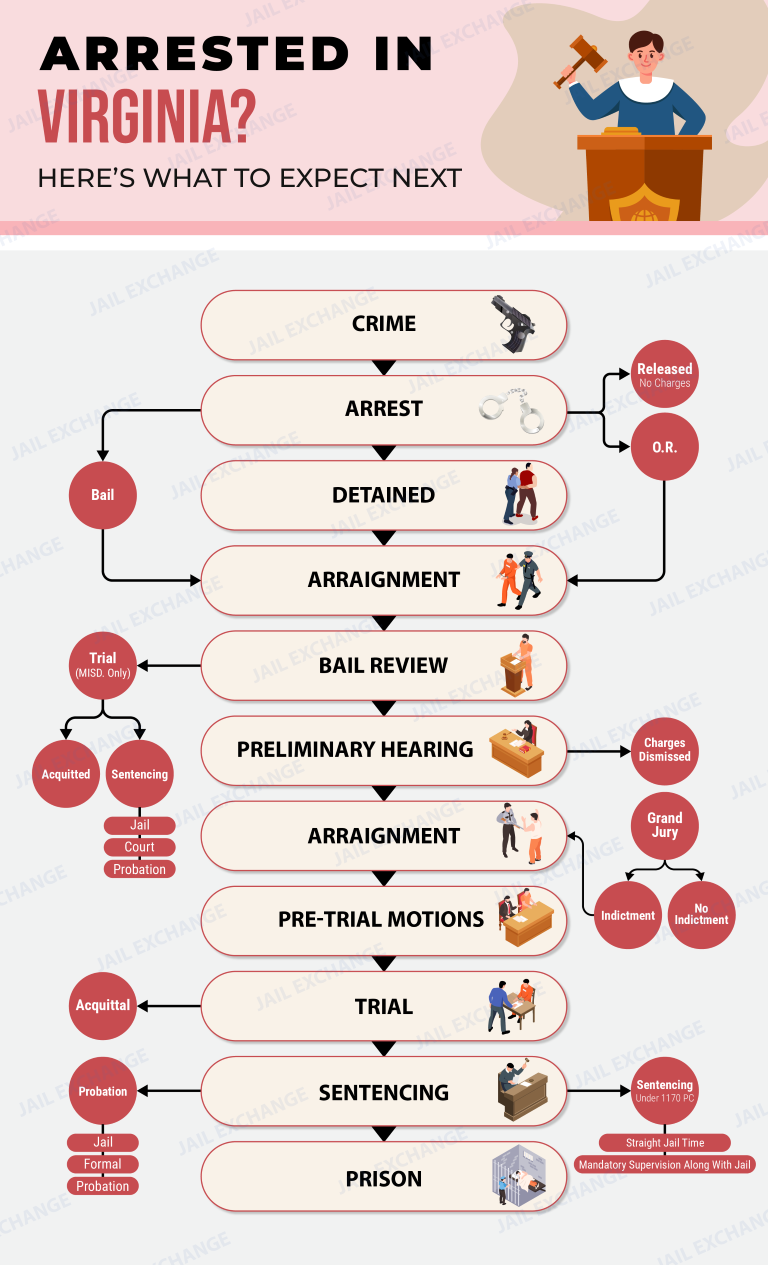
Roanoke City Jail Criminal Court Process
Criminal Court Process for Roanoke city Virginia
Roanoke Criminal Courts, Church Avenue Hearings and the City Jail
Criminal cases from the city of Roanoke begin in General District Court. Family and juvenile matters go to the JDR Court in that same courthouse, 315 West Church Avenue SW, Roanoke, VA 24016, and the Circuit Court hears felonies later. Adults held after arrest stay at the Roanoke City Jail, 324 Campbell Avenue SW, Roanoke, VA 24016.
Put the person's full name in the resident search to find a loved one. Our Roanoke Jail Roster page covers arrests, charges, and public defenders too.
Need a court date? The clerk at 540-853-2767 handles traffic and criminal cases, so have the full name ready. Worried about bail? Our Roanoke bail page shows the steps.
1. Courts in the City of Roanoke (circuit, general district, and juvenile and domestic relations courts)
The City of Roanoke is a self-governing independent city of about 100,000 people in the Roanoke Valley, legally separate from the Roanoke County that wraps around it. State charges from inside the city limits go to three courts under one roof at 315 West Church Avenue SW: the General District Court for misdemeanors and traffic, the Juvenile and Domestic Relations District Court for family and juvenile matters, and the Circuit Court for felonies and jury trials. These courts are part of Virginia's 23rd Judicial Circuit, which also takes in Roanoke County and Salem, each with courts of its own. Prosecutions are handled by the city's elected Commonwealth's Attorney, and anyone held after arrest goes to the Roanoke City Jail, operated by the Roanoke City Sheriff downtown.
- Roanoke City Jail, 340 Campbell Avenue SW, Roanoke, VA 24016; detention division (540) 853-6777, Sheriff's main line (540) 853-2941
- Magistrate (Roanoke City office, 23rd District), 324 Campbell Avenue SW, Roanoke, VA 24016, (540) 853-2247
- General District Court of the City of Roanoke, second floor, 315 West Church Avenue SW, Roanoke, VA 24016; clerk (540) 853-2767
- Juvenile and Domestic Relations District Court of the City of Roanoke, first floor, 315 West Church Avenue SW, Roanoke, VA 24016; clerk (540) 853-2389
- Circuit Court of the City of Roanoke and its Clerk, 315 West Church Avenue SW, Roanoke, VA 24016 (P.O. Box 2610, Roanoke, VA 24010); main (540) 853-6702, criminal (540) 853-6723
- Office of the Commonwealth's Attorney for the City of Roanoke, 315 Church Avenue SW, Roanoke, VA 24016; (540) 853-2626
- Public defender: Roanoke Public Defender Office, 210 First Street SW, Suite 420, Roanoke, VA 24011; (540) 857-7111
- Juvenile intake: 23rd District Court Service Unit, 215 Church Avenue SW, First Floor, Roanoke, VA 24011; (540) 853-2565
- Sheriff of the City of Roanoke, 340 Campbell Avenue SW, Roanoke, VA 24016; (540) 853-2941
- Police: Roanoke Police Department headquarters, 348 Campbell Avenue SW, Roanoke, VA 24016; (540) 853-2211
Which court hears your case. In the City of Roanoke, misdemeanors and traffic offenses are tried before a judge alone in the General District Court of the City of Roanoke. A defendant found guilty there may appeal within 10 days to the Circuit Court of the City of Roanoke, where the case starts over and a jury is available. The Juvenile and Domestic Relations District Court of the City of Roanoke takes all charges against people under 18 as well as assaults and other offenses where the alleged victim is a family or household member. A felony gets its preliminary hearing in General District Court, or in the JDR court if a relative is the alleged victim; after the grand jury indicts, the Circuit Court of the City of Roanoke handles the plea or trial.
Where pretrial inmates are held. Adults charged in the city who are not let go by the magistrate are booked into the Sheriff's jail at 340 Campbell Avenue SW. The city runs this jail on its own; it does not belong to the regional jail that serves the surrounding county, Salem, Franklin and Montgomery. Pretrial detainees stay here until they post bail, win release at a hearing or resolve the case. For booking information, charges or visiting, phone the Sheriff's Office at (540) 853-2941.
No town, municipal or mayor's courts exist anywhere in Virginia, and the City of Roanoke contains no towns, so all state charges from its neighborhoods, from Williamson Road and Northwest to Grandin Village and South Roanoke, are filed in the city courts on Church Avenue. Do not mix them up with the courts of Roanoke County: a case from Vinton, Cave Spring, Hollins or the City of Salem is heard in Salem, not downtown.
Court clerks
- General District Court of the City of Roanoke, second floor, 315 West Church Avenue SW, Roanoke, VA 24016, (540) 853-2767. The clerk can confirm trial dates, explain how to prepay certain traffic tickets and supply court-appointed counsel forms.
- Juvenile and Domestic Relations District Court of the City of Roanoke, first floor, same building, (540) 853-2389. Office hours run from 8:00 a.m. to 4:00 p.m.
- Circuit Court of the City of Roanoke, same building, mailing address P.O. Box 2610, Roanoke, VA 24010. The Clerk's main number is (540) 853-6702; criminal case questions go to (540) 853-6723.
Around-the-clock and juvenile offices
- Magistrate (Roanoke City office), 324 Campbell Avenue SW, Roanoke, VA 24016, (540) 853-2247. Magistrates here issue criminal warrants, emergency protective orders and release orders, including bond decisions, day and night.
- 23rd District Court Service Unit, 215 Church Avenue SW, First Floor, Roanoke, VA 24011, (540) 853-2565, which screens juvenile complaints for the city, Roanoke County, Salem and Vinton.
Lawyers and law enforcement
- Office of the Commonwealth's Attorney for the City of Roanoke, 315 Church Avenue SW, Roanoke, VA 24016, (540) 853-2626 (includes victim/witness services).
- Roanoke Public Defender Office, 210 First Street SW, Suite 420, Roanoke, VA 24011, (540) 857-7111, a Virginia Indigent Defense Commission office assigned to city cases.
- Roanoke Police Department, 348 Campbell Avenue SW, Roanoke, VA 24016, (540) 853-2211, the main arresting agency in the city; state troopers also patrol the interstates.
- Sheriff of the City of Roanoke, 340 Campbell Avenue SW, Roanoke, VA 24016, (540) 853-2941, responsible for the jail, courthouse security and serving court papers.
2. From arrest to the first hearing in the City of Roanoke
Three buildings on one stretch of Campbell Avenue SW handle almost every city arrest: police headquarters at 348, the Sheriff's jail at 340 and the magistrate's office at 324.
Step one: the magistrate
An officer who makes an arrest without a warrant must bring the person before a magistrate, who reviews the officer's account and decides whether to issue a warrant. Next comes the release decision. The magistrate may release on a personal recognizance (no money, only a signed promise), set an unsecured bond that becomes payable only after a missed court date, or require a secured bond. Secured bonds are posted with cash or property, or by hiring a commercial bondsman licensed by the Virginia Department of Criminal Justice Services, whose premium is not returned. The magistrate looks at the risk of flight and the risk to public safety; a 2021 change in Virginia law removed the old presumptions against release for certain charges. Conditions such as staying away from a victim, avoiding alcohol, or reporting to pretrial services may be attached.
Step two: arraignment or advisement
If the person is still in jail, the next day the court is in session brings an appearance before a district court judge, usually over a video link from the jail. The judge reads the charges, asks about a lawyer and sets the next date. This is the moment to say you cannot afford counsel; the judge can appoint the Roanoke Public Defender Office. People released on a summons appear on the date printed on it.
Step three: asking for a better release order
A detained defendant, through a lawyer, can ask a General District Court or JDR judge to set or lower the conditions at a bond hearing. If that judge says no, the request can go to the Circuit Court. Bring proof of a local address, a job, school or treatment to help the judge.
↑ Back to the question list3. The Sheriff's jail for the City of Roanoke
Pretrial detainees from the city are housed in the Roanoke City Jail at 340 Campbell Avenue SW, Roanoke, VA 24016. It is staffed by the elected Sheriff's detention center security division, (540) 853-6777; general questions go to the Sheriff's Office at (540) 853-2941.
A city jail, not a regional one
Most Virginia counties and cities now share regional jails, but the City of Roanoke still keeps its own. Its neighbors do things differently: Roanoke County, Salem, Franklin County and Montgomery County belong to the Western Virginia Regional Jail, 5885 West River Road, Salem, VA 24153, (540) 378-3700, and Roanoke County and Salem also use the Roanoke County Jail in Salem. When a family member was picked up just outside the city line, check those facilities too.
What families should know
- The city jail houses people awaiting trial, people serving jail sentences of up to 12 months, and people sentenced to prison who are waiting for transfer to the Department of Corrections.
- Phone the Sheriff's Office to learn whether someone is held, the charges, the release amount and the next hearing date. A secured bail can be posted through the magistrate or a licensed bondsman.
- Visiting schedules, mail rules, phone and tablet accounts, and commissary deposits are set by the Sheriff and change from time to time, so confirm them before you go.
4. Getting around the Church Avenue courthouse
The Roanoke City Courthouse at 315 West Church Avenue SW holds every state court the city has, plus the Commonwealth's Attorney's offices. Sheriff's deputies screen everyone at the entrance; weapons, knives and many other items are refused, and phones may be restricted in courtrooms.
Who is on which floor
- First floor: the JDR court and its clerk, where juvenile petitions, domestic assault charges and protective orders are heard.
- Second floor: the General District Court clerk's office and courtrooms for traffic, DUI, misdemeanor trials and felony preliminary hearings.
- Circuit Court: courtrooms and the Clerk of the Circuit Court, who handles indictments, felony trials, misdemeanor appeals and land and probate records as well.
Before the court date
Read the paperwork: it names the court, the courtroom or docket and the time. A summons that says Roanoke County or Salem means the case is in Salem, about seven miles away, not at this courthouse. The state's online case information system lists upcoming district and circuit court hearings by name, and the clerks will confirm a date by phone. The Public Defender's office is a few blocks south on First Street SW, close to the federal courthouse on Franklin Road.
↑ Back to the question list5. Free defense lawyers in the City of Roanoke
A defendant who cannot afford a lawyer in a case that could bring jail time has a right to appointed counsel. In the City of Roanoke that usually means the Roanoke Public Defender Office, 210 First Street SW, Suite 420, Roanoke, VA 24011, (540) 857-7111, part of the Virginia Indigent Defense Commission. Its jurisdiction is the city alone; next door in Roanoke County and Salem, judges appoint private attorneys instead.
Getting one appointed
- Say at the magistrate's office or at the first court appearance that you need a lawyer and cannot pay.
- Complete the sworn financial statement listing income, expenses, assets and dependents. The General District Court clerk, (540) 853-2767, and the JDR clerk, (540) 853-2389, keep the forms.
- The judge decides eligibility and appoints the Public Defender; if that office has a conflict, a private lawyer on the court-appointed list takes the case.
Fees and choices
There is no charge up front. After a conviction, though, the court may tax the statutory court-appointed attorney fee as part of court costs. People who do not qualify can retain their own lawyer, and anyone who wants to waive counsel in a jailable case has to sign a written waiver.
↑ Back to the question list6. The city prosecutor's office, plea bargains and deferred dispositions
City voters elect the Commonwealth's Attorney, whose staff of assistant prosecutors works out of the courthouse at 315 Church Avenue SW, (540) 853-2626. The office prosecutes all felonies and the more serious misdemeanors filed in the city's courts; arresting officers may present some lower-level traffic and misdemeanor cases themselves.
How plea bargaining works here
Prosecutors make offers to the defense lawyer, not usually to the defendant directly. A typical offer reduces the charge, dismisses some counts or caps the recommended sentence in return for a guilty plea. Whatever the parties agree, a judge must approve it, and the judge is not bound by a sentencing recommendation unless the agreement is a binding one the court accepts.
How a Roanoke case can end without a conviction
- A deferred finding for first-time drug possession under Code § 18.2-251: probation, substance abuse screening and treatment, community service, then dismissal if all terms are met.
- A deferred finding in the JDR court for a first family assault under § 18.2-57.3, typically requiring a counseling or intervention program and good behavior.
- Deferral and later dismissal of other minor charges such as petit larceny, often after restitution, if the judge agrees and the facts support it.
Help for crime victims
Victim/witness staff in the same office keep victims informed of hearings, help with restitution and impact statements, and explain the rights guaranteed by the Crime Victim and Witness Rights Act. Call (540) 853-2626 and ask for victim/witness services.
↑ Back to the question list7. Treatment and specialty dockets in the City of Roanoke
The 23rd Judicial Circuit (the City of Roanoke, Roanoke County and Salem) launched the first drug treatment court docket in Virginia, back in 1995, and treatment-centered dockets remain part of local practice.
- Adult drug treatment docket: for defendants facing nonviolent charges tied to addiction. Participants agree to regular drug testing, treatment, employment or school and frequent appearances before the judge for a year or longer. Success can mean a reduced charge, a suspended sentence or a dismissal, depending on the terms. Entry requires screening and agreement from the prosecutor.
- Therapeutic (behavioral health) docket: a Roanoke Valley docket that takes City of Roanoke cases involving defendants with serious mental illness, combining treatment plans with close court review.
- Veterans: former service members whose offenses are connected to service-related conditions can ask whether a veterans treatment program is taking referrals.
- DUI: instead of a separate DUI court, people convicted of driving under the influence are sent to the local Virginia Alcohol Safety Action Program (VASAP) for education or treatment.
Programs fill up and their rules shift, so a defense attorney or the Clerk of the Circuit Court, (540) 853-6702, is the best source on what is currently open to city defendants.
↑ Back to the question list8. Misdemeanor (for example, petit larceny, a first DUI, assault and battery, trespassing)
Misdemeanors are the bulk of the work in the city's General District Court: retail theft, driving under the influence, simple assault, trespass, driving on a suspended license and similar charges.
Possible penalties
- Class 4: a Roanoke judge may fine up to $250 but cannot impose jail. Class 3: the cap rises to a $500 fine, again with no jail.
- Class 2: jail for up to six months and/or a fine reaching $1,000.
- Class 1: jail for up to a year and/or a fine reaching $2,500. Petit larceny of goods under $1,000, assault and battery, and trespass are each Class 1 offenses.
How the case moves
A misdemeanor may begin with a summons handed out at the scene, or with an arrest and a trip to the magistrate, who decides bail. A jailed defendant appears before a judge on the next court day, and a trial date is normally set a month or two out. The trial itself is a bench trial; there is no jury in district court.
When the charge is DUI
A first-offense DUI arrest inside Roanoke city limits is prosecuted as a Class 1 misdemeanor. The law requires at least a $250 fine and revokes the license for one year, and a seven-day administrative suspension starts at the time of arrest. Jail is mandatory when the blood alcohol level is high: five days for 0.15 to 0.20, ten days above 0.20. Judges commonly grant a restricted license with an ignition interlock, and VASAP enrollment is required.
When the victim is family
Assault and battery against a family or household member is heard in the JDR court on the first floor, not in General District Court. Expect an emergency protective order after the arrest. First offenders may qualify for a deferred disposition, but repeat convictions carry escalating consequences, and a third one within the statutory window can become a felony.
Results and appeal rights
The judge can dismiss, defer, fine, suspend a jail term on probation, or impose jail time. After a conviction in district court, the defendant has 10 days to appeal to the Circuit Court of the City of Roanoke, which tries the case fresh and can seat a jury of seven. Expect one to three months from charge to verdict in most cases, and longer after an appeal.
↑ Back to the question list9. Felony (for example, burglary, grand larceny, drug possession or distribution, malicious wounding)
A felony charged in the City of Roanoke typically passes through two courts: the General District Court for the first appearance and preliminary hearing, then the Circuit Court for indictment and final resolution.
The early weeks
The magistrate sets bond conditions after booking, and a detained defendant goes before a district judge on the next court day. That judge appoints counsel for those who qualify and schedules the preliminary hearing, generally a few weeks away when the defendant remains in jail.
Probable cause, then the grand jury
The preliminary hearing is not a trial; the prosecutor needs to show only probable cause. A judge who finds it certifies the charge to the next grand jury in the Circuit Court; a judge who does not may dismiss or reduce it. Prosecutors can also bypass the preliminary hearing and seek a direct indictment. After an indictment, the defendant is arraigned in Circuit Court and the case is set for trial or plea.
What the common charges carry
- Breaking into a home at night with intent to commit a crime (burglary) is a Class 3 felony, punishable by 5 to 20 years, or a Class 2 felony when the burglar is armed; other statutory burglary counts carry up to 20 years.
- Stealing property valued at $1,000 or more (grand larceny) carries 1 to 20 years, or a jail term of up to 12 months.
- Possessing cocaine, heroin, fentanyl or another Schedule I or II drug is a Class 5 felony punishable by one to ten years in prison or as much as a year in jail.
- Selling or intending to sell such a drug carries 5 to 40 years on a first conviction, with mandatory minimums at higher weights. Up to one ounce of marijuana is legal for adults 21 and over, but sales are still illegal.
- Malicious wounding is a Class 3 felony with 5 to 20 years; the lesser unlawful wounding is a Class 6 felony.
Resolution and sentence
A plea agreement ends most cases. A defendant who goes to trial may choose a judge or a jury of 12, whose verdict must be unanimous. Sentencing is done by the judge unless the defendant requests jury sentencing, an option Virginia added in July 2021, and the judge reviews the state's voluntary guidelines. Virginia has had no parole for felonies committed since January 1, 1995; earned sentence credits may reduce the time actually served. Sentences longer than a year are generally served in a Department of Corrections prison.
How long it takes
Virginia's speedy trial statute, Code § 19.2-243, sets a five-month limit after the probable cause finding for a jailed defendant and nine months for one on release, excluding delays the defense causes or agrees to. A typical city felony runs four months to a year.
↑ Back to the question list10. Violent felony (for example, murder, rape, robbery)
The most serious cases in the city, including homicides, armed robberies, carjackings and sexual assaults, are investigated by Roanoke Police detectives, often with help from the Virginia State Police lab, and tried in the Circuit Court.
What the law provides
- Robbery: 5 years to life in prison, plus mandatory consecutive time for using a firearm.
- Rape: 5 years to life.
- Aggravated malicious wounding: 20 years to life (Class 2).
- Second-degree murder: 5 to 40 years. First-degree murder, a Class 2 felony, brings anywhere from 20 years up to life.
- Aggravated murder, formerly known in Virginia as capital murder, is a Class 1 felony punished by life imprisonment, since Virginia ended the death penalty in 2021.
Release while the case is pending
Defendants in these cases are frequently denied bail by the magistrate and held in the city jail. Still, no charge carries an automatic presumption of detention anymore, and a lawyer can seek release at a hearing in district court and then in Circuit Court. Judges consider the strength of the evidence, any record of violence, ties to the Roanoke Valley and the safety of the victim.
The road to trial
The steps match other felonies, yet each one takes longer: DNA and firearms analysis, digital evidence and mental health evaluations can push the trial date out by many months, and the defense often agrees to continuances that suspend speedy-trial deadlines. One to two years from arrest to verdict is not unusual. The jury of 12 must be unanimous, and the judge imposes the sentence unless the defendant asks the jury to do so.
For victims and families
The Commonwealth's Attorney's victim/witness program, (540) 853-2626, can arrange hearing notices, accompany victims to court, help prepare an impact statement and explain how to sign up for notice when a defendant is released or transferred.
↑ Back to the question list11. Juveniles (under 18) arrested in the City of Roanoke
Children and teenagers charged with crimes in the city have their cases heard by the Juvenile and Domestic Relations District Court of the City of Roanoke, on the first floor of the courthouse at 315 West Church Avenue SW; clerk (540) 853-2389.
The Court Service Unit decides first
Every juvenile complaint goes to an intake officer of the 23rd District Court Service Unit, 215 Church Avenue SW, First Floor, Roanoke, VA 24011, (540) 853-2565. That officer chooses among three paths: diverting a minor matter without court, filing a petition so the case goes before a judge, or ordering secure detention when the law permits it. The same unit covers Salem, Roanoke County and the Town of Vinton.
If the youth is detained
City youths who are locked up are typically taken to the Roanoke Valley Juvenile Detention Center at 498 Coyner Springs Road, Roanoke, VA 24012, (540) 561-3840. Within 72 hours, on the court's next working day, a judge holds a detention hearing and decides whether the youth stays detained or returns home, possibly with electronic monitoring or other conditions.
Lawyers, hearings and results
A city prosecutor handles the case for the Commonwealth, and the judge can assign the Roanoke Public Defender Office, (540) 857-7111, to represent the child. There is no jury in JDR court. Outcomes run from informal diversion, community service, restitution and probation through the Court Service Unit to, in the most serious cases, commitment to the Department of Juvenile Justice, served at Bon Air Juvenile Correctional Center or in a community placement.
Adult prosecution of juveniles in the City of Roanoke
If a youth aged 14 or older is accused of certain serious felonies, the Commonwealth may request a transfer hearing, after which the JDR judge can move the case to the Circuit Court of the City of Roanoke. For the most serious offenses, among them murder and aggravated malicious wounding, a 16- or 17-year-old can be certified to Circuit Court on the Commonwealth's Attorney's notice once probable cause is found at a preliminary hearing. In most juvenile cases the records are kept confidential; certain felony records are an exception.
↑ Back to the question list12. Federal cases (U.S. District Court) from the City of Roanoke
Federal crimes committed in the City of Roanoke are prosecuted in the Western District of Virginia, Roanoke Division, whose courthouse is also the district's headquarters: the Richard H. Poff Federal Building, 210 Franklin Road SW, Room 540, Roanoke, VA 24011. The clerk's office number is (540) 857-5100.
Offices involved
- The U.S. Attorney for the Western District of Virginia is headquartered a block away at 310 First Street SW, Room 906, Roanoke, VA 24011, (540) 857-2250.
- The Office of the Federal Public Defender for the district is at 210 First Street SW, Suite 400, Roanoke, VA 24011, (540) 777-0880. When it cannot take a case, the court appoints a lawyer from its Criminal Justice Act panel.
Which city cases end up in federal court
Federal prosecutors in Roanoke typically pick up trafficking cases involving fentanyl, methamphetamine or cocaine, illegal gun possession by people with felony records, bank robberies, online child sexual exploitation, and fraud schemes such as wire, health care or benefits fraud. Offenses on federal land near the city, such as the Blue Ridge Parkway and the Jefferson National Forest, and crimes against federal property or officers are federal as well.
Steps in a federal prosecution
- Initial appearance before a U.S. Magistrate Judge, usually the day of arrest or the next court day, where the charges are explained and counsel is appointed if the defendant qualifies.
- Detention hearing, normally within three court days when the government asks for detention. Under the federal Bail Reform Act, the judge releases the defendant on conditions monitored by U.S. Pretrial Services or orders the person held.
- Indictment by a grand jury within 30 days if the case started with a complaint.
- Trial or plea: the Speedy Trial Act sets a 70-day clock from indictment, although judges often grant extensions. Trials use a 12-person jury that must reach a unanimous verdict, but most defendants plead guilty.
- Sentencing after a presentence report by U.S. Probation. The judge applies the advisory federal Sentencing Guidelines and any mandatory minimum. Federal prison has no parole; good-conduct credit means about 85 percent of a sentence is served in the Bureau of Prisons, with supervised release afterward.
- Appeal to the U.S. Court of Appeals for the Fourth Circuit, whose courthouse is in Richmond.
Looking up a federal inmate
To find someone in federal custody, use the Federal Bureau of Prisons inmate locator and search by name or BOP register number. Defendants awaiting federal trial are sometimes held in local or regional jails that contract with the U.S. Marshals, so the person may also show up on that jail's inmate list. Federal prosecution of minors is uncommon, and youth cases from the city almost always remain in the JDR court.
↑ Back to the question listThe information in this City of Roanoke court guide is general and is not legal advice. Phone numbers, courtrooms and schedules can change; check with the clerk handling your case, for example the General District Court of the City of Roanoke at (540) 853-2767, before relying on any detail. Talk to a criminal defense attorney about your own situation, and if you cannot pay for one, ask the judge for appointed counsel or contact the Roanoke Public Defender Office at (540) 857-7111.