
Alachua Regional Juvenile Detention Center
Alachua Regional Juvenile Detention Center
Juvenile
352-955-2105Alachua Regional Juvenile Detention Center: Information for Families
Short-term or long-term? It is short-term secure detention, not a long-term placement: a 45-bed, hardware-secure center run by the Florida Department of Juvenile Justice (DJJ) for youth under 18 who are waiting for court or for a bed in a residential commitment program. Its service area is Alachua County together with Baker, Bradford, Columbia, Dixie, Gilchrist, Hamilton, Lafayette, Levy, Suwannee and Union counties.
Alachua Regional Juvenile Detention Center is at 3440 NE 39th Avenue, Gainesville, FL 32609; the main number is 352-955-2105.
Read inmate search answers
 Read inmate search answers
1. How can I confirm where my child is held?
Youth in DJJ detention do not show up in adult jail searches. Call 352-955-2105 to ask. Because it is kept private to protect the minor, staff will discuss it only with a parent or legal guardian.
↑ Back to the list of questions2. Will my child keep up with school?
Classes are full time and run by the local school district; youth also get health, mental health and substance abuse screening, crisis help and treatment (DJJ).
Each youth gets at least one hour of outdoor exercise a day when weather and safety allow (Rule 63G-2.023(7)). Religious services are optional (DJJ).
↑ Back to the list of questions3. How do I report a problem?
To report abuse or neglect, call 911 in an emergency and then the Florida Abuse Hotline, 1-800-962-2873.
Complaints about the center go to DJJ's Central Communications Center hotline, 1-800-355-2280.
↑ Back to the list of questions4. Is there a fee while my child is detained?
A cost-of-care fee of $5 per day is ordered against parents for secure detention, and the judge looks at whether it would cause significant financial hardship (s. 985.039, F.S.).
↑ Back to the list of questions5. When can I visit?
When visits happen (DJJ)
- Thursday: 7:30 p.m. – 8:30 p.m.
- Saturday: 2:00 p.m. - 3:00 p.m.
- Sunday: 2:00 p.m. - 3:00 p.m.
Visitation hours are subject to change during holidays.
Parents, grandparents, legal guardians and the youth's own children are approved visitors (Rule 63G-2.023(9)(b), F.A.C.). Anyone else needs a court order or the superintendent's approval; the youth's Juvenile Probation Officer (JPO) can request it (DJJ).
Bring a photo ID. Every visitor is searched electronically, and keys, purses, packages and other personal items stay out of the secure area; bringing in unauthorized items is a third-degree felony (Rule 63G-2.023(9)(d), (f)).
A visit can be refused or ended for disruptive behavior, intoxication or inappropriate attire, and ending a visit can lead to a suspension of visiting (Rule 63G-2.023(9)(f)-(g)). Call 352-955-2105 to confirm.
↑ Back to the list of questions6. How often can my child call?
Expect a call soon after admission: the rules give each youth a call to a parent or guardian at the facility's expense (Rule 63G-2.020, F.A.C.).
The weekly minimum is 15 minutes on the phone; calls with legal counsel or the probation officer come on top of that (Rule 63G-2.023(10)).
Your child places the calls; incoming personal calls to youth aren't put through. Ask 352-955-2105 about the phone schedule. Because it is kept private to protect the minor, staff will discuss it only with a parent or legal guardian.
↑ Back to the list of questions7. What are the mail rules?
Youth may send and receive mail, and the center gives each youth postage and writing materials for at least two personal letters a week (Rule 63G-2.023(11)).
All mail in and out is checked within 48 hours for content that could jeopardize safety or security (Rule 63G-2.023(11)(d)).
Ask at 352-955-2105 who is allowed to write and how many letters can come in. Books and magazines are screened by the superintendent, so check before sending any (Rule 63G-2.023(8)(b)).
Where to send letters
Resident's Full Name
Alachua Regional Juvenile Detention Center
3440 NE 39th Avenue
Gainesville, FL 32609
8. Who do I ask about charges and court dates?
The Juvenile Probation Officer handles questions about charges and court; the on-duty supervisor handles questions about life at the center (Rule 63G-2.023(9)(h)).
↑ Back to the list of questions9. Can my child be moved to an adult jail?
Direct file at 14 or 15: the state attorney can charge a child as an adult for offenses on a statutory list, including murder, sexual battery, robbery, kidnapping, carjacking, home invasion robbery and aggravated battery (s. 985.557(1)(a), F.S.).
For a child who was 16 or 17, the state attorney may direct-file any felony, and a misdemeanor only if the child has at least two prior adjudications or withheld adjudications, one of them for a felony (s. 985.557(1)(b)).
A juvenile judge can transfer a child 14 or older on the state attorney's waiver motion (s. 985.556(2)); for an offense punishable by death or life imprisonment, a grand jury indictment sends a child of any age to adult court (s. 985.56(1)).
A child transferred or indicted for adult prosecution goes to the county jail under a court order, in a section kept separate by sight and sound from adult inmates; a misdemeanor transfer can't be held there (s. 985.265(5)). Ask your child's lawyer about this as early as you can.
↑ Back to the list of questionsAlachua Regional Juvenile Detention Center: Release Questions for Families
Detention or long-term placement? It is short-term secure detention, not a long-term placement: a 45-bed, hardware-secure center run by the Florida Department of Juvenile Justice (DJJ) for youth under 18 who are waiting for court or for a bed in a residential commitment program. Youth from Alachua County and from Baker, Bradford, Columbia, Dixie, Gilchrist, Hamilton, Lafayette, Levy, Suwannee and Union counties are detained here.
Release for youth in Florida runs through the DJJ risk assessment and a detention hearing held within 24 hours.
1. Who decides whether my child is released?
DJJ screens every youth taken into custody using a standard Detention Risk Assessment Instrument (DRAI); a youth who is not a public-safety risk may go home to a parent or guardian (DJJ).
By law, detention placement decisions rest on the risk assessment (s. 985.245(1), F.S.). For your child's situation, call 352-955-2105. These details are kept private to protect the minor, so staff share them only with a parent or guardian.
↑ Back to the top of the questions2. How is the risk score worked out?
It considers pending felony and misdemeanor charges, offenses committed while a case is pending, prior offenses, firearm possession or use, past failures to appear, supervision violations and current supervision status, and any history of abuse or neglect (s. 985.245(2)(b)).
The outcome is one of three: release, supervised release detention, or secure detention (s. 985.245(2)(b)).
↑ Back to the top of the questions3. Can the judge send my child home?
At the hearing, held within 24 hours, the judge can keep the child in secure detention, order supervised release detention with or without electronic monitoring, or release the child (s. 985.255(1), 985.26(2)(a)).
Later on, either side can ask the judge to move the child between secure detention and supervised release, and the court can do it on its own (s. 985.26(2)(a)3.).
↑ Back to the top of the questions4. Can a child be held on a domestic violence charge?
For a domestic violence charge, the court may order secure detention despite the risk score if it finds in writing that no respite care is available and the victim needs protection; such a hold lasts no more than 48 hours without a further court order (s. 985.255(2)).
↑ Back to the top of the questions5. How long can detention last before trial?
Before trial, the general cap on secure detention is 21 days, extendable for serious charges (s. 985.26(2), F.S.). A child on supervised release gets a review hearing within 15 days after the 60th day (s. 985.26(2)(a)1.).
↑ Back to the top of the questions6. Does release change if the case goes to adult court?
In adult court, the adult pretrial release and bond rules apply.
The state attorney can ask a juvenile judge to waive jurisdiction for a child 14 or older (s. 985.556(2)), and a grand jury can indict a child of any age for an offense punishable by death or life imprisonment (s. 985.56(1)).
For a child who was 14 or 15, the state attorney may file adult charges directly for listed serious offenses such as murder, sexual battery, robbery, carjacking, kidnapping, aggravated battery or using a weapon in a felony (s. 985.557(1)(a), F.S.).
Children who were 16 or 17 can be charged as adults for any felony at the state attorney's discretion. Misdemeanors qualify only with at least two earlier adjudications, one involving a felony (s. 985.557(1)(b)).
Once a child is transferred or indicted as an adult, the court orders the child delivered to an adult jail, where children must be kept out of sight and sound of adult inmates. A child transferred on a misdemeanor may not be held in an adult jail (s. 985.265(5)). Your child's lawyer can tell you whether this applies.
↑ Back to the top of the questionsAlachua Regional Juvenile Detention Center Family Visits and Phone Calls
Short-term or long-term? It is a secure detention center for juveniles, not a long-term placement. DJJ operates its 45 beds for youth held pending adjudication, disposition or transfer to a commitment facility. Besides Alachua County, it takes youth from Baker, Bradford, Columbia, Dixie, Gilchrist, Hamilton, Lafayette, Levy, Suwannee and Union counties.
Visiting days and times (DJJ)
- Thursday: 7:30 p.m. – 8:30 p.m.
- Saturday: 2:00 p.m. - 3:00 p.m.
- Sunday: 2:00 p.m. - 3:00 p.m.
Visitation hours are subject to change during holidays.
Who may visit: parents, grandparents, legal guardians and the youth's children (Rule 63G-2.023(9)(b), F.A.C.). Brothers, sisters, other relatives and friends need a court order or special approval from the superintendent, arranged through the JPO (DJJ).
Plan on an electronic search and a photo ID check. Personal belongings such as keys, packages and purses can't go into the secure area, and bringing in unauthorized items is a felony of the third degree (Rule 63G-2.023(9)(d), (f)).
Visitors can be turned away for refusing a search, appearing intoxicated, or wearing inappropriate clothing such as no shirt or shoes or anything showing violence, drugs or alcohol (Rule 63G-2.023(9)(f)). Call 352-955-2105 to confirm the schedule before you go.
Phone calls
At admission, your child is allowed to make a phone call to a parent or guardian at the facility's expense (Rule 63G-2.020, F.A.C.).
Rule 63G-2.023(10) guarantees at least a quarter hour of phone calls each week, not counting calls with the youth's attorney or JPO.
Families cannot call a youth directly. 352-955-2105 can tell you when calls are made. Because it is kept private to protect the minor, staff will discuss it only with a parent or legal guardian.
Alachua Regional Juvenile Detention Center: Juvenile Court Information
Short-term or long-term? It is a secure detention center for juveniles, not a long-term placement. DJJ operates its 45 beds for youth held pending adjudication, disposition or transfer to a commitment facility. Besides Alachua County, it takes youth from Baker, Bradford, Columbia, Dixie, Gilchrist, Hamilton, Lafayette, Levy, Suwannee and Union counties.
Each Florida county has a juvenile division within its circuit court, and that court hears delinquency cases.
1. What court is my child's case in?
Juvenile delinquency cases are heard by the juvenile division of the circuit court in the county where the charges were filed. For youth held here (from Alachua, Baker, Bradford, Columbia, Dixie, Gilchrist, Hamilton, Lafayette, Levy, Suwannee and Union) that means the 3rd Judicial Circuit and the 8th Judicial Circuit.
The county Clerk of Court or your child's lawyer can give you hearing dates.
↑ Back to the questions2. Who represents my child?
Your child is entitled to legal counsel throughout the case, and an indigent family gets a court-appointed lawyer (s. 985.033(1), F.S.).
If the parents are not indigent but refuse to hire a lawyer, the court appoints one for the detention hearing and then orders the parents to hire private counsel (s. 985.033(3)).
↑ Back to the questions3. How long can my child be held?
Generally a child may not be held in secure detention more than 21 days unless the adjudicatory hearing has started in good faith (s. 985.26(2)(a)2.). For serious charges, such as first- or second-degree felonies, violent third-degree felonies or firearm offenses, the judge may extend that by up to 21 more days for good cause (s. 985.26(2)(b)).
A child already adjudicated can be held up to 15 days, for example while waiting for a program bed (s. 985.26(3)); continuance delays are excluded (s. 985.26(4)).
↑ Back to the questions4. What does the JPO do?
DJJ assigns a Juvenile Probation Officer (JPO) to each youth. Questions about the case or charges go to the JPO; questions about life at the center go to the on-duty supervisor (Rule 63G-2.023(9)(h), F.A.C.).
↑ Back to the questions5. When is the first hearing?
No child may stay in detention more than 24 hours without a hearing and court order (s. 985.255(1), 985.26(1), F.S.).
At that hearing the judge decides whether there is probable cause and whether the child needs to stay in detention, using DJJ's risk assessment. A judge who orders more or less restrictive care than the assessment shows must give clear and convincing reasons in writing (s. 985.255(3)).
↑ Back to the questions6. Could my child be tried as an adult?
A juvenile judge can transfer a child 14 or older on the state attorney's waiver motion (s. 985.556(2)); for an offense punishable by death or life imprisonment, a grand jury indictment sends a child of any age to adult court (s. 985.56(1)).
If the child was 14 or 15 at the time, adult charges can be direct-filed only for listed crimes, among them murder, robbery, sexual battery, aggravated assault or battery, kidnapping and carjacking (s. 985.557(1)(a), F.S.).
Children who were 16 or 17 can be charged as adults for any felony at the state attorney's discretion. Misdemeanors qualify only with at least two earlier adjudications, one involving a felony (s. 985.557(1)(b)).
Once a child is transferred or indicted as an adult, the court orders the child delivered to an adult jail, where children must be kept out of sight and sound of adult inmates. A child transferred on a misdemeanor may not be held in an adult jail (s. 985.265(5)). Ask your child's lawyer about this as early as you can.
↑ Back to the questions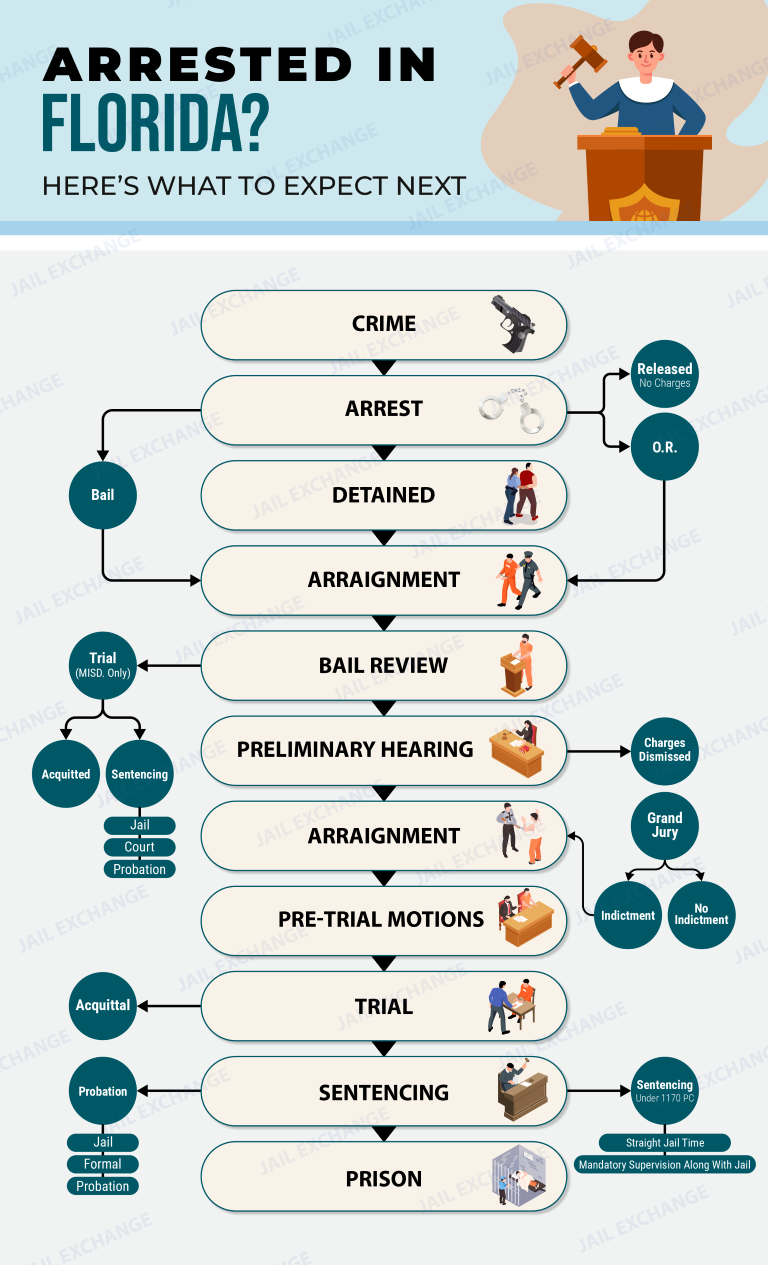
Information for this service is currently unavailable.
Information for this service is currently unavailable.
Alachua Regional Juvenile Detention Center Family Mail
Resident's Full Name
Alachua Regional Juvenile Detention Center
3440 NE 39th Avenue
Gainesville, FL 32609
The minimum letter rules for Alachua Regional Juvenile Detention Center (FL) are stated here. The mail rule at this center is that mail can only be sent and received to immediate family. Incoming and outgoing letters are treated as all mail that is opened and checked for contraband or content that is not allowed. Within those family-mail rules, residents can send and receive as many letters, within reason, as they want.
Put this FL campus first in your address book as Alachua Regional Juvenile Detention Center at 3440 NE 39th Avenue, Gainesville, FL 32609.
Letters meant for a youth at Alachua Regional Juvenile Detention Center are not adult inmate mail and should not go to an adult jail in Alachua County.
Call 352-955-2105 and ask a parent or legal guardian about stamps, books, or anything other than a letter. That information is kept private to protect the minor.
Use 32609 exactly as written so the carrier delivers the envelope to this juvenile program.
Alachua Regional Juvenile Detention Center: How Youth Phone Home
Detention or long-term placement? It is short-term secure detention, not a long-term placement: a 45-bed, hardware-secure center run by the Florida Department of Juvenile Justice (DJJ) for youth under 18 who are waiting for court or for a bed in a residential commitment program. Youth from Alachua County and from Baker, Bradford, Columbia, Dixie, Gilchrist, Hamilton, Lafayette, Levy, Suwannee and Union counties are detained here.
This is a state juvenile center run by DJJ, not the county jail, so the jail's prepaid phone accounts don't apply to calls from youth here.
The first call, made during admission, goes to a parent or guardian and is paid for by the facility (Rule 63G-2.020, F.A.C.).
The weekly minimum is 15 minutes on the phone; calls with legal counsel or the probation officer come on top of that (Rule 63G-2.023(10)).
Families cannot call a youth directly. 352-955-2105 can tell you when calls are made. These details are kept private to protect the minor, so staff share them only with a parent or guardian.
Information for this service is currently unavailable.
Information for this service is currently unavailable.
Alachua County County Jails
Alachua County Juvenile Facilities
- Juvenile: 352-955-2105
- Juvenile: 352-955-2105
The Alachua Regional Juvenile Detention Center serves the following cities and towns of Alachua County: Alachua, Archer, Gainesville, Hawthorne, High Springs, La Crosse, Micanopy, Newberry and Waldo. At times this facility may also house inmates arrested in the following counties: Baker County, Bradford County, Columbia County, Dixie County, Gilchrist County, Hamilton County, Lafayette County, Levy County, Suwannee County and Union County.