Hamilton County Jail Criminal Court Process
Criminal Court Process for Hamilton County Florida
Inside Hamilton County’s Criminal Courts
Hamilton County is Florida’s gateway on Interstate 75, sitting right on the Georgia border between the Suwannee and Withlacoochee rivers. Jasper is the county seat; Jennings and White Springs are the other towns. Two Florida trial courts split up criminal cases. Hamilton’s County Court handles the misdemeanors, criminal traffic offenses (think DUI, or driving after a license is revoked), and violations of county or town ordinances, which are local rules. Hamilton’s Circuit Court deals with felonies, the crimes serious enough for a state prison sentence, and runs the juvenile court for those under 18. The county falls within the 3rd Judicial Circuit. Six other North Florida counties share it: Columbia, Dixie, Lafayette, Madison, Suwannee and Taylor. You can also check our bond guide and inmate search guide.
The Hamilton County Courthouse, 207 NE 1st Street, Jasper, FL 32052, is where hearings and trials happen. The Clerk of Court works out of Room 106 and answers at (386) 792-1288. After an arrest, adults go to the Hamilton County Jail, which the sheriff operates in Jasper.
Online records, free of charge: Hamilton’s clerk is part of the Online Court Records Search, a public portal used by dozens of small Florida counties. Choose Hamilton, then search by name or by case number to find charges, hearing dates and case results. By law, juvenile records, sealed or expunged files and certain private information don’t appear.
1. Jasper County Court cases: DUI on I-75, petit theft, possession of paraphernalia, simple assault
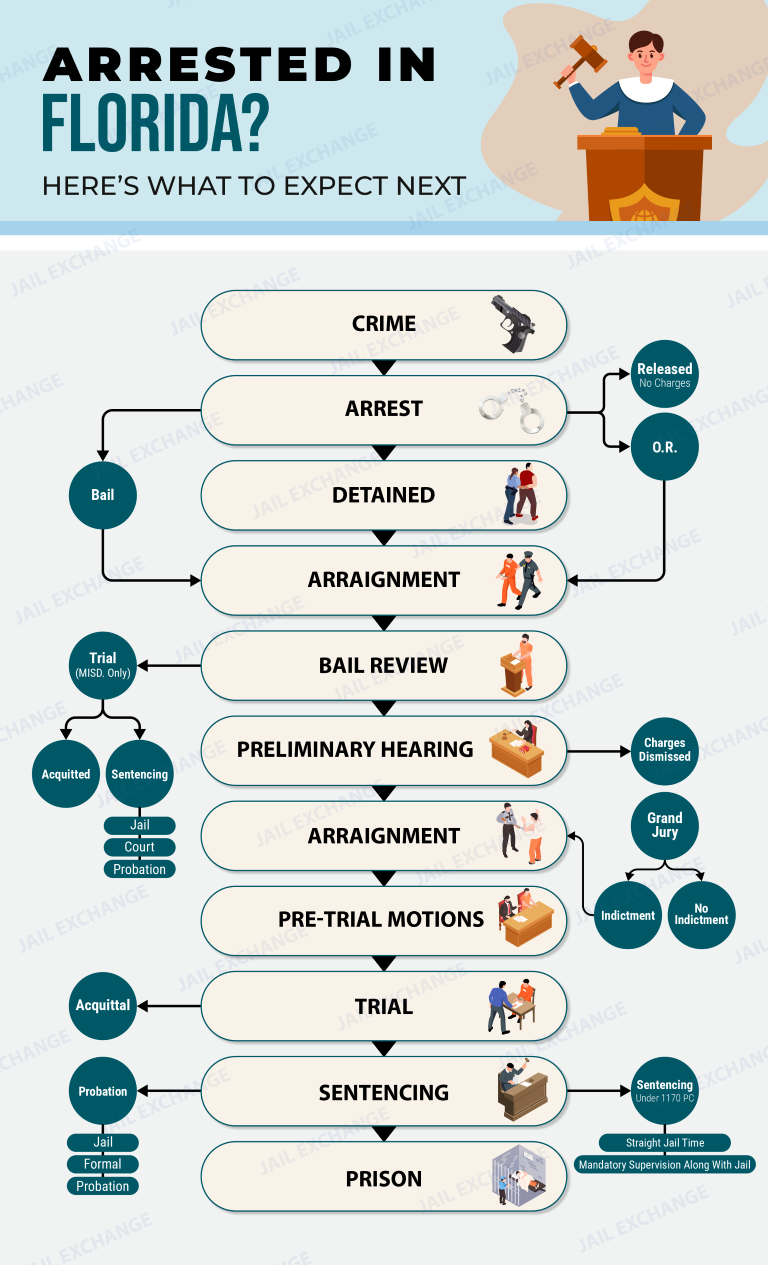
Many Hamilton misdemeanor cases involve travelers stopped on the interstate. For minor charges, a deputy or trooper can write a notice to appear, which gives the court date and lets the person continue on their way. If someone is arrested, a judge has to see them within 24 hours at first appearance. In that brief hearing the judge explains the accusation, checks for probable cause (a fair reason for the arrest), and rules on release. Since January 1, 2026, Florida’s uniform bond schedule, set by Supreme Court order AOSC25-69, has listed the least amount of bond allowed for each charge before first appearance. For a handful of charges, the jail must hold the person for the judge. Hamilton bail agents need a state license, and their fee can't be under 10% of the bond or $100.
Florida misdemeanors come in first and second degree. The first degree can bring a year or less in county jail with fines reaching $1,000; the second, 60 days or less with fines reaching $500. Possessing drug paraphernalia is a first-degree misdemeanor. The State Attorney for the 3rd Circuit, elected by voters across all seven counties, prosecutes Hamilton’s state charges. A Hamilton defendant who wants an appointed lawyer fills out an income affidavit, and the court rules on it. Approved cases go to the 3rd Circuit’s elected Public Defender. Where the public defender is conflicted out, a regional conflict counsel paid by the state takes the case. Section 938.29 of Florida law allows the court to assess attorney’s fees for appointed counsel, and those fees can become a lien.
Some first offenders qualify for pretrial diversion, where finishing a program can lead to dismissal. Under the speedy trial rule, a misdemeanor should come to trial within 90 days of formal charging unless the defendant agrees to more time. The jury has six members.
Under 18: Kids under 18 skip County Court entirely. Their cases belong to the juvenile side of Circuit Court. Under section 985.12, officers may answer a young person’s first minor offense with a civil citation or another prearrest diversion option, where the young person completes service or counseling and avoids an arrest. No detained child waits more than 24 hours for a detention hearing. Hamilton youths who need secure detention are held about 70 miles south in Gainesville. That facility, the Alachua Regional Juvenile Detention Center, is run by the state juvenile justice department.
2. Hamilton felonies: drug trafficking on the interstate, auto theft, burglary, cargo theft
Felony convictions can mean a stretch longer than twelve months in a state prison. After first appearance, the 3rd Circuit State Attorney’s office reviews the arrest and files formal charges, usually in an information. At the arraignment, a plea goes on the record. Discovery follows, and lawyers prepare motions or negotiate.
Each felony degree has its own ceiling. Third-degree crimes top out at five years. Second-degree ones reach fifteen, and first-degree ones thirty. Beyond those come the life-felony and capital classes. Drug trafficking, often charged after interstate stops, carries mandatory minimum prison terms based on the drug and its weight, sometimes 3, 7, 15 or 25 years. Stealing a car is usually a third-degree felony. Judges use a scoresheet under Florida’s Criminal Punishment Code. Adding up the points for the offense and the defendant’s history gives the lowest permitted sentence. Florida law makes prisoners serve 85% of a sentence before release.
The speedy trial rule allows 175 days for a felony, counted from formal charges, unless the defense waives. Felony juries in Florida have six jurors except in capital cases, which have 12. Many cases end with a negotiated plea.
Under 18: Juvenile court keeps most felony cases against minors, aiming at rehabilitation. But the State Attorney has a way out of juvenile court under section 985.557, called a direct file. Once a teen is 16, prosecutors can use it for nearly all felonies. At 14 or 15, it’s limited to the serious offenses listed in the statute. Florida ended mandatory direct file in 2019, leaving it to prosecutors’ judgment.
3. Hamilton’s most dangerous charges: murder, robbery with a gun, kidnapping, sexual battery
Violent felony cases follow the regular felony steps, but release is harder to get and prison terms are longer. In Hamilton, the state may ask to hold a defendant with no bond. Section 775.087, the 10-20-Life statute, says using a gun during crimes such as robbery or kidnapping means at least 10 years if the gun is merely possessed, 20 years if it is fired, and a 25-year minimum, with life possible, if a victim is shot.
Florida classifies first-degree murder as a capital felony, with only two sentences allowed: life without parole or death. A 2023 change in state law means a jury needs only 8 of 12 votes to recommend death. Union Correctional Institution, over in Raiford, holds men with death sentences; Lowell Correctional Institution holds women.
Florida voters wrote Marsy’s Law into Article I, Section 16(b) of the constitution in 2018. Thanks to it, victims can learn about each court date, sit in, address the judge at plea and sentencing hearings, and get protection. The State Attorney’s office has advocates to help.
Under 18: Section 985.56 lets Hamilton grand jurors indict a youth of any age for a crime that carries death or life, moving the case to adult court. Minors can’t be sentenced to death, and before any juvenile is sentenced to life, the judge must hold a special hearing about the child’s youth and circumstances.
4. Where do Jasper court warrants go, and how is one resolved?
Judges send their warrants to the Sheriff's Office, and deputies keep that file current; ring them at (386) 792-2004. Hamilton sits on the small-county Online Court Records Search, and a capias shows on the docket there. Most families find it easiest to have counsel arrange a surrender at the county jail north of town. Suite 106 on NE First Street is the clerk's office for a new date. White Springs and Jennings matters land there too. FDLE hosts a statewide wanted persons search for warrants other agencies publish.
Federal court: Even though neighboring Madison County belongs to a different federal district, Hamilton is part of the Jacksonville Division in Florida’s Middle District. Federal hearings for Hamilton cases take place in the Bryan Simpson United States Courthouse on North Hogan Street in Jacksonville, more than 100 miles to the east. Most crimes break only state law and stay in Jasper. Federal charges come into play when a crime breaks a statute of Congress, crosses state lines, or harms the federal government. Because I-75 and the Georgia line run through Hamilton, cases that can go federal include drug or gun trafficking up and down the interstate, stolen cars or cargo taken across state lines, and human smuggling. No military post, national park or tribal land sits in Hamilton. The state prison near Jasper, Hamilton Correctional Institution, is a Florida prison, and offenses committed there generally stay in state court. Pick a box below.
Immigration holds. If ICE lodges a Hamilton detainer on someone:
- F.S. 908.105 requires telling the Hamilton bond judge
- Hamilton prosecutors are told as well
- bond is still possible in Hamilton
- the jail may hold them 48 more hours for ICE
- Hamilton counts weekends and holidays in that time
- for Hamilton forcible felony cases, unlawful status blocks Hamilton release before first appearance (F.S. 907.041)
- then the Hamilton court presumes detention, and the Hamilton defense can push back
Town courts. Hamilton has no city or town courts. The 1972 Article V reform phased them out. In Hamilton, a city ordinance case goes to Hamilton County Court, which also hears misdemeanors.
All of this is general information about Hamilton County criminal court, not legal advice. Get advice on a real case from a defense lawyer, and call the Hamilton clerk at (386) 792-1288 to confirm court dates.