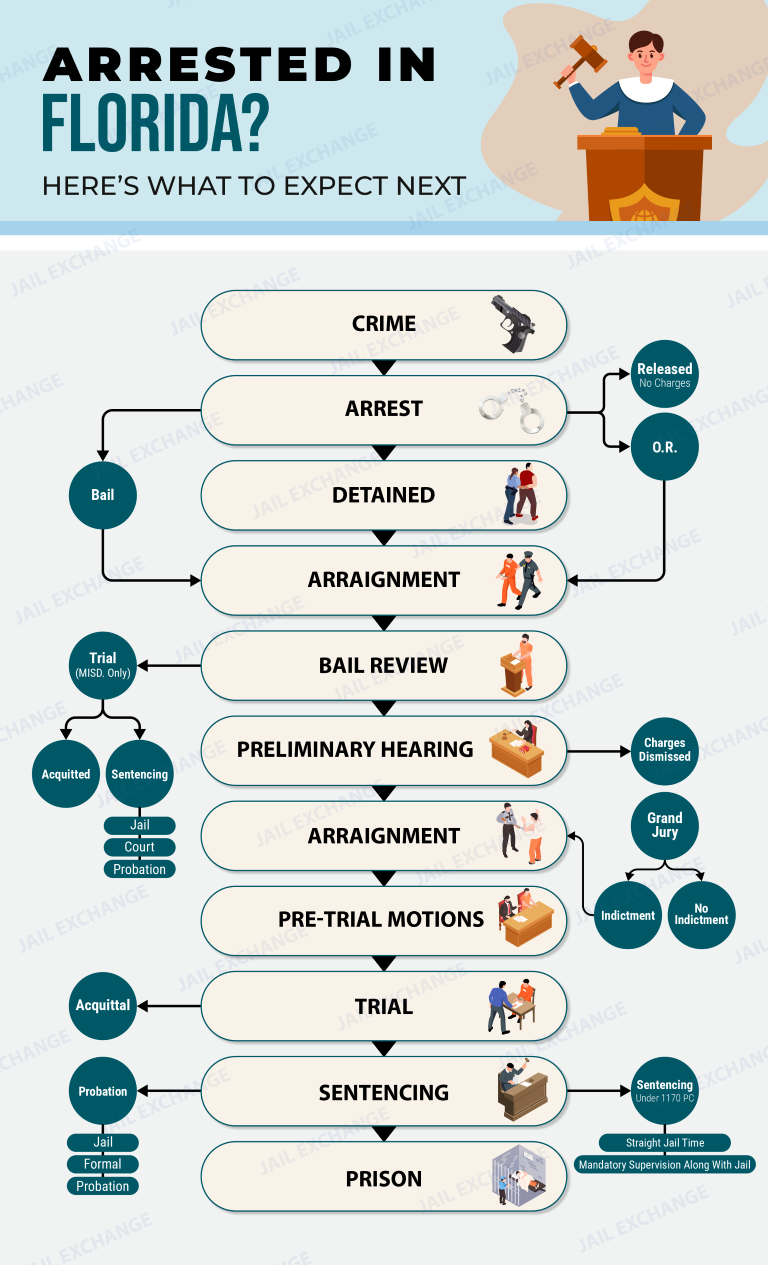
Putnam County Juvenile Detention Center Criminal Court Process
Criminal Court Process for Putnam County Florida
Putnam County: A Friendly Guide to Criminal Court
Putnam County is a rural, river county in northeast Florida, with Palatka on the St. Johns River as its county seat and small towns like Interlachen and Crescent City. Criminal cases here are split between two Florida trial courts. Putnam County Court handles misdemeanors, criminal traffic charges and ordinance violations. Putnam Circuit Court handles felonies and juvenile cases. Putnam is one of four counties in the Seventh Judicial Circuit, alongside Flagler, St. Johns and Volusia. Court is held at the Putnam County Courthouse, 410 St. Johns Ave., Palatka, FL 32177, where you can phone the Clerk of Court at (386) 326-7600. Adults who are arrested go to the Putnam County Jail, run by the Sheriff’s Office. See also our bail and bond page and our inmate lookup page.
Checking a case for free: Putnam is one of the smaller counties whose Clerk uses the free shared court records search. Pick Putnam from the drop-down list and click Go. On the search screen, a last name or a case number brings up charges, hearing dates and what has been filed. Juvenile files, sealed records and confidential details won’t appear.
Federal court: Putnam’s federal crimes are prosecuted in Jacksonville, in the Middle District of Florida. The Jacksonville Division meets in the Bryan Simpson federal courthouse, 300 N. Hogan St. in downtown Jacksonville. Here’s the split. Breaking a Florida statute makes it the local State Attorney’s case. Breaking a federal statute makes it a case for the United States Attorney. In Putnam, the northern edge of the Ocala National Forest reaches into the county’s south side, so crimes like poaching, arson or drug growing on that land can be federal. Other federal cases include drug trafficking across state lines, counterfeit money, and theft from the mail. There is no tribal reservation in Putnam County. Choose a section.
1. Putnam County Court cases: shoplifting, DUI, battery, driving while suspended
Most Putnam misdemeanor cases are handled close to home on St. Johns Avenue. When a deputy stops someone for a small crime, they may write a notice to appear, which is like a ticket that sets a court date. Anybody who ends up behind bars gets a quick hearing called first appearance, and Florida’s court rules give the system just 24 hours to hold it. Since 2024, Florida has used one bond schedule in every county, created by the state Supreme Court. It sets the smallest bond allowed if a person wants to be released before that hearing. A domestic violence arrest, and some others, means the person must see the judge first.
The judge then sets pretrial release conditions, which spell out how you remain free until the case wraps up. It might be your signed promise, a bond, or special rules. Bail bond agents in Florida must be licensed. The law sets a Putnam bondsman's fee, usually a tenth of the bond and never under $100, and they keep it.
Misdemeanors in Florida come in two grades. A second-degree misdemeanor is punishable by as many as 60 days locked up and a fine no higher than $500. First-degree misdemeanors, which include simple battery and most petit theft, can bring up to a year and up to $1,000. Driving on a suspended license, when you knew it was suspended, starts as a second-degree misdemeanor. On a first DUI, Florida allows up to six months behind bars.
The State Attorney for the Seventh Circuit, elected by voters across the four counties, brings the charges. When money is tight and a judge agrees you can’t hire counsel, the circuit’s elected Public Defender can be assigned. If the Public Defender is conflicted out, Palatka judges appoint Criminal Conflict and Civil Regional Counsel lawyers. Florida law lets the court assess a fee for these lawyers, which can become a lien if unpaid. Some first-time Putnam defendants are offered pretrial diversion. A misdemeanor trial uses six jurors. By rule, the trial should start by the 90th day after formal charges are filed, though defendants often waive that.
Under 18: Putnam youths charged with misdemeanors go to juvenile court, part of Circuit Court. Officers often pick a civil citation for first-timers, so the teen works off the mistake with service hours instead of getting arrested. After a youth is picked up, a judge reviews any detention within a day. A Putnam teen who needs secure detention is usually driven to the Department of Juvenile Justice’s Volusia Regional Juvenile Detention Center, in Daytona Beach.
2. Palatka felony docket: burglary, meth, grand theft, stolen property
Felonies are crimes that can bring state prison time. They also start with first appearance. After that, a prosecutor reads the file and makes a choice: drop it, or file an information, the formal charging paper. Someone kept in jail without charges for 30 days can ask the court for relief. Then come arraignment, pretrial hearings and either a plea deal or a trial in Circuit Court.
Florida groups felonies by how serious they are. Grand theft of at least $750 is normally third-degree, punishable by as much as 5 years. Burglary of a dwelling and dealing in stolen property are second-degree, with 15 years as the most. First-degree crimes reach 30 years, and a few allow life. Selling meth is a second-degree felony, and having large amounts can be trafficking, which brings mandatory minimum terms.
For sentencing, lawyers prepare a Criminal Punishment Code scoresheet. It totals points for the crimes and past record to find the lowest legal sentence. Gain time is limited in Florida, so a prisoner serves 85% or more of the sentence. Felony trials are supposed to begin by day 175 after formal charges are filed, unless waived.
Under 18: Most felony cases against Putnam teens stay in juvenile court. There, the judge’s choices include probation, counseling and commitment to a DJJ program. Prosecutors also have a tool called direct file. It lets them take a felony charge against a youth who is 16 or 17 into adult court, for almost any felony. For younger teens, 14 or 15, the law allows it only for a set list of very serious crimes.
3. When someone gets hurt: murder, aggravated battery, armed robbery, sexual battery
Violent crimes go through the same felony process, but the penalties are tougher and bond can be denied after a hearing. Robbery while carrying a firearm is punishable by life imprisonment. Guns trigger Florida’s 10-20-Life rules: using one in certain felonies brings at least 10 years, firing it brings at least 20, and badly wounding or killing someone brings 25 years to life.
Charging first-degree murder takes a grand jury indictment because it is a capital felony. If the defendant is found guilty, only two sentences exist: death, or prison for life without parole. Twelve jurors hear a capital case. A 2023 Florida law lets them recommend death with 8 votes. Death row itself is mostly at Union Correctional Institution for men, and Lowell Correctional Institution houses the women.
Crime victims are protected by Marsy’s Law, which passed on the 2018 ballot. A victim can ask for notice of court dates, come to court, and talk to the judge before a plea or sentence.
Under 18: If the charge could bring a life term or death, Putnam grand jurors may indict a youth of any age, and the case leaves juvenile court. The U.S. Constitution forbids executing a person for an act done before age 18. A youth jailed on adult charges must be kept out of sight and sound of adult inmates.
4. How do I check a Palatka court warrant?
An easy first stop is the shared court records search; a capias gets posted to the Palatka docket. Putnam deputies hold Seventh Circuit warrants; the Sheriff's Office picks up at (386) 329-0800. Counsel can plan your surrender at the Orie Griffin Boulevard jail and ask for release terms. The clerk's office downtown resets dates, and Crescent City, Interlachen and Welaka matters are heard at that courthouse too, so a single call there covers the whole county. Florida-wide, FDLE publishes a statewide list of wanted persons.
Immigration holds. How Putnam handles an ICE detainer:
- the judge at the Putnam bond hearing hears about it (F.S. 908.105)
- notice goes to the Putnam state attorney
- a Putnam judge can still set bond
- ICE may keep the person up to 48 hours past release
- in Putnam, weekends and holidays count
- F.S. 907.041: in Putnam, an unauthorized alien facing a Putnam forcible felony charge stays in the Putnam jail until first appearance
- at that point a Putnam judge presumes detention, but the Putnam defense can rebut it
Town courts. Putnam has no city or town courts. The 1972 Article V reform phased them out. In Putnam, a city ordinance case goes to Putnam County Court, which also hears misdemeanors.
Putnam County families: the information here is a starting point, not legal advice. A criminal defense lawyer can answer questions about a specific case, and the Putnam County Clerk of Court is at (386) 326-7600.