
Washington County Jail
Washington County Jail
Jail Phone Number
850-638-6110Washington County Jail, Chipley
Chipley, Vernon, Caryville and Wausau arrests are booked at the Washington County Jail on Brickyard Road.
Search Washington County Inmate Search or call 850-638-6110.
More is in our court process guide.
Read inmate search answers
 Read inmate search answers
1. Washington jail address
The jail is at 1100 Brickyard Road, Chipley, FL 32428. Jail: 850-638-6110. Washington County Sheriff's Office: 850-638-6122.
↑ Back to the question list2. Washington inmate lookup
Washington County Inmate Search lists charges and bond. I-10 traffic stops near Chipley also land here. VINELink sends alerts. Washington's sheriff has a free app as well: the App Store or Google Play.
↑ Back to the question list3. Bond in Chipley
Washington is part of the Fourteenth Judicial Circuit. Each arrest sees a judge within 24 hours:
- ROR, nothing paid.
- Cash: Washington's clerk holds it all and repays the remainder when the case ends.
- Bondsman: 10 percent, at least $100 per charge, kept.
Holmes, Bay or probation holds keep someone on Brickyard Road. A missed date leads to a warrant. See our Washington bail page.
↑ Back to the question list4. Could a Vernon or Wausau warrant arrest end on Brickyard Road?
Yes. Out on Brickyard Road, the jail books warrant pickups from Vernon, Wausau, Caryville and Sunny Hills. The Sheriff's Office at 850-638-6111 confirms bookings and explains bail and visits. The online court records search lists the docket. FDLE's statewide list reaches other agencies. If you're the one named, an attorney can call the jail and settle on a surrender time, and Suite 101 can reset the court date. Carry a photo ID and whatever court notices you received in the mail.
↑ Back to the question list5. Public defender
The Fourteenth Circuit Public Defender represents Washington clients found indigent. The $50 fee may be waived.
↑ Back to the question list6. Visiting on Brickyard Road
Schedule first; video may be available. Call 850-638-6110. See visits and remote visits.
↑ Back to the question list7. Phones
Chipley inmates can't receive calls and phone out on funds relatives load. See phones, messages and tablets.
↑ Back to the question list8. Money
Brickyard Road commissary runs on deposits. Chipley staff can name approved services. See money and commissary.
↑ Back to the question list9. Mail
Address with name, booking number and 1100 Brickyard Road. No stickers. See mail rules.
↑ Back to the question list10. Washington juveniles
Under-18 cases from Chipley or Vernon go to juvenile court, and youth held there are generally taken to the Bay Regional Juvenile Detention Center in Panama City, 850-872-4706, for a hearing inside 24 hours. Parents can call 850-638-6122.
↑ Back to the question list11. Medical
Phone 850-638-6110 about medicines, seizures, insulin or suicide risk.
↑ Back to the question list12. Washington federal cases
The U.S. District Court, Northern District of Florida, hears Washington County federal cases in Panama City at 30 W. Government St., Panama City, FL 32401.
Washington federal defendants first go before a Panama City magistrate; a hearing then settles detention. The U.S. Marshals (850-806-0150) may board them in county jails. After sentencing, try the BOP locator.
↑ Back to the question list13. ICE detainers in Washington County
- Brickyard Road booking prints go to DHS.
- ICE may issue an I-247A detainer.
- Washington can hold someone for immigration agents up to 48 hours after they would otherwise be released (8 CFR 287.7(d)).
- F.S. 908.105: Chipley's bond judge and the prosecutor are notified, and the detainer joins the case record.
- F.S. 907.041: a Washington forcible-felony defendant lacking legal status stays on Brickyard Road for first appearance, where the judge presumes detention subject to rebuttal.
- F.S. 908.11: 287(g) is required; the Chipley sheriff runs both task force and warrant service programs.
- Chipley and Vernon families can find detainees on locator.ice.gov; by phone, try the Miami field office, 2805 SW 145th Ave., Miramar, FL 33027, 954-843-5800.
14. State prison
Washington inmates sentenced to prison remain in Chipley until FDC transport. Look them up with FDC's offender search; prison addresses are at Florida prisons.
↑ Back to the question list15. Washington mugshots online
Yes. The Washington inmate roster posts a mugshot with every name on it. For a copy, contact the sheriff's office at 850-638-6122; a few are exempt.
ICE photos need ICE FOIA. The Marshals keep Washington County federal mugshots private unless someone is wanted.
↑ Back to the question list16. Washington police numbers
- Chipley Police Department: 850-638-6310
- Washington County Sheriff's Office: 850-638-6122
Emergencies: 911.
↑ Back to the question listWashington County contacts
- Inmate search
- Washington County Inmate Search
- Jail
- Washington County Jail, 1100 Brickyard Road, Chipley, FL 32428, 850-638-6110
- Sheriff
- 850-638-6122
- Clerk
- 850-638-6285
Washington County bail and bond: the Chipley jail and a short guide to getting someone home
Adults arrested in Washington County are taken to the Washington County Jail on Brickyard Road in Chipley.
The Washington County Sheriff's Office is listed as its operator. First, search the name on Washington County Inmate Search. Washington's search shows custody, charges, and bond.
The jail's listed number is 850-638-6110. This county is in the Fourteenth Judicial Circuit, and the notes on bail below follow Florida law.
1. How do I look someone up in Washington County?
Use Washington County Inmate Search and enter the legal name. The record, once posted, lists each charge and bond. New Washington bookings can lag online. If nothing shows later in the day, call 850-638-6110 and give the name and birth date.
2. Where is the jail and who answers the phone?
The jail is listed at 1100 Brickyard Road, Chipley, FL 32428. Its main line, 850-638-6110, is listed as answering questions about inmates around the clock.
3. What decides the first bond number?
It comes from a bond schedule. Section 903.011 calls for one statewide schedule from the Supreme Court. The Fourteenth Circuit's chief judge may set higher local amounts freely, but lower ones only with approval. Staff may use the schedule to release someone before a hearing, but a judge is never bound by it. In Washington, bail is set, lowered, or changed only by a judge.
4. Where can I read the Fourteenth Circuit amounts?
Washington is in the Fourteenth Judicial Circuit, with Bay, Calhoun, Gulf, Holmes, and Jackson, and its chief judge sets the local schedule by order. Numbers from other circuits do not apply here. For your family member, read the amount on Washington County Inmate Search, then ask the jail at 850-638-6110 whether it is the schedule figure or a number a judge chose.
5. What if the screen shows no bond?
It may mean the booking is still in progress. In Washington, it may also mean a judge must see the person first. Washington follows section 903.011(6), barring pre-hearing release for some, like people on pretrial release or probation, or arrested three-plus times in six months. Section 903.046 adds registered sex offenders and predators.
6. How long until someone sees a judge?
No longer than 24 hours after arrest, says Florida Rule of Criminal Procedure 3.130. Video is allowed. At that hearing the judge chooses release terms or orders the person held, and decides if a free lawyer is needed.
7. Could a ticket-style release apply?
For minor offenses, a Washington officer may skip booking and write a notice to appear under Rule 3.125. That paper is a promise to come to court, not a bond. If your loved one has one, no payment is due, but a missed date can bring a warrant.
8. What payment steps should I follow?
Call the jail at 850-638-6110 and ask where bond is taken, what days and hours it is open, and which payments it accepts. The clerk's criminal department, 850-638-6289, answers court questions, and the clerk's main office is open 8:00 a.m. to 4:00 p.m. Central time, Monday to Friday. In Washington, bring photo ID, the name, and the exact amount. Keep your receipt. Section 903.011 requires the same dollar amount whether the bond is cash or surety.
9. What should a bail agent put in writing?
Get the premium, the collateral, and what's owed after a no-show in writing. The Florida Department of Financial Services sets the Washington premium at 10 percent, so a $500 bond costs $50. The Washington agent keeps the fee after release, but you get it back if the person is never let out. Plan to get your collateral back within 21 days after the judge discharges the bond. Expect no discount and no hidden extras. Ask to see the agent's Florida license too. The bond instructions list more questions to ask.
10. Can a county home back the bond?
It can be part of the plan. Washington sureties that aren't companies must be Florida residents or own Florida property (section 903.05); the land needn't be local. The local steps and the equity needed are for the clerk to explain, so call 850-638-6285 first.
11. What are the rules once he is out?
Section 903.047 requires a released person to refrain from any criminal activity, and a no-contact order starts immediately and lasts through the release. A judge can add terms like employment, a curfew, or treatment. If the person breaks a term, a court can revoke release and order detention under section 903.0471.
12. Where would a Washington County juvenile go?
The Department of Juvenile Justice screens Washington County youth at 651 West 14th Street, Suite M, Panama City, 850-767-3262. A youth who must be held is listed to go to the Bay Regional Juvenile Detention Center at 450 East 11th Street, Panama City, 850-872-4706. Call the screening office to learn the youth's location. Washington keeps juvenile records out of the adult search.
13. How do we get court-paid counsel?
Say you need one at the first appearance. Rule 3.130 tells a Washington judge to settle first whether the person can pay for a lawyer, then appoint one right away if they qualify and want one. For the Fourteenth Circuit public defender's office, ask the clerk's criminal department at 850-638-6289.
14. What if the court date is skipped?
Section 903.26 lets a Washington court forfeit the bond after notice to the surety. In Washington, the person can be rearrested, and section 903.046 limits recognizance bonds after a past failure to appear. Contact a lawyer first, then the agent. Never pay a stranger who claims to fix the problem.
15. Can ICE keep someone in the Washington jail after bond is posted?
- An ICE detainer (Form I-247A) asks the Washington jail to hold someone longer.
- In Washington, that means up to 48 more hours.
- Saturdays, Sundays and holidays all count in Washington.
- Posting bond in Washington does not end an ICE hold.
- The Washington judge who sets bond learns of it (F.S. 908.105).
- The Washington state attorney gets notice as well.
- F.S. 908.11 requires the Washington sheriff to work with ICE under 287(g).
- For Washington, ICE's 287(g) list shows:
- Task Force Model
- Warrant Service Officer
- After ICE takes a Washington inmate, use the online detainee locator.
Washington County contacts
- Jail
- Washington County Jail, 1100 Brickyard Road, Chipley, FL 32428; 850-638-6110
- Bond guide
- Bail and bond instructions
- Custody lookup
- Washington County Inmate Search
- Sheriff
- 1293 Jackson Avenue, Chipley; 850-638-6122
- Clerk and courthouse
- 1293 Jackson Avenue, Suite 101, Chipley, FL 32428; 850-638-6285; criminal department 850-638-6289
- Circuit
- Fourteenth Judicial Circuit
- Juvenile
- Bay Regional Juvenile Detention Center, 450 East 11th Street, Panama City, FL 32401; 850-872-4706; DJJ screening, 651 West 14th Street, Suite M, Panama City, 850-767-3262
Washington rules, hours, and amounts change, and judges may set other bonds. Check with the jail before paying or traveling. This plain-language Washington page isn't legal advice.
Washington County Jail: Visits by Housing Assignment
Start with the inmate's current pod and cell number. The Sheriff's schedule assigns different blocks to different housing areas. Call 850-638-6110 to confirm the person's block and how the visit will be conducted before traveling to 1100 Brickyard Road, Chipley, FL 32428.
Pod schedule, local Chipley time
| Day | Morning/midday pod | Afternoon/evening pod |
|---|---|---|
| Sunday | H | C |
| Tuesday | E | D |
| Thursday | C | I |
| Saturday | B | A |
- Morning/midday: cells 1–8, 7:30–9:30 a.m.; cells 9–16, 9:30–11:30 a.m.; cells 17–24, 12:30–2:30 p.m.
- Afternoon/evening: cells 1–8, 2:30–4:30 p.m.; cells 9–16, 5:30–7:30 p.m.; cells 17–24, 7:30–9:30 p.m.
- Friday: protective-custody males, 9:30–11:30 a.m.; holding cells, 12:30–2:30 p.m.; detox/medical cells, 2:30–4:30 p.m.; protective-custody females, 5:30–7:30 p.m.
Monday and Wednesday are recreation days. The official page places C-Pod on both Sunday and Thursday; ask staff which appointment applies to your relative rather than assuming either is available. A housing block does not guarantee a two-hour individual visit.
HomeWAV and visit arrangements
HomeWAV's current Florida facility-partner information confirms its relationship with Washington County and use of tablets for visitation. Begin at HomeWAV, select the Florida jail, and follow the account approval instructions. Check the actual available session and price before adding funds. Ask staff whether the pod timetable applies to your intended on-site or remote visit, and ask about children, identification and participant limits.
Before entering jail property
Have government-issued photo ID ready, dress modestly, and bring only ID and keys unless staff approves necessary medical or professional items. Weapons, drugs and contraband must not enter jail grounds, including parked vehicles. Attorneys and other official visitors should arrange their access directly with staff.

HomeWav provides secure, pay-per-minute remote video visitation that allows friends and family members to connect with an incarcerated loved one from home. Using a computer with a webcam or the HomeWav mobile app, visitors can hold live, face-to-face video sessions without traveling to the detention center or sitting in jail waiting areas.
Important: Advance Account Approval and Visiting Hours Differ
Detention centers do not permit instant or unvetted video calls. All prospective visitors must register an account, upload government-issued photo identification, and await facility review before any session can take place, an approval process that can take up to 48 hours depending on the jail. Some facilities allow on-demand video calls when the inmate is logged into the kiosk, while others require scheduling appointments in advance, which you should confirm by calling the facility directly. If you delay setting up your account, you risk missing your loved one's designated visiting window.
Step-by-Step Instructions to Register and Set Up Video Visitation
- Visit www.homewav.com or download the HomeWav mobile app for iOS or Android.
- Click Sign Up and create your user account using your primary email address and phone number.
- Upload a clear photo of your valid government ID (driver's license or passport) and take a live selfie for identity verification.
- Search for the facility and select your incarcerated loved one by legal name or booking ID.
- Wait for email notification confirming that facility administration has approved your visitor profile.
- Add funds to your HomeWav account balance using a major credit or debit card to cover pay-per-minute video call fees.
- Depending on the jail's system, schedule an upcoming visit time or remain logged into the app to receive video calls initiated directly by the inmate.
What the Inmate Needs to Do
The inmate logs onto the HomeWav kiosk or wall terminal in their housing unit using their assigned PIN. If you have an active balance and approved status, your name appears in their directory. The inmate selects your name to initiate the video call or joins the appointment at the pre-scheduled time. Inmates and visitors must strictly observe jail conduct and dress codes, as sessions are monitored by staff and will disconnect immediately upon any infraction.
Official Provider: HomeWav Official Website
Customer Service Telephone: 1-844-394-6639
Support Hours: Monday – Friday, 8:00 AM – 5:00 PM CST
Supported Languages: English and Spanish
Other Services Provided by HomeWav
In addition to Remote Video Visitation, HomeWav offers several other communication services at participating correctional facilities:
- Voice Calling Accounts: Fund calling minutes so your loved one can call your telephone directly from the HomeWav unit.
• Learn more on our website: Voice Calling Accounts Guide | • Visit official vendor page: HomeWav Voice Calls - Inmate Text Messaging: Exchange quick electronic text messages and digital photos through the HomeWav app.
• Learn more on our website: Inmate Text Messaging Guide | • Visit official vendor page: HomeWav Text Messaging
Washington County, Florida: What Happens After a Criminal Charge
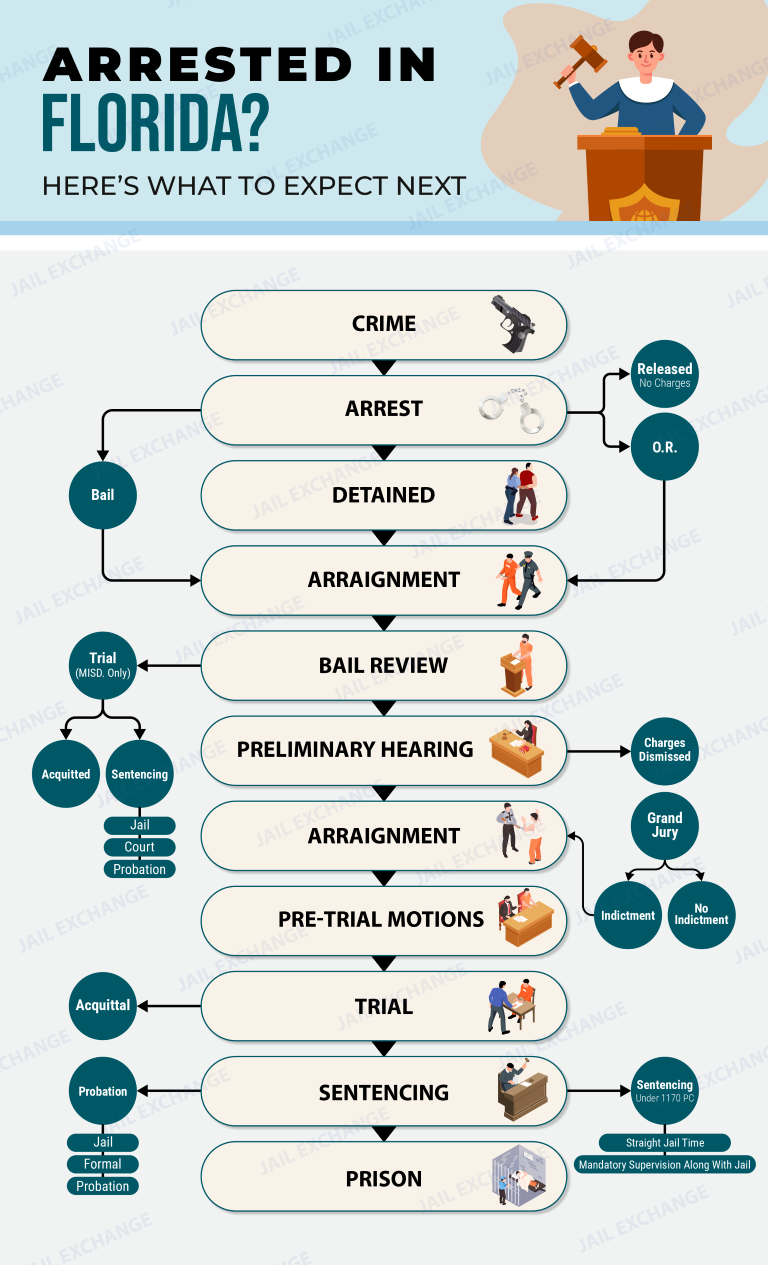
Washington County is a quiet, rural part of the Florida Panhandle, with Chipley as its county seat. Even so, its courts follow the same statewide system as big cities. Two trial courts share the work. Washington County Court decides misdemeanors (minor crimes), criminal traffic charges and local ordinance cases. Washington Circuit Court decides felonies (major crimes) and handles juvenile cases. Washington shares the 14th Judicial Circuit with five other counties: Bay, Calhoun, Gulf, Holmes and Jackson. Our bail guide and inmate search cover the other steps.
Criminal court is held at the Washington County Courthouse, 1293 Jackson Avenue, Chipley, FL 32428. The clerk’s criminal department answers at (850) 638-6289, and the clerk’s main line is (850) 638-6285. Anyone 18 or older who is arrested goes to the sheriff’s Washington County Jail in Chipley.
Free case lookup: The Washington County clerk puts its court records on the Online Court Records Search, a free statewide search site. Select “Washington” and enter a name or case number to view the charges. You’ll find the charges, court dates and final results for public cases. Confidential items, like juvenile records, sealed or expunged cases, and Social Security numbers, are not shown.
1. Washington County Court: driving while license suspended, petit theft, DUI, simple assault
Chipley police and county deputies often start a misdemeanor case with a notice to appear. You sign it, agreeing to show up on the date written there. No jail stay is needed. Washington arrestees must see a judge within a day, at first appearance. Since 2024, Florida has used one statewide bond schedule, renewed each year by the Florida Supreme Court, which sets minimum bail for anyone released before that first hearing. Bail is money that guarantees you’ll return to court. Under certain charges, such as most domestic violence arrests, you must stay until a judge reviews things. Judges can also grant pretrial release with conditions. Bondsmen are paid a state-set premium: one dollar of every ten in the bond, never under $100.
Florida misdemeanor punishments are limited. A second-degree misdemeanor, like simple assault, has a maximum of 60 days and $500. A Washington first-degree misdemeanor, like a first DUI or petit theft of $100 or more, is punishable by up to 12 months in jail and a $1,000 fine. Driving on a suspended license can be a second-degree misdemeanor the first time if you knew about the suspension, and it can grow worse with repeats.
Voters elect the 14th Circuit State Attorney, whose office brings every state charge filed in Washington County. The 14th Circuit Public Defender steps in when a judge rules that the accused has no way to pay a lawyer. A conflict sends the case to a different state office, Criminal Conflict and Civil Regional Counsel. Fla. Stat. 938.29 allows courts to bill convicted defendants for public defender services, which can become a lien on property. Some people charged for the first time can complete pretrial diversion and have their case dismissed. Trials for misdemeanors use six jurors. If not waived, trial generally must start within 90 days of formal charging.
Children and teens: Many kids who commit a first small offense in Washington County can get a civil citation. Instead of being arrested, the child completes community service or a class, and there is no arrest record when it’s done. Youth cases that end up in court belong to the Circuit Court’s juvenile judge.
2. Felony matters: home burglary, meth sales, grand theft of a vehicle, forgery
A felony is the level of crime where state prison becomes possible. Following first appearance, prosecutors look at the evidence. When they choose to proceed, an information is filed listing the charges. At the arraignment, the person says how they plead. Under Florida’s speedy trial rule, felonies should reach trial within 175 days of formal charges, though most defendants waive that to prepare.
Florida’s felony ladder goes like this: third degree, 5 years maximum; second degree, 15 years; first degree, 30 years; life felony, up to life. Taking someone’s car is normally charged as third-degree grand theft. Selling meth is typically a second-degree felony. Each sentence begins with a Criminal Punishment Code scoresheet rating both the offense and the person’s past. That number tells the judge the lowest sentence allowed. No Florida prisoner leaves before finishing 85% of the sentence. Under the 10-20-Life law, having a gun during certain felonies brings a 10-year mandatory term, firing it raises that to 20, and causing death or great bodily harm with it triggers 25 years to life.
Plea deals end most Washington County felony cases. Probation, drug court and community control are possible alternatives to prison.
Children and teens: When a Washington County youth is detained on a felony, the usual destination is Panama City’s Bay Regional Juvenile Detention Center, which is run by the state’s Department of Juvenile Justice. A judge reviews whether they must stay there within 24 hours. Prosecutors can use direct file to charge a teen in adult court. It’s allowed for nearly every felony once a teen turns 16, and for listed serious felonies at ages 14 and 15 (Fla. Stat. 985.557). The 2019 legislature took away mandatory direct file, so now it’s always a judgment call by the prosecutor.
3. Violent cases in Chipley: murder, armed home invasion, sexual battery, shooting into a home
Violent felony cases go through the same stages, but the possible sentences are much harsher. A judge can order a person held without bond after a hearing about danger to the community. Armed home invasion robbery is a first-degree felony that can mean life. Firing a gun into a house with people inside is a second-degree felony, and the gun law can add more time. Defendants are usually ordered to stay away from victims and witnesses.
First-degree murder is a capital felony. Florida requires a grand jury, made up of community members who hear evidence in secret, to bring that charge by indictment. Capital trials use 12 jurors. If a Washington jury convicts, it then weighs life without parole against death. Since 2023, it takes at least 8 jurors out of 12 to recommend death. A Chipley jury’s death verdict would send a man clear across north Florida to Union Correctional Institution in Raiford; a woman would go to Lowell Correctional Institution in Marion County.
In Washington County, as across Florida, Marsy’s Law (state constitution, Article I, Section 16(b)) gives victims rights: hearing notices, attendance, and a voice in court. The 14th Circuit State Attorney’s victim advocates help victims and families with each step.
Children and teens: If the charge could mean death or a life term, a grand jury in Florida may bring an indictment against a child no matter the age, and an adult judge then takes the case (Fla. Stat. 985.56). Anyone under 18 when the crime happened is protected from the death penalty. Before a young person can be sentenced to life or a very long term, the judge must hold a special hearing.
4. Who holds warrants from the Chipley courthouse?
Chipley's Fourteenth Circuit warrants rest with the Sheriff's Office; one call to (850) 638-6111 can confirm whether one is active. The online court records search displays each docket, capias included. Through a lawyer, a surrender at the Brickyard Road jail can be set up, and counsel can then ask the judge for release. Suite 101 on Jackson handles new dates, and Vernon, Caryville and Wausau cases are handled there as well. Panhandle families who've moved around can also search FDLE's statewide wanted persons list.
Federal court: Washington County federal cases go to the Northern District of Florida's Panama City Division. Hurricane Michael damaged the Panama City courthouse in 2018, so some of these cases have been heard at the Tallahassee federal courthouse, 111 N. Adams Street. Two things can make a crime federal: it violates an act of Congress, or it happens on property belonging to the national government. Because the county holds hardly any federal property, its federal cases tend to involve moving drugs along Interstate 10, a convicted felon having a gun, counterfeit money, or fraud using the mail or internet. The closest big military site, Tyndall Air Force Base, is in Bay County, not here. There are no tribal lands in Washington County. The Seminole and Miccosukee tribes have their land far to the south. Use the links below.
Immigration holds. If ICE lodges a Washington detainer on someone:
- the Washington bond judge must be told (F.S. 908.105)
- notice goes to the Washington state attorney
- bond is still possible in Washington
- ICE may keep the person up to 48 hours past release
- those hours in Washington include weekends and holidays
- a Washington forcible felony charge plus unlawful status in Washington means no release before first appearance (F.S. 907.041)
- after that hearing, Washington judges start from detention, though Washington defense lawyers can rebut it
Town courts. Since 1972 Article V changes, Washington has had no city courts. Any Washington city ordinance case is heard in Washington County Court instead, alongside misdemeanors.
This overview covers the basics for Washington County and does not replace legal advice. A defense lawyer can give real advice about a specific charge; for case records, the clerk’s criminal department is at (850) 638-6289.

CommissaryOrder.com allows friends and family members to purchase pre-approved food boxes, snack assortments, hygiene essentials, and personal apparel kits sent directly to an incarcerated loved one. Each package is packed to meet strict correctional security guidelines, ensuring the items clear institutional intake without being rejected at the loading dock.
Important: Package Delivery Windows Vary Across Facilities
Jails do not follow uniform rules for incoming packages. Some facilities permit weekly orders, while others limit care packages to monthly or quarterly cycles, and you should call the facility to confirm their active cutoff schedules and purchase limits. If you delay placing your order past the weekly processing deadline, your loved one may have to wait an entire extra cycle before receiving basic personal care supplies, warm undergarments, or supplemental snacks.
Step-by-Step Instructions to Order an Approved Care Package
- Obtain the inmate's full legal name, date of birth, and assigned inmate identification number.
- Visit www.commissaryorder.com and click on Place Order.
- Select the state and the facility where your loved one is currently housed.
- Search for the inmate using their ID number or legal last name to unlock the facility's pre-approved catalog.
- Browse the store categories—including meats, cheeses, ramen soups, baked snacks, toiletries, and clothing—and add items up to the facility's allowed spending limit.
- Review your cart to verify item eligibility, enter your credit or debit card details, and submit your order.
- Print and save your digital order receipt containing the tracking confirmation code.
What the Inmate Needs to Do
The inmate does not need an outside account to receive the package. The items are shipped directly to the jail commissary department in tamper-evident packaging. Correctional staff inspect the box and deliver it to the inmate during the facility's designated commissary delivery schedule, where the inmate signs for the shipment.
Official Provider: CommissaryOrder.com Official Portal
Customer Support Email: Support@CommissaryOrder.com (Always include the facility name, inmate name, and booking ID)
Support Response Hours: Monday – Friday, 8:00 AM – 4:30 PM EST (Responses within two business days)
Supported Languages: English
Other Services Associated with CommissaryOrder.com
Depending on facility contracts, trust funding options are also available to support independent canteen purchases:
- Inmate Trust & Canteen Money Deposits: Send cash directly to an inmate's personal account so they can choose and buy their own items inside.
• Learn more on our website: Inmate Trust Money Deposits Guide | • Visit official vendor page: CommissaryDeposit.com Money Transfers
Buy Commissary for an Inmate in the Washington County Jail
Washington County Jail Inmate Commissary - Sending Money or Purchasing Commissary for an Inmate
Washington County Jail allows inmates to purchase commissary. This can be snacks, hygiene products, stamps, stationary, clothing and even electronics.
You can buy commissary for an inmate using an online service called Commissary Order.

There is a monthly limit of $200-300 on how much inmates can spend on commissary items.
This amount is subject to change so call the facility at 850-638-6110 in order to confirm the amount that cannot be exceeded.
Inmates have access to both an in-house commissary store, and commissary packages that can be purchased and shipped to the inmate by friends and family.
Scroll down for information on the Washington County Jail's service they use for you being able to purchase commissary items online and have them shipped directly to the inmate.
You can also go to our Inmate Money page for information on how to send money to an inmate.

CommissaryDeposit.com provides a secure web platform for friends and family to deposit funds directly into an incarcerated individual's institutional trust and canteen account. Money sent through this service allows inmates to purchase daily essentials, food items, over-the-counter medication, hygiene products, and correspondence stationery from the facility commissary.
Important: Inmate Account Intake Policies Differ by Facility
Once a person is booked and moved to a housing unit, facilities do not always allow cash drop-offs or phone payments directly to the jail window. Some might and you should confirm this by calling the facility and asking. But if you do not register online and fund your loved one's trust account immediately, they may be forced to wait days or weeks for standard paper processing, leaving them without essential soap, clean undergarments, basic medical sundries or snacks. Note also that any funds deposited may be subject to facility collections for outstanding booking fees or medical co-pays according to local rules.
Step-by-Step Instructions to Register and Deposit Funds
- Confirm the inmate's current housing facility, their legal first and last name, and their official inmate booking ID number.
- Navigate to www.commissarydeposit.com and click on Deposit Money.
- Select the state and facility from the drop-down directories.
- Search for the inmate using their ID number or last name and verify the record match to ensure you do not send funds to the wrong individual.
- Enter your phone number to receive a one-time verification code via SMS text or automated voice call.
- Specify the deposit dollar amount, review the calculated convenience fees (fixed fee plus percentage fee), and enter your debit or credit card billing details.
- Submit the payment and save the digital confirmation receipt for your financial records.
What the Inmate Needs to Do
The inmate does not need an internet account to receive funds. Once the electronic payment clears, the funds post directly to their ledger balance in the jail's internal commissary management system. The inmate can verify their balance on their weekly account slip or at a dayroom kiosk terminal to place orders during the next scheduled commissary cycle.
Official Provider: CommissaryDeposit.com Official Portal
Customer Support Email: Support@CommissaryDeposit.com (Requests must include facility name, inmate name, and inmate ID)
Support Response Hours: Monday – Friday, 8:00 AM – 4:30 PM EST (Response within two business days)
Supported Languages: English
Other Services Associated with CommissaryDeposit.com
Depending on the detention facility contract, additional commissary package ordering options may be supported:
- Direct Commissary Package Ordering: Order pre-packaged snack boxes and hygiene bundles sent directly to the inmate.
• Learn more on our website: Commissary Package Ordering Guide | • Visit official vendor page: CommissaryDeposit.com Store Orders
Deposit Money for an Inmate in the Washington County Jail
Jackson Avenue is where the Washington County Sheriff's Office sits, but deposits aren't handled there. Chipley's Washington County Jail has its own options, and whatever lands on a prisoner's account turns into stamps, snacks and other goods from the jail store. Dig up that prisoner's ID number before you begin.
- Card payments online run through CommissaryDeposit.com. Its support desk communicates strictly by email, Monday to Friday from 8:00 a.m. till 4:30 p.m. Eastern; a useful message names the jail, the prisoner, and that ID.
- On site, Chipley's lobby or visiting room holds a kiosk that will take paper money, debit and credit.
- Washington chooses to say nothing publicly about whether its front reception window takes cash, cashier's checks or money orders, nor when. Ring 850-638-6110 and the staff can settle it.
Mailing it: Washington accepts a cashier's check or money order written out to either the prisoner or the Washington County Sheriff's Office. Copy the prisoner's name and ID onto the memo, keep any letters or extras out, and use this address:
Inmate's full name and ID
Washington County Jail
1100 Brickyard Rd.
Chipley, FL 32428
No cash, and no personal checks, by post.
The Washington County Jail sits on Brickyard Road in Chipley and is run by the Washington County Sheriff's Office. Letters still arrive on paper here, and everything uses one street address, from family letters to books and legal papers. Staff open and look over all incoming mail for contraband before it is handed out on weekdays.
Family letters, postcards, legal mail and publications:
Inmate's Full Name & Inmate ID #
Washington County Jail
1100 Brickyard Rd.
Chipley, FL 32428
- Who it's from: Your full name and mailing address belong in the envelope's upper left corner. Without it, the letter will most likely be thrown away.
- Inmate ID: Include the person's full booked name and their inmate ID number on the envelope.
- Pen and paper: Blue or black ink only. Skip crayon, colored ink, felt markers, lipstick and perfume, and keep drawings off the envelope.
- Extras: Glitter, confetti and other loose items in the envelope are not allowed.
- Cards: Plain greeting cards are fine, but musical ones are turned away.
- Newspapers, magazines and books: These must be new and shipped by the publisher. Magazines with profanity, weapons or nudity are taken, books with graphic violence or sexual content are thrown out, and hardcover books are never accepted.
- Stamps: Don't tuck stamps into a letter. Put money on the inmate's account and they can buy stamps through commissary.
- Packages: Gifts or packages come only from the jail's commissary vendor.
- How much: There's no cap on how many letters a person can get.
- Off limits: Inmates can't write to co-defendants, people held in other jails or prisons, or anyone covered by a no-contact order.
Anything you write can be read by jail staff, so keep details about the court case out of your letters.
HomeWav Voice Calling allows incarcerated individuals to place outbound voice calls from housing-unit terminals directly to approved outside phone numbers. Because correctional facilities do not permit incoming phone calls, opening and funding a HomeWav voice account provides the prepaid balance required to connect calls without relying on traditional collect billing.
Important: Mobile Phones Require an Active Balance to Receive Calls
Mobile cellular carriers automatically block collect calls originating from jail phone systems. While select traditional residential landlines might allow direct operator billing, cellular and internet-based phone numbers require an active HomeWav prepaid account, which you can verify by checking with your provider. If you do not register online and fund your phone balance immediately, your loved one will hear an automated operator recording stating that your phone number cannot accept calls.
Step-by-Step Instructions to Set Up and Fund Voice Calling
- Go to www.homewav.com or open the HomeWav mobile app.
- Register your account using the primary 10-digit cellphone number where you want your loved one to call.
- Select the detention center where the inmate is currently located.
- Search for and add the inmate to your approved contact list by full legal name or booking ID.
- Deposit funds into your account balance using a Visa, MasterCard, or Discover card.
- Ensure your mobile device has third-party spam call blockers disabled so automated jail connection alerts ring through properly.
What the Inmate Needs to Do
The inmate logs onto the housing unit HomeWav terminal using their PIN, selects your contact name or dials your 10-digit number, and initiates the call. HomeWav's automated operator verifies that your account has available funds and connects the call. All personal telephone calls are recorded and subject to facility monitoring.
Official Provider: HomeWav Official Website
Customer Service Telephone: 1-844-394-6639
Support Hours: Monday – Friday, 8:00 AM – 5:00 PM CST
Supported Languages: English and Spanish
Other Services Provided by HomeWav
In addition to Voice Calling, HomeWav offers video visitation and messaging at participating facilities:
- Remote Video Visitation: Hold live, face-to-face video visits from home using a smartphone or computer webcam.
• Learn more on our website: Video Visitation Guide | • Visit official vendor page: HomeWav Video Visits - Inmate Text Messaging: Send two-way digital text messages and photos through the mobile app.
• Learn more on our website: Inmate Text Messaging Guide | • Visit official vendor page: HomeWav Text Messaging
HomeWav Inmate Text Messaging provides a fast, two-way digital communication platform that allows families to exchange text messages and photo attachments with an incarcerated loved one. Messages are delivered directly to the inmate's terminal or tablet screen within hours, bypassing long postal mail processing times.
Important: Digital Mail Screening Rules Vary by Facility
Inmates cannot receive incoming phone calls, and traditional postal mail rules differ across jurisdictions. While some detention centers still allow regular handwritten letters, many facilities now restrict physical paper mail or mandate electronic messaging, which you can verify by checking facility rules. If you do not register online and set up message credits immediately, your loved one may face lengthy periods without direct written contact from family.
Step-by-Step Instructions to Register and Send Text Messages
- Download the HomeWav mobile app on your smartphone or go to www.homewav.com.
- Register your account, complete identity verification, and link your incarcerated contact.
- Navigate to the Text Messaging section of the app.
- Purchase messaging credits using a credit or debit card.
- Type your message and attach approved JPEG photos if permitted by facility guidelines.
- Send your message to the facility's automated and manual screening queue.
What the Inmate Needs to Do
All electronic correspondence is screened by correctional staff before delivery. Once approved, messages appear in the inmate's inbox on their housing unit HomeWav kiosk or tablet. The inmate opens the message, reads your note, and types an electronic reply using available account credits.
Official Provider: HomeWav Official Website
Customer Service Telephone: 1-844-394-6639
Support Hours: Monday – Friday, 8:00 AM – 5:00 PM CST
Supported Languages: English and Spanish
Other Services Provided by HomeWav
In addition to Inmate Text Messaging, HomeWav offers video visitation and voice calling services:
- Remote Video Visitation: Schedule and join live video visits from home using your phone or computer.
• Learn more on our website: Video Visitation Guide | • Visit official vendor page: HomeWav Video Visits - Voice Calling Accounts: Prepay for voice calling minutes so your loved one can call your telephone directly.
• Learn more on our website: Voice Calling Accounts Guide | • Visit official vendor page: HomeWav Voice Calls
HomeWAV provides secure handheld wireless tablets designed specifically for county jails and regional detention facilities. Through HomeWAV's closed facility network, these mobile tablets grant incarcerated individuals direct access to on-demand video calls, voice calling, two-way text messaging, digital educational programs, and institutional grievances directly from their living areas.
Important: Tablet Access Hours and Account Balances Vary
Detention centers do not manage tablet distribution identically. While some agencies issue individual personal tablets to every detainee at booking, others utilize shared pod docking stations or restrict tablet use to specific dayroom hours, which you should confirm with the facility directly. Although core educational and legal resources are generally provided free of charge, sending messages, initiating video calls, or making phone calls from the tablet requires an active prepaid HomeWAV balance funded by outside contacts.
Step-by-Step Instructions to Support HomeWAV Tablet Use
- Visit www.homewav.com or download the HomeWAV mobile app.
- Register your account and complete identity verification by uploading your government-issued ID.
- Search for your facility by state and add your incarcerated loved one by legal name or booking ID.
- Select Add Funds and deposit money into your HomeWAV account balance.
- Review transaction fees, complete payment using a credit or debit card, and record your confirmation receipt.
- Inform your loved one that calling, messaging, and video minutes are funded on their device.
What the Inmate Needs to Do
The inmate unlocks their assigned HomeWAV tablet using their individual PIN. When funds are present in your account, they can select your name from their approved contacts to initiate an on-demand video session, place a voice call, or draft a text message. Devices must be placed on docking charging carts during institutional count times and night lockup.
Official Provider: HomeWAV Official Website
Customer Service Telephone: 1-844-394-6639
Support Hours: Monday – Friday, 8:00 AM – 5:00 PM CST
Supported Languages: English and Spanish
Other Services Provided by HomeWAV
In addition to Tablet Services, HomeWAV provides several direct communication solutions:
- Remote Video Visits: Meet face-to-face over secure live video from home on your schedule.
• Learn more on our website: Video Visitation Guide | • Visit official vendor page: HomeWAV Video Visits - Prepaid Phone Calling: Prepay for voice calling minutes so your loved one can call your telephone directly.
• Learn more on our website: Phone Calling Guide | • Visit official vendor page: HomeWAV Voice Services - Digital Inmate Messaging: Send electronic messages and photos directly to an inmate's device.
• Learn more on our website: Digital Messaging Guide | • Visit official vendor page: HomeWAV Messaging
Washington County Juvenile Facilities
Nearby counties
- Jail (Main): 850-638-6110
- Sheriff: 850-638-6111
The Washington County Jail serves the following cities and towns of Washington County: Caryville, Chipley, Ebro, Vernon and Wausau.