
3B Detention Center
3B Detention Center
Juvenile
208-542-2947Is my child at the 3B Detention Center? How Idaho Falls parents find out
Phone the 3B Detention Center at 208-542-2947 and give your child's full legal name and date of birth. That call is the only way to confirm a youth is here: Idaho publishes no roster of youth in juvenile detention, so your child will not appear on the Bonneville County Jail search or any other online list. Staff release information only to a parent or legal guardian, and the office line is answered weekdays 8 a.m. to 5 p.m.
Usually the family hears first from police. Idaho Code 20-516 requires the officer who takes a youth into custody to notify a parent, guardian or custodian as soon as possible, and a judge must hold a detention hearing within 24 hours, not counting weekends and holidays. For Bonneville County youth, Bonneville County Juvenile Probation at 208-528-5600 can also tell you where your child is and when court is.
3B is a 16-bed secure juvenile detention center in Idaho Falls that serves Bonneville, Bingham and Butte counties and contracts with other counties for beds, including the eastern Idaho counties that used the Five County center in St. Anthony before it closed. It holds youth whose cases are pending, not adults. A youth charged as an adult stays out of the adult jail unless a judge orders otherwise after a hearing, so only then might the name show on the Bonneville County Jail roster.
What parents ask about 3B
- How do I find out if my child is here?
- Are parents charged for detention?
- Who can write, and what can I send?
- When can I visit?
- When will my child phone me?
- How do I report a problem?
- What else should I know about this facility?
- What happens if my child is charged as an adult?
How do I find out if my child is here?
Call 208-542-2947 and ask staff directly. Youth cannot be looked up by name or booking number online, and juvenile court records are kept from public view under Idaho court rules. If your child is from Bingham, Butte or a county that rents beds here, that county's juvenile probation office can also confirm placement.
Are parents charged for detention?
A judge can order it. Idaho Code 20-524 lets the court order parents to contribute to the cost of detention, and the court can also order repayment for an appointed lawyer. Ask the judge, the lawyer or the probation officer what has been ordered, and call 208-542-2947 before you send anything to the center.
Who can write, and what can I send?
Your child can get mail every day and may send two letters a week; 3B supplies the stamps, envelopes and paper. Put your full name and return address on the envelope and nothing else on the outside. Packages are refused, and mail is opened in front of the youth so staff can remove money or anything not allowed. Address it to your child's full name, 3B Detention Center, 605 North Capital Ave., Idaho Falls, ID 83402.
When can I visit?
Visiting is Wednesday 7 to 8 p.m. and Sunday 3 to 4 p.m. Parents, grandparents and legal guardians may visit unless a court has restricted them, along with siblings over 18, attorneys and clergy; anyone else needs the probation officer's approval in advance. Every visitor must be 18 or older with a valid photo ID. Visits last up to an hour, allow two visitors at a time and take place through glass. Leave purses, bags, keys and phones in the car.
When will my child phone me?
Youth make two outgoing calls a week, up to 10 minutes each, between 7 and 9 p.m. on Monday, Tuesday, Thursday, Friday and Saturday. They can call parents, grandparents, legal guardians, the probation officer and their lawyer, and parents cannot call in. Your number must be approved and added by staff, and a deposit must be placed on it before calls can go through, so call 208-542-2947 to get set up.
How do I report a problem?
In an emergency, call 911. Report suspected abuse or neglect of a child to Idaho Health and Welfare at 1-855-552-KIDS (5437). You can also call 208-542-2947 and ask for the director, and the center posts its abuse-reporting steps under its PREA program.
What else should I know about this facility?
A mental health clinician works on site Monday through Friday, screens youth, and links them to outside services; formal counseling is not offered. A nurse is also there weekdays, so tell staff about medications, allergies or special care right away. School continues through Emerson High School in Idaho Falls School District 91.
What happens if my child is charged as an adult?
Idaho Code 20-509 sends youth 14 or older accused of listed crimes, such as murder, robbery, rape or first-degree arson, to adult court, and Idaho Code 20-508 lets a judge waive other cases after a hearing. Those youth have adult rights, including bail. The law still keeps them out of an adult jail unless a judge finds after a hearing that it serves the interest of justice. Ask the lawyer early where your child will be held.
No bail at the 3B Detention Center: how a youth gets released in Idaho Falls
There is nothing to post and no bail agent to hire for a youth held at the 3B Detention Center. Idaho's juvenile courts do not use bail. Online bail payment services and jail bail windows are for adults and do not apply here, so do not pay anyone who offers to "bail out" a minor from 3B.
Release happens one of two ways. When police take a youth into custody on a judge's order, Idaho Code 20-516 says the youth goes home with a parent or other responsible adult who signs a promise to bring the youth to court, unless the court orders otherwise or the officer decides release would endanger the youth or the public. A youth who is not released is brought to detention, and a judge must hold a detention hearing within 24 hours, not counting Saturdays, Sundays and holidays. At that hearing the judge decides whether your child stays at 3B or goes home to you, to a relative or to foster care while the case continues, sometimes with conditions to follow.
For a Bonneville County case, the hearing is in magistrate court at the Bonneville County Courthouse, 605 North Capital Avenue, Idaho Falls, 208-529-1350. Your first calls should be to the center at 208-542-2947 and to Bonneville County Juvenile Probation at 208-528-5600; youth from Bingham, Butte or a contract county work with their own county's probation office and court. Your child has a right to a lawyer, and the Bonneville County public defender office is at 208-701-7300.
Questions about getting a child home
Who decides release?
A magistrate judge, at the detention hearing. Idaho law does not let a youth be held more than 24 hours, weekends and holidays aside, unless a petition has been filed and the judge has signed a detention order. The judge can keep your child at 3B or release them to you, a relative or a foster home. Be there: parents are expected at juvenile hearings, and the judge may give you duties too.
What fees can be ordered?
Idaho Code 20-524 lets the court order parents to help pay for detention, and Idaho Code 20-514 lets it order repayment of the county's cost for an appointed lawyer unless that would cause real hardship. These are costs set by a judge, not bail, and paying them does not shorten a stay. The lawyer or probation officer can explain what was ordered and any release conditions.
What happens if my child is charged as an adult?
Then bail is possible. Idaho Code 20-509 gives youth 14 or older charged in adult court, whether automatically for crimes like murder, robbery or rape or after a waiver hearing under Idaho Code 20-508, all adult rights, including bail and a jury trial. The amount is set in the adult case. The same law keeps the youth out of an adult jail unless a judge finds after a hearing that it is in the interest of justice; only then would the Bonneville County Jail and its bail process apply. Talk to the defense lawyer right away about where your child will be held and how bail would be paid.
Juvenile records are kept from public view under Idaho court rules, so staff and the court will discuss your child only with a parent or guardian and the lawyer.
Using GTL/gettingout to make bail payments
GettingOut / ViaPath Online Bail Payments
Provider: GettingOut • ViaPath Technologies Financial (TouchPay Direct)

At correctional facilities contracted with GettingOut and ViaPath Technologies, online cash bail, appearance bond payments, and release fees are processed through ViaPath's payment platform, TouchPay Direct. Friends and family can post bond remotely using a debit or credit card online 24/7 or by phone, expediting release without bringing cash to the jail window.
Important: Verify Bond Status Before Processing Bail Payments
Bail posting procedures are not uniform across all municipal courts and county detention facilities. While many jails accept card payments around the clock, some require magistrate confirmation or impose physical intake processing periods. Always call the booking desk to verify that booking is complete, an exact cash bond amount has been set, and no additional holds or warrants exist from other jurisdictions, as credit card transaction fees cannot be refunded once authorized.
Step-by-Step Instructions to Pay Cash Bail Online
- Call the jail booking window to confirm the exact dollar amount of the bond and obtain the facility's dedicated TouchPay Bail Site ID.
- Navigate to www.touchpayonline.com or dial 1-866-232-1899.
- Select Bail and enter the facility Site ID or choose the state and agency.
- Enter the defendant's full legal name, date of birth, and assigned case or booking identification number.
- Input your debit or credit card details, review the mandatory transaction processing charge, and authorize payment.
- Save your payment confirmation number and immediately notify the booking desk by telephone so deputies can initiate release paperwork.
What the Inmate Needs to Do
The booking officer verifies payment confirmation in their TouchPay administrative terminal, prints the official bond form, and escorts the defendant to sign their conditions of release. Once release paperwork is executed, facility staff complete the physical discharge process according to facility staffing.
Official Providers: TouchPay Official Website | myViaPath Portal
Customer Service Telephone: 1-866-232-1899 (Bail Support) • 1-866-516-0115 (GettingOut)
Support Hours: 24 hours a day, 7 days a week, 365 days a year
Supported Languages: English and Spanish
Other Services Provided by GettingOut / ViaPath
In addition to Online Bail Payments, GettingOut and ViaPath provide several communication and financial options:
- Phone Calling Accounts: Prepay for phone calling credits so your loved one can call your telephone directly.
• Learn more on our website: Phone Calling Accounts Guide | • Visit official vendor page: ViaPath Phone Accounts - Two-Way Text Messaging: Send electronic messages and photos directly to an inmate's tablet or kiosk.
• Learn more on our website: Digital Messaging Guide | • Visit official vendor page: GettingOut Messaging - Remote Video Visits: Schedule and join live video visits from home using your computer or smartphone.
• Learn more on our website: Video Visitation Guide | • Visit official vendor page: GettingOut Video Visits - Inmate Trust & Commissary Deposits: Transfer money directly into an inmate's jail trust account for canteen goods.
• Learn more on our website: Inmate Trust Deposits Guide | • Visit official vendor page: ViaPath Trust Deposits
Court Guide for Families at 3B Detention Center
Detention or long-term placement? Short-term detention. It holds youth while their case is pending or until a placement is ready, and it is not the adult jail. It is operated by Bonneville, Bingham and Butte counties, which also contract with other counties for secure beds. It serves Bonneville County plus Bingham and Butte counties.
Staff run the facility, while the court decides the case.
1. Which court handles juvenile cases?
Juvenile cases are heard by a district judge or magistrate in the county where the case was filed (Idaho Code § 20-502).
↑ Back to the list of questions2. How soon does a judge see my child?
Idaho law requires a detention hearing within 24 hours, excluding weekends and holidays, to decide where the youth stays until the next hearing (Idaho Code § 20-516(4)).
↑ Back to the list of questions3. What happens at sentencing?
At sentencing the judge may order an informal adjustment (up to three years), probation, detention time or commitment to IDJC, among other options (Idaho Code § 20-520).
↑ Back to the list of questions4. When does a juvenile case go to adult court?
A youth 14 to 18 accused of murder or attempted murder, robbery, rape, forcible sexual penetration with a foreign object, mayhem, assault or battery with intent to commit those crimes, certain drug offenses near schools, or first-degree or aggravated arson is charged as an adult, with adult rights including bail and a jury trial (Idaho Code § 20-509(1)).
For other crimes committed at 14 or older, the prosecutor, the youth or the court can ask a judge to waive juvenile jurisdiction after a full investigation and hearing (Idaho Code § 20-508).
Idaho's Juvenile Corrections Act covers youth under 18 (Idaho Code § 20-502).
Ask your child's lawyer where your child would be held if the case moves to adult court. Reach out to your child's lawyer at once.
↑ Back to the list of questions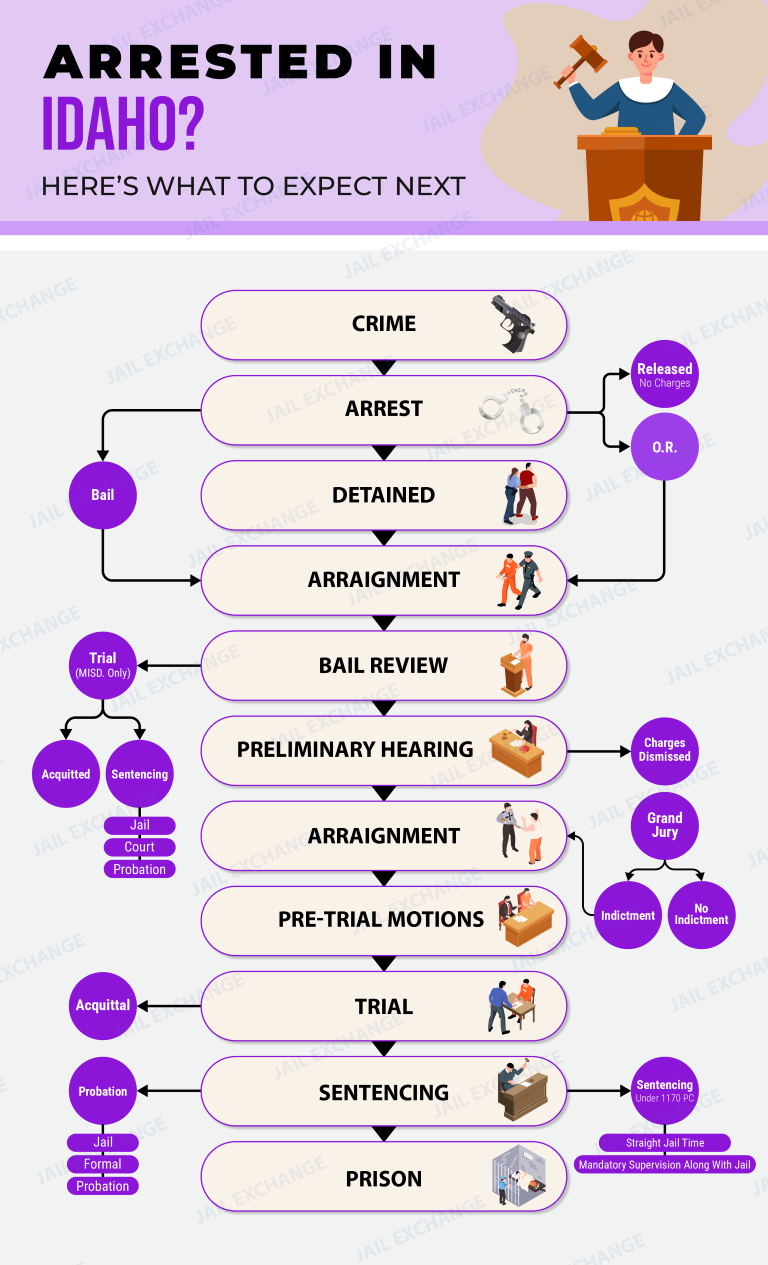
Information for this service is currently unavailable.
GettingOut / ViaPath Trust & Commissary Deposits
Provider: GettingOut (Telmate) • Rebranding as ViaPath Technologies (myViaPath)
GettingOut and ViaPath Technologies provide electronic inmate trust banking solutions that allow family and friends to transfer money directly into an incarcerated person's jail trust and commissary account. Deposited funds give inmates the financial balance needed to purchase food items, personal hygiene products, stationery, and over-the-counter medical goods from the jail store.
Important: Facility Banking Policies Vary Across Jails
Once a person is booked and moved to a housing unit, facilities do not always allow cash drop-offs or phone payments directly to the jail window. Some might and you should confirm this by calling the facility and asking. But if you do not register online and fund your loved one's trust account immediately, they may be forced to wait days or weeks for standard paper processing, leaving them without essential soap, clean undergarments, basic medical sundries or snacks.
Step-by-Step Instructions to Deposit Trust Funds
- Confirm the inmate's legal first and last name, date of birth, and assigned jail booking identification number.
- Navigate to www.gettingout.com or the updated my.viapath.com portal.
- Sign into your verified profile and select Deposit Funds.
- Select the detention center where the inmate is currently housed.
- Choose Trust Account / Commissary and specify your deposit amount.
- Enter your credit or debit card billing information, review transaction fees, and submit payment.
- Save your digital receipt and confirmation number for your records.
What the Inmate Needs to Do
The inmate does not need an internet account to receive funds. Once the electronic transaction clears, the balance posts directly to their jail trust ledger according to facility accounting schedules. The inmate can review their updated balance at a dayroom pod kiosk or on their tablet and place orders on their regular commissary day.
Official Providers: GettingOut Website | myViaPath Portal
Customer Service Telephone: 1-866-516-0115 (GettingOut) • 1-877-650-4249 (ViaPath)
Support Hours: Monday – Friday, 7:00 AM – 11:00 PM CST; Saturday – Sunday, 8:00 AM – 7:00 PM CST
Supported Languages: English and Spanish
Other Services Provided by GettingOut / ViaPath
In addition to Trust Deposits, GettingOut and ViaPath provide several other communication and visitation options:
- Phone Calling Accounts: Prepay for phone calling credits so your loved one can call your telephone directly.
• Learn more on our website: Phone Calling Accounts Guide | • Visit official vendor page: ViaPath Phone Accounts - Two-Way Text Messaging: Send electronic messages and photos directly to an inmate's tablet or kiosk.
• Learn more on our website: Digital Messaging Guide | • Visit official vendor page: GettingOut Messaging - Remote Video Visits: Schedule and join live video visits from home using your computer or smartphone.
• Learn more on our website: Video Visitation Guide | • Visit official vendor page: GettingOut Video Visits - Inmate Tablets & Media: Fund tablet entertainment, music streaming, games, and news modules.
• Learn more on our website: Tablet Rentals & Content Guide | • Visit official vendor page: GettingOut Tablets
Deposit Money for an Inmate in the 3B Detention Center
The Easiest and Securest Way of Depositing Money for an Inmate
There are several methods for depositing money on an inmate's account:
1. To send money online to an inmate in the 3B Detention Center use gettingout / GTL / Viapath.

2. If you prefer to use your credit or debit card and deposit money over the phone, you can call them at 866-516-0115.
3. Deposit cash or use a debit or credit card using a dedicated kiosk for this purpose. The machine is located in the lobby or visitation area of the 3B Detention Center.
4. The 3B Detention Center may also allow you to *mail an inmate a money order or cashier’s check from a trusted source such as the Post Office, a local bank, or Western Union. The money order should be be made out to either the inmate or the Bonneville County Sheriff's Office, with the inmate’s name and ID# on the memo line of the check. To confirm this option call the facility at 208-542-2947.
*When mailing a money order or cashier’s check, send it an envelope by itself. Never send it with a letter or photos for your inmate, unless the facility allows it. Never send personal checks or cash.
5. The 3B Detention Center has a reception desk that may accept cash, money orders or cashier checks. Call 208-542-2947 to find out the specific hours for drop off times.
3B Detention Center is a secure juvenile detention center on Environmental Way in Idaho Falls, in Bonneville County. Mail is not sent to the building. It goes to the center's mailing address on North Capital Avenue. Letters from parents and guardians are allowed, and mail from anyone else needs approval first. Staff open each letter in front of the youth to take out money or anything else not allowed.
Mail for a resident:
Resident's Full Name
3B Detention Center
605 Capital Avenue
Idaho Falls, ID 83402
- Name line: Begin with the resident's name, then the center's address.
- Outside of the envelope: Write nothing on it except the resident's address and your own full return address. No drawings or notes.
- Money and extra items: Anything that is not allowed is logged and stored with the youth's belongings. Contraband is taken.
- Writing tools: Stick with blue or black ink, and leave out crayons, felt markers, glitter, confetti, perfume and lipstick.
- Packages: Residents may not receive any.
- Delivery: Mail is given out every day.
- Letters home: Each resident may send two letters a week, and the center pays the postage and supplies paper and envelopes.
- Visits: Parents, grandparents and legal guardians may visit on Wednesday evenings and Sunday afternoons unless a court limits them.
Questions about a youth's mail go to the center at 208-542-2947, weekdays 8 a.m. to 5 p.m.
Information for this service is currently unavailable.
Information for this service is currently unavailable.
Information for this service is currently unavailable.
Bonneville County County Jails
Bonneville County Juvenile Facilities
- Juvenile: 208-542-2947
The 3B Detention Center serves the following cities and towns of Bonneville County: Ammon, Idaho Falls, Iona, Irwin and Ucon. At times this facility may also house inmates arrested in the following counties: Bingham County and Butte County.