
Cook County Jail - Department of Corrections
Cook County Jail - Department of Corrections
Physical Address
2700 South CaliforniaChicago, IL 60608
Jail Phone Number
773-674-7100Cook County and Chicago Inmate Search: Finding Someone in the Cook County Jail
Cook County runs one large jail, the Cook County Department of Corrections, at 2700 S. California Ave. in Chicago.
It is made up of several divisions spread over many blocks. To find someone, start with the Sheriff's Individual in Custody Locator. The jail's automated info line is 773-674-5245, and the main line is 773-674-7100 (call either).
For release rules, see our bail guide. For courthouses, see our court guide.
Read inmate search answers
 Read inmate search answers
1. How do I search the Cook County jail?
Use the Sheriff's Individual in Custody Locator. It covers every person held at the Cook County Department of Corrections.
- Open the locator and accept the terms.
- Type the person's full first name and full last name. Both are required, and nicknames won't work.
- Or, if you have it, type the booking number with no dashes (for example, 20250043394).
- Click Submit and open the matching record.
The record shows the booking number, the division where the person is housed, and visiting details. Write down the booking number. You need it for money, mail, phone accounts and visits.
↑ Back to the question list2. What if the name does not show up?
A new arrest can take hours to appear. The person may still be at a police station or waiting in the courthouse lockup for First Appearance court. Try these steps:
- For a Chicago arrest, search the Chicago Police Adult Arrest Search. It lists adult arrests by the Chicago Police, with charges and the district.
- Call the jail's automated line at 773-674-5245 or the main line at 773-674-7100 (call either).
- The Records Office at 773-674-6321 can give a booking number.
- If the person was released, the name drops off the locator.
3. Can I be alerted when someone is released?
Yes. VINELink for Illinois shows whether a person is in custody and where. Free alerts by text, email or phone can tell you when that status changes. It is not only for victims; anyone may use it. VINE also has free apps for iPhone and Android.
↑ Back to the question list4. Does the locator show mugshots?
No booking photos (mugshots) show on the Sheriff's locator. Illinois law, in 5 ILCS 140/2.15, says what arrest facts police must share, and it limits police and sheriffs from posting booking photos on social media, except in cases such as a wanted person or a danger to the public. Reporters can ask the Sheriff's Office or the arresting police for a photo. ICE photos require a request on ICE's FOIA records page. Federal booking photos are not given out, though the U.S. Marshals Service may release one for a person on the run.
↑ Back to the question list5. What are the jail divisions?
The Cook County Department of Corrections is one of the largest single-site jails in the country. It covers several blocks around 2700 S. California Ave. in Chicago. Housing changes often, so always check the locator. The main buildings are:
- Division 1, 2700 S. California Ave.: the oldest building, from 1929. It holds maximum-security men.
- Division 2, 2700 S. California Ave.: dorms for minimum and medium-security men.
- Division 3 Annex: dorms for women of all security levels (it used to be the Residential Treatment Unit).
- Division 6, 2801 S. Sacramento Ave.: medium and minimum-security men. Its annex has a separate page.
- Division 9, 2834 W. 31st St.: medium and maximum-security men, plus discipline and protective custody units.
- Division 10, 2950 S. California Ave.: general population men; it once held medical and mental health units.
- Division 11, 3015 S. California Blvd.: a large building for men of all security levels, with a cooking job-training program.
- Division 16: program housing, such as the Mental Health Transition Center.
- Cermak and the Residential Treatment Unit (Division 8), 2700 S. California Ave.: medical and mental health housing.
Division 4 is closed. The Sheriff's division page has more detail.
↑ Back to the question list6. How do I visit someone in the jail?
- Get on the list. The person in custody must add your name to their visiting list.
- Apply. Fill out a Visitor Application through the locator. A background check follows; allow about seven business days.
- Schedule. Book an in-person visit at the Sheriff's visit scheduler. Family video visits use Microsoft Teams with an email-linked account; our video visit guide explains the setup.
- Check the day. Each division has its own schedule by housing unit. Many units have no visits on Thursday and Friday.
Bring a current photo ID that shows your address and matches your application. Children 17 and under need an approved parent or guardian with them. Only small clear bags are allowed, and visitors are scanned or patted down. Visitors can be turned away for things like an open criminal case, a warrant, or a protective order involving the person. Questions: Visitor Information at 773-674-8225 or 773-674-8194 (call either). More tips are on our visiting guide.
↑ Back to the question list7. How can I add money to a detainee account?
You need the exact name and booking number. Our money guide lists each approved way to send funds online, by phone or in person. Deposits can take one to two business days to post. The money pays for calls and commissary items such as snacks and hygiene goods.
You can also mail a money order or cashier's check in the person's exact name, with their booking number, to: Cook County Department of Corrections, [name and booking number], 2700 S. California Ave., Chicago, IL 60608. Never mail cash.
↑ Back to the question list8. How do phone calls work?
People in custody can call out to approved numbers. They can't receive calls. Families set up a prepaid account with the company that runs jail calls. Our jail phone guide walks through each step. All calls except those with lawyers are recorded.
↑ Back to the question list9. How do I send mail?
Every envelope needs the name and booking number at the top of the address, then: Cook County Department of Corrections, 2700 S. California Ave., Chicago, IL 60608. The Sheriff's mail rules say what is allowed. Our mail guide covers common mistakes. For electronic messages, see our email and text guide.
↑ Back to the question list10. Who handles medical care in the jail?
Cermak Health Services, part of Cook County Health, gives medical, dental, pharmacy and mental health care to everyone in the jail. For a health question about a person in custody, call the jail's help line at 773-674-5245. The Cermak main line is 773-674-7488. Because of privacy laws, staff may not share details without the person's permission.
↑ Back to the question list11. What if the person was released on electronic monitoring?
Then they are home, not in a jail division, but the Sheriff still tracks them. They wear a GPS ankle bracelet and must follow the judge's movement rules. The 24-hour program line is 877-326-9198.
↑ Back to the question list12. How does a Chicago arrest work, step by step?
- Officers take the person to the district station (or a central lockup) to be booked, fingerprinted and searched.
- The person may make phone calls to family or a lawyer soon after arriving.
- Some go home from the station with a ticket or court date.
- Everyone else stays in the station lockup and is brought to the Leighton courthouse for First Appearance court, usually the next day.
- If the judge orders detention, the Sheriff books the person into the county jail.
To learn which district covers an address, use the Chicago Police district finder. Police headquarters is at 3510 S. Michigan Ave. (312-746-6000).
↑ Back to the question list13. What are the Chicago Police district stations?
Each station has a lockup. Call the district that made the arrest:
- 1st District, Central: 1718 S. State St. – 312-745-4290
- 2nd District, Wentworth: 5101 S. Wentworth Ave. – 312-747-8366
- 3rd District, Grand Crossing: 7040 S. Cottage Grove Ave. – 312-747-8201
- 4th District, South Chicago: 2255 E. 103rd St. – 312-747-7581
- 5th District, Calumet: 727 E. 111th St. – 312-747-8210
- 6th District, Gresham: 7808 S. Halsted St. – 312-745-3617
- 7th District, Englewood: 1438 W. 63rd St. – 312-747-8223
- 8th District, Chicago Lawn: 3420 W. 63rd St. – 312-747-8730
- 9th District, Deering: 3120 S. Halsted St. – 312-747-8227
- 10th District, Ogden: 3315 W. Ogden Ave. – 312-747-7511
- 11th District, Harrison: 3151 W. Harrison St. – 312-746-8386
- 12th District, Near West: 1412 S. Blue Island Ave. – 312-746-8396
- 14th District, Shakespeare: 2150 N. California Ave. – 312-744-8290
- 15th District, Austin: 5701 W. Madison St. – 312-746-8303
- 16th District, Jefferson Park: 5151 N. Milwaukee Ave. – 312-742-4510
- 17th District, Albany Park: 4650 N. Pulaski Rd. – 312-742-4410
- 18th District, Near North: 1160 N. Larrabee St. – 312-742-5870
- 19th District, Town Hall: 850 W. Addison St. – 312-744-8320
- 20th District, Lincoln: 5400 N. Lincoln Ave. – 312-742-8714 or 312-742-8715 (call either)
- 22nd District, Morgan Park: 1900 W. Monterey Ave. – 312-745-0570
- 24th District, Rogers Park: 6464 N. Clark St. – 312-744-5907
- 25th District, Grand Central: 5555 W. Grand Ave. – 312-746-8605
14. What about arrests by suburban police?
More than 100 towns in the county have their own police. Each holds people at its own station until court. Some of the largest departments, with their non-emergency lines:
- Evanston Police: 847-866-5000. Cases usually go to the 2nd District, Skokie courthouse.
- Skokie Police: 847-982-5900. Cases usually go to the 2nd District, Skokie courthouse.
- Arlington Heights Police: 847-368-5300. Cases usually go to the 3rd District, Rolling Meadows courthouse.
- Schaumburg Police: 847-882-3534. Cases usually go to the 3rd District, Rolling Meadows courthouse.
- Cicero Police: 708-652-2130. Cases usually go to the 4th District, Maywood courthouse.
- Oak Park Police: 708-386-3800. Cases usually go to the 4th District, Maywood courthouse.
- Orland Park Police: 708-349-4111. Cases usually go to the 5th District, Bridgeview courthouse.
- Harvey Police: 708-331-2131. Cases usually go to the 6th District, Markham courthouse.
The Cook County Sheriff's Police patrol areas without a town police force. Sheriff non-emergency: 773-674-7710.
↑ Back to the question list15. Can I check warrants online?
Partly. The Cook County Sheriff keeps a Most Wanted list with only a few names, so it covers high-profile fugitives; a missed-court warrant shows in the court record. Warrants here are served by the sheriff's staff and local police; the sheriff's general directory is 312-603-6444. The Clerk of the Circuit Court's case search, Cook's own substitute for the statewide re:SearchIL system, shows each case's status, and "Warrant Outstanding" means it is still active. To clear it, a lawyer can bring you before the judge or walk you in to surrender at the California Avenue jail. For a Chicago misdemeanor, the Clerk's Criminal Department is in Room 1006, 50 W. Washington St., Chicago, IL 60602, 312-603-4641.
↑ Back to the question list16. Where do I find court dates?
Search the Clerk's Case Look Up, or call the Clerk's court date line at 773-674-9255. Our court guide lists every courthouse with its address and phone, and our bail and release guide explains First Appearance hearings.
↑ Back to the question list17. How do I find someone sent to state prison?
Use the Illinois Department of Corrections search. Search by name or IDOC number. New transfers may take a few days to show.
↑ Back to the question list18. How do I find someone in federal custody in Chicago?
Search the Federal Bureau of Prisons locator. Many federal prisoners waiting for trial in Chicago are held at the Metropolitan Correctional Center (MCC Chicago), 71 W. Van Buren St., Chicago, IL 60605 (312-322-0567). Their cases are in the federal court at 219 S. Dearborn St.
↑ Back to the question list19. How do I find someone taken by ICE?
The jail does not hold anyone for ICE because of the Illinois TRUST Act. ICE may arrest a person elsewhere. People are often processed at the ICE facility at 1930 Beach St., Broadview, and then moved to detention centers in other places. The ICE Online Detainee Locator finds adults in ICE custody; enter an A-number, or else a name with the birth country. ICE Chicago Field Office: 872-351-3990.
↑ Back to the question list20. What if the person is under 18?
Youth are held at the Cook County Juvenile Temporary Detention Center, 1100 S. Hamilton Ave., Chicago (main line 312-433-7102). Because youth files are confidential, no public search lists them.
↑ Back to the question listCook County and Chicago Bail: First Appearance Court and the Pretrial Fairness Act
Cook County, home to Chicago, runs the busiest court system in Illinois. Since September 18, 2023, no one here pays cash bail.
A judge decides at a First Appearance hearing whether the person goes home, goes home with rules, or stays in jail until trial. This page explains where those hearings happen, what the judge looks at, and what families can do. Adults the judge orders held go to the Cook County Department of Corrections, 2700 S. California Ave., Chicago.
For booking and housing information, call 773-674-5245 or 773-674-7100 (call either). Our court guide names every courthouse, street address and phone number. Our inmate search guide shows how to find someone in custody.
1. Does Cook County still use cash bail?
No. Since September 18, 2023, nobody in Illinois buys their freedom before trial. The Pretrial Fairness Act, found in Article 110 of the Code of Criminal Procedure (725 ILCS 5/110), took money out of the process. In Cook County, as everywhere else in the state, a judge now looks at two things: whether the person is likely to come back to court, and whether letting them go would put someone in danger.
Most people are released after their first hearing. Some go home with rules to follow. A smaller group is held in jail because the prosecutor asked for it and the judge agreed.
↑ Back to the question list2. What happened to Central Bond Court?
Central Bond Court is gone. Its work is now done by the Pretrial Division of the Circuit Court, and the hearings are called First Appearance hearings. The Pretrial Division meets every day of the year, weekends and court holidays included. Its main phone is 773-674-0513. For case details, the Clerk of the Circuit Court answers at 773-674-5882 or 773-674-5889.
Some older websites and signs still say "bond court." They mean the same courtrooms.
↑ Back to the question list3. How soon does an arrested person see a judge?
If a person is kept in police custody overnight, the First Appearance should happen within 48 hours. The exact time and courtroom depend on three things: where the arrest happened (Chicago or a suburb), what the charge is, and what day of the week it is.
↑ Back to the question list4. Where are first appearances for Chicago arrests on weekdays?
For people in custody after a Chicago arrest, weekday hearings are held at the George N. Leighton Criminal Courthouse, 2600 S. California Ave., Chicago. The courtroom depends on the charge:
- Felonies (not domestic violence): Branch 1, Room 100. Court starts at 12:30 p.m.
- Misdemeanors (not domestic violence): Branch 4, Room 100. Court starts at 11:00 a.m.
- Homicide and felony sex charges (except failure to register): Branch 66, Room 102, at 11:30 a.m. Both the first appearance and the detention hearing happen here.
- Continued detention hearings, for both felonies and misdemeanors: Branch 99-2, Room 102, at 9:00 a.m.
- Same-day ("instanter") detention hearings: Branch 99-4, Room 102, at 12:30 p.m.
- Out-of-county warrants, remands and release hearings: Branch 17, Room 100, at 12:30 p.m.
The phone for all of these courtrooms is 773-674-5882.
↑ Back to the question list5. Where are hearings held on weekends and holidays?
On Saturdays, Sundays and court holidays, all first appearances for the whole county move to the Leighton courthouse at 2600 S. California Ave. Each call starts at 12:30 p.m.
- Chicago felonies and misdemeanors (not domestic violence): Room 100.
- Suburban Cook felonies and misdemeanors (not domestic violence): Room 102.
- Domestic violence misdemeanors from anywhere in the county: first appearance in Room 201, detention hearing in Room 204.
6. Where are first appearances for suburban arrests on weekdays?
On weekdays, a person arrested in suburban Cook goes before a judge at the courthouse for the district where the arrest happened:
- 2nd District, Skokie: 5600 Old Orchard Rd., Skokie. Courtroom 105 at 9:00 a.m. Phone 847-470-7250.
- 3rd District, Rolling Meadows: 2121 Euclid Ave., Rolling Meadows. Felonies and most misdemeanors in Courtroom 108 at 9:00 a.m.; domestic violence misdemeanors in Courtroom 207 at 9:00 a.m. Phone 847-818-3000.
- 4th District, Maywood: 1500 Maybrook Dr., Maywood. Felonies and most misdemeanors in Courtroom 113 at 10:30 a.m.; domestic violence misdemeanors in Courtroom 104 at 10:30 a.m. Phone 708-865-6040.
- 5th District, Bridgeview: 10220 S. 76th Ave., Bridgeview. Felonies and most misdemeanors in Courtroom 103 at 1:30 p.m.; domestic violence misdemeanors in Courtroom 204 at 9:00 a.m. Phone 708-974-6500.
- 6th District, Markham: 16501 S. Kedzie Pkwy., Markham. Courtroom 102 at 9:30 a.m. Phone 708-232-4551.
7. Can family members go to the First Appearance hearing?
Yes. Anyone may sit in on these hearings. The Public Defender gives this advice for the day of court:
- Arrive early and wear neat clothes, like you would for an important meeting.
- Turn off your phone and stay quiet in the courtroom.
- Bring papers that show the person has roots here, such as a work schedule, a school schedule, or a recent utility bill in their name. The defense lawyer can show these to the judge.
If the judge orders electronic monitoring, make sure the court has the right home address and phone number. A wrong address can delay the release.
↑ Back to the question list8. What does the judge look at?
The law starts from the idea that every person charged with a crime may be released. The judge then weighs:
- the charge and the facts in the police report,
- the person's past record and any history of missing court,
- ties to family, work, school and the community, and
- whether any rules of release would be enough to keep people safe.
How much money a family has is not part of the decision.
↑ Back to the question list9. What rules can come with a release?
The judge picks the least strict rules that will work. Common ones here are:
- a promise to come to every court date,
- check-ins with Pretrial Services, which is part of the Adult Probation Department,
- staying away from a named person or place,
- a curfew,
- giving up any guns and a FOID card,
- drug or alcohol testing, and
- home confinement or electronic monitoring run by the Sheriff.
Breaking a rule can lead to a new hearing, tighter rules, or detention.
↑ Back to the question list10. How does the Sheriff's Electronic Monitoring program work?
When a judge orders electronic monitoring (EM) as a release condition, the Cook County Sheriff's Office runs it. The request can come from the prosecutor's side or the defense side. The person wears a GPS ankle bracelet all day and night. The bracelet reports when the person leaves home, where they go, and whether anyone tampers with it. Letting the battery run down counts as tampering.
To qualify, the home must be a house, apartment or condo in the county, the owner or renter must agree, the equipment must work there, and it cannot be the home of a victim in a domestic or sex case.
Everyone on the program gets "essential movement" time. Under the Sheriff's schedule, booking numbers ending in an odd digit get Monday and Wednesday, 8:00 a.m. to 4:00 p.m.; even digits get Tuesday and Thursday at the same hours. Work and school trips need a court order and a letter from the employer or school. Other requests must be sent at least 72 hours ahead. The program line, open 24 hours, is 877-326-9198.
Read more on the Sheriff's EM page.
↑ Back to the question list11. When can a judge keep someone in jail before trial?
Only after the State's Attorney files a written petition asking for detention. The petition is allowed only for certain charges listed in 725 ILCS 5/110-6.1, such as many forcible felonies, some gun charges, and domestic battery. At the hearing, the state has to prove with clear and convincing evidence three things: that the person likely committed the crime, that they are a real danger to someone or will likely run, and that no set of release rules could fix that problem.
The person has a lawyer at the hearing. If the judge orders detention, the judge must explain why in writing, and the question is reviewed again at each later court date.
↑ Back to the question list12. Where is a person held after a Chicago arrest?
Chicago police first take the person to a district station, where they are booked. Many leave the station with a ticket or a court date and never go to the jail. Anyone still held overnight is taken to the lockup at the Leighton courthouse for the First Appearance. If the judge orders detention, the person goes next door to the Cook County Department of Corrections at 2700 S. California Ave.
Check the Chicago Police arrest search for adult arrests, then the Sheriff's Individual in Custody Locator once the person is at the jail. Our inmate search guide walks through each step.
↑ Back to the question list13. Where is a person held after a suburban arrest?
Suburban police hold the person at their own station until court. Then the person goes to the district courthouse in Skokie, Rolling Meadows, Maywood, Bridgeview or Markham (or Leighton on weekends). Our court guide shows which towns go to which courthouse. If detention is ordered, the Sheriff moves the person to the jail on California Avenue in Chicago.
↑ Back to the question list14. What can family do while the person is held?
Write down the booking number from the locator first. Every service asks for it. Then:
- Set up phone calls so the person can reach you and the lawyer.
- Plan a visit; the person must add you to their list first.
- Send letters by mail, or read about email and text messages.
- Put money on the account with our money guide, so the person can buy commissary items.
Keep every court date in mind. The court's free reminder service and the case lookup on our court guide help with that.
↑ Back to the question list15. Can I pay anything to get someone out?
No. There is no bail payment anywhere in the county. No clerk, jail window, or police station takes release money. If anyone asks you for a "bond" payment by phone, text, gift card, payment app or cryptocurrency, County officials will never collect release money that way. Stop talking to the caller and dial the jail at 773-674-5245.
Money you send to a person in jail pays for phone calls and commissary items only. It does not change when they get out. Our guide to sending money explains deposits.
↑ Back to the question list16. What about bonds that were posted before 2023?
If cash was posted under the old system, the Clerk of the Circuit Court handles any refund after the case ends. Refunds usually arrive four to six weeks after the case ends. For a felony, call the Clerk's Criminal Division at Leighton, 773-674-3140. If it was a Chicago misdemeanor, the Clerk's office in Room 1006 of the Daley Center handles it: 312-603-4641. Have the case number or bond slip ready.
↑ Back to the question list17. What if a person misses a court date?
A judge may order a warrant. Skipping court can also bring an added Illinois charge and tighter rules on any future release. If you know someone missed court, have them call their lawyer right away. The Public Defender's main line, 312-603-0600, can tell you who the assigned lawyer is. The court's free reminder system can send texts or calls before each date.
↑ Back to the question list18. How do we get a free lawyer?
At the first hearing, say out loud that there is no money to hire private counsel. Right after an arrest, family can call the Public Defender's Arrest Hotline at 844-817-4448, open 24 hours, to have a lawyer sent to the police station. The Law Office of the Cook County Public Defender has lawyers at every courthouse. Its main office is at 69 W. Washington St., Chicago, and the phone is 312-603-0600. Office locations are on the Public Defender's website.
↑ Back to the question list19. What if the arrest was federal?
Federal charges do not go through the Pretrial Fairness Act. They go to the U.S. District Court for the Northern District of Illinois at the Everett McKinley Dirksen U.S. Courthouse, 219 S. Dearborn St., Chicago (312-435-5670). In that courthouse, release questions go to a magistrate judge who applies the federal Bail Reform Act. Many federal detainees in Chicago stay at the Metropolitan Correctional Center (MCC Chicago), 71 W. Van Buren St. (312-322-0567). Search for them on the BOP inmate locator.
↑ Back to the question list20. Will the jail hold someone for ICE?
No. The Illinois TRUST Act (5 ILCS 805) bars local police and jails from keeping a person only because of an immigration detainer or a civil immigration warrant. When the judge releases someone, the jail releases them. A warrant signed by a federal judge is different and can be honored.
If ICE does take someone, ICE commonly processes them at its Broadview site, 1930 Beach St. Use the ICE Online Detainee Locator or call the ICE Chicago Field Office at 872-351-3990.
↑ Back to the question list21. What if the person arrested is under 18?
Youth cases go to the Juvenile Justice Division of the Circuit Court, not to adult First Appearance court. Youth ordered held are placed in the Cook County Juvenile Temporary Detention Center, 1100 S. Hamilton Ave., Chicago. Youth files are sealed from the public, and no online custody search covers them.
↑ Back to the question listHow to Visit Someone at Cook County Jail: A Simple Step-by-Step Guide
You can see someone held at Cook County Jail in two ways: in person at the jail in Chicago, or by video from your own phone or computer. Both are free. This guide walks you through each step in order. Go one step at a time.
- Who can visit and who cannot
- Step 1: Get approved to visit
- Step 2: Schedule an in-person visit
- Step 3: The day of your visit (what to wear, what to bring)
- Where to go: visitor entrances by division
- Video visits from home
- Phone numbers and help
Who can visit and who cannot
You can visit if:
- You are 18 or older and the jail has approved you to visit that person.
- You bring a photo ID that is not expired and shows your address.
Children (17 and younger):
- Children do not fill out an application.
- A child must come with an approved parent or guardian who is visiting the same person.
- One approved adult can bring up to three children.
- Teens of high school age need a state ID or a school photo ID.
- An adult must watch the children the whole time.
The jail can say no to you if you:
- Got out of a jail or prison in the last 60 days.
- Are in your first year of parole or probation.
- Are on house arrest.
- Have an open criminal case or are out on bond (minor traffic cases do not count).
- Have a warrant out for your arrest, or an immigration (ICE) hold.
- Have an order of protection involving the person you want to see.
- Are behind on a required registration (such as the sex offender registry).
- Gave information on your application that is wrong or cannot be checked.
A supervisor can also deny a visit for safety reasons. If you are turned down, you may be able to apply again after a waiting period.
Step 1: Get approved to visit
You must be approved before you can schedule. Do this first, and do it early. It can take about a week.
- Get an email address if you do not have one. You will need one that works. You cannot change it later.
- Make an account on the Sheriff's visitor page: iic.ccsheriff.org/Account/Register.
- Type your name exactly as it is on your ID.
- Have your ID with you. You will type in the ID number and the date it expires.
- Make a password with at least 8 characters. Mix capital letters, small letters, numbers or symbols.
- Check your email. Open the message from the Sheriff's Office and follow it to turn on your account.
- Find the person you want to visit using the jail search: iic.ccsheriff.org. Search by first and last name, or by booking number (type it with no dash).
- Click "Register online" next to their photo and fill out the visitor application. Answer every question.
- Wait about 7 business days (weekdays). The jail runs a background check.
- Not sure if you are approved? Call the Visitor Information Unit at (773) 674-8225 or (773) 674-8194, Monday to Friday, 10 a.m. to 9 p.m.
Good to know:
- You need a separate application for each person you want to visit.
- If the person moves to a different building inside the jail, you do not apply again.
- If the person is released and later comes back to jail, you do apply again.
- No computer? You can also get an application in the lobby of the building where the person is held, or at the entrance of any Cook County courthouse.
Step 2: Schedule an in-person visit
Once you are approved, book a time. You must book ahead. Do not just show up.
- Find the person's booking number and division. Look them up at iic.ccsheriff.org, or call (773) 674-5245. The housing location starts with the division (for example, "DIV10") followed by the tier or unit.
- Go to the scheduling page: dvv.ccsheriff.org.
- Fill in the form:
- The person's booking number, first name and last name
- Type of visit and their division
- How many visitors are coming (1 or 2 adults)
- Your phone number, email and name. Add the second visitor's name and email if someone is coming with you.
- The date and time you want
- Choose "Yes" for reminders if you want a text message before your visit.
- Click Submit.
How often: You can visit once a week, on the days and times set for that person's housing unit. Each unit has its own schedule (see Where to go).
Can't book a time? It usually means you are not approved yet. Call (773) 674-8225, or email DOC.visitation@ccsheriff.org.
Step 3: The day of your visit
When to arrive
Plan to get there at least 30 minutes before your visit time. Everyone goes through a security check, and lines can be long, especially on weekends. If you are late, you may lose your visit.
Bring only these things
- Your photo ID. It must not be expired, must show your address, and must be the same ID you used on your application.
- Your car keys.
- If you need a bag: a clear plastic bag, no bigger than about 12 x 6 x 12 inches, or a small clear purse about the size of a gallon zip bag. Diaper bags for babies are allowed case by case.
Do NOT bring
- Cell phones, cameras, music players or any electronics
- Food or drinks
- Cigarettes, vapes, lighters or matches
- Alcohol or drugs
- Knives, weapons, tools or nail clippers
- Books, magazines, newspapers or any papers
- Needles or syringes
Leave these in your car or at home. Bringing drugs, weapons or other banned items into a jail is a crime, and you can lose your right to visit.
What to wear
Wear: regular, modest clothes, such as a T-shirt with sleeves and jeans or long pants that fit at the waist.
Do NOT wear:
- Short dresses, miniskirts, short shorts or skirts with high slits
- Low-cut tops, tank tops, sleeveless shirts, halter tops, tube tops or spaghetti straps
- See-through or mesh clothing
- Anything that shows your stomach, back, chest, underwear or rear
- Pants that sag below the waist
- Hats or caps
- Clothes with gang signs or bad words or pictures
- Clothes that look like a police, guard or inmate uniform
If your clothes break these rules, you may be turned away.
At the jail
- Go to the correct entrance (post) for the person's division.
- Show your ID.
- Empty your pockets. You may be scanned or patted down.
- Follow the officer to the visiting area.
During the visit
- Stay calm and polite. Yelling, arguing or cursing can end the visit.
- Talk only to the person you came to see.
- Do not leave the visiting area and come back unless an officer says you can.
- Visits may be watched and recorded.
Where to go: visitor entrances by division
Cook County Jail is a large campus on Chicago's Southwest Side, around 26th Street and California Avenue. Each building ("division") has its own visitor entrance, called a post. Go to the post for the division where the person lives.
- Division 6 and Division 6 Annex: post at 2800 S. Sacramento Ave., Chicago, IL 60608
- Division 8 RTU and Cermak (health unit): post at 2700 S. California Ave., Chicago, IL 60608
- Division 9: post at 2854 W. 31st St., Chicago, IL 60608
- Division 10: post at 2950 S. California Ave., Chicago, IL 60608
- Division 11: post at 3015 S. California Ave., Chicago, IL 60608
For any other division, call the Visitor Information Unit at (773) 674-8225 to ask which post to use.
Visiting days and hours
Most divisions hold visits at these times:
- Saturday and Sunday: 8:00 a.m. to 1:00 p.m. and 3:30 p.m. to 8:30 p.m.
- Monday, Tuesday and Wednesday: 3:30 p.m. to 8:30 p.m.
- Thursday and Friday: usually no visits.
Each tier or unit gets only certain days. To see the exact days for your loved one's unit, find their division on the visiting schedules page, or call (773) 674-8225.
Getting there
CTA buses and trains serve the area. If you drive, paid public parking is nearby.
Video visits from home
Video visits use the free app Microsoft Teams. You can use a smartphone, tablet or computer with a camera.
- Set up Microsoft Teams. Download the free app and make an account with your email: Get Microsoft Teams.
- Talk to your loved one. Tell them you want video visits.
- They add your name to their visiting list inside the jail.
- Wait for a call or message. Jail staff will contact you to set a day and time.
- At visit time, be ready in Teams with your camera on.
Video visit rules
- The same jail rules apply as in person.
- No drinking, smoking, nudity or rude behavior on camera.
- Breaking the rules can end your visits.
Video visit phone lines (call with questions)
- Division 2 (6 Annex): (773) 674-3745
- Division 3 Annex: (773) 674-4894
- Division 4: (773) 674-5713
- Division 5: (773) 674-0667
- Division 6: (773) 674-5336
- Division 8, Cermak: (773) 674-5761
- Division 8, RTU: (773) 674-0077
- Division 9: (773) 674-2295
- Division 10: (773) 674-7640
- Division 11: (773) 674-3722
- Division 16 (MHTC): (773) 674-7159
Phone numbers and help
- Visitor approval and visiting questions: (773) 674-8225 or (773) 674-8194 (Monday to Friday, 10 a.m. to 9 p.m.)
- Scheduling questions by email: DOC.visitation@ccsheriff.org
- Find where someone is held: (773) 674-5245 or iic.ccsheriff.org
- Help for visitors with a disability (wheelchair, sign language and more): call the ADA office at (773) 674-7768 during business hours, or email CCSO.ADA@ccsheriff.org. Ask ahead of time.
Quick checklist
- ☐ Approved to visit
- ☐ Visit booked at dvv.ccsheriff.org
- ☐ Photo ID (same one as your application)
- ☐ Phone and other items left in the car
- ☐ Clothes follow the rules
- ☐ Arriving 30 minutes early at the right entrance
Jail visiting rules can change. Before you go, call the Visitor Information Unit at (773) 674-8225 to make sure your visit is still on.
Cook County Department of Corrections Inmate Video Visitation
Video Visitation is done using Microsoft Teams Group Chat Software.

- In order to use Microsoft Teams you need to be registered and prepaid. While you can sign up for free, you get more benefits and it's easier to use with a paid version.
- Family and friends wishing to participate and receive a Video Visit may consult with their loved one.
- Next, your detained friend or family member will need to add your name to the visitation list and you will be contacted by a Cook County Jail staff member to schedule a day and time for your visit.
- The following are the instructions and steps to have a video visit with your inmate after you have been added by your inmate, and you have opened your account with Microsoft Teams.
1. Type www.skype.com in the search bar.
2. Click 'sign in' in the upper right hand corner.
3. Click 'New to Skype' Sign up - then 'NEXT'.
4. Under 'Create Account', add your email address. - then 'NEXT'.
5. Create a password, then click 'NEXT'.
6. Enter your first and last name, then click 'NEXT'.
7. Enter your Country/region, then your birthday, then click 'NEXT'.
8. Download the SKYPE app to your chosen device, then ...
9. Sign into SKYPE using your email and password you just registered under.
Cook County and Chicago Criminal Courts: Every Courthouse, Address and Phone
Cook County criminal cases are heard in more than a dozen buildings: the George N. Leighton Criminal Courthouse in Chicago, three Chicago branch courts, the Domestic Violence Courthouse, the Daley Center, the Juvenile Center, five suburban courthouses, four community courts and the federal courthouse.
This guide lists every one with its address, phone and the cases it hears, then explains how to look up a case and how appeals work. For release rules after an arrest, see our bail and release guide.
To find someone in the jail, see our inmate search guide.
1. How is the Circuit Court of Cook County set up?
The county has a single trial court, the Circuit Court of Cook County, but its criminal work is spread over many buildings. Felony trials from Chicago are heard at the Leighton courthouse. Chicago misdemeanors and felony preliminary hearings go to three neighborhood branch courts and the Domestic Violence Courthouse. Chicago traffic cases go to the Daley Center. The suburbs are split into five Municipal Districts (2 through 6), and each one has a courthouse that hears almost every kind of criminal case from its towns. On top of that, the court runs community courts and treatment courts for some people who qualify.
Each listing below gives the street address, the phone for the Clerk's office there, and the kinds of cases heard. The Clerk is the office that tracks court dates and case files. Every address and phone number below was taken from the court's location list and the Clerk's office pages in 2026.
↑ Back to the question list2. What is heard at the Leighton Criminal Courthouse?
- George N. Leighton Criminal Courthouse
Address: 2600 S. California Ave., Chicago, IL 60608
Phone: Clerk's Criminal Division (Room 526) 773-674-3140; court date phone menu 773-674-9255; Criminal Division judges' office 773-674-3160; Pretrial Division 773-674-0513
What is heard: felony trials and sentencing for crimes charged in Chicago; first appearance (detention) hearings for Chicago arrests on weekdays and for the entire county on weekends and holidays; out-of-state and out-of-county warrant hearings; expungement and sealing petitions; most of the drug, mental health and veterans treatment courts - Criminal Court Administration Building
Address: 2650 S. California Ave., Chicago, IL 60608 (joined to Leighton, same security entrance)
Phone: State's Attorney 773-674-2700; Public Defender 773-674-3217
What is heard: offices for the prosecutors, public defenders and court staff who work the Leighton courtrooms; jurors also report here
Leighton stands next to the jail. People held at the Cook County Department of Corrections are walked to court through a tunnel, so families do not need to arrange any ride. Our bail and release guide covers the First Appearance courtrooms one by one.
↑ Back to the question list3. What criminal and traffic matters go to the Daley Center?
- Richard J. Daley Center
Address: 50 W. Washington St., Chicago, IL 60602
Phone: Clerk (Suite 1001) 312-603-5030; Clerk's Criminal Department, Room 1006 (Chicago misdemeanor files, bond refunds, dispositions) 312-603-4641; Traffic Section, Room 400 312-603-2600; traffic ticket help 312-603-2000; First Municipal District office 312-603-6132
What is heard: all traffic tickets written in Chicago, including misdemeanor traffic such as DUI and driving on a suspended license; record copies for Chicago misdemeanor and preliminary hearing cases; some treatment court sessions
4. Where are Chicago domestic violence cases heard?
- Domestic Violence Courthouse
Address: 555 W. Harrison St., Chicago, IL 60607
Phone: Clerk (Room 110) 312-325-9500; Domestic Violence Division 312-325-9000; State's Attorney Domestic Violence Division 312-325-9220
What is heard: Chicago criminal cases between family members, partners and others covered by the Illinois Domestic Violence Act: misdemeanors, Class 4 felonies, aggravated stalking, and the early stages (through preliminary hearing or indictment) of Class 1 to 3 felonies; also orders of protection and civil no-contact orders
Suburban domestic cases stay at the district courthouse for the town where the arrest happened.
↑ Back to the question list5. Which branch court hears a Chicago misdemeanor?
When a person is not held in jail, a Chicago misdemeanor or city ordinance arrest goes to a branch court. Each branch sits inside a police station and takes cases from certain police districts. The court posts this split on each branch location page.
- Branch 23 and Branch 29 (Grand and Central)
Address: 5555 W. Grand Ave., Chicago, IL 60639
Phone: Branch 23 773-804-6154; Branch 29 773-804-6140
What is heard: misdemeanor and ordinance hearings. Branch 23 takes arrests from Police Districts 14, 15, 16, 17 and 25. Branch 29 takes Districts 18, 19, 20 and 24, plus the Marine and Public Transportation units - Branch 35 and Branch 38 (Pullman)
Address: 727 E. 111th St., Chicago, IL 60628
Phone: Branch 35 773-982-3055; Branch 38 773-982-3006
What is heard: misdemeanor and ordinance hearings and felony preliminary hearings for Police Districts 3, 4, 5, 6, 7, 8 and 22, and for arrests by University of Chicago Police - Branch 43 and Branch 44 (Harrison and Kedzie)
Address: 3150 W. Flournoy St., Chicago, IL 60612
Phone: Branch 43 773-265-8927; Branch 44 773-265-8915
What is heard: Branch 43 hears misdemeanor and ordinance cases, and Branch 44 hears felony preliminary hearings, for Police Districts 1, 2, 9, 10, 11 and 12 and several citywide units
Branch court calls start at 9:00 a.m., 1:00 p.m. or 2:30 p.m., depending on the district. The Clerk's branch offices are open 8:00 a.m. to 4:00 p.m., Monday through Friday. Not sure which district made the arrest? The arrest report or ticket lists it, or call the Clerk's Criminal Department at 312-603-4641.
↑ Back to the question list6. Where are the suburban courthouses, and which towns go to each?
Each suburban courthouse hears felonies, misdemeanors, traffic tickets, village ordinance tickets, domestic violence cases and first appearances on weekdays for the towns it serves. The Clerk's office in each building can look up a court date by name or case number. Town lists come from the Clerk's suburban districts page.
- 2nd Municipal District, Skokie Courthouse
Address: 5600 Old Orchard Rd., Skokie, IL 60077
Phone: Clerk (Room 136) 847-470-7250; court office 847-470-7500; State's Attorney 847-470-7300; Public Defender 847-470-7400
What is heard: cases from Deerfield, Des Plaines, Evanston, Glencoe, Glenview, Golf, Kenilworth, Lincolnwood, Morton Grove, Niles, Northbrook, Northfield, Oakton, Park Ridge, Skokie, Wilmette and Winnetka; also mental health and veterans court - 3rd Municipal District, Rolling Meadows Courthouse
Address: 2121 Euclid Ave., Rolling Meadows, IL 60008
Phone: Clerk (Room 121) 847-818-3000; court office 847-818-2287; State's Attorney 847-818-2326; Public Defender 847-818-2470
What is heard: cases from the northwest suburbs, among them Arlington Heights, Barrington, Buffalo Grove, Elk Grove Village, Hoffman Estates, Mount Prospect, Norridge, Palatine, Rosemont, Schaumburg, Streamwood, Wheeling and the Cook part of Elgin; also juvenile and treatment court calls - 4th Municipal District, Maywood Courthouse
Address: 1500 Maybrook Dr., Maywood, IL 60153
Phone: Clerk (Room 236) 708-865-6040; court office 708-865-6060; State's Attorney 708-865-6080; Public Defender 708-865-6140
What is heard: cases from the near west suburbs: Bellwood, Berkeley, Berwyn, Broadview, Brookfield, Cicero, Elmwood Park, Forest Park, Franklin Park, Hillside, La Grange Park, Maywood, Melrose Park, North Riverside, Northlake, Oak Park, River Forest, River Grove, Riverside, Stone Park and Westchester - 5th Municipal District, Bridgeview Courthouse
Address: 10220 S. 76th Ave., Bridgeview, IL 60455
Phone: Clerk (Room 121) 708-974-6500; court office 708-974-6286; State's Attorney 708-974-6250; Public Defender 708-974-6470
What is heard: cases from the southwest suburbs, among them Alsip, Bedford Park, Burbank, Chicago Ridge, Evergreen Park, Hickory Hills, Lemont, Oak Forest, Oak Lawn, Orland Park, Palos Heights, Palos Hills, Stickney, Summit, Tinley Park and Worth - 6th Municipal District, Markham Courthouse
Address: 16501 S. Kedzie Pkwy., Markham, IL 60428
Phone: Clerk (Room 119) 708-232-4551; general courthouse line 708-232-4444; court office 708-232-4169; State's Attorney 708-232-4040; Public Defender 708-232-4360
What is heard: cases from the south suburbs, among them Blue Island, Calumet City, Chicago Heights, Country Club Hills, Dolton, Harvey, Hazel Crest, Homewood, Lansing, Markham, Matteson, Midlothian, Park Forest, Riverdale, Sauk Village and South Holland; this Public Defender office also handles youth cases
Clerk counters are open 8:30 a.m. to 4:30 p.m., Monday through Friday, except court holidays.
↑ Back to the question list7. Where are the Restorative Justice Community Courts?
These courts are for young adults, ages 18 to 26, charged with a nonviolent felony or misdemeanor who live, work or worship near one of the courts. The person must accept responsibility, and the victim must agree to the process. Instead of a trial, the case is handled through peace circles and a repair-the-harm agreement. Finishing can lead to a dismissal and a clean record. Each court meets one day a week:
- Avondale Restorative Justice Community Court
Address: 3647 W. George St., Chicago, IL 60618 (St. Hyacinth Resurrection Hall)
Phone: no line of its own; the Office of the Chief Judge answers at 312-603-6000
What is heard: Fridays only - Englewood Restorative Justice Community Court
Address: 845 W. 69th St., Chicago, IL 60621 (Salvation Army site)
Phone: 312-433-4757
What is heard: Wednesdays only - North Lawndale Restorative Justice Community Court
Address: 3605 W. Fillmore St., Chicago, IL 60624 (UCAN building)
Phone: no line of its own; the Office of the Chief Judge answers at 312-603-6000
What is heard: Thursdays only; the first of these courts, opened in 2017 - Sauk Village Restorative Justice Community Court
Address: 2700 Kalvelage Dr., Sauk Village, IL 60411 (Community Center)
Phone: 708-232-4169
What is heard: south suburban cases; opened July 15, 2024
Only the lawyers and judge can steer a case into one of these courts, so raise it with the defense lawyer early.
↑ Back to the question list8. What treatment (problem-solving) courts are there?
The court runs about 20 problem-solving courts. They swap jail time for close court supervision, treatment and regular check-ins with a probation officer. Most last about two years. The main hub is the Leighton courthouse, with more calls at the Daley Center and every suburban courthouse.
- Drug treatment courts: four programs, called RAP (men), WRAP (women), ACT, and a suburban drug court. They are for people charged with a nonviolent felony who have a diagnosed substance use disorder.
- Mental health courts: started at Leighton in 2004 and now run at all suburban courthouses too. They serve people with a diagnosed mental illness charged with a mostly nonviolent offense.
- Veterans treatment court: people who served in the military, or still serve, may qualify if the charge is not a crime of violence. The VA and the Illinois Department of Veterans' Affairs are part of the team.
A person cannot sign up alone; the defense lawyer asks for a referral, and the State's Attorney must agree. For questions, call the Criminal Division at 773-674-3160. Details are on the court's problem-solving courts page.
↑ Back to the question list9. Where do juvenile cases go?
- Cook County Juvenile Center
Address: 2245 W. Ogden Ave., Chicago, IL 60612
Phone: Juvenile Justice Division 312-433-4757; State's Attorney Juvenile Justice Bureau 312-433-7000
What is heard: delinquency cases for youth under 18 from Chicago, plus child protection cases; some suburban youth cases are heard at the district courthouse instead
The Juvenile Center is joined to the Juvenile Temporary Detention Center at 1100 S. Hamilton Ave. (main line 312-433-7102), where youth are held before court. Juvenile files are closed to the public.
↑ Back to the question list10. Where are city and village ordinance tickets heard?
- City of Chicago Department of Administrative Hearings
Address: 740 N. Sedgwick St., Chicago, IL 60654
Phone: 312-742-4747
What is heard: tickets for breaking Chicago city ordinances, such as building, sanitation, vehicle and some public-conduct violations. These hearings can bring fines but no jail time
A Chicago ordinance arrest, as opposed to a ticket, can still go to a branch court listed above.
In the suburbs, a village ordinance ticket is heard in one of two places. Many towns send them to the ordinance call at their district courthouse (Skokie, Rolling Meadows, Maywood, Bridgeview or Markham). Many others use their own administrative hearing officer, who holds hearings at village hall under state law (65 ILCS 5/1-2.1). The ticket shows the hearing place; if it does not, call the village hall.
↑ Back to the question list11. Which court hears federal cases in Chicago?
- Everett McKinley Dirksen U.S. Courthouse
Address: 219 S. Dearborn St., Chicago, IL 60604
Phone: Clerk 312-435-5670
What is heard: federal crimes charged anywhere in the Northern District of Illinois, which takes in the whole county; release questions go to a federal magistrate judge
The U.S. Attorney prosecutes these cases, and the Federal Defender Program represents people who can't pay a lawyer. Case records are on PACER.
↑ Back to the question list12. How do I look up a criminal case?
Use the Clerk of the Circuit Court's Case Look Up. Here is how:
- Open the Case Look Up page and choose the criminal case search.
- Search by the case number if you have it. If not, search by the person's last and first name.
- Open the case to see the charges, past and future court dates, and the courtroom.
If you can't find the case, call any courthouse listed on this page. Share the defendant's full name and birth date, then request the case number.
↑ Back to the question list13. What happens, step by step, in a felony case here?
- Arrest and charging. Police make the arrest, and the State's Attorney approves the felony charge.
- First Appearance. Within about 48 hours, a judge decides release or detention.
- Preliminary hearing or grand jury. A judge or a grand jury reviews the State's proof and rules on whether the felony charge moves ahead.
- Arraignment. The formal charge is read in the trial courtroom, and the accused answers it with a plea.
- Pretrial hearings. The lawyers trade evidence and argue motions. Many cases end in a plea deal here.
- Trial. A jury or a judge alone decides guilt.
- Sentencing. If the person is found guilty, the judge sets the sentence after a hearing.
14. Who prosecutes cases here?
The Cook County State's Attorney's Office has a team at every courthouse listed above; the phone for each is in its listing. The executive office is at 69 W. Washington St., Chicago, IL 60602 (312-603-1880). Victims and witnesses can reach the Victim Witness Assistance Unit at Leighton through 773-674-2700. The full list is in the office directory.
↑ Back to the question list15. How does the Public Defender help?
The Law Office of the Cook County Public Defender gives free lawyers to people who cannot afford one. A judge appoints the office at the first hearing. Its 24-hour Arrest Hotline, 844-817-4448, will send a lawyer to a police station when someone has just been arrested. The main office is at 69 W. Washington St., Chicago (312-603-0600), and each courthouse office is listed above. The state's court system website also lists self-help resources.
↑ Back to the question list16. How can I learn whether there is a warrant?
Inside Chicago, most warrant arrests are made by local police; in unincorporated areas and many courthouses it is the Cook County Sheriff's Police, who answer at 708-865-4700. The sheriff posts a short Most Wanted page, but it covers only a handful of fugitives. The reliable check is the Clerk's online case search, which Cook uses in place of the statewide re:SearchIL portal; open the case and look for "Warrant Outstanding" or "Warrant Quashed" near the top. A defense lawyer can walk you into court to have the warrant recalled, or arrange a surrender at the jail. For felony files, the Clerk's Criminal Division is in Room 526, 2600 S. California Ave., Chicago, IL 60608, 773-674-3140.
↑ Back to the question list17. How do people held in the jail get to court?
The Sheriff's External Operations unit drives people in custody from the jail to every courthouse in the county, and to hospitals when needed. Families can't arrange this travel; it is set by the court date. To find out where a person is held, use our inmate search guide. While someone waits for court, our guides explain visits, phone calls, mail and sending money.
↑ Back to the question list18. Where does a person serve a sentence?
Short sentences, usually for misdemeanors, are served in the Cook County Department of Corrections. Sentences to prison go to the Illinois Department of Corrections. After sentencing, the person usually waits at the county jail for a few days to a few weeks before transfer. Search them on the IDOC individual in custody search.
↑ Back to the question list19. How does an appeal work from a Cook County case?
Cook County appeals go to the Illinois Appellate Court, First District, 160 N. LaSalle St., Chicago, IL 60601. The Clerk of the Appellate Court is at 312-793-5484. Follow these steps:
- Ask the trial judge first. After a jury verdict, file a motion for a new trial. To challenge only the sentence, file a motion to reconsider the sentence within 30 days. After a guilty plea, file a motion to withdraw the plea within 30 days.
- File a notice of appeal. It must be filed with the Clerk of the Circuit Court within 30 days after the judge rules on that motion (or after sentencing if there was no motion). Missing the deadline can end the right to appeal.
- Ask for a lawyer. A person who can't afford one can ask the judge to appoint the Office of the State Appellate Defender.
- The record goes up. The circuit clerk sends the transcripts and court file to the Appellate Court.
- Briefs and decision. Both sides file written arguments. The Appellate Court may decide on the papers or hear oral argument. A loss there can be taken to the Illinois Supreme Court by a petition for leave to appeal.
Pretrial detention orders have a faster appeal under Illinois Supreme Court Rule 604(h). The defense lawyer can explain the deadlines.
↑ Back to the question list20. Does the court here work with immigration courts?
No. Immigration cases are civil and are heard by federal immigration judges, not the Circuit Court. Under the Illinois TRUST Act, local police and courts don't hold people for ICE. A non-citizen charged with a crime should tell the defense lawyer, because a plea can affect immigration status.
↑ Back to the question list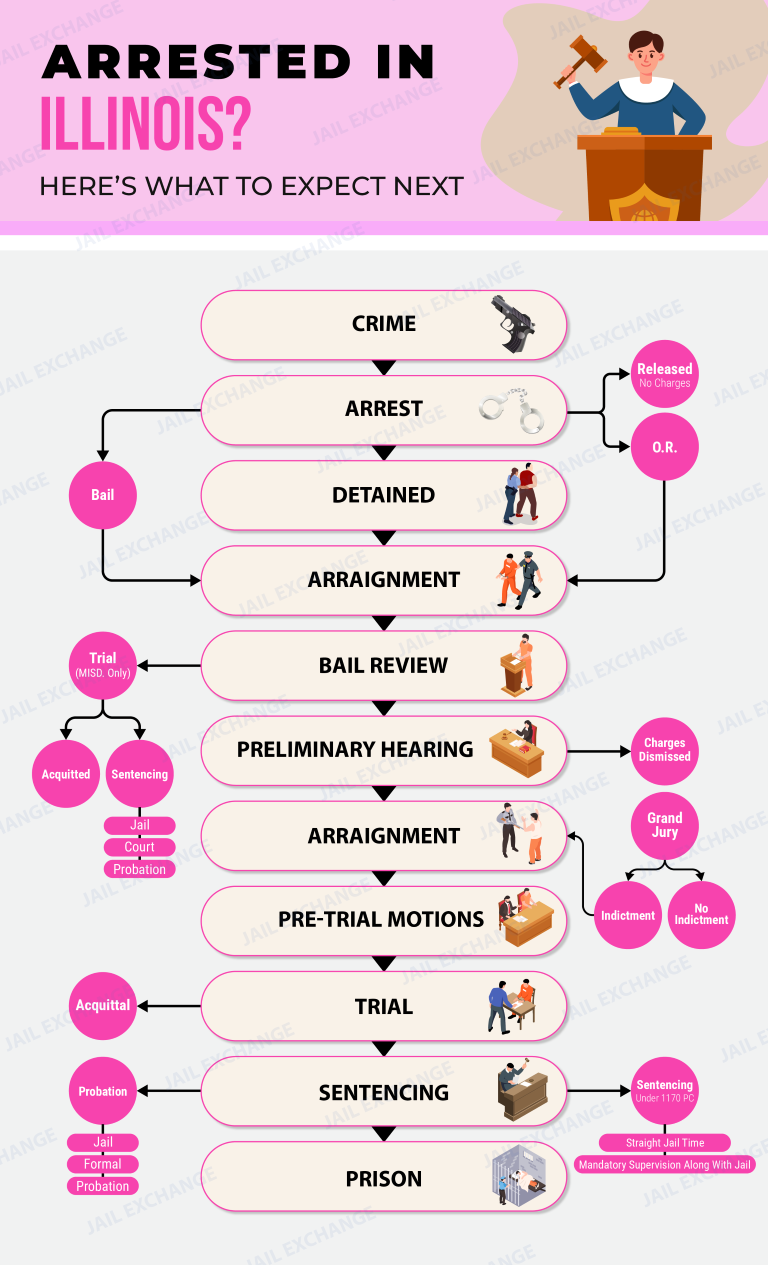
Depositing Money for an Inmate's Commissary in Cook County Corrections
How to Deposit Money in a Cook County Jail - Department of Corrections Inmate's Account

There are five ways to deposit money in an inmate's account in the Cook County Jail Corrections System:
- Online or Telephone deposits
- Currency Exchange facilities
- JailATM
- United States Postal Service
- Jail lobby kiosks
In order to do any of these you need to know the exact name the inmate was booked under, and the booking number.
If you can't find the inmate and booking number online, call the Records Office at 773-674-2390.
Each week, an individual in custody can purchase up to $100 worth of clothing & supplies, and also $100 worth of food items.
1. Online or Telephone Deposits - Note that it my take up to two business days for the funds to show up in the inmate's account.
JailATM - You need to first register with JailATM in order to look up your inmate's name and booking number and deposit money into their trust fund account. They charge a small fee every time you make a deposit. If you have questions or prefer to use their phone service in order to deposit money, call them at 870-627-5476.
Western Union - First, you need to know the exact spelling of the inmate's name and booking number.
You also need to know these codes: The City Code is: CCDOC or COOK COUNTY DEPT CORRECTION
State Code is: ILLINOIS

- Select Send Money, then Send Money to an Individual in Custody and follow Western Union's instructions.
- For questions, concerns or to add funds via Western Union over the phone, call 800-225-5227.
Money Gram - First, you need to know the exact spelling of the inmate's name, AND their booking number.
You will also have to know the Receive Code, which is 1750.

-
For questions, concerns or to add funds via Money Gram over the phone, call 800-225-5227
2. Currency Exchange Facilities -
Deposit funds in-person at Currency Exchanges that offer Western Union or Money Gram services.
Codes:
Western Union
City Code: CCDOC or COOK COUNTY DEPT CORRECTION
State: ILLINOIS
Money Gram
Receive Code: 1750
JailATM
Visit JailATM to register or call 870-627-5476
3. Mailing a Payment -
* Money orders - $100 maximum
* Cashiers Checks - $1,000 maximum
When sending an inmate money by mail, the Cook County Jail - Department of Corrections will only accept:
- US Postal Money Orders, or
- Certified Bank Cashier Checks
If you want to send more you can, but you need to send multiple checks that do not exceed the maximum amounts listed above.
**Important Notes**
- The check/money order must be payable to the Inmate's Name AND Booking Number. Look up the inmate's booking number here if you don't have it.
- You can also get the inmate's booking number by calling the Inmate Information Line at 773-674-2390.
- The Cook County Jail reserves the right to decline or return deposits that violate Department Policies.
Mailing Address:
Inmate's Full Name & Booking #
Cook County Department of Corrections
2700 S. California Ave.
Chicago, IL 60608
4. Dropping off a payment at a Kiosk - $300 maximum
When dropping off an inmate's money in person, the Cook County Jail - Department of Corrections will only accept.
- Cash
- Visa or Mastercard
These Kiosks are ATM machines that are managed by JailATM.
JailATM Locations at the Cook County Jail to drop off inmate money:
- External Post 5 [Front Gate Entrance] – 2700 S. California Ave. Chicago, IL 60608
- External Post 7 – 2834 W. 31st Street Chicago, IL 60608
- External Post 9 – 2805 S. Sacramento Chicago, IL 60608
- Division 10 Lobby – 2950 S. California Chicago, IL 60608
- Division 11 Lobby – 3015 S. California Blvd. Chicago, IL 60608
- Division 5 Lobby – 2700 S California Ave. Chicago, IL 60608
Rules Regarding Picking up Money When an Inmate is Released from the Cook County Jail - Department of Corrections
The following is the procedure to pick-up money from an incarcerated male or female inmate’s money account, regardless of which Cook County Jail they were in:
Once an inmate is released, they can go to the following address, and as long as they can present a government issued picture ID, they can get the balance of their Trust Fund Account issued to them.
Division 5
2700 S. California Ave.
Chicago, IL 60608
Hours: 9 a.m. to 8:30 p.m.
If they don't have an ID, the balance will be mailed to the address that Cook County Corrections has on file.
If they are being released to another facility, upon request, the balance will be sent there.
Letters can be mailed to:
Cook County Department of Corrections
Trust/Finance Office – Individual in Custody Trust Fund
Division 5 Second Floor
2700 S California Avenue
Chicago, IL 60608
If you have any questions, call the Trust/Finance Office at 773-674-6864.

JailATM provides a secure electronic payment portal that allows friends and family members to deposit funds directly into an incarcerated person's jail trust and commissary account. Deposited money provides the financial balance needed for your loved one to purchase personal hygiene items, snacks, over-the-counter medical sundries, and correspondence supplies from the facility commissary.
Important: Facility Deposit Rules and Window Intake Vary
Once a person is booked and moved to a housing unit, facilities do not always allow cash drop-offs or phone payments directly to the jail window. Some might and you should confirm this by calling the facility and asking. But if you do not register online and fund your loved one's trust account immediately, they may be forced to wait days or weeks for standard paper processing, leaving them without essential soap, clean undergarments, basic medical sundries or snacks.
Step-by-Step Instructions to Register and Deposit Funds
- Obtain the inmate's legal first and last name, date of birth, and assigned facility booking ID number.
- Navigate to deposits.jailatm.com/webdeposits/ on your computer or mobile device.
- Click Sign In or Register to set up your verified user account using your email address and password.
- Select the state and the detention facility where the inmate is currently housed.
- Search for the inmate using their ID number or legal last name to confirm an exact roster match.
- Enter your desired deposit dollar amount and review the calculated transaction and convenience fees.
- Input your debit or credit card billing details, complete payment authorization, and save your digital receipt.
What the Inmate Needs to Do
The inmate does not need an internet account to receive funds. Once the electronic transaction clears, the balance posts directly to their jail trust ledger according to facility accounting schedules. The inmate can review their updated balance at a dayroom pod kiosk or on their weekly trust statement and place orders on their regular commissary day.
Official Provider: JailATM Official Website
Customer Service Telephone: 1-877-810-0614
Support Hours: Monday – Friday, 8:00 AM – 5:00 PM CST
Supported Languages: English and Spanish
Other Services Provided by JailATM
In addition to Trust & Commissary Money Deposits, JailATM provides several other communication, store, and visitation services at participating facilities:
- Commissary Gift Packs & Store Ordering: Order pre-approved snack boxes, food packages, and hygiene bundles sent directly to the jail.
• Learn more on our website: Commissary Gift Packs Guide | • Visit official vendor page: JailATM Store Orders - Digital Messaging & Picture Sharing: Send electronic messages and photos directly to an inmate's housing unit kiosk.
• Learn more on our website: Digital Messaging Guide | • Visit official vendor page: JailATM Messaging - Remote Video Visitation: Schedule and join live video visits from home using your computer or smartphone.
• Learn more on our website: Video Visitation Guide | • Visit official vendor page: JailATM Video Visits
Sending Money to an Inmate in the Cook County Jail - Department of Corrections
Every deposit to a trust account at the Cook County Department of Corrections, 2700 S. California Avenue in Chicago, must carry the person's exact booked name and booking number. Find both on the Sheriff's online inmate locator first.
- Kiosks at the jail: Pay with cash or a credit card at External Post 5 (Front Gate, 2700 S. California Avenue), External Post 7 (2834 W. 31st Street), External Post 9 (2805 S. Sacramento Avenue), the Division 5 Lobby, the Division 10 Lobby (2950 S. California Avenue) and the Division 11 Lobby (3015 S. California Boulevard).
- Money order or cashier's check: Money orders ($100.00 each at most) and cashier's checks ($1,000.00 each at most) are taken. Make them out to the person and mail them to Cook County Department of Corrections, [Name], [Booking ID], 2700 S. California Avenue, Chicago, IL 60608. Allow up to 5 business days.
- Online or by phone: JailATM takes card deposits online or at 1-870-627-5476. Western Union uses city code "CCDOC" (1-800-225-5227), and MoneyGram uses receive code 1750 (1-800-666-3947). These post in 1 to 2 business days.
- Currency exchange: Walk in to a currency exchange that offers Western Union or MoneyGram and use the same codes.
Never mail cash. Each person may spend up to $100 a week at commissary. Balances are paid out at release at the Division 5 lobby front desk, 9 a.m. to 8:30 p.m., to the released person with a photo ID; otherwise the Trust/Finance Office (773-674-6864, 8 a.m. to 4 p.m.) mails it. General questions go to 773-674-7100.
Sending Mail to Someone at Cook County Jail
The Cook County Department of Corrections is the Cook County Jail in Chicago, run by the Cook County Sheriff's Office. It is spread over several division buildings on one large campus, but every letter goes to the same main address on South California Avenue. You don't need to know which division the person is in.
Letters, legal mail, publications and money orders:
Inmate's Full Name & Booking #
Cook County Department of Corrections
2700 S. California Ave.
Chicago, IL 60608
- Booking number: Write the person's full name and booking number on the envelope. Look it up on the Individual in Custody Locator or call the automated line at 773-674-5245.
- Return address: Print your full name and mailing address at the top left of the envelope.
- Photos: Prints from 3 x 5 up to 5 x 7 inches. Polaroids with a thick double backing are refused, and so are pictures with weapons, money, gang signs or nudity.
- Books and magazines: Up to three paperbacks or magazines in one mailing, sent from the publisher. Hardcovers and spiral-bound books never get in.
- Newspapers: A whole daily paper is not allowed, but a clipping or a printed article is fine.
- Money orders: Each one must be $100 or less, and a cashier's check can be up to $1,000. Make it out to the person using the exact name and booking number shown on the locator. Never slip cash into the envelope. It can take up to five business days to post.
- Perfume and stains: Mail sprayed or soaked with perfume, cologne or anything that leaves the paper sticky, greasy, wet or stained is taken as contraband and thrown out, not returned.
- One bad item: If anything in an envelope or package is on the banned list, the whole thing goes back to the sender with an explanation.
- Disputes: If you get a Notice of Returned Mail and disagree, write to the jail's Mail Rejection office at the same address within 10 days.
For a faster note, family can use the jail's electronic messages.
ViaPath AdvancePay Phone Calling Accounts
Provider: ViaPath Technologies • Formerly ConnectNetwork / Global Tel*Link (GTL)

AdvancePay is the primary prepaid telecommunications service operated by Global Tel*Link (GTL) and ConnectNetwork, which have unified under the corporate identity of ViaPath Technologies (and the myViaPath platform). By funding an AdvancePay account, telephone charges are deducted per minute whenever an incarcerated loved one calls your specific telephone number, preventing calls from being rejected by cellular carriers.
Important: Cell Carriers Automatically Block Jail Collect Calls
Inmate telephone networks do not permit incoming calls, and wireless cell providers automatically block traditional collect billing by default. While select traditional landlines may support operator billing, cell phones and internet-based lines require an active AdvancePay balance, which you can verify with your carrier. If you do not register your number online and add funds immediately, your loved one will hear an automated operator announcement stating your line is blocked from receiving correctional calls.
Step-by-Step Instructions to Open and Fund AdvancePay
- Visit web.connectnetwork.com or the updated my.viapath.com portal, or launch the ConnectNetwork / ViaPath mobile application.
- Click Sign Up and register using your primary 10-digit cellphone number and email address.
- Select Add Facility, pick your state, and choose the detention center or state prison where the inmate is held.
- Search for the inmate using their full legal name or facility booking ID number and link them to your contact directory.
- Select AdvancePay Phone and choose your deposit amount ($25, $50, or custom).
- Enter your debit or credit card billing details, accept the administrative transaction fee, and complete the payment.
- Check your phone settings to confirm that automated or unknown correctional numbers are not routed straight to spam.
What the Inmate Needs to Do
The inmate approaches any housing pod telephone, enters their assigned PIN and voice biometric recognition phrase, and dials your 10-digit number. ViaPath's automated operator confirms your active prepaid balance and connects the call. All personal telephone calls are subject to recording and monitoring by facility investigators.
Official Providers: ConnectNetwork Portal | myViaPath Portal
Customer Service Telephone: 1-877-650-4249 (Automated & Live Support)
Support Hours: Automated Service 24/7; Live Operators Monday – Friday, 8:00 AM – 10:00 PM EST
Supported Languages: English and Spanish
Other Services Provided by ViaPath Technologies (ConnectNetwork)
In addition to AdvancePay Phone Calling, ViaPath / ConnectNetwork provides several other communication, financial, and visitation services:
- ConnectNetwork Trust Fund Deposits: Transfer money directly into an inmate's jail trust account for commissary store purchases.
• Learn more on our website: Inmate Trust Deposits Guide | • Visit official vendor page: ConnectNetwork Trust Deposits - ViaPath PIN Debit Phone Calling: Give the inmate their own calling funds to contact any approved phone number independently.
• Learn more on our website: PIN Debit Phone Calling Guide | • Visit official vendor page: ViaPath PIN Debit Calling - ViaPath Messaging & Photo Sharing: Send digital messages, photos, and video attachments directly to their terminal.
• Learn more on our website: Digital Messaging Guide | • Visit official vendor page: ViaPath Messaging Services - GettingOut Video Visitation & Tablets: Schedule face-to-face remote video visits and manage handheld tablet communications.
• Learn more on our website: Remote Video Visitation Guide | • Visit official vendor page: GettingOut Video Visits
ViaPath PIN Debit Phone Calling Accounts
Provider: ViaPath Technologies • Formerly ConnectNetwork / Global Tel*Link (GTL)ViaPath PIN Debit (hosted on ConnectNetwork and myViaPath) provides incarcerated individuals with their own calling funds. Unlike AdvancePay (which only funds calls placed to your specific phone number), PIN Debit funds belong directly to the inmate, allowing them to call attorneys, bondsmen, employers, or extended family members across multiple approved telephone numbers.
Important: AdvancePay Only Funds a Single Phone Number
When someone is arrested, they often need to contact multiple people—including legal defense counsel, bail agents, employers, and relatives. If you only fund an AdvancePay account, your loved one will have no calling balance to dial anyone else, as rules and call authorizations vary by facility. Adding funds directly to ViaPath PIN Debit grants them the calling flexibility needed to handle critical legal and family arrangements without delay.
Step-by-Step Instructions to Fund a PIN Debit Account
- Sign into your account at web.connectnetwork.com or my.viapath.com.
- Click on PIN Debit under the communications menu.
- Select the state and facility, and link the inmate's booking identification number.
- Enter the deposit dollar amount and review the payment transaction fee.
- Enter your debit or credit card details and submit the payment.
- Notify your loved one that their personal PIN calling balance has been credited.
What the Inmate Needs to Do
The calling balance appears under the inmate's personal identification PIN. When they pick up any dayroom telephone or tablet, they select the 'PIN Debit' prompt from the automated menu to place calls to any approved number on their personal contact list.
Official Providers: ConnectNetwork Portal | myViaPath Portal
Customer Service Telephone: 1-877-650-4249
Support Hours: Automated Deposits 24/7/365; Live Agents Monday – Friday, 8:00 AM – 10:00 PM EST
Supported Languages: English and Spanish
Other Services Provided by ViaPath Technologies (ConnectNetwork)
In addition to PIN Debit Calling, ViaPath / ConnectNetwork provides several other communication, financial, and visitation services:
- AdvancePay Dedicated Phone Calling: Fund calls placed specifically to your personal phone number.
• Learn more on our website: AdvancePay Calling Guide | • Visit official vendor page: ConnectNetwork AdvancePay - ConnectNetwork Trust Fund Deposits: Deposit money for commissary food, hygiene supplies, and stationery.
• Learn more on our website: Inmate Trust Deposits Guide | • Visit official vendor page: ConnectNetwork Trust Deposits - ViaPath Messaging & Photo Sharing: Send digital messages and photos directly to their kiosk or tablet.
• Learn more on our website: Digital Messaging Guide | • Visit official vendor page: ViaPath Messaging Services - GettingOut Video Visitation & Tablets: Schedule face-to-face remote video visits from home.
• Learn more on our website: Remote Video Visitation Guide | • Visit official vendor page: GettingOut Video Visits
GettingOut / ViaPath Inmate Messaging
Provider: GettingOut (Telmate) • Rebranding as ViaPath Technologies (myViaPath)
GettingOut (a service of Global Tel*Link / Telmate) provides an instant two-way digital messaging and photo-sharing platform connecting families with incarcerated individuals via housing-unit kiosks and handheld tablets. The provider is actively rebranding as ViaPath Technologies (under the myViaPath platform); depending on the facility contract, local booking sheets and tablets may still refer to the service as GettingOut, GTL, or ViaPath, but both brand portals grant access to the same centralized messaging balance.
Important: Contact Authorization and Digital Mail Rules Vary
Inmate digital messaging rules are not uniform across all county detention centers. While some jails allow immediate two-way messaging upon registration, others require initial contact invitations or administrative ID verification, which you should verify directly with the facility. If you delay setting up an online profile and funding your Friends & Family messaging account, your loved one may face lengthy periods without direct family communication.
Step-by-Step Instructions to Register and Message an Inmate
- Visit www.gettingout.com or the newly branded my.viapath.com portal, or install the GettingOut / myViaPath mobile app.
- Create a user profile using your primary email address and 10-digit mobile phone number.
- Complete identity verification by uploading a clear photo of your government-issued driver's license or state ID and taking a verification selfie if requested.
- Search for the inmate by selecting the state, correctional facility, and their legal name or booking ID.
- Send an outside contact connection request to link your account to their tablet profile.
- Deposit funds into your 'Friends & Family Account' using a debit or credit card to cover message and photo-sharing costs.
- Compose your text message in the chat box, attach approved photos, and submit it for jail screening.
What the Inmate Needs to Do
The inmate powers on their assigned pod tablet or approaches a housing-unit kiosk and logs into the messaging application with their PIN. They accept your incoming contact invitation on the screen. Once approved by institutional monitors, incoming messages appear in their inbox, and the inmate types a reply directly on the screen.
Official Providers: GettingOut Website | myViaPath Portal
Customer Service Telephone: 1-866-516-0115 (GettingOut Support) • 1-877-650-4249 (ViaPath Support)
Support Hours: Monday – Friday, 7:00 AM – 11:00 PM CST; Saturday – Sunday, 8:00 AM – 7:00 PM CST
Supported Languages: English and Spanish
Other Services Provided by GettingOut / ViaPath
In addition to Two-Way Text Messaging, GettingOut and ViaPath provide several other communications and visitation options:
- Remote Video Visits: Schedule and join live web-based video visits from your computer or smartphone.
• Learn more on our website: Video Visitation Guide | • Visit official vendor page: GettingOut Video Visits - Inmate Tablet Rentals & Media: Fund tablet entertainment, music streaming, games, and news modules.
• Learn more on our website: Tablet Rentals & Content Guide | • Visit official vendor page: GettingOut Tablets - AdvancePay Phone Calling: Prepay for telephone calls so your loved one can dial your mobile phone directly.
• Learn more on our website: AdvancePay Phone Calling Guide | • Visit official vendor page: ViaPath ConnectNetwork Calling - Inmate Trust Deposits: Transfer funds directly into their jail trust account for commissary store purchases.
• Learn more on our website: Inmate Trust Deposits Guide | • Visit official vendor page: ViaPath Trust Deposits
Information for this service is currently unavailable.
Cook County County Jails
Cook County City Jails
Cook County Juvenile Facilities
Nearby counties
- Jail (Main): 773-674-7100
- Administration: 773-674-1945
- Adult Probation: 773-674-3280
- Arrest Warrants: 708-865-4902
- Booking: 773-674-1979
- Chicago Police: 312-744-4000
- Cook County Jail Visitation: 773-674-8225
- Court: 773-674-3160
- District Attorney: 312-603-1880
- Drug Court - Adults: 773-674-7366
- Inmate Accounts: 773-674-6864
- Inmate Info: 773-674-5245
- Juvenile: 312-433-7102
- Juvenile Court: 312-433-4881
- Juvenile Probation: 312-433-6569
- Public Defender - Adults: 312-603-0600
- Public Defender - Juveniles: 312-433-7047
- Records: 773-674-5200
- Sheriff: 708-865-4700
- Victims Help: 312-433-7000
The Cook County Jail - Department of Corrections serves the following cities and towns of Cook County: Alsip, Arlington Heights, Barrington, Bartlett, Bedford Park, Bellwood, Berkeley, Berwyn, Blue Island, Bridgeview, Broadview, Brookfield, Buffalo Grove, Burnham, Burr Ridge, Calumet City, Calumet Park, Chicago, Chicago Heights, Chicago Ridge, Cicero, Clarendon Hills, Country Club Hills, Countryside, Des Plaines, Dolton, Elk Grove Village, Elmhurst, Elmwood Park, Evanston, Evergreen Park, Flossmoor, Forest Park, Forest View, Franklin Park, Glencoe, Glenview, Glenwood, Golf, Harvey, Harwood Heights, Hazel Crest, Hickory Hills, Hillside, Hinsdale, Hodgkins, Hoffman Estates, Homewood, Inverness, Justice, La Grange, La Grange Park, Lansing, Lemont, Lincolnwood, Lynwood, Lyons, Markham, Matteson, Maywood, McCook, Melrose Park, Merrionette Park, Midlothian, Morton Grove, Mount Prospect, Niles, Norridge, North Chicago, Northbrook, Northfield, Northlake, Oak Forest, Oak Lawn, Oak Park, Olympia Fields, Orland Hills, Orland Park, Palatine, Palos Heights, Palos Hills, Palos Park, Park Forest, Park Ridge, Posen, Prospect Heights, Richton Park, River Forest, River Grove, Riverdale, Riverside, Robbins, Rolling Meadows, Rosemont, Schaumburg, Schiller Park, Skokie, South Holland, Steger, Streamwood, Summit, Thornton, Tinley Park, University Park, Westchester, Western Springs, Wheeling, Wilmette, Winnetka and Worth.