
Illinois Youth Center Warrenville
Illinois Youth Center Warrenville
Physical Address
30 W 200 Ferry RdNaperville, IL 60563
Jail Phone Number
630-983-6231Illinois Youth Center Warrenville: Information for Families
Is this detention or a placement? It is a long-term placement, not short-term detention: a secure state facility for youth a court has committed to state custody, run by the Illinois Department of Juvenile Justice (IDJJ). Youth can be placed here from any county in Illinois.
This page is for families of youth at Illinois Youth Center Warrenville, 30 W 200 Ferry Rd, Naperville, IL 60563. Phone: 630-983-6231.
Read inmate search answers
 Read inmate search answers
1. How can I confirm where my child is held?
A juvenile won't appear in the county jail's inmate search; call the facility at 630-983-6231. These details are kept private to protect the minor, so staff share them only with a parent or guardian.
↑ Back to the question list2. What if I am worried about my child's safety?
To report child abuse or neglect, call the DCFS Hotline at 1-800-25-ABUSE (1-800-252-2873); in an emergency call 911.
The Office of the Independent Juvenile Ombudsman, 312-814-1308, takes concerns about youth in IDJJ facilities (IDJJ).
↑ Back to the question list3. What is daily life like?
It holds girls at Level 1 maximum security and boys at Level 1 medium security, with a capacity of 70 (IDJJ).
↑ Back to the question list4. Should I send money or items?
Call 630-983-6231 before sending money or belongings and ask what is allowed. These details are kept private to protect the minor, so staff share them only with a parent or guardian.
↑ Back to the question list5. How do I write to my child?
Write to your child at the facility address below, which IDJJ gives as the youth mail address (IDJJ).
Put your child's full name on the first line, then Illinois Youth Center Warrenville and the address below.
Ask 630-983-6231 who can write and how often, whether to send stamps, and what the book rules are.
Address for letters
Resident's Full Name
Illinois Youth Center Warrenville
30 W 200 Ferry Rd
Naperville, IL 60563
6. How do phone calls work?
The center offers free video calls, voice calls and messaging through the Ameelio Connect app. Register with a photo ID, and once your child lists you as a contact and you are approved, you can connect (IDJJ).
Video visits by WebEx are another option: they run daily from 8 a.m. to 8 p.m., last at least 30 minutes, and are set up with the Youth and Family Specialist (IDJJ).
Youth make phone calls out; incoming personal calls are not put through. These details are kept private to protect the minor, so staff share them only with a parent or guardian.
↑ Back to the question list7. Who answers my questions?
Your first contact is your child's Youth and Family Specialist, who arranges visits and video calls; IDJJ also answers family email at DJJ.Families@Illinois.gov (IDJJ).
↑ Back to the question list8. When can I visit?
Book a visit at least two days (48 hours) in advance. Under IDJJ rules, visiting runs daily from 8 a.m. to 8 p.m. and each visit lasts at least two hours (IDJJ Visitation Rules).
Only people on your child's approved visitor list can come in. Your child adds visitors to that list (IDJJ).
Call 630-983-6231 to confirm before you go.
↑ Back to the question list9. What if the case moves to adult court?
Any youth under 18 held on adult charges must still be kept separate from confined adults (705 ILCS 405/5-130(7)).
Illinois sends some cases straight to adult court: first degree murder, aggravated criminal sexual assault and aggravated battery with a firearm (personally discharged) when the youth was 16 or older (705 ILCS 405/5-130(1)(a)).
A judge can move a case of a youth 13 or older to adult court only after a transfer hearing, with the youth represented by counsel (705 ILCS 405/5-805(3)).
A youth 15 or older faces a presumption of transfer for a forcible felony tied to gang activity when there is a prior forcible felony adjudication (705 ILCS 405/5-805(2)).
Ask your child's lawyer where your child would be held if the case moves to adult court. Talk with your child's lawyer right away.
↑ Back to the question listHow Release Works at Illinois Youth Center Warrenville
Short-term or long-term? Long-term commitment, not detention. Youth arrive here after a judge commits them to state custody; it is operated by the Illinois Department of Juvenile Justice (IDJJ). Placement is statewide, so youth here may come from any Illinois county.
A judge, not the facility, decides release in a juvenile case.
1. How is release decided?
Bail is for pending cases, and a committed youth is in state custody. Ask the Youth and Family Specialist about the release plan. Staff give this information only to a parent or guardian, because it is kept private to protect the minor.
↑ Back to the question list2. What if the case goes to adult court?
A judge can move a case of a youth 13 or older to adult court only after a transfer hearing, with the youth represented by counsel (705 ILCS 405/5-805(3)).
A youth 15 or older faces a presumption of transfer for a forcible felony tied to gang activity when there is a prior forcible felony adjudication (705 ILCS 405/5-805(2)).
Even in an adult case, a minor in custody may not be housed with adult detainees (705 ILCS 405/5-130(7)).
For youth 16 or older, three charges start in adult court in Illinois: first degree murder, aggravated criminal sexual assault, and aggravated battery with a firearm the youth personally discharged (705 ILCS 405/5-130(1)(a)).
An adult case follows adult procedure, so ask the defense lawyer about release and housing. Ask your child's lawyer about this early.
↑ Back to the question listCourt Guide for Families at Illinois Youth Center Warrenville
Is this detention or a placement? Long-term commitment, not detention. Youth arrive here after a judge commits them to state custody; it is operated by the Illinois Department of Juvenile Justice (IDJJ). It takes committed youth from every county in Illinois.
The facility holds youth; a judge decides the case.
1. What court is my child's case in?
A juvenile judge in the county where the petition was filed decides the case.
↑ Back to the question list2. How did my child end up here?
Commitment to the Department of Juvenile Justice is allowed only as the least restrictive option, with findings by the court (705 ILCS 405/5-750(1)).
A youth 13 or older found guilty of first degree murder is committed until age 21 (705 ILCS 405/5-750(2)).
↑ Back to the question list3. When does a juvenile case go to adult court?
For youth 16 or older, three charges start in adult court in Illinois: first degree murder, aggravated criminal sexual assault, and aggravated battery with a firearm the youth personally discharged (705 ILCS 405/5-130(1)(a)).
Discretionary transfer to adult court is possible from age 13, but only after a hearing in juvenile court (705 ILCS 405/5-805(3)).
Transfer is presumed when a youth 15 or older is charged with a forcible felony, already has a forcible felony adjudication, and the act furthered gang activity (705 ILCS 405/5-805(2)).
Any youth under 18 held on adult charges must still be kept separate from confined adults (705 ILCS 405/5-130(7)).
If the case goes to adult court, ask the lawyer about release and where your child will be housed. Talk with your child's lawyer right away.
↑ Back to the question list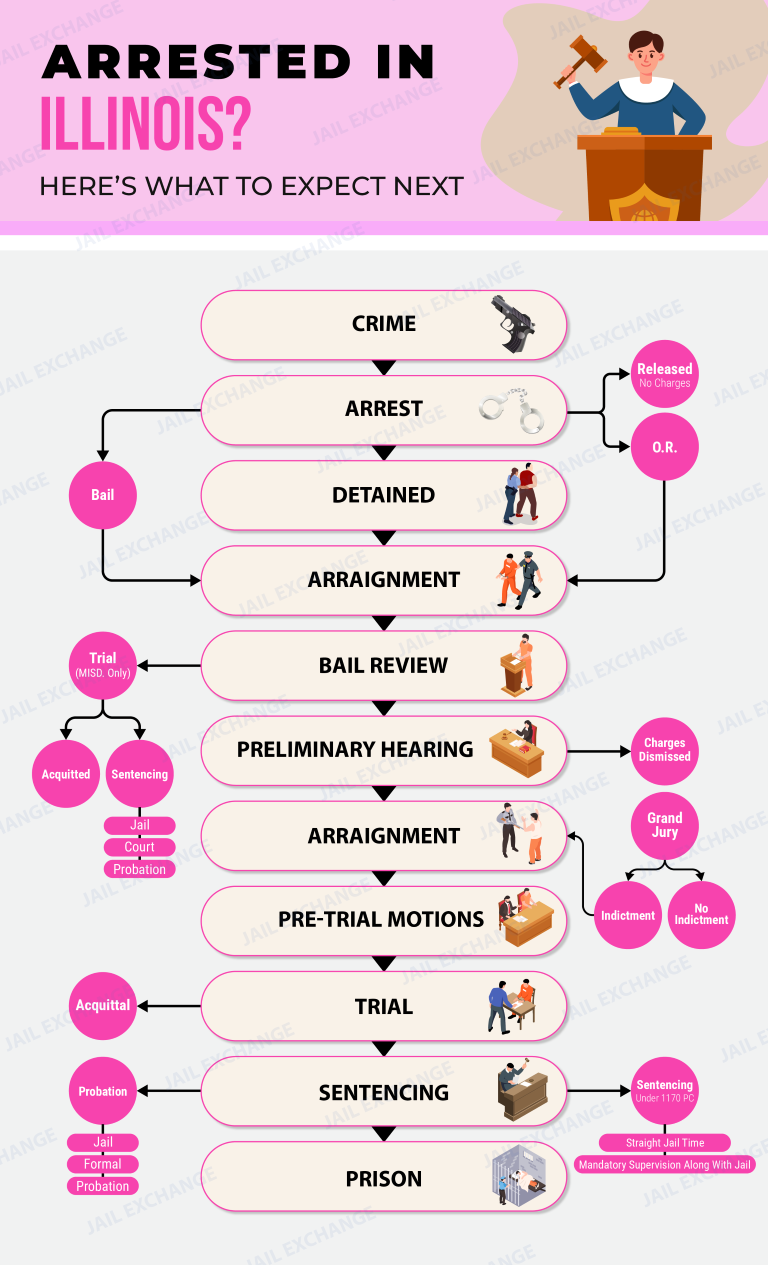
Information for this service is currently unavailable.
Information for this service is currently unavailable.
Information for this service is currently unavailable.
Information for this service is currently unavailable.
Information for this service is currently unavailable.
Information for this service is currently unavailable.
DuPage County County Jails
DuPage County Juvenile Facilities
Nearby counties
- Juvenile: 630-983-6231
- Adult Probation: 630-407-8500
- Criminal Court: 630-407-8600
- Drug Court: 630-407-8539
- Juvenile Court: 630-407-8600
- Juvenile Probation: 630-407-8400
- Public Defender: 630-407-8300
- Sheriff: 630-407-2400
- State's Attorney: 630-407-8000
The Illinois Youth Center Warrenville serves the following cities and towns of DuPage County: Addison, Bensenville, Bloomingdale, Bolingbrook, Carol Stream, Clarendon Hills, Darien, Downers Grove, Elmhurst, Glen Ellyn, Glendale Heights, Hanover Park, Itasca, Lisle, Lombard, Naperville, Oak Brook, Roselle, St. Charles, Villa Park, Warrenville, West Chicago, Westmont, Wheaton, Willowbrook, Winfield, Wood Dale and Woodridge. At times this facility may also house inmates arrested in the following counties: Adams County, Alexander County, Bond County, Boone County, Brown County, Bureau County, Calhoun County, Carroll County, Cass County, Champaign County, Christian County, Clark County, Clay County, Clinton County, Coles County, Cook County, Crawford County, Cumberland County, DeKalb County, De Witt County, Douglas County, Edgar County, Edwards County, Effingham County, Fayette County, Ford County, Franklin County, Fulton County, Gallatin County, Greene County, Grundy County, Hamilton County, Hancock County, Hardin County, Henderson County, Henry County, Iroquois County, Jackson County, Jasper County, Jefferson County, Jersey County, Jo Daviess County, Johnson County, Kane County, Kankakee County, Kendall County, Knox County, Lake County, LaSalle County, Lawrence County, Lee County, Livingston County, Logan County, McDonough County, McHenry County, McLean County, Macon County, Macoupin County, Madison County, Marion County, Marshall County, Mason County, Massac County, Menard County, Mercer County, Monroe County, Montgomery County, Morgan County, Moultrie County, Ogle County, Peoria County, Perry County, Piatt County, Pike County, Pope County, Pulaski County, Putnam County, Randolph County, Richland County, Rock Island County, St. Clair County, Saline County, Sangamon County, Schuyler County, Scott County, Shelby County, Stark County, Stephenson County, Tazewell County, Union County, Vermilion County, Wabash County, Warren County, Washington County, Wayne County, White County, Whiteside County, Will County, Williamson County, Winnebago County and Woodford County.