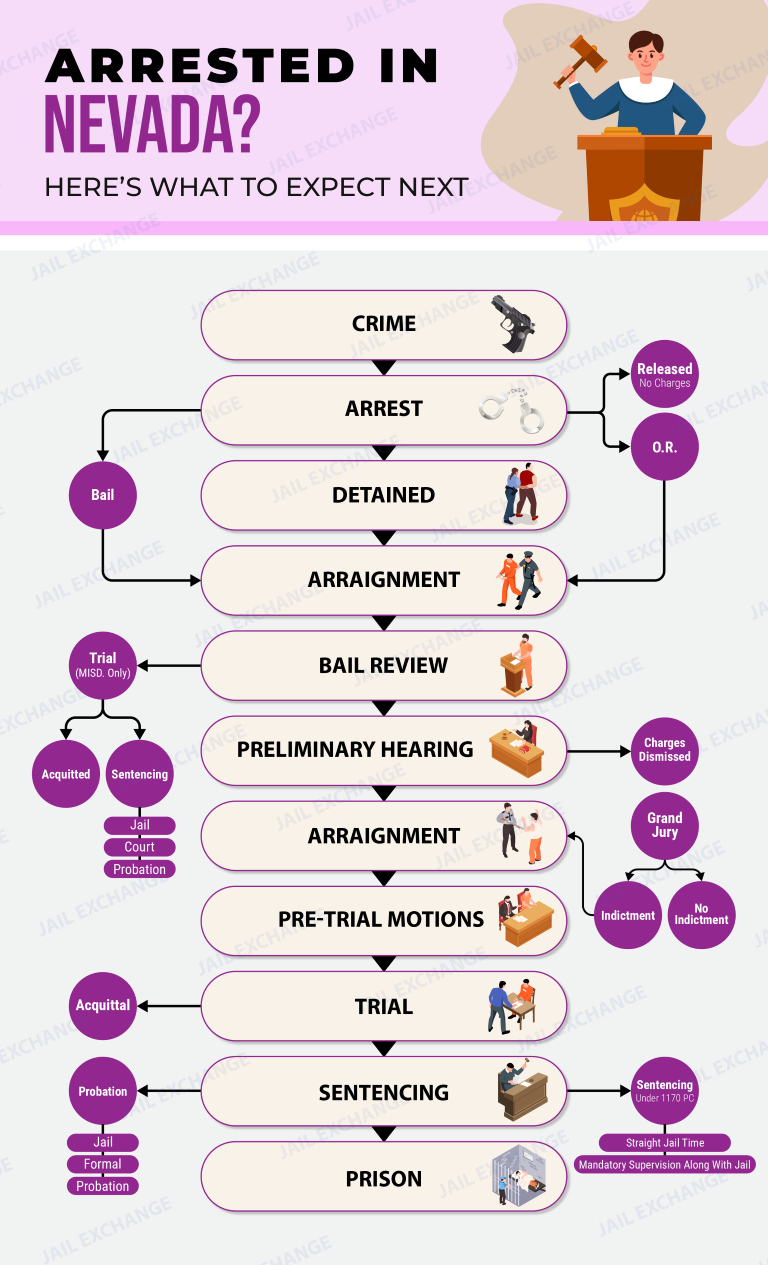
Mineral County criminal courts: guide for families
- Where are the Mineral County courts, and whom should I call?
- After a Mineral County arrest, how does release or bail work?
- What fines or jail sentences can a Mineral County misdemeanor bring?
- How does a felony reach 11th Judicial District?
- What if the allegation involves a serious violent crime?
- What happens if the arrested person is under 18?
- How much jail time, prison time or fines are possible?
- Could this become a federal criminal case?
Where are the Mineral County courts, and whom should I call?
A court notice in Mineral County can be confusing because Nevada uses both Justice Courts and District Courts. Hawthorne is the principal court community, and both the Justice Court and the Eleventh Judicial District maintain offices there. The court shown on the charging papers decides where the person must appear; the larger District Court ordinarily handles felony trials.
- 11th Judicial District — Mineral County District Court: 105 South A Street, Hawthorne, NV 89415. Phone: 775-945-0738.
- Hawthorne Justice Court: 166 East Street, Hawthorne, NV 89415. Phone: 775-945-3859.
Where do I go? The location printed on the summons or court order controls. In Nevada, municipal courts may handle city-ordinance and some misdemeanor cases; township Justice Courts are not interchangeable when a county has several locations.
After a Mineral County arrest, how does release or bail work?
When a person is detained, intake employees secure personal property and begin a custody record. A release order may have no cash requirement, may include supervision or may involve financial security. Anyone arranging bail should first identify the precise order and the correct payee, since posting money never ends the criminal case.
How can a family member help?
Write down the full name, date of birth, booking number if available, arresting agency and upcoming court date. Contact the court handling the hearing for case-number questions; custody questions belong to the detention facility. If the person is ill or in withdrawal, notify detention medical staff promptly. A private lawyer or appointed lawyer can explain the release order.
What happens in Mineral County for a misdemeanor?
Unlike a felony trial, a routine Nevada misdemeanor ordinarily stays in Justice Court. The court may address counsel, release conditions and trial dates during different appearances. A plea deal is a choice with legal consequences, not merely a way to leave the courtroom sooner.
What does the prosecutor have to prove?
A guilty verdict requires proof beyond a reasonable doubt. The person can challenge evidence and request legal counsel when eligible. Ordinary misdemeanor and gross-misdemeanor charges do not have the same maximum punishments; the sentencing box below explains the distinction.
In Mineral County, the first contact is usually Hawthorne Justice Court, telephone 775-945-3859. Another township may be responsible if the arrest or citation occurred elsewhere in Mineral County.
Understanding the maximum punishment
Here is the practical distinction for a Mineral County criminal case: an ordinary misdemeanor has a lower cap, but some offenses impose required minimums.
- Ordinary misdemeanor — NRS 193.150: As much as 6 months in a county or city jail, a fine up to $1,000, or both. Community service may replace all or part of the ordinary punishment if ordered under the statute.
- Gross misdemeanor — NRS 193.140: No more than 364 days in the county jail, a fine up to $2,000, or both, unless the specific offense provides a different sentence.
- First domestic-violence battery within 7 years — NRS 200.485: Generally 2 days–6 months in jail, 48–120 hours of community service and a $200–$1,000 fine. Other requirements or higher penalties can apply based on the facts and prior convictions.
- Petit larceny — NRS 205.240: Stealing covered property worth less than $1,200 is generally a misdemeanor; the ordinary limit is up to 6 months and/or $1,000. Theft involving other circumstances can be charged differently.
- Second DUI within 7 years — NRS 484C.400: Generally 20 days–6 months in jail or residential confinement, plus $750–$1,000 or permitted equivalent community service, along with treatment requirements. These are the updated statutory figures.
- First DUI within 7 years — NRS 484C.400: Generally a $400–$1,000 fine and either 2 days–6 months of jail or qualifying residential confinement, or 48–96 hours of community service, plus required education. Treatment-related exceptions and other conditions may apply.
These figures are statutory punishments, not predictions of a sentence. Court assessments, restitution, treatment and driving restrictions can create additional obligations. A charge under a city ordinance may have its own penalty provision. The offense date and any prior convictions matter.
How does a felony reach 11th Judicial District?
The Justice Court may decide to hold a felony defendant to answer in District Court. This step is often called a bind-over. Once the District Court receives the accusation, that court controls trial scheduling, motions and any sentence after a guilty plea or conviction.
Preliminary hearing versus trial
At a preliminary hearing the judge asks whether enough evidence exists to continue the prosecution. That is not a decision that the accused committed the crime. A felony trial or guilty plea in 11th Judicial District can lead to sentencing under the particular Nevada law charged.
District Court contact: 105 South A Street, Hawthorne, NV 89415, 775-945-0738. The assigned courtroom and hearing time appear on the case notice.
What if the allegation involves a serious violent crime?
Murder and other violent accusations can change a person’s life before trial even begins. Defense counsel may request expert examination or disclosure of recordings and police reports. A conviction can carry a mandatory minimum or a lengthy maximum, depending on the offense.
Possible penalties
Nevada’s first-degree murder statute, NRS 200.030, provides different sentencing possibilities based on the findings and legal requirements, including life imprisonment; death can be authorized in qualifying cases. A deadly-weapon enhancement under NRS 193.165 may add punishment to certain crimes, subject to statutory limits and exceptions. Robbery and sexual assault have their own specific sentencing statutes, so no one range covers all violent felonies.
Evidence and preparation often take longer in serious cases. The defense should understand whether the prosecution has alleged an enhancement, repeat-offender treatment or a mandatory minimum.
What happens if the arrested person is under 18?
If the accused is younger than 18, juvenile court procedures will ordinarily control. The judge can consider supervision, counseling, restitution, schooling and confinement according to the law and findings. Certain serious offenses may be treated differently from routine juvenile conduct.
Where will the juvenile appear?
Juvenile matters are handled within 11th Judicial District or its juvenile services arrangement. Hearings and juvenile placements do not necessarily occur in the same room as adult felony trials. Court orders govern release, attendance, counseling and any detention.
How much jail time, prison time or fines are possible?
For misdemeanors, state law provides a general maximum of six months in jail and a $1,000 fine. Gross misdemeanors may reach 364 days and $2,000. A plea, past convictions, enhancements and any mandatory penalties change the outcome; none of these ranges predicts what one defendant will receive.
State prison felony ranges under NRS 193.130
- Category C: 1–5 years in state prison; fine up to $10,000 unless another statute provides otherwise.
- Category D: 1–4 years; fine up to $5,000 unless law sets another amount.
- Category E: 1–4 years is the statutory range, but probation with a suspended sentence is generally required unless an exception applies; a fine up to $5,000 may apply.
- Category B: the crime-specific law determines the range, within the broad 1–20-year category limits.
- Category A: penalties can include life imprisonment or death where the particular law allows; there is no single fixed range.
How do these numbers affect a real case?
Nevada commonly uses a minimum and maximum prison term; the minimum generally cannot exceed 40% of the imposed maximum, except where the law says otherwise. For a category B offense the particular criminal statute sets its own minimum and maximum. Some crimes have mandatory terms, special fines or rules about whether probation is available. Community supervision, restitution, required treatment and suspended sentences can be part of eligible cases. A judge does not give everyone charged under one category the same sentence.
Could this become a federal criminal case?
Not every drug charge or violent accusation becomes federal. Prosecutors need a federal criminal statute that covers the facts. Once a case is filed in U.S. District Court, bail review, discovery, plea discussions and sentencing are governed by federal law, not Nevada’s county-court process.
U.S. District Court for the District of Nevada
Bruce R. Thompson United States Courthouse, 400 South Virginia Street, Reno, NV 89501-2193. Clerk telephone: 775-686-5800. Nevada has one federal judicial district with federal courthouses in both Las Vegas and Reno. Federal judges may assign hearings at the appropriate location; the filed notice determines where a specific person must appear.
What happens after federal arrest?
The accused is normally brought before a federal magistrate judge for an initial appearance, counsel and a release or detention decision. Federal felony charges can proceed by grand-jury indictment, followed by arraignment, discovery, plea or trial, and sentencing under federal law. Federal prisoners may be housed outside the county or even outside Nevada.
This guide explains general Nevada court rules and is not personal legal advice. The court papers for an individual case control its date and location.