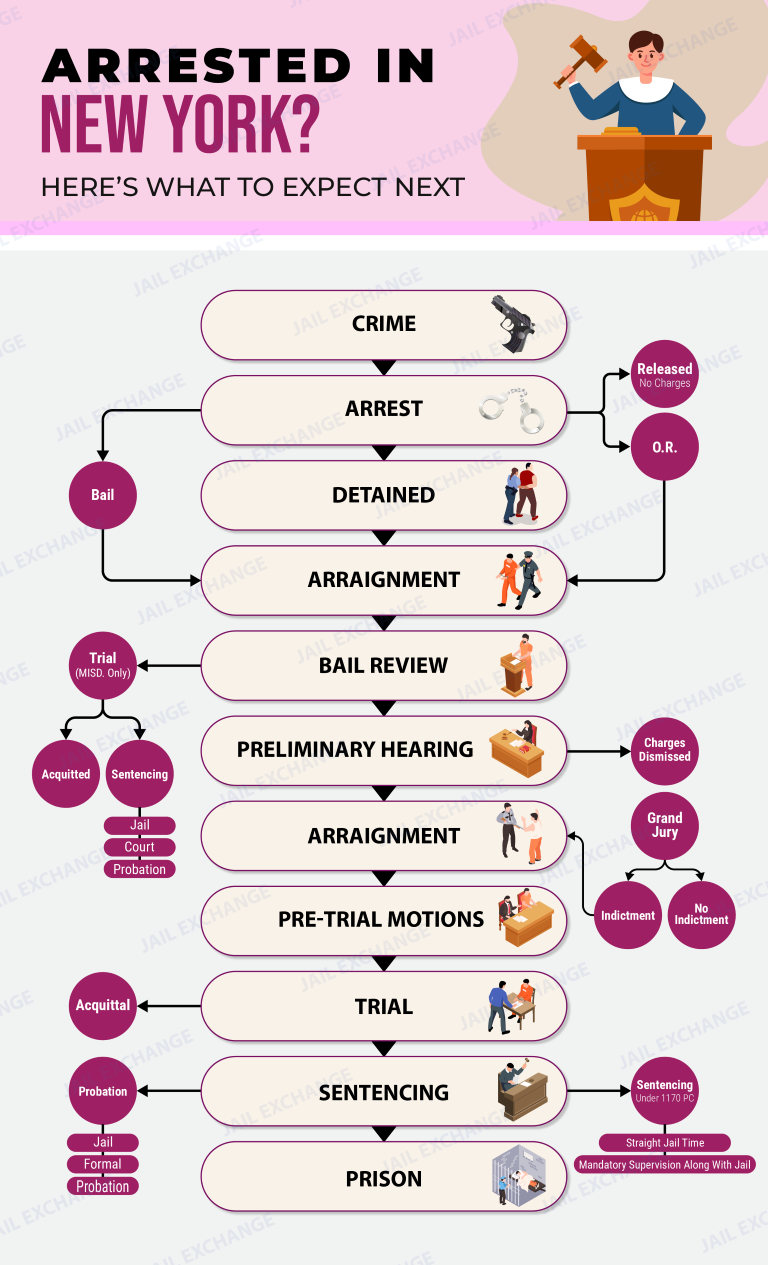
Cortland County sits in central New York between Syracuse and Binghamton along Interstate 81, and the City of Cortland is the county seat. Arrests inside the city are handled in Cortland City Court, while the county's fifteen town courts take cases from the surrounding towns; felonies that are indicted move to Cortland County Court in the courthouse on Greenbush Street. The Cortland County District Attorney prosecutes. People held before trial stay at the Cortland County Jail, operated by the Sheriff in downtown Cortland.
- Cortland County Court (Sixth Judicial District), Cortland County Courthouse, 46 Greenbush Street, Suite 301, Cortland, NY 13045, (607) 218-3320
- Cortland City Court, 25 Court Street, Cortland, NY 13045, (607) 218-3300
- Cortland County Family Court, 46 Greenbush Street, Suite 301, Cortland, NY 13045, (607) 218-3325
- Cortland County Public Defender, County Office Building, 60 Central Avenue, Room B27, Cortland, NY 13045, (607) 753-5046
- Cortland County Assigned Counsel Plan (conflict cases), 60 Central Avenue, Cortland, NY 13045, (607) 428-5459
- Cortland County Sheriff's Office and Jail, 54 Greenbush Street, Cortland, NY 13045, (607) 753-3311
Which court hears your case. Charges at the level of a violation, misdemeanor or DWI are decided in the local criminal court where the offense happened. For the city that is Cortland City Court on Court Street; for the rest of the county it is the Town Court of the town involved, such as Cortlandville, Homer, Virgil or Marathon. Felonies are first arraigned in those same courts, or at an off-hours arraignment session for overnight and weekend arrests, an arrangement many counties now handle through centralized arraignment parts. Once a grand jury indicts, or the defendant waives indictment in favor of a superior court information, the felony is heard in Cortland County Court. Felony charges against 16- and 17-year-olds are sent to the County Court's Youth Part, discussed in the juvenile section.
Where pretrial detainees are held. Cortland City Police, the Sheriff, State Police, SUNY Cortland University Police and village departments make most arrests. A person who is not released at arraignment is lodged at the Cortland County Jail, which the Sheriff runs at 54 Greenbush Street, within walking distance of the courthouse. The jail holds people waiting for trial and those serving sentences of up to a year. For custody status, bail payment or visiting, contact the Sheriff's Office at (607) 753-3311.
- Local courts in Cortland County (city, town and village courts)
- Misdemeanor (for example, petit larceny, a first DWI, third-degree assault, criminal trespass)
- Felony (for example, burglary, grand larceny, drug sale, second-degree assault)
- Violent felony (for example, murder, rape, robbery)
- Juveniles (under 18) arrested in Cortland County
- Federal cases (U.S. District Court) from Cortland County
Local courts in Cortland County (city, town and village courts)
Cortland County has one city court and a justice court in each of its fifteen towns. Cortlandville, which surrounds the city and includes the Route 13 shopping area and I-81 interchanges, has one of the busier town calendars. Smaller courts such as Cuyler, Willet or Lapeer may meet only a couple of times a month. Call the court clerk to confirm the session time before going.
City Courts
- Cortland City Court — 25 Court Street, Cortland, NY 13045, (607) 218-3300
Town Courts
- Town of Cincinnatus Court — 2770 Lower Cincinnatus Road, Cincinnatus, NY 13040, (607) 863-4220
- Town of Cortlandville Court — 3577 Terrace Road, Cortland, NY 13045, (607) 756-2352
- Town of Cuyler Court — P.O. Box 363, DeRuyter, NY 13052, (607) 842-6335
- Town of Freetown Court — 2369 McGraw-Marathon Road, Marathon, NY 13803, (607) 745-0784
- Town of Harford Court — Town Hall, 394 Route 38, P.O. Box 10, Harford, NY 13784, (607) 844-3982
- Town of Homer Court — 4 Water Street, Homer, NY 13077, (607) 749-2326
- Town of Lapeer Court — 1145 Quail Hill Road, Marathon, NY 13803, (607) 743-3313
- Town of Marathon Court — 40 West Main Street, P.O. Box 366, Marathon, NY 13803, (607) 849-6960
- Town of Preble Court — Town Hall, 1968 Preble Road, P.O. Box 234, Preble, NY 13141, (607) 749-2377
- Town of Scott Court — Town Hall, 6689 State Route 41, Homer, NY 13077, (607) 591-5662
- Town of Solon Court — 4012 North Tower Road, Cincinnatus, NY 13040, (607) 836-6036
- Town of Taylor Court — 3304 State Route 26, P.O. Box 197, Cincinnatus, NY 13040, (607) 863-4120
- Town of Truxton Court — Truxton Municipal Building (Depot), P.O. Box 84, Truxton, NY 13158, (607) 842-6984
- Town of Virgil Court — 1176 Church Street, Cortland, NY 13045, (607) 835-6587
- Town of Willet Court — P.O. Box 33, Willet, NY 13863, (607) 863-3261
Village Courts
The court listings used for this guide show no separate village courts in Cortland County. Charges arising in the villages of Homer, McGraw and Marathon are generally heard by the town court for the surrounding town (Homer, Cortlandville or Marathon). Confirm with the clerk named on any ticket.
Misdemeanor (for example, petit larceny, a first DWI, third-degree assault, criminal trespass)
Will I be held after arrest?
Usually not. For most misdemeanors, Cortland-area police complete booking and hand the person a desk appearance ticket with a date in City Court or the town court. People who are not ticketed, which is common for domestic violence charges or when there is an outstanding warrant, are arraigned promptly, generally within about 24 hours.
What does the judge decide at arraignment?
Whether the person goes home and on what terms. Most misdemeanors are not qualifying offenses, and New York's bail law requires release for them, on recognizance or under non-monetary conditions such as supervision through the Probation Department. A judge may set bail only when the charge qualifies, as many domestic-violence-related offenses do. If bail is set, the judge must consider what the person can afford and allow at least two forms of payment, such as cash and a bond.
How do I get a lawyer?
Ask at arraignment. The Cortland County Public Defender, (607) 753-5046, represents people who cannot afford a private attorney, and the Assigned Counsel Plan, (607) 428-5459, supplies lawyers when the Public Defender has a conflict.
What are the penalties?
- Violations such as harassment in the second degree: maximum 15 days.
- Class B misdemeanors, including third-degree criminal trespass: maximum three months plus a fine as high as $500.
- Class A misdemeanors, including petit larceny of property worth up to $1,000, third-degree assault and second-degree criminal trespass: a jail term no longer than 364 days and a fine no higher than $1,000.
- A first DWI: a misdemeanor punishable by up to a year in jail and a $500 to $1,000 fine, with license revocation of at least six months, a required ignition interlock for at least 12 months and the Drinking Driver Program. A BAC of .18 or more is Aggravated DWI ($1,000 to $2,500 and at least a one-year revocation). Leandra's Law makes it a felony to drive drunk with a child 15 or younger in the car. DWAI is a traffic infraction.
How do these cases usually end?
Many first-time defendants receive an adjournment in contemplation of dismissal, a plea to a violation such as disorderly conduct, or a conditional discharge. Repeat offenders face probation or jail. Under CPL Article 245 the District Attorney must share evidence early, and CPL 30.30 requires the prosecution to be ready within 90 days on a Class A misdemeanor and 60 days on a Class B. Most cases conclude in one to six months.
Felony (for example, burglary, grand larceny, drug sale, second-degree assault)
A felony arrest in Cortland County is first brought in City Court or a town court on a felony complaint. That court handles arraignment and release, but only Cortland County Court can accept a plea to a felony or try the case.
Release and custody limits
For a nonviolent felony, the arraigning judge generally must release the defendant, with conditions if necessary. For qualifying felonies, including most violent felonies and new felonies charged while another felony is open, bail or remand is possible. If the person is held, the prosecution must obtain grand jury action or hold a preliminary hearing within 120 hours of arrest, or 144 hours when a weekend or holiday falls in between; otherwise CPL 180.80 generally requires release.
Grand jury and County Court
The District Attorney presents evidence to a Cortland County grand jury, which may indict, reduce the charge or dismiss it. The accused may testify after giving notice. A defendant who has negotiated a plea can instead waive indictment and be prosecuted on a superior court information. In County Court, the defendant is arraigned on the indictment, the parties exchange discovery, and the judge rules on motions and holds hearings. The prosecution must be ready for trial within six months, excluding permitted delays. Most cases settle; a trial uses a jury of 12 that must agree unanimously.
Sentences
Burglary in the third degree is a Class D nonviolent felony punishable by up to 2⅓ to 7 years, with probation available to some first offenders. Grand larceny is a Class E felony above $1,000 (up to 4 years), Class D above $3,000, Class C above $50,000 and Class B above $1 million. Criminal sale of a controlled substance in the third degree is a Class B felony, though reforms in 2009 created sentencing options and judicial diversion (CPL Article 216), which can redirect eligible defendants with addiction into court-supervised treatment. Second-degree assault is a Class D violent felony, and a first felony offender convicted of it faces a determinate 2 to 7 years followed by post-release supervision. Predicate felony offenders receive longer mandatory terms.
The Public Defender, (607) 753-5046, represents eligible felony defendants from arraignment through sentencing. A Cortland County felony typically takes six to eighteen months.
Violent felony (for example, murder, rape, robbery)
Violent felony cases in Cortland County are prosecuted by the District Attorney's Office and heard in County Court. They are qualifying offenses under the bail law, so judges can set bail or order remand to the Greenbush Street jail.
Sentencing exposure
Murder in the first degree carries life without parole or 20 to 25 years to life, and New York has no death penalty. Murder in the second degree carries 15 to 25 years to life, with life without parole possible in specified cases. First-degree rape, a Class B violent felony, is punished by a determinate 5 to 25 years plus post-release supervision and sex offender registration. Robbery in the first degree (Class B violent) brings 5 to 25 years, robbery in the second degree (Class C violent) brings 3½ to 15 years, and robbery in the third degree is a nonviolent Class D felony.
Determinate sentences for violent felonies can be reduced by good time by no more than one-seventh. Victims have the right to be told about key proceedings, to submit an impact statement at sentencing and to apply for help from the state Office of Victim Services. Expect one to two years or more for most violent felony prosecutions.
Juveniles (under 18) arrested in Cortland County
New York's Raise the Age law, fully in effect since October 2019, keeps most Cortland County teenagers out of the adult system.
- Under 16, ordinary charges. A 12- to 15-year-old accused of conduct that would be a crime for an adult is handled as a juvenile delinquent in Cortland County Family Court. Probation screens the case first and may adjust it without a petition. Petitions are prosecuted by the County Attorney.
- Youth Part. Juvenile offenders (ages 13 to 15 charged with specified serious violent felonies) and adolescent offenders (ages 16 and 17 charged with felonies) are arraigned in the Youth Part of Cortland County Court. Most adolescent-offender cases are removed to Family Court unless the District Attorney shows extraordinary circumstances or the charge involves serious injury, a weapon or certain sex offenses.
- 16- and 17-year-olds on misdemeanors. Family Court.
Cortland County does not have its own juvenile detention center. A youth who must be held is typically placed in an OCFS-certified non-secure program or in secure detention in another county, and adolescent offenders awaiting trial go to specialized secure detention, not the county jail. Family Court and juvenile records are confidential, and youthful offender adjudications are sealed. Juveniles are represented by the Public Defender, (607) 753-5046, or by an attorney for the child.
Federal cases (U.S. District Court) from Cortland County
Federal crimes in Cortland County are prosecuted in the Northern District of New York, and the district's filing order places Cortland in the Syracuse division. Cases are heard at the James M. Hanley Federal Building, 100 South Clinton Street, Syracuse, NY 13261, about 35 miles north on I-81.
Most federal prosecutions from the county involve drug trafficking along the I-81 corridor, firearms charges against people barred from having guns, child exploitation investigated through online tips, and fraud. A local arrest can become a federal case when the FBI, DEA, ATF or Homeland Security Investigations, sometimes through a joint task force, decides to pursue it.
Phone list
- U.S. Attorney's Office (NDNY), Syracuse — 100 South Clinton Street, Room 900, Syracuse, NY 13261, (315) 448-0672
- Federal Public Defender (NDNY), Syracuse — 4 Clinton Square, 3rd Floor, Syracuse, NY 13202, (315) 701-0080
- U.S. Marshals Service (NDNY) — Hanley Federal Building, 100 S. Clinton Street, 10th Floor, Syracuse, (315) 473-7601
What to expect
- Initial appearance before a U.S. magistrate judge soon after arrest.
- Detention hearing, usually within three court days if the government asks to hold the defendant. The Bail Reform Act allows release on conditions supervised by Pretrial Services or detention when no conditions are adequate.
- Indictment: when the case began with a complaint, the grand jury must act within 30 days.
- Trial clock of 70 days under the Speedy Trial Act, often extended for complex cases.
- Plea or trial. Most cases end in a plea; a federal jury has 12 members who must agree unanimously.
- Sentencing after a presentence report, under the advisory Guidelines and any mandatory minimum. With no parole, about 85 percent of the term is served in the Bureau of Prisons, then supervised release.
- Appeal to the Second Circuit.
Federal pretrial detainees are held in facilities under contract with the U.S. Marshals, which may not be in Cortland County. Juvenile federal cases are uncommon.
This Cortland County guide is general information about the criminal court process and is not legal advice; each case is different and laws are revised regularly. To ask about a lawyer, contact a private defense attorney or the Cortland County Public Defender at (607) 753-5046. Court dates can be checked with Cortland City Court at (607) 218-3300 or with the town court on your paperwork.