
Dutchess County Justice and Transition Center
Dutchess County Justice and Transition Center
Jail Phone Number
845-486-3900Dutchess County Inmate Search: Who Is Held on North Hamilton Street
Adults arrested anywhere in Dutchess County are booked into the Dutchess County Justice and Transition Center, 150 North Hamilton Street, Poughkeepsie, NY 12601. That holds whether the arrest was made by Sheriff's deputies, state troopers or a city, town or village officer.
For an online check, the jail sends people to the state Commission of Correction's incarcerated individual locator page. Open it, pick the county jail locator, and enter a name. A match confirms custody and names the facility. The statewide VINE line, 888-846-3469, also gives custody status, day or night.
Brand-new bookings and same-day releases can take a while to show, so the jail's own staff have the freshest answer. Reach them at 845-486-3900. Our court guide explains hearing schedules and case records, and our bail page covers release and bail.
Read inmate search answers
 Read inmate search answers
1. Step by step: finding a person in the Dutchess County jail
Here is the quickest route:
- Open the state locator page the jail links to.
- Choose the search for county jails. State prison has its own lookup.
- Enter the last name and first name. If nothing matches, test other spellings, a middle name, or a birth surname.
- Check that the facility shown is the Justice and Transition Center, and read the custody status.
- Write down any ID number that appears. Staff can find the record faster with it.
No internet? Call VINE at 888-846-3469 and follow the prompts for a county jail check. You can also phone the jail at 845-486-3900. Its alternative number is 845-486-3913, and the office is staffed weekdays from 8 a.m. to 4 p.m.
↑ Back to the question list2. No match on the locator: now what?
A blank result has a few usual causes:
- Booking in progress. Prints, photos and forms come first, and the online record trails behind.
- Never jailed. For most lower charges, officers issue a desk appearance ticket and release the person at the station (CPL 150.20).
- Waiting for a judge. Someone may be held by the arresting agency until arraignment, usually within about 24 hours.
- Already out. A judge may have freed them on their word or with conditions, or bail may have been posted.
- Moved. A transfer to a different county, to state prison, or into federal or ICE hands is possible.
- Under 18. Teens charged as adolescent offenders are kept out of adult jails.
Give the jail the person's full name and birthday when you call 845-486-3900. No record there? Phone the arresting agency. The Sheriff's Office, 108 Parker Avenue, Poughkeepsie, NY 12601, 845-486-3800, can help you figure out which agency that was.
↑ Back to the question list3. Which other jails near Dutchess County should I check?
The county keeps its own adults on North Hamilton Street. A person picked up on a warrant from Putnam, Ulster or Orange may be sent to that county's jail instead. These are the closest ones, across the Hudson and to the south:
- Putnam County Correctional Facility, run by the Putnam Sheriff, 3 County Center, Carmel, NY 10512, 845-225-4300
- Ulster County Jail, run by the Ulster Sheriff, 380 Boulevard, Kingston, NY 12401, 845-340-3644
- Orange County Correctional Facility, 110 Wells Farm Road, Goshen, NY 10924, 845-291-7713
The same state locator page searches those jails too. For the Dutchess jail itself, call 845-486-3900.
↑ Back to the question list4. Are booking photos part of the lookup?
The state locator is built to confirm custody and location. Booking photos are governed by a New York privacy rule. Handing out a police booking photo counts as an unwarranted invasion of privacy unless it serves a specific law enforcement purpose (Public Officers Law § 89(2)(b)(viii)).
- Reporters and others who want a photo can ask the Sheriff's Office at 845-486-3800, or file a Freedom of Information Law (FOIL) request, which the jail's own page links.
- For an ICE photo, file on ICE's records request page.
- Federal booking photos are generally withheld. Federal marshals may still release a photo, such as when hunting a fugitive.
5. Can I be alerted when they are released or moved?
Yes. New York sheriffs, this county's included, use a statewide victim hotline and notice system known as VINE. Here is how it works:
- Call 888-846-3469 any time to hear the custody status of a person in any county jail in the state.
- Register with a PIN, and the system phones you when that status changes. It keeps calling until you enter the PIN, for up to 48 hours.
- Registration is confidential, and the jailed person gets no notice of it.
- Prefer email or text? Register on VINELink.
Once someone moves to state prison, the DOCCS victim notification program can also send word about parole hearings and release dates.
↑ Back to the question list6. Bail and release in Dutchess County: what should families know?
Bail reform arrived in New York on January 1, 2020. Lawmakers changed it in 2020, 2022 and 2023. For a misdemeanor or a nonviolent felony, the judge usually must let the person go. That can be on their word or with rules to follow. Money bail and remand are only for qualifying offenses, the serious charges listed in CPL 510.10(4).
- The jail takes bail around the clock, holidays included, from any court.
- At the window, pay the full amount in U.S. cash or by credit card. Checks are refused.
- Remote payment, online or by phone, runs through an outside company that charges a fee. Ask jail staff at 845-486-3900 how to reach it.
- Bonds come from licensed bail bond companies. The bondsman takes a release order from the judge to the jail.
Every step, from bond fees to refunds, is on our bail and release guide.
↑ Back to the question list7. Where are the charges spelled out?
Ask the jail staff at 845-486-3900 what the booking charge is. The judge reads the charges at arraignment, and the defense lawyer gets the court papers.
After that, a County Court case can be found on WebCrims, the state's search for criminal cases with an upcoming date. City, town and village cases are best checked by calling the court. The District Attorney's Office decides what charges to bring and files them. It is at 236 Main Street, Poughkeepsie, NY 12601, 845-486-2300.
Charges can change. A felony complaint may be cut down to a misdemeanor, or a grand jury may indict on different counts.
↑ Back to the question list8. Who gives them a lawyer if they can't pay?
The county Public Defender does. Its office is at 45 Market Street, Poughkeepsie, NY 12601, 845-486-2280, open 9 a.m. to 5 p.m. on weekdays.
- Intake interviews are walk-in, every day from 9:00 to 11:30 a.m.
- Being held in jail is enough to be presumed eligible under state standards.
- The judge should assign a lawyer at arraignment, even before the money check is done.
- The office also takes Family Court cases for people who qualify.
A family can hire a private lawyer instead. Talks between a lawyer and client at the jail are private, so save questions about the case for the lawyer, not the phone.
↑ Back to the question list9. Visiting the Justice and Transition Center: what are the rules?
Contact visits happen on Sundays, Tuesdays and Thursdays, never on holidays. Each person who is classified may have two 60-minute contact visits a week. Sessions on visit days start at 8:30 a.m., 9:50 a.m., 12:20 p.m. and 1:50 p.m.
- Sign up in person. Every visit is booked at the jail for that session. Phone sign-ups are not taken.
- Arrive early. Sign in 30 minutes before the session starts, with no exceptions.
- First day. In the first 24 hours after booking, one 30-minute booth visit through glass is allowed, any day but a holiday.
- Who can come. Two visitors at a time: two adults, or one adult and one child. A parent or legal guardian must bring a child and prove guardianship.
- ID. A driver's license, state non-driver ID, military ID, passport or other government photo card.
- Screening. Expect a metal detector and dog searches. Phones go in a locker.
- Clothes. No orange, hoods, tank tops, ripped or layered clothing. Sneakers help you clear the detector.
New York requires every jail to offer at least two visits a week (9 NYCRR 7008.3). Ask staff at 845-486-3900 whether your loved one can have contact visits. Our visitation page has general advice.
↑ Back to the question list10. Putting money on a Dutchess County jail account: which ways work?
Account money buys commissary and pays for calls. These deposit options exist:
- Lobby kiosk at 150 North Hamilton Street, Poughkeepsie, NY 12601. Up to $200 per deposit, with a fee.
- Online through the deposit service the county links, with a fee.
- By phone at 866-232-1899, with a fee.
- By mail, cash only, with no fee. The jail warns against it. Checks and money orders are sent back.
Deposits can take up to 24 hours to post. Each person may place one commissary order a week, up to $125, with no more than $95 for food and $30 for hygiene items. Prepaid packages can be ordered once a week through the county's package program and arrive on Thursdays if ordered by 10 a.m. that day. They count toward the $125. For deposit basics, see our money page. What the money buys is on our commissary page.
↑ Back to the question list11. Calls, tablets and email: how do they work here?
State rules guarantee phone calls at admission (9 NYCRR 7002.8). After that, calls run on a prepaid account that families set up on the jail phone provider's website.
- Phones work every day from 9:00 a.m. to 9:45 p.m., except during lock-ins.
- Calls may be monitored and recorded. Staff will not pass along messages.
- Housing units with Wi-Fi have tablets for everyone, used for calls and email.
- To block or unblock collect calls, phone the provider's customer service at 877-650-4249.
Since calls are recorded, save the case itself for the lawyer. Our inmate phone guide and our jail email guide explain setup.
↑ Back to the question list12. What address do letters go to?
Address each envelope like this:
Person's full name
Dutchess County Justice and Transition Center
P.O. Box 1389, Poughkeepsie, NY 12602
- A return address is required. Envelopes without one are refused and sent back.
- Write in blue or black ink, and leave about an inch of margin so letters can be copied.
- Books must be new softcovers sent straight from an online publisher or bookstore.
- Photos can be up to 5x7 inches, with no frame.
- All mail is inspected. Legal mail from a lawyer or court is opened only with the person there (9 NYCRR 7004.4).
Never mail cash in a letter. Our mail guide has more rules.
↑ Back to the question list13. What happens to their property, and who can pick it up?
Belongings taken at booking are stored at the jail. Property is handed out Monday through Friday, 8:30 to 10:30 a.m. and 12:30 to 3:00 p.m., when a property officer is free. After release, anything left for 30 days is destroyed.
Some items can be dropped off or mailed in: legal papers, clothes for a trial or funeral visit (not blue or black), and medical devices such as glasses or a C-PAP, which must be dropped off in person. Call 845-486-3900 before you go, and bring a photo ID to 150 North Hamilton Street, Poughkeepsie, NY 12601.
↑ Back to the question list14. Sick, injured or in crisis: who do I call?
State law says officers holding someone in custody must take care of their medical and mental health needs (Civil Rights Law § 28). Mental health care at the jail comes through the county's Department of Behavioral and Community Health.
- Call the jail at 845-486-3900 right away. Share each medication, its dose and the prescriber's contact.
- If your loved one is taken to a hospital, ask for the shift commander about visits.
- Eyeglasses, C-PAP machines and diabetic socks can be dropped off in person.
- The state Commission of Correction, which oversees county jails, accepts complaints at 80 S. Swan Street, Albany, NY 12210, 518-485-2346.
If life is at risk, dial 911 first.
↑ Back to the question list15. How can I tell if a Dutchess County warrant is out?
Deputies handle warrant service countywide, and local departments cover their own areas. A phone call settles the question best. Try the Sheriff's Office at 845-486-3800 or the court on the case, since WebCrims and similar searches skip warrant cases. Wanted people statewide appear on the New York State Police Wanted and Missing page. CPL 510.50 normally requires 48 hours' warning before a judge issues a bench warrant over a missed date. Fixing a warrant begins with a lawyer. Together, go to the issuing court, or ask it for a fresh date. County Court, 10 Market Street, Poughkeepsie, NY 12601, 845-431-1710, issues felony warrants.
↑ Back to the question list16. Hearing dates: which office has the answer?
Each date comes from the court handling the case. For County Court felonies, search WebCrims by name, or call the clerk at 845-431-1710.
- Poughkeepsie City Court, 62 Civic Center Plaza, Poughkeepsie, NY 12601, 845-483-8200
- Beacon City Court, 1 Municipal Plaza, Suite 2, Beacon, NY 12508, 845-431-1900
- Poughkeepsie Town Court, 17 Tucker Drive, Poughkeepsie, NY 12603, 845-485-3692
- Fishkill Town Court, 807 Route 52, Fishkill, NY 12524, 845-831-7860
- Wappinger Town Court, 20 Middlebush Road, Wappingers Falls, NY 12590, 845-297-6070
For any other town or village court, the state's Find a Court tool gives contact details. Our court guide lists every justice court's phone and follows a case from arraignment to sentencing.
↑ Back to the question list17. Federal arrest: where is the person held?
Federal charges from here move to the U.S. District Court for the Southern District of New York, usually at the White Plains courthouse, 300 Quarropas Street, White Plains, NY 10601, 914-390-4100.
- A detention hearing, held at the person's first federal court date, settles jail versus release (18 U.S.C. 3142).
- While the case is pending, Marshals Service deputies keep the person, often lodging them in a local jail under contract. Call its district office at 646-563-9800 to ask where.
- Federal Defenders of New York, 81 Main Street, Suite 124, White Plains, NY 10601, 914-428-7124, helps people who can't pay.
- Read case filings on PACER.
- After sentencing, use the Federal Bureau of Prisons inmate locator. A register number makes the search easier.
18. ICE took custody: what now?
Immigration holds follow these steps:
- The process starts when ICE files a Form I-247A detainer.
- The detainer asks the jail to hold the person up to 48 hours after they would otherwise be released (8 CFR 287.7(d)).
- If ICE picks the person up, responsibility passes to its New York City Field Office: 26 Federal Plaza, Suite 9-110, New York, NY 10278 (9th floor), 212-436-9315.
- Detention could be at the Buffalo (Batavia) Service Processing Center, 4250 Federal Drive, Batavia, NY 14020, 585-344-6500. People held there can't get incoming calls.
- Search the ICE Online Detainee Locator to see where they are now.
New York narrows what local officers may do. The main limit comes from People ex rel. Wells v DeMarco, which a state appeals panel decided in 2018. Under it, deputies and police can't use state law as the basis for a civil immigration arrest. Executive Law § 170-k (2026) ended all 287(g) agreements, though court orders and judicial warrants still apply. Civil Rights Law § 28 shields people traveling to and from court from civil arrest without a judge's approval.
↑ Back to the question list19. How do I locate someone sent to state prison?
A state prison sentence moves the person from the county jail to the Department of Corrections and Community Supervision (DOCCS). The county sends notice when they are ready, which starts a ten-business-day window for DOCCS to take them. A reception center comes first, then a prison assignment.
- Use the DOCCS incarcerated lookup. The DIN is the fastest search. Searching by exact surname plus year of birth is the other route.
- Each night around 11:45 p.m., the lookup shuts down for a short time.
- Without internet, call DOCCS at 518-457-5000 on business days.
- For parole status, try the parolee lookup.
Our New York state prisons page covers visits and mail at each prison.
↑ Back to the question list20. Where do teens arrested here go?
Teens never go to the adult jail. Raise the Age sends adolescent offenders, who are 16 or 17, to secure youth detention. Police must call a parent right away.
- A felony charge at 16 or 17 is heard first in County Court's Youth Part.
- Misdemeanor cases for those ages go to probation intake.
- Most cases for ages 12 to 15 go to Family Court.
For the teen's location and court date, call Family Court, 50 Market Street, Poughkeepsie, NY 12601, 845-431-1850, or probation at 845-486-2600.
↑ Back to the question list21. Which police agencies make arrests in Dutchess County?
About 300,000 people live in the county (299,963 in the Census estimate for July 1, 2024). These agencies patrol it. Phone the non-emergency number of whichever agency arrested your loved one.
County and state
- Sheriff's Office, 108 Parker Avenue, Poughkeepsie, NY 12601, 845-486-3800. Pine Plains substation: 518-398-5234.
- New York State Police Troop K headquarters, 2541 Route 44, Salt Point, NY 12578, 845-677-7300
- State Police stations in Rhinebeck (5696 Route 9 South, Rhinebeck, NY 12572), Wappinger (18 Middlebush Road, Wappingers Falls, NY 12590), LaGrangeville (120 Stringham Road, LaGrangeville, NY 12540), Dover Plains (Route 22, Dover Plains, NY 12522) and East Fishkill (P.O. Box 41, Stormville, NY 12582) share one line: 845-298-0398
- State Police, Pine Plains station, Town Hall, Route 199, Pine Plains, NY 12567: 518-851-3111
- County park police and MTA Police also make arrests here. Ask the Sheriff's Office which agency is involved.
Cities
- City of Poughkeepsie Police, 62 Civic Center Plaza, Poughkeepsie, NY 12601, 845-451-4000
- Beacon Police, 1 Municipal Plaza, Beacon, NY 12508, 845-831-4111
Towns and villages with their own department
- Town of Poughkeepsie Police, 19 Tucker Drive, Poughkeepsie, NY 12603, 845-485-3666
- East Fishkill Police, 2468 Route 52, Hopewell Junction, NY 12533, 845-221-2111
- Fishkill Town Police, 807 Route 52, Fishkill, NY 12524, 845-831-1110
- Fishkill Village Police, 4 Wood Place, Fishkill, NY 12524, 845-896-9260
- Hyde Park Police, 3 Cardinal Road, Hyde Park, NY 12538, 845-229-9340
- Pine Plains Police, 3284 Route 199, Pine Plains, NY 12567, 518-398-8601
- Millbrook Village Police, 35 Merritt Avenue, Millbrook, NY 12545, 845-677-8200
- Millerton Village Police, 5933 North Elm Avenue, Millerton, NY 12546, 518-789-6355
- Red Hook Village Police, 7467 South Broadway, Red Hook, NY 12571, 845-758-6780
- Rhinebeck Village Police, 76 East Market Street, Rhinebeck, NY 12572, 845-876-8181
- Wappingers Falls Police, 2628 South Avenue, Wappingers Falls, NY 12590, 845-297-1011
Places patrolled by the Sheriff and State Police
- Towns of Amenia, Beekman, Clinton, Dover, LaGrange, Milan, Pawling, Pleasant Valley, Stanford and Union Vale
- The Village of Pawling and the Village of Tivoli
- The parts of Red Hook, Rhinebeck, Wappinger, Washington and North East outside their village limits
Emergencies: 911.
↑ Back to the question listDutchess County Bail and Release
A bail reform law has guided New York since January 1, 2020, with amendments in 2020, 2022 and 2023. Judges must now send home most people whose top charge is a misdemeanor or a nonviolent felony. Cash bail is saved for a short list of graver charges. Anyone held after an arrest in this county is brought to the Sheriff's jail, the Dutchess County Justice and Transition Center, 150 North Hamilton Street, Poughkeepsie, NY 12601.
To see whether a friend or relative is still inside, try the state inmate locator the jail links to. Our Jail Roster page handles questions tied to the arrest and custody, including mugshots, charges, warrants, fresh bookings, public defenders, property pickup and who sits in the jail today. Visiting and deposits each get a separate page.
Bail is taken there around the clock, holidays included. Before you head over, call the jail at 845-486-3900. Our criminal court guide maps out each hearing.
1. Who rules on release after a Dutchess County arrest?
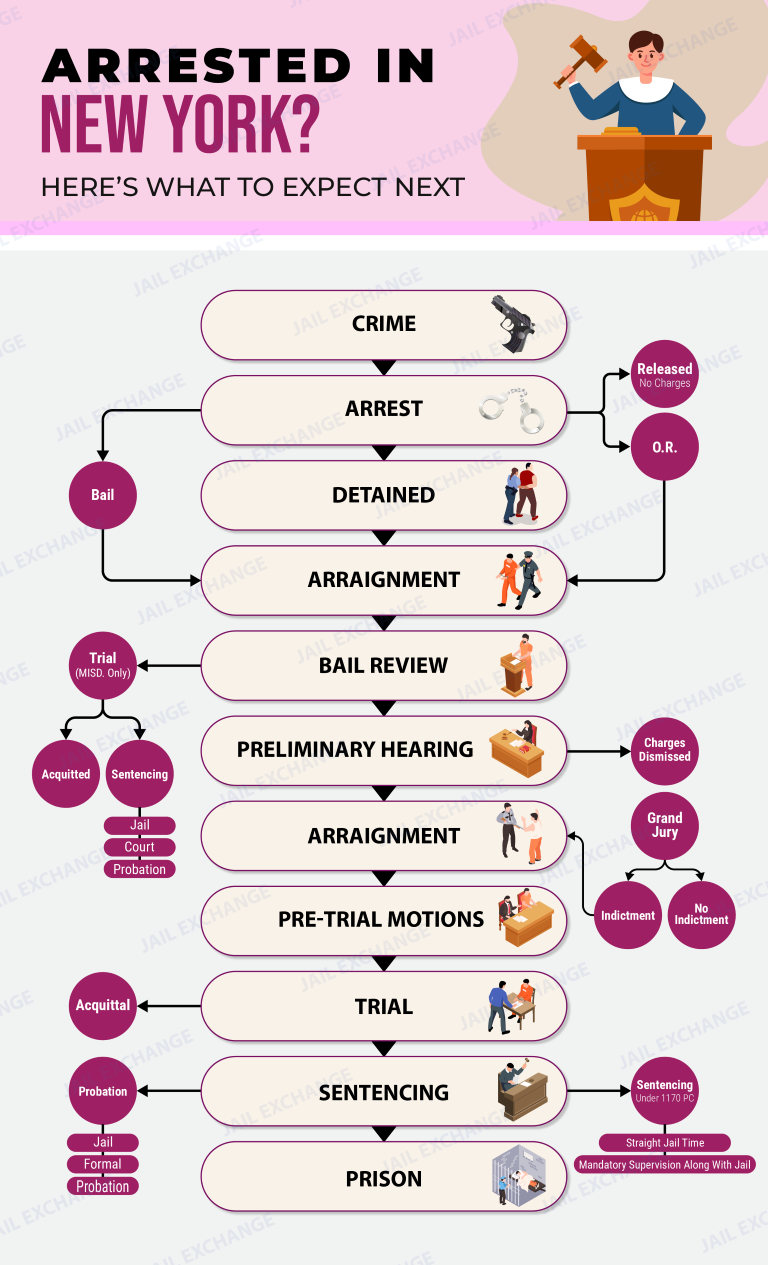
A judge makes the call at the arraignment, the first court hearing on the charge. The state courts say about 24 hours is the usual gap between arrest and arraignment.
Plenty of people skip that wait. For most misdemeanors and lower-level felonies, police generally must issue a desk appearance ticket and let the person leave (CPL 150.20). That ticket lists a date to appear in court. Family violence and some other cases are carved out of this rule, so those people are usually held for a judge.
Someone who is held usually is arraigned by the justice or city court for the town, village or city where police made the arrest. In this county that means Poughkeepsie City Court, Beacon City Court, or one of 28 town and village justice courts. New York calls the judge's ruling a securing order (CPL 510.10). For an arrest late at night or over a weekend, phone the jail at 845-486-3900 and ask where and when the hearing is set.
↑ Back to the question list2. What are New York's four securing orders?
The law spells them out (CPL 500.10):
- Own recognizance (ROR). Free to leave on a pledge to return. No money changes hands.
- Non-monetary conditions. Free to leave with rules, like check-ins with a pretrial officer or keeping away from a certain person. The court cannot charge the person for this supervision (CPL 500.10(3-a)).
- Bail. Cash or a bond that guarantees a return to court.
- Remand. Held with no bail at all. Only some felonies allow it.
If the charge is not on the "qualifying offense" list, the judge is limited to the first two (CPL 510.10(3)). Electronic monitoring is a condition, too. It fits only certain charges and only when nothing lighter will do, and a judge has to revisit it every 60 days or sooner (CPL 510.40(4)).
Pretrial supervision here is handled by the Office of Probation and Community Corrections, which the state court system has certified. Its main office is at 50 Market Street, Poughkeepsie, NY 12601, 845-486-2600.
↑ Back to the question list3. How much bail do Dutchess County charges usually carry?
Nothing like a price sheet exists for New York crimes. The judge sizes up the accusation, past convictions, any earlier failure to show up, and the family's money, including whether paying would cause "undue hardship" (CPL 510.10(1)).
Some quick terms help. Felonies are serious crimes that can lead to state prison, graded class A (most serious) through class E. Misdemeanors are smaller crimes, graded class A or B, punished with up to 364 days in a county jail. Violations are lesser still and are not crimes. Here is a rough guide:
- Violations and most misdemeanors: freed without money.
- Most nonviolent felonies: freed without money, unless an exception fits, such as a fresh felony committed while on probation.
- Violent felonies under Penal Law § 70.02, such as first-degree robbery: money bail or remand can be ordered.
- Class A felonies: bail or remand can be ordered, and a local court has no power to free the person (CPL 530.20(2)).
- Choking a relative or violating an order of protection that shields one: money bail can be ordered.
- Listed sex offenses, and any charge claiming someone died: money bail can be ordered.
- Hurting someone or damaging property while already free on a similar pending case: bail is allowed.
Outside New York City, the state's 2024 figures show town and village judges releasing 75% of people on recognizance and setting bail for 13%. City courts set bail 20% of the time. Whenever bail is set, the order must list no fewer than three forms, and among them the court picks an unsecured or partly secured surety bond (CPL 520.10). The partly secured kind needs a deposit capped at a tenth of the full amount (CPL 500.10(18)). The unsecured kind needs nothing paid up front. To learn the figure in a live case, ring the jail at 845-486-3900.
↑ Back to the question list4. How does posting bail on North Hamilton Street work?
The jail sits at 150 North Hamilton Street, Poughkeepsie, NY 12601. Staff take bail and release papers from every court, all day and all night, every day of the year. Work through this list:
- Phone 845-486-3900. Know the defendant's legal name and birthday, then ask the amount, the court, and the bail forms the judge allowed.
- Ask whether more charges are pending. Each one needs to be paid or secured before the door opens.
- Carry the full sum in U.S. currency, or plan to use a credit card.
- Complete and sign the bail paperwork that state law requires from whoever posts (CPL 520.15).
- Guard the receipt. Only the person whose name is on it can claim the refund later.
Release can take a while, and the jail sets no fixed time. A lost receipt can be reprinted by the jail's business office from 8:30 a.m. to 2:30 p.m. The jail's alternative number is 845-486-3913.
↑ Back to the question list5. Can a court clerk take bail instead of the jail?
Under CPL 520.15, cash bail can be handed to the court that set it, the county treasurer, or the sheriff who has the person. In this county, the jail's bail page sends families to the Justice and Transition Center, where bail for any court is accepted at any hour.
When bail is set during business hours and the person has not been moved to the jail yet, phone the court with the case. Ask whether its clerk can accept the money:
- Poughkeepsie City Court, 62 Civic Center Plaza, Poughkeepsie, NY 12601, 845-483-8200, 9 a.m. to 4 p.m.
- Beacon City Court, 1 Municipal Plaza, Suite 2, Beacon, NY 12508, 845-431-1900, 8 a.m. to 4 p.m.
- County Court, 10 Market Street, Poughkeepsie, NY 12601, 845-431-1710, weekdays 9 a.m. to 5 p.m.
Cases in a town or village court go through that court's own office. The state's town and village court finder lists each justice court's phone and hours.
↑ Back to the question list6. Cash, card, phone or online: what works for bail?
Each method has its own rules:
- Cash in person. U.S. bills, for the entire amount, with no extra charge.
- Credit card in person. Taken, but a private bail payment firm processes it and adds a fee.
- Online or by phone. The county says bail can also be paid online or by phone through a third-party company that charges a fee. The fee is separate from the bail and never counts toward it, and the firm's terms apply. Call the jail at 845-486-3900 and ask staff how to reach that company by web or phone.
- A mix of card and cash. Fine. The firm charges the card part first, and cash makes up the balance.
- Personal checks. Refused.
- Bonds. Written only by a licensed bail bond company, never by the jail.
Never mail bail money to the jail.
↑ Back to the question list7. Hiring a bondsman: what are the rules?
Any licensed bail bond company may write a bond here. The bondsman files it with the judge, picks up a release order and carries that order to the jail. Staff free the person on that order, with no cash receipt involved. What you owe the bondsman is a private deal between you.
The state Department of Financial Services (DFS) licenses bondsmen and sets the ground rules:
- The premium, meaning the bondsman's fee, has a legal ceiling: 10% on the first $3,000, 8% on the next $7,000 and 6% on any part above $10,000 (Insurance Law § 6804). On a $5,000 bond, that tops out at $460.
- You normally lose the premium. The whole fee comes back, though, within 14 days when the person stays jailed or ends up freed without money bail.
- Extra charges on top of the premium are banned, apart from a few costs DFS names, like tracking down a person who missed court.
- Collateral should stay reasonable, near 10% of the bond. The bondsman has 45 days to hand it back once the bond is closed out.
- DFS says every payment and every piece of collateral earns you a signed, itemized receipt.
- Charitable bail groups are nonprofits that can post cash bail. Ask in writing for the group's DFS certificate number.
Look up a bondsman on the state bail agent license search, and report trouble through the DFS complaint form.
↑ Back to the question list8. Bail is paid, so why is the person still held?
One bail settles one case. Other things can still block the exit:
- More charges. Every open charge needs its own bail paid or secured.
- A warrant from somewhere else. The county says another agency's warrant can stop a release even after the money is in.
- Probation. A new felony during probation can make the case a qualifying offense. Probation is at 50 Market Street, Poughkeepsie, NY 12601, 845-486-2600.
- A federal or ICE hold. Paying county bail does nothing to a detainer from the U.S. Marshals or immigration officers.
- Processing. Paperwork takes time, and the jail promises no set wait.
Before handing over money, ask the jail at 845-486-3900 to read out every hold on the person.
↑ Back to the question list9. When may a Dutchess County judge refuse bail altogether?
Remand means no bail is set and the person stays in jail. A judge can order it only on a qualifying felony (CPL 510.10(4)). A 2023 budget change, announced May 3, 2023, dropped the duty to pick the "least restrictive" choice. Judges now look for an order that will reasonably bring the person back, with more leeway on serious crimes.
- A local court can't let go of a defendant facing a class A felony, or one with two prior felony convictions. A higher court has to rule on release (CPL 530.20(2)).
- The prosecutor must get a chance to speak before a local court frees someone on a felony.
- Jail on a felony complaint has a time limit. After 120 hours behind bars with neither a preliminary hearing nor a grand jury decision, the person must be freed (CPL 180.80). The clock stretches to 144 hours when a Saturday, Sunday or legal holiday is included, and there are exceptions.
The District Attorney's Office, which asks judges for bail or remand, is at 236 Main Street, Poughkeepsie, NY 12601, 845-486-2300.
↑ Back to the question list10. Can a high bail be brought down?
Yes. Try these routes:
- Ask the defense lawyer to argue bail again before the same judge.
- For a case still in a local court, the lawyer may go once to a County Court judge (CPL 530.30). That fits when the local judge denied release, set bail too high, or set tougher rules than needed. A second try under this law is not allowed.
- Collect papers that show steady work, a home address, family here and a real budget.
- The defendant may request a nominal, very small bail amount. If the request is truly voluntary, the judge has to grant it (CPL 510.10(5)).
Deadlines can also force a release. A person held on a felony must be freed if prosecutors are not trial-ready within 90 days of the jailing (CPL 30.30(2)). County Court answers questions at 845-431-1710.
↑ Back to the question list11. Who can get a Dutchess County public defender?
State law makes every county supply lawyers to people charged with crimes who lack the money to hire one (County Law § 722). This county's office is the Public Defender, 45 Market Street, Poughkeepsie, NY 12601, 845-486-2280. Its toll-free alternative number is 800-660-8818.
- Office hours are 9 a.m. to 5 p.m. on weekdays.
- Walk in for an intake interview any day between 9:00 and 11:30 a.m. People are seen in the order they arrive.
- Its lawyers handle criminal cases and Family Court cases.
State rules treat anyone in jail as eligible. People who earn below 250% of federal poverty guidelines qualify too. A spouse's pay does not count. A lawyer should stand with the person at arraignment. The judge can assign one for now while the money form is checked (Executive Law § 832(4)). When the Public Defender has to step aside, ask the judge how a different free lawyer is named.
↑ Back to the question list12. Which Dutchess County courthouses handle criminal cases?
County Court tries felonies. City, town and village courts hear misdemeanors and do the early steps in felony cases. All of them belong to the Ninth Judicial District.
- Supreme and County Court, 10 Market Street, Poughkeepsie, NY 12601, 845-431-1710, weekdays 9 a.m. to 5 p.m.
- Family Court, 50 Market Street, Poughkeepsie, NY 12601, 845-431-1850
- Poughkeepsie City Court, 62 Civic Center Plaza, Poughkeepsie, NY 12601, 845-483-8200
- Beacon City Court, 1 Municipal Plaza, Suite 2, Beacon, NY 12508, 845-431-1900
- Poughkeepsie Town Court, 17 Tucker Drive, Poughkeepsie, NY 12603, 845-485-3692
- Fishkill Town Court, 807 Route 52, Fishkill, NY 12524, 845-831-7860
- East Fishkill Town Court, Town Hall, 330 Route 376, Hopewell Junction, NY 12533, 845-226-4229
- Wappinger Town Court, Town Hall, 20 Middlebush Road, Wappingers Falls, NY 12590, 845-297-6070
- Wappingers Falls Village Court, 2582 South Avenue, Wappingers Falls, NY 12590, 845-297-6777
- Dover Town Court, Town Hall, 126 East Duncan Hill Road, Dover Plains, NY 12522, 845-832-9373
Phone numbers for the remaining justice courts:
- Amenia Town Court: 845-373-7017
- Beekman Town Court: 845-724-5300, ext. 1
- Clinton Town Court: 845-266-5988
- Hyde Park Town Court: 845-229-1620
- LaGrange Town Court: 845-452-1830, option 2
- Milan Town Court: 845-758-6960
- North East Town Court and Millerton Village Court: 518-789-3300, ext. 604
- Pawling Town Court: 845-855-3516
- Pawling Village Court: 845-855-5602
- Pine Plains Town Court: 518-398-7194
- Pleasant Valley Town Court: 845-635-2856
- Red Hook Town Court: 845-758-4611
- Red Hook Village Court: 845-758-4113
- Rhinebeck Town Court: 845-876-3858
- Rhinebeck Village Court: 845-876-4119
- Stanford Town Court: 845-868-2269
- Union Vale Town Court: 845-724-3288
- Washington Town Court and Millbrook Village Court: 845-677-6366
- Fishkill Village Court: 845-897-2103
- Tivoli Village Court: 845-757-3219
Street addresses and court nights for that second group are on the Unified Court System's Find a Court tool.
↑ Back to the question list13. When is bail returned, and when can it be forfeited?
Cash bail is held by the court while the case is open. Once it closes:
- Whoever is named on the receipt visits the clerk with that original slip and a photo ID.
- Ninth Judicial District courts send refunds as a check, nothing else.
- A full refund follows a dismissal of every charge or a not-guilty verdict.
- A conviction means the court holds back 3% (General Municipal Law § 99-m). Fines and fees may come out of the money as well.
Money posted on a civil case, such as one in Family Court, is not returned at the end. The jail cannot hand back bail it accepted.
If the person skips court with no good excuse, the judge can order the bail forfeited, and the county may keep it (CPL 540.10). Coming back with a reason before the case wraps up lets the judge cancel that. After that, the deadline to ask for the money back is one year (CPL 540.30). Ask the clerk of the court that holds the bail about any refund.
↑ Back to the question list14. When can belongings be collected after release?
The property window is at the Justice and Transition Center, 150 North Hamilton Street, Poughkeepsie, NY 12601. It opens Monday through Friday from 8:30 to 10:30 a.m. and again from 12:30 to 3:00 p.m., if a property officer is on hand. Items still there 30 days after release are destroyed.
Show a photo ID at the window. If the belongings are someone else's, call first to learn whether you need their signed permission. For questions on money left in the jail account, call 845-486-3900. Our guide to jail accounts covers how balances usually work.
↑ Back to the question list15. Which judge handles release on federal charges?
That decision belongs to a federal judge. This county sits in the Southern District of New York, and its criminal cases are assigned to the White Plains courthouse named for Charles L. Brieant Jr., 300 Quarropas Street, White Plains, NY 10601, 914-390-4100. The clerk's office keeps weekday hours, 8:30 a.m. to 5:00 p.m.
- Federal law calls for a detention hearing at the very first court date. The defense may win up to five days of delay, the government up to three (18 U.S.C. 3142(f)).
- The judge gets a background report written by Pretrial Services. Its White Plains office is at 300 Quarropas Street, Room 449, White Plains, NY 10601, 914-390-4140.
- Before trial, federal prisoners are guarded by the U.S. Marshals Service, 500 Pearl Street, Suite 400, New York, NY 10007, 646-563-9800.
- Free defense comes from Federal Defenders of New York, 81 Main Street, Suite 124, White Plains, NY 10601, 914-428-7124.
After a federal sentence, check the Federal Bureau of Prisons inmate locator.
↑ Back to the question list16. Can bail money end an immigration hold?
Not by itself. An ICE request runs on its own track, and it tends to unfold like this:
- Step one is Form I-247A. Immigration officers send this detainer to the jail.
- It asks staff to hold the person up to 48 hours after they would otherwise be released (8 CFR 287.7(d)).
- ICE's New York City Field Office handles this county: 26 Federal Plaza, Suite 9-110, New York, NY 10278 (9th floor), 212-436-9315.
- After pickup, ICE can send the person to one of its sites, for example the Buffalo (Batavia) Service Processing Center, 4250 Federal Drive, Batavia, NY 14020, 585-344-6500.
- Track them with the ICE Online Detainee Locator.
New York rules shape what a local jail does. People ex rel. Wells v DeMarco settled a key point in 2018. That appeals decision held that local deputies lack state-law power to make arrests over civil immigration matters. The Attorney General calls detainers voluntary and urges honoring one only when a judge signed a warrant. Executive Law § 170-k, enacted May 27, 2026, outlaws 287(g) agreements and made old ones void on August 25, 2026. Court orders and judicial warrants still must be obeyed. Civil Rights Law § 28 protects people heading to court, in court or going home from court from civil arrest unless a judge has approved it in a warrant or order.
↑ Back to the question list17. Where do long state sentences get served?
Felony terms longer than a year generally go to the Department of Corrections and Community Supervision (DOCCS). Until the county certifies the person as state ready, they stay at the jail on North Hamilton Street. Once that happens, state law gives DOCCS ten business days to collect them. At a reception center, each new arrival is tested and classified, then moved to a prison that matches their needs.
- Find the person by name or DIN, the number DOCCS assigns, on the state incarcerated lookup.
- No internet? Phone DOCCS on business days at 518-457-5000.
- Facility details are in our New York state prisons guide.
18. Are teens under 18 treated differently?
New York's Raise the Age law keeps most 16- and 17-year-olds away from adult criminal court. Police holding a child must call a parent immediately (Family Court Act § 305.2).
- Felonies charged against teens of 16 or 17 start out in County Court's Youth Part, and a good share of nonviolent ones are then shifted to Family Court.
- Teens facing misdemeanors are sent to probation intake, not adult court.
- Children 12 through 15 mostly appear in Family Court.
- An adolescent offender can't be kept in a jail for adults. A secure juvenile detention center holds them.
- A child held before a petition is filed must see Family Court within 72 hours or on the next day court sits, whichever is sooner (Family Court Act § 307.3).
Family Court is at 50 Market Street, Poughkeepsie, NY 12601, 845-431-1850. Reach probation intake at 845-486-2600.
↑ Back to the question listDutchess County Bail Bond Instructions & Procedures

If the Dutchess County Court has set bail in an incarcerated individual’s case, the incarcerated individual may be bailed out seven (7) days per week, twenty-four (24) hours per day, including holidays.
Bail for an inmate can be paid the following ways:
- In person at Dutchess County Jail
150 North Hamilton St.
Poughkeepsie NY 12601 - Online using Touchpay

- By phone 866-232-1899
Bail paid in person must be paid in its entirety via cash (U.S. Currency) or credit card. Checks will not be accepted!
Visit the Justice and Transition Center in Poughkeepsie
Go to 150 North Hamilton Street, Poughkeepsie, NY 12601. All contact and booth visits are scheduled in person for that session. You cannot reserve by phone. Sign in at least 30 minutes before the session starts or you will not be admitted.
Regular contact visits
Sunday, Tuesday and Thursday (Eastern time):
- General population: 8:30–9:30 a.m., 9:50–10:50 a.m. and 12:20–1:20 p.m.
- Special classification: 1:50–2:50 p.m.
There are no regular contact visits on Monday, Wednesday, Friday, Saturday or county holidays. The jail allows up to two 60-minute contact visits per week for each classified person.
Non-contact booth visits
There is one initial booth visit of up to 30 minutes within the first 24 hours of custody, except on holidays. It does not count against the weekly contact allowance. The posted booth blocks are 8:30–9:30 a.m., 9:50–10:50 a.m., 12:20–1:20 p.m. and 1:50–2:50 p.m.; those are session windows, not 60-minute booth appointments. Call 845-486-3900 about booth eligibility, the applicable session or hospital custody before making the trip.
Bring current government-issued photo ID. Up to two visitors may attend; visitors under 18 need a parent or legal guardian and proof of the relationship. Call ahead if someone else will accompany a child. Leave your phone outside the visiting area and dress to clear the metal detector.
Dutchess County Criminal Court Guide
Criminal cases in Dutchess County open in a city, town or village court, and felonies wind up in County Court at 10 Market Street, Poughkeepsie, NY 12601. Its clerk's office picks up at 845-431-1710, weekdays from 9 a.m. to 5 p.m. Misdemeanors, traffic crimes and the first rounds of felony cases are heard in Poughkeepsie City Court, Beacon City Court and 28 justice courts spread across the towns and villages.
The official inmate locator shows who is in the jail. Our Inmate Lists page deals with custody itself: mugshots, booking records, active warrants, the charges, public defenders and collecting property.
Anyone not released is kept at the Dutchess County Justice and Transition Center, 150 North Hamilton Street, Poughkeepsie, NY 12601. If a name doesn't turn up, ring the jail at 845-486-3900. To get someone home, read our bail and release page.
1. Felony, misdemeanor, violation: where does each go?
New York ranks offenses by how serious they are:
- Violations are petty offenses, not crimes. The most jail they bring is 15 days (Penal Law § 70.15(4)).
- Misdemeanors are lesser crimes in two grades. The top grade, class A, caps jail at 364 days, and class B caps it at three months (Penal Law § 70.15).
- Felonies are serious crimes punishable by state prison, graded A (gravest) through E.
The law groups city, town and village courts as local criminal courts. Misdemeanor and violation trials happen in them, along with traffic cases and the opening hearings of felony cases. When a grand jury returns an indictment, County Court takes over the felony. The Supreme Court also sits at that Market Street address. Family Court and the Youth Part of County Court handle young people. Every one of these courts belongs to the Ninth Judicial District, along with the courts of Orange, Putnam, Rockland and Westchester.
↑ Back to the question list2. Where are the main Dutchess County courthouses?
Most big cases land in a few buildings in the county seat and in Beacon:
- Supreme and County Court, 10 Market Street, Poughkeepsie, NY 12601, 845-431-1710. Open Monday to Friday, 9 a.m. to 5 p.m., closed state holidays. Felony trials happen here.
- Family Court, 50 Market Street, Poughkeepsie, NY 12601, 845-431-1850, 9 a.m. to 5 p.m.
- Poughkeepsie City Court, 62 Civic Center Plaza, Poughkeepsie, NY 12601, 845-483-8200, 9 a.m. to 4 p.m. It covers arrests inside the city.
- Beacon City Court, 1 Municipal Plaza, Suite 2, Beacon, NY 12508, 845-431-1900, 8 a.m. to 4 p.m. It covers arrests inside Beacon.
The district's Administrative Judge oversees all of these courts from 111 Dr. Martin Luther King Jr. Blvd, White Plains, NY 10601, 914-824-5140. Call that office with a complaint about how a court is run, not about a single case.
↑ Back to the question list3. Which Dutchess County towns and villages have their own court?
Each of the 20 towns has a town court, and eight villages keep courts too. Justices there hear misdemeanors, violations and traffic tickets from their area, and they arraign people on felonies. These courts have their own street addresses and phones:
- Poughkeepsie Town Court, 17 Tucker Drive, Poughkeepsie, NY 12603, 845-485-3692
- Fishkill Town Court, 807 Route 52, Fishkill, NY 12524, 845-831-7860. Office open weekdays 9 a.m. to 4 p.m., with court on Tuesday and Wednesday mornings at 9:00.
- East Fishkill Town Court, Town Hall, 330 Route 376, Hopewell Junction, NY 12533, 845-226-4229. Court sits Tuesdays at 9:00 a.m. and Wednesdays at 4:00 p.m., and payments are taken until 3:30 p.m.
- Wappinger Town Court, Town Hall, 20 Middlebush Road, Wappingers Falls, NY 12590, 845-297-6070. Office open weekdays 8:30 a.m. to 4:00 p.m. Evening court starts at 5:00 p.m. on Tuesdays, plus some Wednesdays and Thursdays.
- Wappingers Falls Village Court, 2582 South Avenue, Wappingers Falls, NY 12590, 845-297-6777. Office open Monday to Thursday, 10 a.m. to 4 p.m. Criminal cases are called on the first and third Tuesday.
- Dover Town Court, Town Hall, 126 East Duncan Hill Road, Dover Plains, NY 12522, 845-832-9373. Criminal cases with a prosecutor present are heard at 4:00 p.m. on the second Monday and third Tuesday of each month.
The rest of the justice courts, with their phones:
- Amenia Town Court: 845-373-7017
- Beekman Town Court: 845-724-5300, ext. 1
- Clinton Town Court: 845-266-5988
- Hyde Park Town Court: 845-229-1620
- LaGrange Town Court: 845-452-1830, option 2
- Milan Town Court: 845-758-6960
- Millerton Village Court and North East Town Court (same line): 518-789-3300, ext. 604
- Pawling Town Court: 845-855-3516
- Pawling Village Court: 845-855-5602
- Pine Plains Town Court: 518-398-7194
- Pleasant Valley Town Court: 845-635-2856, sessions Tuesdays and Thursdays at 5:30 p.m.
- Red Hook Town Court: 845-758-4611
- Red Hook Village Court: 845-758-4113
- Rhinebeck Town Court: 845-876-3858
- Rhinebeck Village Court: 845-876-4119
- Stanford Town Court: 845-868-2269
- Union Vale Town Court: 845-724-3288
- Millbrook Village Court and Washington Town Court (same line): 845-677-6366
- Fishkill Village Court: 845-897-2103
- Tivoli Village Court: 845-757-3219
To get one of these courts' street address and court nights, search the state's Find a Court page or ring the County Court clerk at 845-431-1710.
↑ Back to the question list4. What happens at arraignment in a local court?
A person kept in custody is normally arraigned within roughly a day, since the courts call 24 hours the usual gap. At this hearing:
- The judge tells the person what they are charged with.
- A lawyer stands with them. Anyone who can't afford one gets an assigned lawyer (CPL 510.10(2)).
- The judge picks a securing order: release on the person's word, release with conditions, bail, or, for some felonies, jail with no bail.
- In a family offense case, a temporary order of protection can be signed on the spot, for instance one barring contact (CPL 530.12).
- On a felony, the person learns they may testify before the grand jury by giving written notice to the prosecutor (CPL 190.50(5)).
Someone who got a desk appearance ticket at the station skips the jail stay and simply comes to court on the date written on it. For an arrest late at night, call the jail at 845-486-3900 to learn which court will hear the case and when.
↑ Back to the question list5. How do misdemeanor cases unfold in the local courts?
The District Attorney's Justice Courts Unit handles cases in the city, town and village courts. After arraignment, a typical misdemeanor goes like this:
- Evidence sharing. Discovery, the hand-over of evidence, is due 20 days after arraignment for a jailed defendant and 35 days for one who is free (CPL 245.10).
- Ready for trial. Prosecutors get 90 days to announce they are ready on a class A charge, 60 on a class B (CPL 30.30(1)).
- How it ends. Many cases are dismissed or settled with a plea. Others go to trial.
Possible sentences:
- Class A: up to 364 days behind bars, and fines reach $1,000
- Class B: three months at most, and fines reach $500
- Violation: 15 days at most, and fines reach $250 (Penal Law § 80.05)
- Probation: 2 or 3 years on a class A, 1 year on a class B (Penal Law § 65.00)
- Conditional discharge: a year of court rules, with no jail time and no supervising officer (Penal Law § 65.05)
The Clean Slate Act, in force since November 16, 2024, automatically seals a misdemeanor conviction once three years pass from release or sentencing (CPL 160.57). A violation conviction is usually sealed right away (CPL 160.55).
↑ Back to the question list6. How does a Dutchess County felony move from arrest to sentence?
A felony passes through two courts. Here is the path:
- Felony complaint. The case begins with an arraignment in the local court.
- Time limit. A jailed person must be freed after 120 hours, or 144 with a weekend or holiday, unless there has been a preliminary hearing or a grand jury vote. Some exceptions apply (CPL 180.80).
- Grand jury. Citizens weigh the proof and vote on an indictment. The accused can request a chance to speak to them first.
- County Court. An indictment sends the case to County Court, 10 Market Street, Poughkeepsie, NY 12601, for a second arraignment.
- Evidence and motions. Prosecutors must be ready within six months (CPL 30.30(1)).
- Resolution. A plea deal or a trial, followed by sentencing.
The longest possible term is life for class A. It drops to 25 years for B, then 15, 7 and 4 years for C, D and E (Penal Law § 70.00). A judge can instead give a year or less for some class D and E felonies. Felony fines reach $5,000 or double the money the person gained (Penal Law § 80.00). Felony probation lasts three to five years. Through Judicial Diversion (CPL Article 216), some people whose drug use led to a felony can get court-supervised treatment.
↑ Back to the question list7. What is different about violent felony charges?
A charge listed as a violent felony in Penal Law § 70.02 brings tighter rules:
- Bail or remand. Because these are qualifying offenses, money bail and remand are both on the table.
- Set prison ranges. Sentences are fixed terms followed by post-release supervision. A class E violent felony carries 1.5 to 4 years, class D 2 to 7, class C 3.5 to 15 and class B 5 to 25.
- Examples. First-degree robbery and first-degree burglary are class B. Second-degree assault is class D.
- Youth breaks. Many armed felonies rule out youthful offender status for 16- to 18-year-olds (CPL 720.10).
- Record sealing. A violent felony can't be sealed by application later (CPL 160.59).
Victims in these cases can ask the court for an order of protection. At sentencing, a final order on a felony can last eight years past the sentence (CPL 530.12).
↑ Back to the question list8. The prosecutor and the free defense office: where are they?
Crimes in the county are prosecuted by the elected District Attorney. The office is at 236 Main Street, Poughkeepsie, NY 12601, 845-486-2300, and its website is the District Attorney's page. Its Justice Courts Unit works in the local courts, and its Special Victims Unit takes sexual assault, family violence, child abuse and elder abuse cases.
The Public Defender represents people who can't pay. Find it at 45 Market Street, Poughkeepsie, NY 12601, 845-486-2280. Hours run 9 a.m. to 5 p.m. on weekdays. Walk-in intake is every day from 9:00 to 11:30 a.m., first come, first served.
- Anyone jailed is presumed eligible. The same goes for a household earning under two and a half times the federal poverty guideline.
- Child support you receive is not counted as your money.
- The judge makes the final call on who qualifies.
Hiring a private defense lawyer instead is always allowed.
↑ Back to the question list9. Where can I look up a case and its court dates?
WebCrims, the state's criminal case search, covers County Court here. Open WebCrims, key in the opening letters of both names (two minimum), then pick the county.
Its results are limited to open cases with a hearing still ahead. Anything closed, sealed, handled as youthful offender, ended on a violation, or stuck without a date (a warrant case, for one) stays out of it. For those, and for every city, town and village court, phone the court:
- County Court: 845-431-1710
- Poughkeepsie City Court: 845-483-8200
- Beacon City Court: 845-431-1900
- Town and village courts: the state's justice court finder gives each one's number
To see your own state criminal record, book fingerprints through IdentoGo at 877-472-6915. The Division of Criminal Justice Services charges $17.50 and mails the result in about three to four weeks.
↑ Back to the question list10. Warrant worries: how do I check and resolve one?
Warrants are carried out by Sheriff's deputies anywhere in the county and by local police inside their own city, town or village. Phone the Sheriff's Office, 108 Parker Avenue, Poughkeepsie, NY 12601, 845-486-3800, or the court handling the case. Statewide fugitives appear on the New York State Police Wanted and Missing list. WebCrims skips any case with an open warrant. A judge usually must give 48 hours' notice before a bench warrant for a missed date, so the person can come in first (CPL 510.50). Clearing one starts with a lawyer. Go with that lawyer to the issuing court, or call the court to get a new date. County Court, which handles felony warrants, is at 10 Market Street, Poughkeepsie, NY 12601, 845-431-1710.
↑ Back to the question list11. What happens when a Dutchess County case is federal?
Federal crimes from here belong to the Southern District of New York. A court rule sends cases from the district's northern counties, this one included, to White Plains. That is where the person is usually arraigned and where bail is argued. The courthouse is at 300 Quarropas Street, White Plains, NY 10601, and the clerk answers at 914-390-4100 on weekdays, 8:30 a.m. to 5:00 p.m. The district also sits at the U.S. Courthouse, 355 Main Street, Poughkeepsie, NY 12601, and the same clerk line covers it.
- At the first court date, a federal magistrate weighs detention or release in a hearing (18 U.S.C. 3142).
- Federal Defenders of New York, 81 Main Street, Suite 124, White Plains, NY 10601, 914-428-7124, represents people who can't pay.
- The U.S. Marshals Service moves and holds federal defendants. Its district office is at 500 Pearl Street, Suite 400, New York, NY 10007, 646-563-9800.
- Federal court data say over 90% of defendants end their case with a guilty plea.
Case files can be read on PACER for 10 cents per page, up to $3 per document. After sentencing, find the person with the Federal Bureau of Prisons inmate locator.
↑ Back to the question list12. Does an immigration hold affect the state case?
The state charges keep moving no matter what ICE does. A detainer matters at the moment of release. Here is the usual sequence:
- Immigration officers lodge Form I-247A against the person at the jail.
- It asks for a hold of up to 48 hours after they would otherwise be released, so officers can come for them (8 CFR 287.7(d)).
- The case then belongs to ICE's New York City Field Office, 26 Federal Plaza, Suite 9-110, New York, NY 10278 (9th floor), 212-436-9315.
- Detainees may be moved to ICE's own center in Batavia, the Buffalo (Batavia) Service Processing Center, 4250 Federal Drive, Batavia, NY 14020, 585-344-6500.
- The ICE Online Detainee Locator shows where they are.
State law limits local help. In 2018, an appeals court ruled in People ex rel. Wells v DeMarco: nothing in state law lets local officers carry out civil immigration arrests. Since August 25, 2026, Executive Law § 170-k has left every 287(g) agreement void, though judicial warrants and court orders still count. For a court case, Civil Rights Law § 28 matters most. It protects parties, witnesses and their family members from civil arrest on the way to court, at court and on the way home, except under a judge's warrant or order. Before any plea, make sure the defense lawyer knows the person's immigration status.
↑ Back to the question list13. Where is a New York prison sentence served?
Felony prison terms go to the state Department of Corrections and Community Supervision (DOCCS). Shorter sentences of a year or less are usually served in the county jail on North Hamilton Street. After a state sentence, the county certifies readiness, which gives DOCCS a ten-business-day deadline to take custody. A reception center then runs medical, mental health and program checks before choosing a prison.
- Search the DOCCS incarcerated lookup by name or DIN, the state number.
- DOCCS answers family questions at 518-457-5000 during business hours.
- See our New York state prisons guide for visiting and mail.
14. How are cases against teens handled?
Raise the Age reached 16-year-olds in October 2018 and 17-year-olds in October 2019. Most teen cases now stay out of adult court:
- Felony, age 16 or 17: starts in County Court's Youth Part. A nonviolent felony goes to Family Court unless the prosecutor shows "extraordinary circumstances" within 30 days (CPL 722.23).
- Misdemeanor, age 16 or 17: handled by probation intake, away from adult court.
- Ages 12 to 17, other cases: Family Court handles juvenile delinquency (Family Court Act § 301.2).
- Ages 13 to 15, gravest crimes: a short list, such as murder, can make the teen a juvenile offender (CPL 1.20(42)).
- Ages 16 to 18: a judge may grant youthful offender status, which replaces a conviction (CPL 720.10).
Teens are questioned only in special rooms or at home with a parent's OK, and the questioning is recorded. Family Court is at 50 Market Street, Poughkeepsie, NY 12601, 845-431-1850. For youth detention and intake questions, call probation at 845-486-2600.
↑ Back to the question list15. Where can Dutchess County crime victims turn?
The District Attorney's Special Victims Unit works with victims of sexual assault, family violence, child abuse and elder abuse. Reach the office at 236 Main Street, Poughkeepsie, NY 12601, 845-486-2300.
- Family Services runs a 24-hour rape crisis and crime victims hotline, 845-452-7272, and a 24-hour domestic violence hotline, 845-485-5550. Its office is at 29 North Hamilton Street, Poughkeepsie, NY 12601.
- The Child Advocacy Center, 35 Van Wagner Road, Poughkeepsie, NY 12603, 845-454-0595, helps children.
- The state Office of Victim Services can pay some medical, counseling and funeral costs. Call 800-247-8035.
- For custody alerts from any county jail or state prison, call VINE at 888-846-3469 or sign up on VINELink.
- Judges can issue orders of protection that tell the accused to stay away (CPL 530.12).

icare (operated by Aramark Correctional Services) is a specialized gift package and commissary program that allows family members to order brand-name snack bundles, confectioneries, hygiene kits, and freshly prepared hot meals sent directly to an incarcerated loved one. Every package is packed to adhere strictly to facility security regulations.
Important: Order Cutoffs and Delivery Windows Vary by Jail
Detention centers do not manage care package deliveries under identical schedules. While some facilities allow weekly orders, others restrict deliveries to bi-weekly or monthly distribution windows, and spending limits vary from jail to jail. You should verify the facility's active cutoff schedule and order allowances by calling them directly. If an order is submitted after the weekly processing deadline, delivery will be held until the following cycle, leaving your loved one waiting an extra cycle for fresh meals or personal snacks.
Step-by-Step Instructions to Place an icare Package Order
- Obtain the inmate's legal first and last name, date of birth, and assigned booking or inmate ID number.
- Visit www.icaregifts.com on your computer or mobile device.
- Select Find a Loved One and choose the state and detention facility.
- Search for the inmate using their ID number or legal last name to unlock the facility-specific catalog.
- Browse available fresh food items, snack packs, candy selections, and hygiene kits, adding items up to the facility's spending cap.
- Proceed to checkout, enter your debit or credit card billing details, and submit your order.
- Save your digital receipt and confirmation tracking number for your records.
What the Inmate Needs to Do
The inmate does not need an internet account to receive care packages. Aramark prepares the shipment in tamper-evident security packaging and delivers it directly to the facility commissary department. Staff inspect the delivery and distribute it during scheduled housing unit delivery rounds, where the inmate signs the delivery manifest.
Official Provider: icare Gifts Official Website
Customer Service Telephone: 1-888-439-5020
Support Hours: Monday – Friday, 8:00 AM – 9:00 PM EST; Saturday – Sunday, 9:00 AM – 5:00 PM EST
Supported Languages: English and Spanish
Other Services Associated with Aramark Corrections
Depending on individual facility agreements, additional trust funding and commissary services may be available:
- Inmate Trust Fund Deposits: Transfer funds directly to an inmate's jail trust account for independent commissary spending.
• Learn more on our website: Inmate Trust Deposits Guide | • Visit official vendor page: icare Inmate Services
Buy Commissary for an Inmate in the Dutchess County Justice and Transition Center
Dutchess County Justice and Transition Center Inmate Commissary - Sending Money or Purchasing Commissary for an Inmate
Dutchess County Justice and Transition Center allows inmates to purchase commissary. This can be snacks, hygiene products, stamps, stationary, clothing and even electronics.
You can buy commissary for an inmate using an online service called icare gifts.

There is a monthly limit of $200-300 on how much inmates can spend on commissary items.
This amount is subject to change so call the facility at 845-486-3900 in order to confirm the amount that cannot be exceeded.
Inmates have access to both an in-house commissary store, and commissary packages that can be purchased and shipped to the inmate by friends and family.
Scroll down for information on the Dutchess County Justice and Transition Center's service they use for you being able to purchase commissary items online and have them shipped directly to the inmate.
You can also go to our Inmate Money page for information on how to send money to an inmate.
TouchPay Inmate Trust Money Deposits
Provider: TouchPay Direct • A ViaPath Technologies Company (GTL Financial)

TouchPay (operated by GTL Financial Services and part of ViaPath Technologies) provides payment processing solutions enabling family members to deposit funds directly into an incarcerated person's jail trust and commissary account. Deposited funds allow the inmate to purchase commissary food items, clothing, hygiene essentials, and medical sundries, or transfer balances to phone time.
Important: Facility Site IDs and Deposit Limits Vary
Once a person is booked and moved to a housing unit, facilities do not always allow cash drop-offs or phone payments directly to the jail window. Some might and you should confirm this by calling the facility and asking. In addition, each correctional agency requires a specific TouchPay Site ID number to route payments accurately. If you do not register online and fund your loved one's trust account immediately, they may be forced to wait days or weeks for standard paper processing, leaving them without essential soap, clean undergarments, basic medical sundries or snacks.
Step-by-Step Instructions to Register and Deposit Trust Funds
- Obtain the inmate's legal first and last name, date of birth, and assigned facility booking ID number, along with the jail's 3- to 5-digit TouchPay Site ID.
- Navigate to www.touchpayonline.com or dial automated phone payments at 1-866-232-1899.
- Select Trust Deposits and enter the facility Site ID or search by state and agency name.
- Confirm the inmate's profile matches the facility's active housing roster.
- Enter the deposit dollar amount, review convenience and transaction fees, and input your credit or debit card billing information.
- Submit payment and record your confirmation tracking number for your financial records.
What the Inmate Needs to Do
The inmate does not need an internet account to receive trust funds. Once authorized, funds post directly to their facility accounting balance in the jail's internal system. The inmate can review their updated balance at a dayroom kiosk terminal or on their trust receipt and place orders on their regular commissary distribution day.
Official Providers: TouchPay Official Website | ViaPath Technologies
Customer Service Telephone: 1-866-232-1899 (Automated & Live Support)
Support Hours: Automated Deposits 24/7/365; Live Support Monday – Friday, 8:00 AM – 7:00 PM CST
Supported Languages: English and Spanish
Other Services Provided by TouchPay (ViaPath Technologies)
In addition to Trust Money Deposits, TouchPay and ViaPath handle bail bonding and inmate telephone services:
- TouchPay Cash Bail & Bond Payments: Pay appearance bonds and release fees online 24/7 to expedite custody release.
• Learn more on our website: Cash Bail & Bonding Guide | • Visit official vendor page: TouchPay Bail Services - AdvancePay Phone Calling Accounts: Prepay for phone calling credits so your loved one can call your mobile phone directly.
• Learn more on our website: AdvancePay Calling Guide | • Visit official vendor page: ViaPath ConnectNetwork Calling
Deposit Money for an Inmate in the Dutchess County Justice and Transition Center
The Dutchess County Justice and Transition Center in Poughkeepsie takes money online, by phone, at the lobby kiosk and as cash in the mail. It does not take checks or money orders.
- Online: Deposit at TouchPay. A fee applies.
- Phone: Call 1-866-232-1899. A fee applies.
- Lobby kiosk: The kiosk in the facility lobby takes up to $200 per deposit, with a service fee each time. You can add another $200 after that, with another fee.
- Cash by mail: The jail does not recommend it, but cash mailed to the person is deposited with no fee. Address it to the person's name, Dutchess County Justice and Transition Center, P.O. Box 1389, Poughkeepsie, New York 12602.
Checks and money orders are returned to the sender. There is no cap on the total you can add, only on each deposit, and you can add money for more than one person. Deposits take up to 24 hours to post. Each person gets one commissary order a week of up to $125 ($95 food, $30 hygiene), and iCare packages and Fresh Favorite meals count toward that $125.
Dutchess County now calls its jail in Poughkeepsie the Dutchess County Justice and Transition Center, and that name belongs on the envelope. Mail goes to the jail's post office box, not the street address on North Hamilton Street. The county asks only for the person's name on the first line, with no number. Every letter is checked for contraband before it is handed out.
Letters, legal papers and books (one address):
Dutchess County Justice and Transition Center
P.O. Box 1389
Poughkeepsie, NY 12602
- No return address, no delivery: A letter without a return address is refused and sent back.
- Handwriting: Write by hand in blue or black ink only, and leave about an inch of blank space on every edge of the page. Other ink colors copy badly and can end up hard to read.
- Photographs: Prints can be no larger than 5 x 7 inches, with no frames and no Polaroids. Nothing suggestive, nude or revealing is allowed. Send six or fewer at a time; a person may keep six.
- Books: Order them online and have the publisher or bookstore ship them straight to the jail. Used books and hardcovers are turned away.
- Bras: A bra is the only underwear that may come by mail. It must ship from an online seller and can't have padding, underwire, hidden pockets or metal.
- Court or funeral clothes: Clothing is taken only for a trial or a funeral visit, and it can't be blue or black. The jail suggests dropping it off in person.
- Sent back to you: Anything the jail sells in its commissary or hands out itself, such as paper and postage, is returned to the sender. People with no money get a small supply of paper and stamps.
- Leave it out: Stickers, glitter, musical cards, perfume or lipstick, stained paper, newspaper clippings, and drawings made with crayon, felt-tip pens or paint.
- Money by mail: Checks and money orders are mailed back to you. Cash tucked into a letter is accepted and goes onto the account with no fee, though the county does not recommend mailing cash. The safer choice is to send money online.
- Who they may write: Not co-defendants, other people in custody, or anyone under a no-contact order.
People here can also receive messages on their tablets, which usually arrive faster than a letter.
ViaPath AdvancePay Phone Calling Accounts
Provider: ViaPath Technologies • Formerly ConnectNetwork / Global Tel*Link (GTL)
AdvancePay is the primary prepaid telecommunications service operated by Global Tel*Link (GTL) and ConnectNetwork, which have unified under the corporate identity of ViaPath Technologies (and the myViaPath platform). By funding an AdvancePay account, telephone charges are deducted per minute whenever an incarcerated loved one calls your specific telephone number, preventing calls from being rejected by cellular carriers.
Important: Cell Carriers Automatically Block Jail Collect Calls
Inmate telephone networks do not permit incoming calls, and wireless cell providers automatically block traditional collect billing by default. While select traditional landlines may support operator billing, cell phones and internet-based lines require an active AdvancePay balance, which you can verify with your carrier. If you do not register your number online and add funds immediately, your loved one will hear an automated operator announcement stating your line is blocked from receiving correctional calls.
Step-by-Step Instructions to Open and Fund AdvancePay
- Visit web.connectnetwork.com or the updated my.viapath.com portal, or launch the ConnectNetwork / ViaPath mobile application.
- Click Sign Up and register using your primary 10-digit cellphone number and email address.
- Select Add Facility, pick your state, and choose the detention center or state prison where the inmate is held.
- Search for the inmate using their full legal name or facility booking ID number and link them to your contact directory.
- Select AdvancePay Phone and choose your deposit amount ($25, $50, or custom).
- Enter your debit or credit card billing details, accept the administrative transaction fee, and complete the payment.
- Check your phone settings to confirm that automated or unknown correctional numbers are not routed straight to spam.
What the Inmate Needs to Do
The inmate approaches any housing pod telephone, enters their assigned PIN and voice biometric recognition phrase, and dials your 10-digit number. ViaPath's automated operator confirms your active prepaid balance and connects the call. All personal telephone calls are subject to recording and monitoring by facility investigators.
Official Providers: ConnectNetwork Portal | myViaPath Portal
Customer Service Telephone: 1-877-650-4249 (Automated & Live Support)
Support Hours: Automated Service 24/7; Live Operators Monday – Friday, 8:00 AM – 10:00 PM EST
Supported Languages: English and Spanish
Other Services Provided by ViaPath Technologies (ConnectNetwork)
In addition to AdvancePay Phone Calling, ViaPath / ConnectNetwork provides several other communication, financial, and visitation services:
- ConnectNetwork Trust Fund Deposits: Transfer money directly into an inmate's jail trust account for commissary store purchases.
• Learn more on our website: Inmate Trust Deposits Guide | • Visit official vendor page: ConnectNetwork Trust Deposits - ViaPath PIN Debit Phone Calling: Give the inmate their own calling funds to contact any approved phone number independently.
• Learn more on our website: PIN Debit Phone Calling Guide | • Visit official vendor page: ViaPath PIN Debit Calling - ViaPath Messaging & Photo Sharing: Send digital messages, photos, and video attachments directly to their terminal.
• Learn more on our website: Digital Messaging Guide | • Visit official vendor page: ViaPath Messaging Services - GettingOut Video Visitation & Tablets: Schedule face-to-face remote video visits and manage handheld tablet communications.
• Learn more on our website: Remote Video Visitation Guide | • Visit official vendor page: GettingOut Video Visits
ViaPath PIN Debit Phone Calling Accounts
Provider: ViaPath Technologies • Formerly ConnectNetwork / Global Tel*Link (GTL)ViaPath PIN Debit (hosted on ConnectNetwork and myViaPath) provides incarcerated individuals with their own calling funds. Unlike AdvancePay (which only funds calls placed to your specific phone number), PIN Debit funds belong directly to the inmate, allowing them to call attorneys, bondsmen, employers, or extended family members across multiple approved telephone numbers.
Important: AdvancePay Only Funds a Single Phone Number
When someone is arrested, they often need to contact multiple people—including legal defense counsel, bail agents, employers, and relatives. If you only fund an AdvancePay account, your loved one will have no calling balance to dial anyone else, as rules and call authorizations vary by facility. Adding funds directly to ViaPath PIN Debit grants them the calling flexibility needed to handle critical legal and family arrangements without delay.
Step-by-Step Instructions to Fund a PIN Debit Account
- Sign into your account at web.connectnetwork.com or my.viapath.com.
- Click on PIN Debit under the communications menu.
- Select the state and facility, and link the inmate's booking identification number.
- Enter the deposit dollar amount and review the payment transaction fee.
- Enter your debit or credit card details and submit the payment.
- Notify your loved one that their personal PIN calling balance has been credited.
What the Inmate Needs to Do
The calling balance appears under the inmate's personal identification PIN. When they pick up any dayroom telephone or tablet, they select the 'PIN Debit' prompt from the automated menu to place calls to any approved number on their personal contact list.
Official Providers: ConnectNetwork Portal | myViaPath Portal
Customer Service Telephone: 1-877-650-4249
Support Hours: Automated Deposits 24/7/365; Live Agents Monday – Friday, 8:00 AM – 10:00 PM EST
Supported Languages: English and Spanish
Other Services Provided by ViaPath Technologies (ConnectNetwork)
In addition to PIN Debit Calling, ViaPath / ConnectNetwork provides several other communication, financial, and visitation services:
- AdvancePay Dedicated Phone Calling: Fund calls placed specifically to your personal phone number.
• Learn more on our website: AdvancePay Calling Guide | • Visit official vendor page: ConnectNetwork AdvancePay - ConnectNetwork Trust Fund Deposits: Deposit money for commissary food, hygiene supplies, and stationery.
• Learn more on our website: Inmate Trust Deposits Guide | • Visit official vendor page: ConnectNetwork Trust Deposits - ViaPath Messaging & Photo Sharing: Send digital messages and photos directly to their kiosk or tablet.
• Learn more on our website: Digital Messaging Guide | • Visit official vendor page: ViaPath Messaging Services - GettingOut Video Visitation & Tablets: Schedule face-to-face remote video visits from home.
• Learn more on our website: Remote Video Visitation Guide | • Visit official vendor page: GettingOut Video Visits

ConnectNetwork Messaging provides an electronic correspondence platform powered by GTL and ViaPath Technologies that allows friends and family members to exchange digital letters and photo attachments with incarcerated individuals. Messages clear administrative screening within hours, delivering communication directly to facility tablets or kiosks and bypassing traditional postal transit delays.
Important: Physical Mail Transition and Credit Policies Vary
Inmates cannot receive incoming phone calls, and traditional postal mail rules differ across correctional agencies. While some facilities still allow regular handwritten letters, many jails and prisons contracting with ConnectNetwork have transitioned to digital-only mail scanning or restrict postal delivery, which you can verify by checking facility rules. If you do not register online and purchase message credits immediately, your loved one may face lengthy periods without direct written contact from family.
Step-by-Step Instructions to Register and Send Messages
- Navigate to web.connectnetwork.com or use the ConnectNetwork mobile application.
- Sign into your verified profile or create an account using your email address and primary telephone number.
- Select Messaging from your dashboard services menu.
- Choose your facility and search for your loved one using their legal name or booking identification number.
- Purchase a package of messaging credits using a credit or debit card.
- Type your message into the text box and attach approved digital images if permitted by the facility.
- Submit the message for electronic facility review and monitor your inbox for their reply.
What the Inmate Needs to Do
All electronic transmissions are reviewed and screened by correctional staff. Once approved, the message arrives in the inmate's inbox on their housing-unit kiosk or personal ViaPath tablet. The inmate logs in with their PIN, reads your letter, views approved photo attachments, and drafts an electronic reply using their available message balance.
Official Providers: ConnectNetwork Portal | myViaPath
Customer Service Telephone: 1-877-650-4249
Support Hours: Monday – Friday, 7:00 AM – 11:00 PM CST; Saturday – Sunday, 8:00 AM – 7:00 PM CST
Supported Languages: English and Spanish
Other Services Provided by ConnectNetwork / ViaPath
In addition to Inmate Messaging, ConnectNetwork and ViaPath provide several other communication, financial, and visitation services:
- Video Visitation: Connect face-to-face via secure live video visits scheduled online.
• Learn more on our website: Video Visitation Guide | • Visit official vendor page: ConnectNetwork Video Visits - Inmate Tablets: Learn how handheld devices provide access to messaging, phone calls, and media.
• Learn more on our website: Tablet Services Guide | • Visit official vendor page: ViaPath Tablet Programs - AdvancePay Phone Calling: Prepay for phone calling credits so your loved one can call your mobile device directly.
• Learn more on our website: AdvancePay Phone Guide | • Visit official vendor page: ConnectNetwork Phone Services - Trust Money Deposits: Send canteen funds directly into an incarcerated person's jail trust account.
• Learn more on our website: Trust Deposits Guide | • Visit official vendor page: ViaPath Trust Deposits
ViaPath Technologies (formerly GTL / ConnectNetwork) deploys secure, correctional-grade handheld tablets to incarcerated individuals across state prison systems and county jails. Operating over private, secure internal networks, these tablets provide access to educational courses, legal research materials, job readiness resources, streaming music, podcasts, eBooks, and direct messaging with approved family contacts.
Important: Tablet Hardware Deployment and Rental Rules Vary
Detention centers do not manage tablet distribution identically. While some agencies issue individual personal tablets to every detainee at booking, others utilize shared pod docking stations or restrict tablet use to specific dayroom hours, which you should confirm with the facility directly. Although core educational and legal resources are generally provided free of charge, sending messages, listening to music, or making phone calls from the tablet requires an active balance funded by outside contacts.
Step-by-Step Instructions to Support and Fund Tablet Use
- Confirm that ViaPath or ConnectNetwork handheld tablets are deployed at your loved one's specific facility.
- Log into your account at web.connectnetwork.com or my.viapath.com.
- Ensure the inmate is linked to your contact list using their legal name and booking ID number.
- Deposit funds into their Inmate Account (for independent media, games, and music purchases) or your Messaging/Phone Account.
- Review all transaction charges, complete payment with a credit or debit card, and save your receipt.
- Notify your loved one that funds are available so they can download media or purchase subscriptions on their device.
What the Inmate Needs to Do
The inmate unlocks their assigned tablet by entering their unique facility PIN or using biometric verification. They can access free rehabilitative and legal content at no charge, or open communication and media applications to draft messages, place phone calls, or stream music using available balances. Devices are docked during quiet hours and shift changes for secure recharging and data synchronization.
Official Providers: ConnectNetwork Portal | myViaPath
Customer Service Telephone: 1-877-650-4249
Support Hours: Monday – Friday, 7:00 AM – 11:00 PM CST; Saturday – Sunday, 8:00 AM – 7:00 PM CST
Supported Languages: English and Spanish
Other Services Provided by ConnectNetwork / ViaPath
In addition to Tablet Programs, ConnectNetwork and ViaPath provide several other core communication and financial channels:
- Inmate Messaging: Exchange digital text messages and photographs directly with an inmate's tablet.
• Learn more on our website: Digital Messaging Guide | • Visit official vendor page: ConnectNetwork Messaging - Video Visitation: Conduct scheduled live video calls with your loved one from your home computer or smartphone.
• Learn more on our website: Video Visitation Guide | • Visit official vendor page: ConnectNetwork Video Visits - AdvancePay Phone Calling: Prepay for phone calling credits so your loved one can call your mobile device directly.
• Learn more on our website: AdvancePay Phone Guide | • Visit official vendor page: ConnectNetwork Phone Services - Trust Money Deposits: Send canteen funds directly into an incarcerated person's jail trust account.
• Learn more on our website: Trust Deposits Guide | • Visit official vendor page: ViaPath Trust Deposits
Dutchess County Juvenile Facilities
- Jail (Main): 845-486-3900
- Adult Probation: 845-486-2600
- District Attorney: 845-486-2300
- Poughkeepsie Police: 845-451-4000
- Public Defender: 845-486-2280
- Sheriff: 845-486-3800
The Dutchess County Justice and Transition Center serves the following cities and towns of Dutchess County: Amenia, Beacon, Beekman, Clinton, Dover, East Fishkill, Fishkill, Hyde Park, La Grange, Milan, Northeast, Pawling, Pine Plains, Pleasant Valley, Poughkeepsie, Red Hook, Rhinebeck, Stanford, Tivoli, Union Vale, Wappingers Falls and Washington.