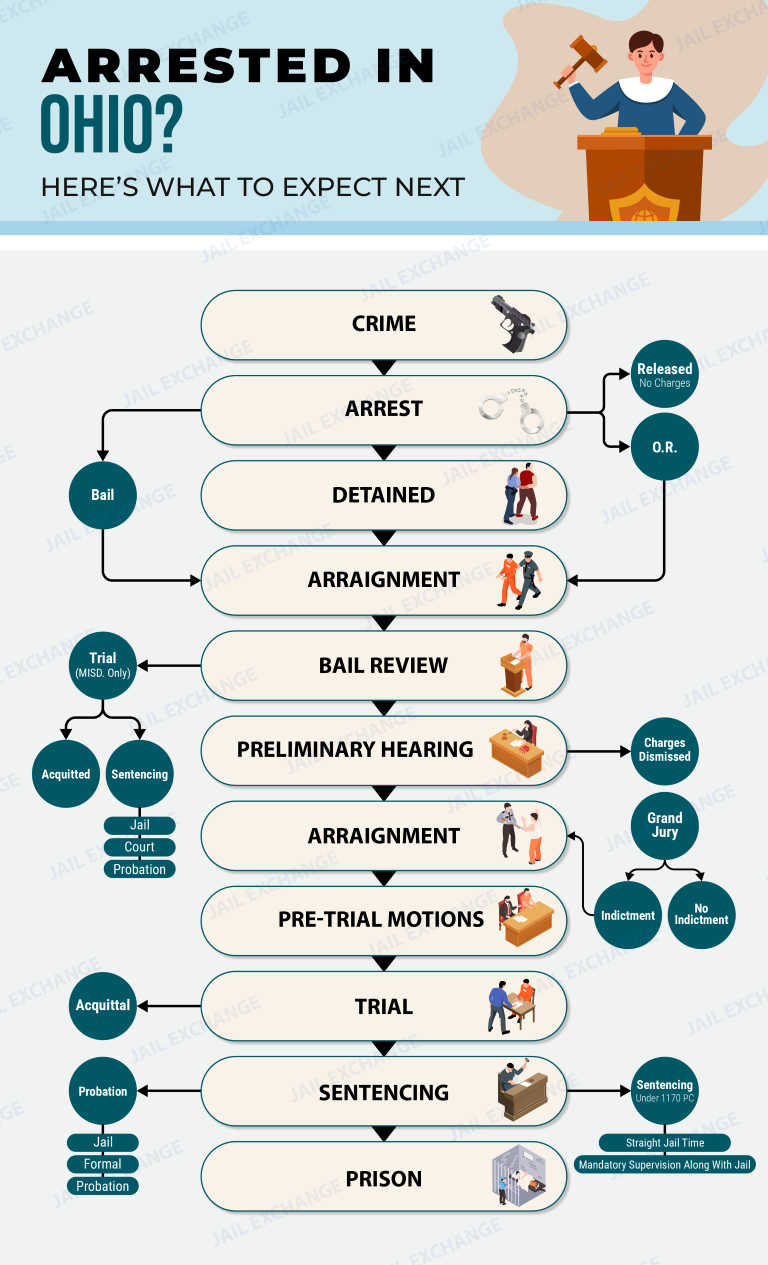
Multi-County Correctional Center Criminal Court Process
Criminal Court Process for Marion County Ohio
Marion Municipal Court and Common Pleas: Criminal Cases in Marion County
Criminal cases here go through two courts. Marion Municipal Court, 233 West Center Street, Marion, OH 43302, hears smaller crimes and the first hearing in felony cases. A felony that goes forward lands in Common Pleas, inside the courthouse at 100 North Main Street, Marion, OH 43302. Anyone kept in jail during the case waits at the Multi-County Correctional Center, 1514 Victory Road, Marion, OH 43302.
Wondering if your family member got booked? Open the Marion County Inmate Search and try a last name. The Jail Roster we keep explains mugshots, new charges, and how to ask for a lawyer the court pays for.
Have a question about a city court case? The Municipal Court answers at 740-387-2005, so have them read you the charge and the next hearing day. Felony cases sit with the Clerk of Courts, reached at 740-223-4270. Before you pay anything, look over our bail and bond help.
1. Local courts in Marion County (municipal, county and mayor's courts)
The city of Marion, Warren G. Harding's hometown, anchors Marion County's justice system. Its Marion Municipal Court on West Center Street serves the entire county, so each misdemeanor, OVI and traffic file lands there, as do the first hearings for anyone accused of a felony. Felony cases then move to the General Division of the Marion County Court of Common Pleas, housed in the courthouse on North Main Street, where the elected Marion County Prosecuting Attorney handles the prosecution. People kept in custody are booked into the Multi-County Correctional Center in Marion, a jail that Marion County operates jointly with Hardin County.
- Marion County Court of Common Pleas, General Division, Marion County Courthouse, 100 N. Main Street, Marion, OH 43302, (740) 223-4270
- Marion Municipal Court, 233 W. Center Street, Marion, OH 43302, (740) 387-2005
- Marion County Family Court (Juvenile, Probate and Domestic Relations), Marion County Building, 222 W. Center Street, Marion, OH 43302, (740) 223-4070
- Marion County Prosecuting Attorney, 134 E. Center Street, Marion, OH 43302
- Multi-County Correctional Center (MCCC), Victory Road, Marion, OH 43302; switchboard (740) 387-7434
- Lawyers for those who cannot pay: the judge appoints counsel in either court (Municipal (740) 387-2005, Common Pleas (740) 223-4270); state Public Defender's office, Columbus, (614) 466-5394
Which court hears your case. Marion County keeps things simple. Every misdemeanor, OVI and traffic citation, whether it was written in the city, in Caledonia, Green Camp, La Rue, Morral, New Bloomington, Prospect or Waldo, or on a township road, is filed at the Marion Municipal Court, because that court's territory is the whole county. Marion County therefore needs no county court, and no village here appears on the state's list of mayor's courts. Felony arrests open on West Center Street as well; that court holds the first appearance, decides bond and may hold a preliminary hearing. The case climbs to Common Pleas after grand jurors indict, or after the defendant waives them and an information is filed. Marion sits in Ohio's Third Appellate District.
Where pretrial detainees are held. Marion County's adult prisoners go to the Multi-County Correctional Center on Victory Road, a regional jail serving Marion and Hardin counties. Arrests by city police, deputies, troopers and village officers all end there for anyone not released, and detainees ride to West Center Street or North Main Street for court. The switchboard at (740) 387-7434 can route calls about custody, bond and visiting.
One local trial court covers all of Marion County.
Municipal court
- Marion Municipal Court — 233 W. Center Street, Marion, OH 43302, (740) 387-2005. Territory: the whole county, meaning the city of Marion, the villages of Caledonia, Green Camp, La Rue, Morral, New Bloomington, Prospect and Waldo, and all 15 townships. It hears misdemeanors, OVI and traffic cases, felony first appearances and preliminary hearings, small claims and civil suits.
County court
Not applicable in Marion County: with the Municipal Court reaching every township, a county court would have no territory.
Mayor's courts
The Supreme Court of Ohio's mayor's court reports show none in Marion County, so village tickets go straight to the Municipal Court on West Center Street.
↑ Back to the question list2. Misdemeanor (for example, petty theft, a first OVI, assault, criminal trespass)
The usual Marion County misdemeanor follows this sequence.
- Ticket or jail. A summons or citation with a date at 233 W. Center Street is common. OVI and domestic-violence arrests, though, typically mean a booking at MCCC.
- Bond. If the charge carries a scheduled bond, it can usually be paid at the jail. If not, the Municipal Court sets terms at arraignment, normally on the next weekday. Ohio's constitution, as revised in November 2022, lists the factors a Marion judge must weigh in setting a dollar figure: community safety, the defendant's history, how grave the alleged offense is, and the chance of a missed court date. Bonds may be on recognizance, a 10 percent deposit, cash, or through a bondsman.
- Arraignment and a lawyer. The charge is read and a plea is entered. Facing possible jail without the means to hire counsel? Complete the court's financial affidavit and request appointed counsel. The city's prosecutor handles Marion police cases; for other agencies, the County Prosecuting Attorney or a village's legal counsel steps in.
- Pretrial. Evidence is shared and the lawyers talk. Only a timely written demand produces a jury, and its eight members must all agree.
- The end of the case. Possible results: the charge is dismissed, diverted or handled through intervention in lieu of conviction; the defendant pleads to something less; or the sentence is community control, a fine or jail.
Maximum penalties
Petty theft (below $1,000) and assault are both M1 offenses, the top misdemeanor tier: up to 180 days and $1,000. A second-degree charge caps at 90 days and $750, a third-degree at 60 days and $500. Ordinary criminal trespass is fourth-degree, carrying up to 30 days and a $250 fine. Minor misdemeanors are fine-only, $150 at most.
A first OVI
For a first OVI, Ohio law sets non-negotiable floors on what is otherwise an M1: 72 straight hours, served in jail or in a driver intervention program; a breath or blood result of .17 raises the floor to six days. The judge also imposes a fine within the $375-to-$1,075 range and suspends the license for a term between one and three years. That court suspension is separate from the administrative one that starts at arrest. Most drivers can get limited privileges, and an interlock-equipped vehicle may open unlimited privileges.
How long
Trial is due within 90 days on an M1 or M2 under Ohio's speedy-trial law, and within 45 on lower degrees, unless the time is extended. Marion misdemeanors generally take one to four months. Sealing is often an option later.
↑ Back to the question list3. Felony (for example, burglary, felony theft, drug trafficking, felonious assault)
In Marion County a felony begins on West Center Street and finishes on North Main Street.
The first weeks
From MCCC the defendant appears, frequently by video, before the Marion Municipal Court without unnecessary delay. Felony bonds are individualized by the judge, who also explains the charge and appoints counsel for an eligible defendant. Under Criminal Rule 5, the preliminary hearing must occur by the tenth day for a person held at MCCC and the fifteenth for someone out on bond, but if the grand jury indicts first, the hearing is dropped. Its only purpose is to test probable cause.
Indictment and Common Pleas
The Prosecuting Attorney presents witnesses to a Marion County grand jury, which deliberates in secret. Once charges are formally filed, by indictment or by information, arraignment takes place in the General Division on North Main Street, followed by pretrials, discovery and motions. A plea resolves most Marion felonies. At trial, twelve jurors decide, and their verdict has to be unanimous. Sentencing is ordinarily preceded by a presentence investigation.
Speedy trial
Ohio's statute sets 270 days from arrest as the felony trial deadline, and every day held in jail on that charge alone counts triple. Continuances and waivers pause the count. Four to twelve months is common here.
Penalties
Felony prison ranges in Ohio: F5, six to twelve months; F4, six to eighteen months; F3, nine to thirty-six months (sixty for certain listed crimes); F2, two to eight years; F1, three to eleven years. Since March 22, 2019, F1 and F2 offenses carry Reagan Tokes sentences, with a ceiling that can exceed the minimum by up to 50 percent. A nonviolent F4 or F5 committed by a first offender usually comes with a presumption of community control. Theft of $1,000 or more is an F5; once the amount hits $7,500 it becomes an F4. Burglary charges are typically F2 or F3. Felonious assault: F2. Trafficking's degree can be anything from F5 up to F1, set by drug type and amount. Gun specifications require added mandatory time. When drug use drove the offense, intervention in lieu of conviction may be possible.
↑ Back to the question list4. Violent felony (for example, murder, rape, aggravated robbery)
Someone accused of a killing, a rape or an armed robbery in Marion County should expect a high bond or a detention order, and with it a long stay at MCCC. Indictment can come quickly, moving the case into Common Pleas before any preliminary hearing.
Sentences Ohio law provides
Aggravated murder can bring death if prosecuted as a capital case; otherwise the court picks between life with no parole and life with parole eligibility once 20, 25 or 30 years have been served. Repeated reprieves have meant no Ohio executions since 2018. Murder means 15 years to life. Rape, an F1, draws an indefinite Reagan Tokes sentence, and with a child under 13 plus proof of force or another aggravating fact, life can be imposed. Aggravated robbery is an F1 that commonly includes a firearm specification.
Victims, defense and time
Since Ohio voters approved Marsy's Law in 2017, victims have held constitutional rights to notice, presence in the courtroom, and the chance to be heard when the court rules on bond, a plea or a sentence. Defendants unable to hire counsel get appointed lawyers, and capital cases need attorneys holding special certification. Marion County violent felony cases often run a year or two, and sometimes beyond.
↑ Back to the question list5. Juveniles (under 18) arrested in Marion County
Delinquency cases are heard by the Marion County Family Court, the Common Pleas division for juvenile, probate and domestic relations cases, at the Marion County Building, 222 W. Center Street, Marion, (740) 223-4070. Juvenile complaints come from the Marion County Prosecuting Attorney.
Detention in Marion County
Youths needing secure custody are held at the juvenile detention center that serves Marion County; the Juvenile Court, which conducts the detention hearing, can tell families where a child has been placed. The juvenile rules give the court a short window for that hearing, 72 hours from admission or the next court day, and at it the court decides whether to keep the child in detention.
Intake, hearings and results
Each complaint passes through intake first. Many first offenses end in diversion or an unofficial case, with restitution, counseling or service hours as the price of closing the file. Contested cases go before a judge or magistrate, and juvenile court has no jury. Results can be as light as probation and treatment or, after a felony-level finding, as serious as commitment to a state youth facility operated by the Ohio Department of Youth Services.
Adult court
Ohio requires some older teens, ages 16 and 17, charged with the gravest crimes to be bound over to adult court, and in rarer cases the same applies at 14 or 15. In other felony cases, a child at least 14 years old can be transferred at the judge's discretion, but only after an amenability hearing. Labeling a youth a Serious Youthful Offender lets the court hold an adult sentence in reserve behind the juvenile disposition. Juvenile files stay largely confidential and are frequently sealable.
↑ Back to the question list6. Federal cases (U.S. District Court) from Marion County
Marion sits about 50 miles north of Columbus, yet it is not in the Southern District. Marion County is part of the Western Division of the U.S. District Court for the Northern District of Ohio, and its federal cases are usually handled at the James M. Ashley and Thomas W.L. Ashley U.S. Courthouse, 1716 Spielbusch Avenue, Toledo, OH 43604, (419) 213-5500.
A Marion County matter turns federal once federal prosecutors charge a violation of a U.S. statute: drug-distribution conspiracies, guns in the hands of prohibited people, fraud, bank robbery or child exploitation, often investigated by federal agents together with local police.
Key offices
- Federal prosecutors — the Northern District U.S. Attorney's staffed Toledo branch; Cleveland headquarters (216) 622-3600
- Federal defenders — the district's Federal Public Defender, which maintains a Toledo branch
- U.S. Marshals Service, Toledo — Ashley U.S. Courthouse, 1716 Spielbusch Avenue, Suite 313A, Toledo, OH 43604, (419) 376-3094
How federal cases move
After a federal arrest, a Marion County defendant first goes before a Toledo magistrate judge. A detention request from the government is typically heard by the third court day. Defendants released under Bail Reform Act conditions report to Pretrial Services. Indictment must come within 30 days of a complaint, and the 70-day federal trial deadline is regularly extended. Most federal defendants plead guilty; trials go to 12 jurors, who must be unanimous.
Sentencing and custody
With the presentence report in hand, the judge calculates the advisory Guidelines and honors any mandatory minimum. Since the federal system abolished parole, Bureau of Prisons inmates typically serve about 85 percent of the sentence before supervised release begins. Detained defendants wait at facilities that hold federal prisoners for the Marshals. The Federal Bureau of Prisons inmate locator allows relatives back home in Marion to search for someone from Marion County using a name or register number. Marion County detainees awaiting trial in a Marshals-contract jail could also appear in that jail's listing. Appeals go to the Sixth Circuit, and federal juvenile cases are rare.
Use this Marion County overview as general background, not as legal advice. Court times and local rules change, so confirm with the Marion Municipal Court at (740) 387-2005 or the Common Pleas Court at (740) 223-4270. Anyone who needs counsel but lacks the means should request it from the judge; the state Public Defender's Columbus office can be reached at (614) 466-5394.
↑ Back to the question list